



Abstract
Over the last few decades, perceptions of fatherhood have changed significantly and expectations regarding fathers’ involvement in childcare have risen. Parenting is undoubtedly the source of many positive experiences, however, it can also be a stressful challenge. Thus, the way in which fathers deal with everyday life stress can significantly affect their parental attitudes. There is significant evidence that a child’s predisposition can modify parental attitudes and therefore relate to stress coping strategies. In the current study we tested a model of the reciprocal relationships between a father’s coping strategies, his parental attitudes, and his child’s individual traits (temperament and gender). The first model assumes that the father’s stress coping strategies and the child’s individual traits determine parental attitudes independently; the second model, assumes that parental attitudes will be influenced by coping strategies and that individual traits of the child will modify this relationship. A total of 176 Polish fathers (Mfather’s age = 35.07, SD = 5.71) of only children of preschool age (Mchildren’s age = 5.6, SD = .21; 88 girls, 88 boys) participated in the study. The following research tools were used: the Parental Attitudes Scale, to measure fathers’ attitudes towards their children; the Brief COPE, to evaluate fathers’ coping strategies; the EAS Temperament Questionnaire – Parental Ratings, to assess children’s temperaments. The results indicate that fathers had the highest scores for Inconsequent and Demanding parental attitudes and the lowest for Overprotective and Autonomy attitudes. Moreover, their attitudes towards daughters and sons were consistent, except for Autonomy. Furthermore, mediation analyses show that the child’s temperamental traits do not significantly modify the relation between a father’s coping strategies and parental attitudes. However, the results indicate that a father’s coping strategies and his child’s temperament affect the father’s parental attitudes independently. Differences depending on the child’s gender were also found.
Involved Fatherhood – Changes in Paternal Roles
Parental attitudes are believed to be one of the main direct ways that mothers and fathers influence their children (Laukkanen et al. 2014, Ziemska 2009). They reflect the way in which parents perform childcare, their attitudes towards children, and also their commitment to their children’s everyday life. Most recent research focuses on the relationship between mothers and children, especially the youngest, due to the caring and educational role traditionally attributed to women. It is only in recent years that scientific analyses of the family relation of fathers and their children have begun to appear (Cabrera and Tamis-LeMonda 2012). In many cultures, fatherhood and expectations towards fathers have been changing from traditional breadwinner models, in which the father mainly cares for the economic needs of the family, to involved fatherhood, in which the father also attends to the children’s emotional needs, is present in daily routines, and is engaged in child rearing with the mother (Bakiera 2013, Pruett et al. 2009, Cabrera et al. 2000, Habib 2012).
Lamb, Pleck, Charnov, and Levine (1985) proposed the model of paternal involvement, including components: 1) paternal engagement, 2) being available to the child, and 3) responsibility. Pleck (2010) provided a revised conceptualization of this model, according to which the father’s involvement includes positive engagement activities, warmth and responsiveness to the child’s signals and needs, and adequate control.
Moreover, father’s attitudes manifested by their involvement in childcare have been found to affect the child’s development in cognitive and physical development, social relations, self-regulation skills, and emotional competence (Singley et al. 2018). Pruett and Donsky (2011) also indicate a positive influence on parenting quality of more interparental support and less conflict between parents.
A father-child relationship deficit due to lack of paternal involvement in childcare may result in the formation of an insecure bond, also at later stages of child development (Bakel and Hall 2020). Particularly during the child-adolescent transition, fathers can have problems with mentalization (Dejko, Janusz, and Treger 2016).
Despite the evident positive influence of the father on the development of children, only some fathers have significantly increased their involvement in childcare, other fathers, however, only declare being involved, while it is difficult to identify their transformation into an involved father in terms of everyday behaviors (Johansson 2011, Kosakowska-Berezecka, Korzeniewska, and Kaczorowska 2016).
Determinants of Parental Attitudes of Fathers
Researchers have focused on the specific paternal manner of involvement in child care and the determinants thereof. Two types of elements which shape parental attitudes are frequently identified: those related to the individual characteristics of the parent (Belsky, Crnic, and Woodworth 1995, Şendil and Cesur 2011) and those that are specific to the child, depending on their predispositions such as their temperament (Clark, Kochanska, and Ready 2000). Personality traits, ways of coping with stress, and individual dispositions, such as empathy, are most often indicated as parental factors determining the way they raise children (Jankowska et al. 2018, Belsky, Crnic, and Woodworth 1995).
These parental attitudes also depend on the gender of both the parent and the child, the parents’ level of education, and the child’s and father’s ages (Lipowska, Lipowski, and Pawlicka 2016, Liberska et al. 2018). Moreover, the way parents treat children depends on the number of children in the family and the order in which they are born (Hogan 2011).
Fathers’ Coping with Stress Strategies as Determinants of their Parental Attitudes
Strategies for coping with stress are particularly important in the case of fathers because they might be directly transferred to cope with the challenges of fatherhood (Foster, Reese-Weber, and Kahn 2007). Today’s fathers were mostly brought up in much more traditional family models, where fathers were not expected to be really present and involved in raising children (Cabrera et al. 2000, Crespi and Ruspini 2015). Therefore, in the case of lack of direct transmission of the patterns of engaged fatherhood, fathers have to use strategies from everyday life, like coping strategies, and adapt them to their paternal role (Kaźmierczak 2010).
Coping strategies can be adaptive and non-adaptive. Adaptive solutions enable coping with difficulties, facilitate the functioning of the person, and buffer the negative effects of difficult situations. Non-adaptive strategies are associated with worse functioning, a lack of skills for dealing with problems, and the occurrence of negative emotions (Carver 1997, Juczyński and Ogińska-Bulik 2009). Seeking support is a beneficial strategy for coping with stress associated with parenting roles.– especially active coping strategies like acceptance or humor. On the other hand, feelings of helplessness, seeking support in drugs or alcohol, and engaging in other avoidant behaviors to deal with everyday problems have a negative impact on the performance of parental duties (Carver 1997, Cuzzocrea et al. 2016, Juczyński and Ogińska-Bulik 2009).
Father’s Parental Attitudes and Child’s Temperament
Previous studies indicate that a child’s temperament can be a significant factor influencing parenthood (specifically the way parental roles are fulfilled and the development of relationship between parents and a child). Moreover, the child’s temperament may not only influence the behavior of the parents towards the child, but also the child’s cognitive and socio-emotional development (Bates, Schermerhorn, and Petersen 2012, Kochanska and Kim 2013, Rothbart 2012, Zvara et al. 2018). The role of temperament is very important, especially in early childhood (Buss and Plomin 2008).
Much research, based on Chess and Thomas’s (1977) popular approach to child temperament, indicates that a child having a difficult temperament may lead to fewer positive reactions, behaviors, and emotions from parents. Moreover, it may provoke more controlling parenting practices and harsh parental discipline. All of the above are, in turn, risk factors for developing externalizing disorders in the future (Kochanska and Kim 2013). In contrast, an easy temperament may be a factor that protects a child against lack of parental responsiveness and parental difficulties (Chess and Thomas 1977, Zvara et al. 2018). Children with a more regulatory and easy temperament are more likely to have parents that will show more positive behavior towards them, creating an atmosphere full of warmth and love. They will also present a lower intensity of negative emotions and inappropriate behaviors (Bates, Schermerhorn, and Petersen 2012). Moreover, a child’s temperament may be a factor which itself influences levels of parental stress (McBride, Schoppe, and Rane 2002). Children’s traits are potentially an independent factor determining parental attitudes of fathers, but, alternatively, a child’s temperament might modify a father’s attitudes in an indirect way based on coping styles.
Sociodemographic Factors Affecting Parental Attitudes
Both the gender of the parents and the gender of the child influence parental attitudes. Mothers and fathers treat their daughters and sons differently, accepting behaviours depending on the child’s gender (Lipowska, Lipowski, and Pawlicka 2016). It is particularly noteworthy that there are higher expectations of daughters than of sons, especially from mothers (Jankowska et al. 2018, Mulvey and Killen 2014). Moreover the father-son relation is very specific because of trans-generation masculinity modelling—a boy learns how to become a man primarily from his father (Suwada and Plantin 2014, Klann, Wong, and Rydell 2018).
Another important factor that affects parental attitudes are the child’s and the father’s age. Parents will behave in one way toward a baby, in another toward a preschool child, and significantly differently towards a teenager (Rosen, Cheever, and Carrier 2008). It is worth emphasizing the specificity of the preschool period in the family life cycle. Preschoolers establish increasingly wider social relations with their peers, but also, in favorable cultural conditions, increase the intensity of task-focused contact with their father instead of caring relationships with mother (Collins 1984). The father’s age seems to be important for child-parent relations. The results of a study on Polish fathers conducted by Włodarczyk (2014) show that fathers aged 35 to 44 more often presented the model of partnerships in their relation with children, whereas younger fathers (aged 18 to 34) are less associated with this model. Liberska et al. (2018) emphasize that being a father in young adulthood may cause many problems related to changes in career, social life, relations with a partner, etc., and is associated with the need to redefine their self-conception to now include fatherhood. The above challenges may, directly and indirectly, affect the implementation of parental roles by a father. Much research also highlights problems with being a teenage father, which is often associated with lower socioeconomic status, lower level of education, and higher school drop-out rates, and also indicates that they face a higher level of stress, as they are confronted with both the challenges associated with fatherhood and new parental roles and those associated with normative developmental tasks (Sriyasak et al. 2015). The above changes could lead to many emotional problems, and difficulties in adapting to the role of parent, and thus affect the parent-child relation (O’Brien et al. 2016).
The indicated factors can modify the relationship of coping strategies of fathers who are of different ages, education, and come from different cultures.
The Present Study
In this study, we are looking for a model of the reciprocal relationships between fathers’ personality traits – i.e., coping strategies – and a child’s individual traits, i.e., temperament and gender. Despite much evidence about the role of both the father’s coping strategies and the child’s features in shaping parental attitudes, there are still no clear indications whether they determine parental attitudes independently or interact with each other. Therefore we created two hypothetical models:
What parental attitudes profile is presented by Polish fathers towards their five-year-old daughters and sons? Do a father’s age and education level differentiate parental attitudes?
Research Variables
Parental attitudes. The dependent variable was parental attitudes among Polish fathers. Parental attitudes reflect the way parents approach the child, as well as their attitudes towards fulfilling the role of a parent. Three main elements of parental attitudes are usually distinguished: cognitive, emotional-motivational, and behavioral Plopa (2008) identified five parental attitudes: Acceptance and Autonomy (positive), and Demanding, Inconsequent, and Overprotective (negative). The dominant attitude towards the child will result in a specific development of their identity and self-esteem. The convergence of positive attitudes provides the best conditions for the child’s development, while divergence of attitudes can lead to various adaptation difficulties. A convergence of negative attitudes, which limit the child’s development in various ways, is also unfavourable. The results obtained in the preliminary study carried out by our team, show that the parental attitudes of mothers and fathers were consistent, however mothers exhibit higher levels of the Demanding, Acceptance-Rejection, and Autonomy attitudes than do fathers (Lipowska, Lipowski, and Pawlicka 2016).
The first independent variable was the father’s coping with stress. This variable was defined, as various thoughts or actions which can be undertaken by fathers when experiencing difficult and stressful situations. The above variable consists of seven factors: Active coping, Helplessness, Use of support, Avoiding behaviors, Religion, Acceptance, and Humor, referring to the frequency of using different coping with stress strategies.
The second independent variable was the child’s temperament. This variable was defined in accordance with Buss and Plomin (2008). They emphasize that temperament is hereditary and its features are observed from an early period of development. It covers a wide area of behavior, as well as their regulation and the ability of the individual to adapt to life. Furthermore, temperamental characteristics show stability and continuity with age. Buss and Plomin (2008) distinguished three temperament traits: Emotionality, Activity, and Sociability, forming the EAS Temperament Model.
One of the research models presented in the study also includes the child’s temperament as a variable mediating the impact of fathers stress coping mechanisms on their parental attitudes towards children. The study also included the following variables: the child’s gender, and the father’s age and education level.
Materials and Methods
Participants
White Polish men – biological fathers of only children – were recruited for this study (N = 176). The age of the children (Mchildren = 5.6, SD = .21; 88 girls and 88 boys) was purposely identical to exclude the influence of this factor on attitudes. We decided to exclusively invite fathers of only children because having experience with raising more children might change the way a man acts as a father, few studies take into account the possible predictors of parental attitudes in such families (Jamshidi, Afshar, and Rastgaran 2013, Mõttus, Indus, and Allik 2008, Wei et al. 2016). The following variables were controlled for: the age of the fathers (M father = 35.07, SD = 5.71), their education levels (4% of fathers had primary education, 25% had vocational education, 37% had secondary education, and 34% had higher education). The area of residence of the study participants was as follows: most (28.83%) of the study participants lived in towns with 20,000 -100,000 inhabitants, 28.10% lived in villages, 16.42% of participants lived in small towns (up to 20,000 inhabitants), and 26.25% of the study participants lived in the big cities with over 100,000 inhabitants. All recruited fathers were employed at the time of the study.
Procedure
All recruited fathers were participating in a larger project “The development of beauty & health concepts and stereotypes in middle childhood – trans-generation transmission”. We randomly selected 20% of the nursery and primary schools from the Pomerania region of Poland, which have to run compulsory pre-school education units, according to the requirements of the Ministry of National Education. Prior to the study, written consent was obtained from 874 families. They were also informed that they were permitted to discontinue their participation at any time of the study. Subject sampling was purposive: being the father of an only child aged 5 was the main inclusion criterion. Due to the fact that the data used for this study were part of a larger survey, the questionnaires that formed this study took around 25 minutes to complete. We only considered in this study the participants who completed all required tests and questionnaires. The protocol of this study was approved by the Ethics Board for Research Projects at the Institute of Psychology, University of Gdansk, Poland (decision no.17/2013). The preparation of this paper was supported by grant 2015/17/B/HS6/04144 from the National Science Centre, Poland.
Methods
EAS Temperament Questionnaire – Parental Ratings – EAS-C (Buss and Plomin 2008, Oniszczenko 2015)
This questionnaire consists of 20 items concerning the characteristics of the child’s temperament on four scales: Shyness, Sociability, Activity, and Emotionality. A high score on the Shyness scale means that the child is characterized by a strong tendency to respond with tension, inhibition, and the desire to avoid contact with strangers. Sociability refers to the search for contact with other people, willingness to stay in their company, and desire to avoid loneliness. High scores on the Activity scale indicate that the child displays motor activities characterized by a high speed of action and vigor and a high intensity of reactions. The Emotionality scale corresponds with the child’s emotional sensitivity and negative emotions. A high score on this scale means that the child experiences anxiety easily and intensely and is very sensitive to stimuli that cause dissatisfaction. Each scale contains five items. Parents assess the extent to which each statement describes their child using a five-point Likert-type scale. In the present study, the Cronbach’s α for the questionnaire was .77.
Brief Coping Orientation – Brief COPE (Carver 1997, Juczyński and Ogińska-Bulik 2009)
The Brief COPE is a self-report questionnaire used to measure ways of coping with stress. It consists of 28 statements describing 14 strategies for coping with stress. Each statement describes a thought/action that a person can experience or undertake when experiencing stress or difficult situations. The scale allows the analysis of seven factors: Active coping, Helplessness, Use of support, Avoiding behaviors, Religion, Acceptance, and Humor, which we used in our research. Active coping strategies include undertaking actions to improve the situation, planning what to do, and perceiving the situation in a positive light. The Helplessness factor consists of the use of psychoactive substances, cessation of activities, and blaming oneself in stressful situations. Use of support corresponds with seeking both emotional and instrumental support. The Avoiding behaviors factor includes doing something else, denial, venting strategies, and rejection of stressful or difficult facts. Religion strategies cover prayers and meditation and other activities connected with turning to religion in the face of difficulties. Acceptance strategies – when a person focuses on accepting the situation and learning how to live with it. The final factor is Humor – joking and treating the stressful or difficult situation as fun. For each item, participants indicate whether they have used the coping response on a four-point Likert-type scale (from 0 – ‘I almost never do this’ to 3 – ‘I almost always do this’). The Cronbach’s α in the present study was .81.
Parental Attitudes Scale – SPR (Plopa 2008)
This questionnaire contains 50 diagnostic statements grouped into five dimensions corresponding to five different parental attitudes. The Acceptance–Rejection dimension indicates the level of acceptance of the child by the parent. Low results indicate insensitive, distant, and rejecting parental attitudes towards the child whereas high scores indicate accepting, sensitive, and supporting attitudes. The Autonomy dimension refers to the level of parental respect for the child’s needs as well as the ability to adjust behavior to the child’s developmental needs. The Overprotective dimension measures the tendency to consider the child as helpless, vulnerable, and dependent. The parent is unaware of the need for autonomy in the child as they grow up, and therefore is overly controlling when caring for the child. The higher the score is, the higher the intensity of this attitude. The Demanding dimension is focused on parental expectations of the child. Higher scores are connected with treating the child ruthlessly, sticking rigidly to their rules for parenting. A highly demanding parent does not understand the child’s needs, concerning their autonomy and independence, and strictly enforces orders and prohibitions. The last dimension – Inconsequent – is characterized by a changeable attitude towards the child, depending on the parent’s current mood, well-being, or personal matters (Plopa 2008). The respondents were asked to rate on a five-point Likert-type scale how strongly they agree or disagree with statements corresponding to the five dimensions of parental attitudes. The paternal version was used for our research and the Cronbach’s α for the above questionnaire was .86.
Results
Statistical analyses were carried out using the Statistical Package for the Social Sciences (SPSS) version 25 (SPSS Inc.; license purchased by University of Gdansk).
Firstly, to answer the question about the parental attitudes profile presented by Polish fathers towards their five-year-old daughters and sons, the intensity of parental attitudes was analyzed (see Figure 1). Fathers achieved the highest scores for Inconsequent and Demanding parental attitudes.
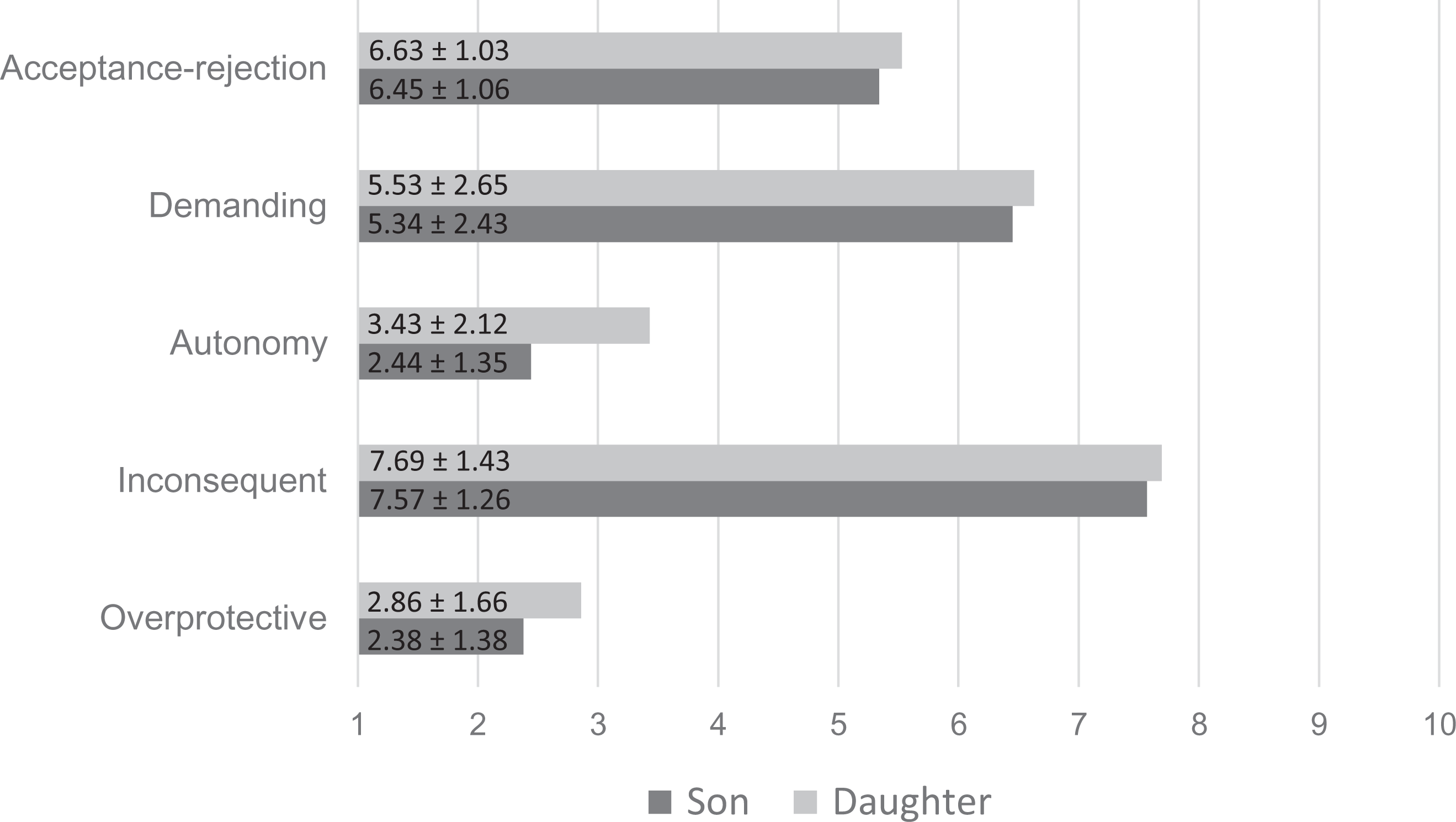
Intensity (in sten scores) of parental attitudes towards daughters and sons.
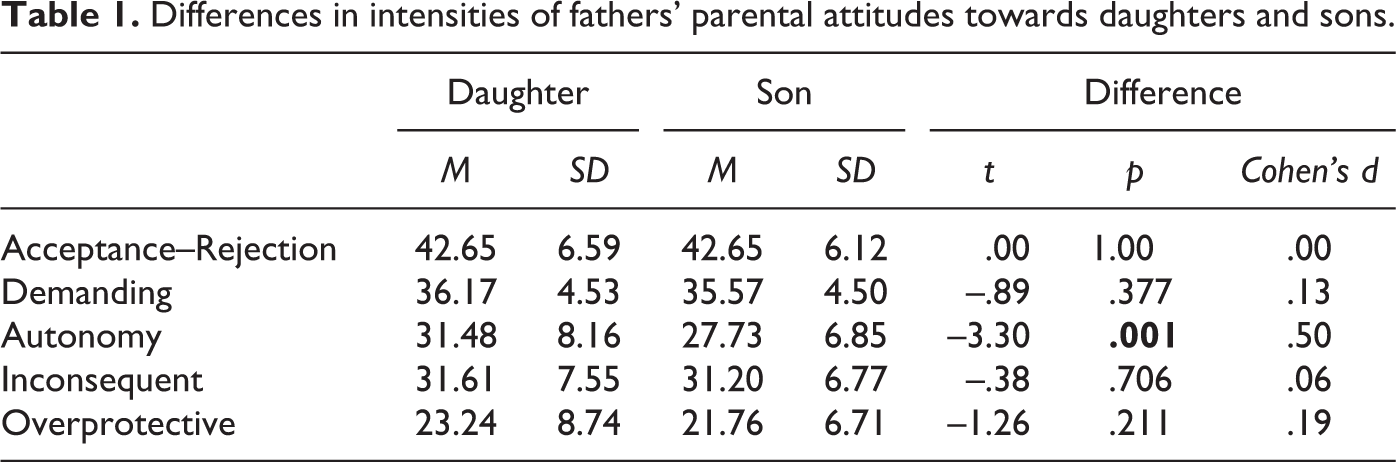
The only difference in parental attitudes towards daughters and sons was observed for Autonomy, with fathers exhibiting higher levels towards daughters than towards sons (the effect size had an average Cohen’s d of .50; see Table 1).
Differences in intensities of fathers’ parental attitudes towards daughters and sons.
To answer the second exploratory question, a one-way analysis of variance (ANOVA) for independent groups was performed. The father’s education level was of no importance for the intensity of parental attitudes. Then, linear regression was used to verify whether the father’s age differentiates parental attitudes towards daughters and sons. For daughters, the father’s age proved to be an insignificant predictor of all parental attitudes. For sons, however, the father’s age predicted Acceptance–Rejection, Demanding, and Autonomy parental attitudes (Table 2).
Regression models for Acceptance–Rejection, Demanding, and Autonomy parental attitudes towards sons— the influence of the father’s age.
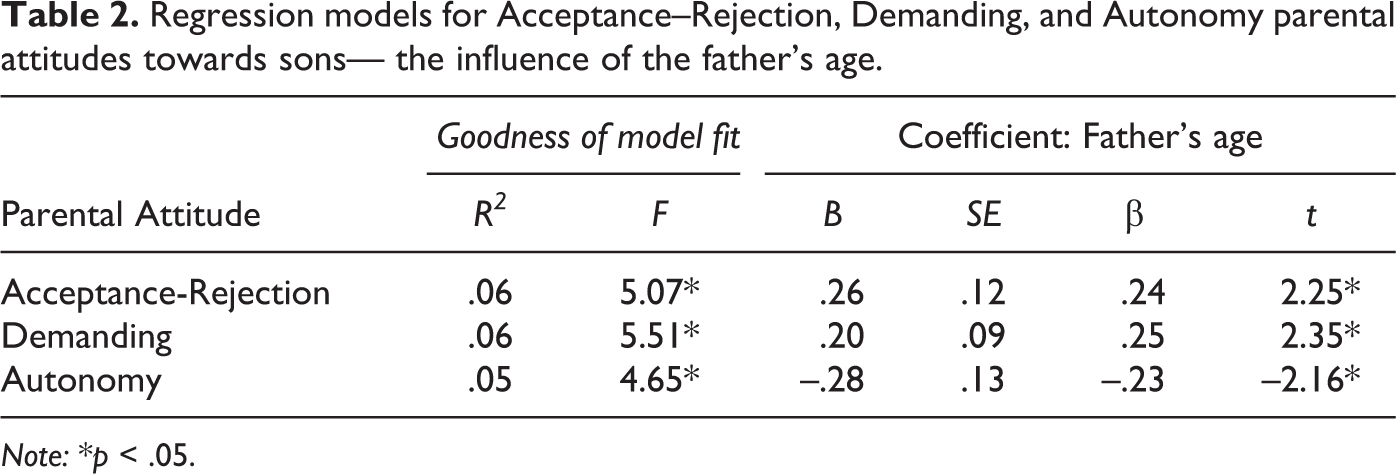
Note: *p < .05.
Furthermore, multiple linear regression using the enter method was carried out for each parental attitude in order to verify Hypothesis 1. Firstly, parental attitudes were the dependent variable and the father’s coping strategies were explanatory variables. The predictors which proved significant in all analyses are presented in Figure 2.
For daughters, none of the explanatory variables influenced Demanding, Autonomy, or Inconsequent attitudes. The regression model was well fitted to the data for the Acceptance–Rejection attitude towards daughters, F(7, 87) = 4.13, p < .001, R2 = .27. The Acceptance–Rejection parental attitude was influenced by: Active coping, Helplessness, and Use of support. For the Overprotective attitude towards daughters, the regression model also proved to be well fitted to the data, F(7, 87) = 4.28, p < .001, R2 = .27. However, analysis of the regression coefficients showed that Helplessness was the only statistically significant predictor.
For sons, none of the explanatory variables influenced Acceptance–Rejection, as was the case for Demanding and Inconsequent attitudes for daughters. The regression model proved to be well fitted to the data for the Autonomy attitude towards sons F(7, 87) = 3.30, p < .001, R2 = .22. However, the analysis of the regression coefficients showed that, of all the coping strategies, only Active coping was a statistically significant predictor of the above attitude. For the Overprotective attitude towards sons, the regression model also proved to be well fitted to the data, F(7, 87) = 6.23, p < .001, R2 = .35. Analysis of the regression coefficients showed that levels of the Overprotective parental attitude were influenced by Active coping and Helplessness.
Multiple linear regression analysis using the enter method was also used to investigate the influence of the child’s temperament on parental attitudes. In this analysis, parental attitudes were the dependent variables, and the child’s temperamental traits were the explanatory variables. The predictors which proved significant in all analyses are presented in Figure 2.
For daughters, the regression model proved to be well fitted to the data for the Autonomy attitude, F(4, 87) = 2.63, p < .001, R2 = .11. However, analysis of the regression coefficients showed that only Shyness was a statistically significant predictor of this attitude. For Inconsequent attitude towards daughters, the regression model also proved to be well fitted to the data, F(4, 87) = 3.46, p < .001, R2 = .14. Analysis of the regression coefficients showed that the levels of the Inconsequent parental attitude were influenced by Emotionality and Shyness. The other temperamental traits proved to be insignificant predictors of the Inconsequent attitude toward daughters. Lastly, for the Overprotective attitude towards daughters, the regression model also turned out to be well fitted to the data, F(4, 87) = 2.74, p < .001, R2 = .12. Analysis of the regression coefficients showed that the lower the daughter’s Activity, the higher intensity of the father’s Overprotective attitude. Once again, the daughter’s other temperamental traits were insignificant predictors of paternal Overprotective attitude.
For sons, only the regression model for the Demanding attitude proved to be well fitted to the data, F(4, 87) = 2.51, p < .001, R2 = .11. Analysis of the regression coefficients showed that the higher the son’s Emotionality and Sociability, the higher the intensity of the father’s Demanding attitude.
Finally, we conducted multiple regression analysis with the child’s gender as an indicator variable (dummy variable) and the father’s coping strategies as well as the child’s temperamental traits as predictors of the father’s parental attitudes, however the results proved to be insignificant.
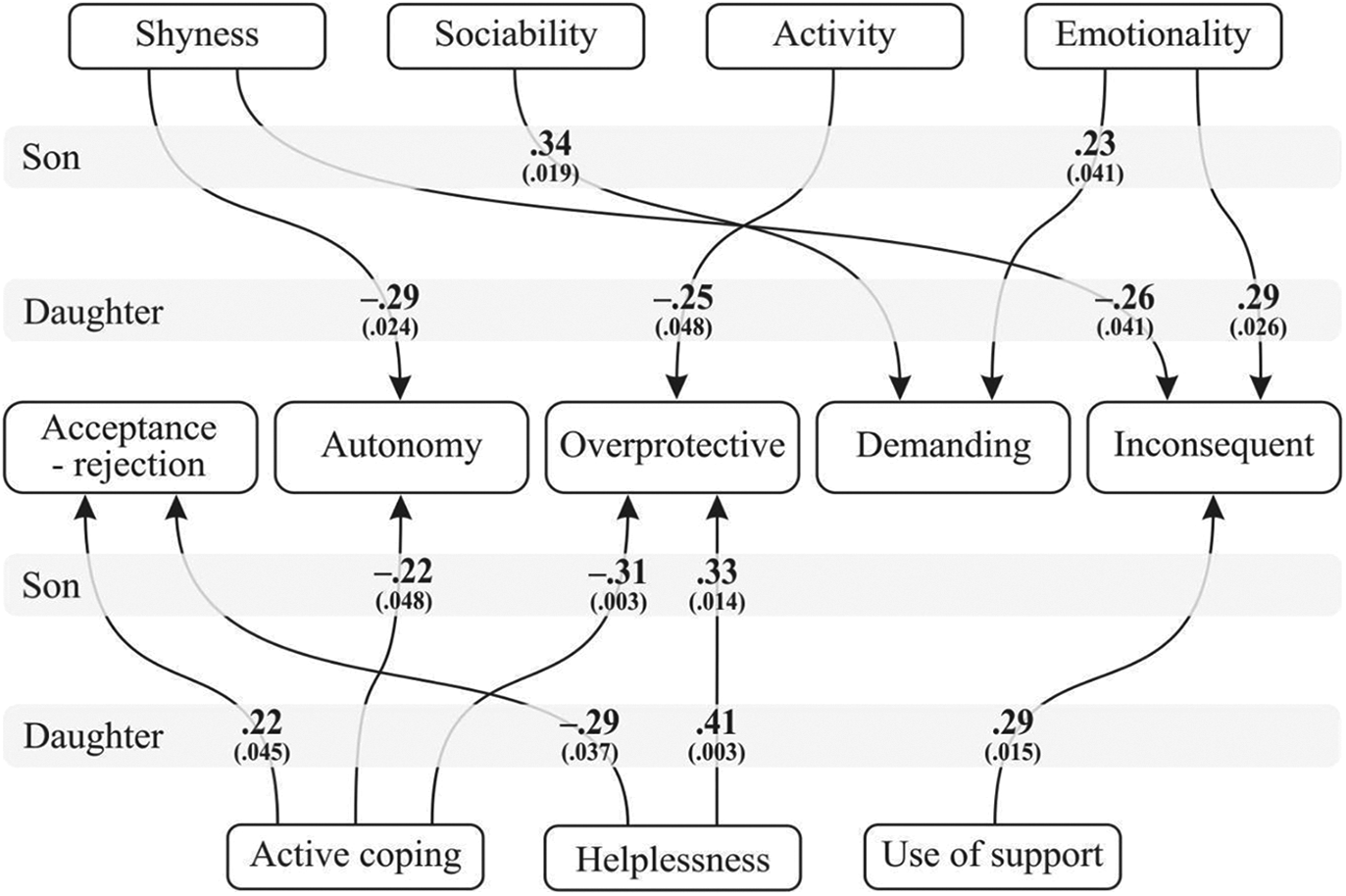
Multiple regression analysis: the influence of the child’s temperamental traits and the father’s coping strategies on the father’s parental attitudes towards daughters and sons.
Subsequently, mediation analyses were conducted to test Hypothesis 2. Using the PROCESS bootstrapping macro (Hayes 2013), we included the father’s coping strategies as predictors, child’s temperamental traits as the hypothesized mediators, and the father’s parental attitudes as the dependent variables. The analyses were conducted separately for daughters and sons.
In order to determine the sample size for a mediation analysis, we conducted a power analysis using G*Power (Faul et al. 2007). With a large effect size (f2) of .35, an alpha of .05, and a power level of .95, the results of the power analysis showed that the sample of 176 participants was sufficient to achieve an appropriate power level. We found that the effects of all coping strategies on the father’s parental attitudes towards sons, mediated by the son’s temperamental traits, were insignificant. However, some mediation effects of the daughter’s temperamental traits were found.
The mediation analysis showed that the effect of Use of support on the father’s Inconsequent parental attitude was fully mediated by the daughter’s Emotionality, R2 for the model = .12; F(2, 85) = 5.66, p = .004 (see Figure 3).

Relationship between the father’s Use of support and Inconsequent parental attitudes, mediated by the daughter’s Emotionality.
The mediation analysis also showed that the effect of Religion on the father’s Inconsequent parental attitude was also fully mediated by the daughter’s Emotionality, R2 for the model = .11, F(2, 85) = 5.51, p = .006 (see Figure 4).
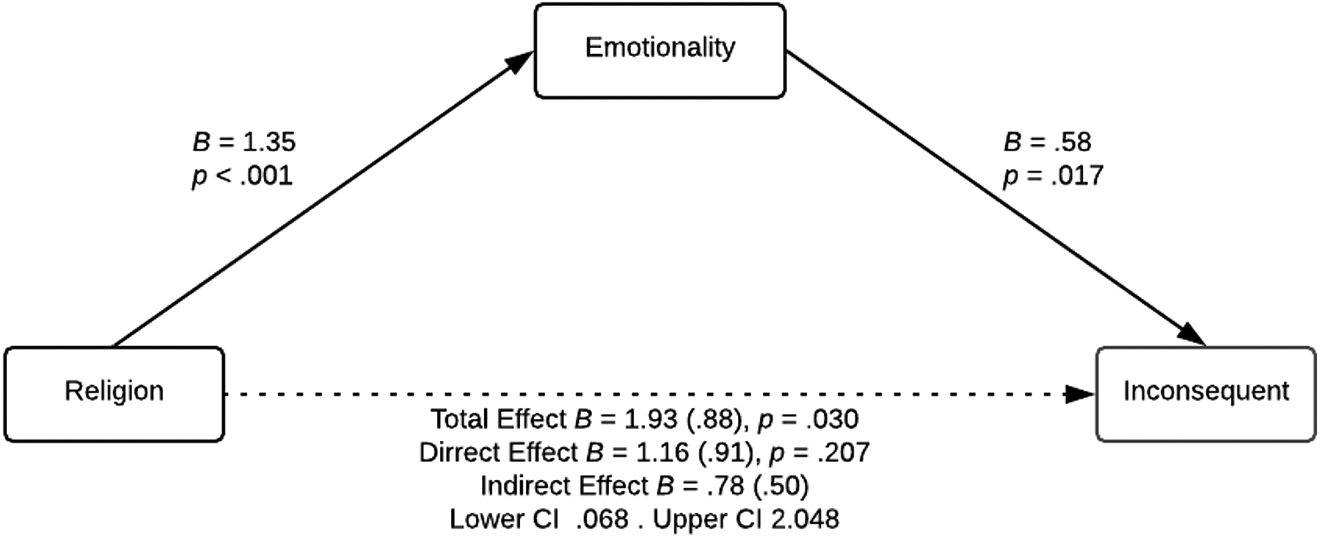
Relationship between the father’s Religion and Inconsequent parental attitudes, mediated by the daughter’s Emotionality.
Furthermore, the mediation analysis indicated that the effect of Avoiding behaviors on the father’s Overprotective parental attitude was fully mediated by the daughter’s Sociability, R2 for the model = .09, F (2, 85) = 4.07, p = .021 (see Figure 5).

Relationship between the father’s Avoiding behaviors and Overprotective parental attitudes, mediated by the daughter’s Sociability.
The analysis indicated that the effects of other paternal coping strategies on their parental attitudes towards daughters, mediated by the daughters’ temperamental traits, were insignificant.
Discussion
Research indicates that fathers’ strategies for coping with stress and children’s temperament and gender both shape parental attitudes; however, the nature of the above reciprocal relationships is still unclear. Therefore, we examined two models to verify whether strategies for coping with stress and the child’s temperamental traits and gender affect parental attitudes independently or if they interact with each other. It is worth emphasizing that the study was conducted on a large group of fathers of preschool-age only children, both sons and daughters, whereas most research to-date has focused more on mothers, given their greater role in raising children, or on parents of school children. Research also highlights the changing role of the father over recent years.
The Parental Attitudes Profile Presented by Polish Fathers Towards Daughters and Sons
Firstly, it is worth noting that the fathers’ attitudes towards daughters and sons were consistent, except for the Autonomy parental attitude (however, the results were still in the low range for both daughters and sons). This equality seems to be specific to children of preschool age (Lipowska, Lipowski, and Pawlicka 2016) – different treatment of boys and girls is often described for older children (Endendijk et al. 2016). While it is good that fathers do not present highly insensitive behaviors towards their daughters and sons, it would be much better for the development of the children and their future achievement if the fathers were even more accepting and supportive from an early age (Hallers-Haalboom et al. 2017). The average level of the fathers’ Demanding attitude indicates that they mostly understand their children’s needs and capabilities and adjust their own expectations accordingly. Even if fathers require compliance with their standards and rules, it is not through consistent discipline, but rather on the basis of cooperation and mutual father-child communication (Carlo et al. 2018). It should not be forgotten that all examined fathers were the parents of 5-year-old children. For preschoolers, creating clear boundaries and rules at home is helpful for their everyday kindergarten functioning, where they have to spend time with other children and adapt to the requirements of teachers when more and more organized activities are introduced (Carlo et al. 2018). A growing body of research also suggests that demanding parental behaviors have positive outcomes for children’s academic achievement (Dumka et al. 2008).
Surprisingly, fathers had really low levels of the Overprotective parental attitude. The presence of this attitude is highly desirable – especially in the initial period of raising younger children, who require constant care and attention from their parents (Scott, Nelson and Dix 2018). Furthermore, while it is expected that mothers will be more protective towards their children, fathers tend to engage children in more challenging and risky situations and forms of play, presenting children with new opportunities and encouraging them to explore the unknown (Fletcher et al. 2015). It is also surprising that the child’s gender is of no importance for the intensity of the father’s Overprotective attitude. The common use of the term "daddy’s girl" indicates that fathers have more protective attitudes towards their daughters and treat them differently to sons – but this was not confirmed in our research. On the other hand, this term is also associated with allowing one’s daughter to do whatever she wants and a lack of boundaries on her behavior. Previous studies have shown that sexism can be a factor which modifies fathers’ parental attitudes towards daughters (Lipowska, Lipowski, and Pawlicka 2016). The obtained results confirmed also that fathers present low overprotectiveness towards sons, which is good for their mental health – high overprotection increases the risk of internalizing disorders in children (Kalomiris and Kiel 2016).
The most worrying result is the high intensity of the fathers’ Inconsequent attitude toward daughters and sons, as it has negative consequences for a child’s development, such as anxiety, poor father-child relations, and a lack of security and warmth in the family (Barker, Iles, and Ramchandani 2017).
The low Autonomy results suggest that, unfortunately, fathers do not accept their children’s need to be independent and do not see that their children’s ability to deal with many activities increases with age; instead, they continue to help children in situations they are perfectly capable of dealing with themselves. This can significantly limit the child’s development and ability to acquire new skills (Meuwissen and Carlson 2019). On the other hand, the low intensity of the fathers’ Autonomy parental attitude may simply be a consequence of the children’s ages (Mabbe et al. 2018).
The Effect of the Father’s Age and Education Level on Parental Attitudes
Previous studies have indicated that the parents’ age could be an important factor influencing parental attitudes and that the mother’s age is more important (Ekeus, Otterblad Olausson, and Hjern 2005). Generally, younger parents are believed to be less competent in fulfilling parental roles, and teenage parents appear to be less sensitive and responsive to their children (Meade, Kershaw, and Ickovics 2008). Perhaps due to the fact that no teenage fathers participated in our study, age did not turn out to be particularly important. The father’s age only influenced parental attitudes in the case of sons. The average age of fathers in our study was about 35 years, but most of them were in young adulthood – between 20 and 35 years. Men at this age should have an appropriate maturity level, a stable value system, and generally be ready to establish a family; thus, it is not surprising that fathers at this age present sensitive and accepting parental attitudes (Bakiera 2013). At the same time, the older the father, the higher the expectations on sons and the less respect for their need for autonomy. This may result in sons being treated more ruthlessly, according to the common belief that this is the only way to make a man out of a son.
Despite the fact that previous research has indicated that the parents’ level of education is a significant factor in shaping parental attitudes (Lipowska, Lipowski, and Pawlicka 2016), the father’s education level did not affect the intensity of parental attitudes in our study. This may be related to the small number of fathers who had only completed primary education, resulting in the effects not being visible.
The Direct Influence of the Father’s Coping Strategies and the Child’s Temperament on Parental Attitudes – Model 1
The analysis indicated that model 1 is more applicable for fathers’ parental attitudes toward children: fathers parental attitudes are directly predicted by fathers coping strategies. The results confirmed that active coping strategies – those “focused on actions” to improve the stressful situation, as well as planning, positive re-evaluation, looking for advice, and seeking for help from others – assist the development of parental skills. By using the aforementioned strategies, fathers are better at everyday parental duties, which makes them feel better as fathers and leads to their being sensitive and accepting toward their child (Cuzzocrea et al. 2016, Plopa 2008). In contrast, helplessness is non-adaptive strategy, manifested in, e.g., using drugs or alcohol and engaging in other avoidant behaviors to deal with everyday problems, leading to a negative impact on the performance of parental duties and responsibilities (Eiden et al. 2009).
In the present study, the child’s temperament was of importance for parental attitudes; however, there were differences depending on the child’s gender. Furthermore, the child’s temperamental traits had a greater impact on negative parental attitudes, which also confirms the results of previous studies (Bradley and Corwyn 2008, Kochanska, and Kim 2013). The results obtained in the present research showed that the more negative affectivity and poor emotion regulation presented by daughters, the more negative parental behaviors their fathers will exhibit. Therefore, not only do such daughters have to deal with their own emotional regulation, they are also more like to experience insensitive and unstable parenting practices (Slagt et al. 2016).
Surprisingly, in the case of sons, the child’s temperament predicted only the Demanding attitude in the father. The higher the son’s Emotionality and Sociability, the higher the intensity of the father’s Demanding attitude. In contrast, for daughters, positive temperamental traits – such as Sociability, which is associated with seeking contact with other people, enjoying their presence, and good relationships with peers – predicted the father’s parental attitude. Both this and previous studies show that fathers expect their sons to behave like men, and when sons behave emotionally – showing greater sensitivity and anxiety – fathers are more demanding on them (Lipowska, Lipowski, and Pawlicka 2016, Vandello and Bosson 2013).
The Child’s Temperament as a Mediator Between Coping Strategies and Parental Attitudes – Model 2
The obtained results indicated that model 2 is not applicable to a father’s parental attitudes toward sons. However, a few direct effects of the son’s temperament were found, which could suggest that the child’s temperament influences the father’s parental attitudes more directly. Interestingly, two temperamental traits in daughters (Emotionality and Sociability) mediate the relation between the father’s coping strategies and their parental attitudes towards daughters. We found that a child’s difficult temperament may lead to less positive reactions from fathers, increasing the intensity of the Inconsequent parental attitude, which is consistent with previous studies (Kochanska and Kim 2013, Zvara et al. 2018). On the other hand, the daughter’s Sociability decreased the intensity of her father’s Overprotective parental attitude towards her, reducing the influence of Avoiding behaviors, which indicates that children with easier temperaments are more likely to encourage parents to present more positive attitudes and also decrease their levels of negative attitudes (Bates, Schermerhorn, and Petersen 2012). The child’s temperamental traits are mediators between the father’s coping strategies and parental attitudes only in the case of daughters, indicating the traits’ indirect influence on parental attitudes, so the child’s gender moderates the effects of the child’s temperamental traits.
Conclusions
Referring to the initial hypotheses, the results indicate that the first assumed model better explains the relationships between a child’s temperament and the father’s coping strategies and parental attitudes toward daughters and sons. However, the second model can be useful for daughters. This study provides several new points of guidance for shaping fathers’ parental attitudes; this seems worthy of further investigation given contemporary socio-cultural changes and the increasing involvement of fathers in raising children as well as the important influence of fathers on the social, emotional, and cognitive development of children.
Limitations and Future Research
The results of our research should be considered in the context of several limitations. The main limitation of the study was its explorative character, which does not allow conclusions to be drawn about cause-effect associations. Secondly, our research sample was of medium size. Moreover, our sample size, although sufficient to carry out the applied analysis, could reduce the statistical power of smaller effects, so some significant associations between variables may have been omitted. Therefore in subsequent research the number of study participants should be increased. Moreover, in our study we examined only Polish fathers, which limits the generalizability of the results. Conducting research involving fathers from different countries, representing different cultures would be extremely worthwhile. It would also be interesting to see how coping strategies and children’s temperamental traits affect parental attitudes presented by mothers. In subsequent studies, it would also be worth considering the role of the family-cultural bond, which is shaped by the relationships between family members and also between generations. These relationships are important because they are related to shared values, norms, behavior patterns, attitudes towards individuals, social institutions, events and cultural products, which influence the behavior patterns of both children and parents. Another limitation of the research is the fact that no clinical indicators, such as attachment style or diseases and addictions in the family were controlled. Lastly, co-parenting should not be ignored in future research.