



Abstract
The “tough Black man” is expected to be physically strong, emotionally restrictive, resilient, and self-reliant. However, to date, limited research has examined the correlates of endorsing beliefs about the “tough Black man” among Black U.S. American men. To address this gap, this research examines the sociodemographic (i.e., age, sexual identity, income, education, and relationship status), race-related (i.e., racial identity, internalized racism, everyday discrimination, and race stigma consciousness), and psychological (i.e., self-esteem, locus of control, resilience, and depression symptoms) correlates of endorsing “tough Black man” beliefs in an internet-obtained sample of 329 Black U.S. American men (Mean age = 37.22). Multiple regression analysis showed that a more positive racial identity, greater internalized racism, and higher race stigma consciousness—but not everyday discrimination experiences—were associated with greater endorsement of “tough Black man” beliefs. Multivariate regression results showed that greater endorsement of “tough Black man” beliefs was associated with greater resilience, greater internal locus of control, and more depression symptoms, but not self-esteem. Last, exploratory findings showed that endorsing beliefs about the “tough Black man” did not vary by age, income, education, relationship status, or sexual identity. This study has implications for understanding Black masculinities, along with the psycho-social and psychological correlates of internalizing intersecting race and gender stereotypes among Black U.S. American men. Together, our research provides the opportunity to expand knowledge about how internalized stigma processes, beliefs about Black manhood, and the social-structural factors that might explain it, contribute to poor health among Black U.S. American men.
Introduction
Relative to non-Hispanic Whites in the U.S., Black Americans have poorer health and increased mortality from illness and diseases (NCHS 2016). Racism (i.e., organized social system where racially marginalized groups are “devalue[d], disempower[ed], and differentially allocate[d] valued societal resources and opportunities” (Williams, Lawrence, and Davis 2019, 106)—including interpersonal discrimination experiences and internalized racism (i.e., the process by which individuals from racially marginalized groups internalize and believe negative stereotypes and biases about their own race; James 2022—are determinants of these racial health disparities (Gale et al. 2020; Paradies et al. 2015). Among Black U.S. Americans, however, men have increased mortality from illness and diseases and have a shorter life expectancy compared to women (NCHS 2016). Previous work suggests that these gendered health disparities among Black U.S. Americans result from the differential impact of racism, often in gendered ways (i.e., gendered racism; Schwing et al., 2013; Thomas et al., 2004, 2008).
Gendered racism manifests as the differential and discriminatory treatment of racial minorities as a function of their race and gender identities (Essed 1991). According to the Intersectionality Framework, various forms of structural oppression are interconnected and mutually reinforcing, often leading to disparities that manifest across intersecting social identities (e.g., race, gender, and sexuality; Bowleg 2012; Crenshaw 1990). By centering its focus on the convergence of these social structures, the intersectionality framework sheds light on crucial issues for social and political analysis. This includes examining the experiences of individuals who belong to multiple groups, such as Black men (Bowleg 2012; Crenshaw 1990). An intersectional perspective also acknowledges that power is relational, and individuals and groups can simultaneously experience both oppression, such as stigma and discrimination, and privilege, such as empowerment and resilience, depending on their social contexts (Crenshaw 1990).
The Intersectionality framework highlights that the social context and specific aspects of one’s identity can shape the extent to which individuals encounter oppression and privilege, providing a more nuanced understanding of their experiences. In the context of health disparities, considering the unique social positioning of Black men in relation to Black women might help to explain why Black men may face different health risks and outcomes compared to Black women or White men. For example, stereotypes about Black men and women differ with White Americans often perceiving Black American men as more criminal and less reliant on welfare than Black American women (Timberlake and Estes 2007). Moreover, many Black American men also report being treated with suspicion and experiencing unfair stops by the police more so than Black American women (Anderson 2019). Indeed, Black American men’s experiences with gendered racial discrimination, such as being perceived with fear that they could become violent, are associated with increased psychological distress and depression (Bowleg et al. 2016; Schwing, Wong, and Fann 2013).
To our knowledge, limited research has focused on the internalization of racialized gendered beliefs among Black American men (for review, see James 2020; but see recent work by James 2024). Addressing this research gap is critical given that Black men are already more prone to internalizing racism compared to Black American women (Brown and Segrist 2016), a factor that has adverse consequences for their psychological well-being and health (Gale et al. 2020; James 2022). To add to this limited literature, our research examined the psychological and race-related correlates of internalizing racialized gendered beliefs, particularly “tough Black man” beliefs, among Black U.S. American men.
Internalizing Racialized Gendered Norms
Internalizing racialized gendered norms is a process in which individuals absorb or endorse cultural stereotypes and beliefs that intersect with their gender and racial identities (James 2020). To understand this process more fully, it is essential to consider the Intersectionality Framework, which underscores how various aspects of identity, such as race and gender, intersect and interact to mold an individual’s experiences (Bowleg 2012; Collins et al. 2000; Crenshaw 1990). It is also important to consider Gender Role Strain theory, as it provides valuable insights into understanding the psychological challenges that people encounter when striving to conform to traditional gender roles, particularly within the context of having other social identities that intersect with one’s gender identity (Levant and Powell 2017).
The Gender Role Strain theory posits that individuals experience psychological stress and strain when trying to meet societal expectations related to their gender roles (Levant and Powell 2017). This is especially relevant for Black American men, who face unique challenges due to the intersection of their racial and gender identities (Griffith et al. 2011). Some Black American men often grapple with societal stereotypes and expectations, which can lead to feelings of inadequacy, stress, and psychological strain (Franklin 1999; Harris 1995; Pierre, Woodland, and Mahalik 2001). The compounded effect of navigating these gender role expectations in the context of racialized gendered norms can contribute to the internalization of such norms among Black American men.
Much of the limited research on the internalization of racialized gendered norms has focused on Black American women. This body of work reveals that among Black American women, the internalization of racialized gendered norms, which includes beliefs about the “Strong Black Women” archetype, is positively correlated with experiences of gendered discrimination, racial and ethnic socialization (i.e., the process through which individuals learn about their cultural and racial identities and how to navigate their racial and ethnic position in society; Hughes et al. 2006), and internalized racism (Thomas, Witherspoon, and Speight 2004).
In a broader context, other studies show that greater exposure to racism, including discrimination, and the cultural pressures inherent in racial socialization processes, can lead Black Americans to internalize stereotypes about their own racial group (James 2022). In fact, Black Americans who experience more racial socialization and discrimination are more likely to internalize negative stereotypes about Black people (Thompson, Anderson, and Bakeman 2000). Those who internalize these stereotypes are increasingly prone to self-evaluate negatively, exhibit lower self-esteem (James 2021), deny the existence of institutional racism (Campón and Carter 2015), and report poorer health (Gale et al. 2020).
Previous research collectively suggests that both cultural expectations and experiences of discrimination can lead to the internalization of gendered and racialized norms, resulting in significant consequences for an individual’s health and self-evaluation. In a similar vein, we anticipate that the internalization of racialized gendered norms among Black men, specifically encompassing beliefs associated with the “tough Black man,” would likely follow parallel processes, thus carrying comparable implications for their health and self-evaluations.
The “Tough Black Man”
Stereotypes about Black American men include being criminal, violent, over-sexual, and strong (Schwing, Wong, and Fann 2013). These stereotypes, along with gendered racial expectations, influence how Black American men view, understand, and perform “Blackness,” “masculinity,” and “Black manhood” (Bharmal et al. 2012; Griffith and Cornish 2018). For example, some self-identified heterosexual Black American men often define Black manhood based on their number of sexual partners, anti-homosexual and bisexual sentiments, and their engagement in (sexually) risky behaviors (Bowleg et al. 2011). Black manhood is also marked by the cultural perception of perceived autonomy (i.e., having control and authority), survival and overcoming adversity, leadership (i.e., being a role model for others), and seeking, having, and showing respect (Griffith and Cornish 2018; Hammond and Mattis 2005). Black men are also expected to fulfill social roles, such as providing for their family (emotionally and financially), protecting their family, being a positive role model, and having a good relationship with the immediate community (Griffith and Cornish 2018; Hammond and Mattis 2005).
Collectively, the norms surrounding Black manhood are closely tied to beliefs about “toughness,” which include beliefs concerning extreme self-reliance and the suppression of outward displays of emotional distress, including appearing mentally, emotionally, and physically strong (Bruch 2002; Jakupcak et al. 2014). For some men, embracing toughness is associated with increased reluctance to seek care, alcohol abuse, and increased restrictive emotionality (Bruch 2002; Jakupcak et al. 2014). However, some have argued that White American standards for men largely drive conceptualizations of toughness and do not capture the uniqueness of, and beliefs about, Black manhood, including those about “being tough” (Harris 1995).
Particularly, Harris (1995) argues that many Black American men’s views of manhood differ from White American views because of the complex relationships among race, masculinities, and social class. Because of these complex relationships, many Black American men are forced to redefine ideas of manhood to be “consistent with their alienation from mainstream values and institutions” (Harris 1995, 279). For some Black American men, manhood is racialized in a different way from White men (Franklin 1984; Harris 1995). Primarily, many Black American men center their manhood around Blackness and their experiences of racism (Franklin 1999; Harris 1995; Pierre, Woodland, and Mahalik 2001). Understanding the relationship between gender and racism, particularly Blackness and manhood, is important for their navigation of racialized spaces (Allen 2016). Typically, Black men who fail to adhere to conventional standards of Black masculinity are often judged as not embodying true Black manhood (i.e., “not a real Black man;” Strayhorn and Tillman-Kelly 2013). Those who do not adhere strongly to Black manhood ideals often express feeling less connected to Black Americans altogether (Strayhorn and Tillman-Kelly 2013). Thus, for some Black American men, endorsing ideas about Black manhood is closely tied to their Black racial identity.
Some Black American men grapple with the challenge of embracing an idea of manhood that devalues Blackness and a Black identity constructed with anti-Black sentiments (Harris 1995). According to Pierre and colleagues (2001), many Black American men continually wrestle with the notion that their feelings, ideas, personality, and self are not valued or recognized due to racism, often leading to feelings of invisibility. Previous research suggests that experiences of discrimination and racialized gendered socialization processes contribute to Black American men’s internalization of “tough Black man” beliefs, perhaps because it is central to their identity as Black men. As a result, is likely that endorsing beliefs about the “tough Black man” is associated with greater experiences of discrimination and a more positive racial identity. However, the struggles of navigating Black manhood can lead some Black American men to internalize their anger, frustrations, and feelings of being undervalued, which has implications for their health and well-being (Franklin 1999).
Consequences of Internalizing Beliefs About the Tough Black Man
Some Black American men who internalize racialized gendered beliefs associated with the “tough Black man” archetype may experience diminished psychological well-being and negative self-evaluations. As an example, Griffith and colleagues (2015) found that Black American men often associated being healthy with endorsing beliefs related to “demonstrating self-reliance, independence, virility, sexual prowess, physical strength, and hardiness” (Griffith et al. 2015, 293). This heightened emphasis on self-reliance, and false sense of resilience and independence could potentially increase the risk of poor health among Black American men by reducing their willingness to seek care and support (Griffith and Cornish 2018; Griffith et al. 2015). This reduction in help-seeking behavior may be linked to increases in internal locus of control beliefs, meaning they believe more in their own ability to control their behavior and life outcomes (Levenson 1973).
Restrictive emotionality (i.e., difficulty understanding or expressing emotions) can increase Black men’s experiences of negative emotions, such as anger and emotional instability, and lead to maladaptive coping strategies that increase the risk of poor health, including suicide (Jacobson et al. 2011; Tsan et al. 2011). Furthermore, endorsing notions of sexual promiscuity and engaging in risky behavior can increase the likelihood of engaging in unsafe sexual practices, thereby increasing the odds of acquiring sexually transmitted diseases (Malebranche et al. 2009; Stueve and O’Donnell 2005). In addition, navigating the intersection of “Blackness” and “masculinity” can heighten Black men’s vigilance to race-related threats, including an increased awareness or expectation of encountering prejudice, discrimination, or stigma consciousness (Pinel 1999). This heightened vigilance to race-related threats can have a significant impact on health due to the prolonged activation of the body’s physiological stress responses (Sawyer et al. 2012).
Altogether, “toughness” is one aspect of Black manhood, where the “tough Black man” is expected to demonstrate physical strength, emotional restraint, resilience, and self-reliance (e.g., Bharmal et al. 2012; Griffith and Cornish 2018). Drawing from previous research, we suggest that Black American men who strongly identify with their racial group, possess heightened awareness of race-related threats, report more experiences of discrimination, and internalize other forms of anti-Black racism would be more likely to endorse “tough Black man” beliefs. We also propose that among some Black American men internalizing these ideals may foster self-reliance, manifested as a higher internal locus of control, and a greater sense of their own resilience. However, we also sugest that persistent self-reliance and misperceptions about resilience may have adverse effects on their psychological well-being.
Current Study
While an existing body of research on Black manhood does exist, this work predominantly focuses on the consequences of encounters with gendered racial violence, discrimination, and microaggressions (Bowleg et al. 2016; Schwing, Wong, and Fann 2013). Our research extends previous work on Black masculinities by focusing on the “toughness” dimension of Black manhood or the “tough Black man” archetype (Franklin 1984; Harris 1995). Specifically, we examined the race-related factors (i.e., racial identity, internalized racism, everyday discrimination, and race stigma consciousness) and psychological factors (i.e., self-esteem, locus of control, resilience, and depression symptoms) associated with endorsing “tough Black man” beliefs among adult Black American men. We also explored some sociodemographic factors (i.e., age, sexual identity, income, education, and relationship status) associated with endorsing this belief. Below we present our key hypotheses:
Race-Related Correlates
We expected that Black men who report more experiences of discrimination, greater race stigma consciousness, higher levels of internalized racism, and a more positive racial identity would be more likely to endorse beliefs about the “tough Black man.”
Psychological Correlates
We expected those who endorse more beliefs about the “tough Black man” to report greater resilience and a higher internal locus of control. We also anticipated that greater endorsement would be associated with poorer psychological wellbeing, including more depression symptoms and lower self-esteem.
Socio-demographic Correlates
We made no hypothesis related to the socio-demographic correlates of endorsing tough Black man” beliefs.
Method
Participants
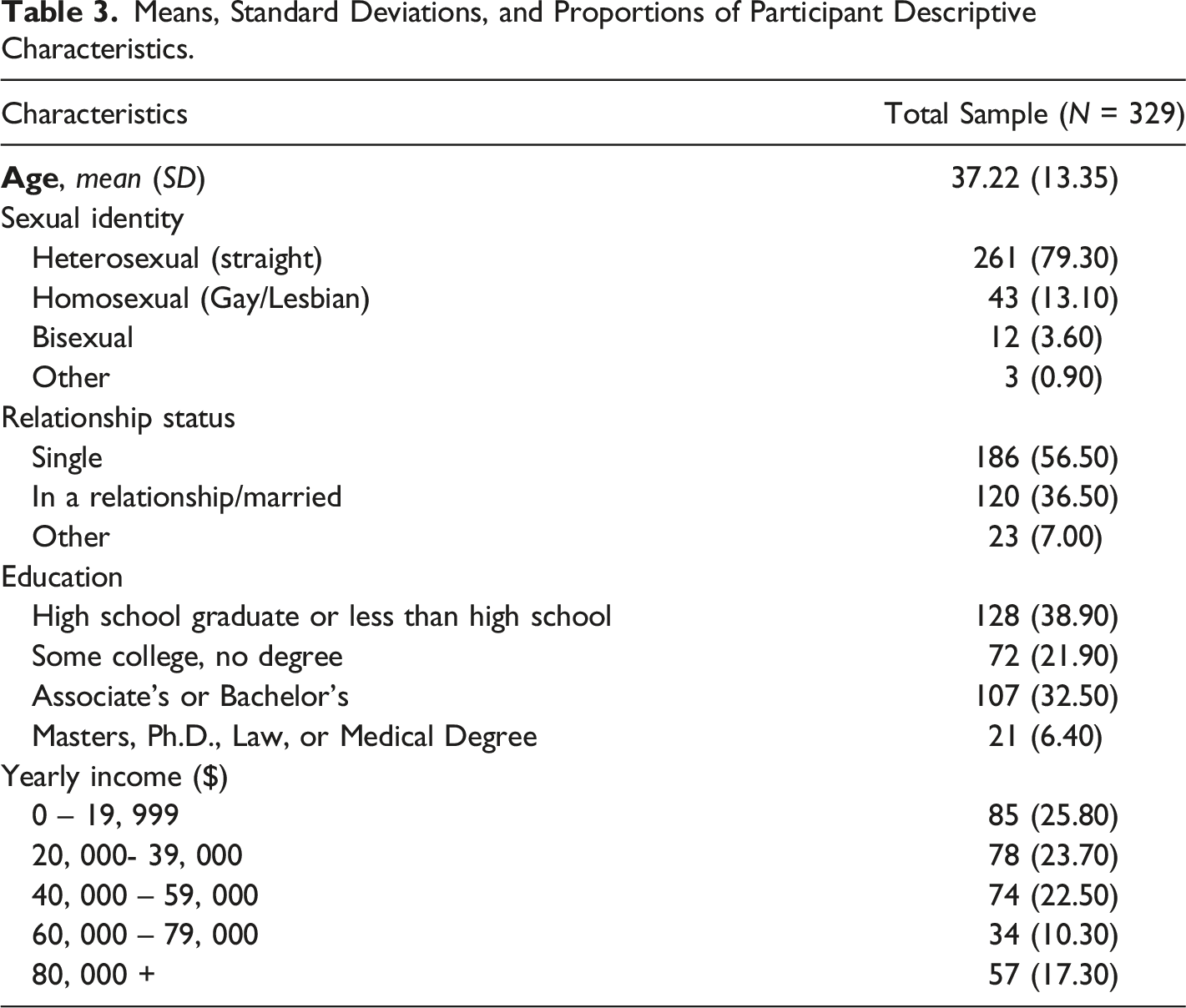
Three hundred and twenty-nine Black U.S. American adult men took part in this web-based survey (Age: Mean = 37.22, Standard Deviation = 13.35). Participants were recruited from a larger cross-sectional, non-representative study on Black American health. Briefly, self-identified Black American adults 18 years of age or older were recruited to complete an anonymous online survey using Qualtrics Panel.
Recruitment
We used Qualtrics panel aggregator, a service from a commercial marketing research company, to recruit online participants for this study. Qualtrics panel aggregator draws from various sources, including email lists, customer loyalty portals, and social media, to find participants. Panel members’ information is verified, using technology like digital fingerprinting and IP address checks, to ensure data validity. We targeted individuals who self-identified as Black/African American and were 18 years or older. They received an anonymous online survey link if they agreed to participate in the study.
Procedure
Those who clicked on the survey link were introduced to the “Black/African American Health” survey. The survey focused on understanding the social and psychological determinants of health in African American adults and covered various topics, including health behaviors, health status, racialized experiences, adverse childhood experiences, and self-evaluation. Participants completed the survey after providing informed consent and were compensated for their participation, with the specific compensation amount determined by their panel service provider, but not less than the 2020 federal minimum wage of $7.25. This study was approved by an Institutional Review Board.
Measures
Tough Black Man Measure
Tough Black Man Beliefs Endorsement Measure: Items and Content Source.

Note. GRSI = African American Men’s Gendered Racism Stress Inventory; BMES = Black Men’s Experiences Scale; MRNI-R = Male Role Norms Inventory-Revised.
Exploratory Factor Analysis (EFA)
Structure Coefficients From Principal-Axis Extraction/Oblimin Rotation and Skewness, Kurtosis, Corrected Item-Total Correlation and Kolmogorov-Smirnov Test of Normality of Tough Black Man Measure Items.
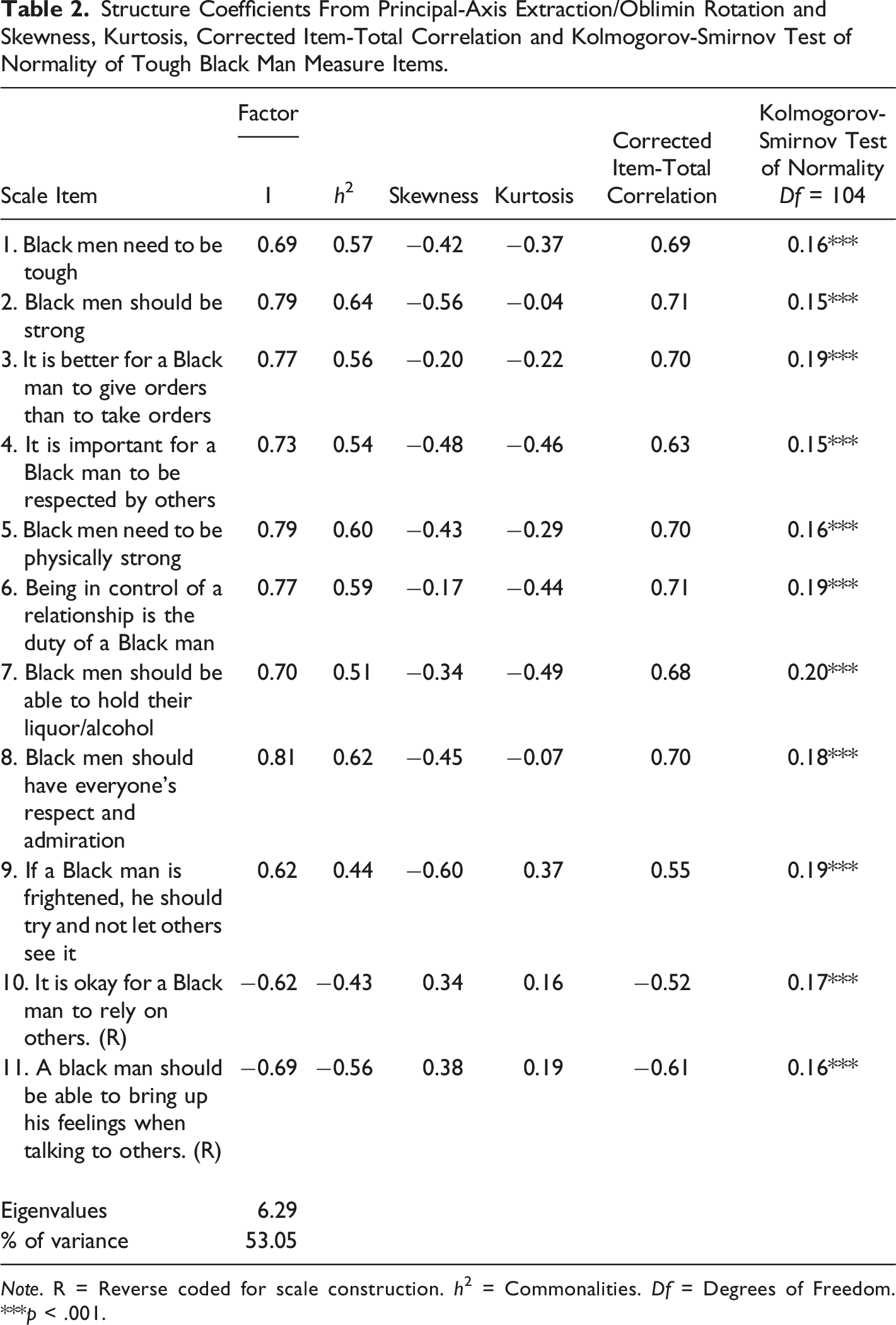
Note. R = Reverse coded for scale construction. h2 = Commonalities. Df = Degrees of Freedom. ***p < .001.
Given the non-normality of the TBM items, all items were subjected to an EFA with principal-axis factoring with direct oblimin rotation (Fabrigar et al. 1999). Factors with eigenvalues greater than 1.00, and items with factor loading of >0.40 and communalities >0.20 were retained (Schmitt 2011). Confirming expectations, EFA results revealed a single factor with and eigenvalue of 6.29 that explains 53.05 percent of the total variance. Item loadings (absolute value) ranged from 0.62 to 0.89. Communalities ranged from 0.43 to 0.64 (See Table 2 for results).
Reliability Estimates
Internal consistency of the TBM was assessed using Corrected Item–Total Correlations (CITC) and Cronbach’s alpha. Cronbach’s alpha ≥0.70 and CITCs >0.30 are considered desirable (Boateng et al. 2018). Given the valence of the factor loadings for items 10 and 11, they were reverse coded for reliability analyses. Cronbach’s alpha for the TBM is 0.92. CITC (absolute values) ranged from 0.52 to 0.71. The TBM was constructed by reverse coding items 10 and 11, and then averaging across all 11 items (M = 4.65, SD = 1.24). Greater values on the TBM scale reflect greater endorsement of Tough Black Man ideologies. A KS Test of normality was performed on the averaged TBM items. Results revealed a non-normal distribution of scores, D(322) = 0.10, p < .001. See Table 2 for results.
Discrimination
Discrimination was measured using an adapted 9-item version of the Everyday Discrimination scale (EDD; Williams et al. 1997), on a 6-point Likert scale (0 = never to 5 = almost every day). Sample statements include: “You are called names or insulted” and “You are treated with less respect than other people are.” All items were summed. High scores show more everyday experiences of discrimination (α = 0.96).
Stigma Consciousness
Stigma consciousness was measured using the 10-item Stigma Consciousness Questionnaire (SCQ; Pinel 1999) on a 7-point Likert scale (1 = strongly disagree to 7 = strongly agree). Sample items include: “Stereotypes about Black/African Americans have not affected me personally” and “Most White Americans do not judge Black/African Americans on the basis of their race.” The appropriate items were reverse-coded, and all items were then averaged. Greater values reflect a greater expectation that one will experience prejudice or discrimination, or greater stigma consciousness (α = 0.85).
Racial Identity
Racial identity was measured using the 5-item affirmation and belonging subscale of the Multigroup Ethnic Identity Measure (MEIM; Phinney 1992) on a 5-point Likert scale (1 = strongly disagree to 5 = strongly agree). Sample items include: “I have a lot of pride in my ethnic group” and “I feel a strong attachment towards my own ethnic group.” Responses to all items were averaged, with higher scores reflecting more positive attitudes towards and feelings of belonging to one’s racial group (α = 0.86).
Internalized Racism
Participants completed the 6-item pre-encounter self-hatred subscale of the Cross Racial Identity Scale (Worrell et al. 2004) on a 7-point Likert scale (1 = strongly disagree to 7 = strongly agree). Sample items include: “I have negative feelings about being Black” and “sometimes struggle with negative feelings about being Black.” All items were averaged. Higher scores represent greater internalized racism (α = 0.94).
Self-esteem
Self-esteem was measured using the 10-item Rosenberg Self-esteem Scale (RSE; Rosenberg 1965) on a 7-point Likert scale (1 = strongly disagree to 7 = strongly agree). Sample items include: “On the whole, I am satisfied with myself” and “I certainly feel useless at times.” The appropriate items were reverse-coded, and all items were then averaged. Greater values reflect higher self-esteem (α = 0.80).
Locus of Control
Participants completed the 8-item internal locus of control subscale of the Multidimensional Locus of Control Scale (Levenson 1973) on a 5-point Likert scale (1 = strongly disagree to 5 = strongly agree). Sample items include: “Whether or not I get to be a leader depends mostly on my ability” and “How many friends I have depends on how nice a person I am.” All items were averaged. Higher values reflect greater beliefs that one is in control of their behaviors and life outcomes (α = 0.86).
Resilience
Resilience was measured using the 6-item Brief Resilience Scale (BRS; Smith et al. 2008) on a 5-point Likert scale (1 = strongly disagree to 5 = strongly agree). Sample items include: “I tend to bounce back quickly after hard times” and “It does not take me long to recover from a stressful event.” The appropriate items were reverse-coded, and all items were then averaged. Higher values reflect greater resilience (α = 0.72).
Depression Symptoms
Participants completed the 6-item depression subscale of the Brief Symptoms Inventory (BSI; Derogatis and Melisaratos 1983) on a 5-point Likert scale (0 = never to 4 = very often). Sample items include: “Thoughts of ending your life” and “Feeling lonely.” All items were averaged. Greater values reflect greater self-reported past-month depression symptoms (α = 0.93).
Socio-demographics
Participants reported additional socio-demographic information: age [in years], education [High school graduate or less than high school; Some college, no degree; Associate’s or Bachelor’s; Masters, PhD, Law, or Medical Degree], sexual identity [Heterosexual (straight); Homosexual (Gay/Lesbian); Bisexual; Other], relationship status [single; In a relationship/married; Other], and income [0–19, 999 - 80, 000 +].
Data Analysis
We conducted a series of bivariate correlations to test our hypotheses related to the race-related and psychological correlates of TBM stereotype endorsement. We also conducted a multivariable linear regression to simultaneously examine the relationship between the race-related variables (predictors) and TBM stereotype endorsement (outcome). Last, we used simple linear regressions to explore the socio-demographic (predictor) correlates of TMB stereotype endorsement (outcome).
Results
Means, Standard Deviations, and Proportions of Participant Descriptive Characteristics.
Correlations Among Main Study Variables, Along With Their Means and Standard Deviations.
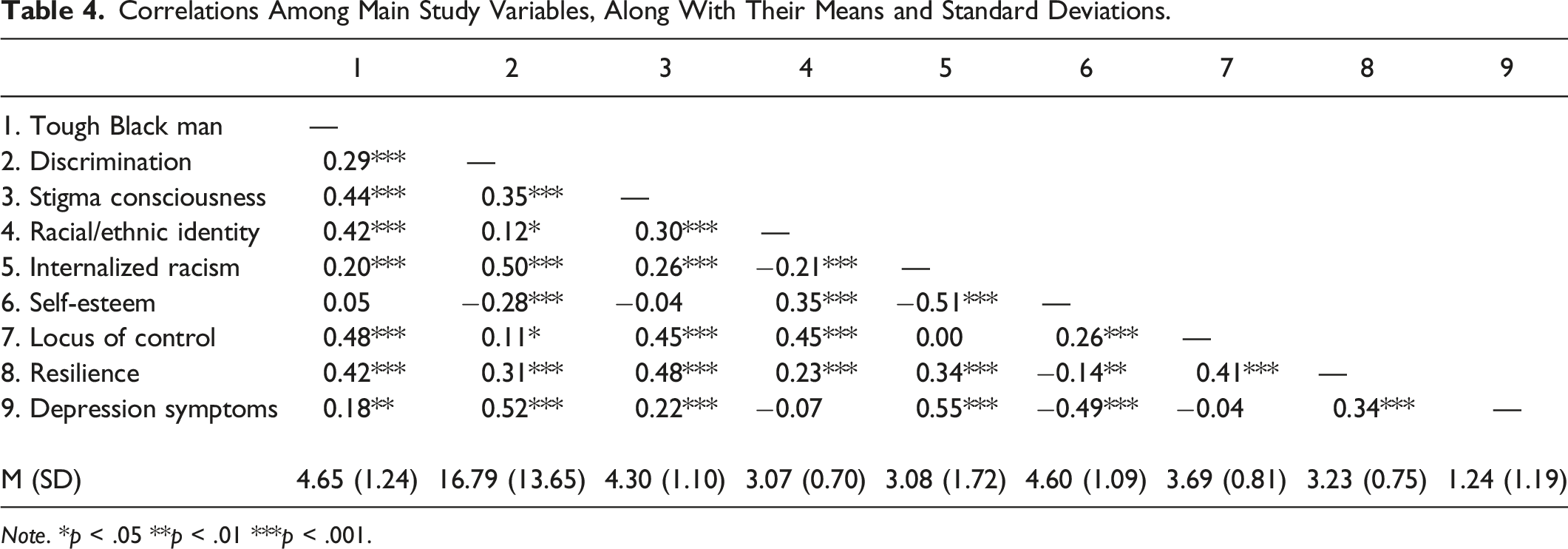
Note. *p < .05 **p < .01 ***p < .001.
Exploratory Analyses
Socio-demographic Correlates of Endorsing Tough Black Man Beliefs
Linear Regression Beta Estimates (b), Standard Errors (SE), p Values, and 95% Confidence Intervals (CI) for Socio-Demographic Correlates of Tough Black Man Belief Endorsement.

Note. +Results for simple linear regressions. Ref = reference group.
Primary Analyses
Race-related Correlates of Endorsing Tough Black Man Beliefs
Those who reported more experiences of discrimination (r = 0.29, p < .001), more positive attitudes towards belonging to their racial group (r = 0.42, p < .001), a greater race stigma consciousness (r = 0.44, p < .001), and greater internalized racism (r = 0.20, p < .001), were more likely to endorse beliefs related to the “tough Black man.”
Multiple linear regression results show that higher stigma consciousness (b = 0.29, SE = 0.01, p < .001, 95%CI[0.175, 0.410]), a more positive racial identity (b = 0.65, SE = 0.10, p < .001, 95%CI[0.465, 0.829]), and greater internalized racism (b = 0.12, SE = 0.04, p < .001, 95%CI[0.039, 0.203]) were associated with greater endorsement of “tough Black man” beliefs. However, against expectations, everyday discrimination was not associated endorsement (b = 0.01, SE = 0.01, p = .216, 95%CI[−0.004, 0.016]). Overall regression coefficients: F(4, 316) = 36.87, p < .001, R2 = 0.32.
Psychological Correlates of Endorsing Tough Black Man Beliefs
Those who were more likely to endorse beliefs about the “tough Black man” were also likely to report greater resilience (r = 0.42, p < .001), a higher internal locus of control orientation (r = 0.42, p < .001), and more depression symptoms (r = 0.18, p = .013). Against expectations, self-esteem was not associated with endorsement (r = 0.05, p = .388).
Multivariate linear regression results show that endorsing beliefs about the “tough Black man” was associated with all but one psychological outcome (F(4, 316) = 32.30, p < .001, Wilk’s Λ = 0.71, partial η2 = 0.29). In particular, greater endorsement of “tough Black man” beliefs was associated with a higher internal locus of control orientation (b = 0.31, SE = 0.03, p < .001, 95%CI[0.248, 0.375], R2 = 0.23), greater resilience (b = 0.25, SE = 0.03, p < .001, 95%CI[0.184, 0.305], R2 = 0.17), and more depression symptoms (b = 0.09, SE = 0.02, p < .001, 95%CI[0.047, 0.134], R2 = 0.05). However, against expectations, endorsement was not associated with self-esteem (b = 0.06, SE = 0.05, p = .215, 95%CI[−0.035, 0.155], R2 = 0.01).
Post-hoc Analyses
We conducted exploratory analyses accounting for socio-demographic variables alongside our primary analyses. Specifically, we ran multiple linear regressions for race-related correlates and multivariate linear regressions for psychological correlates while controlling for socio-demographic variables. The results of these supplementary analyses were consistent with our initial models (i.e., significant findings remained significant, and non-significant findings remained non-significant).
Discussion
This research suggests that some Black men subscribe to and endorse racialized gendered beliefs about the “tough Black man,” a dimension of Black masculine ideology. Our research provides evidence that highlights specific race-related and psychological correlates, which have implications for understanding the antecedents and consequences of endorsing beliefs about the “tough Black man.” For instance, results indicate that endorsing “tough Black man” beliefs is associated with poor psychological well-being, more depressive symptoms. Our research also underscores the significance of race and race-related experiences, including discrimination, racial identity, stigma consciousness, and internalized racism, in understanding the “tough Black man.” Collectively, this research provides some key insights into understanding potential antecedents and consequences of endorsing “tough Black man” beliefs among Black American men.
Results show those who reported a greater awareness or expectation that they will experience discrimination were also likely to endorse “tough Black man” beliefs. This finding implies that heightened race stigma consciousness among Black American men may prompt them to reflect on the social context of their “Blackness” and “masculinity” (Schwing, Wong, and Fann 2013). As a result, Black men who are more attuned to societal expectations regarding Black masculinity may feel increased pressure to conform to these expectations. This heightened pressure may, in turn, lead them to subscribe to “tough Black man” beliefs more strongly. Results also reveal a noteworthy relationship such that those who had a more positive sense of Black racial identity were also more likely to endorse “tough Black man” beliefs. This finding not only replicates prior research but also carries profound implications for understanding the “tough Black man” archetype. Conceptually replicating the work of Strayhorn and colleagues (2013), our results suggest that Black American men who do not strongly adhere to Black manhood ideals may feel less connected to the broader Black American community. This suggests that the “tough Black man” construct may serve as a mechanism through which Black men navigate their sense of racial identity and belonging.
In a society marked by historical and ongoing racial inequalities, Black men often find themselves at the intersection of complex societal expectations. The “tough Black man” archetype may represent an attempt to conform to, challenge, or negotiate these expectations. For some, endorsing beliefs about the “tough Black man” might reflect a response to external pressures, where the performance of toughness becomes a necessity to navigate prejudiced environments or to gain acceptance. In this context, it is not merely an expression of identity but also a survival strategy in a world that often perceives Black men through a narrow lens. For others, endorsing beliefs about the “tough Black man” might serve to assert their resilience and resistance in the face of systemic racism, embodying strength, and fortitude as a form of self-affirmation. Thus, it can serve as a tool for resilience and empowerment, a coping mechanism, or a response to societal pressures.
In support of this claim, our findings show that those who endorse beliefs about the “tough Black man” also reported a greater internal locus of control orientation and greater resilience. The positive association between endorsing “tough Black man” beliefs and an internal locus of control orientation reveals a compelling insight into the relationship between Black masculinities and personal agency. At its core, this suggests that individuals who endorse “tough Black man” beliefs may perceive these expectations as a pathway to self-empowerment and autonomy. For some Black men, adopting these beliefs becomes a means of navigating systemic racism and societal pressures. As a result, the “tough Black man” archetype may serve as a symbol of resistance, a declaration of agency in the face of racism and adversity, and a tool for them to reclaim narratives, assert their worth, and stand firm in their identity as Black men.
In embracing this archetype, some Black men may affirm their ability to shape their destinies and overcome challenges, ultimately bolstering their internal sense of control.
This relationship underscores the role of resilience in the construction and perpetuation of the “tough Black men” archetype, but also why we found a positive relationship between endorsing “tough Black man” beliefs and depression symptoms in our sample. Resilience is often described as an individual’s capacity to adapt, bounce back, and effectively recover from adversity, challenges, or traumatic experience; it is also closely linked to the ability to maintain mental and emotional well-being in the face of stress, trauma, or significant life changes (Davydov et al. 2010). However, demonstrating resilience under chronic stressful conditions can increase the risk of substantial impacts on brain function and structure, potentially leading to poor mental health (Davydov et al. 2010). This complexity underscores the need to differentiate between self-reported and objective measures of resilience and psychological well-being. While those who endorse “tough Black man” beliefs may perceive themselves as resilient, it is likely that these self-reported feelings of resilience do not consistently align with objective biophysiological well-being indicators, such as cortisol levels or brain function. As a result, it is likely that individuals in our study who strongly identify with the “tough Black man” archetype may find themselves in a paradox: they believe in their resilience and agency to confront adversity while simultaneously grappling with depressive symptoms. This paradox may arise from various factors, including societal expectations, systemic racism, and individual coping strategies.
Thus, for some, adopting and endorsing “tough Black man” beliefs can serve as a psychological defense mechanism to confront and cope with racism. In fact, our results that those who reported greater internalized racism, a source of race-related stress (James 2022), also reported greater endorsement of “tough Black man” beliefs. Moreover, the pressure to conform to the “tough Black man” archetype may contribute to the experience of depressive symptoms, as individuals bear the weight of continually meeting these expectations. These expectations may sometimes involve the avoidance of seeking care and support when needed, as well as the suppression of outward displays of emotional distress, both of which have been positively associated with poor mental health (Bruch 2002; Jakupcak et al. 2014).
Interestingly, our findings show that while endorsing “tough Black man” beliefs is associated with poorer mental health, it is not related to self-esteem. This suggests that the impact of these beliefs on one’s global self-evaluation and self-worth may differ from what has been observed in previous studies, particularly those focusing on Black American women who endorse racialized gendered stereotypes like the “Strong Black Woman” (see Thomas, Witherspoon, and Speight 2004). On the one hand, it is possible that because “tough Black man” beliefs include expectations that emphasize traits such as physical strength, emotional stoicism, and resilience, these traits might, to some extent, buffer against the negative effects of endorsing “tough Black man” beliefs on the self-concept of Black American men. It is also conceivable that other factors mediate or moderate the relationship between endorsing “tough Black man” beliefs and self-esteem. For example, it is possible that endorsing “tough Black man” beliefs is associated with lower self-esteem among Black American men who report receiving less (vs. more) social support.
Exploratory analyses revealed no socio-demographic (i.e., age, income, education, relationship status, or sexual identity) differences in the endorsement of “tough Black man” beliefs. The absence of socio-demographic differences in the endorsement of “tough Black man” beliefs highlights the robustness of this archetype among Black American men. These finding challenges assumptions that “tough Black man” beliefs are driven by individual characteristics. Rather, it points to the pervasive influence of sociocultural factors or collective experiences that transcend demographic variations, suggesting that the “tough Black man” archetype is perhaps deeply rooted in shared cultural narratives, historical contexts, or common challenges faced by Black American men. Moreover, the absence of select socio-demographic differences raises questions about how the “tough Black man” archetype functions as a unifying force for Black American men. For instance, it may serve as a source of strength and identity, a way to navigate societal pressures, or a coping mechanism in the face of systemic racism. Indeed, further research should examine the shared experiences, societal pressures, and cultural narratives that contribute to the widespread endorsement of “tough Black man” beliefs among Black American men.
Last, although experiences of everyday discrimination was positively associated with endorsing “tough Black man” beliefs in our bivariate correlation analysis—thereby conceptually replicating previous work (e.g., Thomas et al., 2008, 2004)—there was no relationship between the two variables in the multivariate linear regression analysis. On the one hand, this suggest that there is a statistically weaker relationship between everyday discrimination and endorsing “tough Black man” beliefs compared to either internalized racism, racial identity, or race stigma consciousness. On the other hand, this suggests that it is possible that interaction effects between everyday discrimination and either internalized racism, race identity, and race stigma consciousness on endorsing “tough Black man” beliefs. Exploring interaction terms in the multivariate model could reveal more nuanced findings. For example, it is possible that the relationship between those who internalize racism are also more likely to endorse “tough Black man” beliefs especially if they report more experiences of discrimination.
Altogether, this research highlights the potential strengths of using the Intersectionality framework (Bowleg 2012; Collins et al. 2000; Crenshaw 1990) as a lens through which to engage with Gender Role Strain theory (Levant and Powell 2017). In addition to considering gendered expectations, engaging with both frameworks allows for more nuanced discussions of gendered experiences, including societal expectations of Black American men. Black American men navigate complex cultural expectations regarding race, gender, and Black masculinity. Black American men navigate a complex web of cultural expectations related to race, gender, and Black masculinity. For instance, adopting this perspective introduces an alternate interpretation of the results that show no relationship between racial discrimination and the endorsement of “tough Black man” beliefs in the multivariate model.
This different interpretation follows the idea that conventional measures of racial discrimination may not fully capture the nuanced racist experiences encountered by Black men. As a result, relying solely on racist experiences is limited when explaining “tough Black man” belief endorsement. Instead, gendered racist experiences might serve as a more pronounced correlate or predictor of endorsing such beliefs. Black men often confront gendered racial discrimination, such as racial profiling by law enforcement or enduring racial microaggressions that intersect with perceptions of criminality. Consequently, it is apt to consider measuring and accounting for the distinct racist experiences that Black men face. For example, some Black men may encounter more gendered racist experiences than racist experiences, and vice versa, which could explain differences in the degrees of endorsing “tough Black man” beliefs.
Limitations and Future Directions
While promising this research has some limitations. First, this study used a non-random, non-representative, online sample of Black American adult men. As a result, the study’s findings are not generalizable to Black American adult men or Black American men under the age of 18 years. Future research should examine the correlates of endorsing “tough Black man” beliefs using random and representative samples of Black American men. Second, this research is cross-sectional, limiting claims of causality and directionality. Future research should investigate the prospective relationship between psychological and race-related correlates of these beliefs, along with their variation across socio-demographic profiles.
Third, the use of a non-validated measure in this study to capture “tough Black man” belief endorsement represent a notable limitation. The measure was pieced together by adapting and combining items from other validated scales. While this approach was employed, future research should prioritize the development of a fully validated measure for “tough Black man” belief endorsement. Developing a validated measure offers numerous advantages, ensuring data reliability and validity for accurate measurement of the construct. It also enables comparability across studies, enhancing our collective understanding of the “tough Black man.” It is also important to recognize that the identity factors explored in this study primarily focused on race alone, overlooking the multi-dimensional nature of Black masculinities shaped by various social dynamics. To advance this research, future studies should explore identity-related factors related to gender, such as gender identity, and other “intersecting identity” correlates. For instance, future research can examine the relationship between gendered racism and the endorsement of “tough Black man” beliefs.
Conclusions
This study examined the “tough Black man” archetype and its well-being and identity correlates among Black U.S. American men, with interesting findings. While endorsing “tough Black man” beliefs was associated with resilience and self-empowerment, it was also positively correlated with depression symptoms, underscoring a nuanced interplay of societal expectations, systemic racism, and individual coping strategies. Notably, the absence of an association between everyday discrimination and endorsing “tough Black man” beliefs prompts further exploration of such interactions and their impact on Black men’s experiences. Overall, this research provides significant insights into the Black manhood, particularly the complexities of “tough Black man” archetype, its cultural and psychological underpinnings, and its implications for the mental well-being and identities of Black American men.
Footnotes
Declaration of Conflicting Interests
The author(s) declared no potential conflicts of interest with respect to the research, authorship, and/or publication of this article.
Funding
The author(s) received no financial support for the research, authorship, and/or publication of this article.
