



Abstract
This study evaluated the effects of manualized training in “Basic” functional behavioral assessment (FBA) for typical school professionals on the ability of these professionals to complete technically adequate FBAs. Twelve school professionals participated in four 1-hr training sessions using the Basic FBA training handbook. After documenting knowledge competencies, 10 of the 12 professionals each completed a formal FBA with a student from their school. The technical adequacy of these 10 FBAs was assessed with functional analyses. Results from the 10 functional analyses confirmed that all 10 school professionals accurately identified the antecedents and consequences controlling student problem behavior. The efficiency and social validity of the Basic FBA training process was also investigated. These preliminary findings suggest a role for behavior specialists to train typical school personnel in Basic FBA procedures. Implications, limitations, and directions for future research are presented.
Compelling research literature exists demonstrating that behavioral interventions based on the function of behavior are more likely to result in significant change in student behavior (Carr & Durand, 1985; Carr et al., 1999; Didden, Duker, & Korzilius, 1997; DuPaul, Eckert, & McGoey, 1997; Filter & Horner, 2009; Ingram, Lewis-Palmer, & Sugai, 2005; Kearney, Pursell, & Alvarez, 2001; Kennedy, Meyer, Knowles, & Shukla, 2000; Newcomer & Lewis, 2004; Payne, Scott, & Conroy, 2007; Steege, Wacker, Berg, Cigrand, & Cooper, 1989). In 1997, the federal government acknowledged that identification of behavioral function was a part of expected professional practice when developing behavioral interventions in special education (Individuals With Disabilities Education Act, 1997). Over a decade later, however, schools still struggle to conduct effective behavioral assessment, design coherent intervention plans, and establish effective behavior supports (Blood & Neel, 2007; Scott, Liaupsin, Nelson, & McIntyre, 2005; Van Acker, Boreson, Gable, & Potterton, 2005). The challenge still remains for the field to extend the science of functional behavioral assessment (FBA) to regular school practice by defining effective, efficient, and practical FBA methods within school contexts.
Schools may grapple to establish their capacity to implement FBA due to their tendency to treat most behavioral problems as complex, requiring complicated time-intensive assessment procedures involving behavior specialists (Scott, Liaupsin, Nelson, & McIntyre, 2005). The overreliance of behavior specialists for cases that may not require such expertise limits the capacity of a behavior specialist to effectively support those students who may actually require intensive interventions. Although only a small proportion of student problems in public schools require complex interventions guided by trained behavior specialists, all cases (regardless of complexity) can benefit from a function-based lens (Scott & Caron, 2005). Therefore, transforming the role of behavior specialists in schools may be critical to expanding the effective implementation of function-based supports in public schools.
Expanding the role of highly skilled behavior specialists from not only guiding the design and implementation of complex behavioral interventions but also conducting training for typical school personnel in Basic FBA procedures may create the capacity for schools to effectively implement FBA. In this context, Basic FBA would be applied in situations where the problem behavior was (a) not physically threatening to the student or others and (b) limited to no more than two daily routines (e.g., recess, cafeteria, math instruction). Giving effective training tools, procedures, and trainings provided by behavioral experts would allow every school to have one or two individuals onsite who could complete a Basic FBA. This may facilitate application of FBA to a wider range of needs and more efficient use of highly skilled school personnel.
The purpose of this study was to determine whether typical staff with flexible roles in schools (e.g., counselors, administrators) can be trained to conduct valid FBAs when the presenting problem behavior of the student is not complex. Given that the FBA process can be rather complex, time-consuming, and require a number of resources (Schill, Kratochwill, & Elliott, 1998), providing schools with procedures to delineate methods for cases that require extensive FBA methods versus practical FBA methods may assist schools in developing their capacity to effectively support all students. This study examined the efficacy of a Basic FBA process and training manual for personnel with flexible roles in public school settings.
The primary research question driving the study was as follows: “Are FBA summary statements developed by typical (but trained) school personnel consistent with the consequences for problem behavior identified through formal functional analyses?”
Secondary research questions were as follows:
Research Question 1: Is there a change in school participant knowledge about FBA pre- and post-Basic FBA training?
Research Question 2: Is there consistency between FBA summary statements generated solely from guided interviews conducted with staff (before completing confirming direct observation) and the results from formal functional analyses of student behavior?
Research Question 3: Are the FBAs conducted by typical school professionals procedurally adequate?
Research Question 4: Is the Basic FBA training process perceived as efficient and socially valid within schools?
Method
The study was conducted in three phases. The initial phase focused on the training of typical school personnel in the FBA process. Demographic information and pre- and posttraining tests of FBA knowledge were collected from each participant during this phase to describe their initial and resulting ability to conduct an FBA. The second phase involved the participants using their FBA skills to complete the FBA process for a student. Measures of FBA procedural adequacy, time expended in the process, and acceptability of the FBA methods were evaluated during this phase. The third phase of the study involved formal functional analyses performed by the investigators to assess the validity of the school professionals’ FBA results. Functional analyses (Borgmeier & Horner, 2006; Iwata, Dorsey, Slifer, Bauman, & Richman, 1982, 1994) were conducted with students within settings identified by the school professionals to determine whether their FBA results were accurate and ultimately determining the efficacy of the Basic FBA training process.
Settings and Participants
Schools and School Professionals
Ten elementary schools (kindergarten through fifth grade) in a school district in the Pacific Northwest and 12 school professionals with flexible roles (i.e., not directly responsible for instruction of students) in these schools were recruited to participate. All participants had experience as members of individual student behavior support teams, but none of the participants were behavior specialists or board certified behavior analysts. The participants were provided the opportunity to participate in this study through nomination by their school district administration. Each of the 12 school professionals formally consented to participation in the study, and signed up to attend one of three training cohorts (each cohort received four 1-hr training events). Cohort 1 included 4 school professionals who attended trainings in the early fall (late September to mid-October). Cohort 2 consisted of 3 participants who attended trainings in late fall (late October to early November). Cohort 3 was made up of 5 participants who attended trainings in the winter (mid-January to early February).
Table 1 shows demographic information of the school professionals that participated in the study. Seven of the school professionals were school counselors (58%), two were principals (17%), two were learning specialists (17%), and one was a vice principal (8%). The participants averaged 14 years of experience in education (range = 4–33 years). Seven of the 12 participants (58%; 5 counselors and 2 learning specialists) stated they had conducted an FBA before. All 12 of the participants indicated that they had experience as members of a team implementing behavioral interventions for students prior to the training. Participants rated themselves on average 3.4 out of 4 (0 = none to 4 = extensive) on their perceived knowledge of basic behavioral theory.
School Professional Demographics and Assessment Scores.

Note. FBA = functional behavioral assessment; VP = vice principal. Participants 11 and 12 completed the Basic FBA training but did not complete a Basic FBA for a student.
Following Basic FBA training, 10 of the 12 school professionals completed a FBA as part of the normal behavior support process within their school. The 2 professionals (1 vice principal and 1 counselor) who did not complete an FBA within the remaining months of the school year indicated that the need did not arise.
Students
After the Basic FBA training sessions were completed, 10 students from 10 different schools were identified by the trained school professionals for the second phase of the study based on typical behavior support procedures involving staff nomination of students whose behavior was a barrier to their academic and/or social success in school. Within the Basic FBA training, school professional participants were provided instruction on student’s for whom a Basic FBA would be appropriate compared with students who required a more extensive FBA. These criteria were (a) students did not engage in behaviors dangerous to themselves or others and (b) problem behaviors were not pervasive throughout the school day (i.e., behaviors did not occur in more than two school routines). Following staff nomination, the first author conducted brief preliminary staff interviews and student observations to verify that the students met the criteria for a Basic FBA. In addition, the first author ensured that nominated student participants provided parent consent and student assent following American Psychological Association (APA) standards for participation in research. All of the students nominated by their school personnel for participation in Phase 2 of the study were included in the study.
All 10 of the student participants were of elementary age: 1 kindergartener (Participant 6), 1 first grader (Participant 10), 5 second graders (Participants 1, 4, 5, 7, 9), 1 third grader (Participant 2), and 2 fourth graders (Participants 3, 9). Of the 10 participants, only 2 of the students were girls (Participants 1 and 8). Four of the students (Participants 1, 4, 6, 10) received special education services under the eligibility criteria of “learning disabled”; however, all students received instruction in typical general education classrooms. The classroom sizes ranged from 16 to 24 students (median = 21).
Measurement
FBA Knowledge Assessment
Each of the 12 school professionals who received Basic FBA training was administered an assessment of FBA knowledge (available from the first author) prior to training and again as part of the final training session. The nine items of the FBA Knowledge Assessment generated a total score between 0 and 35 points. The first two items of the assessment were short-answer questions that evaluated each participant’s ability to list the steps and outcomes of an FBA (4 points; 11% of score) and compared an efficient versus a comprehensive FBA (3 points possible; 9% of score). For Items 3 and 4, participants were asked to operationally define behavior using multiple-choice and short-answer formats (4 points possible; 11% of score). In Item 5, participants were provided with two scenarios from which they were to use a short-answer format to identify (a) a setting event (1 point possible; 3% of score), (b) an antecedent (1 point possible; 3% of score), (c) a consequence (1 point possible; 3% of score), and (d) behavioral functions (2 points possible; 6% of score). Item 6 provided four boxes for participants and asked them to “label and briefly define the 4 key terms (i.e., 4-term contingency) that are included in a ‘summary of behavior’ or hypothesis statement developed from an FBA” (8 points possible; 23% of score). For Item 7, participants were asked to summarize student behavior based on a scripted scenario (4 points possible; 11% of score). Finally, for Items 8 and 9, participants were provided with a completed Functional Assessment Checklist for Teachers and Staff (FACTS interview form; March et al., 2000; McIntosh et al., 2008) that was created solely for the purpose of this assessment. Participants were asked to identify (a) the routine where the behavioral problems occurred (1 point; 3% of score) and (b) the FBA summary statement for the target problem behavior (6 points; 17% of score). The assessment took participants an average of 20 min to complete, but they were provided with as much time as they needed.
The participant’s scores on pre- and posttraining assessments were calculated. Twenty-five percent (6) of the pre- and posttraining tests were randomly selected and rated by a second rater. Based on an answer key indicating the answers for the tests (created before initial scoring of the assessments), the two raters achieved 99.05% total agreement ([Agreement / Agreement + Disagreement] × 100%).
Basic FBA Conducted by School Professionals
After the Basic FBA training was completed, the trained school professionals were asked to conduct an FBA for a student within their school using the tools and procedures they received from the training. The participants did not receive any coaching, feedback, or assistance from the authors following the training. The school professionals contacted the first author once they had fully completed an FBA.
Staff Interviews
Ten of the 12 school professionals who completed the Basic FBA training conducted an interview and completed the FACTS interview form (March et al., 2000; McIntosh et al., 2008) with the teacher of a student identified as requiring behavior supports. These interview data were used to develop a preliminary FBA summary statement hypothesizing (a) the setting events, (b) the antecedent events triggering (c) the problem behavior(s) and (d) maintaining the function of the student’s problem behavior in the defined antecedent context. Part of the Basic FBA process is confirmation of interview information via direct observation. As such, interview data guided selection of the routines and behaviors used in direct observations to validate FBA findings.
Direct Observations
School professionals who received the Basic FBA training observed students in those routines identified on the FACTS as most likely to involve problem behavior. The direct observation data were used to confirm, disconfirm, or enhance the hypothesis statement developed from the FACTS interview conducted with staff. Participants used a modified version of the Antecedent Behavior Consequence (ABC) recording form (Van Norman, 2007) to gather direct observation data (form available from the first author). The modified ABC form provided space for observers to input elements of an FBA summary statement. In addition, checkboxes of categories for the activities, antecedents, and consequences were provided on the form to enable observers to determine the frequency that these categories were observed. Finally, the form guided recorders to rate, on a scale of 1 (not sure) to 6 (100% sure), their confidence that the summary statement from the observation was accurate. Participants used the summary statement scale on the modified ABC recording form to determine whether more observations were required (i.e., rating of less than “4” [content taught within the Basic FBA training]). On average, participants conducted direct observations twice (five participants conducted one observation, three participants conducted two observations, one participant conducted six observations, and one participant conducted seven observations). The average total time participants spent observing a student was 49 min (range = 20–127 min).
FBA Procedural Adequacy Checklist
Each trained participant completing a Basic FBA at their school (N = 10) submitted their interview and observation results with a final summary statement defining the student’s behavior, antecedent events triggering the behavior, and hypothesized function of the student’s problem behaviors. An FBA Procedural Adequacy Checklist (available from the first author) was used by the first author to rate each FBA completed by the participants to determine whether the following five features were met:
Interviews were conducted with a staff member who worked with the student during routines where problem behavior occurred;
Problem behavior was defined in observable and measurable terms;
A routine was prioritized for direct observation;
An antecedent event was defined as exerting stimulus control over the problem behavior; and
The primary maintaining function of the problem behavior was identified.
Each FBA received a score between 0 and 5 for FBA Procedural Adequacy. Six of the 10 FBAs (60%) were rated with a second independent rater (a graduate research assistant blind to the purpose of the study) to determine the reliability of the scoring of the procedural adequacy. There was 100% agreement between the two raters on the procedural adequacy of these FBAs.
Acceptability Rating Questionnaire (ARQ)
At the conclusion of the study, the school professionals were given a questionnaire to identify the level of acceptability of the FBA training and process (the ARQ is available from the first author). The ARQ consisted of 10 questions concerning the acceptability of the training process, FBA materials, and FBA procedures used by the school professionals. Each question included a Likert-type scale ranging from 1 (strongly disagree) to 6 (strongly agree) producing a summary score between 0 and 60.
Record of Time Expended in Conducting FBA
The school professionals were asked to document the amount of time they spent in scheduling, conducting, and completing the FBA process. This was completed using a time log with the dates, and start and end times for completing each task of the Basic FBA process (e.g., interviews, observations, summarizing results). The time log included a column titled “tasks that labeled the following rows”: (a) “scheduling FACTS interview with teacher(s),” (b) “conducting FACTS interview with teacher(s),” (c) “conducting student-guided FACTS interview,” (d) “observing student behavior using ABC form(s),” (d) “completing summary statements,” and (e) “other related tasks” with additional blank space. The remaining columns on the time log were “date(s),” “start time(s),” “end time(s),” and “total time.” Results were summed to determine total time required to complete the FBA process.
Direct Observations During Functional Analysis (FA)
During functional analyses, graduate students who had completed 4 hr of training in behavioral observation and documented interobserver agreement (IOA) at or above a 90% criterion collected observation data on the occurrence or nonoccurrence of target behaviors using a partial-interval recording system. The specific FA conditions varied slightly between students based on the specific hypotheses generated from the Basic FBA. Before observing a student, observers were provided with the procedures and specific conditions that were to be used in the FA. All observers were blind to the hypotheses being tested. Nearly 44% (43.64%) of all observations were observed by two observers. The total IOA ([Agreement / Agreement + disagreement] × 100%) across all of the observations was 99.11%. Individual IOA scores per student participant ranged from 93.3% to 100%.
Design and Procedure
Basic FBA Training
Twelve school professionals participated in the Basic FBA training, which consisted of four 1-hr training sessions guided by a training manual (Loman & Borgmeier, 2010) and delivered by the first author. Each of the training sessions followed a format based on recognized instructional design principles (e.g., Kame’enui & Simmons, 1990; Metz, Burkhauser, & Bowie, 2009; Wiggins & McTighe, 2005). Sessions started with a definition of the training objectives, then (for Sessions 2–4) a review of the content and tasks from the previous session. Reviews were followed by a presentation of new content embedded with multiple practice opportunities. During the practice opportunities, participants engaged with the content and with other participants allowing for feedback from the trainer. Sessions concluded with each participant completing and submitting a “Checks for Understanding” worksheet where they answered key questions assessing mastery of the content presented. The trainer reviewed each of the worksheets and provided written feedback to each participant at the successive session (for Sessions 2–4).
Between each session, participants were asked to complete a task where they could practice using the new tools and procedures presented with staff and students at their school site. None of the students used for these practice sessions were included in the study. School professional participants did not select their student participants until after completing the training. On average, it took participants 37 days to start the FBA process (i.e., obtain permission) after they had completed the trainings (range = 2–102 days). They may have had “in mind” whom they wanted to use for the actual FBA, but this was not made evident to the authors. Furthermore, no coaching or feedback was provided to school professionals at their school site at any point in the study.
The first session of the training provided an overview of the Basic FBA training series and introduced concepts, examples, and practice opportunities to (a) operationally define behavior, (b) identify the function of behavior, (c) construct functional behavioral summary statements, and (d) identify students for whom practical and complex FBA procedures are required (i.e., identifying conditions for which a behavior analyst should be consulted to provide further assessment of student behavior). The second training session briefly reviewed content from the first session and provided instruction, modeling, and practice opportunities in conducting FACTS interviews with staff and students (Borgmeier & Horner, 2006). Participants practiced completing a FACTS interview by role-playing as an interviewer and teacher guided by a script (concerning a fictional student) provided within the Basic FBA manual. During this training session, participants also practiced constructing behavioral summary statements from each interview. Between Sessions 2 and 3, participants were asked to practice completing a FACTS interview with a staff member within their school concerning an actual practice student (not the student for whom they conducted their FBA submitted for the study).
The third training session provided a brief overview of the previous trainings and then instruction and practice opportunities for participants to conduct ABC (Bijou Peterson, & Ault, 1968) observations (i.e., direct observations of students within routines identified as settings in which the problem behavior occurs most frequently based on the staff FACTS interviews). Participants used an ABC recording form provided within the Basic FBA manual to practice recording behaviors observed from short (2–3 min) video clips of three fictional student actors (from Scott, Liaupsin, & Nelson, 2005). During this third session, participants also practiced constructing summary statements based on data from their observations to verify or modify summary statements derived from their FACTS interviews.
Between the third and fourth sessions, participants were asked to practice using the ABC recording form to practice observing a student at their school site. The fourth and final training session included (a) an overview of all of the concepts and skills taught during the first three sessions; (b) opportunities for participants to practice the skills that they had learned in conducting interviews, observations, and constructing behavioral summary statements; (c) introduction to the competing behavior pathway (Crone & Horner, 2003); and (d) strategies for working with individual student support teams to link FBA data to design function-based behavioral supports. Specifically, participants were taught that all elements (setting events, antecedents, alternative and desired behaviors, and consequences) of a student’s behavior support plan should be based on the maintaining function of student behavior. Examples of interventions for attention-maintained behaviors and escape-maintained behaviors were presented, though participants were not expected to have mastered these concepts from this final session.
The first author, who had a 5-year history of conducting and using FA, FBA, and function-based interventions, administered the Basic FBA trainings. The first author completed fidelity checklists for every training session for each of the three cohorts. These training fidelity checklists noted the number of attendees, start time, end time, and the completion of the prescribed aspects of the training according to the manual. The prescribed aspects, according to the manual, were completion of each review activity, session activity, and final checks for understanding activity. For 33% of the training sessions, interrater reliability on the fidelity of training components was calculated. There was 100% agreement between the raters as to the fidelity of training components administered per session.
Prior to receiving the Basic FBA training, each participant completed an assessment of FBA knowledge and skills (available from the first author). During the training, participants did not receive any type of feedback regarding their pretests, nor did participants have access to their pretest results. After each participant completed all four sessions of the training, he or she completed a posttraining test of FBA knowledge and skills with the same vignettes and questions from the pretest. The assessment on average took participants 20 min to complete; however, participants were provided as much time as they needed to complete the assessment.
FA
FA procedures followed those recommended by Iwata et al. (1982, 1994) and adapted for FBA validation by Borgmeier and Horner (2006). Each FA involved a multielement design across maintaining conditions adapted to the specific characteristics of the identified routine and context in which the target behavior was most likely. The FA conditions were designed specifically to test the validity of the summary statement developed from FBAs.
To determine the conditions to be used within each FA, the authors reviewed each trained professionals completed FBA. Next, the first author spoke briefly (no more than 5 min) with the school professional who conducted the FBA to identify the classroom teacher and possible conditions for conducting the FA. The first author then spoke with the student’s teachers to describe procedures that were to occur for each condition and observation period. Seven of the 10 FAs were conducted within the student’s classrooms during the targeted routine identified by the FBA. The other 3 FAs (for Participants 5, 6, and 7) were conducted in small vacant classrooms where the researchers used the regular class activities and materials along with two to three peers from the target student’s class. The FAs that were not conducted within the student’s classrooms were due to the teachers being concerned about the level of disruption to the rest of the students, which may have been caused by the researcher and observers.
Each FA consisted of three conditions: control, attention, and escape. The control condition was designed to establish a condition in which the student would be predicted, based on the FBA hypothesis statement, to perform little to no problem behavior (e.g., the presumed reinforcer maintaining problem behavior was available as part of the antecedent context).
The attention condition involved establishing a context in which the presumed maintaining reinforcer (adult or peer attention) was available but accessed only contingent upon occurrence of the problem behavior. In the cases where peer attention was hypothesized as the function of student problem behavior, peers were present in the condition to allow for peer response to the target student’s problem behavior. If peers did not respond to the student following his or her problem behavior, the researcher ensured that contingent (adult) attention was provided to the student within the context of peers.
The escape condition examined the function of student behavior through the contingent removal of presumed aversive tasks following the occurrence of the problem behavior. The tasks for each individual student were part of the regular curriculum, and identified through teacher and student interviews as “nonpreferred.” Each FA condition consisted of ten 30-s trials and lasted a maximum of 5 min (total of 15 min per observation session). Observers utilized a partial-interval system to record data; therefore, some conditions were completed within less than 5 min. Conditions were randomly ordered within three session blocks (Control, Attention, and Escape). A brief transition period followed each condition. Before starting a new condition, the student was provided with a verbal description of the procedures that were to be used in that condition.
Results
The primary goal of this study was to determine whether typical school personnel who receive training in behavioral assessment procedures can conduct valid FBA for students with mild to moderate behavior problems. A secondary goal of this study was to examine the social validity and acceptability of the Basic FBA training process. The results of each of the research questions of this study will be presented in the order that they were examined.
FBA Knowledge and Skills Assessment
A secondary research question asked whether there was a change in school participant scores on FBA knowledge assessments pre- and post-Basic FBA training procedures. Table 1 shows the results of the 12 school professionals that completed FBA knowledge and skills tests before and after receiving the Basic FBA training. The average participant pretraining FBA knowledge score was 39.50% (SD = 18.82; range = 11.40%–68.50%). Of the nine Knowledge-Test elements, participants (before the training) averaged above 53% on only one element (identifying a routine in which problem behavior is most likely [given a completed interview form]; 83%). Despite 58% of the participants having completed an FBA prior to the training and rating themselves high on behavioral knowledge (3.4 out of 4), participants consistently scored low on identifying steps in the FBA process (0%), identifying key features of summary statements (17%), operationally defining behavior (53%), identifying antecedents (33%), identifying consequences (42%), identifying functions (46%), identifying setting events (42%), and summarizing behavior based on a completed FACTS interview form (0%). The average posttraining assessment score for participants averaged 92.55% (SD = 7.22; range = 77%–100%). The 12 participants averaged at or above 92% on eight of the nine elements in the posttest, with Summarizing the Behavior Pattern continuing to be a challenge for some of the participants (M = 67%). Overall, the average percent change for participants from pre- to posttraining assessment was an increase of 53.77% (SD = 15.71). After the training, all of the participants except one (Participant 12; M = 77%; +51.29% increase from pre- to post-assessment) scored at least 80% on the post-assessment.
FBA Procedural Adequacy
Another secondary research question sought to determine whether the FBAs conducted by school professionals were judged to be procedurally adequate. Ten of the 12 trained school professionals completed an FBA, and the process was assessed for procedural adequacy. All of the FBAs conducted by the school professionals met 100% of the procedural adequacy criteria.
Efficiency and Social Validity of Basic FBA Process
The third research question examined whether the Basic FBA training and FBA process was judged to be efficient and socially valid for use in schools. To address this question, the 10 school professionals were each asked to keep a log of how much time they spent in completing the Basic FBA tasks. Overall, the average time it took a participant to complete all of the tasks involved in the Basic FBA process (schedule interviews, conduct interviews, complete direct observations, write up results) was just below 2 hr (M = 119.40 min, SD = 96.00). The shortest time it took a participant to complete all of the tasks was 65 min, whereas the longest it took a participant to complete the process was 275 min (4.58 hours).
Upon completion of an FBA for a student at their school, school professionals were asked to complete a questionnaire rating the acceptability of the Basic FBA training and procedures. Participants were asked to rate the items using a 6-point Likert-type scale (1= strongly disagree, 2 = disagree, 3 = slightly disagree, 4 = slightly agree, 5 = agree, 6 = strongly agree).
Participants, on average, indicated that they agreed (average score of 5 or above) with all of the 10 statements in the acceptability rating profile. Participants most “strongly” agreed with the statements that they would suggest the training to other school professionals (M = 5.70, SD = .48) and that overall the experience was beneficial (M = 5.70, SD = .48). The lowest rated item (use of student-guided FACTS interview in the future) by participants was rated with an average of 5.00 (SD = 1.05).
Comparison of Summary Statements Generated From FACTS Interviews and Functional Analyses
The final secondary research question asked whether there was consistency between summary statements generated solely from FACTS interviews (before conducting observations) and functional analyses of student behavior. Table 2 presents the summary statements generated by the participants from their (a) FACTS interviews, (b) ABC observations, and (c) overall FBA process from each school professional participant. In addition, the maintaining reinforcer identified via experimental functional analyses for each student is presented in the last column. The summary statement data in Table 1 were obtained from (a) the FACTS interview, (b) the ABC observations, and (c) an overall or “final” summary statement based on all the available data, and used to guide design of a behavior support plan.
Summary Statements Constructed From Interviews, Observations, and Overall Results.
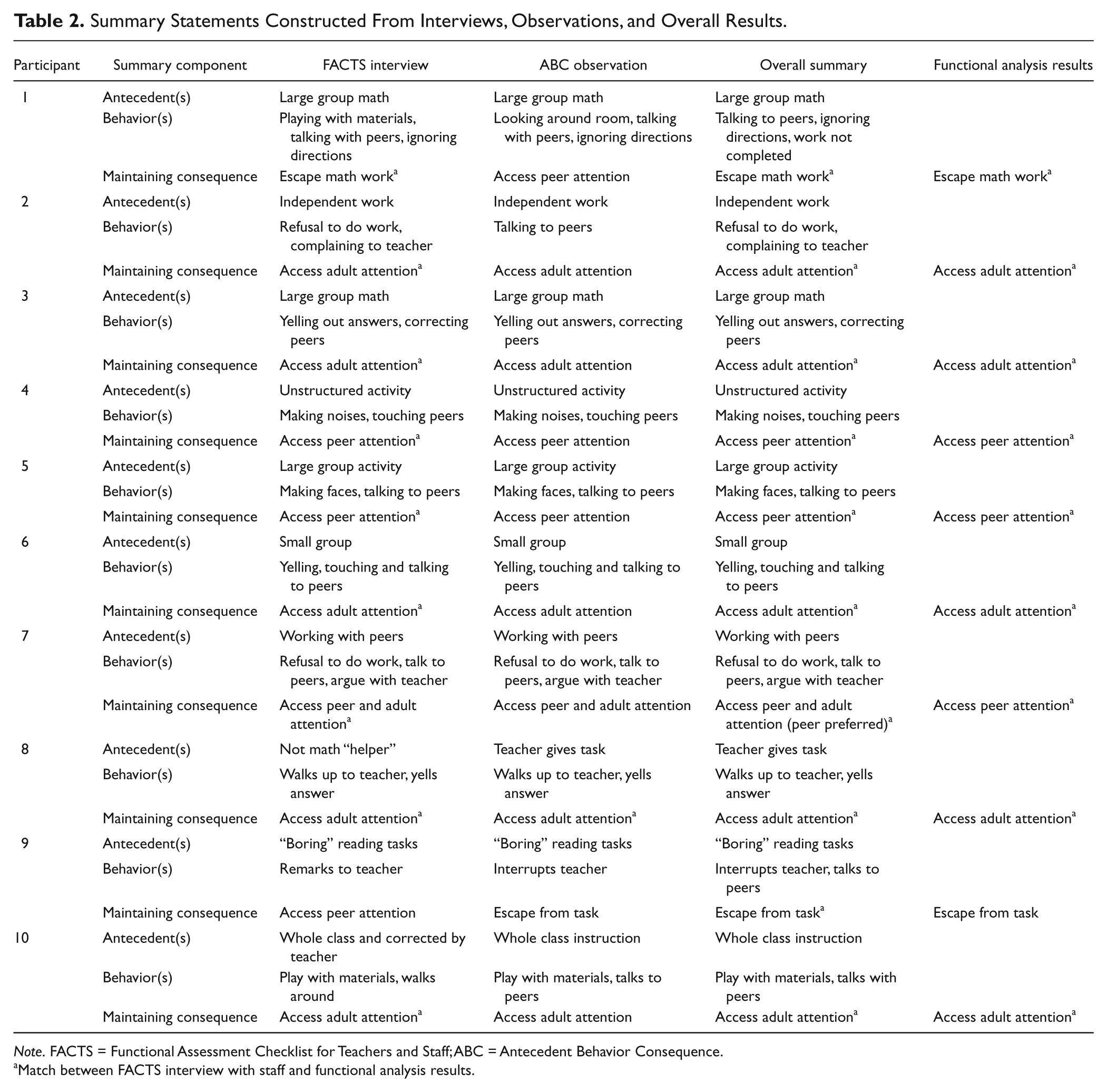
Note. FACTS = Functional Assessment Checklist for Teachers and Staff; ABC = Antecedent Behavior Consequence.
Match between FACTS interview with staff and functional analysis results.
The Basic FBA process involves interviewing the person in the school who knows the student best (typically the student’s teacher and with older students, the student himself or herself) and conducting a postinterview direct observation to confirm the interview summary statement. Eight out of the 10 (80%) summary statements hypothesized by the FACTS interviews with teachers were confirmed through direct observations. Participant 1 had a FACTS interview identify her problem behavior as maintained by escape from math tasks, but her ABC observation was interpreted as finding her problem behavior maintained by peer attention. The overall summary statement, however, indicated escape from math tasks as the maintaining reinforcer, with the submitting professional noting that the student was observed to escape from math tasks and then access peer attention. Following the direct observation, the professional concluded that escape from math tasks was the primary maintaining reinforcer.
Participant 9 was found to engage in problem behavior maintained by access to peer attention based on the FACTS interview, but the ABC observation indicated escape from tasks as the primary maintaining reinforcer. In this case, the professional conducting the assessment felt that the direct observation data provided a more accurate summary statement, and used “escape from task” in the overall summary statement.
The primary research question of this study examined whether summary statements generated via Basic FBA procedures (interviews and observations) conducted by typical school professionals were consistent with results from formal functional analyses. The overall summary statement for each student was assessed within a formal FA and 10 of 10 (100%) overall summary statements were confirmed by FA results (see Figures 1–10).
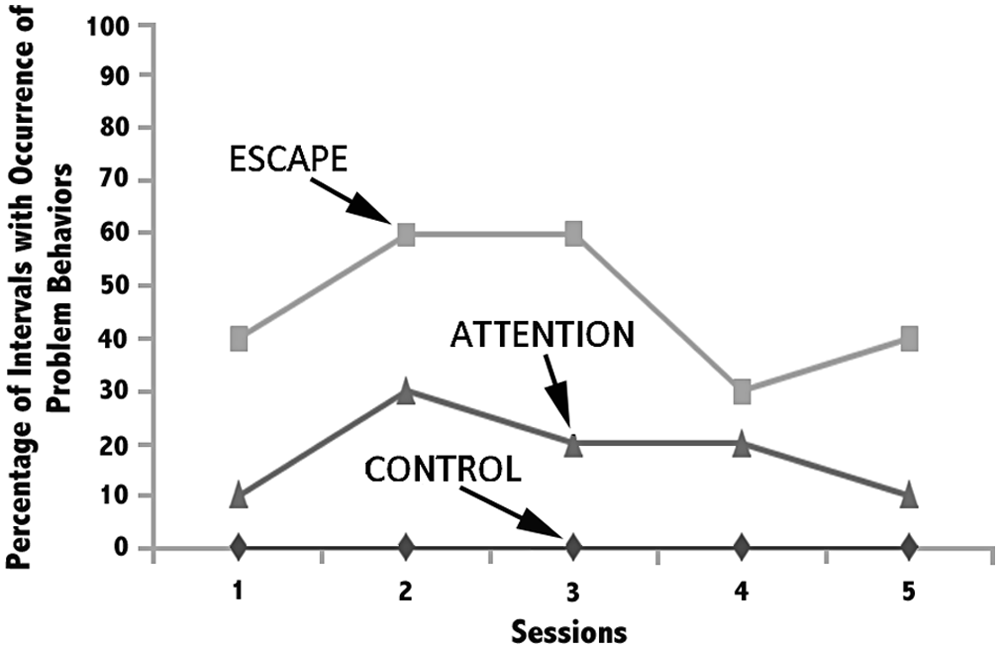
Functional analysis results for Participant 1 to test the summary statement indicating the maintaining function as escape math work.
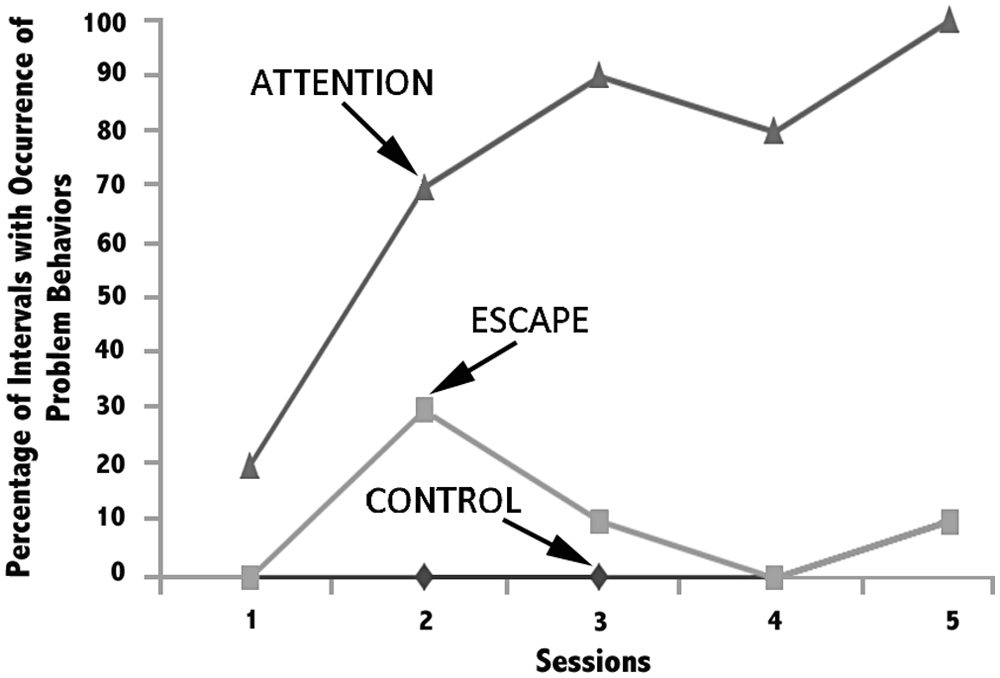
Functional analysis results for Participant 2 to test the summary statement indicating the maintaining function as access to adult attention.

Functional analysis results for Participant 3 to test the summary statement indicating the maintaining function as access to adult attention.
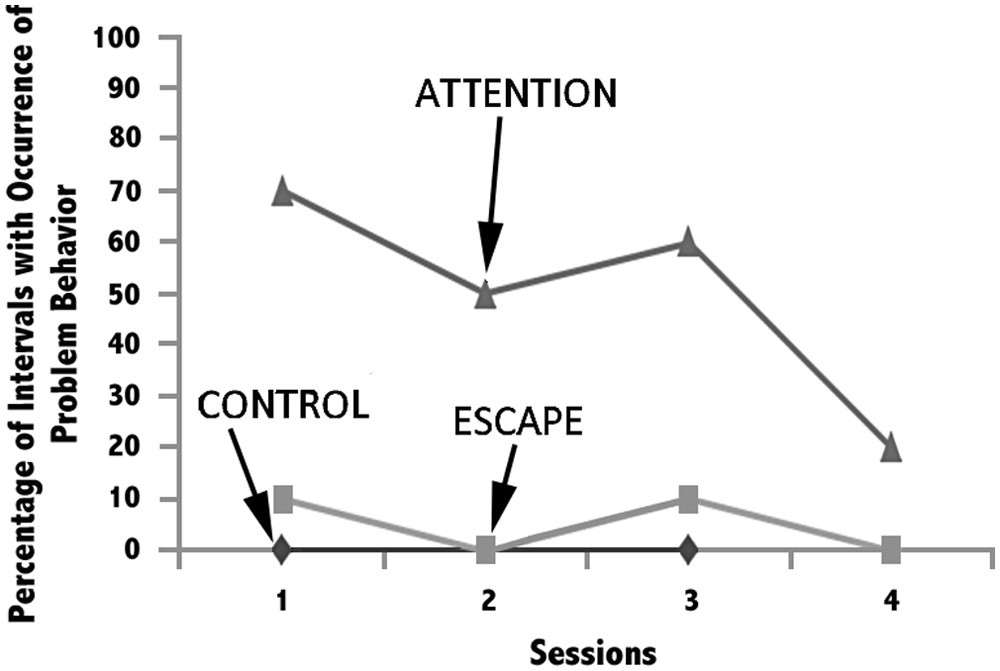
Functional analysis results for Participant 4 to test the summary statement indicating the maintaining function as access to peer attention.
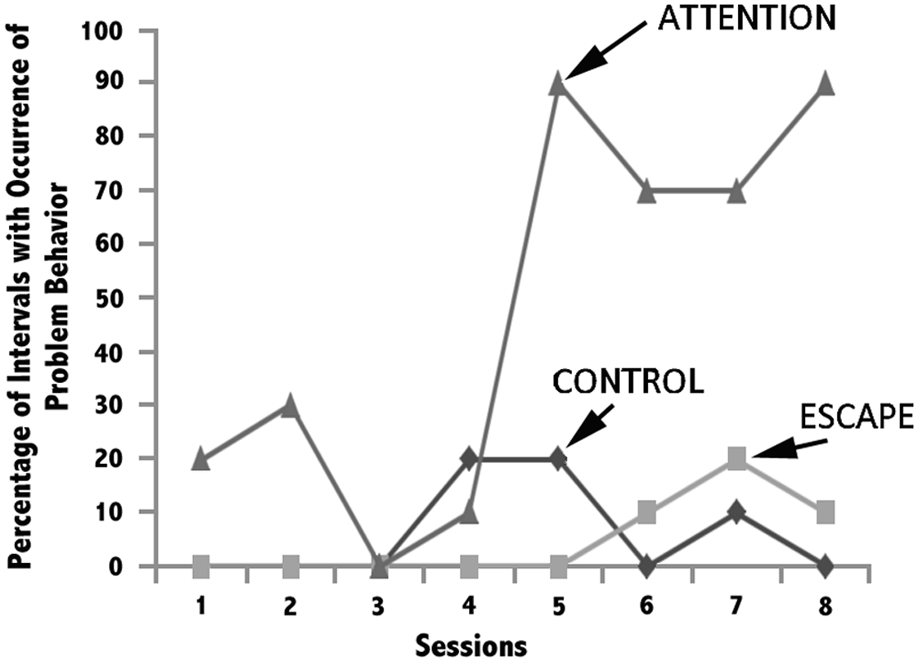
Functional analysis results for Participant 5 to test the summary statement indicating the maintaining function as access to both peer and adult attention.

Functional analysis results for Participant 6 to test the summary statement indicating the maintaining function as access to peer attention.
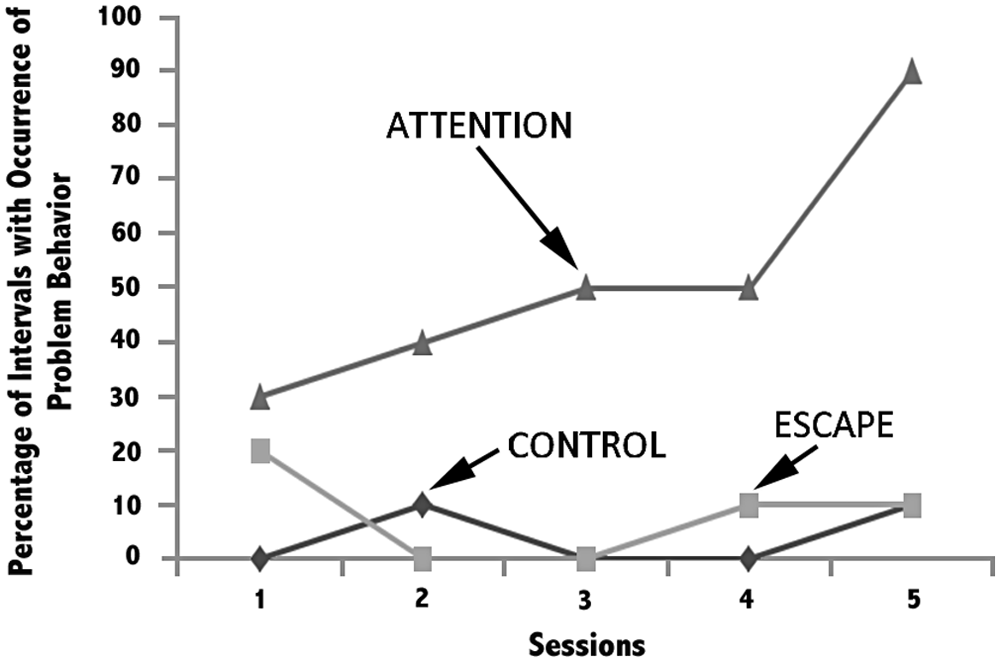
Functional analysis results for Participant 7 to test the summary statement indicating the maintaining function as access to peer attention.
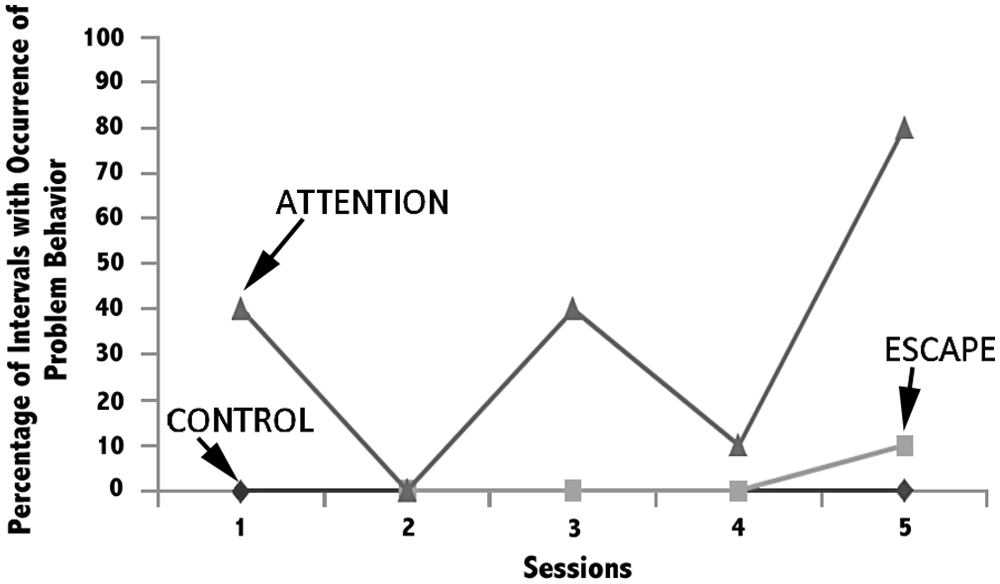
Functional analysis results for Participant 8 to test the summary statement indicating the maintaining function as access to adult attention.
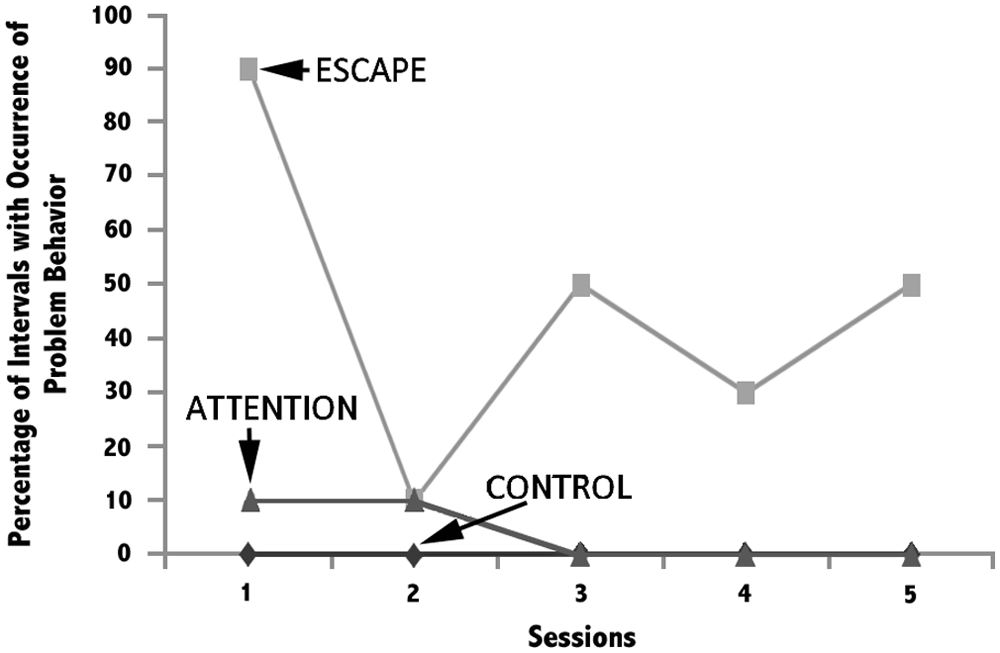
Functional analysis results for Participant 9 to test the summary statement indicating the maintaining function as escape regular class reading activities.
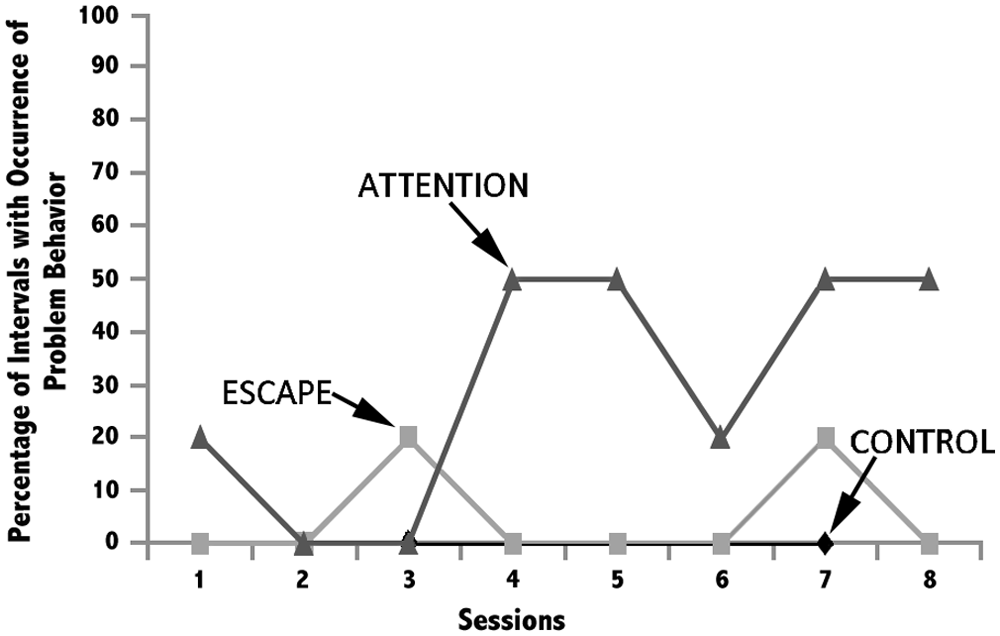
Functional analysis results for Participant 10 to test the summary statement indicating the maintaining function as access to adult attention.
The FBA summary statements for 2 of the 10 student participants (Participants 1 and 9) suggested that these students were engaging in problem behavior maintained by escaping class activities. The clear differentiations between 4 out of 5 of the data points between conditions and lack of contraindication in the data for these participants verify that the maintaining consequence for their behaviors was to escape classroom tasks. The summary statements for the remaining participants hypothesized that the function of their problem behaviors were attention-maintained by adults (Participants 2, 3, 8, 10) or peers (Participants 4, 5, 6, 7). The FA results for Participants 2, 3, 4, 6, 7, 8, and 9 show clear differentiation of data points between conditions with no contraindication of data between conditions verifying the hypothesized functions of the summary statements generated the school professionals. The FA results for Participants 5 and 10 required more sessions to document differentiated patterns, but eventually confirmed the role of attention as the primary maintaining function.
Discussion
These preliminary results support the efficacy of the Basic FBA training program for school-based personnel. The 4-hr training provided participant’s knowledge and skills in FBA that enabled them to conduct procedurally adequate FBAs with accurate overall summary statements. The results of the FBA skills assessment suggest that school personnel did not begin the Basic FBA training with essential knowledge and skills to conduct an FBA, but ended the training knowing how to operationally define behavior, identify the antecedents and functions of problem behavior, and determine conditions where a more comprehensive FBA is required for an individual student. The procedural adequacy results for the FBAs conducted by the school personnel suggest that after training, they could develop FBAs that were technically adequate. In addition, the social validity measures suggest that the procedures in the FBA training were perceived as beneficial, practical, and efficient for use within schools. Finally, the FA validation of all 10 summary statements generated by the school personnel was the most convincing evidence supporting the efficacy of the Basic FBA training procedures within schools. The results of the functional analyses suggest that all of the trained school professionals were able to correctly identify the motivating operations and maintaining function of the student’s problem behavior (Mace, Lalli, & Lalli, 1991), and that their FBA summary statements would be valid content for guiding the design of individualized behavioral interventions (Newcomer & Lewis, 2004).
Implications for Practice
As a field, we have been continuing to strive to extend the principles and technology of FBA in school settings (Gresham, Watson, & Skinner, 2001). One approach toward this goal may be to use highly trained behavior specialists to establish basic behavioral capacity at the school building level (Scott, Liaupsin, Nelson, & McIntyre, 2005). The results of this study suggest an efficient model for making FBA more accessible in schools. First, behavioral challenges in schools may be viewed on a continuum of complexity. Assessment for relatively simple cases may be possible through Basic FBA conducted by typical school personnel. More complex cases would continue to require comprehensive FBA to be conducted by more highly trained behavior specialists.
Second, the use of function-based logic should be extended to all students in a school (i.e., not only for the most difficult cases). The emergence of a multitiered, school-wide system provides a context for inserting behavioral procedures at increasing levels of complexity. There will always be a need for sophisticated application of behavioral support, but extending principles of FBA to development of school-wide, small group, and simple behavioral challenges may reduce the number of “complex” and resource-intensive cases.
Finally, behavior specialists working with school districts may use training materials like the Basic FBA manual to conduct local staff development to develop the capacity of teachers to use FBA efficiently and with high fidelity. With typical school personnel in a school available to complete FBAs, the time between identification of need and formal assessment could be reduced. We would anticipate that individuals with more extensive training in behavioral theory would still be needed to help a team use FBA information in the design of behavior support plans (cf. Benazzi, Horner, & Good, 2006). The opportunity for typical school personnel to conduct the FBA could, however, dramatically improve the efficiency with which individual support is designed in schools.
Limitations
A limitation of this study was the small sample size. A larger sample size would have allowed for the use of statistical techniques to understand the relationship between the Basic FBA training and the accuracy of summary statements generated by school professional participants. In addition, the selection of the sample or participants was not random. School professional participants were all from the same school district and met the criteria of having a flexible role within their school (i.e., not directly responsible for instruction). It is unclear what range of school personnel would be successful after Basic FBA training. Prior to the training, 58% of the present participants stated that they had conducted at least one FBA. Due to the nature of the background questions, it was not clear how much training on FBA participants had received prior to attending the training. In addition, participants were not directly asked whether they had prior experience using the similar tools presented in the Basic FBA. Therefore, their ability to conduct an FBA may have been influenced by previous experience and exposure to the tools in the training.
Another limitation of this study was that the first author provided all of the Basic FBA training sessions. Future research should be conducted to assess the generalizability of the training materials by evaluating how other individuals well versed in FBA can provide the training to school participants.
The measurement of the skills and knowledge of FBA of the participants is another limitation to this study. The content of the assessment was designed to determine (a) whether participants had knowledge and skills to conduct FBA before the training and (b) whether their knowledge and skills improved after participating in the trainings. The psychometric properties of this assessment have not been assessed. In addition, the provision of the same assessment form to participants before and after the training to assess FBA knowledge and skill is another limitation to the findings. The improvement in participant FBA knowledge score may not only have been due to the participation in the trainings but may also be attributed to previous exposure to assessment experience. In the future, alternative forms of the assessment should be used to determine the FBA knowledge and skills of participants before and after the training sessions.
Although the rigor of the experimental functional analyses provided convincing results, further replication of this study with a larger sample will be needed. In addition, the first author of this study conducted all of the FA sessions. Although data collectors recorded the occurrence of problem behavior with high reliability, the results may still have been biased by the first author’s behaviors during the FA conditions. Future studies might have more than one person conducting the functional analyses conditions or use other more natural methods of assessing student behavior such as structured descriptive assessment (SDA; Anderson & Long, 2002).
Finally, the assessment of acceptability was limited to participant perceptions. A more behavioral and practical index of acceptability will rest on the extent to which the participants continue to use the FBA procedures in the future.
Future Research
The research on the Basic FBA training and procedures is still young. Replications of this study using school district personnel as trainers of school professionals could yield more convincing results of the practicality and efficacy of these procedures. It would be of interest to identify the necessary skills of individuals providing Basic FBA training to school personnel, and any prerequisite skills of individuals receiving training. Most importantly, research is needed to examine how the summary statements generated by school personnel trained using the Basic FBA format can translate into behavior support plans that are implemented with fidelity and produce positive change in student behavior.
Footnotes
Authors’ Note
Opinions expressed herein are those of the authors and do not necessarily reflect the position of the U.S. Department of Education, and such endorsements should not be inferred.
Declaration of Conflicting Interests
The author(s) declared no potential conflicts of interest with respect to the research, authorship, and/or publication of this article.
Funding
The author(s) disclosed receipt of the following financial support for the research, authorship, and/or publication of this article: This research was supported by the Office of Special Education Programs U.S. Department of Education (H326S980003).