



Abstract
Implementation of school-wide positive behavioral interventions and supports (SWPBIS) in K–12 schools is well documented in the literature. However, far less documentation can be found in the literature related to its implementation with students with significant intellectual and other developmental disabilities being served in either typical or alternate school settings. The purpose of this study was to highlight features of implementation of SWPBIS in alternate educational settings serving students with significant disabilities. Special education administrators situated in alternate educational settings across one Midwestern state completed a questionnaire indicating level of implementation of various SWPBIS components. Results indicated that although most respondents were engaged in implementation of SWPBIS, overall implementation was fairly low. Limitations and implications of the study for implementing the components of SWPBIS with students with significant disabilities are discussed.
Keywords
Implementation of school-wide positive behavioral interventions and supports (SWPBIS), as an approach to establishing whole school environments that address problem behavior in a positive and preventative manner, has received much attention in the literature (e.g., Coffey & Horner, 2012; Miramontes, Marchant, Heath, & Fischer, 2011; Pas & Bradshaw, 2012; Sugai & Horner, 2006). The components of SWPBIS include prevention, theoretically sound and evidence-based practices, systems implementation, and data-based decision making (Sugai & Horner, 2006). The original positive behavior support (PBS) framework was developed to promote inclusion of students with severe disabilities in general education and community settings with the intent that they be educated alongside typically developing peers in their neighborhood schools. Browder and Spooner (2011) stated, however, this is only true for a small percentage of students with significant disabilities (SwSD) “due to a variety of factors, including resource allocation, professional development, administrative support, and technical assistance for planning inclusion” (p. 10). Kurth, Morningstar, and Kozleski (2014) stated that segregation of SwSD results from an assumption that separate settings have the capacity to provide highly specialized services and existing concerns about how students with disabilities are supported in inclusive settings. The authors further suggested that over the past decade, states have not set rigorous goals for decreasing the number of students served in separate schools, placements have remained largely unchanged over the past 10 years, and students with severe disabilities are disproportionately placed in separate schools. Data retrieved from the state of Michigan’s Federal Fiscal Year (FFY) 2013 Part B State Performance Plan and Annual Performance Report, where the study took place, show that 8,535 students aged 3 to 21 years were served in separate schools during the 2013–2014 academic year, representing an increase between 2007 and 2011.
Currently, implementation of SWPBIS appears to be widespread in the K–12 educational setting for students without disabilities with far less research related to its implementation with SwSD served in either a typical school or alternate setting (Hawken & O’Neill, 2006). A study conducted by Landers, Courtade, and Ryndak (2012) surveyed 51 state directors of SWPBIS and found 41% of the respondents indicated state-wide training did not include the provision of training related to implementation of SWPBIS with individuals with severe disabilities.
Implementation of SWPBIS in Alternate Settings
The definition of alternate settings includes separate schools that serve students with severe disabilities as well as residential treatment settings including hospitals, group homes, foster care, and facilities for adjudicated youth who have severe emotional and/or behavioral challenges (Lehr, Tan, & Ysseldyke, 2009). The current study focused on examining only separate schools (i.e., center-based schools) that serve students with significant intellectual and other developmental disabilities, herein referred to as SwSD.
Although the research base for implementing SWPBIS in alternate settings is limited, Jolivette, McDaniel, Sprague, Swain-Bradway, and Parks Ennis (2012) suggested that even though alternate education settings differ in model, programming, and interventions implemented, ideally they share universal characteristics such as small class size and student body, a personalized school environment, high expectations for success, special teacher training, and transition support. They further noted that “although effects of these characteristics on student outcomes are unknown,” they “can be embedded within the PBS framework” (Jolivette et al., 2012, p. 38). Jolivette et al. also stated that implementation of SWPBIS in alternate settings usually differs from typical school settings in the following ways: (a) absence of an articulated universal tier of prevention; (b) reliance on more intensive forms of intervention; (c) little or no differentiation of intervention intensity and an assumption that all students require Tier 3 supports; (d) utilization of a large number of practices at any given time, thereby decreasing the likelihood of systematic implementation of any of the practices; and (e) a lack of systematic data collection methods to inform future implementation. Any of these could negatively impact the broad purpose of SWPBIS and the fidelity with which components are implemented.
A few studies have examined SWPBIS in alternate settings. Simonsen, Britton, and Young (2010) conducted a study in an alternate school with students with a range of disabilities including intellectual disability, visual impairment, emotional disturbance, orthopedic impairment, and autism who also displayed physically aggressive behavior. Secondary and tertiary interventions were in place when SWPBIS was initiated. Simonsen et al. found that when Tier 1 interventions were initiated, the frequency of positive feedback did not change but the quality and specificity of feedback improved and serious behavior incidents, including those involving physical restraint, decreased. Jolivette et al. (2014) conducted a study with students with emotional and behavioral disorders, aged 7 to 17 years, served in a residential school due to physically aggressive behavior. Similar to Simonsen et al., secondary and tertiary interventions were in place. Discipline referrals decreased, and consistency of intervention delivery by staff increased when Tier 1 interventions were added. The SWPBIS framework allowed the alternate educational setting to organize the practices delivered, match practices to student needs, and promote continuous progress monitoring of student success and non-responsiveness, thus improving treatment fidelity. These findings are applicable to the population of students served in center-based schools, particularly since a portion present significant challenging behaviors and SwSD are more likely to experience challenging behavior (Heyvaert, Maes, & Onghena, 2010; Sigafoos, Arthur-Kelly, & O’Reilly, 2003).
Importance and Purpose of Study
A basic tenet of PBS is to ensure all students are provided with inclusive opportunities through the provision of various levels of support, yet there are a large number of SwSD at risk of exclusion and likely to be placed in alternate settings (Kurth et al., 2014; Ryndak et al., 2014). Research related to implementation of SWPBIS with SwSD in center-based schools may provide insight into effective practices to ultimately ensure inclusion of SwSD rather than their exclusion and segregation (Brown & Michaels, 2006). However, much of the current research is related to implementation in typical school settings with little to no reference to SwSD (e.g., Hawken & O’Neill, 2006; Landers et al., 2012; Simonsen et al., 2010). For this reason, there exists an urgent need to identify best practices of SWPBIS in center-based schools to improve the outcomes of students served in these settings, particularly because little research currently exists showing the benefits of segregated settings related to improved student outcomes (Farkas et al., 2012; Kurth et al., 2014). Effective implementation of SWPBIS principles may hinge, in part, on identifying what works with SwSD and determining how implementation of positive practices can be differentiated to meet the wide range of student abilities often accompanying SwSD. The following research questions guided the study:
Method
Participants
The study was conducted in the state of Michigan. Participants were selected through a convenience sampling procedure because we sought to describe implementation of SWPBIS related to a specific type of educational setting. Research that utilizes convenience sampling is appropriate for descriptive studies that are exploratory in nature, such as this one (Shields & Twycross, 2008). Administrators of center-based schools were targeted for the study. The questionnaire was disseminated to the 154 administrators subscribed to the Michigan Association of Administrators of Special Education (MAASE) Supervisors of Low Incidence Programs (SLIP) professional organization’s electronic mailing list. At least one administrator from each center-based school in the state was represented in the organization. The questionnaire contained a demographic and a SWPBIS implementation section. Implementing participants (schools currently engaged in SWPBIS implementation) completed both sections of the questionnaire. Non-implementing participants (schools not currently engaged in SWPBIS implementation) completed the demographic section of the questionnaire, and only demographic data are reported for these participants.
Schools
Each county in the state under study operated a school or schools that were labeled “center-based.” These schools served students aged 3 to 26 identified as having a moderate or severe intellectual disability, a multiple disability, or autism with intellectual disability (i.e., moderate or severe intellectual disability, which may also include a physical or sensory disability, and autism spectrum disorders that include a significant intellectual disability), and for whom their Individualized Education Program team determined placement in the center-based school setting was appropriate.
Survey Instrument
A single questionnaire was used for the study. The questionnaire was disseminated to participants anonymously in a web-based format using SurveyMonkey. The web-based questionnaire adhered to survey design guidelines cited in Andrews, Nonnecke, and Preece (2003). Specifically, the questionnaire included five demographic questions, a minimally modified version of the PBIS Self-Assessment Survey (PBIS SAS; Sugai, Horner, & Todd, 2009) and four open-ended questions. The estimated time to complete the questionnaire was 10 to 30 min dependent on whether respondents were or were not engaged in SWPBIS at the time.
The PBIS SAS (formerly the EBS [Effective Behavior Support]) was created in 2000 by Sugai, Horner, and Todd and was revised in 2009. Safran (2006) found the instrument to have moderately high total internal consistency reliability for the current status (α = .85). The PBIS SAS examines the status (in place, partially in place, not in place) and priority for improvement (high, medium, low) of four behavior support systems: (a) school-wide discipline systems defined as involving all students, all staff, and all settings; (b) non-classroom management systems defined as particular times or places where supervision is emphasized (e.g., hallways, cafeteria, playground, bus); (c) classroom management systems defined as instructional settings in which teachers supervise and teach groups of students; and (d) individual student systems defined as specific supports for students who engage in chronic problem behaviors. Slight modifications were made to the PBIS SAS for this study. In the non-classroom setting system area, Item 6, scheduling of student movement ensures appropriate numbers of students in non-classroom spaces, was omitted. In the classroom systems area, Item 8, instruction & curriculum materials are matched to student ability (math, reading, language), was omitted; Item 9, students experience high rates of academic success, was revised to students experience high rates of success during classroom activities, and the item each classroom has a system in place for acknowledging positive behaviors was generated by the researchers and added to the classroom systems area of the survey. Item 6, local resources are used to conduct functional assessment-based behavior support planning, was removed from the individual student systems area. Items were removed that did not apply to center-based school settings or modified to better match experiences of the students in classrooms with significant disabilities. According to Simonsen, Jeffrey-Pearsall, Sugai, and McCurdy (2011), measures of fidelity used in typical or general education school settings may need to be modified to capture the unique features of the alternate setting.
In addition, the questionnaire contained the following four open-ended queries: (a) Please list the school-wide student expectations or rules, (b) Please briefly describe the school procedures that are in place to address emergency/dangerous situations, (c) Please indicate the number of members assigned to the team, and (d) What information or data would be useful to you or your school team related to implementing and sustaining SWPBIS in your school setting.
Experimental Design and Procedures
We used a survey method design that included both quantitative and qualitative analyses. The data collected were reported descriptively, supplemented with qualitative data when appropriate. The aim of the study was to present a description of implementation of SWPBIS in center-based schools serving SwSD which is exploratory in nature. Therefore, there were no statistical analyses other than calculating means for data.
Data Collection
Participants were contacted through the MAASE-SLIP organization. A description of the study, informed consent document, and a link to the web-based questionnaire were included in the email. The questionnaire was launched in this fashion on two separate occasions 4 weeks apart. Thirteen individuals responded with the first deployment and an additional 16 responded with the second deployment of the questionnaire for a total of 29 respondents. Three respondents stopped responding after Question 2, so their questionnaires were deemed incomplete and omitted from the data. The overall response rate was 17%; however, the invitation directions to potential participants requested only one administrator per building complete the questionnaire, and the Listserv subscriber number of 154 administrators reflects multiple administrators in a single building (i.e. director, assistant director, supervisor). Demographic data were reviewed to ensure no overlap of respondents within schools. Specifically, for schools reporting similar school size, we compared responses to the demographic question related to numbers and types of classrooms and found dissimilar responses to that item, ensuring that not more than one administrator from a particular school completed the questionnaire. In addition, according to the most recent educational entity data report, 45 center-based schools serving SwSD were operating at the time of the study. Given there were 45 schools operating and 29 questionnaire respondents, the response rate was adequate.
Data Analysis
PBIS SAS
For this study, the researchers were interested in determining which components of SWPBIS, if any, were being implemented and at what level (in place, partially in place, not in place), which is related to efficacy or fidelity of implementation (Borrego, Cutler, Prince, Henderson, & Froyd, 2013). Benefits of an intervention or practice increase as implementation fidelity increases (Power et al., 2005). The PBIS SAS tool is used by schools to self-assess the level or fidelity of implementation of the PBIS framework components. Given the PBIS SAS tool does not include a benchmarking fidelity score, the researchers made use of the school-wide Benchmarks of Quality (BoQ) criterion of 70% or greater as an indicator of fidelity of implementation (Cohen, Kincaid, & Childs, 2007). Thus, the criterion of 70% or greater in the in place category was used and found adequate for this study. Conversely, a combined percentage of 70% or greater for the categories of partially or not in place was used to identify components reflecting substantially less implementation fidelity. Although the PBIS SAS tool also prompts respondents to indicate priority for improvement (high, medium, or low) for each component, we chose to focus on and report data specifically related to respondents’ perceptions of the status of implementation of SWPBIS components. In addition, data related to the four open-ended queries embedded in the questionnaire were examined based on frequency of responses and summarized or reported quantitatively.
Results
Demographic data are reported in Table 1. Of the 26 completed questionnaires, 22 (85%) respondents indicated they were currently engaged in SWPBIS, and four (15%) respondents indicated they were not. The non-implementing participants were prompted to respond to one final question asking why they were not engaged in SWPBIS. One respondent cited lack of time to commit to full implementation of SWPBIS practices, one cited lack of knowledge of how to implement SWPBIS, one indicated his or her school would begin implementation the following school year, and one respondent chose not to respond.
Demographic Data on SWPBIS Survey Participants and Settings.
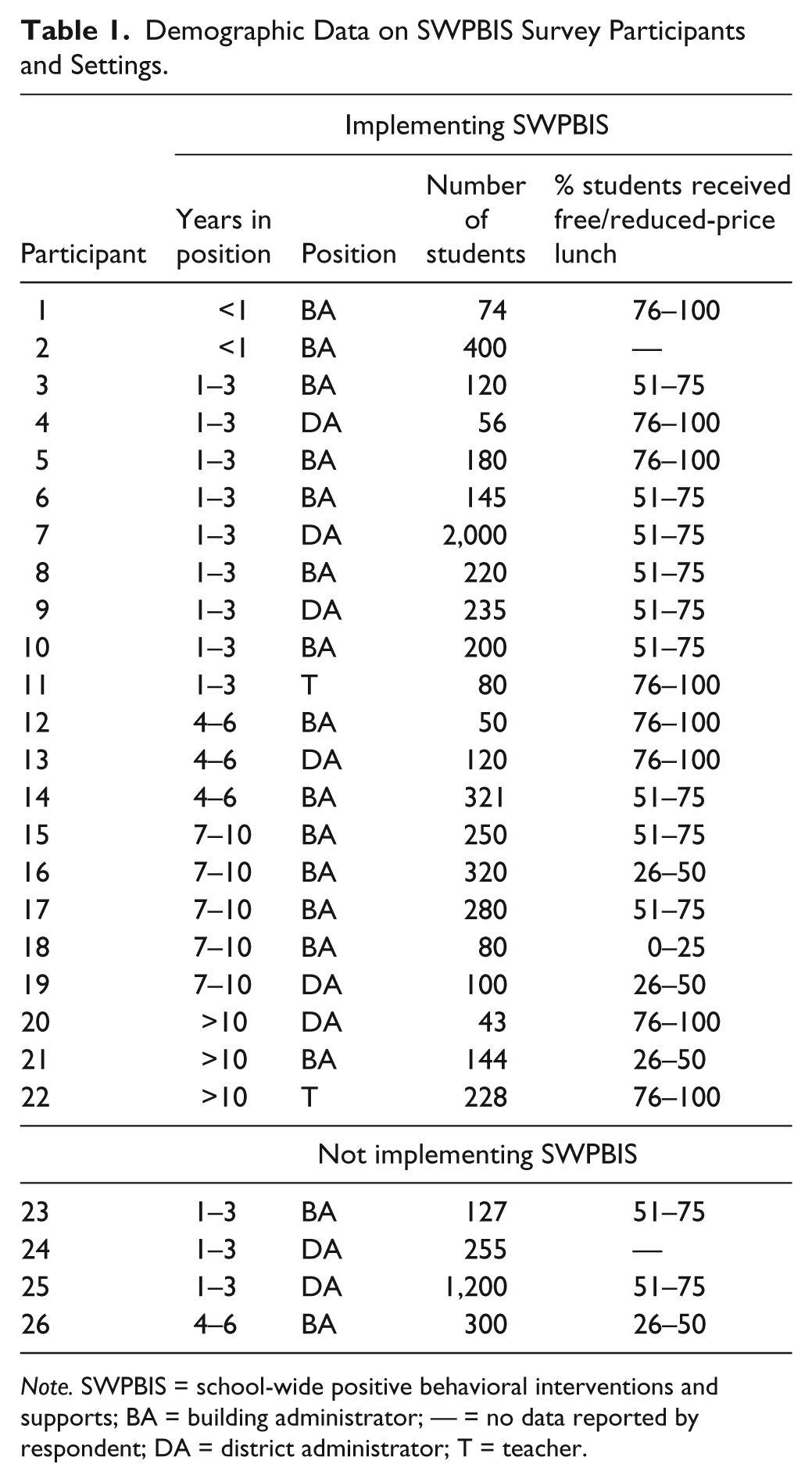
Note. SWPBIS = school-wide positive behavioral interventions and supports; BA = building administrator; — = no data reported by respondent; DA = district administrator; T = teacher.
According to the demographic data collected, 16 of the participants were building administrators, eight were district administrators, and two were teachers. Twelve participants indicated employment in their current position for 1 to 3 years, five indicated 7 to 10 years, four indicated 4 to 6 years, three indicated more than 10 years, and two indicated less than 1 year. Eleven participants indicated 51% to 75% of their students received free or reduced-price lunch, eight indicated 76% to 100%, four indicated 26% to 50%, and one indicated 0% to 25% received free and reduced-price lunch, and two of the respondents did not respond to the question. Respondents were prompted to denote how many of each type of classroom were contained in their building. Across respondents, the types of classrooms represented in greatest number were those categorized as moderate cognitive impairment (n = 158), autism spectrum disorders (n = 141), severe cognitive impairment (n = 68), and severe multiple impairment (n = 53).
SWPBIS Implementation
Figure 1 shows the overall mean for each of the four behavior support system areas, derived by adding the mean percentages of each item across respondents within an area and dividing by the number of items. Roughly half of the components in each of the behavior support system areas were in place with respect to level of implementation. Respondents indicated that each area was in place at similar levels: individual student systems (57%), non-classroom settings (55%), classroom settings (54%), and school-wide systems (53%).
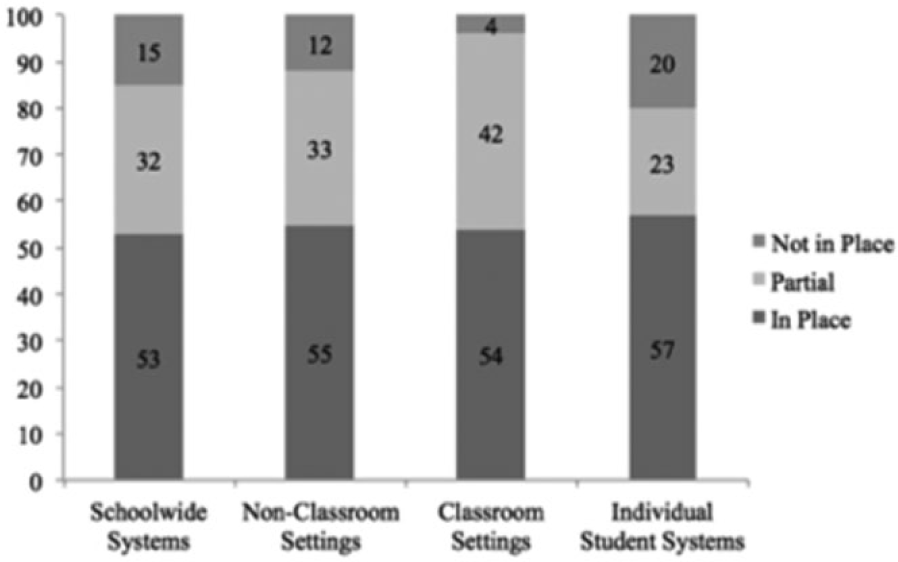
Averages within each of the four behavior support systems of the PBIS Self-Assessment Survey (modified).
Data on the subarea of school-wide systems are presented in Table 2. Data suggested the following components were implemented with fidelity across schools: procedures are in place to address emergency/dangerous situations (86%) and school administrator is an active participant on the behavior support team (73%). However, the following components appeared to be implemented across schools with substantially less fidelity: problem behaviors are defined clearly (24%) and consequences for problem behaviors are defined clearly (18%). In addition, in the school-wide systems section of the questionnaire, respondents listed their school-wide expectations. Responses to this item were similar across participants with 25 respondents indicating three to four expectations related to safety, respect, and responsibility. Respondents were also asked to state the procedures in place to address emergency situations. Fourteen respondents indicated there was a five- to eight-member team of crisis prevention trained staff and procedures in place for the team to be notified to respond to emergency situations, five indicated the number of team members was 10 or greater, four of the respondents chose not to answer the question, and three indicated fewer than five member teams.
School-Wide Systems.
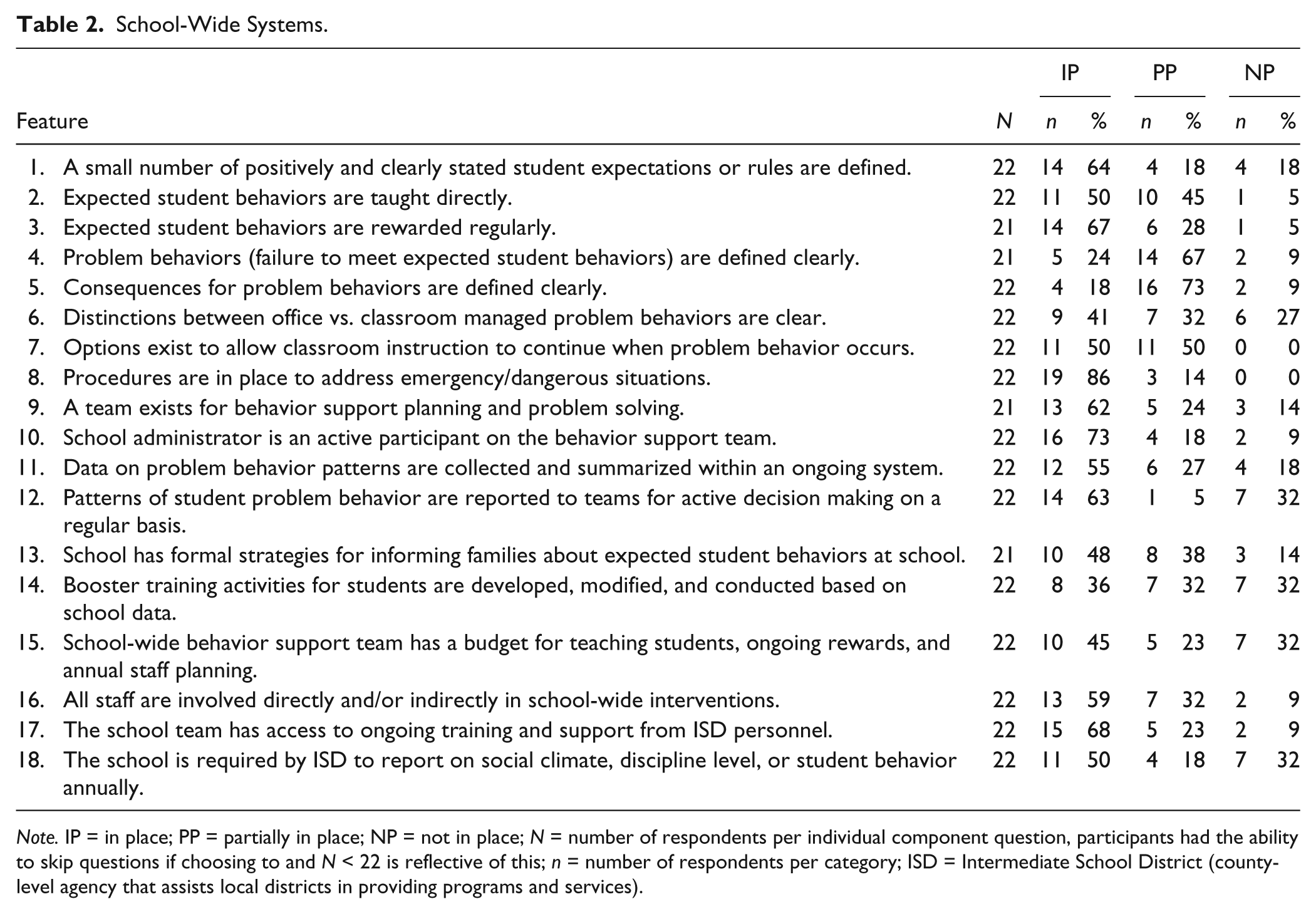
Note. IP = in place; PP = partially in place; NP = not in place; N = number of respondents per individual component question, participants had the ability to skip questions if choosing to and N < 22 is reflective of this; n = number of respondents per category; ISD = Intermediate School District (county-level agency that assists local districts in providing programs and services).
Data on the non-classroom settings subarea are presented in Table 3. Data suggested the components of staff actively supervise (move, scan, and interact) students in non-classroom settings (76%) and all staff are involved directly or indirectly in management of non-classroom settings (76%) were implemented with fidelity across schools. However, substantially lower implementation of the following non-classroom setting components seemed to be occurring: staff receives regular opportunities for developing and improving active supervision skills (24%) and the status of student behavior and management practices are evaluated at least quarterly from data (25%).
Non-Classroom Settings.

Note. IP = in place; PP = partially in place; NP = not in place; N = number of respondents per individual component question, participants had the ability to skip questions if choosing to and N < 22 is reflective of this; n = number of respondents per category.
Data on the subarea of classroom settings are presented in Table 4. Data suggested the following components were implemented with fidelity across schools: expected student behavior and routines in classrooms are stated positively and defined clearly (76%), expected student behavior and routines in classrooms are taught directly (71%), and students experience high rates of success during classroom activities (71%). Conversely, data suggested teachers did not have regular opportunities for access to assistance and recommendations (28%) and in each classroom problem behaviors are not clearly defined (33%) or receive consistent consequences (38%), which were areas rated least in place.
Classroom Settings.
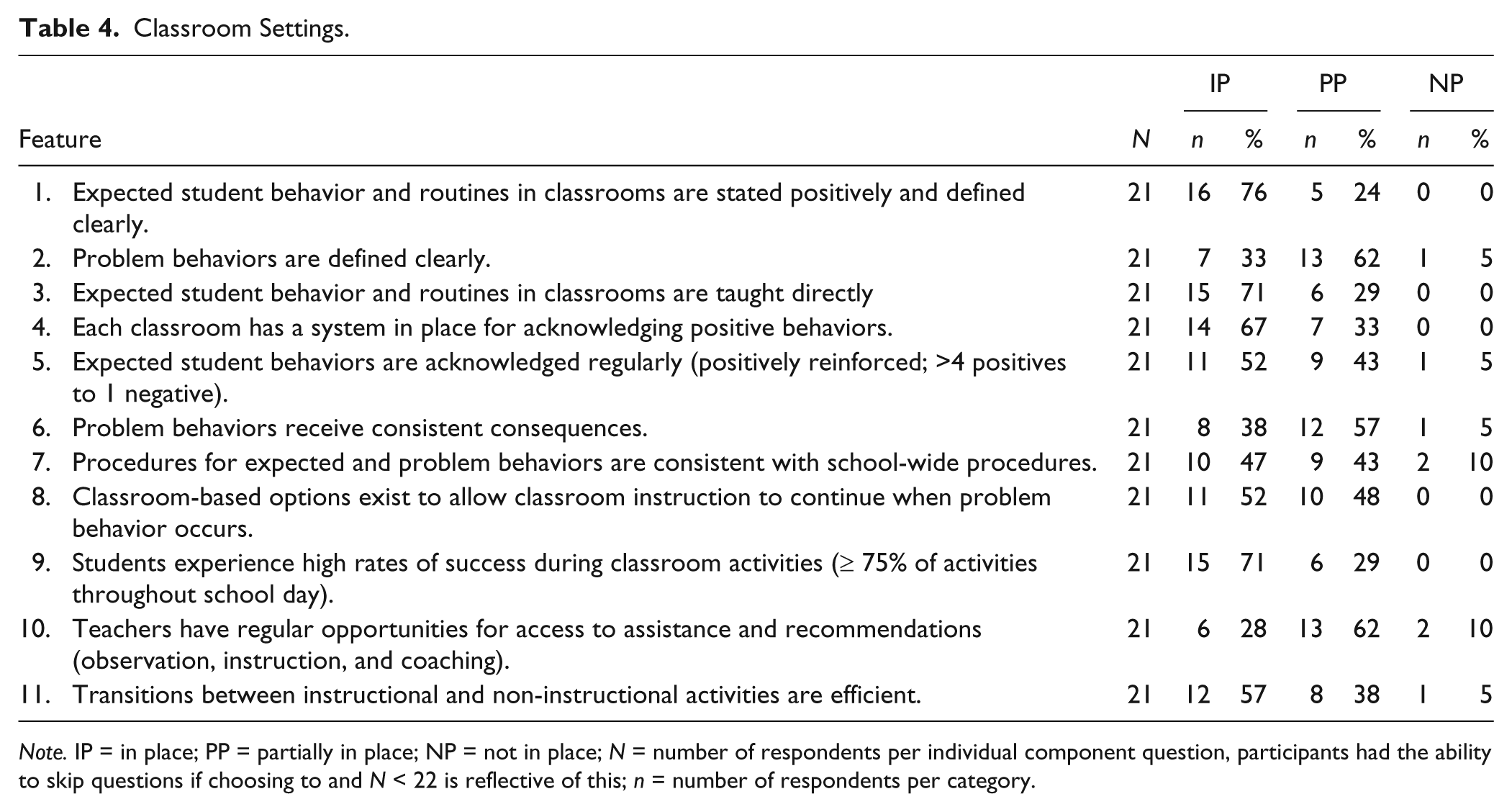
Note. IP = in place; PP = partially in place; NP = not in place; N = number of respondents per individual component question, participants had the ability to skip questions if choosing to and N < 22 is reflective of this; n = number of respondents per category.
Data on the individual student systems subarea are presented in Table 5. Data suggested that across schools the following components were being implemented with fidelity: a process exists for teachers to request assistance for individual students from the behavior support team (76%), the behavior support team responds promptly to students who present chronic problem behaviors (86%), and the behavior support team includes an individual skilled at conducting functional behavioral assessment (76%). Conversely, the components school includes formal opportunities for families to receive training on behavioral support/positive parenting strategies for individual students who engage in chronic problem behavior (19%) and conducting assessments regularly to identify students with chronic problem behaviors (33%) were implemented with substantially less fidelity.
Individual Student Systems.

Note. IP = in place; PP = partially in place; NP = not in place; N = number of respondents per individual component question, participants had the ability to skip questions if choosing to and N < 22 is reflective of this; n = number of respondents per category.
At the conclusion of the questionnaire, respondents implementing SWPBIS were asked “What information or data would be useful to you or your school team related to implementing and sustaining SWPBIS in your school setting?” Nine respondents indicated the need for additional knowledge related to effective supports appropriate for SwSD. Six respondents indicated a need for additional knowledge related to data collection methods, how to best utilize the data collected, and how to assess implementation fidelity in their own schools. Five respondents expressed a desire to come together with other center-based schools to share best practices and challenges. Last, five respondents indicated a desire for ongoing professional development (PD) and coaching models related specifically to staff “buy in” and implementation of SWPBIS in center-based schools serving SwSD.
Discussion
We sought to provide a snapshot of SWPBIS in center-based schools by examining implementation efforts in one state as reported by school staff. The results of the questionnaire showed a majority of the respondents engaged in some form of implementation of SWPBIS. However, overall implementation of the components was fairly low, and in some cases, the procedures reported appear incongruous (e.g., procedures are in place to address emergency situations, but problem behaviors are not clearly defined). The results suggest there are many evidence-based interventions and basic behavior management components not in place in center-based schools across the state under study. Specifically, participants indicated low levels of implementation of evaluating student behavior and management practices from data, developing or modifying training activities for students based on data collected, and regularly conducting assessments to identify students with chronic problem behaviors. The results also suggest a need to improve parent involvement and offer staff and parent training. The findings of this study confirm those of Jolivette et al. (2014) and Simonsen et al. (2010) that alternate settings employ a large number of practices that are not systematically implemented or matched to student needs. These results may explain the poor outcomes of many students served in alternate settings, including few students moving out of restrictive settings after placement (Kurth et al., 2014). In response to seemingly poor outcomes, Jolivette et al. (2012) suggested that the adoption and adaptation of the SWPBIS framework can serve as a means of better monitoring and improving student outcomes in alternate settings.
The findings regarding low implementation of Tier 1 interventions are concerning in light of recent research. For example, Farkas et al. (2012) found a positive impact on student outcome measures as a result of SWPBIS Tier 1 implementation in a separate school serving secondary students with emotional and behavioral disorders and suggested “emerging research on the efficacy of tier 1 intervention approaches in alternative schools or residential settings is encouraging” (p. 276). However, Figure 1 shows that the school-wide systems subarea received the lowest average of the four behavior systems for center-based schools. Specifically, only 50% of participants indicated in the school-wide systems subarea that expected student behaviors are directly taught. A critical feature of Tier 1 is teaching all students positive behavioral expectations and prosocial behaviors. Teaching prosocial behaviors and other social skills is often a focal point of instruction for SwSD (Browder & Spooner, 2011). Implementation of Tier 1 could provide this instruction. Furthermore, although challenging behavior is not a prerequisite for referral to center-based schools in the state under study, according to Sigafoos et al. (2003), individuals with significant disabilities are at least 2 to 3 times more likely to experience challenging behaviors than those without a significant disability because they lack an extensive behavioral repertoire. Individuals who experience a limited behavioral repertoire could benefit from exposure to Tier 1 supports, as teaching of prosocial positive behavior expectations could increase their behavioral repertoire.
Low implementation of Tier 1 is also interesting, given higher implementation of class-wide expectations. Specifically, 71% of respondents indicated in the classroom settings subarea that expected student behavior and routines in classrooms are directly taught, which seems contradictory to the results discussed above and may suggest that a cohesive alignment of school-wide and classroom expectations is lacking. This is problematic considering that one of the guiding tenets of SWPBIS is prevention, which includes direct and systematic teaching of the school-wide expectations and relevant social skills (Sugai & Horner, 2006).
Jolivette et al. (2012) found that “data needed to monitor student behavior for all of the practices were not being collected, maintained, managed, or used to make data-based decisions” (p. 19). This was also the case in the current study. Although 62% of the participants indicated there was a behavior support team in place and 63% indicated that patterns of student problem behavior are reported to teams for active decision making on a regular basis, only 24% of participants indicated problem behaviors were clearly defined, 18% indicated consequences for problem behaviors were clearly defined, and 38% indicated problem behaviors receive consistent consequences in the classroom setting. This suggests that although there was a mechanism in place for reporting problem behavior, the knowledge of the staff to define and consistently respond to problem behaviors was lacking, and data are not drawn upon for this purpose. This finding underscores the need for increased focus on improving SWPBIS teams and the ability of other professionals to develop a mechanism for collecting relevant data to make data-driven decisions. It seems particularly critical for staff in center-based schools to have the capacity to specifically define problem behavior and measure the efficacy of evidence-based interventions at each level of implementation, based on predetermined positive student outcomes, and adjust practices based on student performance.
In addition, it is important to measure treatment fidelity in center-based schools early and often and use results to inform PD activity (Harn, Parisi, & Stoolmiller, 2013). According to Harn et al. (2013), the components necessary for achieving fidelity and improving outcomes for students include “(a) clearly identifying core components of the intervention with built in adaptations, (b) differentiating professional development experiences, and (c) contextualizing and embedding coaching” (p. 188). However, only 28% of the participants in this study indicated that teachers have regular opportunities for access to assistance and coaching.
Simonsen et al. (2011) suggested that alternate settings often emphasize the individual student system of outcomes, data, and practices. Data from our study show that although 76% of participants indicated a process exists for teachers to request assistance from a behavior support team and the team includes someone with expertise in conducting functional behavioral assessment, the results do not necessarily support the notion that staff working in alternate settings are better equipped or trained to provide intensive individualized instruction and interventions. Specifically, the percentage of in-place components across all subareas of school-wide, non-classroom and classroom system settings was similar. In addition, participants indicated that procedures are in place to address emergency and/or dangerous situations but also reported a low level of implementation of problem behaviors are defined clearly and consequences for problem behaviors are defined clearly, which seems contradictory and leads us to question whether adequate procedures can be put in place or used properly to mitigate problem behaviors and respond appropriately and consistently in serious situations.
Limitations
Results from this study must be taken in consideration of its limitations. First, the psychometric properties of the modified PBIS SAS instrument are unclear because items on the scale differ slightly from the original PBIS SAS. Second, the level of implementation purported by each survey respondent is an estimation based on self-report, and no observations were conducted by an external party to confirm the reports. This process in and of itself creates a potential bias (Dillman, Smyth, & Christian, 2014). Last, the results provide a snapshot of roughly one half of a particular state’s center-based schools’ self-reported levels of SWPBIS implementation. Thus, the ability to generalize these data to other center-based schools within or outside of the state is limited.
Implications for Practice and Future Research
The results highlight the need for PD in center-based schools to improve implementation efforts. Staff in center-based schools may benefit from PD in the area of utilizing Tier 1 supports to promote the learning of prosocial skills, thus increasing the behavioral repertoire of SwSD. PD in this area might also improve staff buy-in of the benefits of SWPBIS, as increasing prosocial behaviors for SwSD is often a priority for instruction (Browder & Spooner, 2011).
The results also suggest that center-based schools may benefit from developing a menu of research-based interventions to be used at each tier that are appropriate for SwSD, aligned with identified expected student outcomes, and consistent across tiers when relevant. This could be achieved, in part, by systematically collecting data for the purpose of identifying effective practices, thus improving the capacity to match intervention to student needs.
In addition, there is a need to develop a systematic plan for identifying and monitoring problem behavior and consequences at the school-wide and classroom level. Typical schools often equate SWPBIS success with decreases in discipline referrals, suspensions, and expulsions (Browder & Spooner, 2011). These measures may not be applicable to the center-based setting, thus center-based schools would benefit from operationally defining problem behaviors, consequences, and developing a means of recording frequency of occurrence. These data could then be used, in part, to determine the effectiveness of SWPBIS intervention practices. PD in the area of implementing SWPBIS individual supports for students experiencing chronic problem behaviors should be extended to families as well.
Furthermore, improving how center-based schools evaluate their implementation of SWPBIS components is warranted. However, many of the widely used PBIS evaluation tools, such as the SAS, do not include evaluative criteria for implementation with SwSD (Hawken & O’Neill, 2006). This suggests that SwSD are not considered in determining or increasing treatment fidelity, which is problematic. Therefore, there is a need to determine what evaluation tools are best suited for monitoring SWPBIS implementation in center-based settings and how those tools might be modified to best meet the unique needs of the setting and student population.
Future research should include the use of external reviewers who can observe specific school-wide processes and teaching behaviors used to improve student outcomes and performance, as is generally done in inclusive school settings. This type of information can assist with issues of fidelity of implementation of SWPBIS and provide additional data points for analysis if discrepancies in self-report results occur. Furthermore, engaging all school staff in evaluating SWPBIS implementation and including these data in analyses could provide important insights for developing effective means of implementation of SWPBIS practices. Future research should also include identification of specific interventions that are transferrable to the typical school setting. These practices could be built into the SWPBIS framework implemented in inclusive settings to effectively address the needs of SwSD who experience challenging behaviors and to decrease the need for highly specialized support and segregation.
Footnotes
Declaration of Conflicting Interests
The author(s) declared no potential conflicts of interest with respect to the research, authorship, and/or publication of this article.
Funding
The author(s) received no financial support for the research, authorship, and/or publication of this article.