




Abstract
Objectives
The aim of the present study was to investigate Argentine veterinarians’ knowledge, attitudes and management of acute pain in cats.
Methods
A voluntary, anonymous, prospective, cross-sectional online survey was conducted among Argentine veterinarians between January and September 2024. The questionnaire explored demographics, clinical practice and acute pain management in cats. The survey comprised multiple choice and open-ended questions, using 5-point Likert scales tailored to each variable.
Results
A total of 161 responses were obtained, of which 154 met the inclusion criteria and were analyzed. Of the responses, 95% considered acute pain assessment in cats important, although 66% reported dissatisfaction with undergraduate training in pain management. Pain recognition skills were generally perceived as adequate, yet 45% reported challenges in treatment. Pain in cats was routinely evaluated by 82% of respondents; however, only 56% used standardized tools, primarily the Feline Grimace Scale (FGS). Pain assessment was performed predominantly by female veterinarians, who also showed greater familiarity with standardized scales. Overall, participants expressed a strong preference for continuing online education.
Conclusions and relevance
Argentine veterinarians attach high importance to acute pain assessment in cats and report having adequate knowledge despite dissatisfaction with undergraduate training. The FGS was the most frequently used tool; female veterinarians assessed pain more often and showed greater familiarity with standardized scales. In this study, online courses were identified as the preferred method of continuing education.
Plain language summary
Survey-based research is a widely employed method in various countries to assess factors influencing acute pain treatment. Failure to recognize and adequately manage this type of pain can significantly compromise feline quality of life, underscoring the need to understand this issue in Argentina. The study surveyed veterinarians practicing in Argentina to identify demographic characteristics, trends, attitudes and practices regarding feline acute pain management, as well as the availability of therapeutic resources.
Introduction
International guidelines and expert consensus recognize pain as a vital sign that should be routinely assessed in clinical practice. In addition to compromising physical health, it affects emotional wellbeing and the animal’s interaction with its environment, potentially leading to suffering, delayed recovery and behavioral changes. Therefore, pain control through both pharmacological and non-pharmacological therapies is considered an ethical responsibility of the veterinarian,1 –3 encompassing not only medical interventions but also environmental and management practices. 4
Surveys are valuable tools for exploring veterinarians’ knowledge, attitudes and practices in pain management, and have been conducted in several countries, including France, 5 Brazil, 6 Italy, 7 Canada,8 –12 Colombia, 13 Australia, 14 New Zealand,15,16 Slovenia, 17 the UK, Malaysia, 18 Switzerland, 19 Bosnia and Herzegovina 20 and Spain. 21 These studies have helped identify strengths and limitations in clinical practice, as well as the need for continuing education. Knowledge, attitudes and practices provide insight into how veterinarians recognize and manage animal pain. This approach helps identify educational gaps and highlights that knowledge, combined with practical skills and the right attitude, directly influences professional behavior and animal welfare.9,22
To date, no studies have been published on the knowledge, attitudes and management of acute pain in cats by veterinarians in Argentina, despite the availability of international data. In this context, the objective of the present study was to conduct an online survey of Argentine veterinarians to assess their levels of knowledge, attitudes and strategies for managing acute feline pain, and to compare these findings with results reported in other countries.
Materials and methods
Participant recruitment and survey design
A prospective cross-sectional online survey was conducted using convenience and snowball sampling, targeting Argentine veterinarians. The survey was hosted on the Google Forms platform, in Spanish, and was available between January and September 2024. Participation was voluntary and anonymous, with no incentives offered. Before responding, participants provided informed consent by completing the questionnaire. Sign-in via a registered account was required to prevent multiple submissions; however, no personal data were stored, ensuring anonymity. The survey link was distributed via email to all veterinary medical councils in Argentina. It was also shared through the WhatsApp instant messaging application, along with a QR code, in various groups composed of veterinary professionals, including the Asociación Argentina de Medicina Felina (AAMeFe). The inclusion criteria were as follows: Argentine nationality, current professional veterinary practice within the country and graduation as a veterinarian between 1980 and 2023. No additional restrictions were applied, such as the location of the veterinary school. For respondents who did not meet these criteria, the survey was automatically terminated.
The survey design and questions were based on previous studies conducted in other countries.5 –7,9 –21 The survey included sections on demographic and professional practice data, pain assessment methods, and the use of drugs and techniques for the management and treatment of acute pain in cats (see S1 in the supplementary material).
All questions were structured as multiple choice, with some also including open-ended response options. Depending on the item, responses could be single or multiple. A 5-point Likert scale was used, tailored to the specific nature of each variable to ensure clarity (importance, familiarity, frequency, difficulty, agreement and satisfaction).
Statistical analysis
Data were exported to Microsoft Excel and translated into English for analysis. Descriptive analyses were performed using frequency tables and figures. The results of the Likert scales were presented in bar charts using the ‘likert’ package, 23 showing percentages grouped by perception: negative responses on the left, neutral in the center and positive responses on the right. Pearson’s χ2 test or Fisher’s exact test was used, where appropriate, to compare response frequencies on the Likert scales according to gender. Comparisons of assigned pain scores were conducted using the Mann–Whitney U-test. All analyses were performed in RStudio (version 4.3.0), with statistical significance set at P <0.05.
Results
Demographic and professional activity data
During the study period, 161 responses were collected. Of these, 154 (95.7%) were considered valid for analysis, while seven (4.3%) were excluded for not meeting the inclusion criteria. The demographic characteristics of the respondents are presented in Table 1, and their geographic distribution is shown in Figure 1.
Demographic characteristics of the 154 veterinary survey respondents

Data are n (%)
Refers to a specialized care center situated within universities or predominantly in large cities
Percentages of cat care below 50% were classified as ‘Predominantly dogs’; equal percentages (50%) were classified as ‘Mixed’; and percentages above 50% were classified as ‘Predominantly cats’

Map showing the geographical location of 154 Argentine veterinarians who responded to the online survey
Importance, knowledge and ability to identify acute pain in cats
Most participants (95%) considered the assessment of acute pain in cats important or very important; neutral ratings (4% ‘Neither important nor unimportant’) or low ratings (1% ‘Not important’) were minimal (Figure 2a). Comparison by gender revealed a statistically significant difference in how participants rated the importance of pain assessment (P = 0.0133). Female respondents were more likely than male respondents to select the ‘Very important’ option over ‘Important’ (Figure 2b).

Distribution of responses from Argentine veterinarians on a 5-point Likert scale regarding the level of importance attributed to the assessment of acute pain in cats: (a) overall sample and (b) responses stratified by respondent gender, where a statistically significant association was observed
Most respondents rated their ability to recognize acute pain in cats favorably (46%), whereas 29% were neutral and 25% reported some level of difficulty (difficult or very difficult). No association was found between gender and difficulty levels for recognizing acute pain in cats (P = 0.4878) (Figure 3a). Regarding the difficulty of treating acute pain in cats, 45% of respondents perceived it as difficult or very difficult, 37% were neutral and 18% considered it easy or very easy. No association was found between gender and difficulty levels for treating acute pain in cats (P = 0.0697) (Figure 3b).

Distribution of responses from Argentine veterinarians on a 5-point Likert scale regarding (a) difficulty levels for recognizing acute pain in cats and (b) difficulty levels for treating acute pain in cats
Regarding the recognition of acute pain in cats, 45% of respondents rated their knowledge as acceptable, 30% expressed a favorable view and 25% a negative one (Figure 4a). For knowledge about pain and analgesia in cats, 40% considered it acceptable, while 23% reported a favorable view and 37% a negative perception. No association was found between gender and response frequencies for the two questions (P = 0.27 and P = 0.1814, respectively) (Figure 4b).

Distribution of responses from Argentine veterinarians on a 5-point Likert scale regarding (a) level of knowledge regarding the recognition of acute pain in cats and (b) level of knowledge regarding pain and analgesia in cats
Notably, 66% of respondents reported dissatisfaction with the training they had received at university regarding acute pain in cats, whereas 14% were neutral and 20% were satisfied (Figure 5a). A statistically significant association was found between respondents’ gender and level of satisfaction (P = 0.0482) in the positive perceptions: men showed a higher proportion of satisfaction, but limited to a single category, whereas women, although with a lower percentage, included responses in both categories (Figure 5b).

Distribution of responses from Argentine veterinarians on a 5-point Likert scale regarding level of satisfaction with the knowledge they had acquired at university regarding acute pain in cats: (a) overall sample and (b) responses stratified by respondent gender, where a statistically significant association was observed
Attitudes toward acute pain management
Regarding attitudes toward pain, 92% of respondents agreed or strongly agreed that pain affects an animal’s behavior and its interaction with caregivers or other pets, and 91% agreed that it affects quality of life. A total of 90% considered that analgesia is always beneficial and shortens recovery time, whereas 83% stated that preventing pain is better than treating it. In contrast, only 38% agreed that cats experience pain to the same degree as humans under similar medical conditions. Most respondents disagreed or strongly disagreed with the statements that a certain degree of pain is necessary to limit activity after surgery (83%) and that some surgical procedures do not cause enough pain to justify analgesia (95%). No significant association was found between gender and response frequencies for the statements related to animal pain and the use of analgesia (P >0.05) (Figure 6).

Distribution of responses from Argentine veterinarians to statements related to animal pain and the use of analgesia
Pain assessment in cats
Regarding familiarity with feline acute pain assessment scales, the Glasgow Feline Composite Measure Pain Scale (CMPS-Feline; n = 150, 107 women, 43 men) was the only tool with which the majority of respondents reported familiarity (50%), followed by the Feline Grimace Scale (FGS; n = 145, 103 women, 42 men), with 44% of respondents indicating familiarity with this scale. In contrast, the Colorado State University Feline Acute Pain Scale (n = 142; 101 women, 41 men) and the UNESP-Botucatu Feline Pain Scale Short Form (UFEPS-SF) (n = 142; 101 women, 41 men) were the least recognized, with 70% and 65% of participants, respectively, reporting a lack of familiarity (Figure 7a). Gender was significantly associated with levels of familiarity with both the FGS (P = 0.0041) and the CMPS-Feline (P = 0.019). For both scales, women demonstrated higher familiarity than men (P = 0.0002) (Figure 7).

Distribution of responses from Argentine veterinarians on a 5-point Likert scale regarding familiarity with different scales for assessing acute pain in cats: (a) overall responses, where asterisks indicate differences between genders, and (b) responses stratified by gender, given that a statistically significant association was observed between level of familiarity and gender for the Feline Grimace Scale and Glasgow Feline Composite Measure Pain Scale
A total of 55.8% of respondents (n = 86) reported using pain assessment scales. Among the currently validated tools, the FGS was the most frequently used, followed by the CMPS-Feline and, to a lesser extent, the UFEPS-SF. The remaining 44.2% (n = 68) did not use standardized scales, relying instead on changes in physiological parameters, behavioral alterations or a combination of these to assess pain.
In relation to the frequency of pain assessment in cats, 82% of respondents reported performing it always or frequently, 12% occasionally, and 6% rarely or never (Figure 8a). In addition, gender was significantly associated with the frequency of pain assessment (P = 0.0057). Female veterinarians were more likely to evaluate pain frequently or always, whereas male veterinarians tended to assess pain only occasionally (P = 0.006) (Figure 8b).

Frequency of pain assessment in cats during routine veterinary practice, based on a 5-point Likert scale, as reported by survey respondents. Data are presented as follows: (a) overall responses and (b) responses stratified by respondent gender, where a statistically significant association was observed
Analgesic drugs and techniques for pain management in cats
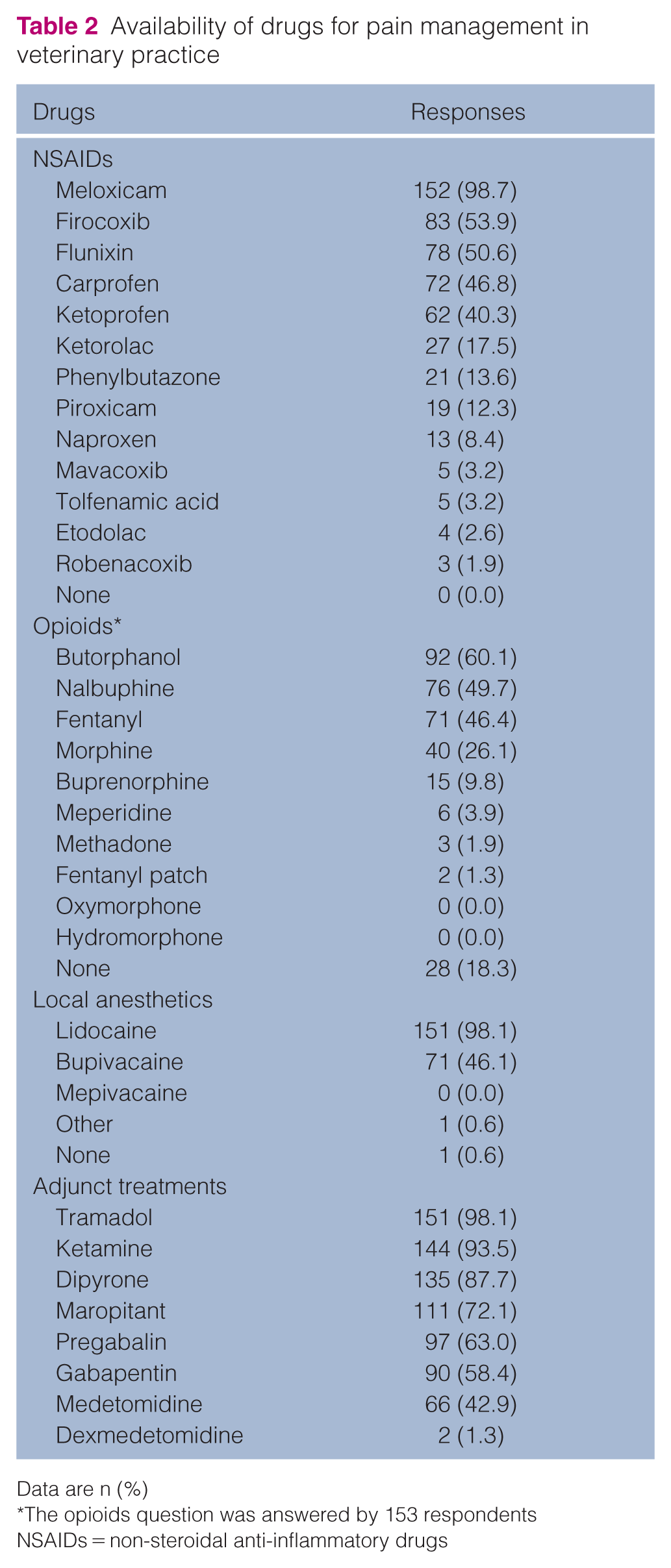
Table 2 presents the availability of various analgesic drugs used by Argentine veterinarians for pain management in cats. Meloxicam was the non-steroidal anti-inflammatory drug (NSAID) most frequently available to respondents. Butorphanol was the most reported opioid, lidocaine was identified as the primary local anesthetic and tramadol was most frequently reported as an adjunct analgesic. However, some respondents indicated that opioids were not available in their veterinary practice.
Availability of drugs for pain management in veterinary practice
Data are n (%)
The opioids question was answered by 153 respondents
NSAIDs = non-steroidal anti-inflammatory drugs
Figure 9 illustrates the factors guiding the selection of NSAIDs and opioids in feline acute pain management, with efficacy being the factor most frequently cited by respondents. Most respondents reported administering opioids preoperatively and NSAIDs postoperatively, as illustrated in Figure 10, which shows the timing of the first NSAID or opioid administration in healthy cats undergoing scheduled surgery.

Importance of factors influencing the choice of non-steroidal anti-inflammatory drugs (NSAIDs) and opioids for the treatment of acute pain in cats

Timing of first administration of non-steroidal anti-inflammatory drugs (NSAIDs) or opioids in a healthy cat undergoing scheduled surgery
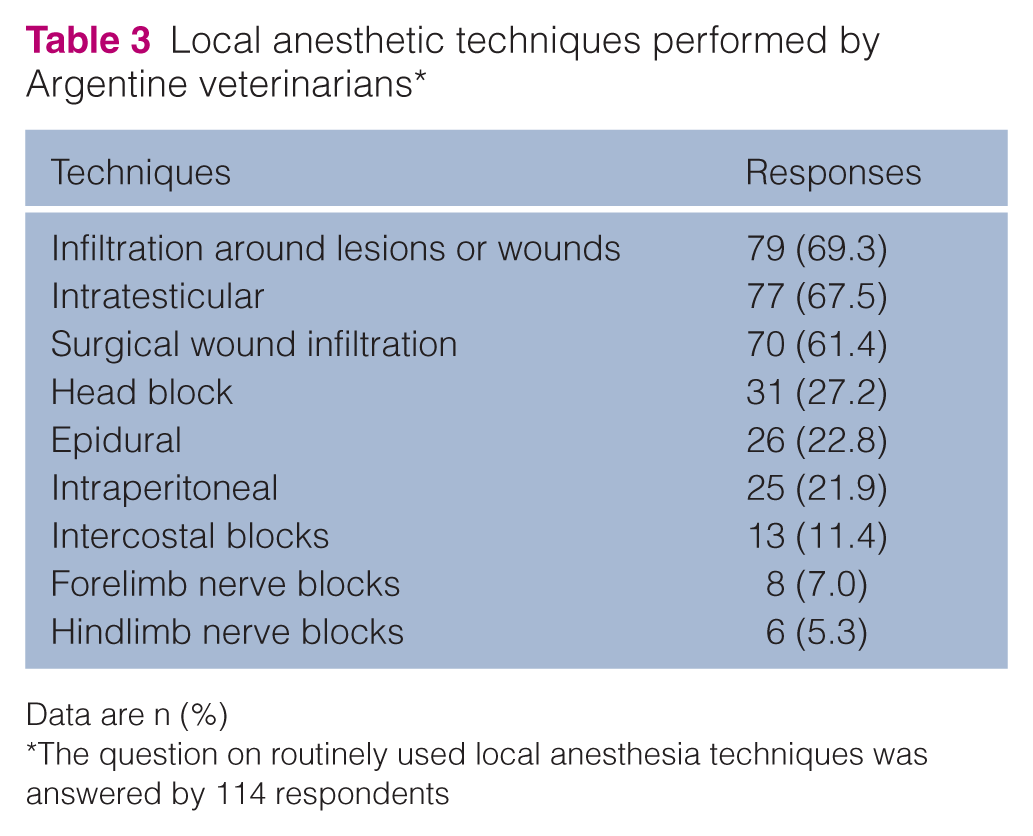
Regarding local anesthesia techniques, 68.2% of surveyed veterinarians (n = 105) reported employing at least one such method, while 31.8% (n = 49) reported not using them. The most frequently performed blocks are presented in Table 3.
Local anesthetic techniques performed by Argentine veterinarians*
Data are n (%)
The question on routinely used local anesthesia techniques was answered by 114 respondents
Pain scores assigned to conditions causing acute pain in cats
Figure 11a presents the overall pain ratings assigned by veterinarians for medical and surgical conditions in cats, whereas Figure 11b highlights significant gender differences in scores for orthopedic surgery (P = 0.005), pancreatitis (P = 0.001), urethral obstruction (P = 0.011), mastectomy (P = 0.044) and exploratory laparotomy (P <0.001).

Pain ranking assigned by survey respondents on a scale of 0 to 10 (0 = no pain; 10 = the worst pain imaginable) for various medical and surgical conditions in cats: (a) general scores and (b) scores broken down by gender. Black dots represent the mean scores, the vertical line indicates the median and asterisks indicate differences between genders
Pain management protocols
The timing and duration of NSAIDs and opioid use across the most encountered clinical conditions and surgical procedures in cats showed distinct patterns, with NSAIDs generally administered for longer periods – most often 48–72 h or 3–7 days – while opioids were concentrated within the first 24–48 h or not used by some respondents (Figure 12).

Duration of administration of non-steroidal anti-inflammatory drugs (NSAIDs) and opioids reported by Argentine veterinarians for four common feline procedures: (a) orthopedic surgery; (b) urethral obstruction; (c) ovariohysterectomy; and (d) orchiectomy
Continuing education resources
Most respondents considered all continuing education resources to be important or very important (Figure 13). Regarding continuing education formats, respondents showed a greater preference for online courses, followed by in-person courses, while other formats were selected less frequently (Table 4).
Educational tool preferences reported by 154 Argentine veterinarians

Data are n (%)

Perceived importance of various educational and professional development methods in veterinary medicine, according to survey respondents
Discussion
This is the first study to explore the attitudes, knowledge and pain management practices of veterinarians in Argentina regarding acute pain in cats. The gender distribution of respondents was consistent with previous studies, which have typically shown a predominance of women.6,14,16,18,20,24,25 Although a national census indicated a male majority, a significant increase in female representation has been noted within the veterinary field. 26 As reported in previous studies, most veterinarians work with small animals, primarily in private practices or clinics.6,13,14,18,24
The reported dissatisfaction with undergraduate training highlights a perceived deficiency in undergraduate education regarding pain management. Although the question specifically targeted recent graduates and a defined discipline, this finding raises broader concerns about potential shortcomings in veterinary curricula related to feline pain recognition and management, warranting further investigation.
Argentine veterinarians reported an acceptable level of knowledge regarding pain recognition; however, perceptions of analgesic management were heterogeneous, with nearly equivalent proportions of neutral and negative assessments, suggesting the presence of limitations related to analgesia. These observations are consistent with findings from New Zealand, 16 Brazil 6 and recent studies conducted in Africa, 27 but differ from those from Canada, where most respondents expressed confidence in their knowledge. 10 Such discrepancies may reflect variations in undergraduate training and continuing education standards among countries. Nevertheless, perceived gaps in pain-related knowledge have been shown to hinder both pain recognition and effective management, underscoring the need for enhanced educational strategies focused on feline-specific pain assessment.5,13
In our study, veterinarians did not report difficulties in recognizing pain in cats; however, they expressed greater challenges in managing it, suggesting a gap between clinical recognition and therapeutic skills. These findings are consistent with previous studies indicating that pain assessment and management in cats are more difficult than in other species. 21 In this context, understanding the challenges associated with pain management is essential for selecting appropriate pharmacological treatment. Furthermore, the observed differences may be attributed to insufficient knowledge, insecurity or concerns about potential side effects. 14 All these factors contribute to cats receiving less analgesia than dogs, even though pain levels in both species are expected to be comparable.24,28
Argentine veterinarians considered pain assessment very important, similar to what was reported in a previous study, 21 and this was reflected in attitudes toward acute pain management. In this regard, most respondents disagreed with the statement that ‘some surgical procedures do not cause enough pain to justify the use of analgesics’, consistent with previous findings.10,16 Likewise, there was strong agreement with positive statements, such as ‘pain affects an animal’s behavior and interaction with caregivers or other pets’, ‘pain affects quality of life’ and ‘prevention is better than cure’. These attitudes highlight a general perception that analgesic treatment is beneficial for animals in pain, likely reflecting the belief that it improves recovery. 20 Regarding the statement that ‘a certain degree of pain is necessary to limit activity after surgery’, most respondents disagreed. This contrasts with studies from Malaysia and Bosnia and Herzegovina, where a considerable proportion of veterinarians considered such pain to be beneficial.18,20 Finally, responses to the statement ‘cats experience the same level of pain as humans when suffering from the same medical condition’ were similar to those reported in Canada. 11
The significant association between assessment frequency and scale usage suggests consistency in responses. Another notable finding was the low percentage of veterinarians who reported never assessing pain compared with data from other countries.19,21 However, familiarity with the various scales was lower than previously reported, possibly because most respondents graduated more than 10 years ago, while many scales were validated only within the past decade. 1 In this study, women showed greater familiarity with all validated scales, which may be explained by their perception that pain scales are useful tools 29 and could, in turn, account for the gender differences observed in the frequency of pain assessment.
The FGS was the most frequently used tool for assessing pain in cats, consistent with previous reports. 21 Furthermore, the usage rate of these tools was relatively higher than in New Zealand and Australia, where most respondents recognized the utility of pain scales, although only a small proportion applied them in clinical practice.14,16 Although this survey did not investigate barriers to adoption, previous studies have identified lack of training and time constraints as limiting factors.12,21,30
Meloxicam was the NSAID most widely available to Argentine veterinarians, consistent with findings from other countries.5,6,10,13,14,17 In fact, meloxicam is one of the most researched analgesics in cats, consistent with international trends and supported by its favorable pharmacokinetic profile in cats, particularly in cases of renal disease. 31 However, dipyrone was the most reported drug in the NSAID category in New Zealand 15 and Uruguay. 32 Although sometimes classified as an NSAID, dipyrone is a non-opioid analgesic with antipyretic and spasmolytic properties and a complex mechanism involving central cyclooxygenase-3 inhibition and modulation of opioid and cannabinoid systems. 33 In this study, dipyrone was widely available among respondents and, given that it produces analgesia through additional pathways and can be administered concomitantly with NSAIDs, we classified it as an adjunct analgesic.
Regarding opioids, butorphanol was the most frequently used opioid in our study, comparable to reports from other countries,8,19 although 18.3% of respondents indicated a lack of access to this drug class, likely due to regulatory restrictions. 5 These patterns are consistent with findings from other South American countries. The prevalence of tramadol use was also consistent with surveys conducted in Brazil, Colombia and Uruguay.6,13,32 Similar patterns were observed in Australia, although tramadol was considered an adjunct analgesic because of its dual mechanism of action. 14 Across all drug classes, efficacy was the primary selection criterion, while cost was considered neutral in Argentina, relevant in Malaysia, 18 Brazil, Colombia6,13 and Bosnia and Herzegovina, 20 and less significant in the UK 18 and Australia. 14
Lidocaine was the primary local anesthetic available to Argentine veterinarians; however, one-third reported not using local anesthesia techniques. A similar pattern was observed in the UK, where small animal surgeons used local anesthetics infrequently. 34 The reported usage rate in Argentina was comparable to that in Australia, 14 higher than in Brazil, 6 Canada 24 and France, 5 but lower than in Colombia. 13 In Argentina, the most frequently performed blocks were infiltration around a lesion or surgical wounds, and intratesticular blocks, similar to observations in Switzerland, although to a lesser extent. 19 In contrast, dental blocks were the most common technique in cats in Australia, whereas in Argentina they were used less frequently. 14 Nerve blocks and epidural anesthesia were the least utilized techniques in both countries, likely because of a lack of familiarity with these procedures. 19
The pain scores assigned by respondents were similar to those previously reported.14,18,35 The gender differences observed in the scores are in line with what has been described in the literature, indicating that men tend to assign lower ratings, reflecting lower sensitivity and a reduced tendency to acknowledge or report pain. In contrast, women assigned higher scores, linked to greater empathy and heightened sensitivity to this condition. In addition, the subjective nature of pain assessment in veterinary practice may also contribute to these differences.29,36 –38 As in Australia, most Argentine veterinarians administer postoperative NSAIDs and opioids pre- or intraoperatively 14 in healthy cats undergoing elective procedures, suggesting an initial preventive approach to analgesia. However, across the various medical and surgical conditions evaluated in this study, opioid use was limited to the first few hours or not used, whereas NSAIDs were prescribed for longer periods. Despite this, a proportion of responses indicated insufficient analgesic coverage, highlighting the need to implement individualized, multimodal strategies tailored to the patient’s clinical course to ensure optimal welfare and recovery.
Argentine veterinarians assigned a high level of importance to continuing education, recognizing it as a cornerstone of clinical practice. Among the available training modalities, online courses were identified as the preferred option, as they offer flexibility and provide access to current knowledge – key factors in maintaining clinical competence. Increasing professional development opportunities appears to have strong potential to enhance veterinarians’ knowledge and their ability to manage and assess pain effectively.16,39 The integration of pain management content into structured educational programs enhances both theoretical knowledge and practical skills, highlighting the importance of sustained, accessible and context-specific educational initiatives. Continuing education may also help mitigate dissatisfaction stemming from deficiencies in undergraduate preparation while promoting the exchange of experiences and best practices among colleagues. This collaborative approach encourages consistent use of pain assessment tools and ultimately improves feline welfare. Practical experience was highly valued by participants, being recognized as a crucial source of professional learning. Motivation, dedication and commitment emerged as primary drivers for continuing education, facilitating peer-to-peer knowledge exchange. Similar findings have been reported,6,7,16 reinforcing the value of professional networks and collaborative educational initiatives in improving pain management practices in veterinary medicine.
One of the main limitations of this study was data collection. Convenience sampling may introduce bias due to the absence of randomization; however, it was selected as a practical means of gathering data on the topic of interest. Since the survey link was distributed to various veterinary councils and colleges across the country, and not all confirmed receipt of the email, it was not possible to determine the total number of recipients, nor to calculate the response rate accurately. To increase participation, snowball sampling was also employed by distributing the survey via WhatsApp groups composed of professionals who met the inclusion criteria and asking participants to invite other colleagues. Despite these efforts, the target sample size was not reached, nor was geographic coverage of all provinces achieved.
Conclusions
Based on the findings of this study, it can be concluded that veterinarians in Argentina prioritize the assessment of acute pain in cats and generally report possessing adequate knowledge in this area, despite expressing dissatisfaction with undergraduate education. The FGS was identified as the most frequently used tool, with female veterinarians performing pain assessments more frequently. Online courses were identified as the preferred method of continuing education, highlighting the value of accessible and flexible training. These findings underscore the need to enhance practical and therapeutic skills through structured educational initiatives, which are essential to optimize patient care and improve the management of acute pain in cats.
Supplemental Material
S1
Questionnaire sent to veterinarians.
Footnotes
Acknowledgements
The authors thank all the veterinarians who dedicated their time to participating in this research and for their valuable responses, which made this project possible. We also wish to thank AAMeFe for their support in the survey.
Author note
An abstract of this study was presented at the 50th World Small Animal Veterinary Association World Congress in Rio de Janeiro, Brazil.
Supplementary material
The following file is available as supplementary material:
S1: Questionnaire sent to veterinarians.
Conflict of interest
The authors declared no potential conflicts of interest with respect to the research, authorship, and/or publication of this article.
Funding
The authors received no financial support for the research, authorship, and/or publication of this article.
Ethical approval
This work did not involve the use of animals and therefore ethical approval was not specifically required for publication in JFMS.
Informed consent
This work did not involve the use of animals (including cadavers) and therefore informed consent was not required. No animals or people are identifiable within this publication, and therefore additional informed consent for publication was not required.
