




Abstract
When researching with Moana (ocean) or Pacific peoples, a key research consideration is which methodological approach will best acknowledge, engage, and value what is shared. The Manulua (two birds) Framework explores the experiences of successful Tongan science learners in Aotearoa New Zealand and the Kingdom of Tonga. The Manulua Framework draws on four very different theoretical or conceptual frameworks and methods, complementing (1) Tongan and Moana or Pacific approaches to research with aspects of (2) critical realism, (3) relationality through vā (space), and the (4) multiscience framework. Epeli Hau’ofa’s seminal essay Sea of Islands, and the articles of support and critique found in A New Oceania helped situate Oceania as the context, connector, and source of my participants’ stories. This article describes how this combination acknowledged Moana or Pacific values, protocols, knowledge, and beliefs during data collection, analysis, and reflection, offering a way for researchers to consider how to draw upon multiple theoretical or conceptual frameworks and methods in their work.
Keywords
Introduction
In any research activity, researchers must ensure that their theoretical or conceptual frameworks and methods are appropriate to answer their research questions and justify the research participants’ involvement. When working with Moana(ocean) or Pacific peoples, it is important to consider and utilise Moana or Pacific frameworks, and knowledge systems to acknowledge the values and epistemologies held by Moana or Pacific peoples (Anae et al., 2001). Similarly, in education, we need to consider students’ values, beliefs, and epistemologies. Thus, I present in this article, how I as a non-Indigenous researcher worked with successful Tongan science learners to understand how the teaching of science might be improved for Tongan learners. I begin by briefly exploring the research topic itself before sharing the theoretical framing used to collect, analyse, and understand the participants’ stories. In doing so, I aim to provide a constructive example of how non-Indigenous peoples working with Indigenous participants can consider and question their own practice and approach and how researchers may draw on different theoretical or conceptual framings and methods in their own work.
Positionality
I am Pāpālangi (of European ancestry) and was born and raised in Aotearoa (New Zealand). I am married to a Tongan man, am fa’e (mother) to my Tongan children, and live with my extended Tongan family. My upbringing, the culture I have experienced growing up in Aotearoa, marrying into my Tongan family, and my work experience have all shaped my worldview. Most importantly as a fa’e, my life is dedicated to my children and ensuring they experience the world without compromising who they are. As such, I consider myself an external-insider, someone who sits in between the binary of insider and outsider, with affiliations to an outside culture while critically regarding many of the values and beliefs of the culture they were first socialised in (Banks, 1998). I do not claim to be an insider, or Tongan, with respect to my research, but nor am I entirely an outsider to Tongan ways and values. I acknowledge that I am constantly learning and responsible for learning about, sharing, and respecting what I do not know. I lalanga (weave) my learning and understanding, endeavouring to determine how contexts can be strengthened by different ways of being coming together (Fonua, 2020a, 2020b).
My positioning informs who I am in relation to my research rationale. Therefore, my methodological and theoretical choices reflect both who the participants are and who I am; encouraging lalanga of different frameworks to enable a broad ontology and epistemology in the research framing. Moana or Pacific is used to represent learners with ancestry to the Indigenous peoples of the different island nations of the Pacific Ocean; the use of Moana or Pacific together acknowledges indigeneity through the use of an Indigenous word with Pacific, which is globally recognised; Pasifika (Moana or Pacific peoples in Aotearoa) is kept where it is used in government reports and publications by other scholars.
Researching science education
By studying an aspect of the social world, I seek to understand phenomena that are “both socially produced and socially defined”; a focus on science education also requires the recognition that the phenomena discussed as science, or natural science, in science education are “naturally produced but socially defined” (Danermark et al., 2005, p. 16). In formal schooling systems across the world, these phenomena are also primarily located within a Western understanding of the world.
The history of the development of Western scientific thought is long and complex. It is also is strongly influenced by different cultures but that is beyond the scope of this article. Importantly, the development of Western scientific thought required the shift from considering theological or supernatural explanations of the world as the truth to emphasising and searching for explanations using a particular scientific method which includes observation, hypothesising, testing, and verification (Sousa, 2010); thus, valid scientific knowledge is that which has gone through such a validation process. Similarly, this is the kind of thinking that dominates research—including research of science education.
Although some suggest that positivism’s influence has waned slightly since the mid-twentieth century, others argue that linguistically it is still well entrenched and that the positivist position continues to dominate the “current orthodoxy within scientific communities” (O’Mahoney & Vincent, 2014, p. 6). Since beginning this research journey, I have often wondered how many other science educators have considered the influence that positivism has on them. How has the empirical and reductionist approach of their formal science education informed their understanding of science? Moreover, how has their ontological and epistemological positioning influenced their approach to science education? Could this be contributing to why Tongan and other Moana or Pacific students are not achieving in science akin to other ethnicities? If various government policies and initiatives have not achieved an improvement in Moana or Pacific student achievement over the last few decades, perhaps it is because they have not challenged and educated the educators enough?
Tonga education research in Aotearoa
In Aotearoa, several government educational policies are focused on, and prioritise, Pacific students as they experience some of the lowest achievement rates of any ethnic group in Aotearoa. For example, only 22.8% of Pacific school leavers attained a University Entrance Award compared with 43.8% of Pākehā (non-Indigenous New Zealanders having predominantly European ancestry), 63.8% Asian, and 18.6% Māori (the Indigenous peoples of New Zealand; Education Counts, 2021). However, the homogenising approach to policies for Pacific education in Aotearoa does not acknowledge the cultural nuances within the constructed category of Pacific students (Samu et al., 2008). For example, Vaioleti (2011) argued that if “an acknowledgement of [their] Tongan identity and the knowledge that their unique ways of learning and current knowing are respected”, Tongan student achievement will improve at all levels of the education system (p. 13). Furthermore, while a lot of research has focused on Pacific students, particularly relative to other ethnic groups such as Pākehā, and Māori, there is still limited research specifically focused on the experiences of Tongan students in Aotearoa. The available literature falls into two broad categories which overlap with the focus of this research project: highlighting concerns around Tongan student achievement (Kalavite, 2010; ‘Otunuku & Brown, 2007) and acknowledging the benefits of incorporating Tongan concepts and cultural practices (Fonua, 2018; Manu’atu, 2000, 2009; ‘Otunuku, 2010).
Teu Le Vā (to take care of the vā) is a key resource outlining how research should be done with Pacific peoples in Aotearoa (Airini et al., 2010) and guided how my research was done. Teu Le Vā is an approach that aims for research collected on Pasifika education to inform policy to achieve success for Pasifika students in Aotearoa New Zealand. It indicates that for research to be transformative for Pasifika students, it is essential to value and maintain relationships, emphasising the importance of vā (space). It centralises Pasifika learners to ensure their voices and issues are heard, and those of their families and communities. Teu Le Vā also acknowledges the importance and contribution of the wider Pasifika community and the use of the collected knowledge to improve Pasifika success (Airini et al., 2010).
Teu Le Vā highlights the importance of exploring the cultural complexity of different Pasifika groups. With respect to a specific research focus on Tongans, two key elements in much Tongan education research in Aotearoa and elsewhere are Thaman’s Kakala (floral garland) metaphor and talanoa (open discussion). The Kakala metaphor describes the Tongan practice of weaving garlands from flowers and other plant materials. This process of making kakala is very important to Tongan culture, capturing many key Tongan values and traditions, and the practice of making these garlands has become standardised using patterns and vocabulary developed over time. K. H. Thaman’s (1997) Kakala metaphor modelled an education research framework with three stages of construction, toli (to rank or arrange), tui (to analyse), and luva (to apply or implement), representing data collection, data analysis, and the application or implementation of knowledge gathered during the research process, respectively, centralising the importance of Indigenous knowledge (IK) systems. Thaman’s model was further developed into the Kakala Research Framework (KRF; Fua et al., 2007), which added three stages: teu (to plan and conceptualise), mālie (relevance and worthwhileness), and māfana (application, transformation, and sustainability) of the data. Within these approaches, acknowledging vā (the relational space) is important, and relationality is emphasised.
The KRF collects data using talanoa, a qualitative approach that allows participants to tell their stories and experiences. Vaioleti (2006) defines talanoa as “talking about nothing in particular, and interacting without a rigid framework” (p. 23), which allows participants to reflect on the research topic, providing their critique and argument. Talanoa is complex but flexible because it is a conversation that can be formal or informal and can be used in different contexts or settings for different purposes (Fua, 2009). In research, talanoa is a tool for data collection and analysis involving a researcher and participant engaging in an unstructured conversation based on an idea as a starting point, rather than set interview questions (Fua, 2009).
The research project
The Manulua Framework was developed during a recent research project. This research explored successful Tongan science learners’ experiences to understand what science is to them, their science education context, the visibility of IKs, and how they were engaged, enjoyed, and were successful in their studies in secondary school and university. It purposefully focused on the stories of successful Tongan learners to countering the typical analysis of Moana or Pacific failure. The theoretical framing, methodology and methods are described below.
Methodology
Burnett’s (2012) analysis of post-graduate research in Pacific education undertaken in Aotearoa’s universities argued that the positivist and interpretivist bias was limiting the socially transformative potential of education research. In response, my research was designed to be socially transformative educational research, rather than a valuable source of information that did not necessarily trigger further action or sustained change. As a non-Indigenous science educator, I have embraced the idea of critical reflexive practice, particularly considering, and adjusting my own practice (Fonua, 2018, 2020a). While I acknowledge the discussion of other scholars regarding the proliferation of Pacific methodologies and frameworks (Sanga & Reynolds, 2017), the Manulua Framework I present here is intended to contribute to discussions about how non-Indigenous researchers and educators can engage in research with Indigenous populations. The purpose of this article is to describe the Manulua Framework and demonstrate how researchers can combine elements of multiple qualitative methodologies and theoretical or conceptual frameworks to complement who their participants are and their research questions rather than choosing one and accepting its limitations.
Participant selection and data collection
The framework was developed out of research conducted with 26 (16 females and 10 males) successful Tongan students. These individual interviews were heavily influenced by talanoa, particularly Vaioleti’s (2011) talanoa faka‘eke‘eke (to talk with questions). Faka is commonly used in the Tongan language to form compound words and signifies, as a prefix to verbs, nouns and adjectives, “after the manner of . . . [or] to cause” (Rabone, 1845, p. 38). ‘Eke implies asking a question, allowing a participant of the talanoa to drive the questioning to uncover particular knowledge. A retroductive approach was used to thematically analyse the data. This process encourages shifting considerations and meanings between the data and theory (Ragin & Amoroso, 2011). During the data collection and analysis, the four different theoretical or conceptual frameworks and methods of the Manulua Framework were considered and applied, contributing to the strength of this retroductive approach. Furthermore, Hau’ofa’s Sea of Islands essay provided the context for considering the participants’ stories, as outlined below.
The sea of islands
Epeli Hau’ofa’s (1993) The Sea of Islands essay challenged views of the Pacific as a place of smallness based on the landmass valued by European colonisers and viewed from an “economistic and geographic determinist” (p. 6) perspective. Instead, Hau’ofa posited the largeness of the region if the marine and the metaphysical environment are included, a response to the historical and contemporary belittlement of the Pacific by outsiders, colonial powers, and aid funders. This belittlement creates a position that focuses on smallness of the landmass rather than the vast size of the region if the moana is included; this position in turn belittles the achievements of the people who populate this space. The belittlement includes educational achievement and the value placed on local IKs in formal education systems.
Although Hau’ofa’s A New Oceania was transformative for many Moana or Pacific peoples, it also triggered some critique. This critique often highlighted an oversimplification of the Moana or Pacific situation, its diversity and its social structure and power relationships. A more nuanced critique was offered by Borer (1993) who suggested that: [I]f viewed as a reality or as a “truth,” Epeli’s vision is false. It is a phantasm, a figment of imagination, a hopeful illusion, a utopian dream, a flight of fancy, a mistaken view of our real world. If, however, it is seen as a dare, a challenge, an invitation, or a summons for the believers in a more progressive and egalitarian humanity, then Epeli’s vision has some merit. (p. 87)
I have taken Epeli’s vision as a challenge, in particular the need to address the belittling and degradation of local IK. My response is the Manulua Framework, a combining of different theoretical framings to gather, consider, and value the stories of successful Tongan science learners about their experiences of science education in Aotearoa and Tonga.
The Manulua Framework
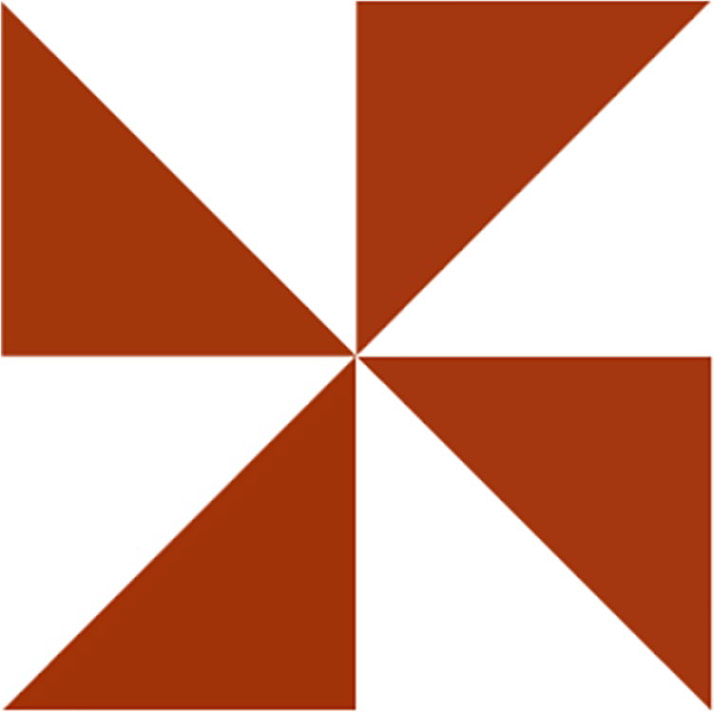
The four theoretical frameworks provide different ways of examining ontology, ways of being, epistemology, ways of knowing, and axiology, ways of valuing, visualised as the manulua (Figure 1).
The manulua (two birds) motif.
The manulua is one of the oldest known design motifs in Tongan craft, particularly on ngatu (painted barkcloth; Figure 2). It represents the wings of two birds and symbolises the coming together or union of two groups.

Ngatu (painted barkcloth) featuring the manulua (two birds) motif.
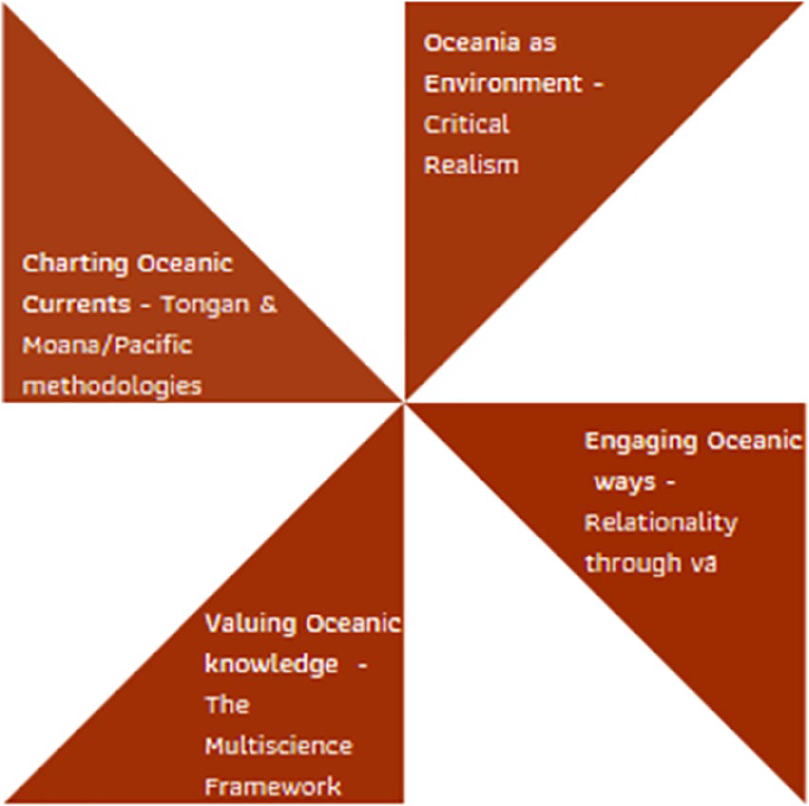
Vaioleti (2011) referred to manulua as a symbolically representative way for Tongans to negotiate and balance spirituality within their daily life. I use it here to depict how the four different theoretical or conceptual frameworks and methods are used in this research, symbolised by the four wings, have been lalanga to form a whole, and a new way to view Moana or Pacific education experiences in Aotearoa and beyond (Figure 3). The four wings have been purposefully chosen because they bring a relevant lens to this research: enabling a critique of current science education in Aotearoa and Tonga with respect to Tongan and other Moana or Pacific students; the valuing of relationships and Indigenous science knowledge in Western modern science (WMS) education; and formal educational institutions and mainstream culture in general. Each wing and its application for educators and researchers will be discussed in the next section.
The Manulua Framework: using manulua (two birds motif) to lalanga (weave) and depict the four theoretical frameworks of the thesis as four wings.
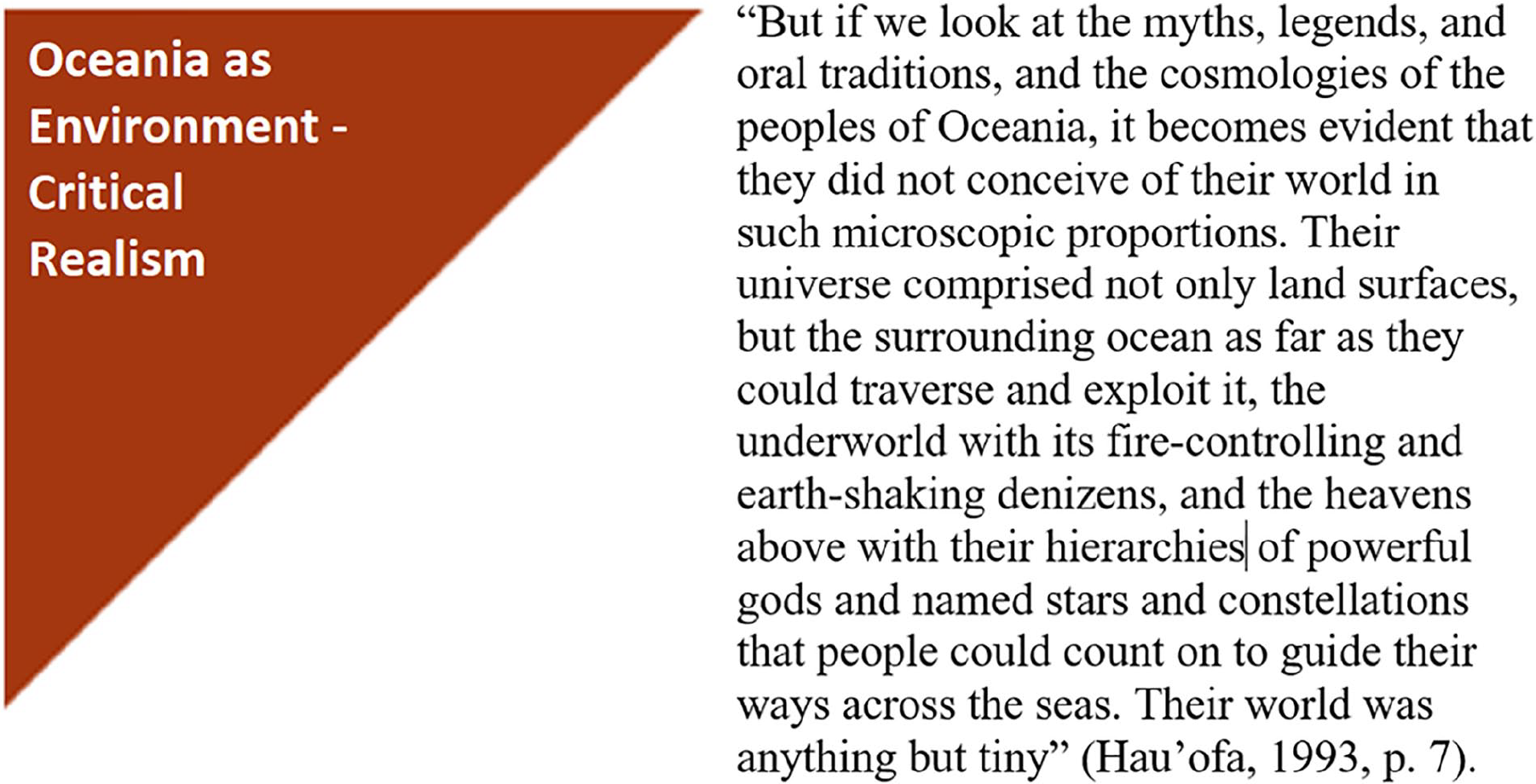
The first wing encompassed the meta-theory of critical realism, particularly its positioning relative to positivism and constructivism regarding understanding the natural and social worlds (Figure 4). The section is posed as Oceania as Environment because of the importance of the context conveyed in the following Hau’ofa (1993) quote (see Figure 4). The stories of Moana or Pacific people indicate they considered their world to include the heavens and what is found in the ocean and the underworld, both what is empirically seen and known and also, more importantly, what is possible.
Oceania as environment: critical realism.
Critical realism
Roy Bhaskar developed Critical realism during the 1970s. It focuses explicitly on ontology and considers knowledge to be “socially produced and historically located” (Moore, 2007, p. 29). Critical realism rejects universal claims to the truth and considers the world as a place that is stratified by time and space, where phenomena exist whether individuals experience them or not (Danermark et al., 2005). It offers “a set of perspectives on society (and nature) and on how to understand them . . .” (Bhaskar, 2011, p. 2); this perspective informs how the world can be investigated and understood.
Bhaskar countered the dominant positivist ideology of science with its focus on prediction and control with a realist understanding of science as providing “explanation and enlightenment” (Hartwig, 2010, p. 10). According to Tikly (2015), Bhaskar also critiqued the anthropocentric positioning of much of Western philosophy and, therefore, WMS for its focus on what can we know rather than what is.
Critical realism was offered as a philosophy of science, a way of understanding what good science is and what science does, that allows for the possibility of causal explanations without assuming universal truths (Bhaskar, 2011, p. 2). This contrasts strongly with positivism, or empirical realism, which dominates most scientific inquiry (Bhaskar, 2008) and considers that an objective world exists, as empirical or observable facts that can be quantified and extrapolated to make universal laws (O’Mahoney & Vincent, 2014; Sousa, 2010).
Locating critical realism
Critical realism’s challenges to positivism are extremely important considerations for science educators, and researchers, to be exposed to, to consider and debate. Positivism’s domination of science suggests that most science educators, particularly at university, have been exposed to positivist ontology throughout their education and their academic and teaching pursuits. Thus, they have usually spent their lives focusing on “a ‘flat actualism’ that does not probe underlying structures and causal mechanisms that may be beyond perception” (Tikly, 2015, p. 243). Contrastingly, critical realists consider how the social world is shaped by the intransitive dimension, which consists of deeper causal mechanisms and structures such as social inequity (Tikly, 2015). These invisible, yet influential forces, including the cultural, political, economic drivers present, can affect what is considered normal, usual, and valued, and ultimately, what is real and how knowing is enabled.
I suggest critical realism’s central tenets, such as stratified ontology, are useful for science educators and researchers alike to consider. For example, reflecting on how forces contribute to a social situation, such as why some students are not achieving in their class, rather than empirical measures of student outcomes in the form of marks or grades could trigger an ontological shift that may contribute to improving the experience and outcomes of Tongan and other Moana or Pacific science learners.
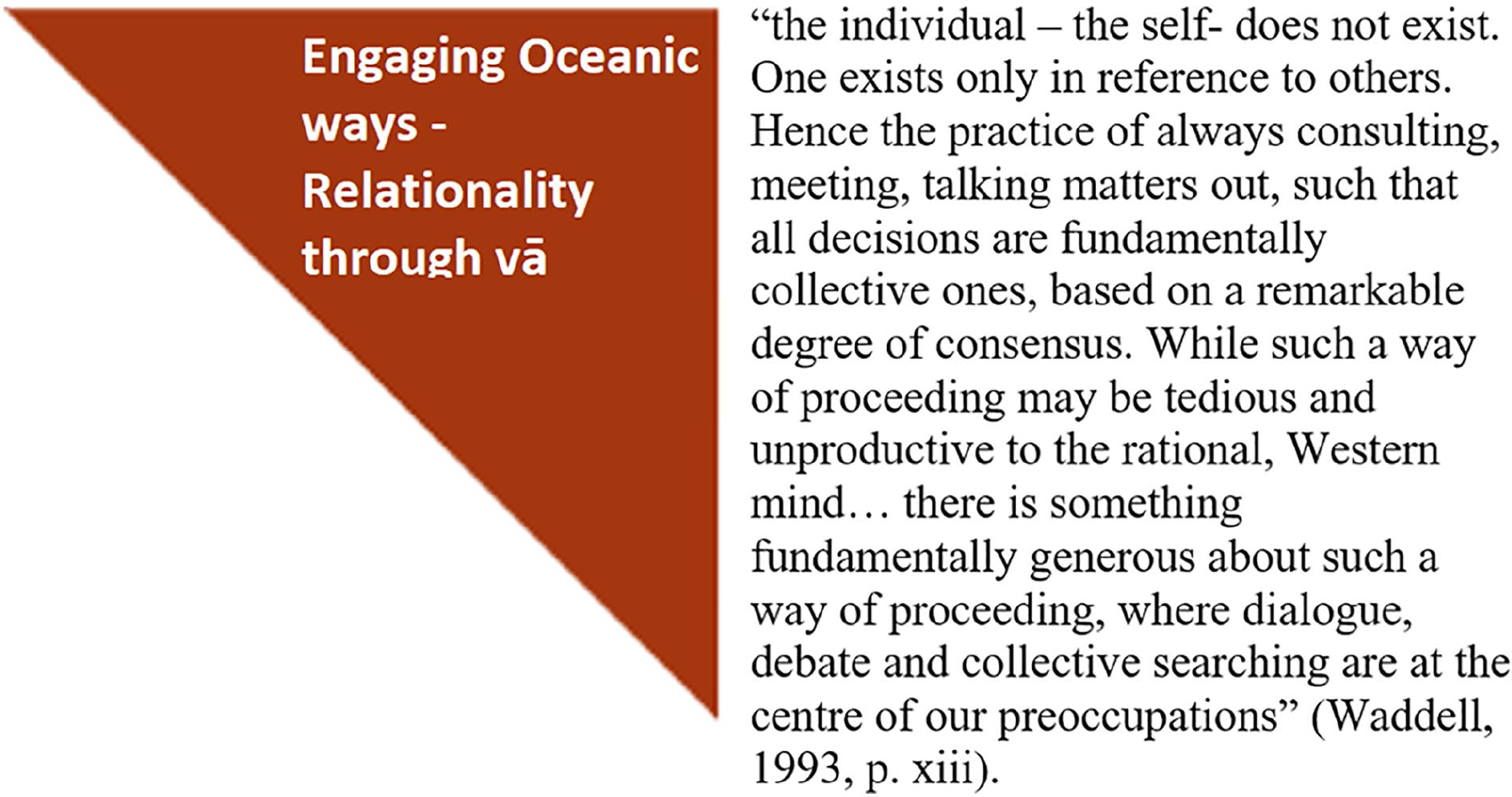
Critical realism argues that reality is multidimensional and stratified; it is an open system with infinite possibilities where causal laws are ontologically distinct from the pattern of events. This ontology enables a contextual understanding of time and space that creates significant room for the focus on relationality through vā in science education, the second wing of The Manulua Framework (Figure 5).
Engaging Oceanic Ways: relationality through vā (space).
Both context and chronology are important in Tongan culture. Māhina (2008) describes tā (time) and vā (space) as inseparable and occurring “in plural, collectivistic, holistic and circular ways, as opposed to the singular, individualistic, analytical and linear manner” (p. 78) of the West, while Vaioleti (2006) highlights the need for contextual interaction to create authentic knowledge when working with Tongan participants.
Vā, or the relational space, is a viewpoint found in many Pacific countries, including Tonga, Samoa, and Fiji. From a Tongan perspective, vā “emphasises space in between which is fundamentally different from the popular western notion of space as an expanse or an open area” (Ka’ili, 2005, p. 89). It is a “. . . relational space between two time-markers (tā). It is a space that is fashioned through the relationship between time-markers—beats, things, or people” (Māhina, 2004). The importance of vā is evident in the numerous Tongan terms that detail the intricacies of this relationship, for example, tauhi vā, which refers to managing the relational space (Ka’ili, 2005), emphasises the importance of nurturing the relationship rather than the persons involved; whereas tauhi vaha’a is looking after or protecting the space (K. H. Thaman, 2008).
As other researchers have also suggested (Ka’ili, 2005; Mila-Schaaf, 2006), understanding vā can help educators working with Moana or Pacific students to consider the embodiment of relationality in their teaching and learning spaces, especially when located in the Pacific. Relationality refers to “our lived relation to other human beings, other living creatures, and to the non-living entities with whom we share our spaces and the planet” (Ritchie, 2013, p.1). Although relationality is often reduced to relationships its essence is broader, encompassing any type of association or link with anything. Relationality replaces the linear idea of connection with a connection through an expanse of space. For Tongans, tā and vā are inseparable constructs that shape who they are and how they position themselves relationally.
Locating vā
The importance of relationships has been emphasised in Moana or Pacific research for many years, and educators have been consistently encouraged to form good or quality relationships with their Moana or Pacific students. Research has demonstrated how engagement and achievement are affected by the quality of the relationship of Moana or Pacific students with their teachers (Hawk & Hill, 2000; Reynolds, 2017). However, the idea of relationships and what makes them good is not universal; labelling relationships as good or quality becomes culturally loaded as different cultures understand good in different ways (K. H. Thaman, 2008). Perhaps shifting educators to understand there are differences is more useful than trying to determine what quantifies a good relationship. If educators consider vā, particularly the expectations, ethics and responsibilities of tauhi vā, this “leads to an examination of our interaction with others; a focus on our intentions and conscious actions that influences the nature of our relationships with others” (Mila-Schaaf, 2006, p. 11). In education, this is particularly important for how teachers and students interact, relate, and work with each other.
I argue that current science and science education that is heavily influenced or inspired by WMS tries to avoid relationships, to its detriment. Presuming that it is possible to remove self from any interactions creates complications and is perhaps one of the many elements contributing to the current state of Moana or Pacific achievement in science?
Hau’ofa (1993) described Oceania as a sea of islands rather than islands in a far sea, offering a more holistic perspective that encompasses the totality of relationships, countering the dominant deficit smallness description associated with Oceania geographically and economically. Instead, he acknowledges Oceania’s breadth and its wealth of knowledges, cultures, and history that exist beyond imposed colonial boundaries and narrow perspectives. This description of Oceania as a place of purposeful and intentional connection counters that of the perspective initially purported by European colonisers that the Oceanic population was unintentional and random in their existence—as a student of anthropology, I am very aware of this tension and its implications for explaining history. Hau’ofa’s perspective raises the importance of ontological positioning discussed in the previous section; seeing the islands as connected, a sea of islands, or disconnected, islands in a far sea, will determine what is, and therefore what is possible, in that space.
Incorporating the sea of islands view of reality within the Manulua Framework for my research directed me to seeing possibility, capability, and purpose. The focus on successful Tongan science learners counters the deficit perspectives of Tongan and other Moana or Pacific underachievement in science, and that success in science as a Tongan or other Moana or Pacific science learner is a rare and accidental phenomenon. The emancipatory nature of this research intends to change the often-distorted version of the truth, particularly around what is considered valued knowledge. Like other researchers who have embraced Hau’ofa’s work, Reynolds (2017) notes the parallels between the separation and connection of islands in Oceania and relationships in the classroom. My contribution is the suggestion that if we specifically shift the view of science educators and researchers alike, away from Tongan and other Moana or Pacific students as islands in a far sea to a sea of islands that are connected socially and spatially—including Aotearoa, we highlight and emphasise the need to reduce the conscious and unconscious bias towards Tongan science learners both in the education setting and when research focuses on them.
Teachers, educators, and researchers also need to recognise that these connections and separations in classroom relations are perhaps more apparent in a subject that derives knowledge from an investigative method that seeks to avoid subjectivity or human influence. It is then that more science educators will recognise the role they play in acknowledging the diversity of viewpoints and knowledges in their classrooms and teaching spaces, as well as their role in maintaining the relational space. This is true whether the focus is the subject of science education itself or any research done to understand it.
In this article, I use science interchangeably as a placeholder for WMS, defined by Sousa (2010) as [the] rigorous and time-consuming activity through which the world is systemically inquired, described, and explained . . . Science pertains to the production and use of theoretical and empirical knowledge by scientists (i.e., scholars and researchers) and to that scientific knowledge per se. (p. 457)
The science taught in many schools in both developed and developing nations is often based on the WMS way of knowing (Aikenhead, 2006). Furthermore, the subject of science generally expects acceptance of WMS as a universal truth, with specific values, techniques, and objectives that align with positivist notions of scientific knowledge that “feed on reductionistic and mechanistic practices in order to celebrate an ideology of power and dominion over nature” (Aikenhead, 2006, p. 387). It also reflects the colonial legacy of a Eurocentric education system, which often marginalised Indigenous ways of considering and interacting with nature while promoting Western ways of knowing and understanding the world. As Randy Thaman (1993) notes in the following quote (see Figure 6), losing cultural knowledge can degrade what was once positive self-imagery, an ongoing issue for Indigenous peoples dominated by Western knowledge systems. In response, Ogawa’s (1995) multiscience framework (MSF) offers a pluralistic perspective on what science is and allows for all cultures to have their own science.
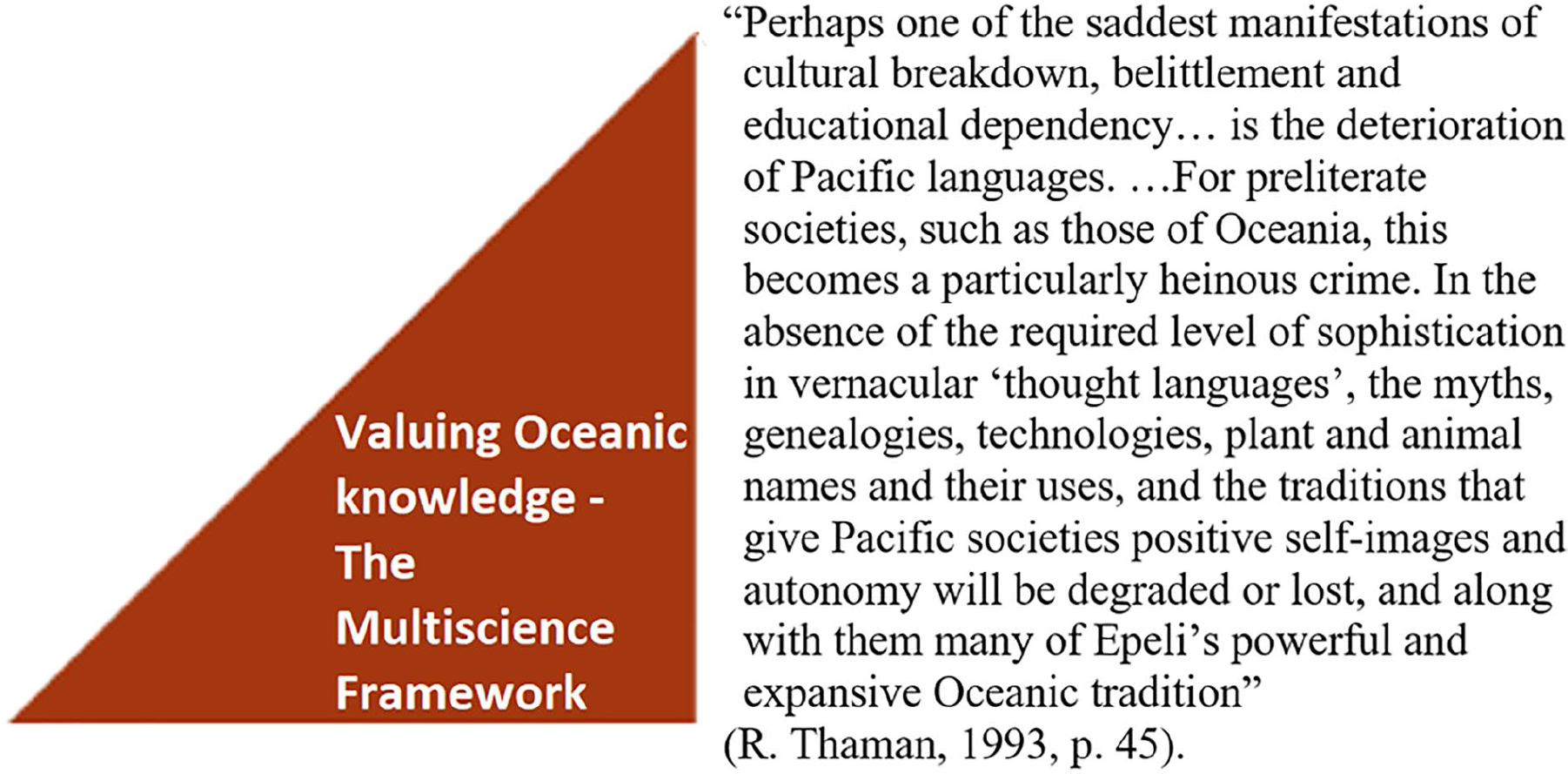
Valuing Oceanic knowledge: the MSF.
The Multiscience Framework
Emphasising WMS knowledge in school curricula alters the relevance and relatability of science content for Indigenous students, and often their retention, especially in the senior years. As a result, many Indigenous students experience a school science that “overtly and covertly marginalizes Indigenous students by its ideology of neo-colonialism—a process that systemically undermines the cultural values of a formerly colonized group” (Aikenhead & Elliot, 2010, p. 324). Science education contributes to the maintenance of these concepts when it is posed as a universal truth, an authoritarian truth, rather than one form of knowledge among many others that understand the world in different ways (McKinley, 2007).
Instead, incorporating a pluralistic approach addresses diversity and encourages and nurtures the relationships within the classroom, enhancing the non-Indigenous understanding of IK and wisdoms. Several Tongan researchers have stressed the importance of using Tongan knowledge to refocus education contexts for Tongan and Moana or Pacific students (Manu’atu, 2000; Vaioleti, 2011). In response, the MSF acknowledges that all cultures have science, by defining science as “a rational perceiving of reality,” where “perceiving” means both “the action constructing reality and the construct of reality.” The merit of the use of the word “perceiving” is that it gives science a dynamic nature” (Ogawa, 1995, p. 588). As this rational perception of natural phenomena is heavily influenced by cultural worldviews, celebrating multiple perspectives also challenges the “hegemonic role that Western science plays in a rapidly globalizing world” (Hammond & Brandt, 2004, p. 2). Such a pluralist perspective creates the opportunity for an equitable approach to different forms of knowledge and aligns well with the critical realist perspective discussed previously. The MSF was a critical influence on this research as explained below.
Locating Indigenous Knowledges
Ogawa (1995) suggests that teaching science from a Multiscience perspective acknowledges that other sciences that exist and drive “richer implications for reflection and practice” for science educators (p. 583). A Multiscience approach also acknowledges that students from non-Western cultural groups are constantly negotiating the demands of their formal Western education and their cultures (K. H. Thaman, 2010). Critical realism’s stratified ontology also acknowledges and understands the hierarchy and power differential created around the scientific knowledge of different cultures. If educators understand and adopt a pluralistic perspective of scientific thinking, rather than assuming universalism, it opens the opportunity to include IK and, subsequently, culturally responsive science education. Similarly, if researchers did the same it would allow them to acknowledge the prestige and power associated with Western culture and WMS which often allows it to assume priority in non-Western cultures. This can displace local IK, usually through assimilation or acculturation, causing some to label WMS as a “hegemonic icon of cultural imperialism” (Cobern & Aikenhead, 1997, p. 3).
Therefore, adopting Ogawa’s Multiscience education perspective with its intention that all sciences have equal ranking to ensure representation of all cultures, or at a minimum, relate to the science education delivered in Aotearoa counters this hegemony. The New Zealand Curriculum suggests diversity as an observable value, has a range of key competencies including respect and relating to others and principles of inclusion and cultural diversity (Ministry of Education, 2007). I would argue that adopting a Multiscience education perspective would enable these values, competencies, and principles to become a reality and increase the relevance of IK. Applying the MSF’s pluralistic approach to knowledge is also useful for research, particularly how diverse viewpoints are acknowledged when data are analysed but also translating to the research focus itself. For example, considering which subjects or philosophies are analogous to science in that they exist in multiple forms such as mathematics and psychology but global understanding is dominated by Western ideas and values.
The fourth wing (Figure 7) of the Manulua Framework is Charting Oceanic Currents. This analogy demonstrates that, like the Moana or Pacific navigators described in the following Griffen (1993) quote (see Figure 7), we must know where things are coming from, going to and how they are connected and influenced by everything else to know which decisions to make or in which direction to travel.
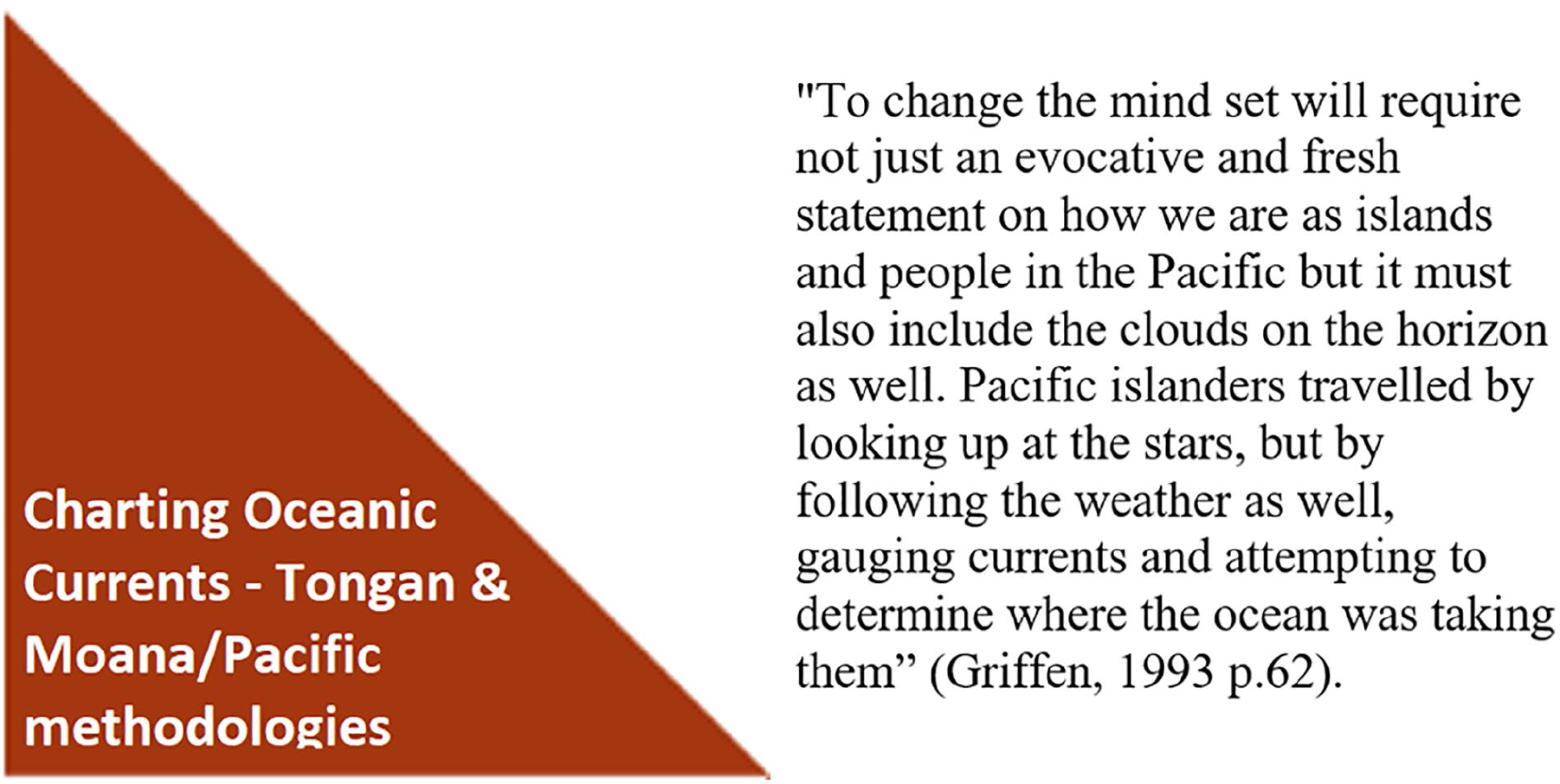
Charting Oceanic currents: Tongan and Moana or Pacific methodologies.
A Tongan research focus necessitated the use of Tongan-specific methodologies and theoretical or conceptual frameworks, addressing concerns that intra-ethnic nuances could be missed when pan-Pacific approaches are applied (Airini et al., 2010). Both the KRF and the practice of talanoa described earlier in this article had a significant influence on this research.
Talanoa is described as a “personal encounter where people story their issues, their realities and aspirations [allowing] more mo’oni (pure, real, authentic) information to be available for Pacific research than data derived from other research methods” (Vaioleti, 2006, p. 21). Authenticity was important for me because considerable research on Moana or Pacific student performance and underachievement has not transformed Moana or Pacific student outcome. Perhaps as Vaioleti (2006) suggests, “the information, stories, emotions and theorising made available by Talanoa will produce relevant knowledge and possibilities for addressing Pacific issues” (p. 21).
Locating Tongan and Moana or Pacific methodologies
Within the KRF, teu considers the purpose of the research and who will receive the findings (Fua, 2009). Different research frameworks were used to consider the research questions; these frameworks were toli in a manner to understand the participants’ stories best. Other aspects of the research were ranked and arranged, including the knowledges discussed—Tongan Science Knowledge (TSK) and WMS— and the way of categorising the participants with respect to location of education rather than birthplace to analyse the data. Critical realism and the MSF both encourage a questioning of how decisions are made and the stratified ontology highlights how different processes influence each other. Therefore, it was important that I recognise TSK by always putting it first whether by chapter organisation or participant voice, and that the education environment was more influential than focusing on place of birth or nationality.
Although my knowledge of Tongan culture was limited when I began my doctoral studies, what I did know was that the stories I was hoping to collect and understand were Tongan stories. Therefore, prioritising Tongan-specific methods, frameworks, and perspectives in the research approach was essential, but I would need to learn about them along the way. Therefore, as a Pāpālangi researcher I needed to counter the Western influences on my epistemology by foregrounding Tongan ways of knowing and constructing knowledge; I particularly resonated with the idea of co-constructing knowledge with the participants during talanoa (Vaioleti, 2006).
Complementing the Tongan approaches described above with aspects of critical realism, relationality through vā, and the MSF allowed for a holistic understanding of the context and participants’ narratives to emerge. This approach allowed the acknowledgement of Moana or Pacific values, protocols, knowledge, and beliefs during data collection, analysis, and reflection. It also enabled a better understanding of what was being said and not said about science education in Aotearoa and Tonga.
Concluding comments
This article outlined how four theoretical frameworks—wings—were woven in a research project to produce The Manulua Framework. It offers an example of how multiple qualitative methodologies and theoretical or conceptual frameworks can work together to complement who participants are and how non-Indigenous researchers can engage in research with Indigenous participants. The wings were used to consider the participants’ stories and to re-consider science education delivery in Aotearoa, and Tonga. Critical realism, positioned as Oceania as Environment, emphasises the importance of ontology, rejects universal claims to the truth and considers the world as a place that is stratified by time and space, where phenomena exist even if individuals do not experience them (Danermark et al., 2005). For example, bringing Hau’ofa’s oceanic vision and critical realism together enable a focus on possibilities, pluri-realities and a means to counter reductive, deficit framings typically generated through positivist approaches. Engaging Oceanic Ways, demonstrates how understanding relationality as vā provides a lens with which to examine science education delivery, particularly how relationships are enacted in teaching and learning spaces as well as to carry out research in a relational wa
Footnotes
Acknowledgements
The author would like to thank all the participants who gave so willing of their time when sharing their stories.
Declaration of conflicting interests
The author(s) declared no potential conflicts of interest with respect to the research, authorship, and/or publication of this article.
Funding
The author(s) received no financial support for the research, authorship, and/or publication of this article.

Glossary
Aotearoa New Zealand
‘eke implies asking a question
fa’e mother
faka used to form compound words and signifies, as a prefix to verbs, nouns and adjectives, “after the manner of” or “to cause”
faka‘eke‘eke to talk with questions
kakala floral garland
lalanga weave
luva to apply or implement
māfana application, transformation, and sustainability; to transform
mālie relevance and worthwhileness
manulua two birds; ancient Tongan design motif representing the wings of two birds; symbolising the coming together or union of two groups
Māori the Indigenous peoples of New Zealand
moana ocean
mo’oni pure, real, authentic
ngatu painted barkcloth
Pākeha non-Indigenous New Zealanders having predominantly European ancestry
Pāpālangi of European ancestry
Pasifika Moana or Pacific peoples in Aotearoa
tā time
talanoa open discussion; a qualitative approach that allows participants to tell their stories and experiences; formal or informal conversation
talanoa faka to talk with questions
‘eke‘eke
tauhi vā to care for relational space
tauhi vaha’a to protect the relational space; managing the relational space
teu to plan and conceptualise
Teu Le Vā to take care of the relational vā (space); this is also a resource outlining how research should be done with Pacific peoples in Aotearoa
toli to rank or arrange
tui to analyse
vā space; the relational space