



Abstract
We detail an Indigenous research methodology capturing community-based truth-telling in an Aboriginal community in the Northern Territory, Australia. We present Dadirri—a deep contemplative process of listening to one another—as a research methodology and a co-developed research model from the Nauiyu community. Dadirri is applied on the Country, with the cultural custodians to which it belongs, the Ngan’gikurunggkurr people from the Daly River region, Northern Territory. Dadirri links critical theory with reflective practice and is increasingly applied in Indigenous research. Insights into the synergies between Dadirri and traditional Eurocentric methodologies along with the successes and challenges of bringing Indigenous ways of knowing and Western ways of conducting research is presented as an interwoven praxis and governance/s. We conclude that the research outcomes demonstrate the interconnectedness and relational epistemologies as a framework between Dadirri and Western methodologies in a way that transforms and reconfigures futures, participants, and researchers alike.
Introduction
The vision of this inquiry was to privilege Aboriginal voice, through a truth-telling based on Indigenous epistemologies and Aboriginal ways of knowing and seeing the world. Founded on the Aboriginal concept of Dadirri, this inquiry adopted a research design that combines Indigenist and Western methodologies, thus enhancing the potential to emancipate and empower the community in which the research occurs. The following participant, interviewed on the banks of the Daly River (Figure 1), observed: Health for me, it’s not just about the needles, and monitors and the bright lights to make your body better . . . when I am healthy, my whole self is healthy. That’s what we have been missing, healing the whole person like the cultural, spiritual way. I mean what medicine do they have in their White fella cabinet for the way my culture has been wounded . . . our traditional ways of healing are so powerful, but we have to put them back in the centre not on the outside, in a place where our culture ways can breathe. (Participant 5)
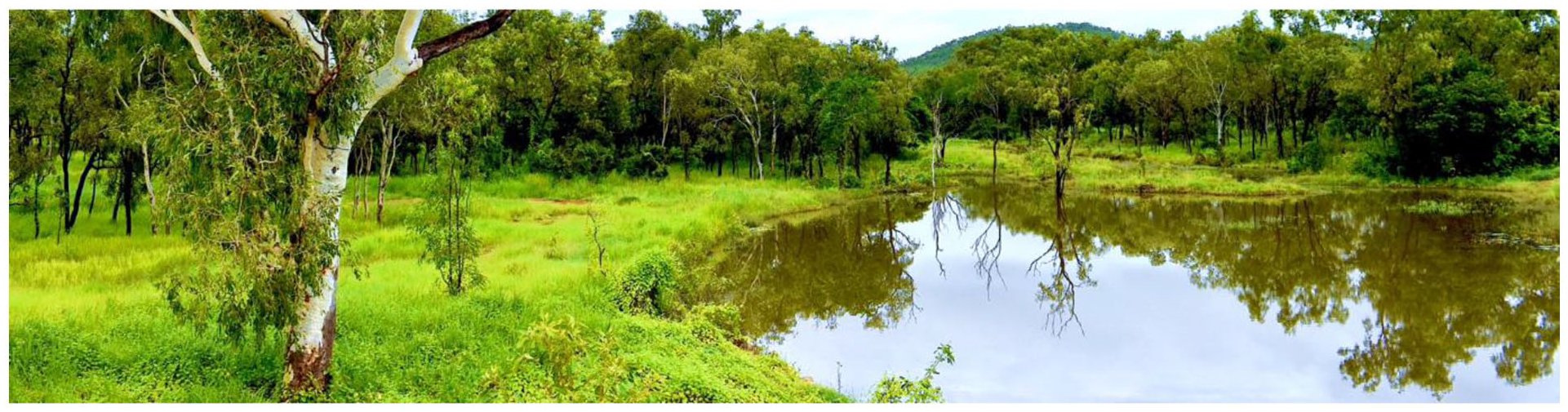
Tommy’s Creek on the outskirts of the Nauiyu community. This picture is representative of many tributary creeks which run off into the Daly River during the wet season (Photo by Emma Schuberg).
Dadirri breathes with culture ways and in this research occurs as a “culturally informed philosophy and behaviour(s). . . an Aboriginal concept which refers to a deep contemplative process of ‘listening to one another’ in reciprocal relationships” (Ungunmerr, 1993, as cited in J. Atkinson, 2002). Dadirri is implemented as a research methodology and traditional healing way; it is the central focus of this article; however, we also present our successes and challenges in connecting Indigenous ways of knowing with Western ways of conducting research, specifically qualitative inquiry.
A core focus of this inquiry was the truth-telling of trauma associated with the experience of colonisation in a remote Aboriginal community in the Northern Territory. Truth-telling catalysed the life stories of the people of the Nauiyu community, focussing on the experience of colonisation, traditional healing practices and empowerment. Through the traditional healing practice of Dadirri, we sought to establish if: the trauma associated with the experience of colonisation can be transmitted across generations; the implementation of traditional healing practices in the Nauiyu community into primary health service delivery is possible; and how these create other opportunities for institutional and community change. We share insights on utilising Dadirri, a word that belongs to the language of the Ngan’gikurunggkurr peoples of Daly River in the Northern Territory. The activity or practice of Dadirri has its equivalence in many other Indigenous groups in Australia and has been increasingly used as a research methodology with Aboriginal people in Australia. This is the first account of Dadirri as a research methodology on the Country and with the people to which it belongs in Daly River. “You can’t really describe Dadirri, you just feel it, when you experience it, I feel whole again. I feel a peace which I can’t find in any other area of my life. Just chaos. When I feel that peace, I feel healed” (Participant 14). Seeking peace and healing, empowerment, truth-telling, and owning solutions culminates in the vision of an Ancient University. Incorporating Dadirri traditional healing practice in an Ancient University would alleviate nervousness, providing cultural certainty that ensures “we focussed on our way of healing, making sure we heal the spirit and the whole person” (Participant 20), “finally we would get to put our way of healing first, the holistic way of how we look at ourselves in health” (Participant 3), and “something beautiful would happen for us, real healing through the mind, the spirit, the body” (Participant 9).
Method
Positioning the researcher and centring community
Like those who have come before us, our first intention must be to respect traditional Aboriginal Australian traditions and adhere to protocols of introducing oneself. We claim a space of researcher, participant, and author of this work. To become known, we need to explain the intent behind conducting this research and outline preconceptions and assumptions that we bring to this cultural interface. As Lavalle (2009) expresses: Indigenous research is not objective, nor does it see itself as unbiased. Following from the belief in interconnectedness as outlined above, research cannot possibly be completely objective. Individuals conducting the research are necessarily connected to the individuals being researched, and all concerned are connected to all other living things. Emotions are connected to all mental processes. Every time we think, use reason, and figure, emotion is tied to that process; therefore, it is impossible to be free of emotion and subjectivity in research. (p. 23)
The research was designed in collaboration with the Nauiyu community. In this collaboratively led research, Gavin Morris, one of the non-Indigenous researchers explains: I am a non-Indigenous, middle-aged male with a European background undertaking Indigenist trauma-based research in a remote Aboriginal community. The background of any researcher is intensely connected to the study, particularly in Indigenous research, and careful consideration of issues which may arise is essential. As I am a non-Indigenous male, who lived and conducted research in a remote Aboriginal community, these considerations are significant. I was honoured to be invited by the community to undertake this research, to work at the request of the community to address an identified need: to engage in a truth-telling, revealing a community’s experience of colonisation. The community’s trust in me, resulted in a truth-telling which was deeper—braver—than anticipated. What people were willing to share with me was extraordinary—intimate secrets and profoundly deep stories, many of which were being shared for the first time. (Personal communication, December 29, 2020)
The research was requested by the community to respond to a community need. This truth-telling model was centred in the Nauiyu community, where community members were actively engaged in all aspects of research design. This research was driven by Aboriginal Elders to strengthen Aboriginal voice. It was critical that Indigenous people were central in co-researcher and supervisory roles. Furthermore, the six-person community-based steering committee were Aboriginal people. Broader support came from a variety of stakeholders within the community including general community members, Elders, board members of three Aboriginal Corporations in the Nauiyu community, and the manager of community service providers in Nauiyu. The research design was decolonised through being centred in and working outward with community. Dadirri generates transformative governances and futures from this centring, with tangible outcomes that resist descriptive research that merely document the extent of Aboriginal people’s disadvantage. This inquiry is authorised by its custodians, of which the principal cultural authority rests with Nauiyu Elder, Miriam-Rose Ungunmerr-Baumann.
Dadirri
The Indigenous research methodology of Dadirri framed the research design and governance of this inquiry. Dadirri is a concept of the Ngan’gikurunggkurr people of the Daly River in the Northern Territory, making this healing inquiry unique as it utilises an Indigenous research methodology on the Country, and with the people to whom it belongs. Miriam-Rose Ungunmerr-Baumann, a distinguished Elder and knowledge holder of the Nauiyu community, first brought Dadirri to the national attention in 1988 at a conference address in Tasmania (Ungunmerr-Baumann, 1988). Written permission to use Dadirri was provided by Elder Ungunmerr-Baumann and she was integral in the implementation of Dadirri within the methodology of this research.
Dadirri as a research methodology was articulated by J. Atkinson (2002) where she established the strengths of Dadirri in research. Dadirri is the art of being present, being still, connecting with yourself and the environment in such a profound way that it creates space for deep relationships. Dadirri encourages cyclical, deep listening, and reflection. Through Dadirri, relationships are built on trust and respect, which provides opportunities to create the co-directional sharing of knowledge and privileges Indigenous voices. Dadirri listens and knows, witnesses, feels, empathises in the pain of the Indigenous experience of trauma (C. Atkinson, 2008; J. Atkinson, 2002). This resulted in the co-design of practical models for community healing and empowerment in response to trauma. J. Atkinson (2002) argues that Dadirri is a powerful research tool as it provides the principles and functions that privilege Indigenous voice through culturally informed and sensitive research. Building on the early work of Atkinson, a growing body of research has also established Dadirri as a robust Indigenist research methodology (Drawson et al., 2017; Geia et al., 2013; Leaver, 2006; Tanner et al., 2005; West et al., 2012). O’Donnell and Kelly (2011) found that Dadirri impacts on research positively as it enables reflection of one’s beliefs, influences, assumptions, and choices, with the potential to release a field of emergence that facilitates the potential to change (Stronach & Adair, 2014). Potential to change through emergence is also a phenomenal reconfiguring, proposed by Barad (2007) as exteriority, connectivity, and exclusions; in short, agency. This is described by Participant 11 from Morris’s (2019) study: Dadirri for me is healing from the heart . . . really listening, not just hearing, I mean heart-felt listening. I’m talking about listening deeply. Feeling deeply, having the courage to heal by expressing your grief and pain. Growing together, healing together through sharing stories from the heart. (p. 364)
Used as an agential ethical-material methodology, Dadirri privileged the stories of the participants from the Nauiyu community and informed a purposeful way to act with knowledges that have been re-formed. Dadirri was used as a practical tool that framed the process of talking with and relating to people, providing a crucial focus on the process of collecting the stories accurately and appropriately. At its deepest level, Dadirri is the search for understanding and meaning, a cyclical process of listening, observing the feelings and actions, and reflecting and learning. The principles of Dadirri are based on what is learned from listening, providing a purposeful plan to act, informed by wisdom, and embraced by the responsibility that comes with that knowledge (J. Atkinson, 2002). Importantly, this is a cyclic process of re-listening at increasingly deeper levels that promotes a richer understanding and knowledge building (J. Atkinson, 2002; Ungunmerr-Baumann, 2002). This kind of listening contradicts aspects of communication in traditional styles of interviewing, where people focus on themselves, cognitively preparing their own responses rather than truly listening and understanding the speech, the feelings, and the commitments associated with the person with whom they are communicating (Merriam & Tisdell, 2015; Silverman et al., 2016). Dadirri illuminates the key research gap of this inquiry: strength-based truth-telling that counters the effects of colonisation.
Co-investigating transmission of trauma with truth-telling
Rather than viewing participants through a lens of negativity and deficit, the inquiry attended to this key research gap, countering the effects of colonisation through a strength-based truth-telling, which focussed on the empowerment, self-determination and resilience of Aboriginal communities. A strengths-based approach incorporates the community and participants lived experiences of trauma and its compounded effects through systems that are interacted within Nauiyu. Participants in this inquiry shared their trauma stories through describing the individual and collective experiences of colonisation, and how the compounding trauma resulting from these experiences have impacted lives as it is transmitted across generations. To enable the reader to see the narrator’s mind’s eye, we use a collective first-person narrative—us and we—to tell stories about our group experience and to recount the events of the research journey.
Getting the research process right
Karen Martin, a Noonuccal—Minjeripah woman of Central Queensland, Australia, described Indigenous research methodologies as incorporating experiential learning to guide research which recognises knowledges and realities as distinctive to Indigenous existence through privileging the voices, experiences and lives of Indigenous people (Martin & Mirraboopa, 2003). Indeed, in respect to the data collected in this research, the significance of getting the process right is considered at least of equal importance. This view does not discount the value of the stories shared, nor does it diminish the privilege the researcher feels in this position of responsibility—a responsibility to get the story right. It does, however, reflect a deep commitment to navigate through the research with great care and respect, guided by the Aboriginal community who had oversight of this inquiry.
Indigenous governances and community-based participatory research
Identified as a methodology to potentially decolonise the university researcher–Indigenous community relationship (Castleden et al., 2012), Community Based Participatory Research (CBPR) involves and collaborates with community through shared ownership of the decision-making process and dissemination of new information (Israel, 2003). The importance of CBPR to this inquiry is its ability to co-produce ethically sound, culturally respectful knowledge which empowers change that the community (rather than the researcher) views as tangible and beneficial (Kwan, 2004). With respect to research involving Indigenous peoples, CBPR’s tenets include respect, relevance, reciprocity, and responsibility, (Kirkness & Barnhardt, 1991; Tiwari & Stephens, 2020), mirroring the central principles of Dadirri, thus, providing a methodological protocol of cultural strength and promoting a deeper meaning of bi-directional learning to Indigenous research.
Attempts to weave Indigenous and Western knowledges together should acknowledge Indigenous methodologies as independent, as West et al. (2012) note, to “avoid the inadvertent colonisation that occurs when combining them with Western methodologies” (pp. 1584–1585). Furthermore, transformation through culturally appropriate research is emphasised by Smith (2013): “When Indigenous people become the researchers and not merely the researched, the activity of research is transformed. Questions are framed differently, priorities are ranked differently, problems are defined differently, and people participate on different terms” (p. 193). The two methods used to collect the stories from participants in this research were narrative interviews and sharing circles. More importantly, however, was how we utilised Dadirri, and how this shaped the data collection process of the research design.
Narrative interviews and sharing circles
Culturally appropriate data collection methods were used to enhance the engagement of participants. This inquiry involved individuals sharing their life stories through narrative interviews and sharing circles. The selection of narrative interviews as data collection methods was applicable as they are known to be a culturally organic and an appropriate means to gather Indigenous knowledges (Barlo et al., 2021; Kovach, 2015). This approach makes power and oppression more visible, emphasises an inquiry that is ethical, performative, healing, and participatory (Denzin & Lincoln, 2008). We also drew upon the work of Beuthin (2014), who describes the unique quality of this approach where participants want to be engaged in strategic and purposeful narratives with an overriding intent to enhance self-empowerment. Agency is given to participants to direct the conversation without the controlling influence of pre-determined questions, which is commonly in the possession of the non-Indigenous researcher. Beuthin (2014) describes this craft of co-constructing stories with another as “breathing in the mud—a dynamic process in which the researcher moves between the tensions of getting stuck in one moment and finding brilliant presence in the next” (p. 122).
Interviews
Dadirri shares synergy with oral traditions, therefore, interviews as a data collection method were culturally appropriate. For instance, within narrative interviews, Riessman (2008) emphasises the importance of presence, engagement and listening, while Remen (1996) promotes listening generously, the use of silence and speaking only at a tone of empathy—all central tenets of Dadirri. Riessman (2008) further emphasised this compatibility when she discussed the aim of narrative interviews as being open and subjective, to see each story as contingent, where the researcher does not just interview to get the story, but rather facilitates the co-construction of stories within sharing circles between participants—the shared collective communal story. As Smith (2013) reminds us, while stories are individual, they contribute to a collective, communal story. Thus, through utilising the principles of Dadirri, the use of stories to obtain data is culturally appropriate and an effective validation mechanism to conceptualise the qualitative data gained through the interviews (C. Atkinson, 2008).
Framed by Dadirri, the narrative interviews and sharing circles created a space for people to talk about their experiences in growing up and living in the community, including experiences that were challenging and those that strengthened them. The stories described, in detail, the devastating impacts of colonisation; stories of women fleeing family violence; stories of suicide; stories of deep cultural wounding; and stories of precariously living between victim and perpetrator. One research participant in Morris (2019) shared: No doubt in my mind that the trauma, the [obscenity] and everything else gets passed on to you, onto your kids and their kids . . . like no way could you have had my childhood and think everything is going to be alright. And the reason it happened to me is because it happened to my older brother, our uncle, my father. It’s like a spider web of [obscenity] and once you’re in the web, you’re [****]ed. What’s that mean for my family. Well, everyone goes to jail because they can’t deal with their [obscenity]. And the longer it’s going on for, the worse it’s getting. Like my brother has been in [jail] 6 times now, and now even his son is in there. And you [know] what, my nephews’ kids when he has ’em will end up in the same place (Participant 36). (p. 344)
People acknowledged the resilience to overcome the individual and collective trauma at the hands of settler colonialism. They felt empowered by sharing their story and recognised the power of their own truth-telling and how their long and painful healing journey had commenced. Participants were also asked to identify the traditional cultural healing practices that exist in the Nauiyu community and how they could be incorporated in a health service setting.
The interview process began by purposively sampling, then interviewing, four participants who provided the initial dataset from which a newly emerging grounded theory was constructed. As a way of centring Dadirri and privileging Indigenous voice, the inquiry integrated a constructivist grounded theory approach within phronetic research epistemologies. Constructivist grounded theory seeks to inductively distil issues of importance for specific groups of people, creating meaning about those issues through analysis and the modelling of theory (J. Mills et al., 2006). Rather than adhering to earlier objectivist, positive assumptions of grounded theory, a constructivist approach places emphasis on the studied phenomenon, as opposed to the methods of studying it (Charmaz & Belgrave, 2012), and gives voice to participants by incorporating multiple views and visions of participants in rendering lived experience (Breckenridge et al., 2012; Charmaz, 2006). Similar to previous studies (Bainbridge, Whiteside & McCalman, 2013; Tsey & Hunter, 2002), this research adhered to Flyvbjerg’s (2001) notion of phronetic social science, highlighting the way dominant assumptions regarding knowledge and power may impede equitable, participatory approaches. The importance of Dadirri as a traditional healing practice resonates with phronetic praxis —practical, local, wisdom and moral insight—that assists participants’ articulation of safety and the healing powers of Dadirri. Dadirri healing occurs through a contemplative process of listening and learning from the stories of others which acknowledge the unique characteristics that everyone contributes to community. One participant stated that “it was this feeling of belonging and community which allows stories to be shared without fear of judgment” (Participant 17). This judgement-free strength-based approach attended to potential power imbalances between the researcher and the researched (Bainbridge, Whiteside & McCalman, 2013; Datta, 2018); it also produced detailed, locally, contextualised narratives through a research process which was saturated by the unique ontologies and epistemologies specific to the Nauiyu community.
Additional data collection was conducted simultaneously with data analysis, in an iterative process involving four subsequent rounds of interviews and sharing circles involving a further 32 participants. In total there were 36 participants involved in this study. While adhering to the principles underpinning theoretical sampling, where possible the participants recruited for this study reflected a broad distribution of all aspects of the Nauiyu community including age, gender, language, or tribal groups. All participants spoke English or Kriol, and translators were provided on request to assist with communication if speaking in traditional language elucidated a more profound or richer response.
We cannot hurry the river
The time and place of the interviews occurred entirely at the participants’ discretion. Several participants elected one-on-one interviews, while 11 participants chose to participate in a larger sharing circle on two separate occasions. On completion of the second sharing circle, four participants stated that they felt comfortable to share more intimate stories and chose to have further one on one interviews in private. All participants were offered an opportunity to revisit their interviews, either in written or audio form, which allowed for checking and closed the feedback loop—a central process of Dadirri.
The interviews complemented the natural patterns and rhythms of community life and echoed the sentiments of Elder Ungunmerr-Baumann, (2002), “we are the river people, we cannot hurry the river. We have to move with its currents and understand its ways” (p. 36). As such, there was an acceptance that the flow of research would ebb and flow. Time and resource restrictions imposed by the academic institution were secondary to the expectations of the community. Forcing the issue and imposing this research on the participants, rather than working with the community, would not only be a fruitless ambition, but it would also reflect the misgivings of colonial based non-Indigenous researchers of the past.
Genograms
Information from the narrative interviews and sharing circles was gathered to construct genograms; a diagram that holds detailed information on family members with great emphasis on emotional connections. The genograms sought to establish where trauma had been passed across generations. We drew upon the work of J. Atkinson (2002), who used genograms to construct family trees focussing on trauma and behavioural patterns of family members (Supplementary material Appendix 1). The mapping of histories, both communal and personal, promoted a deep educational process by providing a possible explanation of past behaviour and a positive focus for the future. The impact of a genogram can be profound, as another participant from Morris (2019) described: I haven’t stopped thinking about that mapping thing that we did last week. For all these years, I thought there was something wrong with me, something broken inside me because I just can’t stop [messing] up . . . but now I’m a bit smarter about how these troubles can be shifted, like passed onto your family and that. It does not make it right, what I did, but it helps me to understand . . . now I feel like, stronger, like I’m not [obscenity] broken, and I might have a chance of a future after all (Participant 30). (p. 350)
Collaborative frameworks
The inquiry’s theoretical paradigm process explains and produces a focus on future outcomes that are compatible with an Indigenist conception of identity, culture, context, reciprocity, and a long-term responsibility to research participants and communities (David-Chavez et al., 2020). Dadirri shaped the conduct of this this research, how relationships were formed, and new knowledges created. CBPR promoted a process of community collaboration, and shared decision making through mirroring the central principles of Dadirri involving respect, reciprocity, relevance, and responsibility (Kirkness & Barnhardt, 1991).
As depicted in Supplemental Figure 2, Morris’s (2019) application of constructivist grounded theory in this inquiry not only centres Indigenous concerns and worldviews, but also facilitates the development of a social science theory which is culturally safe and scientifically rigorous (Bainbridge, Tsey, et al., 2013). This figure of Dadirri praxis is an interweaving of reflection, criticality, contradictions, and collective action (Freire, 1970, as cited in Mayo, 2019), centring relationality as research praxis (Tynan, 2020).
Data analysis
All interviews were digitally recorded and transcribed, which ensured the integrity of the data and allowed the researcher to be fully immersed and engaged with the narratives in a manner that was profound and meaningful. Each transcript was subsequently coded using the software program Atlas.ti and followed constructivist grounded theory protocols. The constant comparison of categories and concepts occurred iteratively to develop the grounded theory. Atlas.ti provided creative, rigorous analysis (Barry, 1998; John & Johnson, 2000), linking research notes to coding and a retrieval of data during constant comparison of analysis (Friese, 2014; Woods et al., 2016).
After fracturing the data through the initial coding phase, 97 focussed codes were formed that explained larger segments of the data and that became more conceptual in nature. This inductive method of analysis provided data which was grounded in the stories and the experiences of the participants. An extensive bank of field notes and theoretical memos was developed which provided an audit trail that recorded the researcher’s thoughts and feelings in relation to the data and tracked the development of the emerging theory. In all, 267 field notes were recorded which enhanced richness and accuracy of the stories and promoted a self-reflexive commentary on subjective feelings and meaning making. Selection of the potential core category occurred that traced a connection between a frequently occurring variable and all other categories. Once a potential core category had been identified, the third iteration of selective coding occurred. The selective coding concentrated on the development of the substantive theory by investigating the nature of the relationships between essential concepts and categories emerging from the data (A. Mills et al., 2009). This process continued until selective coding provided data which sufficiently explained the core category, and in doing so, many of the categories connected to the core variable became saturated (Foley & Timonen, 2015).
Morris (2019) describes in his field notes of the doctoral study, an analysis protocol that amplified the Aboriginal-saturated research design and ensured that the richness and eminence of the participants’ stories: I was aware of the danger of eroding Aboriginal voice by whitewashing the data through an over-eager standardised western analysis which may have torn the stories apart. A danger amplified by a research design, which to this point, had been saturated by Aboriginal values and worldviews. (p. 132)
As such, the importance of staying close to the data was deemed crucial. This also shaped presenting the findings of the fieldwork, where, for example, a significant number of direct quotes from participants were offered, ensuring that participants’ stories were not diluted or misconceived (Weaver & Spiers, 2018). At this point, the stories needed to be brought back together. This was achieved through the constant interplay between the researcher and the data (Bryant & Charmaz, 2007), an interwoven praxis formed (Supplemental Figure 2) until finally, the newly developed substantive theory of seeking empowerment by owning our truth-telling and owning our solutions, grounded in the community emerged.
The new substantive theory described the adversity experienced by historical and ongoing colonisation in the Nauiyu community and posited that traditional healing practices mediated healing from this trauma. The core category of owning our truth-telling, owning our solutions comprised three phases: transferring trauma into story; looking back—moving forward; and healing the cultural wounding. A fourth phase, revealing multiple influences on traditional healing practices was also identified. The researcher presented the developed theory to the community-based reference group and other community members in Daly River, and it was widely accepted and resonated with these audiences.
Discussion
Dadirri as methodology
The strength of Dadirri in the context of this research was twofold. First, the cyclical, deep listening and reflection promoted through Dadirri encouraged relationships built on trust and respect, providing an opportunity to create the co-directional sharing of knowledge and privileged Indigenous voices to be heard. Dadirri listens and knows, witnesses, feels, empathises in the pain of the Indigenous experience of trauma (C. Atkinson, 2008; J. Atkinson, 2002). Dadirri allowed us to stop in the moment. A moment of surrendering into something else. It is the loss of control, swept along in a swollen river, much like a wave crashing on a rock, it is destruction and creation at the same time—and though the energy is ongoing, a convergence eventually occurs, and the wave undergoes a transformative process as it merges to re-form. Similarly, Dadirri provides the catalyst for this transformational moment. An awakening to the realisation of the flow of life is constantly within us, the deep spring—deep listening to deep. A moment of quiet, still awareness, which creates a non-judgemental space for the relational and agential sharing of stories that identifies, (re)connects. The individual is offered agency that is a becoming with Country and community.
Second, Dadirri is informed by the concept of community—all people matter, all people belong (J. Atkinson, 2002; Ungunmerr-Baumann, 2002). It places Aboriginal worldviews and experiences at the centre of the inquiry and recognises that within Aboriginal communities, there is a need to honour the integrity and fidelity of community, in both its dynamic diversity and its interconnected unity (J. Atkinson, 2002). Dadirri enabled new ways of understanding, being co-created through presence and dialogue (West et al., 2012), whereby, the principle of reciprocity, a fundamental tenet to Dadirri, shaped the way in which new information and understanding was shared, thus further ensuring the co-creation of new knowledge which is mutually beneficial. In line with the community expectation of this project, the ownership of this co-constructed knowledge has remained within Daly River.
Dadirri methodological governance
On Country experiences in Daly River offer opportunities of becoming with community, described above as the action of water waves on rocks, a diffractive process is performed through exclusions and accountabilities. Dadirri—a truth-telling rock amongst the Daly River community—enacts kinds of processes and ethical–material governances; in this inquiry it reconfigures boundaries, colonisation and trauma. The energetic and illuminative possibilities converge and diverge in Morris’ (2019) rigorous inquiry, through Indigenous, decolonised and Western methodologies, re-presenting as interferences of colonisation and co-investigations of diffractive governance.
The implementation of Dadirri in this inquiry was governed by several principles which also informed the action of the research in the Nauiyu community. With guidance from the community-based steering committee and other community Elders, the operationalisation of Dadirri adopted the six key principles outlined by J. Atkinson (2002): the success of the project depends entirely on the approval and acceptance of the Aboriginal people; the research cannot proceed without forming relationships based on reciprocity and respect; participants must feel safe and be safe; the listening function of Dadirri must be adhered to; the explication of data must be presented with fidelity; and finally, ethical responsibilities are held in the highest regard. Ethical responsibilities have translated as tangible change for the Nauiyu community.
Conclusion
Vital and practical applications
Dadirri is a vital research framework. West et al. (2012) connect it to other Western research methodologies such as Freire’s (1972) transformative critical pedagogy, which states that the most credible solutions for oppressed groups come from the knowledge and wisdom of the oppressed group itself. A central tenet to Freire’s (1972) theory of critical pedagogy concerns the “recognition of dehumanisation, not only as an ontological possibility but as a historical reality” (p. 20). Extending on Freire’s beliefs, West et al., (2012) believe that integrating Dadirri in the research process has the potential to promote genuine dialogue based on equal relationships where the researcher and the researched are subjects of their own world and are engaged in transformational change together. Through creating a power balance, Dadirri relieves Indigenous people from oppressive research narratives, acknowledging that revolutionary change comes from within communities and not from the outsider oppressors (West et al., 2012).
Practical synergistic futures
From this inquiry, many in-situ outcomes belong to the Nauiyu community: truth-telling and healing through Dadirri from impacts of colonisation and intergenerational trauma; community truths of historical events need to be told; practices such as partnerships with service providers, universities, governments should be centred through Nauiyu community; Aboriginal-led and community-based programmes incorporating traditional healing practices such as an Ancient University provide ways of engaging with Dadirri. Slowing down in community, deeply listening to truth with Dadirri and our way of seeing the world presents as a foundation for an Ancient University: Enough is enough of these White people one after another coming into our community without even a simple understanding of who we are, what our story is and where we want to go. Our healing story. How bout we give them a chance to get some knowledge from our way of seeing the world. Let’s use this Ancient University to train em up, can get a qual, but better one, they can learn how to work and move with us when they come into here to work with us. (Participant 4)
The key finding to emerge from this inquiry is the Ancient University; a stand-alone, Aboriginal based healing centre, located on Country which privileges Aboriginal knowledges and worldviews. The Ancient University as deep listening and healing with Dadirri reverberates with respectful reciprocity and local cultural agency: I want to have control over how I heal from now. My culture is a part of my spirit and healing through the traditional culture ways gives me control . . . cause like I understand how our culture ways of healing work and that gives me more power to heal. I feel comfortable and I know how it heals. But the clinic is the opposite, everyone is helpful, but I don’t know which way is up or down in there, that makes me feel like I’m unsure, no control like . . . it makes me nervous. (Participant 7)
The Ancient University promotes traditional healing practices, the preservation and protection of these knowledges through education, capacity building, training and accreditation which should be grounded in community and underpinned by self-determination and empowerment. This resists white fella training culture that claims superiority driven by the market juggernaut of education and neoliberal problematisation: Which ones are asking us about what the problem is and how we think things can get better? No one. What is the medicine for cultural wounding? It has to start with our way of healing, traditional culture healing . . . also they keep sending these young White people down here, no experience, just kids . . . I’ve seen it for years and years now. Things get tough and soon enough they are leaving and trying to find new ones to do the same thing . . . next time you see them, they are walking in the other way with all their bags packed and whatnot. Gone. Don’t see them again. You know how they talk about the White fellas being like the Toyotas, yeah that one. (Participant 22)
The Ancient University embodies the respect and reciprocity of two knowledge systems that can co-exist for community benefit. It also reflects community-identified priorities to create pathways into the academy that provide training, education and employment opportunities. The desire of the participants to get access to tertiary education, which are traditionally colonised Western spaces, was clear. Participants argued that educational opportunities from the Ancient University should provide a decolonised pathway into the Western academy where Aboriginal knowledges are centred, and participants can achieve accreditation and qualification in course work which privilege their worldviews. A key male Elder, interviewed at Flat Rock, overlooking the Daly River, remarked: I really like the idea of having this Ancient University. It can be a way to protect our healing ways . . . too much has already been lost, lost to the grave, the clinic, the grog. Lost ’cause we just not respecting enough of what we know and just thinking that what has been, will always be. Wrong. We have to protect our healing, maintain and protect. Let’s start collecting our healing stories, get all our culture ways of healing and put them together, in one place and look after them. Just like our ancestors would expect us to. (Participant 30)
Deeply lived experience, transformational exchanges, and ongoing adjustments to the ebb-flow of life in an Aboriginal community offers opportunities to know your place, both on Country and within community. Knowing your place suggests integration of adaptable, convergent practical wisdom through non-linear time and co-authorised relationships. This challenges core notions of control and authority assumed in traditional Western research paradigms. Research inquiries offer transformational opportunities for our own truth-telling. The impacts of creating are always ethical; we are continuously becoming through making meaning and its consequential materiality—what matters, and how matter comes to matter. These kinds of undertakings are also performative governances. Dadirri as a performative methodology offers kinds of synergies of knowing place and knowing our place, a geophysicality of visceral and in-situ becoming.
Supplemental Material
sj-pdf-1-aln-10.1177_11771801221085353 – Supplemental material for Dadirri: an Indigenous place-based research methodology
Supplemental material, sj-pdf-1-aln-10.1177_11771801221085353 for Dadirri: an Indigenous place-based research methodology by Miriam-Rose Ungunmerr-Baumann, Rachel A Groom, Emma L Schuberg, Judy Atkinson, Caroline (Carlie) Atkinson, Ruth Wallace and Gavin Morris in AlterNative: An International Journal of Indigenous Peoples
Supplemental Material
sj-pdf-2-aln-10.1177_11771801221085353 – Supplemental material for Dadirri: an Indigenous place-based research methodology
Supplemental material, sj-pdf-2-aln-10.1177_11771801221085353 for Dadirri: an Indigenous place-based research methodology by Miriam-Rose Ungunmerr-Baumann, Rachel A Groom, Emma L Schuberg, Judy Atkinson, Caroline (Carlie) Atkinson, Ruth Wallace and Gavin Morris in AlterNative: An International Journal of Indigenous Peoples
Supplemental Material
sj-pdf-3-aln-10.1177_11771801221085353 – Supplemental material for Dadirri: an Indigenous place-based research methodology
Supplemental material, sj-pdf-3-aln-10.1177_11771801221085353 for Dadirri: an Indigenous place-based research methodology by Miriam-Rose Ungunmerr-Baumann, Rachel A Groom, Emma L Schuberg, Judy Atkinson, Caroline (Carlie) Atkinson, Ruth Wallace and Gavin Morris in AlterNative: An International Journal of Indigenous Peoples
Footnotes
Acknowledgements
We acknowledge the Malak Malak people who are the Traditional Custodians of the land on which the research was conducted. We pay our respects to the Malak Malak Elders past, present, and emerging. This work also relied on the support of many individuals and organisations. We are particularly grateful to the participants, the community-based steering committee, and other Elders of the Nauiyu community that engaged in this research. We acknowledge the support of the Merrepen Arts Centre, the Nauiyu Nambiyu Aboriginal Corporation and the Green River Aboriginal Corporation.
Data availability statement
The raw data supporting the conclusions of this article will be made available by the authors, without undue reservation.
Declaration of conflicting interests
The authors declared the following potential conflicts of interest with respect to the research, authorship, and publication of this article: C.A. is employed by the company We Al-li Pty Ltd. J.A. is an advisor for the company We Al-li Pty Ltd without any financial interests in this company. M.-R.U.-B. is a board member of the non-for-profit, Green River Aboriginal Corporation. The remaining authors declare that the research was conducted in the absence of any commercial or financial relationships that could be construed as a potential conflict of interest.
Ethics statement
Ethical review and approval were required for the data referred to in this study on human participants in accordance with the local legislation and institutional requirements. Approval by the Charles Darwin University Ethics Committee was granted (H17062) prior to the commencement of the study.
Funding
The authors received no financial support for the research, authorship, and publication of this article.

Supplemental material
Supplemental material for this article is available online.
References
Supplementary Material
Please find the following supplemental material available below.
For Open Access articles published under a Creative Commons License, all supplemental material carries the same license as the article it is associated with.
For non-Open Access articles published, all supplemental material carries a non-exclusive license, and permission requests for re-use of supplemental material or any part of supplemental material shall be sent directly to the copyright owner as specified in the copyright notice associated with the article.
