




Abstract
Background:
Thyroid hormones have a crucial impact on all physiological systems. Diagnosis of thyroid diseases using salivary biomarkers is an emerging discipline and requires consolidation of existing information.
Aims:
This systematic review is aimed at identifying and analyzing salivary biomarkers that are associated with thyroid diseases and evaluate their potential as diagnostic applicability as non-invasive indicators of thyroid dysfunction.
Methodology:
Literature search was conducted in PubMed, Cochrane, EBSCO, ProQuest, and Google Scholar from date of inception to May 2025. Human observational studies, clinical trials, and diagnostic accuracy studies published in the English language, that related biomarkers in saliva to thyroid diseases were collected and analyzed for relevant information. The search resulted in 35 records, followed by PRISMA 2020 compliant screening which resulted in 9 records included for data synthesis. Data extraction, tabulation and Risk of Bias assessment was carried out by 2 independent reviewers.
Results:
Included studies suggest that FT3, amino acids, salivary metabolic profiling, glycan profiles, microbiome, and thyroid antibodies present in saliva could be putative and noninvasive biomarkers of diagnostic and prognostic importance.
Conclusion:
Heterogeneity in study design and analytical techniques has limited definitive conclusions about said markers, necessitating future well-designed clinical studies for validation of these biomarkers for noninvasive thyroid screeing and diagnosis.
Plain Language Summary
Hormones produced by thyroid glands have a role to play in all systems of the body. Hence abnormal thyroid function needs to be detected and treated earlier. Currently tests require blood samples that are invasive to collect requiring exploration of non invasive samples from the body. saliva is one such source and is being currently explored. This review searched studies that analyzed various substances in saliva that could indicate disorders in thyroid function. The analysis pointed at some compounds in saliva, viz. free T3 hormone, thyroid-related antibodies, certain amino acids, oral microbiomes to reflect thyroid problems. Among these, free T3 and thyroid antibodies are apparently the most promising variables in saliva that help diagnose and monitor thyroid diseases.
Introduction
The hypothalamic-pituitary-thyroid axis plays a crucial role in the regulation of numerous physiological processes. Thyroid hormones influence metabolism, growth and development, influencing the function of all tissues in the body, thereby affecting not only the physical well being but also mental and emotional health. 1
These hormones regulate basal metabolic rate, energy expenditure, metabolism of carbohydrates, lipids, and proteins. 2 They are also essential for normal somatic and neural development during childhood. They also regulate vital functions of the body including cardiovascular function and central nervous system activity. Therefore the diagnosis and management of thyroid disorders are important for the maintenance of healthy state of living. 3
Thyroid disorders are the most prevalent endocrine disorders worldwide and in India, it is estimated that more than 42 million people are affected, with the number still growing. The most common and treatable disorders among them is iodine deficiency goiter. However, other clinically important conditions include hypothyroidism, hyperthyroidism, Hashimoto’s thyroiditis and thyroid cancer. 4 Early diagnosis and monitoring are essential for effective management for these conditions.
Currently, the diagnostic approaches are centered on circulating thyroid hormones and related biomarkers in serum such as thyroxine (T4), triiodothyronine (T3), thyroid-stimulating hormone (TSH), and thyroid autoantibodies. Although well established and clinically reliable, these tests require invasive methods to collect samples, limiting the feasibility of frequent monitoring. 5 Considering the prevalence and need for frequent monitoring, currently the interest in identifying non-invasive diagnostic techniques has gained significant momentum.
In this aspect, recently, saliva has been considered as a promising biofluid of significant diagnostic value for several reasons. Ability for non-invasive collection, thereby facilitating repeated sampling has added more interest to this aspect. Saliva has been reported to reflect various systemic physiological and pathological changes by expressing various biochemicals such as hormones, proteins and inflammatory markers enabling detection and estimation for diagnosis. 6
Recent studies have reported presence of thyroid-related biomarkers in saliva, including thyroid hormones, metabolic signatures, glycan profiles, and immunological markers. However, the available evidence remains fragmented, and the diagnostic value of these salivary biomarkers in thyroid disorders has not been comprehensively synthesized. 7
Therefore, the present systematic review aims to synthesize and evaluate currently available evidence regarding salivary biomarkers that are associated with thyroid diseases. In addition, it also aims to assess their potential diagnostic applicability as non-invasive indicators of deviation in thyroid function.
Materials and Methods
This review aimed to analyze current evidence on salivary biomarkers to detect thyroid diseases. The review adhered to the PRISMA guidelines.
Eligibility Criteria
Inclusion Criteria
Human studies assessing salivary biomarkers in patients with thyroid diseases.
Observational studies (cross-sectional, case-control, cohort), clinical trials, and diagnostic accuracy studies.
Articles in English
Exclusion Criteria
Systematic Reviews, Narrative reviews, Case reports and letters to editor
Animal studies, reviews, editorials, case reports.
Studies not reporting primary data on salivary biomarkers.
Studies that report only the salivary gland function without reporting salivary components
Review Question
What are the markers present in saliva that correlate to thyroid diseases? How reliable are they and how do they relate to serum thyroid markers? In other words, following are the research questions:
In patients with thyroid diseases (P), which are the salivary biomarkers (I) that have been investigated for diagnostic or prognostic purposes (O)?
In patients with thyroid diseases (P), how does the diagnostic accuracy of salivary biomarkers (I) compare to serum markers (C) in detecting thyroid dysfunction (O)?
Search Protocol
Date of search was till May 2025. Databases searched were PubMed, Cochrane, EBSCO, Google Scholar (first 150 results), and ProQuest. Sample search string used for PubMed is as follows: (“saliva”[MeSH Terms] OR “salivary biomarkers” OR “saliva testing”) AND (“thyroid diseases”[MeSH Terms] OR “hypothyroidism” OR “hyperthyroidism” OR “thyroiditis” OR “thyroid cancer”).
PICO Details
Population: Patients diagnosed with thyroid diseases (hypothyroidism, hyperthyroidism, thyroiditis, thyroid carcinoma, etc.).
Intervention/Exposure: Presence and analysis of salivary biomarkers (eg, TSH, thyroglobulin, cytokines, microRNAs, oxidative stress markers).
Comparison: Healthy individuals or patients with other systemic conditions (if available).
Outcome: Changes in salivary biomarkers relative to disease type or severity, Diagnostic accuracy of salivary biomarkers and/or Correlation with serum biomarker levels.
Data Extraction
Following details were extracted from the included articles: Author, year, Study design, Type of thyroid disease, Type of salivary biomarkers, Analytical method, Key findings, and conclusions
Quality Assessment
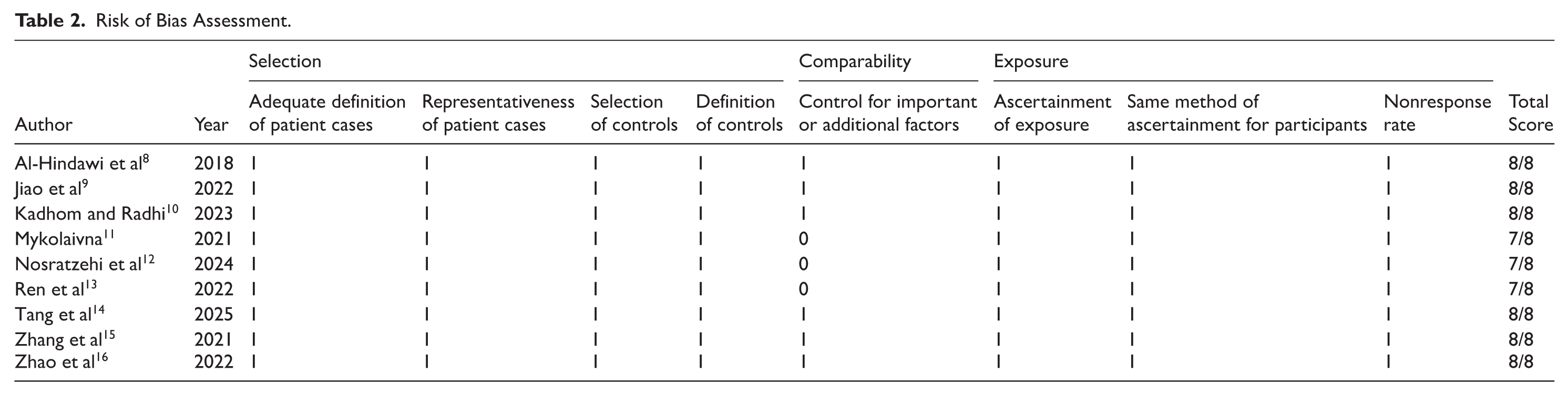
Risk of bias was assessed using NewCastle Ottawa scale.
Results
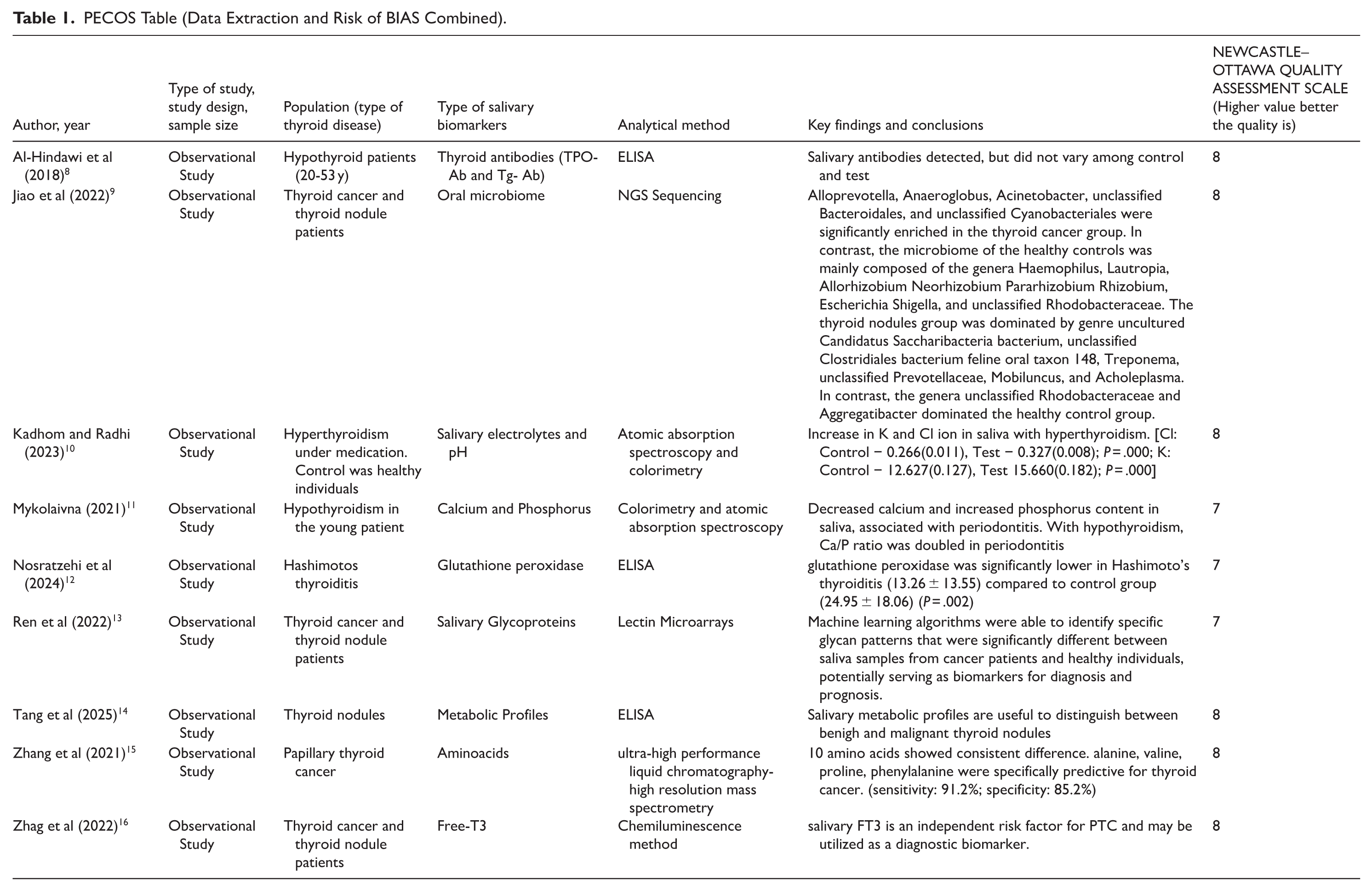
The search resulted in 207 articles and following PRISMA 2020 guidelines carefully, resulted in 20 articles, after screening fulltext, only 9 articles were included in the final stage. The flow diagram is shown in Figure 1. In current systematic review that included 9 observational studies, various molecules identified in saliva regarding thyroid diseases were summarized. There was no restriction on the type of thyroid disease where included studies analyzed thyroid-related antibodies, amino acids, electrolytes, metabolic profiles, glycoproteins, enzymes, and microbial signatures (Table 1). Techniques of analysis varied widely and significantly. For assessing the methodological quality, Newcastle–Ottawa Scale (NOS) was used and all articles had a score of about 7 to 8, which indicated that all studies were of good overall quality (Table 2). Further, only potential molecules or markers could be identified and these studies were not designed for assessing diagnostic accuracy.
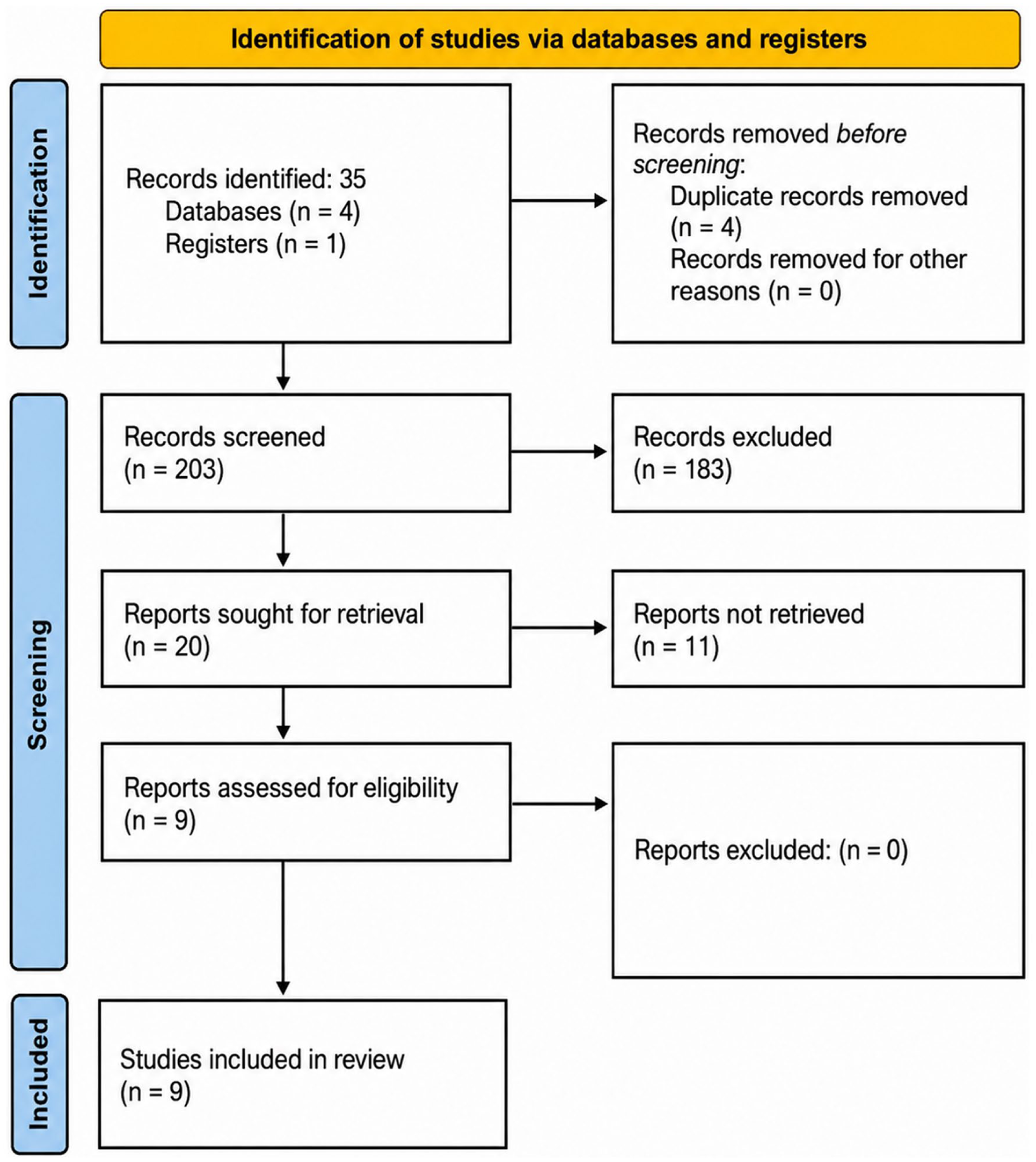
PRISMA flowchart.
PECOS Table (Data Extraction and Risk of BIAS Combined).
Risk of Bias Assessment.
The narrative synthesis is described here. Of these studies, numerous studies explored thyroid cancer and thyroid nodules. Zhang et al 15 used ultra-high performance liquid chromatography to identify 10 amino acids in saliva that can be potentially used to predict the papillary thyroid carcinoma. In this study the sensitivity was 91.2% and specificity was 85.2%, implying high accuracy. In similar lines, Tang et al 14 have reported that salivary metabolic profiling could potentially discriminate between benign and malignant nodules. Likewise, Ren et al 13 combined lectin microarrays and machine learning to showcase unique glycan profiles present in saliva of thyroid based malignancies.
Another significant aspect of microbial differences that reflect in saliva were reported by Jiao et al 9 where they gave proof for specific genera enrichment (eg, Alloprevotella, Anaeroglobus) in thyroid cancer, and that is strikingly different from Haemophilus and Lautropia of normal individuals.
Various studies on hypothyroidism8,11) could not find any significant variation of thyroid antibodies (TPO-Ab, Tg-Ab) in saliva samples, but could note reduced calcium and increased phosphorus. However, Kadhom and Radhi 10 have reported raised salivary potassium and chloride ion levels in hyperthyroidism. Nosratzehi et al 12 could find significantly lower salivary glutathione peroxidase in Hashimoto’s thyroiditis.
In separate category, Zhao et al 16 showed that salivary free T3 (FT3) showed changes in thyroid diseases. and may be looked upon as an independent diagnostic marker for papillary thyroid carcinoma.
Discussion
Current systematic review has synthesized the existing evidence on salivary components that change in the thyroid diseases. It was aimed to arrive at potential components that can be used to diagnose disease. The included studies have reported a wide range of biomolecules such as thyroid hormones, amino acids, metabolomic signatures, salivary microbiome alterations, and immunological markers. These findings clearly suggest that diagnosis of thyroid disorders through saliva may be approached through multiple aspects. Despite multiple contemplated advantages of using saliva for diagnosis of thyroid dysfunction, the identification of specific biomarkers related to thyroid physiology still remains a critical challenge.
Previous studies have shown functional changes in salivary glands in relation with thyroid dysfunction, like alterations in salivary flow rate, pH, and other physicochemical properties and such changes are not pathognomonic for thyroid disease, consequently were not considered relevant to the primary objective of the current review.
The studies included in this review have reported multiple molecules as being related to thyroid dysfunction, however, they belong to different biochemical categories. Of them, thyroid-related molecules, viz. salivary free triiodothyronine (FT3) and thyroid autoantibodies were the most direct indicators of thyroid gland function. Zhao et al have reported the diagnostic utility of salivary FT3 for differentiating thyroid cancer from thyroid nodules. Al-Hindawi et al have detected thyroid-specific antibodies (thyroid peroxidase antibodies (TPO-Ab) and thyroglobulin antibodies (Tg-Ab)) and suggested that thyroid-specific molecules can be detected in saliva.
In addition to these thyroid-specific molecules, several reports have investigated metabolomic and biochemical changes associated with thyroid disease. Studies by Kadhom and Radhi 10 and Mykolaivna 11 have shown increased concentrations of salivary potassium, chlorine, and phosphorus and decreased calcium levels in thyroid dysfunction. Nosratzehi et al 12 have reported relation with reduction in salivary glutathione peroxidase levels with Hashimoto’s thyroiditis. Zhang et al 15 have shown metabolomic changes in saliva like increased alanine, valine, proline, and phenylalanine levels associated with thyroid carcinoma. These are specific observations but are not specific to thyroid pathologies, and hence require further validation.
Recent investigations have also explored the alterations in salivary metabolomics and glycoproteomic profiles using machine learning algorithms. Associations were found to be associated with thyroid disease, but applicability is limited due to smaller population sizes used in the studies.
With regard to salivary microbiome, Jiao et al 9 have shown that certain changes in bacterial composition in thyroid cancer in contrast with thyroid nodules and healthy controls. While microbiome alterations are more probably due to biochemical alterations in saliva due to thyroid pathology. Consistent changes in microbiome can be used to identify thyroid pathology after appropriate clinical validation.
Strengths of the current systematic review is the comprehensive synthesis of the currently available evidence in an area that has been less consolidated in the existing literature. Further, the review had studies of diverse analytical approaches that provide a broad overview of potential biomarkers. The structured search strategy and systematic screening process had ensured the reliability of the findings and have highlighted key areas for future research.
Coming to the limitations of the review, one major limitation observed was the methodological heterogeneity. Especially, the variations were seen in in saliva collection techniques, and analytical techniques. Another limitation is that none of the studies aimed to assess these biomarkers for diagnostic use and they were mere findings in the disease. This systematic review worked carefully to use information from them to propose and assess their diagnostic use. Another consequence of this heterogeneity is the inability to perform quantitative synthesis like meta analysis.
Further, studies have not related salivary concentration to serum concentration creating a lacuna in consistent correlation. One study Al-Hindawi et al 8 did atttempt such correlation but could not succeed in it. Therefore future studies must evaluate saliva–serum correlations for the potential thyroid biomarkers. Since salivary composition can be heavily confounded by other physiological processes, future studies must be designed to eliminate such confounding.
Summarily, the available evidence suggests that relevant molecules found in saliva can be potential biomarkers as non-invasive indicators of thyroid disease. Nevertheless, the current evidence is limited by various factors including small sample sizes, methodological and heterogeneity, thereby absence of validated thyroid-specific biomarkers. Also, results point to multiple parameters and not one parameter making it difficult to compare the outcomes. This review is aimed at consolidation of evidence and may not be complete in comparing the outcome of included studies.
From the clinical perspective, presence of a reliable salivary biomarkers for thyroid diseases can offer a non-invasive diagnostic method, that may be specifically useful in large-scale population screening and longitudinal monitoring of thyroid function, especially in pediatric, geriatric, and community-based settings. In this regard longitudinal cohort or case control studies are essentially needed. Further many more avenues may have to be explored with regard to salivary biomarkers in thyroid disease like small RNA therapeutics based approaches, microarray based approaches and so on in future. 17
Conclusion
This systematic review is one of the pioneering attempts to search for biomarkers related to thyroid in saliva. Current evidence points to few molecules as putative markers of thyroid disease in saliva, but yet correlation with serum levels are not established. This systematic review has collected useful evidence on change in salivary molecules in thyroid disease using reports with good methodology. Conclusively, Thyroid antibodies and thyroid hormones in saliva, at current evidence level may be explored further to become biomarkers for thyroid pathology, after standardization and validation. Salivary biomarker based diagnosis of thyroid diseases can be extremely useful in low resource settings.
Footnotes
Acknowledgements
None.
Abbreviations
PROSPERO—International Prospective Register of Systematic Reviews
PRISMA—Preferred Reporting Items for Systematic reviews and Meta-Analyses
TSH—Thyroid stimulating hormone
Tg—Thyroglobulin
TPO—Thyroid peroxidase
NGS—Next generation sequencing
Tg-Ab—Thyroglobulin antibody

Ethical Considerations
Not applicable.
Consent to Participate
Not applicable.
Consent for Publication
All authors have read and approved the final version of the manuscript and consent to its publication.
Author Contributions
Chandrasekaran Krithika: Conceptualization; Methodology; Data curation; Writing – original draft; Investigation; Project administration. Chitathoor Sridhar: Conceptualization; Methodology; Data curation; Supervision; Visualization; Writing – review & editing. Srijanani Santhanakrishnan: Methodology; Investigation; Formal analysis; Writing – review & editing. Jaideep Mahendra: Writing – original draft; Resources; Data curation; Validation. Leena Sankari: Writing – original draft; Visualization; Validation; Resources. Tharanikumar S: Writing – original draft; Validation; Visualization; Resources.
Funding
The authors received no financial support for the research, authorship, and/or publication of this article.
Declaration of Conflicting Interests
The authors declared no potential conflicts of interest with respect to the research, authorship, and/or publication of this article.
Data Availability Statement
Not applicable.