



Abstract
This research explores the relationship between space and activity as a means of investigating a phenomenological understanding of Korean floor-based living. An understanding of the floor as space has been a fundamental element in Korean everyday life since the ondol (a traditional Korean floor heating system) became the prevalent heating resource throughout the Korean peninsula during the time of the Joseon Dynasty (1392–1910). Thus, I will draw upon the spatial implications of these cultural practices by engaging with the spatial experience of the ondol, which is fundamentally different to the Western lifestyle that has been layered over this regional tradition. I argue that the spatial typology is informed by repetitive activities in terms of everyday life and that the floor is a substantial element for Korean identity that refers back to this rich cultural tradition. This distinguishes the Korean home as unique, in a similar way to the more well-known particularities and cultural heritage found in Japanese and Chinese houses.
Introduction
This paper investigates the meaning of the floor in Korean everyday life in order to reinterpret the Korean home. This investigation includes both traditional and contemporary housing, concentrating on the relationship between space and daily activity. By analyzing the historical development of Korean domestic space, this paper focuses on how the floor informs culturally specific social and spatial practices. This historical research forms a significant part of this paper, and it emphasizes the idea of repetition, not only because the floor is a continuously substantial element of both social and spatial experiences in Korea but also because Koreans spend much of their time on the floor, compared to Westerners. This paper provides evidence of how mundane activities have informed domestic space in Korea. I propose that a particular activity becomes embedded within the body over time. As Rita Felski (2000) argues, repetition, understood as ritual, is how people organize their everyday lives. Korean repetitive activities become rituals that might produce aspects of one’s identity, and I look at how repetition has influenced spatial perception within a cultural context.
A discussion of Western theorists, such as Henri Lefebvre (1991) and Felski (2000), provides a conceptual framework on which to build this research. Those theorists are significant when exploring the ideas of social space and the meaning of home in order to gain an understanding of Korean floor-based living. Moreover, Juhani Pallasmaa (2005) is also an essential reference for providing a theoretical framework for the idea that multiple senses are contributing to our experience of space through the body when engaging with the floor.
Collecting historical documentation is a substantial part of my research methodology, as the issues regarding the relationship between the domestic floor and the body have been ignored as a subject in the context of contemporary Korean spatial design. In particular, I collected and analyzed a number of visual materials from women’s magazines, newspapers, and historical paintings, as well as my own family photographs, although not all of the images are provided in this paper. This paper concentrates on a symbolic spatial practice, the ondol, which is central to the understanding of Korean floor-based culture and which has influenced both everyday life and spatial organization. Thus, I will explore the connections between my own spatial experience and the historical aspects of Korean floor-based living, thereby adding to the existing knowledge concerning theories of everyday life. This paper considers what the floor, particularly the ondol, means to Koreans in their everyday life.
Through my spatial experience of living in both Korea and the United Kingdom, I became conscious of a significant aspect of the body as a way of experiencing architectural space that I had not previously considered. I consider that there are many variations between traditional and contemporary Korean housing, as they have different architectural appearances and used different materials and methods of construction. Nevertheless, there are particular elements that are the same in both traditional and contemporary contexts; for example, floor-based life demands that people remove their shoes before entering a domestic space. This requires a specific area, such as a teonmaru (the threshold in a traditional house (hanok)) or a hyungwan (the entrance hall in contemporary housing) (Han et al., 2009. p. 32), to serve as an intermediate space for the act of “removing shoes.” (see Figure 1 & Figure 2). However, there is no such space in my flat in London, so I have instinctively created an Invisible boundary in the entrance hall for the ceremony (Lee, 2017, p. 13). In relation to this, BongHee Jeon states that many Korean expatriates who live abroad also make a space at the entrance to their home to remove their shoes before entering, “so that the house can remain a clean-living space” (2016, p. 112). This triggered me to consider the importance of the impact of such cultural habits in understanding space, in the same way that Lefebvre (1991) focuses on the significance of the cultural meaning of home. In this regard, the bodily senses, such as tactility, warmth, and smell, also strongly bond with the cultural aspects, producing a specific cultural environment within a space. This means that the room provides a particular smell, which is influenced by culture. Through my experiences, I realized that the floor cannot be disregarded in the fabric of Korean everyday life, as it is a tactile experience that produces both spatial experiences and interaction.
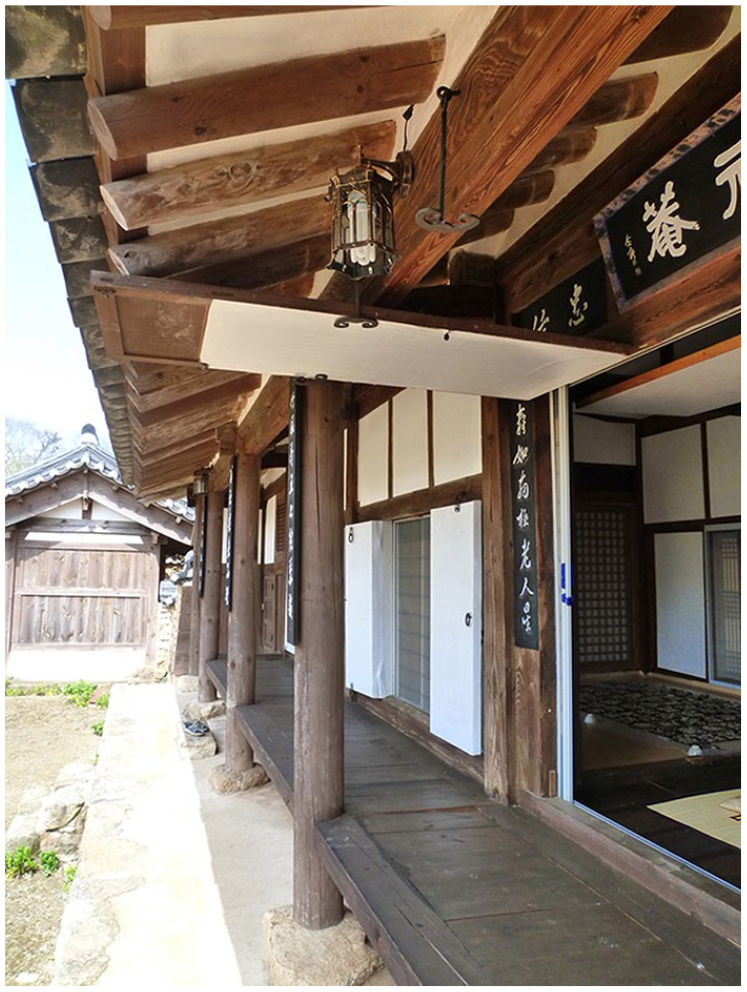
Toenmaru in The Traditional House of a Scholar Yongwook Lee, built in 1835. 2014. Photograph.
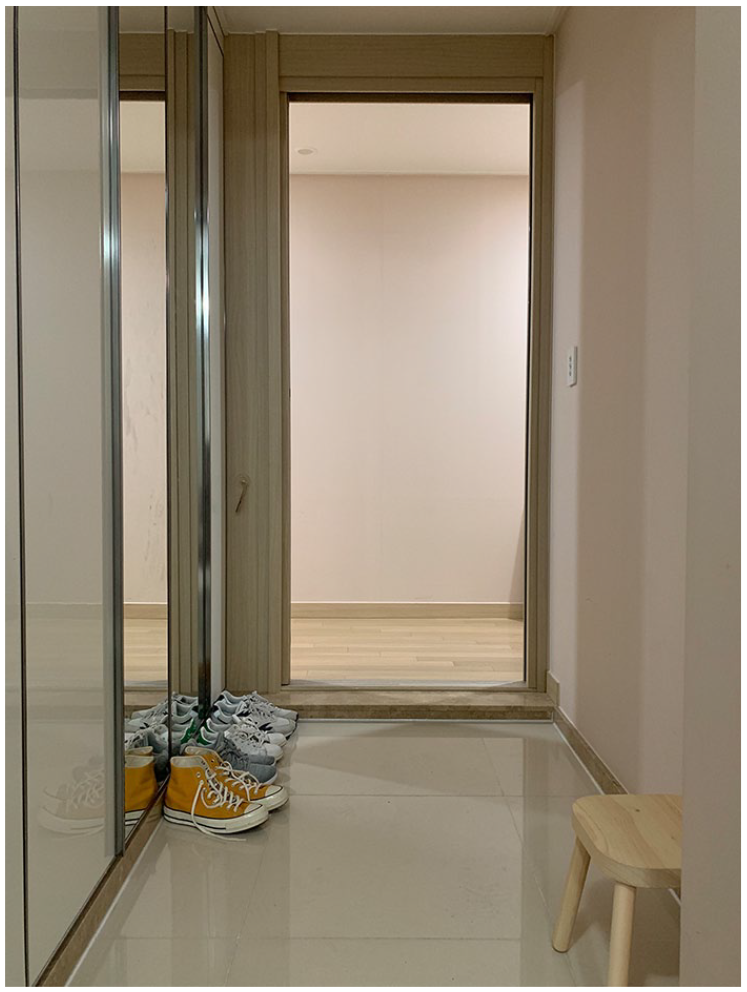
Hyungwan in Apartment, built in 2013. 2019. Photograph.
In Korea, the floor is a significant element of everyday experience, and its associated meanings, which are established within the home as a specific cultural space, provide an important area for this research. The floor has remained a substantial element since the ondol became the central heating and cooking resource, which affected both architectural structures and social practices. In the West, Wood and Beck (1994) state that “the room is a memory” (1994, p. xv) in a spatial context. This means that the room has been shaped by one’s past habitual activities and becomes shaped by the content of one’s daily life, revealing the cultural meaning of our living space. This is particularly relevant in the Korean context, where the room and floor are regarded as being synonymous. As with the idea of the room provided by Wood and Beck, the Korean floor is not simply a surface, but rather a symbolic space, intimated by the patterns of daily life, which generates issues of sensuality, domesticity, and sociality that are associated with the bodily senses. It is also a place of familiarity where most daily activity takes place in the realm of daily life.
The floor has been significant throughout history as it is an architectural and social element that is almost always directly touching the body, leading to the act of “removing shoes” within the floor-based culture. In several Asian countries, such as Japan, floor-based culture has permeated everyday life. For example, the tatami floor, the Islamic rug and the nomadic carpet have been extensively discussed and are understood as everyday symbolic spaces within a specific cultural inheritance. In the same way, the ondol floor also has a significant place within a rich floor-based cultural heritage. However, the Korean floor has been excluded from research into the domain of floor-based culture. This was brought home to me when I visited Venice Architecture Biennale (2014), directed by Rem Koolhaas. The exhibition looked at the fundamentals of architecture, such as the floor, wall, door, and ceiling, and presented these from within a number of very different cultural environments, which showed the global history of each element (Koolhaas, 2014). However, there was no representation of the Korean ondol floor. This is not only manifested in the recent lack of material appreciation for ritual, but also by the absence of systematic theorization about “everyday” life and the floor.
A number of studies on hanok have already been discussed among researchers in architecture and history, such as Younghun Shin (1983) and Hyungok Hong (2004), although these mostly focus on historical, structural, and technical issues, with a particular emphasis on the Joseon Dynasty. This paper, however, does not only explore the traditional house or contemporary housing. Rather, it is about the development of the house over the last century, providing an examination of everyday repetition as patterns of spatial practice. As Felski states, repetitive activities are what help us define ourselves (2000, p. 88). This shows that repetitive elements allow us to identify the spatial meaning of the floor. Wood and Beck also state the significant aspects of repetition, suggesting that “the past becomes present to us directly” (1994, p. xv). Thus, this paper focuses on the contemporary relevance of such a socially embedded space in relation to the body.
In this sense, Cheon et al. (2009) analyze the development of Korean domestic space during the last century. Although they deal with broader issues, such as spatial organization and some social history, there is still a lack of research regarding the relationship between space and activities from a social perspective. However, Jaemo Jo (2012) studies floor-based culture, focusing on the act of removing shoes. Jo deals with the matter of shoes, which changed diverse aspects of building and layout planning during the Joseon Dynasty. Jo points out that chae (quarter) was designed due to the flow of movement created by the act of removing shoes. In other words, people had to go to the specific area where they took off their shoes in order to enter and leave. Although Jo’s focus is on the traditional architectural structure, his study emphasizes that the ritual act has symbolic resonances (Lee, 2017, p. 23). Drawing upon such studies, I consider the relationship between space and ritual activity in such a way as to contemplate how repetitive activity itself becomes ritualized, and therefore informs the identity of a Korean home.
This article is presented in four sections in which I will discuss (a) the meaning of the ondol and its development, considering how this became central to Korean daily life; (b) a sensory aspect of the ondol as a multisensory space, stimulating the bodily senses, particularly warmth, tactility, and smell; (c) the ritual act of “removing shoes” as a socially embedded spatial experience, demarcating between indoors and outdoors; and (d) repetitive activities as phenomenological experiences of the body, which inform the floor as a social space.
Therefore, this paper will develop a particular study of Korean everyday life in order to address the meaning of the floor as a representation of the Korean home, while also acknowledging the perseverance of Korean everyday culture.
The Ondol Floor and Its Development
A discussion of the ondol floor is significant in order to understand floor-based culture, which represents architectural, social, and aesthetic aspects. The ondol floor not only provides the spatial experience of a feeling of warmth during winter but also plays an essential role in daily activities – such as cooking, socializing and floor-based living.
Ondol (on: warm, dol: stone—the Chinese character for the Korean term), also called gudeul (baked stone—a purely Korean word), is a traditional Korean floor heating system that is installed in a room, where the hot gas and smoke generated in the agungi (kitchen fireplace) pass under the room’s floor (Kim & Oak, 2014, pp. 108–115). Even though the structure of the ondol has developed and changed over a long period, most Koreans have experienced living on the ondol floor all their lives. For example, a Korean architect, Gil-ryong Park, often acknowledges the importance of the ondol floor in his daily life, stating that: I, of course, was born in the ondol room, raised in the room, and will die there, and I have great affection for the hot-floored room [. . .] I would like to improve the hot floored room by any means. (Park, 1940, p. 54)
In a similar way to Park’s experience of the ondol room, I grew up in ondol rooms from the time I was born, and it was an ordinary part of my life. However, I had never considered the ondol as an academic or practical material. It was only after I moved to the United Kingdom to study that I realized the worth and distinctiveness of this everyday flooring and recognized how the ondol is a design that is arguably unique to Korea. I therefore “became aware of how this intersects with my spatial experiences of the personal and social” (Lee, 2017, p. 43).
While there are a number of studies focusing on historical, structural, and technical issues, there is a lack of research on the social and aesthetic aspects of the ondol floor. Many researchers, such as Shin (1983) and Hong (2004), define the ondol alongside the maru (a wide wooden floor and open space) as an essential element of the traditional Korean house, hanok. These scholars designate the importance of the ondol, maru, and madang, which should specifically be analyzed through spatial organizations. Within these discussions, however, the philosophical, social, and aesthetic aspects of the hanok are rarely mentioned.
Within the development of the hanok, these two core architectural elements of the ondol and the maru were developed separately and have different histories. The ondol originated from houses in northern areas with a continental climate, 1 while the maru is a space for the summer that originated in homes in the southern regions where there is an oceanic climate and where large parts of the year are spent outdoors (see Figure 3). The maru is elevated off the ground for light and ventilation and is located in the center of the chae (quarter) of the hanok, serving as an intermediate space between rooms and between indoors and outdoors. It is a covered, outdoor place where both daily activities and annual events, such as ancestral ceremonies, can take place (Kim, 1990, p. 28). For example, the maru is the coolest space in the hanok during the hot summer months, as it is an open structure that does not have walls and does not have a heating system installed; “it was used for various purposes; sometimes it became a drawing room for guests, or a space for meals during important family festivals as well as a place of ancestral worship ceremonies” (Choi, 2007, p. 75). This paper, however, focuses on the ondol floor, as only the ondol floor has been continuously used alongside other elements in contemporary housing (Figure 3).

(Left) Ondol Room in Hanok, placed in British Museum. 2013. Photograph. Source: Author.
The ondol system is used for both preserving and conducting heat, demonstrating a thorough application of the principles of radiation and convection. It is most efficient to place the heat source as low as possible in a room, as hot air rises. Hot air moving from the floor, around the room, and up to the ceiling covers most of the space (Im, 2013, p. 63). In order for the heat from the fire to warm stone (the floor), however, the hot air and smoke had to stay in the flues for as long as possible. Frank Lloyd Wright (1977) introduced the idea of this floor heating system as gravity heat in his autobiography. After experiencing the ondol (referred to as “Korean room”) in Japan, he later developed the structure using water pipes (Wright, 1977, p. 520). In general, the kitchen was built two-and-a-half feet lower than the rooms being heated (Savage-Landor, 1895). This was because the fireplace in the kitchen was used for both heating floors and cooking meals in traditional houses. The difference in height and situation made it easy for the smoke and hot air to run under the floors of the elevated rooms (Figure 4).
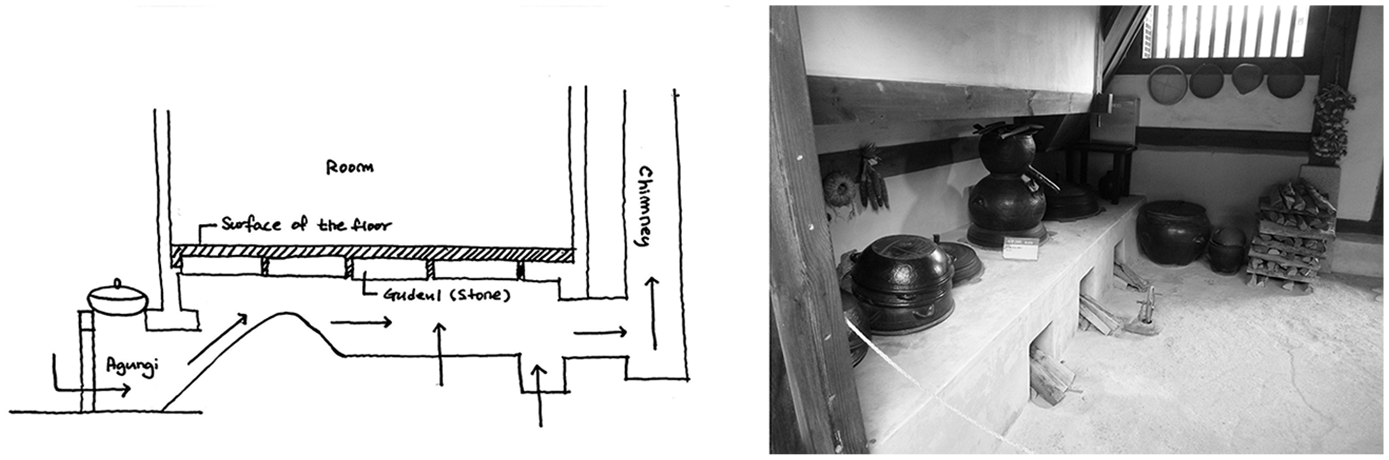
(Left) Structure of an Ondol, underfloor heating system. Drawing. Source: Author.
During the last century, Korean domestic space has been dramatically changed both structurally and aesthetically due to experiencing Westernization and modernization, and it looks as if there is a disconnection between tradition and the present. Nevertheless, even this has been affected by the Korean habit of sitting on the floor. The continuation of floor-based living has provoked a conflict between the use of modern types of heating (radiators) and the ondol over the last century. First, after Korea opened its ports to foreign trade in 1876, foreign influences triggered social interest in residential issues. In the 1930s, some royal family members and upper-class Koreans started to adopt Western-style houses with radiators or Japanese style houses with tatami, which became a thing of envy (Cheon et al., 2008). For example, an article, “The Open New Home” in Shindonga magazine (1932), introduced the new Western-style home: “There is a carpet on the floor in maru, Western style table and chairs, and bookcase full of books from Japan and America” (Kim, 2001, pp. 17–18). Moreover, several negative issues, such as deforestation and bad ventilation, had been raised by the Japanese, Westerners, and some Koreans regarding the use of the ondol (Cheon et al., 2008; Fedman, 2018). However, Koreans could not get used to life without the ondol. According to Hong, there were many complaints in newspaper articles in the 1920s, stating that “it is only covered with ice-cold maru. Most women suffer from cold temperature, living with a new radiator heating system” (2004, p. 281). Many Japanese settlers, such as Suzuki Toyokazu, also conceded that the ondol provided warmth during the harsh continental weather, describing the ondol as a “gift” (Fedman, 2018, p.27). The cultural differences between steam and floor heating systems did not suit the Korean lifestyle, and the environmental differences had also influenced some people to change back to the ondol system by the 1930s.
Second, in the 1960s and the 1970s, the economic and industrial systems in Korea were dramatically developed. During this period, the building of ap’at’ū tanji (apartment complex) was at the core of urban expansion in the cities (Frank et al., 2007, p. 175). In particular, a Western-style heating system, the radiator, became popular among upper-middle-class Koreans, who regarded it as an advanced household item, although ordinary people still used the ondol system during the 1970s. For example, the Mapo apartments (1963) and Hangang Mansion (1972), which were aimed at the upper middle class, adopted radiators, while the Jamsil apartments (1978), built for the middle class, installed the ondol system (Cheon et al., 2009. p. 284) (see Figure 5). However, the new system did not suit Korean daily life, as their habits led to a floor-based culture. The diary account of a Korean who lived in a Mapo apartment reflects her complaints about the radiator: It has started to get cold. I miss ondol room so much to the point that it makes me embarrassed. [. . .] Going to bed together provides extra heat so in some ways it seems as if the weather is encouraging our affection towards each other. (Korea Land and Housing Corporation, 1963, pp. 88–90)
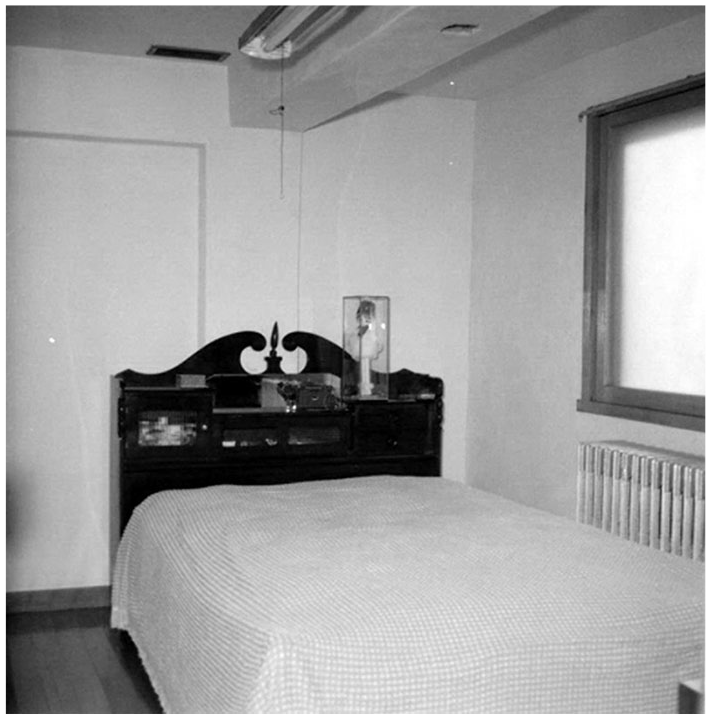
Anon., A Bedroom where the radiator was installed in Mapo Apartment. 1962. Photograph.
This does not sound as if she has a problem with the radiators; however, when she uses the phrase “encouraging our affection towards each other,” she means that this is because this is the only way she can endure sleeping on the cold floor. Thus, from the mid-1980s, Koreans began to install heating pipes for living rooms and kitchens and changed the system back to the panel floors that were reminiscent of the ondol style. Many Koreans who lived in apartments, such as the Mapo apartments (1963), removed the Western-style radiators and installed the ondol system. Radiators in living rooms disappeared after the 1990s. This is reminiscent of de Certeau’s idea in The Practice of Everyday Life (2011), which is that sometimes big systems cannot be changed, but everyday practice is the place where we can tactically bring in alternatives and autonomy (pp. 36–117). Although the traditional concept of the ondol has faded in contemporary houses, the sense of tactility, warmth, and ritual repetition still exist within the culture (Figures 5 and 6).
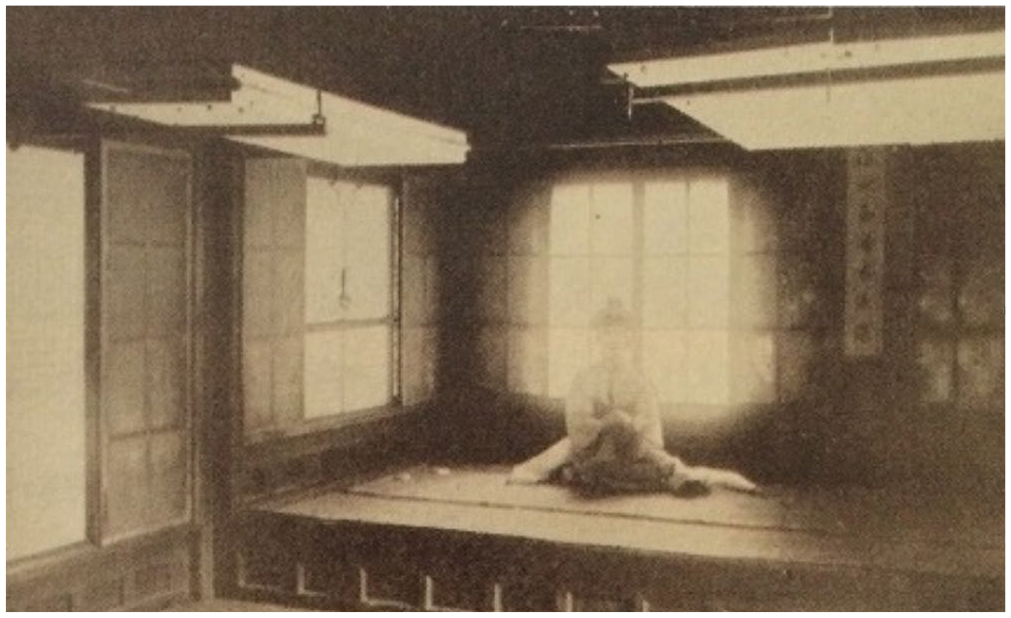
Burton Holmes, In Paper House in Korea. 1901. Photograph.
As an architectural material, Korean traditional paper, called hanji, is significant in the interior space. The paper was used for the multipurpose covering of interior spaces, such as walls, doors and floors (see Figure 6). The annual activity of papering and varnishing, combined with the everyday polishing of the floor, provides traces of spatial use that are embedded in the floor. The floor was covered with the paper by kongdamjil (an act of waxing with ground beans and perilla oils). This oiled paper, called jangpan-ji, is much stronger than unvarnished paper, thereby protecting the surface from water and dirt (Jung, 2006). 2 As Keith and Scott state, Koreans polish the floor clean every day, strengthening the surface and increasing its shine, due to the Koreans’ habit of not wearing shoes indoors (1946, p. 50).
The use of beans and perilla oils generated a strong smell that permeated the room, and the room thereby had a particular smell, providing a unique Korean spatial identity. Changes in the color of the resin of the floor represented the passing of time: it was originally yellow, but “would change to red due to the heat resource and the act of polishing the floor every day” (Shin, 1983, p. 416). Finally, it would become “an amber colour” (Hong, 1985, p. 34).
Nowadays, the traditional ondol structure and the usage of paper as an interior material are rarely seen in Korean homes. Instead, contemporary houses use an updated version of the ondol system—the hydronic radiator or panel floor heating (Park et al., 1995, pp. 623–625). Although many people sleep on Western style beds today, there are still some people who sleep in padded clothes on the floor. Koreans often use a jeongi-jangpan (electric mat) on Western style beds, even when there is an ondol. The use of a jeongi-jangpan on beds helps to warm the body up in a way that is reminiscent of sleeping on the ondol. Students who study abroad see the jeongi-jangpan as an essential item to take with them (Lee, 1994, p. 15). The persistence of using floor-based heating has led me to consider the notion of the ondol floor in a new way, as having social specificity and being essential in Korean everyday life. The ondol continues to exist due to Koreans’ desire for comforting warmth, even though the contemporary solution has replaced its function.
The Sensory Space
Experiencing the Korean ondol floor has been described in phenomenology as “multisensory,” as bodily senses are used as a way of interacting with the space and one’s body directly touches the warm surface of the floor. The term phenomenology here means the spatial experience of daily life in the realm of Korean floor-based life, which is deeply influenced by culture. In particular, touch, smell and warmth provide a particular sense of Korean floor-based culture, which thus composes an intricate and complex perception of the experienced space. In relation to this, Tuan (1997) looks at the relationship between people and space, examining the sensory and affective experience of space through habitual practices. This emphasizes that a space can be understood not only by bodily senses but also by movements, a concept that was developed by Hochberg et al. (1972). The body and its movements actively take part in the perceptive exploratory process (Loomis & Lederman, 1986). This means that people experience a space with their entire body, through movements, senses, and memory (bodily embedded knowledge). In other words, to experience a space is to understand the space through one’s senses and to explore the space with one’s body and movements.
The Korean floor stimulates the senses of tactility and warmth. The tactile sense is the one that establishes a tactual connection between our body and space. It is not just about physically touching the surface of the floor, but about accepting the temperature of the floor. Finnish architect Pallasmaa (2005) states that “we behold, touch, listen and measure the world with our entire bodily existence, and the experiential world becomes organised and articulated around the centre of the body” (2005, p. 64), emphasizing the significance of tactility as the most primal and natural experience in architecture. Pallasmaa’s idea suggests that our body addresses the way that we experience space. In other words, the body conveys the embodied experience of the Korean floor. Pallasmaa (2005) points out that all of the senses are an extension of touch and that all of our sensory experiences are related to tactility. An entire body can be viewed as a sensing apparatus that gauges a space, other people, and surrounding objects in order to produce a spatial experience (Fisher, 2007, p. 166). This point of view suggests that by touching the warm surface of the ondol floor, Koreans experience more than they do by merely gazing at it (Figures 7 and 8).
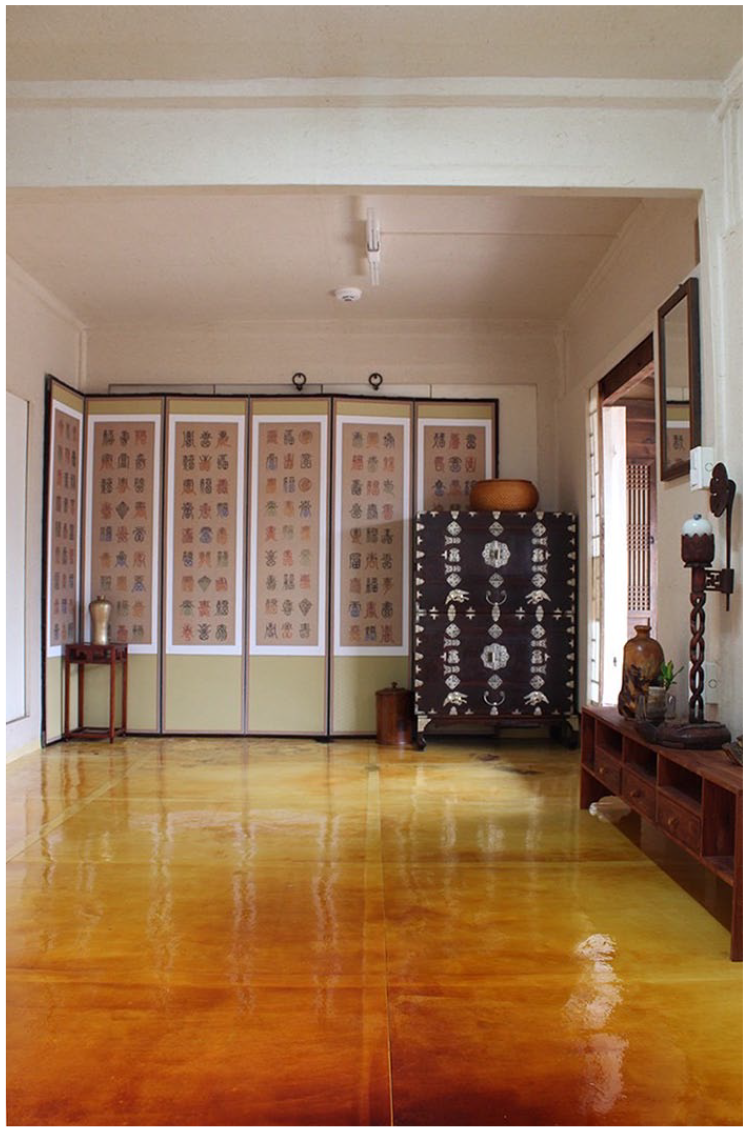
The house of the scholar Sanguk Han, built in 1860. 2014. Photograph.
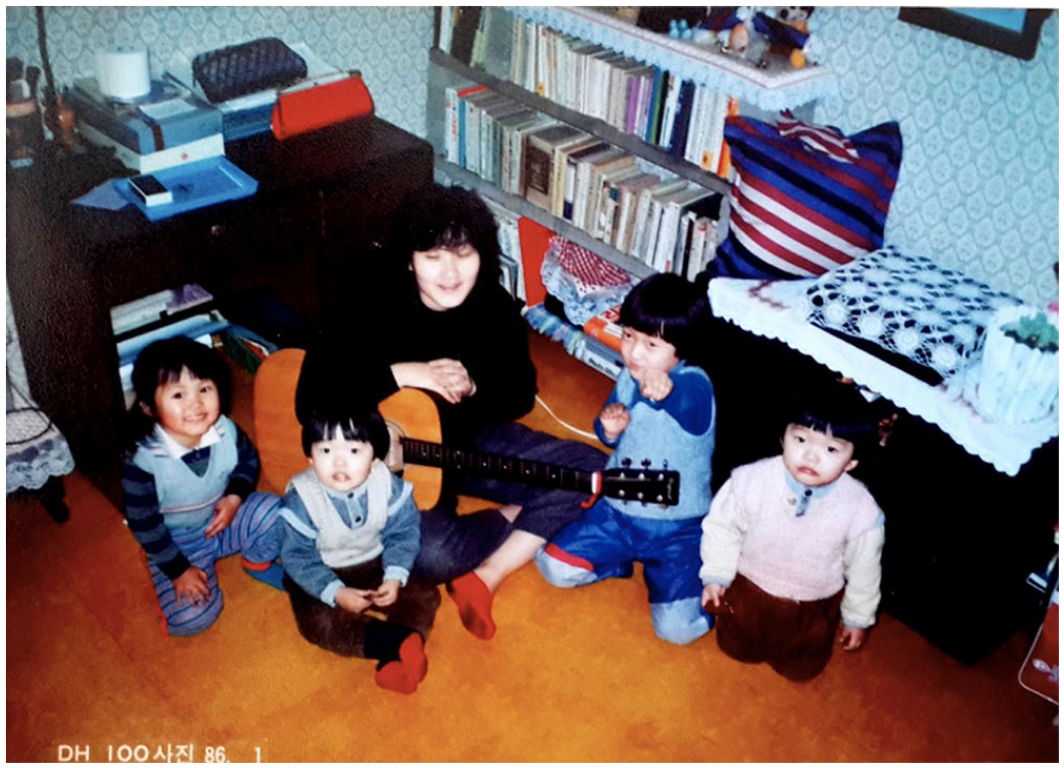
My Spatial Experience through Smell. 1986. Photograph. The room covered with oiled paper in my grandparent’s house.
The smell also produces memories of one’s previous experiences, which are strongly connected to social practice. Every space has its own collection of scents and odors, which are powerful tools for representing identity. The aroma of soybean and perilla oils, which were used for varnishing the floor, is something that Koreans no longer experience in the same way in contemporary houses, because of the popularity of using woods and tiles to cover domestic floors. The floor, infused with specific aromas, always reminded me of my own childhood experiences of sitting on the ondol floor, covered with jangpan-ji, which invokes a shared memory and experience among Koreans. This shows that odor has the power to capture and preserve the memory of space. This triggered me to consider how a sense of smell demonstrates both personal and social experience. Classen et al. state that “the perception of smell [. . .] consists not only of the sensation of the odours themselves but of the experiences and emotions associated with them” (1994, p. 2). The idea of Classen et al. shows that smell is not simply part of the material, but also conveys cultural meaning as a “density of signs” (Barthes, 1964, p. 262). It demonstrates that smell is symbolic and illustrative, and that it is invested with immaterial histories of society in which cultural identity exists. This specific spatial experience of the floor is fundamentally different from the domestic space in the West. Thus, multisensory perception shapes the way we experience space and helps us to understand the importance of the Korean floor.
Defined Space (or Bounded Space)
The floor represents a defined space indoors, shaped by the act of “removing shoes.” With the development of the ondol system, floor-based living became central to Korean daily life. The ondol structure continues to demarcate ceremonial acts, such as removing one’s shoes before entering indoors, and the floor-based life that created a strong social identity concentrated on the floor continues to influence daily life. This activity constructs a particular pattern of social practice. This traditional typology of the floor is still symbolically embedded in contemporary homes and in people’s minds.
This shows that traces of traditional habits still coexist with contemporary living. Early apartments had outdoor spaces, such as hyungwan, kitchens, bathrooms, and balconies. 3 For example, the Mapo apartment (1963) had a kitchen designed on a low level with a cement covered floor. This was regarded as an outdoor space, leading Koreans to wear shoes in a traditional way (Cheon et al., 2009, p. 253), which is what would have happened when the kitchen was outside. However, as it was difficult to carry a small meal table to the anbang (an: inner, bang: room—main room; see Figure 9), a deck was built between the kitchen and the living room in the 1950s, and this practice was continued until the 1970s (see Figure 10). 4 Then, in the 1970s, the floor of the kitchen was filled to the same level as the ground floor, and the surface of the agungi was covered with tiles or cement (Cheon et al., 2009. p. 171). With the development of floor heating systems in the 1990s, the kitchen no longer necessarily needed to be next to the anbang or to be at a lower level than other rooms. After the kitchen became integrated into the main living space, Koreans no longer needed to wear shoes, meaning that it started to be regarded as an indoor space. Kitchens now exist on one level, whereas previously the floor would have had different thresholds. However, different levels in the flooring of bathrooms, hyungwan, and balconies (as outdoor spaces) still exist (Figures 9 and 10).

Sopung Lee, Botong Bubu (Ordinary Couple). 1988. Cartoon. Published by Yeowon. A Women, Carrying a Small Table. In speech buble: Having a glass of Juice for celebrating/ Um! Great! (My Translation).

Gilryong Park, K氏厨北面見所圖 (K Ssi Jubukmyeongyeonsodo, Perspective Drawing of a Kitchen in K’s House), The Plan of Modernised Kitchen 1932. Perspective Drawing.
My own experience of living in both Seoul and London has triggered me to reflect directly upon notions of habitual activities in everyday life. Although Korean home environments have been influenced by Western culture, the floor-based life still dominates, and the ritual activity is still practiced in contemporary houses. The hyungwan is situated on a lower level than the rest of the house, allowing Koreans to remove their shoes before entering the living area. This difference in height emphasizes the importance of the floor in a Korean home. There is no such hyungwan in London, as most of them are on the same level as the rest of the living space. Other Koreans’ habits, explained by Jeon earlier, and my bodily memorized act of removing shoes conditioned me to create an invisible boundary for the activity in a wide hallway, which informed this research concerning the relationship between everyday ritual and space: how ritual repetition reflects on spatial design. In other words, the ritual act of “removing shoes” is not just a bodily movement but is also a symbolic gesture that is needed before one enters the indoor areas. As Felski states, “habit constitutes an essential part of our embeddedness, in everyday life and our existence as social beings” (2000, p. 91). In other words, everyday space is constructed by patterns of behavior, repeated over time.
Habits can also be connected with cultural customs and the dominant dispositions of individuals (and their own particular personality). As highlighted by Agnes Heller, habit is a certain type of activity “our praxis and our thinking should become repetitive” (1984, p. 259). In other words, repetitive activities inscribe everyday experiences upon the body, as habit, which orientates oneself within a familiar world. 5 Repetition and routine are key factors in the gradual formation of social identity. Felski (2000) strongly agrees that habits are necessary conditions of everyday life. Habits “constitute an essential part of our embeddedness in everyday life and our existence as social beings” (Felski, 2000, p. 91). Time devoted to repetitive everyday activities is “dense with cultural meanings” (Felski, 2000, p. 82), and these have particular significance for Korean everyday life in relation to the symbolic practice of “removing shoes.” Removing shoes is not just a bodily movement, but a means of entering into the domestic realm and sensory space, which is socially established behavior and a ritualized form of cultural identity. Floor-based culture, along with the act of removing shoes, is widely shared in East Asia and some other countries. However, Korean floor-based living, intimated by the patterns of daily practice, generates issues of sensuality and sociality that are associated with the bodily senses. Although contemporary domestic spaces are influenced by Westernized culture, there is still a strong, direct connection between the body and the floor.
Social Space
Koreans’ repetitive activities in everyday life become rituals, which inform the floor as a social space. The term social space here can be understood as a lived space or experienced space, emphasizing the body. The floor, as an integral part of the Korean house, interacts with the habitual activity that takes place on it, both symbolically and practically (Shin, 2012, p. 346). Ritual repetition contains the patterns of everyday activities, which demonstrate distinctive and unique forms of spatial use, representing typological usage. This means that the floor (or room) can be categorized by activities rather than by function, transforming into various spaces such as bedroom, study room, and dining room. For example, the center of the room was left empty to enable it to be utilized for various uses, and the furniture was placed around the sides. Only portable small tables or cushions were placed in the center of the room (Choi, 2007, p. 75). This meant that the furniture did not occupy a fixed space and could therefore be removed when people needed a wider space for their activity. In the 1970s, it was the fashion to design a dining room with a dining table and chairs. However, Koreans frequently have their meal using a short leg table and sitting gathered together in a cross-legged position on the floor of bedrooms or the living room (Joo, 2018). This shows that rooms are therefore used as multifunctional spaces, such as a bedroom, meeting room, and dining room.
The body is also a key factor in the production of social space. As Tuan states, “space is still organised in conformity with the sides of my body” (1997, p. 36). This introduces the idea that one’s lived relationship to space is body-based; thus, the way that the body is positioned within a space affects the way in which the space is experienced. According to Jo (2012), the understanding of space is directly related to the body and to experiences of space over time. This introduces the idea of space as active and being produced as “a metaphor for the very experience of social life” (Lefebvre, 1991, p. 286). The term “experience” can be investigated through Lefebvre’s characterization of the “lived experience” of everyday life. For Lefebvre, everyday life was simply “lived experience” and, in contemporary society, this meant that, together, “modernity and everyday life constitute a deep structure” (Lefebvre & Levich, 1987, p. 11). This shows that the lived space is created not just by the individual but also by the social and cultural experiences. However, Lefebvre’s concept has influenced several scholars. For example, Anthony King (1984) has looked to understand historical changes in the way space is experienced, emphasizing how space and time are socially produced through patterns of daily activities that continue today. However, this socially produced space through experience is intimately tied to body memory. Dolores Hayden emphasizes the importance of personal memories that help to trigger social memories, stating that “both our personal memories [. . .] and the collective or social memories interconnected with the histories of our families, neighbours, fellow workers, and ethnic communities” (1981, p. 9).
This argument has helped to clarify the personal and social patterns that have led to the way that space has developed in Korean society. This is reminiscent of Lefebvre’s idea that space has its source in history (1991, p. 41). This means that space can be defined through a simple behavioral pattern. In this sense, the Korean floor is a phenomenologically experienced space through the act of “removing shoes,” thereby it is defined as a social space. This shows that the space created through ones’ mundane activities can have a multifunctional purpose, informing various potential spatial typologies. This shows that the Korean floor is subjective, flexible, and inextricably bound with everyday activity, representing a “room.” There is an example of how daily ritual affects a spatial design; in the 1970s, the living room did not have underfloor heating and, therefore, as people preferred to socialize in a warm space, everyday chores tended to take place in the anbang, particularly during the winter. This habitual activity reflects on spatial organization, one example of which is the Banpo apartment (1973). This has a unique floor plan with a large main room (the bedroom for parents), 6 which was bigger than the living room. The living room in other types of houses was normally bigger than other living spaces during that period. The rooms were used as a sort of family room in which everyday activities, such as sleeping and eating, took place (Cheon et al., 2009, p. 232), which might appear strange to a Westerner and also to young Koreans. This shows that the Korean floor provides meaningful experiences in everyday life.
This understanding of habits created spatial typology and design, which illustrates how social experience forms the space. As “a mobile spatial field” (Low, 2014, p. 35), the pattern of one’s everyday activity creates a room with the potentiality for social relations. As such, this paper considers how the floor has been socially described through patterns of everyday life over time, which still continues today. Although the floor-based culture remains significant in contemporary residences in East Asia and some other countries, Korean floor-based living can be understood through the interrelationships between the ondol floor, everyday practices and social relations that inform spatial typologies. Feinberg et al. (2003) suggest that a flexible and mobile conception of space allows an investigation into the relationship between physical space and the lived experience of an individual, which, in turn, creates social meaning (Low, 2014). Although some Koreans, particularly young people, might prefer ip-sik living (using Western-style tables and chairs) rather than floor-based living, the symbolic aspects of the floor have been pervaded within the culture. In other words, the Korean domestic floor has no meaning apart from the social practices that are constituted by activities through space, which have themselves been constructed over time by the cultural and social legacies of everyday life.
Conclusion
This paper incorporates a literature review and a gathering together of visual documentation with theoretical research, based on my own spatial experience. I have explored the socially situated aspect of Korean floor-based living as a trace of spatial use and architectural symbolism to reinterpret home as a Korean identity. Focusing on the ondol floor, I have argued that everyday activity within a floor-based culture describes a particular way of understanding the Korean home.
Throughout this research paper, I found that the floor is essential in order to understand Korean everyday culture. The floor represents (a) a room or home where daily activities are practiced; (b) a multisensory space, strongly influenced by the ondol system, and stimulating the bodily senses, particularly warmth, tactility, and smell, which represents cultural identity; (c) a defined space through the ritual act of “removing shoes,” which is a socially embedded spatial experience, apparently demarcating between indoors and outdoors; and (d) a social space, presenting subjective and phenomenological experiences of the body.
Although the ondol floor is a significant element in both spatial and social experiences, contemporary spatial design seldom respects its forms, which can be seen as a sign of the effacement of tradition caused by rapid globalization. In this paper, I try to retrace what the floor means to Koreans in both a traditional and contemporary context, considering Michael de Certeau’s suggestion in The Practice of Everyday Life (2011) that sometimes, while deep cultural systems cannot be changed, everyday practice is the place where we can tactically bring in alternatives (pp. 36–117). Although the traditional concept of space has faded in contemporary houses, the senses of tactility, warmth, and scent, as well as ritual repetition within the culture, still exist.
Cultural and social consequences are key for investigating everyday life; as Lefebvre (1991) argues, no cultural practice escapes the everyday ritual. Such spatial experience (and memory) through the body within floor-based culture means that the ondol continues to be a significant part of contemporary life. The use of the floor is an inherited practice that still influences Korean everyday life. Thus, the floor is identified by the interrelationships between ritual and repetition, as well as the symbolism of spatial and social experience. In this paper I have drawn upon the spatial implications of these culturally specific social practices, engaging with the bodily experience of floor-based living that distinguishes the Korean floor as unique, and which is fundamentally different to the Western lifestyle that has been layered over this regional tradition. This paper, therefore, contributes to the understanding and knowledge of specific cultural forms of Korean floor-based life in this rich cultural heritage.
Footnotes
Declaration of Conflicting Interests
The author declared no potential conflicts of interest with respect to the research, authorship, and/or publication of this article.
Funding
The author received no financial support for the research, authorship, and/or publication of this article.
