



Abstract
The COVID-19 pandemic forced music teachers to modify their practice as delivery moved online in education settings around the globe. This article forms part of our wider study, Re-imaging the future: Music teaching and learning, and ICT in blended environments in Australia, that commenced in March 2021. In this article, the authors analyze and discuss Australian music teachers’ perceptions of confidence, preference, and usage of music technologies, combined with Information and Communication Technologies (ICT) while teaching during COVID-19. Employing a quantitative methodology from data collected using an anonymous survey (N = 105), they report on teachers’ attitudinal responses about ICT devices, confidence, and technology usage. The findings outline descriptive and correlational analyses between ICT use and teachers’ integration of various devices, software, and related music technologies. The data show that teachers adapted their practice during this time of uncertainty, reporting increased confidence, application, and ICT usage. Data revealed an increase in the use of multiple technologies, resources, and software, which became an essential component of online teaching. The article concludes with recommendations for a longitudinal study of ICT usage in music education across Australia, accompanied by suggestions for increased professional learning, initial teacher training, changes in practice, and contingencies to sustain online learning into the future.
Introduction
The global pandemic brought a range of unexpected challenges to the fore in music education, and these have been embraced by teachers who responded rapidly while working with Information and Communication Technologies (ICT) in the online environment. New approaches to learning emerged, supported by innovative pedagogy in music practice. While ICT has received an increased profile during the pandemic, its application within the area of teaching has been prevalent for many years, having been acknowledged for its positive effect on learning outcomes in education (Kreijns et al., 2013). ICT usage is often related to active “ownership” of new technologies within the change process (Gulbahar & Guven, 2008, p. 38), while teacher confidence and self-efficacy have been related to levels of digital competence and application (Hatlevik, 2017). Conversely, there are many teachers lacking confidence to integrate or use ICT, and some are reluctant and hesitant to incorporate ICT into their practice (Kozma, 2003; Kreijns et al., 2013). Many teachers use ICT for administrative purposes, with “few teachers integrating ICT in a way that motivates students and stimulates higher-level thinking” (Onwuegbuzie & Collins, 2007, p. 156). Targeted research that investigates ICT training combined with the supply of equipment in music education is essential for teachers to employ it effectively and keep up with the times (Al-Bataineh & Brooks, 2003).
Since the start of 2020, millions of people have been affected by the spread of COVID-19 across more than 200 countries, which has changed the way we communicate and interact during this unprecedented time (Yang et al., 2020). Studies in public health have found that there has been a high dependency on ICT for key parts of our existence, including social connectedness, a necessary aspect of teaching and learning (Lee et al., 2021). While the combination of ICT, music technologies, and online learning has been available for use in music education for several years, many teachers have lacked the necessary guidance or skills to manage these digital technologies (Calderón-Garrido & Gustems-Carnicer, 2021). Yet during the pandemic, Australian music educators, like other teachers around the globe, were forced to embrace remote online teaching using ICT to support their practice (Ferdig et al., 2020). The various lockdowns meant that music educators explored the “new normal” (Thorgersen & Mars, 2021, p. 238) as they worked within the online environment (Camlin & Lisboa, 2021; Cheng & Lam, 2021). They relied on the continuous integration of ICT and various music technologies to teach their students. Although music educators shifted quickly to online delivery (Schiavio et al., 2021), studies identified that this had a significant impact on the teaching process during COVID-19 (Cheng & Lam, 2021).
Despite the increase in the development of new music technologies and the ongoing impact of ICT in society (Japhet & Usman, 2018), many teachers continued to refine their understanding of music technology. For many, their knowledge of teaching and learning music with digital technology, combined with performing and creating music, is still developing (King et al., 2017; Partti, 2017). Recent studies have sought to understand and interpret how music instructors worked with students in tertiary settings during COVID (De Bruin & Merrick, 2022; Joseph et al., 2022; Schiavio et al., 2021). The Australian school music education setting has seen little investigation into educators’ perceptions and usage of ICT (Eyles, 2019). As teachers have continued to adapt and modify the delivery of music learning, many have displayed varied approaches in their use of ICT (Ferdig & Pytash, 2021). Considering this, the authors (tertiary music educators) undertook a research project (Re-imaging the future: Music teaching and learning, and ICT in blended environments in Australia) that commenced in March 2021, exploring teachers’ usage of ICT. This article focuses on two research questions from the wider study:
RQ1. What types of devices and technology (software and online resources) did teachers prefer to use in their music education practice?
RQ2. How did teachers’ confidence and use of ICT influence pedagogy and student engagement?
We draw on United Nations Educational, Scientific and Cultural Organization’s (UNESCO, 2021) definition of ICT as a “diverse set of technological tools and resources used to transmit, store, create, share, or exchange information.” We refer to music technology as “any existing or emerging digital device or tools, the use of hardware and/or software and/or web-based applications in any way to support learning about, the creation of, and the performance of music” (Merrick, 2017, p. 171). This study is timely, adding to the broader body of research relating to music teaching and learning globally during COVID-19, while specifically illustrating how Australian music educators responded to teaching across diverse and remote locations.
Music technology in music education
Research has continued to highlight the varied integration of music technology in music education (Barrett & Webster, 2014; Crawford, 2017; Webster & Williams, 2018). Studies related to creativity (Burnard, 2007), self-regulation (Merrick, 2006; Pike, 2017a), online learning (King et al., 2019; Pike, 2017b), and blended learning (Merrick & Mifsud, 2015; Pulham & Graham, 2018; Yamagata-Lynch, 2014) reflect the diverse use of music technology and ICT across music education. In addition, the exploration of new devices and applications, such as podcasts (Bolden & Nahachewsky, 2015), iPads (Burton & Pearsall, 2016), mobile devices (Chen, 2020), and tablet computers as instruments (Huovinen & Rautanen, 2020), continues to be accepted practice in school music. Nonetheless, this diversity in technologies continues to challenge teachers’ approaches to music education.
While embracing music technology (specific to music creation) during this time, teachers have also been required to navigate the use of commercial ICT tools and software within their teaching. This has seen teachers exploring the intersection between commercial ICT—such as productivity tools (PowerPoint, Office, Zoom) as part of presentations (Uzun & Kilis, 2019)—professional, industry-standard audio-notation software, and online resources. Research exploring Digital Audio Workstations such as Sibelius and Ableton Live (Marrington, 2017; Walzer, 2020), online resources such as YouTube (Marone & Rodriguez, 2019; Waldron, 2013) and Spotify (Ferm Almqvist, 2019), and the provision of online feedback to students (Viig, 2015) has highlighted ways in which educators integrate ICT within the teaching and learning process.
Music technology and ICT: Teacher training and professional learning
In a world where students grow up as digital natives immersed in mobile devices and constant technological change (Leong, 2017), many teachers have little or no training in ICT and often struggle to stay abreast of change, meaning they must “teach in ways that they have not been taught” (Hargreaves, 2003, p. 197). Teaching practice and professional learning should reflect current developments in digital and virtual technologies (Partti & Westerlund, 2013), but Savage (2010) notes that teachers often lack the understanding to integrate hardware and software with their resources. As more teachers access these technologies in a digitally enhanced world, there is an underlying expectation that music teachers can engage with and use music technology and ICT to create, deliver, and guide their teaching with students of all ages. Given students’ diverse access to digital technology via the latest devices, we cannot always assume they are skilled with using technology for music performance, composition, aural development, or improvisation. Research during the pandemic identifies how teachers introduced “different positions in relation to the crisis and point[ed] to emerging ways of thinking about or re-conceptualising music education practice” (Camlin & Lisboa, 2021, p. 130).
Although many publications reference the multifaceted dimensions of ICT and music technology in learning (King et al., 2017; Ruthmann & Mantie, 2017), only a few studies have explored the usage and integration of ICT in music education (Eyles, 2019; Merrick, 1995; Partti, 2017; Savage, 2010). There is a growing need to understand teachers’ perceptions, integration, and engagement with ICT through pedagogy and learning to enhance professional practice (Khan & Markauskaite, 2018). One way to realize this is by working in partnership with professional organizations and stakeholders (Joseph, 2021; MacDonald & Wightman, 2019).
While studies have investigated music technology courses within music education preservice training (Bauer & Dammers, 2016; Gall, 2013), few investigations have been documented within Australia (Eyles, 2018). Increased training, professional learning, and alignment between technologies and their application in teaching practice are needed. As noted by Stevens (2018), the use of ICT in music education has been “taken for granted” (p. 59) for many years. Bauer and Dammers (2016) identified that preservice music teachers “are not being engaged in experiences that will assist them in understanding pedagogical approaches for using the technologies in music teaching” (p. 9). The need to further understand how teachers employ ICT is important to inform teacher training and professional learning as we embrace “the new normal.” Teacher training will need to effectively prepare future teachers with skills and confidence to work in blended learning environments.
Music technology and ICT confidence
Developing confidence is critical for effective teaching and learning using ICT. Bandura’s (1997) notion of self-efficacy, the “belief in one’s capabilities to organise and execute the required action to produce given attainments” (p. 3), is an important ingredient to build confidence in music teachers. Research highlights the important inherent connections between confidence and competence in music and music education (Garvis, 2013; Hendricks, 2016; McPherson & McCormick, 2006).
While ICT efficacy relates to beliefs and confidence which affect the success of teaching (Hatlevik, 2017), the degree of technology integration employed by teachers is also a factor that influences knowledge and beliefs about using ICT (Player-Koro, 2012). In addition, the general level of teachers’ ICT self-efficacy will influence the effort they invest in using technology (Hatlevik & Hatlevik, 2018). This affects teacher engagement and commitment (Skaalvik & Skaalvik, 2007). It has been found that low levels of efficacy can affect the frequency of ICT usage (Hammond et al., 2011), with studies highlighting the impact self-efficacy has on teacher confidence and integration within their teaching practice (Krumsvik, 2014). A study in Queensland, Australia, found as little as “48% felt confident using ICT when teaching classroom music” (Eyles, 2018, p. 126). This has been an issue among music teachers for many years (Merrick, 1995). During the time of the pandemic, many teachers experienced and engaged with a range of music technology and ICT, testing their comfort zones and confidence levels to embrace new teaching approaches (Biasutti et al., 2021; Joseph et al., 2022; Li et al., 2021).
Methodology
Design
Having gained ethical approval to undertake the wider project from Deakin University, we employed a mixed methodology (qualitative and quantitative) in a single study drawing on data from Australian participants (Cohen et al., 2017; Leech & Onwuegbuzie, 2008). As an empirical single study, we investigated participants’ day-to-day experience within their real-life context (Yin, 1994). We aimed to “capture the circumstances and conditions” of participants teaching during the pandemic, as they “represent a significant contribution to knowledge and theory building” (Yin, 2009, pp. 48–49). This approach involved philosophical assumptions that guided the direction of the data collection, the mixture of qualitative and quantitative responses, and the analyses of data (Creswell & Clark, 2017). The study investigated music teachers’ professional lives, “answering research questions that are rooted in and aimed at understanding real-life situations” (Williamon et al., 2021, p. 19). Music educators who are members of peak Australian music organizations were invited to participate in the study. Music organizations received an email invitation to disseminate to their memberships with a Plain Language Statement (PLS) which explained the project, and a consent form, and a survey link. The decision for members to participate in the anonymous survey was voluntary. To start the survey, participants had to provide their informed consent and confirm that they were over the age of 18 years and had read the PLS.
Data collection and analyses
While qualitative and quantitative data were gathered between March and April 2021, this article only presents descriptive analyses of quantitative findings from the first sample of participants. Analysis of qualitative data from the same sample using Braun and Clarke’s (2012) six stages of thematic analysis is presented elsewhere (Joseph & Merrick, 2021). The online data collection provided an accessible and reliable way to gather data, allowing for easy download access and management for analyses (Carpenter et al., 2019).
This article investigates teachers’ rating of attitudinal statements, which were numerical in design, employing an 11-point rating scale, with 10% increments where 0 = totally disagree and 10 = totally agree. Items were assessed for reliability with a Cronbach alpha coefficient of α = .86. Using Qualtrics data and SPSS (v. 27), the Spearman’s rank order correlation test was used to ascertain if association existed between ordinal variables, and if so, the relative magnitude (Russell, 2018). The focus of the analysis sought to describe the following:
ICT usage;
ICT confidence;
ICT teaching strategies and curriculum;
ICT applications (hardware, software, resources, and online tools).
Examples of attitudinal statements teachers rated included the following:
I feel that using ICT has enhanced my teaching;
I feel that ICT is a valuable pedagogy to use in class;
I feel confident in my ability to use ICT.
Findings
In this section, we provide a snapshot of some of the initial findings (N = 105) regarding the two questions posed within the wider study. While no statistical correlations between age and workplace are offered in this article, Figures 1 and 2 reflect the broad range of participants’ ages and locations.
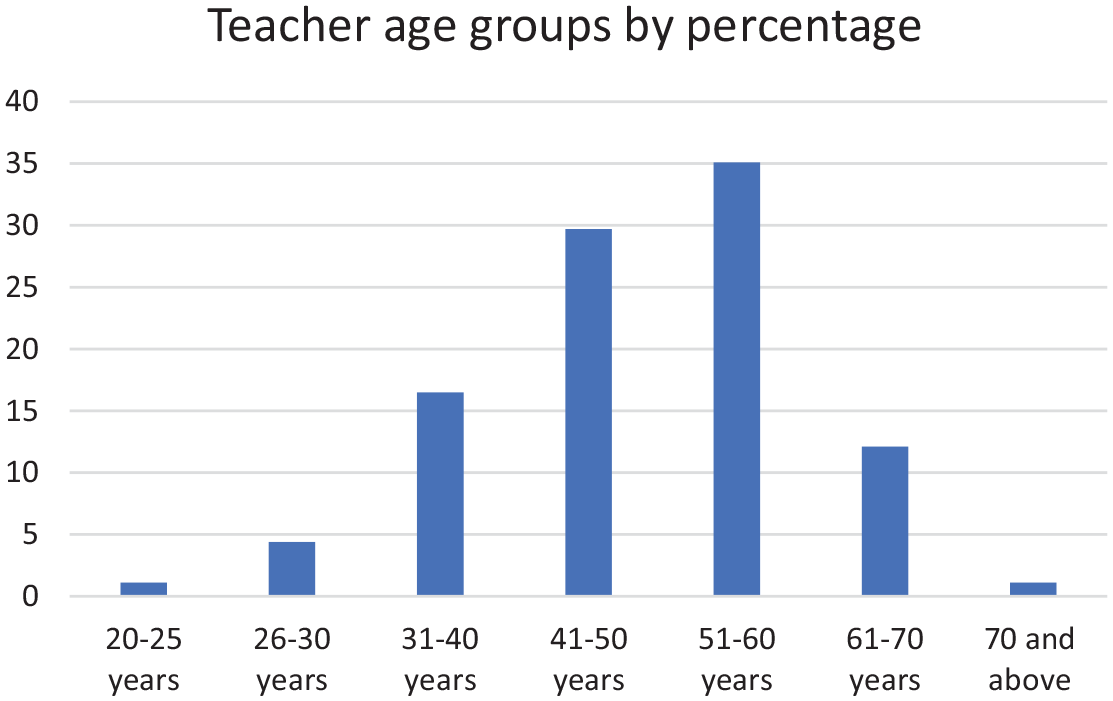
Distribution of Ages among Participants.
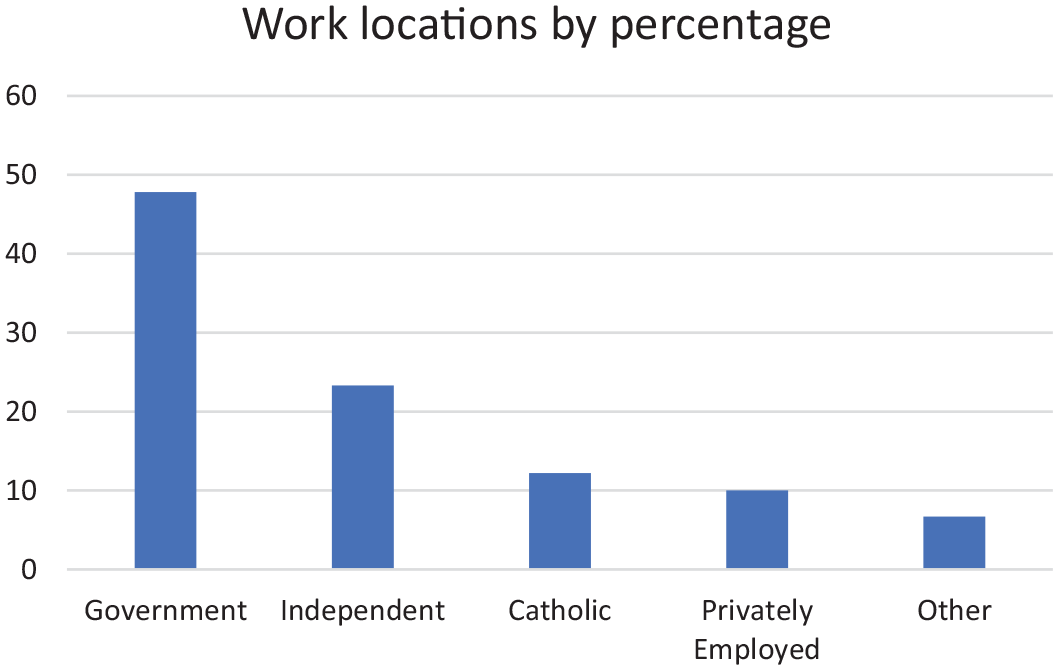
Distribution of Work Locations.
Question 1: What types of devices and technology (software and online resources) did teachers prefer to use in their music education practice?
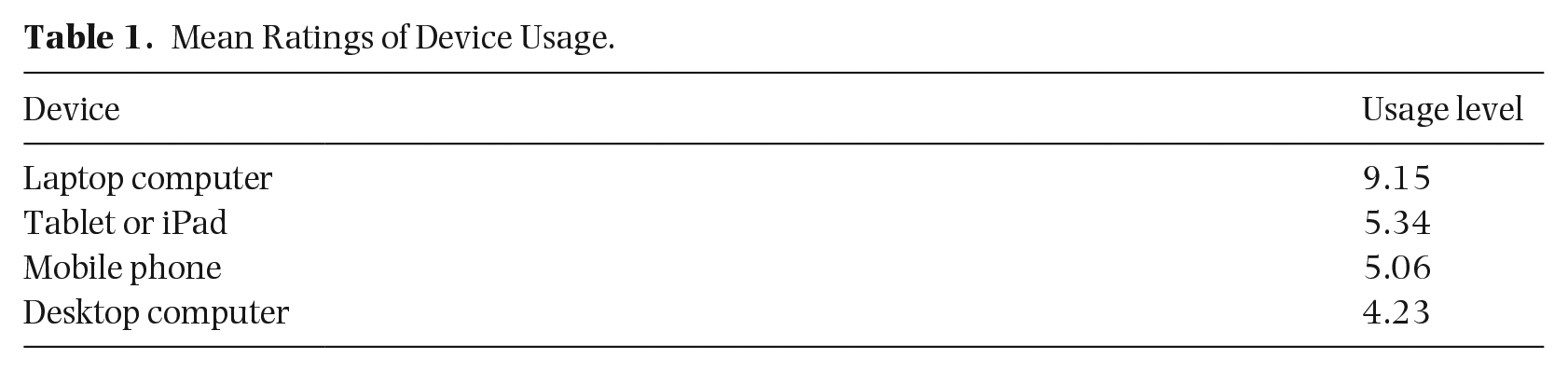
From the data (see Table 1), it was evident that the laptop computer was the preferred device during the pandemic: teachers rated that they used it more frequently than any other device. It is interesting that both the tablet-iPad and mobile phone had similar mean ratings, which would suggest teachers used these commonly as additional devices to their laptop when teaching. It is not unexpected that the desktop computer received the lowest rating, given the portability and functionality other devices offered for music teachers. This is important as music educators look to refine online teaching and delivery.
Mean Ratings of Device Usage.
Teachers utilized, adapted, and developed their approaches to teaching by employing various software to enable online delivery (see Table 2). Teachers rated PowerPoint or Keynote presentation software as their highest preference for software used for productivity purposes in teaching. This was closely followed by using learning management systems (LMS) (i.e., Canvas, Moodle, Blackboard). The uses of LMS teachers described included storing, facilitating distribution, and ensuring accessibility of online learning and assessment materials. Teachers also identified a preference for the use of music creation software for notation and audio (i.e., GarageBand, Finale, Sibelius) followed by communication software (i.e., Zoom and Teams). Interestingly, what emerged from the data was a lower preference for video-movie editing software, and software that enabled the development of collaborative creative and musical activities. These descriptive statistics offer an insight into the preferences of teachers during COVID. This is valuable because they identify the software preferences of teachers, offering increased understanding of their practice during this online setting.
Mean Ratings of Software Usage.
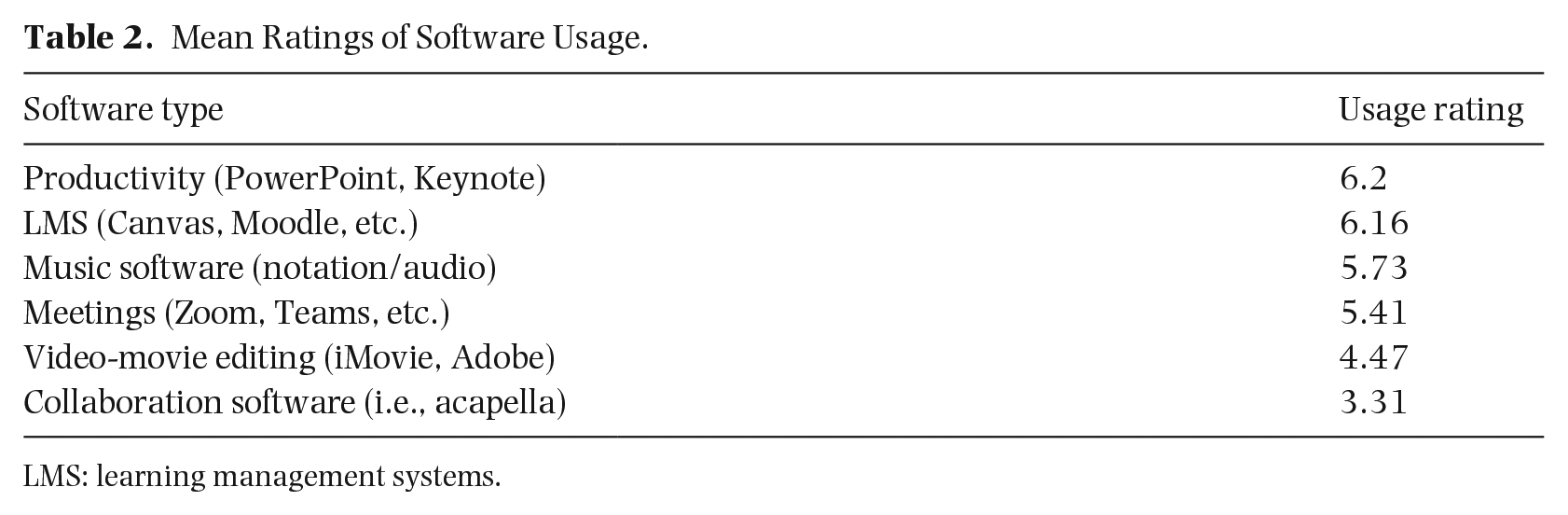
LMS: learning management systems.
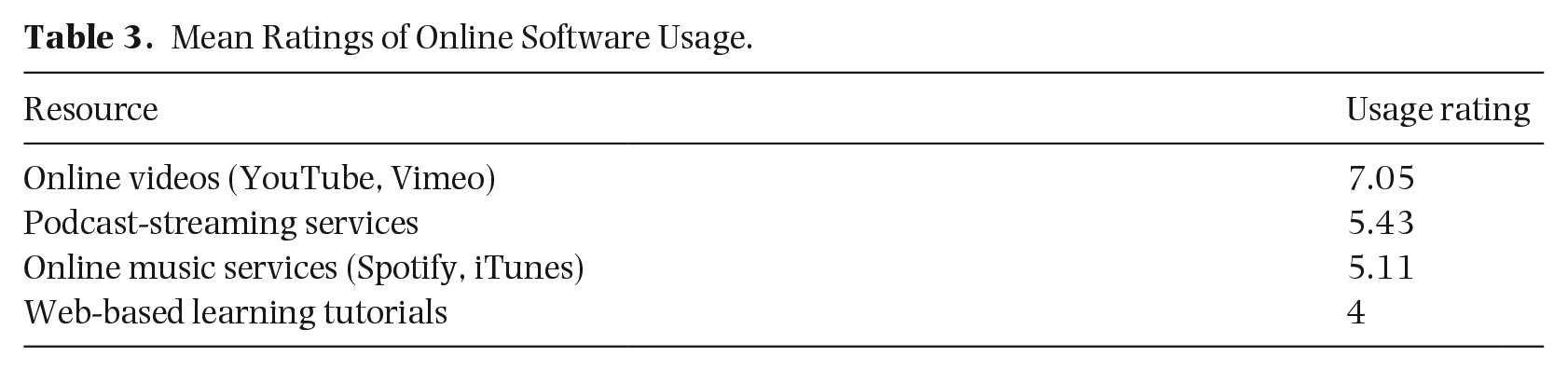
It was evident that teachers preferred to use a range of online tools and resources (see Table 3). YouTube-Vimeo, Twitch, and Netflix were most frequently used, followed by access to online resources (podcast-streaming services: Audible, Stitcher, Google Podcasts). Online music services (Spotify, iTunes, YouTube Music, Apple Music) were consistently employed by teachers at this time. Surprisingly, the data indicated that web-based learning tutorials were not used regularly. The data suggest that teachers used a range of online streaming services that utilized a combination of video-audio-based resources.
Mean Ratings of Online Software Usage.
Question 2: How did teachers’ confidence and use of ICT influence pedagogy and student engagement?
Table 4, below, indicates how teachers rated a range of statements regarding how ICT may have contributed to their confidence.
Mean Ratings of ICT Perception and Usage Statements.

ICT: Information and Communication Technologies.
These ratings described the ways that teachers positively engaged with ICT during this period. The top two ranked statements (1 and 2) refer to the value of ICT in teaching, and the high level of teachers’ ICT confidence. It was evident that teachers acknowledged the need for ongoing and sustained ICT training (3). This highlights how important this aspect is as we move into the “new normal.” These sustained high levels of ratings (with mean scores above 7.00) during COVID are interesting, yet possibly not unexpected, particularly as online teaching was an enforced requirement during this time. Teachers then indicated how ICT had enhanced their teaching (5), and how they had been able to provide a range of resources while using ICT in their teaching (6).
The statement “I feel that using ICT has enhanced my teaching” (5) further highlighted the worth and associated benefit that teachers attributed to the technology. This was accompanied by additional ratings supporting the increased pedagogical value of ICT (7), combined with an acknowledgment of how ICT assisted student understanding (8). These data provide a collective picture of the positive way in which music teachers embraced technologies in the online setting. Collectively, these ratings infer a consistent acknowledgment of the worth they attributed to ICT during the pandemic.
Items that received moderate rankings indicate that many participants found using ICT increased their use of creative teaching strategies (9), while also acknowledging that they had made changes to curriculum and assessment as they employed ICT (10). While not receiving a high rating, the data suggest that ICT allowed teachers to be more creative in their design of lessons (11). This acknowledges how the use of blended teaching enhanced student learning (12). In the same way, teachers recognized that their “pedagogy had changed for the better” through their use and application of ICT (13).
It is interesting that despite receiving lower ranking than other statements, teachers’ descriptive ratings identified that they felt a reduced sense of fear when using ICT in their teaching (14), noting that the use of ICT had assisted the creative facilitation of the curriculum and assessment design during this period.
The statement “I feel that ICT has saved me time in delivery and preparation” (16) was ranked the lowest, despite many other positive perceptions identified. This suggests the high degree of time required to effectively facilitate online teaching, with ICT remaining a considerable underlying factor during the pandemic which may have affected teachers’ sense of well-being. Nonetheless, the overall level of teachers’ confidence with ICT and its application in their practice indicates acceptance and ongoing integration.
The correlations identified in Figure 3 provide a range of associations between the three highest ranked devices (laptop, tablet-iPad, and mobile phone) and the various types of software that teachers used during this period. Of interest are the significant interaction between the use of a laptop computers and audio-notation software (r = .48, n = 57, p < .01), movie-editing software (r = .32, n = 42, p < .05), and productivity (PowerPoint, Keynote) software (r = .33, n = 50, p < .05). This may suggest either a preference based on device, or possibly, increased functionality and portability when teachers used the laptop device to undertake these tasks. Although this assumption cannot be validated further in this context, this interaction is interesting, suggesting the need for increased exploration of the ways in which teachers engage different devices for different productivity-based tasks such as creating a presentation to share with students or editing a movie to distribute via an LMS.
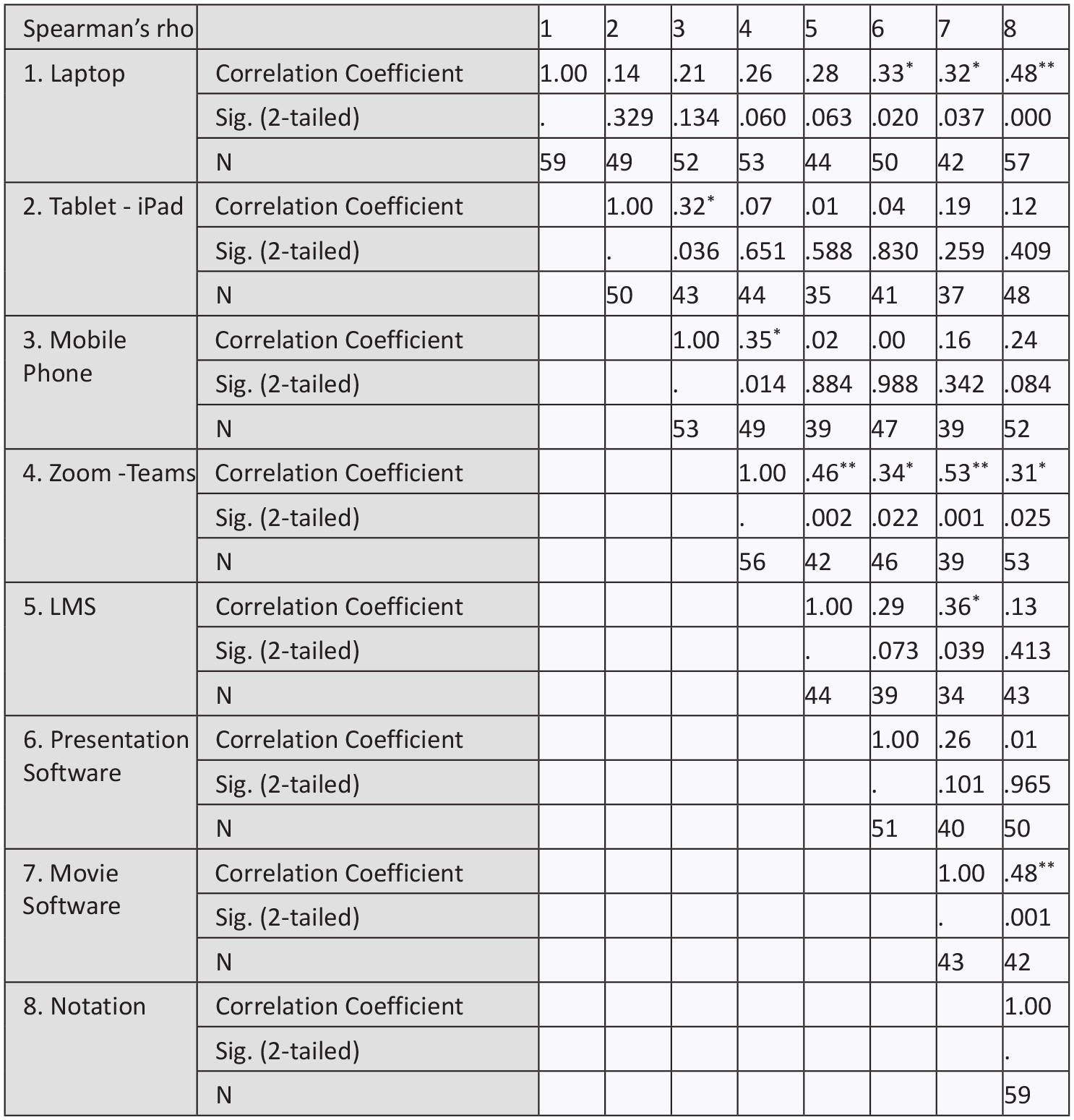
Correlations between Laptop, Mobile Phone, Tablet, and Software Use.
In a different way, the correlation that arose between the use of the mobile phone (r = .35, n = 49, p < .05) and communication software (Zoom, Teams) was interesting and may indicate that teachers found using mobile phones while teaching to be more functional than other devices because of accessibility, portability, and size. There were notable correlations between the use of communication software and other packages used to assist their teaching, such as the LMS (r = .46, n = 42, p < .01), audio-notation software (r = .31, N = 53), movie and editing software (r = .53, n = 39, p < .001) and productivity software (r = .34, n = 46, p < .05). Given the various video-audio-based opportunities and the different types of software available, these correlations indicate that further investigation would be merited in relation to online music teaching.
Other interesting interactions arose between the use of LMS with movie-editing software (r = .36, n = 34, p < .05) and communication software (r = .46, n = 42, p < .01). Teachers who engaged with audio-notation software were also seen to be using movie-editing packages (r = .48, n = 42, p < .01). These correlations further suggest a strong intersection between teachers using audio- and visual-based software, which may arise from a similarity in application design, creative processes, editing features, and publishing. Given the high emphasis on the use of shared visual and audio in communication software like Zoom and Teams, these interactions are to be expected. These are important findings to consider as teachers continue to develop and teach music in online settings.
Devices and online resources
The degree of correlation that arose between the various hardware and online resources highlighted the laptop as the preferred device. Using a laptop meant there were significant interactions with online tools such as podcasts and streaming services (r = .47, n = 52, p < .01), online music services (i.e., Spotify, iTunes) (r = .37, n = 52, p < .01), and online videos (r = .49, n = 58, p < .01). These would suggest that teachers accessed a wide array of resources to support their music teaching, and found audio and video to fulfill a pivotal role when teaching online.
The data in Figure 4 shows an interesting correlation that arose between teachers’ uses of mobile phones and online music (r = .51, n = 48, p < .01). This may be related to the portability and size of these devices and their connectivity to external sound systems in comparison to other larger devices. From this, it makes sense that the data also found high levels of interaction between teachers who accessed podcasts and streaming services. The use of web-based tutorials (r = .40, n = 40, p < .01), combined with online music services (r = .43, n = 47, p < .01) and online videos (r = .55, n = 52, p < .01), were key aspects of teaching. Similarly, teachers who accessed web tutorials also engaged with online music (r = .40, n = 39, p < .05) and online videos (r = .34, n = 42, p < .05). Those whose used online music resources (e.g., Spotify, iTunes) were also identified as engaging with online video formats (e.g., Vimeo, YouTube) (r = .30, n = 54, p < .05).
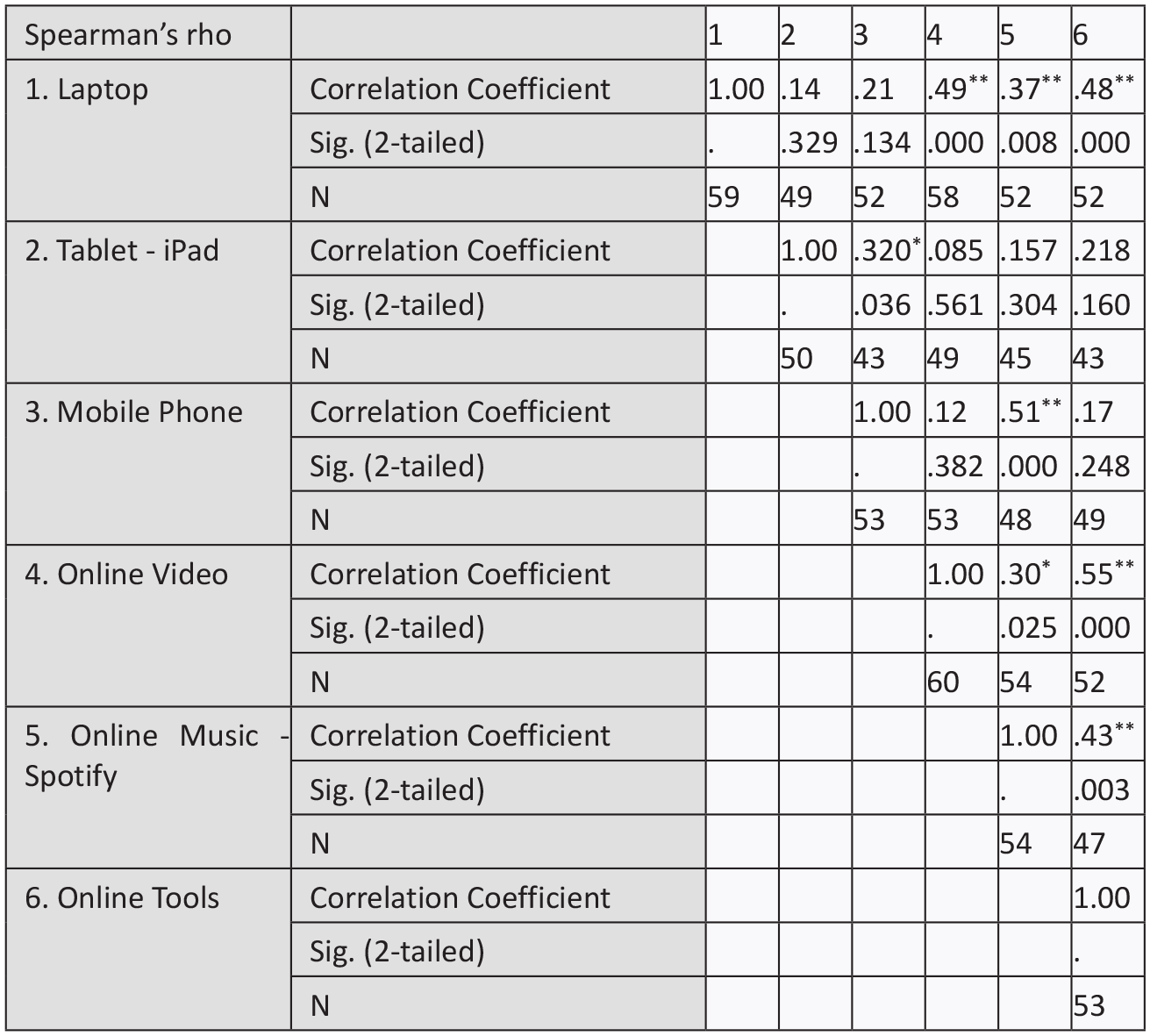
Correlations between Laptop, Mobile Phone, Tablet, and Online Resources.
The value that participants placed on ICT influenced their preferences and broader applications in their teaching practice. Their perception of ICT as valuable in teacher development significantly correlated to factors including access to resources (r = .72, n = 60, p < .01), pedagogy (r = .76, n = 58, p < .01), and developing student understanding (r = .78, n = 58, p < .01). The use of ICT as pedagogy highly correlated with the perceived value for developing student understanding (r = .76, n = 57, p < .01), while teacher confidence was strongly associated with the perception that ICT enhanced their capacity as teachers (r = .61, n = 60, p < .01). Other interesting and significant correlations arose between teachers’ perceptions of ICT as a valuable pedagogy, the development of student understanding (r = .76, n = 57, p < .01), and delivering more creative lessons (r = .73, n = 56, p < .01). Of particular interest were the significant correlations between the use of creative ICT teaching strategies and developing student understanding (r = .79, n = 56, p < .01), and teachers’ changes in pedagogy while using ICT and developing student understanding (r = .89, n = 55, p < .01). The data analysis in Figure 5 highlights the strength of the correlations between factors including confidence, value, and the teaching process.
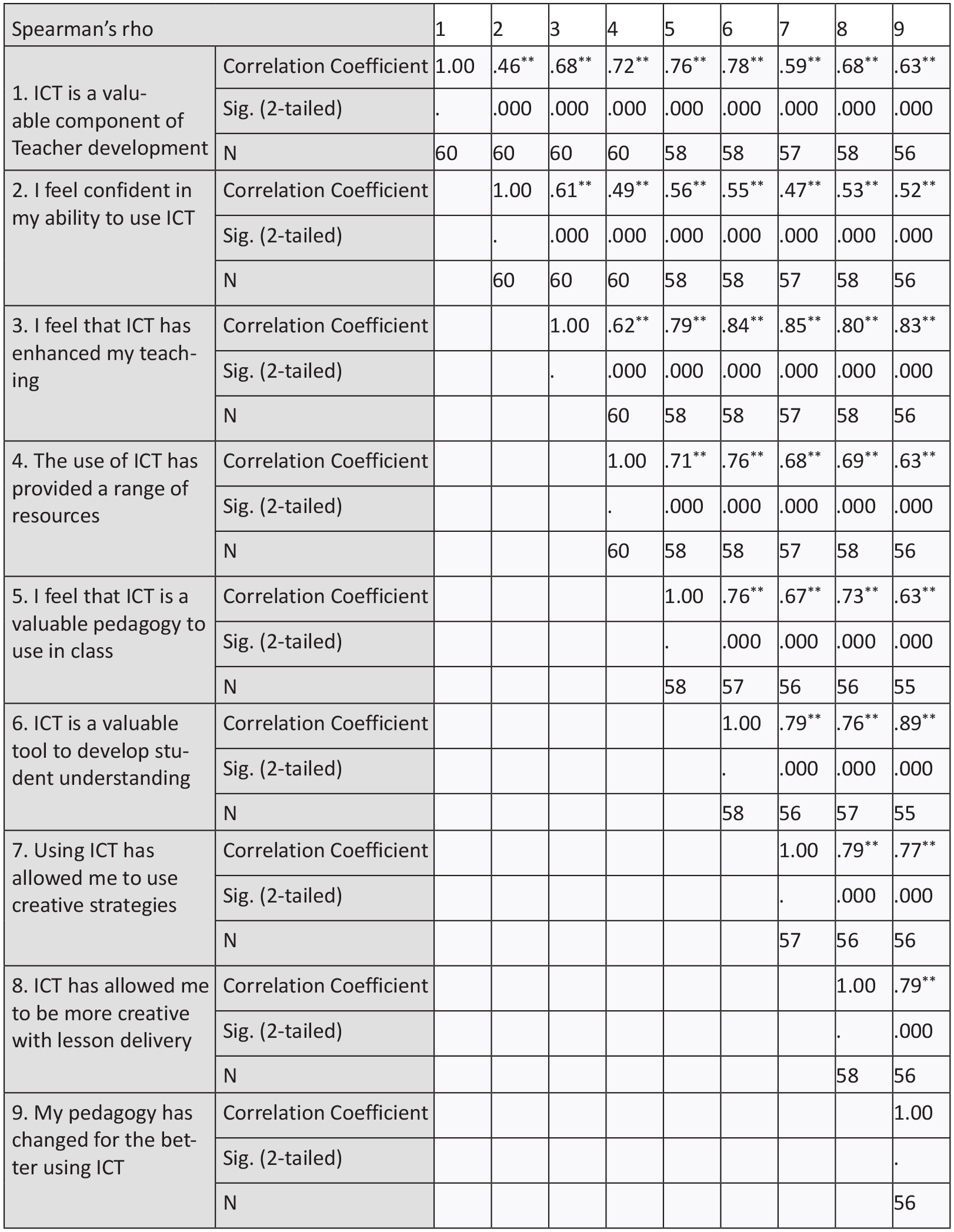
Correlations between ICT Value, Teacher Confidence, and Delivery Factors.
In summary, the findings highlight how the level of teachers’ ICT confidence influenced their pedagogy and student engagement while teaching online during the pandemic. Data emerged about shifts in teachers’ use of various devices for different areas of learning, while also highlighting more creative and adaptive uses of online resources and combinations of software used to enhance their delivery. The data presented in Figures 3 and 4 highlight the significant interactions that were apparent as teachers used technology. The heightened levels of resource application, student understanding, and willingness to engage with creative approaches to teaching (see Figure 5) all offer important insights into adaptive approaches that were employed.
Discussion
This section focuses on how the shift to online teaching affected teacher confidence and use of ICT in relation to pedagogy and student engagement. The findings highlight how teachers modified their practice during this time, providing insights into teaching online which may influence future practice. We agree with Viig (2015) that, while music “technology is considered a transformational tool” (p. 243), there are some music teachers who minimally use technology in their teaching practice. Nevertheless, a positive outcome of the pandemic has been the necessity for teachers to rethink their pedagogy. The use of laptops and mobile devices has become necessary to facilitate remote teaching during various lockdowns in Australia. Using ICT allowed teachers to maintain professional (staff, students, parents, and professional organizations), and personal (family and friends) connections (Salehi & Salehi, 2012). The pandemic has also provided a timely reminder for teachers, students, and parents to be respectful in their application of technology, considering intellectual property, digital transmission, copyright, and mechanical distribution (Lawrence, 2021; Shin, 2015). This has highlighted the need for ICT users “to be responsible, and critical digital citizens” (Buchholz et al., 2020, p. 12).
During the pandemic, Saputra (2021) identified the importance of being able to communicate using digital literacies to support effective learning processes between teachers and students. Laptops offered teachers multiple options to run varied combinations of software (i.e., productivity, editing, notation), create resources for lessons, and edit tasks through sustained communication and integrated application of music technology in their teaching (Webster & Williams, 2018). Mobile phones and tablets/iPad were frequently used as another “go to” device (Chen, 2020). This may be attributed to the size and portability of these smaller devices, many of which have high-quality audio and video quality and functionality. Teachers engaged with multiple devices, software, and resources simultaneously, highlighting how they developed capacities to integrate various technologies in diverse and purposeful ways. Nonetheless, there remains a need for teachers to consider the issue of unequal access to devices, tools, and resources so that students are not disadvantaged through ICT learning opportunities (Drane et al., 2020; Wang, 2008).
This insight into teachers’ integration of resources and software is important to consider as institutions prepare preservice teachers. The preference of laptops resonates with research undertaken by Nihat Sad and Goktas (2014) in relation to student teachers. The data about device usage also indicated a sustained use of tablets and mobile phones, suggesting that a response is needed to further develop teachers’ understanding and application of mobile devices within their teaching role and portfolio. This may improve their confidence and willingness to employ an array of technology, albeit a computer or mobile device (Hatlevik, 2017).
The data suggest that teachers developed and sustained their confidence with ICT as they were immersed in the teaching process (Hatlevik & Hatlevik, 2018). It illustrates how teachers used multiple types of technology to create, deliver, and guide their teaching, which has not been the case historically. This level of confidence affected the way in which teachers are willing to implement technology in their lessons (Calderón-Garrido & Gustems-Carnicer, 2021). Teachers need to have sufficient digital literacy to support student learning as some students may have low self-control using technology (Purnama et al., 2021). The findings identified the ways in which music teachers adapted and responded to the shift, displaying an acceptance of the modus operandi for using ICT and available music technologies. It was apparent that the ongoing use of ICT increased confidence levels, modifying the level of commitment and application when teaching online (Skaalvik & Skaalvik, 2007).
Teachers often resorted to the familiar use of productivity-based software (PowerPoint, Keynote, etc.) to create lesson materials and presentations for students, followed closely by the use of LMS tools (Canvas, Blackboard, Moodle, etc.). Swerzenski (2021) points out these systems support a transmission model of education that affords “new ways for dialogue to occur in the classroom” (p. 65). They also enable teachers to share, upload, and distribute learning materials for students (Mpungose & Khoza, 2020). Although it was not unexpected to see these ranked as the most frequently used, their level of usage was not as high as expected, which may indicate that not all teachers avail themselves of such types of software. In addition, they may not have had access, or may lack confidence and experience in using the software itself. This may also be accompanied by uncertainty as to whether the software meets the needs of the students (Buabeng-Andoh, 2012). We concur with Thorgersen and Mars (2021) that music teachers had to “revisit and reconsider” their own teaching as they were forced to teach online due to the pandemic. This may have subsequently influenced their preferences for certain resources, tools, and pedagogies.
From the initial findings, teachers were broadly confident in their collective ability to sustain their use of ICT, indicating resilience within a challenging and unpredictable landscape. It was evident that online resources became a core component to the teaching process, given the impact of the pandemic. The correlational data suggest that those teachers who use online music resources (e.g., Spotify and iTunes) confidently engaged with online video resources in tandem (Figure 4). These findings appear to present a profile of music educators as instructors who are moving beyond the traditional pedagogies, to embrace a range of new technologies that integrate video, audio, and related areas of learning in meaningful and accessible ways (King et al., 2017).
The overarching findings also suggest that teachers developed a more complex digital profile in the online setting. They displayed increased levels of competence, confidence, and application of ICT across multiple aspects of the teaching process (curriculum, assessment, and instruction) while working online (see Table 4). These findings align with Player-Koro (2012) research that identified that increased ICT integration supports teachers’ beliefs, confidence, and subsequent application of ICT. The correlations identified in Figure 5 further highlight how teachers’ evaluation of and confidence in using ICT affect many aspects of the teaching process, including creative applications and the development of student understanding. The change in relation to teachers’ “belief-constructs, perceived usefulness and perceived ease of use” of ICT affected the degree of acceptance within the online teaching process (Kreijns et al., 2013, p. 57).
To a large extent, the data suggest that many teachers in this study discovered effective ways to support their online delivery, almost through a process of self-discovery as they were forced into online delivery that required shifts and changes in their practice. This had a significant influence on their emerging confidence and engagement with ICT in a multitude of ways (see Figure 5). Through professional learning and collaboration, many teachers found additional ways to adopt digital technologies, upskilling, and modifying practice in ways that have not occurred previously. Technology-enabled communities facilitated musical collaborations between music specialists and generalist primary music teachers, and between novice and veteran music teachers (Partti & Karlsen, 2010).
Overall, these findings suggest that the historical concerns about the shortfall in teacher understanding and application of ICT are changing in a positive light (Eyles, 2019; Savage, 2010). Nonetheless, although this study found teachers’ confidence to use ICT to increase, another recent study identified that digital literacy poses both risks and opportunities in the teaching environment, highlighting the need to protect children in the digital environment (Luthfia et al., 2021). While digital media offers instant access, the reliability of information can be questionable, and issues of copyright and ethical ICT usage require ongoing consideration by teachers (Tomczyk, 2020).
Importantly, this study identified that the more confident teachers became, the more routinely they shifted between technology devices, using various software to sustain student engagement and connection. This, in turn, suggests that teachers are accessing ICT resources and learning opportunities more broadly as part of their repertoire of teaching approaches. Our recommendations below identify the specific content and needs required for the development of music teachers while there remains a paucity of opportunities to develop a broad range of skills and experiences with technology.
Recommendations
From the initial findings, we recommend that a longitudinal study be undertaken to investigate teachers’ engagement with multiple technologies, with a design that specifically seeks to understand the intricate usage of different devices for music teaching. This will help ascertain the barriers and affordances for educators across different settings and contexts. Considering the ongoing pandemic coupled with experiences gained since 2020, we recommend that generalist, specialist, and tertiary music educators consider the following:
Planning for future unexpected events with specific reference to creative teaching practice, student understanding, online resources, and software integration that affect music education practice, enabling teacher confidence and capacity within online environments;
Building capacity by designing targeted professional learning opportunities that enrich and upskill teachers’ ICT competence to foster student engagement using a variety of ICT-based pedagogies, resources, devices, and applications;
The role and responsibility teachers have in relation to the impact of digital literacies within in the “new normal” COVID online environment;
Collaborating, connecting, and learning with and from other music educators locally and internationally to positively promote creative pedagogy, student engagement, well-being, and inclusion;
Reflecting on experiences, adapting, and adopting new pedagogies that recalibrate the digital identities of music teachers as COVID-19 continues to permeate the globe;
Developing teachers’ confidence with digital tools and sustaining the value of ICT as an integral component of the learning process in music education.
Based on the findings and correlations that emerged, we recommend specific ICT professional learning for initial teacher training programs and for in-service teachers as part of ongoing teacher registration. This may focus on areas including the following:
Device selection, application, and connectivity;
Software accessibility and resource creation;
Audio and video integration with multiple devices and software;
Creative approaches to teaching and assessment;
The development of teacher confidence, self-efficacy, and agency;
Access and equity across various educational settings, with a focus upon catering for students of lower socioeconomic status.
To successfully achieve these recommendations, Higher Education Faculty, Schools of Education, and Education Bodies need to collaborate purposefully with professional organizations to ensure that Australian Initial Tertiary Education (ITE) remains competitive in a global world. They should aim to provide targeted programs of professional learning that enhance teachers’ understanding and usage of ICT and various forms of music technology.
In addition, we recommend the delivery of online professional learning through LMS and accessible communication software (i.e., Zoom, Teams). Importantly, providers should consider the “lived experience” of teachers when designing professional learning, as many instructors are not practising music teachers or knowledgeable about pedagogy, curriculum, and assessment. We recommend ongoing forums (synchronous or asynchronous), offering a space for teachers to share their success and challenges and learn from one another. As this study focused on Australian music teachers, the above opportunities should be aligned with the Australian Institute for Teaching and School Leadership (AITSL, 2017) standards, supporting teacher registration and career progression. This may be no different to other countries.
Conclusion
Teachers in this study sought and employed ICT and varied types of music technology to survive the COVID-19 crisis during lockdowns across Australia. Through engagement with a range of technologies, teachers increased their capacities in relation to ICT skills, knowledge, confidence, and competence in the online setting. The study revealed substantial use of online resources, software, and devices. The findings suggest a range of ways in which Australian music educators are likely to proceed with their use of ICT, through and beyond COVID-19. While teachers used specific devices, varied software (online and local), and a range of resources, these findings also revealed teachers’ insights into the gaps that emerged in relation to usage, support, and access.
As music educators prepare for the unknown in 2022 and beyond, the initial data suggest that they will be better prepared for the unforeseeable future having adopted and embedded new digital competencies as part of their practice. The findings reveal when “push came to shove,” the common “go-to constant” was using ICT to “save the day” during lockdown restrictions. This enhanced relationships that emerged between teachers and students, and their collective engagement with technologies (Ruthmann & Mantie, 2017). At the same time, teacher confidence seemed to be heightened, which affected how they interacted more holistically with their devices in similar ways to previous studies (Hatlevik & Hatlevik, 2018). As we continue to report on the wider study, we envisage a “finely grained understanding of the discourse of technology and music education” will emerge (Ruthmann & Mantie, 2017, p. 340), providing valuable insights for music teachers, professional learning, and teacher training.
It is apparent that music educators across educational settings during the pandemic have contributed to “creating a generation of resilient lifelong learners who have overcome any issues of remote learning because their teachers showed them how” (Borton, 2021). The crisis that Australia and the rest of the world experienced “raises questions about the nature of teaching and the ways of supporting the learning of student teachers, but it also challenges teacher education to (re)think ways of (re)educating teachers for scenarios that are unpredictable and unknown” (Flores & Swennen, 2020, p. 453). The COVID-19 scenario has unmasked new dimensions of music teachers’ use of ICT and various technologies. These findings contribute to conversations that are necessary in areas of policy, teacher training, and curriculum development amid the everchanging global landscape. While the pandemic has brought prolonged periods of disruption to teaching and learning, it has nevertheless unleashed new waves of thinking in relation to what, when, why, and how we can reimage the use of technologies in music education.
Footnotes
Declaration of conflicting interests
The author(s) declared no potential conflicts of interest with respect to the research, authorship, and/or publication of this article.
Funding
The author(s) received no financial support for the research, authorship, and/or publication of this article.
