



Abstract
In this article, we analyze the patterns of culture of honor within Spanish families. Each member of 271 Spanish four-member families (parents and two children each, total N = 1084) completed a questionnaire containing scales for the culture of honor and for sociodemographic variables (gender, order born and age). The results show that intra-family similarities emerge. However, path analyses show that the gender and birth order of the child are relevant in predicting this similarity. In particular, the first-born child converges with their mother to a higher extent than the father regardless of their gender. However, for the second-born child both parents instill their ideas about culture of honor in a gender congruent way (father–boy and mother–girl). Furthermore, there are higher similarities within younger families, indicating a stronger influence from parents to children. Results are discussed in view of social role and gender social learning theories.
Family plays a pivotal role in the lives of children, acting as a key socializing agent (Perales et al., 2016). Within the family, young people learn about values (i.e., honor) and about gender roles. In Spain, family has been the most valued institution in the last 30 years (Torns, 2015), also among young Spaniards (INJUVE, 2012).
The concept of honor refers to individual aspects – honor related to reputation, honesty, moral integrity and trustworthiness (Peristiany, 1965) – but also to social aspects – honor pertaining to status, reputation and power in interactions (Baldry et al., 2013). Highly honor-oriented societies, where both individual and social honor are core values, are described as cultures of honor (Cohen, 1998; Pitt-Rivers, 1965; Reed, 1982). People in these cultures are socialized to vigorously defend their honor against any threats that might stain their social standing or reputation (Souza et al., 2017; Uskul et al., 2015). Classical examples of highly honor-oriented cultures are those of the Mediterranean area (i.e., Greece, Italy and Spain), Arab and Middle Eastern cultures and cultures of South America (Bosson et al., 2013).
Honor as a multifaceted approach asserts that cultural and social groups vary in terms of the specific honor codes (morality, feminine, masculine or family honor) they view as more important (Rodriguez Mosquera, 2016). Furthermore, honor codes define a pattern of family and inter-sex relations having implications for attitudes toward sex roles (Rodriguez Mosquera, 2011). However, most literature about honor focuses on masculine honor and highlights an internal socialized obligation for men to respond physically when confronted with threats against their masculinity to maintain their reputation (O’Dea et al., 2017). All in all, research to date has focused on gendered honor codes and the importance given to them across cultures. However, to the best of our knowledge, no other study has addressed the patterns of influence among family members in the social learning of honor. Thus, the objective of this study is to analyze whether members of the same family have a similar pattern of culture of honor endorsement in Spain. Moreover, we address whether gender, birth order and cohort age influence this relation.
We chose Spain as a culture of honor for several reasons. Pitt-Rivers based his research on Spanish society in the 1960s, showing the prevalent honor culture at that time (Swing, 2012). His observations corresponded to the period of Franco’s dictatorship (1939–1975), which featured great gender inequalities. From late 1970s and 1980s, with the advent of democracy, there have been important social changes in Spain that have affected gender relations, leading to a more gender egalitarian society (Gartzia and Lopez-Zafra, 2014, 2016; see Bustelo, 2016, for a review). Despite this important advance in equality and social change, Spain faces many contradictions in achieving gender equality but remains a culture of honor. Indeed, the regions in Southern Spain (Andalucía, Castile-La Mancha and Extremadura) show higher inequalities than Spanish society as a whole (Bericat and Sánchez, 2008).
Gender inequalities are perpetuated by gender socialization, among other things, which refers to the learning of behavior and attitudes considered appropriate for a given sex in a given culture (Wood, 2009; Wood and Eagly, 2010). This learning happens by way of many different agents of socialization (family, peers, etc.), the family being the primary one. In this research, we consider two main approaches to gender socialization: Alice Eagly’s (1987) theory of social roles and Bussey and Bandura’s (1999) sociocognitive perspective on gender. In Eagly’s perspective, sexual division of labor and societal expectations based on stereotypes produce gender roles. Indeed, gender stereotypes often become the rationale that justifies differential sex role distribution (Williams and Best, 1990). Behavior is strongly influenced by gender roles when cultures endorse gender stereotypes and form firm expectations based on those stereotypes (Eagly, 1987), such as in Spain. Furthermore, Eagly proposes that gender roles and stereotypes also affect couple and family interaction. For example, families in which mothers and fathers play highly traditional roles (housekeeper vs. breadwinner, respectively) propagate the conventional gender stereotypes, whereas families with an egalitarian distribution of roles have less traditional attitudes toward gender (Endendijk et al., 2018; Fischer and Anderson, 2012).
The sociocognitive perspective on gender (Bussey and Bandura, 1984) proposes that both sexes learn male and female stereotypes by observing models (Bussey and Bandura, 1984). However, the ‘extent to which they learn the details of the styles of behavior and become proficient at them depend[s] on their perceived efficacy to master the modeled activities, opportunities to put them into practice, and the social reactions they produce’ (Bussey and Bandura, 1999: 687). Specifically, parents may directly communicate their beliefs about gender by providing instruction, guidance and training to their children (Eccles, 1994). Therefore, they reinforce sex-typed behaviors by encouraging their children’s involvement in gender-stereotypical activities (Lytton and Romney, 1991). Cultural views of gender roles, and family honor, influence children’s perceptions of role models (Best and Bush, 2016). Furthermore, drawing from social learning theory (Bandura, 1986), we can expect bidirectional processes of modeling to occur also in the interactions between siblings.
As a result, we hypothesize that family members’ scores will correlate (H1), showing that parents’ patterns of culture of honor tend to be convergent with patterns adopted by children. Despite the absence of specific research into this theme, several studies have addressed the general association between parents’ and children’s gender-related beliefs and preferences (see Tenenbaum and Leaper, 2002, for a review), which relates to the culture of honor concept. For example, studies show that parents’ attitudes influence children’s attitudes (Lunde and Gyberg, 2016). Empirical studies have focused on mothers’ role as the main transmitters of the culture of honor to children (Shackelford, 2005). However, we consider that analyses should also include fathers. From social role theory and social cognitive learning perspectives, children learn that women and men (should) act differently. Therefore, one could assume that parents pass their attitudes about gender roles to their children, resulting in congruence between parents’ and children’s gender role attitudes (Marks et al., 2009). When children are exposed simultaneously to male and female models and must choose one or another, then selective attention to, and learning about, a same-gender model are likely to occur (Bussey and Bandura, 1999). Siblings can experience more opportunities to influence, observe and learn from each other, producing similarities between siblings’ gender role attitudes (Brody, 1998; Marks et al., 2009).
Furthermore, we consider the order in which a person is born into their family. Despite recent studies showing that birth order has few effects on the development of personality (Damian and Roberts, 2015), its impact on the first-born’s higher intelligence remains a reality (Rohrer et al., 2015). First-born children also score higher in communicative skills than later-born children (Berglund et al., 2005). First-borns are exposed to more maternal and paternal participation because, initially, there are no other children to divide attention (Herrera et al., 2003). In fact, the oldest children are more aware of the transmission of norms and rules than second-born children (Whiteman et al., 2003), maybe because parents relax with the second-born child (Collins, 2006). Thus, we hypothesize that the influence and endorsement of culture of honor is greater for the oldest child (H2).
However, this influence could be different for boys and girls. As suggested by Rodriguez Mosquera (2011), men and women follow different patterns in cultures of honor. In these cultures, honor is associated with status and males’ power to use their strength to carry out their will (Baldry et al., 2013). Furthermore, the ways in which men and women defend their reputation are quite different (Lopez-Zafra, 2008). Men have to protect their reputation even with violence (Souza et al., 2017; Vandello and Cohen, 2003), whereas women may engage in a variety of indirect or relational forms of aggression, including gossip, ostracism, or subtle forms of retaliation (Uskul et al., 2015). Therefore, we would expect different endorsement patterns in culture of honor depending on family structure based on the gender of the children (H3). In particular, we expect, based on the literature, gender congruency and thus higher correlations on the same-sex comparison.
Finally, we consider other cultural aspects that may generate differences among families. Cihangir (2013) showed that honor codes undergo social change, and thus, they are sociocultural constructions. This is in agreement with Eagly’s social role theory and argument that changes in gender roles lead to changes in stereotypes about men and women (Diekman and Eagly, 2000; Koenig and Eagly, 2014; Lopez-Zafra and Garcia-Retamero, 2012). Social changes have taken place in Spain in terms of gender egalitarianism (Garztia and Lopez-Zafra, 2016) in recent years. Thus, families with different mean ages may differ in the importance given to a culture of honor. In particular, older parents may endorse a culture of honor to a higher extent than younger parents and thus model their children in a different way. Thus, we expect that parents’ and children’s age would influence the endorsement of a culture of honor in their children (H4).
Method
Participants and procedure
Seven investigators randomly contacted undergraduate participants in Southern Spain campus settings (library, hall, restaurant, etc.). As inclusion criteria, we considered families with heterosexual parents, with members living together and with two children of opposite sexes, if possible. Blake (1989) describes the need to fully control for family size to avoid the confounding effects of family size and birth order. Thus, only four member families were included in this study. We excluded families in which any member was an immigrant or from any other nationality to avoid another culture’s effects as much as possible. Only 64% of the contacted undergraduates’ families met the requirements and agreed to participate. They were from four cities in three Southern Spanish regions (Andalucía, Extremadura and Castile-La Mancha).
Among these participating families, 96.5% returned all the questionnaires. We used a double-blind method: neither those conducting the survey nor participants knew the objectives of the study.
The final sample included 1084 individuals from 271 families consisting of four members each (father, mother and two children). Among the participants, 625 were women (58%: 271 mothers and 354 daughters) and 459 were men (42%: 271 fathers and 188 sons). The mean age was 50.49 (SD = 4.81; Md = 50) for parents and 22.35 (SD = 4.34, Md = 22) for children. Regarding family structure, 1 124 families had different sex children (45.76%) and 147 families had same sex children. As we were interested in capturing the importance of gender and birth order, we considered the sex by birth order: of 124 families 56 (20.66%) had a daughter as first-born and a son as second-born; 68 families (25.1%) had a first-born son and a second-born daughter); 115 families had two daughters (42.43%) and 32 families had two sons (11.81%). See Table 1 for further information.
Sociodemographic variables for family members.
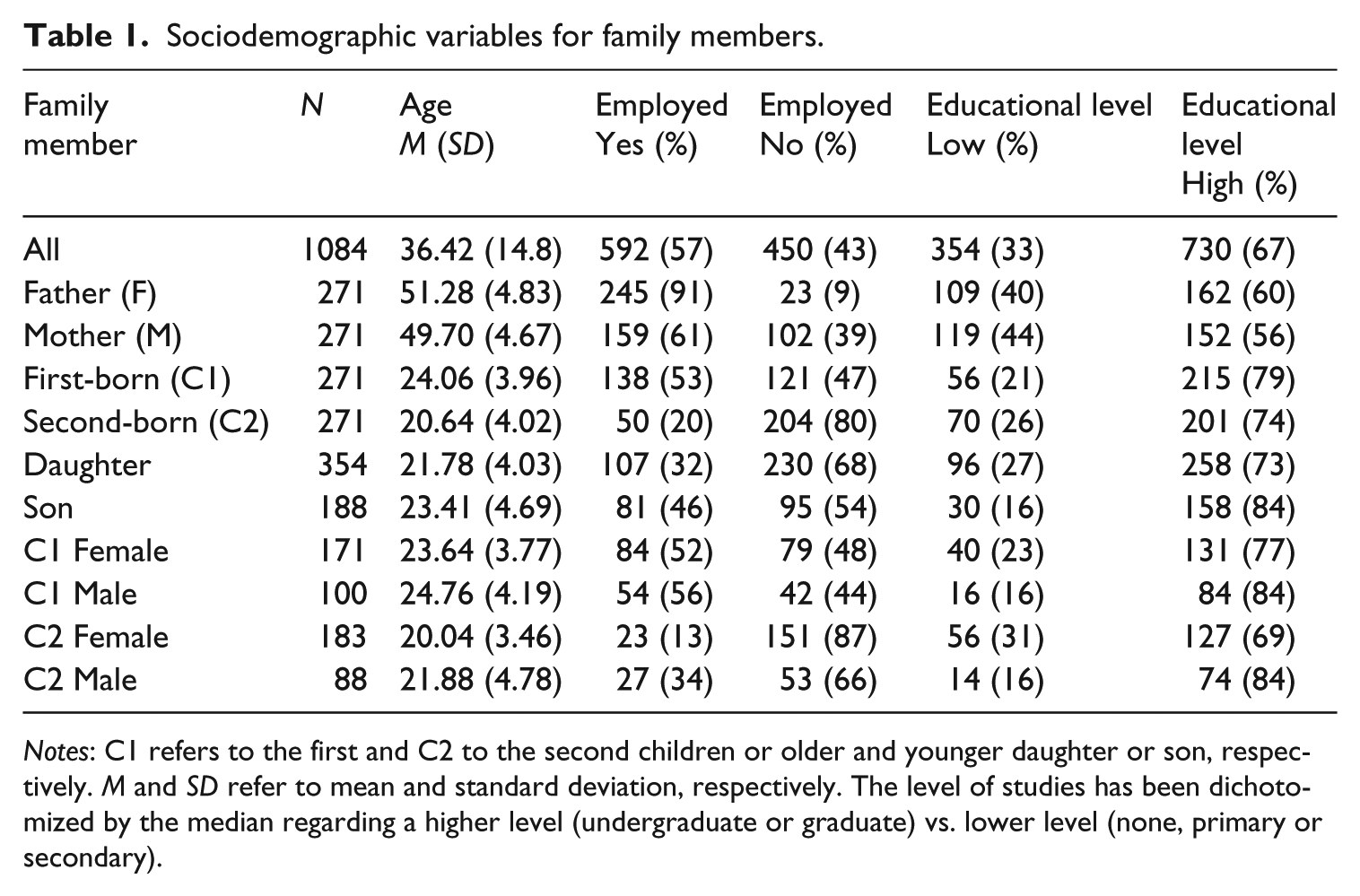
Notes: C1 refers to the first and C2 to the second children or older and younger daughter or son, respectively. M and SD refer to mean and standard deviation, respectively. The level of studies has been dichotomized by the median regarding a higher level (undergraduate or graduate) vs. lower level (none, primary or secondary).
Most of the parents had a low educational level (60% of fathers and 56% of mothers) with a high level among the children (79% first-born and 74% second-born). 2 The participants took approximately four minutes to complete the questionnaire. All participants received the same questionnaire and were classified by their sociodemographic data.
Instruments
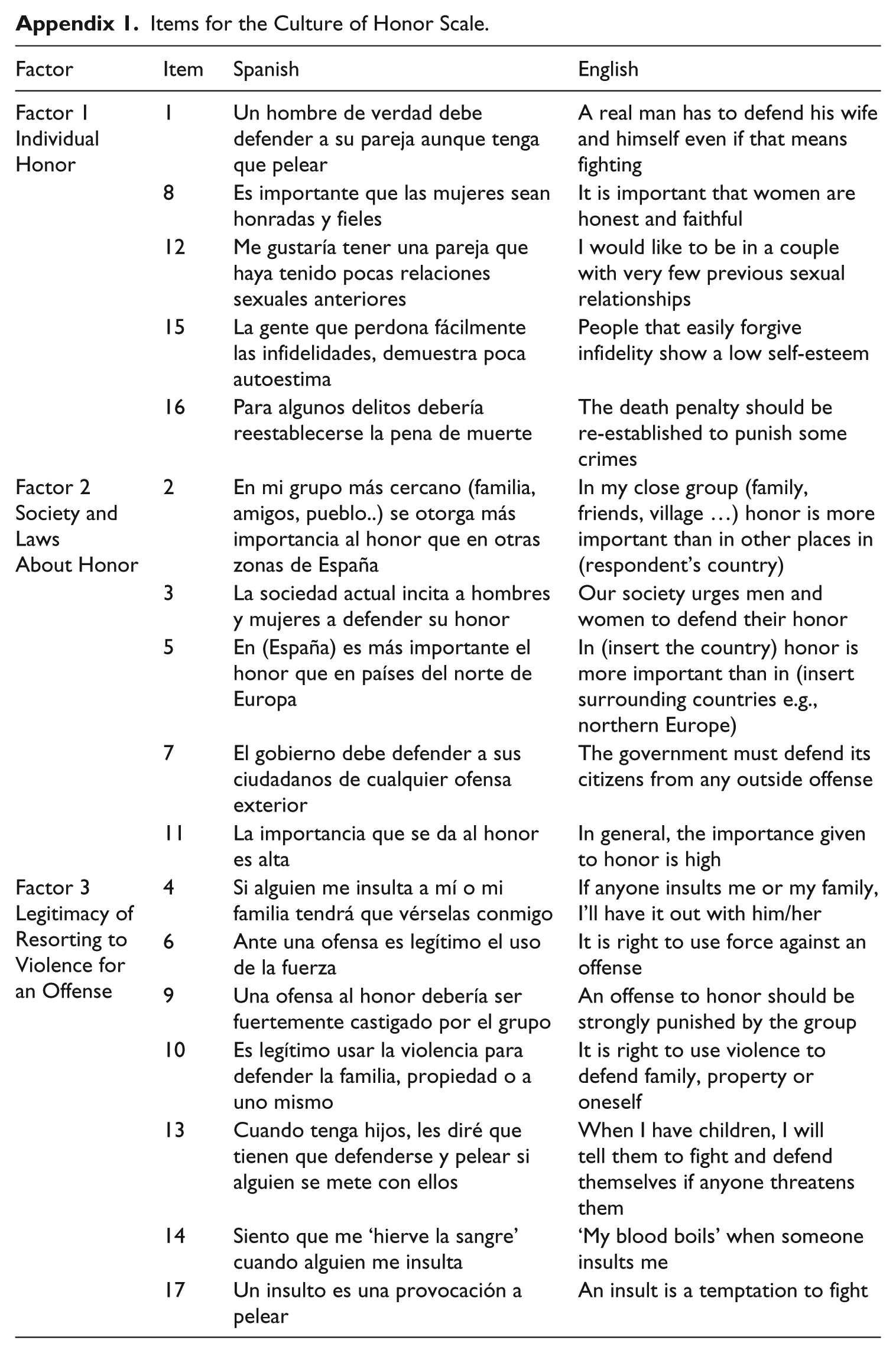
We used the Culture of Honor Scale (CHS), which measures participants’ adherence to honor-related attitudes (Lopez-Zafra, 2007). It was developed following Cohen’s (1996) proposal on the components of culture of honor. On a five-point scale ranging from 1 (strongly disagree) to 5 (strongly agree) participants responded to 17 items within three dimensions (see Appendix for items and dimensions). Individual honor refers to attitudes that women and men should have about honor (α = .70). Society and laws about honor refer to social attitudes toward honor (α = .70) and the third dimension contained items referring to the legitimacy of resorting to violence for an offense (α = .80). The correlations among the dimensions in this questionnaire are high (all higher than .79, indicating very strong positive relations; Evans, 1996), demonstrating that culture of honor is a global dimension. High scores indicated strong culture of honor attitudes. The alpha values obtained from recent samples of Latino (Dietrich and Schuett, 2013, α = .81) and Spanish undergraduates (Canto et al., 2014, 2017, α = .87) show the strong internal consistency and reliability of the measure. Similarly, in the current study, the alpha value for the global scale was .86 (see Table 2 for descriptives).
Descriptive analysis of culture of honor by family member, birth order, gender and age.
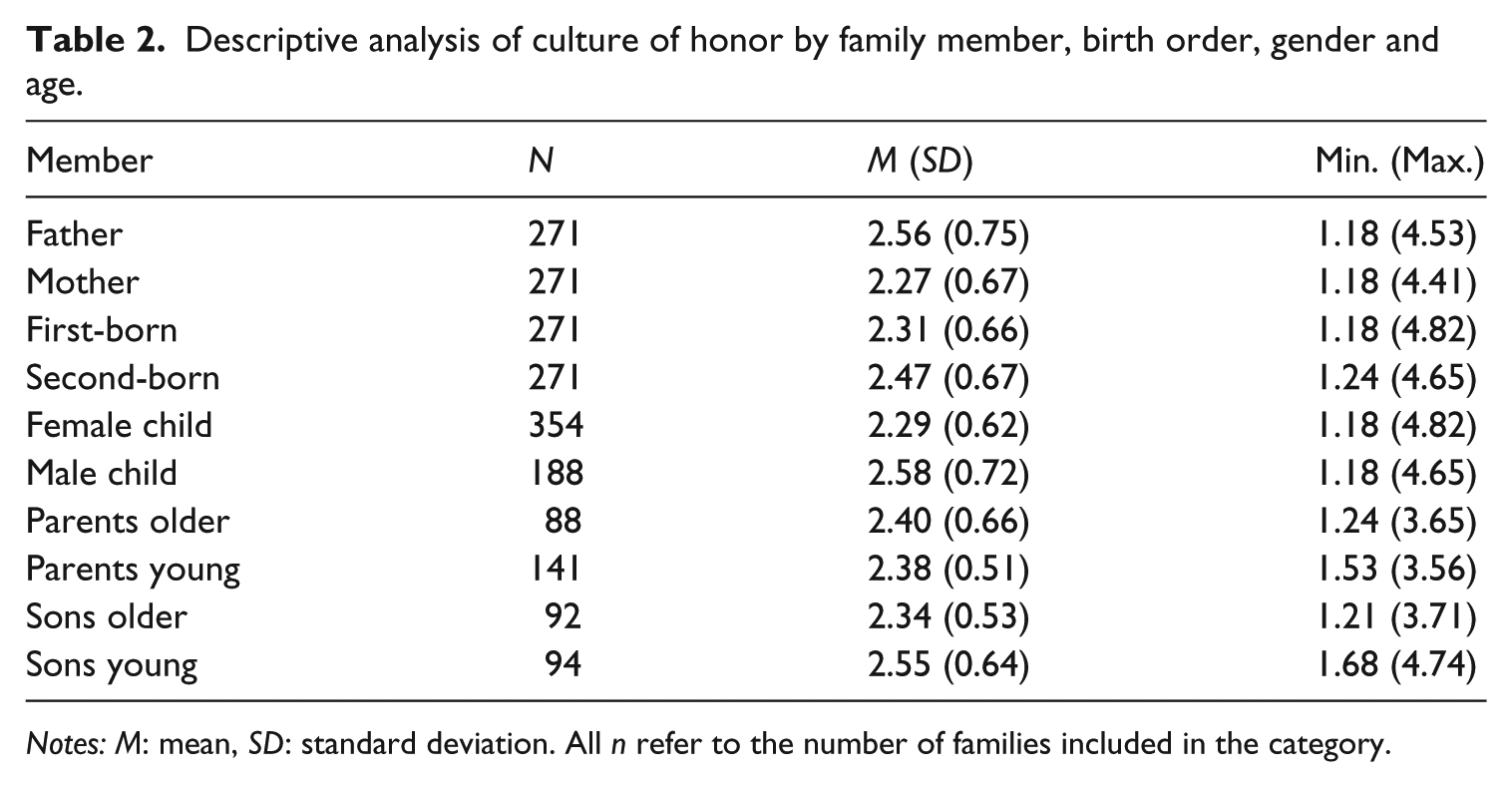
Notes: M: mean, SD: standard deviation. All n refer to the number of families included in the category.
A model for exploring our hypotheses
As the objective of our study lies in the patterns among family members, we propose a model in which we analyze dyadic relationships between the father and mother, their impact on each child and the relationships between the children’s scores (see Figure 1).
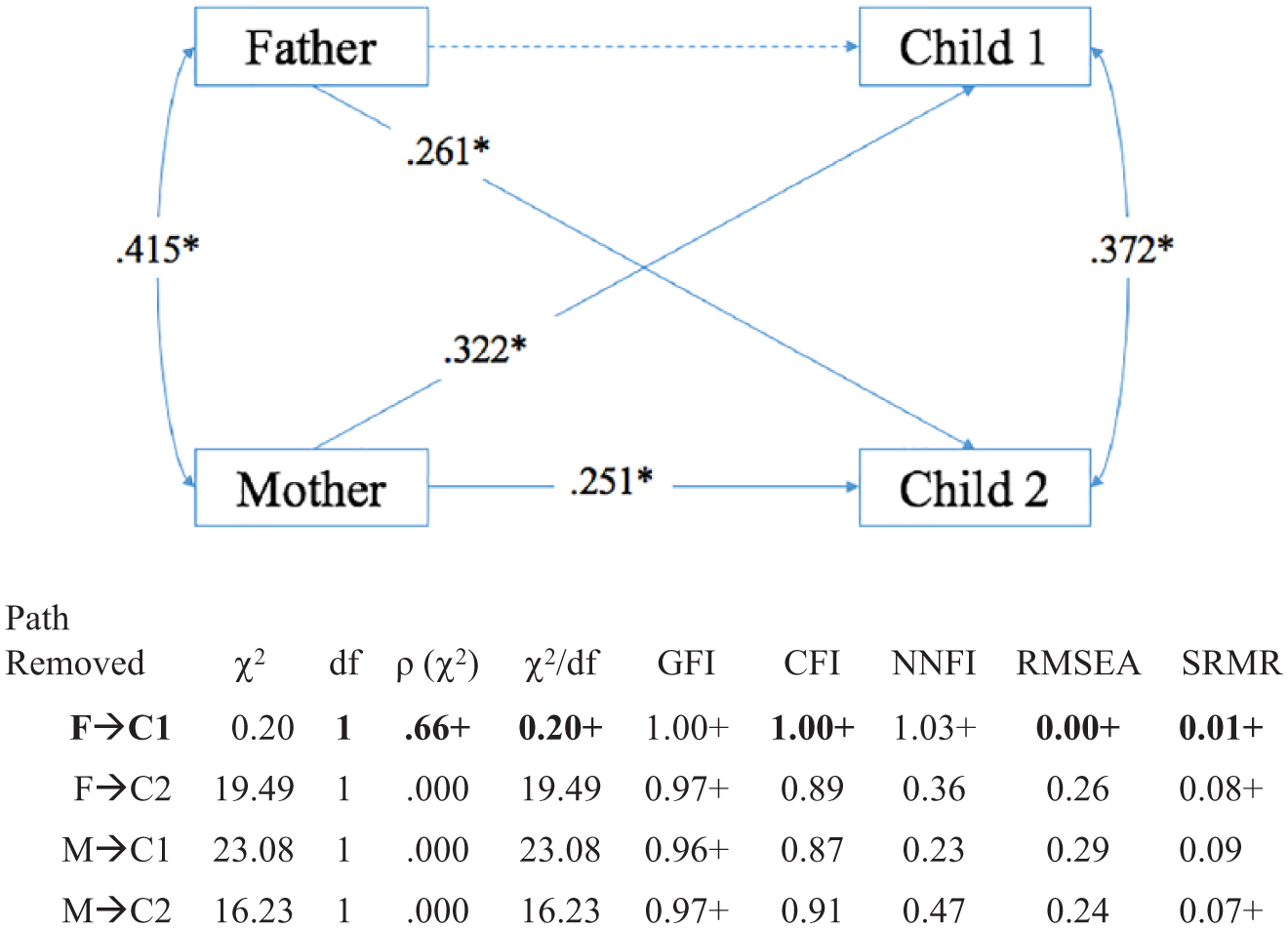
Path analysis details for the transmission of the culture of honor.
Analysis was performed using the free GNU R software, R version 3.2.3 (R Foundation for Statistical Computing, www.r-project.org). To test our hypotheses, we conducted intra-class correlations (ICC) and path analyses by structural equation modeling (SEM). Multilevel models currently represent the best regression-modeling framework for handling data sampled from clustered population structures, in which children are nested within families (Georgiades et al., 2008). In SEM, good fit criteria were set to: ρ (χ2) > 05, χ2/df < 2, GFI ⩾ 0.95, IFC ⩾ 0.95, NNFI ⩾ 0.95, RMSEA ⩽ 0.06 and SRMR 0.08 (Hu and Bentler, 1999).
Results
To test Hypothesis 1, which predicts that patterns in the culture of honor of parents tend to be convergent with the patterns of their children, we conducted intra-class correlation (ICC) analyses for a one-way random model (see Maguire, 1999). First, we estimated the ICC among all members of each family. Second, we calculated the ICC for parents (Mother–Father) and children (Child 1–Child 2) separately. In both estimations, all correlations were significant (ICC average values = .6; see Table 3). Finally, we calculated the ICC for each bivariate pair (Father–Child 1, Father–Child 2, Mother–Child 1, Mother–Child 2) and the ICCs were significant but slightly smaller (i.e., average .43). ICCs were higher between each parent and the second child (C2), whereas father and the first child (C1) yielded the lowest ICC magnitude. Although the ICC is the best correlation describing intra-family similarity (indicating whether there is significant covariance), it could have a positive bias. Thus, we also include the bivariate correlation (r) as a measure of effect size. In this analysis r values were similar to, but slightly lower than the ICC values (see Table 3). In sum, as expected, we find that family members seem to be similar in their endorsement of the culture of honor. However, these correlations differ depending on the dyad analyzed (see Figure 1). In particular, there is higher congruency in culture of honor when considering dyads of parents or dyads of siblings.
Intra-class correlations (ICC) between family members.
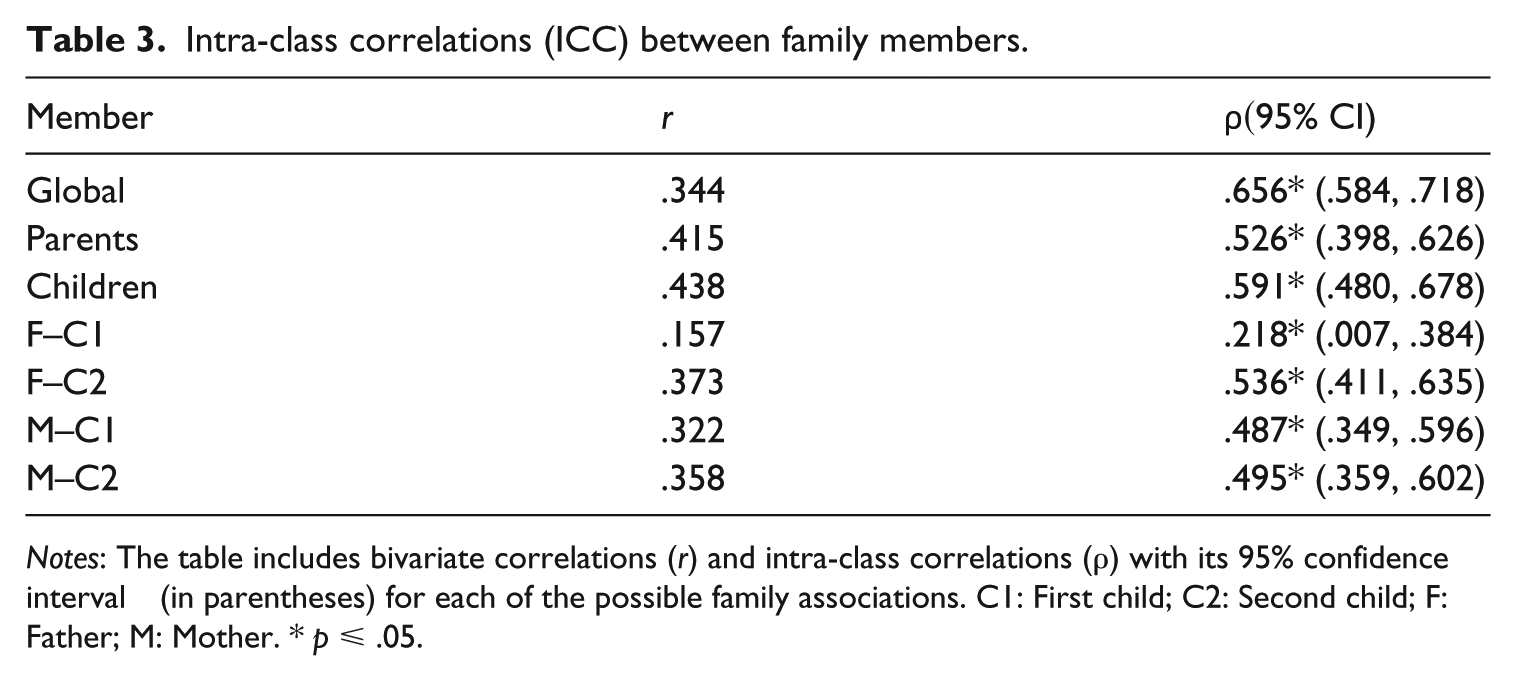
Notes: The table includes bivariate correlations (r) and intra-class correlations (ρ) with its 95% confidence interval (in parentheses) for each of the possible family associations. C1: First child; C2: Second child; F: Father; M: Mother. * p ⩽ .05.
To test Hypothesis 2, which predicts that this convergent pattern is due to the birth order of children, we analyze peer relationships when controlling for the relationship between predictors (or path analysis), that is, mother/father as predictors of children’s culture of honor scores. 3 We considered a saturated model including four pathways, along with the relationships between peers (F–M and C1–C2). Then the fitness rates were compared considering the recommended rates in the literature (see Rodriguez Mosquera et al., 2008, in a similar analytical context). As Figure 1 shows, in our case, the model that met all the criteria simultaneously was the one ignoring the path father–first-born child (F→C1; Figure 1). This means that the influence of both parents is significant for the youngest child (C2) but for the first child only the influence of the mother is significant (M→C1) (see Figure 1). Furthermore, peer significant relations emerged between parents and between siblings. Thus, our prediction is partially confirmed.
However, the gender of the child could influence these results, in line with Hypothesis 3, in which we predicted that parental responses regarding the culture of honor could depend on the gender of children. To further analyze the impact of gender on the endorsement of parents and children’s culture of honor we conducted a two-step analysis. First, in the selected model we tested the moderating effect of the gender variable by multi-group analyses. We estimated the model for each gender and for each child (C1 and C2), and the regression coefficients were constrained to be equal between the four groups throughout all paths. Furthermore, because previous ICC and path analysis suggested peer relations, other parameters were also constrained to be equal (i.e., variance, residuals, and coefficients between parents and between children).
As we expected, the model with an equality constraint on all the paths fitted the data poorly (χ2 (43) = 257.76, ratio χ2/df = 5.99, GFI = 0.97+, CFI = 0.22, NNFI = 0.57, RMSEA = 0.27 and SRMR = 0.36). A possible explanation could be that the effect of children’s sex interacted with the order of birth. Then we ran a multi-group gender analysis following modeling recommendations (Hu and Bentler, 1999): that is, the decision about the significant model regarding different groups may change based on the increases (delta) on the fit parameters: chi-square (Δχ2) and a comparative fit index (ΔCFI). In this case, the multi-group analysis showed that the coefficients for the three paths improved the model fit significantly (Δχ2 (9) = 99.60, p < .001; ΔCFI = 0.33), indicating that there are differences across the four groups.
In order to limit the differences between groups, we repeated this analysis but only releasing one of the three parameters by rotation. The model fit improved significantly in two cases: from the father (Δχ2 (3) = 60.26, p < .001; ΔCFI = 0.21) and from the mother (Δχ2 (3) = 35.84, p < .001; ΔCFI = 0.12) to the younger child, but the CFI increment from the mother to the older child was low (Δχ2 (3) = 10.29, p < .02; ΔCFI = 0.03). This means that the influence to the eldest child is only significant from the mother, regardless of the sex of the child. However, the path to the youngest child is significant from both parents, and change depends on the child’s sex. We therefore examined where the differences lay.
We estimated the parameters through SEM path analysis for this model. The standardized parameters for the two paths from father and mother to second-born child showed clear differences between the four groups. Specifically, the relation occurs from the father in families where C1 is female and C2 is male or when both C1 and C2 are male (sees Figure 2). In the case of the mother the pattern is significant in families where C1 and C2 are female or C1 is male and C2 is female (see Figure 2). Moreover, multi-group analyses confirmed the fit model (χ2 (4) = 5.98+, ratio χ2/df = 1.49+, GFI = 1.00+, CFI = 0.99+, NNFI = 0.96+, RMSEA = 0.09 and SRMR = 0.03+; all parameters conform to the modelization requirements, except RMSEA which was in a reasonable range, i.e., below 0.1).
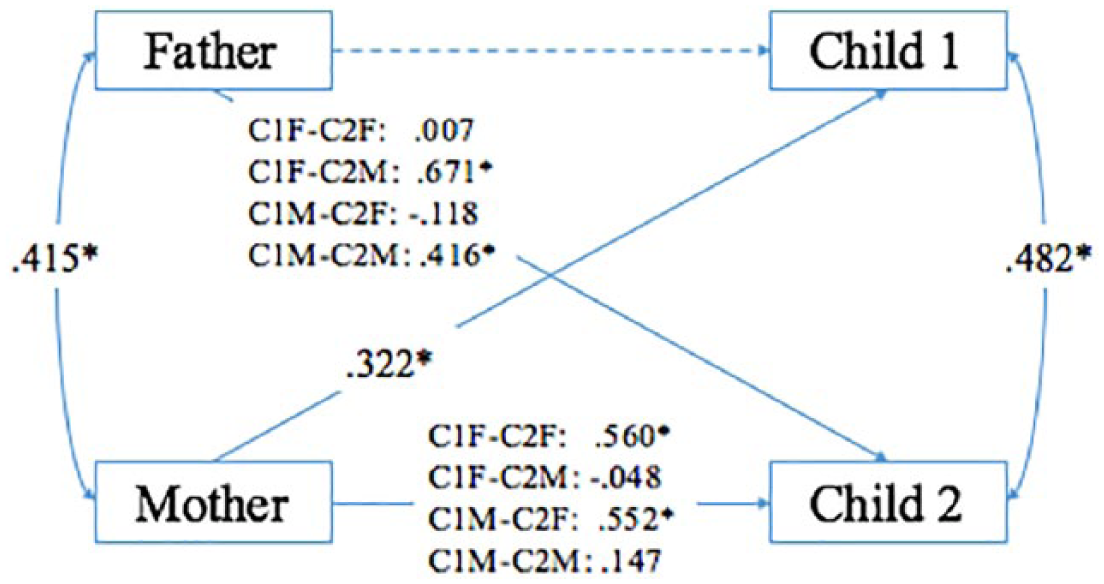
Path analysis details for the transmission of the culture of honor according to gender.
Finally, Hypothesis 4 predicted that cohort of age could also be relevant in the relationship of family endorsement of culture of honor. We based this hypothesis on the assumption that families could differ depending on the societal changes in Spain: older parents were socialized in a more traditional society, whereas younger parents have been living in more gender egalitarian society (Lopez-Zafra, 2008). To make results comparable we dichotomized the age by the median. For parents the median was 50 and for children it was 22. Thus, those pairs who were below the median were categorized as young whereas those who were above the median were categorized as older. Groups divided by the median were then introduced into a two-stage modulator analysis, as in the preceding analysis of the gender variable.
Multi-group analysis showed that the coefficients for the three paths improved the model fit significantly when considering parents’ age (Δχ2 (3) = 51.83, p < .001; ΔCFI = 0.34), indicating some differences across the two age groups (see standardized parameter estimates in Figure 3, panel a). Thus, the influence is somewhat stronger for families with younger parents (see Figure 3, panel a). Multi-group analysis confirmed this result (χ2 (2) = 0.34+, ratio χ2/df = 0.17+, GFI = 1.00+, CFI = 1.00+, NNFI = 1.07+, RMSEA = 0.00+ and SRMR = 0.01+; all parameters conform to the modelization requirements).
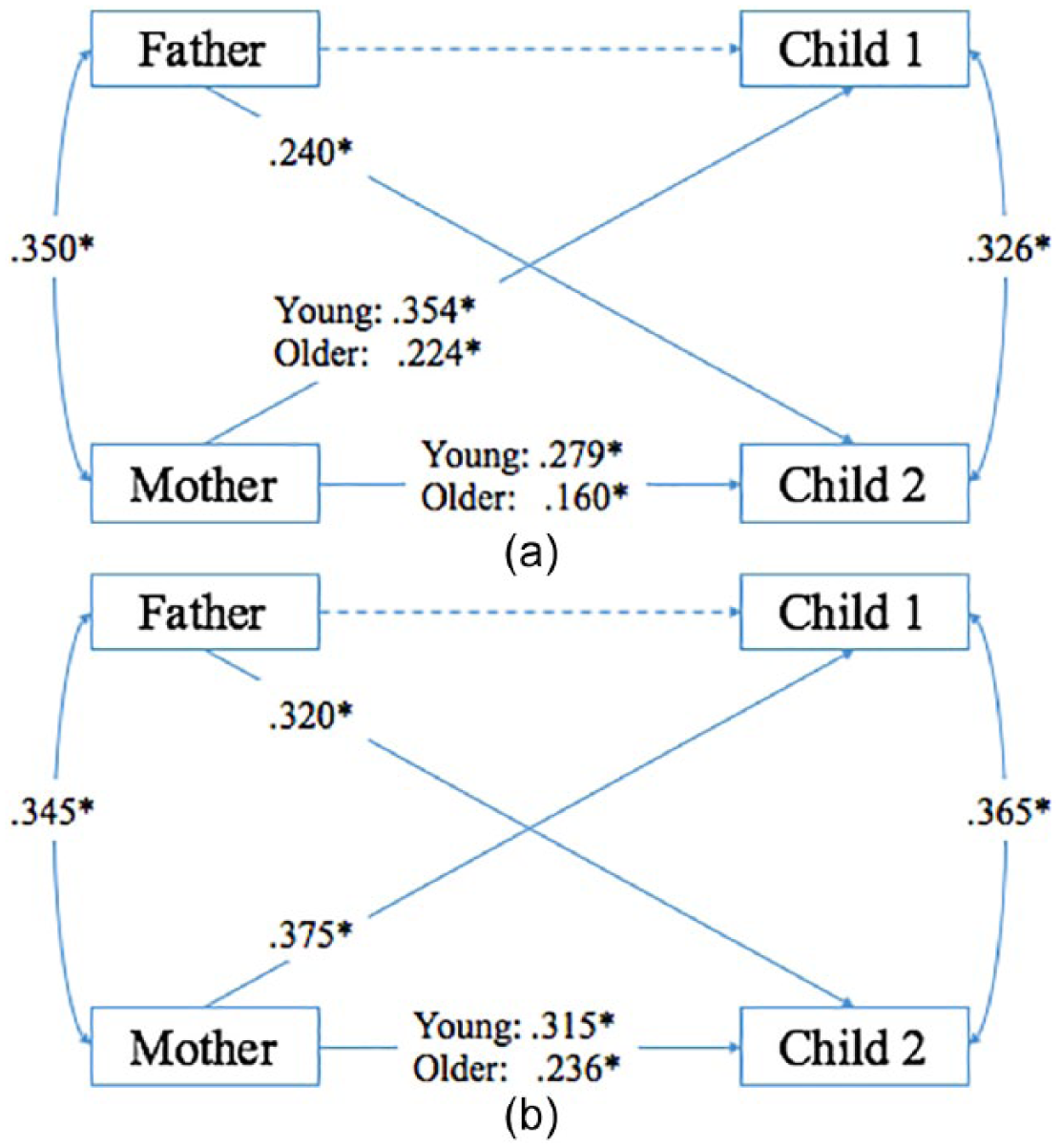
Path analysis details for the transmission of the culture of honor according to parents’ and siblings’ age.
Regarding the age of children, the multi-group analysis showed that each of the three paths improved the model fit significantly (Δχ2 (3) = 16.43, p < .001; ΔCFI = 0.11). More specifically, model fit improved significantly in Mother→C2 (Δχ2 (1) = 6.98, p < .008; ΔCFI = 0.04), whereas it did not either for Father→C2 (Δχ2 (1) = 2.66, p > .103; ΔCFI = 0.01) or for Mother→C1 (Δχ2 (1) = 0.00, p > .969; ΔCFI = −0.01). The standardized parameter estimates stripped for this path showed weak magnitude difference. Thus, as in the previous analysis, the influence is somewhat stronger for families with younger children but significant in both groups (see Figure 3, panel b).
Discussion
In this study, we examined degrees and patterns of association among family members in their endorsement of culture of honor. We included gender of parents and siblings, demonstrating its important role in the patterns. We also analyzed the impact of birth order and the role of age.
Our results only partially supported our hypotheses. Despite expected, and found, associations and paths, the directions of the results were not always as anticipated. Regarding Hypothesis 1, we expected congruency among all family members, and results show congruency but to a higher extent among dyads (i.e., F–M; C1–C2). The result about parents’ congruency is in agreement with previous results, indicating that most couples agree in their perceptions of culture of honor (Lopez-Zafra and Rodríguez-Espartal, 2008). Cultural aspects are important in mating preferences and selection (Buss, 1989). Thus, parents may hold similar honor values because of selective mating or because their views became increasingly similar over time. However, siblings’ correlations suggest that the experience of the oldest child may influence expectations for the second-born child (Whiteman and Buchanan, 2002), who may perceive the older sibling as a more important role model than parents, especially at certain ages (Crocetti et al., 2017), with differences between older and younger mean age families. In Hypothesis 2 we focused on family structure. Our results show that parents’ ideas about culture of honor predict those of their children depending on the child’s birth order (first- or second-born) in a complex way. Mothers’ ideas predict those of first- and second-born children, whereas fathers’ ideas only predict the second-born child’s views. In sum, when considering birth order, the first children resemble only their mothers’ ideas about honor regardless of their gender. This supports Shackelford’s (2005) assertion about the role mothers have in the transmission of culture of honor. However, this is not so for the second-born child, where both parents instill their ideas about culture of honor, albeit in a gendered congruent way: mothers influence second-born daughters and fathers influence second-born sons. These results gave only partial support for our hypothesis as we thought both parents would influence their first child. Importantly, gender of the child does not seem to matter in the case of the mother’s influence on the first-born, but is crucial in the case of each parent’s influence on the second-born.
Furthermore, our results for Hypothesis 4 show that younger families have a greater impact on their children’s ideas. As shown in Table 1, we have an interesting percentage of older children (over 22 years of age) who are working but are still living in their parents’ homes. For those ‘emerging adults’, family responsibilities are not so critical (Arnett, 2000, 2011), thus they could be more independent in their values from their parents. However, for younger children, who are in their pre-adolescence or adolescence, the role modeling and influence of parents, mainly mother, are high. The similarities among siblings indicate that this influence is present, but evolving. In their meta-analysis, Buist et al. (2013) found that that quality of sibling relationships relates to adolescent psychosocial development. Moreover, this result is in agreement with higher paths in younger parents. This implies that younger parents are more dedicated to role modeling and transmitting values about culture of honor, and thus, both results are significant and congruent.
In sum, our study contributes to knowledge about culture of honor within families in a very interesting way, showing that there is a clear pattern of association. This is a very promising avenue to explore family relations and endorsement of culture of honor. To have a more comprehensive explanation, future studies could consider dividing the sample into high and low scores in culture of honor and exploring whether the transmission patterns replicate.
Despite the strengths of our study (mainly the novel model proposed to explore family relations, the complexity of the analyses and the large number of participants obtained using a very difficult sampling method), there are several limitations. We focus on a specific subculture (Southern Spain) and a specific type of family (heterosexual parents with two children). In addition, our study may suffer from cultural and sociodemographic limitations. However, we adhered to specific inclusion criteria to avoid strange variables that could mask our results. A future line of research could focus on different family structures. In our study, 42.43% of the families were composed of parents and two daughters or two sons and 45.76% of parents with a first-born son and second-born daughter, or vice versa. Although this is representative of family composition in most countries, future studies could incorporate other family models (with different family structure and number of members), and analyze transmission patterns by extending our proposed path analysis.
Footnotes
Appendix
Items for the Culture of Honor Scale.
| Factor | Item | Spanish | English |
|---|---|---|---|
| Factor 1 Individual Honor |
1 | Un hombre de verdad debe defender a su pareja aunque tenga que pelear | A real man has to defend his wife and himself even if that means fighting |
| 8 | Es importante que las mujeres sean honradas y fieles | It is important that women are honest and faithful | |
| 12 | Me gustaría tener una pareja que haya tenido pocas relaciones sexuales anteriores | I would like to be in a couple with very few previous sexual relationships | |
| 15 | La gente que perdona fácilmente las infidelidades, demuestra poca autoestima | People that easily forgive infidelity show a low self-esteem | |
| 16 | Para algunos delitos debería reestablecerse la pena de muerte | The death penalty should be re-established to punish some crimes | |
| Factor 2 |
2 | En mi grupo más cercano (familia, amigos, pueblo..) se otorga más importancia al honor que en otras zonas de España | In my close group (family, friends, village …) honor is more important than in other places in (respondent’s country) |
| 3 | La sociedad actual incita a hombres y mujeres a defender su honor | Our society urges men and women to defend their honor | |
| 5 | En (España) es más importante el honor que en países del norte de Europa | In (insert the country) honor is more important than in (insert surrounding countries e.g., northern Europe) | |
| 7 | El gobierno debe defender a sus ciudadanos de cualquier ofensa exterior | The government must defend its citizens from any outside offense | |
| 11 | La importancia que se da al honor es alta | In general, the importance given to honor is high | |
| Factor 3 |
4 | Si alguien me insulta a mí o mi familia tendrá que vérselas conmigo | If anyone insults me or my family, I’ll have it out with him/her |
| 6 | Ante una ofensa es legítimo el uso de la fuerza | It is right to use force against an offense | |
| 9 | Una ofensa al honor debería ser fuertemente castigado por el grupo | An offense to honor should be strongly punished by the group | |
| 10 | Es legítimo usar la violencia para defender la familia, propiedad o a uno mismo | It is right to use violence to defend family, property or oneself | |
| 13 | Cuando tenga hijos, les diré que tienen que defenderse y pelear si alguien se mete con ellos | When I have children, I will tell them to fight and defend themselves if anyone threatens them | |
| 14 | Siento que me ‘hierve la sangre’ cuando alguien me insulta | ‘My blood boils’ when someone insults me | |
| 17 | Un insulto es una provocación a pelear | An insult is a temptation to fight |
Authors’ note
This work has not been published previously and is not under consideration for publication elsewhere. The manuscript has been seen and reviewed by all authors and all authors have contributed to it in a meaningful way.
Declaration of Conflicting Interests
The author(s) declared no potential conflicts of interest with respect to the research, authorship, and/or publication of this article.
Funding
The author(s) received no financial support for the research, authorship, and/or publication of this article.
