



Abstract
This paper makes a novel contribution to organisational scholarship and practice by addressing the absence of an operationally useful approach to ethno-racial diversity that adequately accounts for the contested, context-dependent, and power-laden nature of ethnicity and race. Informed by the complexities surrounding the objective/subjective binary to measuring ethno-racial diversity, we develop a multilayered conceptual framework, incorporating describing, grouping and positioning ethno-racial diversity within organisations. Using Australian organisations as a case, and locating organisational practices within Australia’s sociohistorical context, we examine how the measurement of ethno-racial diversity is approached in practice. We show that existing organisational approaches often rely on questions that measure ‘objective’ criteria while also using sanitised language, which are viewed as inadequate for capturing one’s lived and organisational experience of in/exclusion. We further identify the organisational conditions that shape effective measurement under voluntary disclosure, including clarity of purpose and use, communication, and trust. We conclude with a practice-facing discussion of measure, design, reporting, and interpretation beyond the Australian context. In short, we address current weaknesses while showcasing the benefits of taking a more holistic approach to accounting for ethno-racial diversity at the organisational level with lessons for an international audience of scholars, policy makers, employers, organisational leaders, and the broader community.
Keywords
Introduction
Organisational studies have shown how practices including recruitment, job task allocation, career progression, remuneration, leadership appointment and representation are implicated in the reproduction of inequality (Amis et al., 2020). Gender equality efforts have advanced significantly by using organisational gender data to: generate evidence of inequality, investigate organisational practices and evaluate the effectiveness of diversity interventions (Sheridan et al., 2015, 2021). In Australia, for instance, this is exemplified by the Workplace Gender Equality Agency’s (WGEA) reporting of the gender pay gap, leadership representation and labour force participation (Kulik, 2022). However, comparable approaches remain un(der)developed for ethno-racial diversity, reflecting the lack of conceptual consensus and inadequate tools for accounting for such diversity (Wright et al., 2024).
Why this absence matters is exemplified in critical accounting scholarship which shows, what and how we count, constructs organisational reality, shapes priorities and directs actions (Burchell et al., 1980; Dillard, 1991). Organisations require quality data to enhance transparency and operationalise responses to complex social, environmental and ethical challenges (Hall et al., 2015; Miller and Power, 2013). In critical diversity scholarship and policy, such evidence is used to map representation, illuminate patterns of in/exclusion, investigate whether organisational practices reproduce inequalities over time, and evaluate the effectiveness of diversity interventions. Organisations may also seek to account for ethno-racial diversity for a range of purposes, including meeting external reporting expectations, understanding employee experience, and aligning workforce composition with service delivery and customer expectations (Groutsis, 2024; Groutsis et al., 2018, 2026). Regardless of purpose, the measurement approach matters because it determines what can be seen in the data and what can be acted on.
Accounting for ethno-racial diversity bears unique challenges because the relevant measurement categories themselves are politically, historically and conceptually fraught. Race and ethnicity carry legacies of essentialism and biological reductionism, yet are also fluid, socially constructed, and context-dependent (Liu, 2017; Liu et al., 2024). Organisational measures often reduce nuanced lived experience to rigid and static categories (Wright et al., 2024), reflecting a dilemma between producing data that can be benchmarked and preserving nuance and dignity of personhood. Race and ethnicity also straddle both ‘objective’ markers (such as phenotype/skin colour and country of birth); and socially constructed, context-dependent, ‘subjective’ meanings shaped by colonial and migration histories (Liu, 2017). This duality makes ethno-racial diversity particularly prone to misclassification, invisibility and hypervisibility (Buchanan and Settles, 2019). These tensions mean that counting ethno-racial diversity, while necessary for organisational accountability, is a contested process that must be designed with purpose, deliberation and care.
This paper addresses a gap in organisational scholarship and practice: the lack of an approach to accounting for ethno-racial diversity that is operationally useful while also attending to the contested, context-dependent, and power-laden nature of ethnicity and race. We adopt an engaged scholarship orientation (Van de Ven, 2007; Van de Ven and Johnson, 2006), treating organisational diversity measurement as a knowledge-production problem that benefits from incorporating practice-based perspectives alongside scholarly analysis. Our focus is on measure design and operationalisation. As such we do not make normative claims about what distributional outcomes organisations should pursue or how opportunities should be allocated across groups. For the purposes of this study, we ask: How can organisations develop ethno-racial diversity measures that balance organisational usefulness with sensitivity to the complex and nuanced nature of ethno-racial identification.
To address this question, we develop a multi-layered conceptual framework that incorporates describing, grouping and positioning ethno-racial diversity within organisations. The framework clarifies what is being counted, from whose perspective, for what purpose, and with what risk, helping organisations engage with the tension between the lived complexity of ethno-racial experience and the organisational need for simplified, usable data. Empirically, we draw on practice-facing materials and stakeholder perspectives to examine how ethno-racial diversity measurement is approached in organisational settings. This analysis foregrounds the practical tensions that circumscribe the parameters of measurability and reportability, guiding the development of a multi-question framework that synthesises objective and subjective dimensions. We conclude with a practice-facing discussion of measure design, reporting, and interpretation beyond the Australian setting.
For the purpose of analysis, Australia provides a fitting case because ethnicity and race have long been defining forces: from the White Australia policy to multiculturalism and social cohesion policies as driven by migration, population and political discourse (Groutsis et al., 2024; Liu et al., 2024). These legacies continue to shape Australian organisational experiences and outcomes, yet their effects remain difficult to capture in numerical form. Learning from the Australian case offers lessons for other national contexts seeking to measure ethno-racial diversity in ways that reflect their own histories and social realities. A point of note is that while we appreciate the importance of intersectionality and believe organisations should ideally approach diversity accounting and policy development through an intersectional lens (see for instance Collins, 2019; Crenshaw, 1989), the single axis focus in this paper reflects the unique challenge of ethno-racial diversity measurement. Indeed, this is notwithstanding our acknowledgement that gender, disability, sexuality, class, and other dimensions of diversity are underpinned by distinct historical trajectories and power relations, each of which similarly requires careful and context-sensitive engagement.
The problematic nature of diversity accounting
Accounting has a material dimension that involves the creation of data collection systems, databases, and reporting processes (Balogun et al., 2014; Bechky, 2003; Boudreau and Robey, 2005). The codification process of complex relationships through calculative practices sets up accounting as a reflection of objective reality, while in fact it constructs realities that shape the organisational environment (Dillard, 1991; Hines, 1988; Hopwood, 1987). What is made visible through accounting systems is granted value, while what is left unaccounted for risks being overlooked. This means accounting not only reflects but also organises and stabilises power, privileging some groups while disadvantaging others (Dillard, 1991; Ghio et al., 2024). Moreover, there is a ‘usefulness principle’ favouring what appears most objective and manageable as the basis for data collection and reporting (Ijiri and Jaedicke, 1966). Despite these observations, accounting scholarship has rarely engaged directly with diversity (Bebbington and Unerman, 2020). An exception is Marx’s (2019) study on gender budgeting, which examines how governments use data and accounting tools such as performance indicators, to promote gender equality. However, Marx (2019) goes on to caution that when gender budgeting measures are operationalised through calculative tools they may end up reinforcing neoliberal governmentality instead of challenging it. As such, the feminist project becomes stuck in incremental rather than systemic change, where outcomes are moderated to fit the priorities and technologies of neoliberal public management (efficiency, measurement, performance; see also Marx, 2024a, 2024b).
When it comes to diversity, measurement and categorisation make some groups visible while obscuring others (Buchanan and Settles, 2019). For example, ethnic minority women may be formally recognised as women in workforce statistics, while their ethnicity remains hidden (Kamenou, 2007; Kamenou et al., 2013). Similarly, organisations may highlight professional migrants within diversity discourse, while migrants in low-status jobs remain absent from reporting or diversity agendas (Anthias and Cederberg, 2009; Groutsis et al., 2018; Martin and Groutsis, 2021). These examples show that the criteria for capturing who is recognised as ‘diverse’, and which aspects of their diversity are valued, are socially constructed. Such processes surrounding what counts and what to prioritise in organisations is inherently political and power-laden, messy, and subject to compromise and risk (Groutsis, 2024; Groutsis et al., 2018, 2026). Given this complexity, accounting for ethno-racial diversity requires deep consideration.
In what follows, we problematise ethno-racial diversity accounting by drawing from critiques of essentialism to unpack the tensions embedded in the process. We then turn to the interplay of essentialism and social constructionism as foundational principles in the development of diversity measures. Following this, we provide an outline of our research approach in which we also discuss why we situate the study within the Australian context before turning to our findings and conclusion.
Ethno-racial diversity is a contested concept. It is defined and discussed in a variety of ways, capturing multiple dimensions including: race, ethnicity, cultural background, nationality, heritage, ancestry, migrant status, colour, physical features (such as dress), accent, name, and period of settlement if one is an immigrant (European Commission, 2017; Groutsis, 2024; Groutsis et al., 2018, 2026; Martin and Dimitria, 2021; Modood, 1994; OECD, 2020). These terms are shaped by history and institutional arrangements in different regional contexts (Kamenou, 2007; Karakas and Özbilgin, 2019). As this study draws on the Australian case, we use the term cultural diversity, which has become the concept de jure in national policy discourse and organisational practice (Groutsis, 2024), interchangeably with ethno-racial diversity throughout the paper.
Over the past few decades, studies exploring intergroup dynamics have frequently centred on psychological essentialism. This revolves around the perception that salient categories possess a fundamental underlying reality (Gelman, 2003; Kalish, 2002; Medin and Ortony, 1989). Rooted in a positivist ontology of identity, a common way to operationalise ethno-racial diversity has been to treat it as a collection of socio-psychological identities conceptualised as ready-made, fixed, clear-cut, static, objective and easily measurable categories (Janssens and Zanoni, 2005; Nkomo and Cox, 1996). These categories are then used as stable in/dependent variables to explain social phenomena through statistical patterns. Such an approach naturalises identities into objective entities rather than acknowledging their socially constructed nature, characterised by complexity and nuance. It reduces individuals to representatives of a social group defined by a commonly specified socio-demographic trait. This categorisation becomes a repository of a ‘true’, essential identity, while neglecting ‘the internal inconsistencies, tensions and re-elaboration’ that define the contested and complex identity space (Triandafyllidou and Wodak, 2003: 205).
The tension between categories and lived identity becomes evident when official measures privilege one aspect of identity while overlooking others. For example, Chinese-born Russians from Xinjiang who migrated to Australia after World War Two would be recorded as ‘China-born’ if the category of country of birth were privileged. Yet this community more often self-identify as White Russians from China, reflecting heritage, language, and cultural practices (Fitzpatrick and Greenwood, 2019). In such cases, the birthplace marker not only flattens the complex social reality of a group emerging within a particular socio-political context, but it also becomes misleading, particularly in the context of Australian immigration policy and society, which at particular points in time has privileged whiteness over country of origin (Moustafine, 2020). This illustrates that identity is ‘constituted in social interaction’, as well as ‘dynamic and constantly in evolution’ (Triandafyllidou and Wodak, 2003: 210–215). Meaningful measurement needs to recognise these dynamics.
While criticised for oversimplification, ethno-racial diversity categories are also questioned for whether their meaning travels intact across contexts. For instance, Krzyzanowski and Wodak (2008) show that migrant identity formation involves both individual and collective identities that are fluid and fragmented. The ‘dilemma posed by the dichotomy between individual/collective identities’ needs to be addressed by recognising that ‘personhood is socially constructed through social interaction between individuals and/or between individuals and groups’ (Triandafyllidou and Wodak, 2003: 211). In line with this, rigid distinctions between individual and collective identities are dismantled, and we move beyond ‘identities as an essential quality that people have or as something concrete to which people belong’ (Triandafyllidou and Wodak, 2003: 211). As Krzyzanowski and Wodak (2008: 98) emphasise, ‘collective identities are constantly in a process of negotiation, affirmation or change through the individuals who identify with a given group or social category and act in their name’. Making space for this when accounting for ethno-racial diversity is an important consideration for a meaningful mapping of the multicultural landscape.
In the Australian context, however, catch-all labels such as ‘Asian’ are often treated as singular racial or ethnic markers in demographic measures. Such labels fail to recognise that many people do not adopt ‘Asian’ as a primary emic self-identification in home-country contexts and may only come to be positioned through such broad labels in diasporic settings. This homogenisation reflects the effects of essentialist beliefs underpinning white society’s racialisation of the Other (Liu, 2017). Such beliefs position non-white groups in opposition to the normative reference point of white, heterosexual, Western, middle/upper class, able-bodied and male and female (gender binary) (Zanoni et al., 2010), grouping them together in ways that erase internal differences.
Essentialist racialising beliefs can sustain stereotypes and prejudice (Haslam et al., 2000; Schudson and Gelman, 2023; Yzerbyt et al., 1997) and obscure meaningful differences between and across social groups. For instance, when a Chinese person in Beijing self-identifies as Chinese, this signals majority belonging while simultaneously aligning with the People’s Republic of China. This state-driven discourse has sought to nationalise ‘Chinese’ as a unified, Han-centric identity that erases plurality, hybridity, and diasporic forms of Chinese identity (Tsu, 2010). Yet when the same individual identifies as Chinese in Australia, the label frequently marks racialised Otherness (Liu et al., 2024). Australian data collection does not provide space to unpack these power-laden meanings, even though they may be central to how individuals make sense of their identity. Evidently, although ethno-racial measurement assumes that categories carry stable meaning, in practice this varies across and within contexts (Gelman, 2003; Rangel and Keller, 2011).
These context-dependent meanings lead to further tensions when individual self-identification interacts with social perception and structural positioning. In response to these limitations, we complement an essentialist perspective with social constructionism, which holds a central position in understanding ethno-racial diversity. Social constructionism is often positioned as the logical antithesis of essentialism (DeLamater and Hyde, 1998; Haslam et al., 2000; Vivien, 1995). It asserts that social categories are human-made constructs rather than inherent divisions of natural entities (Berger and Luckmann, 1967; Gergen, 2015; Vivien, 1995). Social constructionist thought highlights the influence of language and communication in shaping these categories. In this view, classifications are created and perpetuated by individuals through their everyday interactions, constantly shaping and at times reinforcing category norms and boundaries (West and Fenstermaker, 1995; West and Zimmerman, 2009).
This tradition provides greater flexibility while also emphasising that demographic categories in organisational diversity research do not adequately capture the increasing complexity of individuals’ ethno-racial identities (Clair et al., 2019). Such complexity reflects the fluid, socially dynamic dimensions of identity, shaped, for instance, by interracial relationships, immigration, and evolving cultural norms. These dynamics encourage people to identify in ways that diverge from traditional racial or ethnic demographic groupings alone.
From an historical perspective, by the mid-20th century, the connection between race and nationhood had become less significant, as the concept of race shifted from being rooted in biological essentialism to being understood as socially and culturally constructed, and therefore context dependent (Stevens et al., 2015). Ethnic identity, for example, is defined as a sense of belonging based on ancestry, cultural heritage, values, traditions, and often language or religion (Wright, 2015). In practice, it requires self-definition and can be a complex articulation of one’s biological background and social experiences, especially among migrant and mixed-race populations. It may also shift over time, reflecting expanding and changing life experiences (Appiah, 2000; United Nations, 2017). In this way, ethnicity, as a socially constructed and individually interpreted embodiment of identity, differs from outdated, biologically reductionist notions of race, based on birthplace, heritage, or skin colour (Allen, 2021b; Modood, 1994).
Recent scholarship has sought to merge aspects of essentialism and social constructionism, through concepts such as situated essentialism (Gergen, 2019) and strategic essentialism (Bell, 2021; Dam, 2023). These approaches involve treating social categories as real and coherent within pragmatic socio-political contexts, while also recognising their socially constructed nature. This perspective reflects how categories are mobilised in practice and has significant implications for organisational diversity accounting and reporting frameworks. On the one hand, essentialism functions as a pervasive cognitive bias, shaping how individuals perceive power-stratified categories, while on the other hand, social constructionism offers a way to reconcile such biases with their problematic implications (Schudson and Gelman, 2023). Drawing on both traditions is therefore crucial to explain and understand the multicultural map of the Australian labour force: allowing for measures that speak to individual diversity while enabling organisational level aggregation and comparison.
For instance, consider a recent migrant to Australia of Malaysian Chinese background. Their self-identification may emphasise being Malaysian Chinese, reflecting an upbringing shaped by Malaysia’s history of race relations and power hierarchies. In Australia, however, they may be grouped in demographic data as ‘Malaysian’ by country of origin, ‘Chinese’ by ethnicity, or more broadly ‘Asian’ by race. Their lived experience also differs significantly from those of Asian Australian background: who grew up in Australia and whose relationship to race and power has been shaped in very different ways. Moreover, as a racialised Other, language, accent, and the absence of full citizenship and associated rights, may also shape how they are perceived and positioned in organisational settings. This misalignment between self-identification, externally imposed categories, and structural positioning illustrates why accounting for ethno-racial diversity within an organisational context, cannot be treated as a straightforward technical exercise.
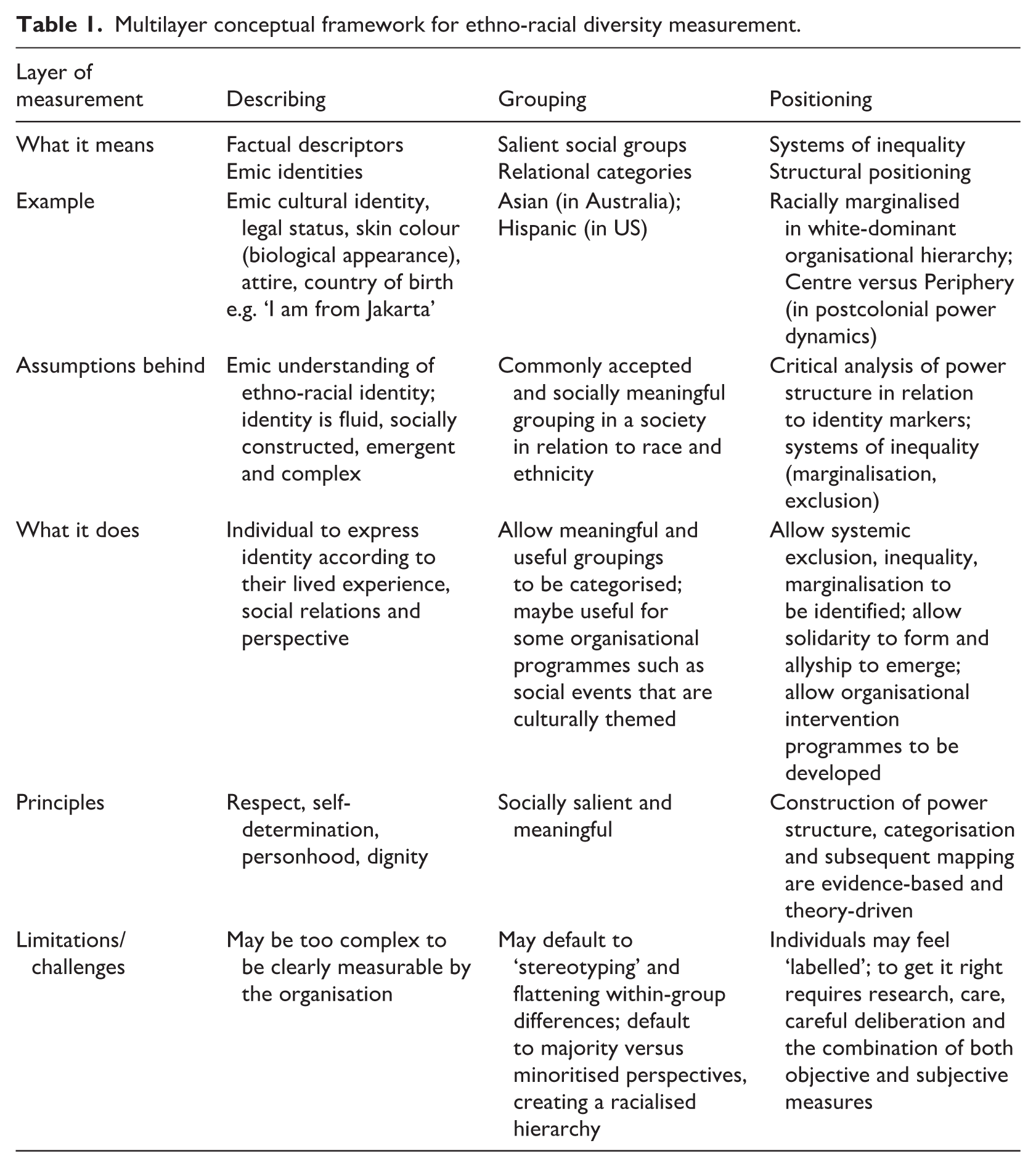
Table 1 synthesises these debates into a ‘multilayer’ approach to accounting for organisational diversity. It distinguishes describing, grouping, and positioning as interrelated but distinct aims of measurement, each associated with different assumptions, uses, and risks. The framework clarifies what is being counted, from whose perspective, for what purpose, and with what trade-offs, and provides a basis for developing measures that are usable while remaining attentive to the contested and context-dependent nature of race and ethnicity. In doing so – it allows us to capture nuance at the local level and has the potential to build comparative insights across contexts.
Multilayer conceptual framework for ethno-racial diversity measurement.
For organisational diversity accounting, categories can neither be abandoned nor treated as straightforward. They must be recognised as sites of tension and contradiction, since every decision about how to measure diversity inevitably involves a compromise that obscures, flattens or erases complexity. These challenges are not unique to Australia (see for instance European Commission, 2021).
Approaches to enumerating race and ethnicity vary across national contexts, shaped by different histories of migration, classification, and race-making, as well as different institutional and reporting expectations. In the forthcoming we turn to Australia as a case to examine how these tensions play out in organisational practice and to operationalise the framework into a practical measurement approach. The Discussion returns to show how the framework may be adapted to other national settings.
Ethno-racial diversity in Australia
As race and ethnicity are historically and politically fraught, diversity accounting is inherently context-bound. Our study focuses on corporate Australia, where organisations face a proliferation of measurement questions, techniques, and reporting options promoted by macro-level stakeholders such as the Australian Bureau of Statistics and by meso-level stakeholders such as employers (D’Almada-Remedios et al., 2021). Yet, confusion persists about how ethno-racial diversity is defined, what it is taken to mean, and what questions should therefore be asked to measure it (Wright et al., 2024). Addressing these practical uncertainties requires a brief account of how contemporary categories and measurement practices in Australia emerged, since they are inextricably linked to the country’s problematic history of colonisation, migration, and race relations (D’Almada-Remedios et al., 2021; Groutsis, 2024; Groutsis et al., 2018; Michalopoulos and Papaioannou, 2015; Wright et al., 2024).
Prior to colonisation, racial categorisation from the European standpoint was irrelevant to Australia: Aboriginal and Torres Strait Islander peoples organised belonging and identity through kin or ‘skin’ systems (Kukutai and Broman, 2016). Colonisation introduced racial classification, as European settlers sought to create and maintain a race-based hierarchy (Allen, 2021a; Farida and Stevens, 2020). Early waves of migration to Australia were shaped by race as a criterion, as the White Australia policy determined who was granted entry (Groutsis, 2003; Groutsis et al., 2018). From the late 19th through the mid-20th century, the White Australia policy restricted non-European immigration, maintaining the demographic and cultural dominance of white migrants – initially favouring migrants from Northern and Continental Europe (Jupp, 1996). While migrants from European countries were prioritised, migration from Asia, the Pacific Islands, and other non-European regions was restricted (National Museum of Australia, 2023). Census categories reinforced this in/exclusion, recording individuals primarily by their country of birth or their parents’ country of birth, thus maintaining a demographic profile dominated by European heritage. These practices presented Australia as ethnically homogenous, while a racial hierarchy cast Aboriginal and Torres Strait Islander peoples and non-European migrants as inferior: a marker used to confine these groups to menial or undesirable work. For instance, terms such as ‘coloured brothers’ were used to describe Melanesians, Kanakas, and Chinese migrants. This discriminatory stance persisted into the post-war period, later extending to Southern and Eastern European migrants, particularly those from the Communist bloc (Groutsis, 2003; Patmore, 1994).
The mid-1970s brought the introduction of the Multicultural Policy, which removed race as a formal criterion for entry and settlement (Jupp, 1996). Measurement then shifted to country of birth and whether the country was classified as main English-speaking or non-main English-speaking (Groutsis, 2003, 2024; Taksa and Groutsis, 2017; Taksa and Groutsis, 2010). These measures were highly problematic and limited, failing to capture the full gamut of ethno-racial identity, which is far more nuanced than these classifications allow (Groutsis et al., 2018; Triandafyllidou and Wodak, 2003).
In an effort to embrace the multicultural society that Australia had become in the post–World War Two period, the national plan as enshrined in political discourse sought to move away from explicitly race-based language. From the 1970s onwards, race-based terms were removed from common discourse and government policy (Farida and Stevens, 2020), as well as official classifications (Federation of Ethnic Communities Councils of Australia, 2020; Perkins, 2004). Such terminology was gradually replaced with more ‘sanitised’ language that avoided racial classifications, including ‘New Australians’, ‘ethnicity’, ‘people from a non-English-speaking background (NESB)’, and, more recently, ‘culturally and linguistically diverse (CALD)’ or ‘culturally diverse people’ (Taksa and Groutsis, 2017; Taksa and Groutsis, 2010). Yet even with these shifts, reluctance to disclose information about ethno-racial identity has persisted, historically linked to fears of being stigmatised and as such discriminated against. Moreover, these classifications remain highly limiting, particularly for children of migrants – second generation and beyond; those who have transnational experience; those with mixed-race heritage; and those whose self-identification diverges from official categories.
We focus on a single-country case because ethno-racial diversity accounting is context-dependent. Australia provides an analytically useful setting because its multicultural national narrative co-exists with contested and problematic ways of naming, measuring, and reporting ethno-racial diversity in organisational and public discourse (Allen, 2021b; Malhi, 2024; Shen et al., 2009). While our empirical work is grounded in the Australian context, the layered logic of the framework (refer Table 1) is intended to be internationally applicable. We return to this discussion in the Practical Implications section where we explore how the framework may be adapted to other national settings with different socio-historical conditions. We now outline our research method, followed by the Findings and Discussion.
Research method
We undertook a practice-engaged investigation (Van de Ven, 2007; Van de Ven and Johnson, 2006) to examine how organisations approach ethno-racial diversity measurement under voluntary disclosure and to inform the operationalisation. The strength of a practice- engaged method is found in the iterative, developmental and interactional approach to evidence building (Van de Ven, 2007). Empirical data gathering within such an approach involves methodological pluralism and multiple phases.
Accordingly, the study incorporated three forms of material: a compiled corpus of existing measures and reporting formats, an online consultation survey, and focus groups, spotlighting the interpretation and feasibility of draft measures. This multi-phase design was adopted because the research problem is not solely empirical but epistemic and practical: focussing on designing ethno-racial diversity measures that are both analytically sound and operationally feasible under conditions of voluntary disclosure. Quantitative methods alone cannot account for how measures are interpreted, resisted, or trusted in organisational settings, while qualitative methods alone cannot assess the prevalence, structure, and limits of existing measurement practices. Combining document analysis, survey data, and focus group discussions allowed us to triangulate across measurement design, respondent interpretation, and organisational feasibility.
The phased design reflects an iterative instrument-development logic rather than a linear hypothesis-testing approach. While the specific sequencing was developed by the research team for this project, it is informed by engaged scholarship principles, which emphasise moving between theory, existing practice, and stakeholder interpretation (Cameron et al., 2024; Van de Ven, 2007; Van De Ven and Johnson, 2006). Each phase progressively narrowed the scope from mapping existing practices, to identifying dominant logics and tensions, to testing feasibility and interpretation, and finally to drafting an operational instrument. The sequence of activities are summarised in the Research Phases diagram which we elaborate below.
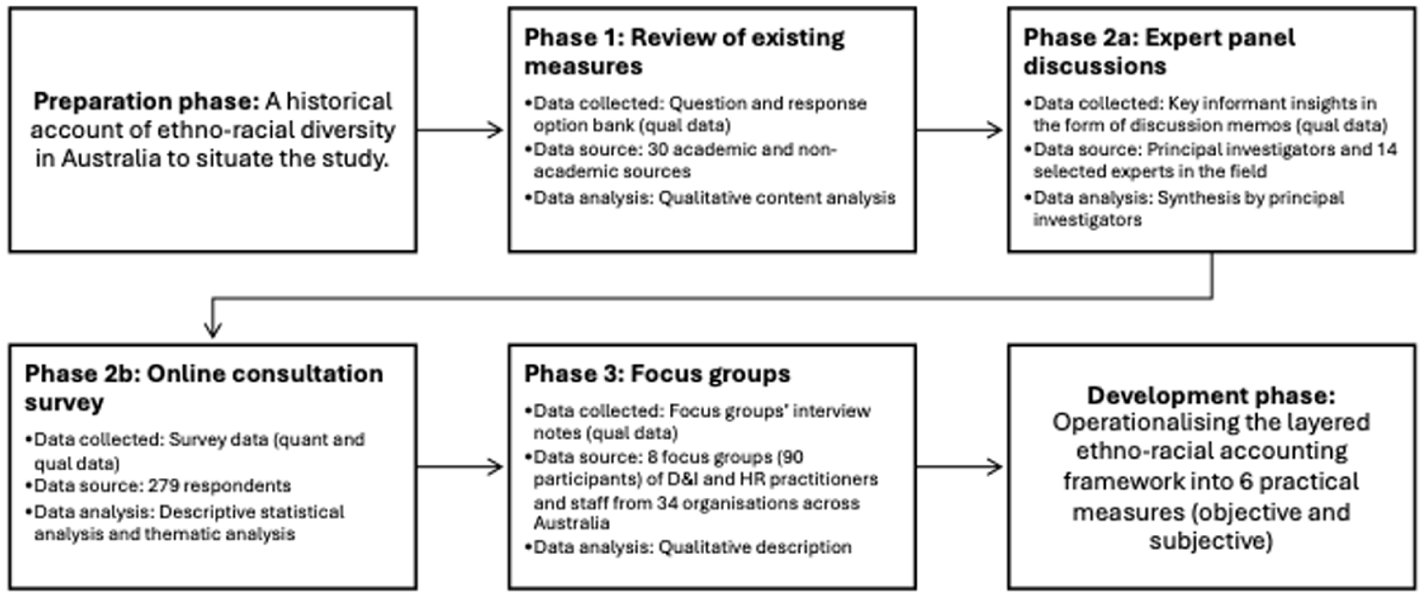
Research process diagram.
Due to the applied nature of the research, Phase one involved the core research team designing the multi-phase research method and reviewing and refining this with the stakeholder advisory group [‘expert panel’]. The core research team invited 14 selected experts in the field to function as a stakeholder advisory group. The advisory group met with the research team at defined points to support two functions: identifying practice facing instruments and reporting formats relevant to ethno-racial diversity accounting; and, providing feasibility feedback on draft measures (Cameron et al., 2024). The research team retained responsibility for data extraction, coding, analysis, and interpretation. These stakeholders included policy-makers in the migration and race-focussed space, NGOs, statutory bodies and government entities, race and migration scholars, census specialists, and corporate leaders with an interest in ethno-racial diversity and lived experience of ethno-racial marginalisation. The stakeholder advisory group ensured the research team were aware of the latest and most widely used measurement practices in business and government. The group’s input was also instrumental in stress-testing feasibility and relevance to practice at critical junctures in the project.
In phase two, we collected ethno-racial diversity measurement materials used in Australia and internationally from academic, business, industry, and government sources. Sources which were particularly useful in this endeavour included national census instruments from Australia, New Zealand, Canada, UK, US, and Germany, as well as other large-scale population surveys. We complemented this with targeted academic sources discussing ethno-racial diversity measures (see for instance, Alesina et al., 2003; Aly and Currie, 2016; Cormack and Robson, 2010; Dowling, 2014; Forrest, 2018; Malhi, 2024; Porter et al., 2016) and business sources (see for instance Commonwealth Bank, 2018) which had publicly shared their employee diversity accounting questions (see full list of sources in Supplemental Material Appendix 1). Notably, the selection of sources was guided by purposive sampling rather than representativeness (Miles and Huberman, 1994). We prioritised instruments that were publicly available, sufficiently documented (including question wording and response options), and actively used or promoted in organisational or policy settings. To mitigate institutional bias, when developing our corpus of questions, we intentionally combined questions from government census instruments, NGO and advocacy tools, academic survey instruments, and voluntary corporate disclosures. Rather than treating these sources as neutral, we analysed them as artefacts embedded in particular political, institutional, and historical contexts. Concerns about how political intentions shape measurement—such as the use of ‘sanitised’ language—were not treated as limitations but as analytically central to the study.
From these sources we extracted a bank of 141 items. Each item comprised a question stem and its associated response options and guidance (if available in the source instrument). These items were compiled to map the existing practices of measurement approaches, range of wording, response formats, and categorisation logics currently in circulation; and to inform the development of the consultation survey and focus group questions. In sum, the question bank served three purposes, to: (1) identify dominant proxy logics and gaps in existing instruments; (2) to inform the construction of draft questions for the consultation survey; and (3) to provide stimulus material for focus group discussion and feasibility testing.
Informed by the Australian context of race/ethnicity relations, and engagement with the stakeholder advisory group, we developed the guiding principles for selecting the instrument sources including: (a) survey questions, response options, reporting categories, and the rationale for using each of these; and (b) used and tested measures (i.e. survey questions, response options, reporting categories) which met a number of criteria. These requirements included: (i) Recognition of Aboriginal and/or Torres Strait Islander peoples’ unique position as First Peoples; (ii) inclusion of multiple measures, recognising that ethno-racial identity is influenced by many aspects (e.g. country of birth, ancestry, language, religion); (iii) inclusion of subjective identity-based measures not just objective measures; (iv) measurement of cultural diversity and workplace in/exclusion; (v) benchmarking of the population and labour market to identify workplace in/exclusion; (vi) experienced as respectful and inclusive by employees from ethno-racially marginalised backgrounds; (vii) realistic and achievable for employers with limited resources to implement.
Following this process, in phase three, the research team met with the stakeholder advisory group to review organisational feasibility and relevance considerations for adopting shortlisted measures to the Australian context. In phase four, we drew on insights generated from the prior phases, resulting in the creation of the online consultation survey, consisting of open and closed questions, to identify current and preferred practices for measuring ethno-racial diversity in Australian organisations. We collected 279 responses and used these consultation outcomes to refine draft question wording, response options, and reporting categories. Closed response items were summarised descriptively. Open text responses were analysed thematically following Brooks et al. (2015), with coding focussed on how respondents described current practices, feasibility constraints, and interpretive concerns associated with wording and disclosure.
In phase five, using insights gained from the literature review, online consultation survey and regular meetings with the stakeholder advisory group, we developed draft measures for testing with eight focus groups (~90 participants) that included diversity and inclusion and human resource management practitioners and staff from 34 organisations across Australia. Focus group discussions were captured through facilitator notes and, where applicable, recordings, and were analysed by the research team.
Drawing on practitioners in the field allowed us to gauge existing administration and reporting systems while also gaining insights from employees with lived experience of ethno-racial diversity, offering a situated account of organisational realities (Hammersley and Atkinson, 1995). Following ethics protocols, invitations were distributed via the peak body on diversity and inclusion in Australia, which also facilitated survey distribution. The peak body has a membership of almost 1500 organisations across all sectors and industries, ranging in size from multinational corporations to large and medium-sized Australian organisations. Adhering to consent protocols and following registration of their interest, respondents were invited to participate in the project (see Supplemental Material Appendix 2 for information on the size and type of organisation the respondents were drawn from).
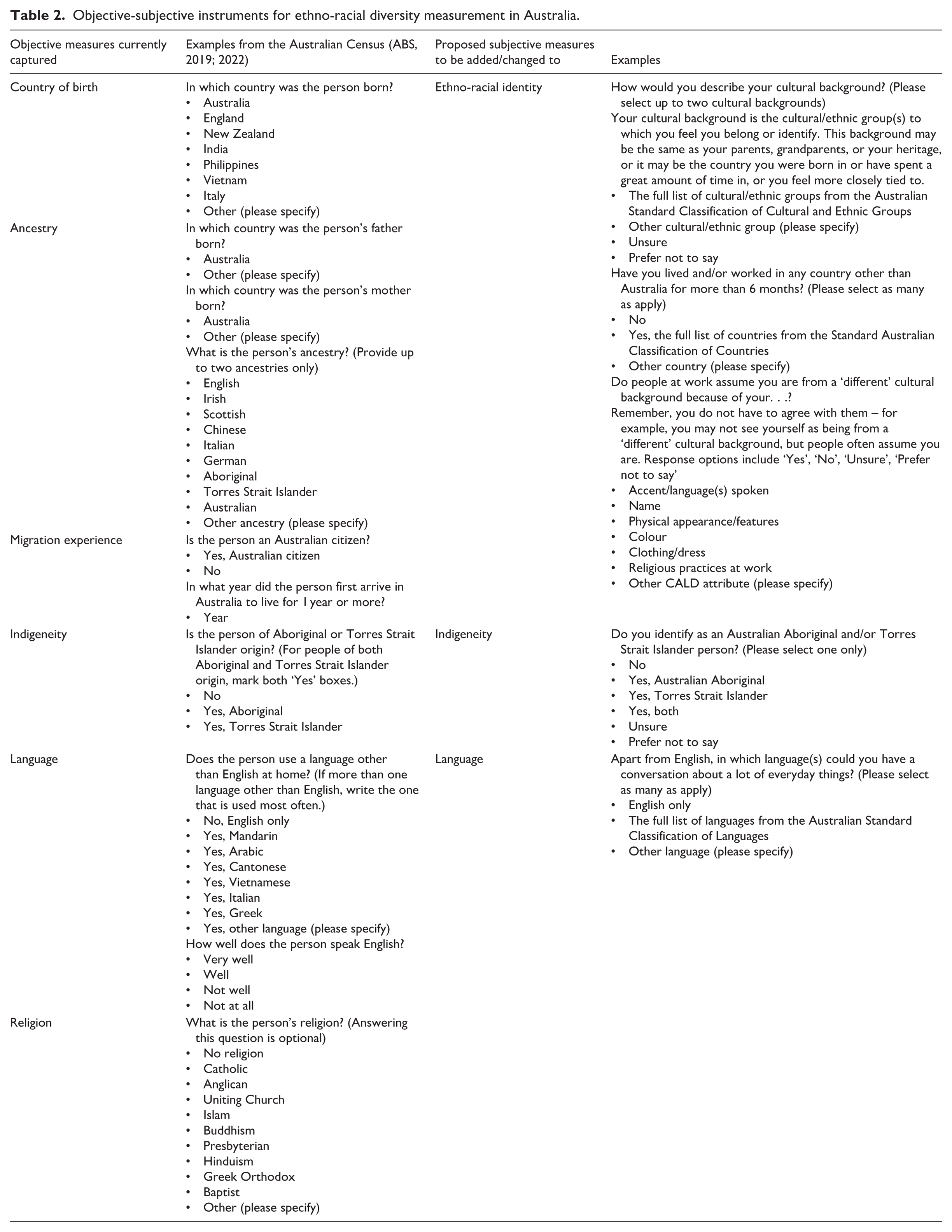
We analysed focus group materials using qualitative description to stay close to participants’ accounts (Hall and Liebenberg, 2024) while producing an applied account of interpretive and feasibility concerns relevant to project design. Focus group participants were presented with the draft measures for feedback. Each measure consisted of a survey question (e.g. How would you describe your cultural background?), response options for this question (e.g. list of ethnicities used by the Australian Bureau of Statistics), instructions (e.g. Please select up to two cultural backgrounds), definitions of any key terms (e.g. cultural background), reporting categories (e.g. South-East Asian background), and rationale for the recommended measure. Across these empirical materials, recurring feasibility and interpretive considerations informed refinement of the six questions for the measurement instrument of ethno-racial diversity (see Table 2).
Objective-subjective instruments for ethno-racial diversity measurement in Australia.
Findings and discussion: accounting for ethno-racial diversity in Australian organisations
Across the survey, focus groups, and our review of existing instruments, we identified a set of tensions that shape how ethno-racial diversity can be accounted for in organisational settings. We demonstrate that measurement is caught between objective proxy indicators, which are administratively convenient and widely deployed, and subjective measures, which are often regarded as more meaningful but are more difficult to elicit and govern under systems of voluntary disclosure. We also show how ‘sanitised’ language regarding ethnicity and race is experienced as lacking meaning, how the measurement instruments available to employers are skewed towards proxy logics, and how communication, education, and governance conditions shape whether measurement is workable in practice. These insights inform the multi-question operationalisation presented later in this section.
Findings from the survey and focus groups indicate that employees and practitioners want to measure and report on ethno-racial diversity in meaningful ways. Accurate and detailed ethno-racial diversity data at the organisational level was generally viewed as an asset by participating organisations. Employees reported feeling more respected, visible, and satisfied in their roles when they were ‘counted’, and noted that this recognition encouraged them to bring their whole selves to work. For instance, survey results showed 77% of the respondents indicated that measuring workforce ethno-racial diversity is very important, while 82% placed the measure of ethno-racial diversity in their top five most useful workforce metrics. Yet when asked if they had experience of these measures, there was an equal number of respondents who did and did not measure cultural diversity over the last 5 years at the organisational level (see Figure 1). Notably, these results are reported as a sample from participating respondents rather than population estimates.
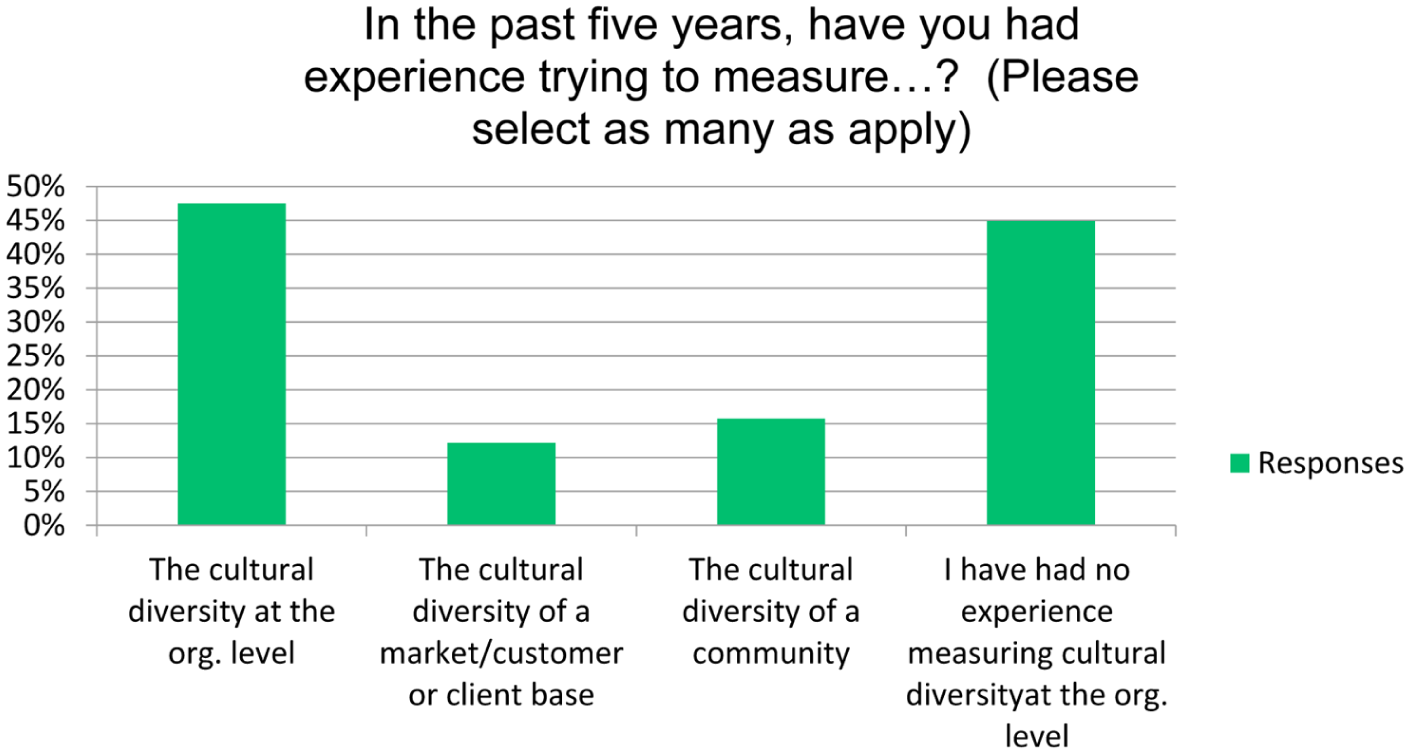
Experience of measurement of cultural diversity (survey respondents).
At the same time as being viewed as an asset, ethnicity and race are politically charged and highly sensitive concepts, especially for individuals and communities typically identified as visible minorities from, and by, the majority population (Allen, 2021b). In light of this, unsurprisingly, thematic analysis of open-text survey responses and focus group discussions indicates ‘reluctance to answer’ was the most often reported barrier to measuring ethno-racial diversity. Particularly within an organisational context, respondents noted that they were reluctant to divulge personal information, fearing it might be used against them. Key points raised by survey respondents included: acknowledgement that employees are reluctant to share this information with official systems; employees are reluctant to self-identify because they fear prejudice; employees are uncomfortable openly sharing information about their ethno-racial identity. The fear stemmed from a perception that incorrect assumptions and biased judgments will be made about their capabilities or interests based on certain ethno-racial markers, and they will be inadvertently penalised for this. As captured by one survey respondent: People in Australia still often find it strange that we ask questions about race, ethnicity/cultural diversity. There is also a lot of discomfort about language and what is the right or wrong thing to say. We need to have better conversations about this. People are also suspicious as to how the information will be used and are not used to answering questions relating to ethnicity in the same way that they are used to answering questions relating to gender.
Figure 2 captures the outcomes of the thematic analysis of open text survey responses denoting the key barriers to measuring and reporting on ethno-racial diversity.
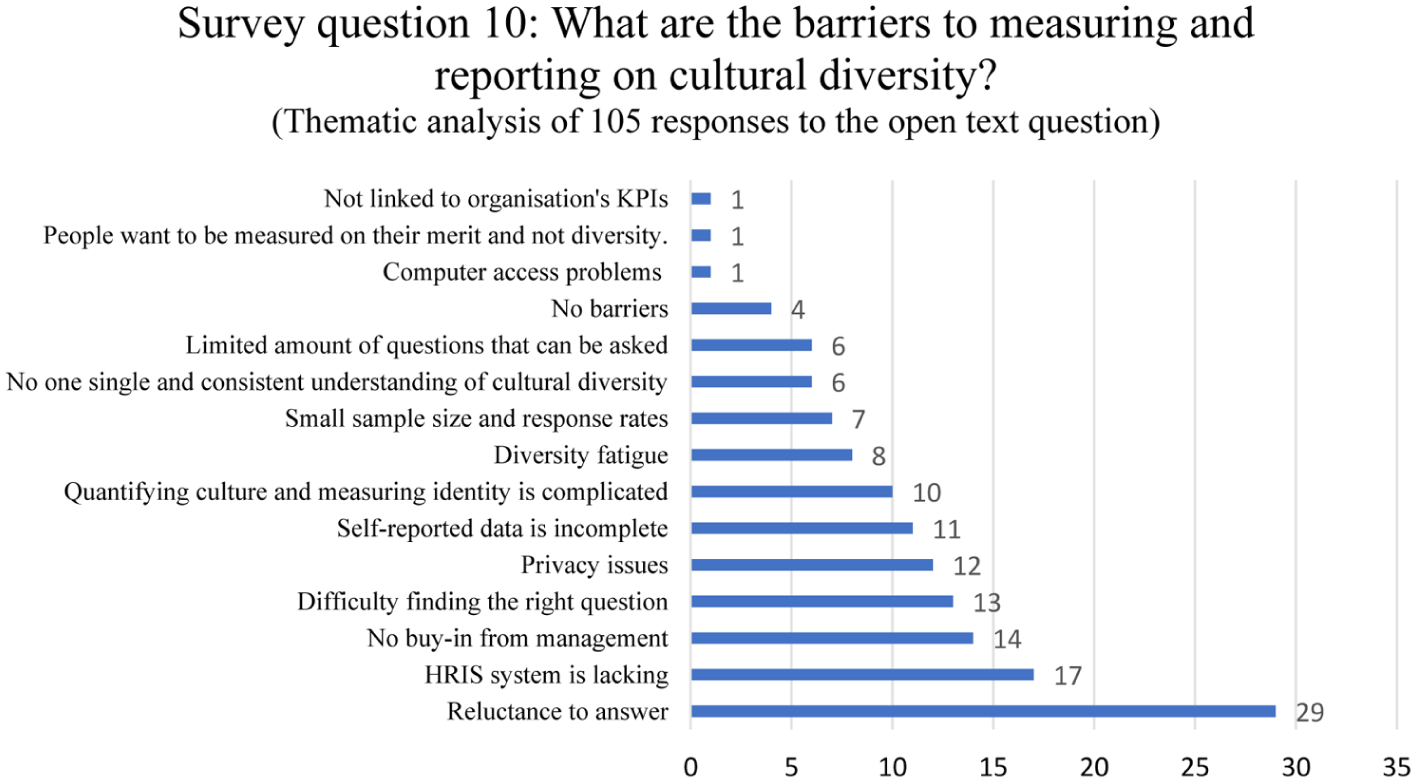
Themes identified as barriers to measuring and reporting on ethno-racial diversity in organisations (survey respondents).
To overcome the fear, unease and reluctance to respond, focus group participants noted that the socialisation and education piece was critical:
There could be value in companies doing a bit of an educational piece to ensure employees understand what they are being asked and why. Also, crucially, it is important to ensure managers and HR understand the measures and process in case they get asked questions – they need to know what to answer. Staff need to know what the information is used for. (Employee participant)
Having a consistent educational tool would be very beneficial in communications not just within the organisation but between organisations. It is a problem that we don’t have standards for measuring cultural diversity – but understanding why we need to is crucial. (Practitioner participant)
If people will understand the purpose of these measures, then you will get better answers, meaningful answers. They need to understand why this data is collected and what it will be used for. Different parts of the businesses require a different approach. Having this information means staff can be better supported and interventions can be more meaningful. (Employee participant)
These accounts indicate that meaningful accounting depends on organisational conditions, not question design alone. Participants repeatedly emphasised clarity about purpose and use, preparedness of managers and HR to answer questions about the process, and confidence in how sensitive information will be handled as prerequisites for participation and interpretability. In this sense, reluctance to answer is not only an individual preference but a response to organisational trust conditions. In spite of the lack of a clear communication and education piece around the use of such data, the majority of the survey respondents indicated that data was shared with various key organisational stakeholders including: senior management, the board, HR and diversity, equity and inclusion teams to feed into interventions to benefit staff, and published in annual reports.
Focus group respondents noted little support for the more ‘sanitised’ language used in the Australian context, such as culturally diverse or culturally and linguistically diverse (CALD), as they found it lacked meaning. Their critique suggests that language choice is not merely semantic; it shapes whether measurement is experienced as meaningful recognition or as avoidance, thus undermining interpretability and trust in the purpose of asking. While so, 82% of survey respondents noted that capturing a nuanced insight into the cultural background (subjective measure) was the most important measure – rating country of birth and languages spoken (objective measures), which are the most often used measures in Australian organisations, much lower – highlighting the growing awareness of capturing nuance in ethno-racial diversity, as shown in Figure 3.
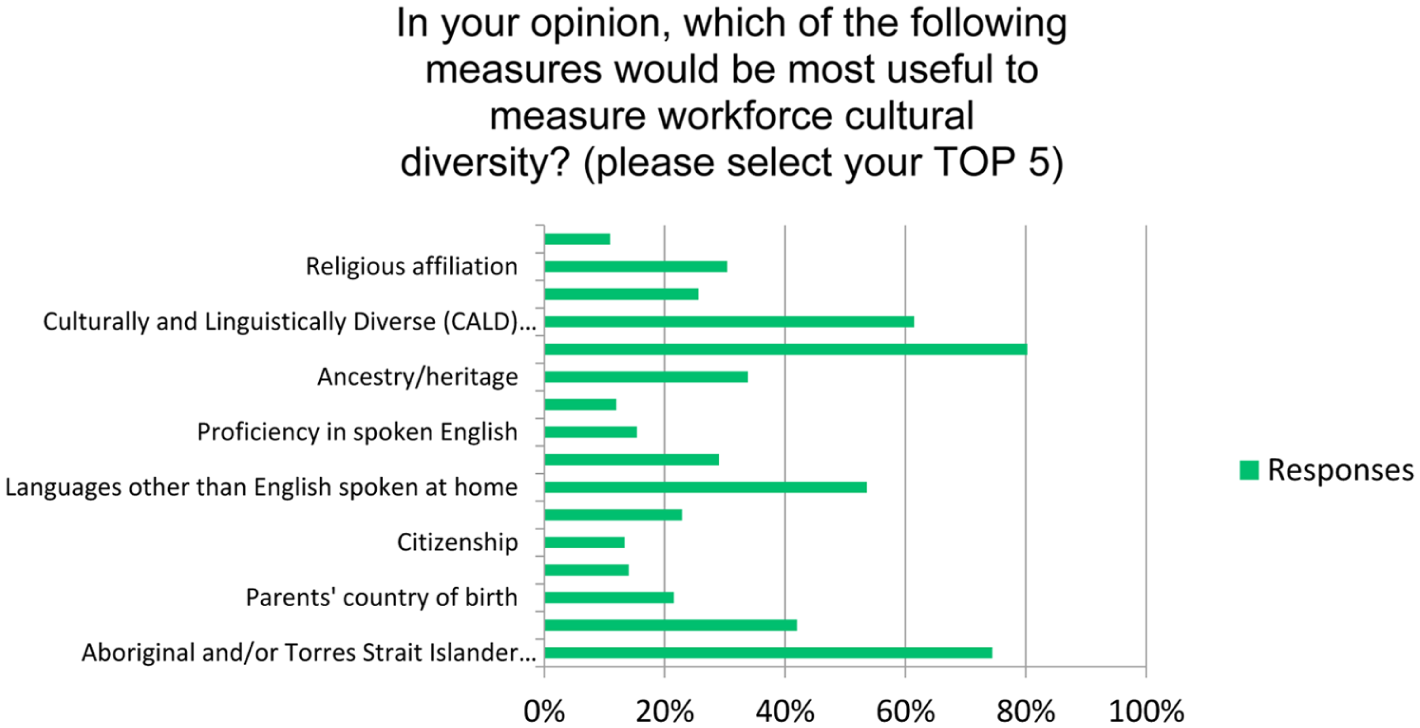
Usefulness of workforce cultural diversity measures (survey respondents).
These survey and focus group accounts point to a recurring dilemma in organisational diversity accounting. Objective proxy measures are administratively convenient and widely used, yet are often experienced as insufficient for capturing ethno-racial identification. Contrastingly, more subjective measures are perceived as meaningful but raise greater concerns about language, legitimacy, and potential misuse in organisational settings.
Many respondents went on to note the importance of accounting for ‘race’, reporting they had witnessed first-hand how race makes the largest difference at the organisational level when it comes to inclusion and exclusion. They noted that it was time for the nation more broadly and organisations more specifically to have an honest, mature, and informed discussion about ethnicity/culture and race. As explained by a focus group participant:
I find experiences of inclusion and exclusion are influenced by race more than cultural identity. For example, in our ‘Conversations about Race’ discussions in my organisation, it quickly becomes apparent that the experiences of inclusion and exclusion between Aboriginal and Torres Strait Islander peoples with different coloured skin is stark. I know that means that borrowing American terms such as Black Indigenous and Other People of Colour (BIPOC) isn’t perfect but there is merit for showing the obvious difference in inclusion/exclusion based on being BIPOC or not.
Reverting to the more sanitised and seemingly objective criteria was also observed as being shaped by national conventions, such as the Census. Our review of existing measurement instruments shows that asking about language was most common both nationally and internationally (41 questions out of 141 were about this topic). That was followed by questions on ancestry (17 questions), country of birth (16 questions), citizenship (14 questions), and year of arrival (12 questions). These patterns suggest that organisational approaches to measuring ethno-racial diversity are strongly shaped by familiar census-style proxy measures, even if the default to objective measures raises concerns.
It is fair to say the current measures are largely static and fail to capture the broad spectrum of ethno-racial identity. The implications are captured by the Federation of Ethnic Communities Councils of Australia (2020), who caution that relying solely on country of birth and the main language spoken as the primary measures of ethno-racial diversity in Australia has led to the exclusion of approximately 1.4 million individuals from being recognised as ethno-racially diverse in data sets. Even though these individuals might have been born in Australia and are proficient in English, they maintain a strong connection to a specific ethnic/racial background. This was captured by a focus group participant who noted:
From personal experience – I am speaking English at home to my partner, but my native tongue is Spanish. I have a multilingual and multi-cultural identity: my identity as a Spanish speaker and also my identity as Spaniard and Australian.
Concerningly, the Australian Bureau of Statistics objective measures guide organisations on what and how to measure, what is important, and what is ‘visible’. Often this leads to a focus on a simplified approach to counting the person’s (or their parents in the case of ancestry) country of birth, and information about migration experience (asked through questions on Australian citizenship and the right to work in Australia). In nations such as Australia which have welcomed multiple waves of migrants, place of birth provides just a fragment of the intricate ‘identity’ narrative regarding how individuals perceive, express, and embody their ethnicity (Rocha et al., 2019). That is, emphasising birthplace obscures the breadth of multiculturalism present in Australian society and organisations more specifically (Allen, 2021a; Khoo, 1991). For instance, the ethno-racial background of an individual who identifies (and is identified) as Asian Australian would be overlooked if the person speaks only English and both their country of birth, as well as their parent’s country of birth, is Australia. Indeed, this scenario is becoming increasingly commonplace, especially with the passing of time from the initial migration waves and the rise of second and third generations, mixed-race partnerships, and multiracial births (Allen, 2021b; Rocha et al., 2019).
Similarly, employing ‘ancestry’ or ‘heritage’ as indicators of ethno-racial diversity poses complexities. Many individuals neither engage in nor identify strongly with their cultural ancestry, meaning this question might simply duplicate the ‘country of birth’ question, and fail to provide any additional information on the ethno-racial identity of the respondent. Therefore, attempting to record the ancestry of people who are not closely connected to their heritage or country of birth, such as for instance migrants who have spent most of their lives in Australia, might result in inflated responses and false representations in data capturing ethno-racial diversity. As offered by a focus group respondent:
I think there is a difference between cultural background and cultural heritage. I identify with my grandparents’ birthplaces (Poland and Ireland) but feel like a cultural fraud when ticking that box. I don’t ’fit’ a box.
Evidently, the current limitations embed and reinforce the structural and cultural status quo in organisations – and yet such blunt questions inform various aspects of organisational life as noted in Figure 4.
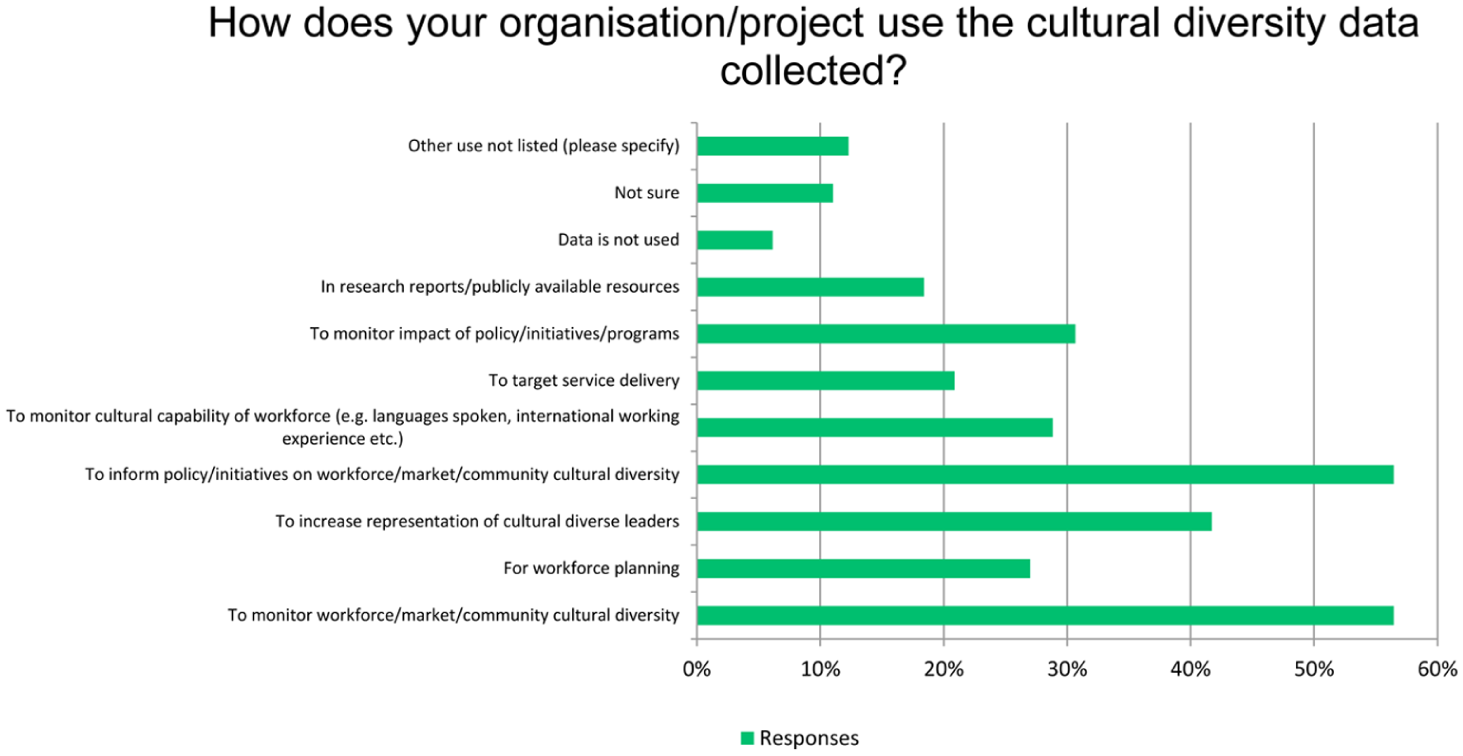
Uses of cultural diversity data (survey respondents).
Questions fail to invite and make room for a more complex insight into one’s identity. The lack of uplift of racial diversity is a by-product of a failure to capture the breadth and depth of ethno-racial diversity which requires us to consider how one identifies/is identified as well as the objective criteria currently measured. A survey respondent explained:
(There is a) lack of interest and sensitivity .... Especially as most of the organisations tend to have minimal cultural diversity in their executive leadership but tend to have better representation in the lower and middle management levels. This is true of both large private sector as well as small to medium sized not for profits. We need to start showing hard evidence of this in order to change this.
Having delineated the limitations of inadequate metrics in accounting for and comprehending ethno-racial diversity, our focus shifts towards our attempt at creating an empirically substantiated approach. For instance, we turn to centring subjective characteristics (such as ethnic/cultural background and racial identity) and the need to ask not only multiple questions to capture the true picture, but to also allow for multiple response options. These two elements are often overlooked by those with limited lived experience of ethno-racial diversity, resulting in significant gaps in Australian data sets (Federation of Ethnic Communities Councils of Australia, 2020).
Informed by our theoretical framing: describing, grouping and positioning for diversity, our discussion demonstrates the complex interplay between subjective (socially constructed) and objective characteristics in capturing ethno-racial diversity, as the nature of our ethno-racial identities, is nuanced, messy and multifaceted. Ethno-racial identity is not merely a statistical category or a checkbox on a form: it is a complex interplay of individual perceptions, cultural affiliations, and context-specificity. For example, when we piloted a question in the focus groups that asked with which cultural background(s) one identifies, the responses ranged from one’s own ethnicity or nationality or an identity that they have become close to through people or places. This multi-layered insight opens the possibility to foster a deeper understanding of diversity across and within communities, dismantle stereotypes, and promote inclusion while also capturing the relational process of identity.
Survey and focus group data indicate that respondents do not reject measurement per se; rather, they seek measures capable of capturing lived identification while remaining feasible for organisational reporting. Subjective measures are valued for their capacity to accommodate forms of self-identification that cannot be reduced to proxies such as birthplace or language. At the same time, respondents stress that such questions require careful framing and governance to function effectively in organisational settings. This helps explain the continued reliance on proxy measures despite their acknowledged limitations, and underscores the need for operational approaches that integrate objective and subjective elements rather than positioning them as alternatives.
Practical implications: operationalisation and application of a multilayered conceptual framework for ethno-racial diversity measurement
Emerging from our theorising and empirical findings, we outline how organisations might adopt our multilayered conceptual framework for ethno-racial diversity measurement design, reporting, and interpretation (Table 1). Regardless of the purpose of diversity accounting, measurement choices shape what becomes visible, which differences become legible, and what can plausibly be discussed and acted on. The practical implications are therefore not simply to collect more data, but to approach diversity accounting deliberately: making the purpose explicit; and considering the trade-offs and limitations built into any measurement approach. Describing supports emic self-identification and recognition. Grouping supports aggregation for monitoring and comparison. Positioning links diversity accounting to organisational hierarchies and other power structures. Treating these as distinct layers helps organisations avoid treating any single measure as sufficient, and clarifies what a given measure can and cannot support.
Describing
The ‘describing’ layer highlights that organisational members identify themselves in emic ways shaped by biography, which may or may not align with externally imposed categories. In practice, this layer can serve two purposes. First, it supports recognition by allowing organisations to understand who is present in the workforce in terms of categories that employees themselves find meaningful. It can inform how organisations acknowledge culturally and religiously significant dates or community events in ways that reflect the actual composition of the workforce, rather than staging generic and potentially stereotyped celebrations. It can also inform internal communication and belonging initiatives by making visible forms of identity that are typically rendered invisible by default categories. Second, depending on organisational resources, data evidence gathered within this layer can provide the raw data material that later supports aggregation in the ‘grouping’ and ‘positioning’ layers. Across both purposes, ‘describing’ should allow enough room for self-expression of multiple, nuanced, and hybrid identities, so that minoritised experience in this layer is not treated as ‘noise’ in data collection or rendered invisible.
At the same time, the ‘describing’ layer has clear limits. It is not designed to generate stable group comparisons, and the specificity that enables recognition may exceed what can be safely reported on in small teams or at senior levels. Treating ‘describing’ as a distinct layer helps organisations respect emic identification without overstating what such data can support.
Grouping
The ‘grouping’ layer responds to an organisational need to produce socially meaningful categories that allow aggregation, comparison, and reporting. It enables an organisation to move from many specific self-descriptions to a smaller set of categories that can be named, discussed, and reported. In practice terms, ‘grouping’ supports forms of organisational work that require categories rather than narratives, such as monitoring workforce composition by job level, function, location, and business unit, as well as patterns at key organisational junctures such as recruitment, career progression, promotion, and exit. These patterns are not themselves causal accounts, but their visibility allows trends to be tracked and questions to be asked about gaps and barriers. Careful deliberation is therefore required, since ‘grouping’ shapes what becomes visible in the first place.
‘Grouping’ should be treated as a reporting architecture rather than a fixed taxonomy. Organisations may preserve more specificity at the point of collection in the ‘describing’ layer, while reporting at different levels of aggregation depending on sample size, privacy requirements, and analytical purpose. ‘Groupings’ may be generated by collapsing specific self-descriptions into broader categories, or by inviting employees to select from a set of categories designed for reporting. Either way, ‘grouping’ requires attention to local relevance; and to how the origins and meanings of categories are communicated, since these choices can be experienced as recognition or misrecognition. The limits of ‘grouping’ follow from the same feature that makes it useful. Once diversity is expressed as a small number of salient groups, within-group variation is necessarily (potentially wrongfully) flattened. ‘Grouping’ can therefore invite stereotyping, particularly when categories are interpreted as if they describe culture, capability, or preference rather than serving as simplified labels for reporting. It can also default to a ‘majoritised’ perspective in deciding which boundaries matter and which differences are treated as negligible.
Positioning
The ‘positioning’ layer is where accounting for ethno-racial diversity shifts from, making difference visible to, interrogating the organisational (re)production of inequality. It enables organisations to map how groups are structurally positioned within organisational hierarchies and power dynamics. In this layer, accounting is a theory-informed way of locating marginalisation and exclusion in relation to organisational authority, control, and standing, and it provides evidence for inquiry and intervention. Where ‘grouping’ hinges on socially salient categories anchored in self-identification, positioning draws on critical theories of inequality to construct categories of dominance and marginalisation within the relevant social relations of race, ethnicity, culture, and migration. Theoretical choices in this layer therefore require careful deliberation, since different traditions foreground different mechanisms of inequality and regimes of power. ‘Positioning’ is thus constructed rather than directly elicited through self-identification. Asking individuals to classify themselves as privileged or marginalised misplaces an analytic burden onto respondents and is analytically inappropriate for the purposes of critical diversity accounting.
‘Positioning’ analysis can be used to examine how marginalised groups (as informed by theory) are distributed across organisational levels, with specific attention to leadership tiers where decisions are made and resource control is exercised. Such indicators allow organisations to ask where authority and influence concentrate and whether structurally marginalised groups remain on the periphery.
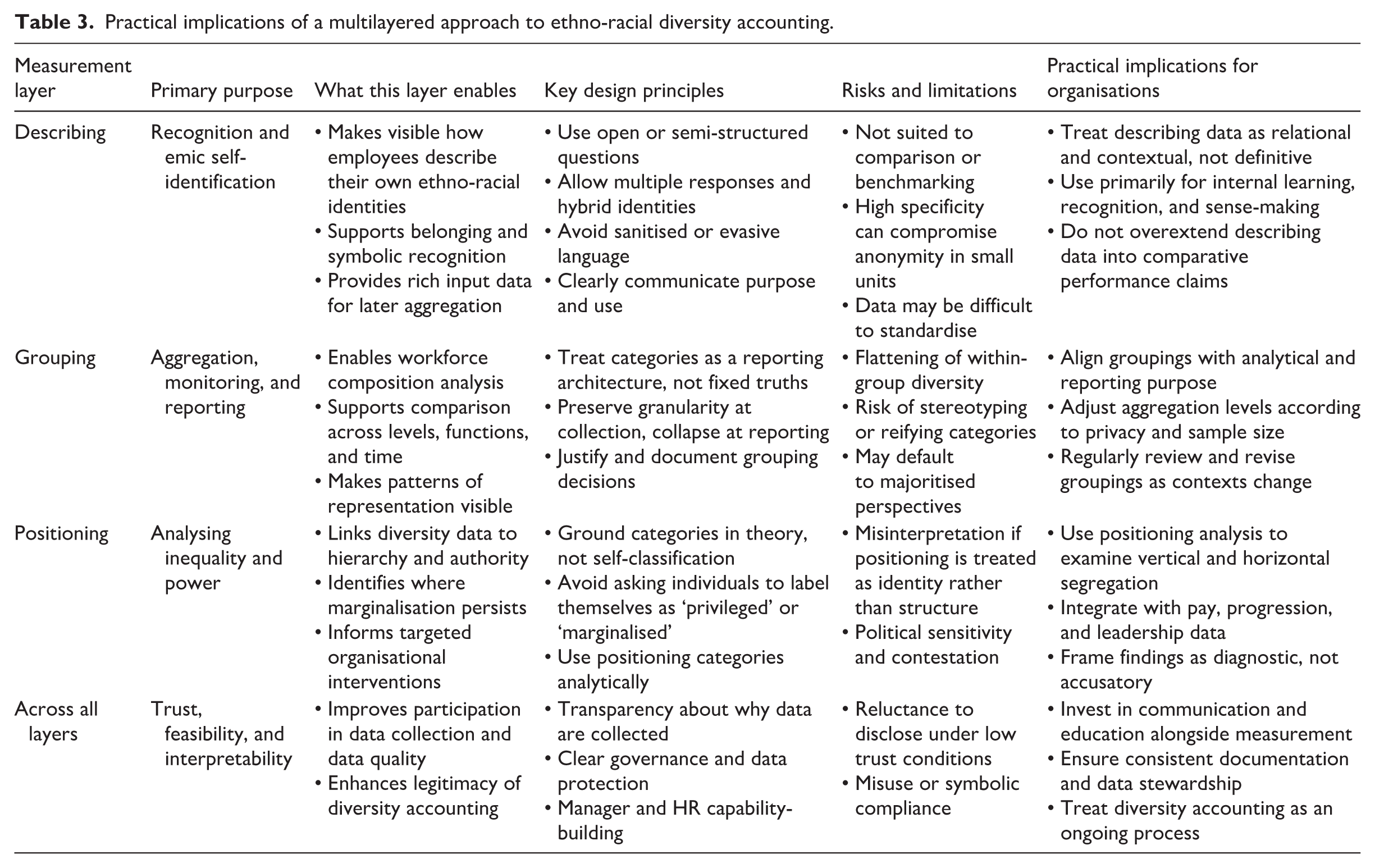
Across the layers of accounting, organisational constraints also shape what is feasible and what can be reported responsibly. These include resources to implement measures consistently and to maintain documentation over time; data management and governance capability and taking account of system constraints; privacy protections for sensitive information; and employee engagement, since discomfort and reluctance to disclose affects participation and interpretability. More broadly, diversity accounting depends on the organisational conditions under which disclosure is invited. Trust and willingness to share information on one’s identity should not be taken for granted. Such data gathering is shaped by the wider organisational environment, including employees’ experiences of inclusion and psychological safety; and confidence in how sensitive information will be managed, utilised and deployed. Table 3 (below) elaborates on Table 1 by summarising the practical implications of the multi-layered framework.
Practical implications of a multilayered approach to ethno-racial diversity accounting.
Discussion and Conclusion
This paper makes a theoretical, empirical, and practical contribution to organisational scholarship by addressing a longstanding gap in how ethno-racial diversity is conceptualised, measured, and operationalised in organisational contexts. The key contribution lies precisely in the detailed engagement with the complexity of accounting for ethno-racial diversity and the provision of concrete suggestions for its measurement. We have shown that prevailing approaches to diversity accounting remain constrained by essentialist and proxy-based measures that privilege administrative convenience over meaningful engagement with lived experience. In doing so, they obscure the power-laden, context-dependent nature of ethno-racial identity and limit organisations’ capacity to identify, interrogate, and address patterns and systems of in/exclusion (see for instance, Groutsis, 2024; Groutsis et al., 2018, 2026; Malhi, 2024; Moieni et al., 2017; Wright et al., 2024 ).
Our central contribution lies in the development of a multi-layered conceptual framework
Empirically, we draw on a practice-engaged research design (Van de Ven, 2007; Van de Ven and Johnson, 2006; see also Moieni et al., 2017) combining a review of: existing instruments, an online consultation survey, and focus groups with practitioners and employees. Within these parameters of evidence gathering, we illuminate how ethno-racial diversity measurement is currently enacted under conditions of voluntary disclosure. Our findings show that employees and practitioners do not resist measurement per se; rather, they seek measures that recognise lived identification while being governed by clear purpose, transparent use, and trusted organisational conditions. We find strong support for subjective, emic measures of cultural and racial identification, alongside widespread dissatisfaction with sanitised language and over-reliance on objective proxies such as country of birth and language/s spoken. However contrastingly, these preferences are tempered by concerns about misinterpretation, misuse, and organisational readiness—highlighting that effective measurement depends as much on institutional trust, communication, and governance as on question design.
While research within diversity management must remain sensitive to specific contexts and participant backgrounds, there are universal concerns that warrant attention. These include acknowledging the impact of the context on participants from diverse social groups, understanding issues of reflexivity and self-awareness in research, and fostering an informed understanding of the research environment (Kamenou, 2007). Indeed, these are key areas for deeper future research and we welcome internationally comparative analyses, drawing on, while also advancing our multi-layered framework (European Commission, 2021; Moieni et al., 2017).
The Australian case illustrates how national histories of ‘race-making’, racialisation, migration, and classification shape both the available measurement tools and employees’ willingness to disclose. While our empirical materials are situated within this context, the challenges we identify—mis-categorisation, invisibility of minoritised experiences, and the flattening of complex identities—are not unique to Australia. The multi-layered logic of the framework is therefore intended to be portable, offering guidance for organisations and policymakers in other national settings seeking to design ethno-racial diversity measures that are context-sensitive yet operationally usable (Groutsis et al., 2018, 2026; Moieni et al., 2017; Moustafine, 2020).
The practical implications of this work are significant. Rather than advocating for a single ‘best’ measure, we show that no single question can serve all purposes of ethno-racial diversity accounting. Treating describing, grouping, and positioning as distinct layers enables organisations to clarify what a given measure can, and cannot support. ‘Describing’ measures can foster recognition and belonging without being overstretched into inappropriate comparative use. ‘Grouping’ enables monitoring and reporting while requiring careful attention to aggregation, privacy, and the risk of stereotype reinforcement. ‘Positioning’ connects diversity data to organisational hierarchies and power, enabling inquiry into where inequality is reproduced and where interventions are needed, without placing the burden of structural diagnosis on individual respondents.
More broadly, this paper demonstrates that accounting for ethno-racial diversity is not a neutral technical exercise but a form of organisational knowledge production with material consequences. Measurement choices shape whose experiences are rendered visible, which inequalities can be named, and what forms of action become conceivable. By offering a theoretically grounded and empirically informed approach to diversity accounting, this study aims to equip organisations with tools to engage more honestly and reflexively with ethno-racial diversity: acknowledging discomfort, confronting trade-offs, and using data not to sanitise or flatten difference, but to make inequality visible, legible and actionable (Groutsis et al., 2018; Linstead and Brewis, 2004; Risberg and Pilhofer, 2018; Tatli and Özbilgin, 2012).
The absence of data on ethno-racial characteristics perpetuates a state of racial illiteracy and racial whitewashing where people denounce racism, erasing a comprehensive understanding of its antecedents, manifestations, and effective strategies for change (Lentin, 2020). Addressing this requires confronting historical realities, making data gathering initiatives like the Census and associated educational campaigns pivotal in the nation’s reconciliation with its past and vision for the future: as such, viewing the future through the lens of ethnicity and race (Allen, 2021b). More accurate approaches to accounting for ethno-racial diversity can counter the challenges posed by the post-truth environment, where the elevation of alternative narratives and the denial of empirical evidence obstruct progress in achieving meaningful and useful diversity and inclusion practices. Utilising data to expose neglected topics is essential. Such information enables us to grant power to conversations and initiatives that aim to address issues that have been historically silenced or ignored (Allen, 2021a). In doing so, we contribute to critical diversity and accounting scholarship by showing how ethno-racial diversity can be counted without compromising complexity; and how accounting, when designed with purpose and care, can support more informed, responsible, and inclusive organisational practice.
Supplemental Material
sj-docx-1-org-10.1177_13505084261450770 – Supplemental material for A multi-layered approach to accounting for ethno-racial diversity: An Australian study
Supplemental material, sj-docx-1-org-10.1177_13505084261450770 for A multi-layered approach to accounting for ethno-racial diversity: An Australian study by Dimitria Groutsis, Annika Kaabel, Christine Han, Jane O’Leary and Rose D’Almada Remedios in Organization
Footnotes

Funding
The authors received no financial support for the research, authorship, and/or publication of this article.
Declaration of conflicting interests
The authors declared no potential conflicts of interest with respect to the research, authorship, and/or publication of this article.
Supplemental material
Supplemental material for this article is available online.
Author biographies
References
Supplementary Material
Please find the following supplemental material available below.
For Open Access articles published under a Creative Commons License, all supplemental material carries the same license as the article it is associated with.
For non-Open Access articles published, all supplemental material carries a non-exclusive license, and permission requests for re-use of supplemental material or any part of supplemental material shall be sent directly to the copyright owner as specified in the copyright notice associated with the article.
