



Abstract
A new sound absorbing material made from 100% softwood fibres by means of a foam-forming technique is introduced. In foam forming, a wet foam is created by mechanically mixing water, fibres and a surfactant. The air bubbles keep the wet fibres separate, and a highly porous fibre network is formed during drying. The sound absorption of foam-formed structures was measured by means of an impedance tube. The results showed that foam-formed softwood materials possessed a competitive sound absorption coefficient compared to different types of commercial sound absorber materials. The material is based on 100% softwood fibres without added binders and is semi-rigid and does not completely recover from compression. Improvement in the strength properties of softwood material can be obtained by using starch or cellulose microfibrils. The material could be used in indoor applications, for example, in replacing mineral wool acoustic ceiling panels or polyester non-woven materials in office acoustics products.
Introduction
Porous materials are generally used in noise control to absorb sound. Sound absorption performance of these materials is mainly related to porosity, air flow resistivity and tortuosity of the cavities.1,2 Porous sound absorbing materials are used in buildings, vehicles, industrial machines and home appliances, for example. The sound absorber can be mounted directly onto a support surface, or it can be suspended with an air gap behind the absorber to improve the absorption of low sound frequencies.
Currently, minerals and polymers are the most common raw materials for producing porous sound absorption materials. 1 There is growing interest, however, in developing sustainable sound absorbers from natural materials. These materials have a lower environmental impact than conventional sound absorption materials, which are based on synthetic raw materials or where the embodied energy content is high.1,3,4 In addition, natural materials have very low toxicity effects compared to many conventional materials.5–7 It has also been shown that materials based on natural fibres having small diameters have sound absorption properties similar to absorbers made from rock wool or fibreglass. 8 Based on these facts, natural fibre–based sound absorption materials are a feasible alternative to conventional materials.
When looking at the scientific literature on porous absorption materials, wood cellulose fibres are rarely, if at all, mentioned as a raw material. The reason is the lack of a manufacturing process that could produce highly porous structures from separated and relatively short single fibres. 9 Commercial, wood-based acoustic products do exist, however, in the form of perforated fibreboard panels and cement-bound wood wool materials. 9 Other materials are dry-laid recycled newsprint panels and sprayed natural fibre–based acoustic materials that contain a binder. We will introduce a new wood fibre–based acoustic panel material that is manufactured by means of a foam-forming process adapted from other industrial uses.10–13
Foam-forming technology utilizes small air bubbles containing aqueous foam as a process fluid. In the foam-forming process, fibres, water and foaming agent are mechanically mixed and wet fibre-containing foam is generated with air content between 50% and 70%. The air bubbles effectively prevent flocculation of fibres, leading to very homogeneous structure within the material. 14 After the foam generation phase, the fibre foam is spread on a wire through a headbox. When producing thin paper-like products, the wet foam is drained with vacuums, and then the web is wet-pressed and finally the material is dried by contact or non-contact drying methods. Highly porous, non-paper-like materials can also be produced.15,16 In this case, high vacuum levels and wet-pressing cannot be used, and the drying should be done by means of non-contact drying methods to prevent the fibre network from collapsing. 17
The effects of foam-forming parameters such as wet foam density or fibre consistency on the acoustical properties has been recently investigated. 18 In this article, we will concentrate on benchmarking the sound absorption and mechanical properties of the foam-formed softwood cellulose material against the most typical commercial acoustic materials used in the building and automotive industries. Second, we will show how the mechanical properties of the natural fibre materials can be adjusted through bio-based additives.
Materials and methods
Materials and methods for foam forming
A commercial unrefined Northern Bleached Softwood Kraft (NBSK) pulp was used as the raw fibre material. The measured average fibre length was 2.3 mm and average fibre width was 30 µm. The fibrous foam suspension was prepared by axially agitated mixing of water, sodium dodecyl sulphate (SDS, Sigma-Aldrich) and pulp fibres. The mixing was carried out in a cylindrical tank with an inner diameter of 19.3 cm at a rotation speed of 3800 rpm (Figure 1). The dosage of SDS was 0.6 g/L, and the fibre consistency varied depending on the targeted grammage between 0.6% and 1.8%. The starting volume of the pulp suspension was a constant 3 L. The mixing was continued until the air content of the foam was 60%–70%. The fibre foam was poured into a deep mould with a wire bottom (Figure 1) and gravity drained for about 15 min to reach a dry matter content of around 15%. The wet fibre foam was removed from the mould on the wire, and the rest of the water was evaporated in an oven at 70°C. Drying was complete within 12 h. The result was a highly porous, semi-rigid fibrous panel with a thickness of 40–80 mm depending on the fibre consistency.
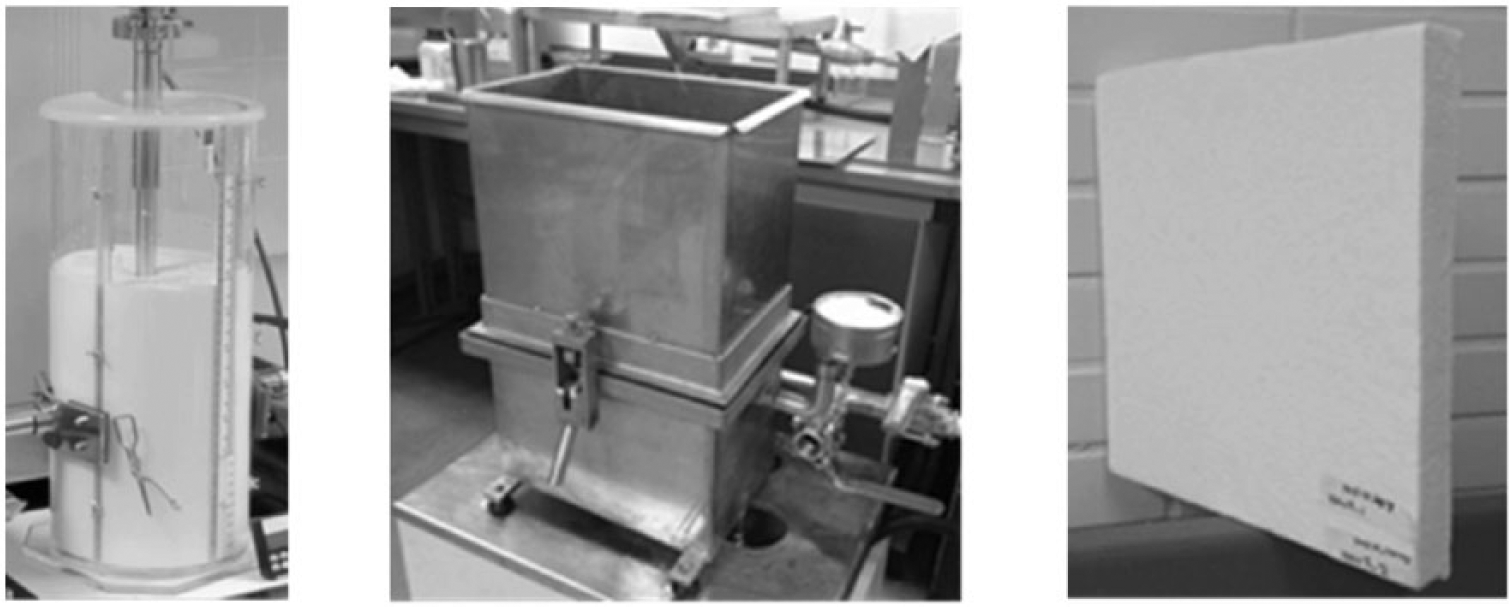
On the left, the mixing vessel for generating aqueous fibre-containing foam; in the middle, the laboratory sheet mould and on the right, the foam-formed sound absorbing material made from NBSK, thickness 40 mm.
The final targeted density and thickness levels were adjusted in a separate phase. The dried structures were rewetted to a dry matter content of 50% and put between two plates with spacers to achieve the desired final thickness. A weight was put on top of the plate, and the stack was inserted into an oven (70°C). Due to the dewatering in one direction and the rewetting and pressing procedure, the panel surfaces were slightly densified. The presented bulk density value is thus an average value.
Additives used in the papermaking industry were exploited to improve the mechanical properties of the formed fibre networks. The additives were cationic starch Raisamyl 50021 (Chemigate Oy) and cellulose microfbrils (CMF). CMF was produced from NBSK pulp with an ultrafine friction grinder MKZA10-15J (Masuko Sangyo Co. Ltd) at VTT. Starch and CMF were added to the water with the fibres before mechanical mixing.
Commercial sound absorption materials for benchmarking
Four different commercially available sound absorbing materials were acquired for comparison with the foam-formed materials. The four material types represent the most common sound absorber materials. The materials included three fibrous materials and one cellular material. Table 1 shows the basic characteristics and typical application areas of the materials. One of the selected materials, glass wool, represented a product that is self-supporting. The other three materials are typically laminated with or covered with a supporting material. It should be emphasized that within each material type, there exist commercial products with a large variation both in the acoustic and the mechanical properties.
Structure, typical application area and installation method of the selected commercial sound absorber products.

Material testing methods
The thickness of all materials was measured by a material tester (Lloyd) using a 0.5 N load. Specific air flow resistance was measured with a flow rig according to test standard ISO 9053. 19 In the flow rig, air enters the system through the sample and flows through a laminar flow element, which is used to measure the flow rate. The air flow speeds used were 0.25, 5, 10 and 20 mm/s. The specific air flow resistance was calculated as an average flow resistivity of the different flow speeds. Circular samples 100 mm in diameter were used in the measurement. The samples were cut with a water jet.
The sound absorption coefficient in the frequency range 125–5500 Hz was measured with an ACUPRO impedance tube (Spectronics Inc.) (see Figure 2). The measurement method is specified by test standard ISO 10534-2:1988. 20 The sound absorption coefficient was measured with and without an air gap behind the sample for the self-supporting materials and without an air gap for the non-self-supporting materials. Circular samples with a diameter of 34.8 mm were cut from the materials. The commercial materials were cut with a water jet. The foam-formed materials were cut with a laser due to easier control over the cut dimensions. Laser cutting was, however, limited to a material thickness below 30 mm, due to the increased risk of burning, especially at bulk density levels above 20 kg/m3.
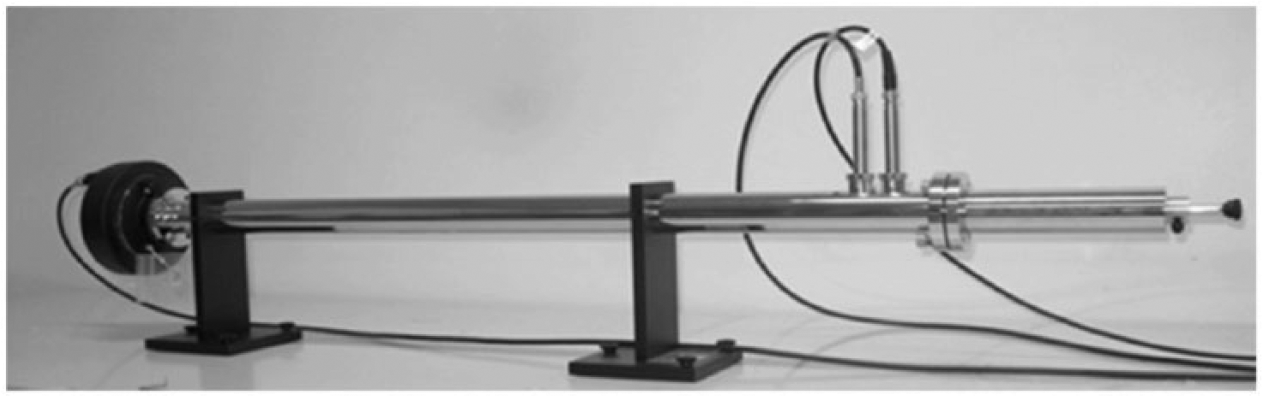
Impedance tube for measuring the sound absorption coefficient.
Mechanical properties under different types of stresses were measured to characterize the material. Tensile properties parallel to the faces of the foam-formed materials were measured at one material density and material thickness level according to the test standard EN1608. 21 A smaller test specimen size than specified in the test standard was used. The width of the test specimen was 120 mm and the length was 190 mm. The long edge of the test specimen ran parallel with the direction of foam flow in the mould. Testing speed was 10 mm/min. The samples were conditioned at 50% or 95% relative humidity (RH) before the tests.
Point-load strength was measured to see the ability of the materials to withstand forces applied directly to them either during installation or during application. Behaviour under point load was determined by measuring the compressive force needed to reach a 50% deformation level with a non-standard method. The measurements were carried out with a material tester (Lloyd) by pressing a cylindrical sensor (diameter 44.5 mm) against the material. The preload was 0.5 N, and the pressing speed was 100 mm/min. Reversibility from compression was measured by determining the thickness immediately and 1 min after the compression. Bending strength was measured according to EN12089. 22 The samples were conditioned at 50% RH before the tests.
Results and discussion
Benchmarking sound absorption with commercial products
Table 2 shows the measured basic properties of the commercial sound absorber products that were acoustically tested and compared with foam-formed NBSK materials shown in Table 3. The comparison of sound absorption was made at constant thickness levels. Foam-formed materials, NBSK 32 and NBSK 42, were originally manufactured to a thickness of 10 mm and were stacked for the impedance tube measurement to reach the comparable thickness.
Basic properties of the acquired commercial sound absorber products.

Basic properties of the foam-formed NBSK sound absorber products produced or stacked for acoustic benchmarking.
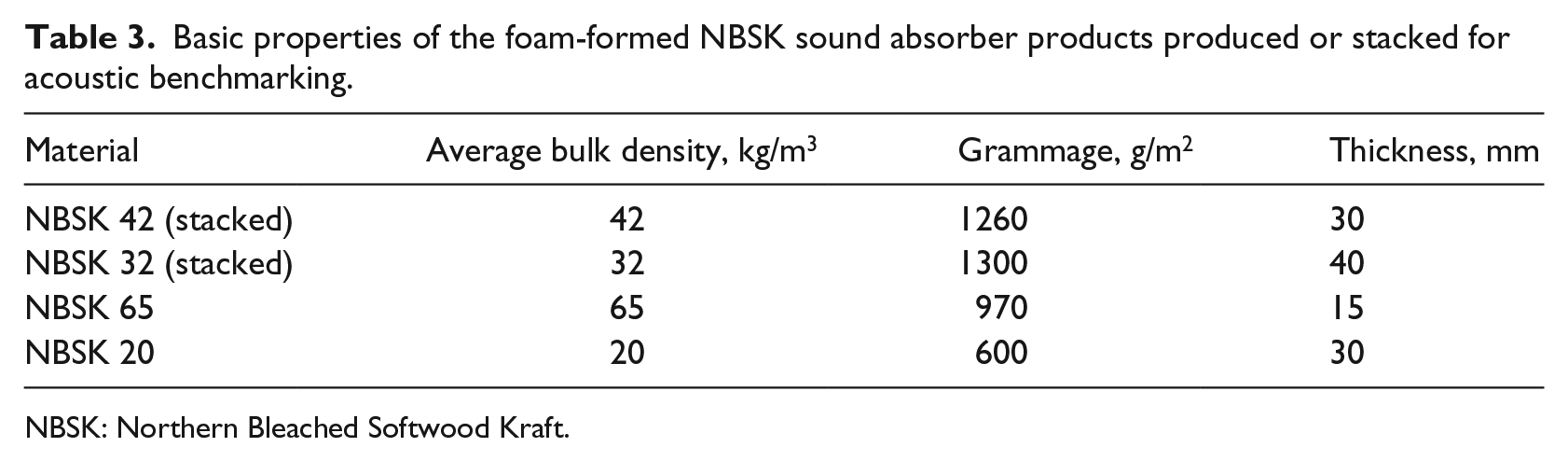
NBSK: Northern Bleached Softwood Kraft.
The specific air flow resistance of foam-formed NBSK materials was generally higher at the same density level than that of the different types of commercial materials (see Figure 3). Foam-formed material NBSK 42 resulted in similar sound absorption efficiency compared to the commercial glass wool product (see Figure 4). However, the grammage of the NBSK 42 material was 20% lower than that of the glass wool product. The declared sound absorption class of the glass wool product was class A at a 200 mm overall depth of system (o.d.s.) according to EN ISO 11654. 23
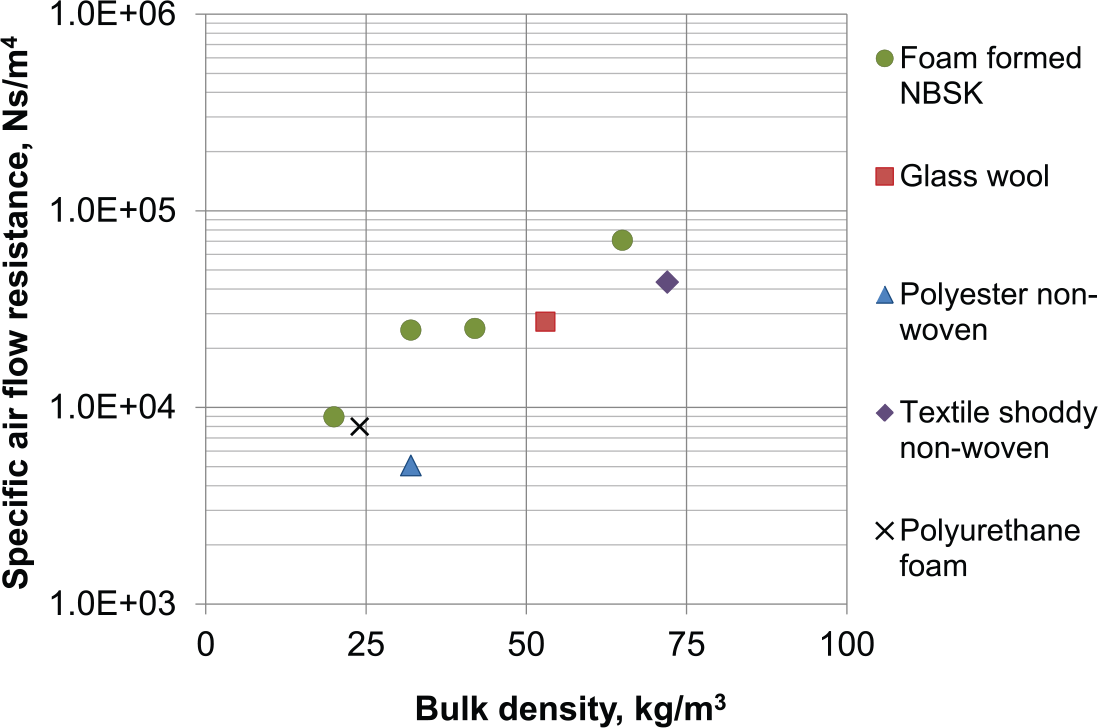
Specific air flow resistance of the foam-formed NBSK and commercial absorber materials as a function of bulk density of the materials.

Sound absorption coefficient as a function of the sound frequency of commercial glass wool product (density 53 kg/m3) and foam-formed NBSK 42 (density 42 kg/m3). The thickness of both materials was 30 mm. The absorption coefficient was measured with a 0 mm and 70 mm air gap behind the sample (30 and 100 mm overall depth of system, o.d.s., respectively).
The NBSK 32 material absorbed sound much more efficiently than a high loft polyester non-woven product (see Figure 5). The main difference between these two materials is in the specific air flow resistance. Commercial textile shoddy non-woven and foam-formed NBSK 65 had a very similar absorption coefficient as a function of the sound frequency (see Figure 6), but the grammage of the foam-formed material was approximately 10% lower. Compared to the open cell polyurethane (PU) foam (Figure 7), the foam-formed NBSK 20 did not quite reach the same absorption level at frequencies from 1000 to 2000 Hz. It should be noted that the NBSK material had a lower basis weight compared to the PU foam.

Sound absorption coefficient as a function of the sound frequency of commercial high loft polyester non-woven product and foam-formed NBSK 32 (both at density 32 kg/m3). Material thickness was 40 mm. The absorption coefficient was measured with a 0 mm air gap behind the sample (40 mm o.d.s.).
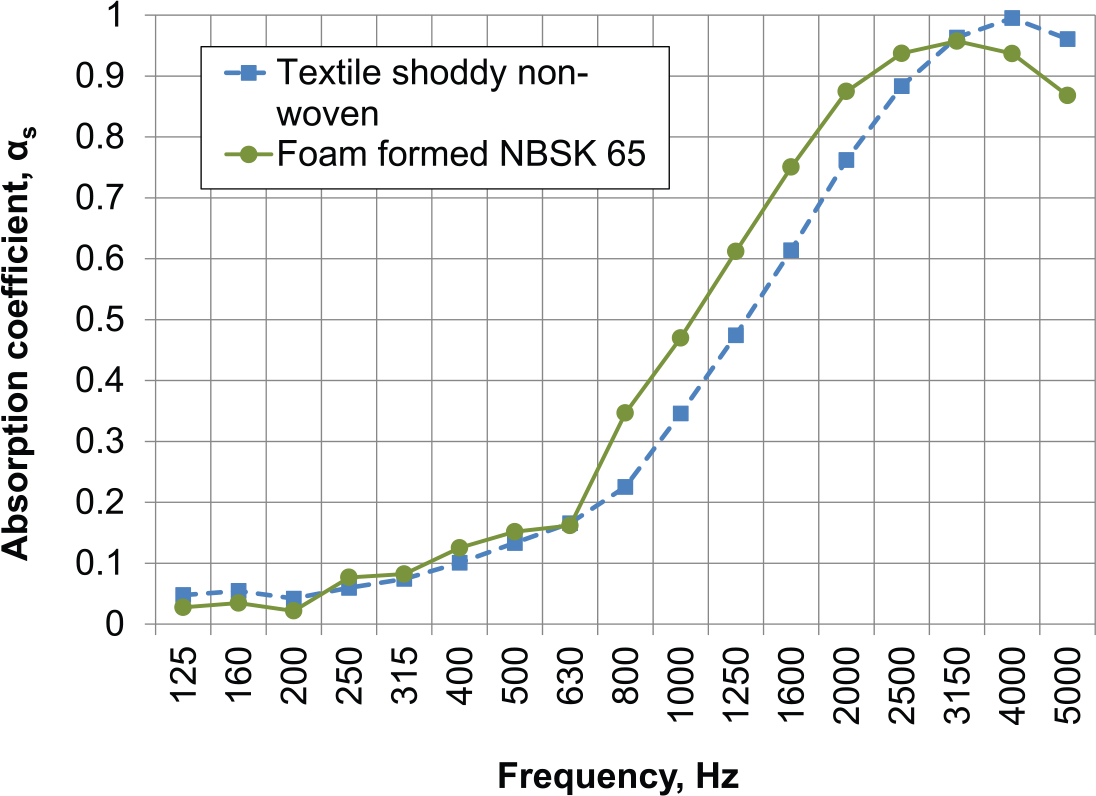
Sound absorption coefficient as a function of the sound frequency of commercial textile shoddy non-woven (density 72 kg/m3) and foam-formed NBSK 65 (density 65 kg/m3). Material thickness was 15 mm. The absorption coefficient was measured with a 0 mm air gap behind the sample (15 mm o.d.s.).

Sound absorption coefficient as a function of sound frequency of commercial open cell polyurethane foam (density 24 kg/m3) and foam-formed NBSK 20 (density 20 kg/m3). Material thickness was 29 mm and 30 mm, respectively. The absorption coefficient was measured with a 0 mm air gap behind the sample.
Benchmarking mechanical properties with commercial products
The mechanical properties of the acoustic materials have a practical meaning: the materials have to endure the stress induced by the installation of the material into its place. Also the materials have to withstand the impacts directed to them during the use and the possible maintenance actions. Some materials, like acoustic ceiling panels, are expected to be self-supporting.
We compared the mechanical properties of the selected commercial reference materials to those of the foam-formed NBSK materials with varying density (see Table 4). The point-load strength of the glass wool product was clearly different and the highest of all the other materials (see Figure 8). The point-load strength of the foam-formed NBSK materials improved as a linear function of the material density. The foam-formed NBSK had clearly the lowest reversibility from compression, below 85%, of all the tested materials (see Figure 9). This material characteristic clearly distinguishes it from the other materials. The bending strength of the foam-formed materials was clearly better than that of PU foam and polyester and textile shoddy non-wovens (Figure 10), which were not self-supporting materials.
Basic properties of the foam-formed sound absorber products produced for benchmarking mechanical properties.
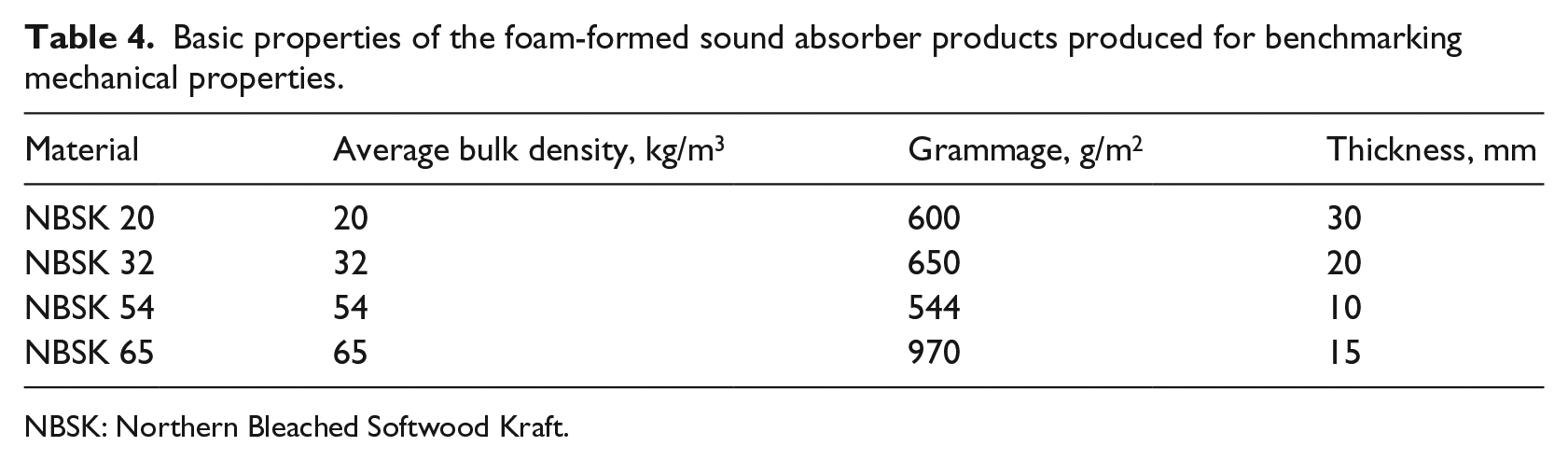
NBSK: Northern Bleached Softwood Kraft.

Point-load strength of commercial and foam-formed NBSK sound absorber materials as a function of the bulk density. Deformation level, 50%.

Reversibility from compression (50% thickness loss) measured after 1 min, as a function of the bulk density.
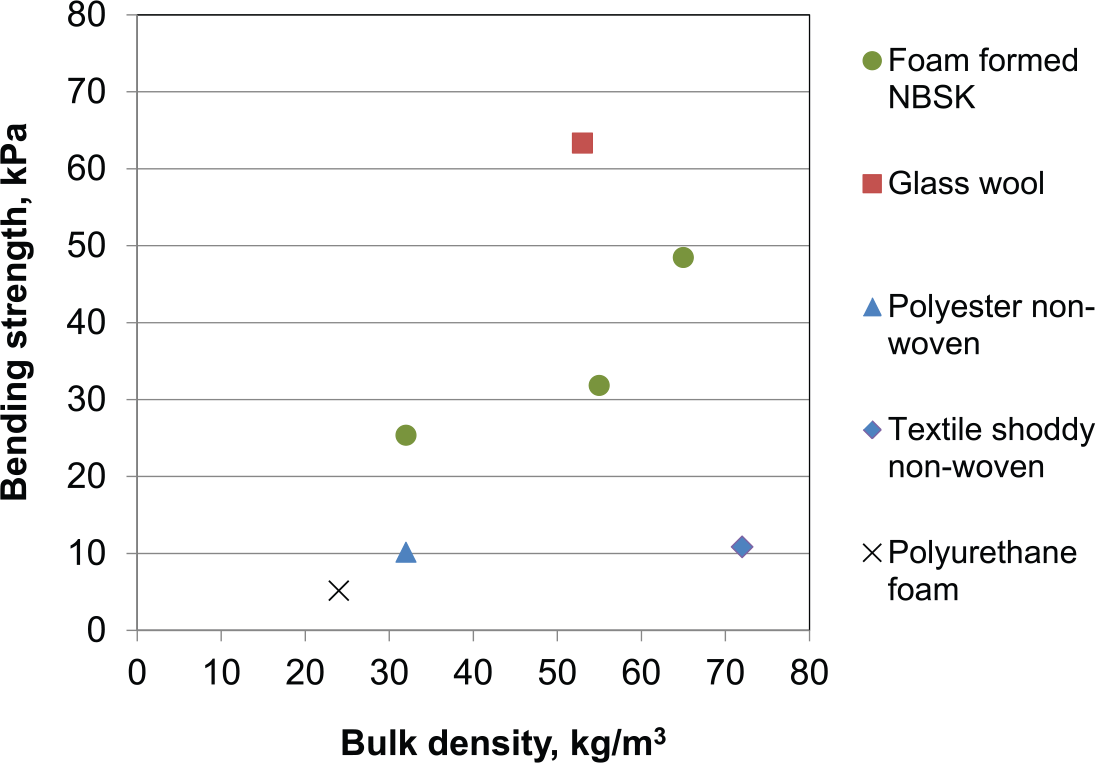
Bending strength of commercial and foam-formed NBSK sound absorber materials as a function of the bulk density. Data of foam-formed NBSK 20 (density 20 kg/m3) are not available.
Improving the strength of foam-formed NBSK materials
Without strength additives, the bonding of the foam-formed NBSK is based solely on water-induced hydrogen and chemical bonds between the natural fibres. However, in some applications, such as self-supporting acoustic panels, high strength is needed. Synthetic strength additives like latexes could be used to give additional strength. We investigated the addition of bio-based additives, cationic starch and CMF on the general strength of the foam-formed materials. The resulting foam-formed structures (Table 5) had very similar bulk density, so the possible changes in strength properties should originate from changes in bond strength.
Foam-formed NBSK materials made for investigating strength improvements.
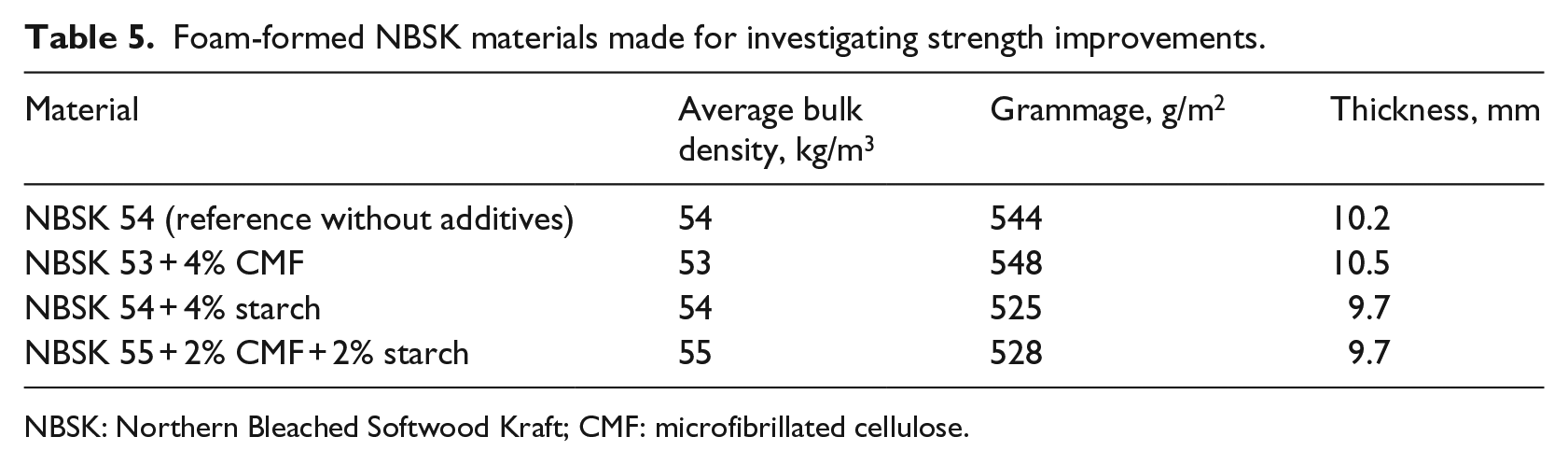
NBSK: Northern Bleached Softwood Kraft; CMF: microfibrillated cellulose.
Material strength was evaluated by measuring the tensile properties (see Figure 11). Cationic starch and CMF increased the dry strength of the bulky fibre network significantly. The most efficient way to increase the strength was using starch and CMF simultaneously. This combination kept the material strength in high relative moisture surroundings at an adequate level for non-self-supporting materials.
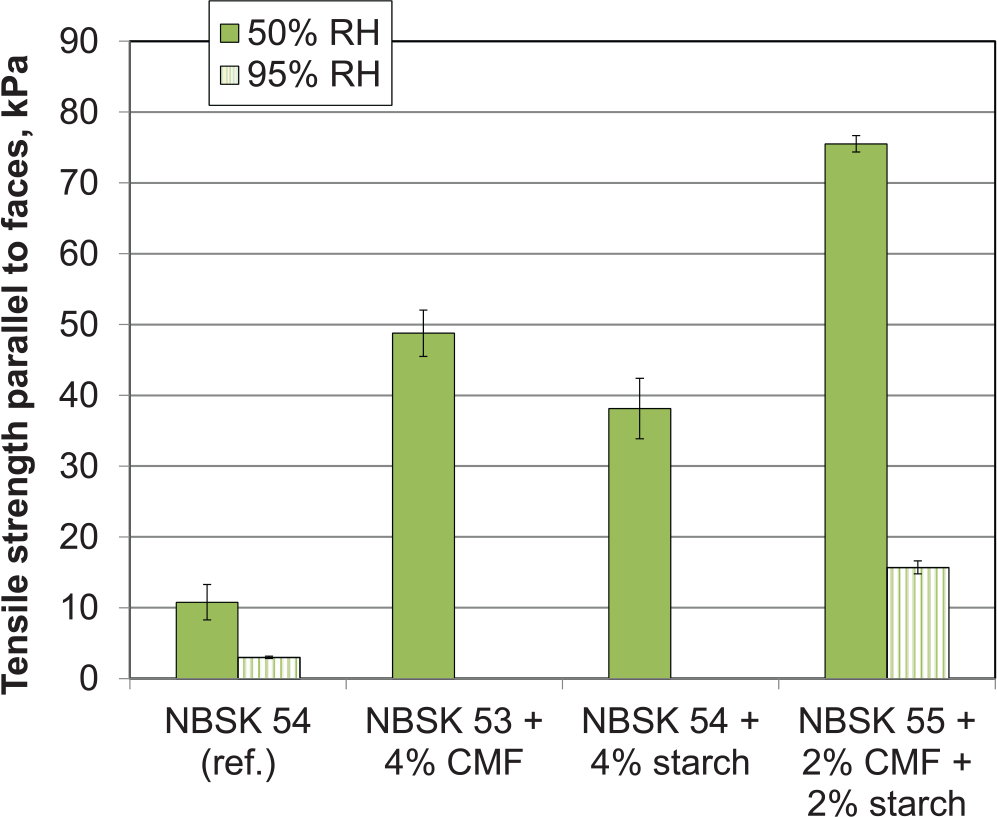
Tensile strength of foam-formed NBSK materials listed in Table 5. The additive percentages are expressed as weight% in relation to the fibre content.
CMF and starch improved the point-load strength and the bending strength of the NBSK material (see Figure 12). Starch improved the bending strength more than CMF, while CMF improved the point-load strength more than starch. A combination of starch and CMF improved the point-load strength the most, similar to the tensile strength improvement. The bending strength of around 55 kPa is already fairly close to the bending strength of the commercial glass wool product (63 kPa) and can be taken as an indication of a self-supporting material. The amount of the bio-based additives was so small that no significant influence on the sound absorption coefficient is expected.
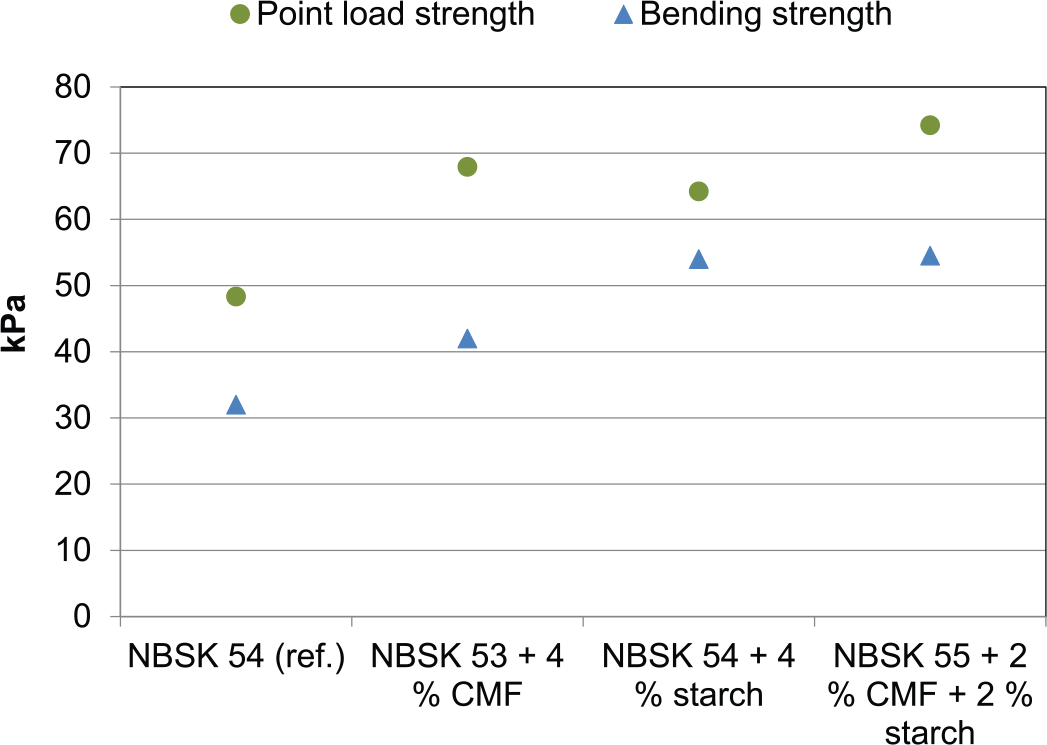
Point-load strength (deformation 50%) and bending strength of foam-formed NBSK materials listed in Table 5.
Conclusion
The new softwood-based sound absorbing materials showed at least similar sound absorption performance to some common commercial fibre-based products. In some cases, an equal sound absorption coefficient was reached with significantly lower material weight. Compared to the open cell PU foam, the foam-formed material did not quite reach the same absorption level at frequencies from 1000 to 2000 Hz.
The strength of porous cellulose fibre materials can be further improved by adding bio-based strength additives like starch or celulose microfibrils, if a higher strength level is needed. A natural behaviour of cellulose-based materials is that the fibre bond strength decreases in humid conditions. However, wet-strength additives could be used to improve the bond strength at high RH levels.
The semi-rigid foam-formed structures showed lower reversibility following compression compared to the reference commercial materials. The best application for the foam-formed softwood fibre material could be indoor applications, where the material is not exposed to external loading. It could be used, for example, as an absorption material behind an impact-resistant surface material or as a ceiling panel. The highest potential is thus seen in replacing mineral wool acoustic ceiling panels or polyester non-woven materials in office acoustics products. The use of 100% natural fibre material as a sound absorber material in automotives is likely limited to some specific applications due to the low elasticity and natural hydrophilic nature of the material.
It is clear that the foam-formed natural fibre product needs further development. Adjusting the fibre composition and possible layering of different raw materials are the main tools to further enhance the sound absorption performance and other needed properties. Reaction-to-fire performance can be improved by using common fire retardants. Up-scaling of the manufacturing process is still needed. When successful, the foam-formed natural fibre material is a substantial sustainable addition to the current sound absorption material palette.
Footnotes
Acknowledgements
The authors wish to thank the Finnish Funding Agency for Innovation (Tekes) for their financial support.
Declaration of conflicting interests
The author(s) declared no potential conflicts of interest with respect to the research, authorship, and/or publication of this article.
Funding
The author(s) received no financial support for the research, authorship and/or publication of this article.