



Abstract
This commentary offers a socio-cultural anthropological critical overview of studies of covering, popularly called “veiling” and “the veil” as practiced predominantly (though not exclusively) by some (though not all) Muslim women. The goal is to review studies that enhance understanding of this practice by detaching it from ethnocentric and culture-bound images of gender and religion—especially women and Islam—pervasive in some media portrayals and implied in some political policies in the West, for example, France. Drawing on these works, this commentary will also discuss the essay on this topic by Wagner, Sen, Permanadeli, and Howarth, outlining the contributions, issues raised, and areas of further inquiry suggested by these authors’ and others’ research on the veil in relation to Muslim women’s identity in contexts of religion and symbolism, aesthetics, political pressures and resistance to stereotyping.
Keywords
Veiling is an ambiguous term which usually refers to a range of cloth coverings of the head, including the hijab, burqa, and nikab, headscarves and shawls, all conflated as “veiling” (Renne, 2013), but which may also be part of a larger dress style featuring varying degrees and manners of draping, folding, and wrapping such that the face and body are wholly or partially hidden. Veiling reflects, in part, the more general association of Islam with the Middle East as well as widespread Western preoccupation with Muslims residing in former colonial regions, though a few non-Muslim women and women outside the Middle East also wear (or have historically worn) veils and other forms of covering, for varied reasons and with diverse meanings.
In my view, there are three basic interrelated challenges to understanding veiling and the veil. First, many official policy-related and popular responses to it from the West tend to assume that all women who don the veil are oppressed, thereby constructing a deficiency model of their culture, particularly gendered and religious beliefs and practices in those communities where veiling is widespread. Controversies over female veiling in some respects recall debates over other historic and current gendered cultural practices, for example, foot-binding and female genital cutting. Yet these latter are not without harm, thereby posing real dilemmas between humans rights and cultural relativism. Despite this difference, most popular images of the veil and veiling remain emotion-based, culture-bound, and de-contextualized, and continue to provoke public controversy as though veiling were also, like foot-binding and radical forms of FGC, harmful. Secondly, the term “veil” has become a widely-used gloss or cover-term for what are actually a range of practices, primarily though not exclusively by women in Muslim and/or Arab communities (themselves not equivalent). This usage of a single term to convey somewhat distinctive cultural complexes has been a recurring problem in popular and academic practice: additional examples that come to mind include shamanism and witchcraft, which differ in their meanings according to their historical, sociocultural, geographic, and political contexts, yet whose terminologies are used very broadly across diverse languages and cultures. Thirdly, in both colonial and post-colonial descriptions, the veil has been the focus of such intense scrutiny, indeed obsession, that this covering has become an icon, even a synecdoche, for reductionist overgeneralizations concerning “the Muslim world,” and/or “the Muslim woman,” politically constructed categories too often represented as monolithic, in discourses critiqued by Said (1977) as “Orientalism” and by Mohanty (2003) as constructs according to “western eyes” in the colonial gaze. From nineteenth-century imperial projects to twenty-first century “wars on terror,” some media and governmental policies have assumed that this practice inevitably poses a threat to the west from “the rest,” as well as a threat to some of “the rest.”
Many valuable studies, including the essay by Wagner, Sen, Permanadeli, and Howarth (2012), have attempted to correct the foregoing misconceptions about the veil and to challenge the stereotyping of those who veil or cover. In recent academic scholarship, there have been valuable studies of the practice of veiling and other forms of covering in Europe, particularly in France and Great Britain (Asad, 2003; Bowen, 2007; Dwyer, 1999; Scott, 2005; Tarlo, 2010; Werbner, 2007), and in Canada, Egypt, Turkey, India, and Indonesia (Abu-Lughod, 2002; Atasoy, 2006; Cmar, 2008; MacLeod, 1991; Mahmood, 2005; Wagner et al., 2012), which display greater sensitivity to local meanings and uses of veiling. Some progress has been made in critiquing semantic slippage and other problems of translation, particularly concerning religion and politics. Wagner et al. (2012, p. 527) remind us to carefully excavate the meanings of terminology. They note that in current political debates, different terms for different forms of Islam are used in a very confusing manner. They use the term “fundamentalism” to denote a form of religion that is a reaction against the spread of a secular global culture, that maintains a dualism of all things being either “good” or “bad,” and that acknowledges only sacred texts as authority. Yet even these terms can be problematic; for not all such groups endorse these views, and “fundamentalism” has powerful connotations in English, and is not associated solely with Islam, but also with Christianity. These authors propose another term, “Islamism” to denote the political extension of fundamentalism that strives to transform governance and policy according to religious rules, for example, Shari’a or Qur’anic law. I usually refer to such processes as “reformist Islam” (Rasmussen, 2010), since followers consider themselves to advocate reform. Saba Mahmood (2005) uses the term “Islamic piety” to designate these movements in Egypt. Perhaps the best solution here is to deconstruct local language terms, though for heuristic purposes, we also need to retain some analytical “odd-job” terms in English, albeit with caution and an awareness of their approximate, rather than exact, equivalence.
There is also a large art historical literature on Islamic dress and textiles in the Middle East and Saharan Africa devoted to the aesthetic meanings and styles of this practice (Lombard, 1928; Loughran & Seligman, 2006; Rasmussen, 1991, 2009, 2010; Stillman, 2000; Vogelsang-Eastwood & Vogelsang, 2008), as well as its relationship to religion, politics, and gender (Abu-Lughod, 2002; Ahmed, 2003; El Guindi,1999; Papanek, 1982).
Veiling: Historical and cross-cultural perspectives
Religious, aesthetic, and political aspects of covering
Veiling and covering have multiple meanings. Relevant to these meanings are changes in gender relations and practices of piety—reflecting religious modesty and fashionable glamour simultaneously or sequentially, for example, in the dress styles of Muslim African women in the Diaspora and in the sources for changing fashions in hijab (headscarf) styles. In many Muslim communities, veiling is not solely a religious symbol, but is also considered as an aspect of women’s fashionable dress more generally—the ever-changing veiling styles situate these garments within the larger range of dress practices, underlining the inadequacy of the traditional/modern/religious/secular dress dichotomy in explaining the contextualized meanings of veiling in different societies (Renne, 2013). Yet there are also political meanings to the veil which cannot be ignored. The diversity of experiences and meanings associated with veiling in different regions of the world, for example, the Middle East, Central and South Asia, and Africa and their Diasporas, often reveal the interrelated, rather than opposed or mutually exclusive trajectories of religion, aesthetics, and politics, in which particular cultural and social identities are expressed.
The implications of veiling in expressing particular Islamic identities within larger Muslim communities and in relation to the nation-state and globalization have received widespread scholarly attention. Veiling has been both a source of social conflict and a reflection of diverse interpretations of Islam within different Muslim communities and during different eras, particularly where local cultural interpretations of the Qur’an and other Islamic texts diverge from more “orthodox” ones (Mahdi, 2008; Rasmussen, 1991, 2009, 2010). Historically, the adoption of the veil by many Muslim women occurred in a process of seamless assimilation of the mores of the conquered peoples (Ahmed, 1992). Segregation of the sexes and use of the veil were heavily in evidence in the Christian Middle East and Mediterranean regions at the time of the rise of Islam. Toward the end of the Prophet Mohammed’s lifetime, his wives were the only Muslim women required to veil. After his death and following the Muslim conquest of adjoining territories, where upper-class local women veiled, the veil became a commonplace item of clothing among Muslim upper-class women.
Some later regimes in the Middle East promoting modernity (which they identified with secularism) denounced veiling, for example, in the 1920’s, the Turkish leader Ataturk introduced Western reforms and the Iranian Reza Shah issued a proclamation banning the veil, and more recently, French legislation prohibited veiling in public (Bowen, 2007). In Egypt, those who took up the call for unveiling were predominantly of upper and middle-class backgrounds, and to some degree embraced Western cultural affiliations. Thus, it is not surprising that the veil more recently has come to symbolize resistance to Western domination (Abu-Lughod, 2002; Bauer, 2005).
What is or is not unique, specific, or intrinsic to Qur’anic Islam with respect to ideas about women and gender, has therefore become a complex question. It is clear that conceptions, assumptions, and social customs and institutions relating to gender and to the social meaning of veiling and covering that derived from traditions in place in the Middle East at the time of the Islamic conquests entered into, and helped to shape the foundations of Islamic concepts and social practice as they developed later during the first centuries of Islam (Ahmed, 1992, p. 5). Hence, the importance of considering Islamic formulations of gender and veiling/covering in relation to changing codes and practices in the Middle East more generally, as well as in other regions, for example, Africa, where these currents have been influential. As Wagner et al. (2012, p. 530) point out, the theme of the female body as seductive and even sinful recurs in many monotheistic religions. Some women in Indonesia and in Indian Muslim circles, especially the latter, incorporate the fear of sinning and feel guilt-ridden under a male gaze. The function of the veil in these contexts, therefore, is not to attract attention, but to visually withdraw from public space.
That said, the study of gender and Islam in Muslim societies involves a vast range of issues, precluding any comprehensive account in a single essay or volume (Ahmed, 1992). Geographic, historical, and ethnographic contexts need specification. Identifying the “core” Islamic discourses and practices concerning gender and exploring the key premises of modern discourses on women and religion, even within the region of the Middle East, are beyond the scope of the present commentary. My emphasis here is upon only these discourses and practices that are relevant to local cultural interpretations of covering and veiling, with examples drawn from several different settings. These examples and cases, while illustrative of shared common themes and divergences from them, are by no means comprehensive or representative of all meanings or uses of the veil.
Thus, it is useful to examine a key doctrinal concept relating to gender, covering, and modesty, situated in social context, and then explore cross-cultural variations on this concept. In her study of a women’s piety mosque movement in Egypt, Mahmood (2005) identifies a key doctrinal position, upheld by four schools of orthodox Islamic law, that accords female sexuality a significant weight in provocation of illicit sexual desire and sexual relationships between unmarried men and women, as expressed in a popularly cited hadith: “The woman, all of her, is unseemly/unprotected (‘aura): if she goes out from the house, the devil will oversee her actions” (Mahmood, 2005, p. 106). This is one among a number of authoritative hadiths that, combined with certain Qur’anic verses, provide the basis for regulating women’s appearance in public in the viewpoint of the Islamist-reformists in Egyptian and some other Muslim societies such as Saudi Arabia. The Arabic term ‘aura, used to describe women here, is complex and has a variety of meanings, including weakness, faultiness, unseemliness, imperfection, disfigurement, and genitalia (Mahmood, 2005). The English term pudendum (pl. pudenda) best captures this meaning of ‘aura as used in this hadith because it refers not only to genital organs of men and women, but also to “that of which one ought to be ashamed” (Mahmood, 2005, p. 107). Mahmood (2005) also provides additional translations of Arabic into English of the Qur’anic term ‘aura in conjunction with women, as “nakedness or women’s private parts,” and when in conjunction with the term “houses,” is translated as “something that is exposed and therefore requires protection” (Mahmood, 2005, p. 107).
Veiling therefore evokes ideas of modesty, but the reasons for this value and its social consequences can vary considerably. Societies that later converted to Islam display both similarities to and differences from this concept in relation to gender and veiling. Veiling or covering be conflated with internal “pollution.” As Bauer (2005, p. 237) points out in her study of the significance of the hijab and chador for women in Iran and the Iranian diaspora, although women occupy an ambiguous and ambivalent position in notions of purity, like the plastic coverings used to protect the purity of Qur’ans, women’s hijab is often presumed to protect women’s purities within. The Persian notions of zaher (the exterior life of appearances) and batin (the inner life or true self) are a means by which the inner self and its motivations (and perhaps its purity) can be protected from external defilement or disclosure by the concealing zaher. In this way, rearrangement of the Iranian body and its dress, mannerisms, and postures, like rearranging the legs, wearing the veil when necessary, and so forth, can become the cultural covering for inner life. The clever person discerns others but protects herself from discernment and revelation. Modest behavior is a sufficient cloak for protecting the self. In Iranian constructions of Islamic womanhood modeled after Fatimeh, the Prophet’s daughter, emphasis is placed as much on women’s modest demeanor and inner purity as on the outer form which protects it (Bauer, 2005, p. 236). Thus here covering is part of a more general ideal that external appearances are central to the protection of a virtuous selfhood. During the Iranian Revolution, female religious teachers in the working-class areas of Tehran portrayed “Westoxified” women (women who assumed the clothing or lifestyles associated with Europe and North America) as “dangerous” (Bauer, 2005, p. 243). Of late, Iranian women’s struggle to conceal and protect their bodies from impurities and contamination has been further complicated by processes of modernization and exile. Janet Bauer argues that, now that signs of purity, piety, and penetration can be reconfigured at will, thanks to fashion, policing the boundaries between chaste and tainted bodies has at times meant rethinking the aesthetic grammar of dress and covering that traditionally governed the integrity of selves—personal and communal. This author explores Iranian women’s strategies of concealment and revelation as continually reinvented. Preserving purity, here, is not simply about covering the body; in attempting to hide one’s inner self, the body itself becomes the most perfect of coverings. Thus the veil in this context involves active agency in self-protection, rather than passive hiding of inner pollution.
Rasmussen (2009) notes that the Arabic concept of ‘aura described by Mahmood (2005) is in some respects similar, though not identical, in connotation to the term etakkes in Tamajaq, the language of the Tuareg, another nominally Muslim people, semi-nomadic agro-pastoralists residing in and around the Sahara. Etakkes denotes “outside [the tent],” and is used metaphorically to describe clothing that does not cover one sufficiently (as for example, when one’s undergarment is showing). But in Tuareg society, by contrast, it is not women, but rather men who veil the face, and both sexes may violate this modesty standard in different ways. Furthermore, Tuareg women’s covering in scarves and shawls expresses, not their sexual pollution, but rather their reserve and dignity as married, but independent, property-owners. For example, women own the tent which they bring to their marriage as dowry in more nomadic communities, a legacy of matrilineal property arrangements pre-dating Tuareg conversion to Islam (Rasmussen, 2009, p. 13). Furthermore, Tuareg women’s sexuality is viewed as dangerous only in some contexts: for example, in women’s performance of non-liturgical songs and love poetry at musical festivals, acts believed by Islamic scholars to compete with religion because they distract men from prayer (Rasmussen, 1995).
Even in conservative Arab communities among pious Muslims, there is flexibility and variation in adherence to ‘aura. Mahmood (2005) found that most participants in the mosque movement in Egypt interpret these authoritative texts rather loosely: for example, many women at a lower-class piety mosque have no choice but to work in mixed-sex offices, and regard the aforementioned hadith as an admonition to greater vigilance in their dealing with men, rather than a prohibition against male-female interactions (Mahmood, 2005, p. 107). In Saudi Arabian Whahabi Muslim society, also, women can negotiate these issues. During a panel held at a US-Arab Economic conference in Houston, Texas, in July 2006, a woman Saudi poet, writer, and intellectual, Al-Arrayed Thuraya, discussed gender issues. She was asked her if audiences were surprised she was not veiled. She explained that there is a difference between wearing the hijab headscarf and the abaya cloak: the hijab is a religious request, covering the head is part of the Islamic code. Some women go without it in other countries. But in Saudi Arabia, we tend to be more on the conservative side. The abaya is more of a social thing. When I go to the market it’s more convenient to wear it and walk unnoticed like everybody else. I wouldn’t wear it in Houston because it would attract too much attention (Houston Chronicle, July 2006).
The implication here is that one should dress according to local conventions, so as not to stand out; this meaning of dress and covering is widespread, nearly universal. Veiling in particular may confer positive protection and anonymity, even disguise: some men in Middle Eastern communities have fled violence dressed in women’s veiling, and many women in Iran in enveloping chadors traveled on religious pilgrimages and participated in the Iranian Revolution. Finally, for some women who cover, the veil is convenient (Wagner et.al. 2012, p. 530): these authors report that many Muslim women in Indonesia, who are in the majority there, explained their behavior as proper for everyday errands; whereas in India, among the Muslim minority, women’s tone was more ambivalent. Thus there are contrasts between attitudes concerning “proper” female dress and covering in different Muslim societies, as well as contrasts within the same society.
Veiling has a long and complex history in Africa. In the Sahara, Tuareg men’s veiling of the face and Tuareg women’s dress covering the hair and nape of the neck (though not the face) have received considerable attention (Claudot-Hawad, 1993; Loughran and Seligman, 2006; Murphy, 1967; Rasmussen 1991, 2009, 2010). Rasmussen (2009) examines contextual practices and underlying beliefs concerning dress among women in Tuareg communities of Niger and Mali, West Africa, who, as already observed, speak a Berber (Amazigh) language, Tamajaq, predominantly adhere to Islam, are semi-nomadic, socially stratified, and display influences from pre-and popular Islamic, nation-state, and global forces. The Tuareg data are particularly illuminating, in revealing both common themes and inter- and intra-cultural variations on Muslim women’s coverings, thereby challenging monolithic interpretations of women’s dress in Islamic communities. Rasmussen calls attention to the contested meanings of dress and headdress in terms of their special semiotic qualities; it is portable, can be disassembled, and reassembled, and can be subtly re-arranged to convey ambiguous but powerful meanings that are neither unitary nor stable. Rasmussen also situates veiling/covering/draping/wrapping of fabrics within the wider category of dress, suggesting that there should be continuity, rather than discontinuity, between analyses of veiling in head-covering and dress more generally. Dress and headdress, like some other semiotic and semantic expressive domains such as speech registers, bodily “languages” and the architectonics of built form, conveys debate and persuasion, rather than fixed meaning or consensus. Dress includes covering, but has multiple components, continually re-adjusted. Thus dress challenged the old De Saussurian notion of the unity of the sign, as well as the Cartesian distinction between objective and subjective knowledge. Within this framework, the essay analyzes the relationship between women’s dress, religion, and gender among the Tuareg. The goal is to minimize totalizing or essentializing portrayals of Islam and Muslim women (Abu-Lughod, 2002; Mahmood, 2005) and the connections between the religious and the secular (Asad, 2003; Kapferer, 2001; Lambek, 2003); and between tradition/authenticity and modernity (Clifford, 1988; Herzfeld, 1987).
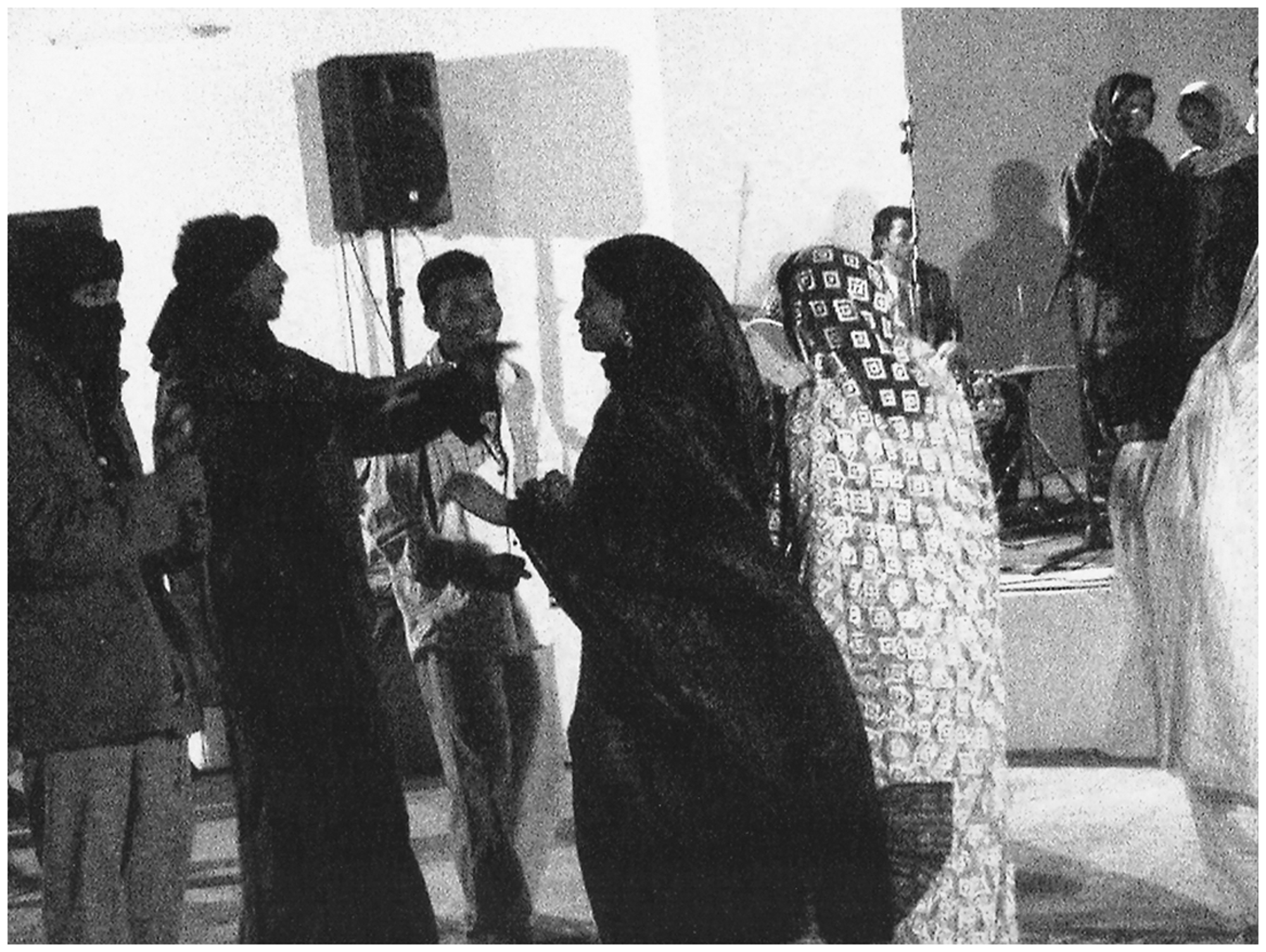
Notwithstanding regional, rural/urban, and social stratum-related differences, Tuareg communities share many common cultural themes. Most rural women inherit, own, and manage property independently; may initiate divorce; retain their tent upon divorce; may receive male visitors unrelated in kinship, and travel without the husband’s permission. There are some challenges to these arrangements in more urban and sedentarized communities, where central state laws intrude, and in clans of Islamic scholars, and in regions influenced by Islamist reformist piety movements (Figueireido, 1996; Oxby, 1990; Rasmussen, 1995; Walentowitz, 2002). Some men returning from labor migration bring outside gender constructs back into their communities, but thus far, most Tuareg women continue to enjoy relative independence, and there is free social interaction between the sexes in pre- and extra-marital courtship and mixed-sex evening festivals (Worley, 1988, 1991, 1992).
Tuareg men, not women, veil the face, traditionally to signify adult male and marriagable status, though married women cover the hair and nape of the neck. Hence the value of the Tuareg data for detaching analysis from the all-too-pervasive preoccupations in much research on this topic, however valuable, with female-veiling in Muslim societies. Yet covering and modesty are central elements in much Tuareg dress for both sexes; their meanings need to be carefully unpacked. Tuareg women’s dress conveys ambiguous, disputed, and flexible cultural interpretations of multiple Islams, both old and new, local and global. Also important are longstanding local cultural values of modesty for women and men alike, para-and pre-Islamic ritual practices, and changing gender relations—some related to religion, and others to socioeconomic and political currents. Dress styles also express and respond to long term and recent historical changes; for example, women’s and men’s quest for identity following upheavals in the pre-colonial stratified order and emerging new classes, polities, and economies. Globalization processes are undeniable, though not uniform or predictable in their local consequences. Dress, as I have argued, expresses the heterogeneity, rather than homogeneity, of the local, and the re-contextualization and even resistance, of the global, thereby challenging neat binaries between “world” and local religions, tradition and modernity, and sacred and secular (Rasmussen, 2010, p. 3).
How do we know whether to ascribe the terms religious or secular to a particular dress style or practice? To what extent does Tuareg women’s dress express intertwined and shifting perspectives of religious and secular thinking in local perspective, and if so, how? It is misleading to gloss diverse clothing and head-coverings as “Islamic dress,” and to read highly charged meanings of “political Islam” into such dress, projecting onto it Euro-American and Judeo-Christian categories and assumptions regarding gender and religion, hence the need to examine women’s dress from a multiplicity of perspectives, with attention to more contextual local meanings and disagreements. As Abu-Lughod reminds us (2002, p. 785), the Taliban did not invent the burqa; it was the form of covering that Pashtun women in one region of Afghanistan wore when they went out. The burqa is one of many forms of covering in the subcontinent and Southwest Asia that has developed as a convention for symbolizing women’s modesty or respectability. Yet some local Afghani and Taliban explained the burqa in religious terms.
Some Tuareg women in northern Mali call one popular dress style a burqa, but several Tamajaq language terms are used more often to describe it. There are alternative styles available to women, and the burqa-like garment does not resemble the all-enveloping, veiling, Afghan Pashtun burqa. This Tuareg garment consists of two long pieces of dark cotton fabric, often sewn or knotted together at the shoulders with a long, train-like lower portion left free, raised as a shawl-scarf over the head, but not the entire face. This dress style, popular in several of northern Niger and Mali, approximately resembles the ancient Greek toga and the Hindu sari, and is variously called in Tamajaq tesoghelnet (from the verb to go around or encircle), a leger (from the French leger, denoting light-weight) and the burqa. This garment does not permanently veil, but has several moveable sections, all named. Each section needs to be draped in a specific manner in a given social context. For example, the upper section is most veil-like, in that it should be draped more closely about the head when in the presence of respected chiefs, Islamic scholars, and parents-in-law. Women warned that if one allows its headdress portion (ekarche) to fall off before dusk arrives, spirits enter your head and cause illness. Here, the meaning pertains not to Islam, but to pre-Islamic Tuareg spirit beliefs, identical to one of the meanings of the Tuareg men’s face-veil, which furthermore, also conveys modesty and respect (Murphy, 1967; Rasmussen, 1991, 2010). Hence the important parallels between Tuareg women’s and men’s coverings, especially headdresses. Female and male veiling, rather than being opposed, are in many ways complementary, even analogous to each other. Also, in addition to expressing modesty and respect before high-status persons, the tesoghelnet garment is also considered fashionable; one woman, for example, indicated that this is not always practical, and may be hot sometimes, but she wore it “because it is the fashion” (Rasmussen, 2009, p. 6). Thus, veiling as a practice more clearly conveys the local meanings of this dress than veil as a static item of dress; for varying degrees of veiling/covering are achieved here by draping this garment in diverse ways. Again similarly, this also applies to Tuareg men’s veiling, in which the tagelmust or turban/veil can be adjusted in many different styles, each covering the face to varying degrees according to social context, status, age, personal moods, and messages. Indeed, even women, particular elderly women, occasionally bring the corner of their headscarf across the lower part of their face at public events or in situations requiring more reserve or distance, e.g., before strangers or an ill person, though most Tuareg women are not permanently veiled about the entire face (Rasmussen, 1991).
Furthermore, both forms of headdress are traditionally the focus of rites of passage for women and men respectively (Rasmussen, 1991, 1997), but even in this context there is some variation and negotiation. Tuareg married women should cover the nape of their neck and their hair, but this may take an abbreviated form in some regions, such as the Air Mountain region of northern Niger, where a smaller scarf called adalil or afteg of dark indigo cotton is often worn perched on top of the head. For some other women, the first donning of the more enveloping tesoghelnet is highly ritualized: this is accompanied by a murmuring of “Bissmillilah” to obtain al Baraka blessing; for men, the first donning of the tagelmust in a ritual called amangadezar is in rural areas of northern Niger accompanied by an Islamic scholar reading from the Qur’an as he spits ritually into a special indigo cloth as a benediction to convey al Baraka, and in order to calm the heart, and as a protective amulet against misfortune and spirits believed to threaten persons during transitions (Rasmussen, 1997, p. 46). After this, he slowly wraps the cloth around the head, nose, and mouth of the young man, who was henceforth (until very recent economic changes in which many young men must postpone marriage because of marginal employment or unemployment) considered of marriageable age. Many Tuareg men tend to give a more Islamic interpretation of their face-veil: many explain that they wear this “in order to resemble the Prophet, who wore a turban” (Rasmussen, 1997, p. 41). But the men’s veil, like the women’s tesoghelnet, is also considered very elegant and fashionable, and many men say it makes them feel more handsome (Rasmussen, 1991). Thus the implication here is that the head-coverings of Tuareg men and women, though not identical in form, are mutually illuminating, particularly when analyzed as communicative codes in contextual practice. Their resemblances and complementarity reflect longstanding, though changing, gender constructs in that society in which men and women enjoy relatively free social interaction and both may inherit and manage property independently.
There are striking transformations in veiling/covering for both Tuareg men and women. Islamist reformist/piety mosque movements, such as Izala, Ansa Eddin, and Da’wa, have made some inroads in the northern regions of Niger and Mali. In some multi-ethnic towns, some followers of these orders have attacked women for not wearing dress conforming to what they define as “pan-Islamic” standards of modesty. A few Tuareg men, returning from labor migration and political exile during several recent rebellions against the central governments of Mali and Niger, and a few Tuareg political leaders, have, outwardly at least, embraced these movements, perhaps feeling political pressure to do so, or seeking renewal of masculine pride in the wake of economic and political crises of drought, unemployment, and wars in the Sahara. But thus far, these piety movements do not appeal to most Tuareg, who object to their secluding of women and banning of music and mixed-sex socializing. Indeed, like many other Muslim peoples, Tuareg vary considerably in their cultural interpretations of the Qur’an and their religious observance. In more devout groups, some women in Islamic scholar (maraboutique) clans or those who marry marabouts tend to dress more according to norms of Arab-influenced interpretations of Islam such as those Mahmood (2005) reports in Egypt. In some of these Tuareg maraboutique or ineslemen clans, for example among the Iwellemeden Tuareg in the Azawagh region of Niger, women hide the face before men of equal or higher status, particularly potential marriage partners. Yet the meaning of this action should not be assumed as restriction of women; for many indicated that it could sometimes convey flirtatiousness, and considered such covering more alluring in its mystery than not covering. As in other Tuareg groups, the Iwllemeden ineslemen women receive their headdress on reaching marriageable age. But women in these clans in that region, in contrast to other Tuareg elsewhere, further conceal their bodies by wrapping large mats around themselves while traveling on foot, and by sitting beneath a large palanquin while traveling on camelback (Walentowitz, 2002, p. 47). It should be emphasized, however, that these latter two practices are thus far atypical and contrary to the usual Tuareg practice.
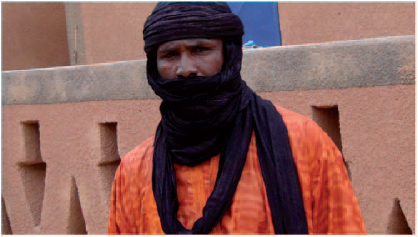
These variations and changes in Tuareg men’s turban/faceveil cannot be ignored. For fundamental to understanding female covering in Tuareg society is recognizing the cultural salience of male veiling. Traditionally, in the pre-colonial stratified hierarchical system, aristocratic imajeghen men were strictest about this custom, and wore their veil highest on the face; whereas by contrast, smith/artisan inaden and (former) servile and client men (iklan and ighawalen) were more lax about it, wearing it less often and less high on the face, even showing the mouth (taboo for nobles, associated with the genitals and pollution). Nowadays, principally elderly and more conservative men, Islamic scholars, and all men at important rites of passage and festivals wear their veils highest. Some young Tuareg men in the towns of Mali and Niger are going bare-headed, and a few are dropping the veil altogether—sometimes willingly, sometimes unwillingly, reportedly feeling pressure to “blend in” with other ethnic and cultural groups in these diverse but occasionally tense multi-ethnic communities (Rasmussen, 2010, p. 471). Yet this covering is not disappearing. For other younger men drape their turban/veil in new styles and wear them in new, brighter colors, departing from the older preferences for black, white, and indigo blue. Also, once men marry and become parents of marriageable children, most become stricter about wearing the turban/faceveil as a sign of dignity and respectability. Women, for their part, are predominantly still unveiled about the face, but a few urban Tuareg women are covering up more closely about the head with a tight-fitting headscarf locally called the jabi (derived from hijab), a style deriving from their Hausa neighbors which completely covers their hair and part of their scalp at the hairline. This latter practice is in response to some pressures to be more modest from Islamist-reformist piety influences, though thus far, these religious orders have imposed Shari’a law and full coverage of women in only a few parts of northern Mali, such as the towns of Timbuktu and Gao. The recent upsurge of the Ansa Eddin Islamist movement in northern Mali and its alignment with some Tuareg rebel fighters who in 2012 declared an independent Islamic Republic of Azawad has caused many local residents to flee that region. The implication here is that the tension between local cultural interpretations of religion and pan-religious (mainstream, orthodox) brands, with diverging gender constructs is often reflected in dress and headdress, particularly local debates over veiling, and local residents, even those who are nominally Muslim, display much internal disagreement over this issue and Islam more generally.
The Tuareg case suggests that, in devoting so much attention to female veiling, some studies have tended to ignore or under-analyze dress counterparts or near-approximations to veiling or head-covering in men’s apparel; for example, turbans, and ways these are wrapped in many Muslim and Sikh communities. These “turbans” may not always cover the face entirely, but they nonetheless shed light on women’s head coverings. Even if such coverings (of each sex) and their related rules are not similar or equivalent in form, practice, or meaning, or not as complementary as among the Tuareg, these discrepancies or contrasts should nonetheless be analyzed for insights yielded into gendered dress codes and the intentions underlying them. Studies also need to analyze variations according to context, changes in head-covering over the life course and reasons for them, the ritual symbolism of veiling/covering the head and/or face, and recent and current transformations in and disputes over these practices. Rather than a static icon or synecdoche, the veil is a situated practice whose meanings only emerge in context.
In Africa, south of the Sahara, many women wear veils of some sort (Fair, 2001; Le Blanc, 2000; Masquelier, 2009), which reflects not only the particular history of Islam in various parts of Africa, but also the relations of African Muslims with Islam globally and with the West (Renne, 2013). As such, the veil may be referred to as a key symbol (Ortner, 1973; Delaney, 1991, p. 32): a thing whose meanings are associated with particular ideas, events, and actions which link important aspects of social life and which often have a specific moral cast. These meanings may be selectively invoked by different religious and cultural/ethnic groups and by state officials, and may change over time. These two qualities of symbols—their ability to represent connections between seemingly disparate aspects of social life as well as their polyvalent quality—underline the importance of examining the processes whereby meanings of things are contested and revised (Renne, 2013). As with face-veils such as the niqab, and a range of related head and body coverings—hijab, headscarves, abaya, and jilbab—worn by Muslim women around the world, African women who veil may be seen, depending on the viewer’s perspective, as devout and modest followers of Islam, as subordinated women forced to hide their bodies and sexuality, or as threatening beings whose presence challenges democratic, secular ideals (Lewis, 2003). While covering one’s head, body, and sometimes, face, with cloth may be framed by some as the antithesis of social action by women, who are viewed as succumbing to social pressures determined by men, veiling in Africa reflects an active response to a range of complex religious and political situations which have social, gendered, and historical dimensions (Renne, 2013). For some Muslim women in Africa south of the Sahara, for example some Hausa women, veiling may be seen as their choice as proper Muslim women, which furthermore offers them protection and a certain freedom, enabling them to negotiate public space without fear of sexual harassment.
While dismantling the dichotomy of free unveiled women and suppressed veiled ones was an important advance (El Guindi, 1999), an examination of veiling in Africa today reveals the many meanings of veiling there, which have been contested—between Muslims and non-Muslims, as well as within the Muslim community itself, by both men and women—and which have changed over time. Furthermore, historical associations with veiling and independence movements may make it an important aspect of national identity (Akou, 2004), unlike Turkey where the wearing of headscarves has been viewed as resistance against the secular ideals of the state (Tavernise, 2008). Thus the veiling (and related styles of Muslim-associated dress) may not be the inflammatory issue it is in Turkey (Parnuk, 2004) or in Europe (Bowen, 2007; Shadid & van Koningveld, 2005), but rather may be viewed as beneficial in the context of national concerns about indecency and nudity (Allman, 2004).
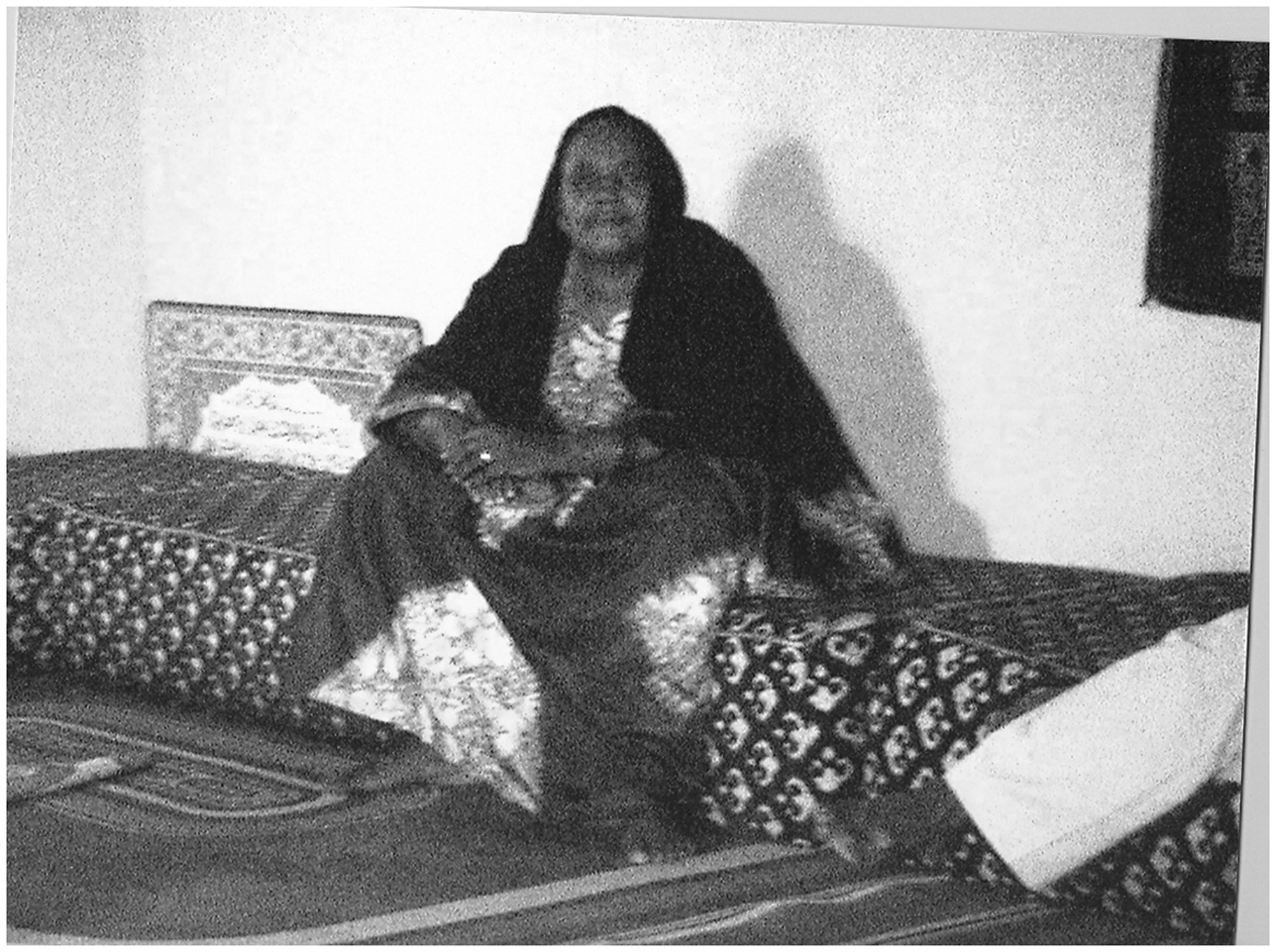
Veiling may also be seen as an aesthetic form, as a type of fashionable dress (Moors and Tarlo, 2007), which suggests the interconnected dynamics of covered modesty and alluring attractiveness associated with new styles of veiling (Meneley, 2007). In recent writing on veiling and fashion, there is juxtaposition of what is ostensibly traditional—veiling and religion—with modernity, secularism, aesthetics, and fashion (Rasmussen, 1991, 2009, 2010; Tarlo, 2010; van Santen, 2010). This configuration has particular resonance for the study of dress and veiling in Africa since, as Jean Allman (2004, p. 3) has noted, Africans have until recently, been represented as “the people without fashion,” who dress within the constraints of “timeless and unchanging” religious practice, the antithesis of the idea of fashion, as “up to date” and ever-changing. With increasing access to television programs aired on Al-Jazeera and the Internet as well as their participation in hajj to Mecca, Muslim women in Africa have a wide range of veiling styles and materials from which to choose. For example, in many towns in Niger, a popular covering for the head and shoulders, though not the face, is the miyahe (a term derived from the Hausa language), a lacy, embroidered cotton-blend rectangular cloth available in different colors, imported from Dubai, which is widely sold in markets. Urban women wear this loosely about the head and shoulders when they leave the house on errands and visits. This covering is not at all like the hijab or jabi tight-fitting headscarf donned by more devout women within their communities, but is considered proper and beautiful attire for most married urban women to wear while out and about.
Rural Tuareg woman and man participating in ritual moving married woman's tent to home of her husband, rural Air Mountains, Niger. Young recently-married Tuareg man of aristocratic background in veil/turban wrapped in modern style worn by many youths, Agadez, Niger. Tuareg men and women dancing at musical concert at a youth center, Kidal, Mali. Upper-middle class urban Tuareg woman at home, Kidal, Mali.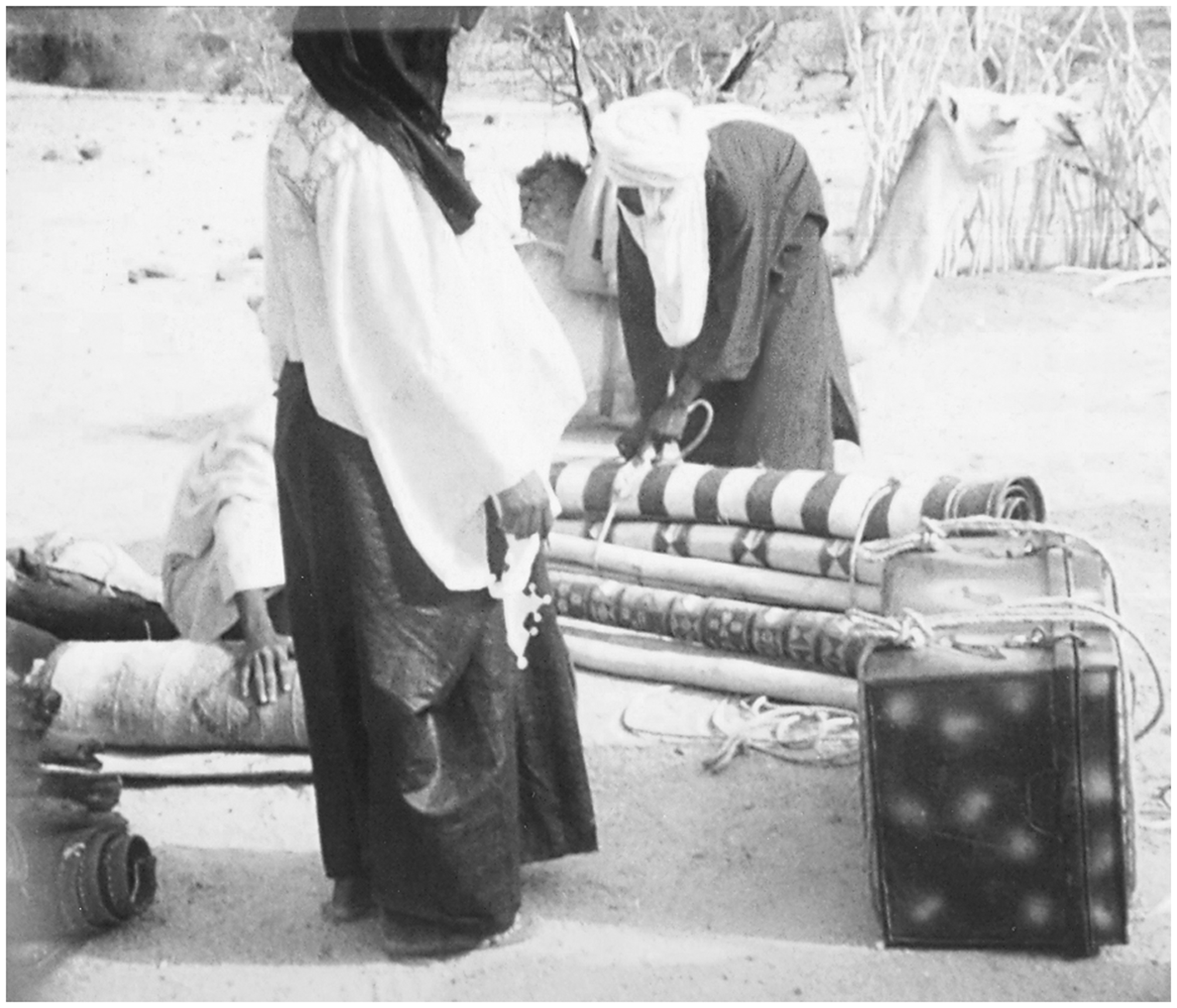
The association of veiling with fashion is not, however, always frivolous. Veiling and dress in Africa have played an important role in African nationalist movements. During the anti-colonialist Battle of Algiers, veiling was used by women to hide bags filled with grenades and by men to mask their weapons and intentions (Fanon, 2003). Yet, the social ideals associated with these nationalist uses of veiling have been criticized by some Western-educated women in Africa (who may or may not be Muslims) for whom pressures to veil are seen as a form of oppressive subordination (Mernissi, 1991). The refusal to veil or to wear particular forms of veils may reflect generational, educational, and socioeconomic differences. Some women, often Western-educated, resist what they see as an oppressive conformity to religious injunctions. Other women are convinced or compelled to veil.
At the national level, veiling practices may resonate with larger national issues about the role of women in politics as well as with national legal ideologies, such as laicite or as Shari’a law, which support the role of secularism and Islamic Shari’a law, respectively, in governance, which reflect earlier political regimes and social systems of various regions and ethnic/cultural groups, and which have led to a range of responses to veiling in public institutions. For example, instructive here are additional insights on the burqa in its “home” lands, Afghanistan and Pakistan, whose southern regions are culturally and linguistically similar, but whose boundaries were artificially imposed by colonial regimes. Hanna Papanek (1982) who worked in Pakistan described the burqa as “portable seclusion,” noting that many locals there saw it as a liberating invention because it enabled women to move out of segregated living spaces while still observing the basic moral requirements of separating and protecting women from unrelated men. Lila Abu-Lughod similarly thinks of the enveloping robes as “mobile homes” (Abu-Lughod, 2002, p. 785). Such veiling signifies belonging to a particular community and participating in a moral way of life in which families are paramount in the organization of communities and the home is associated with the sanctity of women.
Afghan women refugees in Pakistan attempted to educate readers about this local variety. Those in the new Islamic dress, rather than the burqa, are characteristically students heading for professional careers. One wearing the large scarf was a school principal; the other was a poor street vendor. This telling quote from the young street vendor is “If I did [wear the burqa], the refugees would tease me because the burqa is for ‘good women’ who stay inside the home” (Fremson, 2001, p. 14). The point here is that the local status associated with the burqa is that of good, respectable women from prestigious families who are not forced to make a living selling on the street. In Afghanistan, one regional and ethnic style of covering or veiling (that from the southern Pashtun region) associated with respectable status became imposed on everyone as “religiously” appropriate, even though previously there had been many different styles popular or traditional with different ethnic groups and classes—different ways to mark women’s propriety, or, in more recent times, ways to express religious piety. By the time the Taliban came to power in the 1990s, many of whom were initially Pashtun from the South, many women in Afghanistan were non-elites who could not escape the violence in that country, since emigration and refugee flight were difficult and expensive. Thus within Afghan society, as elsewhere, there are variations and changes in women’s coverings. Historicizing women’s veiling is valuable for insights into the connections between power, resistance, and covering. Deconstructing its multiple and contested meanings enhances understanding of a complex topic. This shifting and, at times, contested nature of veiling underscores the importance of context and specificity in discussions of veiling and Muslim women’s contribution to religious practice in their communities. Veiling must not be conflated with lack of agency without careful attention to context.
Conclusions and wider implications: Words of warning
The veil, the West, and the rest
Legal, political, social, and symbolic aspects of the headscarf controversy in cultural encounters and “borderlands” reveal a key human rights issue today: namely, determining how to accept, accommodate, and tolerate, even celebrate diversity, in particular, Muslim religious observances in countries where Islam has a large presence but remains a minority religion thus far. In these countries, secularism (laicite in France) and civil liberties are held to be as important as religious freedom in pluralism. Devout Muslim women who express their religious and/or cultural and/or ethnic identity through external signs such as covering, for example, headscarves and veils, are often subjected to negative stereotyping, restrictions, including limits on some rights. This oppression occurs not only in Western countries such as France, but also in some Muslim countries such as Turkey. Upholding religious freedom involves a complex task of protecting religions, while establishing certain limits to avoid religions’ potential for negative impact on other freedoms (Elver, 2012, p. 2). Following the September 11, 2001 attacks on the World Trade Center, the negative stereotyping of Islamic societies became widespread, and the fear of “political Islam” became a preoccupation in mainstream, especially right-wing, American and European politics. Whether the principles of Shari’a are compatible with principles of human rights generated by Western humanist philosophical traditions—for example, individual personal autonomy and control over one’s body—is a complex issue whose answer requires theological knowledge about Islam.
It is important to point out that all religions, not just Christianity or Islam alone, are prone to manipulation in the political sphere, and also that secularism itself may become as hegemonic and oppressive as the “sacred,” thereby leading to widespread stereotyping of certain “outsider” religious minorities by the dominant populations and political authorities. Other agendas may be at stake, for example, land ownership and/or jobs, but these agendas may be pursued under the guise of religion. In France, laicite has often been used as an excuse to punish expressions of religious belief and observance, as well as to express hostility against different ethnic minorities in waves of Islamophobia and anti-Semitism (Asad, 2003; Bunzl, 2005). Similarly, anti-terrorism measures and national security laws have been used to suppress, not protect, religious and ethnic identities in some countries in the West (Elver, 2012, p. 5), for example, Switzerland recently prohibited minarets. The headscarf controversy and its prohibition in countries such as France (which banned the headscarf in public schools in 2004), in effect, express and perpetuate a worrisome “racialization” of Muslims in Europe and elsewhere, in the construction of “the Muslim woman’s identity,” in a current version of Orientalism.
Yet these processes are complex and subject to negotiation. The article by Wagner et al. (2012) compares and contrasts the situational meanings and politics of identity and resistance in female veiling across two different Muslim communities—one a religious minority in India and the other a religious majority in Indonesia, and find that no identity issue exists for the Muslim majority women, while the religious minorities are forced into constructing their cultural identity in ways that exaggerate their group belonging and difference from broader society (Wagner et al., 2012, p. 521). Yet there are hints of finer nuances here. In India, some interviewees hinted they might well want to stop wearing the veil, given the choice, but pressures from their community prohibit this; whereas in Indonesia, convenience means being free to follow local fashion. Furthermore, a large number of Indian respondents felt that Muslim women had been stereotyped as “backward, illiterate, oppressed and victims of a barbaric society and/or closely aligned to terrorists in some way” (Wagner et al., 2012, p. 534). They felt that wearing the veil may have aggravated their situation, provoking labels such as terrorist and fundamentalist. This stigma applied only to the Muslim minority sample in Hindu India. Yet women also felt the need to establish their credibility and engage others in dialogues. Thus the veil can be used to overcome feelings of insecurities, to signify identity, and as a rebellion against stereotyping.
Yet it is also important to point out that hegemonic oppression can occur in many directions: that is, a small minority may attempt to impose their own interpretation of religion upon others, as well. Here I am going to, somewhat riskily, take a different “tack” and warn scholars not to be blinded by our best intentions of cultural relativism without careful attention to context and local cultural intentions. For example, recent events in northern Mali compel me to update and critically reflect on some points made by Abu-Lughod in her valuable critique of Western feminism and political policy. In March, 2012, the military coup d’etat in Bamako, the capital of Mali, created a power vacuum in the north of that country, a region of long-festering Tuareg resistance and armed rebellion against the central state government and its armies, the latter having committed human rights violations and atrocities in the northern, predominantly Tuareg, region since approximately mid-twentieth century following independence and uneven development of the different regions of former French West Africa (Rasmussen, 2010). Since the coup in Bamako, Islamist-reformists and a few Al Qaida-affiliated groups have taken over the North, and have imposed, by force of arms and brutal punishments, their own interpretations of Shari’a law upon local residents there. The precise composition of these groups is not well understood, but many Tuareg residents opposed this take-over, and fled the region by the thousands toward refugee camps in neighboring countries such as Niger. Most Tuareg, while Muslims, as noted, express ambivalence toward the political agendas of the Islamist-reformists since most Tuareg value their cultural traditions of free social interaction between the sexes, economic independence for women as well as men, and a rich corpus of music and poetry, performed by both sexes of diverse social backgrounds (Rasmussen, 1995, 2009, 2010). In places such as Timbuktu and Gao, where the Islamist-reformists established their legal system most stringently, there was flogging of women who did not cover up (Associated Press, 2013). Many Tuareg with whom I discussed this matter indicated they thought women should be able to cover or not cover; in particular, they opposed the compelling of women to cover up even during medical examinations.
Valuable studies have critiqued some Western feminist concerns about veiling and covering, correctly in my view. Nonetheless, in our rush to allow all cultural “flowers to bloom,” anthropologists and other scholars of culture need to be cautious and balanced in reflections on these issues. In a seminal article, more than a decade ago, Lila Abu-Lughod constructively warned feminists to be wary of official (usually negative) responses to “women of cover” in the aftermath of September 11, 2001 (Abu-Lughod, 2002, p. 783). This author justly criticizes rampant over-generalizations concerning Islam and Muslim women’s problems, which, in many popular viewpoints, includes their veiling. She also critiques the (former) Bush administration’s justification of the “war on terror” for its conflation of the Taliban and Al Qaida terrorists, and for its attacks on the burqa, with its simultaneous ignoring of women’s continuing malnutrition, poverty, and ill health. In these politics of the veil, there are indeed parallels to British colonialism in South Asia: namely, in the use of woman question in colonial policies and discourse where intervention into local practices was used to justify colonial rule (Abu-Lughod, 2002, p. 784). Similarly, at the turn of the twentieth century in Egypt, a selective concern with the plight of Egyptian women focused on veil as a sign of oppression, but gave no support to women’s education, and was professed loudly by same Englishman, Lord Cromer, who opposed women’s suffrage back home (Abu-Lughod, 2002, p. 784).
In public policy, it is equally reprehensible to either forbid or require women (or anyone else) to cover. In scholarship, we have come a long way from earlier equations of veiling with so-called patriarchy. Many works now consider multiple meanings, functions, intentions, and consequences of veiling. We still need to remind ourselves, however, that women in some parts of the world choose to veil, and they are often educated and economically independent, or about to embark on professions. But while they have a choice, in other places such as France and parts of northern Mali, women have no choice: they are either forbidden or required to cover. Let us not be “Quixotic” about the veil, and recognize different aspects to this conundrum, which Marilyn Strathern in a classic article (Strathern, 1987) termed “the awkward relationship between anthropology and feminism.” The key questions to ask are how a particular covering becomes dominant as appropriate dress, what this signifies in socio-cultural, historical, political, and religious contexts, and how persons who cover themselves experience and view this practice.
Footnotes
Acknowledgements
Data for this essay are based on this author’s long-term field research in rural and urban Tuareg communities of northern Niger and Mali between approximately 1983 and 2012. In these projects, on spirit possession, the life course and aging, gender, medico-ritual healing processes and specialists, verbal art performance and theatrical plays, and youth cultures, I am grateful for support from Fulbright-Hays, Wenner-Gren, Social Science Research Council, National Geographic Society, Indiana University, and the University of Houston.