



Abstract
Although shamanism dates back to the prehistoric era, reminiscence of its beliefs and representation of them could still be seen in Central Asian communities and the Turkmens of Iran. Spirit possession, fairy possession and Porkhani are all terms used to describe a severe psychotic disorder; this mental disorder can be found in the Turkmen culture in Iran and Central Asia and is commonly explained as possession of the spirit by forces of evil. In this culture-bound syndrome, the patient experiences severe psychosis and shows resistance towards psychiatric treatments but finds relief through specific cultural rituals. This article, which is the outcome of 2 years of field research, aims to explain a phenomenon that is not yet considered a culture-bound syndrome through ethnography using observation techniques, interviewing patients and healers, attending healing rituals, and taking photos and filming. The author believes that without considering the patient’s cultural background, lifeworld, description of the symptoms, and cultural treatment methods, we cannot come to an accurate understanding of this phenomenon.
Introduction
Spirit possession or possession of the soul is the term that Turkmens residing in Iran use to describe a mental disorder which has similar symptoms to psychosis. However, a wide spectrum of symptoms is observable in patients who relate their illness to this cultural phenomenon—possession of the soul and the soul’s stealing by spirits. Locals believe that spirits play a prominent role in people’s lives. Spirits are divided into two groups: good and evil, and if an evil spirit entered someone’s body, they would steal their soul and or imprison them and make them ill; a disorder that ranges from mild symptoms like having trouble sleeping and eating, to symptoms of psychosis, like hallucination and delirium or severe psychomotor arousal. The local healers in these regions are called “Porkhan’,” and the healing ritual that is held to treat a patient is termed “Porkhani.” The ritual consists of using tools and dramatic movements accompanied by music in which the healer tries to take back the soul of the patient and set it free from the evil spirits by appealing to the good ones. According to healers, methods of treating patients can neither be taught nor learned. Therefore, not everyone can become a healer. Only special people with distinct capabilities and unique conditions may be chosen as healers. (Maghsudi, 2000).
Turkmens are one of the Central Asia ethnicities who were gradually driven from Western Mongolia to Central Asia. After taking residence there, some migrated to Iran in the 12th century during three mass migrations. According to ethnographic researches, this phenomenon and its common treatment method are rooted in Central Asia shamanism. In most cases, similarities in beliefs and treatment methods were observable between Porkhani and shamanism.
Encountering a mental disorder, interpreting the symptoms, and treating spirit possession among Turkmens could be a mutual topic for discussion between psychology and anthropology. Although its cultural and anthropological aspects have been researched in the past, it has not yet been researched as a culture-bound syndrome.
Therefore, analyzing a culture-bound syndrome from a comprehensive point of view requires that we consider three crucial aspects: credence and beliefs of the locals and their interpretation of the illness, the symptoms, and the healing ritual. This research tries to address the cultural aspects of a culture-bound syndrome by collecting information through an in-depth study of the subject from an anthropological perspective.
Purpose of the study
The purpose of this research is to provide a general and descriptive study of the Porkhani phenomenon in the Turkmen Sahara region of Iran, which consists of three main aspects: cultural beliefs, the symptoms of the illness, and the healing ritual. In this case, an effective intervention, which is one of the most important psychology goals, is only possible through detailed knowledge of this phenomenon. The information concerning the aforementioned three aspects was obtained by qualitative study and the adoption of anthropological research methods.
History and geography
Shamanism, in its exact definition, is generally a religious phenomenon related to Siberia and Central Asia. The term stems from the Russian word “Shaman Tungus,” and words similar to it can be found in other languages in Central and Northern Asia. The advantage of using the term shamanism is that it distinctively denotes the difference between a shaman and other sorcerers or sages of primitive societies. Sorcery and sorcerers are relatively found across the world; however, shamanism presents singular theurgic characteristics, including circling the fire (fire ceremony) and theurgic flight (Eliade, 1964). The basis of the shamanic belief is founded on communicating with supernatural forces. The healer (shaman) can communicate with supernatural forces and occasionally exert influence over them, but more importantly, he can use them to treat illnesses (Maghsoudi, 2013).
The Nepali word for the shaman is jha˜kri. The beliefs and practices of these ritual intercessors are remarkably similar to Siberian and northern and central Asiatic practices and are part of a wide regional interethnic magico-religious tradition (Sidky, 2009). The most commonly used words to name the shaman are derived from the original Turkish term kam. bakshi and bakhshi (Uzbek, Tazhik, Kirghiz and Uygour), baksy (Causcasian), folbin, folchi, palci (Tazhik, Uzbek, Uygour), parikhon (Uygour. Tazhik, Uzbek), Porkhan (Turkoman, Karalkalpakan), parkhon (Uzbek of Khorezem). For the most part, shamanism’s traditional concepts have been eliminated by Islam, which itself is indifferent to cosmological speculation. To the extent that it has inherited the Arab Jinns, Islam does sanction some form of belief in spirits. In the Koran the spirits are divided into two categories, Muslim and Infidel, and man is allowed to call on them for help (Basilov & Arutiunov, 1992).
Central Asia comprises a vast quadrilateral of approximately five million square kilometers. It includes the republics of Uzbekistan, Tajikistan, Kirghizistan, and Turkmenistan, the steppe zone of Kazakhstan, the north of Afghanistan, and Northeast Iran (Garrone, 2013).
Turkmens, who are one of the Central Asian societies, migrated to Iranian summits during three mass migrations. Iranian summits were geographically reduced later on through numerous wars; one region became Afghanistan, and another became modern-day Turkmenistan. The great Turkmen society was also divided into two smaller societies, Turkmens of Turkmenistan and Turkmens of Iran (Maghsudi, 2000).
Turkmens arrived at Iranian summits from Central Asia, where Buddhist, Manichaean, animist, totemic, and shamanic beliefs were celebrated. Turkmens must have been affected by all these religions or were at least familiar with them; believing in gods of sky and earth, having faith in the sacredness of water and fire, spirit of ancestors and also the possibility of communicating with spirits are considered ancient and longstanding beliefs of said religions (Azami Rad, 2004).
By migrating to West Asia and into the presence of Islamic beliefs, Turkmens converted to Islam; the newfound Islamic ideas and beliefs gradually influenced the shamanic faith and changed its core ideology. What we see today to be the Porkhani ceremony in Turkmen communities is, in fact, a combination of shamanism and Islamic beliefs. According to the sources, Turkmen communities consider shamans, dozens (bard), and Porkhans to be sorcerers who are capable of healing the sick (Maghsoudi, 2013).
Porkhani (or Parikhani), Zikr Ceremony, or Dagger Zikr is a longstanding tradition of Turkmen people, which is a ceremony intended to help boost the recovery of the mentally ill. As a form of traditional psychoanalysis and psychotherapy in Turkmen society, this ceremony is the extension of shamanic faith from the pre-Islamic era. According to some elders and seniors of Turkmen Sahara, this ritual’s history dates back to roughly three centuries before the emergence of Islam. The ritual is led by a Porkhan (sage) who claims to possess supernatural abilities that inspire him to cure mentally ill patients. Therefore, we can compare Porkhan with shaman or Bakhshi (a Turkmen bard). In the past, Bakhshi or shaman had three roles or responsibilities: healer, sage, and bard (Maghsoudi, 2000).
Shamanism as a component of popular Islam. In principle Islam likens shamanism to sorcery and thus condemns it; however, by acknowledging the intervention of the Jinns in the lives of people, Islam opens the door to a positive understanding of shamanic practices. Traces of this impossible amalgam and of professional competition persisted into the 19th century. By the turn of the 20th century, however, coexistence had become a reality, even if it was not a matter of real cooperation; shamans would send the sick to consult mullahs, and vice versa. Some highly placed Muslim, who confessed to being possessed by evil spirits, attempted to hold rituals of divination and cure in the shamanic manner. As to the shamans themselves, they would often begin their rituals with Muslim prayers and would request Allah’s help in their invocations; in daily life they might even be exemplary Muslims, as their spirits demanded of them both disinterest and ritual purity (Basilov & Arutiunov, 1992).
Theoretical framework
Psychology and culture-bound syndromes
Yap was the first person to introduce the concept of culture-bound psychogenic psychosis in 1962. He changed it to culture-bound syndromes 7 years later and then explained several examples and studies them, syndromes that are recognized among locals by unpredictable, rare, and strange behaviors (Ventriglio et al., 2016). Although culture-bound syndromes are generally unique to a specific culture and community and, apart from being local, they are categorized as a specific set of experiences and observations that are repeatable and concerning (American Psychiatric Association, 2000). There is a growing international recognition that North American and Western European scientific and professional psychology is a “cultural construction.” This is evidenced by the widespread criticism and rejection of many assumptions, interventions, and findings s in the United States and also among non-Western international psychologists (Marsella, 2009).
What is currently defined as normal or abnormal is based on the personality structure of Western people, conventional psychotherapy techniques and diagnosis and treatment criteria and techniques have been developed in parallel with needs and problems of a Western context, and people of other nations are considered “ethnic” or “culture-bound” when they do not fit these models of diagnosis and treatment (Avasthi, 2011).
Therapeutic management needs to be developed and established with respect to the culture. By ensuring evidence-based treatment and therapy and developing culturally responsive services, these common yet complicated conditions can be studied more and can provide more adequate treatment options (Kapoor et al., 2018).
Providing mental health services to large populations is a challenging task. Thus, it is for this reason that culture-bound syndromes are not entirely considered as syndromes and understanding or careful consideration of them is less common in the professional framework of mental health. (Belsiyal & Sasirekha, 2017).
Future studies require a deeper examination of the cultural theories of psychological distress and the cultural theories of change in therapy (Falicov, 2009).
In the short run is at least a need for experimental studies for improving the efficiency and effectiveness of adapted therapies. In the long run, putting more effort into developing and testing local psychotherapy models may be beneficial, especially in comparing them with psychotherapy models of Western origin and their adapted versions (Koç & Kafa, 2019). We hope that, as a result of globalization, better understanding across cultures will lead to more balanced and nuanced approaches to diagnostic categories (Ventriglio et al., 2016) Developing local psychotherapy methods as alternative solutions and considering the potential benefits of local psychotherapy models should be supported. This is one of the important fields that should be considered for further research. (Koç & Kafa, 2019).
Spirit possession in Islam and mental disorders
Spirit possession commonly refers to the hold exerted over a human being by external forces or entities more powerful than she. These forces may be ancestors or divinities, ghosts of foreign origin, or entities both ontologically and ethnically alien (Basilov & Arutiunov, 1992) Being possessed by demons or evil spirits is one of the oldest ways of accounting for bodily and mental disorders. The idea that spirit possession and mental illness are related has a long historical legacy. Throughout history mental illness has been attributed to demonic possession. In addition, distinctions were made between eccentricity, madness, and religious visions and revelations (Høyersten, 1996).
Islamic texts discuss various classes of beings that populate the universe: Jinn (spirits), Shaytaan (satanic beings), Marrid (demons), bhut (evil spirits) and Farista (angels). The Jinn can be good, evil or neutrally benevolent. Most Islamic scholars accept the possibility that Jinn can possess people. Typically, they are held to attack individuals who are weak of will, lack self-confidence, struggle for self-identity and acceptance by others, or are greedy for more and more pleasures of this earthly existence and desire power and control (Dein & Illaiee, 2013).
Not only is possession itself a highly capacious phenomenon, exorcism, as a method of fighting it, is likewise a complex system of ideas and practices (Oparin, 2020).
Possession can be considered an intense form of ‘penetration’. Possession by spirits, appearing under different guises, often takes the shape of an initiatic illness. In North Africa and Middle Eastern countries there is a kind of spirit possession called Zar. Zâr is believed to be an evil spirit or wind that comes from the sea and possesses people causing a wide range of mental disorders in them. Zâr forces the possessed person to do things they otherwise would never have done; it also has demanded from its ride and those around them that must be met. To tame Zâr and heal the person who is possessed, a healer must perform a special ritual, and gifts and sacrifices must be presented to it. Those who have suffered from Zârs and for whom healing rituals have been held are called Ahl-e Hava; that is, the society of the people possessed by winds and healed by ritual (Saki, 2018). Among Algerian people, we can mention the Agullel, which designates a person who has lost any capacity to concentrate, lost memory also lost his or her bearing, and unable to move forward.
The Jinn is said to have the capacity of transformation (yethaouel), to metamorphose, and thus change its color and aspect. Each of these states evokes different symptoms. Susan Rasmussen (1995) mentions the actions of spirits in the genesis of mental illnesses. The way the spirits enter (via the mouth, percutaneous) is of little consequence; their attack targets the head after lying in the stomach and the liver. Thus, an individual who has lost control of himself, meaning that he is possessed by spirits, must be replaced in a new situation (a new psychological state). In this view, a special ceremony is organized for that person which includes a dance of trance.
Shamanism
Many scholars consider shamanism to be the original form of religion or its rudimentary origin. Anthropologists and sociologists try to address the perception and evolutionary development of religious phenomena in small societies. For instance, Taghavi (2011) considers shamanism to be the primitive form of religion, which is called “Animism”— the belief that all objects have souls. For some, shamanism is the foundation of all religions, which can be found not only in specific cultures but also among diverse cultures of the world (Taghavi, 2017). When there is an imbalance, there is suffering and pain, either of the body or the mind, or both. The balance and harmony among physical and spiritual entities are considered especially important. For example, shamans in many cultures believe that the cause of many ailments can be traced to an imbalance or disharmony of specific spirits. Because of the shaman’s understanding of the spirit world, he is able to work with the individual to appease the spirit, restore balance and harmony, and enable the individual to be healed (Singh, 1999). Healing methods of shamanism like counseling and psychotherapy, which are different from the western methods, emphasize on close relationships with the natural world, spirits, and moral aspects of life. Shamanic experiences indicate harmony and knowledge (Krippner, 2012). A traditional way of becoming a shaman in Central Asia involved a kind of rite of passage which started with an episode of “shamanic illness,” often described in ethnographic reports. It included strange dreams and visions, unusual behaviors, and persistent suffering of the afflicted. It should be stressed that those symptoms were differentiated from madness or other mental disorders that, in local perceptions, required the intervention of the healer (Penkala-Gawęcka, 2013).
Combination of Shamanism and Islam
The introduction of Islam to the oasis of Central Asia by the Arabs in the eighth century changed the religious face of the region. Brought this religion, by force of arms, into almost all of Central Asia, westwards to the Volga, eastwards to Southern Siberia and even to Northwest China. Consequently, some of the religions established for centuries in this area, started to decline if they were not eliminated almost immediately. However, in remote Northern Asia, shamanism was still the main religion (Zarcon, 2013).
The forms of Central Asian shamanism owe their relative homogeneity both to a commonly shared tradition and the influence of Islam. It is, however, possible to distinguish two distinct tendencies, which correspond to the two ethnic groups that inhabit this region, one Iranian speaking and the other Turkish-speaking. At the same time, the process of Islamization does not in itself prevent the preservation of certain elements of shamanism pertaining both to the thought and practice of these Muslim peoples, nor to their secondary, non-official religious activities. In addition, certain customs that were developed within Islam itself, such as Sufism and Transvestism, are believed by some investigators to have points of contact with shamanism (Basilov & Arutiunov, 1992).
We should note also that it is through the spirits that Islamised shamanism has established a clear link with the ancient religions of Central Asia and with Islam, favoring a syncretism based on the belief that the spirits constitute a wide category of invisible beings everywhere and for all the epochs and all the religions. Hence, the army of spirits that are either helpers or enemies of the shaman is composed of spirits of various religious extractions (Zarcon, 2013).
In original shamanism, disease is the product of a desertion of the soul, which can eventually depart for the realm of Supernature. In the Islamised version of Central Asian shamanism, the disease is neither produced by a desertion of the soul nor, obviously enough, by its departure for the realm of Supernature. The influence Islam exerted on the concept of disease through an imposed pattern of proscriptions and permissions in Central Asia provoked an evolution in the practices of shamanic cures in order to make them compatible with its requirements. Thus the mutations and the variations observed in the practices of shamanic healing testify to the degree of Muslim influence in the area (Garrone, 2013).
The entries on Kazak, Kirghiz, Uzbek, Tajik, and Uyghur shamanism describe phenomena in some ways similar since all of these cultural groups have a strong overlay of Islam, which has influenced their practice of shamanism. Olga Gorshunova found that shamanhood was primarily a women’s occupation among the sedentary Central Asian peoples, although both men and women could perform as shamans. These Turkic shamans use stringed instruments for their rituals, and their helping spirits often have Islamic names such as jinns or pari. Their rituals take place after dusk, and during the séance shamans sometimes climb up a hanging rope to the Upper World.
Hence it seems that Turkic Central Asian shamanism has preserved some shamanistic traditions. Some modern Turkic folk healers, on the other hand, draw more from the aura of the Islamic healing tradition and Russian parapsychology, or New Age spirituality. It is notable that Islamic prayers and blessings and recitation of the Quran are very much a part of Central Asian shamanistic practice. Finally, as these entries demonstrate, not only is Eurasia an ancient and indeed seminal land for the development of shamanism but also it is experiencing a revival and revitalization of shamanistic practices, adapted to modern times (Fridman & Walter, 2004).
Basilov believes that Muslim shamans follow shamanistic methods with some differences. For example, shamans used whips and daggers to ward off spirits, while Muslim shamans used whips or canes or daggers as symbolic tools. Another example is the use of rope by Muslim shamans, which has replaced the use of tree branches by traditional shamans. Muslim shamans hang from ropes to chase ghosts. Also, Muslim shamans under the influence of Islam use beads and prayer books in healing ceremonies. He also notes that although the status of shamans has generally declined since Islam, shamans are still respected in their local community. There are also similarities between Siberian shamans and Islamic shamans in terms of playing the instrument (Basilov & Arutiunov, 1992).
Porkhani
Porkhani, which includes particular characteristics of psychotherapy, has deep roots in shamanism. Shamans, as sages of the Oghuz Turks before Islam, performed peculiar rituals and dances on mountain tops and uttered recitations and specific words to communicate with the spirits of their ancestors, asking for their help in healing the weary souls and the mentally ill. They appealed to Tengri, the sky god, to send the good spirits to help them rebuff the evil spirits. After Islam’s arrival, this ritual was well-known as Porkhani and Porkhans continued the work of shamans, in a way; however, the idea of the ritual had become dominated by Islamic beliefs (Darwishi, 2001).
Pari, a mythical being of ancient Persia, is a suitable equivalent to fairies in Western cultures (Basilov & Arutiunov, 1992). Porkhani or Porikhani—the term used among the Turkmen—(fairy singing) is the ritual in which the Porkhan (shaman) summons the Parries in order to aid him in healing an individual who is possessed by another Pari. The important thing in the definition of the Porkhani phenomenon is that the Porkhan and the patient both believe in: the relationship between Porkhan and the supernatural forces that help heal illnesses. According to their belief, only supernatural forces can heal illnesses. We cannot overlook the cultural realities because only this characteristic makes Porkhan a shaman (Maghsoudi, 2013).
When someone among the Turkmen natives falls ill, it is believed that a Jinn or evil spirit has possessed their soul. Those who are possessed by Jinn show a wide range of symptoms and mental disorders. Porkhani treatment involves defeating and expelling evil spirits from patients’ bodies. Therefore, those who become ill believe that the most effective way to treat them is to attend a Porkhani ritual. Some patients may even visit a psychiatrist or psychologist, but even those who have received scientific treatments believe that these treatments have had no effect on their recovery process (more details are provided in the findings section). Since the native people of Turkmen Sahara consider the cause of the illness to be Jinn possession, healing based on the expulsion of Jinn from the body results in a kind of healing that is specifically defined in their own culture. The agreement between the Porkhan and the patient about the source of the illness causes the patient to accept everything that the Porkhan does to expel the evil spirit from their body. This is the missing link that does not exist between a patient and a psychiatrist. Patients and Porkhans believe that medical and psychiatric treatment actually ignores their cultural beliefs and denies the existence of Jinns, which makes treatment ineffective (Saki, 2018).
Purkhans are usually male. In previous research as well as my observations, no female Porkhan has been observed. In the Turkmen community, women healers often belong to the “Ishani” group. Ishan’s are men and women who heal the ill through Islamic prayer. It seems that this group of healers is the result of intense Islamization of Porkhani. They do not seek help from Jinns. Also, they do not divide the Jinn into good and bad; they consider the cause of the illness as Jinn and try to heal the patient through prayer and worship (Maghsudi, 2000).
Methodology
The Turkmen’s limited cultural ties with other Iranian ethnicities have led us to encounter a society, in the field of research, that has difficulty communicating with researchers. Published researches on the subject of Porkhani have often been from an anthropological point of view, and in some cases, the artistic and musical aspects of this religion have been addressed.
To understand a cultural phenomenon with an interdisciplinary approach (anthropology and psychology), I needed a research approach to interpreting the data. The initial research design was based on semi-structured interviews, biographical interviews, and observations of cultural healing rituals. The epistemological approach of the interpretive-constructivist paradigm is a subjective-negotiated one. The knowledge produced in the interaction process is evaluated and rethought and as a common interactive product, helps to explain, dissect, and understand the social world of the subjects.
The present article is the result of 2 years of field studies in the Turkmen areas of Iran in Golestan Province and North Khorasan. In Iran, syndromes that exist in a particular culture have been studied less often in qualitative psychological research.
Ever since my studies in the field of anthropology, I have found Porkhani to be a remarkable subject. When I chose the culture-bound syndromes in Iran as the subject of my dissertation, I knew without a doubt that the phenomenon of spirit possession and the Porkhani ceremony would be an important part of my study. With the information I had about the subject, I started my research trips to Turkmen Sahara. At first, I had a lot of trouble communicating with the locals, especially in the areas where the ritual was held. After finding well-informed locals, some of whom were key members of cultural institutions in their community, I contacted local Porkhans and healers. In the first meetings with the Porkhans, I could only interview them without any permission to photograph or record audio. It was only after several frequent visits that I was allowed to record their voices and finally be able to attend their ritual and film the process. It is worth noting that, an encounter between the indigenous people and ...a researcher, especially a female one, could itself be the subject of an article.
The eastern areas of Golestan province and the northern regions of Khorasan, which are populated by Turkmens, have been the research field for this study. In different areas, Porkhani rituals and beliefs have small differences in some details. For example, in the northeastern villages of Golestan province, a Porkhan performs healing rituals for a large number of people, but in some southern areas of Golestan province, a Porkhan may perform the ritual at the patient’s residence. Of course, I attended both ceremonies and was able to see the differences, which were minor. My interviews were all conducted with a translator, and I tried to minimize the intermediary role of the translator as much as possible by carefully arranging the questions, especially ones that required long answers and possibly a background narrative, and finally recording the interviews. Building trust has been difficult. It has made it possible for me to build lasting relationships with local healers, making it easier to introduce patients to interviews, doing interviews, and observations much easier. The research material has been collected by frequently visiting these areas and lodging for several days, field presence, and participatory observation. As per every qualitative research, the tools used were a camera and an audio recorder.
Descriptive interviews with patients, in-depth interviews with healers, gathering information about the culture in question by studying available references, as well as traveling to multiple areas within the target range were the methods of collecting information. Finally, filming religious rituals and recording observations helped complete the data.
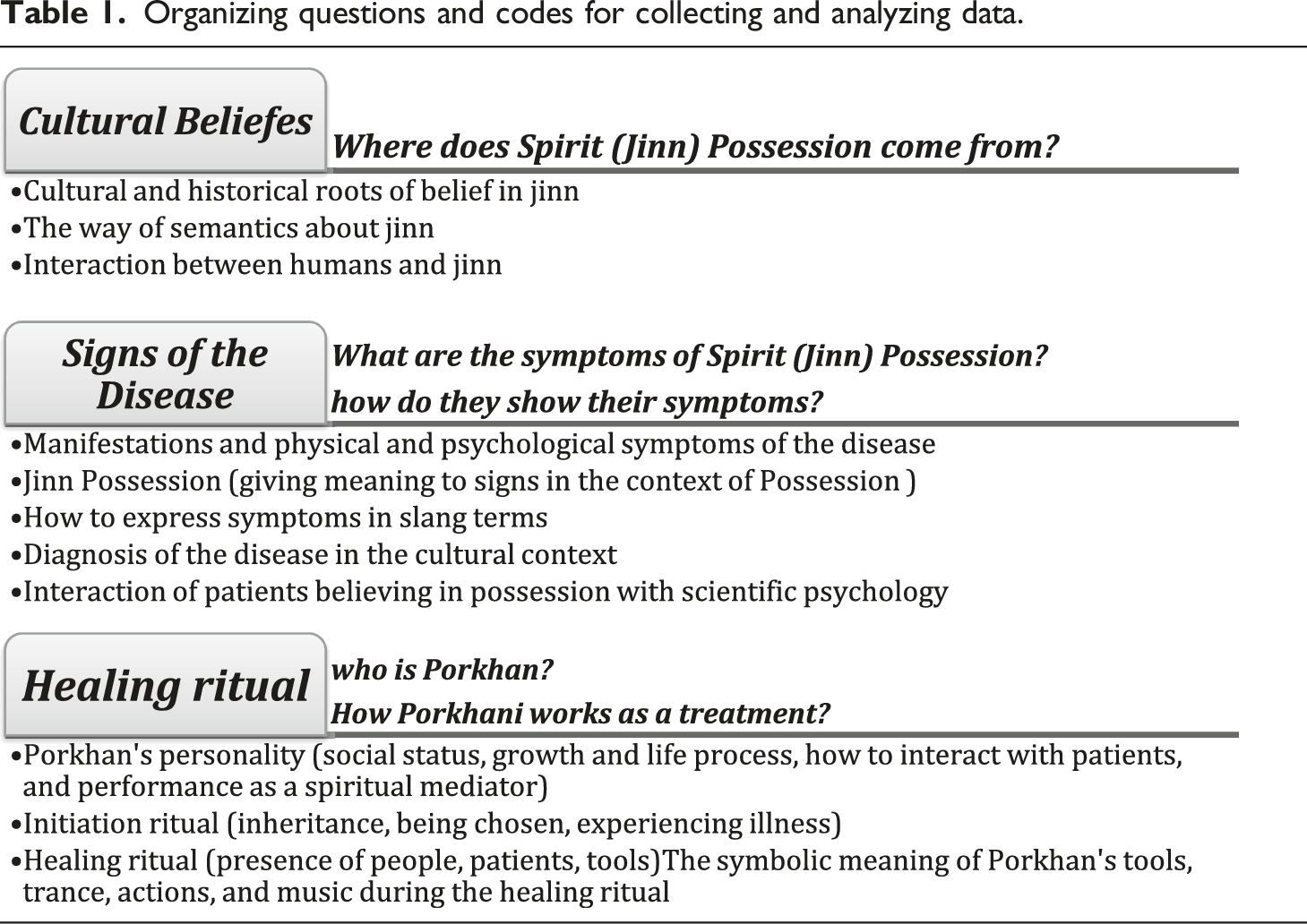
The axes of my research were semantic topics that helped me extract patterns from the data. Below every axis, proper data were included, each of which could mean separate patterns while relating to one another. Interpreting codes, categorizing them, extracting patterns, and establishing a semantic system to achieve meaningful results required that a method be adopted in which these activities could be performed. The methods of “thematic-interpretive analysis” and “analysis of field observations” helped me to classify and interpret the research data.
My primary goal was to study Jinn Possession as a culture-bound mental illness. After studying and conducting initial field research, I realized that this study should be included in the sections that had a significant connection with each other. I chose three categories to review: The study of cultural beliefs, how community members expressed illness, and finally, the treatment based on cultural beliefs which their specific culture has offered them as the ultimate cure.
Each category was asked in the form of a general question.
Where does Jinn Possession come from, and what do people think about it?
What are the symptoms of the disease in people who have been possessed by Jinn and how do people express their symptoms?
Who is Porkhan and how does Porkhani work as a treatment?
Data collected in various codes were included under each general question to facilitate the organization and analysis of information. The cycle of semantic relevance of findings.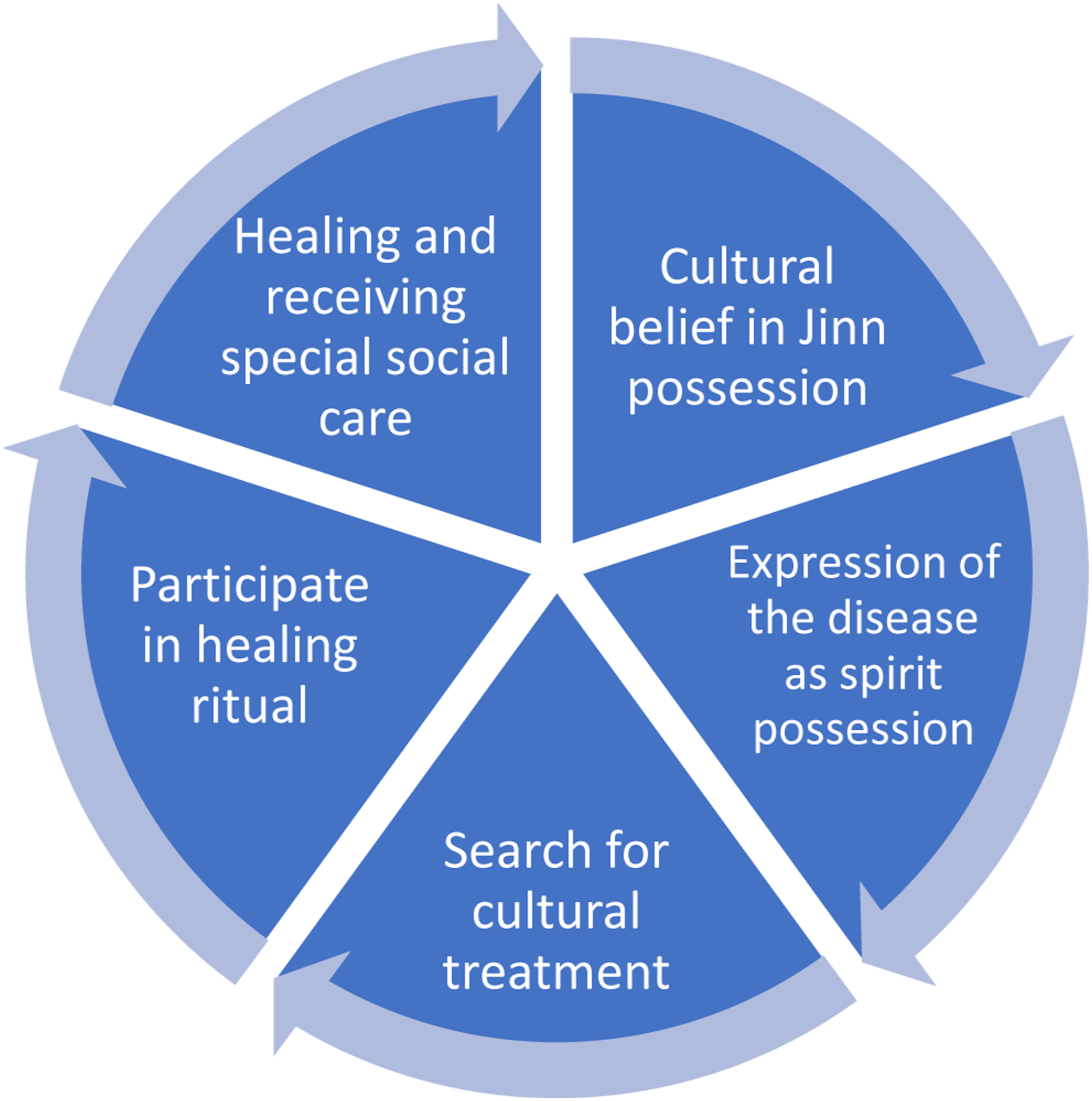
Findings
Spirit (Jinn) possession, Porkhani, beliefs, and convictions
Organizing questions and codes for collecting and analyzing data.

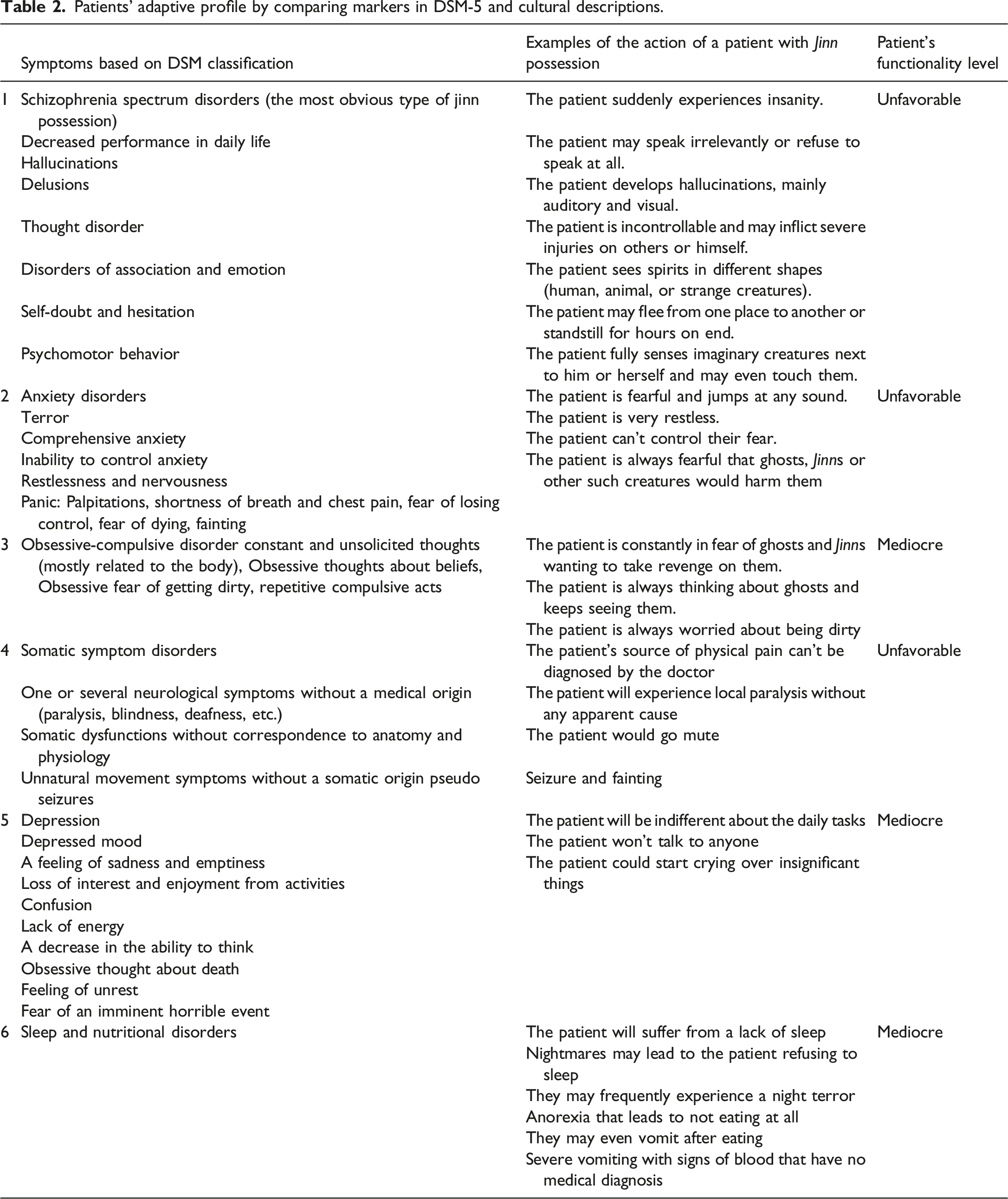
Patients’ adaptive profile by comparing markers in DSM-5 and cultural descriptions.
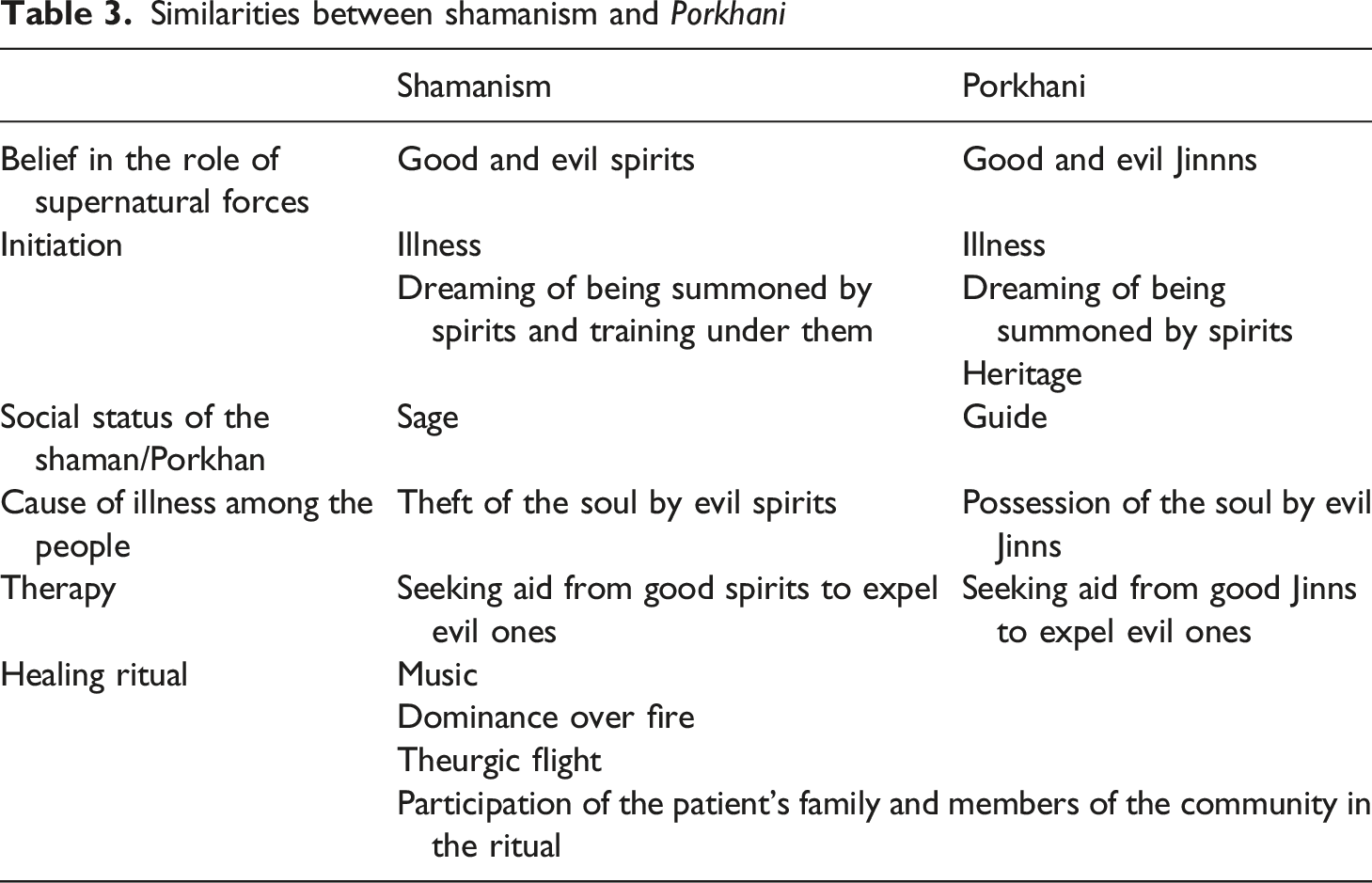
Similarities between shamanism and Porkhani
In the shamanic ritual, these good forces, which have a supernatural origin, are often used as spirits. Although it is not possible to say for sure, the entry and replacement of “spirit” with the concept of soul and spirits may be the result of the influence of Iranian and Islamic culture; in both of which spirit can be seen as invisible creatures living with human beings and divided into good and evil. Among the Turkmen-inhabited areas, spirits are generally called Jen.
In the culture of Porkhani, the spirits are creatures that exist everywhere; depending on whether people stimulate them or they have the power to find their way into a person’s existence, they capture the person’s soul and make him or her ill. The mental illness that afflicts a person due to the possession of the soul is called “Jinn possession” and can show various signs of mental disorder. In their cultural beliefs, spirits are divided into two groups: bad spirits and good spirits. Bad spirits enslave the soul of a person and make him or her ill and mad, and good spirits are those with whom the healer can overcome the bad spirits and cure the illness.
Each spirit has different power. If the severity of the illness is greater, it means that the spirits’ strength is greater, and the Porkhan should be able to confront them by consulting with the good spirits that counsel him. Not all patients who come to the Porkhan have the same chance of recovery. The patient is in a passive state. In fact, the main role is played by Porkhan and his spirits. Few do not heal, and these are the ones whose spirits, that have possessed them, are so strong that the Porkhan cannot repel them.
This balance, between the spirits who have made the person ill and the counseling spirits, must be struck in favor of the Porkhan so that the patient reaches the stage of healing. The counselors are some of the good ones, and some are steadfast, and they are with the Porkhan throughout his life, helping him overcome the spirits of the ill. Shamanic initiation: As Mircea Eliade mentions, events such as dreaming and fainting, the appearance of a supernatural being, a change in the state of consciousness, etc. As the shamanic initiation, there is also an introduction to Porkhani (fairy signing) among the Turkmens. Among these introductions, inheritance and suffering from severe mental illness, at some point in one’s life, are more recurring than other symptoms.
Inheritance of Porkhani is one of the most common ways in which the child of a Porkhan succeeds his father or grandfather; however, this status is easily passed from one generation to the next. In general, acceptance of this role (not quite knowingly), coupled with mental illness and the ability to overcome it, play a significant role in being chosen for Porkhani. The acceptance of this role is neither consciously nor selectively carried out; it is an acknowledgment of the chosen one; also, the illness that he must go through is his rite of passage, which would enable the next generation to attain the role of Porkhan. Since the illness dominates a person through spirits possessing and tormenting them, the Porkhan must be able to confront and control the spirits that have possessed his being during his illness. Succeeding in this process means that the chosen one has defeated and gained control of the spirits that were stronger than man; by doing so, he has now the ability to contain other spirits and help others who are possessed by them.
Porkhan is a person who has inherited the role of a healer from one of the members of the previous generation of their family, that is, their mother, father, or their grandfather. Besides, they must have another important characteristic, which is that they must have had severe mental illness early in life and successfully overcome it. During or late in the course of illness, the Porkhan has a dream (this dream may occur in sleep or in wakefulness while they are in a trance) when spirits call for him to take over the position of a Porkhan. The call to become a Porkhan is the third condition. These three characteristics elevate a person to the rank of Porkhan, and as a result, they have the power to go into a state of trance and overcome the bad spirits of patients.
Signs of the disease
A patient may have one or two of the following symptoms. Examination of the patient’s initial condition also depends on the severity of the initial symptoms. Some patients experience sudden psychosis, so much so that they are brought to Porkhan with their hands tied. If these patients have suddenly experienced psychotic states, they are surely possessed. If the Porkhan has any doubts that the patient’s symptoms are not due to Jinn possession, he or she will be referred to a physician. People with mental disorders rarely see a psychologist or psychiatrist.
At its most extreme, spirit possession is something similar to reactive psychosis. The transient psychotic disorder is the sudden onset of psychotic symptoms that may include delirium, hallucinations, disordered behavior, and chronic psychiatric syndromes seen in patients’ psychiatric history. In spirit possession, which is a type of sudden psychosis, in addition to irrelevance and delirium, the person has visual and auditory hallucinations. The patient may show violent behaviors towards themselves, others, and objects, which in most cases, their hands and feet are tied in order to take them to a Porkhan for treating the patients who are possessed can be of both sexes. These patients may show symptoms before this stage of psychosis, symptoms such as stress and anxiety to neutral stimuli or self-absorption and isolation, but when the family observes strange behavior and reactions from the patient, it means that the moment of insanity has begun. Some patients who develop this insanity exhibit irrelevant and delusional behaviors, but some of them become speechless out of fear or so choose to be. It is believed that some patients become insane after seeing the spirit and become speechless out of terror.
In milder cases, the patient hears sounds or strange things happen in their surroundings. The sounds they hear may be unrelated to their particular environment; it may also be the voice of someone that is constantly talking to them. The patient may also experience a number of symptoms, either simultaneously or have signs of these symptoms. Depression, anxiety, fear and hypersensitivity, sleep disorders, anorexia, etc. One of the important points is that some of these patients have consulted a physician and a psychiatrist before resorting to a Porkhan. During medication, the patients state that their illness has worsened. It is even believed that the spirit within them does not allow treatment. If the patient’s symptoms are milder than psychosis, Porkhan recommends that the person see a physician or a psychiatrist, and if there is no improvement in their condition, it is determined that the person’s illness is due to spirit possession; having already believed in that concept, the patients are more eager to search for culture-bound therapies.
One can, therefore, conclude that, rather than being included in a particular diagnostic category, patients tend to experience a different range of symptoms. This means that one patient may experience sleep or eating disorders, while for another patient, these symptoms could mark the beginning of the most severe types of mental distress. The reason for the division of symptoms into identifiable categories in the table below is to obtain a scientific translation of the spectrum of symptoms they are experiencing. However, from the viewpoint of certain cultural beliefs, any symptom, whether physical or mental, for which no medical reason can be found, has occurred due to the spirit possession by the evil spirit.
Healing ritual
The shaman united the community in a ritual that typically lasted throughout the night. Dancing amid the group while drumming, rattling, and chanting, the shaman exhorted the spirits to come to the assistance of the members of the community. Recounting myths and using a language understood by few, the shaman sang, conversed with animals, and used chants to engage the spirits. Shamanic rituals would exhort the spirits to cease their afflictions or ask them for assistance is locating game, healing the ill, or making plans for the group.(Winkelman, 2010)
The healing ritual for the Jinn possession cultural syndrome is called Porkhani among Iranian Turkmens. Porkhani refers to the calling of the spirits (Jinn) and fairies by the healer. A healer is someone special that acts as a leader and a guide beside healing patients and teach their people how to live and pray. The healer would inherit the title from one of their parents if they themselves had successfully dealt with a severe mental illness (like being possessed). Figure 1 is related to one of the rituals that we attend. The man in the photo is Ahmad Porkhan, one of the famous Porkhans among indigenous Turkmens.
Observations showed that there are two kinds of rituals, one ritual that is designed for one person, and the other is performed for a group of patients. There are many similarities between these rituals, but the main difference is the number of patients in the ritual.
The Porkhani ceremony is performed in a place that is built for this specific purpose. In the past, they held the ceremony in Turkmen tents, but now that Turkmens have settled in cities, a building with a hall and a room are used.
The Turkmen Dutar is an instrument that is used during the ritual to help the healer achieve a state of trance. The healer has several important pieces of equipment that they use during the ritual, with each one having a specific purpose: A dagger, two wooden sticks, a metal spatula, and a long rope that is hanging from the ceiling. There is also a bonfire in the yard.
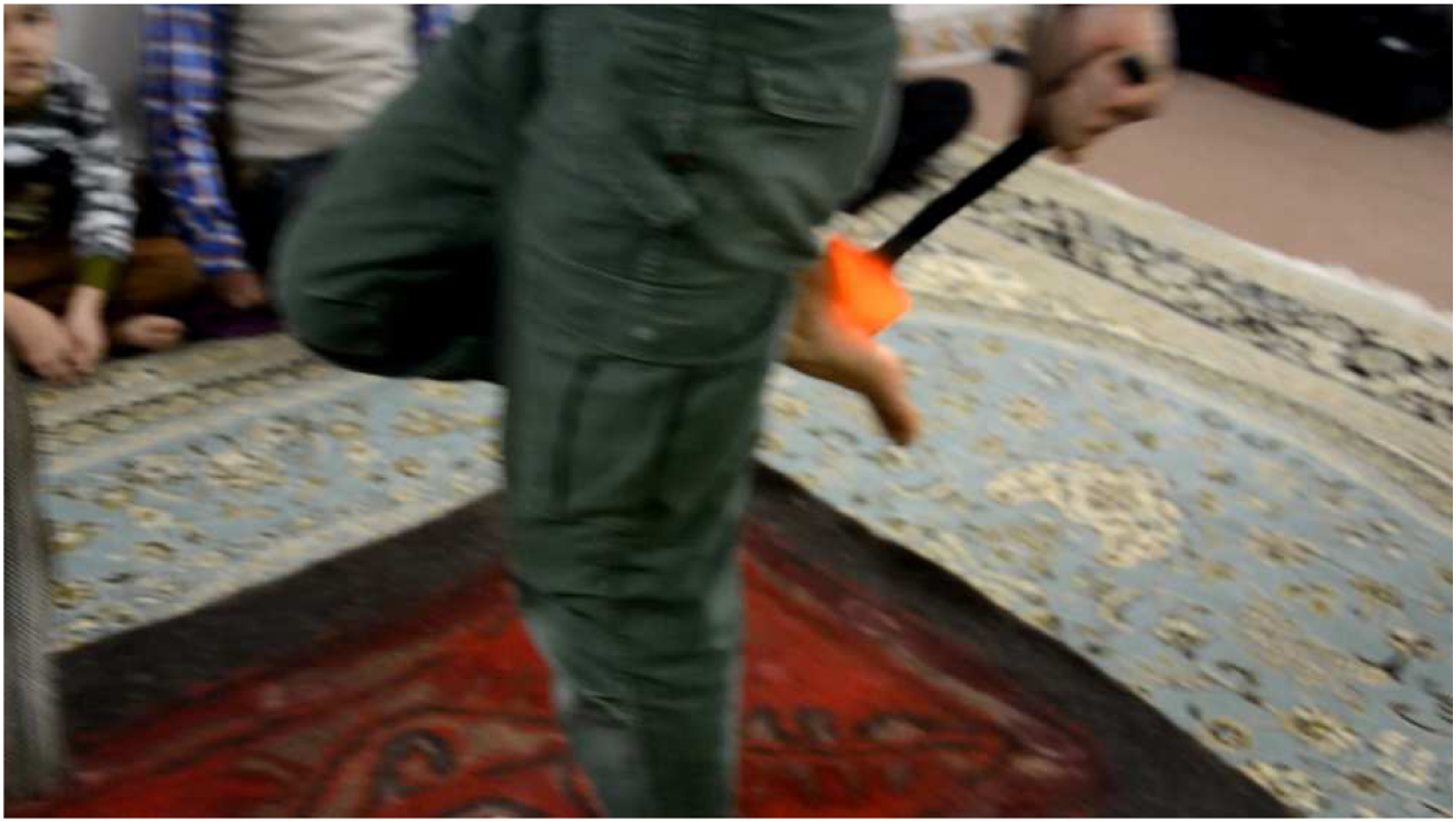
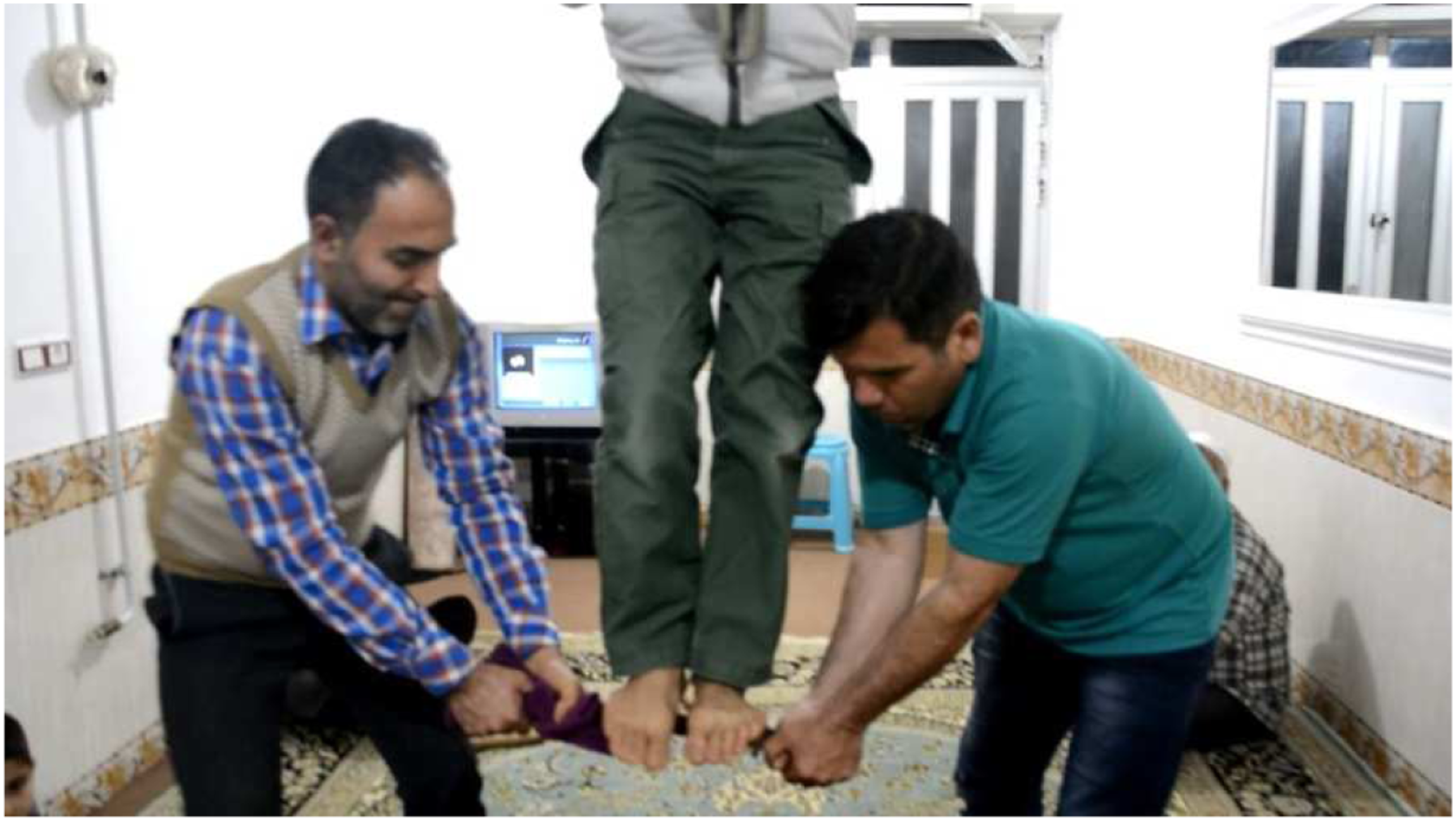
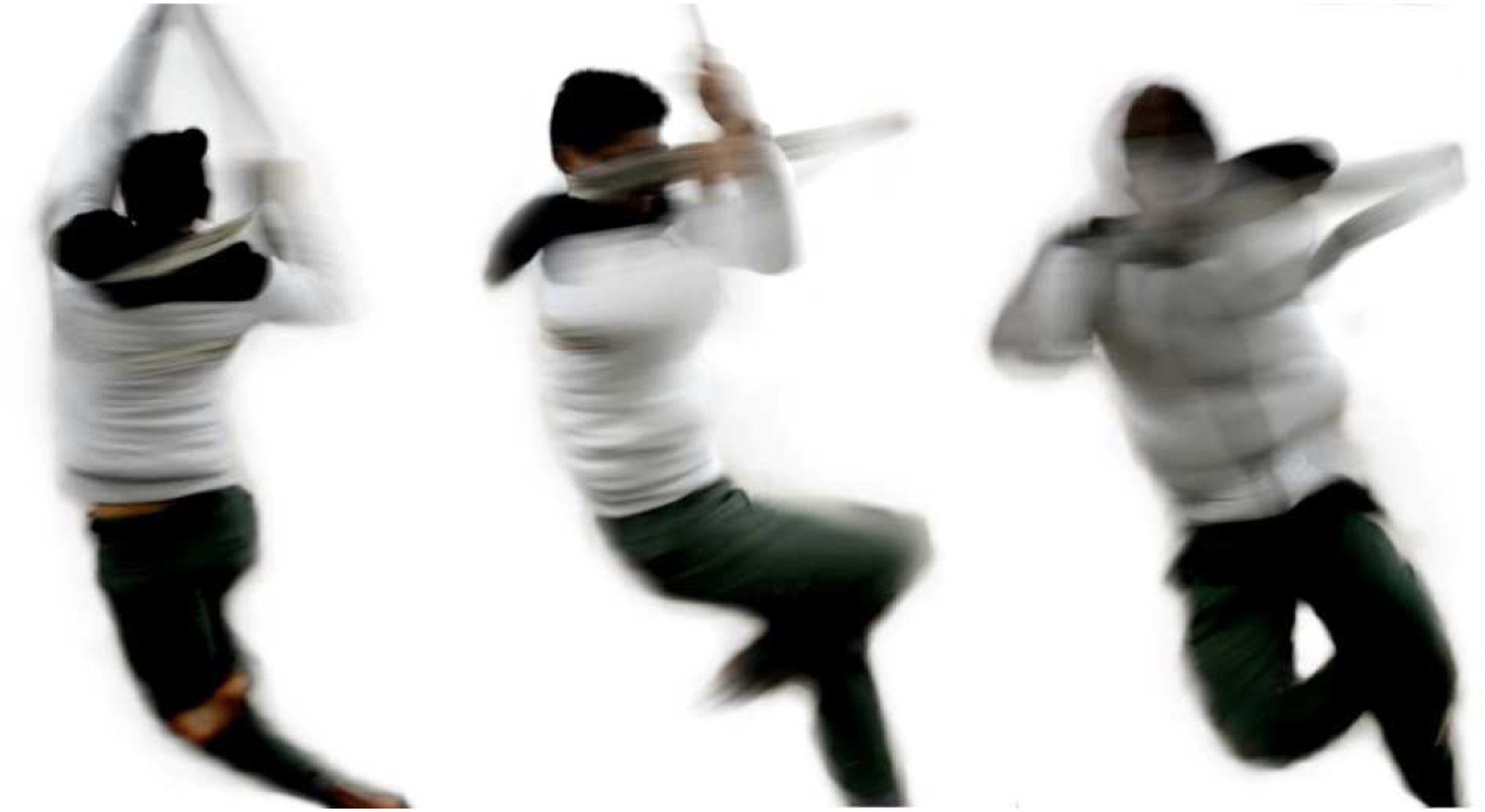
Anyone of the locals can enter the Porkhani ceremony as a witness. The patients, their family, and their acquaintances all gather at the event. The ritual starts by playing the Dutar. The healer gives a speech about the problems that the ghosts can cause for people and then gives advice on a proper lifestyle. After the speech, the healer touches everyone in the neck with a dagger and hits on it by two sticks softly. The belief is that there are ghosts there during the ritual, and they may hurt the people that are around. The healer then gets ready to dance around with the rope. Before doing so, they heat the metal spatula over the fire and bring it into the room when it turned red and rub it on their sole. They are related to Healers believe that this will awaken the spirits within them and help them exorcise the bad spirits within the patient. During the ritual, the healer would leave the scene several times to consult the helping spirits. Afterward, the healer would sit near the rope that is hanging from the ceiling and listen to the music of Dutar while humming spells, unconsciously entering a state of trance. The healer does not speak while they are in this state and only inaudible murmurs can be heard from them. They are in trance and talking to spirits. Although kneeling on the ground, the healer jumps in circles. This may look painful, but the healer does not seem to bother. Afterward, the healer tightly grabs on the rope and starts rotating while hanging from the rope. The audience gets excited and cheers up the healer. Healers believe that while they are in a trance, this rotation gets them into the same level of mania as the patient, and only then they can help the patient. After the rotation, the healer leaves the hall and returns several times and proceeds to treat the patient. Figures 2–5 belong to one of the rituals that we attended. It was performed by a Porkhan named Sobhan. They are related to touching the attendance by the dagger and sticks, rubbing hot metal spatula on his soles, hanging on the rope by stepping on a dagger and rotating around it, respectively (Figure 6). The left photo is the moment that Ahmad Porkhan leaves the scene to consult the helping spirits, the right photo is when the healer gets ready for the ecstasy. Touching the attendance by the dagger and sticks. The moment when Sobhan Porkhan was rubbing a hot metal spatula on his soles. Stepping of the dagger to grip the hanging rope to get ready for the rotation. Sobhan Porkhan is rotating around the rope as a part of the ritual.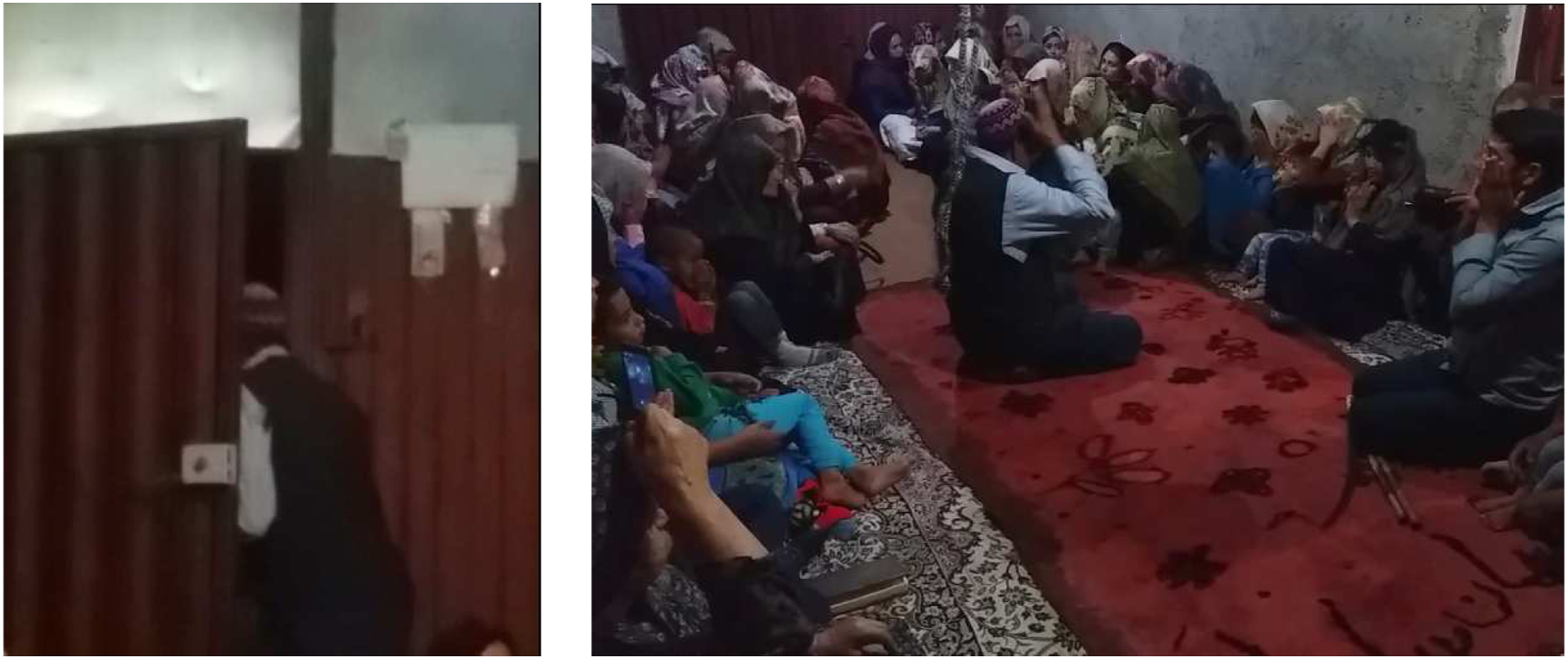

In this ritual, the healer awakens the spirits within themselves and, with the help of these good spirits, tries to save the patient’s captive soul. Each patient must participate in three rituals for the healer to treat them. After that, the healer gives the patient instructions so they could heal completely. After interviewing the patients who participated in the ritual, some believed they really did get healed. Some of them indeed got healed, and those who did not believe that the spirits (Jinns) inside them were too powerful, and they had to participate in the ritual again to defeat it.
Belief in the role of supernatural forces
According to Eliade, the shaman is beyond space and time. He lives in the mythical dimension. He crosses and travels at will between different realms of spirits, and communicates directly with spirits, animals, and plants. (Eliade, 1964) Spirits play an important role in shamanism. In the Central Asian context of shamanism, spirits are related to everything that exists, such as persons, animals, plants but also to objects. Elements of nature such as places, rivers, mountains also have spirits, while ancestors and so called “master spirits,” or spirits which are beyond the material realm, also exist (Ivanescu & Berentzen, 2020).
Porkhans believe that spirits are present in all places. Spirits are divided into good and evil that could either offer help or cause suffering and illness. Porkhan is one who is able to communicate with spirits through his spiritual abilities; he can seek help from them or expel them in case of illness. The Porkhan guards and protects the souls of his community and supports those who are most vulnerable. It is believed that Porkhan can communicate with the ghosts of the dead and receive advice on the affairs of the society. Sometimes, they may consult with the deceased relatives of a patient in the process of healing them.
Initiation
Three shamanic behaviors need to be assessed, since they have most often been interpreted as pathological. These are initiation crisis, mediumship, and shamanic journey. The initiation crisis is the dramatic onset of painful symptoms and unusual experiences that marks the beginning of the shamanic life for some practitioners and corresponds to what Joseph Campbell described as “the call to adventure.” Although mediumship is not universal among shamans, it is common enough and its psychological nature curious enough to have aroused claims by some researchers that it is evidence of psychopathology (Walsh, 1997). Eliade mentions two types of shamanic calling. In one, shamanism is targeted; that is, spirits choose a person and groom them to become a shaman. In the other, shamanism is hereditary—common in the western and central Siberia—and is usually passed from the father to his children (Eliade, 1964).
In the Turkmen societies, the one who reaches the position of the Porkhan must meet three conditions. First, someone in their family (one or two generations prior) should have been a Porkhan; not all Porkhans have this privilege and it can be overlooked. However, the other two conditions are necessary: illness and the call. Severe mental illness of which hallucinations and delusions as well as temporary paralysis are the most obvious symptoms. They usually meet many spirits during the illness. Porkhans claim that after a long period of isolation, they were able to overcome their illness. During or late in the course of illness, the Porkhan has a dream (this dream may occur in sleep or in wakefulness while they are in a trance) when spirits call for him to take over the position of a Porkhan. The call to become a Porkhan is the third condition.
Social status of the shaman/Porkhan
The shaman was able to release his own soul at will whenever he needed to and send it on a journey. Since he had difficult and dangerous tasks, one of his abilities was to be able to force the helping spirits to assist him in order to be more successful in his affairs. The shaman was the mediator of this world and the world of spirits, and his duty was to heal. Other tasks of the shaman were to predict the future, to maintain food resources, and to guide the community to avoid disasters. People considered them to have spiritual power, entrusting them with the care of the souls of all the members of society. This is also common among modern shamanic communities, and the shaman is revered for his spiritual abilities and leadership of the community (Muller, 1997)
Among the Turkmen communities, Porkhan has a special social status. This social status is due to his therapeutic role and the fact that he can communicate with Jinns and spirits and find solutions to people’s problems. Usually, during the healing ritual, when a large number of people gather, he talks to people about social issues and dangers and disasters. This speech also includes praying to repel the evil and threatening forces from the society. Porkhan’s advice is binding on the people. His ability to communicate with the spirit world qualifies him for the influence he has over the community. Porkhans not only guide the religious life of the society but also protect the souls of all the members.
Illness of people in the community
Traditional shamans believe soul loss creates a hole in the person’s spirit, and that a psychic intrusion can invade the weakened spirit, leading to physical disease. For this reason, an extraction is often performed before the soul retrieval. Traditional shamans also recognize that apathy, depression, amnesia, and other psychological illnesses can result from soul loss (Lepp, 2004). In the Islamized shamanism of Central Asia, the shaman no longer enters Supernatural, because nothing has been carried away there. Indeed, in most cases in this kind of shamanism, disease is no longer ascribable to a “desertion of the soul” but to the fact that a place located in the real world, that is, the patient’s body, has been taken over or occupied by an evil spirit. Simply being close to an evil spirit is sufficient to produce a disorder. (Garrone, 2013)
Among the Turkmens, the soul of the ill is possessed by evil forces. These evil forces are called “Jinn.” The person who is possessed must be healed and freed from the Jinn’s possession. Loss of control and experience of a wide range of physical and mental symptoms are all known as Jinn Possession. Possession means the captivity of the soul and the loss of authority over one’s own body. Of course, there is no denying the difference between the cause of the illness in shamanistic thought and Porkhani: the loss of soul against the possession of soul. But the main similarity between these two ideas and methods is that the soul is harmed by the immaterial forces of evil. In the shamanic method, the stolen soul is returned, and in the Porkhani method, the possessed soul is freed from the bondage of evil spirits.
Therapy
Traditional shamans will go into trance to diagnose the problem affecting a client. If the shaman discovers that soul loss is at the root of the client’s problem, she will perform a soul retrieval. The shaman journeys to the underworld to recover the lost part, always with the help of power animals, spirit helpers, or other guides (Lepp, 2004). Mircea Eliade noted that some shamans, such as the Buryat, attempt to call the soul back before going out to look for it. If the soul does not come back of its own volition, the shaman will descend to the land of the dead, recapture the soul, and bring it back. (Eliade, 1964).
Porkhans believe that in order to cure the illness, one must seek help from the helper spirits to expel the evil spirits that have caused the illness. At the cultural healing ritual, the Porkhan goes into trance and in that state attempts to find forces more powerful than the evil spirits that have possessed a client. Usually, each Porkhan has an army of good and helpful spirits at his command that rise and heed his instructions, when he summons them in the state of trance. During the healing ritual, the Porkhan must free the soul of the possessed person. By lighting fire as well as spinning from a rope that is hanging from the ceiling, he elevates himself higher than the people present in the ritual to meet the helping spirits in the state of trance and defeat the evil forces.
Healing ritual
Studies on healing rituals in each community show that although the goal may be the same, there are as many different ways of performing healing rituals as there are shamanistic communities. Communicating with spirits through trance and changing the state of consciousness are common features of all therapies, but the tools used and the method of performing the rituals are different in each community. But there are some commonalities, including dramatic movements and dancing. During the ritual, after they have reached trance, Porkhans perform unconscious movements such as banging their heads on the wall, jumping around on their knees, whispering, and conversing with spirits.
Music
Dutar is one the most important musical instruments in the Porkhani ritual, which helps the Porkhan, through rhythm, reach the state of trance.
Dominance over fire
Shamans utilize fire in various ways in different shamanic rituals. In Porkhani ritual, it is used to awaken spirits and stimulate the Porkhan to help him enter the spirit world.
Theurgic flight
According to Eliade, flight is a magical manifestation of trance and freedom of the soul, resembling a bird that can travel to the heavens. Among the Turkmen Porkhans, a long rope is tied to the roof of the house or the black tent (kara-Oy or yurt) during the ritual, and hanging from it, the Porkhan spins sharply. It is believed that in this way the Porkhan can enter the spirit world.
Participation of the patient’s family and members of the community in the ritual
This is also seen in many shamanic healing rituals. Among the Turkmens, aside from the patient, the participants also benefit from the expulsion of the Jinns. Additionally, creating strong social solidarity leads to more community-based care for the patient.
Conclusion
We cannot deny the effects cultural elements and society have on our behavior and consequently on mental disorders that may follow. Pathological studies without understanding a person’s cultural background, standards, norms, and abnormalities are not possible (Alarcón, 2014). Cultural diversity and intercultural relations are considered one of the challenges as well as opportunities for modern psychologists (Matsumoto & Juang, 2017).
In its latest editions, DSM pays more attention to cultural issues, but the dominance of individualism and compactness overpower the cultural approach in their categorization cannot be ignored. Mental disorder diagnostic systems such as DSM and ICD are based on examining the visible signs and symptoms, which means that they ignore the relation between neurobiological processes and behavioral systems, either in research, etiology, or modern treatment methods (Zarani et al., 2016).
People learn about how to deal with issues and how disorders occur in their semantic system and culture, regardless of symptoms and characteristics of the mental disorders. In other words, if problems lead someone in the society towards mental illness, their cultural beliefs about spirit possession make it so that their illness is associated with the possession of the soul, and they would show symptoms that correspond with that internalized belief system. These cultural and social constructs do not necessarily form consciously in people; rather, the depth of people’s belief in these cultural constructs determines what symptoms they show as they deal with mental disorders. Therefore, understanding the patient’s cultural interpretations and their lifeworld is critical in understanding the approach to dealing with problems and how symptoms occur.
In the Turkmen’s ethnic approach to culture, there seems to be no effort for distinguishing between symptoms and creating diagnostic categories. The illness engulfs the soul, and, based on the intensity of the symptoms in the patient, different levels of treatment are deemed necessary. When the cause of illness has an external source like demons and evil spirits, the history of the illness’s development becomes irrelevant. The healer tries to treat the patient using supernatural means that can deal with the invading evil forces and heal the patient through the healer. The belief in soul possession includes a wide range of states and etiology, but what is common among them is the captivity of the patient’s soul by ghosts or evil forces that make them sick. The healer’s duty would naturally be exorcising these evil spirits with the help of good spirits and ultimately releasing the patient’s soul from those evil forces. According to the members of a culture, an illness consists of a string of cultural elements such as cultural concepts, cause of illness, symptoms (its intensity), and the treatment ritual, which are all defined in the context of culture. Cultural beliefs around a cultural syndrome lead the members of that society to look for treatments in line with those beliefs, and very few would go after scientific treatments. This is the field in which scientific views in psychology are challenged in pathology and treatment.
Symptoms of mental disorder occur in the same way in all people, both in modern and traditional societies. One of my goals in this research is to make a comparison between the perception of mental illness between what is a scientific assumption and what is seen in a particular culture (Turkmens of Iran). This particular perception of illness actually depicts a form of experience that ranges from expressing distress to healing.
Anyone facing a traumatic psychosocial situation could develop a mental disorder. In this regard, the role of social relations in a specific culture is emboldened. In this study’s target culture, it seems that when a person suffers from a traumatic experience, he or she is culturally and unconsciously ready to accept the concept of Jinn possession. Jinn possession allows a person to express his or her distress by relying on a cultural belief and collective social agreement. In other words, possession is the way that culture offers the vulnerable person. When an ill person is possessed by a Jinn among the Turkmens, he or she receives all-round attention. The patient, then, enters a social therapy process. The patient is not alone in this situation; for the cause of illness attracts the community’s attention—family members, people close to the patient, the community and most importantly the Porkhan, who has a special social status and strong influence. The community views the individual as a “chosen one.” Family and friends try to find a cure for the patient. The healing rituals allows them to benefit from the Porkhan and supernatural forces; that is why healing, in the scientific approach, does not equate improvement. Instead of psychotherapy and searching for the real personal and social causes, the patient receives social assistance. The same social agreement about Jinn possession as the cause of illness that allows the patient to express distress, leads to an agreement about healing.
How people react when faced with a situation that may lead to mental disorders shows that all the focus in diagnostic classification systems is on people’s current condition with an attempt to give a clear description of the pathology of the illness in the patient to treat them in the best way possible.
It is obvious that such an approach waters down culture-bound syndromes to separate symptoms and ignores cultural beliefs that connect the etiology of the illness to treating it in a cultural setting, considering it an indistinguishable whole.
So, even though the signs and symptoms are similar in both approaches, cultural beliefs about the etiology of symptoms and the search for treatment in line with these beliefs can be the gate for the communication between a patient and their treatment method, are different. It is an important issue that can lead to failure in the connection between the patient and the healer if not taken seriously by the official treatment systems for these syndromes.
Footnotes
Declaration of conflicting interests
The authors declared no potential conflicts of interest with respect to the research, authorship, and/or publication of this article.
Funding
The authors received no financial support for the research, authorship, and/or publication of this article.
