




Abstract
There is an ongoing debate on how political parties that form coalition governments keep tabs on each other during the drafting and negotiation of new bills. Our article complements existing studies focused on the parliamentary stage of law-making by enriching current knowledge with an analysis of the executive phase, where bills may be significantly changed before they are submitted to the legislature. Contrary to theoretical expectations, results based on unique data from the Czech Republic reveal that bills which are heavily altered during the executive phase are subsequently significantly changed in the parliament. Additional interaction models indicate the effect is stronger for bills that are highly significant for the proposing minister and are a greater distance from any coalition compromise. Our findings open the question of why the coalition parties leave the resolution of some controversial issues to the parliamentary phase: the outstanding conflict may be genuine, or the coalition MPs may just be playing out a prearranged and staged battle that enables the coalition partners to show their distinctive qualities to the voters.
Introduction
In democratic parliamentary systems, the influence of legislatures on law-making is, paradoxically, rather limited. The famous ‘90 percent rule’ states that 90 percent of bills (drafts of statutes) are initiated by the executive, of which 90 percent are adopted by the parliament (Brunner, 2013; Olson and Norton, 1996). The dominance of executives over legislatures traditionally forms a hallmark of the Westminster system under the machine of majority single-party governments. Yet under proportional parliamentarism, the situation is more complex (Müller and Meyer, 2010). The parliamentary arena is not merely a deliberative body for political parties to present their policy positions, and it can assert significant influence over the law-making process. In contrast to the conventional view, current studies on parliaments’ influence on law-making suggest that government bills are substantially changed before their adoption (Dixon and Jones, 2019; Martin and Vanberg, 2005, 2011; Pedrazzani and Zucchini, 2013), the average ratio of change reaches for example 20 percent in case of Icelandic parliament (Indridason and Kristinsson, 2018) and 22 percent in case of the Swiss one (Gava et al., 2021). This raises the intriguing question: what is the driver for these alterations? Are the bills subject to change due to coalition disputes, the accommodation of an opposition’s position, or, for example, pressure from public opinion or interest groups?
The available sources provide only partial answers. Initial studies on coalition governance assumed that governing coalitions separated the various portfolios and the ensuing policy outcomes were a result of the autonomous proceedings of ministers (representatives of parties) who treated ministries as their ‘fiefdom’ (Laver and Shepsle, 1996; Hallerberg 2004: 16). However, several studies later challenged this scenario, ‘at least in its fully-blown version’ (Müller and Meyer, 2010: 1067). These claim that the outcomes of law-making are more a result of intracoalition bargaining (André et al., 2016; Martin and Vanberg, 2004, 2005, 2011; Tsebelis, 1995; Thies, 2001). This approach has been referred to as collective responsibility mode – each coalition party serves as a veto player and the consensual agreement of all coalition partners is required for the adoption of the final version of a bill (Tsebelis, 1995). All coalition governments need to tackle the problem of how to ensure the effective and balanced mutual control of ministers from different political parties in order to contain ministerial drift.
Various instruments can be employed to scrutinise coalition partners during the executive and parliamentary stages of law-making (Strom et al., 2010). A legislative review in parliament is claimed to be one of the most effective control mechanisms. As argued by Müller and Meyer (2010: 1071) ‘no bill can become law without parliamentary approval, and hence the members of parliament can study the proposals of coalition ministers with partisan yardsticks in their mind before they vote a bill into law’. Legislatures serve as a structural solution to the ‘keeping tabs’ problem inherent in coalition governments. But such an explanation begs another question: would it not be more convenient for a government to settle any outstanding disputes during the (often out of public view) executive phase of drafting, that is, before bills are forwarded to the legislature, and thus reserve the parliamentary stage for the smooth approval of bills? A coalition government is able to anticipate disagreements in the legislative arena among coalition (or even opposition) parliamentary parties and adapt bills accordingly in the executive phase. The cited literature empirically questions this standard view and reveals that parliaments do make amendments to government bills. Yet we still know little about the factors causing the transformation of government bills in legislatures and the link between the executive and parliamentary phases of law-making, and how the former affects the latter.
This study aims to fill the gap in this missing piece of the puzzle in the coalition politics of the legislative process. We test the ‘keeping tabs’ argument (André et al., 2016; Höhmann and Sieberer, 2020; Martin and Vanberg, 2004, 2014; Müller and Meyer, 2010) against all bills introduced by Czech coalition governments between 2010 and 2017. However, unlike the existing research, we focus not only on the parliamentary phase, but also take the analysis a step further using unique data from the executive phase that allow the exploration of the above-defined nexus between both stages. We found the average ratio of changes to bills in parliament (17.6 percent) is lower than in the executive phase (30.2 percent). The main result shows that only the bills for which there is no coalition agreement due to ministerial drift, and those bills that are at the same time salient for the drafting ministry, are being altered the most. Interestingly and counter intuitively, such bills are changed in both the executive and the parliamentary phases. This suggests that even for bills that are heavily preprocessed by coalition parties during the executive drafting process, the legislature remains a key structure for ensuring that coalition partners stick with the joint coalition policy agreement and policy position.
The paper is structured as follows. We start with a discussion of the current state-of-the-art on coalition law-making and we derive testable hypotheses from the perspective of the literature on coalition control. Specific attention is dedicated to the theory of bill change that is based on the anticipation strategy of a government (initiating ministries). Next, we briefly summarise the determinants in the Czech case. The research design comprising the data and the measurement of variables, as well as the model specification, is explained in the subsequent section. The penultimate section presents the results of the main model and the interactions of selected variables, and the implications of our analysis are discussed. The conclusion reviews our main findings.
Determinants of legislative review in coalition governments and their impact on changes to government bills in legislatures
The smooth adoption of legislation is a key element in the success of all executives, and indeed most bills initiated by governments are easily adopted. Yet, in contrast to single-party majority governments, studies on coalition governments highlight several distinctive features that complicate law-making (see chapters in André et al., 2016; Müller and Strøm, 2000). First, because a coalition is composed of various political parties, there is a classic principal-agent problem. The principal is the collective government and the agents are the ministers from coalition parties who are in charge of ministries. The position of a minister may differ from the government’s position, that is, the ideal coalition compromise. Ministers often pursue their own policy goals to appeal to their party members and voters. This ministerial drift may originate from various factors – depending on their proportion of the seats in an executive or a parliament, coalition parties have different levels of bargaining power. They also pursue divergent policy interests and disagree on the relevance and importance of many issues (see André et al., 2016; Höhmann and Sieberer, 2020; Martin and Vanberg, 2014, 2020; Müller and Meyer, 2010; Müller and Strøm, 2008). Second, there is the question of the unequal positions of ministers from one political party vis a vis other coalition parties, because the former hold a particular advantage over the latter in terms of information availability and competence in drafting bills in the relevant policy field (Thies, 2001). The more the policy preferences of the coalition parties differ, the more control mechanisms are required. Thus the crucial goal of a coalition government is to make the ministers adhere to coalition goals instead of serving their party (Müller and Meyer, 2010). Research has identified a broad array of mainly institutional instruments designed to avoid the threat of agency loss that could cause changes to the initial version of a bill proposed by a minister. These instruments exist in both the executive and the parliamentary phases of law-making. The latter serves as the final form of control as regards the coalition agreement and compromise (André et al., 2016; Martin and Vanberg, 2014; Müller and Meyer, 2010).
The executive phase of law-making encompasses the activities performed between the submission of the first version of a bill by a minister and its adoption by the government. During this period coalition parties try to identify possible areas of ministerial drift, resolve any outstanding differences in their positions, and amend bills in order to move the output closer to a common coalition compromise. There is no rational explanation why a government would submit a bill to parliament that would be defeated (Shepsle, 2010). The same logic might be applied to important changes to a bill – a government would become vulnerable if conflicts among coalition partners were waged in the open parliamentary arena. To this end coalition partners traditionally exploit various institutional tools such as inter-ministerial consultations, appointments of junior ministers to ministries held by other political parties (Lipsmeyer and Pierce, 2011; Thies, 2001), binding coalition agreements (Indridason and Kristinsson, 2013; Krauss, 2018) and the establishment of special (informal) coalition committees (Andeweg and Timmermans, 2008). Also, the drafting of a bill is done by professionals with long experience and this should ensure that the policy intent of politicians is faithfully reproduced in the legislative language and there are no legal flaws (Dixon and Jones, 2019). If the presented logic of the executive phase is justified, a small amount of changes to government bills in the parliamentary phase would not necessarily mean that the parliament is powerless, but that the coalition government correctly anticipated what was acceptable for the smooth passage of a bill through the parliament. Gava et al. (2021: 189) refer to this situation as ‘the problem of observational equivalence’. We therefore expect that serious changes to bills in the executive phase were aimed at resolving disputes among coalition partners or avoiding further difficulties and that these bills would be subsequently challenged and amended less in the legislatures.
Our assumption of the importance of the executive phase does not necessarily negate the abovementioned ‘standard argument’ concerning the crucial role of the parliamentary phase. First, some scholars doubt that the devices available in the executive phase are theoretically or empirically sufficient for policing coalition agreements (Martin and Vanberg, 2014). Second, the participants may not have the presumed complete information regarding a current or future situation, and thus may find themselves in a state of ‘bounded rationality’ (Dixon and Jones, 2019). Under these conditions, the resolution of intracoalition conflicts might be postponed until the legislature phase. Naturally, if such conflicts occur their impact on a bill depends on the congruence of the policy preferences of coalition parties. The ministerial drift thesis infers that the greater the distance between an initiated bill and a coalition compromise, the greater the likelihood of substantial changes being made to the bill by parliament (Müller and Strøm, 2008). Furthermore, parties may not only have divergent policy preferences, but they may also assign various levels of importance to different policy areas (Bäck et al., 2011). The saliency theory of party competition predicts that parties focus on the policy areas crucial to their voters, as opposed to an agenda preferred by other parties (McDonald and Budge, 2005). Thus the greater the saliency of the policy field in which the bill is initiated, the greater the incentive to deviate from the coalition compromise in order to fulfil electoral objectives and serve their own party’s policy goals. Building on the keeping tabs argument, the effects of saliency and policy distance should be independent, but both factors are also likely to interact and reinforce one another (see Höhmann and Sieberer 2020).
The party that proposes a bill is not the only participant to assess the saliency of the bill. Some bills may be of crucial importance to other subjects, such as interest groups, other political parties (including opposition parties) or the general public. In this regard it is worth recalling that parliaments also serve as communication platforms for political parties; this is where they can present their policies and political priorities to voters (De Wilde 2014). Legislatures traditionally function as deliberative bodies where the most salient and fundamental issues are discussed (Proksch and Slapin 2012). Issues debated in parliaments are usually covered by national media and, conversely, salient issues discussed in the media are reflected in parliamentary debates (Rauh, 2015). We therefore assume that this ‘general saliency’ (Giannetti et al., 2015) of a bill will affect the amount of changes made to the bill by the legislature. General saliency is indirectly linked to the keeping tabs framework. Media attention, pressure from external subjects and the criticism of opposition parties are all factors which can increase conflict among coalition parties and boost the mutual control among them, resulting in more amendments to bills.
The largest party in a coalition is customarily entrusted with the post of prime minister. Although the power of this position varies in each country, given the recent trend in presidentialisation of prime ministers (Poguntke and Webb, 2005), and because a ruling party (i.e. the party of the prime minister) usually holds other key ministries, we assume this party is the strongest party in a coalition. Of course the party of the prime minister has the motivation to pursue its own policy agenda unchanged, yet the smaller coalition parties will generally have stronger incentives for increasing their control, precisely because they want to counterbalance the dominance of the main party (André et al., 2016; Müller and Meyer, 2010). The prime minister is responsible for enforcing policy coherence in a coalition (Müller et al., 1993) and as the media and general public tend to punish the main party for any dissonance in a government, the prime minister’s party may be willing to accede to the demands of other parties. Thus one can assume that bills introduced to parliament by ministers of the main ruling party will be subject to more changes.
While various parliamentary instruments could be employed for reviewing government bills (e.g. written or oral questions, see Höhmann and Sieberer, 2020), there is a consensus among both practitioners and scholars that a strong system of specialised committees is by far the most effective device for legislative review. It allows coalition parties to reduce the informational advantage of ministers by engaging in effective scrutiny, and to counteract instances of ministerial drift by proposing changes to draft bills (André et al., 2016; Carroll and Cox, 2012; Kim and Loewenberg, 2005; Martin and Vanberg, 2011). To advance the mutual control among coalition parties with heterogeneous preferences, a committee corresponding to a specific ministerial portfolio could be chaired and shadowed by an MP from a different coalition party to the minister (André et al., 2016; Carroll and Cox, 2012). Following the keeping tabs thesis, we assume that bills scrutinised by a committee chaired by a coalition partner will be changed more.
While positions on policy issues within a coalition are of primary importance regarding the amount of changes to bills, there are other factors that can affect the outcome of the legislative review in parliament. It is argued that coalition parties (ministers) defending bills have a stronger bargaining position if their preferences for a bill are closer to the position of the median legislator (Martin and Vanberg, 2014). Under a coalition government this means that the minister initiating a bill could even seek support from opposition parties, and thus has more alternatives at his/her disposal (Laver and Schofield, 1998; Martin and Vanberg, 2014). We assume that in this situation a bill is more protected from scrutiny by coalition partners and faces less amendments.
The institutional context of law-making in the Czech Republic
The Czech Republic has a classic parliamentary political system (Brunclík and Kubát, 2016). Its bicameral parliament, consisting of a Chamber of Deputies (further referred to as the ‘Chamber’) and a Senate, was ranked as the fourth strongest in the world in terms of formal powers and institutional capacities (Fish and Kroenig, 2009: 751). The Senate has a moderating influence on law-making at best (the Chamber could overturn the Senate’s veto or its amendments to bills), and the constitutional framework makes the Chamber the locus of law-making. Its position formally originates from a direct link to the executive: constitutionally, the government is only responsible to the Chamber through a positive investiture vote (Zbíral, 2015). Due to the proportional electoral system for the Chamber, historically, all majority governments have been formed by coalitions.
On average, Czech governments are responsible for about 70 percent of bills initiated in the Chamber, and they hold a virtual monopoly on the most important and complex proposals. An elaborate process of drafting and negotiating bills within the executive precedes their submission. A draft initiated by a ministry undergoes obligatory inter-ministerial consultations, where the initiator accommodates comments from other ministries and public bodies. The bill then faces a review by legal experts within the Legislative Council of the Government, and finally requires adoption by a majority of the members of the government. After submission to the Chamber, each bill must undergo three readings. The government has few formal instruments for setting the agenda in the very autonomous Chamber, and its bills do not receive any preferential treatment. All MPs may propose amendments to bills; however, changes proposed by comparatively strong committees (André et al., 2016) have a higher probability of adoption. The majority of MPs present at a vote must support the changes to the bill and its final version during the ultimate vote in order for the bill to be adopted (for details on the formal framework of law-making, see Zbíral, 2020a).
Research design, data and methods
The Czech Republic was selected for analysis because it represents a prototypical case of a classic parliamentary democracy with a tradition of coalition governments. We might thus expect that political systems equivalent to Czech institutional and political systems may show similar results. For example, descriptive research investigating the role of executives in law-making in Central European states confirms that the formal structures and processes involved in the executive phases of drafting statutes and in the interaction of governments with parliaments are comparable, at least in their main features (see contributions in Zbíral, 2020b). This enables us to generalise the findings from linkages between the executive and the parliamentary stages of law-making.
The model processes data from the two coalition governments in power between the years 2010 and 2017. The first was the centre-right coalition government of three political parties under prime minister Petr Nečas (Civic Democratic Party – ODS), the second was a central-left coalition government of three political parties headed by Bohuslav Sobotka (Social Democrats – ČSSD). The unit of analysis is an individual bill submitted by the government to the Chamber, the resulting dataset totals 353 bills.
Dependent variable and model specifications
Bill change is measured through an automated quantitative text analysis based on word counts, which we preferred to other options such as counting the number of amendments (Martin and Vanberg, 2005, 2011; Pedrazzani and Zucchini 2013) or a qualitative hand-coding of the assessment of bills’ changes. The dependent variable is expressed as a change coefficient ranging from the value of 0 (no change) to 100 (a bill is unrecognisable from its original). The coefficient was computed by a text comparison of the bills when it entered the Chamber and when the amended version was forwarded to the Senate. The main data source was the official webpage of the Chamber.
1
All downloaded bills were converted to txt files with unified encoding (utf-8). Texts were tokenised into single words and punctuation marks and numbers were removed. All words were transformed into lower case and then transformed into continuous bi-grams. Our approach generally followed operationalisation in Gava et al. (2021). However, we did not remove headers or footers from the bills because they are relevant in the Czech context, particularly where changes were being made to already existing laws. Such preprocessed texts are suitable for measuring the distance between the first version of a bill and the final version using the Jaccard dissimilarity index S, which treats the bills as sets
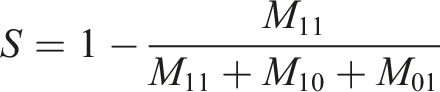
Figure 1 reveals the overdispersion and positive skew of the dependent variable. Thus, the standard OLS is not a viable solution and the Poisson model was employed. The ratio of changes can be treated as rate data because change is scaled according to the sum of the bigrams. Furthermore, the data are not overdispersed in a way that would require the application of a negative binomial regression model, nor do they contain an excessive number of zeros which would justify the use of zero-inflated beta regression models. Finally, we have included control dummies for the Nečas government, ministerial portfolio, and the policy area. All the alternative model specifications, as well as robustness checks, are provided in the code and Supplementary Appendix. Distribution of values – draft change coefficient for the parliamentary phase. Note: Based on our own computation of draft texts provided by the Chamber of Deputies.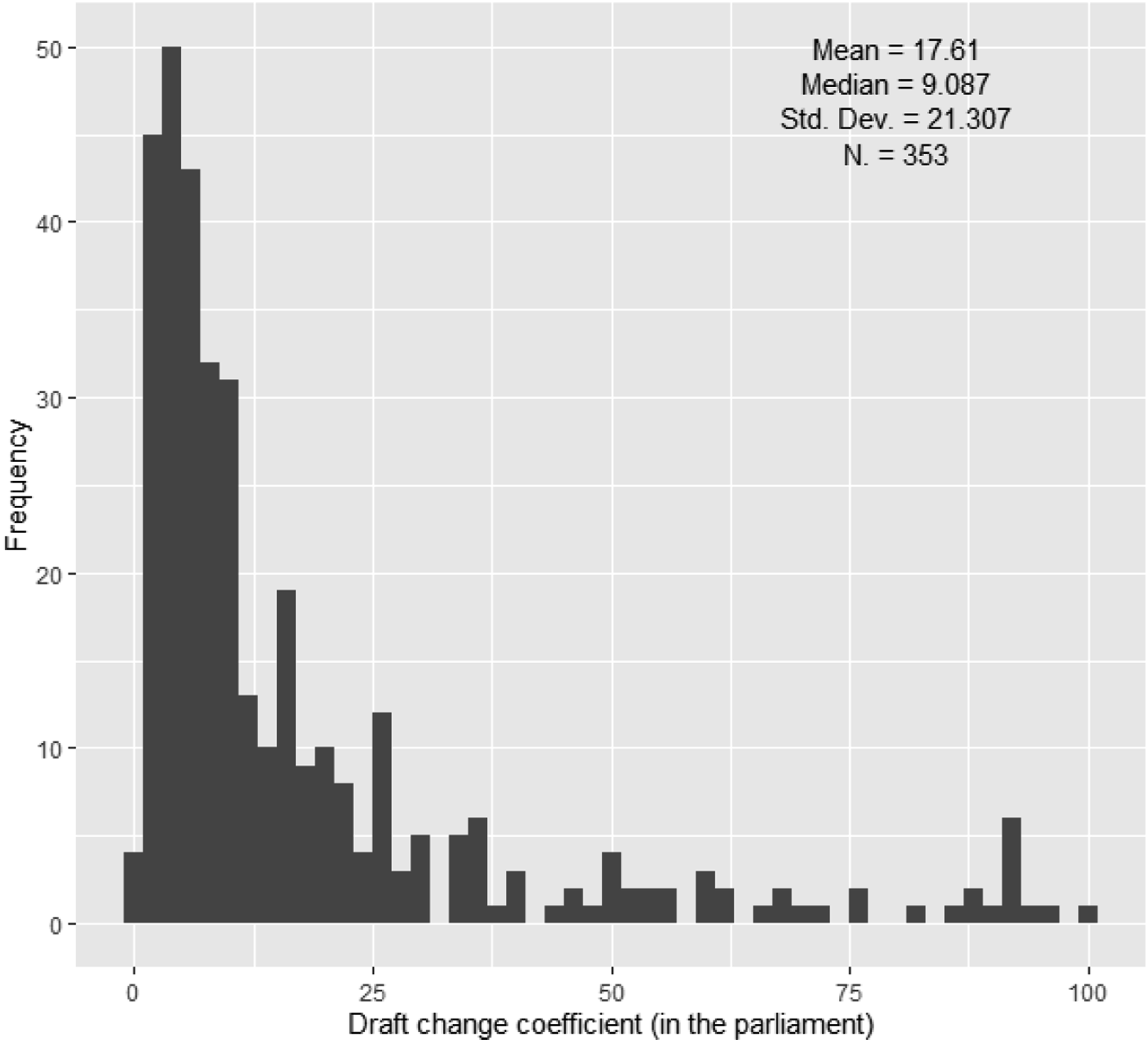
Independent variables
The independent variables (IV) that measure the political factors are coded as follows. The ratio of change in bills in the executive phase (H1) is retrieved with the same algorithm as the dependent variable, the change is observed between the first version of a bill tabled by the ministry and the final version as adopted by the government (and subsequently submitted to the Chamber). Versions of bills are extracted from the government’s official database, VeKLEP. 2 As with the existing theoretical assumptions concerning the parliamentary phase, we assume that the greater level of changes to bills during the executive phase signifies more extensive mutual scrutiny by coalition partners.
To account for the ideological distance from the coalition compromise (H2a) and the saliency of a bill for the drafting political party (H2b), we have used the Chapel Hill (CHES) dataset. This measures the saliency of an issue and the policy position of a party through the use of an expert survey (Polk et al., 2017). For each bill proposed, categories were assigned (civlib_laworder, deregulation, environment, redistribution, regions, urban_rural, sociallifestyle, spendvtax), as well as each party’s respective score in saliency. This option is more fine-grained than assigning the dimensions to each ministry because some bills from certain policy fields are not always initiated by the relevant ministry (e.g. bills related to industry may be drafted by the Ministry of the Environment). In this we generally replicated the approach used by Zubek and Klüver (2015). For a coalition party`s distance from coalition compromise (H2a) we employed the measurement developed by Martin and Vanberg (2014). This computes the absolute distance between the policy position of the party of the proposing minister regarding the relevant policy dimension and the coalition compromise position.
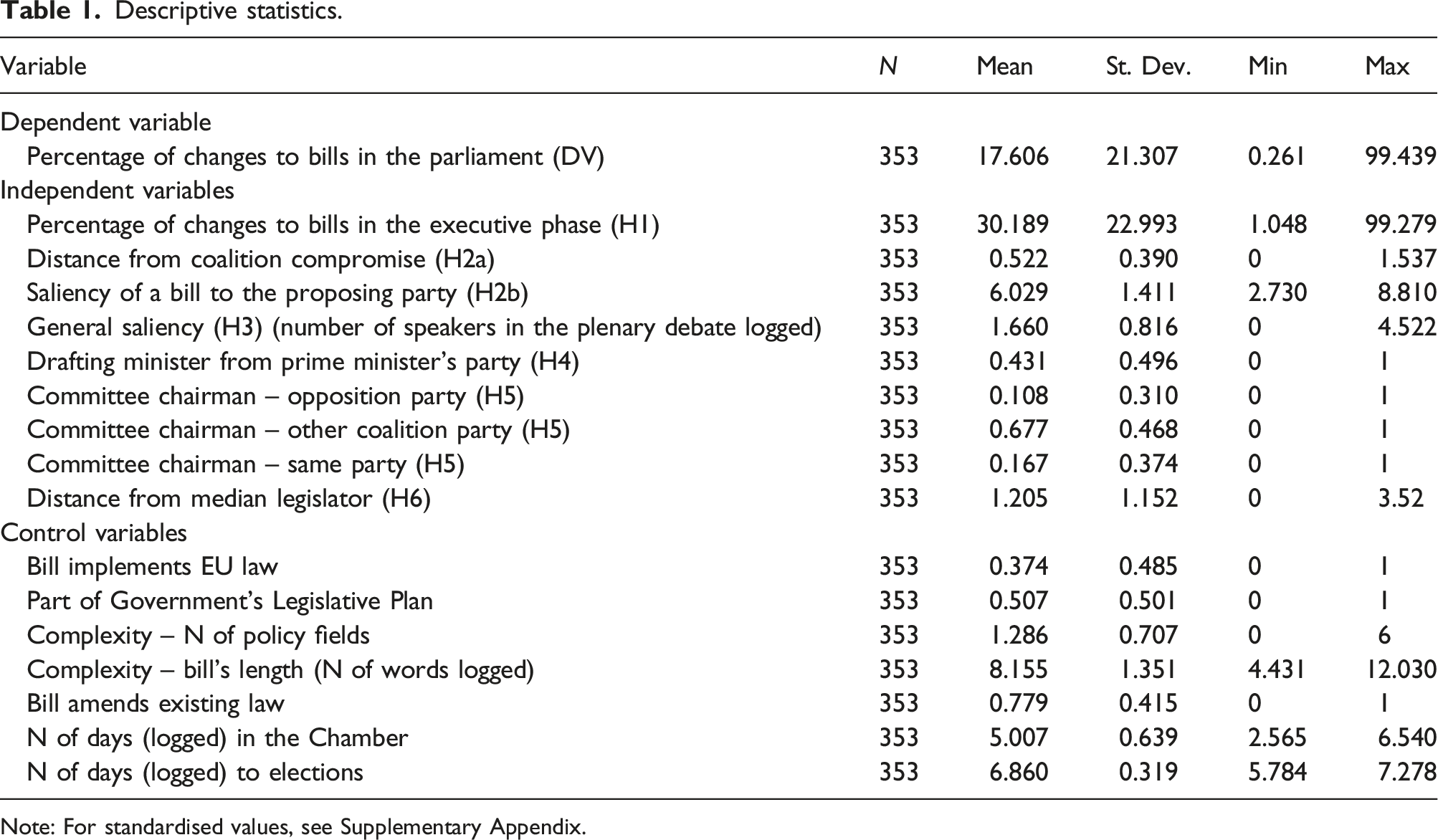
We use the length of a plenary debate (logged number of speakers) as a proxy measure for the general issue saliency of a bill (H3) (Giannetti et al., 2015). Debates take place during the first reading of a bill and they are usually broadcast on public television, thus reflecting the bill’s importance, not only to the MPs, but also to interest groups, the general public and the media. The bills initiated by ministries held by the main coalition party (the prime minister’s party, H4) were coded as a dummy. There are three options for which party the chairman of the main scrutinising parliamentary committee 3 (H5) is affiliated: the same political party as the initiating minister, another coalition party or an opposition party. In order to test for all possible variations, we included all possibilities in the model as dummies, in order to see their marginal effect, even though some are correlated (multicollinearity was tested). For H6 we computed the distance from the proposing coalition party`s minister to the median legislator (the position of all parties present in the Chamber) over a given period (Martin and Vanberg, 2014).
Control variables
While much of the variation in the dependent variable can be attributed to political factors stemming from the problems of a coalition government, there are also other factors that may possibly affect the amount of changes made to a bill. We added these factors to the model as control variables, although it must be emphasised that the distinction between ‘technical’ and ‘political’ factors is not always straightforward. The first control variable – if a bill implements EU legislation (dummy) – presents a perfect example. It seems to be independent of political interests, and the empirical data confirm that EU-related bills are less scrutinised within the Chamber than purely domestic bills (Zbíral, 2017). Yet ministries can also claim (even non-existent) EU obligations in order to derail resistance to a bill by coalition partners, and this would signify a political strategy. The second control variable is the presence of a bill on the Government’s Legislative Plan (GLP); a list of the bills the government plans to submit during the electoral period (dummy). We may assume that such bills would be changed less because they are considered a priority and were at least partly pre-approved in the coalition agreement. We also added variables that are proxy measures for the ‘complexity’ of a bill. First, we simply control for the length of the final bill (number of words logged) and expect that longer bills will be changed less. Second, complexity is measured as the number of policy fields a bill affects; the value was coded from the VeKLEP database. Another technical dummy variable worth controlling is whether a bill is structured as an amendment to an already existing law, or it is a new self-standing bill; it is expected that the latter are altered more (Dixon and Jones, 2019). Last, we included two time-related control variables: the number of days a bill spent in the Chamber (logged) and the time when a bill entered the Chamber (coded as the number of days between the bill’s introduction to the Chamber and next general election, logged).
Results and discussion
Our analysis starts with the main model (Figure 2) for the amount of changes to a bill in the Chamber without any interaction terms, which we visualise in separate figures or in the Supplementary Appendix alongside the control models and alternative specifications. The results of the main Poisson regression model are presented by means of coefficient plot where the points represent the estimates and the lines express a 90 percent confidence interval. The coefficients are ordered by their magnitude from positive to negative values. The variables are standardised by the Gelman (2008) method by two standard deviations (2SD) for ease of interpretation. The resulting coefficients are directly comparable to binary predictors, because a 2SD change corresponds to a change from 0 to 1, that is, approximately from the minimum to the maximum value of an independent variable in Table 1. This is associated with the change in the dependent variable by a coefficient value which holds all the other independent variables constant. Percentage of changes to bills in the Chamber of Deputies. Note: Poisson regression models (package ‘coefplot’). Control dummies: Nečas government, Ministerial portfolios and Chapel Hill categories (not displayed). Non-indicator variables scaled by dividing two standard deviations (Gelman 2008). Pseudo-R2 = 0.25, null deviance = 6704.3, residual deviance = 4684.1, N = 353. Descriptive statistics. Note: For standardised values, see Supplementary Appendix.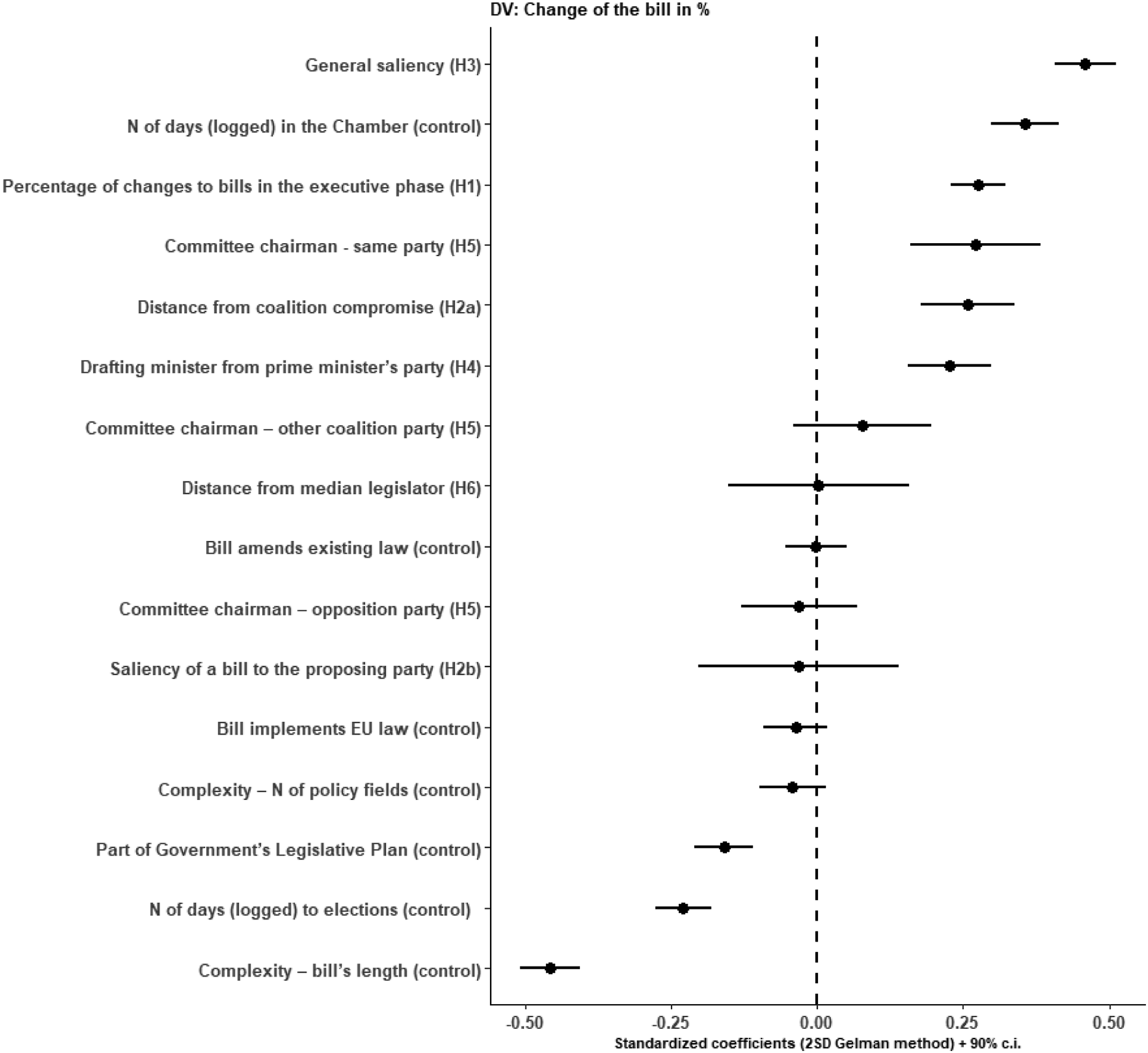
The existing literature which explores coalition dynamics through the scrutiny of law-making in the parliamentary phase has not empirically addressed the possible effect of the anticipation strategy of a government, as none of the studies took into account the extensive drafting efforts that each bill undergoes before it is submitted to the legislature. Surprisingly, the results from our model show the opposite effect to what was expected in H1 – bills that are changed more during the executive stage are also amended more in the Chamber. We suggest two alternative but partly reinforcing explanations for this finding. The first refers to the ‘bounded rationality’ thesis (Dixon and Jones, 2019), which argues that the minister (coalition party) initiating the bill has incomplete knowledge, and despite intensive negotiations in the executive phase, he/she is unable to foresee all future developments and objections that may occur in the legislature. The second explanation is that the government may not necessarily aim to draft a ‘perfect’ bill, but rather prefers a strategy that intentionally leaves the final consensus until the parliamentary stage. It may be beneficial for each coalition party to carry over few unresolved issues in a bill and ‘fight’ over them publicly in the parliament. Unfortunately, we are not able to discern if this conflict is real or staged, or whether the distributed gains and final results have already been agreed upon, but whatever the case, each coalition party has the opportunity to distinguish itself from other coalition partners in the eyes of the voters.
If the scrutiny of bills in a legislature serves as a significant mechanism for constraining agency loss in a coalition government, we expect to observe that the policy position and saliency of a bill for coalition parties influence the amount of changes to the bill. In line with Martin and Vanberg’s (2014) claim that the proposing minister must find a compromise with coalition members (H2a), we see that those bills in which the policy position of a proposing party differs from the coalition compromise are changed more. The relationship is substantial, as the bills with the most divergent positions are changed by 0.257 of the expected log counts in the dependent variable, thus clearly supporting the keeping tabs thesis. While there is no independent effect the saliency of the bill on a proposing party (H2b), we followed the approach of Höhmann and Sieberer (2020) and also tested a possible interaction between the saliency of a bill to the proposing party and the distance from the coalition compromise. Figure 3 (methodology based on Berry et al., 2012) reveals that there is a positive and significant interaction between both variables. If a minister proposes a bill that is salient for his/her party, and at the same time it is some distance from a coalition compromise, the incentive for ministerial drift is the greatest, but clearly in practice there are mechanisms in place in the legislature that allow coalition partners to efficiently counter such ministerial drift. The effect of distance to coalition compromise on change of bill in the Chamber conditioned by the saliency of a bill for the proposing political party. Note: The X axis shows unstandardised values. Interaction package for R. Regression model with interaction in the Supplementary Appendix.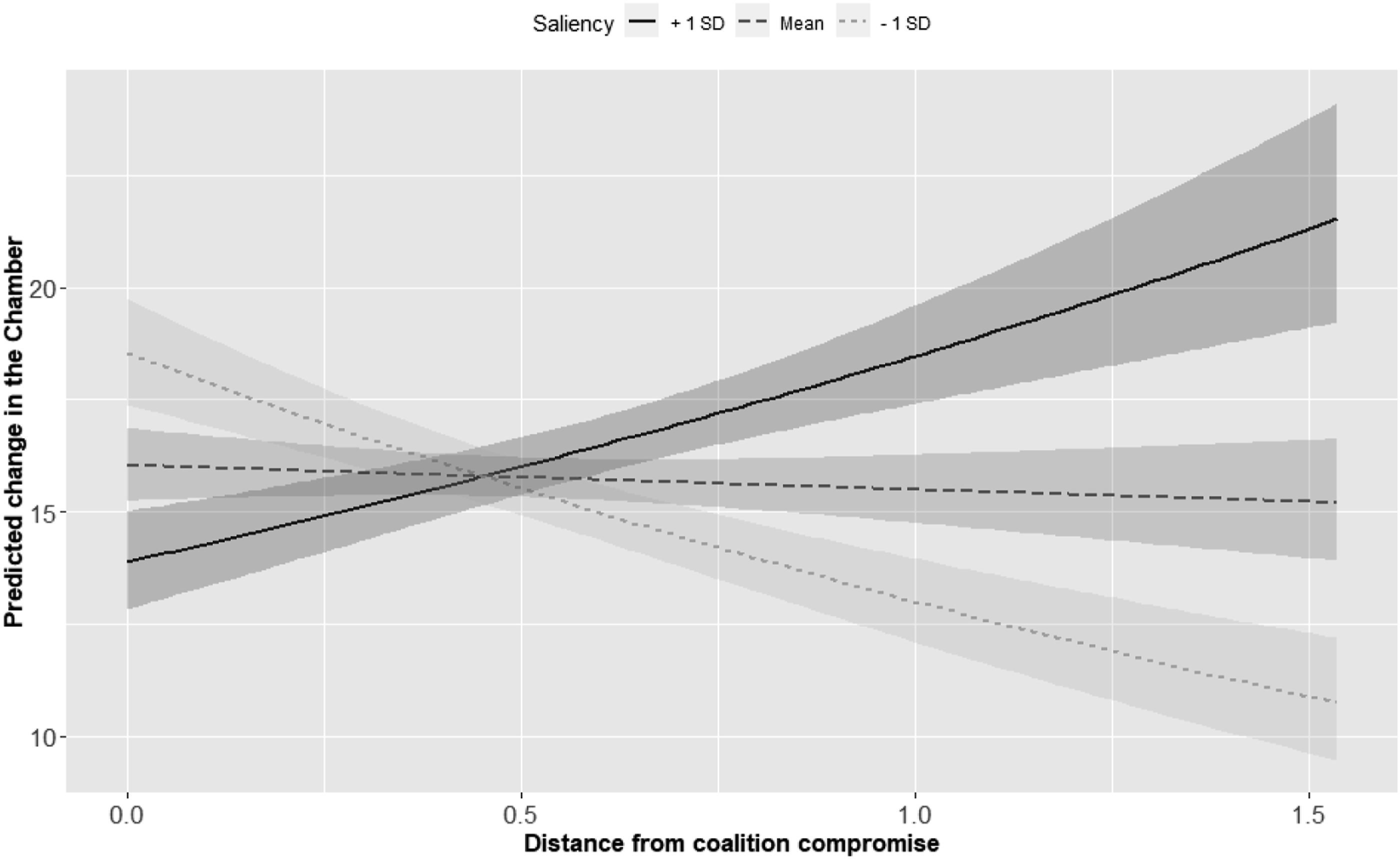
Saliency for the proposing party and distance from a coalition compromise are also conditional factors regarding the effect of the number of changes in the executive phase on the level of changes that occur during the parliamentary stage (H1). The analysis indicates that bills with significant values for both variables evince a stronger positive relationship between the level of changes in the executive and the parliamentary stages (see Supplementary Appendix). This result complements the previous finding that the content of a coalition’s most controversial bills is not agreed upon before their submission to the Chamber, and the resolution of coalition conflicts continues actively throughout the whole law-making process.
In terms of positions on policy issues, the number of changes to bills is positively affected by their distance from a coalition compromise, yet not by the distance from the median legislator (H6). This indicates that governments prefer to resolve conflicts among coalition parties and do not strive to accommodate an overarching consensus in the legislature. The weak direct influence of opposition parties on law-making is often mentioned (Martin and Vanberg, 2011), and it is confirmed by the alternative model specifications which, in contrast, calculate with the distance to the mean position of the opposition (see Supplementary Appendix).
The keeping tabs argument is further supported by the finding that bills initiated by ministers from the party of the prime minister (H4) were, on average, changed more than bills drafted by ministries held by other (smaller) coalition partners. This would suggest that the strongest party in the coalition must be willing to compromise more instead of taking advantage of its privileged position.
Strong committees serve as key platforms for legislative scrutiny in the Chamber. The analysis of the impact of committee chairpersons provides interesting findings. In line with the keeping tabs argument, most committees in the Chamber do apply the scheme where the chair of the committee is from a different coalition party to the ‘corresponding’ minister. However, unlike studies cited above, we found no statistically significant effect of this coalition ‘shadowing’ on changes to the bills (H5). A quite similar (insignificant) impact was recorded for situations where the main committee scrutinising a bill was chaired by an opposition MP, and this also contradicts existing literature (Fortunato et al., 2019). In our view, the quite limited formal powers of committee chairs in the Chamber may be the reason for these results, and this raises questions concerning the effectiveness of the mechanism in constraining ministerial drift (also Sieberer and Höhmann, 2017). The last possible combination, where the chair of a committee and the proposing minister are from the same party, deserves special attention. Surprisingly, the results from the model indicate that bills are changed more in this scenario. We can speculate that in these cases the cooperating tandem of minister and committee chair is able to escape the control of coalition partners, and the changes made may actually favour the interests of the proposing party that had been blocked in the earlier stages of the legislative process (e.g. in the executive phase).
Unlike the situation where the saliency of a bill to the proposing party was not independently correlated with change, the general saliency (H3) measured by the number of MPs participating in a plenary debate has a very strong positive effect on ratio of changes to bills. Deliberation and the accompanying media and public attention clearly make a difference. Yet the results from the general model do not allow us to unearth the causality, nor to answer the question as to whether a long debate provides the impetus for further changes, or does it only reflect the existing distinctive features of a bill. However, certain tentative conclusions may emerge from an exploration of the interactions between general saliency and other factors. Bills that are a smaller distance from coalition compromise and have a high general saliency are changed the most. General saliency has a much greater positive effect on bills that were not significantly changed in the executive phase (see Supplementary Appendix). The interpretation of these findings is quite complex but it seems that general saliency is independent of intracoalition dynamics. We can assume that long plenary debates are instigated through motivations other than coalition conflicts (e.g. the interests of the opposition, lobby groups or the general public), yet governments subsequently seek to accommodate previously unexpected (the bounded rationality thesis might play a role) concerns raised during debates, and amend bills accordingly.
The variables related to the keeping tabs argument can provide an explanation for most of the variations in the changes to the bills, yet several technical factors also substantially affect the number of amendments made in the Chamber. For example, bills listed in the Government’s Legislative Plan are changed less, suggesting stronger coalition consensus on these proposals. Although there is no difference between self-standing new bills and amendments to existing laws, lengthier bills are changed proportionally less. Such a result is expected because MPs only rarely propose long amendments that require significant changes to complex bills. The timing of a bill’s submission to parliament plays a considerable role in the number of changes made to the bill. The closer to an incoming election a bill is introduced, the more changes it faces. This finding is not in line with studies which argue that parliamentary activity decreases due to the electoral campaigning of MPs (e.g. Gava et al., 2021), and that MPs concentrate more on the scrutiny of coalition partners when a coalition is in its early stages (Höhmann and Sieberer, 2020). The opposing logic is more fitting and supports claims that coalition partners need to learn how to use the mutual control mechanisms effectively, and that they defend their distinct interests more assertively when elections are looming (Müller and Meyer, 2010). Another explanation assumes that ministers prefer to submit uncontroversial bills at the beginning of their period in office in order to ‘get the agenda going’, and they leave the more disputable bills for the later stages of their term in office. Finally, the model confirms the logical positive correlation between the duration of negotiations that take place over a bill in the Chamber and the level of the bill’s changes.
Conclusion
While the executive phase dominates the legislative process, there is still a continuing debate in the literature concerning how members of coalition governments keep tabs on their coalition partners to closely monitor their distinct interests. The keeping tabs thesis has usually been tested using data from the parliamentary stage of law-making. The main contribution of our article is to extend the analysis to what has been neglected up to now; the executive phase of law-making. Coalition parties do not formally have to postpone the mutual control to the legislature because in most countries there are extensive instruments in place that potentially allow intracoalition disputes to be settled before a bill is submitted to the parliament. While we assumed that bills that were heavily changed during the executive stage would undergo only limited amendments in the legislature, data from the Czech case reveal the opposite positive relationship: bills that faced a battle in the executive stage continue to be changed in the parliament. The interaction models indicate the effect is stronger for bills that have a high saliency for the proposing minister and are a greater distance from coalition compromise, thus further reinforcing the keeping tabs thesis. The general saliency of bills also has a significant impact, but this factor seems to be independent of intracoalition dynamics.
The novel finding that there is perpetual coalition scrutiny of the same bills enriches our understanding of the functions of coalition governments and legislative reviews in general. Unfortunately, the applied automated text analysis does not allow us to unearth the drivers behind the coalition parties’ strategies. Empirically, are the same controversies settled in the executive and parliamentary stage, or are new ones opened in the latter phase (bounded rationality)? Substantially, are the conflicts in the parliament between coalition partners genuine or are the MPs just performing (in the executive phase prearranged) staged drama that enables each coalition party to publicly ‘fight and secure’ its priorities and to convince the voters that they are genuine in their beliefs and that there are clear distinctions between them and their coalition partners, without endangering the final adoption of the bill? If the latter is the case, the real reasons behind the observed changes to bills in parliament, reflecting the keeping tabs thesis, could face significant reconsiderations. Our study thus opens questions for further research based on alternative theoretical and methodological approaches.
Supplemental Material
Supplemental Material - Perpetual scrutiny? Mutual control among coalition political parties in the executive and parliamentary phases of law-making
Supplemental Material for Perpetual scrutiny? Mutual control among coalition political parties in the executive and parliamentary phases of law-making by Robert Zbíral, Jakub Lysek, and Jaroslav Bílek in Party Politics.
Footnotes
Declaration of Conflicting Interests
The author(s) declared no potential conflicts of interest with respect to the research, authorship, and/or publication of this article.
Funding
The author(s) disclosed receipt of the following financial support for the research, authorship, and/or publication of this article: Grantová Agentura České Republiky; 17-03806S.
Supplemental material
Supplemental material for this article is available online.

Notes
Authors biographies
References
Supplementary Material
Please find the following supplemental material available below.
For Open Access articles published under a Creative Commons License, all supplemental material carries the same license as the article it is associated with.
For non-Open Access articles published, all supplemental material carries a non-exclusive license, and permission requests for re-use of supplemental material or any part of supplemental material shall be sent directly to the copyright owner as specified in the copyright notice associated with the article.
