




Abstract
How does political representation of radical right parties (RRP) affect the relationship between immigration and right-wing terrorism targeting out-group members? Drawing on right-wing terrorism data of 31 OECD member states between 1970 and 2017, this paper explored the threefold relationship. Causal mediation analysis revealed that while growing immigration increases right-wing terrorism, RRPs have a mediation effect of decreasing attacks. Sensitivity analysis and robustness checks lend support to the findings. The article provides novel implications for the political consequences of RRP success and the effect of political representation on extremist violence.
Introduction
Over the past decades, the linkage between immigration and terrorist attacks has been heatedly discussed. However, how does political representation affect this relationship? The question is important in the context of surging radical right parties (RRPs), whose nativism and cultural racism are fundamentally different from mainstream political ideologies (Rooduijn et al., 2017; Rydgren, 2005; Mudde, 2007). While liberal discourse has warned that controversial activities of RRP politicians would sabotage democracy and result in political violence, others have argued that RRPs’ electoral breakthrough reflects public opinion opposing technocracy and elitism.
This article provides systematic evidence that RRPs’ political representation has a negative mediation effect on right-wing terrorism and immigration nexus. In contrast to existing work, I do not treat (RRP) representation as a cause or a consequence of extremist violence; instead, I treat it as a mediator that affects right-wing terrorism in response to growing immigration. 1 In doing so, I aim to consolidate two pieces of scholarship – immigration-terrorism inference and the role of political parties in terrorism – that the empirical literature has not brought together.
Political parties have played a vital role in fuelling or scaling down terrorism and hate crimes. On the one hand, the literature has shown that violence decreases when political representation increases and vice versa (see e.g. Li, 2005; Piazza, 2010). Ravndal (2018) identified that a combination of immigration, lower support for RRPs and public repression of right-wing extremists relate to right-wing violence in North Europe. 2 Koopmans (1996) suggested that the political competition among elites and issue salience create a discursive window of opportunity to mobilise right-wing social movements and racist violence in Western Europe. Extremist violence is less prominent in countries where far-right racist parties are strong (Koopmans, 1996). On the other hand, recent research suggested that right-wing terrorism is more likely to occur when RRPs are electorally successful. For example, electoral gains of AfD and hate crime positively correlate with one another in Germany (Jäckle and König, 2017).
The literature is guiding two opposing theoretical expectations. First, RRP decreases terrorism because political representation ensures that those holding grievances against out-groups do not resort to violence. 3 Simultaneously, party elites supposedly have no incentive to risk their career by fuelling inter-group violence. Nevertheless, the argument is challenged by historical anecdotes that fascism rendered the ideological support for violent attacks toward societal out-group members in the 20th century. Fascist parties encouraged ethnic divisions and subsequent inter-group violence instead of deterring them. On the same note, modern RRP elites are exploiting widespread immigration scepticism. Hence, the second possibility is that an RRP might convince extremists that the violent exclusion of out-group members has vital importance for cultural protectionism. While social scientists have explored both possibilities, part of the embedded problem is an unclear pathway. They dismiss simultaneous causality and the possibility that both RRP success and right-wing terrorism might be leveraged by a change in population balance caused by immigration.
This article stresses that while mounting immigration and refugee crises increase right-wing terrorism, political representation of RRPs has a mediation effect of scaling down the escalation. To test the argument, I drew on causal mediation analysis and a series of robustness checks. Although we know little about whether RRPs’ electoral success increases right-wing terrorist attacks or the other way round, mediation analyses address simultaneous inference and omitted variable bias. Another significant limitation of literature is the coverage – while RRP success and right-wing terrorism are the common problems of advanced economies, a majority of works have provided empirical evidence from specific countries and periods. To enhance the external validity, I observed 31 OECD countries (1970–2017) that have attracted economic immigrants, asylum seekers and refugees. 4 Identification of right-wing terrorism relies on the Right-Wing Terrorism and Violence dataset (RTV) (Ravndal, 2016) and the Global Terrorism Database (GTD) (National Consortium for the Study of Terrorism and Responses to Terrorism (START), 2021) to make sure that the findings do not depend on specific samples. The results lend support to the argument – although the immigration ratio increases the number of right-wing terrorist attacks, RRP representation has a mediation effect of decreasing attacks. The findings contribute to policy discussions and academic debates over whether and how political representation of extremist parties relate to violence.
The threefold relationship
I conceptualise the threefold relationship between immigration, terrorism and RRPs’ representation. The first section discusses the direct link between immigration and right-wing terrorism. The following sections will provide insights into the mediation role of RRPs.
Immigration and terrorism
Lack of political participation, socioeconomic discrimination, deprivation and institutional weakness increase terrorism (Piazza, 2012; Piazza and Choi, 2014; Ghatak and Prins, 2017; Falk et al., 2011). In addition to these driving factors, a rapid increase in foreign-born populations is another breeding ground for right-wing violence (Koehler, 2018). However, given the heterogeneity of immigration origins, it seems unpractical to treat all immigrants equally. Immigrants from specific regions are more likely to become both perpetrators and targets. Studies suggest that terrorism is imported from Muslim and terror-ridden countries (Bove and Böhmelt, 2016; Dreher et al., 2020). While most of them have never been involved with violence, refugees, immigrants and asylum seekers sometimes become targets of hostility. As such, immigration positively correlates to domestic right-wing terrorism (McAlexander, 2020).
Right-wing terrorism targeting out-group members are sharply on the rise after the 2015 Immigration Crisis. Between 2014 and 2015, right-wing terrorism in 31 OECD countries increased by approximately 550%. 5 Although the inter-group contact theory has implied that contacts with immigrants improve xenophobic attitudes, Ceobanu and Escandell (2010) and Hainmueller and Hopkins (2014) took an opposing position. Observing 2,070 island residents of the Greek Aegean Sea, Hangartner et al. (2019) also showed that exposure to refugee arrivals increased the natives’ hostility. Individual anti-immigration perceptions potentially shape several types of grievances such as natives’ concerns over the job market competition and resource provision. An increasing crime rate by unidentified migrants (Mastrobuoni and Pinotti, 2015) is another problem. 6 Likewise, gender imbalance derived from increasing male refugees and asylum seekers caused grievances among native-born German males who faced mate competition (Dancygier et al., 2021).
I argue that population imbalance caused by immigration might shape perceptions of relative deprivation and identity crisis. While democracies have adopted multiculturalist policies to enhance the rights of refugees and ethnic minorities, these policies received popular backlashes especially in the early 1990s, post 9.11 attacks and after the Immigration Crisis. Traditionally, right-wing terrorism was supposed to be perpetrated by mental health patients; however, the threat perception can draw ordinary citizens to radicalisation. Once immigration overflows and changes the population balance, increasing costs create multi-dimensional inter-group resource competitions and security risks. Such stresses might convince non-immigrants that violence is the only ion to change public opinion. Thus, when there are a sizable amount of refugees and asylum seekers (as well as general immigrants), it shapes threat perception among in-group members and induces right-wing political violence.
Inflow of foreign-born populations increases right-wing terrorism. Another puzzle is whether immigration-related hostility can induce right-wing terrorism when a political party mediates this venue. In the face of immigrants’ arrivals, some individuals might directly resort to violence, but the majority of populations show dissent by voting behaviour. Indeed, negative emotions alone rarely led to violence (Moghaddam, 2005). This informs us of the necessity to shed light on parties as a mediator to increase or decrease terrorism.
Radical right success
The radical right parties have leveraged grievances stemming from immigration for electoral success. As challenger parties, RRPs exploit the political vacuum between voters’ demand and parties’ policy supply (Rydgren, 2005; De Vries and Hobolt, 2020). RRPs exhibit unique views on the welfare state (Enggist and Pingerra, 2021), border control (Escartin, 2020) and economic issues; however, immigration is the foremost important issue because their restrictive immigration policy allows RRPs to attract voters from the mainstream parties. The literature has shown that RRPs have issue ownership of immigration and are likely to win elections when immigration is salient (Karapin, 1998; Golder, 2003; Evans and Mellon, 2019) and median voters’ preference fits RRPs’ core issue (Mughan and Paxton, 2006). To win back previous voters, mainstream parties have shifted their immigration positions (Abou-Chadi and Krause, 2020; Hjorth and Larsen, 2020), but mixed findings are presented about the effectiveness of the accommodation strategy.
The role of RRPs on the immigration and terrorism nexus
While RRPs benefit from anti-immigration/refugee sentiments, it remains unclear whether they incite right-wing terrorism, especially when they are electorally successful. One possibility is that RRP success might increase right-wing terrorism as it reduces the social stigma of the overt display of anti-immigration attitudes (Jäckle and König, 2017). Likewise, politicians’ hate speech increases polarisation and terrorism (Piazza, 2020). Merkl (1995) stressed that political elites spread nationalism and excluded societal out-group populations in post Cold-War Germany. 7 More recently, RRP politicians openly opposed hosting undocumented migrants and refugees. Their incendiary messages can fuel violence. Facebook hate speech posted by AfD members positively correlated with hate crimes toward refugees (Müller and Schwartz, 2021).
The argument of this paper is set against scholarship suggesting that the electoral breakthrough of RRPs provides an opportunity to draw on political violence targeting out-groups. Although they provide valuable information, there are several systematic limitations. First, it is empirically untested which factors, RRPs or immigration, would induce right-wing terrorism. Second, though political parties and terrorists have been related under autocratic and transitional regimes (Weinberg, 1991), this relationship is unlikely under a fully-fledged electoral democracy. Historically, parties created subsidiary groups to assist political goals through violence, while in other cases, terrorists organised parties for their goals (e.g. Sinn Féin). However, neither venues account for the inference of RRPs and right-wing terrorists in post-industrialised democracies – because the use of violence and instigation are strictly banned in principle.
Given the individual motivation mechanism, it is not feasible that RRP supporters are drawn to radicalisation after RRPs’ electoral success. In general, an identity crisis and relative deprivation tend to guide an individual toward right-wing radicalism. The right-wing terrorists, often lone-wolf actors and small groups motivated by nativism, have tried to outbid liberal opponents strategically 8 – they aim to convince the public that they have greater resolve to fight the enemy than the liberal political actors and, therefore, RRPs (that represent radical ideologies) are worthy to receive public support. This strategy is designed to buy popular support for ideology; thus, the electoral success of RRPs would lessen the necessity to resort to violence. In response to RRP success, some of the voters are satisfied that their grievances are recognised in public, while some other voters, who previously supported RRPs for protesting the establishment, shy away from RRPs because they are concerned about the decay of democracy. In both cases, extremists are not substantively incentivised to cause violence.
At the institutional level, RRPs in the parliament should scale down their radical tone as rival parties, international organisations and public opinion have moral concern over the erosion of democratic principles. In the 1999 Austrian Parliamentary Election, the FPÖ earned 27.3% of the votes and joined the coalition government. However, EU member-states imposed diplomatic sanctions on Austria to exclude radicalism from the EU parliament (Freeman, 2002). Mainstream parties prioritise immigration issues over democratic norms; however, moral constraint still overwhelms nativism and cultural protectionism in public discourse.
Finally, risking political life by legitimizing violence is not in the RRP elites’ interest. It is illegal for politicians to interfere with terrorists. This makes it difficult for RRPs to give ideological and material support to violent extremists. To stay in the parliament, RRPs need to attract voters through a moderation strategy. 9 Hence, RRP leaders are very sensitive to hate speech, which may link the party with a fascist legacy and violence. In 2020, AfD’s then spokesman, Christian Lüth, was ousted from the party after presenting his xenophobic view in a TV documentary: ‘We could later shoot them all. That is not at all the issue. Or gassing, or whatever you want. It’s the same to me’.
Making the best effort to keep distance from the extremists has pivotal importance for RRPs. If public discourse sees the similarity between RRP elites’ inflammatory languages and right-wing violence, it reduces the chance of political survival. Evidence demonstrates that when voters see the ideological similarity between terrorists and parties, the party loses electoral support (Farrer and Klein, 2019). I hypothesise that the RRP representation works as a mediator to decrease terrorist attacks:
Radical right political representation negatively mediates the effect of immigration on right-wing terrorism.
Research design
Literature of political violence and representation has faced methodological challenges: simultaneous inference and the possibility that the third variable affects the bilateral relationship. If the causal direction is mutual or affected by the third variable, the argument would be weakened. Hence, this study employed cross-national causal mediation analysis to address these issues and clarify the causal pathways from one factor to another. Causal mediation analysis is grounded on assumptions that a treatment variable influences an outcome through a mediator and a mediator variable is randomly assigned given covariates and a randomised treatment variable (sequential ignorability). The outcome should be caused by both a mediator and a treatment variable (Tingley et al., 2014). By introducing a mediator, the analysis compiles the average direct effect (ADE) and average causal mediation effect (ACME) to calculate the total mediation effect. I argue that the RRP representation is an important mediator of the bivariate relationship between immigration and right-wing terrorism. This strategy not only unpacks the causal direction but also aims to address unobserved confounders and regional heterogeneity.
The measurement of right-wing terrorism is an issue. I defined right-wing terrorism as ‘activity perpetrated by groups and individuals motivated by various extremist right-wing political ideologies including extreme nationalism, racism, and white supremacy, Christian religious radicalism, and radical anti-government beliefs’ (Piazza, 2017). This definition enabled me to focus on terrorist attacks from in-group to out-group targets. I looked at right-wing terrorism in 31 OECD countries, focussing on industrialised countries for the following reasons: (i) RRP and right-wing violence consist of critical problems for many developed countries, (ii) OECD members are democracies where the party system is properly functioning and (iii) economies of industrialised countries attract migrants, and thus, inter-group conflicts, are more likely to occur. Turkey, Chile, Mexico and Israel are excluded because RRPs in those countries are not anti-migrant. Mudde (2004) explained that right-wing populists in South America are inclusive of immigration and foreign culture. Furthermore, those countries experienced intense militarised tension, drug wars and political instability. Thus, terrorist attacks targeting foreigners and objects might not be motivated by nativism, racism, or xenophobia.
Causal mediation analysis
I study how the radical right political representation mediates the relationship between immigration and right-wing terrorism. To this end, I constructed a model where a mediator variable is RRPs’ representation, an outcome variable is a count of right-wing terrorism, and a treatment variable is the proportion of foreign-born populations – refugees and general immigrants, respectively. Unlike control variables in regression, a mediator variable acts as a catalyst to change the causal effect on the outcome variable. Following Tingley et al. (2014), the model consists of three equations. The first equation tests the relationship between the treatment (foreign population ratio) and the mediator (RRP representation)

M
i
represents a mediator (RRP representation), and T
i
is a treatment variable (Foreign population ratio). C
i
stands for control variables, µ denotes the error term and i is a unit of analysis. The next equation investigates the effects of the treatment variable and the mediator on the dependent variable

Y
i
denotes the outcome variable, namely right-wing terrorism. Y
i
is a count; thus, I use Poisson Regression. Other variables are the same as the first equation, but γ and ε represent intercept and error terms, respectively. Compiling coefficients and standard errors of two equations, mediation analysis calculates the treatment’s ACME on the outcome that goes through the mediator. ACME is written as

Here, δ denotes ACME, and t stands for binary treatment status. When there is no causal mediation effect, the difference between M i (1) and M i (0) will be zero. The ADE describes the direct effect of the treatment variable on the dependent variable that we have calculated in the second equation after controlling the mediator. Finally, the total effect calculates the summed effects of the treatment variable on the dependent variable. We can also get it by adding ACME and ADE.
Dependent variable: Right-wing terrorism
The dependent variable is a count of right-wing terrorist attacks by non-state actors motivated by hostility against out-group members. While some studies do not distinguish hate crimes from right-wing terrorism, this paper focusses on terrorism due to the following reasons. First, compared to terrorism, hate crimes are spontaneous and lack political motives (Deloughery et al., 2012). Therefore, it is difficult to know whether an attack is incentivised by hostility against out-groups or situational triggers. Second, the data coverage is small. The majority of the hate crime data cover specific countries in a relatively short period. Third, the data may be biased. While German BKA and European NGOs provide open-source data, the definition of hate crime is inconsistent. This paper considers right-wing terrorist attacks across OECD member-states; thus, hate crime data are not suitable because they are inconsistent and non-representative. 10
In this paper, coding is based on the GTD, which has been widely used in the literature (e.g. Trebbi and Weese, 2019; Rigterink, 2021; Peffeley et al., 2015; Piazza, 2020). Drawing on natural language processing and other computational techniques, the GTD looked at news sources around the world and documented more than 200,000 terrorist attacks (including 95,000 bombings, 20,000 assassinations and 15,000 kidnappings and hostage events) from 1970 to 2019. Terrorist attacks were identified under a single definition over the full span of the database. 11 According to the GTD, 20,218 terrorist attacks had occurred in 31 industrialised countries between 1970 and 2017. It identified perpetrators of approximately 70% (14,161) of the attacks. As the first step, I divided the incident data into two segments based on whether perpetrators were identified. Next, when perpetrators were identified in data, I checked whether they were classified as right-wing extremist groups or individuals. The identification of ideologies of terrorist organisations relied on the Terrorism Research and Analysis Consortium, End-of-Terror Data Set. Political goals of racial/xenophobic attacks and separatist terrorism are different; thus, I excluded separatist attacks. Terrorist attacks from out-groups to in-groups were also excluded.
When perpetrators’ background information was missing in the GTD and local/international online newspapers, I checked the type and nationality of the targets. I excluded attacks if targets were native people and objects whose backgrounds were unrelated to out-groups. However, I included attacks on refugee facilities and pro-migrant politicians/NGOs. Attacks on diplomatic personnel, global firms, embassies, consulates and foreign terrorists were dropped from observations as those attacks may be based on different political goals other than xenophobia and racism. As a final step, I counted the number of right-wing terrorism attacks in each country-year. I assigned zero when a given country-year did not experience terrorist attacks. Between 1970 and 2017, I identified 1784 right-wing terrorist attacks that occurred in 31 OECD countries. 12
In addition to the GTD, I used the RTV. I exploited the fact that the RTV documented European right-wing terrorist events resulting in fatal or near-fatal outcomes. The dataset is grounded on online newspaper articles, activist interviews and other sources. Between 1990 and 2020, the RTV identified 708 right-wing terrorist attacks in selected European countries, including Austria, Belgium, Denmark, Finland, France, Germany, Greece, Ireland, Italy, Netherlands, Norway, Spain, Sweden, Switzerland and the UK.
Mediator: Radical right representation
I measured the RRP representation in the legislature and government. To measure the electoral gains, I made use of the share of the seat obtained by RRPs in general elections. The definition of ‘radical right party’ has not been established, and different scholars have different definitions. In light of the argument that RRP voters are strongly concerned about the national identity crisis caused by immigration and inter-group confrontation, I treated nationalist parties as RRPs (Lubbers and Coenders, 2017; Rydgren, 2005; Mudde, 2007). The data on party ideology and polling results were retrieved from the Manifesto Research on Political Representation (MARPOR) (Volkens et al., 2018). The MARPOR generally coded party ideologies based on the manifesto available when a party was founded; therefore, it sometimes did not capture the latest policy shifts. For example, Finns Party in Finland and Vlaams Blok in Belgium were not coded as nationalist parties in earlier versions, because the former was not founded as a nationalist party and the latter is considered a regional party. In addition, there are some missing parties as the MARPOR did not code small parties. Therefore, I consulted with experts’ views to identify additional RRPs. For example, Schain (2006) defined the BNP, VB, Swiss People’s Party and UKIP as RRPs. NZ First is also considered as an RRP because it is equipped with exclusive nationalism and anti-immigration attitudes. Additionally, I drew on PopuList data (Rooduijn et al., 2019) to identify RRPs. Testing the argument with alternative data would enhance the robustness of the models. A list of RRPs (in national parliaments) is presented in Supplemental Table A1.
Lastly, I employed an additional mediator to measure the effect of RRPs’ participation in the executive branch. ParlGov (Döring and Manow, 2019) coded parties in cabinets with a limited legislative mandate, parties in the cabinet and parties of prime ministers. Based ParlGov, I calculated the executive power of an RRP. When an RRP is in the cabinet, I scored 1 and 0 otherwise. This simple coding allows estimating whether an RRP joins the executive branch Figure 1. Proportion of refugees (1970–2017).
Treatment variable: immigration
Overwhelming immigration is a source of grievance for non-migrants (Esses et al., 1998; Ottaviano and Peri, 2012).
13
As immigrants and refugees increase, economic and security concerns mount. This allows one to speculate that immigration can drive right-wing terrorism. However, not all foreigners cause hostilities. Foreign investors and high-skilled foreigners are welcome as they contribute to development. To address heterogeneity, I employed two measurements: Foreign population proportion and Refugee population proportion. The first variable is the ratio of foreign-born populations in the total population and the second variable is the ratio of refugee/asylum seekers. I used the second treatment in the main model. Though immigration is a broad concept, this variable has restricted the observations to out-groups that may cause resource competition and become frequent targets of right-wing terrorism. Data are retrieved from the World Bank Development Indicators (World Bank, 2019). The refugee population ratio among the total population is presented in Figure 2, and the proportion of the foreign-born populations can be found in the appendix.
14
Mediation analysis (core model).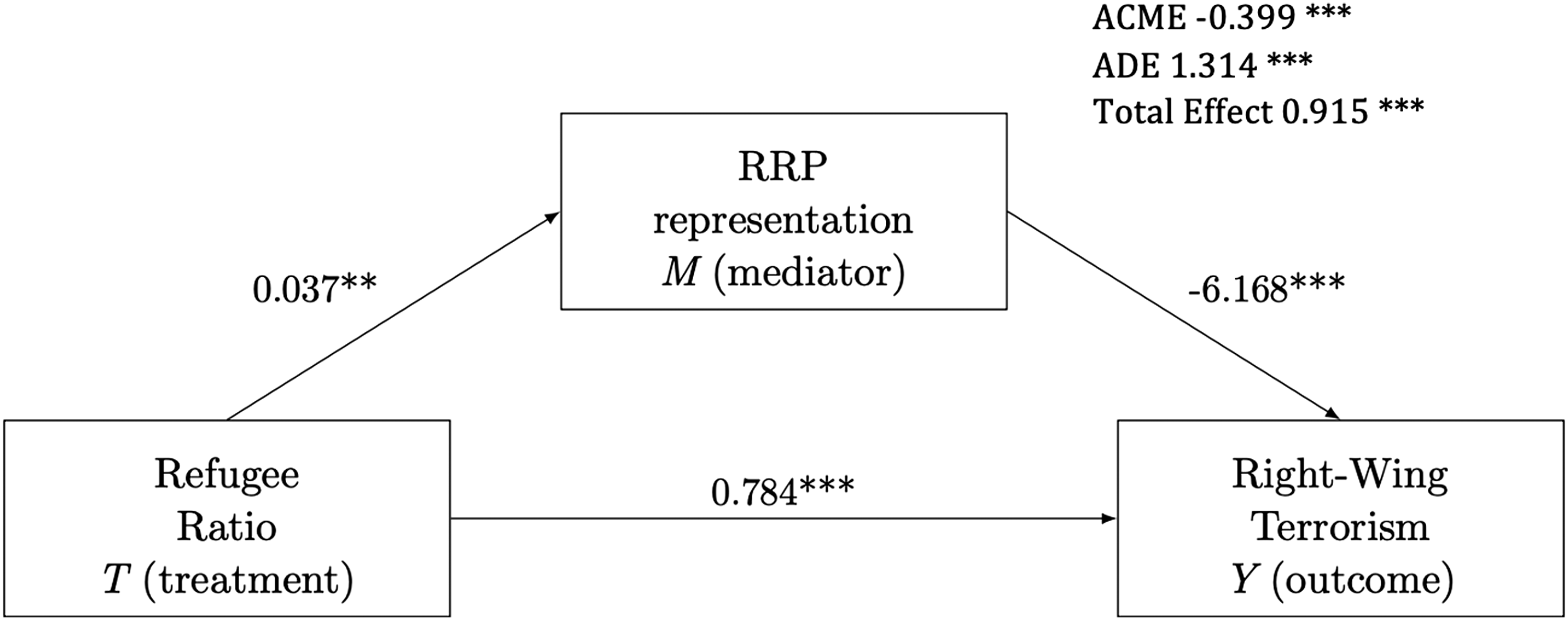
Controls
I made use of control variables such as GDP per capita, Polity2, Electoral System and Election Year. While prior studies have mixed findings on the effect of collective economic deprivation on terrorism (Varaine, 2020; Piazza, 2006), economic conditions have the potential to affect right-wing terrorism. Thus, I employed GDP per capita and checked whether the individual income level correlates with right-wing terrorism. Data were retrieved from the World Bank. Polity2 from the Polity IV project controls for political regime heterogeneity as the paper covers the period from 1970 to 2017. Electoral System is a binary variable indicating whether a proportional election system is in place. The variable allows checking model robustness across different political and institutional structures. Data are retrieved from National and District Level Party Systems’ Datasets (Struthers et al., 2018). Lastly, Election Year is a binary variable that controls the years when general elections took place. The descriptive statistic is in the appendix. 15
Results
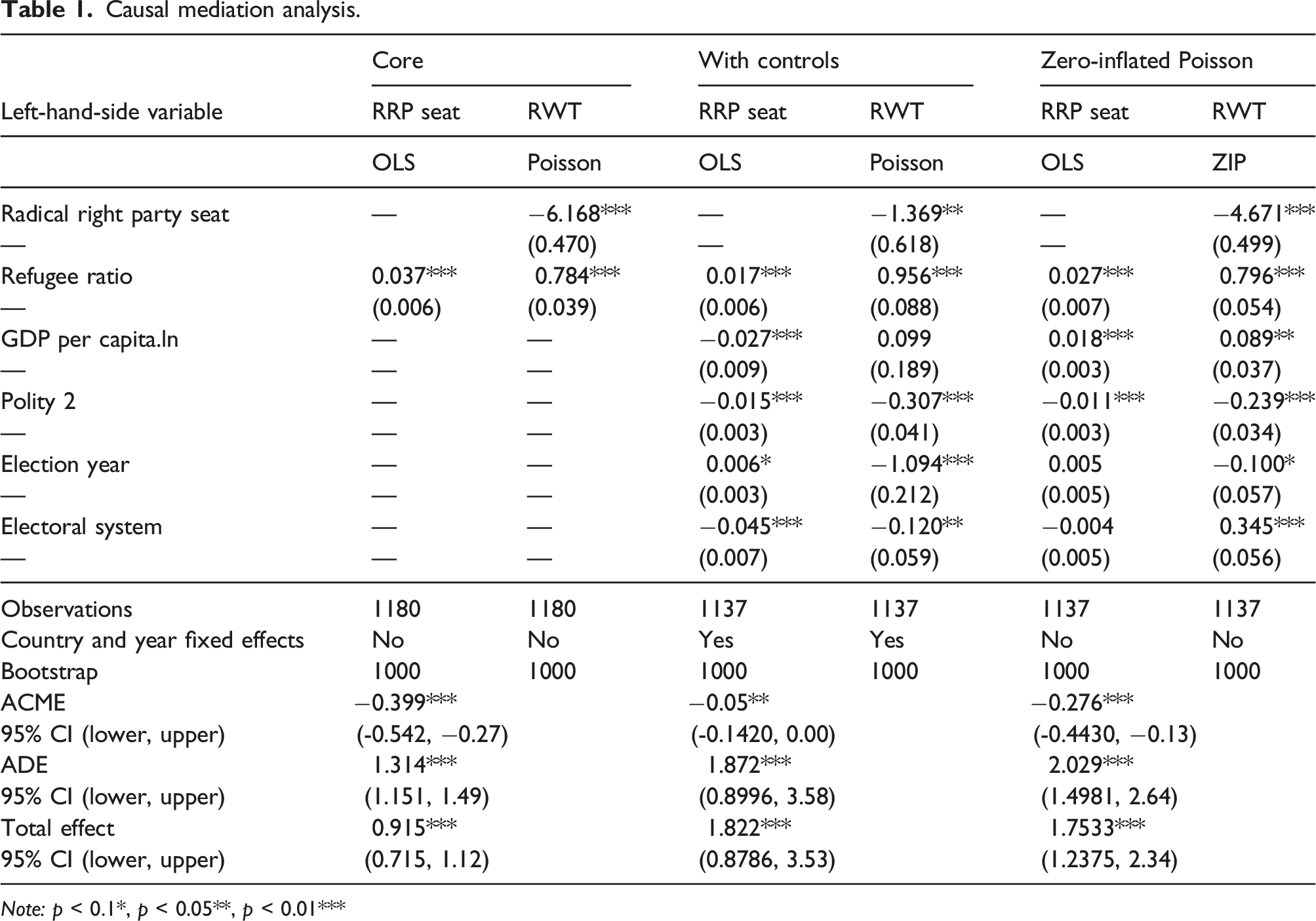
Causal mediation analysis.
Note: p < 0.1*, p < 0.05**, p < 0.01***
While mediation analysis has been used in a panel setting, the straightforward application to a panel setup might be biased. The method is developed under the assumption of random sampling; thus, observations should be independent. For that reason, I additionally tested the finding in a non-panel setup, which dropped all the observations except for election years. Supplemental Table A3 in the appendix suggests that the results are consistent with the main findings presented in Table 1. Moreover, I addressed treatment noncompliance in mediation analysis through an instrumental variable approach suggested by Tingley et al. (2014). The instrument should affect the treatment but does not affect the mediator and the outcome. Hence, I utilised the number of deaths in conflicts as it is a significant push factor for international immigration and refugees. The results uphold theoretical expectations. Figure 3 illustrates local ACMEs, local ADEs and LATE, where dashed lines represent the control group and solid lines represent the treatment group. The average LACME is −4.34, and the average LANDE is 0.26. Instrumental variable approach in mediation analysis.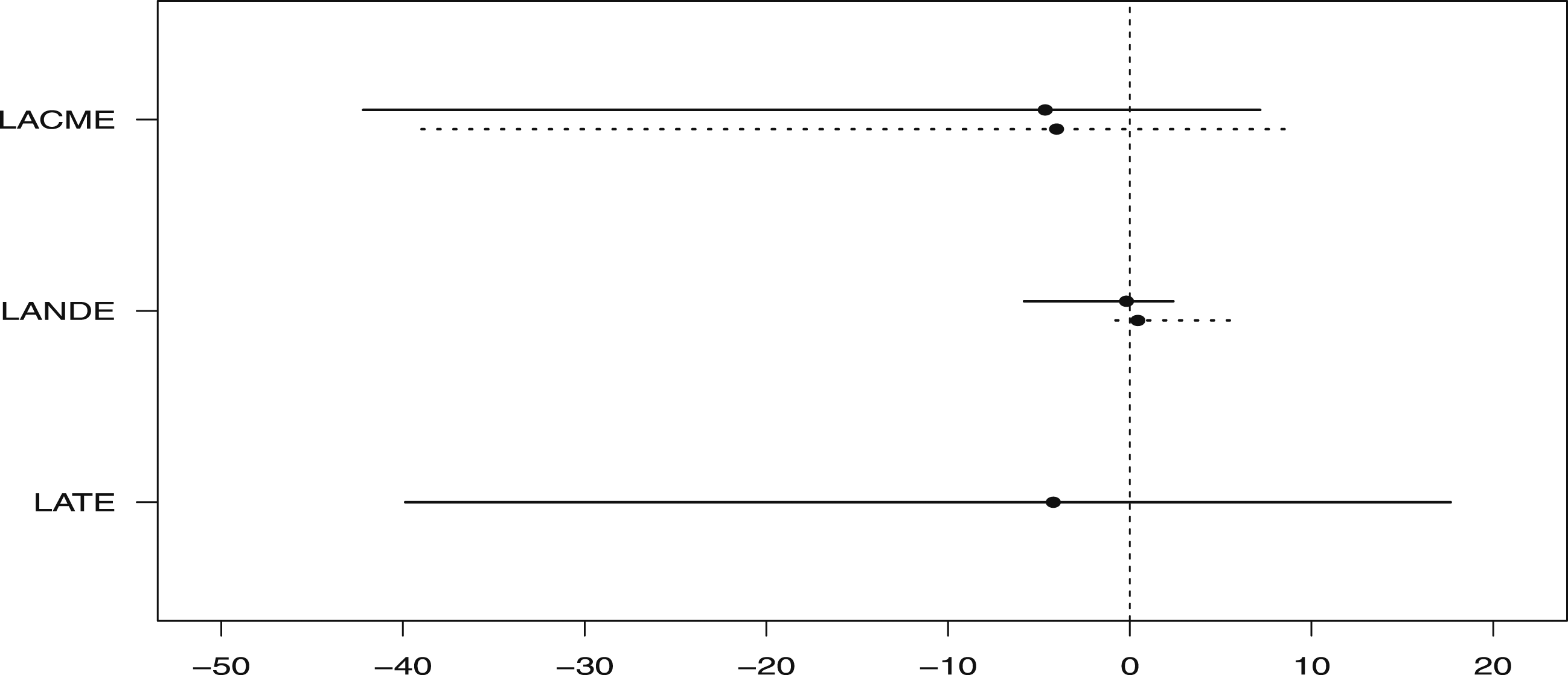
Another challenge is that RRPs mostly thrive in Europe and the mainstream literature on RRPs focused on the region. As one might be concerned about the potential bias of choosing OECD member-states and the GTD’s data collection, I tested whether the findings do not depend on specific samples and data. I used the RTV as an alternative data source to identify right-wing terrorism in Post Cold-War Europe (see Supplemental Table A4). The direction of ADEs and ACMEs are consistent with the main findings. It supports an argument that while the refugee population creates the discursive window of right-wing terrorism, RRP success would mediate it.
Robustness check and interpretation
The key assumption of mediation analysis is sequential ignorability for point identification (Tingley et al., 2014). To check the robustness of the findings to the ignorability assumption, I used sensitivity analysis for ACME. I calculated causal quantities as a function of sensitivity parameters and observed how ACMEs change when the sensitivity parameter ρ changes between 0.9 and −0.9. Naturally, when ρ is zero, the mediation effects are equivalent to what we obtained previously. When ρ takes a different value, mediation effects are determined under different levels of unobserved confounding. Figure 4 visualises the sensitivity analysis for the core model presented in Table 1. It shows that when the product of the original variance explained by the omitted confounding is 0.067, the point estimate for ACME would be 0. Figure 4 (a) and (c) illustrate ACMEs in terms of ρ, where the dashed lines stand for the estimated mediation effect under the sequential ignorability assumption, and the solid lines with shade represent the mediation effect under various sensitivity parameters. Contour lines report ACMEs in terms of the coefficients of determination, where R˜2
M
and R˜2
Y
are the proportion of original variance explained by unobserved confounders in the mediator and outcome models. Figure 4 (b) and (d) show that the increase of R˜2
M
and R˜2
Y
leads to negative mediation effects. The results of sensitivity analyses align with the findings from the causal mediation analyses. Robustness check: Sensitivity analysis of ACMEs.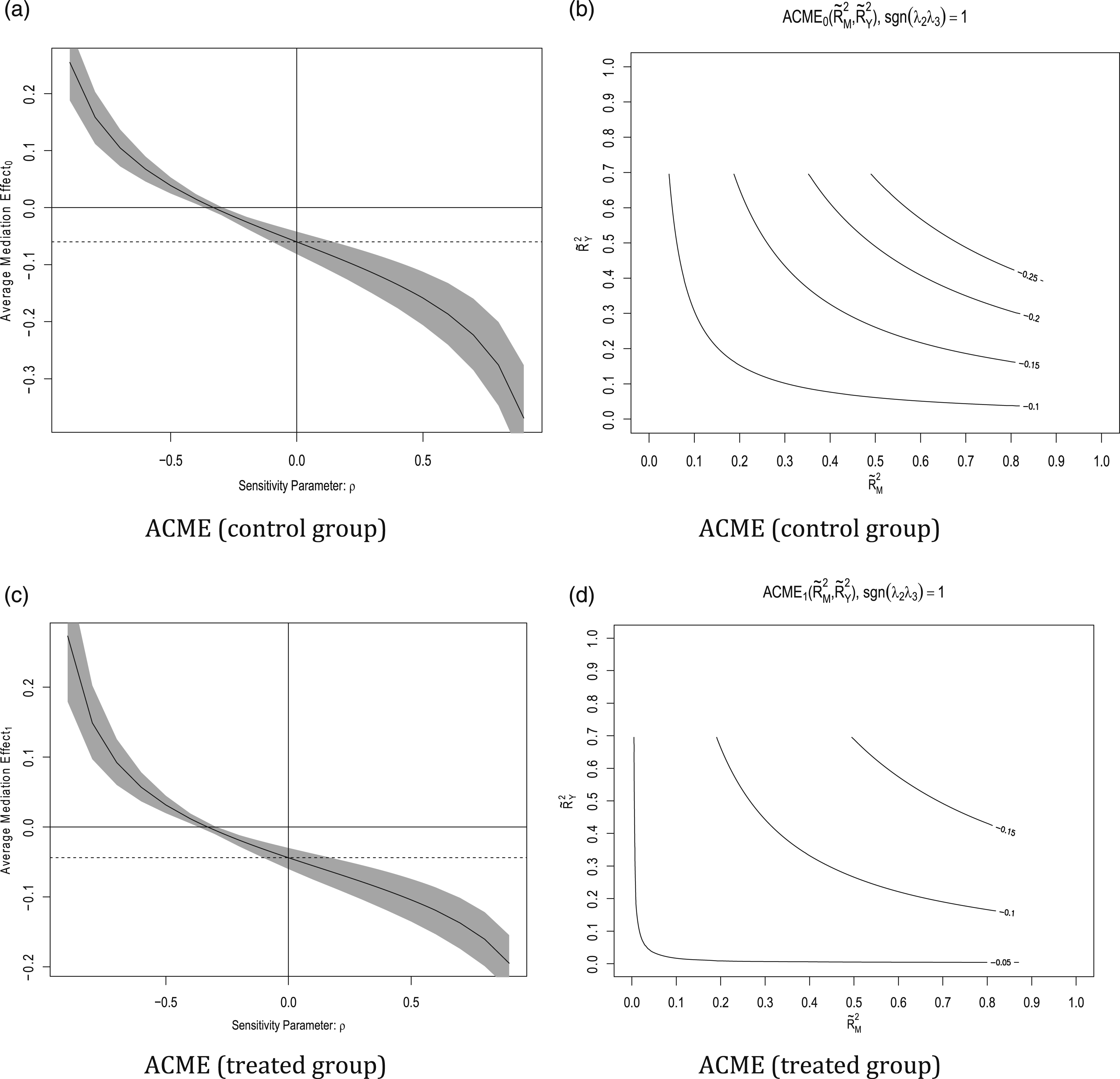
Reverse causality.

Note: p< 0.1*, p< 0.05**, p< 0.01***
Lastly, I utilised an alternative treatment variable and different RRP data. In some cases, right-wing extremists cannot distinguish general immigrants from refugees. Thus, I alternatively used a ratio of all foreign-born populations in the total population as a treatment variable. Figure 5(a) presents the results. Similar to the results of previous analyses, ACMEs are negative (−0.056), and ADEs are positive (0.224). Both estimates are significant (p < 0.01). In addition, I utilised the PopuList (Rooduijn et al., 2019), which provides the RRP data from 1989. Figure 5(b) shows that the results align with other analyses, where ACME is −0.189 (p < 0.1) and ADE is 1.905 (p < 0.1). While the magnitudes of estimates and significance level vary, the robustness checks lend support to the theoretical argument and main findings. Mediation analyses with different data.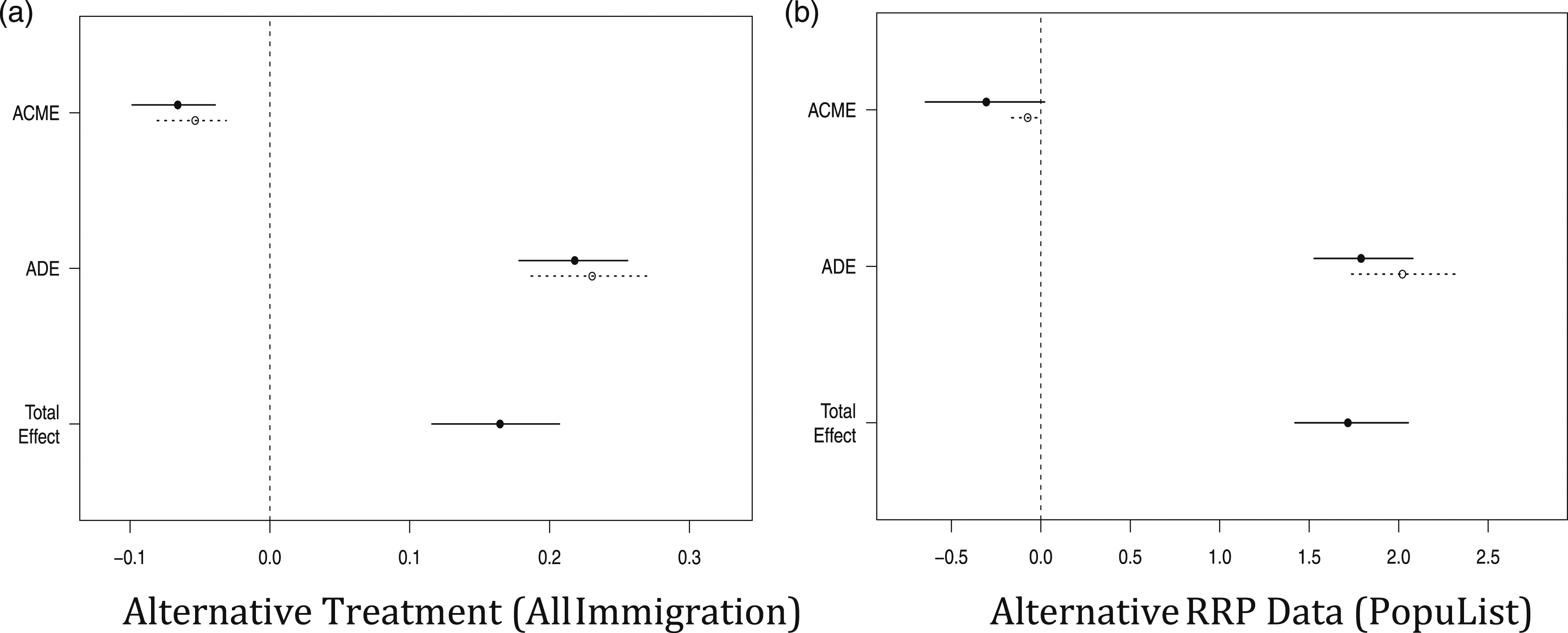
Radical right presence in government
After the historic victory in the 2018 Italian General Election, a Federal Secretary of the Northern League, Matteo Salvini, served as a deputy prime minister from June 2018 to September 2019. Given that participation in government increases their media exposure and political influence, whether RRPs in government may act differently compared to when they are in the opposition has become a relevant question.
While a share of parliamentary seats is an essential indicator of representation, a presence in government is another valuable indicator. However, once they win office, RRPs lose their ideological strength (Heinisch, 2003) and normalise their extremist views. Does this structural weakness disappoint RRP supporters and draw them into radicalisation or can we expect the negative mediation effect? To test this puzzle, I employed RRPs’ participation in government as an alternative treatment variable.
Figure 6 shows that ADE has a positive and significant effect on right-wing terrorism (1.154), and ACME of RRP presence in the cabinet has a statistically significant negative estimate (−0.187) at the 1% level. The results are analogous when replacing the refugee ratio with the total immigration ratio. The results can direct the interpretation that although immigration increases the opportunities of right-wing terrorism, RRPs’ representation in government would still decrease the right-wing attacks. The mediation effect of joining the government is slightly more potent than that of RRPs’ parliamentary representation. Overall, both parliamentary representation and participation in government have mediation effects of decreasing right-wing terrorist attacks as a consequence of immigration. Radical right participation in government.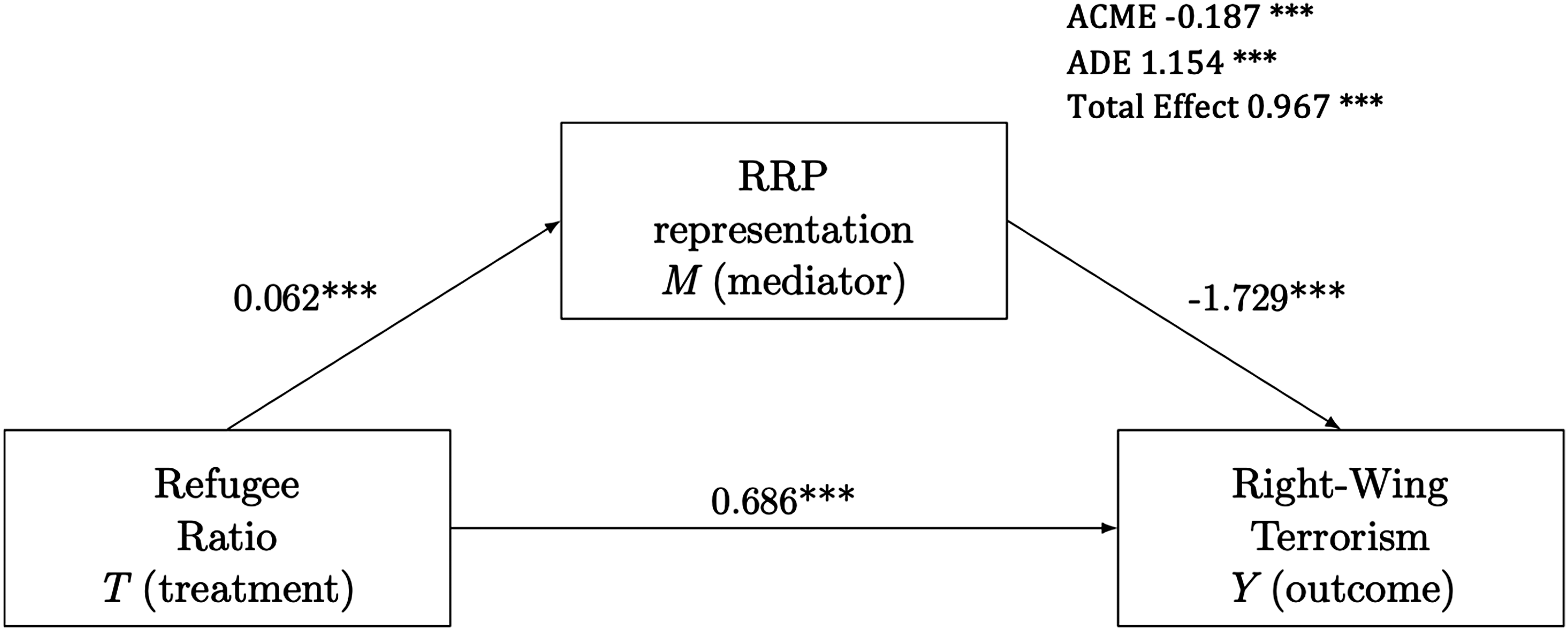
Discussion
This article presents cross-national evidence of the role of RRPs in the immigration and right-wing terrorism nexus. The results of causal mediation analysis illustrate that while immigration increases right-wing terrorist attacks, RRPs’ electoral success has a mediation effect of decreasing the same. It also asserts that a radical right-wing presence in government has a mediation effect of diminishing the number of right-wing terrorist attacks. The findings relate to the relevant literature. On the one hand, a major strand of literature on the role of political parties contends that lower representation induces terrorist attacks and vice versa (Li, 2005; Piazza, 2010). On the other hand, studies on the relationship between immigration and terrorism explain that foreign-born populations from specific origins increase the risk of terrorism (Dreher et al., 2020; Bove and Böhmelt, 2016), especially right-wing terrorist attacks (McAlexander, 2020). By clarifying the causal pathways between three factors, the paper offers unique findings on the relationship between radical right parties terrorism, and immigration.
That being said, this study has several limitations. First, while the article focusses on RRPs, it might not explain other extremist parties, such as radical left-wing parties. The link between immigration and left-wing terrorism appears vague in the 21st century, as left-wing constituencies no longer regard foreign workers as a threat. However, the reducing effect of representation on violence still exists in the context of left-wing insurgencies in Latin America. It might be of future research interest to investigate the threefold relationship between immigration, radical left-wing parties and left-wing terrorism.
Second, right-wing violence might not be restricted to terrorism. Hate crime is another violent consequence of immigration that might be affected by RRPs. However, the data on hate crimes are difficult to access as they are only available for a short time for a few countries. Moreover, the lack of a standard definition raises a concern that local law enforcers may arbitrarily define hate crimes.
Despite these limitations, the article provides important implications for academic debates over the effectiveness of political representation on the risk of political violence and the consequences of an electoral breakthrough of RRPs. The findings also contribute to a timely policy discussion of whether including extremist parties in the national parliament could normalise or decrease political violence.
Supplemental Material
Supplemental Material - The mediation effect of radical right parties on the nexus between immigration and right-wing terrorism
Supplemental Material for The mediation effect of radical right parties on the nexus between immigration and right-wing terrorism by Miku Matsunaga in Party Politics
Footnotes
Acknowledgments
I am truly grateful to Yuliy Sannikov, Bruce Bueno de Mesquita, George W. Downs, Juan Haidar, Yoriko Nagamine, Enzo Nussio, Brian Phillips, Jim Piazza, the editor and two anonymous reviewers. I also appreciate my colleagues whose valuable feedbacks improved previous versions of the manuscript.
Declaration of conflicting interests
The author(s) declared no potential conflicts of interest with respect to the research, authorship, and/or publication of this article.
Funding
The author(s) received no financial support for the research, authorship, and/or publication of this article.

Supplemental Material
Supplemental material for this article is available online.
Notes
Author Biograpy
References
Supplementary Material
Please find the following supplemental material available below.
For Open Access articles published under a Creative Commons License, all supplemental material carries the same license as the article it is associated with.
For non-Open Access articles published, all supplemental material carries a non-exclusive license, and permission requests for re-use of supplemental material or any part of supplemental material shall be sent directly to the copyright owner as specified in the copyright notice associated with the article.
