



Abstract
This article analyzes the determinants of three types of innovation output—product, process, and organizational, generated by Australian tourism firms. It examines how collaboration, human capital, information technology, funding, firm, and market characteristics impact innovation outcomes. Of the inputs, collaboration for innovation is the one with a positive impact on the three types of innovation outputs. Human capital also contributes to the innovation process. However, its impacts are strongly felt only in the generation of product and organizational innovation. Information and communication technology is vital to the implementation of operational process and organizational innovations, while funding influences the implementation of new operational processes. Of firm and market characteristics, foreign ownership, degree of competition, and firm size have significant impacts on innovation intensity among firms.
Introduction
Innovation is a major driver of productivity and economic growth (Australian Treasury, 2009; OECD, 2015a). Its role as a source of competitive advantage among firms, profitability, and their long-term sustainability is universally recognized. Research and development (R&D) plays a critical role in the innovation process (Heneric et al., 2005). In manufacturing and technology sectors, R&D is a crucial component of innovation, and economists agree that the associated expenditure is the critical input to the innovation process. However, fewer consensus exists for the determinants of innovation in service industries, particularly in the multifaceted tourism sector. Service innovation offers the potential to improve the performance of a firm and its competitiveness. These could be achieved through multiple means: the introduction of new or innovative products, processes, and organizational and marketing methods. However, R&D expenditure, as in the case of the technology and manufacturing sectors, is not as significant for innovation in the tourism sector. Instead, a multiple of factors is hypothesized to influence innovation. In this study, we identify those factors and explore their relationship with various types of innovation adopted by tourism firms. They are, respectively, product, process, and organizational innovations.
As innovation has attracted considerable interest and relevance in the tourism industry and policy circles, an increasing volume of research focusing on different aspects of the innovation process in tourism is emerging. Most of the studies on tourism innovation focus on conceptual and theoretical issues (Alsos et al., 2014; Hall, 2009; Hjalager, 2010; Mattsson et al., 2005; Peters and Pikkemaat, 2005; Sundbo et al., 2007). Aside from a few exceptions, empirical work in the area exploring determinants of the innovation process is explorative. Of the various empirical studies, Tejada and Moreno (2013) examine nonqualitative technological factors of innovation among small and medium enterprises (SMEs). Martínez-Román et al. (2015) examine the relationship between innovative capability, contextual factors, environment, and product and process innovation. Razumova et al. (2015) investigate the factors influencing environmental innovations, and Backman et al. (2017) investigate the innovation in the hospitality industry. The most recent study by Divisekera and Nguyen (2018) explores the determinants of service and marketing innovations. This work extends this study by exploring the determinants of three unexplored innovation types: product, operational process, and organizational/managerial (henceforth organizational) innovations. We model the innovation processes and quantify those determinants specific to each of the three innovation types using the methodology and database used in Divisekera and Nguyen (2018). The remainder of the article is organized as follows: In the next section, recent literature on tourism innovation is reviewed, with the aim to set the background of the study. This is followed by the conceptual framework, which serves as the theoretical foundation of the study. The next section presents the modeling strategy, econometric methods, and data used. Empirical results are then discussed, and the final section summarizes significant findings, draws policy implications, and highlights the limitations of the study.
Review of the literature
The concept of innovation and its variants
The concept of innovation was first introduced in the Theory of Economic Development, also known as Schumpeter’s (1934) Theory of Innovation. Schumpeter identified innovation as the critical dimension of “economic change” and “creative destruction”. Creative destruction denotes the “process of industrial mutation that transforms the economic structure, destroying the old one, incessantly creating a new one” (Schumpeter, 1942). Post-Schumpeterian literature has added new dimensions to the concept by interpreting it in the context of the modern industrial organization. Nonetheless, the Schumpeterian definition remains at the core of innovation theory. Among the various definitions and interpretations, the most comprehensive one could be found in the third edition of the Oslo Manual (OECD and Eurostat, 2005). The Oslo Manual defines innovation as “the implementation of a new or significantly improved product, a process, a new marketing method or a new organisational method in business practices, workplace organisation or external relations” (OECD and Eurostat, 2005: 46). This definition encompasses all innovation types adopted by tourism firms. Moreover, it is the one widely adopted in recent innovation surveys, including the Community Innovation Survey (on European enterprises) and the annual Business Characteristics Survey (BCS; on innovation activities of Australian businesses).
The Oslo Manual defines the product innovation as “the introduction of a good or service that is new or significantly improved with respect to its characteristics or intended uses” (OECD and Eurostat, 2005: 48). In tourism, firms introduce new products or repackage existing products. Spa tourism, dental tourism, health tourism, sustainable tourism, and educational tourism are examples of new ways of packaging tourism services. Australian Age of Dinosaurs and Capricorn Caves that combine education and research as part of new visitor experiences are unique new tourism products that won the 2017 Innovation awards in Australia. The Lantern Ghost Tours in Australia and Political Tours in the United Kingdom are other examples of innovative tourism products.
Following the Oslo Manual, process innovation is defined as “the implementation of a new or significantly improved production or delivery method” which aims to enhance flow, efficiency, and productivity (OECD and Eurostat, 2005: 49). In tourism, this refers typically to the adaptation of innovative methods aimed at improving efficiency in back-office functions of tourism firms. For example, in the restaurant industry, the application of innovative technologies in food services enables faster and better preparation and distribution of food saving energy and labor costs (Rodgers, 2007). The use of touchscreen tablet menus, mobile ordering, self-order kiosk, and new reservation systems enables fast and convenient ordering process benefiting both customers and restaurant staff. In the aviation industry, electronic luggage tags, smartphone boarding passes, and automated mobile check-in systems save time for both travelers and airline staff (Nguyen, 2016). Organizational or managerial innovation refers to new ways of organizing internal collaboration, “business practices, workplace organization or external relations” (OECD and Eurostat, 2005: 51). They can be changes in the way management work is done, involving a departure from traditional processes; in practices (i.e., the routines that turn ideas into actionable tools); in structure (i.e., the way in which responsibility is allocated); and in techniques (i.e., the procedures used to accomplish a specific task or goal). (Volberda et al., 2013: 3). The integrated management system of the Hotel Tivoli Oriente in Lisbon is an example of successful implementation of an organizational innovation, which substantially improved work processes with positive impacts on productivity and efficiency (Carvalho and Costa, 2011).
Determinants of innovation
Factors influencing innovation are varied, some belong to the development of innovative projects, others to the firm, with the rest belonging to the environment (Dogdson and Rothwell, 1994). We can cluster them together in two fundamental groups, innovation inputs (those factors having a direct bearing on innovative activities/projects) and institutional factors (market and firm characteristics) that influence the propensity to undertake innovation activities (Divisekera and Nguyen, 2018). Of the innovation inputs, a critical determinant of innovation is the “collaboration” (OECD, 2011). Collaboration allows firms to share ideas, knowledge, and resources to maximize performance outcomes (Australian Government, 2016; OECD, 2015b). In collaborative arrangements, firms work for mutual benefits, sharing technical and commercial risks (Australian Bureau of Statistics (ABS), 2014). According to Carlsen et al. (2010), the rate of innovation in tourism is closely associated with the sector’s capability to develop and sustain collaborative networks.
Human capital—knowledge, skills, and abilities of individuals—is considered as a factor influencing the innovation capacity of tourism firms and an essential part of knowledge generation for innovation purposes (Gokovali and Avci, 2012; Grissemann et al., 2013; Schneider et al., 2010). A skilled workforce is more likely to identify new market opportunities and have a good understanding of the firm’s products as well as their organization. Hence, a firm’s innovation capability depends on its stock of human capital and the ability to employ them for innovation creation (López-Cabrales et al., 2006; Martín-de Castro et al., 2013). Further, educated and skilled employees also can generate innovative ideas and get adjusted to new technological and other organizational changes (Australian Government, 2012; Bornay-Barrachina et al., 2012).
A third factor, information and communication technology (ICT), is considered as a key input to the creation and adaptation of tourism innovation (OECD, 2015b). The use of ICT has led to a series of new innovative practices that have improved the efficiency in delivering various services that cover the entire tourism value chain, including information related to destinations, accommodation, transportation, tours, and services. ICT provides opportunities for coordination and communication within internal and external organizational environments. It facilitates reengineering operations, including back office, online booking, and e-business (Stamboulis and Skayannis, 2003). ICT has become the backbone of process innovation in tourism due to its capabilities in organizing and transmitting information and knowledge across geographical and user boundaries (Buhalis and Law, 2008; O’Connor et al., 2008; Sigala et al., 2007). It improves the mobility of passengers, reducing travel burden and leading to higher efficiency for both tourism businesses and tourists (Deegan, 2012).
Fourth, a critical input to the creation and implementation of innovations is funding. Investing in innovation activities is a risky and costly affair. Thus, access to finance is a crucial factor affecting innovation capacities among firms (Savignac, 2008). This is particularly the case given that most tourism firms are small scale with limited access to own funding. For example, 95% of tourism businesses in Australia is owner operated with limited financial resources (Tourism Research Australia (TRA), 2017). Thus, external funding (e.g. government subsidies or grants) is necessary to entice small businesses to engage in the innovatory activity.
In addition to key inputs, firm and market characteristics are known to influence a firm’s propensity to innovate. They include firm size, ownership status, market competition, environmental factors, and industry characteristics (Divisekera and Nguyen, 2018). From a resource-based view, larger-sized firms are more likely to innovate than smaller firms due to material and resource advantages and access to finance (Hewitt-Dundas, 2006; Mel et al., 2009). Concerning ownership status, firms with foreign ownership are known to have a greater innovatory advantage over the domestic firms (Castellani and Zanfei, 2004; Thomas and Guadalupe, 2012). Among other market characteristics, prevailing market competition is acknowledged to be a factor motivating firms to innovate (OECD, 2006). The firms operating in a competitive environment are under pressure to reduce costs and introduce new products to maintain their competitive edge in the marketplace. This results in greater efforts for firms to undertake innovation activities (Soames et al., 2011). Last, environmental factors also could motivate tourism firms to undertake innovation decisions. This is particularly the case when firms encounter adverse environmental conditions (Divisekera and Nguyen, 2018).
The conceptual framework, data, and methodology
Following Divisekera and Nguyen (2018), this study adopts a version of the Crépon Duguet Mairesse (CDM) model (Crépon, et al., 1998) as the analytical framework. The CDM model, the most widely used in numerous empirical studies on innovation, has become the standard for this type of empirical work (Lööf et al., 2017). The CDM specifies the relationships between decisions to innovate by firms, the innovation outcomes and their impacts on firm productivity. A version of this model specifying the relationship between various determinants and the three types of innovation outputs is summarized in Figure 1. Here, we distinguish the two types of determinants: innovation inputs (collaboration, human capital, ICT, and funding) and institutional factors (firm size, ownership, competition, environment, and industry characteristics). The key inputs are assumed to have a direct and positive effect on a given innovation output and institutional factors to influence the firm’s propensity to innovate.
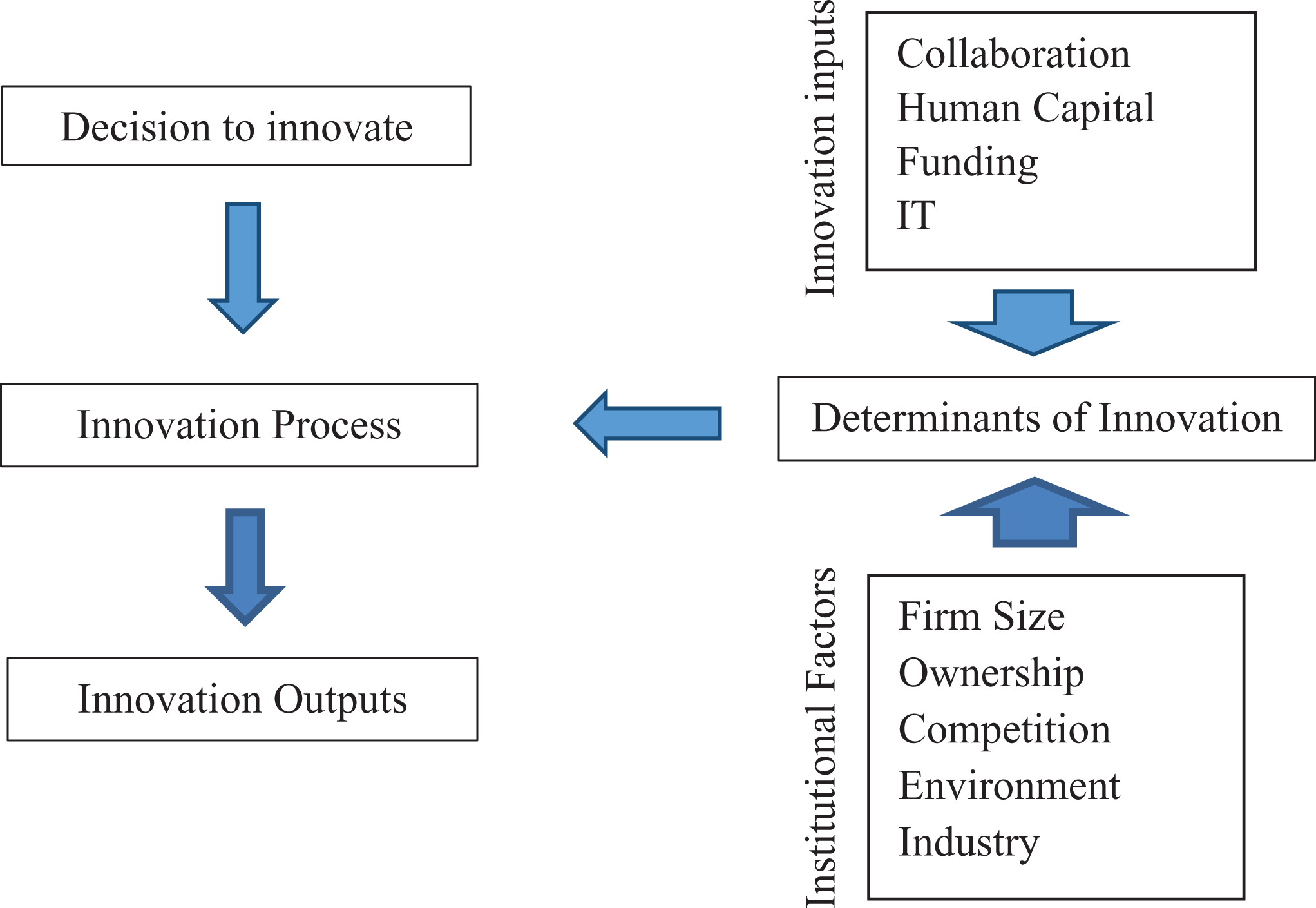
Conceptual framework. Source: Divisekera and Nguyen, 2018.
Data source
The key source of innovation data used in this study is the Business Longitudinal Database (BLD) developed by the ABS. It is based on the data collected from BCS. The BCS collects data on innovation activities undertaken by Australian businesses as well as other business-related information. They include business performances, financial and market information, firm structures, and competitive intensity. A sample of businesses representing key tourism-related industries is chosen for this study. The sample consists of 389 tourism SMEs, with 167 firms in the Accommodation and Food Services industry and 222 firms in the Arts and Recreation Services industry. Of the 389 firms surveyed, 83 firms introduced product innovation (new goods or services), 58 firms implemented operational process innovation, and 85 firms implemented organizational innovation. The unit records of the chosen sample held by the ABS were accessed via remote access facility.
All the available data on innovation activities by Australian businesses are binary categorical. Table 1 provides the frequency distribution of the data set classified by variables and innovation types. For example, the first cell of the contingency table reports the data in relation to collaboration and the introduction of new products. Of the 389 firms in the sample, 344 firms did not collaborate and 45 firms did. Of the 45 firms that collaborated for innovation purposes, 23 firms introduced new products and 22 firms did not. Of the 344 firms that did not collaborate, 60 firms introduced new products and 284 firms did not. In total, there are 83 firms introducing new products and 306 firms not introducing any new products. A similar interpretation applies to other cells. Table 2 presents a detailed description of the data set including variable names, their definitions, and related survey questions.
Frequency distribution of sample data by variables and innovation types.

Note: ICT: information and communication technology.
Source: Extracted from the Business Longitudinal Database (ABS, 2013).
Description of variables and related survey questions.
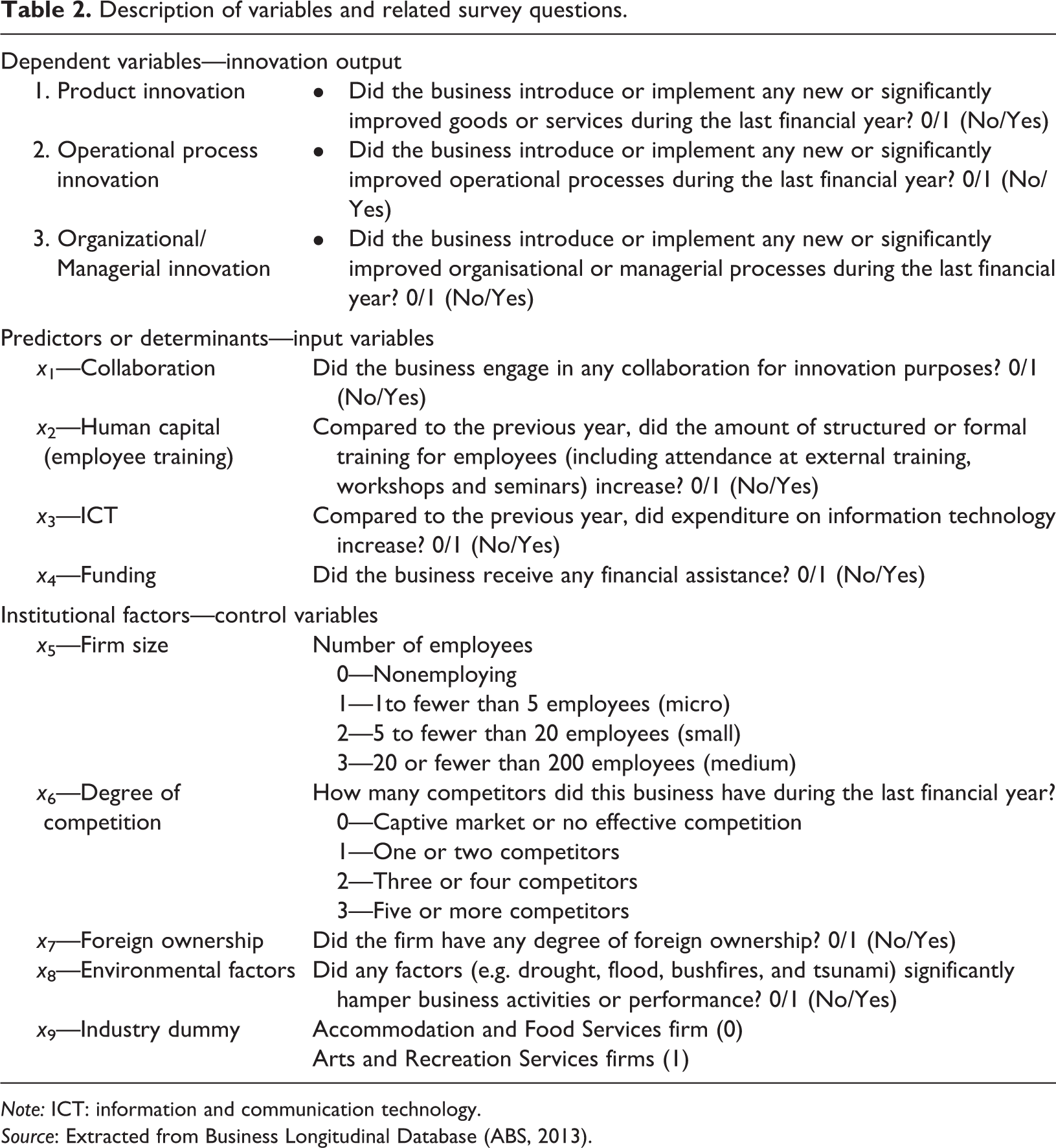
Note: ICT: information and communication technology.
Source: Extracted from Business Longitudinal Database (ABS, 2013).
Model choice and modeling strategy
In this study, we attempt to quantify the relationship between innovation outputs (y) and inputs (x). In general, multiple regression models of the following form can be used to examine the predicted relationship:

where β0 is the intercept term,
As pointed out above, the dependent variable innovation output/type is binary dichotomous (see Table 2 for details) and takes only two values: whether the firm introduced/implemented an innovation or not (yes/no). Therefore, the appropriate method is to use the logistic regression approach (Divisekera and Nguyen, 2018). The logit transformation of equation (1) gives the following:

where
Treating the firm and market characteristics as controlled variables, the following version of the logistic regression model is used to estimate the predictive capacity of key inputs and institutional factors:

where
Prior to the estimation of the general model specified above, some predictions about the likely impact of the key inputs on the probability of introducing the three types of innovation outputs may be made using the contingency table data (Table 1). Recall that 45 firms collaborated for innovation purposes and 344 firms did not collaborate. Among the 45 firms collaborated, more than half (23/45) or 51% successfully introduced new products and new organizational methods, and 36% (16/45) implemented process innovation. 1 It seems that collaboration for innovation is an important input to innovation generation.
With regard to human capital, 34 firms increased training for employees and 355 firms did not. Of the 34 firms those increased training for the employees, 44% (15/34) successfully introduced new products, 38% (13/34) implemented new operational processes, and 65% (22/34) implemented new organizational methods. Thus, it is predictable that the input, human capital, could be a significant factor influencing the generation of product and organizational innovations. In relation to input ICT, 59 firms increased expenditure on ICT and 330 firms did not. Of the firms those increased ICT expenditures, 41% implemented process innovation, 44% implemented organizational innovation, and 36% introduced new products. This input also plays a key role and in particular on the process and organizational innovations. Finally, of the 88 firms that received external funding, 30% introduced new products, 28% implemented new processes, and 34% implemented new organizational methods. While some general predictions may be made with regard to the likely impact of the key inputs based on the contingency table, one needs to evaluate interactions between all the inputs to reach firm conclusions. We achieve this by fitting the regression model specified above.
Model estimation
We begin by fitting the general model (defined in equation (2) above) for each type of innovation: product, process, and organizational. The likelihood ratio (LR) and Hosmer–Lemeshow (HL) tests are used to evaluate the overall goodness of fit of the estimated models. Among diagnostic tests, the Wald test is used to assess the statistical significance of each predictor/explanatory variable and the variance inflation factor (VIF) to test for multicollinearity. Initial estimates of the general model applied to each type of innovation output are summarized in Table 3.
Preliminary results—Regression coefficients and p-values.
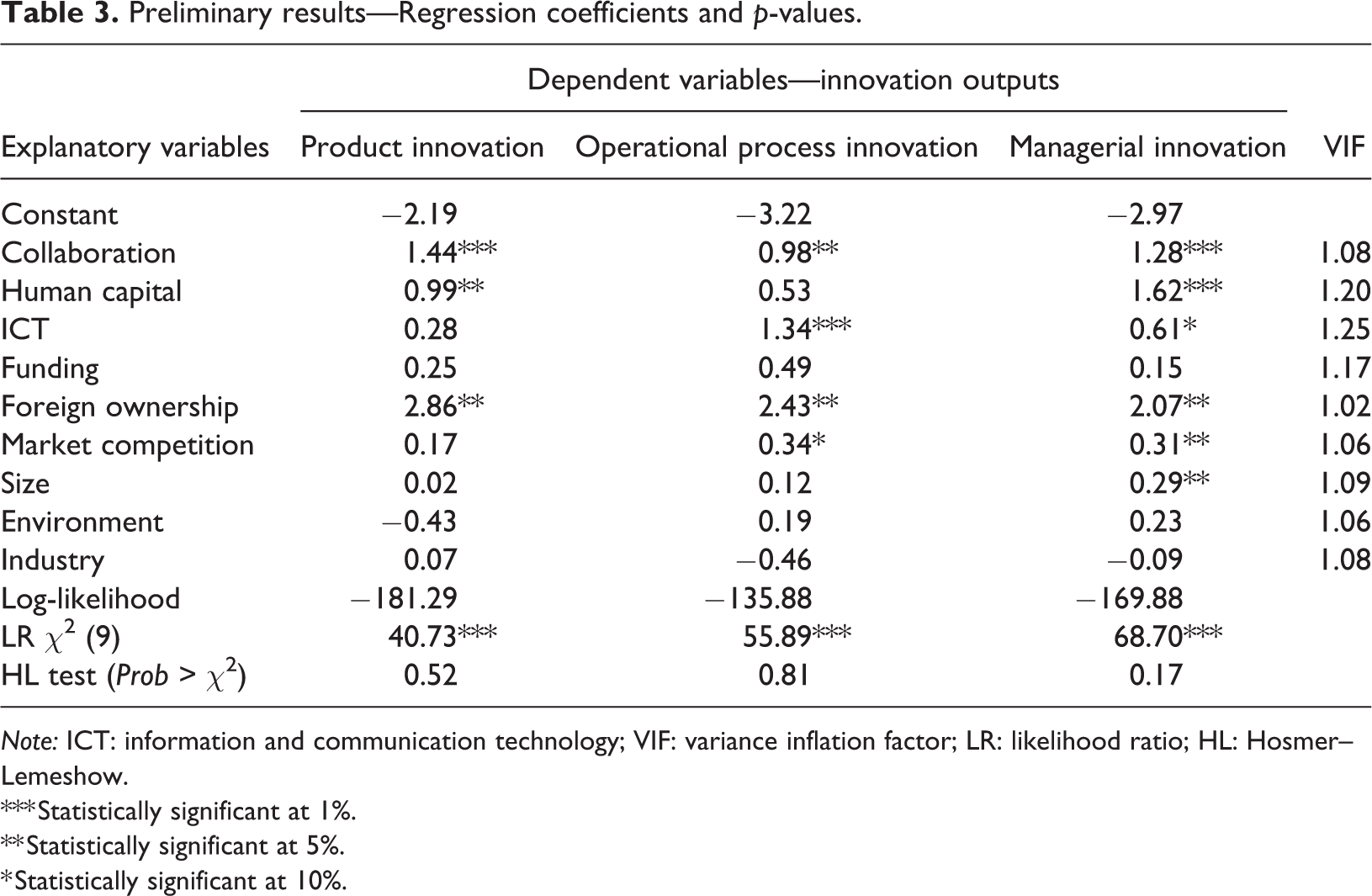
Note: ICT: information and communication technology; VIF: variance inflation factor; LR: likelihood ratio; HL: Hosmer–Lemeshow.
*** Statistically significant at 1%.
** Statistically significant at 5%.
* Statistically significant at 10%.
The LR test statistics (which are significant at 1% level) and the HL tests (which are significant at 5% level) indicate that the estimated models fit the data well. The VIF statistics indicate that the estimated models are free from multicollinearity. However, the significance of each predictor varies, and not all of them are statistically significant across the three types of innovation outputs. Therefore, each model is tested down, removing insignificant predictors to arrive at parsimonious empirical models. In the following sections, we take each of these model estimates for further analysis.
Empirical results
Product innovation
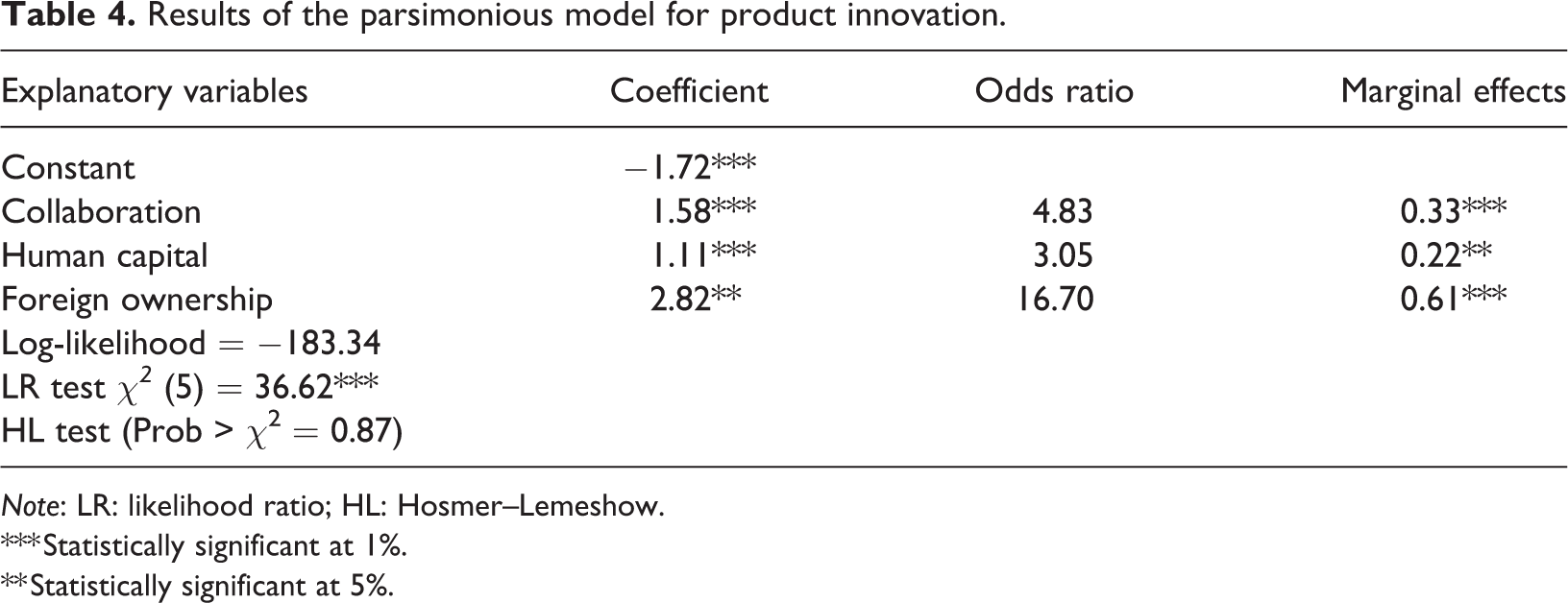
Parameter estimates of the parsimonious model for product innovation are presented in Table 4. The overall goodness of fit of the model is satisfactory; it is statistically significant (p value of LR test < 1%) and fits the data well (p value of HL test > 5%).
Results of the parsimonious model for product innovation.
Note: LR: likelihood ratio; HL: Hosmer–Lemeshow.
*** Statistically significant at 1%.
** Statistically significant at 5%.
The results reveal that of the four inputs, collaboration for innovation purposes and human capital positively impact the probability of introducing product innovation. This outcome is consistent with our a priori prediction. The associated coefficients are highly statistically significant (at 1%). The odds ratios associated with the predictor collaboration indicate that holding other variables at a fixed value, the odds of introducing product innovation are 4.8 times higher for collaborating firms and three times higher for firms increasing training for their employees. Of the institutional factors, foreign ownership appears to have a significant impact on decisions to innovate. Firms with foreign ownership have a higher propensity to introduce product innovation (with an odds ratio of 16.7) compared to their counterparts that are wholly Australian-owned.
To gain a better understanding of the effect of each explanatory variable on the likelihood of introducing product innovation, we also calculated the marginal effects associated with each statistically significant variable. With regard to the predictor collaboration, the associated marginal effect suggests that firms collaborating for innovation purposes are on average 33% points more likely to introduce product innovation compared to those that did not. In relation to human capital, the associated marginal effect coefficient suggests that those firms invested in training for employees are 22% points more likely to introduce product innovation. The most important among all predictors is foreign ownership. Firms with foreign ownership are 61% points more likely to introduce new products.
Operational process innovation
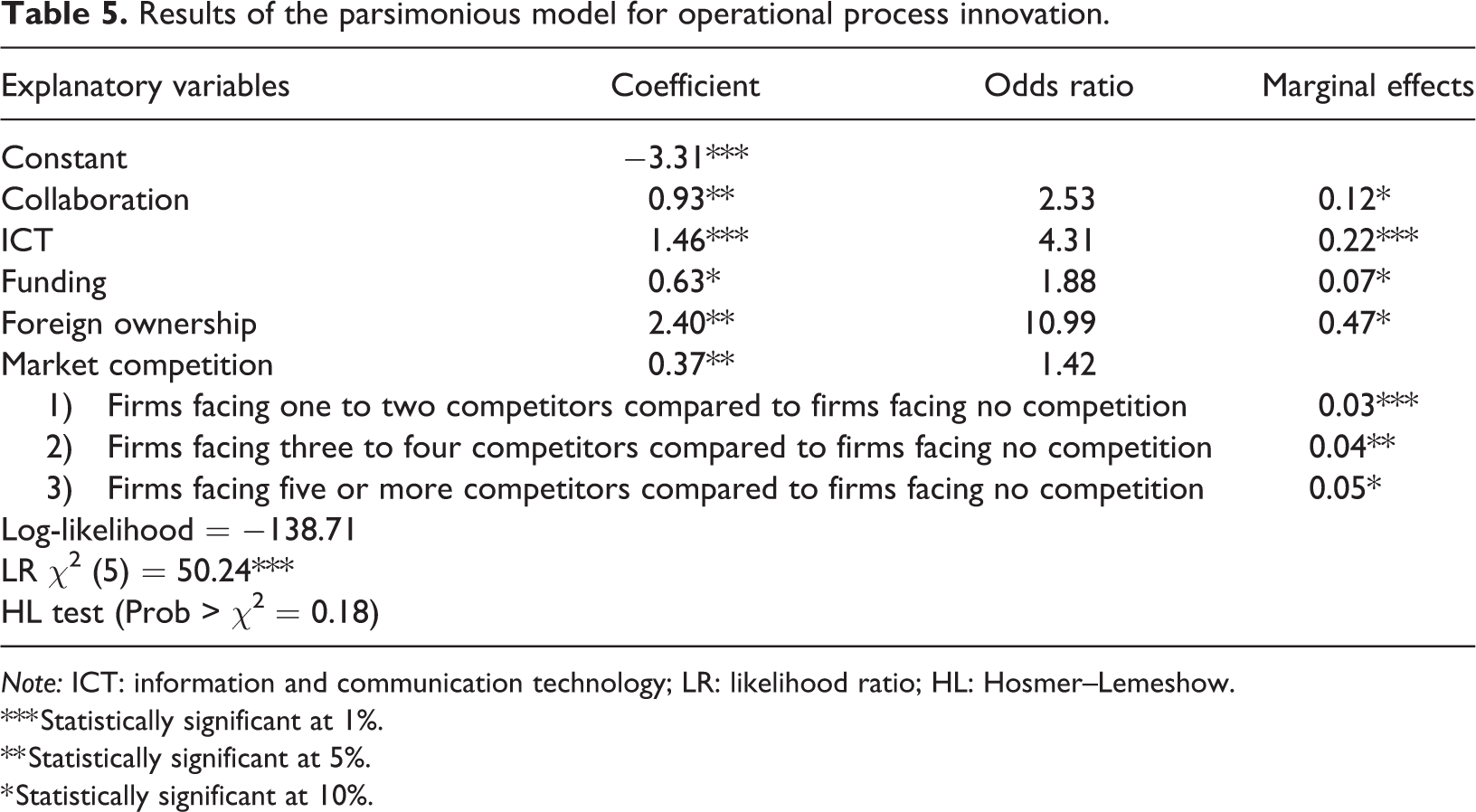
Presented in Table 5 are the estimates from the parsimonious model of process innovation. The model is statistically significant at 1% and fits the data well. The variables collaboration, ICT, funding, foreign ownership, and market competition positively impact the decisions to generate and implement operational processes. The odds ratio associated with the predictor ICT suggests that the probability of implementing innovative operational processes increases 4.3 times for firms that increased expenditure on ICT. Note that a significant input to the process innovation is the application and adoption of ICT; thus, our results provide conclusive evidence of the effect ICT has on tourism innovation in general and on process innovation in particular. Compared to product innovation, a second factor specific to the generation of process innovation is funding. The results indicate that the probability of implementing operational process innovation is 1.9 times higher for firms that received external funding. As with product innovation, collaboration and foreign ownership are also found to be significant determinants of process innovation.
Results of the parsimonious model for operational process innovation.
Note: ICT: information and communication technology; LR: likelihood ratio; HL: Hosmer–Lemeshow.
*** Statistically significant at 1%.
** Statistically significant at 5%.
* Statistically significant at 10%.
The marginal effects associated with statistically significant variables provide further insights into those revealed by the odds ratios. The results suggest that firms that increase ICT expenditure are on average 22 percentage points more likely to innovate in processes; firms collaborating and receiving funding are, respectively, 12 and 7 percentage points more likely to implement process innovation. Foreign ownership has the highest marginal effect overall, with 47 percentage points. A pairwise comparison of the marginal effects associated with different levels of the competition shows that the likelihood of implementing process innovation is 3 percentage points higher for firms facing one to two competitors (compared to firms facing no effective competition) and 4 and 5 percentage points higher for the firms having three to five or more competitors, respectively.
Organizational innovation
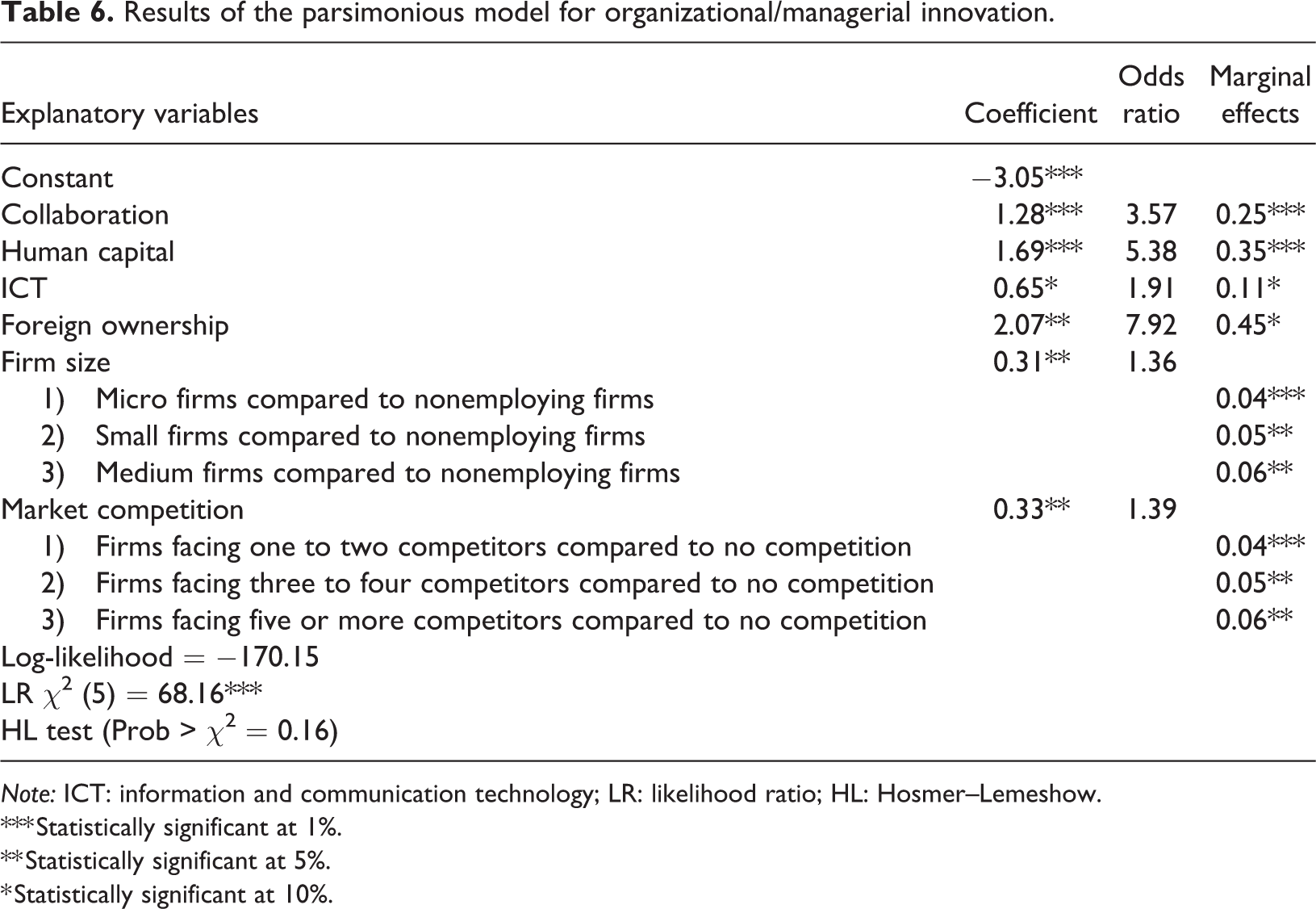
Table 6 shows the results of the model exploring the determinants of organizational innovation in tourism. Overall, the goodness of fit of the model is satisfactory. The Wald test statistics indicate that human capital, collaboration, ICT, ownership status, firm size, and the degree of competition are highly statistically significant, and the associated coefficients are positive. Thus, these factors positively impact the probability of implementing organizational innovation. As evidenced by the marginal effects, the predicted probabilities of implementing organizational innovation are very sensitive to human capital. The model predicts that increased investment in human capital increases the probability of innovating new organizational methods by 35 percentage points. Engaging in collaboration and increasing investment in ICT are associated with 25 and 11 percentage points higher probability of introducing organizational innovations.
Results of the parsimonious model for organizational/managerial innovation.
Note: ICT: information and communication technology; LR: likelihood ratio; HL: Hosmer–Lemeshow.
*** Statistically significant at 1%.
** Statistically significant at 5%.
* Statistically significant at 10%.
Of the factors related to firm and market characteristics, foreign ownership appears to be the most influential factor with a marginal effect of 45. This suggests that firms with foreign ownership are 45 percentage points more likely to innovate than those which are wholly Australian own. The degree of competition in the marketplace and the firm size also lead to a higher propensity to implementing organizational innovation. Compared to the firms in a market with no effective competition, the predicted probability of innovating increases by 4 percentage points when the firm faces one to two competitors, by 5 percentage points when they have three to four competitors, and 6 percentage points when firms are confronted with five or more competitors. Concerning firm size, micro firms compared to nonemploying firms are 4 percentage points more likely to introduce organizational innovation. The figures are 5 and 6 percentage points higher for small firms and medium-sized firms, respectively. These findings give credence to the proposition that the larger is the firm size, the higher the propensity to innovate. Similarly, with increasing competitive intensity, propensities to engage in innovation activities are intensified.
Summary of the main findings, discussion, and implications for policy
The binary logistic regressions exploring the effects of various factors on innovation were run for three types of innovation outputs: product, process, and organizational innovation. The results are broadly confirmative of widely held views about the impact of various factors that facilitate innovation processes. However, their impacts and relative significance varied across the innovation types. Of the various factors, collaboration and foreign ownership are the two variables that have the robust and consistent positive impact on all types of innovation outcomes. Engaging in collaboration with the tourism value chain enables tourism firms to gather industry-specific and external information, which facilitates sharing of knowledge and experience. Knowledge creation and sharing are the means of generating innovative ideas for new tourism products. In the collaborative network, firms also can learn from each other, share resources and risks, enabling them to gain advantages to improve the efficiency of their operations and managerial activities. The variable human capital is found to influence the generation of product and organizational innovations. Arguably, organizational innovation outcomes are influenced mainly by employee-related factors as they are more likely to detect existing drawbacks in the organization and may also be able to discover practical ways to improve organizational and managerial processes.
ICT is found to be an essential factor in facilitating the implementation of operational process and organizational innovation. ICTs provide a powerful tool that can bring advantages in improving and strengthening tourism business operations. This finding confirms the view of Deegan (2012) that ICT investments have been the anchor of mainstream process innovation. The positive association between ICT and organizational innovation is also confirmative of the decisive role played by ICT in implementing innovative strategies and managerial processes, rendering tourism firms to be more flexible in response to changes and improving the efficiency of internal processes. Our finding of a positive correlation between funding and operational process innovation supports previous findings of Guisado-González et al. (2012) and confirms the general view that external funding facilitates innovation efforts by tourism firms. Given that innovation activities require large sums of financial investment that most micro and small tourism firms are unable to secure, financial assistance is critical.
Of the five factors related to firm and market characteristics, the most significant is the ownership status. Firms with foreign ownership are found to be more innovative than the Australian-owned firms. 2 Market competition is also a driving force of innovation. Our results reveal that increased competition motivates tourism firms to be more innovative in the operational process and managerial spheres. In an intensely competitive marketplace, tourism firms are under pressure to offer products at lower cost and to reduce operational, administrative, and management expenditures by implementing more productive operational processes. Finally, firm size positively impacts introducing organizational innovations. Firm size is said to be among the crucial determinants of organizational change, and larger firms are more likely to undertake such changes than small firms. In this context, our findings are, therefore, consistent with that of Sapprasert (2008): larger firms are more likely to undertake organizational change. This could be due to their greater financial capability and access to information on new ideas through extended business networks. Therefore, they are probably readier and more likely to innovate technologically and organizationally (Damanpour, 1987; Kimberly and Evanisko, 1981).
Policy implications
The findings of this study about the determinants and drivers of innovation among Australian tourism firms have policy implications. First, the positive relationship between collaboration and all three types of innovation outputs highlights the crucial significance of this input to the innovation process in general. One widely acknowledged fact about the Australian experience is the poor state of collaboration among tourism firms (ABS, 2014). This could be due to several reasons including lack of understanding about the significance of collaboration for innovation purposes, lack of trust among firms to share ideas and business information, and lack of opportunities for networking and collaborating (Nguyen, 2016). Policy intervention is deemed necessary to address these issues.
Second, the study revealed a strong correlation between investment in human capital and innovation success. This confirms the widely held view that human capital is a crucial facilitator of innovation activities or “innovation relies on a skilled workforce” (OECD, 2015a: 3). However, the tourism workforce in Australia has a shallow educational profile compared to other sectors of the economy. According to TRA (2015), tourism enterprises are struggling with severe recruitment and skills shortages. The report indicates further that it is difficult to recruit experienced or trained workers. While workforce issues have extensively been debated among the policy makers and industry circles, the lack of skilled workers remains a significant challenge for the Australian tourism industry (Deloitte Access Economics, 2015). There is a need for developing policy initiatives to resolve skill shortages.
Third, ICT is found to be a critical factor for the success of implementing operational process and organizational innovations. However, often micro and small tourism businesses find it difficult to catch up with the rapidly changing ICT due to resource constraints. There are also physical constraints facing some firms which are beyond their control, for example, firms located in remote regions where IT infrastructure is inadequate or not accessible. According to a survey by the ABS (2017), it was revealed that the use of IT by tourism businesses is relatively inadequate. Therefore, appropriate policy measures are necessary to redress this issue, and such policy initiatives should focus on providing sufficient technological platform to tourism businesses to adjust to and adopt new technology-enabled practices.
Finally, funding plays a significant role in the innovation process. This is a significant finding with policy implications, given that most small-scale tourism firms lack financial resources for investing in innovation processes. Thus, there is a case for providing public funding to facilitate and encourage tourism firms to pursue innovation activities. However, there is little public-sector funding available for tourism R&D in Australia (Sustainable Tourism Cooperative Research Centre, 2010). Further, the share of available public-sector R&D funding for the tourism sector is significantly low compared to the other sectors of the economy (National Tourism Alliance, 2015). The lack of financial resources and limited access to finance for developing and implementing new ideas are among the barriers facing Australian tourism businesses. This constraint negatively impacts investments in innovation and discourages firms from pursuing innovative ideas. Hence, policy intervention is needed to ensure funding for tourism businesses through national and industry grants and financial assistance programs.
Conclusions
In this study, an attempt was made to explore the determinants of innovation in tourism using a binary logistic regression model and a longitudinal database. The estimated models are found to be statistically significant and fit the data well; the results are consistent with theoretical expectations and empirical realities. The results can be used to make some generalizations about the drivers of innovation in tourism. Among the key determinants, collaboration is the most critical factor influencing the innovation processes. Human capital is the second important determinant of the product and organizational innovations. ICT is crucial to the successful introduction of both operational process and organizational innovations. These findings support the view that ICT is a crucial input to innovation adaptation and a backbone of the process innovation in tourism. Among factors related to firm and market characteristics, apart from foreign ownership, market competition and firm size positively impact the propensity to innovate.
In conclusion, the findings of this study should enhance our understanding of the innovation process among tourism firms and their determinants. They provide a platform for developing practical policy initiatives aimed at improving the innovation capacity and intensity among the broader tourism sector. Despite the relative merits of the study, it is not without limitations. The limitation arises due to the data source used which provides limited information on the measures of innovation and their binary nature. Further, data were collected using sample surveys, and the questions therein were designed to monitor innovation activities rather than to measure them. Therefore, caution should be exercised when drawing inferences and interpreting the finding of this study.
Footnotes
Declaration of conflicting interests
The author(s) declared no potential conflicts of interest with respect to the research, authorship, and/or publication of this article.
Funding
The author(s) received no financial support for the research, authorship, and/or publication of this article.