



Abstract
Counterfeiting of fashion brands is a multi-billion dollar industry with an increasing number of goods being counterfeited. This research takes a demand-side approach to measuring counterfeiting activity among tourists in Hong Kong. Non-deceptive counterfeit purchases by tourists in Hong Kong amount to US$761.32 million per year. Tourists’ decision of whether to purchase counterfeit goods depended on a mix of extrinsic and intrinsic factors including psychometric variables, trip-related characteristics, and sociodemographics. Lowering the prices of genuine goods and explaining the risks of purchasing counterfeit goods would be the most effective anti-counterfeit measures. However, lowering the price of genuine goods can diminish the brand image of these luxury items.
Introduction
Counterfeiting of branded goods is a well-recognized and growing problem around the world (Fink et al., 2016). Counterfeiting generally refers to the unauthorized manufacturing of products that are protected by intellectual property rights (IPR) including patents, copyrights, and trademarks (Cordell et al., 1996). Counterfeit products are either 100% direct copy or imitations that infringe IPR of the owners of genuine products.
The estimated loss to global trade due to counterfeiting is estimated to be US$600–700 billion annually, accounting for about 7% of business worldwide (IACC, 2011). According to a report commissioned by Business Action to Stop Counterfeiting and Piracy (BASCAP, 2011), the total value of global trade in counterfeit and pirated goods is estimated to be as much as US$1.77 trillion in 2015, which may result in the loss of more than 2.5 million jobs and cost over US$125 billion in the broader economy including government tax revenues, welfare spending, costs of crime services, and foreign direct investment (Chaudhry and Zimmerman, 2012).
This study takes a demand-side approach to investigating counterfeiting among tourists. The problem of counterfeiting has existed for at least 2000 years (Chaudhry and Zimmerman, 2009). Since then various anti-counterfeiting legislation, regulations and business strategies have been established and initiated, trying to curb counterfeiting from the supply side. However, the problem of counterfeiting continues to rise. Therefore, it is important to investigate counterfeiting from the demand side to better understand the issue.
The focus of this study is non-deceptive counterfeiting. Non-deceptive counterfeiting occurs when consumers are fully aware that the product purchased is counterfeit based on specific cues such as price, location, and material while deceptive counterfeiting refers to situations when consumers do not realize they are buying fake products (Gentry et al., 2006). According to previous research, one-third of the total demand for counterfeiting is non-deceptive (Bian and Veloutsou, 2007). Non-deceptive counterfeits are usually fashion products such as clothing, shoes, handbags, and watches, because they cause relatively little harm to consumers compared to counterfeit pharmaceutical products, airplane, and automobile parts or technical products (Jiang, 2014). In addition, advanced technology enables the counterfeiters to copy the genuine branded products with much higher quality than ever before.
Shopping is one of the main reasons for tourists’ purpose of trip (Correia et al., 2018; Timothy, 2005). Tourist shopping is an important contributor to destination revenues (Albayrak et al., 2016). Shopping can influence tourists’ overall satisfaction and revisit intention with the destination (Cronin Jr et al., 2000). Tourists behave differently when shopping while traveling than they do in their home countries (Wong and Wan, 2013). A person may be “another person” (Gazley and Watling, 2015) on vacation compared to when at home. When at home, people need to consider more social, cultural, or organizational factors to make reasonable decisions (McKercher, 2015). Consumption decisions on vacation can be different from at home, especially when purchasing unethical products. Unfortunately, most of the previous research on counterfeit demand is derived from data from residential consumers, particularly university students (e.g. Castaño and Eugenia Perez, 2014; Peng et al., 2012). While there are no specific studies on counterfeit purchases from a tourist’s perspective, there is related work on tourists’ shopping at street markets where it is common for counterfeit goods to be sold (Correia and Kozak, 2016; Wu et al., 2014). This research contributes to the body of knowledge in this area.
The aim of this research is to estimate the economic value of counterfeits among tourists in Hong Kong. The study is exploratory and determines the predictors of tourists’ purchasing of counterfeits. The data were collected from international tourists and mainland Chinese tourists to investigate the differences in counterfeit purchasing behavior. The objectives of this research are (1) to determine the incidence of counterfeit purchases among different consumer segments; (2) to estimate the economic value of counterfeit purchases among different consumer segments; (3) to assess the determinants of counterfeit goods purchases among tourists; and (4) to test which anti-counterfeiting strategies might be most effective in combating the purchase of counterfeit goods.
The findings of this research have implications, not only for Hong Kong but also for other tourist destinations where counterfeit goods are sold. For example, in Thailand, counterfeiting has become a part of local economy that helps to keep living expenses low. Shopping for counterfeits is considered a part of the local culture and provides an interesting experience for tourists who do not want the local government to ban fake products (O’Connor, 2018). In Cambodia, the Ministry of Tourism will take strong legal action against businesses selling counterfeit goods, a decision that aims to protect the reputation of the local tourism industry (Vannak, 2018). The sale of counterfeit goods to both residents and tourists have become so common in the United Arab Emirates that police have called for the buyers, not only the sellers, of such goods to be fined (Al Ramahi, 2017). In Italy, a new law is being considered where customers who buy counterfeit goods could be hit with fines of up to €7000 (Smith, 2018). This mirrors existing legislation in France where, if caught by French Customs, tourists purchasing fakes can be sentenced for up to 3 years in jail or be fined €300,000 (Phelan, 2012).
The Hong Kong context
Hong Kong is the second largest source of global counterfeiting as well as a well-known tourism destination. In 2014, 63% of the total seizures related to IPR infringement in the United States originated from China and 25% from Hong Kong (USCBP, 2014). Nearly 30% of the products being counterfeited are wearing apparel or accessories. Other counterfeit product categories include consumer electronics (24%), handbags and wallets (8%), footwear (7%), and watches or jewelry (7%) (USCBP, 2014). Hong Kong is also a tourism destination, well-known as a “shopping paradise.” From luxurious shopping malls to open air markets, tourists from all over the world come to Hong Kong to seek a unique shopping experience. According to the 2016 annual report of Hong Kong Tourism Board, overnight visitors spend an average of 54.5% of their total spending on shopping (Hong Kong Tourism Board, 2017). Especially for mainland Chinese tourists, shopping is the most prominent motivation for visiting Hong Kong (Huang and Hsu, 2005). Therefore, the shopping experience is a crucial factor that affects tourists’ overall satisfaction and intention to revisit Hong Kong (Lloyd et al., 2011).
Common areas for counterfeit trade are also popular shopping areas for tourists in Hong Kong. The Ladies Market and Temple Street Market rank 3 and 5, respectively, among the top 10 most visited places in 2016 (Hong Kong Tourism Board, 2017). Stanley Market is another open-air market popular with tourists. Many vendors in these markets sell counterfeit branded products such as handbags, clothing, and accessories. The availability of counterfeit products may denigrate the shopping experience; alternatively, it may heighten the experience for those tourists who want a taste of risk, thrill, or novelty, which they can rarely experience at home or be able to afford such products. Wu et al. (2014) find that international tourists enjoy shopping in street markets because the price is cheap, bargaining is fun, and the quality of fake products can be good. Similarly, Correia and Kozak (2016) point out that tourists accept the reality that street markets sell fake products and this will not negatively affect the image of street markets; conversely, some tourists seek out street markets to buy counterfeits.
Demand for counterfeit products
Several studies have investigated reasons why consumers knowingly purchase counterfeit products. However, these studies tend to be conducted with convenience samples (Norum and Cuno, 2011; Peng et al., 2012). Alternatively, they ask consumers about their purchase intentions, rather than record actual behavior in situ. To the authors’ best knowledge, this is the first study on actual counterfeit purchase behavior among tourists.
Previous literature has shown that the demand for counterfeits is determined by both extrinsic and intrinsic characteristics (Chaudhry and Zimmerman, 2009). Extrinsic characteristics include elements such as product attributes, the marketing strategies of sellers, the shopping environment, and the effectiveness of anti-marketing strategies. The intrinsic characteristics include ethical, psychographic, cultural, and sociodemographic factors. We build on and modify Chaudhry and Zimmerman’s conceptual framework (2009) of consumer complicity to purchase counterfeit products. They divide their determinants into intrinsic and extrinsic factors, as do we. One contribution of this research is that Chaudhry and Zimmerman did not empirically test their conceptual framework. We test our conceptual model. Further, we use the relevant determinants from Chaudhry and Zimmerman’s work, but we also include other intrinsic and extrinsic characteristics, which were developed after reviewing the wider literature. This new contribution hypothesizes how trip-related characteristics influence counterfeit purchases because individuals are observed to make different decisions and behave differently when they are in a tourist setting.
Determinants of counterfeit purchase decisions
The decision of whether to purchase counterfeits depends on a range of intrinsic and extrinsic variables including psychometric factors and sociodemographics. We include the intrinsic sociodemographic characteristics of gender, age, and education from Chaudhry and Zimmerman’s study but also include religion, employment status, and culture. We test the psychometric factors of ethical morality of whether to purchase counterfeits and the effectiveness of anti-counterfeit marketing strategies but also include tourists’ emotional state when purchasing counterfeits, location (whether the individual is on holidays or not), and the effect of others’ opinions about the counterfeit purchase. Further, because the target population of the research is tourists, we test to see if trip-related characteristics are significant determinants of whether tourists have purchased counterfeit goods.
Sociodemographics of the consumer, including gender, age, education, religion, income, and culture, have been shown to influence the counterfeit purchase decision (Cheung and Prendergast, 2006, Wang et al., 2005). Carpenter and Lear (2011) investigate the moderated effect of gender on purchase intention and attitude toward counterfeit products. They find gender does affect the ethical beliefs toward counterfeiting. Specifically, females in the United States are less likely to hold stronger ethical beliefs and are less likely to perceive the sale of counterfeit products as a crime, at least for fashion items (Carpenter and Lear, 2011). Based on the literature above, the following hypothesis is proposed:
Kohlberg (1984) notes that the level of an individual’s moral development improves with age. His assumption is that older people have reached a higher level of moral development and are more concerned about their social responsibility rather than only themselves. If purchasing counterfeit goods is perceived as unethical, older individuals with a higher level of moral development will purchase less counterfeits, therefore;
In Craft’s review of empirical ethical decision-making (2013), there is a positive relationship between level of education and ethical behavior. Those who have attained a higher level of education may be more likely to think critically about different cause and effects of ethical purchases (Wee et al., 1995). Tolkach et al. (2017) find those who have a bachelor’s degree or higher are more likely to perceive purchasing a counterfeit handbag at an open-air market as unethical, therefore;
Prendergast et al. (2002) conducted a survey to understand demand of non-deceptive counterfeit products in Hong Kong. They confirm the effect of age, occupation, and education on counterfeit purchase intention. The results show that low spenders on counterfeit products are mainly young students or workers with low income, while high spenders on counterfeit products are usually white-collar office workers with higher incomes.
There is mixed evidence regarding whether religion has a significant effect on ethical judgments and behavior. For example, Khavari and Harmon (1982) find a negative relationship between illegal and deviant behavior and individual religiousness while Kidwell et al. (1987) find no relationship between religiosity and ethical judgments of business managers. Depending on the context, those affiliated with a religion have been associated with more ethical behavior (Weaver and Agle, 2002) or not associated with consumer ethics (Vitell and Paolillo, 2003). Thus:
Differences in cultural values can contribute to different attitudes of counterfeit products. Research has found that Eastern consumers are collectivist and more willing to buy fake products, and Western consumers are more individualistic so emphasize individual ownership of creation (Husted, 2000; Marron and Steel, 2000). The purchase intention for counterfeit goods is found to be different by nationality (Chapa et al., 2006). Hence, in this study, mainland Chinese tourists may hold different cultural values to Western consumers. Hence, culture is a potential determinant of counterfeit purchases. Tourists from mainland China, where counterfeit products are prevalent, may be less likely to buy fake products abroad. If a Chinese consumer wants to buy counterfeits, he or she can more easily buy counterfeit goods at a lower price and higher quality in China than abroad (USCBP, 2014). However, for those who can afford genuine products, especially Chinese luxury consumers, they prefer to shop overseas to avoid counterfeits (The Korea Bizwire, 2016). It is widely believed that the quality of genuine products abroad is better than those in mainland China. Hong Kong is the top destination favored by Chinese luxury consumers (Albatross, 2016). Therefore, the effect of cultural values on counterfeit consumption can be different between Chinese and International tourists. Therefore;
Ethical morality affects the decision of whether to purchase non-deceptive counterfeits or not (Tan, 2002). Ethical perspectives for counterfeit purchases measure the extent to which consumers perceive purchasing non-deceptive counterfeits as ethical or not. There are two main components of ethical morality. One is moral intensity, which is composed of the magnitude of consequences, social consensus, probability of effect, temporal immediacy, proximity, and concentration of effect (Jones, 1991). For example, we would expect those who are more likely to agree that purchasing counterfeits is acceptable or that purchasing counterfeits is not likely to actually cause any harm (those with lower moral intensity), would be more likely to buy counterfeits. This leads to the formulation of the following hypothesis:
A second element of ethical morality is personal relevance. Personal relevance means to what extent the person is involved in the issue, or how important and relevant the issue is to the person (Petty and Cacioppo, 1984, Petty et al., 1992). We would expect to find that with lower personal relevance (agree that the decision to purchase counterfeits is not important or the decision to purchase counterfeits will not affect their self-image) would be more likely to buy counterfeits. Hence,
Emotions can affect judgments and decision-making (Petty et al., 1993). Positive moods will generally produce more positive attitudes and positive thoughts toward the stimulus. There are two dimensions of emotion: feeling state and arousal (Gaudine and Thorne, 2001). Feeling state is where individuals’ emotions can be positive (e.g. happy or optimistic) or negative (e.g. sad or depressed). Arousal is the level of intensity of the feeling state, ranging from quiet to aroused. Emotions (such as the sense of adventure) increase consumers’ motivation to buy counterfeits as souvenirs (Schuchert-Güler and Eisend, 2003). Research shows that emotions are intrinsic and can influence all stages of moral decision-making from identifying ethical dilemmas, moral reasoning to ethical behavior. It is important to understand how tourists make ethical decisions concerning counterfeit consumption are affected by emotion (Correia and Kozak, 2016; McCabe et al., 2016).
Counterfeit purchase intention can be affected by different situations (Harvey and Walls, 2003). Therefore, location and surrounding environment is important. Tourism is a predominantly hedonistic and liminal experience (McKercher, 2015). Individuals can act differently, with a higher likelihood of unethical actions, while on vacation than at home (Selanniemi, 2003; Tolkach et al., 2017). Schuchert-Güler and Eisend (2003) note that German consumers are more willing to buy counterfeit products when they are on holiday. Further, consumers whose home countries have strict IPR enforcement are more likely to engage in counterfeit purchases as a hedonic and adventurous shopping experience when they are abroad or on holiday. According to a report by Daily Mail Online (2011), over half of UK tourists buy counterfeit products abroad. Among them, two-thirds bought fake products knowingly, and the other one-third thought they bought genuine products at a discounted price. The shopping experience is an adventure for tourists since they might not be able to purchase counterfeit products in their home country due to stricter regulations on the importation of counterfeits and the higher degree of adherence to IPR in these countries.
Ethical choices such as whether to purchase counterfeit goods are dependent on the social context. Individuals will more likely to do what is expected by peers, colleagues, family, or friends. In tourism research, the effect of group is often studied in the context of family decision-making with special focus on the spouse relationship between husband and wife and the parental relationship between parents and children. Results show that women and children have increasing influence on group decision-making on vacation (Barlés-Arizón et al., 2013; Khoo-Lattimore, 2015). In addition, the role distribution in families determines the decision-making strategies for holiday choice but can vary across different tourism contexts (Therkelsen, 2010). Therefore, we will test the effect of others on tourists’ choice of whether to purchase counterfeit products.
Anti-counterfeiting strategies can deter consumers from purchasing counterfeit goods. There are four types of anti-counterfeiting strategies: law, product, pricing, and marketing (Herstein et al., 2015). While IPR laws mainly regulate the supply of counterfeits, the latter three strategies aim to act as effective agents to change consumer demand for counterfeits. Each strategy could communicate positive information (carrot) or negative information (stick) (e.g. Chiu et al., 2007).
Most companies tend to protect their IPR through legal channels if their products have been counterfeited. The affected companies may lobby the government to pass criminal laws to battle counterfeiters (Bush et al., 1989). Legal action can also significantly decrease consumer intentions to buy counterfeits if there is punishment (Albers-Miller, 1999).
Pricing strategies offer genuine products at lower prices such as discounted or second-hand products to attract consumers. Price has proven to be an influential determinant of knowingly purchasing counterfeits by many studies. Lower prices of genuine products will make counterfeits less attractive. However, the effectiveness of pricing strategies may differ by product category. Luxury brand companies should exercise caution in using pricing strategies because high prices, to some extent, represent prestige, status, and social image. Lower prices may devalue luxury brand products (Nia and Zaichkowsky, 2000).
Marketing communication strategies try to educate the public via media to communicate different messages concerning the risk or negative impacts of buying counterfeits or the association between counterfeiting and organized crime (Chaudhry and Zimmerman, 2009). However, media marketing can be expensive and its effectiveness is post hoc and not easily measurable. In sum, anti-counterfeiting marketing strategies are an important determinant, which seek to decrease demand for counterfeits. Hence,
As yet, there is no literature examining how trip-related characteristics of a tourist influences the decision to purchase counterfeit goods. These variables may be important given consumption decisions on vacation can be different from at home, as noted above. Tourists can find themselves in situations where there is uncertainties and risks, most of which fall outside an individual tourist’s control (Williams and Baláž, 2013). Locus of control measures whether the source of control for ethical decision-making is external or internal (Trevino, 1986). When the locus of control is external, individuals will rely on other sources to guide ethical decision-making and be less likely to take responsibility for their behavior. When the locus of control is internal, individuals will be responsible for their (ethical) choices. Therefore, individuals who have high internal control are more ethical and less likely to purchase counterfeit goods, resisting different opinions of others.
In terms of tour arrangements, tourists’ travel arrangements fall into two broad categories: independent travel and an organized tour group. Those on a tour group, in general, have a more external locus of control: they rely on other sources to guide ethical decision-making and are less likely to take responsibility for their behavior (Trevino, 1986). As a result, the behavior of others may influence their behavior. If someone in the organized travel group purchased counterfeit goods, others would be more likely to also purchase counterfeit goods. They would not feel embarrassed or ashamed. This would be acceptable behavior because others in the peer group made a purchase (Coleman, 1994).
Travel experience and familiarity with the destination can influence ethical behavior. We hypothesize that tourists who are first-time visitors to the destination will be less knowledgeable about where to purchase counterfeit goods, all else being equal. They will be less sure about the rules and social norms regarding the availability, purchase opportunities and repercussions of purchasing counterfeits as first-time visitors (Kerstetter and Cho, 2004). An individual will rely on sure cues and choose certain options rather than uncertain ones (Kahneman and Tversky, 1979). Hence, we hypothesize first-time tourists to Hong Kong will be less likely to purchase counterfeit products.
We hypothesize that business tourists will be less likely to purchase counterfeit goods than non-business tourists for two reasons. Firstly, business tourists are in the location for a specific reason and rarely have the time for shopping as a main activity. Tourists consider shopping in destinations as an activity undertaken in pursuit of leisure or as a hedonistic activity (Ryu et al., 2008). This is associated with leisure tourists rather than business tourists. Second, often business tourists have higher expenditures than other types of tourists (Suh and Gartner, 2004). Business tourists have a higher ability to pay for genuine luxury goods so do not need to purchase lower-priced counterfeit products. Hence,
Lastly, in terms of travel party, solo travelers are more self-interested, only needing to care for themselves (McKercher, 2015; Woiceshyn, 2011). Travelling by oneself from the usual place of residence frees oneself from the judgment by family, friends, or wider society, thus removing some of the social constraints toward engaging in unethical shopping purchases (Tolkach et al., 2017). They would not consider the opinions of others if they were to make a counterfeit purchase. In this case, they are less ethical thus more likely to purchase counterfeit goods while traveling. Therefore, all else being equal, solo travelers will be more likely to purchase counterfeit goods than tourists traveling with travel companions.
The above section provides a brief overview of the factors that influence the decision of whether to purchase counterfeit goods. This research contributes to filling the gap by analyzing tourists in one of the major counterfeiting regions about their counterfeit purchase behavior. Based on the above literature, we propose the following conceptual framework (Figure 1):

Conceptual framework of counterfeit purchase decision.
Methodology
The most appropriate way to answer the research questions is to take a quantitative approach. The methods used in this study include independent t tests (1) to test the difference between mainland Chinese tourists and international tourists and regression analysis, (2) to address research objective, and (3) to assess the determinants of counterfeit goods purchases among tourists.
Sample and sampling
Mainland Chinese and international tourists were intercepted in popular shopping destinations such the Ladies Market and Temple Street Market where counterfeits are usually sold. According to the Hong Kong Tourist Board in 2016, 14% and 10% of tourists, respectively, visited these markets in Hong Kong at least once during their stay. To avoid sampling bias, tourists were intercepted in other popular destinations such as Avenue of Stars, Victoria Peak, Hong Kong Disneyland, Ocean Park, Hong Kong Convention and Exhibition Centre, Clock Tower at Tsim Sha Tsui, Tsim Sha Tsui Waterfront Promenade, Lan Kwai Fong, and the Big Buddha (Hong Kong Tourism Board, 2017). Quotas on age and gender to match population statistics were enforced. A total of 530 samples per cohort were obtained for a total sample of 1060 surveys. This provides a maximum sampling error of ±4.3% per cohort. The sample size was determined based on financial resources available and having a maximum sampling error lower than ±5%.
The first cohort is international tourists. These tourists include native English speaking visitors to Hong Kong from the United Kingdom, Europe, United States, Canada, Australia, New Zealand, as well as visitors from Latin America Korea, Japan, South-East Asia, South Asia, Middle East, and Africa who speak English as a means of communication while traveling in Hong Kong. For this cohort, the questionnaire was administered in English. The second cohort under investigation was mainland Chinese tourists. This cohort represents the largest segment of tourists to Hong Kong. The questionnaire was conducted in simplified Chinese.
Table 1 shows the profile of respondents for the cohorts: mainland Chinese tourists and international tourists. Quotas were established for age and gender to match population figures based on Hong Kong Tourism Board’s annual report for the tourists (Hong Kong Tourism Board, 2017). In terms of differences in profiles, there is a higher proportion of males among international tourists. International tourists were more likely to have a higher level of education. International tourists were more likely to be older but less likely to be employed compared to mainland Chinese tourists. Mainland Chinese tourists were more likely to be repeat visitors to Hong Kong, be same-day visitors, travel independently and be leisure tourists, compared to international tourists. International tourists were more likely to be business or visit friends and relatives (VFR) tourists than mainland Chinese tourists.
Profile of respondents.
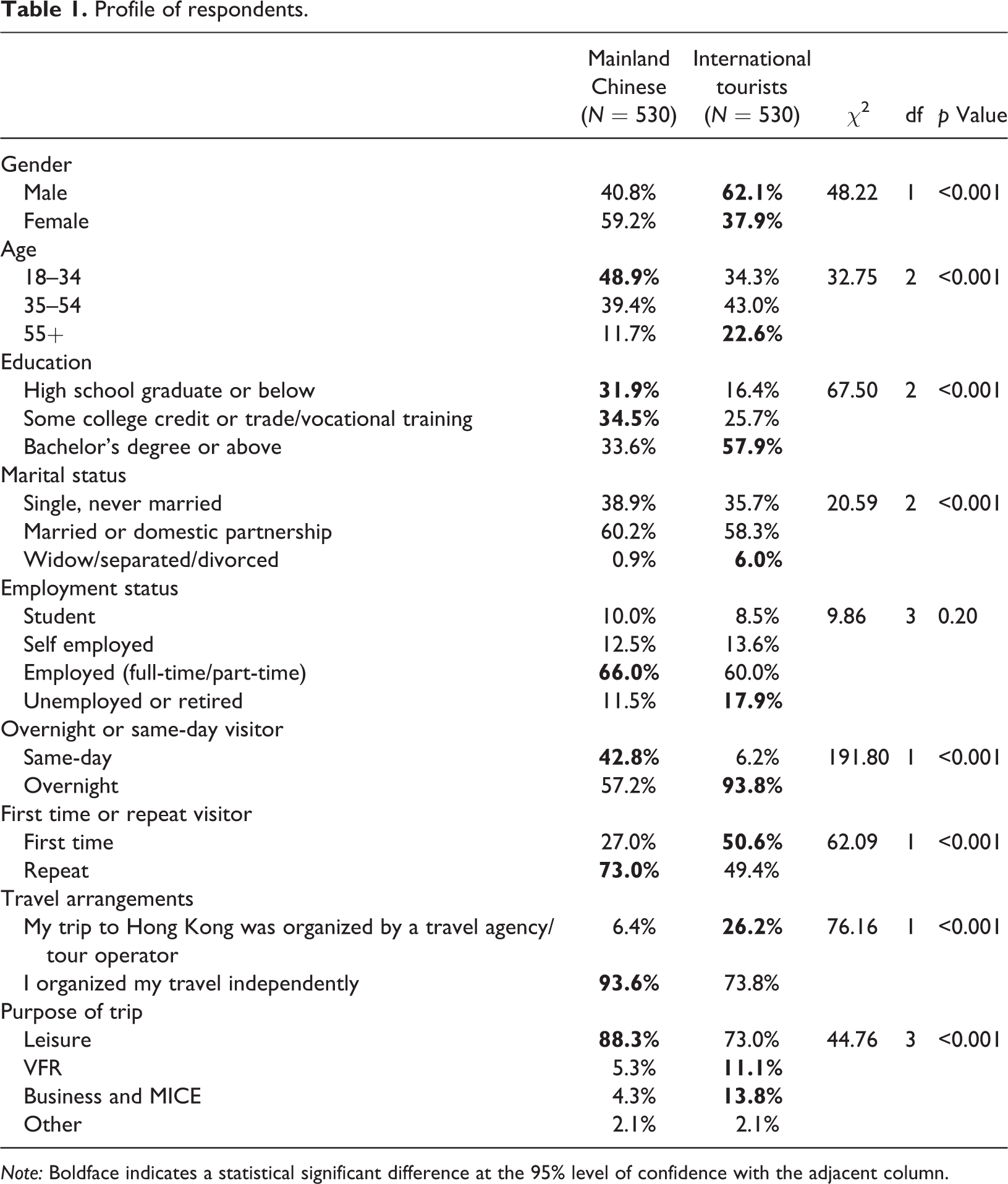
Note: Boldface indicates a statistical significant difference at the 95% level of confidence with the adjacent column.
Questionnaire design
The questionnaire consists of three broad sections. The first section covers the counterfeit shopping experience. The second section captures the reason for purchasing counterfeit products, the marketing strategies sellers of counterfeit products used to entice shoppers, and the effectiveness of anti-counterfeiting strategies. The third section contains a standard set of demographic and travel-related questions. The questionnaire was created in English and then translated into simplified Chinese and then back-translated to ensure meaning equivalence (Brislin, 1980).
To determine the incidence of counterfeit purchases among different tourist types, mainland Chinese tourists and international tourists were asked if they had purchased any counterfeit products during their stay in Hong Kong. For those who had purchased counterfeit products, they were asked the location of where they had made the purchase, what products they had purchased and the value of the purchases. These questions were used to estimate the economic value of counterfeit purchases among different tourist types.
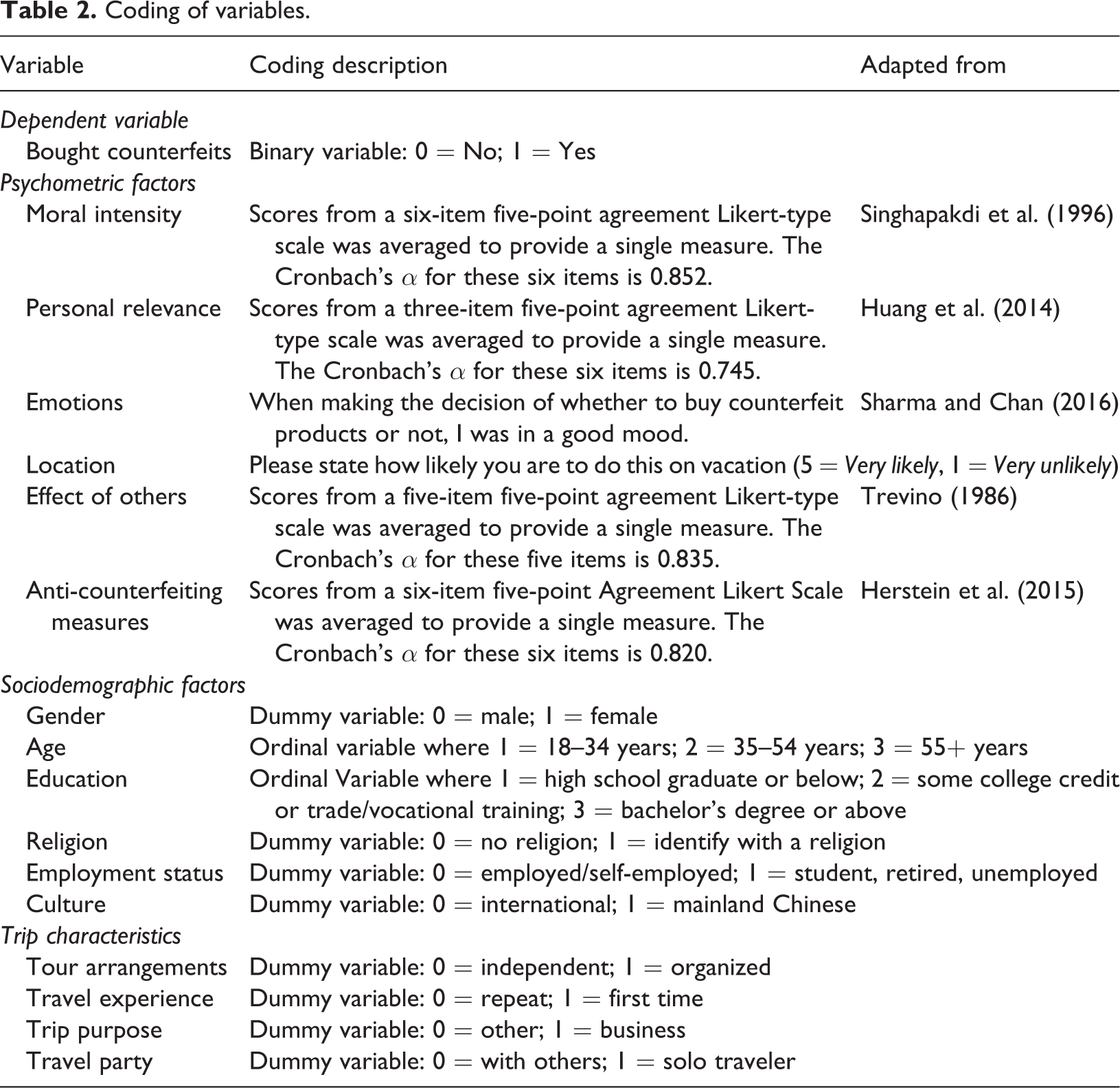
To assess the determinants of the incidence of counterfeit goods’ purchases among tourists, a variety of questions were asked, capturing the conceptual variables shown in Figure 1. The measurement of moral intensity is adapted from the work of Singhapakdi et al. (1996) which developed six items to measure moral intensity. The items are negatively worded so that a higher scores on rating scale signifies lower moral intensity. The scores from this six-item five-point Agreement Likert-type scale were averaged to provide a single measure. The Cronbach’s α for these six items is 0.852, suggesting good internal reliability. The measurement of personal relevance is adapted from Huang et al. (2014). The three items relating to personal relevance were averaged to provide a single measure. The Cronbach’s α for these three items is 0.745. A single item measurement of emotion is taken from the study by Sharma and Chan (2016). The emotion item asked “When making the decision of whether to buy counterfeit products or not, I was in a good mood” on a five-point Agreement Likert-type scale. A single item measurement was used for the “location” construct, namely, “Please state how likely you are to do this on vacation,” on five-point Likelihood Likert-type scale. This measurement was also used by Tolkach et al. (2017). Trevino (1986) provided the basis for the “effect of others” construct. Scores from a five-item five-point Agreement Likert-type scale were averaged to provide a single measure. The Cronbach’s α for these six items is 0.835. To test which anti-counterfeiting strategies might be most effective in combating the purchase of counterfeit goods, items were adapted from Herstein et al. (2015). Both buyers and non-buyers were asked to rate the effectiveness of six strategies of how to prevent consumers from buying counterfeit products, also on a five-point Effectiveness Likert-type scale. The internal reliability score of these five items was 0.820.
The sociodemographic variables and trip characteristics are a relative standard set of questions. Their coding is outlined in Table 2.
Coding of variables.
Regression method
One of the aims of this study is to determine the predictors of counterfeit purchase incidence among tourists. Since the dependent variable is dichotomous, we use the binary logistic regression estimation for predicting the probability of purchasing counterfeit products. The binary logistic regression takes the form

where Y is a binary response variable. Yi = 1 if the tourist purchases a counterfeit product and Yi = 0 if the tourist does not purchase any counterfeit products; X = (X1, X2,…, Xk) are a set of explanatory variables which can be discrete, continuous, or a combination; xi is the observed value of the explanatory variables for observation i. This equation can be expressed in log form

In equation (2), the logistic model stipulates that the effect of a covariate on the probability of purchasing a counterfeit product is linear on the log-odds scale or multiplicative on the odds scale. If βk > 0, then exp (βk) > 1, and the odds increase. If βk < 0, then exp (βk) < 1, and the odds decrease.
Findings
Incidence of counterfeit purchases
To answer the first research objective, tourists were asked if they purchased any counterfeit products during their stay in Hong Kong. International tourists were significantly more likely (p = 0.028) than mainland Chinese tourists to purchase counterfeit products while on this trip in Hong Kong. Hence, mainland Chinese tourists were less likely to purchase counterfeit products while in Hong Kong.
For both mainland Chinese tourists and international tourists who did not purchase counterfeit products in this trip, they were asked why they did not purchase counterfeit products. Of the 85.7% of mainland Chinese tourists who did not purchase counterfeit products, 77.0% of them stated that they would never purchase counterfeit products while 21.1% stated that they would purchase counterfeit products in their home country. The reasons why they will purchase counterfeit in their home countries, rather than in Hong Kong was predominantly based on a cheaper price of counterfeits in mainland China. Similar results were found for this question among international tourists. Of the 79.6% of international tourists who did not purchase counterfeit products on this trip, 80.6% stated they would never purchase counterfeit products while a small proportion stated they would purchase counterfeit products elsewhere. The reasons for this are to take advantage of cheaper prices and a greater availability of choices elsewhere.
The large majority of tourists who purchased counterfeits were aware they were purchasing non-deceptive counterfeit products. Among mainland Chinese tourists, 89.5% either knew they were purchasing counterfeit goods or suspected they were based on cues such as price, location, and packaging. The corresponding figures for international tourists were 92.6%.
Table 3 shows the buying patterns of those tourists who purchased counterfeit products. Different cohorts purchase different types of counterfeit products and different quantities of counterfeit products. The first section of Table 3 shows the incidence of counterfeit purchased by product based on the total sample. The second section shows the same incidence based on those who purchased counterfeit products while third section shows the average number of counterfeit products purchased in each category, based on those who purchased counterfeits in that category. The fourth section shows the average unit price of those who purchased in that category while the fifth section shows the total average expenditure of counterfeit goods purchased in that category. In general, counterfeit apparel and accessories and handbags and wallets are the most likely to be purchased. Mainland Chinese are relatively more likely to purchase counterfeit footwear and other goods, such as cosmetics and medicines, while international tourists are more likely to purchase wearing apparel/accessories and electronics.
Counterfeit product buying patterns by cohort.
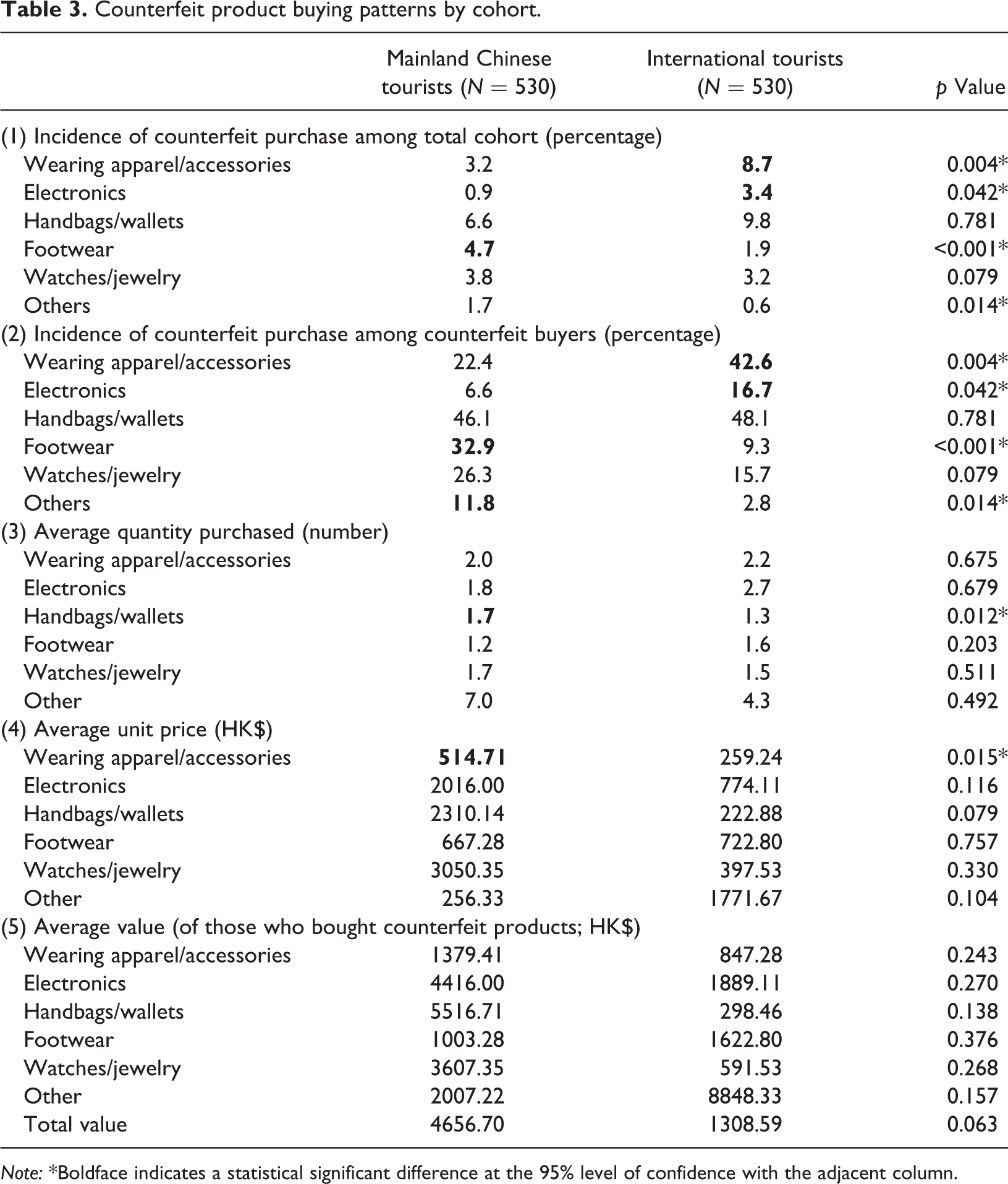
Note: *Boldface indicates a statistical significant difference at the 95% level of confidence with the adjacent column.
In general, mainland Chinese tourists have a lower incidence of purchasing counterfeits but when they do, they tend to purchase more expensive counterfeit goods compared to international tourists. Of those who purchase counterfeit products, mainland Chinese tourists spend an average of HK$ 4656.70 (US$ 597.01), while international tourists spend an average of HK$ 1308.59 (US$ 167.77) on counterfeit products during their stay in Hong Kong.
To estimate the total value of the non-deceptive counterfeit goods market in Hong Kong, we take the incidence of purchasing a counterfeit product in each product category and multiply this by the adult population and by the median expenditure in each category (we use the median of the total expenditure value by product as, like most expenditure data, the data are right-skewed, hence the mean values will be inflated). Summing across product categories, gives the average per person expenditure by cohort (Table 4, row 2). The total number of adult persons is adjusted from “A Statistical Review of Hong Kong Tourism 2016,” the survey screened out anyone under 18 years of age. In Table 4, “All Tourists” (column C) is the aggregation of mainland Chinese tourists (column A) and international tourists (column B).
Total non-deceptive counterfeit expenditure by tourists in Hong Kong.
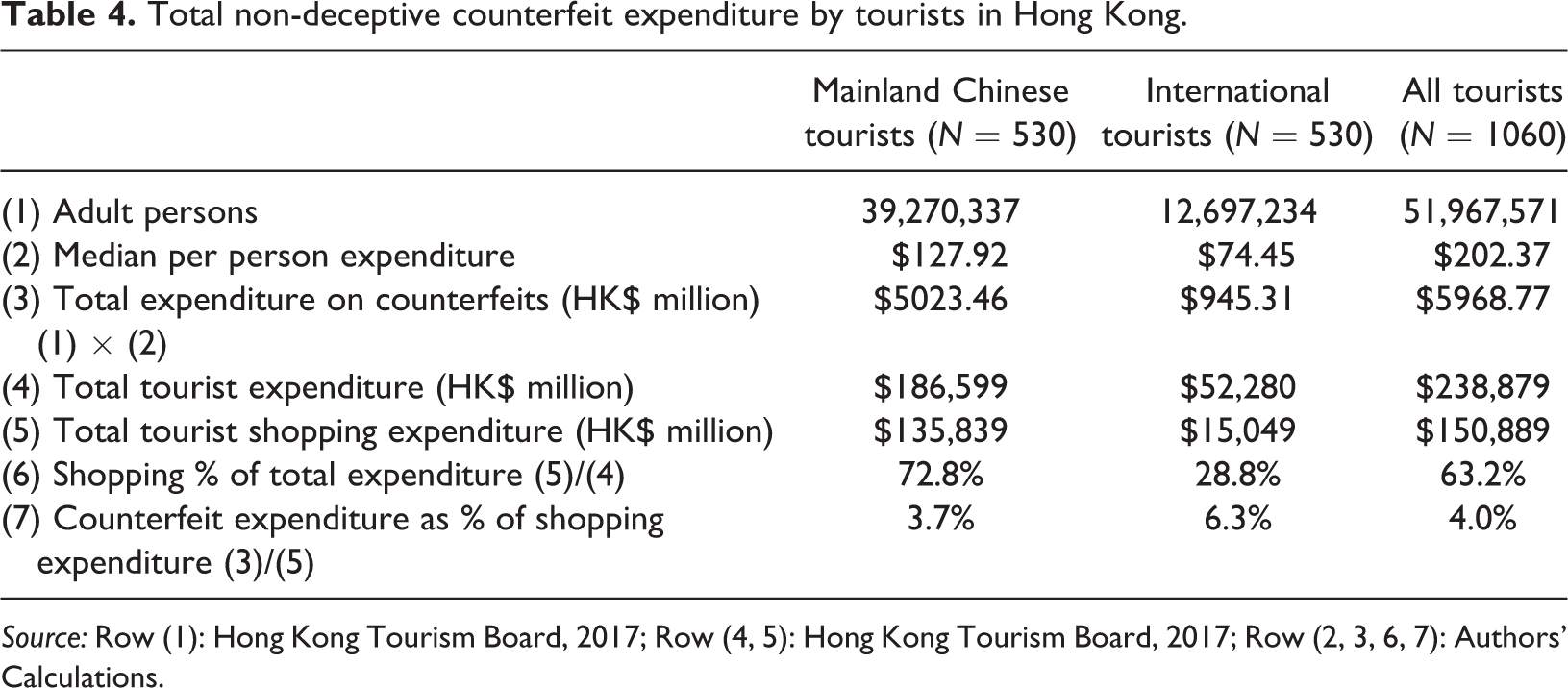
Source: Row (1): Hong Kong Tourism Board, 2017; Row (4, 5): Hong Kong Tourism Board, 2017; Row (2, 3, 6, 7): Authors’ Calculations.
Economic value of counterfeit purchases
The median value of expenditure for each mainland Chinese tourists is HK$ 127.92 (US$ 16.40) while international tourists spend less at HK$74.45 (US$ 9.54). Extrapolating this data to the populations, mainland Chinese spend HK$ 5023.46 million (US$644.03 million), and international tourists spend HK$ 945.31 million (US$ 121.19 million) on non-deceptive counterfeits per year. This means, together the total tourist market spends HK$ 5.969 billion (US$762.50 million) on non-deceptive counterfeit products. Table 4 also shows total tourist expenditures (row 4) and total tourist expenditures on shopping (row 5), obtained from the Hong Kong Tourist Board Annual Reports. Taken as a percentage of total expenditures on shopping, non-deceptive counterfeit purchases represent 4.0% of all tourist shopping expenditure and up to 6.3% of international tourists’ shopping expenditure.
Determinants of counterfeit purchase incidence
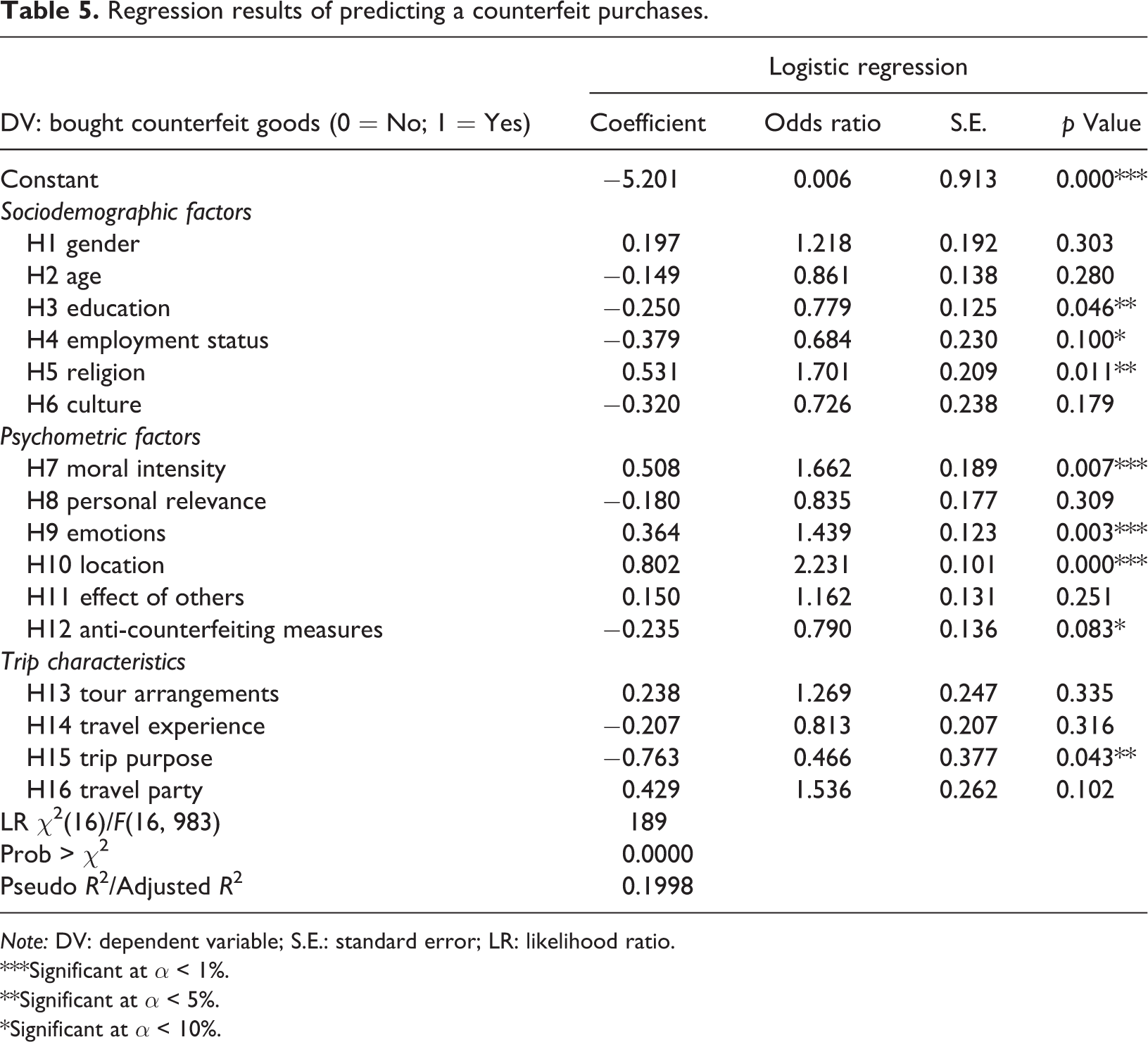
Table 5 shows the regression results of the binary logistic regression which uses both intrinsic and extrinsic variables, like psychometric factors, trip characteristics, and sociodemographics as explanatory variables. The regression results in Table 5 shows that several variables in each category were statistically significant. Out of the psychometric factors, moral intensity, emotion, location and perception of anti-counterfeit measures are statistically significant. Those with lower moral intensity (a higher score on the moral intensity measurement) are more likely to purchase counterfeits (hypothesis 7 is supported). Those who are in a good mood (emotion) are more likely to purchase counterfeit goods (hypothesis 9 is supported). Similarly, the location variable, where tourists recognize the opportunity to purchase counterfeit goods while on vacation is significant (hypothesis 10 is supported). In contrast, tourists who perceive anti-marketing strategies to be effective are less likely to purchase counterfeit goods (hypothesis 12 is supported).
Regression results of predicting a counterfeit purchases.
Note: DV: dependent variable; S.E.: standard error; LR: likelihood ratio.
***Significant at α < 1%.
**Significant at α < 5%.
*Significant at α < 10%.
Only one variable of trip characteristics is significant—trip purpose. Business travelers are less likely to purchase counterfeit goods. This could be because they have less time to shop for counterfeits or have the income to purchase genuine luxury goods, rather than counterfeit products (hypothesis 15 is supported). Several sociodemographic factors are significant. Tourists who not employed (students, retired, unemployed) are less likely to purchase counterfeit goods (hypothesis 4 is supported). These findings are in line with Prendergast et al. (2002). Tourists with a higher level of education are less likely to purchase counterfeits, as found by Wee et al. (1995). Those who identify with a religion are more likely to purchase counterfeit goods. This finding goes against some existing research (for example, Weaver and Agle, 2002) but as noted by Clark and Dawson (1996), the relationship between religion and ethical behavior is complex, contextual, and multifaceted.
Anti-counterfeit marketing strategies
Lastly, we seek to determine which anti-counterfeiting strategies might be most effective in combating the purchase of counterfeit goods. Table 6 shows that, among both types of tourists, having price discounts of genuine products and campaigns that show potential risks in health or safety of buying counterfeits are the most effective anti-counterfeiting strategies. In terms of differences between cohorts, a variety of strategies would be more effective among the mainland Chinese tourists. These strategies relate to educating mainland Chinese tourists about the risks/negative impacts of purchasing counterfeit products and explaining why genuine products deserve high price.
Perceived effectiveness of anti-counterfeiting strategies.

Note: Boldface indicates a statistical significant difference at the 95% level of confidence with the adjacent column.
Discussion and conclusions
Tourists’ purchasing counterfeit products is an important and under-researched area. This research has taken a novel approach to understanding the attraction and potential deterrents for tourists’ buying counterfeit products. The research also estimates the current value of non-deceptive counterfeit purchases in Hong Kong. This quantification allows policy makers to assess the magnitude of the “problem.”
There is a fairly high prevalence of tourists purchasing counterfeit products in Hong Kong, more so among the international tourists than the mainland Chinese tourists. This finding contrasts with Wang et al. (2005) and Husted (2000) who argued that the collectivist culture of the Chinese would purchase more counterfeits. They may well purchase more counterfeits in general, but not when they are on holidays in Hong Kong. About one in five international tourists and one in seven mainland Chinese tourists report making a counterfeit purchase during their stay in Hong Kong. The higher incidence of international tourists purchasing counterfeit product can be explained by Schuchert-Güler and Eisend (2003) who note that consumers whose home countries have stricter IPR enforcement are more likely to purchase counterfeits while on holidays.
Mainland Chinese tourists have a significantly higher average expenditure on counterfeits than international tourists. As with Jiang (2014), handbags and wallets are the most commonly purchased items. However, international tourists are more likely to purchase counterfeit wearing apparel and mainland Chinese tourists are more likely to purchase footwear. Despite the lower incidence of counterfeit purchases among mainland Chinese tourists, the sheer volume of mainland Chinese tourists means the value spent on counterfeit goods by mainland Chinese tourists equates to 84.2% of total tourist expenditure on counterfeit goods.
Non-deceptive counterfeits amount to HK$ 5.97 billion ($US 761.32 million) per year for 2016. Tourist expenditure on non-deceptive counterfeits amounts to 4.0% of total tourists’ shopping expenditures. According to Global Brand Counterfeiting Report 2018, the total amount of counterfeiting globally has reached US$1.2 trillion in 2017 which includes all kinds of counterfeiting, selling both online and off-line (RSG, 2018). Thus, the estimated economic value of counterfeit demand in Hong Kong among tourists is reasonable because it only measures counterfeit demand for fashion products that are selling off-line (in local markets). By knowing the value of counterfeits, the Hong Kong government and brand companies can develop anti-counterfeit marketing strategies, especially aimed at tourists, to decrease the economic value that is lost to counterfeits. To develop efficient strategies, it is necessary to know what affects the consumers’ ethical decision-making process.
Tourists will respond to a range of anti-counterfeit strategies. Lowering the prices of genuine goods and explaining the risks of purchasing counterfeit goods would be the most effective anti-counterfeit measures. The result of the effectiveness of counterfeit sellers’ marketing strategies also suggests that counterfeit buyers are convinced mostly by the possibility of price negotiation. However, as noted by Nia and Zaichkowsky (2000), lowering the price of genuine goods can diminish the brand image of these luxury items. The high price of these goods is a proxy for their high quality. Thus, providing more value-added services could be considered an alternative marketing strategy, which is in line with McEachern (2015). Partially in contrast to Herstein et al. (2015), negative anti-counterfeiting marketing strategies such as campaigns that show potential risks in health or safety of buying counterfeits and programs that educate consumers about the negative impact of counterfeits on the economy and society could be effective in this market.
As a contribution to theory, this research adds new knowledge to tourist misbehavior/unethical behavior by applying psychological theory. Tourists’ ethical behavior has been a common topic because it is relatively easier to collect data on that subject compared to unethical behavior. Ethical behavior should be encouraged but unethical behavior should also be discouraged by investigating the psychology behind these behaviors. Among the limited research studying tourists’ misbehavior, most studies examine attitudes or opinions toward unethical behavior. The current research takes a new direction that first identifies respondents who behaved unethically (bought counterfeits) and those who did not and then investigates the determinants of that decision. This can help understand the drivers of that decision. Further, a conceptual framework has been developed with potential intrinsic and extrinsic determinants including psychometric factors and sociodemographic characteristics. This research is also the first, to the authors’ best knowledge, to include tourists’ trip-related factors as determinants of unethical behavior.
As noted in the Introduction, this research has practical implications for, not only Hong Kong but also other countries impacted by counterfeit goods, in Europe and South-East Asia. One such recommendation could be for brand companies to work with hotels to educate potential counterfeit purchasing tourists. For example, Chanel can work with hotels to put the book named “Coco Chanel: The Legend and the Life by Justine Picardie (2011)”; or compile Coco Channel’s quotes into a booklet and put them in the room for customers to read. This would be a good example to encourage tourists to be loyal to brand name goods and prevent counterfeit demand. In addition to such a booklet, Facebook, Instagram, TripAdvisor, or other social media can be used to influence tourists. Consumers can only be affected after frequently exposed to similar information for a long period.
In addition, the current research shows that negative marketing strategies that emphasize risks are effective for the tourist market. Therefore, the anti-counterfeit marketing strategies should focus on the risk to self, such as the negative effect on personal image and credibility. If consumers are aware of the potential risks to themselves, they will be less inclined to buy counterfeits. This is considered as a better anti-counterfeit marketing strategies than most of the current strategies such as hiring celebrities (e.g. Jackie Chan and Arnold Schwarzenegger) to join anti-counterfeiting campaigns (Rubio, 2005).
Destination image can be affected by the availability of counterfeit products. However, the relationship between destination and the availability of counterfeit goods is complex and multi-faceted. The availability of counterfeit products may denigrate the shopping experience, associating the destination with poor quality goods, poor workmanship, and crime. Alternatively, availability of counterfeit products may heighten the shopping experience for those tourists who want excitement and adventure, which they can rarely experience at home. Wu et al. (2014) found that international tourists enjoy shopping in street markets because the price is cheap, bargaining is fun, and the quality of fake products can be good. Similarly, Correia and Kozak (2016) point out that tourists acknowledge that fake products will be sold in street markets but this will not negatively affect the image of street markets and may even attract some tourists to street markets to buy counterfeits. However, the relationship between tourists’ decision (or not) to buy counterfeit goods and their perception of the destination’s image remains largely unknown. This is an avenue for future research.
Like any research, this research has limitations. Although the sample is representative of the population of Hong Kong’s tourists, both mainland Chinese and international, visiting Hong Kong, it only represents one destination. Research on this topic in other destinations where counterfeit products are rife would make an interesting comparison. Another limitation is the difference between consumers’ stated and revealed behavior. In this survey, we ask about non-deceptive counterfeit purchases. Although we ensure anonymity in the interviewing process, some respondents may be unwilling to admit that they knowingly purchased counterfeit products. For tourists, however, there was no way that the responses could be linked back to the tourist’s identity.
To assess the determinants of counterfeit goods purchases among tourists, we used a relatively straight-forward binomial logistic regression model. We included psychographic variables in their model. However, we recognize that some literature has highlighted how the direct inclusion of these variables may result in biased estimates of causal effects. Choice behavior depends not only on individual characteristics but also social influences. It is not easy to understand and represent a decision-maker’s choice behavior due to the difficulty of measuring latent attitudes, tastes, perceptions, beliefs, or values (Kim et al., 2014). More flexible models, such as discrete choice hybrid choice models, can explicitly incorporate psychological factors to better represent the decision making process in order to enhance the behavioral representation of the choice process (Bolduc and Alvarez-Daziano, 2010). In the design of this study, we did not factor this in so have not implemented a discrete choice hybrid choice model. We leave it for others to undertake such analysis in future studies.
In terms of future research, in this study, we take a demand-side approach by asking tourists their purchasing behavior and attitudes toward counterfeit products and the potential effectiveness of anti-counterfeit marketing strategies. Another approach would be to take a supply-side approach to this issue whereby sellers in the street markets are asked about the selling of counterfeit products, where they are sourced and how counterfeit products are marketed. However, given the illegality of counterfeit products, this approach might be problematic. Another approach would be to compare tourists who purchase counterfeit products and tourists with the genuine products. A comparison could be made with the types of products sold, the differences in prices, and any perceived differences in quality. Further, management of international luxury brand stores could be interviewed to understand the concerns they have of counterfeit products eroding their brand name and image. Opinions could be sought to see whether there is any perceived decline in revenues as a result of counterfeit products.
Footnotes
Declaration of conflicting interests
The author(s) declared no potential conflicts of interest with respect to the research, authorship, and/or publication of this article.
Funding
The author(s) disclosed receipt of the following financial support for the research, authorship, and/or publication of this article: The work described in this article was fully supported by a grant from the Research Grants Council of the Hong Kong Special Administrative Region, China (project no. PolyU 255008/14B).
