



Abstract
This study employs the multivariate trend asymmetric GARCH-MIDAS (TAGM) model, an extension of the GARCH-MIDAS model, to explore the potential asymmetric impact of uncertainty shocks, including oil and infectious disease shocks, on the long-term volatility of China’s listed tourism firms. Furthermore, we test the out-of-sample forecasting accuracy of uncertainty shocks to China’s listed tourism firms’ risk, which is measured by the volatility of tourism stocks after the outbreak of coronavirus disease 2019 (COVID-19). The results show that uncertainty shocks have a significant asymmetric effect on the long-run volatility of tourism stocks. The included uncertainty shocks improved accuracy in forecasting China’s listed tourism firms’ risk after the pandemic outbreak. The empirical results have important implications for tourism investment strategies in unstable environments.
Introduction
Tourism is a rapidly expanding industry and plays an essential role in the global economy. However, the unforeseen outbreak of COVID-19 disrupted global tourism development. Governments were compelled to enact a series of restrictive measures, including travel restrictions, border closures, and social distancing mandates, in their efforts to curb the spread of the virus. The tourism industry bore the brunt of these control measures (Wang et al., 2022). Tourism is an industry that is highly integrated with other industries and one that is sensitive to uncertainty shocks such as the COVID-19 pandemic. In particular, the volatility of its tourism stocks is often closely related to these shocks (Sayan and Al Kan, 2023). The existing research on the performance of tourism stocks is mainly focused on the relationships between tourism stock returns and their influencing factors, such as the macroeconomic variables (Ersan et al., 2019) and non-macroeconomic variables (Zopiatis et al., 2019). However, studies on the nexus of the tourism stock volatility and uncertainties caused by oil shocks and pandemics are limited. No relevant research has looked at the impact of the recent COVID-19 pandemic on the volatility of tourism stock. The outbreak of the COVID-19 pandemic created an unprecedented crisis in the tourism sector as it caused an almost total collapse due to the resulting business lockdowns and movement restrictions (Karabulut et al., 2020). With the lifting of most travel restrictions, the future outlook is positive, and the tourism sector is again showing its resilience and capacity to bounce back from economic shocks. Understanding the impact of infectious disease pandemics on stock market volatility is of great interest to investors and policymakers, especially following the experiences of the pandemic.
To quantitatively measure the magnitude of an infectious disease pandemic, Baker et al. (2020) developed a new index: the infectious disease equity market volatility tracker (EMV-ID). The index enables us to get an overall picture of the global infectious disease pandemic over a long period rather than focusing solely on the shock of an isolated public health event, such as severe acute respiratory syndrome (SARS) (Kuo et al., 2008), Avian Flu (Kuo et al., 2009), and Ebola (Cahyanto et al., 2016). Such factors as oil shocks and infectious diseases will inevitably affect tourists’ destination choices regarding travel distance, costs, and health and safety concerns. Therefore, the above uncertainty shocks will hit the volatility of China’s listed tourism firms’ stock and greatly influence investment strategies.
With regard to uncertainty shocks, models that predict the volatility of tourism stocks rarely consider the time-varying features of the impacts of oil shocks, which have indirect effects on tourism activities through disposable income, production, transportation costs, and economic uncertainties. As we all know, the tourism industry is an oil-intensive industry since its inherent transportation costs depend on oil prices. The fluctuations in oil prices may partly affect tourists’ destination choices or purchase behavior of travel services (Shahzad and Caporin, 2020). Salisu and Gupta (2021) showed that the impact of oil shocks on stock prices and volatility in emerging countries is substantial. As the largest oil-importing and the second-largest oil-consumption country, China is far more dependent on oil than any other country (He et al., 2021). However, few studies focused on the relationship between the oil shocks and the volatility of stock returns of China’s tourism industry. It is necessary to explore the impact of oil shocks on the volatility of China’s tourism-listed firms, especially during the COVID-19 outbreak.
Since uncertainty shocks are normally sampled as low-frequency data, it is hard to model their effects on the volatility of China’s listed tourism firms using high-frequency (daily) generalized autoregressive conditional heteroskedasticity (GARCH) models. The GARCH model with mixed-frequency data (GARCH-MIDAS) proposed by Engle et al. (2013) solves this problem by combining daily and monthly data to model stock volatility. This model is the most commonly used method for investigating the relationships between stock volatility and its economic determinants. Nevertheless, the asymmetry effect of the GARCH-MIDAS class models has not received sufficient attention in the tourism research field. Amendola et al. (2019) recently provided theoretical and empirical accounts for evaluating volatility associated with positive and negative macroeconomic shocks. Based on the existing research, our paper expands the single TAGM model into a multivariate TAGM model, which allows us to consider the asymmetric effects of multiple uncertainty shocks on the volatility of China’s listed tourism firms at the same time. This study proposes two possible channels of long-run volatility asymmetry for China’s listed tourism firms. The first asymmetry channel is related to the sign of specific parameters of the uncertainty shocks. The second asymmetric effect comes from the long-run volatility under uncertainty shocks.
This study differs from the existing literature in the following aspects. First, to the best of our knowledge, we are the first to explore the role of uncertainty shocks in China’s tourism stock volatility. Second, we use the TAGM model to investigate the impact of the monthly uncertainty shocks on daily tourism stock volatility and explore their long-term asymmetric effects. Lastly, we forecast tourism stock volatility (tourism firms’ risk) with the TAGM model using different types of uncertainty shocks as explanatory variables, which are important for policy and investment decisions. The empirical results confirm that all uncertainty shocks have a significant asymmetric impact on the volatility of China’s listed tourism firms. Oil shocks stimulated the long-run volatility of China’s listed tourism firms pre-COVID-19. In comparison, post-COVID-19, EMV-ID will boost the volatility of China’s listed tourism firms. Meanwhile, infectious disease pandemics (especially COVID-19) have affected these firms’ volatility. In addition, uncertainty shocks show better predictive performance in the post-COVID-19; the accuracy of the daily stock volatility of China’s listed tourism firms can be improved using uncertainty shocks. We can also draw an important conclusion that no single uncertainty shock can explain the long-term volatility of China’s listed tourism firms well, and we must consider the collective impact of multiple uncertainty shocks.
The remainder of the paper is organized as follows: the next section presents related literature; the third section introduces the data and outlines the trend asymmetric GARCH-MIDAS methodologies. The fourth section discusses the empirical results, and the last section concludes the paper.
Literature review
This section will review the literature related to the effect of uncertainty shocks on tourism stocks. As one of the most critical resources, oil plays a vital role in the global economy. Previous studies have explored the impact of oil price shocks on the stock market in developed countries (Park and Ratti, 2008) and emerging countries (Enwereuzoh et al., 2021; Khurshid and Kirkulak-Uludag, 2021). The tourism industry is also considered an oil-intensive sector that is vulnerable to oil shocks. The findings suggest that oil price volatility may be critical to almost all segments of the tourism supply chain (Mohanty et al., 2012).
In the literature on oil shocks and tourism, the research mainly focuses on the oil price. Regarding oil price shocks, the literature focuses on tourism demand and revenues. It has become commonplace to say that energy prices significantly affect tourism, as energy products directly drive supply and demand. Becken (2008) argues that transportation plays a crucial role in improving tourism, mainly dependent on energy sources such as oil. Higher oil prices make travel costs rise significantly, leading to inflation, lower consumer incomes, and increased travel costs. It usually leads to higher travel expenses, reducing people’s willingness to travel and ultimately reducing travel company revenues, negatively impacting global tourism. Some studies explore the impact of oil price shocks on tourism arrivals in different regions separately (Jeřábek, 2019; Schiff and Becken, 2011) and provide evidence of the significant negative effect of oil price shocks. An important finding that emerges from Hesami et al. (2020) study is the presence of a unidirectional Granger causality that runs from oil prices to tourism receipts. Kisswani et al. (2019, 2020) used autoregressive distributed lag (ARDL) models and its extended model to examine the effect of oil prices on tourism receipts and the sensitive susceptibility of tourism to oil price changes. They study the oil price-tourism receipts nexus for selected Middle East and North Africa (MENA) countries and 19 randomly selected international destinations from Europe. The above literature suggests that decreasing oil prices will significantly increase tourism revenues in tourist destinations. Several authors also confirm that higher oil prices negatively impact tourism (Becken and Lennox, 2012; Lennox, 2012).
The previous literature investigating the risk of tourism firms rarely considered the impact of oil shocks, and its conclusions are inconsistent. Kilian and Park (2009) suggest that oil price shocks may affect the real economy differently. Shahzad and Caporin (2020) and Mohanty et al. (2014) explored the impact of oil prices and implied volatility for the oil market on the tourism-related stocks part of the Russell 3000 index and the U.S. travel and leisure industry, respectively. They concluded that oil prices and their volatility significantly impacted the stock market of the U.S. travel and leisure sector, which is generally negative. Qin et al. (2021) investigate the time-varying effects of oil price shocks on travel and leisure stocks in China. The results indicate that the impacts of oil price shocks on travel and leisure stock returns are mainly positive, which supports the market inertia theory. Kumar (2023) and Chen (2013) further explore the asymmetric effect of oil prices on stock returns at both the country and industry levels.
Based on the literature review above, earlier studies focusing on the linear relationship between crude oil and travel stocks only take into account the information on oil prices rather than their asymmetric effect. Major industries in China are vulnerable to oil price shocks. Hence, it is necessary to study the impact of oil shocks on China’s listed tourism firms, which could be paramount to investors when hedging the risk of such uncertain stocks.
The literature on infectious disease pandemics is from the SARS outbreak in 2003. Chen et al. (2007) examined the effect of the SARS epidemic on Taiwanese hotel stock prices and found a significant negative impact of the SARS outbreak on hotel stock performance. Kuo et al. (2008) investigated the effects of infectious diseases, including the Avian Flu and SARS, on international tourist arrivals in Asian countries. The empirical results indicate that the number of affected cases significantly impacts SARS-affected countries but not Avian Flu-affected countries. However, the potential damage arising from the Avian Flu and subsequent pandemic influenza is much greater than that resulting from the SARS outbreak (Kuo et al., 2009; Page et al., 2012). Amankwah-Amoah (2016) and Cahyanto et al. (2016) confirmed the significant impact of Ebola on global aviation and domestic travel in the U.S., which is useful for the tourism industry in planning for and responding to other health pandemics in the future.
Notably, the COVID-19 outbreak caused significant damage to global macroeconomic and financial markets (Kolahchi et al., 2021). The most effective method that countries use to reduce the impact of pandemics is to impose quarantines in the affected regions during the pandemic; this puts the tourism industry in a difficult position. Intuitively, the travel equity market reacted to this pandemic more quickly and immediately than other sectors of the economic and financial system. That also raises our concern about the relationship between the global infectious diseases pandemic and tourism. COVID-19 has had a severe impact on various industries: The airline (Abdelsalam et al., 2023), hotels (Cepni et al., 2023), restaurants (Kim et al., 2021; Song et al., 2021), and film and drama (Hu et al., 2022) industries, were forced to come to a halt, causing tourism arrivals and tourism revenues to plummet (Payne et al., 2023; Falk et al., 2023), which in turn caused volatility in the tourism stock market, affecting the performance of tourism companies (Wang et al., 2022). Finally, Lee et al. (2022) and Plzakova and Smeral (2022) further investigate the asymmetric effects of COVID-19 on tourism. Nevertheless, there is still only limited research exploring the volatility of tourism stocks under uncertainty shocks.
Existing research studies mainly use time series forecasting methods, such as GARCH-type models, to predict the volatility of the tourism stock market (Ayele et al., 2017). However, these methods do not guarantee the accuracy of long-term and short-term forecasts. The existing literature proves that oil prices can effectively improve the accuracy of stock market fluctuations (Wei et al., 2017), while the literature considers the epidemic pandemic as an influencing factor is very limited. In addition to exploring the impact of the above uncertainty shocks on tourism stock market volatility, we also compared the volatility forecasting performance of the TAGM model with that of the basic GARCH-MIDAS model and the GARCH-type model.
To summarize, research studies directly testing the volatility of tourism stocks are limited and generally focuses on developed markets. The literature about the impact of oil shocks and pandemic diseases on the volatility of tourism firms remains limited, especially with regard to forecasting the volatility of tourism firms’ stocks.
Methodology
Amendola et al. (2019) construct the double asymmetric GARCH-MIDAS, on which we use the extended multivariate TAGM model to investigate the effects of uncertainty shocks on the long-run volatility of China’s listed tourism firms. The TAGM model is specified as follows


The TAGM defines the long-run component as

Throughout this work, the Beta function will be used as a weighting function of the TAGM models, that is
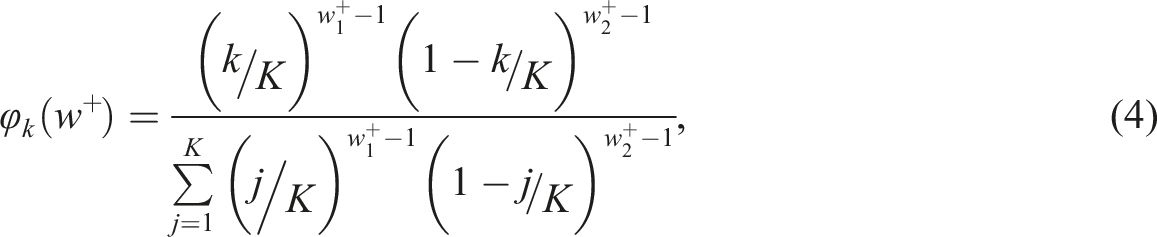

In our paper, we use the weight function adopted by Engle et al. (2013). We make the restriction that

We use loss functions (root mean square error (RMSE), mean absolute error (MAE), and quasi-likelihood loss (QLIKE)) to evaluate the forecast accuracy of the listed tourism firms’ risk with different uncertainty shock specifications. The loss functions (Patton, 2011) can be written as follows



Data
To model and forecast the daily listed tourism firms’ risk with the monthly uncertainty shocks, we use the China Securities Index Tourism Thematic Index (CTTI) data as a proxy for China’s tourism stock market and its volatility to measure China’s listed tourism firms’ risk (Liu et al., 2023). We utilize a daily data set from January 5, 2009 to July 31, 2022 to investigate the impact of the uncertainty shocks on CTTI’s volatility. The data are available from the Wind database. The daily return is calculated according to the following

We use the European Brent crude spot price as the Oil price shock (OPS). It is published by the U.S. Energy Information Administration (EIA), which is widely traded in futures and OTC (over-the-counter) swaps, with over two thirds of the world’s crude oil already anchored to its pricing system. The monthly data of the infectious disease equity market volatility tracker (EMV-ID) index were constructed by Baker et al. (2020). We convert it to monthly frequency because there are many EMV-ID records with zero values in daily frequency. Thus, it is hard to track its change rate in daily frequency. In addition, we are more interested in the long-term impacts of infectious disease pandemics on stock market volatility. Therefore, we sum the daily EMV-ID records monthly to get this paper’s monthly EMV-ID index. The EMV-ID index is collected by Baker et al. (2020).
We calculated the change in oil price and EMV-ID index as the first logarithmic difference. Thus, uncertainty shocks include oil price shock and EMV-ID shock. They will be considered as X in equation (3).
The descriptive statistical and preliminary analyses.

Note: ***, **, and * indicate significance at the 1%, 5%, and 10% levels, respectively.
We have included the preliminary analysis results for CTTI, OPS, and EMV-ID in Table 1. Formal tests encompass the examination of Autoregressive Conditional Heteroskedasticity (ARCH) effects, a formal assessment of volatility, along with Ljung-Box Q and Ljung-Box Q2 tests for the presence of autocorrelation and higher-order autocorrelation.
ARCH statistics with lag orders of 5 and 10 indicate significant ARCH effects across all sample sequences. The presence of significant ARCH effects implies the suitability of GARCH-type models for capturing the dynamics of uncertainty shocks volatility. The Ljung-Box Q statistic for CTTI reveals that each sequence rejects the null hypothesis of no autocorrelation at the 1% significance level, indicating significant autocorrelation and pronounced long memory characteristics within each sequence. The CTTI demonstrates evidence of ARCH effect and autocorrelation at specified lags. This outcome is anticipated given the interdependence of current and past prices, coupled with the high-frequency characteristics of the data. Hence, with the substantiated and significant ARCH effects and the application of mixed-frequency data, the GARCH-MIDAS modeling framework emerges as the most fitting choice.
Figure 1 shows the time series of CTTI’s return and uncertainty shocks. It is clearly apparent that all uncertainty shocks changed significantly after the outbreak of the COVID-19 pandemic. CTTI’s return has shown significant volatility when major crisis events have broken out. The OPS and EMV-ID are stable for the rest of the sample period. Time series of CTTI’s return and uncertainty shocks.
Empirical analysis
The asymmetric effect of uncertainty shocks on tourism firms’ volatility
How much of the CTTI’s volatility can be explained by the uncertainty shocks? We compute the variance ratio (VR) to investigate the relative importance of the long-term fluctuation component, which is defined as
The estimation results of the TAGM-X model.

Note: This table reports the full-sample estimates for the TAGM model coefficients. VR is the relative importance of the long-term component. The numbers in parentheses represent standard errors. ***, **, and * indicate significance at the 1%, 5%, and 10% levels, respectively.
As stated above, we consider three different uncertainty shocks that yield three different models of uncertainty shocks combined into equation (3) to find the role of uncertainty shocks in driving the volatility of CTTI. The three models we estimated are classified into the following two categories: (1) The TAGM models with a single uncertainty shock, namely, OPS and EMV-ID; (2) The TAGM models with combinations of different uncertainty shocks, in which we use the following abbreviations to represent the component of X: OPS + EMV-ID.
The study period for this paper spans from January 5th, 2009 to July 31st, 2022. To comprehensively investigate the impacts of OPS and EMV-ID on CTTI’s long-term volatility, particularly during the pandemic, we partitioned the study period into three segments: full-sample, pre-COVID-19 outbreak, and post-COVID-19 outbreak. The results presented in this paper confirm the different effects of different types of uncertainty shocks on the volatility of the Chinese tourism stock market in different periods. The estimated parameters of the TAGM model with the different periods are presented in Table 2. The sums of α and β are noticeably close to one, indicating a high degree of persistence in the CTTI’s volatility. The parameter θ measures the effect of monthly uncertainty shocks on the long-run volatility of CTTI.
Table 2 presents evidence demonstrating that the signs of
Comparing the estimation results for sub-samples before and after the outbreak of COVID-19, the signs of
Unlike OPS, before the outbreak of the COVID-19 pandemic, an increase in EMV-ID would lead to higher volatility of CTTI, while a decrease in EMV-ID would decrease the volatility of CTTI. After the outbreak of the pandemic, changes in EMV-ID may produce higher volatility of stocks in healthcare-related industries. At the same time, due to the government ban on activities, investors’ panic about the pandemic leads to irrational investment behavior and decisions, which further exacerbates the volatility of CTTI stocks. Our findings confirm that COVID-19 and other diseases stimulate the long-term volatility of the CTTI (Bai et al., 2021). It also can be seen from the VR value that pre-COVID-19, as China is a major oil-importing country, OPS was the primary source of the long-run volatility of listed tourism firms. The substantial increase in the VR of all types of uncertainty shocks that occurred after the outbreak of the pandemic, especially EMV-ID, clearly indicates that the pandemic influenced the long-run volatility of CTTI. We also conclude that no single uncertainty shock can explain the long-run volatility of CTTI well. Moreover, we cannot ignore that the mixing of OPS and EMV-ID also exerts a powerful effect on the volatility of CTTI.
Using the coefficients θ and w, the effects of low-frequency monthly uncertainty shocks on long-run volatility can be estimated. According to
In summary, as a major oil-importing country, increases in oil prices and industrial activity are closely related to oil, thus contributing to economic prosperity. As a result, the travel and leisure industry also shows signs of prosperity. In this case, travel and leisure industry investors may immediately increase their investments, causing volatility in the travel stock market and vice versa. Thus, the results justify the hypothesis that OPS and EMV-ID greatly influence the long-run volatility of CTTI. They also confirm that uncertainty oil shock leads to unstable volatility in China’s listed tourism firms that varies over time. A plausible explanation for this is that different uncertainty shocks (e.g., the costs of goods on which listed tourism firms depend and public health events) influence the travel and leisure stock market in distinct ways. At the same time, the impact of uncertainty shocks on the volatility of China’s listed travel firms may be unstable due to the latter’s complex and variable responses to such shocks.
Figure 2 shows the CTTI’s volatility and its long-term components affected by different types of uncertainty shocks. Among them, the long-term volatility curve influenced by uncertainty shocks after the outbreak of the COVID-19 pandemic has similar trends. We can also observe several volatile points, such as the financial crisis that occurred around 2009, which caused a sharp drop in oil prices. Moreover, the EMV-ID shock also caused significant ups and downs in the long-run volatility of CTTI. These special events all indicate that the effect of uncertainty represented by oil shocks and infectious diseases will indeed have an asymmetric impact on the volatility of China’s listed tourism firms. Comparison of the long-run volatility under different uncertainty shocks. Note: This figure shows the long-run and total volatility under different uncertainty shocks, estimated by the TAGM model with different uncertainty shocks in the MIDAS equation. The total and long-run volatility sample period is daily from January 5, 2009 to July 31, 2022.
We reconstruct the estimated long-run component with different portions in Figure 3 to distinguish the main contributions to long-run volatility. The blue line corresponds to the long-run volatility of CTTI, the red line corresponds to long-run volatility under the positive impact, and the green line corresponds to long-run volatility under the negative impact. According to the results of long-run volatility under uncertainty shocks, the volatility affected by OPS depends mainly on positive aspects shocks; EMV-ID does the opposite, with negative aspects shocks contributing a large proportion of long-run volatility. Thus, we concluded that the uncertainty shock might have a relevant asymmetric effect on the frequency component of the CTTI’s long-run volatility, which was revealed well in the TAGM model. The impact of uncertainty shocks on the long-run volatility for asymmetric effect.
Forecasting China’s listed tourism firms’ volatility
Out-of-sample forecasting
Comparisons of the out-of-sample forecasting performance.

Note: This table presents the values of loss functions (i.e., RMSE, MAE, and QLIKE) for the performance of the different models in predicting the long-run volatility of CTTI. The numbers in parentheses represent the loss functions ratio of TAGM relative to the competitive model. Values less than one indicate superior performance of the TAGM model compared to the comparison model, while values greater than one suggest the opposite.
The forecast results show that the TAGM are better than the GM during the whole forecasting period, which means that the asymmetric effect can better forecast the long-run fluctuation trend of CTTI. In addition, the TAGM model performs better than other comparable models. Additionally, EMV-ID makes better predictions during the pandemic, especially when uncertainty shocks are considered, and can improve forecast accuracy. At last, dividing different periods provides a better test of the robustness of TAGM predictions.
DM test results
Results of the DM test (2018.1.2-2022.7.31).

Note: This table presents the result of DM statistics and the corresponding p-value between TAGM models and the corresponding GM model. A negative DM statistic implies that the TAGM model has higher forecasting accuracy. The p-value of the DM statistic smaller than 0.1 is marked in bold. ***, **, and * indicate significance at the 1%, 5%, and 10% levels, respectively.
MCS test results
Results of the MCS test for the TAGM model.

Note: This table presents the p-values of the MCS test under specific loss functions s (RMSE, MAE, QLIKE) and test statistics (range
We compare the results of all of the loss functions in different periods. We find that the MCS p-values of all models are larger than 0.10 before the outbreak of the COVID-19 pandemic, which shows that these models can generate higher forecasts. Furthermore, the models with OPS and EMV-ID can survive in the MCS test under the criteria of RMSE, MAE, and QLIKE, implying that they can improve the accuracy of predictions of the daily stock volatility of China’s listed tourism firms. Finally, the p-values of TAGM containing EMV-ID equal to 1 in any period indicate that the corresponding models have the best out-of-sample forecasting performance.
The above evidence shows that uncertainty shocks can effectively improve forecasting performance. The forecasting performance of TAGM with uncertainty shocks is significantly better than that of the GM model.
Conclusions
This paper mainly explores whether low-frequency uncertainty shocks (OPS and EMV-ID) have significant asymmetric effects on China’s listed tourism firms’ volatility by applying the TAGM model. The sample period spans from January 5, 2009 to July 31, 2022 providing observations from up to 3299 trading days. Furthermore, we choose the prevailing evaluation methods, the MCS test and DM test to assess the out-of-sample forecasting performance of uncertainty shocks on China’s listed tourism firms’ volatility.
We modified the GM model by adding asymmetric effect to the long-run volatility components and added each uncertainty shock to the TAGM model to develop the extended model. The main conclusions are interesting: First, the results of the estimations suggest that uncertainty shocks significantly impact China’s listed tourism firms’ volatility. Second, the impact of uncertainty shocks on the volatility of China’s listed tourism firms’ stocks is significantly asymmetrical. Figure 3 visually tells us that positive and negative uncertainty shocks significantly affect the long-run volatility of China’s listed tourism firms. The positive aspects of the OPS effects are more significant than the negative ones, and EMV-ID differs from OPS. Furthermore, the TAGM model offers an improved tool for understanding the impact of uncertainty shocks on China’s listed tourism firms’ stock volatility. TAGM outperforms GM in forecasting and exhibits superior performance to GJR-GARCH and GARCH models pre-COVID-19. Post-COVID-19, TAGM demonstrates better predictive ability than GARCH-type models when accounting for the EMV-ID. Further, according to the estimated results from different periods, OPS has a distinctly different effect on the long-run volatility of CTTI before and after the outbreak of the COVID-19 pandemic. OPS significantly increased the volatility of CTTI before the outbreak of the pandemic and showed an asymmetric effect on the volatility of CTTI after the outbreak. As China is an oil-importing country, ups and downs in oil prices will directly affect people’s travel costs, influence the choices of travel business operators and investors, and ultimately affect the long-run volatility of CTTI. This result supports the findings of previous articles. EMV-ID proves that sudden pandemics significantly impact the volatility of CTTI and change the manner in which other uncertainty shocks, such as OPS, influence its long-run volatility. We can fully consider EMV-ID as an essential factor affecting the tourism stock market, as well as other industry stock markets.
Our findings have important economic implications for tourism firms’ investment decisions and policy formulation. First, the impact of uncertainty shocks on listed tourism firms is variable. Depending on the different signals of uncertainty shocks, tourism and leisure industry investors should adjust their policies to cope with the various impact changes. In particular, it is essential to note that the impact of OPS on Chinese tourism firms changed with the outbreak of the COVID-19 pandemic. More specifically, OPS shows a significant asymmetric effect post-COVID-19. Second, the impact of uncertainty shocks on the stock volatility of tourism firms is complex. Therefore, it can be seen that uncertainty has a predictive effect on tourism and leisure stocks. As an oil-importing country, policymakers can intervene in the tourism stock market during periods of increased oil demand by developing appropriate supply- and demand-oriented policies and regulations. In this way, they can avoid excessive volatility in CTTI fluctuations brought about by changes in oil prices. Moreover, the empirical results likewise remind policymakers that when measuring the impact of uncertainty shocks on CTTI volatility, they should not consider individual variables in isolation but instead the effects of various uncertainty shocks in an integrated manner. Policymakers must strive to maintain the continuity and stability of tourism market policies to promote the healthy and orderly development of China’s tourism stock market. In addition, during major events (e.g., the COVID-19 pandemic), policymakers should be vigilant to avoid possible risks (Assaf and Scuderi, 2020). Finally, as a sunrise industry, the tourism and leisure industry plays an increasingly important role in China’s development. Chinese policymakers and market participants must also pay close attention to changes in oil shocks and pandemic spread to implement dynamic management and investment.
However, the present paper has limitations, considering only the Chinese tourism stock market. We should profitably extend this research to examine other countries’ tourism stock markets. Second, future studies may focus on the asymmetric impact of uncertainty shocks on different industries. Finally, we will continue to extend the GARCH-MIDAS model to explore the asymmetric effect of uncertainty indices on the volatility of the stock market.
Footnotes
Declaration of conflicting interests
The author(s) declared no potential conflicts of interest with respect to the research, authorship, and/or publication of this article.
Funding
The author(s) disclosed receipt of the following financial support for the research, authorship, and/or publication of this article: This work was supported by the National Natural Science Foundation of China (72374083, 72004077, 72004106), Major Project of the Key Research Base of Humanities and Social Sciences of the Ministry of Education (22JJD790066), Humanities and Social Science Fund of the Ministry of Education (20YJC79007), and Hong Kong Research Grant Council (PolyU 155502120).
