



Abstract
The aim of this study was to determine the attitudes of university and high school students towards mobile games, and to investigate their motivation and gratification needs in terms of mobile gaming. The descriptive method was used in the study. The sampling group was composed of 846 participants. The data were collected through the Mobile Gaming Motivation Survey. The reliability coefficient of the survey (Cronbach’s alpha) was found to be 0.893. The data analysis revealed that the mobile gaming motives of participants were self-realization/individual gratification, rivalry, social interaction, addiction and escaping. It was concluded that the motivation of the participants to play mobile games and the time they spent on mobile gaming decreased as their education level increased. It was also found that the mean scores for each factor got lower as the age progressed.
Introduction
The miniaturization of electronics and advances in mobile technology has led to great changes in gaming technology, and mobile games have become increasingly popular with young people. Mobile games offer various incentives to gratify people and are played easily by anyone, anytime and anywhere. Sophisticated, speedy and high-definition smart phones are used as mini computers due to their high availability and the usability they offer. With the increasing popularity of mobile games among particularly young people, though it causes addiction in some cases, the mobile gaming sector has required new technology, and gratification requirements of users have come to the fore. Changing habits with changing technology requires the attention of policymakers. While pathological mobile technology addiction and overuse of mobile games have been studied from various perspectives, new studies are needed due to the constant changes and developments in the area. As a matter of fact, each change reveals a new need, and subsequently new research into motivation for the novelty is required.
The aim of this study was to reveal the motives for mobile game consumption on the basis of a uses and gratifications approach (UGA). The reasons for mobile game preferences and the user convictions about games were also investigated in the research. This study was conducted as applied research. The data were collected through Mobile Gaming Motivation Survey developed out of the previous studies on the basis of a uses and gratifications paradigm. To that end, the data were collected through face-to-face interviews with 846 participants, 376 university and 470 high school students.
Game as a concept
Huizinga (1995: 48) defined a game as a rule-based activity performed willingly in a specific place and time, but the definition has changed over time. Current games are no longer activities that children do just to pass the time and experience fun or excitement in a particular environment. New games, most of all, should be regarded as activities free from time and space limits. There is a great deal of research that reveals people of all ages play games for various reasons.
Each game, regardless of time and environment, has a specific structural reality and is considered in that context. Therefore, it is hard to refer to a universal and static rationale in defining what a game is. Games are played neither only by specific social subgroups nor just by human beings. Many kinds of animals play games and learn how to live in nature through games. Engaging in games is not based just on reasoning; if it were, gaming would be a purely human activity. On the contrary, playing games is a common activity among both humans and other animals (Huizinga, 1995: 19). The reality constructed through gaming is quite different from the real world and has its own rules.
Gaming has changed and expanded dramatically as a concept due to the digitalization that takes it from the real world into the virtual. People have always played games throughout history, using various tools according to the conditions and rules of their time. Though the nature of games changed in different eras, it could be said that these changes were related to some extent to the previous era. Peg tops, for example, were made of stones and toy cars were carved from wood initially, but over time they became made of plastics and then produced electronically. The current technology used in games today is the most specific and virtual of all times. New generations can visit foreign countries from their seats, defeat their rivals effortlessly and challenge supernatural powers without needing courage. The time spent on new games has increased to such an extent that people can now become socially isolated. They do not need real people to be physically present with them in order to play with since they can play with invisible and unfamiliar players.
Digital games prompt people to spend more time on games by means of three-dimensional (3D) and real-like designs, subsequent levels, script writing and motivational rewards (Gökkaya and Deniz, 2014:59). Curiosity about what will happen and who their rivals will be in the next level makes people spend more time on mobile devices. Spending excessive time on mobile devices, which is also called addiction, has already been fairly extensively investigated. In a study, Li et al. (2012) found that the time people, particularly 13–17-year-olds, spend on digital games is increasing each year.
Theoretical background
The theoretical background of this study is based on the UGA, which assumes that viewers deliberately and actively use media for particular goals and processes. In much research, this approach has contributed significantly to determining the reasons, particularly, for consumption of technologically generated content. The UGA has been used to investigate various means of communication such as radio, television and social media throughout media studies history. The scope of the research into the UGA has changed in accordance with the developments in communication tools. There is also a significant amount of research into the use of this approach in new media, which provides audience with new choices like interactivity, non-hierarchical structure and ubiquity. Accordingly, mobile games, the motivations and gratifications of the users and their preference behaviour have been investigated. In view of this, it could be argued that UGA is a suitable model in determining the motivations for playing mobile games. This paradigm will be used to explain the psychological gratifications associated with mobile content consumption.
The earlier ‘media effect’ models developed in communication studies (hypodermic needle or magic bullet theories) viewed audiences as passive recipients and claimed that there is a simple one-way media effect on audiences. Following the studies of Lazarsfeld, which led to the thinking that media has limited effects, some scholars began reconsidering powerful effects paradigm (McQuail, 1983). Subsequently, Katz and Foulkes formulated the UGA from 1940s onwards with an active audience perspective and explained media use in the context of individual socio-psychological characteristics (Chen et al., 2009: 111). The studies conducted by Katz and Foulkes in 1960s contributed to the acceptance of the approach, and argued that social and psychological needs determined people’s media use. Consequently, the previous question that asked ‘what does media do to people?’ was reconfigured as ‘what do people do with media?’ (Katz and Foulkes, 1962: 378)
The UGA adopts the view that audiences have power over their media consumption and they choose media content consciously to meet their needs (Katz et al., 1973: 510). This paradigm involves the perspective into how and why people choose media to meet their desires, and tries to explain media consumption in terms of psychological gratifications (Lee et al., 2010: 1246). The UGA has a specific view into the media use and motivation of audiences. Following the ‘stubborn audience’ definition made by Bauer in 1964, the notion of passive audience was shifted to active audience (Yi and Yin, 2010: 317). Based on socio-psychological approach, this paradigm looks into how individuals consume media content to achieve gratifications (Chen et al., 2009: 111) and also provides a perspective into the uses and effects of new technology (Shery et al., 2006: 213).
According to UGA, motivations vary across basic needs, individual differences and contextual societal factors, such as getting information, having fun, passing time or escaping from problems/daily routine (Shery et al., 2006: 214). In other words, media gratification needs of audience are based on personal and social needs. This study investigated young people’s motivation for mobile games on the basis of UGA. The aim of the study was to determine the characteristics of the participants, the motivational factors that led them to play mobile games and the gratifications they got from gaming.
New media and mobile games offer people more opportunities when compared to traditional ones. Audiences can access and choose any content easily anytime and anywhere. They can also replay the game and interact with other players instantly (Yi and Yin, 2010: 317). Some recent studies argue that the motives like personal utility, immediate gratification, various entertainment types and numerous sources of information have increased media consumption. The literature review of the previous research conducted on digital game playing and the UGA is presented below.
Durdu et al. (2005) conducted a study to investigate the computer game habits and preferences of university students. The research was designed as a descriptive study and carried out in two universities in Turkey with the participation of 496 university students. In the study, it was found that more than half of the participants mentioned ‘variety’ as the motive for gaming. The other motives were ranged as ‘relieving stress’ (34.6%), ‘competitiveness’ (13.1%), ‘imaginary/fantastic atmosphere’ (11.5%), ‘refreshing effect’ (8.2%) and ‘social interaction’ (4.9%).
In a study by Shery and his colleagues (2006), the data were collected from two universities, three high schools, two middle schools and two elementary schools in the Midwestern United States through a 7-point Likert scale survey. The reasons for playing games and the time spent on games were investigated in terms of UGA, and 1265 students aged 9–23 years participated in the study. The findings revealed that the strongest motive (4.22) was challenging. The subsequent motives were competitiveness (4.11), variety (3.95), imagination (3.91), fantasy (3.64) and social interaction (3.42). Also, there were such motives as graphic and sound quality (3.50), reality-based context (2.89) and fantasy of being stronger than in real life (2.57).
Chen and her colleagues (2009) investigated children’s game preferences and their positive attitude preferences in the frame of UGA. The participants were (N = 2640) students from 12 primary and secondary schools in Singapore, 1329 primary school children (956 males and 372 females) and 1311 secondary school children (1004 males and 302 females). The results of the study revealed that children with higher prosocial scores tend to spend significantly less time on playing violent and aggressive games. According to the models of gratification seeking behavior described in the literature, children seek and derive similar pleasure from their real-life activities and the games they play, which might suggest that this finding is supportive of the supplementary model.
Lee and her colleagues (2010) carried out a study into the motives that lead students to play games and share mobile content in the game named Indagator, which blends mobile content sharing with game playing. The research was based on UGA. The data were collected through a survey which was administered to 203 undergraduate and graduate students from two large universities in Singapore. The finding revealed that the motives for mobile content sharing and game playing were leisure (α = 0.89), escape from problems (α = 0.89), information discovery (α = 0.88), socialization (α = 0.84), entertainment (α = 0.81), information quality (α = 0.83), personal status (α = 0.77) and relationship maintenance (α = 0.64).
In a study conducted in Miami University by Grace and Coyle (2011), 23 volunteers, 14 male and 9 female university students, were asked to complete a pre- and post-survey session about their experience with video gaming (11 factors) and their experience in the game (8 factors). The analysis of the data showed that four factors affected the players’ motivation and interest in games: personal gratifications (solving challenges, progressing in game, improving and learning new things), social gratifications (interaction with other players, helping and cooperating with them), competition (getting the highest score and surpassing the others) and escape (getting away from daily routines).
In the study conducted by Hou (2011), the gratifications that users expected and attained in the games in social networking were examined on the basis of UGA in China. The data were collected cross-sectionally through the self–administered online questionnaire. The participants were Happy Farm players who were selected through a snowball sampling technique. In the final analysis, a total of 140 Happy Farm players responded to the survey. The study revealed that social gratification factors that users sought were social connection, social investigation, shared identity, popularity and self-expression. The gratification factors were competition, challenge, social interaction, diversion, imagination-fantasy and arousal.
In a study conducted by Omori and Felinto (2012), 12 gamers, 10 male and 2 female university students, were selected as participants. The majority of the participants (N = 9) were computer science undergraduate students and the rest (N = 3) were music undergraduate students, and all of them were Brazilian. According to the study which included seven games, primary motives of the participants for social games were asynchronous time (single player), social fictitious presence (helping or hiring virtual assistance), publication of activities and achievements (sending invitations for friends to play, wall posting) rewarding system (daily bonuses), competition (ranking weekly champions), social status (level in the play), cooperation (helping or asking friends to complete level), interest sharing (donating or receiving gifts), ambition needs (objectives, challenges and achievements), cognitive spontaneity (feedbacks, tutorials) and game elements (arts, sound, plot, fantasy and story).
Ünal et al. (2013) carried out a study in a university in Turkey to determine the digital gaming habits, motives and preferences of prospective teachers. The data were collected from 180 participants through a questionnaire and the findings revealed that the majority of the participants (89.1%) played the games for entertainment/pleasure. The other motives were listed as diversion (78. 9%), curiosity (76, 1%), exploration (67.8%), self-development (63.9%), self-realization (63.5%), competition (62.2%), stress relief (60%), education (55.6%), habit (56. 7%) and social interaction (55%).
In another study which involved 426 participants from 22 departments in a university in Turkey, Uluyol et al. (2014) investigated the habits and preferences of prospective teachers through a survey technique and found the participants’ motives as follows: entertainment (64.51%), stress relief (19.35%) and leisure time activity (12.90%). They also found that 27.23% of the participants thought the games harmful while 72.77% believed they were harmless.
In a similar study conducted in a Turkish university, Gökkaya and Deniz (2014) examined the habits and preferences of 191 students for computer games. In the study, participants stated that the competitiveness created by digital games contributed to their motivation. The other motives were listed as challenge (6.48%), social interaction (12.04%), imagination/fantasy (12.04%), stress relief (41.67%) and refreshment (0.93%). Another finding is that the majority of the participants (84.85%) believed that computer games were harmful for such reasons as anti-socialization, waste of time, addiction and tiredness, but the others (15.15%) considered them harmless.
In the light of the literature review, it could be said that mobile game experience focuses on personal and social gratifications, and the needs that drive individuals to play mobile games may be grouped as (1) self-assertion, (2) challenge/competition, (3) diversion/escape (4) fantasy/imagination and (5) social interaction. Based on this context, this study aimed to investigate the mobile uses and gratifications of high school and university students according to some variables.
Method
The descriptive method was used in the study. This method determines the existing circumstances and contributes to making comparisons and evaluation (Erdoğan, 2003: 138). Descriptive method, which is used to determine the media preferences of audience, is a research design that aims to present concrete information about a phenomenon. This study was designed as a descriptive study since it aimed to determine the motives of participants for mobile games.
Research aim and questions
The study aimed to investigate the characteristics of young people who play mobile games and the motives/gratifications that lead them to mobile gaming. The following research questions were asked with that end:
Population and sample
The population of the study was 14–26-year-old high school and university students in Konya. The number of high school and university students in Konya is about 175,000, with nearly 100,000 at high schools and 75,000 at universities. Nearly 60% of the university students in Konya come from various cities in Turkey to get university education. As for the high school students, they come from various socio-economic classes in Konya, a city located in the centre of Turkey. The main aim of the study is to determine the mobile game habits of young people by investigating whether the habits differ according to the age and grade variables. Therefore, the data on sociocultural differences in the sampling group were not collected. The participants were selected through cluster sampling technique; 470 high school and 376 university students, 846 in total, were chosen randomly out of the students at one private and three public high schools and three faculties at Necmettin Erbakan University. The age range of the high school students was from 14 to 18 while the university students’ was from 18 to 26. The average age of all participants was 18.13.
Data collection and analysis
The data were collected through the Mobile Gaming Motivation Survey, which was developed by the researcher according to the findings of previous studies (Chen et al., 2009; Gökkaya and Deniz, 2014; Hou, 2011; Shery et al., 2006; Uluyol et al., 2014) that investigated mobile gaming and digital game habits on the basis of UGA. Following the literature review and the data obtained from the semi-structured preliminary survey that was conducted through 30 participants, the researchers constructed the survey questions. The draft survey form was reviewed by three expert academicians and the latest form of the scale was constructed according to the feedback and suggestions given by them. Finally, the data for the study were collected between 1 and 15 May 2016 in Konya.
The survey form had four sections which collected information about mobile technology and smart phone use in the first section, mobile game habits in the second, motives/gratifications for mobile gaming in the third and demographic information in the fourth. The reliability coefficient of the survey (Cronbach’s alpha) was found to be0.893, which means it is reliable. The data were analysed on computer through SPSS 22.0 package program. Descriptive statistical techniques, one-way analysis of variance (ANOVA), t test and factor analysis were used regarding the different variables.
Study limitations
In this study, the term ‘mobile game’ was used to define the games designed for mobile devices such as mobile phones and tablet PCs. The video games were not included. Also, the types of mobile games and the amount of time spent on games were not investigated. This study is limited to high school and university students, aged 14–26 years, in Konya city. Also, the study is limited to the UGA in terms of theoretical framework.
Results
According to the findings, 17.3% of university students were in the first year, 14.7% were in the second and 12.5% were in the third year of their university life. As for the high school students, 20.7% were in grade 9, 19.6% of them were in grade 10, 13.1% were in grade 11 and the rest, 2.1%, were in grade 12. Another finding was that 44.4% of the participants were university and 56.6% were high school students. Considering that the participants might play games by other mobile devices, they were asked whether they had smart phones or not, and it was found that 93.3% of them had smart phones while 6.7% did not. The survey with multiple-choice questions about the motives to buy smart phones was developed to determine the state of participants in terms of playing mobile games through smart phones, and 1958 answers were obtained. Easy access to social media was cited as the foremost motive (28.4%) followed by sharing photos, videos, etc (17%). The ability to share photos and videos recorded through smart phones particularly makes them popular with people. Though the first two questions may seem to be related with social media use, they were indeed asked in the context of camera possibilities. The ratio of participants who stated that they had smart phones to play games (15.2%) was found to be lower than estimated. Technical possibilities (sound quality, camera and call quality) were found to be the fourth motive for young people to buy smart phones. In the light of the findings, smart phones seem to be preferred for social media use in general. The motive to use smart phones for gaining status (6.3%) lagged behind many other motives. It was also found in the study that 49.5% of the participants had had smart phones for 2–3 years.
The study revealed that 53.7% of the participants spent less than an hour on playing mobile games. The ratio of the university students who spent less than an hour was 64.4%, and for high school students, the ratio was 45.1%. Another finding was that 5.1% of the participants played mobile games for 5 h or more: 2.9% of university students and 6.7% of high school students were found to spend 5 h or more on mobile games. It was also found that 12.4% of the participants paid money to play mobile games while 87.6% of them did not as they preferred free games. There was no difference between the university and high school students in this attitude because the ratio of both groups were almost the same (university students, 12.6%; high school students, 12.5%). Almost two-thirds (67.5%) of the participants were found to play games on devices other than smart phones; 55.8% of university and 76.8% of high school students played games on other mobile devices. When asked whether they were a member of a game group, 30. 4% of the participants said they were a member of at least one group while 69. 6% said they were not. The ratio for this finding was 36.0% for high school students and 23.4% for university students. This finding suggests that high school students were more interested in mobile group games than university students. The t-test results showed that there was not a difference between university and high school students in terms of group game membership (XHS, 1.57; XU, 1.48; p, 0.076). While high school students were found to be more inclined to sharing their success scores in social media, the difference was not considered significant statistically (XHS, 2.05; XU, 2.03; p, 0.579). Out of all participants, the ratio of those who shared their success scores was 14.9%.
The conviction that games are created for marketing purposes is held by 72.9% of university students and by 64.3% of high school students. According to the results of ANOVA test, the difference was found significant (p = 0.02), which means that university students thought the games serve marketing purposes more than high school students do. The findings also showed that there was a significant difference between two groups on the negative health effects of games health (p = 0.0001). More than half of the university students (57.7%) and 39.4% of high school students thought that mobile games affect health adversely. The difference between the attitudes of two groups towards personal data sharing through mobile games was found significant as well. The ratio of the university students who said ‘yes’ to the question whether personal data is shared through games was 24.5%, while that of high school was 37.9%. For the same question, 51.3% of university students and 40.9% of high school students said ‘no’, and the results of ANOVA test revealed that the difference is significant (p = 0.0001). As for the beliefs about the possibility that games serve advertising purposes, there was no any significant difference between the groups (p = 0.345), because 65.5% of university students and 63.6% of high school students believed that games did so. In general, 65.1% of participants thought that games are designed for advertising purposes. More than half of the participants, 50.1% of university students and 53.5% of high school students, believed that games caused addiction: the difference between groups was not found to be significant (p = 0.211). The findings related with the possibility that games convey subliminal messages indicated significant differences between the groups (p = 0.015; XU, 3.47; XHS, 3.70). According to the statistical analysis, high school students believed that mobile games conveyed subliminal messages more than university students did: 61.7% of university students and 56.1% of high school students agreed with this conviction.
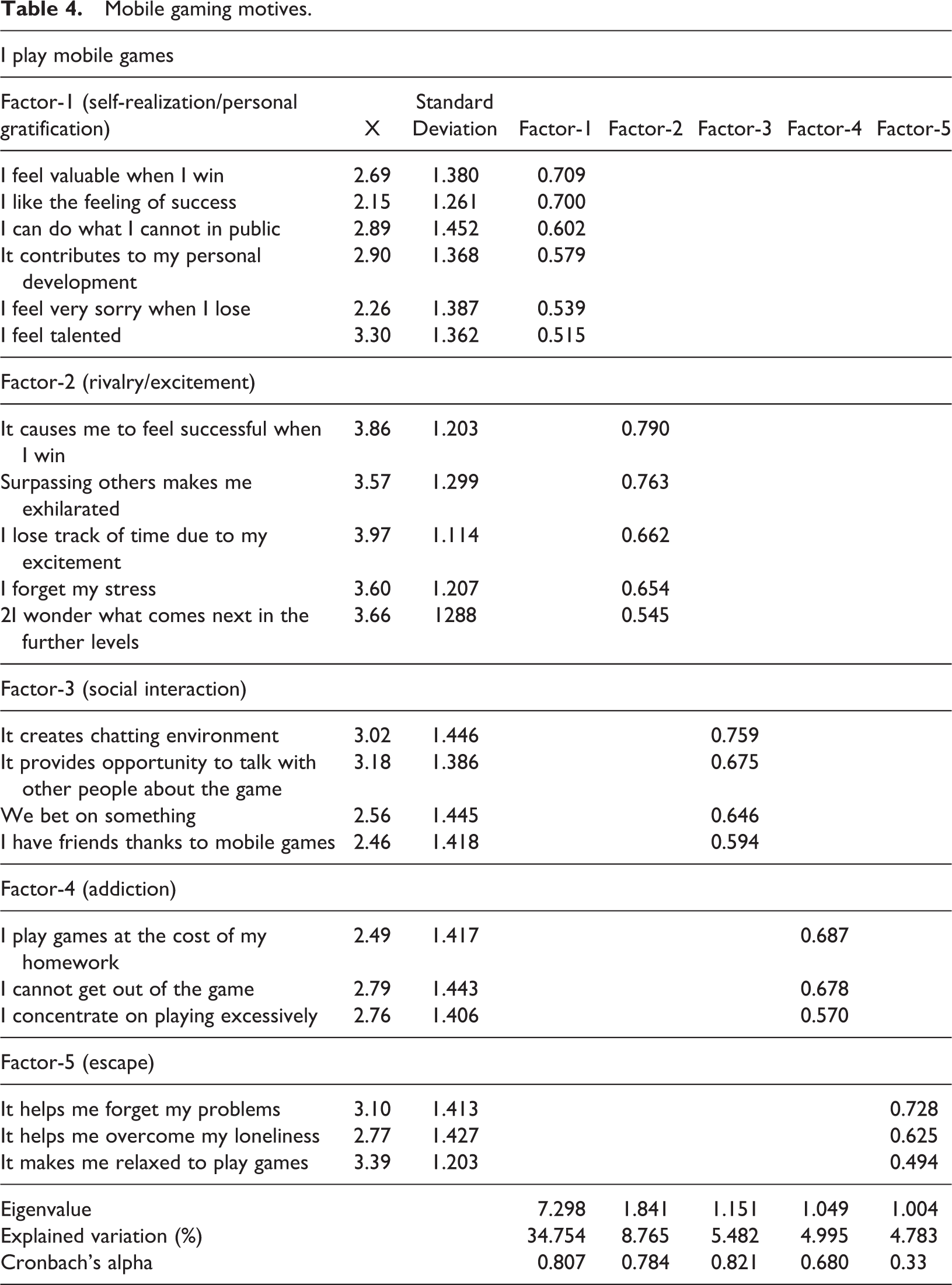
Considering the items in the survey, factor analysis was performed to determine the motives of the participants for playing mobile games. Beforehand, it was found that Kaiser - Meyer - Olkin (KMO) and Barlett’s test value was 0.919, and p value was less than 0.05. The data collected from the sampling group were found to be suitable for factor analysis. The analysis results showed that there were five factor groups whose eigenvalue was over
The factor analysis was performed to see if there were any differences between the mobile gaming motives of high school and university students and it was found that there was a difference in the first, second and fourth factors, but there was no any significant difference in the third and fifth factors in terms of the mobile gaming attitudes of high school and university students (see Table 5). Given the average of the groups in terms of factors, it was found that high school students played more mobile games than college students in terms of self-realization/personal gratification motive (XHS, 2.88; XU, 2.46). Similarly, high school students were found to use mobile games more than university students for rivalry (XHS, 3.85; XU, 3,58). It was also found that high school students were more addicted to mobile telephones than the university students (factor-4; XHS, 2.80; XU, 2.52). On the other hand, no significant difference was found between the high school and university students in terms of their mobile game preference for social interaction (factor-3) and escape from daily problems (factor-5).
Demographical features.
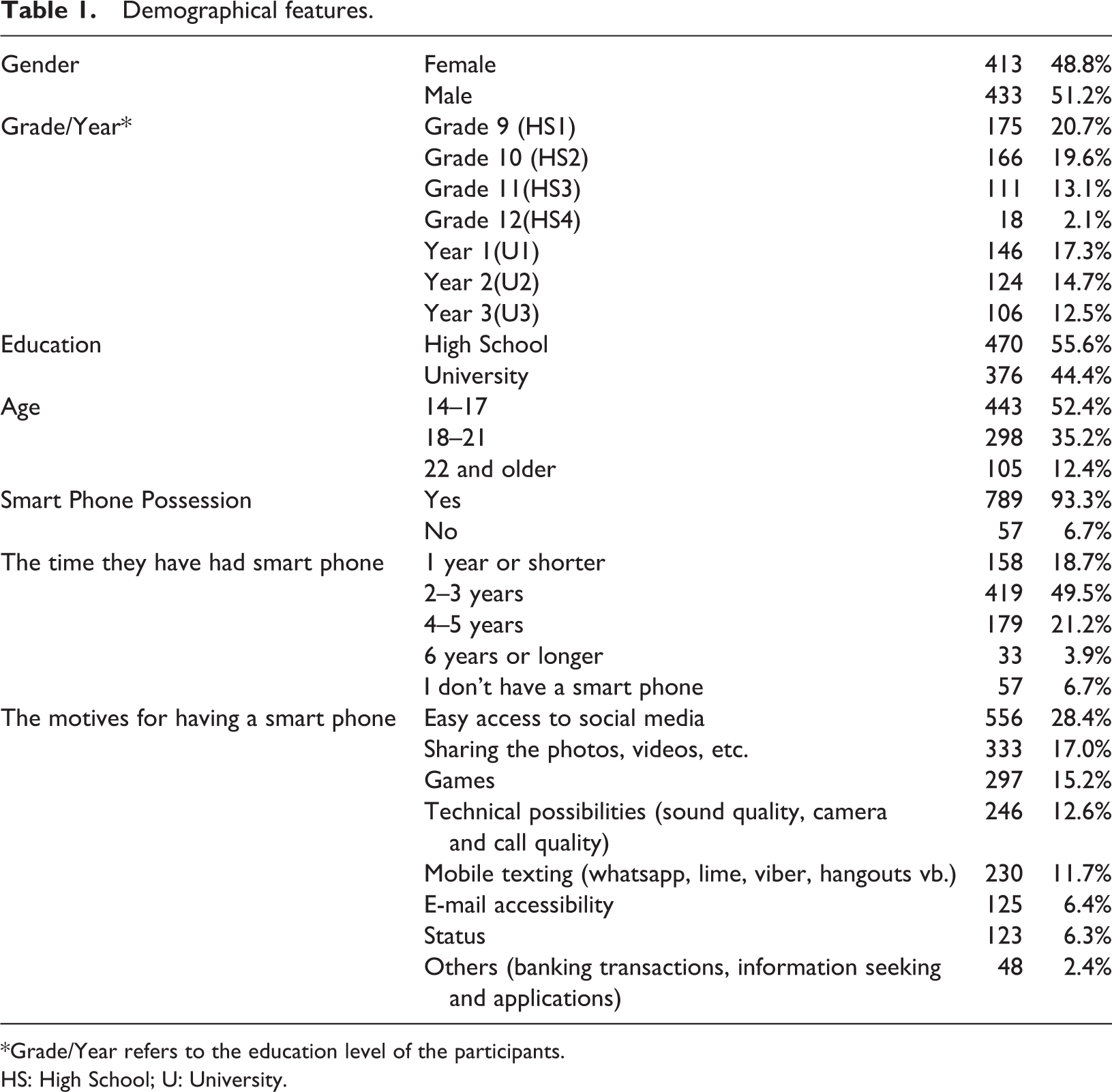
*Grade/Year refers to the education level of the participants.
HS: High School; U: University.
Gaming habits.
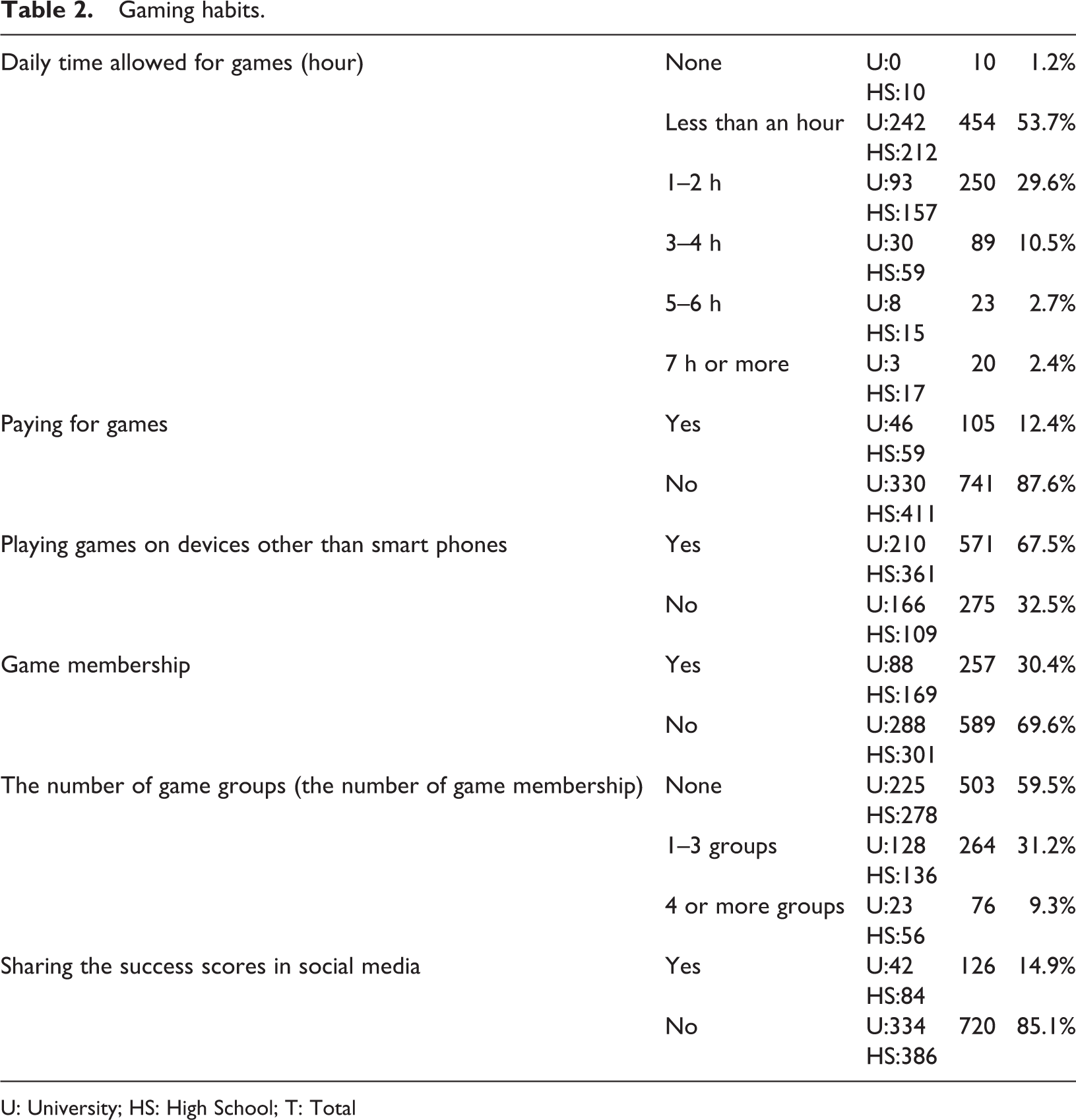
U: University; HS: High School; T: Total
The attitudes towards mobile games.
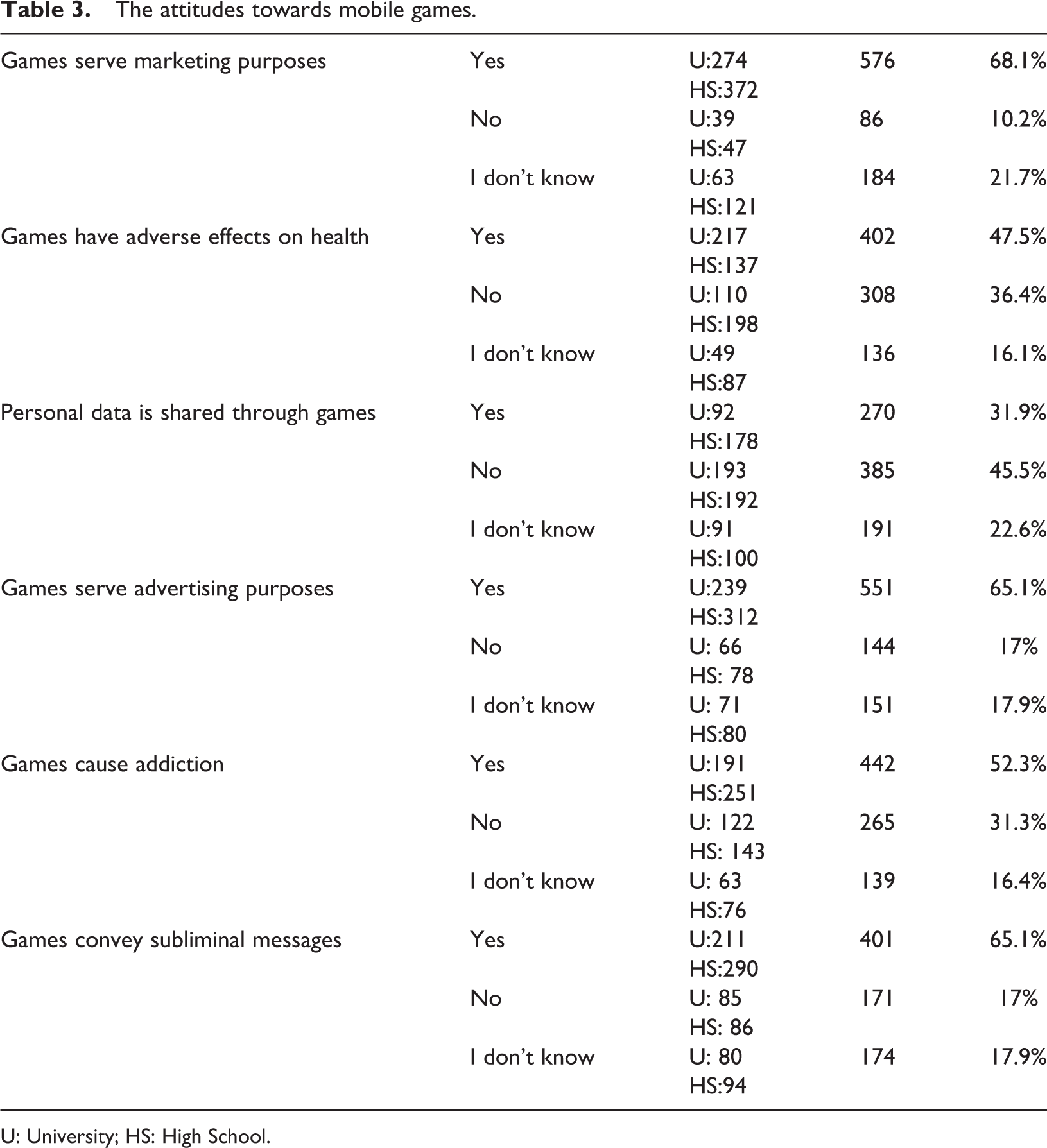
U: University; HS: High School.
Mobile gaming motives.
The relationship between high school and university students’ motives to play mobile games.

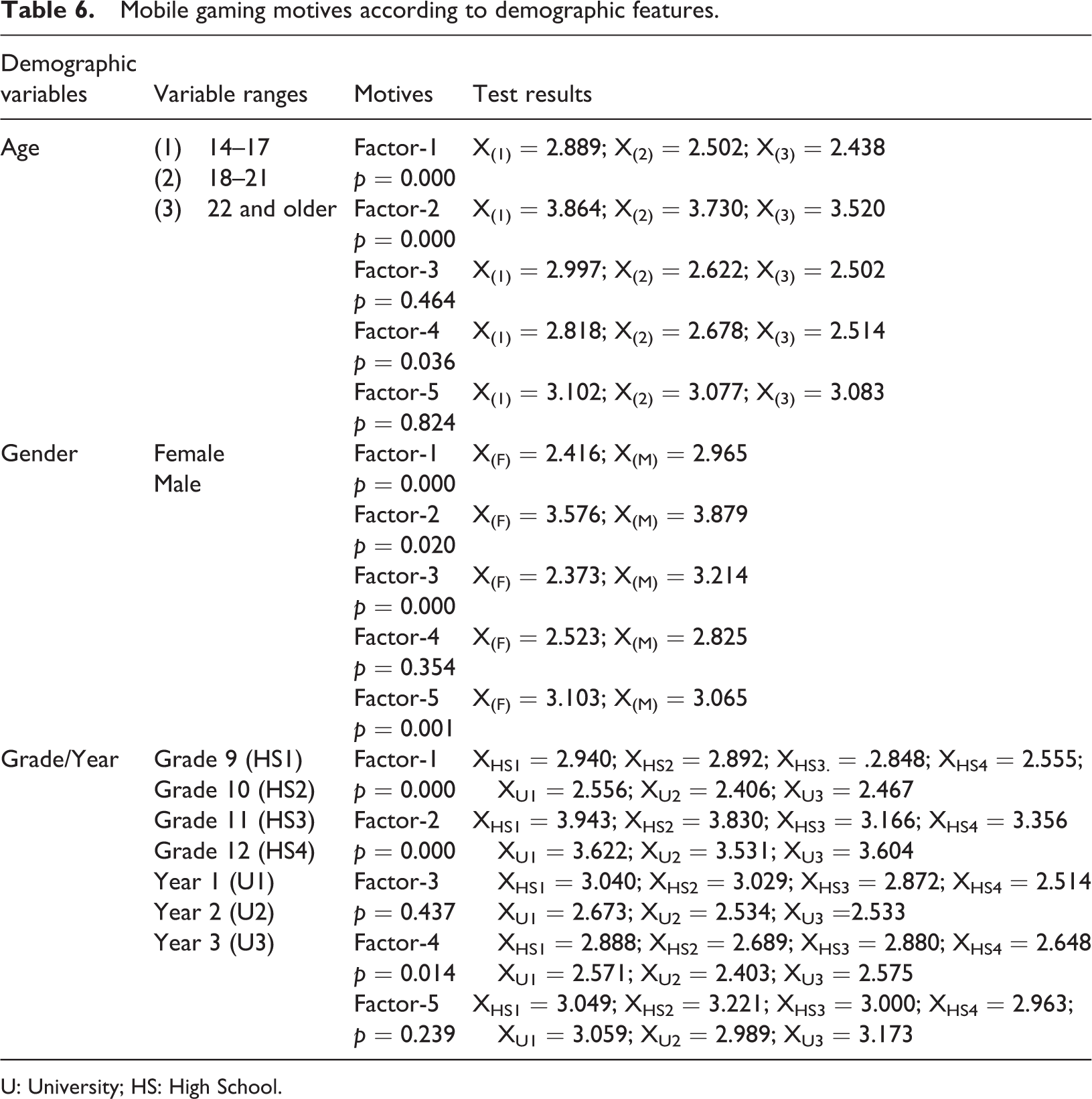
The results of ANOVA test revealed that there was a difference between the age variable and factor-1, factor-2 and factor-4. As for factor-3 and factor-5, there was no any relationship between mobile gaming and age variable. When post hoc (Tukey’s) test was performed to see the further results, it was found that the difference was among 14–17-year-old age group and the others in terms of factor-1 (X [1] = 2.89; X [2] = 2.50; X [3] = 2.44), and that the individuals in this age group played more mobile games to satisfy self-realization/personal gratification motives. It was also found that there was a significant difference between the age variable and rivalry/excitement motive (factor-2). The results of post hoc (Tukey’s) test showed that rivalry/excitement motive was more prevalent among 14–17-year-old participants (X [1] = 3.88; X [2] = 3.73; X [3] = 3.52). This finding means that the motive to play mobile games for rivalry/excitement decreased as the age progressed. The ANOVA test results also showed that there was a reverse relationship between age variable and addiction (factor-4). As shown in Table 6, mobile game addiction decreased as the age progressed. According to the post hoc (Tukey’s) test results, this difference was among 14–17-year-old age group and the others (X [1] = 2.82; X [2] =2.68; X [3] = 2.51). The other finding was that there was no any significant relationship between the age variable and social interaction (factor-3) and escape motive (factor-5).
Mobile gaming motives according to demographic features.
U: University; HS: High School.
As for gender variable, the relationship between gender and the four factors – self-realization/personal gratification (factor-1), rivalry/excitement (factor-2), social interaction (factor-3) and escape (factor-5) – was found highly significant. The ANOVA test results showed that there was no any significant relationship between gender variable and addiction motive (factor-4). According to these results, male students played mobile games more than female students did to satisfy self-realization/personal gratification, rivalry/excitement, social interaction and escape motives, while the female students were more inclined to play mobile games to escape from problems. In terms of addiction motive, there was no any difference between male and female participants.
The results of post hoc (Tukey’s) test regarding the grade/year variable revealed that there were significant differences in three factors. The difference was found between the self-realization/personal gratification motive (factor-1) and the high school grades 9 and 10 and the second and third years in university, and also between grade 11 and the second year in university. The difference between grade 12 and the first, second and third years of university was not found significant. The results meant that mobile gaming to satisfy self-realization/personal gratification needs was more prevalent among the first and second years of high school education. In terms of rivalry/excitement motive (factor-2), the results showed that there were significant differences only between high school grade 9 (HS1) and university first, second and third year students. Given the findings on addiction motive (factor-4), a significant relation was found between the grade/year level and mobile gaming addiction of the participants (see Table 6). The results of the post hoc analysis showed that the difference was between the 2nd year university students and the 9th and 11th year high school students. Considering the differences in the mean scores, it could be argued that education is not the mere variable for addiction. As for factor-3, no significant difference was found between the grade/year variable and mobile gaming, which might suggest that the social interaction motive to play mobile games is the same for all grades at high school and university. Similarly, there was no any significant relationship between the escape (from problems) motive (factor-5) and the grade/year level. Given the finding that the age variable was not found to be related with the escape motive, both grade/year levels and age variable might be considered to be non-predictive in the escape (from problems) motive. The same argument could also be used for social interaction motive.
Discussion
Nearly half of the participants (47.5%) thought that mobile games were not harmful while 36.4% of them thought they were. When compared with the results of previous studies, it could be suggested that young people are getting better informed about the health risks of mobile games in time (Uluyol et al., 2014).
The literature review, in the previous pages of the study, into the motives that have impact on playing computer and mobile games, revealed that most prevalent motives were having fun, relieving stress, passing time, curiosity, discovery, self-improvement, self-consciousness, rivalry, escape, education, addiction and social interaction. In this study, self-realization/personal gratification motive was found to be the first factor, which suggests that people may create a virtual world where they can realize themselves. Consequently, this study highlights the importance of further studies into the effect of mobile games on loneliness and selfishness.
The results of the research are similar to some studies as they revealed that people play mobile games to satisfy their self-realization/personal gratification, rivalry, social interaction, addiction and escape motives. On the other hand, it should also be noted that there were some differences between them in that the personal motive scores in this study were higher than those in the other studies, whereas the escape and addiction motive scores, which were found more significant in the other studies, were much lower here.
While the social interaction was found as the third factor with 5.482% in this study, it was the sixth in the studies by Durdu et al (2005) and Shery et al (2006) with 4.9% and 3.42%, respectively. In the study by Gökkaya and Deniz (2014), social interaction was found to be the third motive with 12.04%.
The finding that rivalry/excitement motive was the second factor in playing games was in accordance with similar studies in the literature (Gökkaya and Deniz, 2014; Grace and Coyle, 2011; Shery et al., 2006; Ünal et al., 2013).
The escape motive, which was the first factor by Lee et al (2010), was found as the fifth factor in this study, which means that the total variance was low. This finding is supported by the research conducted by Grace and Coyle (2011). The predictive value of addiction motive was also similar to the one in the study by Ünal et al (2013).
There was also similarity between this study and the one by Omori and Felinto (2012), who also found that sharing games on social media instantly through mobile technologies had an impact on the purchasing behaviour of consumers.
Contrary to the other studies (Lee et al., 2010; Omori and Felinto, 2012), the motive to gain status was not found to have impact on having smart technologies.
Conclusion
The motives of 846 high school and university students for mobile games were investigated in this study through a 5-point Likert questionnaire. It was found that, compared to high school students, university students were more inclined to believe that mobile games were produced for marketing purposes. Conversely, the ratio of high school students who believed that personal data was shared and subliminal messages were conveyed through games was higher than that of university students. Also, it was found that there was a difference between university and high school students’ attitudes towards mobile games in terms of marketing purposes, adverse health effects, subliminal messages and personal data share. Another significant finding was that both groups believed that mobile games served marketing purposes and caused addiction (RQ1).
The study revealed that high school and university students played mobile games to gratify the following motives: (1) self-realization/personal gratification (34.754%), (2) rivalry/excitement (8.765%), (3) social interaction (5.482%), (4) addiction (4.995%) and (5) escape (4.783%). This finding led to the conclusion that the most prevalent motive that drove the participants to play mobile games was to realize themselves and attain personal gratification (RQ2).
According to the data analysis, there was a significant relationship between the age variable and three factors: self-realization /personal gratification, rivalry/excitement and addiction. It was concluded that the participants played mobile games less frequently to satisfy these motives (factor-1, factor-2 and factor-4) as they got older. As for the social interaction and escape motives and age variable, it was found that there was no any significant relationship between them.
The data analysis also revealed that the relationship between the gender variable and self-realization/personal gratification, rivalry/excitement, social interaction and escape factors was significant while the relationship between the gender variable and addiction factor was not. Regarding the factors (self-realization/personal gratification, rivalry/excitement and social interaction), it was found that male participants played mobile games more than female participants did. On the other hand, female students played mobile games to escape from their problems more than males did. In further studies, the relationship between gender variable and these motives could also be discussed in terms of socio-cultural structure. As for the factor-4; there was no any significant relationship between the gender variable and addiction motive.
The participants were found to play more mobile games in the first two years of their high school education to satisfy their self-realization/personal gratification needs, but in further years, there was a significant decline in their tendency to play mobile games to fulfil themselves and attain personal gratification. It was also found that there was a decline in their tendency to play mobile games to gratify their rivalry/excitement motive beginning from the second grade in high school education. The study revealed that mobile gaming to satisfy self-realization/personal gratification needs was more prevalent in the first and second years of high school education (RQ3). Also a significant difference was found between the rivalry/excitement motive (factor-2) and the school years of the students – the first years in high schools and all the grades in university.
The analyses conducted to determine the significance of mobile gaming motives for participants revealed some differences between high school and university students in terms of self-realization/personal gratification, rivalry/excitement and addiction motives: high school students exhibited more interest in mobile games for these motives than university students did. No significant relationship was found between these groups in terms of social interaction and escape motives (RQ4).
It was also found that 12.4% of the participants paid money to play mobile games or to pass to a higher level, while 87.6% of them preferred free games. When asked about the membership in a game group, only a third of the participants stated that they were the member of at least one group.
The study investigated the mobile gaming motives regarding five factors. The results of this study differed from previous research in terms of the importance and value given to the motives. First of all, it was found that young people preferred mobile games mainly to realize themselves and gratify their personal needs rather than the other motives. Mobile gaming habits that lead people to spend more time on digital technologies were discussed in the context of mobile technology addiction. It should be highlighted that young people are inclined to play mobile games in search of self-gratification. Overuse of technology shows that young people turn to the cyber world to build a relationship or communicate.
The finding that addiction to mobile gaming and search for personal gratification in games were more prevalent at younger ages should be dealt with carefully. Also, the increase in tendency to play mobile games at younger ages suggests that precautions should be taken to protect young people from the risks of mobile gaming. As a solution, mobile technology and mobile games might be used in education to direct young people’s interest to learn new things. Given the increasing popularity of mobile learning, mobile games could serve as educational tools.
The research is important since it has demonstrated the effective motives for young people to use media and mobile devices. It is also expected to shed light on precautions that should be taken to bring up generations adaptable to universal values such as solidarity, social connectedness, collaboration, trustworthiness, etc. The responsibility of parents for the changes in their children’s attitudes towards living in the cyber world should also be reconsidered. The results of this study might be a guide for further research, particularly the studies into addiction motive along with the relationship between the motives discussed here and the overuse of technology is expected to contribute to the literature. In addition, the relationship between the mobile game types and social in real life should be studied empirically.
Supplemental material
Supplemental Material, questionnaire - Mobile games on the basis of uses and gratifications approach: A comparison of the mobile game habits of university and high school students
Supplemental Material, questionnaire for Mobile games on the basis of uses and gratifications approach: A comparison of the mobile game habits of university and high school students by Yasin Bulduklu in Convergence: The International Journal of Research into New Media Technologies
Footnotes
Supplemental material
Supplemental material for this article is available online.
References
Supplementary Material
Please find the following supplemental material available below.
For Open Access articles published under a Creative Commons License, all supplemental material carries the same license as the article it is associated with.
For non-Open Access articles published, all supplemental material carries a non-exclusive license, and permission requests for re-use of supplemental material or any part of supplemental material shall be sent directly to the copyright owner as specified in the copyright notice associated with the article.
