




Abstract
Whilst globally there has been a great deal of discussion and rhetoric regarding the state of physical education at the primary level, there is a paucity of evidence regarding teachers’ perceptions of quality physical education in practice. Therefore, the purpose of this research was to explore and interpret primary school teachers’ perceptions of physical education in Aotearoa New Zealand (NZ) and identify the influence(s) of education, sport and health policies on these perceptions. This study utilized a mixed methods design, including a questionnaire of 487 classroom teachers from 133 different primary and intermediate schools in five regions (North Auckland, Auckland, Wellington, Canterbury and Southland) across NZ. The research team also interviewed 41 classroom teachers from across the five regions. Three themes were drawn from the teacher surveys and interviews: muddled thinking; teacher levels of confidence; and physical education or sport. The findings suggest that a number of policies and practices have strongly shaped what occurs ‘in the name’ of physical education in primary schools. These have created a ‘perfect storm’ for primary physical education in NZ and there is concern that the reality of what occurs in practice does not meet the expectations of the national curriculum. There is a need to re-shape the principles and ideals of current practice in primary physical education rather than accepting the historical sports, competition, fitness, fundamental sport skills and ‘Kiwisportification’ of physical education.
Introduction
Globally, there has been a great deal of discussion about the importance of physical education in primary schools and the reality of learning and teaching that occurs within the physical education space (Kirk, 2010; Macdonald, 2011; Petrie, 2016). While there seems to be a consistent view that quality physical education is important, there is less agreement on how it is defined or what it looks like in practice. The 2015 UNESCO report on quality physical education offered the following definition: Quality Physical Education (QPE) is the planned, progressive, inclusive learning experience that forms part of the curriculum in early years, primary and secondary education. In this respect, QPE acts as the foundation for a lifelong engagement in physical activity and sport. The learning experience offered to children and young people through physical education lessons should be developmentally appropriate to help them acquire the psychomotor skills, cognitive understanding, and social and emotional skills they need to lead a physically active life. (UNESCO, 2015: 9)
Morgan and Bourke (2008) found, for example, in their study of Australian primary schools that teachers held only a ‘moderate’ level of confidence in their ability to teach physical education. They also found that physical education was largely characterized by ‘programs that lacked variety and frequency of delivery, were dominated by involvement in “supervised” games and involved little teaching and learning’ (2008: 2).
In Aotearoa New Zealand (NZ), physical education is part of the health and physical education (HPE) learning area in the national curriculum (NZC) and is compulsory for all primary school aged children (Ministry of Education, 2007). In this paper we focus only on the physical education aspect of HPE. Primary schools’ generalist classroom teachers are predominantly responsible for the planning and implementation of physical education, which is defined in the New Zealand Curriculum (Ministry of Education, 2007: 23) as follows: In physical education, the focus is on movement and its contribution to the development of individuals and communities. By learning in, through and about movement, students gain an understanding that movement is integral to human expression and that it can contribute to people’s pleasure and enhance their lives. They learn to understand, appreciate, and move their bodies, relate positively to others, and demonstrate constructive attitudes and values. This learning takes place as they engage in play, games, sport, exercise, recreation, adventure, and expressive movement in diverse physical and social environments. Physical education encourages students to engage in movement experiences that promote and support the development of physical and social skills. It fosters critical thinking and action and enables students to understand the role and significance of physical activity for individuals and society.
While internationally there has been a great deal of discussion regarding the state of physical education in the primary sector, there is limited evidence of how primary school teachers understand physical education and how it is implemented in practice (Carse et al., 2014). This study was designed to address this issue by asking NZ teachers about their perceptions of primary physical education and to gain an insight into their physical education practice. The study was also driven by a belief in the importance of understanding classroom teachers’ perceptions of the realities of physical education in any attempt(s) to influence teachers and policy makers around the positioning of physical education within the current political and economic climate.
How physical education is positioned and enacted in schools is, to a large degree, shaped by educational ideologies, along with a variety of cultural, political and economic forces (Gordon et al., 2013; Petrie, 2016; Pope, 2014; Powell, 2015). This can be seen in the NZ education system, which has undergone significant reforms over the past 30 years. A new government in the 1980s, heavily influenced by neoliberal beliefs, led a change in educational ideology from one of social good to what Ball (2012) described as a market-orientated approach; one deemed to be largely responsible for the commercialization and commodification of policy and practice within education (O’Neill, 2011). These changes resulted not only in a centrally mandated curriculum and the reform of qualifications (O’Neill, 2011; Petrie and lisahunter, 2011), but also the privatization of what was intended to be ‘free, accessible and universal education for all’ (Codd, 2004: 38). It is this agenda that many believe has put NZ education ‘on the market’ (Codd, 2004; O’Neill, 2011; Petrie et al., 2014; Pope, 2014; Powell, 2015).
While much of the current literature on physical education is concerned with the impact of what is now a pervasive neoliberal agenda, Stothart (1991) reminds us that this is not the only influence on physical education and that there is an array of political, social and historical forces that have influenced the policy and practice of the physical education curriculum in New Zealand to date. While it is not possible to provide detailed descriptions of all of the policy initiatives related to primary physical education within the scope of this article, a number of neoliberal and historical factors considered to be central to the present-day practice of physical education in NZ will be explored.
Policy landscape
Following the election of the Labor Government in 1984 (Codd, 2005; Martens and Starke, 2008), a powerful economic programme based on free market reform changed the context and purpose of public education (Codd, 2006). A major review of education helped to introduce ‘Tomorrow’s Schools’ (Ministry of Education, 1988), a policy that helped to decentralize government control and shift responsibility for many tasks directly to individual schools. Underpinned by neoliberal ideology, this document brought about ‘devolution, efficiency and choice, undermining the professional role of the teacher and repositioning them as state workers’ (Codd, 2005: 195).
Further reforms led to the development of an achievement-based curriculum framework (Ministry of Education, 1993) that included an extensive list of prescribed outcomes. In 2009 the National-led Government introduced national standards in reading, writing and mathematics for all primary school-aged children (Pope, 2014). The promotion of such standards continues to place an emphasis on numeracy and literacy, and as a consequence a de-emphasis on learning areas such as art, music, and health and physical education (Paine, 2013; Petrie, 2016; Powell, 2015).
Another influential factor in primary school physical education has been the NZ government’s funding of sport and health initiatives. An example is the NZD$82 million Kiwisport funding introduced in 2010 (Key, 2009) for the promotion of fundamental skills development and to increase access to sport for all school-aged children aged 5–18 years (see Dyson et al., 2011, 2016). For primary schools, there is a direct allocation of NZD$6 million a year that is supplemented by indirect funding through 17 regional sports trusts across the country. These funds can be used to promote and establish partnerships between community groups, schools, clubs and other sporting providers or to pay for coaches to work in schools (Dyson et al., 2016).
Powell (2015) argues that there is an important policy connection between the introduction of national standards and what he calls the ‘Kiwisportification’ of primary school physical education that warrants closer examination. Before national standards, all state schools had access to a Ministry of Education advisory service – School Support Services – which provided specialist physical education advisors (as well as advisors in other learning areas and assessment practices). In August 2009, the very month that schools found out that they were to receive Kiwisport funding, they also discovered that School Support Services had been cut, and that physical education advisors would no longer be available to support teachers in developing quality planning, teaching and assessment for learning in physical education (Paterson, 2010). Powell’s (2014) and Petrie’s (2016) work also suggests that the readily available government funding in schools is largely responsible for the increase in, and reliance on, external providers of physical education in primary schools.
A number of scholars suggest that external providers are now a substantive provider of physical education and sport in schools (Dyson et al., 2016; Griggs, 2010; Penney et al., 2013). The degree to which external providers have become established in NZ primary schools, and the role they play within these schools, was examined by Penney et al. (2013). They argued that the teaching and learning delivered by external providers was not meeting the full intent of the NZC (Ministry of Education, 2007) and, to some degree, was redefining the physical education learning area. There is concern that this redefining could lead to a re-entrenching, as suggested by Powell (2015), of the traditional skill-orientated curriculum from 1987 (Department of Education, 1987), an approach defined by Kirk (2010) and Metzler (2011) as a sport-based, multi-activity model. This has led to what Powell (2015) suggests is the reproduction of physical education as a discourse of coaching sports skills or, as Petrie (2016) suggests, a narrowing of physical education that further opens the door to external provision. This redefining could result in a simplistic representation of physical education being taught in schools (Burrows and Wright, 2007; Dyson et al., 2016; Penney et al., 2013; Petrie, 2016). There is some evidence from the recent National Monitoring Study of Student Achievement (NMSSA, 2014) that this is occurring. While the NMSSA study revealed that students’ movement skills in year 4 (7–8 years old) and year 8 (11–12 years old) had developed considerably, the report also found that students did not meet other achievement objectives in the NZC (Ministry of Education, 2007), nor did they demonstrate the critical thinking skills expected for their year level. The NMSSA survey identified a significant drop in the percentages of students who were achieving the expected outcomes from 95% at year 4 to 50% at year 8.
The choice of sport as the recipient of large-scale government funding is indicative of the powerful cultural position sport holds in NZ. While the pervasive influence of sport in primary schools has received some critique (Dyson et al., 2011; Petrie, 2016; Powell, 2015), the reality of its powerful position within the country has been widely acknowledged (Culpan, 2005; Pope, 2011, 2014; Stothart, 2000). This reality has influenced the way physical education is conceptualized by many NZ teachers, parents and those at a policy level, and contributes to misunderstandings about the purpose and place of sport in the curriculum. Sport has always been highly visible in schools, but was first legitimized in New Zealand Physical Education in 1999 (Ministry of Education, 1999) as ‘Sport Studies’, one of seven key areas of learning.
Influences on physical education
While it is accepted that neoliberal ideology has had a strong influence on present-day physical education (Evans and Davies, 2014, 2015), there have also been a number of other contributing factors. There has always been a societal expectation that school physical education will serve the current needs of society. Historically this was seen, for example, in the introduction of physical drill into schools in an attempt to ensure boys were physically prepared for future military service (Petrie, 2016; Stothart, 1991). Another consistently expected outcome is that physical activity and physical education would contribute to the positive socialization of students. This expectation was seen in the introduction of sport and games such as cricket and rugby football into the English public school system by headmasters who saw the moral, social and cultural potential of team games for modifying the often unruly and undisciplined behaviour of many of the boys (Stothart, 1991). The latest NZ government promotion of strategies to reduce obesity via their new Childhood Obesity Plan (Ministry of Health, 2015) is another contemporary example of the expectation that physical education will meet wider public health goals. For instance, in 2016 a pilot programme ‘Play.sport’ was implemented in 41 schools in two regions (Upper Hutt and Waitakere) of the North Island of New Zealand (New Zealand Education Gazette, 2016) by the Crown entity, Sport NZ (Sport NZ, 2015a). This programme has been identified by the Ministry of Health as an important part of the Childhood Obesity Plan (Ministry of Health, 2015) and specifically aims to improve the quality and quantity of physical education and sport in schools.
The purpose of this research was to explore and interpret primary school teachers’ perceptions of physical education in NZ and identify the influence(s) of education, sport and health policies on these perceptions. It is anticipated that this exploration will help address the present gap in the literature and offer insight into how policies and initiatives have affected the practice of contemporary physical education in primary NZ schools.
Methods
Ethical approval for this study was received from the primary researcher’s University Human Participants Ethics Committee. This study utilized a mixed methods design (Greene, 2007) and included an extensive survey of and in-depth interviews with teachers across NZ. The gathering of substantive sources of data and the analysis of educational and political documents allowed for a pragmatic integration of data sources (Denzin and Lincoln, 2005; Greene, 2007). The quantitative questionnaire, adapted for the NZ context from previous research on primary school physical education programmes in Australia (Morgan and Hansen, 2007), allowed us to survey a large number of teachers (n = 487) to determine their overall views on physical education at their schools. This initial phase was followed by qualitative interviews (n = 41) to gain a deeper understanding of the teachers’ perspectives.
Settings and participants
The participants were 487 classroom teachers from 133 primary (5–10 years) and intermediate (11–12 years) schools from five geographically diverse regions (North Auckland, Auckland, Wellington, Canterbury and Southland) across the North and South Islands of NZ. The survey included schools from across the whole decile range 1 (Figure 1). Teachers’ years of teaching experience varied from 1–47 years with an average of 12.65 years.
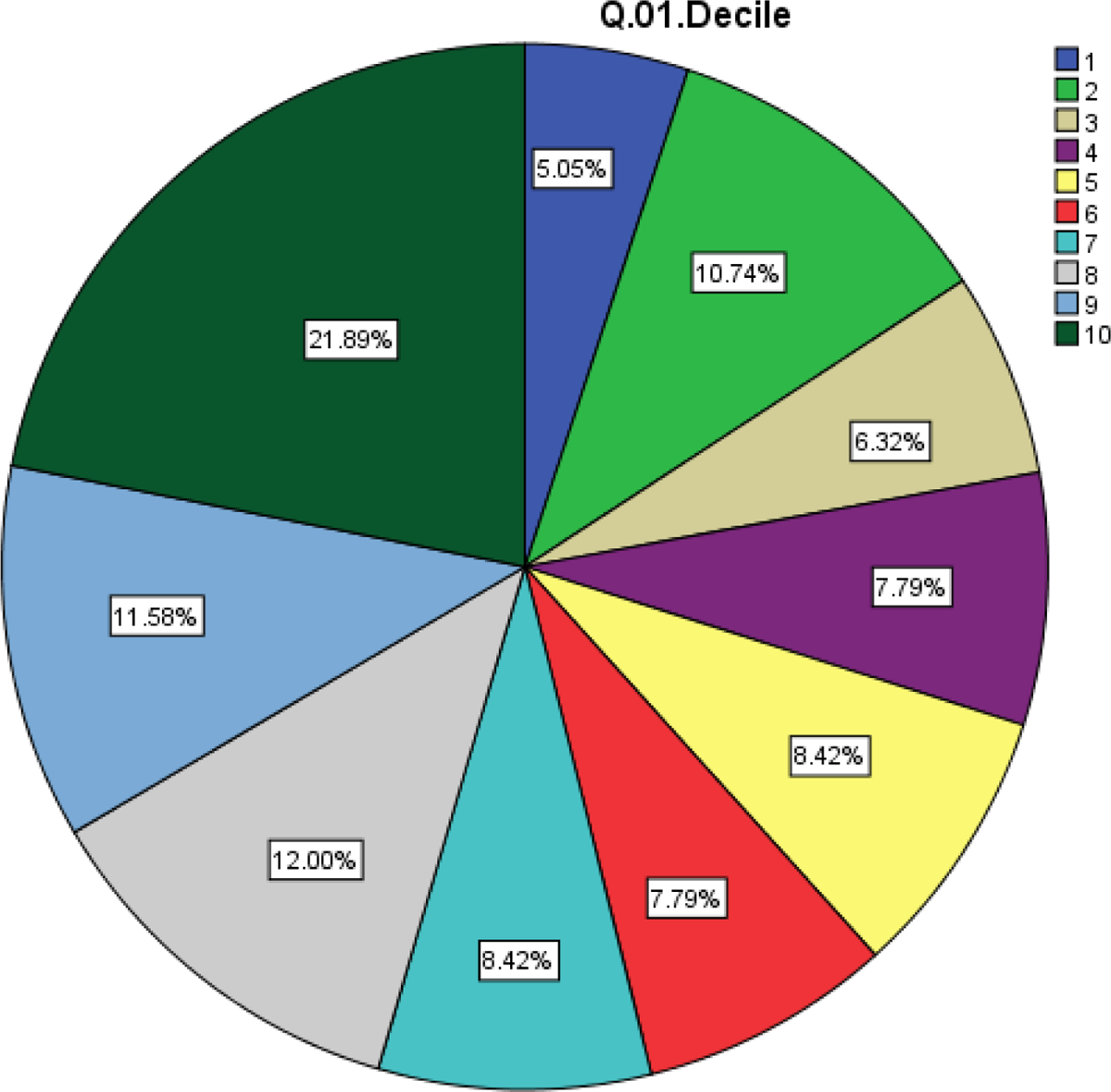
Teacher distribution by decile from Question 1 of survey.
Data gathering
Researchers from the five regions visited schools in their region and delivered and collected surveys from these schools. The same survey was also available online for teachers.
Questionnaire
The 32-item questionnaire broadly covered themes such as planning, assessment, evaluation, teacher confidence and quality physical education. The questionnaire contained 26 questions presented on a six-point Likert scale. Question 14, for example, asked teachers to respond to the statement that, in their school, ‘The school has a formal planning team that meets routinely to monitor programmes to promote physical education in the school’. Potential responses ranged from strongly disagree to strongly agree on this six-point scale. The questionnaire also contained six open questions; for example, Question 10 asked: ‘Describe how you would define physical education at your school. Please include the things that you think contribute to physical education’.
Interviews and document analysis
At the end of the questionnaire, classroom teachers were asked if they were willing to be interviewed at a later date. Forty-one teachers volunteered and were subsequently interviewed at their schools (for 45–65 minutes). The interview questions were developed by the research team, were based on the initial analysis of the questionnaire and followed the broad themes identified previously. The interview questions acted as a semi-structured guideline for the interviewees, but more detailed responses were elicited by follow-up probing questions to provide more comprehensive and in-depth responses (Fontana and Frey, 2003). One interview question, for example, followed up on the more general questions concerning teachers’ planning. Teachers were asked to be specific on ‘How much time do you spend planning for physical education each week?’ Probe question: ‘How does this compare to time for subjects such as mathematics and literacy?’ All interviews were transcribed verbatim by an independent graduate student and then entered into NVivo 9TM software to aid the analysis of the data.
A number of documents that related directly to the HPE curriculum in NZ were considered to help inform the analysis. These documents helped place the data within the broader NZ framework both politically and educationally. These documents included versions of the national curriculum and frameworks from 1987 (Ministry of Education, 1987, 1993, 1999, 2007), Sport New Zealand publications (Sport New Zealand, 2015a, 2015b), a Ministry of Education Stocktake Report (Ministry of Education, 2002), National Monitoring Study of Student Achievement (NMSSA, 2014) and the Ministry of Health’s Obesity Plan (Ministry of Health, 2015).
Data analysis
Quantitative
To identify the factors related to the perception of physical education quality from the 487 classroom teachers surveyed, a linear regression model (stepwise) was employed using SPSS v.22 (Field, 2009; Garson, 2014). The variables which were included in the initial analysis were: teacher gender; age, years of experience; school district; school decile; year level of teaching (0–6 or 7–13); weekly time of teaching physical education; weekly time of teaching physical fitness; weekly time of teaching sports; percentage of student participation in physical education lessons; teacher confidence in teaching physical education; teacher perception of adequacy of funding and resources for physical education in school; and the three factors of assessment and planning, learning, and experience. Only the factors that loaded the highest, that is, the strongest six variables were included in the final exploratory factor analysis model (school decile, physical education teaching time, confidence in delivery of physical education and perception of funding and resources available to physical education in the school, assessment and planning, learning, and experience).
The data from the questionnaires informed the interview questions and gave a tangible framework to develop interview questions that were contextually relevant. The participants’ responses offered an overview of classroom teachers’ perceptions of physical education programmes and the sports, games, fitness and other activities the schools and teachers were delivering to their students.
Qualitative
A combination of inductive and deductive analysis was carried out (Greene, 2007). The qualitative data analysis addressed the trustworthiness of the data by establishing their credibility, dependability, confirmability and transferability (Lincoln and Guba, 1985; Miles et al., 2014). Credibility was achieved through peer debriefing with colleagues who are knowledgeable regarding primary schools (teachers and principals) and the research team. This required four researchers in this study to read and re-read all the transcripts and the categories or themes drawn from NVivo 9TM while continuously critiquing the interpretations derived from the surveys and the interviews. As a member check, the transcripts were returned to the teachers interviewed and they were provided with the opportunity to clarify, correct or elaborate on their responses. Dependability of the findings was determined through a peer examination strategy to check the themes that were drawn from the interviews. Specifically, all authors challenged the logic behind the interpretations made by the other authors until all four authors agreed that the themes and interpretations were the best representation of participants’ responses. Confirmability was addressed by providing a reflexive, self-critical account based on triangulating our findings and interpretations. The findings presented are shaped by the teachers’ comments and not the researchers’ bias, motivation or interest. Finally, transferability was established by drawing on critical discussion of pertinent literature and ensuring our large data sources were from a wide geographic area in NZ.
During this data analysis process, a number of themes were drawn from the evidence. The first order of analysis, or entering the evidence into NVivo 9TM, produced nodes or thematic descriptions from the data. The second stage of analysis involved the inferential coding of these initial descriptions (Miles et al., 2014). This was undertaken with the aim of challenging the interpretations of the findings, identifying conceptual links and uncovering key categories through frequent reading and re-reading of the evidence and peer debriefing with all authors.
Findings and discussion
The quantitative analysis found that a combination of the six identified variables (school decile, physical education teaching time, confidence in delivery of physical education and the perception of funding and resources available for physical education in the school, assessment and planning, learning, and experience) provide a good explanation for teachers’ perceptions of quality physical education. The final exploratory factor analysis model from the quantitative survey explained about half of the variance (r 2 = .49), which demonstrates that those variables, in combination, provide a good explanation for teachers’ perception of physical education quality at their school. It is noteworthy that none of the demographics (schools’ deciles and teachers’ years of experience) were included in the final factor analysis model. This indicates that perception of physical education is related to practices in the school and teachers’ perception of the school environment relevant to physical education but not to the type of school, its location or any of the teachers’ demographic characteristics (Pett et al., 2003).
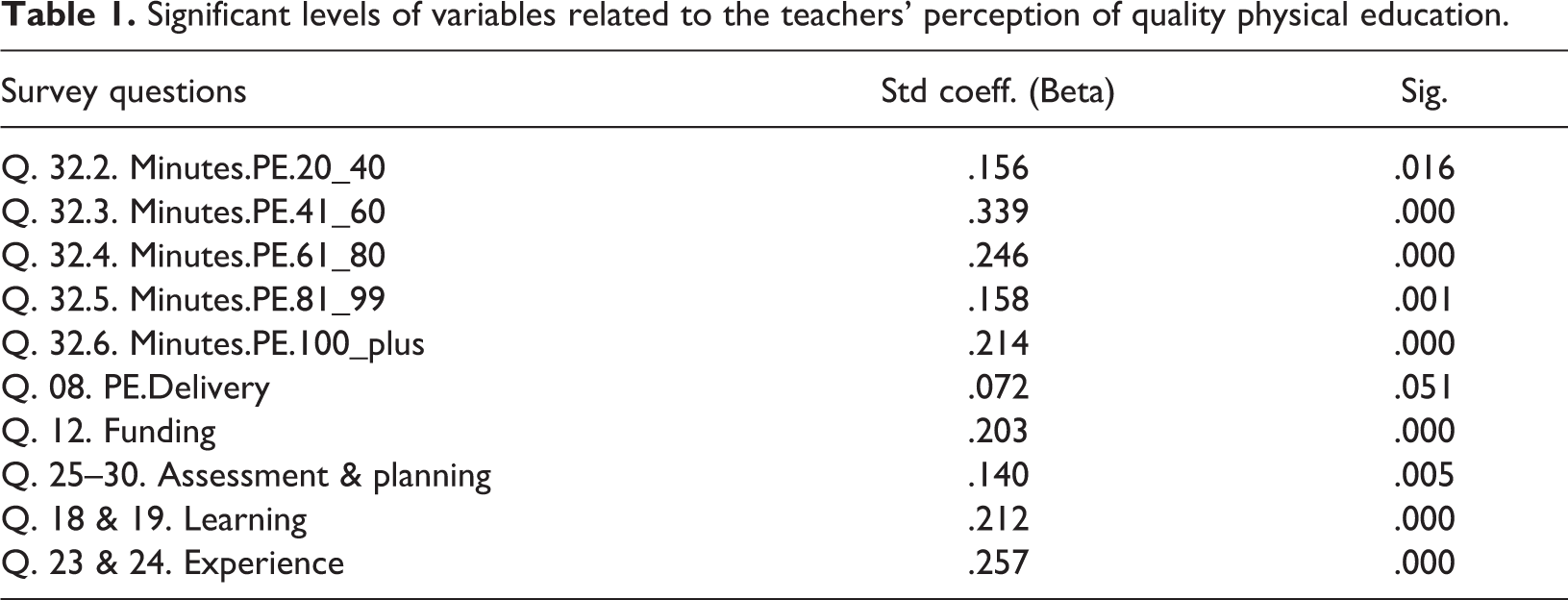
The analysis identified that teachers believed that more than 20 minutes of lesson time weekly constituted a good student physical education experience. When the activity time for physical education was above 20 minutes, teachers perceived its quality to be higher (Table 1). The findings associated with student experience (coeff. 0.257), reported as the strongest factor, suggested that what happened during the lesson is of more importance to teachers than the curriculum-related outcome of the lesson. That is, the amount of lesson time and student experience seemed to be the most important factors for teachers. Interestingly, when teachers were asked to identify whether they strongly agreed or strongly disagreed as to whether their school/year plan for physical education was developed with learning intentions from the NZC (Ministry of Education, 2007) at each curriculum stage (level), it seemed to have a small effect (coeff. 0.212). Findings from the survey also suggest that delivery/teaching (coeff. 0.072) was not perceived by teachers as an issue or concern in relation to the quality of the educational experience. In addition, teachers did not identify assessment as closely related to their perception of quality physical education (coeff. 0.140, see Table 1). Physical education teaching time, confidence in delivering physical education, assessment and planning, and student experience were the factors that impacted on the quality of physical education.
Significant levels of variables related to the teachers’ perception of quality physical education.
Three themes were drawn from the teacher surveys and interviews: (1) muddled thinking; (2) teacher levels of confidence and (3) physical education or sport. These themes were further developed with reference to government policies and curriculum documents. The data indicate that primary physical education in NZ is what Jess et al. (2016) would describe as a complex phenomenon. We would go further and suggest that a variety of factors, including the growing concern about the ‘obesity epidemic’ (Powell, 2015), and the high level of importance placed on sport in NZ have, in fact, generated a perfect storm for physical education in NZ.
Integrated themes
Muddled thinking
Our findings suggest that there is still ‘muddled thinking’ (Culpan, 2005) or confusion about the definition of physical education and its educational value. The practical manifestation of this confusion can be seen in the design and delivery of physical education in schools. A central issue about the purpose of physical education is whether or not physical education, including physical activity and sport, are seen as ‘educative’. This is particularly so when the ‘lesson’ occurs within curriculum time. Culpan (2005) suggests that lessons should be conceptualized and practised in a way that is consistent with the philosophy of the physical education curriculum (Ministry of Education, 2007).
For instance, when asked about what was taught in physical education, teachers tended to focus on physical activity, fitness, games and sport in their programmes: I think a lot of teachers here probably do mainly fitness based activities and class them as their physical educational lesson. Or it would be having an expert in teaching games. There’s not many teachers that are teaching certain skills frequently. It varies and to be honest I think a lot of it is to go outside and just do some PA [physical activity].
The pedagogical approaches chosen by teachers also indicate their beliefs about teaching and learning. When asked to describe how they taught physical education, the majority (29 out of 41) reported they tended to use a teacher-directed approach in their teaching. More teacher directed I’m afraid. No it is. Stand on the yellow line guys, we are going to bounce from the yellow line up to this yellow line. When you get to that yellow line we are going to stop, we will turn around and you will listen to the next instruction. It is very step lock.
There was generally a lack of reference by the teachers to effective pedagogy as it is outlined in the NZ Curriculum (Ministry of Education, 2007). A small number talked about using approaches such as Teaching Games for Understanding (TGfU) and Cooperative Learning in their physical education classes, while others commented that they would like to try other approaches than direct instruction. Tom said, ‘I don’t like being teacher directed and I feel that in the past I have definitely been very teacher directed in physical education and I am trying to come away from that and that’s my big driver at the moment’.
The importance of sport in physical education was identified in a number of quotes. Tamare commented, ‘If we’re going to do physical education, I sort of base it around the sorts of things we’re doing for sport, so if we are doing athletics, I will make the focus athletics-based’. Sue was also asked to describe her physical education programmes: When it’s triathlon or duathlon they have a goal, where they are going to go from here, so that was the focus underlining that. And they do softball, volleyball, cricket, soccer, hockey, netball, rugby. So we do all those traditional sports but they are all done for short blocks. Four weeks is the longest you’ll spend doing that.
This is largely due to the differing perspectives surrounding governmental policy and associated mandates in health, sport and education.
We support Culpan’s (2005) suggestion that this muddled thinking is confusing for teachers as they grapple with what the curriculum is trying to achieve. The confusion is compounded by the fact that primary teachers have received little support to help implement the new physical education curricula Culpan and Meier (2016) with the elimination of physical education advisors as support for teachers, and a lack of professional development (PD) opportunities (Paterson, 2010). Our concerns are that now, 10 years after the introduction of the NZC (Ministry of Education, 2007), we are still seeing misunderstandings, misconceptions and misleading definitions of physical education, including the purpose of sport and physical activity within the physical education curriculum.
Teacher levels of confidence
The survey results painted a picture of teachers generally confident to teach physical education. When asked to rate the quality of the physical education programmes at their school, the vast majority rated them as average or above (24% average; 27.5% good; 25% very good; 6% excellent). When asked how confident they felt teaching physical education, 61.1% of the teachers indicated that they felt very confident or confident to teach physical education (Table 2).
How confident do you feel to plan, teach and assess students for physical education? (Question 8).

This would suggest that, in general, teachers believed the teaching of physical education, as they perceive it, was taught competently and with confidence in their schools. This is a lower level of confidence than reported in the latest NMSSA (2014) report, where over 80% of teachers, the majority being generalist classroom teachers, identified themselves as confident teaching physical education.
During the interviews, however, the teachers appeared to be less certain. When asked about their confidence to teach physical education, only seven of the 41 teachers indicated that they were very confident. Matt, for example, commented that: ‘I feel confident with the planning and the teaching. I guess that comes from my background as well, I’m quite sporty and I enjoy it’.
Others were less certain and indicated that their levels of confidence were related to what they were teaching: Fairly confident. As long as I stick to only a couple of criteria for each unit. There is a lot of variation between what you are doing between junior and senior school. I wouldn’t be quite as confident doing it for senior school but for junior school I am certainly very happy doing it. (Jenn) It depends what skill. Certain things I would be less than confident to do, but things like large ball skills I am confident to plan and assess. Less than confident with probably the things I haven’t taught much over the years, anything outside of run jump throw, large ball skills. (Paul)
The responses suggested that teachers’ confidence was related to how they conceptualized physical education. The interviews showed a lack of a clear understanding of the full intent of the NZC (Ministry of Education, 2007) and the HPE section in the NZC (Ministry of Education, 1999) documents, as highlighted by Culpan and Meier (2016). Similar to other findings, this lack of understanding was demonstrated in their narrow conception of the learning area (Morgan and Bourke, 2008). In other words, teachers that were confident were mostly confident in teaching a limited form of physical education, one that focused on sport skills and fitness ‘lessons’.
All 41 teachers were asked to describe a typical physical education lesson. Two mentioned the teaching of tactics while the rest described traditional teacher-directed lessons centred on fitness, skills and sport. The following description is indicative of the responses: For me, I do a warmup activity, again everything I do now is taken from the sport start resource. I go out and do a warmup activity and then there will be a skills-based session. So whether it’s passing the ball, and again all the activities I use are from the cards from sport start, and then we bring it together at the end with a game.
There were three areas identified by the teachers as impacting their confidence to teach physical education: the limited degree of exposure to physical education they received in their initial teacher education (ITE); the presence of external experts and the amount of professional support available once they were in the schools.
Teachers who had trained and qualified some time ago commented on the difference in their preparation to that of recent graduates. For instance, John described his training, in terms of time, as a luxury: …when we were at college we were the old model. We did a lot of actual curriculum teaching, which was fantastic. We had sessions on a regular basis [with our] second and third year college lecturers in each curriculum area. It’s a bit of a luxury that it’s not a reality now, which is sad. …especially in physical education, ‘cause if it’s not your area of expertise you don’t know what you’re doing, and a six-week block course at teacher’s college, you know, is all I got; is all any of us got, so you pretty much learn on the job. (Kate)
One of the more influential factors affecting teacher confidence was the inundation of external providers into the teaching space who teachers believed to be more expert than themselves. While external providers offered the benefit of allowing teachers to access specific knowledge, their presence has the potential to diminish their confidence (Dyson et al., 2016; Williams and Macdonald, 2015). Powell (2015) further suggests that the ‘default’ use of external providers de-professionalizes and de-skills teachers in their role as teachers of physical education. For instance, one teacher commented about the role of external providers for teachers who lacked confidence in taking sports or physical education: ‘So it’s almost for some people, “Oh, I can hand that over to someone else”’.
The third factor identified by teachers was the reduction of in-service support for the teaching of physical education: And I think the thing that’s been really hard lately is because of the push in national standards, a lot of us are wanting PD on assessment, and on national standards, and on how do we assess kids for these three things, you know, reading, writing and maths, and the other subjects have got a little bit pushed to the side because it’s all about how we’re doing the best for our kids in those particular areas, the ones that are going to reflect on us, you know?’
Physical education or sport
The relationship between sport and physical education has long been an area of, at times, contentious discussion. Stothart (2000), a NZ physical education historian, clearly identified these tensions when he described physical education and sport as ‘uncomfortable bedfellows’. Sport has a legitimate place in the New Zealand Curriculum, where it is identified as sport studies: a key area of learning within the broader health and physical education learning area. The intention is that sport is to be used as a context to contribute towards the wider aims of the NZC and HPE rather than for sport to be equated with, or replace, physical education.
Many of the teachers in this study, however, appeared to consider the terms synonymous. When asked if physical education was a valued subject in their school, the following comments were typical of many: A lot of our teachers really enjoy it, we have sports days. Like this term we have four teachers that are just on sports duty, so every lunch time there are sports going on at every lunch, so I do think it is valued. Yes, because it’s always in the plan, the kids do reasonably well in their zone sports, they go to all the zone sports and a variety of teachers take them. They always have the opportunity to try out for things. We try to give everybody a fair go. I think sport is valued. There is a running club all year round, a netball team.
As previously noted, physical education does not exist in isolation but is influenced by the wider society it is situated in. When the powerful role that sport plays in NZ is considered, it is not surprising that sport strongly influences primary schools and primary school physical education. As Penney and Chandler (2000) described, the situation in NZ is one where the societal focus on sport is translated into schools and physical education.
A number of teachers reported they held the role of sports coordinator at their school, a position that required them to plan and organize the inter-school and intra-school sporting events that occurred at their school. The sports coordinators were usually generalist teachers with strong sporting backgrounds who were described by school principals as being the young person on staff who was ‘keen on sport’.
While the role can be a stand-alone one, at times the sports coordination was shared with a responsibility for physical education. Our evidence suggests, however, that the sports coordinator’s emphasis was predominantly based around the management and organization of sport, as opposed to the leadership of educational experiences. As one lead teacher remarked: Jill and Kerry share it [management unit] for sports coordination. But it’s not so much in teaching and learning, more about mass organization for, or to enable, sports to happen…And that’s everything from organizing coaches for school teams, looking at school wide initiatives, running Physical Activity Leaders and any other initiative with kids.
A number of other comments from sports coordinators illustrated beliefs about physical education that are at odds with contemporary understanding of the educative value of the subject and the NZ Curriculum (Ministry of Education, 2007). Karen stated: ‘New Zealand dominates on the world stage in sports and if we want this to continue we need to invest in our young people and ultimately that begins with school sports’. Eve commented: ‘I am very lucky to be experienced at coaching basketball, netball, and the other sports, the coaching side of things helped me a lot at teaching physical education’. Eve believed that, for students to enhance their enjoyment of participating in sport, students need to have the motor skills, and described her programme as: ‘daily fitness for 20 minutes a day and a major focus on ball skills or fundamental skills’.
The prominent role that sport plays in physical education has been the cause of some of the concerns around the restricted teaching and learning that occurs in the reality of teaching practice (Pope, 2011; Stothart, 2000). Culpan and Meier (2016), for example, has recently stated that the dominant discourse of sport in schools has been markedly influenced by the political economy of elite sport, and as a consequence the educative and social value of it has been restricted. Concomitantly, the potential of physical education has also been curtailed, with a corresponding move away from an original holistic curriculum intention. Similar concerns have been raised in the literature (Hogan and Stylianou, 2016; Pope, 2011; Stothart, 2000).
Conclusion and comment
The findings of this study suggest that a number of policies and practices have strongly shaped what occurs ‘in the name of’ physical education in primary schools. These include the decision to remove support for classroom teachers by disestablishing HPE advisors (Paterson, 2010), the reduction in hours for training generalist classroom teachers in universities and the introduction of national standards that emphasize numeracy and literacy (Paine, 2013). There are other forces at work too, including an historical focus on getting primary school students ready for seasonal sports competitions, the socio-cultural privileging of sport, a funding model that enables schools to access a plethora of external sports providers and a ‘gap’ in the physical education curriculum space that needs to be filled (Dyson et al., 2016; Gordon et al., 2013; Griggs, 2010; Petrie, 2016; Powell, 2014).
These factors and forces constitute somewhat of a ‘perfect storm’. At the centre of this storm are cultural, political and economic forces that are shaping and reshaping the physical education discourse (Petrie, 2016). This is particularly concerning as these forces are often at odds with the social good intended for education and with best practice associated with contemporary physical education (Ministry of Education, 2007).
The findings from this study are aligned with those of other scholars (Dyson et al., 2016; Griggs, 2016; Jess et al., 2016; Morgan and Bourke, 2008; NMSSA, 2014; Till et al., 2011), who also suggest that generalist classroom teachers lack confidence in teaching primary physical education. We acknowledge that this low level of confidence is influenced in part by prior experience, but we are equally aware that confidence has been influenced by a number of institutional barriers such as governmental policy initiatives (especially the emphasis on literacy and numeracy) and the time allocated to physical education in pre-service teacher education (Physical Education New Zealand, 2009).
It may well be also that some of the teachers who consider themselves confident are, in reality, only confident teaching a ‘narrow’, simplistic and traditional physical education curriculum (i.e. fitness, games or Friday afternoon sports) or when outsourcing the teaching of physical education to external providers (Dyson et al., 2016). These findings suggest that there is a need for more research that explores in depth the notions of confidence and competence in primary physical education, particularly in relation to contemporary curriculum requirements/frameworks and international conceptions of quality physical education.
The historical role of sport and physical education in primary schools has also impacted on physical education programmes. The physical education or sport theme represents a dilemma between physical education and sport that was clearly identified by Stothart (2000). Sports coordinators have traditionally been responsible for the management and organizing of different seasonal sporting events and various sports tournaments. This unobtrusive, but highly pervasive, sport structure requires schools to identify a small number of students to represent the school at a regional or national level of competition. Our findings suggest that in many schools physical education curriculum time is aligned with these sporting events in mind, rather than with the needs of the students. It is important that, in our efforts to promote sport in schools, we do not either implicitly or explicitly reinforce a model of sporting excellence. As Culpan (2005) has suggested, we must seek to clarify the role of both sport and physical activity in schools.
What appears to be missing in many primary school physical education programmes is a comprehensive ‘education’ component. Physical ‘education’, as defined in the NZC (Ministry of Education, 2007), appears vulnerable due to the focus on sport, fitness and physical activity. Hogan and Stylianou (2016: 12) identified a similar situation in Australia, where they described the National Sporting Organization’s work in schools as a ‘practice [that] risks displacing the educative value of physical education’.
As with Evans (2014), we promote the need to seek possibilities for influencing educational debate and the decision-making processes that affect the policy and practice of physical education. The profession needs to reflect on the pervasiveness of neo-liberalism (Macdonald, 2011) and the new networks of influence and players/stakeholders in the policy and practice of the field. There is little doubt that neo-liberalism is a pervasive ideology in contemporary education (Ball, 2012; Codd, 2005; Macdonald, 2011; O’Neill, 2011; Pope, 2014). We are not, however, suggesting that neo-liberalism is solely responsible for the deterioration and marginalized status of primary physical education in NZ. There are other historical, cultural and political forces that need to be considered in any attempt to enact change.
We argue that there are potential pathways for the future of primary physical education in NZ, but caution physical education is, as Jess et al. (2016: 1031) suggest, a very complex space, and we agree with them that we need to work together ‘to explore and negotiate the possibilities for the future’ for primary physical education. We support their Complex Thinking Approach, and agree that there are no easy explanations or solutions to the problematic state of primary physical education in NZ. We suggest that complexity thinking as a framework for the future might be one of many approaches that could illuminate the issue related to primary school physical education worldwide.
We suggest that, as physical educators, we need to re-shape principles and ideals and provide more creative movement experiences in physical education, rather than endorse the historical sports, competition, fitness, and fundamental sport skills and ‘Kiwisportification’ of physical education (Powell, 2015). We recognize that we need to work collectively to create more high-quality physical education (Evans, 2014; Griggs and Ward, 2012; Jess et al., 2016) and include a shared vision between stakeholders within the physical education profession (Jess et al., 2016). With new policies in place in many countries and other forms of governance emerging globally, scholars are asking whether the collective voice of physical education will have a role in shaping what goes on in schools (Carse et al., 2014; Evans, 2014; Kirk, 2010; Pope, 2014). All stakeholders need to re-shape the principles and ideals of current practice in primary physical education within the historical, cultural, political and neoliberal climate (see Culpan, 2005; Evans, 2014; Griggs, 2012; Jess et al., 2016; Macdonald, 2011; Petrie, 2016; Pope, 2014). We believe that while teachers’ perceptions are vitally important, members of the physical education profession also need to be part of the conversations in order to disrupt the architectures of practice that are currently limiting progress (Petrie, 2016). These disruptions must be deliberate and systematic and we, as educators and physical education educators, need to learn to sail in the midst of the storm and to better navigate the challenging waters in the future.
Footnotes
Acknowledgements
We acknowledge the contribution of Allison McKenzie (Lecturer, University of Otago, Invercargill, New Zealand) and Graeme Severinsen (Academic Leader, Te Rito Maioha Early Childhood, Whangarei, New Zealand) during the data collection phase of this study.
Declaration of conflicting interests
The authors declared no potential conflicts of interest with respect to the research, authorship, and/or publication of this article.
Funding
The authors received no financial support for the research, authorship, and/or publication of this article.