



Abstract
The goal of this study was to assess hybridizations conducted among pedagogical models (PMs) from 1st to 12th grade (six–18 years) in physical education (PE). Research articles selected were found through Web of Science, Medline, Scopus, SportDiscus (EBSCO), ERIC (ProQuest) and Google Scholar databases. The keywords associated with PMs (e.g. models-based practice and sport education (SE)), hybridization (e.g. hybrid), PE and educational levels (e.g. middle school) were used in different combinations. The articles were selected using the following criteria: (a) peer-reviewed studies in international journals indexed in JCR/Scopus; (b) PM hybridizations; (c) quantitative and/or qualitative methods and findings; (d) school context research; and (e) published in English or Spanish. 20 articles were identified as being of moderate/high quality. Results showed that the PMs used in the hybridizations determined the outcomes, and these were grouped in two major categories: (a) game-related skills (physical/motor and cognitive domains), which included game understanding and tactical–technical skills; and (b) psychosocial variables (social and affective domains), which included psychological, social and personal development. The combination of SE and sport initiation models favoured the first category, while the hybrid models which included cooperative learning and/or teaching for personal and social responsibility favoured the second one. There seems to be an advantage for hybrid over isolated PM implementation, because the former can promote outcomes in many different domains, overcoming the constraints of single PMs. Teachers’ commitment, training and experience of PMs were key features for a successful hybridization.
Keywords
Introduction
All over the world, models-based practice in physical education (PE) has become a leading trend for practitioners and researchers alike (Casey, 2014; Fernández-Río, 2017). Rooted in the ideas of the instructional models developed by Jewett et al. (1995) and Metzler (2017), Haerens et al. (2011) proposed the term pedagogical model (PM) to reinforce the instructional model concept and to portray the interdependence and irreducibility of teaching, learning, content and context. In this trend, several PMs have been developed, and the most widely implemented in educational contexts have been: cooperative learning (CL; Johnson and Johnson, 1994); teaching for personal and social responsibility (TPSR; Hellison, 2011); sport education (SE; Siedentop et al., 2011); and the games centred approach (GCA; Harvey and Jarrett, 2013), which embraces several PMs, such as teaching games for understanding (TGfU; Bunker and Thorpe, 1982), the step game approach (SGA; Mesquita et al., 2005), the invasion games competence model (IGCM; Mesquita et al., 2012) or tactical games (TG; Mitchell et al., 2013), among others.
Although each PM has different characteristics, they also share common features (Joyce et al., 2014), which led to the idea of possible hybridizations between them: (a) learn-to-learn competency – the development of students’ metacognition processes to enable them to transfer knowledge to different contexts (e.g. use skills learned in one sport in other sport; Chatzipanteli et al., 2015); (b) constructivist approach – pedagogical strategies that help students build their own knowledge (e.g. guided questions which allow students to reflect on the tactical aspects of the game; Harvey et al., 2017); (c) scaffolding the teaching–learning process – guarantee students’ understanding and progression towards more significant understanding (e.g. work in pairs to clarify the skills to improve in each individual student; Barker et al., 2015); (d) on-going formative assessment – help students to identify what they need to improve during the learning process (e.g. debates about the learned content and the needs; Ni Chróinín and Cosgrave, 2013); (e) current skills and competences – select, organize and promote the essential elements which will allow students to increase their holistic development (e.g. develop a healthy lifestyle; Jarvis et al., 2018); (f) collaborative and cooperative skills – promote each member of the class’s learning through the help and support of others (e.g. creative and collaborative problem-solving to enhance students’ connections and progression; Tan et al., 2017); (g) global awareness – develop comprehensive knowledge about all the basic skills for a successful performance (e.g. project-based learning helps develop physical literacy; Treadwell, 2018); and (h) creativity development – the ability to reorient any process in a non-standard way, based on the context, for more meaningful learning (e.g. vocabulary that encourages original solutions to tactical problems; Howe, 1972).
Nonetheless, PMs also present some limitations when they are implemented in school settings: teachers’ limited experience and time when attempting to use TGfU (Griffin and Butler, 2005); the absence of previous training when incorporating SE (Cruz, 2008); and the erratic implementation of CL by not moving on from the initial honeymoon period (Dyson and Casey, 2012). On the other hand, Haerens et al. (2011) highlighted that each model tends to be implemented using specific content areas (e.g. SE focuses on games and sports; Siedentop et al., 2011), which led Lund and Tannehill (2010) to believe that there is no one PM that is capable of being effective in every context or with every content area.
The common features shared by the PMs, the need to overcome some limitations, and the belief that there is not a single model capable of fitting all the content areas and contexts led scholars to combine different PMs or parts of them (Haerens et al., 2011). Certainly, Dyson et al. (2004: 227) believed that SE, CL and TGfU provide students with a situated learning context through the use of ‘meaningful, purposeful and authentic activities’, which make them easy to combine. These combinations produced the hybrid implementation of PMs such as the invasion games competence model (IGMC)–SE hybridization (Farias et al., 2015) or the creation of new models such as the empowering sport model based on SE and TPSR (Hastie and Buchanan, 2000). The term hybridization has been used to represent both ideas, which have the same beginning: the combination of different PMs or parts of them. According to Casey (2014) and Casey and MacPhail (2018), the hybridization of PMs can help educators use a multi-model approach in their programmes to enable innovation to fit current educational frameworks (Kirk, 2011). Moreover, hybridizations can also help teachers fully reach all their students, maximizing their impact (Fernández-Río, 2014). Based on the aforementioned factors, hybridizations could be considered a new and innovative trend that is necessary to increase the benefits and the possibilities for the implementation of PMs.
Several systematic reviews of isolated PMs have been conducted: SE (Araújo et al., 2014; Chu and Zhang, 2018; Hastie and Wallhead, 2016; Hastie et al., 2011; Wallhead and O’Sullivan, 2005); CL (Casey and Goodyear, 2015; Gillies, 2014); GCA (Harvey and Jarrett, 2013); and TPSR (Gordon and Doyle, 2015; Pozo et al., 2016). These reviews have included some hybridizations. However, the number and diversity of these hybridizations have increased exponentially in recent years, which calls for a more exhaustive analysis. For this reason, the aim of this systematic review was to describe and assess the existing hybridizations of different PMs implemented from 1st–12th grades (six–18 years) in PE to contribute to future research.
Method
Search limits
An exhaustive and systematic search of six scientific literature databases (Web of Science, Medline, Scopus, SportDiscus-EBSCO, ERIC and Google Scholar) from January 2000 to February 2018 was conducted. On the one hand, these databases were selected because they included PE articles published in journals indexed in the Journal Citation Report (JCR) or a similar one (e.g. the Scimago Journal Rank-SJR). On the other hand, a systematic search was conducted to obtain an extended examination of the phenomenon under study. Finally, as shown in Figure 1, the search strategies used in the aforementioned databases included a combination of the following keywords: PMs (models-based practice, pedagogical model, sport education model, games centred approach, cooperative learning, teaching games for understanding, and teaching for personal and social responsibility); hybridization (hybrid, hybridizing, and hybridization); and PE and educational levels (elementary/middle/secondary school). Additionally, the English Boolean data types ‘and’, ‘or’ and ‘not’ were used.
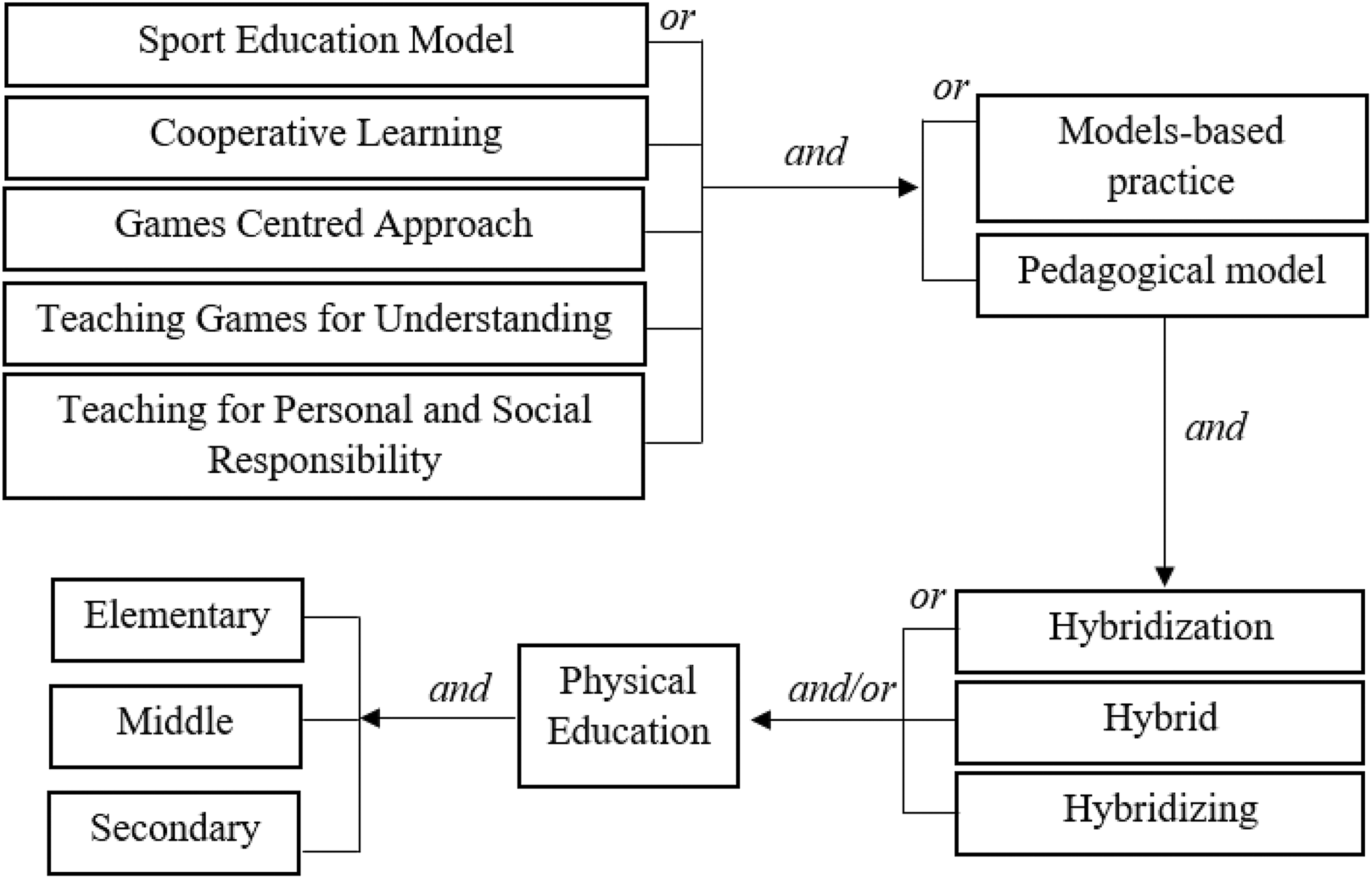
Keywords and English Boolean data type process during the search.
Selection criteria
All relevant articles in this review were included based on the following criteria: (a) studies published in peer-reviewed international journals indexed in JCR or SJR; (b) hybridizations of PMs; (c) studies that included quantitative and/or qualitative methods and findings; (d) research conducted within a school context; and (e) studies published in English or Spanish, the main languages used in PM interventions.
Duplicated documents and opinion articles, books, book chapters, conference papers or theses were excluded at the first level of exclusion. Moreover, works focused on the comparison between individual PMs or hybridizations with no clear procedural and/or methodological strategies (e.g. procedures, implementation, and assessment) were excluded at the second level of exclusion.
The systematic search process and the number of results in each database are shown in Figure 2. Subsequent to the elimination of many works at the first level of exclusion, 519 original articles were retrieved as potential studies to be included in the review. After reading the titles and the abstracts, 499 were discarded at the second level of exclusion. Finally, 20 articles were included in this study.
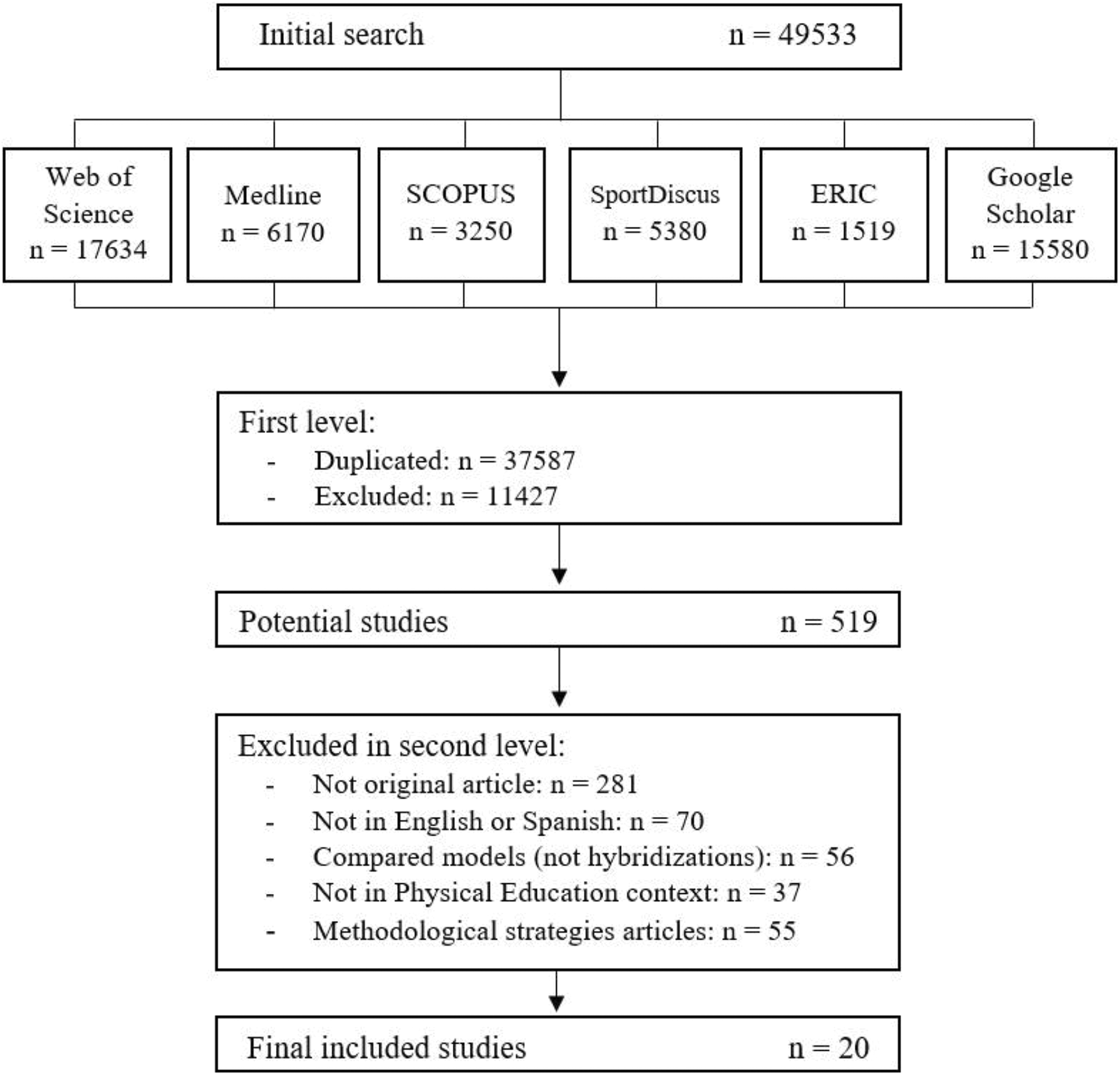
Flow diagram of the systematic search process.
Data extraction and reliability
After the initial search, the articles that did not fit the selection criteria were discarded at the first level of exclusion. The rest of the studies were summarized and classified in three categories (authors, journals, and years of publication) to organize the analysis for the second level of exclusion. Finally, the most relevant articles, which met the selection criteria, were retrieved for this review. In order to assess and obtain relevant information from them, the following categories were used (Harris et al., 2014): study name; journal (impact factor); authors; location; objectives; sample size; method; data sources; and results.
Quality assessment and level of evidence
First, the quality of this systematic review was assessed using the Preferred Reporting Items for Systematic Reviews and Meta-Analyses (Moher et al., 2009). This evaluation tool includes an evidence-based set of items to report the quality of systematic reviews and meta-analysis. Second, the criteria for assessing the quality of the selected studies were based on the Checklist for Measuring Study Quality (e.g. is the hypothesis/aim of the study clearly described?; Downs and Black, 1998), the Strengthening the Reporting of Observational Studies statement (e.g. is it possible to use the design in other studies?; von-Elm et al., 2008), and the Consolidated Standards of Reporting Trials statement (e.g. the study’s blinding and quality assessment; Moher et al., 2001).
Previous studies (Araújo et al., 2014; Chu and Zhang, 2018; Hastie and Casey, 2014) were used to obtain a quality score for each investigation based on the following criteria: (a) programme description; (b) JCR/SJR journal; (c) detailed methodological description; (d) sample or number of participants; and (e) length of the implementation. Each item was scored from ‘0’ to ‘2’ using the criteria described in Table 1. A total quality score from all the selected publications was calculated by adding up the number of positive items between ‘0’ and ‘10’. Investigations were classified as: (a) low quality: a score lower than ‘3’; (b) moderate quality: a score between ‘4’ and ‘6’; and (c) high quality: a score of ‘7’ or higher. Four experts on PMs performed this evaluation independently. The Cronbach’s alpha (0.96) indicated high reliability among the individual evaluations (Araújo et al., 2014).
Investigation quality score checklist.
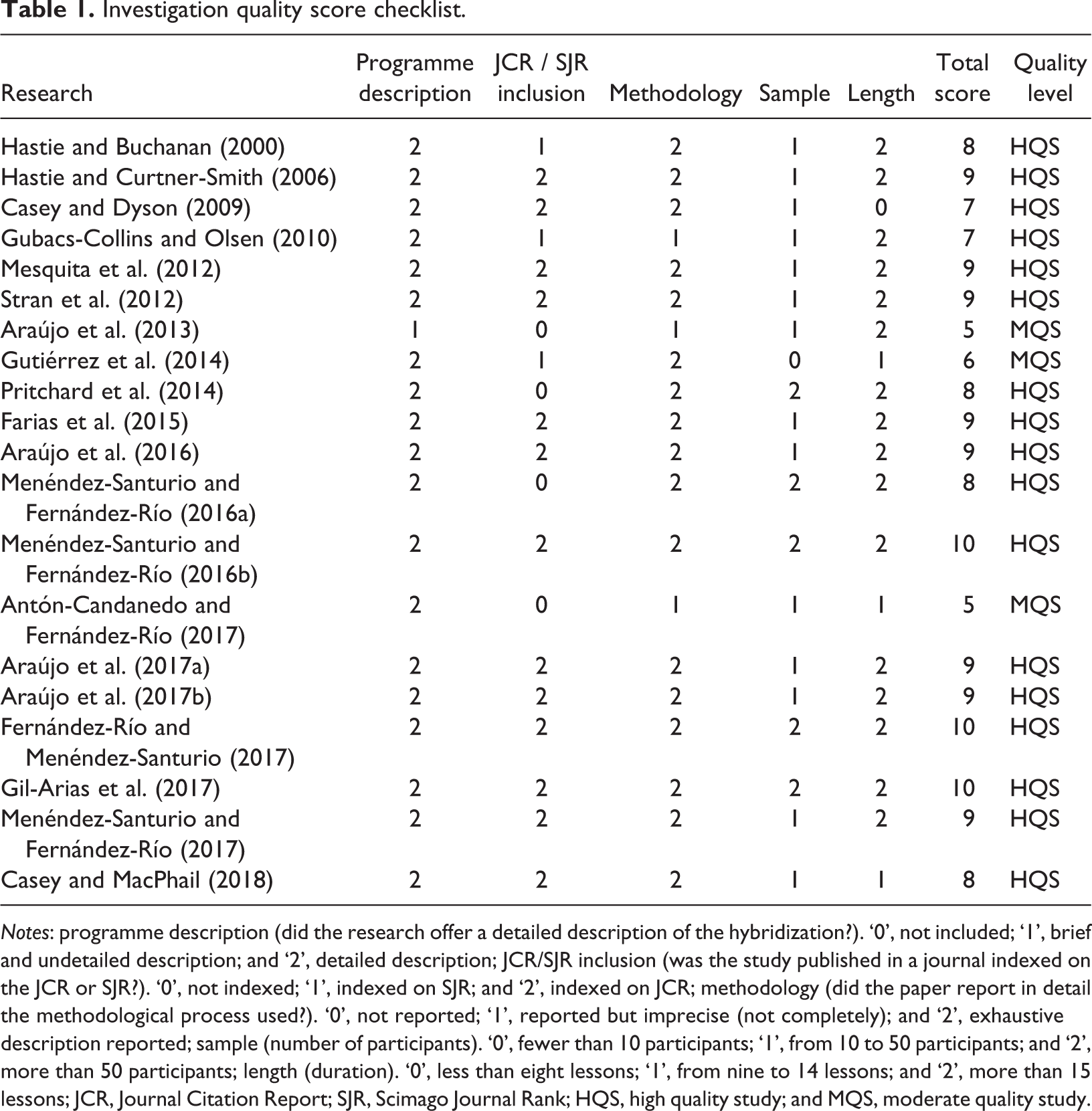
Notes: programme description (did the research offer a detailed description of the hybridization?). ‘0’, not included; ‘1’, brief and undetailed description; and ‘2’, detailed description; JCR/SJR inclusion (was the study published in a journal indexed on the JCR or SJR?). ‘0’, not indexed; ‘1’, indexed on SJR; and ‘2’, indexed on JCR; methodology (did the paper report in detail the methodological process used?). ‘0’, not reported; ‘1’, reported but imprecise (not completely); and ‘2’, exhaustive description reported; sample (number of participants). ‘0’, fewer than 10 participants; ‘1’, from 10 to 50 participants; and ‘2’, more than 50 participants; length (duration). ‘0’, less than eight lessons; ‘1’, from nine to 14 lessons; and ‘2’, more than 15 lessons; JCR, Journal Citation Report; SJR, Scimago Journal Rank; HQS, high quality study; and MQS, moderate quality study.
Results
Table 2 shows the 20 hybrid programmes implemented around the world, from the first (Hastie and Buchanan, 2000) to the last hybridization (Casey and MacPhail, 2018). The most important and relevant information from each study was assessed following the structure used in previous systematic reviews of PMs (Chu and Zhang, 2018; Pozo et al., 2016): ‘author(s)’ (and publication year); ‘hybridization’ (PMs hybridized); ‘focus’; ‘country/participants/grades’; ‘sports/length’; ‘analysis/data sources’; and ‘outcomes’.
Synthesis of experimental studies of models-based practice hybridizations.
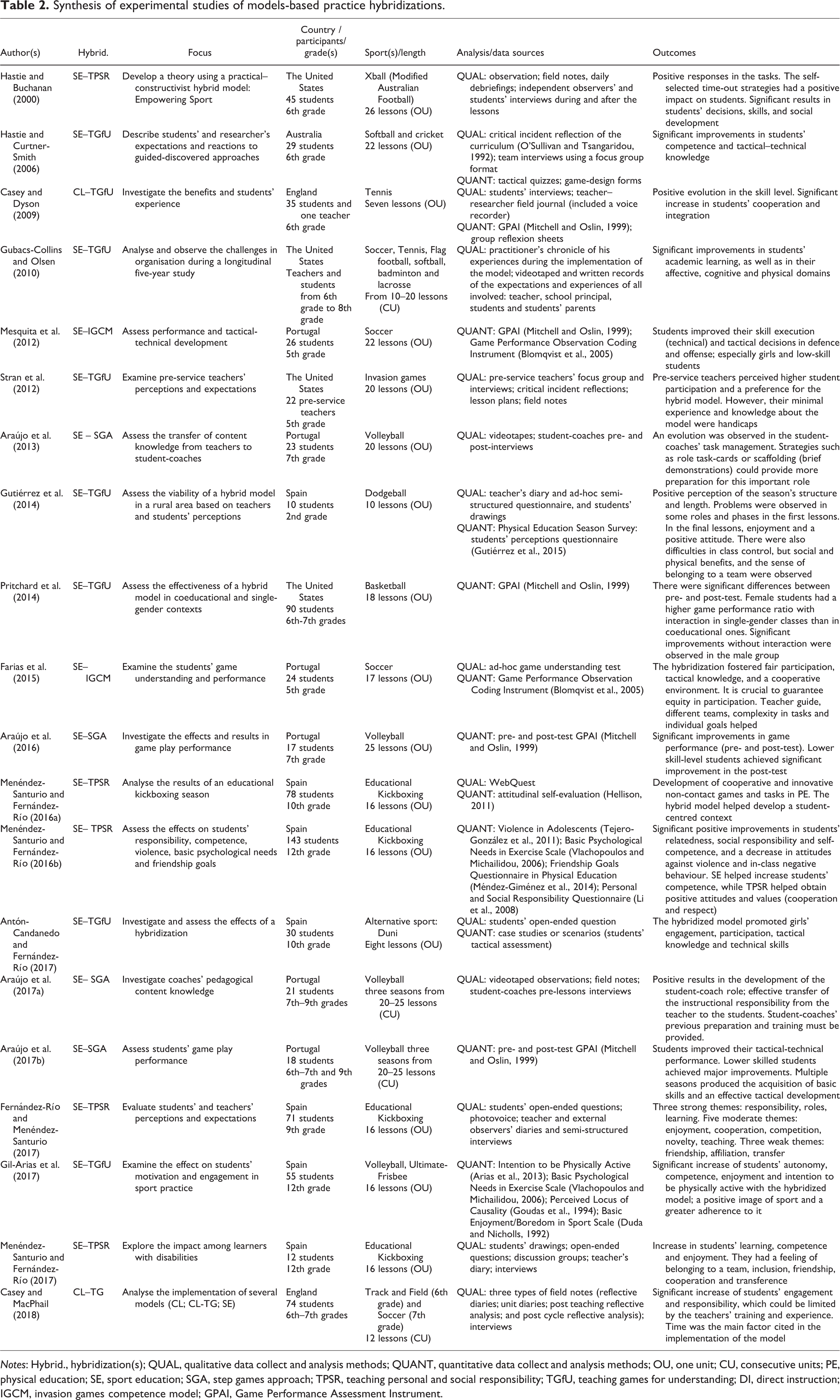
Notes: Hybrid., hybridization(s); QUAL, qualitative data collect and analysis methods; QUANT, quantitative data collect and analysis methods; OU, one unit; CU, consecutive units; PE, physical education; SE, sport education; SGA, step games approach; TPSR, teaching personal and social responsibility; TGfU, teaching games for understanding; DI, direct instruction; IGCM, invasion games competence model; GPAI, Game Performance Assessment Instrument.
Hybridization
The total number of PM hybridizations has increased rapidly over the last 10 years (20); especially those which used SE (18) (Hastie and Buchanan, 2000; Stran et al., 2012). On the one hand, the combination SE–GCA has been the most widely implemented (13) (Gil-Arias et al., 2017; Gutiérrez et al., 2014), probably because of the adaptability and applicability of SE to sport initiation contexts (e.g. the structure and length of the seasons contribute to the acquisition of basic skills and tactical development; Araújo et al., 2017b), and the development of students’ tactical performance promoted by the GCA. TGfU was the GCA most frequently hybridized with SE (7) (Hastie and Curtner-Smith, 2006; Pritchard et al., 2014) in different countries such as the United States (Gubacs-Collins and Olsen, 2010; Stran et al., 2012), Spain (e.g. Gil-Arias et al., 2017; Gutiérrez et al., 2014) or Australia (Hastie and Curtner-Smith, 2006). Moreover, SE has been hybridized with other GCAs in Portugal, such as SGA (4) (Araújo et al., 2016, 2017a) or IGCM (2) (Farias et al., 2015; Mesquita et al., 2012).
On the other hand, SE has been combined with TPSR to favour students’ social skills, autonomy and/or motivation in Spain (4) (Menéndez-Santurio and Fernández-Río, 2016b, 2017) and the United States (Hastie and Buchanan, 2000). Finally, two hybridizations of CL–TGfU (Gubacs-Collins and Olsen, 2010) and CL–TG (Casey and MacPhail, 2018) have been conducted in England.
Focus
Initially, the main focus of the hybridizations of PMs was to assess their viability in PE. The participants’ perceptions (teachers and/or students), as well as their effects on the teaching–learning process, were observed in the following hybridizations: SE–TPSR (3) (Fernández-Río and Menéndez-Santurio, 2017; Hastie and Buchanan, 2000); SE–TGfU (4) (Antón-Candanedo and Fernández-Río, 2017; Stran et al., 2012); and CL–TGfU (Casey and Dyson, 2009). Additionally, two studies evaluated the implementation of the programme’s management (e.g. methods, time, resources, grouping, etc.) in SE–TGfU (Gubacs-Collins and Olsen, 2010) and CL–TGfU (Casey and MacPhail, 2018) implementations. One SE–TPSR hybridization assessed its effects among students with disabilities (Menéndez-Santurio and Fernández-Río, 2017).
Secondly, the hybridizations’ impact on the students’ social skills and motivation was assessed using a comparative research design: Direct Instruction (DI) versus SE–TGfU (Gil-Arias et al., 2017) and DI versus SE–TPSR on students’ basic psychological needs (Menéndez-Santurio and Fernández-Río, 2016b).
Lastly, the goal of different implementations was to assess students’ tactical–technical skill development in the hybridization SE–IGCM (Farias et al., 2015; Mesquita et al., 2012) or SE–SGA (Araújo et al., 2016, 2017b). Moreover, one study assessed students’ tactical knowledge and performance in a hybrid SE–TGfU implementation (Hastie and Curtner-Smith, 2006). In addition, another study evaluated the same goal based on gender (Pritchard et al., 2014). Finally, two studies researched the transfer of content knowledge from teachers to student-coaches in SE–SGA hybridizations (Araújo et al., 2013, 2017a).
Participants and context
Regarding the studies’ context, Spain was the country in which the highest number of hybridizations were implemented (7) (Menéndez-Santurio and Fernández-Río, 2016a, 2016b), followed by Portugal (6) (Araujo et al., 2016; Farias et al., 2015) and the United States (4) (Hastie and Buchanan, 2000; Pritchard et al., 2014). Only two studies were conducted in England (Casey and Dyson, 2009; Casey and MacPhail, 2018) and one in Australia (Hastie and Curtner-Smith, 2006).
Concerning the participants’ grade level, the majority of studies were conducted at one level: elementary (4) (Mesquita et al., 2012; Stran et al., 2012); middle (8) (Araujo et al., 2013, 2016); and high school (6) (Menéndez-Santurio and Fernández-Río, 2016a, 2016b). However, some studies were implemented at various educational levels (Araújo et al., 2017a, 2017b). The grades most frequently assessed were 6th and 7th, with seven hybridizations in each one (Araújo et al., 2017b; Casey and MacPhail, 2018), followed by 12th, 9th and 5th grades, with three in each one (Fernández-Río and Menéndez-Santurio, 2017; Menéndez-Santurio and Fernández-Río, 2017). Other implementations have been conducted in 8th and 10th grades, two in each one (Antón-Candanedo and Fernández-Río, 2017; Gutiérrez et al., 2014). There seem to be limited hybridizations for the early ages, probably because of the complexity of the methodology – there is only one study in 2nd grade (Gutiérrez et al., 2014).
Sport/content
Three studies implemented more than one sport, while the rest used a single sport/content area. Moreover, several game/sport categories (Werner and Almond, 1990) were used, with a preference for invasion games (9): soccer (4) (Farias et al., 2015; Mesquita et al., 2012) was the most popular sport, followed by ultimate-frisbee (Gil-Arias et al., 2017), xball (Hastie and Buchanan, 2000), basketball (Pritchard et al., 2014), and flag-football and lacrosse (Gubac-Collins and Olsen, 2010). Net/wall was another game/sport category with a high number of implementations (9): volleyball was the most popular one (5) (Araújo et al., 2013, 2016), followed by tennis (Casey and Dyson, 2009; Gubacs-Collins and Olsen, 2010). Only one study implemented Duni (Antón-Candanedo and Fernández-Río, 2017), which is an alternative sport that originated in Argentina, or badminton (Gubac-Collins and Olsen, 2010). Certain categories were scarcely researched, such as combat sports (4) (Menéndez-Santurio and Fernández-Río, 2016a, 2016b) or striking and fielding games (Hastie and Curtner-Smith, 2006; Gubac-Collins and Olsen, 2010). Finally, other categories/sports that were implemented were target games (dodgeball; Gutiérrez et al., 2014) and track and field (Casey and MacPhail, 2018).
Length of the implementation
The number of lessons in the different studies ranged from seven (Casey and Dyson, 2009) to 26 (Hastie and Buchanan, 2000). The majority (nine studies) ranged from between 16 (5) (Fernández-Río and Menéndez-Santurio, 2017; Gil-Arias et al., 2017) and 20 lessons (2) (Araújo et al., 2013; Stran et al., 2012), and all of them hybridized SE in order to obtain significant improvements. Two studies were implemented through 22 lessons (Hastie and Curtner-Smith, 2006; Mesquita et al., 2012). Finally, only one hybridization each lasted seven (Casey and Dyson, 2009), eight (Antón-Candanedo and Fernández-Río, 2017), 10 (Gutiérrez et al., 2014), 12 (Casey and MacPhail, 2018), 25 (Araújo et al., 2016), and 26 lessons (Hastie and Buchanan, 2000). Two studies had different numbers of lessons because they were conducted at different grades: from 10–20 lessons (Gubacs-Collins and Olsen, 2009) and from 20–25 lessons (Araújo et al., 2017a, 2017b).
Finally, concerning the number of learning units, the vast majority of studies assessed the implementation of a single unit (16) (Gil-Arias et al., 2017; Hastie and Buchanan, 2000), and only a limited number assessed several consecutive units (4) (Araújo et al., 2017a; Casey and MacPhail, 2018).
Data sources and analysis
Various types of data collection and analysis strategies were used: qualitative (8) (Araujo et al., 2017a; Casey and MacPhail, 2018); quantitative (6) (Araujo et al., 2017b; Pritchard et al., 2014); and mixed methods (qualitative and quantitative: 6) (Farias et al., 2015; Gutiérrez et al., 2014).
In the qualitative studies, interviews were the most widely used instrument (12), followed by the teacher’s diary and/or field notes (10) to assess the students’ and/or teachers’ perceptions. Furthermore, four studies videotaped the lessons to assess the programmes. Finally, it is relevant to note the use of drawings with early ages (Gutiérrez et al., 2014) or learners with disabilities (Menéndez-Santurio and Fernández-Río, 2017).
In the quantitative studies, the Game Performance Assessment Instrument (Mitchell and Oslin, 1999) was the most widely used instrument to assess students’ decision-making and performance skills in hybridizations that included TGfU (Casey and Dyson, 2009; Pritchard et al., 2014), SGA (Araújo et al., 2016, 2017b) or IGCM (Mesquita et al., 2012). Finally, questionnaires such as the Basic Psychological Needs in Exercise Scale (Vlachopoulos and Michailidou, 2006) have also been used (Gil-Arias et al., 2017; Menéndez-Santurio and Fernández-Río, 2016b).
Outcomes
The PMs used in the hybridizations determined the outcomes obtained in the different studies. They have been grouped in two major categories to facilitate understanding: (a) game-related skills (physical/motor and cognitive domains), which included game understanding and tactical–technical skills to emphasize cognitive learning and effective execution during the game (Memmert, 2010); and (b) psychosocial variables (social and affective domains), which included psychological, social, and personal development (Mama et al., 2015).
On the one hand, hybrid implementations between SE and sport initiation models (GCA) favoured students’ game-related skills. The results showed that students improved their game understanding and skill execution in the following hybridizations: SE–TGfU (Antón-Candanedo and Fernández-Río, 2017; Pritchard et al., 2014); SE–TPSR (Hastie and Buchanan, 2000); and CL–TGfU (Casey and Dyson, 2009). Moreover, some studies showed greater improvement in girls’ tactical–technical development (Mesquita et al., 2012; Pritchard et al., 2014) and low-skilled students (Araújo et al., 2016, 2017b).
On the other hand, the hybrid implementations which included CL and/or TPSR favoured students’ psychosocial variables and personal development. Connected to the improvements in game understanding and skill execution, the hybridizations TPSR–SE (Fernández-Río and Menéndez-Santurio, 2017; Hastie and Buchanan, 2000), CL–TGfU (Casey and Dyson, 2009; Casey and MacPhail, 2018), and SE–TGfU (Gil-Arias et al., 2017) promoted students’ autonomy, competence, relatedness, cooperation and responsibility. Improvement in the students’ basic psychological needs helped promote their motivation and active participation in PE (Gil-Arias et al., 2017; Stran et al., 2012), enjoyment (Fernández-Río and Menéndez-Santurio, 2017; Gutiérrez et al., 2014), and equal participation (Farias et al., 2015). The positive atmosphere created enhanced students’ affective domain (Gubacs-Collins and Olsen, 2010) and decreased their attitudes against violence (Menéndez-Santurio and Fernández-Río, 2016b).
Finally, teachers’ PM experience and knowledge were key features for the following hybrid implementations: CL–TGfU (Casey and Dyson, 2009; Casey and MacPhail, 2018); and SE–TGfU (Stran et al., 2012), especially at early ages (Gutiérrez et al., 2014).
Discussion and conclusions
The aim of this systematic review was to describe and analyse the existing hybridizations of different PMs implemented from 1st–12th grades (six–18 years) in PE. The results showed 20 hybridizations focused on two outcome categories: (a) game-related skills (physical/motor and cognitive domains), which included game understanding and tactical–technical skills; and (b) psychosocial variables (social and affective domains), which included psychological, social, and personal development. The combination of SE and sport initiation models (GCA) favoured the first category, while the hybrid implementations which included CL and/or TPSR favoured the second one. There seems to be an advantage of PM hybridizations over the use of a single PM, because the former has benefits in many different domains.
Previous reviews acknowledged only three articles describing hybridizations: SE–TPSR, which showed positive responses on students’ sport skill competence, social responsibility and personal empowerment (Hastie and Buchanan, 2000); and SE–TGfU (Hastie and Curtner-Smith, 2006) and SE–IGCM (Mesquita et al., 2012), which showed positive results on students’ game performance and tactical knowledge. In the current review, 20 hybridizations have been included, which indicates that this trend has expanded in the last 15 years to include the four major PMs: SE; GCA; CL; and TPSR. Most hybridizations included SE and GCA, because SE integrates play practice (Launder, 2001), one type of GCA, as one of the key instructional features of SE (Siedentop et al., 2011). Both models focus on content related to sports in PE, and SE features, such as seasons, affiliation or roles (coach, referee, etc.), fit perfectly with GCA’s modified or exaggerated games (Araújo et al., 2016). Within this category, TGfU was the GCA most frequently hybridized with SE worldwide: United States (Gubacs-Collins and Olsen, 2010; Pritchard et al., 2014; Stran et al., 2012); Spain (Antón-Candanedo and Fernández-Río, 2017; Gil-Arias et al., 2017; Gutiérrez et al., 2014); and Australia (Hastie and Curtner-Smith, 2006). However, there has been an increase in the use of other GCAs, such as SGA (Araújo et al., 2013, 2016, 2017a, 2017b) and IGCM (Farias et al., 2015; Mesquita et al., 2012) promoted by a drive from Portuguese researchers. SE has also been combined with TPSR, but the number of studies is low (five). Finally, CL was the least often hybridized PM despite numerous implementations of the model alone (Casey and Goodyear, 2015; Gillies, 2014).
SE has been hybridized with GCA several times with results similar to the previous reviews (Harvey and Jarrett, 2013): improvements in physical, cognitive and affective domains. However, the combination SE–GCA also helped to increase students’ tactical knowledge (Hastie and Curtner-Smith, 2006), with larger improvements in girls and low-skilled students (Antón-Candanedo and Fernández-Río, 2017; Mesquita et al., 2012; Pritchard et al., 2014). This seems to indicate that the combination SE–GCA can overcome SE’s limitations in developing students’ tactical knowledge when it is implemented in isolation (McCaughtry et al., 2004). Moreover, the hybridization SE–GCA also helped to develop students’ psychosocial variables, such as autonomy and competence (Gil-Arias et al., 2017), fair play, cooperation, and the feeling of belonging to a team (Farias et al., 2015; Gil-Arias et al., 2017). These results were not observed in the GCA review (Harvey and Jarrett, 2013), which seems to indicate that there is a need to combine SE and GCA to obtain these benefits. Furthermore, in some single GCA implementations, it was difficult to observe skill development and tactical awareness in the participating students (Harvey and Jarrett, 2013). In the hybridization, this problem was sorted with the transference of pedagogical content knowledge from the teacher to the student while performing the role of student–coach (Araújo et al., 2013, 2017a). For this reason, the hybrid SE–GCA seems to produce better results than the GCA single model implementation. However, considerable knowledge about PMs is necessary, as is teacher experience in their implementation (Griffin and Butler, 2005; Gutiérrez et al., 2014; Stran et al., 2012). The teacher training needed to apply hybridizations is more complex than the isolated PM training, because it requires knowledge about both PMs, as well as of their combination (Gil-Arias et al., 2017). The successful hybridization of SE with other PMs has been found to be linked to teacher experience (Casey and MacPhail, 2018).
On the other hand, the combination of PMs which included CL and/or TPSR favoured students’ psychosocial variables. The CL–GCA hybridization helped students to achieve learning outcomes in the social, cognitive, and affective domains (Casey and MacPhail, 2018; Gubacs-Collins and Olsen, 2010). The hybrid SE–TPSR implementations increased students’ social values, such as attitudes against violence, responsibility, competence, and relatedness (Fernández-Río and Menéndez-Santurio 2017; Menéndez-Santurio and Fernández-Río 2016a, 2016b, 2017), and a reduction in negative behaviours and excessive competitiveness (García-López and Gutiérrez, 2015). Single TPSR implementations showed a decrease in students’ aggressive and disruptive behaviours (Escartí et al., 2006) or an increase in students’ self-control (Cecchini et al., 2007), but no physical/motor or cognitive benefits were observed (Pozo et al., 2016). However, the CL–GCA (Casey and Dyson, 2009) and SE–TPRS (Hastie and Buchanan, 2000) hybridizations did show improvements in these domains, highlighting their advantages.
Furthermore, the implementation of TPSR alone has been shown to improve students’ basic psychological needs (Li et al., 2008) and to produce social, psychological, emotional, educational, and behavioural outcomes (Pozo et al., 2016). This could produce a positive effect when combined with other PMs such as SE. For example, the hybridization SE–TPSR promoted the inclusion of students with special needs in PE, helping them and their classmates to connect inside and outside of class (Menéndez-Santurio and Fernández-Río, 2017). This framework seems to fit the needs of SE to help increase all students’ perceptions of competence and autonomy. This hybridization constitutes a new research trend for investigators since other PMs have not yet been combined and assessed with TPSR.
Other features described in previous reviews were the length of the implementation or the content used. On the one hand, longer learning units favoured the acquisition of the PMs’ goals (Hastie et al., 2011) and physical/motor, cognitive, social or affective outcomes (Araújo et al., 2014; Chu and Zang, 2018; Hastie et al., 2011; Pozo et al., 2016; Wallhead and O’Sullivan, 2005). However, GCA and CL interventions included a lower number of lessons than TPSR or SE (Casey and Goodyear, 2015; Harvey and Jarrett, 2013). This seems to indicate that the latter PMs require longer units. In this same line of argumentation, the implementation of consecutive units could help better outcomes to be obtained (Farias et al., 2018). The consolidated execution of PMs over time could help promote multi-model programmes and all the benefits derived from them (Casey and MacPhail, 2018), but it is necessary to have higher teacher involvement to overcome management difficulties (Griffin and Butler, 2005).
On the other hand, hybridizations used a greater variety of sport/content in their interventions than single PMs. Invasion games were the most widely used content in the combination GCA–SE, which seems to indicate a preference (Araújo et al., 2014; Harvey and Jarrett, 2013; Hastie et al., 2011). However, new content such as Duni or educational kickboxing has been implemented using hybridizations. Content selection seemed to be influenced by the PMs combined, since hybridizations offer more possibilities of choice and promote students’ competence and motivation.
In conclusion, the increase in PM hybridizations suggests that this pedagogical strategy seems to extend the effects of the implementation of single PMs. The combination of PMs, based on common features, allowed teachers to introduce many different content areas in PE. Moreover, hybridizations helped to overcome the constraints of single PMs, such as the negative competitiveness of SE competition, which improves with TPRS–SE hybridizations, or the game-centred perspective in TGfU, which can include other domains such as the affective or the social domains when this model is hybridized with CL (Casey and Dyson, 2009). Finally, the teachers’ perspectives on the hybrid models suggest that this pedagogical strategy fits current curricular requirements. Nevertheless, teacher commitment, training and experience regarding PMs should be greater because of the complexity of implementing several models at the same time. Finally, combined benefits in the physical/motor, cognitive, affective, and social domains have been observed only when merging different PMs. For this reason, hybridizations could be an effective resource to develop a flexible and innovative PE curriculum within multi-model programmes. However, more studies on the hybrid models are needed to understand their effects, and thus guide teachers.
Footnotes
Declaration of Conflicting Interests
The authors declared no potential conflicts of interest with respect to the research, authorship, and/or publication of this article.
Funding
The authors received no financial support for the research, authorship, and/or publication of this article.