



Abstract
The limited amount of research on the influence of social status during group work in physical education has typically focused on interactions and power. What is less understood is whether social status has an impact on various physical education outcomes. The purpose of this study was to examine physical activity, game performance, and knowledge outcomes of high- and low-status fifth-grade students during a physical education field hockey unit delivered utilising the Sport Education model. 44 students completed sociometric peer nomination surveys to determine the social status hierarchy of all students in the class. Students wore accelerometers to measure moderate to vigorous physical activity (MVPA) during the unit. Pre- and post-unit game performance and knowledge were assessed through the Team Sport Assessment Procedure and cognitive tests, respectively. Repeated measures analysis of variance showed no significant difference between high- and low-status students’ average MVPA over all phases of the unit (pre-season, season and post-season), while analysis of covariances revealed significant differences in game performance and field hockey knowledge based on social status. Results suggest while physical activity levels were similar between high- and low-status students, some lower-status students were at risk in terms of developing skills and knowledge.
Introduction
Classroom research suggests social status (SS) can impact the participation of students working in groups, potentially affecting interactions, learning outcomes, and social development (Cohen, 1994). Learning outcomes and social development can depend greatly on the interactions that occur within the group (Cohen and Lotan, 2014) since individuals use language to develop their ideas and organise knowledge (Vygotsky, 1962). Cohen’s (1994) theory implies greater interactions lead to increased learning, specifically ‘those who talk more, learn more’ (Cohen and Lotan, 1995: 100). This would suggest a need to explore the number of interactions as it relates to learning outcomes. Utilising group work as an instructional strategy without attending to these potential socio-cultural messages and outcomes could be problematic, as students may not profit equally (Somerset and Hoare, 2018). Therefore, reviewing the effect of SS on group work outcomes could be pivotal regarding participation, influence, and student achievement (Leechor, 1988).
Cohen (1994) proposes that those who initiate more interactions during group work are more likely to learn the material. If this is the case, it is necessary to understand how status could influence these outcomes and why this phenomenon occurs. Classroom literature has shown for decades that interactions between individuals participating in group work can be imbalanced; Bales et al. (1951) found that high-status or more powerful members spoke 15 times more frequently than low-status members during a group work task. Further supporting this finding, Buzaglo and Wheelan (1999) found that 30% of members in an 11-person group contributed to more than 75% of the group’s discussions (Buzaglo and Wheelan, 1999). Johnson and Johnson (1990) suggested that high-status individuals who contribute the majority of interactions tend to dominate the group discourse to benefit themselves, meanwhile excluding low-status individuals. This example presents a ‘rich get richer’ effect in which those with power benefit from the group task (Johnson and Johnson, 1990: 29). Consequently, the decisions made for the group's performance or processes are dominated or based on interactions by high-status members (Anderson and Kennedy, 2012). Anderson and Kilduff (2009: 491) sum up this phenomenon well by stating: First, an individual member’s influence in a group is determined by the group. Second, groups give influence to members who possess superior competence and expertise. Third, by putting their most qualified members in charge, groups stand the best chance of achieving their collective goals.
Although the ‘rich get richer’ effect during group work has strong historical roots in the classroom literature (Johnson and Johnson, 1990: 29), this phenomenon is relatively new in sport and physical education research. It is important to understand the implications of SS during group work on learning outcomes in physical education to explore a more productive and inclusive learning environment for all students (Casey and Goodyear, 2015; Lafont et al., 2017). Lafont (2012) pointed out the necessity of establishing an even playing field and collective goals to promote productivity and optimal learning for all individuals. Resonant of Cohen's work (Cohen, 1994; Cohen and Lotan, 1995), other studies have noted the potential influence of status and context of the task on interactions during group work (Barker and Quennerstedt, 2017; Brock and Hastie, 2017; Brock et al., 2009; Darnis and Lafont, 2015; Farias et al., 2017; Hollett et al., 2020). Status plays an influential and dominant role in interactions within group work, prompting Barker et al. (2017) to note the need for further empirical evidence in physical education research. Referencing the original work of Dodds (1985) on the hidden curriculum, Casey (2017: 370) explained, ‘Only by exploring these small spaces and challenging the taken-for-granted assumptions about what is being learned and what is influencing that learning can we begin to understand what is happening’.
Often, the mere organisation of students into groups conjures an assumption that interactions will take place and learning will automatically occur. Indeed, group members and the context in which group members are interacting may prompt differential results. Darnis and Lafont (2015) found verbal exchanges occurring in small groups and dyads facilitated skill development in a team sport setting; however, the characteristics of the individual and conditions surrounding learning prompted varied benefits. In a systematic review, Araujo et al. (2014) noted gaps in utilising pedagogical models such as Sport Education (SE) that focus on group work as the scaffold for student learning. Skill development, cognitive ability, and physical activity are consistently studied in various pedagogical models (Legrain et al., 2011; Barker et al., 2015), though concerns are raised regarding influences on the teaching–learning process (Araujo et al., 2014). Consequently, research in classrooms and physical education is focused on creating optimal learning experiences by promoting equitable participation of students despite social hierarchy. Araujo et al. (2014) specifically cited the need to further examine group dynamics to promote optimal learning opportunities, especially during an effective cooperative learning environment (Dyson, 2002; Goudas and Magotsiou, 2009).
Learning outcomes from SE
SE is a physical education instructional approach that shifts the responsibility of teaching content and developing skills from the teacher to the student as the unit progresses. Siedentop (1994: 18) developed the model ‘to provide authentic, educationally rich sports experiences for girls and boys in the context of school physical education’. By allowing students to work in teams for the entirety of a 15–20-lesson unit, they have the possibilities to develop competence, physical literacy, and social responsibility while experiencing sport culture. Using six characteristics (seasons, culminating event, affiliation, record-keeping, formal competition, and festivity), students participate as members of a team to work collaboratively while enjoying successes and failures together (Siedentop, 1994).
SE, in relation to direct instructional teaching, has been thoroughly researched regarding benefits and outcomes (Hastie et al., 2011). Hastie and Sharpe (1999) found SE improved social behaviour of seventh- and eighth-grade boys through increased positive interactions and decreased negative interactions. SE has also been shown to impact knowledge and skill outcomes. In a comparison of an SE rugby unit with a direct teaching rugby unit, Browne et al. (2004) found significant improvements in perceived learning (measured through pre- and post-self-assessments) and understanding of the game (pre- and post-knowledge tests). In addition to skill and knowledge outcomes, game performance and quality gameplay (collected by the teacher's evaluation of skills) were significantly impacted by the instructional approach, indicating SE can provide more effective opportunities for students to practise skills in an authentic setting (Hastie et al., 2009; Pritchard et al., 2008). As candidly noted by Gutierrez et al. (2022: 258) ‘it [SE] works, and it is worth it’ as a teaching method to provide quality learning.
In SE, the most common assessment of physical activity is the amount of time students spend in moderate to vigorous physical activity (MVPA) (Kirk, 2005). The World Health Organization and the Start Active, Stay Active guidelines in the UK recommend 60 minutes of physical activity daily for children (Department of Health, 2011; World Health Organization, 2010, 2018). Additionally, the Healthy People 2020 report recommends physical education lessons should consist of a minimum of 50% MVPA as the gold standard (U.S. Department of Health and Human Services, 2020).
Numerous researchers have focused on reaching the gold standard of physical activity by comparing SE to more traditional teacher-directed instruction (Hastie and Trost, 2002; Parker and Curtner-Smith, 2005; Perlman, 2012; Pritchard et al., 2015; Puente-Maxera et al., 2021; Rocamora et al., 2019; Wahl-Alexander and Morehead, 2017; Ward et al., 2017). Perlman (2012) and Rocamora et al. (2019) determined SE led to higher MVPA than traditional instruction; however, students did not reach the gold standard at 29.9% and 27.2% average MVPA, respectively. Pritchard et al. (2015) found students increased scores on fitness pre- to post-test while achieving 60.47% average MVPA, supporting the notion of the team-based instructional model in reaching high-skill improvement and physical activity levels. Supplemental to these findings, Ward et al. (2017) measured the physical activity of fifth-grade students participating in teams during an SE fitness unit. Results indicated students spent an average of 54.5% MVPA during all three phases of the unit (pre-season, season, and post-season). Puente-Maxera et al. (2021) found that seventh-grade students exceeded minimum physical activity recommendations with 64.5% MVPA during an 18-lesson multi-games SE unit.
While SE can effectively promote physical activity levels of students on average by reaching the gold standard of MVPA, it is still unclear which individual student characteristics might potentially affect MVPA within the student-centred model. Hastie and Trost (2002) touched on this idea when comparing physical activity levels of high- and low-skill seventh-grade boys participating in a floor hockey SE unit. All students reached an average of 31.6 minutes of MVPA (63.2%) per class. Furthermore, high-skill and low-skill boys showed no significant difference in physical activity levels (33.4 minutes and 30.4 minutes, respectively) indicating skill level did not affect boys’ MVPA.
Since SE has been proposed as an effective instructional strategy, more recent research has focused on the learning outcomes for individual students based on specific characteristics. In a review, Araujo et al. (2014) noted most SE research has focused on three main dimensions of student learning: skill development, tactical development, and gameplay. Of the studies measuring learning outcomes in SE, very few examined the impact of individual characteristics. In the first study of SE to consider variations in individual entry-level skill ability, Hastie et al. (2017) investigated the impact of skill ability on participation and success rates of elementary students in an SE unit featuring graded competition. Findings from a mixed-ability league determined that lower-skilled students in grade five were hindered regarding success rates, engagement, and playing efficiency. Similarly, Ward et al. (2019) found if teachers put students with similar ability levels in the same group, they could increase opportunities for physical activity and success. In contrast, Mahedero et al. (2021) found a cohort of 126 high school students improved game knowledge and performance, regardless of ability grouping by skill. These findings suggest students may receive different gameplay experiences within SE based on their skill ability, potentially affecting achievement and learning; however, more exploration is needed. Perhaps age could also be a confounding variable when examining learning outcomes as a factor of skill ability in SE. Darnis et al. (2005) found a positive correlation between cognitive ability and handball skill ability among 11- and 12-year-old children. Harvey et al. (2020) examined skill ability in an innovative Twitter study of teachers’ experiences implementing the model. Although anecdotal and not measuring learning directly, Harvey et al. (2020) proposed accommodating varying skill abilities during SE was achievable.
In addition to skill ability, gender has been shown to affect skill development, achievement, and gameplay in SE (Mesquita et al., 2012). Boys and higher-skilled students have increased learning opportunities within certain themed SE units (Alexander and Luckman, 2001; Brock et al., 2009), while girls and lower-skilled students tend to learn more effectively using a hybrid approach combining SE and other instructional models (Carlson and Hastie, 1997; Mesquita et al., 2012). Additionally, Darnis and Lafont (2014) suggested boys progressed further than girls in tactical choice through interactions in a team sport unit. While gender and skill ability are two of the main characteristics examined in relation to learning outcomes, there appear to be no empirical attempts to explore the concept of SS as a potential characteristic.
Statement of the purpose
The purpose of this study was to examine physical activity, game performance, and knowledge outcomes of high- and low-status fifth-grade students during a physical education field hockey unit delivered utilising the SE model. It was hypothesised that high-status students would spend more time in MVPA than low-status students during the unit. It was hypothesized that high-status students would improve game performance and knowledge of field hockey more than low-status students.
The theoretical lens used to support this prediction of the results is socio-constructivism, developed by Vygotsky (1978). Vygotsky theorised that individuals create the meaning of material by interacting with peers, teachers, objects, and the social environment. Learning is a continuous reorganisation and construction of knowledge based on the social experiences of individuals, which is particularly relevant when operating within groups. In fact, Rovegno and Dolly (2006) cited equitable participation as a ‘precursor’ to learning during group work. Barker et al. (2017: 53) further noted, ‘status can have marked effects on learning’ in groups. Therefore, based on the literature and socio-constructivist theory, we hypothesise that the learning outcomes of students will be different based on their status within the team, and subsequently their experience while participating in group work.
Methods
This study was conducted in an elementary school (third–fifth grades) located in the south-eastern region of the United States. The school population of 482 students consisted of 67% White, 26% Black, 4% Hispanic, and 3% Asian. Approval to conduct the research was granted by the University Institutional Review Board for Research Involving Human Subjects. The participants assenting to the study included 44 students (mean age = 11.8 years; 19 males and 25 females) from two fifth-grade classes that attended physical education daily as one large class. Physical education was taught by one teacher with over 17 years of experience. The curriculum typically includes three to four SE units per year. The students were well versed with SE in their physical education class, having participated in at least two seasons during the school term prior to the field hockey unit. The unit was designed by the physical education teacher and the first author, with weekly meetings conducted to ensure model fidelity (Hastie and Casey, 2014).
SE season design
Students participated in a 20-lesson SE season of field hockey over four weeks. The physical education teacher was charged with creating teams of four students consisting of varying skill levels and genders (Lafont et al., 2007) prior to the season beginning. Each lesson lasted 30 minutes and followed a typical season outlined by Siedentop et al. (2019), which included the six characteristics: seasons, affiliation, festivity, formal competition, record-keeping, and a culminating event. The early stages of the season (lessons 1–3) were used for establishing duty roles, rules, and routines. Teacher-directed instruction during Lessons 4–6 included relevant content knowledge about field hockey rules and strategies, as well as skill development through drills such as dribbling, shooting, and defending. The pre-season phase, Lessons 7 to 11, included two 10-minute scrimmages and time dedicated to team focused strategizing. In the season phase (Lessons 12–16) teams participated in one of two conferences. The Western Conference teams played round-robin games during the first 15 minutes of class and the Eastern Conference teams played during the second 15 minutes. When teams were not playing, they were responsible for refereeing and scoring or cheering for playing teams. The final four lessons (17–20) were dedicated to playoffs and ended with a championship game and an awards presentation. The double elimination playoff schedule ensured each team played a minimum of two games during the post-season.
SE model fidelity
To analyse the fidelity of the SE unit, 15 of the 20 recorded lessons were analysed by two observers to determine the key aspects of the model outlined in the fidelity checklist developed by Sinelnikov (2009). These observers were unrelated to the research project, but had more than three years of experience in studying the SE model. The two observers reached an interobserver agreement of 100% in identifying the key aspects of each of the benchmark elements.
Measures
Social status
SS was measured in lesson 1 after students were in teams for 10 minutes. This time point limited students from ranking their teammates based on their role in the team or physical capabilities in the sport. Using sociometric methods developed by Moreno (1941) involves ranking peers based on the prompting question posed by the researcher. The question prompts students to list teammates in hierarchical order. The protocol for collecting this information in an education setting was designed by Chelcea (2005) and involves students nominating peers to determine the ranking of group members and perceived importance. In this study, the only instruction to students was they would be working in teams, without mention of the sport. Students were asked to find a personal space in the gymnasium to complete the following survey task: ‘please rank your teammates in order of importance’. The survey provided four blank lines for the participant to enter teammates’ names in order of importance (1
Physical activity
Physical activity was measured using an Actigraph triaxial accelerometer GT3X (ActiGraph GT3X; ActiGraph Corp., Pensacola, FL) programmed with a 15 s epoch. All participants wore an accelerometer on the right hip attached to an elastic belt for the entire 30 minutes of each lesson for 13 days of the unit (pre-season scrimmages, formal competition, and finals).
Game performance
Four lessons (Lessons 10, 11, 18, and 19) were video recorded using a GoPro Hero4 device mounted to the wall in the gymnasium. Video records allowed for all formal competition matches to be captured. Scrimmages completed in lesson 9 were also recorded to establish reliability. The video data were transferred to GoPro Studio for analysis and storage. Researchers coded each student's game performance in the four recorded lessons using the Team Sport Assessment Procedure (TSAP; Grehaigne et al., 1997). The TSAP provided an authentic measure of game performance by including gameplay performance and tactical behaviour in the game setting, producing an efficiency index (successful offensive actions minus unsuccessful actions), the volume of play (passes received more than balls conquered), and a performance score (the overall result of the volume of play and efficiency index) for each student. For this study, we used the performance score to represent the game performance of the students. To establish interobserver agreement, two research assistants coded two 10-minute video recorded games from lesson 9 and developed scoring rules and scenarios until the coinciding coding was agreed upon. The results of the offensive actions and passes received by three selected players on the team were then compared and reliability was established at 97%. Each coder then completed the coding for one-half of the video sample.
Field hockey knowledge
All students completed a validated and grade-level appropriate 10-item multiple-choice cognitive test of basic field hockey knowledge (Turner and Martinek, 1999). The test consisted of five declarative and five procedural items. Declarative knowledge questions are factual concepts related to field hockey such as parts of a hockey stick. Procedural knowledge questions aim to measure decision-making and strategies during a game (e.g. creating space on offence). The lead author administered the test at three time points: two days before the unit (pre-test); two days following the unit (post-test); and two weeks following the unit (retention).
Data analysis
IBM Statistical Package for the Social Sciences (SPSS) System (version 23.0) for Windows® was used for all statistical analysis. Data were entered into Microsoft Excel and uploaded into SPSS. Independent measures included sex and status, while dependent measures included MVPA, game performance, and knowledge.
Social status
SS was analysed using sociometrics (Moreno, 1941) for each team. Sociometrics provide quantifiable data to measure relationships between people. SS is represented by the total number of positive nominations from the peer nomination surveys, which is then divided by the number of members of the group to calculate an SS index. Furthermore, preferred status (PS) is the SS number minus negative nominations resulting in a group member's standardised score. PS index is calculated by dividing the PS by the number of members again. PS index is represented as a scale from −1 to 1 in which the highest status member has a score closest to 1. The order of the hierarchy is then determined based on the PS index score each member receives. Because there were four people on each team, the students with the two highest indices were categorised as high status, while the two students with the lowest indices were assigned low status (Wu et al., 2001). Table 1 provides the indices and subsequent assignment of high and low status for each student within their team (pseudonyms have been used for confidentiality). For example, the status hierarchy of Team 1 is David (highest status), Mindy, and Sue, followed by Wynn with the lowest status.
SS and PS with high-/low-status assignments for one team.
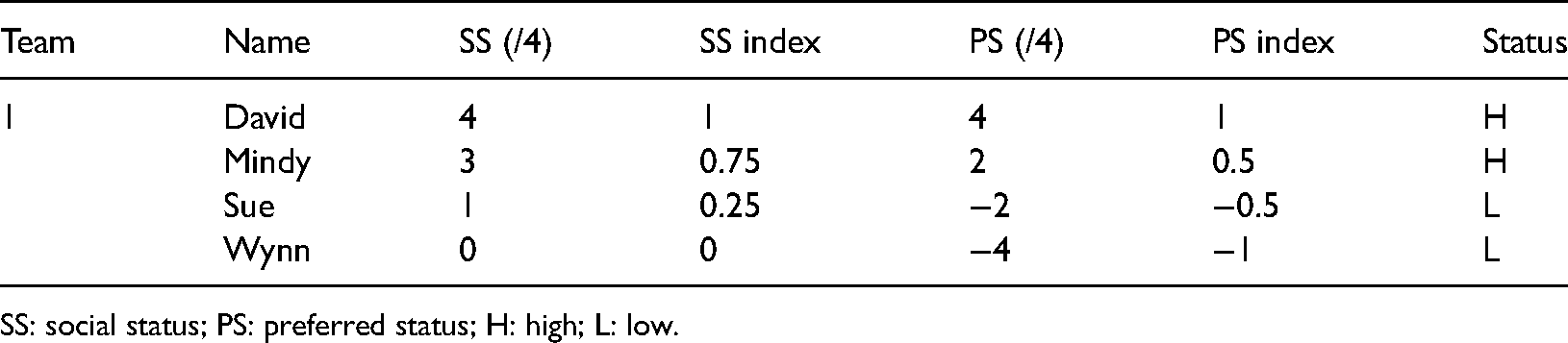
SS: social status; PS: preferred status; H: high; L: low.
Physical activity
Accelerometer data were downloaded into the ActiLife software and classified into four categories: sedentary, light, moderate, and vigorous. The minutes of each category were quantified on validated cut points suggested by Butte et al. (2014). MVPA was computed as the percentage of total minutes in the moderate and vigorous categories. Average MVPA was calculated for all low-status students and all high-status students for pre-season lessons (7–11), in-season (lessons 12–16), and post-season (lessons 17–19). A two-way repeated measure analysis of variance (ANOVA) was run to determine the effect of status over time on MVPA. There were no outliers and the data were normally distributed at each time point (pre-season, season, and post-season), as assessed by boxplot and Shapiro–Wilk test (p < .05). The assumption of sphericity was met, as assessed by Mauchly's test of sphericity x2(2) = 2.29, p = 0.32.
Game performance
The performance scores of two scrimmage games (lessons 10 and 11) were averaged for each student, as were those of the final two games during playoffs (lessons 18 and 19). An analysis of covariance (ANCOVA) was run to determine the effect of status on post-test game performance after controlling for pre-test scores.
Field hockey knowledge
An ANCOVA was run to determine the effect of status on post-test field hockey knowledge after controlling for pre-test scores. In addition, following the recommendation of Araujo et al. (2014) for measures of knowledge retention following an SE unit, an ANCOVA was run to determine the effect of status on retention test knowledge after controlling for the pre-test.
Results
Physical activity
Means and standard deviations for MVPA across the three phases of the season are presented in Table 2. Results of the ANOVA indicated no significant main effect of status on the percentage of lessons spent in MVPA during pre-season, season, and post-season F(2, 84) = 1.99, p = .142, η2 = .05. Physical activity results also indicated all students met the 50% MVPA standard throughout the entirety of the unit with an average MVPA of 59.4%.
Means and SDs for MVPA.

SD: standard deviation; MVPA: moderate to vigorous physical activity.
Game performance
After adjustment for pre-test scores, there was a statistically significant difference in post-test game performance between the students of different statuses, F(1, 43) = 40.28, p < .001. Figure 1 shows the differences between the two groups.
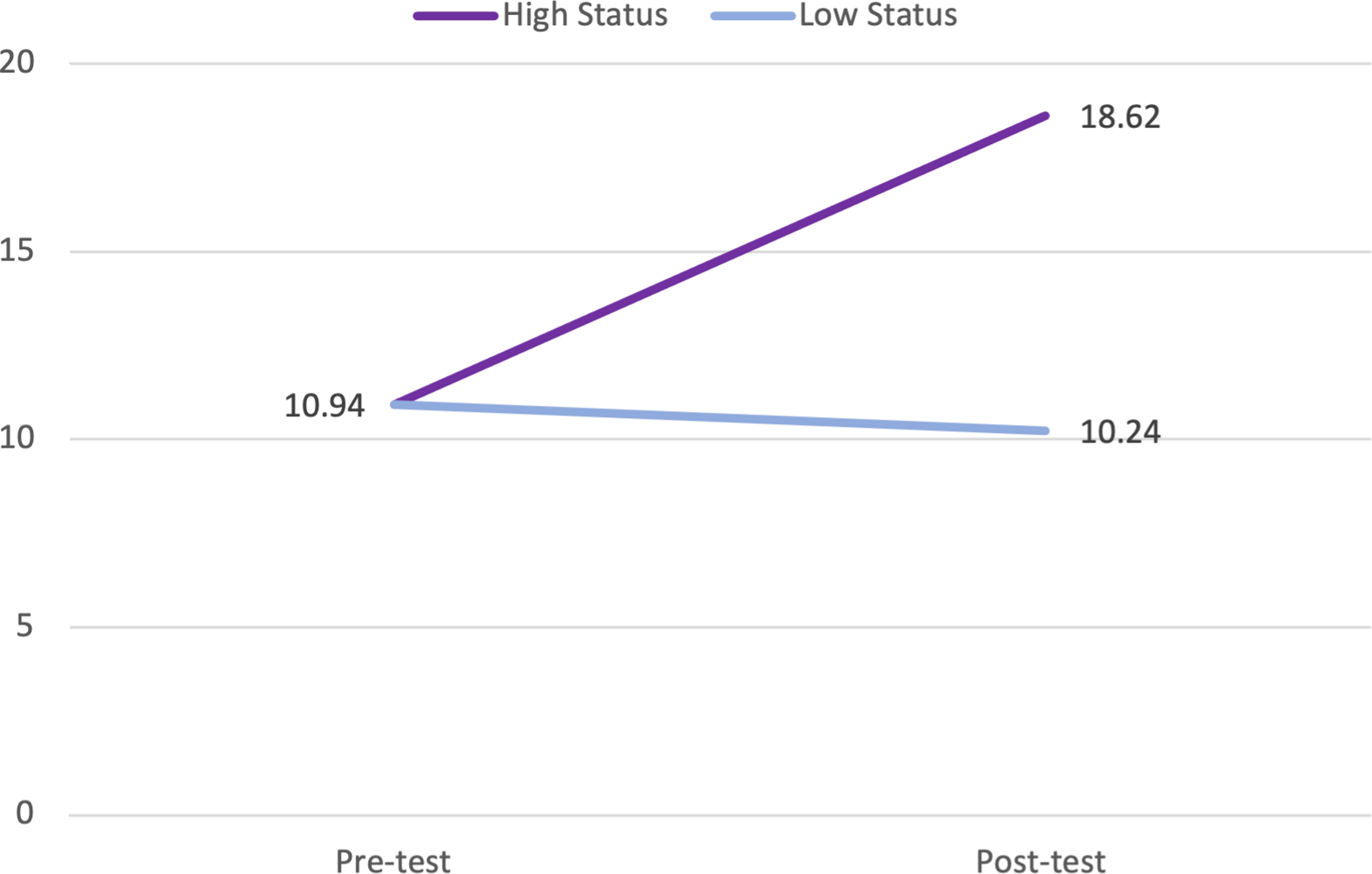
Game performance from pre- to post-test by status.
Field hockey knowledge
After adjustment for pre-test scores, there was a statistically significant difference in post-test knowledge scores between the students of different statuses, F(1, 43) = 16.88, p < .05. Figure 2 shows the differences between the two groups. After adjustment for pre-test scores, there was a statistically significant difference in field hockey knowledge retention scores between the students of different statuses, F(1, 43) = 9.56, p < .05. Figure 3 illustrates the differences between the two groups.
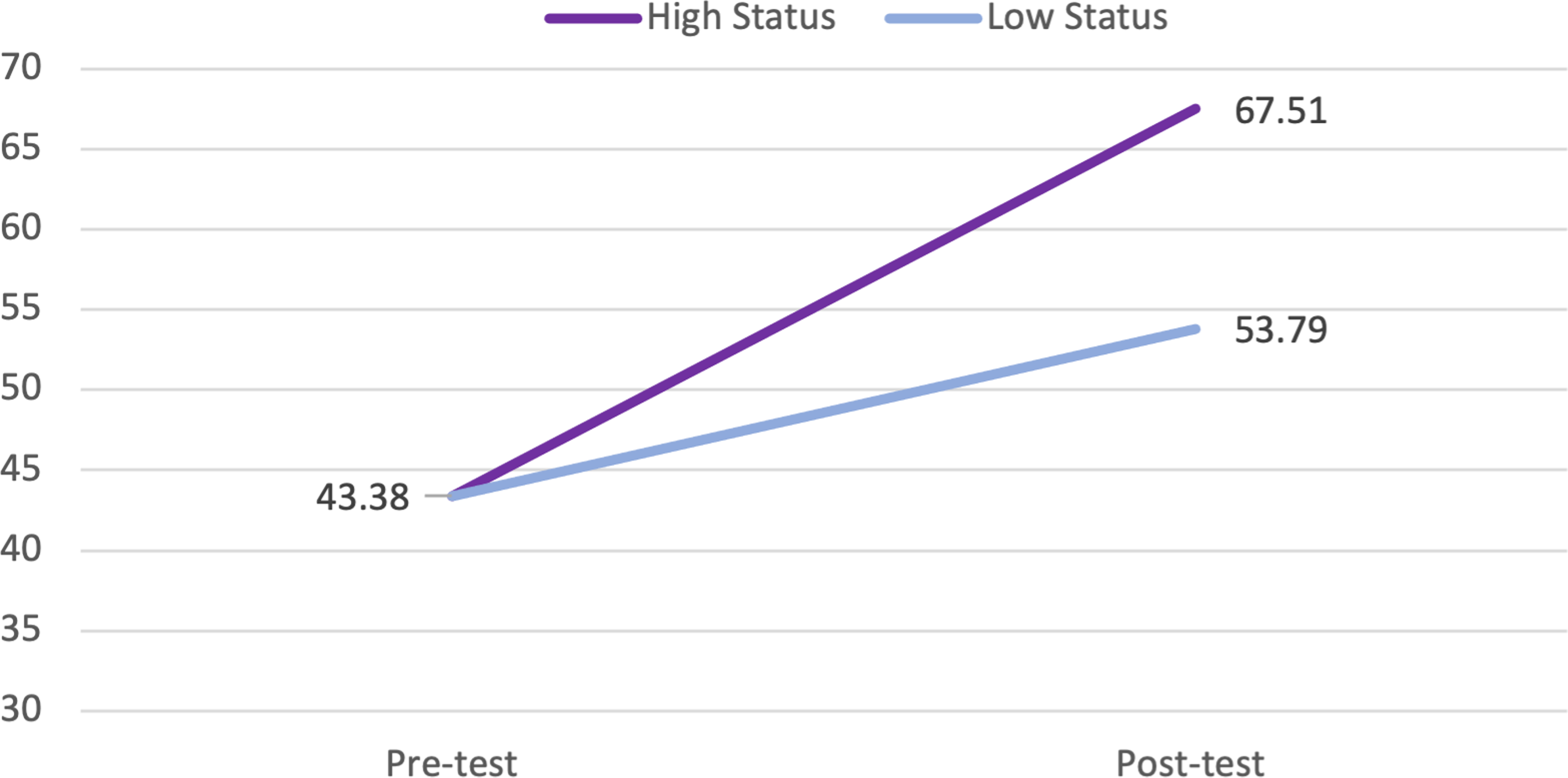
Field hockey knowledge from pre- to post-test by status.
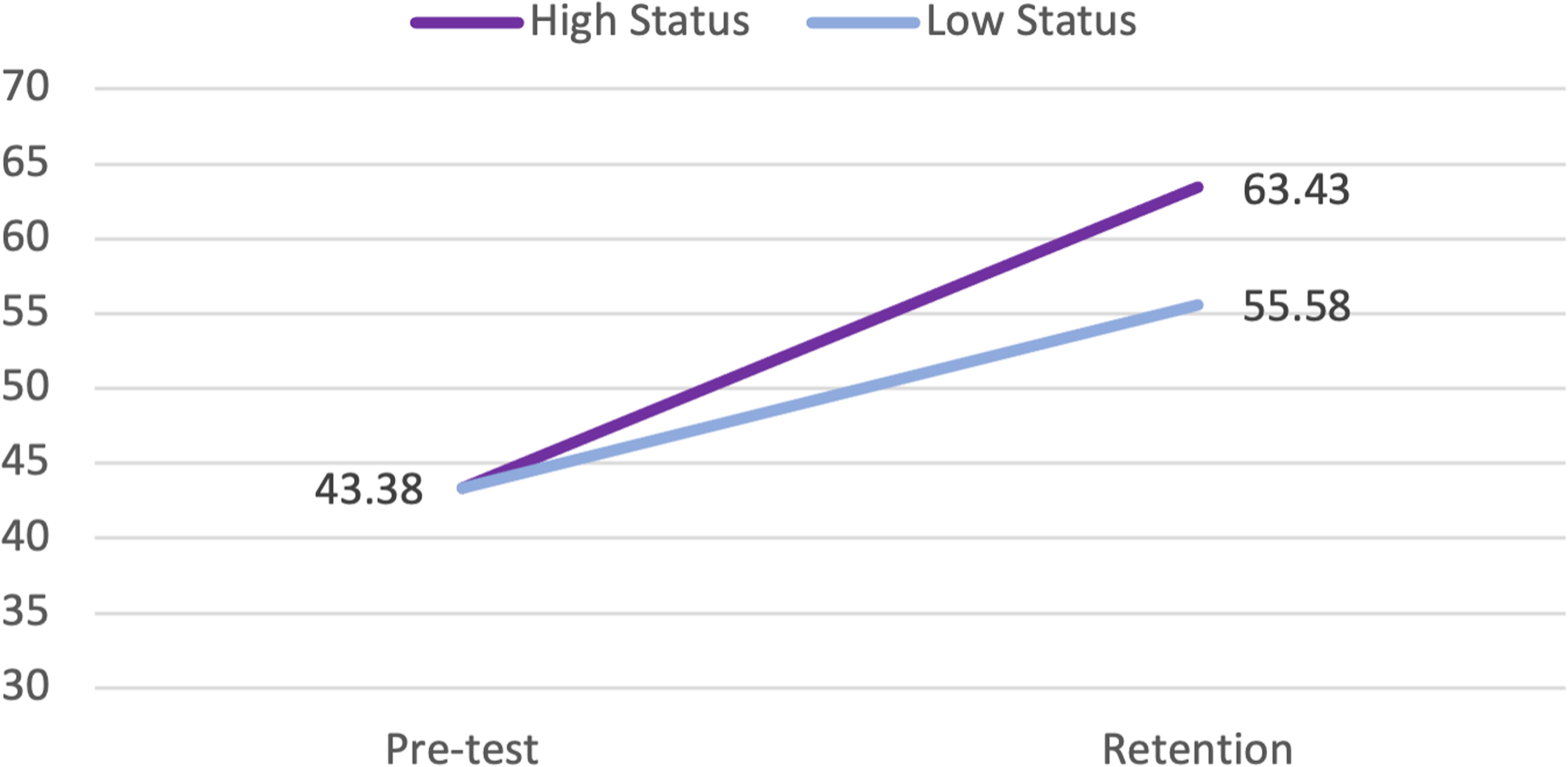
Field hockey knowledge from pre- to retention test by status.
Discussion
The purpose of this study was to examine physical activity, game performance, and knowledge outcomes of high- and low-status fifth-grade students during a physical education field hockey unit delivered utilising the SE model. While research has shown gender and skill ability can play a major role in student participation and performance (Alexander and Luckman, 2001; Brock et al., 2009; Mesquita et al., 2012; Parker and Curtner-Smith, 2012), SS has not been examined in relation to these outcomes. Given its obscurity and strictly perceptual measure, SS is difficult to quantify. Nonetheless, the outcomes of this study showed that students with higher status outperformed their low-status peers in terms of game performance and knowledge of the game of field hockey.
With respect to physical activity during SE, research has highlighted that time spent in MVPA is not affected by skill level (Hastie and Trost, 2002). Similarly, in the present study, no significant differences were found for MVPA based on SS. Additionally, students met the gold standard of 50% MVPA during the season (71.2%) and post-season (64%) phases of the model, with an average MVPA of 59.4% throughout the unit, supporting the results of previous studies (Hastie and Trost, 2002; Pritchard et al., 2015; Puente-Maxera et al., 2021; Ward et al., 2017). MVPA during the pre-season phase was substandard for both low- and high-status peers with an average of 43%. Low levels of MVPA can be anticipated due to the participation in activities that can be slightly more sedentary in nature such as deliberating strategies, role assignment, and group consultations (Hastie and Trost, 2002). These findings contradict Puente-Maxera et al. (2021) who noted an average MVPA of 68.9% during the pre-season phase. Physical activity levels during SE did not appear to be affected by SS.
A noteworthy finding from this study is the large difference between high- and low-status students’ average development of game performance during the SE unit. High-status students improved game performance significantly (+7.68) over the course of the season, and the ANCOVA indicated that low-status students slightly declined in game performance (−0.7). SE relies on the students working cooperatively within their team to develop the game performance of all students through team practices, drills, and games (Siedentop, 1994). Game performance was coded using the TSAP, a direct and authentic measurement of skill application in a game situation, thus we could score the students not only on their level of skill, but their ability to utilise and apply their skill with strategy during the game. Another benefit to using this measure is the students’ game performance would be affected by the skill play of teammates. The reason for this benefit is students choose who they involve, or do not involve, in the play. For example, the amount of received balls via passing is involved in the calculation of the performance score. Therefore, if Susan (low status) does not receive the ball as many times as her teammate Adam (high status) because her teammates do not believe she will be successful, her performance score will be lower than Adam. Therefore, the decline in low-status students’ game performance could be based on the different tactics and strategies students used during the season. Since post-game performance scores were measured during the post-season, the heightened sense of competition (through double elimination) may have altered the gameplay. Knowing that students participating in SE may have different in-game behaviours based on their skill level (Hastie et al., 2017), we theorised that SS could also influence game performance and subsequent skill ability. We recommend further examination of the number of touches made and received by students of different statuses. Nonetheless, game performance outcomes were significantly lower for low-status students, positing SS as a potential concern in gameplay and attainment of skill.
In addition to game performance, field hockey knowledge achievement outcomes differed significantly depending on the SS of the students. High-status students achieved and maintained larger improvements in field hockey knowledge than their low-status counterparts across pre- to post-test scores (+24.13% and +10.41%, respectively) and pre-test to retention test scores (+20.05% and +12.3%, respectively). SE is structured around student-centred instruction so students are held accountable for their own, and their peers' learning (Siedentop, 1994). The knowledge test included declarative and procedural questions about field hockey, raising questions on the scaffolding of teaching–learning in SE. Additionally, students make meaning of the material by collaborating in the group setting, where they are encouraged to interact with their teammates (Vygotsky, 1978). The results from this study, however, demonstrate a disconnect or detachment between high-status students and their low-status teammates. That is, low-status students were possibly unable to conceptualise their knowledge of hockey, because their high-status teammates were more concerned with the competitive agenda of SE (getting the task done or winning the tournament) instead of involving their teammates. Likewise, low-status students may have allowed their high-status teammates to control the team, because they were perceived as being more capable of leading the team to achieve their collective goals (Anderson and Kilduff, 2009). Research has shown knowledge differences for students of differing skill abilities (Alexander and Luckman, 2001), with our study showing that SS can also be associated with knowledge development. Brock and Hastie (2017) demonstrated that high-status students had higher rates of verbal exchanges in SE during the key student-centred instruction and teamwork, which potentially can affect the learning processes of all members (Cohen and Lotan, 1995; Vygotsky, 1978). Therefore, low-status students can have diminished involvement in the collaborative effort upon which SE relies. Barker et al. (2018: 218) emphasised the importance of ‘ensuring that all students can make their voices heard’ in physical education, regardless of the pedagogical model.
Further interest lies in studying how students discuss the nuances of the sport with their peers. Do high-status students include and involve their low-status teammates? An emphasis on accountability for knowledge and skill development of all teammates when it comes to peer instruction has been cited as an area deserving further empirical investigation in all three comprehensive reviews of SE (Araujo et al., 2014; Hastie et al., 2011; Wallhead and O’Sullivan, 2005). Indeed, the teacher is responsible for initially teaching the skills and content knowledge; however, the question of whether students take advantage of the opportunities to interact and discuss the material does come into play. A possible solution for encouraging a more equitable SE unit is by teaching an unfamiliar sport in which students must rely on interacting and collaborating with each other to learn and practise the main skills. For example, netball is a popular sport in England, Australia, and New Zealand, although virtually non-existent in United States. A netball SE unit in the United States implementations of the model could potentially level the playing field, if you will, by creating the opportunity for students to strategize, teach each other the rules, and examine the correct way to conduct the skills together as a team, despite the SS hierarchy. Another possibility includes the teacher controlling students’ acquisition of power by rotating roles of the team (Araujo et al., 2014), including problem-solving tasks that require more than one student to figure out the solution (e.g. ‘your team is leading by one point with 30 seconds in the game left, act out at least four different defensive formations that include all of your teammates to protect your goal’), and utilising open-ended prompts for discussion in which there is no single correct answer (e.g. ‘what are the benefits of keeping the ball close to the sidelines?’). Additionally, Araujo et al. (2019) suggested the variable of time on learning outcomes can help minimise the gap between the skill levels of students. By implementing multiple SE seasons (same sport) over consecutive years, students have time to develop their skill levels and other learning outcomes.
Limitations
One potential limitation of this study relates to the measurement of long-term knowledge retention and skill development. We did not measure longitudinal effects and differences; therefore, we are unable to know if students processed the content, or if they could temporarily recall the knowledge needed to complete the test based on a 12-week retention measure. Another limitation is there were only four people on each team, so the SS hierarchy was short. That is, the top two students were assigned a high status, and the remaining two students were assigned low status. Lastly, another limitation of the study is that SS was not collected at the end of the study. Changes in SS may occur throughout the unit, opening possibilities for more research. Future research that utilises larger group sizes (five–six students) could potentially demonstrate more substantial differences in outcomes and participation, but it could also cause contrasting adverse effects. Specifically, Cohen (1994) suggests with more group members, high-status students are more likely to dominate the unit, potentially ostracising lower-status students even more, and therefore affecting their ability to interact with their teammates and construct knowledge (Vygostky, 1978). Ultimately, the key limitation of this research is the unknown way of grouping students. More research is needed to better understand the most effective way to group students so that learning outcomes can be controlled.
Conclusion
Comparing the results of this research with previous studies suggests that SS may also be a compounding factor in learning outcomes during SE, alongside gender and skill ability (Araujo et al., 2014). SE certainly remains a viable alternative to traditional direct style teaching. High-status students may gain more profitable experiences regarding skill development and knowledge achievement than low-status students. Despite the goals of SE focused on student collaboration and teaching–learning, accomplishing inclusivity and effective peer instruction remains a challenge (Kinchin et al., 2001). Additional research is needed to understand the impact of SS in physical education, especially within pedagogical models utilising group work. SS is not only observed in small group settings, but in the classroom as a whole. Fostering an environment where students are involved in the learning process increases the likelihood they will learn.
Footnotes
Declaration of conflicting interests
The authors declared no potential conflicts of interest with respect to the research, authorship, and/or publication of this article.
Funding
The authors received no financial support for the research, authorship, and/or publication of this article.
