



Abstract
Disadvantaged children are at risk of low motor competence (MC) and emotional intelligence (EI), which are both important for holistic development. Gamification offers a promising approach in physical education (PE), but evidence of effectiveness remains limited. This study investigated the effectiveness and acceptability of a gamified PE intervention on MC, EI, perceived MC, and self-determined motivation in 9–10-year-old children from deprived areas in England. A quasi-experimental trial was conducted with 76 children (44 boys; 32 girls; Mage = 9.53 years) from four primary schools (intervention, n = 2; control, n = 2). Intervention schools taught weekly gamified PE lessons for 10 weeks; control schools followed usual routines. MC was assessed using the MC assessment (MCA) and Körperkoordinationtest für Kinder (KTK3+), with psychological outcomes measured via self-report. Acceptability data were collected through teacher interviews and child focus groups. Adjusted between-group estimates (controlling for baseline score, age, and sex) indicated a positive difference in the intervention group relative to the control group for MCA z-score, with no clear difference for KTK3+ z-score. No clear differences were found for EI. External regulation was lower in the intervention group for both physical activity and PE, and relatedness satisfaction was higher, while other psychological outcomes showed little clear difference. Teachers described the lessons as developmentally appropriate, feasible and engaging, and children perceived the lessons as enjoyable and beneficial for movement skills and teamwork. These findings suggest gamification may be a promising pedagogical approach in PE, supporting MC and selected motivational outcomes. Further research is needed to examine longer-term effectiveness and scalability in larger, more diverse samples.
Introduction
Motor competence (MC) refers to an individual's proficiency in performing a wide range of motor skills (Utesch and Bardid, 2019). Systematic evidence highlights that developing MC during childhood is important for physical health (Barnett et al., 2022), as well as psychological (Hill et al., 2024) and cognitive outcomes (Bao et al., 2024), with a person's perception of their MC – referred to as perceived MC (PMC) – also recognised as an important correlate (Estevan and Barnett, 2018). However, a significant proportion of children exhibit low levels of MC (Lawson et al., 2021), with those from low socioeconomic status (SES) backgrounds disproportionately affected (Gosselin et al., 2021). Disadvantaged children often have limited opportunities to develop motor skills, consequently missing out on associated developmental benefits (Gosselin et al., 2021). Addressing these disparities requires providing structured opportunities for children to develop and practise motor skills (Barnett et al., 2022), and schools offer a practical and scalable setting to achieve this (Yin et al., 2025). Physical education (PE) provides a valuable context for structured physical activity (PA) and motor learning opportunities (Lorås, 2020), and in England, the National Curriculum for PE identifies MC as a core component during Key Stages One and Two (ages 5–7 and 7–11, respectively; Department for Education, 2023). Targeting this developmental period is therefore vital, not only to support children's MC but also to equip teachers with the knowledge to teach high-quality PE.
Beyond physical development, PE also presents opportunities for social and emotional development (Ciotto and Gagnon, 2018), including the development of emotional intelligence (EI) (Rico-Gonzalez, 2023). EI is defined as self-perceived abilities in regulating, using, and understanding emotions in oneself and others (Petrides, 2010). Evidence highlights positive associations between EI and a range of beneficial health-related and educational outcomes in children, including academic achievement, classroom satisfaction, peer relationships, and mental health (Lea et al., 2019; Özal et al., 2024). Supporting the development of EI is particularly important for children from low-SES backgrounds, who are at greater risk of experiencing lower levels of social-emotional skills compared to their higher SES peers (Sibley et al., 2019). PE provides a unique context for nurturing EI, offering frequent opportunities for social interaction and emotionally engaging experiences. For example, cooperative games and skill-based challenges can foster emotional regulation and self-awareness, which are key facets of EI (Rivera-Pérez et al., 2020).
Emerging evidence suggests a positive association between MC and EI. For example, Mohammadi Orangi et al. (2023) reported that children aged 5–11 with higher EI also demonstrated higher MC. The relationship between MC and EI can be understood through the Elaborated Environmental Stress Hypothesis (EESH; Cairney et al., 2013), which proposes that low MC can act as a primary stressor, leading to secondary stressors such as reduced participation, fewer peer interactions, and negative social experiences. These, in turn, may undermine self-esteem, psychological well-being, and engagement in PE. EI may serve a protective role in this process by supporting emotional regulation and reducing the risk of internalising difficulties. Lopes et al. (2022) further support this model, showing that improvements in MC are linked to increased perceived competence, enjoyment, and PA engagement – outcomes that may help interrupt the negative cycle outlined by the EESH. In PE, where learners routinely encounter challenge, cooperation, and feedback, such physically and emotionally integrated experiences may be particularly conducive to the development of both MC and EI (Rico-Gonzalez, 2023). Although MC was not directly measured by Amado-Alonso et al. (2019), their findings showed that children who participated in organised sport had higher EI, reinforcing the broader perspective that structured movement settings can support emotional development.
School-based PE interventions have the potential to improve MC and, in turn EI, for all children, regardless of SES. To achieve this potential, fostering children's motivation is essential (Vasconcellos et al., 2020). According to Self-Determination Theory (SDT; Ryan et al., 2021), autonomous motivation is supported by satisfying three basic psychological needs (BPNs): autonomy, competence, and relatedness. Gamification, defined as the use of game-like elements in non-gaming contexts (Deterding et al., 2011), is a promising approach for increasing motivation in PE (Arufe-Giráldez et al., 2022). Grounded in SDT, gamified approaches aim to transform PE lessons into experiences that mirror the motivational and structural features of games, typically through the integration of dynamics (e.g. narrative), mechanics (e.g. challenge), and components (e.g. points; Werbach and Hunter, 2015). While gamification has shown promise for enhancing motivation, enjoyment, and PA in PE (Guijarro-Romero et al., 2024; Sotos-Martínez et al., 2024), evidence in primary-school-aged children and its potential to support MC and EI remains limited and further research is warranted.
This study forms part of a wider research programme targeting disadvantaged children, developed following UK Medical Research Council guidance for complex interventions (Skivington et al., 2021). In Phase One, three gamified PE interventions were co-developed with children and teachers to improve MC and its potential impact on EI (Rice et al., 2025a). Phase Two evaluated feasibility and acceptability using a one-group pre-test post-test design, demonstrating the intervention was feasible, acceptable and showed promising effects on child-level outcomes (Rice et al., 2025b). These results supported progression to the current quasi-experimental pilot (Phase Three), which aimed to (1) examine effects on primary (MC and EI) and secondary outcomes (PMC, BPNs and motivational regulations in PE and PA) among 9- to 10-year-old children, and (2) explore acceptability.
Methods
Study design
Following institutional ethical approval (23/SPS/041), a quasi-experimental design was implemented. Two schools were allocated to the intervention, and two schools matched on existing PE and school sport provision and facilities, postcode-derived area-level deprivation (Ministry of Housing, Communities and Local Government, 2019) and free school meal eligibility were allocated to the control group. Year 5 children (aged 9–10) completed quantitative measures of MC, EI, PMC, BPNs, and motivational regulations at baseline (T0: February 2024) and post-test (T1: June 2024). Gamified PE lessons were taught to all children in intervention schools from February to May 2024. Following T1, acceptability data were gathered via pupil and teacher questionnaires, teacher interviews, and pupil focus groups. The study followed CONSORT reporting guidelines for non-randomised trials (Pfledderer et al., 2024).
Recruitment and participants
Eligible primary schools across Merseyside and Cheshire were required to be in the top 20% most deprived areas in England, based on postcode-derived indices (Ministry of Housing, Communities and Local Government, 2019). Sixty-eight schools were identified via local council websites and contacted by email, of which four expressed an interest and provided headteacher consent. Children aged 9–10 years in Year 5 were eligible with parental consent and child assent; home postcodes were also collected to determine individual-level SES. Four teachers teaching PE to participating classes provided informed consent. In the intervention group, both teachers were female (Mage = 34.5 years), including one qualified PE teacher and school PE lead (nine years’ experience) and one sports coach/teaching assistant (15+ years’ experience). In the control group, one teacher was a male deputy head and PE lead (10 years’ experience), and the other a woman with five years’ experience teaching PE.
Gamified MC intervention
Based on feedback from the feasibility study (Rice et al., 2025a) and existing literature (Morgan et al., 2019), intervention teachers attended a two-hour continuing professional development (CPD) classroom workshop delivered by the first author. The workshop introduced gamification as a pedagogical approach, including key principles and strategies, and outlined how these were integrated into the intervention. Teachers were then guided through the curriculum structure (duration, weekly skill outcomes, and lesson format) and selected from three co-developed themed curricula – ‘The American Dream’, ‘Treasure Island’, or ‘Quest Through Time’ (Rice et al., 2025a).
Both teachers selected ‘The American Dream’, in which children progressed through a narrative of travelling across different states of America while completing themed movement-based activities around landmarks (e.g. the White House). The intervention spanned 10 weeks, with one 60-minute PE lesson per week. Each lesson focused on a specific skill and followed a consistent format: warmup, two developmental activities, and challenge progression (e.g. skill). A minimum of four gamification strategies (Werbach and Hunter, 2015) were embedded in each lesson, including; (a) Narrative: In the American Dream storyline, children travelled across different states in America (e.g. in New York, children practised throwing and catching while ‘unloading luggage’ from the plane); (b) Relationships: Lessons included structured interactions designed to promote collaboration and social connection (e.g. in teams, children created movement ‘routes’ across the Florida marshes using jumping and landing skills); (c) Challenges: Each lesson presented several goals aligned with the lesson's social, psychological, physical, or cognitive objectives (e.g. teamwork, divergent thinking, effort, MC); (d) Levels: Tasks were offered at developmentally appropriate levels of difficulty to provide a sense of progression (e.g. Level 1 = jump with two feet; Level 5 = jump with two feet and land on one); (e) Feedback: Children received augmented feedback to support performance recognition and motivate improvement across multiple domains (e.g. ‘Great job encouraging your teammates’); (f) Points: Points were awarded to foster progression within the narrative (e.g. earning points to collect ‘plane tickets’ for the next destination). Intervention fidelity was monitored through teacher-completed delivery logs following each lesson, recording whether the session was delivered (yes/no), the delivery date, and any disruptions that occurred.
Children in the control group received their usual PE provision (one 60-minute lesson per week) using the Get Set 4 PE scheme. This provision focused on athletics and sport-specific locomotor and object control skills (e.g. distance running, relay, triple jump, shot put and javelin), and did not include gamified elements. Following data collection, control schools were provided with the gamified PE curriculum and offered delivery support from the first author in the following Autumn term.
Primary outcomes
MC and EI were designated as primary outcomes based on the intervention focus and theoretical framework. PMC, BPNs, and motivational regulations in PE and PA were treated as secondary exploratory outcomes.
The Körperkoordinationtest für Kinder (KTK3+; Coppens et al., 2021) also assessed MC via four tests: jumping sideways, moving sideways, eye–hand coordination and balancing backwards. For the first three tests, children completed two trials, with scores summed. For balancing backwards, children completed three trials on beams of decreasing width (6.0 cm, 4.5 cm, 3.0 cm), with total steps counted (maximum score = 72 or 8 per trial per beam). The KTK3+ is valid and reliable for children aged 6- to 19-years-old (Coppens et al., 2021). Raw task scores were converted to age- and sex-specific motor quotients (MQs), which were summed to derive an overall MQ for descriptive interpretation (Coppens et al., 2021).
Secondary outcomes
Acceptability of the intervention
Acceptability was assessed as a feasibility outcome using a mixed-methods approach informed by the Theoretical Framework of Acceptability (TFA; Sekhon et al., 2017), incorporating six of the seven constructs: affective attitude, burden, ethicality, perceived effectiveness, intervention coherence, and self-efficacy. Opportunity cost was not included, as no benefits or profits were sacrificed.
Four focus groups (two per school) were conducted with children (n = 24) in the intervention group in quiet classroom settings. Participants were randomly selected from class lists by the first author. Same-sex groups were used to account for differences in PE experiences (Alcaraz-Muñoz et al., 2023). Discussions explored affective attitude, perceived effectiveness, intervention coherence, and self-efficacy; burden was not assessed, as the intervention replaced usual PE (see Supplemental Material B). To minimise fatigue and encourage open discussion, including dissenting views, focus groups were brief, used open-ended prompts to elicit both positive and negative perceptions (Adler et al., 2019), and lasted an average of 18 minutes (range = 12–24).
Data analysis
Quantitative data
Internal consistency of questionnaire measures was assessed using Cronbach's alpha (≥0.70 acceptable; Gadermann et al., 2012). Baseline characteristics and within-group changes were examined descriptively. Between-group differences at post-test were examined using one-way analyses of covariance (ANCOVA), adjusting for baseline scores, age, and sex. As only four schools participated, multilevel modelling was not feasible (Luke, 2004), and analyses were conducted at the individual level. A complete case analysis was conducted; only participants with data at both time points were included in the analyses. For inferential analyses, outcomes for MC (MCA, KTK3+) and PMC (MCA, KTK3+) were standardised as z-scores using the sample mean and standard deviation, enabling comparison across measures with different units and scales and reducing multiple analyses of highly correlated variables. EI, motivational regulations (BREQ), and BPNs were analysed using raw scale scores. Normative scores (MCA percentiles and KTK3+ MQs) were derived separately and are presented descriptively only. Given the exploratory nature of this pilot study and the absence of statistical power for confirmatory inference, analyses followed an estimation-first approach (Pfledderer et al., 2024). Results are presented as adjusted mean differences with 95% confidence intervals (CIs). Effect sizes (Cohen's d) are reported in Supplemental Material C. No adjustment for multiple comparisons was applied; findings should therefore be interpreted as preliminary, particularly where CIs are wide or include values consistent with no effect (Beets et al., 2021).
To determine the intervention acceptability, subscale scores were calculated as the mean of the relevant questionnaire items.
Qualitative data
A hybrid framework approach combining deductive and inductive coding was employed. Deductive coding was informed by the TFA (Sekhon et al., 2017), with inductive coding capturing data beyond the framework. Analysis followed the stages outlined by Gale et al. (2013). Interviews were transcribed verbatim and anonymised, and the first author familiarised themselves with the data through active reading. Data were charted into an a-priori matrix based on TFA constructs, with summaries and illustrative quotes recorded for each construct, alongside additional categories for data outside the framework. An analytical memo was maintained throughout. Following initial coding, a second author (LF) reviewed coding decisions, with consensus reached collaboratively. Each construct was then written in detail with illustrative quotes. Participants were anonymised using letter codes (e.g. Teacher from school A labelled as Teacher A, while boys and girls from School A were labelled as Boy A and Girl A, respectively).
Results
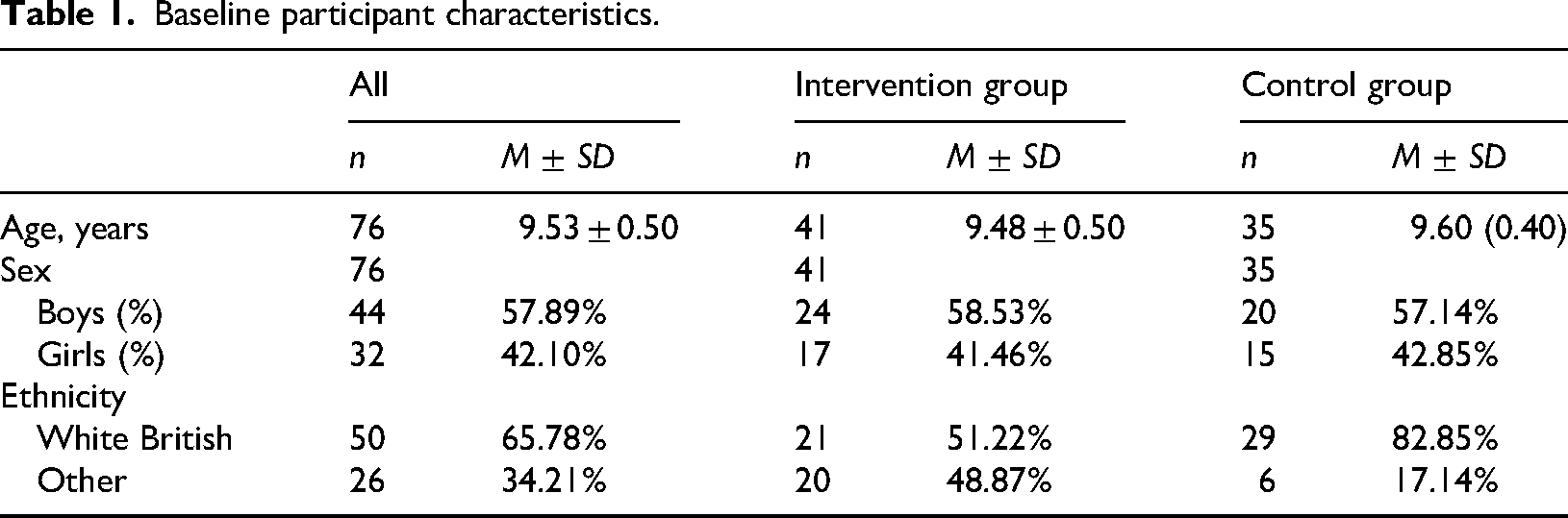
Figure 1 presents the participant flow diagram and Table 1 summarises baseline characteristics. Of 171 children aged 9 to 10 years invited to participate, 76 (Mage = 9.53, SD = 0.5) provided consent and participated in this study. Based on home postcode IMD classification, 90% of the intervention group and 74% of the control group were living in the most deprived decile (IMD decile 1).
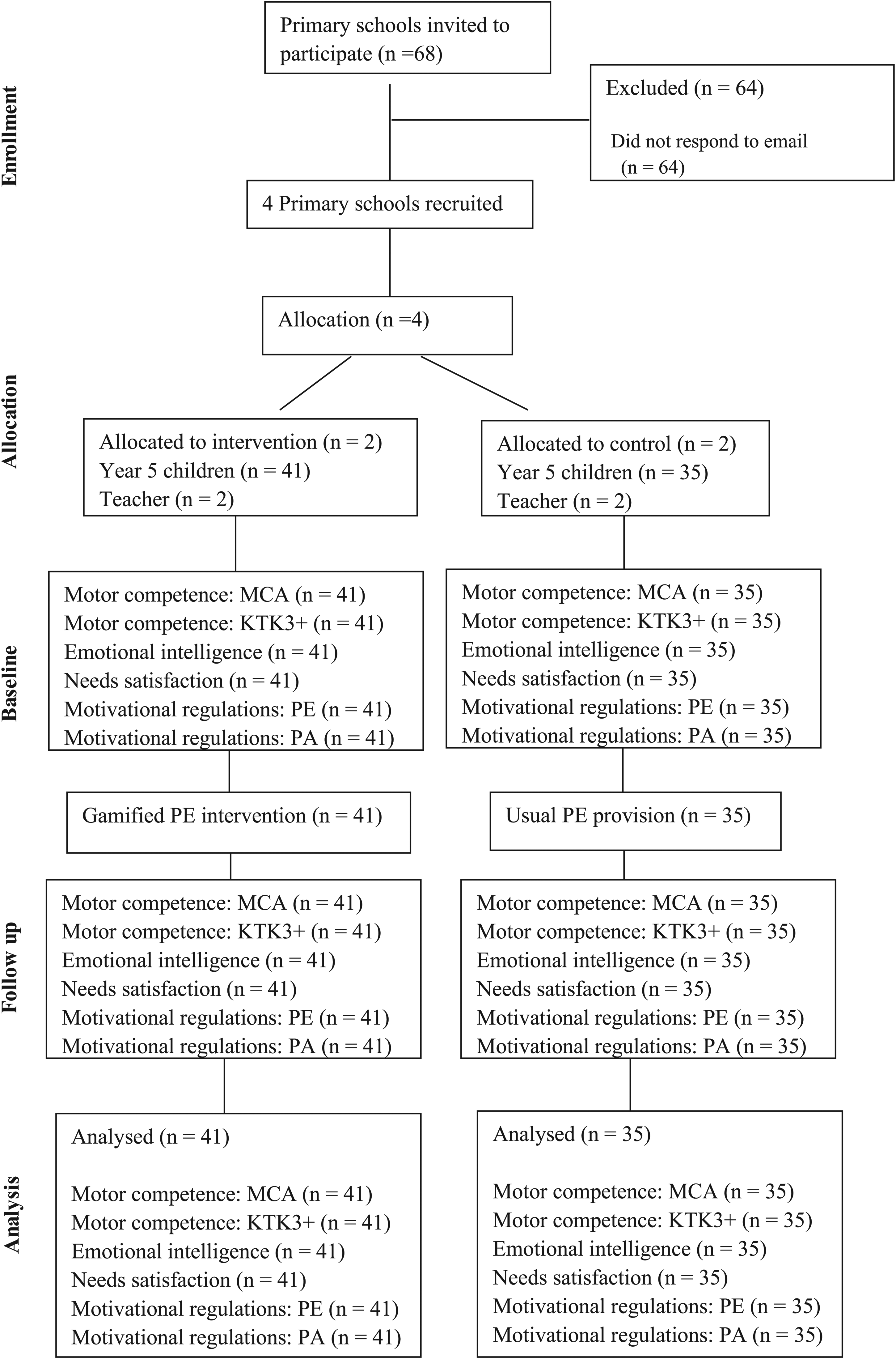
CONSORT flow diagram of participants throughout the study.
Baseline participant characteristics.
Descriptive pre-post values and adjusted between-group estimates for primary and secondary outcomes are presented in Table 2, with estimates adjusted for baseline score, age, and sex. Detailed results for all outcomes, including normative MC data, individual tasks, and domain-level analyses, are provided in Supplemental Material C and are not described in detail here unless they differ from overall patterns.
Descriptive (pre-post) and adjusted between-group differences for primary and secondary outcomes.
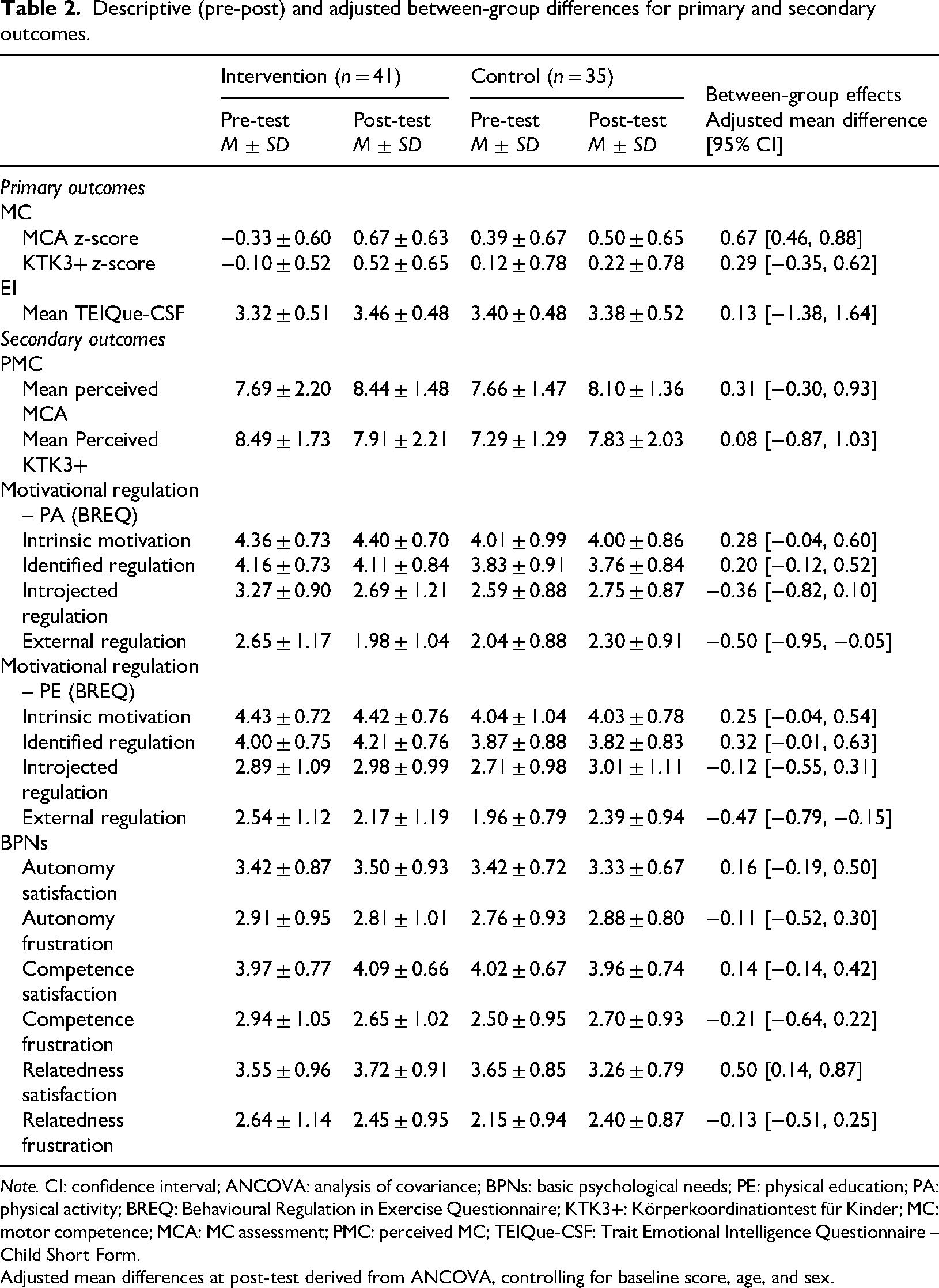
Note. CI: confidence interval; ANCOVA: analysis of covariance; BPNs: basic psychological needs; PE: physical education; PA: physical activity; BREQ: Behavioural Regulation in Exercise Questionnaire; KTK3+: Körperkoordinationtest für Kinder; MC: motor competence; MCA: MC assessment; PMC: perceived MC; TEIQue-CSF: Trait Emotional Intelligence Questionnaire – Child Short Form.
Adjusted mean differences at post-test derived from ANCOVA, controlling for baseline score, age, and sex.
Primary outcomes
Adjusted between-group estimates are reported below. A positive difference in the intervention group relative to the control group was observed for the MCA z-score (Adjusted Mean Difference [AMD] = 0.67, 95% CI: 0.46, 0.88), whereas there were no clear differences for the KTK3+ z-score (AMD = 0.29, 95% CI: −0.35, 0.62). For the MCA, patterns were consistent with greater improvements in object control and stability, with smaller positive differences in locomotor performance. For the KTK3+, estimates for individual tasks were generally small and uncertain, consistent with the overall pattern; however, a positive difference was observed for eye–hand coordination (AMD = 0.75, 95% CI: 0.21, 1.29; see Supplemental Material C, Table A).
Secondary outcomes
Acceptability of the intervention
Intervention fidelity
Delivery logs indicated that all 10 planned lessons were taught across both intervention schools. One school experienced two missed lessons due to timetable disruptions, which were subsequently delivered in the following weeks to ensure the full intervention dose was achieved.
Quantitative acceptability findings: TFA constructs.
Mean acceptability questionnaire scores for children (n = 41) and teachers (n = 2) in the intervention schools are presented in Table 3. Teacher scores were high across most TFA constructs, while children's scores, though generally positive, were slightly lower for coherence and perceived effectiveness.
Mean acceptability questionnaire scores for children and teachers in the intervention schools.
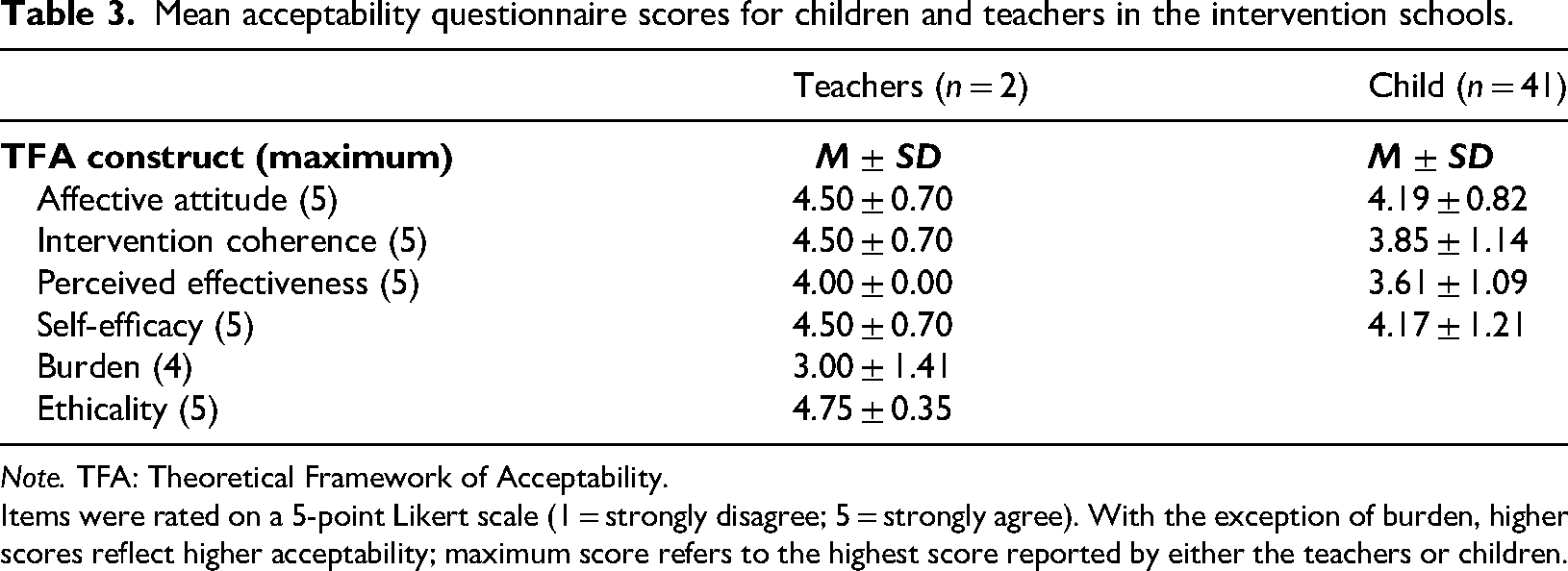
Note. TFA: Theoretical Framework of Acceptability.
Items were rated on a 5-point Likert scale (1 = strongly disagree; 5 = strongly agree). With the exception of burden, higher scores reflect higher acceptability; maximum score refers to the highest score reported by either the teachers or children.
Qualitative acceptability findings
Discussion
This is the first study to investigate the effects of a gamified PE intervention on MC, EI, PMC, BPNs and motivational regulations in PE and PA among 9- to 10-year-old disadvantaged children from areas of high deprivation in the UK. A secondary aim was to assess intervention acceptability beyond the co-development context. Findings suggested that the gamified intervention was associated with improvements in children's MC (particularly as assessed by the MCA), alongside higher relatedness satisfaction and lower external regulation in PE and PA, while evidence for EI and other psychosocial outcomes was less clear. The intervention was acceptable to both teachers and children.
Intervention effects on child-level outcomes
Estimates favoured the intervention group for total MC, particularly for the MCA, whereas evidence for the KTK3+ was less clear. Whilst this pattern is consistent with a potential intervention effect, it should be interpreted cautiously given baseline imbalance, potential regression to the mean, and unmeasured school-level factors (PE provision, facilities, and staffing). Nevertheless, engaging and motivating children are key components of effective MC interventions (Salters and Benson, 2025), and gamification, underpinned by SDT (Ryan et al., 2021), may support this through increased engagement and exposure to varied movement challenges. These findings align with evidence that structured, progressive interventions targeting FMS can improve MC (Salters and Benson, 2025). The intervention differed from the control not only in gamification, but also in the breadth of movement skills targeted; positive effects may therefore reflect a bundled intervention package rather than gamification alone. Future research should employ active control conditions with matched content to isolate specific gamification mechanisms. Overall, given the pilot design, these estimates should be interpreted as preliminary and examined in larger, adequately powered trials.
Based on previous findings (Rice et al., 2025a) and observed improvements in some aspects of MC, improvements in EI were anticipated in line with the EESH (Cairney et al., 2013). The intervention incorporated team-based and collaborative tasks to support communication, cooperation, and emotional regulation, alongside gamified elements such as narrative, shared goals, and choice, which have been linked to BPNs and EI (Vasiou et al., 2024). However, there was no clear evidence of an intervention effect on EI. Estimates were imprecise and should not be interpreted as conclusive evidence regarding the presence or absence of an effect. The TEIQue-CSF has demonstrated robust psychometric properties in children aged 8–12 years (Mavroveli et al., 2008) and sensitivity to change in intervention contexts (Zarian et al., 2021). However, studies reporting improvements in EI have involved considerably greater intervention doses (24 hours) than the present study (10 hours), suggesting insufficient exposure may explain the observed pattern. It is also possible that improvements in MC did not exceed the proposed proficiency barrier required to influence psychosocial outcomes (Cairney et al., 2013). These findings should therefore be interpreted as preliminary signals informing the design of longer-duration trials.
Theoretically, improvements in MC are expected to correspond with increases in PMC due to their moderate positive association (Estevan et al., 2021); however, there was no clear evidence of change in PMC. Many children reported moderate to high PMC at baseline despite MC scores falling within lower normative percentiles (Coppens et al., 2021; Rodrigues et al., 2019), suggesting potential overestimation of PMC and a possible ceiling effect. It is also possible that the PMC measure was insufficiently sensitive to detect short-term change, or that children's perceptions were not closely aligned with the specific tasks assessed. Nonetheless, higher PMC is associated with greater engagement in PE (Estevan et al., 2021), which may be particularly relevant for children from low-SES backgrounds who often have fewer opportunities for PA outside school (Gosselin et al., 2021).
Contrary to previous findings reporting no effect of gamification on external regulation among primary-school children (Sotos-Martínez et al., 2024), this study found lower external regulation in the intervention group at post-test for both PA and PE. This suggests a potential reduction in externally controlled motivation; however, given the pilot and exploratory nature of the study, and the absence of correction for multiple comparisons, this result should be viewed as tentative and requires confirmation in larger, adequately powered trials. Nonetheless, the direction of change is encouraging, as external regulation is associated with maladaptive outcomes such as disengagement and withdrawal from PE (Vasconcellos et al., 2020). Although gamification strategies such as points and badges are often associated with external regulation (Melero-Canas et al., 2021), when aligned with intrinsic goals of the activity, the risk of increasing external regulation can be mitigated (Rice et al., 2025a). External regulation increased in the control group, which may reflect the absence of motivationally supportive pedagogical approaches (Vasconcellos et al., 2020). Small positive differences were also observed for intrinsic motivation in PA and identified regulation in PE; however, these estimates were less certain. The observed pattern for identified regulation may reflect the use of narrative to help children contextualise movement and value skill development. Although these findings are tentative, they are consistent with motivational processes associated with longer-term behaviour change (Hutmacher et al., 2020). Other motivational outcomes showed no clear differences between groups, suggesting limited evidence of broader changes in motivational regulation.
In relation to BPNs, consistent with previous findings (Ahn et al., 2019), a positive difference in relatedness satisfaction was observed in the intervention group, likely reflecting the emphasis on social interaction and teamwork, alongside a narrative that fostered a sense of belonging. Given the role of relatedness in supporting engagement and autonomous motivation (Leisterer and Gramlich, 2021), this finding is noteworthy. No clear differences were observed for autonomy or competence satisfaction, which may reflect ceiling effects given relatively high baseline levels, differing from some previous findings (Sotos-Martinez et al., 2023). To better support these needs, future iterations could incorporate structured choice, self-referenced progress feedback, and differentiated challenge pathways (Fernandez-Rio et al., 2022). Overall, these findings indicate favourable patterns for some motivational outcomes and underlying psychological needs, alongside limited evidence of broader change, highlighting the need for further investigation in larger trials.
Acceptability of the intervention
Intervention acceptability is a key determinant of implementation fidelity and participant engagement (Sekhon et al., 2017). Quantitative findings indicated that teachers rated both emotive (e.g. affective attitude) and cognitive (e.g. perceived effectiveness) TFA constructs as highly acceptable. Children also reported high acceptability for emotive constructs but rated cognitive constructs as only moderately acceptable. Qualitative data supported these findings, with generally positive perceptions of the gamified PE lessons, consistent with previous research (Fernandez-Rio et al., 2020). Children raised only minor issues, such as lesson duration and a desire for more gymnastics content. Teachers felt the lessons aligned with their values and were not overly burdensome; however, they noted challenges related to equipment demands and preparation time, a previously identified barrier to PE delivery (Abdulla et al., 2022). Concerns were also raised about potential resistance from other teachers to adopting a new pedagogical approach, possibly reflecting the participants’ own specialised expertise, as both were qualified sports coaches or PE specialists. While such concerns may relate to generalist teachers’ limited training or pedagogical inertia (Clohessy et al., 2020), this remains speculative. Nonetheless, previous evidence suggests that gamified curricula can be implemented successfully by non-specialist PE teachers with favourable outcomes (Rice et al., 2025a).
For intervention coherence, teachers reported that the gamified PE lessons were straightforward to deliver. However, some children found lessons occasionally unclear, often due to withdrawal for other curriculum subjects such as Mathematics and English. Seven of the 24 children in the focus groups reported missing parts of lessons for this reason, raising concerns about the marginalisation of PE in primary schools (Duncombe et al., 2018). Such interruptions compromise coherence for pupils and raise broader equity issues, particularly in low-SES contexts where children may already have fewer opportunities for movement-rich learning. Protecting PE time and improving scheduling coordination would help ensure that all pupils can participate and benefit across cognitive, affective, and psychomotor domains (Dudley and Burden, 2020). Both teachers and children demonstrated a good understanding of the gamification strategies and movement skills taught, and the lessons were perceived as effective. Some children recognised the transferability of these skills to sport-specific contexts, which is notable given the role of FMS in developing specialised movement patterns (Hulteen et al., 2018). However, others felt the lessons were more effective for peers not involved in sports outside school, raising questions about how family and environmental factors may shape perceptions of competence (Barnett et al., 2022). These factors were not measured in this study and warrant future investigation. Children reported increased PA as a result of enjoying the lessons and engaging with peers – both important facilitators of PA among primary-school-aged children (Nally et al., 2022). Children and teachers expressed confidence in participating and teaching the lessons, respectively. This is noteworthy, as self-efficacy is positively associated with participation and persistence in PE (Bertills et al., 2018) and MC development (Peers et al., 2020). To maximise success, gamified interventions should incorporate strategies that build self-efficacy, such as providing opportunities for mastery through progressive levels and challenges.
Strengths, limitations and future directions
This study provides novel evidence on the use of gamification to support MC in primary PE, alongside a mixed-methods assessment of acceptability. However, several limitations should be considered. The quasi-experimental design limits causal inference, and the absence of randomisation introduces potential selection bias. The small sample size, while appropriate for a pilot study (Bond et al., 2023), limits generalisability and results in imprecise estimates that should be interpreted cautiously. With only four schools, multilevel methods were not feasible, and analyses were conducted at the individual level using ANCOVA as a pragmatic approach; consequently, standard errors may be underestimated and intervention effects overestimated. Baseline imbalance for some outcomes (particularly MC) means that observed improvements may partly reflect regression to the mean. Although ANCOVA adjusts for baseline differences, it cannot fully account for this or for unmeasured school-level confounding. Multiple outcomes were assessed without formal adjustment, consistent with the exploratory design, increasing the potential for chance findings. Differences in delivery context may also limit generalisability, particularly beyond areas of high deprivation. The relatively short intervention duration and low dose (10 weeks) may have been insufficient to detect changes in some outcomes, particularly EI. A further limitation concerns intervention fidelity. Although teacher delivery logs indicated that all planned sessions were completed, these were self-reported and did not capture the extent to which gamification strategies were implemented as intended. Qualitative data suggested good adherence, but the absence of independent observational measures limits the robustness of fidelity assessment. Future research should employ larger, randomised designs and incorporate longer or more intensive interventions, alongside follow-up assessments to examine sustainability. The use of independent, observer-based fidelity measures within process evaluations would strengthen understanding of implementation and mechanisms of effect.
Conclusion
This study provides preliminary evidence that a gamified PE intervention may support improvements in MC and selected motivational outcomes among children from areas of high deprivation. Evidence of change in EI and other psychosocial outcomes was limited, suggesting that longer or more intensive interventions may be required. The intervention was acceptable to both teachers and children, supporting its feasibility for delivery within primary-school settings. Overall, these findings highlight the potential of gamification as a pedagogical approach in PE and support future research using larger, randomised designs with longer follow-up to establish effectiveness, clarify mechanisms, and optimise implementation.
Supplemental Material
sj-docx-1-epe-10.1177_1356336X261463090 - Supplemental material for Effects of a gamified physical education intervention on motor competence and emotional intelligence among disadvantaged primary-school children: A quasi-experimental pilot study
Supplemental material, sj-docx-1-epe-10.1177_1356336X261463090 for Effects of a gamified physical education intervention on motor competence and emotional intelligence among disadvantaged primary-school children: A quasi-experimental pilot study by Jenna Rice, Katie Fitton Davies, Jonathan Foulkes, Ceriann Magill, An De Meester, David Stodden, Matthieu Lenoir and Lawrence Foweather in European Physical Education Review
Supplemental Material
sj-docx-2-epe-10.1177_1356336X261463090 - Supplemental material for Effects of a gamified physical education intervention on motor competence and emotional intelligence among disadvantaged primary-school children: A quasi-experimental pilot study
Supplemental material, sj-docx-2-epe-10.1177_1356336X261463090 for Effects of a gamified physical education intervention on motor competence and emotional intelligence among disadvantaged primary-school children: A quasi-experimental pilot study by Jenna Rice, Katie Fitton Davies, Jonathan Foulkes, Ceriann Magill, An De Meester, David Stodden, Matthieu Lenoir and Lawrence Foweather in European Physical Education Review
Supplemental Material
sj-docx-3-epe-10.1177_1356336X261463090 - Supplemental material for Effects of a gamified physical education intervention on motor competence and emotional intelligence among disadvantaged primary-school children: A quasi-experimental pilot study
Supplemental material, sj-docx-3-epe-10.1177_1356336X261463090 for Effects of a gamified physical education intervention on motor competence and emotional intelligence among disadvantaged primary-school children: A quasi-experimental pilot study by Jenna Rice, Katie Fitton Davies, Jonathan Foulkes, Ceriann Magill, An De Meester, David Stodden, Matthieu Lenoir and Lawrence Foweather in European Physical Education Review
Footnotes

Funding
The authors received no financial support for the research, authorship, and/or publication of this article.
Declaration of conflicting interests
The authors declared no potential conflicts of interest with respect to the research, authorship, and/or publication of this article.
Supplemental material
Supplemental material for this article is available online.
Author biographies
References
Supplementary Material
Please find the following supplemental material available below.
For Open Access articles published under a Creative Commons License, all supplemental material carries the same license as the article it is associated with.
For non-Open Access articles published, all supplemental material carries a non-exclusive license, and permission requests for re-use of supplemental material or any part of supplemental material shall be sent directly to the copyright owner as specified in the copyright notice associated with the article.
