




Abstract
This article reports the findings of differences in tourist preferences for short and long breaks. Cluster analysis is employed to explore specific preferences of tourist clusters taking long or short breaks. Four distinct clusters were found for each type of break, exhibiting distinctive demographic characteristics and activity preferences. Different preferences for short versus long breaks were also found. Assumptions that the same customers prefer the same kind of destination and activity when taking either a short or long break are dispelled. Implications for markets include developing distinct campaigns for short- and long-break tourist segments.
Introduction
Marketers of tourist destinations need to be able to assess how attractive their destination is to target markets in order to ensure a steady stream of tourist visitors. Part of this assessment should include not only the identification of different target markets, but also the identification of the activity preferences of these different market segments. The fact that a tourist might belong to two different market segments should also be considered. For example, the preference for a destination and activities might differ for a tourist depending upon whether they are seeking a short or a long break.
Travel preferences of tourists have received considerable attention in the literature, but the research to date has focused primarily on evaluations of particular destination features and broad travel motivations. Researchers have investigated the desirability of being able to assess various destinations according to a similar set of criteria (Formica and Muzaffer, 2006). However, the models remain broad, which means they must ignore the possibility of differing requirements of tourists at different times or for different holiday purposes, such as long versus short breaks. As such, the notion of a differing set of destination attractiveness features for long versus short breaks is yet to be fully explored.
Such research is timely and informs the recently advocated positioning and targeting strategies for destination branding in an increasingly growing and global market of destination choices for consumers. For example, understanding the characteristics and needs of distinct consumer segments better informs decisions about how to differentiate a destination, as advocated by Daye (2010), and also enables the promotion of a destination through matching unique destination values (Wheeler et al., 2011) with values of unique target markets.
Evidence does exist of differing tourist types exhibiting different needs and behaviour (Plog, 2001). Formica and Muzaffer (2006) also provide examples of ‘resident-oriented’ products and services (such as hospitals and barber shops) used by tourists who extend their stay at a destination, suggesting a blending of needs of longer-term tourists with those of the local population. So it would appear reasonable that there might be different destination attractiveness attributes important to tourists depending upon their length of stay at a destination.
From a marketing perspective, however, destination attractiveness attributes have not been assessed for meeting the needs of these differing types of consumers, most particularly according to the length of stay at the destination. In fact, it remains unknown as to how we might even group tourists into homogeneous market segments to understand what their particular needs for a destination might be, let alone how a destination performs according to the needs of such segments. And yet, from a marketing perspective, identifying and understanding the needs of different target markets are vital for achieving customer satisfaction through meeting expectations. Therefore, it is important, from a marketing perspective, to fully understand the differences in preferences between identified meaningful segments.
The research reported in this article commences with exploratory research to develop a set of attributes by which destinations may be assessed in order to determine the perceived differences between long and short breaks. The identification of specific market segments and sub-segments for both long- and short-break tourists is also investigated, as are the differences between short- and long-term tourists, according to their required needs. The major contribution of this work is the identification of unique cluster segments for the long- and short-break tourist markets.
Literature review
Destination attractiveness
Mayo and Jarvis (1981: 201) define destination attractiveness as ‘the relative importance of individual benefits and the perceived ability of the destination to deliver these individual benefits’. Hence, tourists will evaluate the attractiveness of a destination on the perceived ability of the attributes of a destination to meet their needs (Mayo and Jarvis, 1981). Similarly, Hu and Richie (1993: 25) define destination attractiveness as reflecting ‘feelings, beliefs, and opinions that an individual has about a destination’s perceived ability to provide satisfaction in relation to his or her special vacation needs’. In other words, the definition revolves around the notion that attractiveness of a destination lies in the degree to which a destination meets the needs of the tourist consumer. The level of attractiveness is expected to result in a higher likelihood of being selected as a travel destination (Hu and Richie, 1993) and ultimately greater tourist visitation (Opperman, 1994). Destination attractiveness is therefore an important concept for understanding travel motivations of consumers or consumer destination choice decisions.
Formica (2002) specifies destination attractiveness to be destination-specific, listing a requirement for researchers to create an inventory of local attractions which will be evaluated by both potential and actual tourists to that destination. This viewpoint makes it difficult to use a pre-determined set of destination attractiveness features to model the overall destination attractiveness. This notion also suggests that the determination of an overarching set of destination attractiveness criteria is problematic, if not impossible.
However, there have been a number of previous attempts to determine lists of common and important destination attractiveness features (Gearing et al., 1974; Goodal and Bergsma, 1990; Hou et al., 2005; Hu and Richie, 1993; Kozak and Rimmington, 1998; Laws, 1995; Lew, 1987; Thach and Axinn, 1994).
In the initial list, Gearing et al. (1974) identified five categories of destination attractiveness features; these being natural factors, social factors, historical factors, recreational and shopping facilities, and infrastructure, food and shelter.
Later, Lew (1987) devised a similar list, emulating most of those identified previously by Gearing et al. (1974). Their list included spectacular scenery (i.e. natural factors), historical sites (or factors), amusement parks (similar to recreational facilities) and two broad categories of services and facilities, which encompass shopping facilities and infrastructure, food and shelter. Lew (1987) did not identify a separate social factor, but such a higher-order factor may encompass cultural aspects and attitudes to tourists and tourism generally.
In a thorough investigation of previous literature, Hu and Richie (1993) garnered a preliminary list of 16 destination attractiveness attributes. From this list, they extracted the most important as being similar to those of Gearing et al. (1974) and Lew (1987) previously. Scenery and climate were found as most important, which includes the actual historical and natural factors previously identified by Gearing et al. (1974) and Lew (1987). They identified local people’s attitudes towards tourists as being very important, which is encompassed in Gearing et al.’s ‘social’ factors. The final important factor related specifically to the availability and quality of accommodations.
Goodall and Bergsma (1990) determined a similar set of important features (i.e. attractions, facilities/services, accessibility and image). Their major contribution to developing the destination attractiveness concept was the addition of an economic attractiveness feature, being the consideration of the total cost of experiences related to travelling to the destination. Kozak and Rimmington (1998) also included this economic criteria as one of their important components, specifically identifying ‘value for money’ as the actual criteria utilized by tourists.
Both Laws (1995) and Thach and Axinn (1994) have also included ecology (or environmental management) as an important destination attractiveness feature, which would appear to be an increasingly important feature, given the increasing awareness of consumers generally for protecting the environment as well as the increasing awareness of the damage that tourism does to the environment (Giannecchini, 1993; Huybers and Bennett, 2000; Wurzinger and Johannson, 2008).
The findings from the various literatures related to destination attractiveness features are summarized in Table 1, where the most common features which have been uncovered are listed. Overall, the synthesized list includes six main components: (1) aspects of ‘actual attractions’, which include the nature features of scenery and climate (e.g. a beach destination) as well as man-made attractions such as historical/architectural attractions, theme parks or cultural/sporting events; (2) a service component that includes accommodation, food and so on; (3) a facilities component, including infrastructure, accessibility, transport, shopping; (4) a reputational component that encompasses the overall image of the destination, including attitudes to tourists and tourism, that is, how easy it is to be a tourist at the destination; (5) a social component that also includes how the destination is ‘looked after’ by locals; and (6) an economic component related to the economic attractiveness of the destination in relation to the value for money and/or cost of the holiday. Of course, this component would include the exclusivity of the destination in terms of wanting a ‘high-end’ holiday, and the desirability of high costs and/or five-star luxury would be included in this factor.
Synthesis of previous identifications of destination attractiveness features.

Although we are able to gather an overall list of destination attractiveness features, the literature is yet to address the likely differences between short and long breaks. Hence, the question asked at this point is whether this list would be similar for short and long breaks. This relies on how differently consumers might perceive a short from a long break.
Short and long breaks
There has been an increase in the tourist industry attention towards differentiation between long and short breaks. In recent times, the short break has begun to be perceived separately from the traditional holiday break (i.e. long break). For example, Davies (1990) stresses the importance of research into this more recent growth area of the short break.
There is some disagreement within the travel industry with regard to the definition of a short break. Edgar et al. (1994: 21) defined a short break as ‘hotel packages of one to three nights’. The body of literature related to city breaks (e.g. Dunne et al., 2007; Trew and Cockerell, 2002) is relevant to the concept of the short break, with a city break being defined as ‘a short break to one town or city’ (Trew and Cockerell, 2002: 86). Therefore, the city break would be a subset of the broader short break, which could encompass a break to any destination (city or otherwise), for example, a national park destination or farm stay or a beach. This definition does not, however, inform the length of the short break in order to place a boundary to determine the point at which the break is likely to be classed as longer. Davies (1990) cites a comprehensive working definition for a short break as encompassing a holiday of two to three nights. Similarly, Schmidhauser (1992) cites a short holiday as one to three nights away from home and longer holidays as four or more nights away from home. To encompass the entirety of the length of time measures from previous literature, for this research we define a short break as being one to three nights away from home and a long break as being four or more nights away.
Although the number of people taking short breaks is on the increase, there has been relatively little empirical research investigating the difference in destination attractiveness evaluations between short and long breaks by tourists. However, from the available research, there is some evidence that differences do exist. For example, Smith (1996) found about half of the tourists in their study engage in some sort of activity whilst on short breaks, with the most popular activities being hiking, visiting cultural landmarks and swimming. Further, short breaks are generally more evenly spread throughout the year, whereas longer holidays are more concentrated in the summer months, suggesting differing types of holiday requirements.
In a literature review on the motivations behind short breaks, Beioley (1991) cited a number of reasons for taking short breaks, such as: ‘to get away from it all’; ‘opportunity to relax’; and ‘needed a break’. Other reasons were cited as ‘trigger events’, such as a family celebration, wedding, special offers and using up accrued holidays.
However, Smith (1996) also found that the motivational factors behind short and long breaks were broadly similar for both types of holidays, even though they might engage in different activities once at the chosen tourist destination. It was found that people seeking either short or long breaks are attracted to one or more of the following reasons: facilities for children; things to do if the weather is poor; a good beach; lovely countryside; peace and quiet; lively holiday atmosphere; evening entertainment; ranges of places to eat and drink; good shops; history and culture; and opportunity to pursue sports and hobbies (Smith, 1996: 307).
An Australian study by Huybers (2003a) into factors underlying travel choices with regard to short-break holidays found that destination attractiveness is increased by factors such as ‘lower prices, being moderately busy, having a moderate level of nightlife, being visited during spring/summer, being accessible within two hours’ travel time, and offering a mix of natural and cultural/heritage attractions’ (p. 403). In a subsequent study, Huybers (2003b) investigated factors underlying short-break destination choices with focus group participants from Melbourne, Australia. Options consisted of six Australian short-break destinations. Results found that the quality of amenities and lower levels of crowdedness were important factors underlying choices and, further, ‘the staging of an event or festival increases the probability of Melbourne tourists choosing that destination’ (p. 454).
Pike (2003) conducted a study into short-break destination attractiveness in New Zealand, when holidaying by car. The findings of this study indicated that the most important factors were ‘lots to do’, ‘within a comfortable drive’ (ease of access), ‘the sea/beach’, ‘water sports’, ‘good weather’, ‘not too touristy’, ‘nature/scenery’, ‘fishing’ and ‘close to other destinations’. Although destination-specific, these features relate closely to those synthesized from the literature generally (i.e. in Table 1), such as accessibility and actual attractions, providing evidence of consistency with the research of those specifically interested in destination attractiveness attributes. In a subsequent study (Pike and Ryan, 2004), which included a factor analysis of a number of destination attributes, four dimensions called ‘good life and infrastructure’, ‘getting away from it all’, ‘outdoor play’ and ‘the weather’ were found to be of importance when holidaying in New Zealand. Whilst both of these studies are bounded by the nature of the destination characteristics of New Zealand, there are some general attributes of activity, ease of access and climate featuring prominently as well as the identification of some destination-specific characteristics that would attract someone for a short break related to a specific activity.
Hence, it would seem that whilst there might be an overall set of attributes by which tourist consumers appraise the worthiness of a destination, consumers seeking short-term breaks have specific motivations, destination choices and types of activities which might differ when taking a longer break. For example, in relation to city breaks specifically, Dunne et al. (2007) uncovered a differing set of motivations from longer holidays. Escape, socializing with significant others (e.g. a romantic weekend with a partner), easy access and cost of travel (e.g. cheap flights) were found to be the main drivers of a short break, with relaxing and sun, sand and sea as the main motivators when considering a longer break. These results provide a clear distinction between specific motivations for short and long breaks, for example, active versus relaxation motives (Dunne et al., 2007).
Such results demonstrate the likelihood of tourists utilizing a differing set of destination-specific attractiveness criteria when choosing a short break over a long break. However, marketers do not yet understand, nor are able to identify, the possibility of different market segments enjoying a short or a long break because of a lack of understanding of what these differences might be. In addition, destinations are not yet fully cognizant that they might be more attractive to short-break tourists or long-break tourists, requiring differing types of advertising approaches. And the literature cannot assist as yet with three identified gaps; that is: (1) what destination attractiveness criteria are utilized when choosing a short break as opposed to a long break; (2) whether specific market segments can be identified, who utilize a similar set of destination attractiveness factors; and (3) whether the identified market segments are different for long- and short-term breaks.
In addition to the above, further exploration of the differentiation factors is needed for the identified target segments in terms of: (4) determining any specific activities that might be preferred for each target segment; and (5) identifying specific customer characteristics that might relate to any of the target segments.
The latter two research questions lend themselves to the use of cluster analysis. There is some previous use of cluster analysis in regard to similar research related to consumer travel motivations. Hudson and Richie (2002) conducted a study on consumer behaviour using cluster analysis to determine tourists’ decision-making behaviour. Overall results found that the most important factors that influence travel decisions are quality of accommodation, cost/value for money spent, sense of safe and secure environment, and the variety of activities offered. They identified five clusters called: young urban, active, outdoor; indoor leisure traveller; children-first traveller; fair-weather friends; and older cost-conscious traveller. However, Hudson and Richie’s (2002) research assumes that tourists within each of the identified clusters will utilize the same set of criteria for all holidays, regardless of whether it is a short or long break. Part of the identification of differences between tourists is the recognition that tourists are different in their needs between short and long breaks (Formica and Muzaffer, 2006; Plog, 2001). This research therefore extends the work of Hudson and Richie (2002) by further exploring distinguishable clusters of tourists who may be segmented according to the similarities in their use of destination attractiveness evaluations as well as demographic characteristics.
Methodology
A sequential mixed-method approach was adopted for this research. This was necessary to uncover and explore the most likely destination attractiveness criteria and then to access a large group of typical tourist consumers to determine the existence and characteristics of cluster segments. Even though previous research has identified a consistent set of likely attributes that consumers might use to evaluate the attractiveness of a destination, whether or not this list will hold for short breaks as well as long breaks is unknown. Given that Pike (2003) was able to find enough of a discrepancy between practitioner opinions of what tourists might consider important destination attributes for a short break and the reality of what consumers actually require, the importance of seeking actual consumer input when developing attribute lists for use in subsequent structured surveys is highlighted.
Qualitative research in the form of focus groups was utilized first, assisting in the identification of key destination attractiveness evaluation criteria. This was considered necessary due to the lack of consistency within the existing literature as to a clearly identified set of destination attractiveness criteria. This stage of the research also enabled investigation into any additional destination attractiveness characteristics that might not have been previously identified. The data from the focus groups also informed the construction of the self-administered postal survey that enabled the collection of data from a large group of respondents in order to undertake the main stage of the research, which requires: establishing the importance of each of the identified destination attractiveness criteria to short- and long-term visitors to a destination; ascertaining specific and distinguishable segments of customers according to which criteria they value for assessing the attractiveness of a destination; determining specific holiday activity preferences for each identified target segment; and identifying specific customer characteristics that might relate to any of the identified target segments.
Eight focus groups were conducted in the first stage of the research. Participants were purposively selected from two Australian locations (Gold Coast and Melbourne), thereby drawing on two diverse locations that could be expected to give a broad perspective on different types of short- and long-term breaks. Respondents were recruited and selected based on recent experiences with long- and short-break holidays and discussed the features and activities of each destination that they were attracted to. There were three to seven participants per focus group. Each focus group lasted approximately 60 minutes in duration. One of the researchers acted as the moderator for the focus groups, leading and keeping the discussion on track. Saturation was reached after four focus groups at each location, with no further data and insights being received at that point. The focus groups were digitally recorded for information accuracy and later transcribed and entered into NVivo software for content analysis. As a result of the analysis, two lists of characteristics were compiled, which could assess destinations for attractiveness to visitors for either a short or a long break (Table 2). The focus group results largely agreed with previous research, with the most consistently mentioned destination attractiveness features being comfort, safety, friendliness and relaxation.
Destination attractiveness attributes and activity choices for holidays from focus groups.
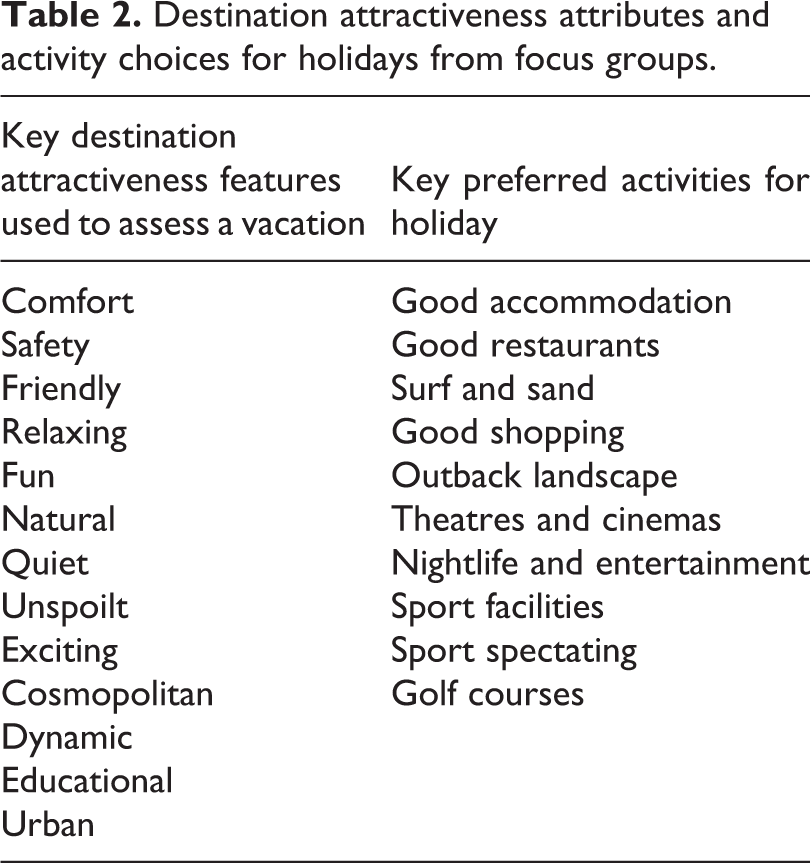
The survey instrument was then developed utilizing the information extracted from the focus groups, that is, the set of attractiveness attributes used to decide on a short- or long-break holiday. Questions relating to the typical types of activities preferred during short and long breaks were also included and demographic details were captured.
The survey was developed as a self-administered postal survey. A pilot survey was undertaken to pre-test the instrument. An Australian sample chosen for the survey administration was considered the pilot test, which followed the same process of respondent selection as the final survey. For the pilot survey, 200 copies of the survey were sent to potential respondents in Canberra, Australia. A systematic random sampling method was applied to select potential respondents. First, ‘seed’ surnames were randomly selected from the Gold Coast telephone directory for each letter of the alphabet. Next, the selected surnames were then entered into the Canberra White Pages online system, and every tenth surname and address was selected until the quota for each letter of the alphabet was obtained and 200 names were generated. Each potential respondent was then sent a package containing a personalized covering letter, a copy of the self-administered survey instrument and a reply-paid envelope. As an incentive to participate, respondents were given the opportunity to win a department store gift voucher worth $100. Hence, a prize entry coupon and a small envelope were also included in the posted material. To ensure the responses remained anonymous, respondents were instructed to place their completed prize entry coupon into the small envelope and then the small envelope into the reply-paid envelope along with the completed questionnaire. A follow-up reminder postcard was sent to potential respondents two weeks later. The pilot test participants were also asked to make specific comments about the questionnaire, including ease of use and understanding of questions. Some small adjustments to the questionnaire were made based on the comments received from the pilot test respondents.
The population of Sydney, Australia, who were listed in the Sydney telephone directory, was chosen as the population for distribution of the final survey. A mailing list of 3000 potential respondents was compiled utilizing the same systematic random sampling method as described for the pilot test. Each potential respondent was sent a package containing a personalized cover letter, a copy of the self-administered questionnaire and a reply-paid envelope. Incentives utilized for this mailing included the opportunity to win a range of prizes such as store cards/vouchers and holiday vouchers. The postcard reminder was mailed to all respondents three weeks later. The post office-redirected returned mail was reposted by selecting new names and addresses using the same sampling method.
A total of 294 completed and useable surveys were returned, providing a response rate of 10%. Although the response rate is low, it does fall within the normal bounds for mail survey research (Cook et al., 2000). As representativeness is considered more important than actual response rate (Krosnick, 1999), considerable effort was placed on ensuring a fully representative sample from the target population through the use of a strict sampling procedure that drew responses from the broadest range of demographic and geographic characteristics possible for this target population. As non-response bias is considered an important assessment with low response rates (Cook et al., 2000), the data set was split into early and late respondents, with independent sample t tests of significance of mean differences calculated for each item. No statistically significant differences were found for responses to any items, thereby discounting major non-response bias (Armstrong and Overton, 1979).
Subsequent analytical techniques implemented included cluster analysis to determine potential target segments as well as ANOVA and cross-tabulation to determine the characteristics of target segments and the preferred activities for target segments.
Two-step cluster analysis was chosen to determine the likely existence of distinguishable target segments according to what the group members were attracted to for short and long breaks, as well as any distinguishing features of each cluster on demographic characteristics. Cluster analysis is a multivariate statistical technique that can be used to group individuals into clusters based on homogeneous characteristics that they possess (Hair et al., 1998), with two-step cluster analysis, the procedure of cluster choice is formed on the basis of categorical and/or continuous data, as in the current research (Norusis, 2010). The ultimate goal is to arrive at clusters of people with homogeneous characteristics, who exhibit small within-cluster (internal) variation but at the same time exhibit large between-cluster (external) variation (Aldenderfer and Blashfield, 1984; Hair et al., 1998). Cluster analysis was deemed most appropriate for this research as it enables the determination of different cluster groups within the sample, ultimately providing the opportunity for marketers of destinations to be able to eventually target particular market segments for similar destination types.
Cluster analysis also offers the opportunity to develop a more concise and understandable description of respondent characteristics. Further, interaction effects between variables might also provide a better picture of segments and their characteristics. For example, exploration of consistent demographic characteristics within cluster groups also offers the opportunity to alleviate confusion about demographics and destination attractiveness preferences. Finally, as seen in the review of the literature, cluster analysis has been utilized previously in relation to destination choice research, with Hudson and Richie (2002) developing clusters of tourist segments according to activity preference for holidays generally.
Results
Analysis commenced with a summary profile of the 294 survey respondents. Most commonly, respondents were female (60%), in a relationship (70%) and having completed high school as their highest qualification (29.3%). They were either employed full time (32%) or retired (28%), do not have dependent children (68%), and earn an income between $75,000 and $150,000 (35%). Most respondents were aged over 40 (64.5%), with an even spread of respondents in the age categories of 40–50 (20% of responses), 50–60 (24.5%) and 60+ (18%). Although the 60+ age category is a little higher than the Australian population as a whole (i.e. 13.6% versus 18%), the sample was otherwise fairly characteristic of the general population (ABS, 2010).
Table 3 provides the list of the destination attractiveness attributes that were extracted from the focus groups and also those extracted from the literature, with a summary of the ratings of importance for each of these attractiveness attributes for both short breaks and long breaks. The most noticeable feature is the similarity in importance placed by consumers when considering either type of holiday. In the order of importance, the five most important attributes for both holiday types were found to be comfort, safety, friendliness, relaxation and fun. Apart from ‘exciting’, which was rated more highly for longer holidays than shorter breaks, all other attractiveness attributes were rated similarly and were in similar positions on the importance ranking.
Attribute importance when evaluating the attractiveness of a destination for a short break or a longer holiday.
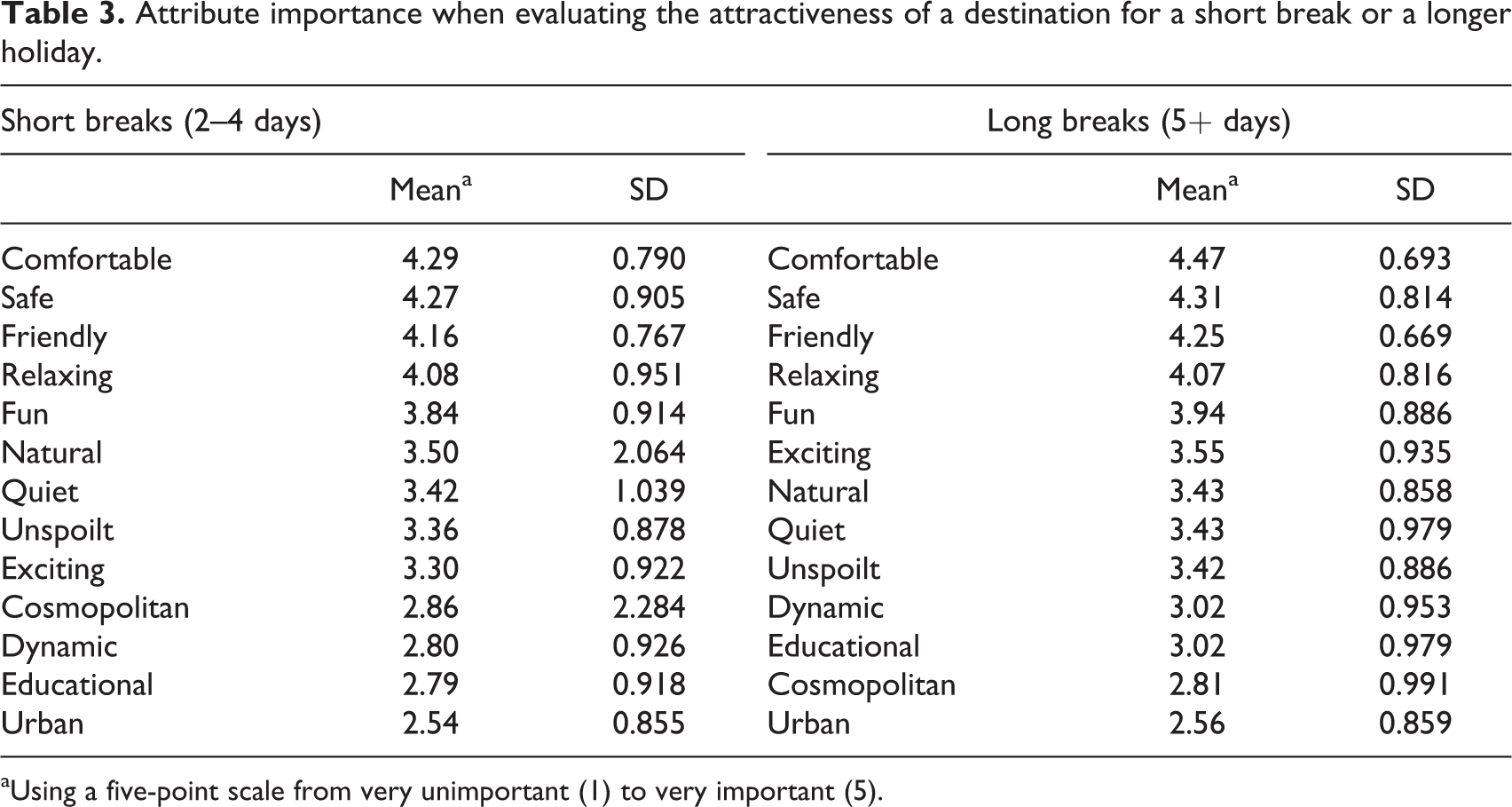
aUsing a five-point scale from very unimportant (1) to very important (5).
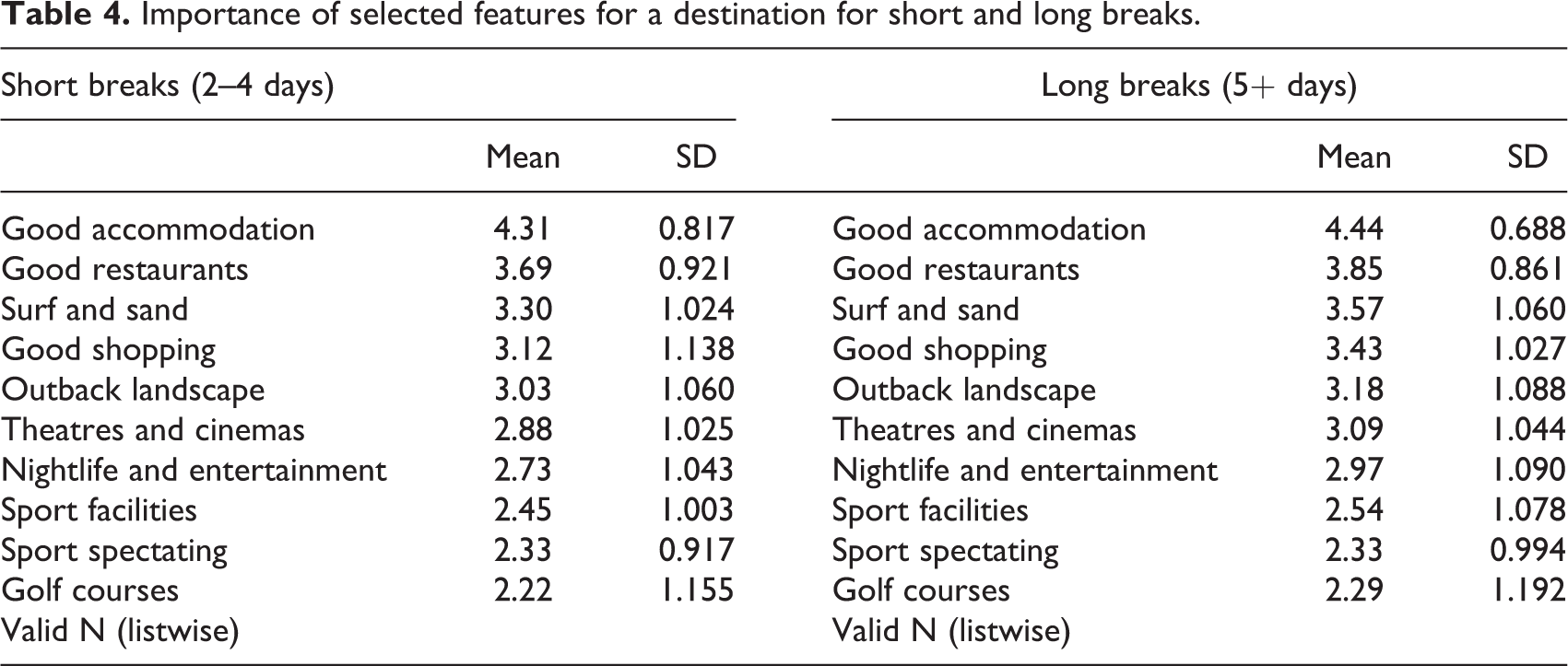
Respondents were also asked to rate the importance of the typical key features of a destination when choosing between a short and a long break. Table 4 reports the findings of the analysis of responses to this question, again indicating that both types of destinations were being assessed according to the same set of criteria. The top five features selected were good accommodation, good restaurants, surf and sand, good shopping, and outback landscape. Hence, for both types of holidays, personal needs are most important followed by the destination itself fulfilling the ideals of the distinct destination experience, that is, either the surf and sun experience or the distinctive landscape experience. Hence, if a destination promises such features, they need to follow up on ensuring that this experience is easily accessible for the tourist, in other words, fulfil the promise. Similarly, this provides insight about the features tourism destination operators need to promote to encourage both the short-term and the long-term holidaymaker.
Importance of selected features for a destination for short and long breaks.
Cluster analysis results
Two cluster analyses were performed; one each for short breaks and long breaks. The variate set for the cluster analysis comprised the fundamental values listed in Table 2. A summary of the results of the cluster analysis for the short breaks is provided in Table 5. Key demographic characteristics identified as significantly differentiating any particular cluster group are also included. It used chi-square analysis of cross-tabulations between clusters and gender, age and income.
Cluster analysis results.

aIndicates most significant important distinguishing characteristic.
A four-cluster solution is found for the short breaks, with a suitable spread of sample respondents within each cluster. The clusters were named according to the most distinguishing destination attributes they valued. The first cluster was named ‘nature’ because this group exhibited the highest importance rating for nature, comfort and quiet and lowest on urban. Gender was the most important distinguishing demographic characteristic of this cluster, with a significant majority (70%) of the respondents in this cluster being male. The members of this cluster also tend to be younger with two divergent income streams (26% earning less than $35,000 and 43% earning more than $75,000). Cluster 2 was named ‘mainstream’ as the respondents within this group generally rated all attributes high. This was the largest cluster (44% of cases). Again, gender was the most significant distinguishing demographic feature of this cluster, with most cases within this cluster being female (68%). The third cluster is ‘relax’, with cases scoring high for relaxation, safety and fun and being the lowest on dynamic environment. The final identified cluster was called `exciting' as this group scored highest for excitement values such as exciting and dynamic and lowest on quiet, relaxation and safety. This group was not significantly distinguished by age, with the largest age category actually being the 50–59 age group. This group comprised slightly more females, although this was not a significant distinguishing feature.
Similarly, for the long breaks, four clusters were extracted. Three of these clusters were named the same as that of the short breaks, because of the similarity in characteristics exhibited in terms of their attribute preferences. Cluster 1 is named `urban', with this group scoring highest for the urban characteristic and also scoring high for cosmopolitan. This group also consisted exclusively of respondents with the highest two income levels. The most significant distinguishing demographic feature of this group however was gender, with 75% of cases being male. The second cluster was named `relax', scoring highest for comfort and quiet and low for dynamic and urban. Cluster 3 was named `mainstream'. Similar to the short breaks, this group scored high for most categories. Seventy-three percent were female with higher incomes ($75,000+). This cluster tended to be younger, however, indicating that younger higher-income females are tending towards desiring and expecting a lot from their long breaks. The final cluster is `nature', with respondents scoring highest for nature. The most significant distinguishing demographic characteristic is gender, with a majority of cases (73%) being female.
Creation of distinguishable clusters then enabled investigation of the types of activities preferred by each cluster group, thereby providing greater information about the specific needs of these target segments. ANOVA was utilized to determine the existence of any significant differences for any particular holiday activity. Table 6 lists the specific activities for which a significant difference was found in terms of the types of activities rated as important for either short-term or long-term breaks.
Activity preference for each cluster group.
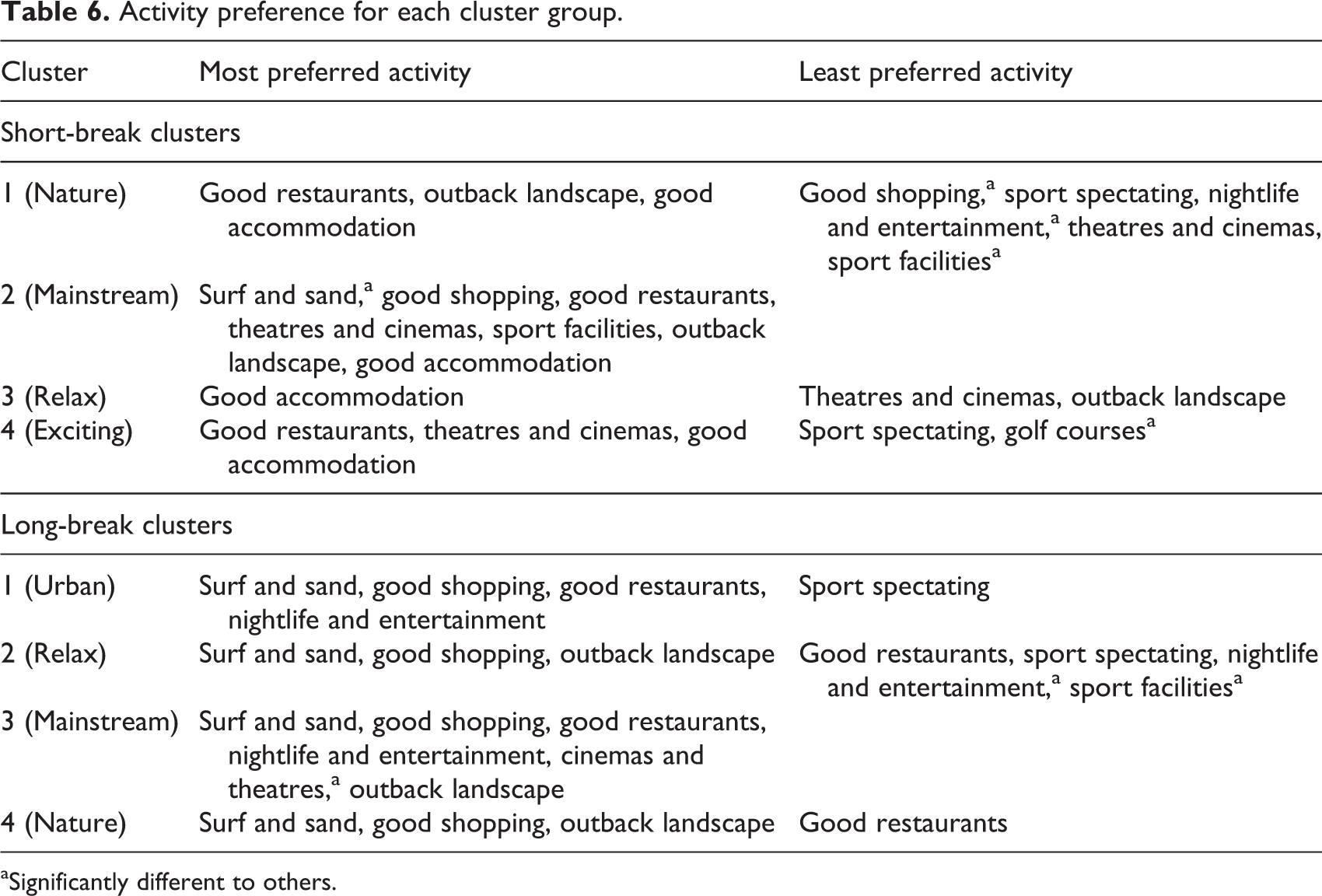
aSignificantly different to others.
The nature cluster for short breaks was most distinguishable by their negative attitude to a range of activities. Their preferences for good shopping, nightlife and entertainment and sport facilities were significantly more negative than that for the other clusters. In other words, those looking for a nature short break are not looking for such activities. The exciting group was also unique in their lack of preference for golf courses, so tourist destinations targeting the young at heart cluster do not need to provide golfing facilities. At the same time, however, this exciting cluster did not seek sport spectating for short breaks. Interestingly, golfing facilities were not rated particularly high by any of the cluster groups. The mainstream cluster was most distinguishable for having significantly greater preference for sun and surf activities than the other clusters, although all clusters indicated a preference for sun and surf. The desire for good restaurants was rated high by all groups, exhibiting particularly very high means by the nature and mainstream clusters. Although good restaurants were preferred slightly less by the relax cluster, this activity was actually rated the most highly by this segment, along with good accommodation, which was also deemed important by all groups.
Among the long breaks, the relax cluster was distinguishable by the disinterest in activities related to both nightlife and entertainment and sport facilities. Hence, it would appear that for a long break, this segment really is looking to do little in the way of physical activity. The mainstream group was distinguishable in having a significantly greater preference for cinemas and theatres than the other clusters. For long-term breaks, surf and sand was high on the lists of preferences for everyone, as was good shopping. Outback landscape was also highly preferred by the relax, mainstream and nature clusters alike. Only the urban cluster indicated a lack of general interest. It was also interesting to note that good restaurants are preferred by urban and mainstream clusters, but preferred less by the relax and nature groups. While this might be expected for the nature segment, it seems surprising for the relax segment. Finally, the mainstream cluster is looking for a very broad range of available activities. There was no activity that they indicated a disinterest in, while scoring high in all activities of their preferences included in the survey.
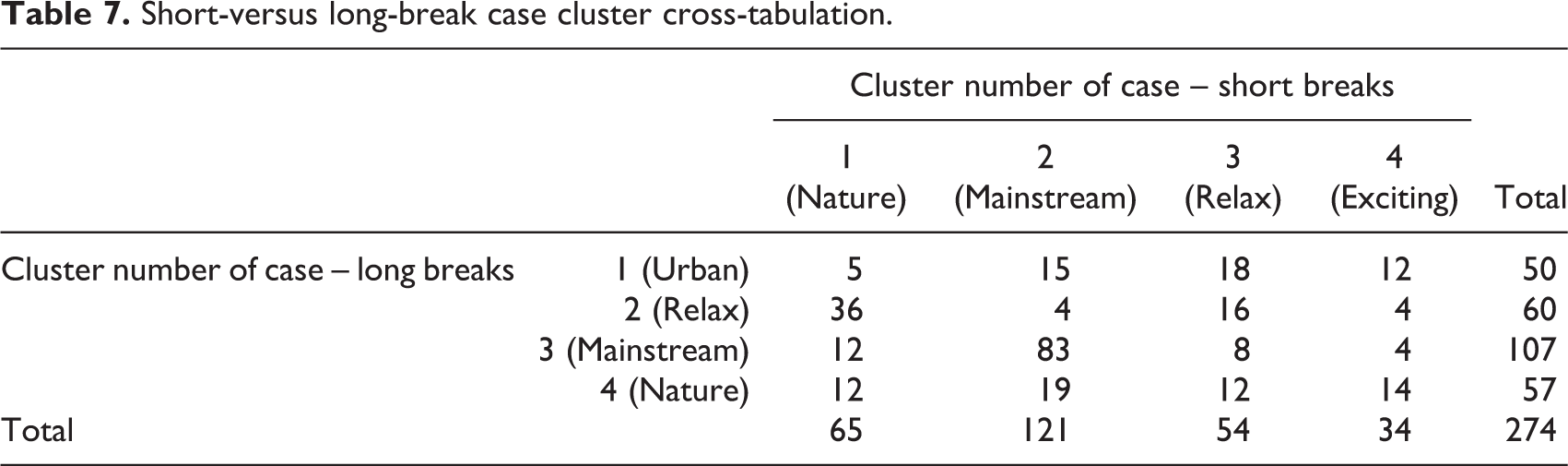
Finally, we explored the likelihood that tourists would fall within the same segments for short and long breaks, using a cross-tabulation of cases for the long- and short-break clusters. Table 7 provides a summary of the results of this analysis. Cross-tabulation provides a number of interesting findings. First, there was similarity between the long and short break groups for the mainstream cluster where 70% of the same cases belonged to both the short- and long-break clusters. The only other similar finding was that 55% of those in the short-break nature cluster also belonged to the long-break relax cluster. This suggests the existence of another group of consumers who explore nature in the short term but have a preference for relaxation when breaking for a longer time.
Short-versus long-break case cluster cross-tabulation.
Discussion
The initial aim of the article was to create a comprehensive list of destination attractiveness features that the tourists will utilize to assess the attractiveness of a destination in both short- and long-term vacations. A list of desirable destination features was also developed in a similar manner, in order to explore the common and important feature and activity requirements in short- and long-term vacations. Although there are few previous comparable academic studies, the results in Table 2 appear close to the English Tourist Board study (Smith, 1996), which found broadly similar motivational factors behind short and long breaks.
In Table 5, the cluster analysis results distinguishing between short and long breaks are pioneering, without precedence in the literature. Each type of break duration has a dominant mainstream cluster, representing about 40% of vacationers. All the destination attributes are important for the mainstream cluster. One could say that this segment wants it all, with serious attention to all attributes. This is a very demanding segment that would be hard to please by even the best of destinations. However, the demanding nature of the segment is exacerbated by the peculiar cocktail of vacation needs demanded by this segment – bringing together what seem apparent contradictions: excitement versus relaxation; risk versus safety; urban versus nature. Therefore, not only does this segment want it all, they want a lot of what seem to be opposing needs. In practice, well-endowed destinations can meet such diverse requirements; for example, by enabling vacationers to relax on the beach during the day and in the nightclub at night.
An important finding of the research is that both short-break and long-break destinations should be able to meet the needs of the mainstream segment. In particular, short-break-oriented destinations cannot assume that the dominant segment would be satisfied simply, say, with a short, sharp and dynamic shopping spree or attending a major event. The major (mainstream) segment wants a balanced vacation, combining excitement and relaxation and so on, even if it is just a short break. We could even term this a yin and yang vacation experience, though our context in the current study is certainly Western.
Returning to the Table 5 results, it also seems that the other three clusters are broadly similar across short and long breaks. Relaxation and nature are similarly named across the two breaks, while urban (long-break segment) and exciting (short-break segment) have some similarity. Bringing in the Table 6 vacation activities, it is clear that there are a number of differences between, say, the relaxation short-break and the relaxation long-break clusters. Accommodation and restaurants are more important in the former and shopping in the latter. Similarly, outback landscape differs markedly in preferences across the two break types. Thus, despite a similarly named segment, there seem to be both major and minor differences in the preferred vacation activities of the same-named segments. Similar differences were found between the two nature segments. Shopping is important for the nature long-term segment but not for the nature short-term segment; and the reverse for restaurants between the two nature segments.
More strikingly, differences arise between the same-named segments across short- and long-break vacations when we drill down to the demographic composition of each segment. For example, nature as a short-break segment is male-dominated, while nature as a long-break segment is female-dominated. Vacationers do not necessarily have the same preferences spread across short and long breaks. Table 7 illustrates this phenomenon. The mainstream segment is the main exception to this rule, though even here only 70% of the cases apply the same type to both short and long breaks.
The norm is for vacationers to switch their type (package of needs and activities) between short- and long-term breaks. There seem to be some interesting patterns in the switching. For example, high-income, middle-aged males prefer an urban long break with good shopping, restaurants, nightlife and entertainment, but a relaxation-based short break with good restaurants and accommodation, but minimal on most other things (including theatres and outback). The short-term component for this demographic seems to be essentially ‘escapism’ from a busy lifestyle. Perhaps they are the time-poor, needing to relax short-term, but cannot afford the time for a long vacation. The long-term component is more demanding, with some selectivity in what activities to ‘invest’ in a vacation.
As another example of switching, the female-dominated nature long-term segment, with more frugal requirements, switches in part to the more demanding mainstream long-term segment. Further, the relaxation long-term segment switches in part to the nature short-term segment. The two segments are not radically different, except that nature now becomes an overwhelming component, adding to comfort and quiet.
A major contribution of the study is the systematic comparison and contrast of the motivations and preferred activities between short- and long-break vacations. Superficially, the same sort of attributes seems relevant to both types of vacation. However, more detailed analysis reveals both subtle and major differences between short and long breaks. Identification of four distinct clusters in each type of vacation is another major contribution of the study. Factor analysis makes attributes the unit of analysis, whereas cluster analysis makes people (tourists) the unit of analysis. Using people as the unit emphasized, the study is able to demonstrate that about half of the sample has different motivations and activity preferences when contemplating either a short break or a long break. This is a third major contribution of the study.
Practical implications
Because of the differences found between the view of a destination as either a long- or short-term break, the first major implication for the vacation industry in a particular city is to appreciate whether their particular destination is primarily a short- or long-break destination or clearly a mixed-break destination. This then will assist to determine the approach taken to promoting the destination and activities that will be likely pursued by visitors. For example, many large cities, such as New York, London, Barcelona or Melbourne, could be promoted as either a short or long break and the needs of both groups of visitors would need to be considered. However, for a destination such as sand and water resorts in Thailand, Spain or Australia, the target market might more likely be a long-break destination, which would require the development of an appropriate strategy targeting the needs of those wanting a long break.
The second step for businesses in a destination is to decide which segment or segments to target. Ecotourism providers would likely focus on the nature segment. Large hotels might focus on the mainstream segment because they would have the resources to meet the demanding needs of that segment. Notwithstanding, niche luxury hotels catering to the affluent urban segment need to appreciate that this segment wants a cosmopolitan, comfortable, exciting and friendly vacation but with some selectivity of activities. The results suggest that it would not be a good idea to run special promotions to attract alternative segments such as sports fans. Smaller operators might focus on the relaxation segment, with simpler and less costly needs.
The third step is for vacation operators to better understand their targeted segment. For example, it may not be apparent to ecotourist (nature) operators that males prefer shorter breaks than do women for such vacations. The same operators probably already appreciate that both very low- and very high-income earners (bimodal) opt for such vacations. The low-income earners emphasize backpacking, while additionally there seem to be many upmarket, ecotourist resorts that emphasize good accommodation and good restaurants (Table 6). Recall also our earlier point that niche luxury hotels focusing on the urban segment may need to de-emphasize certain activities. Also recall another point that the mainstream segment is demanding and requires a very diverse, pulsing between high and low energy, vacation. Such requirements apply to both long- and short-term breaks. For example, operators in large (short-break) cities cannot simply rely on focusing on just theatres or major sports events; supplementation or access to more relaxing components, like parks or markets, is needed. Seeing a musical in New York city is not enough, per se, to satisfy the needs of a short-break visitor. Tourism authorities also have a role to play in meeting the diverse needs of the mainstream segment, in particular.
Limitations and future research
The limitations of this research relate to the sample, sample size and available set of destination attractiveness features. Being an Australian study holds limitations for the generalizability at this stage. This means the identified list of destination attractiveness features likely relates to the expectations of Australian destinations as well as the types of features attractive to the Australian psyche. It is likely that other cultures and climatic regions would see either an expanded or a new set of destination attractiveness features. For example, Australians mostly enjoy good weather at most vacation destinations, so the weather did not tend to feature highly in the minds of participants when considering the important destination attractiveness features. This might be different in Europe, where for some weather-reliant destinations, weather guarantees are provided (Hudson, 1998). This is currently unheard of in Australia. However, given the more recent extreme weather patterns experienced even at Australian destinations, and with the likelihood of these occurring more frequently, it is likely that weather could become an important destination attractiveness feature in the future. Therefore, although weather did not feature as a distinguishing feature of importance for the current study, this attribute is worthy of future examination, as it is deemed to be of importance (Matzarakis, 2006). An additional aspect that might distinguish between the long and short breaks is the spatial attributes. Short breaks are often confined to a restricted geographic region, whereas longer breaks provide more exploration opportunities. This distinction is worthy of future exploration, as is the extent to which vacationers are influenced by the range of travel products that are available. In a country like Australia, international destinations may be physically closer than domestic short-break destinations and the provision and marketing of the travel product may affect the desired range of attributes.
Given the pioneering nature of the current study, it is important to replicate the study in other countries. Are the same four segments at work in other countries? Are the same elements contrasting short and long breaks in other countries? What happens in countries that institutionalize short and long vacations, such as by institutionalizing three-day and seven-day public holidays? Do their expectations differ for short and long breaks from the results found here in relation to expectations of the destination and its attributes? Will the clusters be the same, or would there be greater homogeneity amongst the population and less likelihood of distinguishable clusters?
There is a desperate shortage of research focusing on the contrast between short and long breaks, so almost anything that complements the current study would also be valuable. This was indeed one of the aims of the current study, that is, to stimulate research covering short or long breaks explicitly. Therefore, we commend further research exploring the differences and similarities between these two different types of vacation.
