



Abstract
In December 2010, Tourism Australia and Tourism New South Wales (respectively, Australia’s national and Australia’s largest state tourism promotion agencies) entered into an agreement with US talk show host Oprah Winfrey (or Oprah) for Ms Winfrey to undertake a celebrity endorsement tourism marketing campaign for Australia. In executing this campaign, Oprah and 300 of what she called her ‘Ultimate Australia Adventure’ viewers visited iconic and less well-known tourism attractions around Australia. These visits were filmed and later broadcast as four episodes of the Oprah Winfrey Show in the United States, Australia, and many other countries during January 2011. Longitudinal studies of subsequent visitation (especially from the United States) showed a delayed but significant surge in tourists, leading to Australian tourism authorities to mark the campaign a success. While celebrity endorsement has commonly been discussed in a marketing context, little attention has been given to celebrity endorsement in a tourism context (Glover (2009) Celebrity endorsement in tourism advertising: effects on destination image. Journal of Hospitality and Tourism Management 61(1): 16–23). This article investigates this issue, in particular, focussing on a close analysis of the content of the broadcasts to explore why the approach chosen for the campaign was successful. Results indicated that Oprah’s celebrity endorsement of Australia positioned the Australian brand effectively. Oprah’s ‘brand image’ had significant value as a celebrity endorser and that Oprah had strong appeal in these roles to the Tourism Australia target market.
Introduction
In December 2010, Oprah Winfrey took 300 of her ‘Ultimate Australian Adventure’ viewers on vacation to Australia. The trip was filmed and edited into more than 4 h of ‘dream come true’ television (TV), broadcast in four episodes, about Australia (McEvoy, 2010). This exercise, costing $3.5 million AUD, was funded by Tourism Australia and the New South Wales State Government. Oprah Winfrey’s ‘power’ as a celebrity endorser has been studied previously; for example, Oprah selecting a book for her book club can increase sales by up to US$2.5 million (Trachtenberg, 2002).
Since the episodes were broadcast, the researchers have tracked the outcomes of the campaign, which has been deemed a success by Australian tourism promotion agencies and stakeholders. In light of this success, the researchers then went back to the original four episodes to explore the nature of celebrity endorsement. In particular, this exploratory study aimed to investigate three issues: Oprah’s celebrity endorsement of Australia: sales-oriented promotion or longer term brand positioning? Oprah’s ‘brand image’ and value as a celebrity endorser; and Oprah’s appeal to the Tourism Australia target market.
This article will firstly provide an overview of the campaign and its outcomes so far. The study then reviews the literature around the Oprah Winfrey show and celebrity endorsement generally. A detailed content analysis of the episodes filmed in Australia using a matrix developed by the researchers is followed by a discussion of the results. Finally, conclusions and implications for further research will be provided.
Background
Tourism and tourism marketing in Australia
Tourism is a major industry sector in Australia. In 2010 (at the time of the Oprah exercise), it was worth A$92 billion in spending, including A$26 billion in international tourism receipts (McEvoy, 2010); it also employed almost 8% of Australians (908,000 people) directly and indirectly (Tourism Research Australia, 2013). In 2010, Tourism Australia had launched a new promotional campaign – ‘There’s Nothing Like Australia’ – aimed at ‘demonstrating what’s different about Australia and [bringing] the Australian personality to life’ (McEvoy, 2010: 1). The new campaign had already shown success in increasing visitor numbers but as the head of Tourism Australia said at the time: … staying top of mind, being the destination of choice is a constant battle. There are more than 200 countries with national tourism organisations trying to convince these same consumers that they have something to offer. How do you shout above this noise? (McEvoy, 2010: 1)
Based on a market segmentation study, focus groups and motivation research, Tourism Australia defined the profile of their ideal visitor, the ‘experience seeker’ – an experienced, adventurous, international traveller, seeking a variety of experiences. Experience seekers tend to have a higher than average household income, are tertiary educated and avid users of technology. Experience seekers tend to make up 30–50% of long-haul outbound travellers from key countries (Tourism Australia, 2013a). Within a US context, experience seekers travel for self-esteem, accomplishment and an enriched life rather than peace of mind, personal happiness and freedom/escape (Tourism Australia, 2013b).
Oprah’s ultimate Australia adventure campaign
Tourism Australia’s aim was to use the power of Oprah’s celebrity endorsement (and accompanying media interest in the United States and elsewhere), as the then head of Tourism Australia noted, ‘to cut through, to … gain attention so that people will best understand that there really is nothing like Australia’ (McEvoy, 2010: 1). Oprah’s show was especially attractive in this sense because of the perceived power of Oprah’s interest in and endorsement of Australia as a tourism destination, the demographics of Oprah’s television audience (women aged 25–54 with above average incomes) and women’s roles as ‘holiday decision-makers’ (McEvoy, 2010). The primary focus was the United States, but benefits were anticipated from the promotion in other countries.
Campaign outcomes
There were significant perceived benefits from the first announcement of the campaign. Before the shows began filming, the estimated value of promotional coverage was in excess of A$17 million, and there had been more than 12,000 media stories written and broadcast in Australia alone about the series (McEvoy, 2010). According to John Brown, a former Australian Tourism Minister, ‘You couldn’t possibly quantify the success that you’re going to get from this. The publicity that Oprah will bring to Australia, all around the world, is something you couldn’t buy’ (Jensen, 2010: 5).
In terms of visitation, there was acceptance that visitor numbers could take considerable time to change. As Tourism Australia states, ‘the Oprah effect was never going to be an instant phenomenon and we believe the full impact will be seen over many years to come’ (McEvoy, cited in Houston and Vedelaog, 2011). McEvoy stated at a conference ‘I think all of (Winfrey’s) impact comes from now. I think we are going to wait three years to see the (full) impact and in five to seven years you’ll still see it’ (McEvoy, cited in Sinclair, 2011).
US tourism operators reported a substantial increase in inquiries about Australia after Oprah’s visit. Qantas reported a 250% rise in website traffic, in addition to an increase in phone calls. A 33% rise in visits to the website www.sydney.com was also reported (Anon, 2011). Tourism from the United States to Queensland, Australia, increased in the 2 months after the episodes were filmed (Ironside, 2011), and whilst those in Tourism Queensland believed in 2011 that it was too early to attribute the increase to the Oprah episodes, they stated that there was a possibility that it has had already made an impact (Ironside, 2011). Some media reports have included statements from tourists indicating that Oprah definitely impacted on their decision to visit Australia (Barlass, 2011).
Whilst travel data are not a direct representation of the results from Oprah’s visit to Australia, trends are indicating an increase in visitor numbers from the United States, with as anticipated a lag time of about 3 years, as shown in Table 1 subsequently.
United States’ visitor arrivals in Australia.
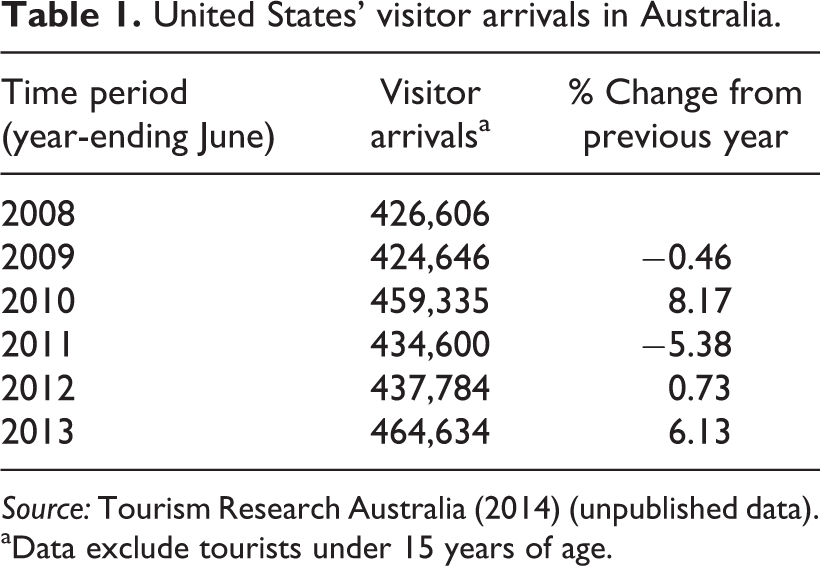
Source: Tourism Research Australia (2014) (unpublished data).
aData exclude tourists under 15 years of age.
Despite the recent increase in visitor numbers, media coverage of the visit has been quite negative, based on the cost of the visit and the Australian stereotypes reinforced. For example, one newspaper article quoted a tourism executive who stated ‘(The Oprah visit) reinforced the old stereotype of tropical beaches, koalas and the Harbour Bridge … Isn’t it time we came up with something a bit more sophisticated?’ (cited in Houston and Vedelago, 2011: 1). More recently, news stories have highlighted the increase in visitor numbers from the United States, linking the increase back to Oprah’s visit (see, e.g. Saurine, 2012, 2013). Figure 1 provides a graphical representation of visitor numbers from the United States.
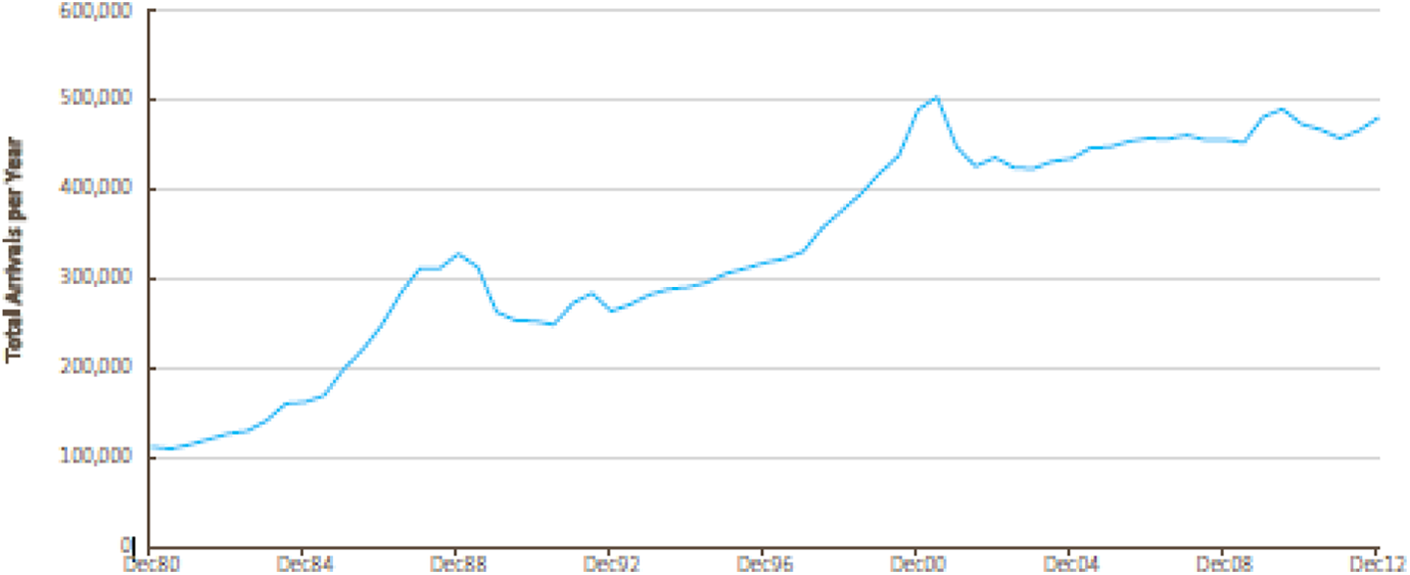
Arrival trends from the United States – visitation United States into Australia 1980–2012. Source: Tourism Australia (2013c).
Figure 1 indicates the increase in visitor numbers overall from the United States. Although visitor numbers peaked around 2000 (at the time of the 2000 Sydney Olympics), they have since increased again over recent years. This increase appears evident since the Oprah visit to Australia; however, analysis of the figure indicates that this upward trend was occurring prior to the Oprah visit to Australia.
Literature review: Celebrity endorsement and tourism marketing
Having provided background on the campaign and its outcomes, this section surveys the literature around celebrity endorsement and tourism marketing.
The main way tourism marketers influence decision-making is to position the image of the destination through the use of promotional literature, the opinions of others and the general media (Echtner and Brent Ritchie, 1991). Image plays a major role in tourism marketing (Bolan and Williams, 2008), and films have been found to be useful for building a destination’s brand image (Bolan and Williams, 2008; Grihault, 2007).
Theory on destination branding emerged in the late 1990s with conceptual papers and the first book on the topic in 2002 (Pike, 2008). Destination branding is quite complex (Wheeler, 2008), particularly due to the multidimensional nature of the brands (Morgan et al., 2004), with different places, attractions and sub-brands (Wheeler, 2008). Promoting ‘Australia’ therefore is more complicated than it may appear because of the different types of locations and activities within the country and because of the varying expectations of tourists. Whilst an organization can promote the brand of Australia, it does not necessarily assist tourists to make decisions about where to travel.
There are three major ways for a celebrity to endorse a destination – through media coverage of a celebrity at a destination; through TV travel shows and through celebrity endorsement in advertising (Glover, 2009). It is important for the tourist’s self-image to relate to the celebrity’s image and the image of the destination (Glover, 2009). For example, whilst Oprah and Australia may be compatible, viewers are unlikely to be affected by the promotional campaign if they do not feel a connection to Oprah and/or Australia that matches their self-image. This is reinforced by literature which suggests that it is essential to consider the target market in all promotional campaigns (Crockett and Wood, 1999). Marketers are able to differentiate their offering from competitors through the use of their brand (Rowley, 1997). A ‘brand’ can be a name used to imply a particular image (Keller and Lehmann, 2006; Rowley, 1997) but also acts as a means for consumers to express themselves (Krishnan and Hartline, 2001).
Service intangibility means that branding in services is particularly important (Hermansson and Larsson, 2005; Krishnan, and Hartline, 2001); however, literature addressing the development of a service brand is relatively limited with researchers focusing instead on service delivery (Bitner et al., 1994; Dall’Olmo Riley and de Chernatony, 2000). Having a celebrity to endorse a destination could increase the tangible cues of the brand (in this case, Australia) as the consumer links aspects of the celebrity’s image to the destination.
Celebrity endorsement
In promotion, celebrity endorsement is commonly used (Pringle, 2004) and celebrities have been used to promote tourism destinations (Glover, 2009). A promotional message by a celebrity both breaks through advertising clutter (Magini et al., 2008) and attracts media attention.
The role of the celebrity includes self-promotion, appearing in public and selling commodities (Brockington, 2008). Special attention is given to celebrities because of both their different lifestyles and the ability of fans to connect with them (Gamson, 2001). This creates a fantasy of ‘upward mobility and choice in social conditions where standardization, monotony and routine prevail’ (Rojek, 2001: 33). For many people, therefore, celebrities provide a means of escapism and for some, the hope that this fantasy could become a reality for them (Brockington, 2008). Oprah Winfrey’s ‘Rags to Riches’ story makes Oprah seem even more believable; that is, she is someone the viewers can aspire to become. Furthermore, because of their apparent lack of agenda, celebrities such as Oprah are trusted by the public more so than politicians (see, e.g. Rose, 2006) making them ideal candidates for celebrity endorsement. Research suggests that the use of a celebrity endorsement can contribute to higher product evaluations (Dean and Biswas, 2001) and increased financial returns (Erdogan et al., 2001); however, this is more likely when consumers believe the celebrity genuinely likes and supports the product (Atkin and Block, 1983). In comparison, using an inappropriate celebrity could have a negative effect on sales and even a long-lasting negative brand image (Magini et al., 2008). Association between the brand and celebrity can create an ‘associative link’ between the two (Klein, 1991), making an advertisement more memorable (Friedman and Friedman, 1979) and improve in the recognition of the brand (Petty et al., 1983) or negatively impact on the brand perception (Magini et al., 2008). In advertising, celebrities are known to capture the audience’s attention (Misra and Beatty, 1990) and enhance memory of the brand (Agrawal and Kamakura, 1995), often contributing towards a positive perception of the product or brand (Misra and Beatty, 1990).
According to research, certain attributes are more likely to contribute towards an effective celebrity endorser. These attributes are trustworthiness, expertise, match of product images and values to celebrity’s images and values, celebrity’s genuine support and, finally, when consumers perceive the celebrity to be part of their reference group (Magini et al., 2008). Although a great deal of literature exists on celebrity endorsement, very few researchers consider celebrity endorsement in tourism (Glover, 2009). This article seeks to make a contribution towards this gap by exploring one specific celebrity endorsing one particular destination. Although secondary data exist, providing a review of tourism figures, it is important to consider how Australia was positioned during the episodes. The study conducted, therefore, reviews each of the episodes.
Methodology
Content analysis
This section focuses on the analysis of the broadcast Oprah episodes.
Content analysis was deemed to be the most appropriate tool for analysing the episodes. Issues with credibility and transferability can exist through qualitative content analysis; however, by implementing particular research considerations in the collection of data, these issues can be minimized (Graneheim and Lundman, 2004). Given limited analysis of the episodes was available in the public domain, the authors collaborated to develop a matrix of items (see Figure 2) to address, based on watching the episodes and the literature review.

Content analysis matrix.
As will be seen, the matrix identified key areas for observation such as Australian imagery (including wildlife, buildings and destinations), Australian ‘slang’, celebrities, promotion of products and key quotes. Quotes could include Oprah recommending people come to Australia (e.g. ‘you must come to Australia!’) or the audience members discussing why this was the trip of a lifetime.
Two researchers viewed the episodes together and used the matrix to record observations.
At the end of each episode, the researchers compared their observations, recording commonalities and also identifying observations that only one researcher made. This gave the researchers more detailed information on major (those which were observed by both researchers) and more minor (one researcher only) aspects. A third researcher reviewed the observations without watching the episodes to identify any unusual observations. This provided the researchers with an objective analysis of the observations. The data were then transcribed into a word processing file and further analysed by the team, before the findings were discussed in the context of this article.
Results
The content analysis revealed many positive comments and quotes about Australia.
Australian language
Peculiarly Australian language, perhaps better labelled slang, was utilized regularly in the shows by both Oprah and her American guests, and Australians the guests were interacting with – see Table 2.
Australian language or ‘slang’.
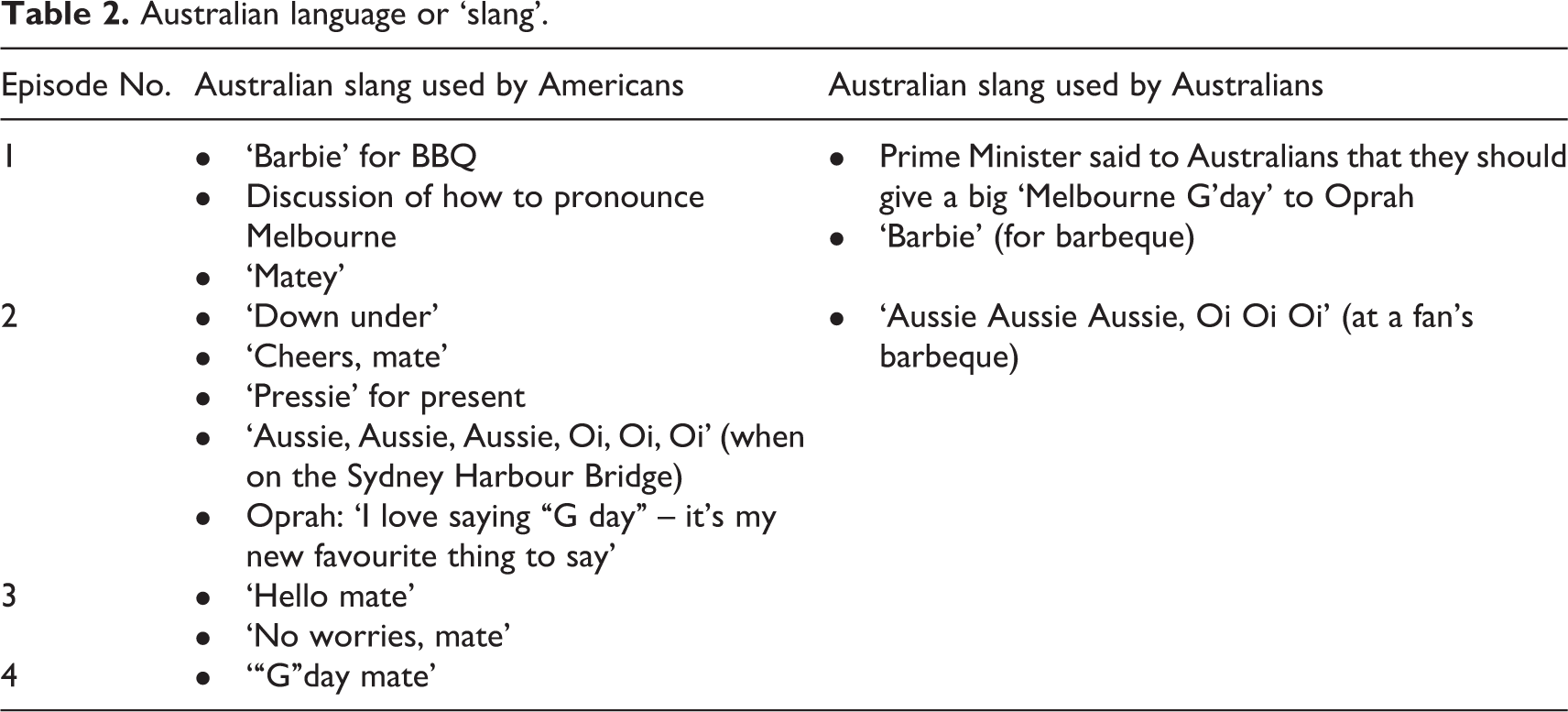
As can be seen in Table 2, Oprah enjoyed using Australian colloquiums to discuss common words, such as ‘pressie’ for present and ‘barbie’ for a barbeque. Her ‘new favourite thing to say’ was ‘G’day’ and Oprah used it throughout the episodes. Her use of such language subtly promoted Australia as being both similar to, but also different to, the United States. Her enthusiastic adoption of this idiom suggests she found it endearing and fun.
Images
In addition to Australian slang, Australian imagery was utilized extensively in the episodes. Many images on the episodes featured pictures of physical landmarks and also well-recognized buildings and architecture. Imagery of typical Australian symbols such as animals (koalas and kangaroos), and food were also well utilized. Table 3 indicates the episodes, which demonstrated various landmarks and Australian imagery.
Australian landmarks and imagery.
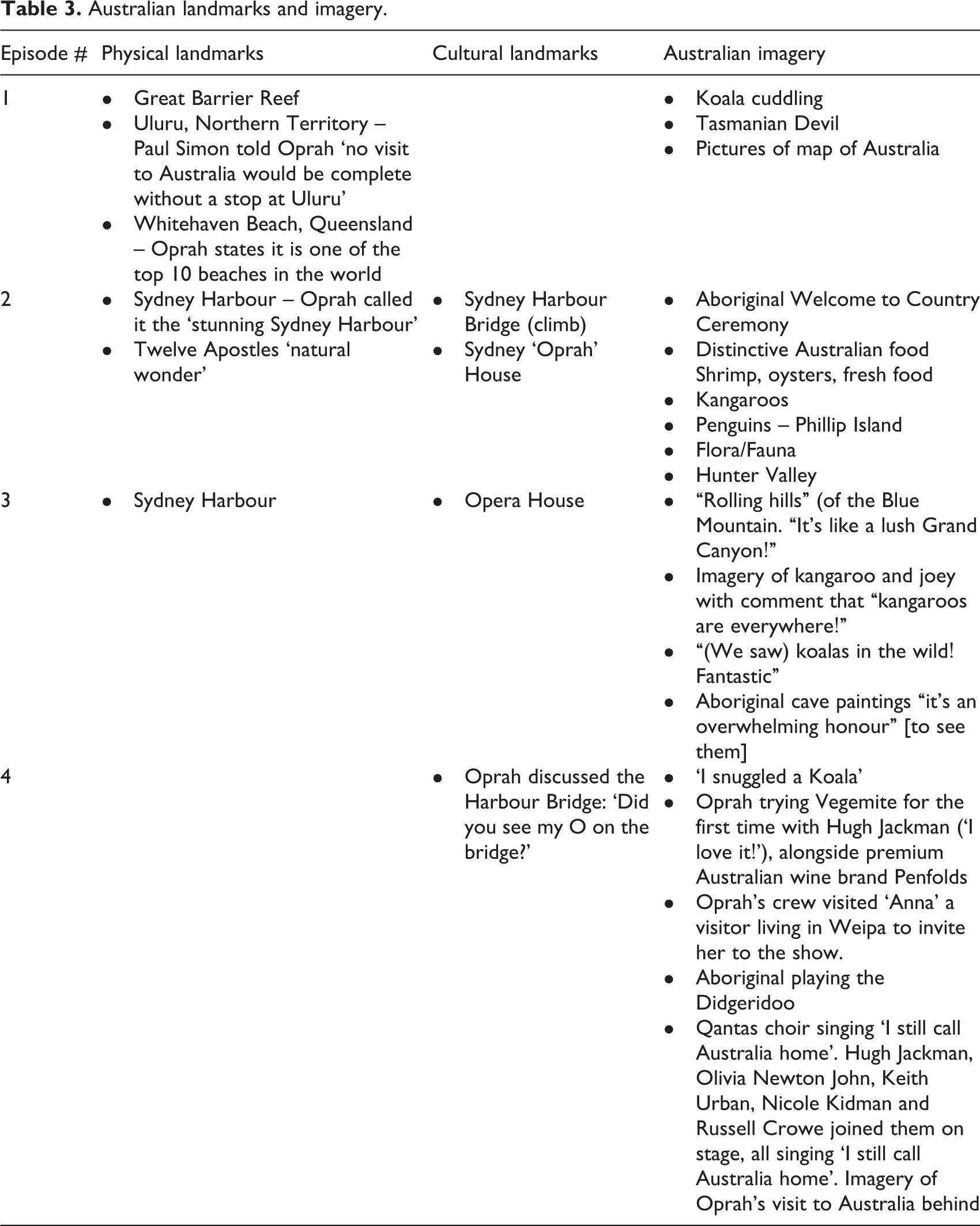
As Table 3 indicates, Australian landmarks and imagery were utilized in the episodes to promote Australia, particularly in terms of its unique landscapes and natural and cultural attractions.
Australian weather
Australia is often promoted as a destination with ‘perfect’ weather. In this context, it is not surprising that part of the imaging of Australia presented by the Oprah shows was the weather. Furthermore, as the episodes were screened in winter in the United States, the highlight on the weather could be a way to make Australia seem more attractive to the potential market (see Table 4).
Discussion of Australian weather by Oprah and her American guests.

Australian and international celebrities
Similarly, celebrities were included in the episodes to depict Australia, or to showcase particular sites or products. Table 5 provides an analysis of the celebrities interviewed or utilized in the episodes. The majority of these celebrities are Australian and if they are not, the table will indicate this.
Celebrities featured in the episodes.
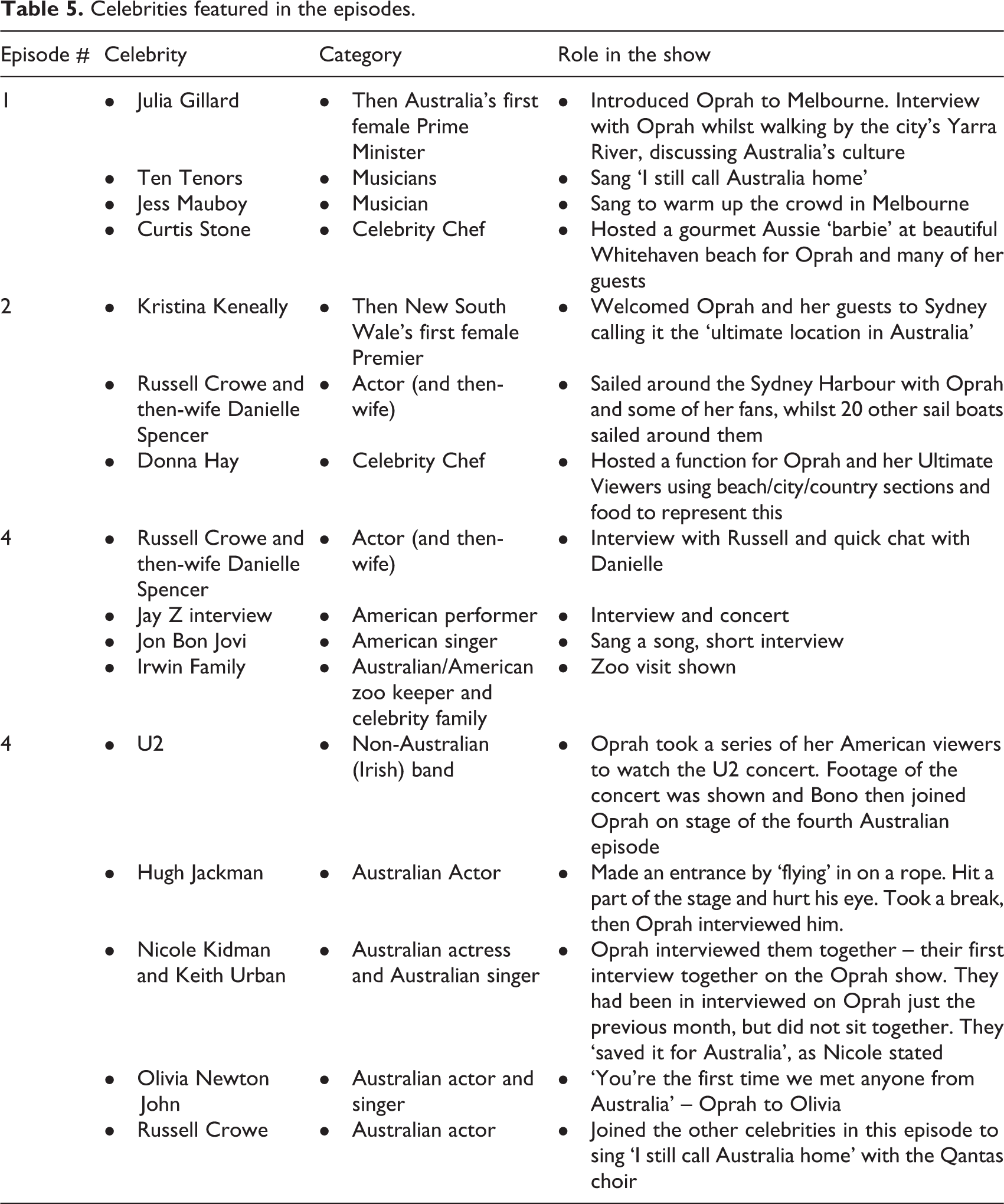
Table 5 illustrates the several ways celebrity endorsement can be used. Whilst Oprah Winfrey was clearly the primary celebrity endorser, the use of other American and recognizable (to US viewers) celebrities and dignitaries added value, interest and diversity to her endorsements. This included the inclusion of well-known Australian celebrities who could comment on life in Australia, run small events and provide more appeal to the audience.
Product placement
Oprah regularly gave products away during her TV show and the Australian episodes were no exception. These giveaways were sometimes facilitated by the celebrity guests and sometimes were facilitated by Oprah. The giveaways promoted Australian product; Table 6 highlights these.
Promotion of organizations or giveaways of products.
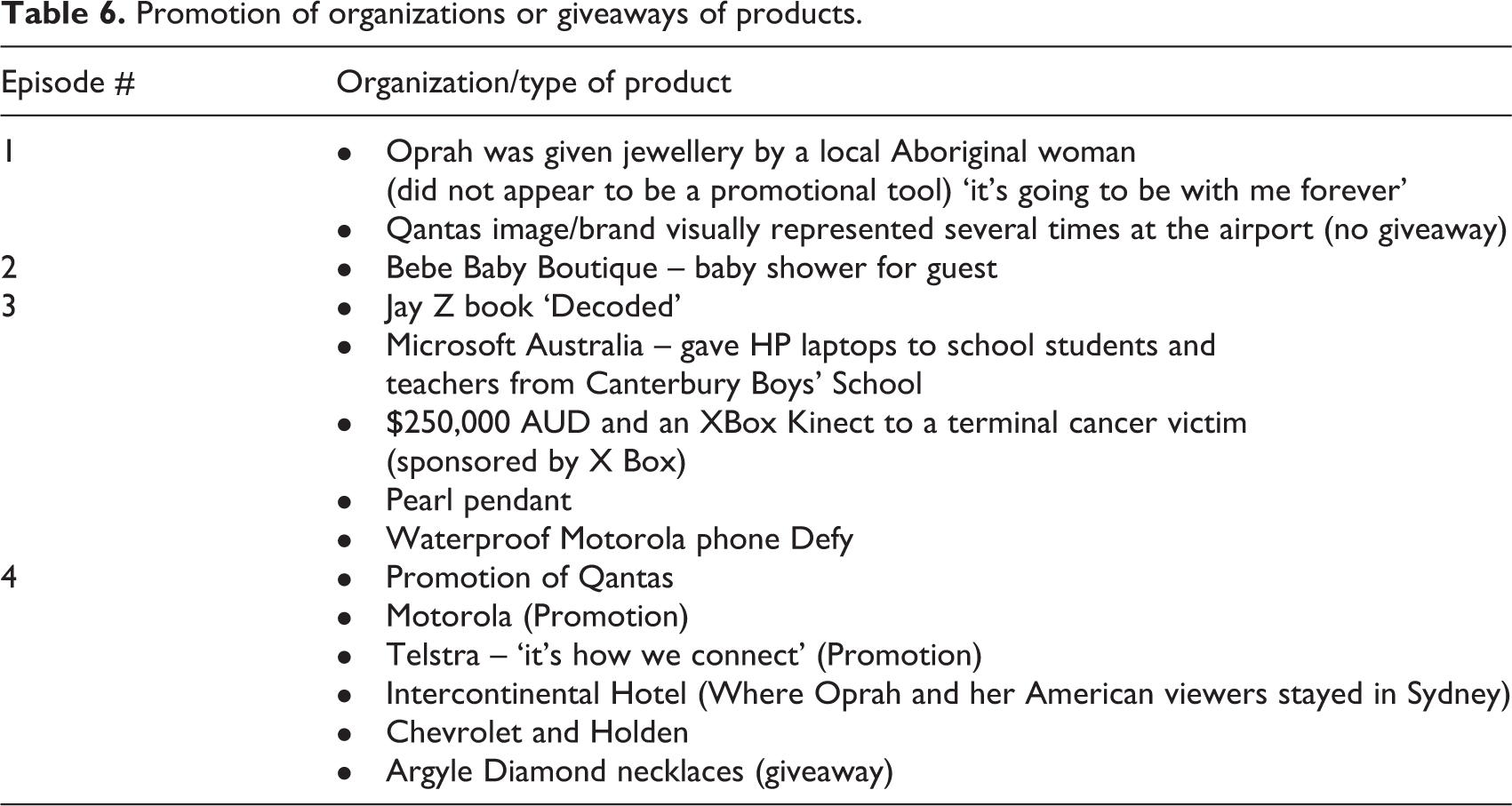
As can be seen in Table 6, Oprah gave various pieces of jewellery to her audience for the Australian shows. In the first episode, there was no giveaway, however Qantas (a sponsor of the campaign) was promoted several times (primarily visually with brand imagery). An Aboriginal elder gave Oprah a piece of jewellery, however, it was deemed by the researchers that this was a genuine gift and not promotional.
Oprah and other visitors’ verbal endorsements and recommendation
Oprah made many comments to encourage viewers to come to Australia and, more subtly, used many adjectives about how ‘gorgeous’ Australia is. Oprah’s best friend, Gayle, who accompanied Oprah during the Australian visit, did not significantly comment in the episodes, though she was seen to be having an enjoyable time. Oprah’s guests also endorsed Australia; however, this was less frequent in comparison with Oprah’s recommendations. It could be argued that this was deliberate, as Oprah is the spokesperson likely to motivate action. Table 7 provides an overview of recommendations about visiting Australia and Table 8 provides a commentary on adjectives and other quotes utilized.
Oprah and visitors’ endorsements and recommendations.

Adjectives and other quotes about Australia’s beauty and other attributes.
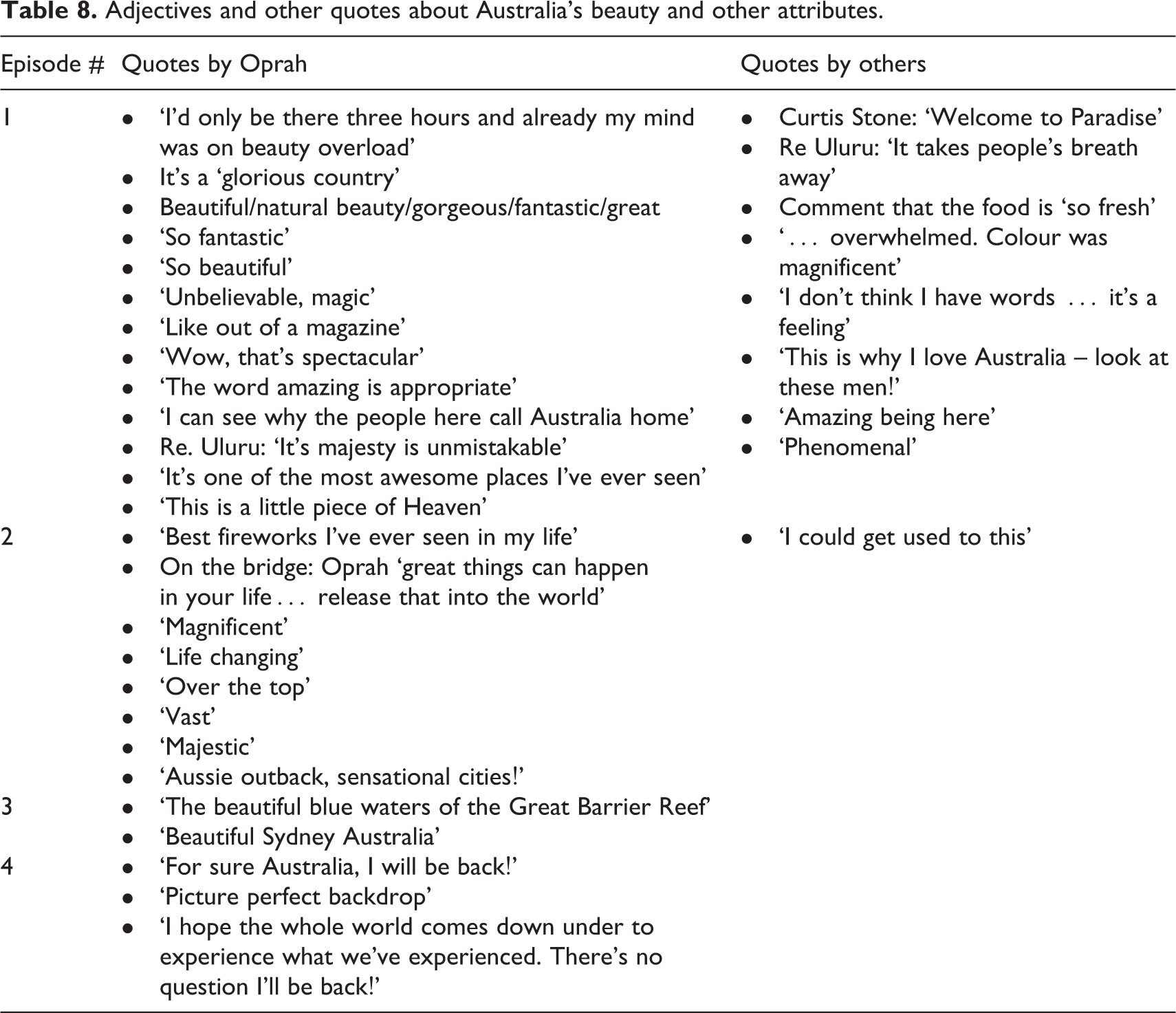
In addition to the recommendations indicated above, adjectives and quotes were provided about Australia’s beauty. These quotes and comments are indicated in Table 8.
As Tables 7 and 8 indicate, much of the content was about the beauty and natural wonder of Australia. Again, Oprah was the main spokesperson for the positive adjectives and quotes.
Promoting Australian tourism agencies
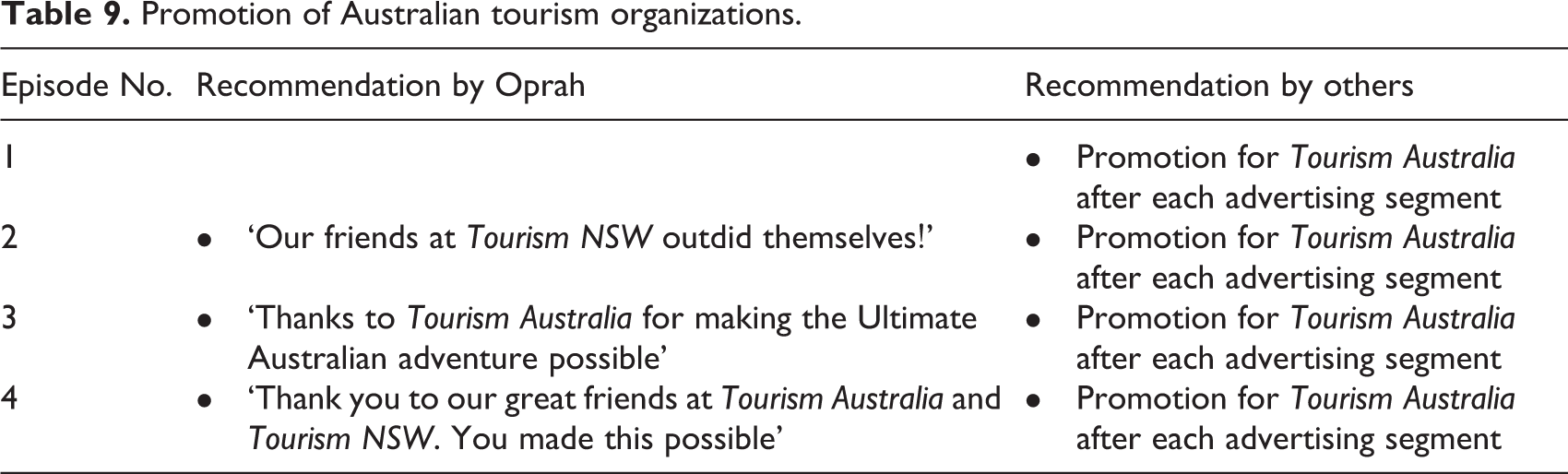
The trip was funded by Tourism Australia and Tourism New South Wales; however, very little mention was made of these bodies. Table 9 provides an overview of the promotion of Australia’s tourism organizations.
Promotion of Australian tourism organizations.
Discussion
The discussion in this article has indicated a series of implications for destination marketers, based on the Oprah Winfrey/Tourism Australia case study. The research indicates that over the four episodes of the Oprah show, Australia was well positioned. The very positive descriptions gave sufficient imagery to potential tourists considering a trip to Australia.
Oprah’s celebrity endorsement of Australia: Sales-oriented promotion or longer term brand positioning?
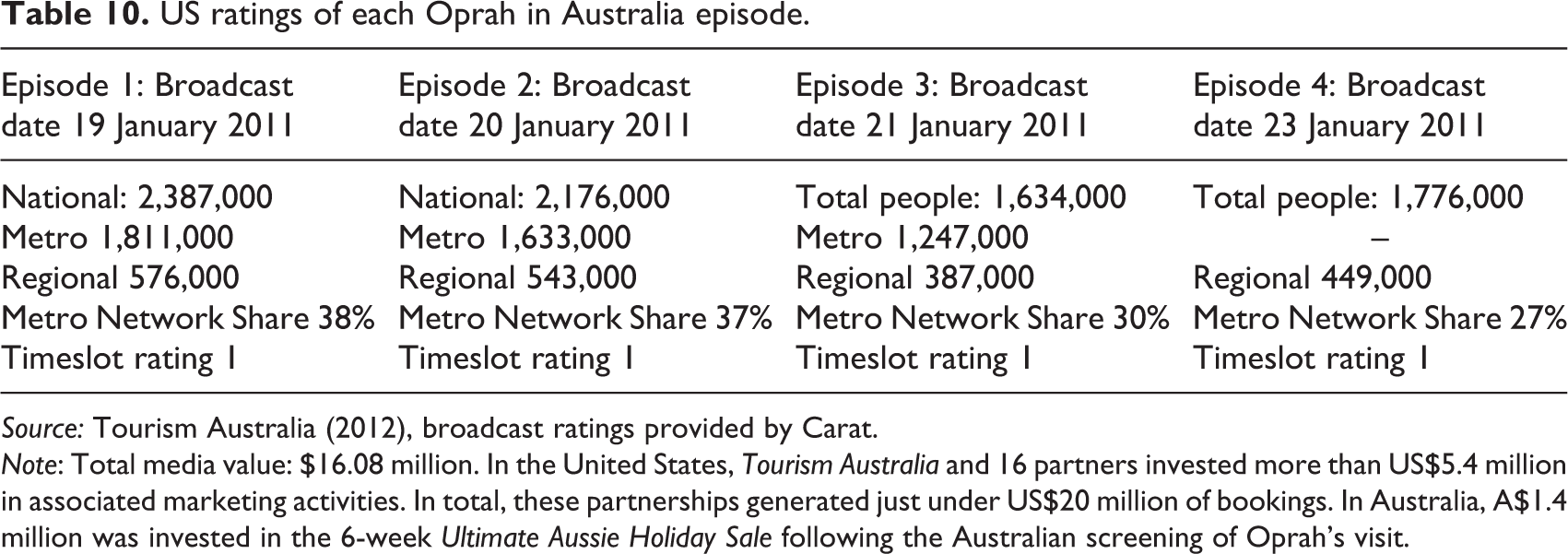
The Oprah Australian episodes were used to promote Australia as a tourism destination, and the results presented earlier show this was effective. However, the researchers felt that the campaign served as a form of brand positioning rather than a call to action. This is partially because whilst the Oprah show often does undertake promotional activities (such as this campaign), it is primarily an entertainment vehicle. As well, the indirect nature of the promotion – relying largely on language, imagery and celebrity endorsement (and some product placement) was more about presenting and showcasing Australia as a destination rather than a call to action. The episodes received significant attention and this resulted in a high dollar value of media exposure, as indicated in Table 10 subsequently.
US ratings of each Oprah in Australia episode.
Source: Tourism Australia (2012), broadcast ratings provided by Carat.
Note: Total media value: $16.08 million. In the United States, Tourism Australia and 16 partners invested more than US$5.4 million in associated marketing activities. In total, these partnerships generated just under US$20 million of bookings. In Australia, A$1.4 million was invested in the 6-week Ultimate Aussie Holiday Sale following the Australian screening of Oprah’s visit.
Oprah’s brand image and value as a celebrity endorser
Several times during the episodes, Oprah referenced her difficult upbringing and how she never imagined being able to come to Australia. Oprah’s accessibility to her audience members makes her popular – someone the audience can aspire to be like – but also valuable as a celebrity endorser. Furthermore, she fit in well with the Australian environment. For example, her use of common Australian slang had her fitting in with the Australian audience and offering a comedic relief to the international audience.
Oprah’s appeal to the tourism Australia target market
Tourism Australia’s target customer, the experience seeker would be a factor in approaching Oprah to undertake this campaign. In this, there is frankly an appeal to female audience members. Oprah’s appeal to her female audience at the time was considerable and public awareness of her visit was very high. Although male ‘Ultimate Viewers’ accompanied Oprah on her visit, the majority of viewers receiving attention in the episodes were female and that the males primarily provided ‘romantic’ interest. One male became a major focus when proposing to his girlfriend in Australia and another male was a focus when his wife told him she was finally pregnant after a long period of trying to conceive. This woman confided in Oprah prior to telling her husband, on camera, that she had experienced a life-changing moment in Australia by discovering she was finally pregnant.
In addition, the episodes were very much about friendship, particularly friendship among women. Friendship was the main theme of the series, with a distinct gender bias towards women. Oprah’s audience was primarily female and therefore it is logical to assume that most of her audience members are likely to be female. Though very little attention has been given to the role of gender in tourist behaviour (Moscardo, 2008), it could be argued that females would be more likely to be influenced by the Oprah episodes, but that in many situations, males would be companions on a trip to Australia.
This may be very significant in terms of the effectiveness of the campaign. A number of researchers (Koc, 2004; Nanda et al., 2006; Therkelsen, 2010), in exploring the roles of family members in planning and purchasing family vacations, have emphasized the importance of women in families in the early stages of vacation planning and destination selection (see also Mottiar and Quinn, 2004). Indeed some authors identify women as ‘gatekeepers’ (Lehto et al., 2009) even decision-makers (Zalatan, 1998) in the choice of family vacations. Thus female viewers of Oprah are likely to be key decision-makers or contributors to decisions around family vacations. In addition, research has suggested that women travelling alone, or with other women, tend to make plans on a day-to-day basis, whilst women travelling with men (or men travelling alone) tend to have a more structured plan prior to travel. Women travelling alone spend less time planning their trip than women travelling in a group or duo (regardless of whether their travelling companion/s is male or female) (Moscardo, 2008). This suggests an avenue for further research on the impact of gender on vacation destination decision-making and vacation behaviour.
Finally, a very Anglo-Saxon and African American representation was provided – Australia was depicted as being very Anglo-Saxon, despite its multicultural society. The American viewers were primarily Anglo-Saxon or African American with very few Asian viewers being depicted in the episodes. Further information regarding Tourism Australia’s target market is necessary for further comment on the cultural imagery provided in the episodes.
Conclusions, value of the study and further research
Riding the wave of the Oprah branding, tour operators in Australia have been promoting similar tours to the one Oprah undertook. Assuming Oprah and Tourism Australia are successful in attracting new visitors to Australia, the work does not stop there. For those taking a guided tour, research suggests that tour leaders must be competent and the itinerary well planned (Bowie and Chang, 2005) in order to create satisfied tourists and positive word of mouth about the destination.
This discussion has indicated that tourism numbers from the United States into Australia are increasing. The rise has been evident since the Oprah promotion; however, it may be too soon to say how the Oprah show has contributed to this. Existing data have contributed towards answering our research objectives and the content analysis, undertaken by the researchers, has provided an understanding of how Australia was depicted during the four TV shows.
This study offers a number of theoretical contributions. It has followed a strong celebrity endorsement campaign from inception to results over a number of years. It has investigated the nature of celebrity endorsement and the value of positioning and branding as well as marketing in the value of endorsements by celebrities. Finally, it adds to the literature on celebrity endorsement of tourism destinations, a field so far little explored. The research also highlights areas for further research.
Further research
A number of areas of further research have also been identified. These include: Examining the impact of the Oprah visit – an empirical study exploring both American and Australian viewers would be useful. For example, it would be useful to know whether Americans recall the Oprah visit and whether this has impacted on interest in travel to Australia and their perceptions of Australia as a destination. It would also be useful to know the opinions of Australians on the brand positioning of Australia as a destination, through the televised episodes. Further research into the use of celebrity endorsement through indirect means in TV shows. A review of the literature indicates that there is limited research on celebrity endorsement through TV shows, perhaps because it is less common than other means, such as TV advertising. This could be explored in more depth, and from a travel perspective, more exploration into the impact on this type of celebrity endorsement on to travel behaviour would be useful. Research exploring the impact of stereotypical Australian imagery (koalas, kangaroos and Aussie slang) on tourism decision-making to motivate tourists to consider Australia as a destination. Research into the decision-making of women relating to destination choice. Although some research exists regarding gender in tourism, it would be useful to explore this in more depth.
This article has focused on one celebrity and one location. Overall, there has been limited research into celebrity endorsement of destinations and further research could consider this with other celebrities and other destinations to contribute to the literature.
Footnotes
Funding
This research received no specific grant from any funding agency in the public, commercial or not-for-profit sectors.