



Abstract
Price, service-quality expectations and emotions have all been found to play a key role in customers’ assessments of offers, but little attention has been given to how these variables interrelate. This article presents an original model to study these interrelations. The model was tested on a sample of 841 hotel customers using structural equation modelling. The results show that the stronger the customers’ emotions, the more likely they were to perceive the product as cheap and the higher their predictive expectations of service quality. Additionally, although the observed price level influenced customers’ predictive expectations, the perception of a product as expensive or cheap did not. These findings have important business implications.
Introduction
Spain is a global leader in tourism. In 2015, it ranked second in the world in international tourism receipts (UNWTO, 2015). Nevertheless, the hotel occupancy rate was 40.82% (INE, 2015). This figure represents an underutilization of the hotel offering, which translates to a loss of investment profitability. Understanding tourists’ behaviour in terms of how they assess hotel offerings can help business owners implement policies to increase occupancy. In this regard, price, service-quality expectations and emotions have all been found to play a key role in customers’ assessments of the offer. The research question is thus how these variables interrelate in the process of choosing.
Previous research has established the influence on purchasing of price perceptions (e.g. El Haddad et al., 2015; Zeithaml, 1988) and predictive expectations of service quality (e.g. Golder et al., 2012; Higgs et al., 2005). In spite of the importance of these variables in the process of choosing a service, little attention has been given in the literature to interactions between them, which is the first point of interest of this article.
Scholars have widely acknowledged that cognitive and affective factors influence people’s assessments (e.g. Campbell, 2007; Hirschman and Holbrook, 1982; McMullan and O’Neill, 2010; Pelegrín-Borondo et al., 2016). The joint study of these factors has helped to improve understanding of these assessments (Bagozzi, 1982; Levav and McGraw, 2009; Zielke, 2011). Affection and cognition intervene by means of a dual interrelated system, and they usually merge in natural human behaviour (Boehner et al., 2007; Shiv and Fedorikhin, 1999). Accordingly, customers have been found to make both cognitive and affective assessments when assessing a competitive offer (Campbell, 2007; Hirschman and Holbrook, 1982; Levav and McGraw, 2009; Mano, 2004; Pieters and Van Raaij, 1988; Zielke, 2011). However, due to the limited attention given to the interaction of the influence of emotions on both perceived price and service-quality expectations, the study of this influence is the second point of interest of this article.
Structural equation modelling was used to corroborate the relationships between emotions, objective price, perceived price and service-quality expectations. The results of this research contradict or explain previous findings regarding the influence of price on predictive expectations of service quality. They also show the influence of emotions on both service-quality expectations and perceived price. Finally, the conclusions point to new ways of analysing how these variables interrelate that are relevant to both academic research and business management.
Theory and research design
Influence of the observed price level on perceived price
Choosing a hotel to spend the night is a complex decision shaped by multiple factors, including price. To study the influence of price on the decision-making process, it is necessary to differentiate between the observed price, the reference price and the perceived price.
The observed price is the total amount a customer has to pay to receive or use a service (Dickson and Sawyer, 1990; Gupta and Kim, 2010; Han and Hyun, 2015). The reference price is the price a customer expects to pay for a service (Gupta and Kim, 2010; Thaler, 1985). The perceived price is the customer’s subjective assessment of that price. The perceived price arises from the difference between the observed price and the reference price (El Haddad et al., 2015). The study of the relationship between the observed price and the perceived price requires an important clarification. The perceived price must be broken down into two variables: perceived price gain and perceived price loss. This is because assessments of losses and gains have opposite effects on the likelihood of a purchase (Pelegrín-Borondo et al., 2015a). When the difference is negative, the customer pays less than expected and perceives the service as cheap (perceived price gain). When the difference is positive, the customer pays more than expected and perceives the service as expensive (perceived price loss) (Abe, 1998; Han et al., 2001; Kalyanaram and Little, 1994).
Further research on perceived price has considered the existence of psychological thresholds that mark shifts in this perception (Han et al., 2001; Terui and Dahana, 2006). Building on the assimilation-contrast theory (Sherif et al., 1958), Monroe (1973) observed an area of insensitivity to changes in price on either side of the reference price defined by differential psychological price thresholds. A differential threshold is the minimum amount of change required in a stimulus to produce a ‘just noticeable difference’. There are two differential psychological price thresholds (Mazumdar and Jun, 1992):
Differential psychological price-loss threshold: borderline price beyond which any increase causes clients to perceive a service as expensive.
Differential psychological price-gain threshold: borderline price below which any decrease causes clients to perceive a service as cheap.
These thresholds are important because customers tend to be insensitive to variations in perceived price that fall between them. This area of insensitivity is known as the price assimilation range. Within this range, customers do not perceive variations in price or, if they do, do not consider them important (Gupta and Cooper, 1992; Kalwani and Yim, 1992; Kalyanaram and Little, 1994; Lowe and Alpert, 2010; Pelegrín-Borondo et al., 2015a; Terui and Dahana, 2006). Outside this range, the perceived price increases or decreases the likelihood of a purchase.
Previous research has shown that the level of the observed price influences customers’ perceptions of the price (Cunha and Shulman, 2011; Oh, 2003; Zeithaml, 1988). For instance, the higher a brand’s observed price, the less effective price discounts are (Pauwels et al., 2007; Saini and Thota, 2010). Likewise, the higher the price level customers consider normal for an item, the less sensitive they will be to price or the more indifferent they will be towards price fluctuations (Han et al., 2001; Kalyanaram and Little, 1994; O’Neil and Lambert, 2001; Terui and Dahana, 2006). Similarly, the more unreasonable tourists judge a firm’s observed price to be, the more sensitive they are to price (Han and Hyun, 2015).
In light of previous research, the following hypotheses were proposed with regard to the booking of an overnight stay at a hotel:
When the difference between the observed price and the expected price is negative, it results in a perceived price gain. The higher the observed price is, the smaller this negative difference becomes and, therefore, the smaller the perceived price gain. The observed price thus has a positive effect on this price gain.
Influence of the observed price on predictive expectations of service quality
Predictive expectations are the objective calculations people make to determine what they truly expect to receive from a supplier in a specific situation. In other words, they are what customers believe they are actually going to receive (Higgs et al., 2005; Medrano et al., 2016; Miller, 1977; Mitra and Fay, 2010; Zeithaml et al., 1993). In addition, predictive expectations represent the level of quality that people actually expect in the specific situation being assessed (Golder et al., 2012; Higgs et al., 2005)
Quality assessments are linked to the price paid; the quality of a single product may thus be assessed differently depending on the price (Rokenes and Prebensen, 2012). Broadly speaking, the level of the observed price is recognized as one of the most important quality indicators affecting the formation of quality expectations (Ding et al., 2010; Erdem et al., 2008; Golder et al., 2012; Suri and Monroe, 2003; Zeithaml et al., 1993). In their assessments of the competitive offer, customers use price as a sign of quality, especially when there are no other indicators (Zeithaml, 1988) or when the customer has no incentive to search for any information other than the price (Suri and Monroe, 2003). The price level is viewed as an implicit commitment with regard to the service the customer believes he or she will receive. Thus, the higher the observed price, the greater the customer’s predictive expectations of service quality (Zeithaml et al., 1993). However, price increases do not always go hand in hand with an increase in the perceived utility associated with quality (Ding et al., 2010; Ofir, 2004).
This notion has also been confirmed in research conducted in the tourism industry. The observed price level is interpreted as a sign of quality when tourists are assessing the different aspects of the services associated with a trip (Kashyap and Bojanic, 2000) and when there is little information about the hotel (Chen and Schwartz, 2006; Huertas-García et al., 2016). In this regard, Knutson et al. (1992) showed that different segments of hotel guests – defined by the price level paid – have different levels of expectations with regard to service quality: customers who pay more have higher expectations. Likewise, Fernández Barcala et al. (2009) established that price is one of the most relevant factors shaping customers’ expectations of hotels.
In light of these articles, the following hypothesis was proposed regarding the booking of a hotel stay:
Influence of the perceived price on predictive expectations of service quality
The influence of the perceived price on service-quality expectations has been previously reported (Kopalle and Winer, 1996; Mitra and Fay, 2010; Oh, 2003). When prices are lowered below a specific level of price gain, consumers consider the service so cheap they begin to have misgivings about its quality (Gabor and Granger, 1966; Herrmann et al., 2004; Monroe, 1973). It has also been proven that the promotions sellers carry out can negatively influence customers’ quality expectations (Erdem et al., 2008). Likewise, in the choice of a hotel, there is a similar price level below which customers begin to doubt the quality of the service to be provided because they view it as too cheap (Lewis and Shoemaker, 1997).
A negative relationship has been found between perceived price – from expensive to cheap – and the quality expected of a hotel (Chiang and Jang, 2006). When customers perceive prices as expensive, they may choose to equate them with high quality or be dissuaded from purchasing the product or service (Han and Hyun, 2015). Eid and El-Gohary (2016a) found a positive correlation between perceived price and perceived quality among tourists in the case of package tours.
Ryu and Han (2010) showed that perceived price is a moderating variable in the causal relationship between (i) the quality of the food, service and setting at restaurants and (ii) customer satisfaction with the restaurant’s service. At the same time, satisfaction is a variable that helps to explain customers’ intended behaviour. Eid and El-Gohary (2016b) concluded that perceived price had a positive effect on tourists’ satisfaction.
In light of these findings, the following hypotheses were proposed for the booking of a hotel stay:
Influence of emotions on the perceived price
Componential emotion theory identifies certain minimum common traits to define the concept of emotion (Ortony and Turner; 1990; Richins, 1997; Russell, 2003; Scherer, 2001): There must be a stimulus, identification of the cause of the stimulus, a cognitive assessment, a physiological reaction, feelings of pleasure and/or displeasure, a qualitatively unique feeling and a tendency towards a characteristic action. Moreover, the process must be of a short-term nature.
In general, three types of emotions influence the assessment of an offer (Pelegrín-Borondo et al., 2015b; Penz and Hogg, 2011):
Emotions produced by the product or service being assessed.
Emotions produced by the assessment process itself.
Emotions produced by factors unrelated to the assessment of the product or service.
This study focuses on the emotions produced by the service being assessed.
Multiple authors have recognized the need for the existence of cognitive assessment in the generation of emotions (Bagozzi et al., 1999; Scherer, 2001), and the influence of emotions on the cognitive assessment process has been established (Hirschman and Stern, 1999). Some authors consider this interrelationship between emotion and cognition to be cyclical (Cohen et al., 2006; Frijda, 1988). In addition, the existence of feedback between cognition and emotion has been shown in customers’ assessments of offers (Pieters and Van Raaij, 1988).
This research focuses on the moment within this cyclical process at which emotion affects the cognitive assessment. In customers’ assessments, the impact of stimuli is governed by emotions (Campbell, 2007; Pham et al., 2001).
Likewise, the influence of emotions on the formation of the price in customers’ minds has been reported: customers put an ‘emotional label on the price’ that represents the influence of emotion on the price assessment (Levav and McGraw, 2009). In this regard, several authors have established the influence of emotions on customers’ assessments of the fairness of a price, that is, of whether a price is cheap or expensive (Campbell, 2007; Xia et al., 2004). Zielke (2011) showed how certain basic emotions intervene and increase the impact of the cognitive image of price on consumers’ purchase intentions. Van de Ven et al. (2011) established that certain emotions – ‘benign envy’ versus ‘malicious envy’ – have an influence on the tendency to pay more for certain products. Reimann et al. (2011) showed that the aversion to perceived price losses is the result of higher brain activity in areas of the brain associated with the processing of negative emotions. Fuchs et al. (2010) established that when consumers participate in the design of a product, it produces a strong emotion that positively affects their likelihood to pay more. Likewise, Gupta and Kim (2010) established that with online purchases, both the emotion of pleasure (with a positive value) and the perceived price (with a negative one) directly influence the perceived value of a product and purchase intention.
Walls et al. (2012) and Clarke (2013) emphasized emotion as a central force rather than a contributing influence in tourists’ decision-making processes. Eid and El-Gohary (2016a) found a positive correlation between emotion and tourists’ price perceptions. With regard to the assessment of hotel offers, several authors have shown how certain basic emotions associated with satisfaction and loyalty make tourists less sensitive to price losses (Barsky and Nash, 2002; Ladhari, 2009). In their research on trips to wineries, Charters et al. (2009) found that the type of experience – satisfying or unsatisfying – can generate positive emotions that lessen or cancel out the impact of negative emotions caused by the feeling of being obliged to buy wine. Likewise, there is a direct, positive relationship between the level of pleasure tourists experience and their propensity to pay more for the tourism service. Additionally, tourists who experience pleasure and arousal intensely are more likely to pay more (Bigné Alcañiz and Andreu Simó, 2004). With regard to hotels, Ali et al. (2015) showed that emotions affect price acceptance through customer satisfaction.
The following hypotheses were thus proposed regarding the moment at which the hotel stay is booked:
Influence of emotions on predictive expectations of service quality
There are two schools of thought on the cognitive nature of predictive expectations of service quality: the first regards them as exclusively cognitive variables on which emotional aspects do not exert any influence (Miller, 1977; Zeithaml et al., 1993); the second regards them as eminently cognitive but acknowledges the influence of affective factors (Bitner, 1990).
This article follows the second school of thought, as the predictive expectations were based on Tolman’s expectancy-value theory (Rodríguez del Bosque et al., 2006). Under this theory, people’s expectations are based on their knowledge and beliefs regarding future results. Consumers’ mental information concerning quality is influenced by the emotions they feel (Bagozzi, 1997). It has moreover been shown that emotions indirectly affect the assessment of products through expectations (Chen and Chen, 2010; Cohen et al., 2006; Sparks, 2007), an effect that has also been reported in the tourism industry (De Rojas and Camarero, 2008).
Likewise, Mattila (1999) established the influence of emotions on the formation of customers’ expectations of hotels. The emotions generated by hotel advertisements influence the formation of predictive expectations of service quality.
As for how emotions affect expectations, several authors have reported that customers who experience pleasurable emotions as a result of the purchased item tend to develop higher expectations of service quality (e.g. Schwarz, 2000). Similarly, Walsh et al. (2011) established that pleasurable emotions positively affect service-quality assessments, which, in turn, influence the tendency towards loyal behaviour.
Recently, Eid and El-Gohary (2016a) demonstrated the existence of a positive correlation between the emotions tourists feel when buying a tourist package and the quality of the package. Positive emotions affected the satisfaction of the tourists who bought them (Eid El-Gohary, 2016b; McMullan and O’Neill, 2010). Lo (2016) showed that mild pleasure and intense fun positively affect tourist satisfaction. With regard to tourism and quality, in the context of a mountain trip, Faullant et al. (2011) found that the positive emotion of happiness was positively related to satisfaction, while the basic, negative emotion of fear was negatively related to satisfaction. Abubakar and Mavondo (2014) established that the emotions elicited by an experience are the main predictors of customer satisfaction. These articles confirmed the existence of a link between satisfaction and the creation of new predictive expectations with regard to service quality. Michalkó et al. (2015) established the symbiosis between product quality and emotions, showing they were strongly correlated. In addition to emotion, Kim and Mattila (2010) found that negative moods added to negative surprises in relation to restaurant services, causing them to affect customer satisfaction more negatively than when customers were in a positive mood.
With regard to the influence of the level of arousal on the formation of predictive expectations of service quality, Neelamegham and Jain (1999) determined that people who were more emotionally aroused assessed their predictive expectations of a film more positively.
The following hypothesis was thus proposed for the booking of a hotel stay:
Research model
This article presents an original conceptual model to study the interrelations between prices, service-quality expectations and emotions (Figure 1).
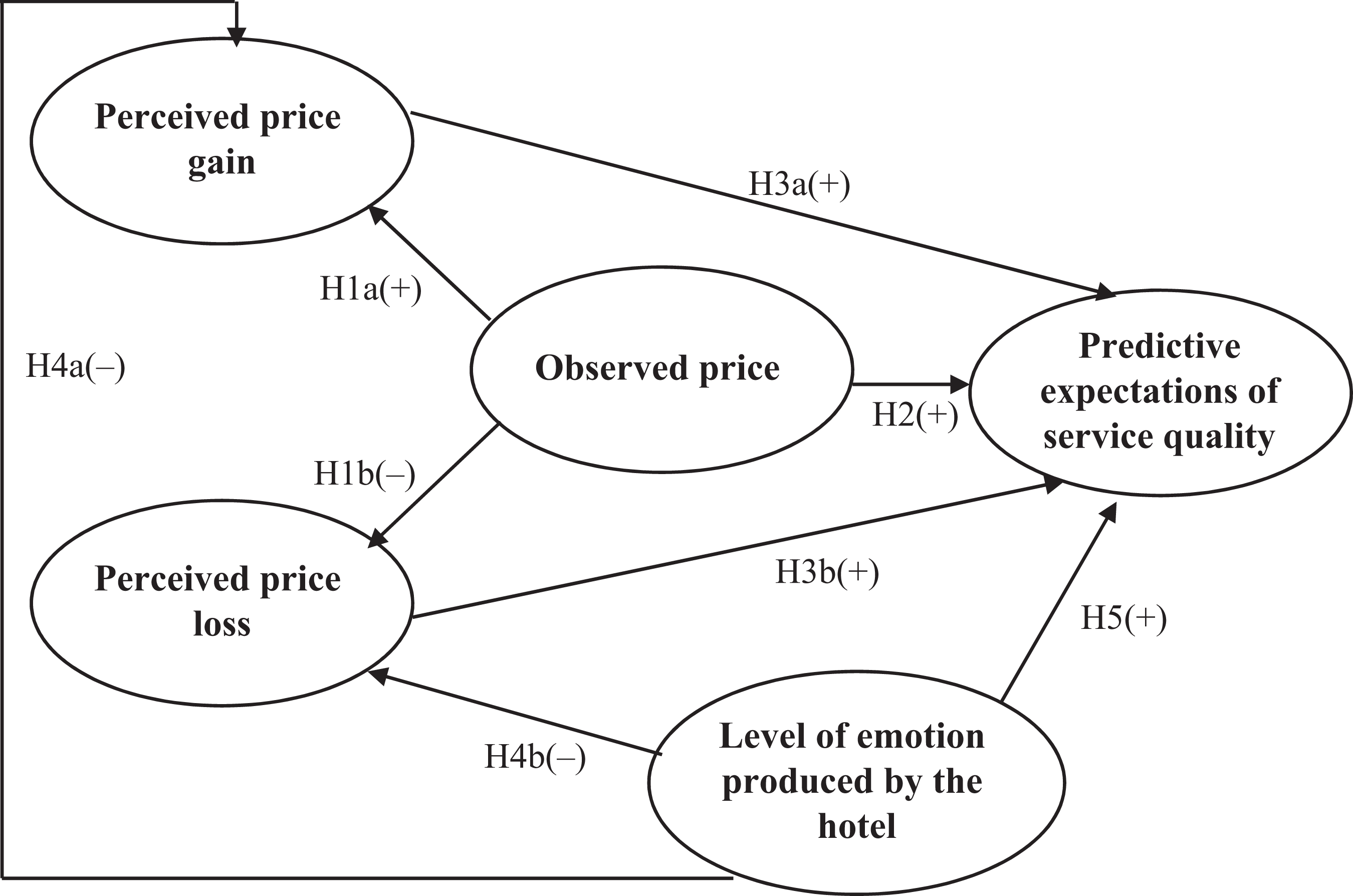
Conceptual model.
Methods
Data collection
In order to test the hypotheses, the representative sample of hotels was narrowed down to a single Spanish destination: La Rioja. To this end, all the hotel managers in the area (74) were contacted by telephone and asked to provide information about the characteristics of their hotels. The responses were analysed using a sequential cluster analysis, and the solution was validated and reassigned by means of a discriminant analysis. As a result, six groups of hotels were obtained for the destination. Subsequently, one hotel was selected from each group, that is, a total of six hotels. Each of the chosen hotels largely conformed to the average characteristics of its group.
For 4 months, interviews were conducted with tourists staying at the six hotels in order to obtain a minimum of 100 surveys per hotel type. A protocol was developed and the survey takers were provided with specific training to prevent customers’ hotel experiences from skewing the research. All guests were invited to participate in the study before check-in by the hotel staff and hired survey takers, always before they went to their rooms. Some 865 surveys were conducted in all. Incomplete and/or inconsistent surveys were then eliminated, leaving a total of 841 valid surveys. In terms of gender, 61.47% of the respondents were men. With regard to age, a small percentage of the respondents were under 25 (1.55%) or over 64 (6.06%); the remainder were between the ages of 25 and 54 (78.48%). The majority of the respondents held a college degree (54.85%) and the largest segment had a household income of over €2400 a month (40.78%). This may be because people with higher incomes have more disposable income for leisure and are thus more likely to be able to afford to stay at hotels.
Instrument development and formation of the model variables
The scales used and the formation of the variables employed in the model are described below.
(a) Observed price: This variable was measured by asking for the nightly rate for the room (McCleary et al., 1998) as well as the type of room booked (Callan, 1998). Throughout the study, the price refers to a double room without breakfast, including tax. In those cases in which the customer had not booked this type of room, the price provided by the customer was recalculated – based on information provided by the hotel – to reflect a double room without breakfast, including tax.
(b) Perceived price: The perceived price was obtained using the measuring method proposed by Han et al. (2001) (see Appendix 1).
In keeping with Han et al. (2001), the most relevant exogenous variables of the binomial logits affecting the probable formation of the psychological price thresholds were considered. Table 1 shows the previous literature on the influence of these variables on these thresholds.
Variables affecting the formation of the psychological price thresholds included in the model.
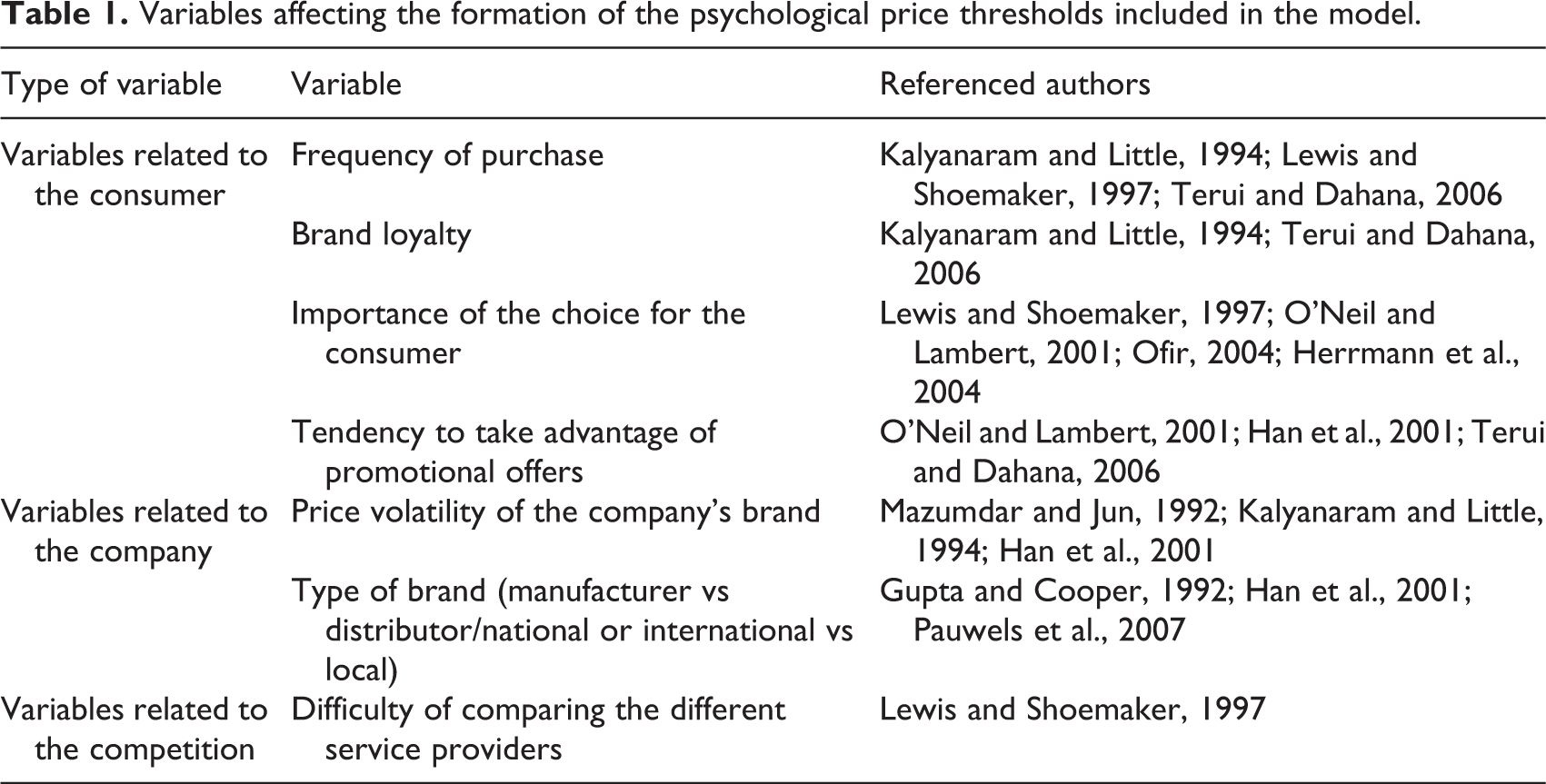
The following measurements were chosen from the literature: expected price (Callan, 1998), differential psychological price thresholds (Lewis and Shoemaker, 1997), frequency of hotel stays (Callan, 1998), loyalty to the hotel or hotel chain (Zeithaml et al., 1996), importance of the choice of hotel to the customer (Herrmann et al., 2004), tendency to take advantage of promotional offers (Kalwani and Yim, 1992), hotel brand type (national vs local) (Pecotich and Ward, 2007) and difficulty of comparing hotels (Urbany et al., 1996).
Some of the binomial logit variables were measured by asking respondents directly, while others were subjected to the following statistical treatments:
Brand loyalty and the importance of the choice to the consumer were obtained by means of structural equations with reflective indicators.
The difficulty of comparing the different service providers was obtained by means of structural equations with formative indicators.
The price volatility of the company’s brand was obtained with the function PVOL it = θPVOL i (t−1) + (1 − θ)(Pit – Pi (t−1))2; where Pit is the price of hotel i at time t and θ is a constant with a value of 0.8, as proposed by Han et al. (2001), building on the findings of Kalyanaram and Little (1994).
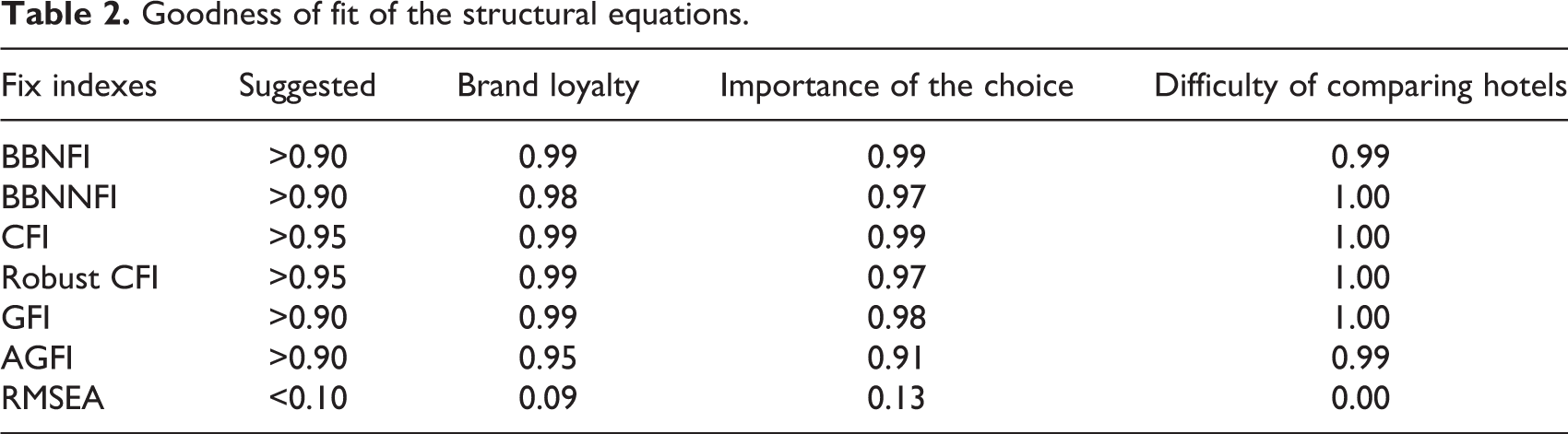
The goodness of fit of the variables included in the logits measured with structural equations was correct (Table 2).
Goodness of fit of the structural equations.
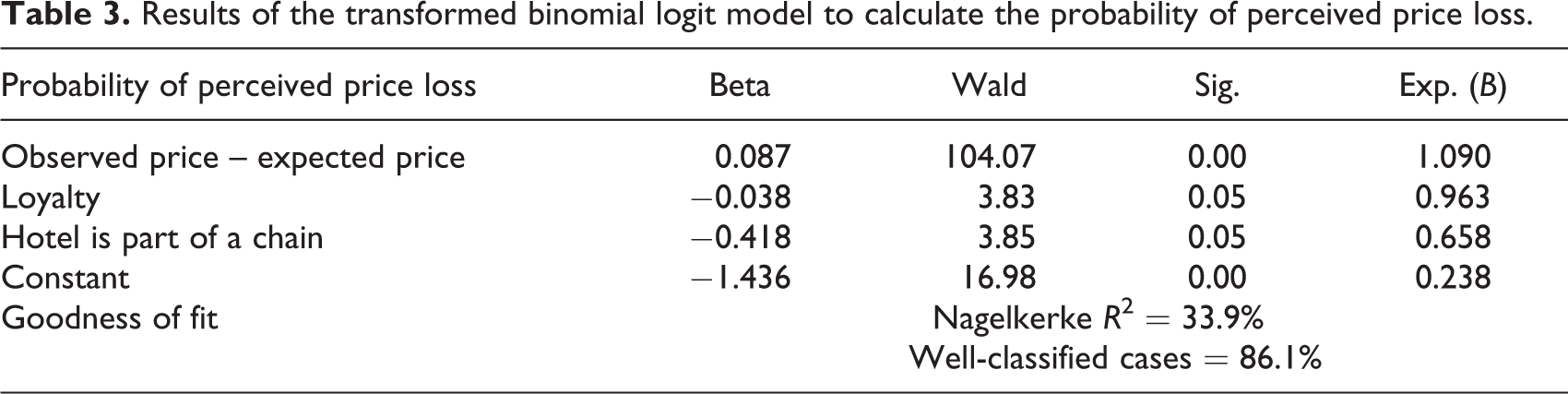
To analyse the probabilities, transformed binomial logits were calculated using the Wald method (Tables 3 and 4). With regard to the analysis of multicollinearity, the highest variance inflation factor of any variables included in the two logits was 1.11, which corresponded to the tendency in the logit to take advantage of promotional offers over the probability of a perceived price gain.
Results of the transformed binomial logit model to calculate the probability of perceived price loss.
Results of the transformed binomial logit model to calculate the probability of perceived price gain.
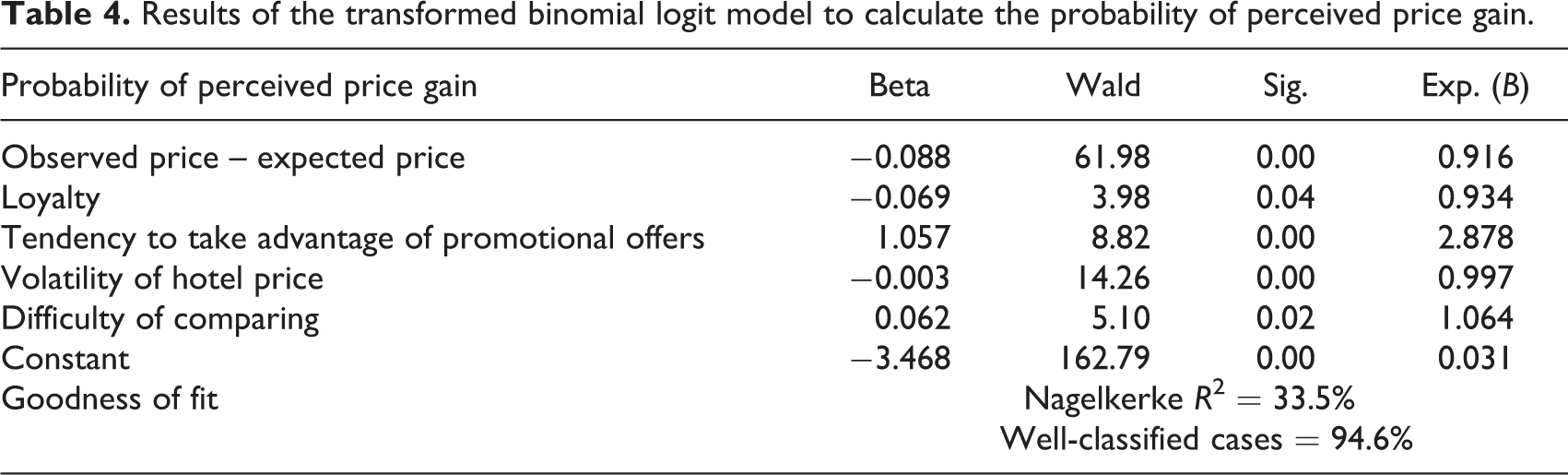
The dependent variable used to solve the binomial logits was obtained by asking respondents directly about the levels of their psychological price thresholds (Lewis and Shoemaker, 1997). If the price paid was perceived as having exceeded the loss threshold (or as having fallen below the gain threshold), the variable was assigned a value of 1; otherwise, it took a 0.
The results of the binomial logit were used to calculate the perceived price loss (Table 3). To form this variable, the price loss was multiplied by the probability of the price exceeding the differential psychological price-loss threshold, that is, (Pik − EP ik ) × Pr(I ik,loss = 1) (Han et al., 2001). The perceived price gain was calculated similarly (Table 4).
(c) Predictive expectations regarding service quality. This variable was measured using the SERVQUAL scale (Parasuraman et al., 1991) adapted to the hotel accommodation service – called LODGSERV (Knutson et al.,1990) – adjusting the sentences to give them a predictive sense (De Rojas and Camarero, 2008; Higgs et al., 2005; Webb, 2000).
Level of emotion produced by the hotel. The emotional dimensions ‘level of pleasure’ and ‘level of arousal’ were included in the study and measured using the scales proposed and tested by Bigné Alcañiz et al. (2005) in their research on tourist behaviour.
In this regard, there is a broad consensus on the merits of using only two dimensions instead of models with more dimensions (Cohen et al., 2006). Moreover, the level of pleasure and the level of arousal are the two emotional dimensions most supported by the literature (Cohen et al., 2006; Russell, 1980, 2003; Scherer, 2001).
This study assessed the convergent validity and discriminant validity of the scales for predictive expectations of service quality and the level of emotion produced by the hotel. To this end, two confirmatory factor analyses were carried out, one for each scale.
With regard to the goodness of fit of the factorial analyses, the results were satisfactory for both the scale for predictive expectations of service quality (Bentler Bonett normed fit index (BBNFI) = 0.92; Bentler Bonett non-normed fit index (BBNNFI) = 0.92; comparative fit index (CFI) = 0.94; Robust CFI = 0.95; goodness of fit index (GFI) = 0.92; adjusted goodness of fit index (AGFI) = 0.90; root mean square error of approximation (RMSEA) = 0.07) and the scale for the level of emotion produced by the hotel (BBNFI = 0.99; BBNNFI =0.99; CFI = 0.99; Robust CFI = 0.99; GFI = 0.98; AGFI = 0.97; RMSEA = 0.05).
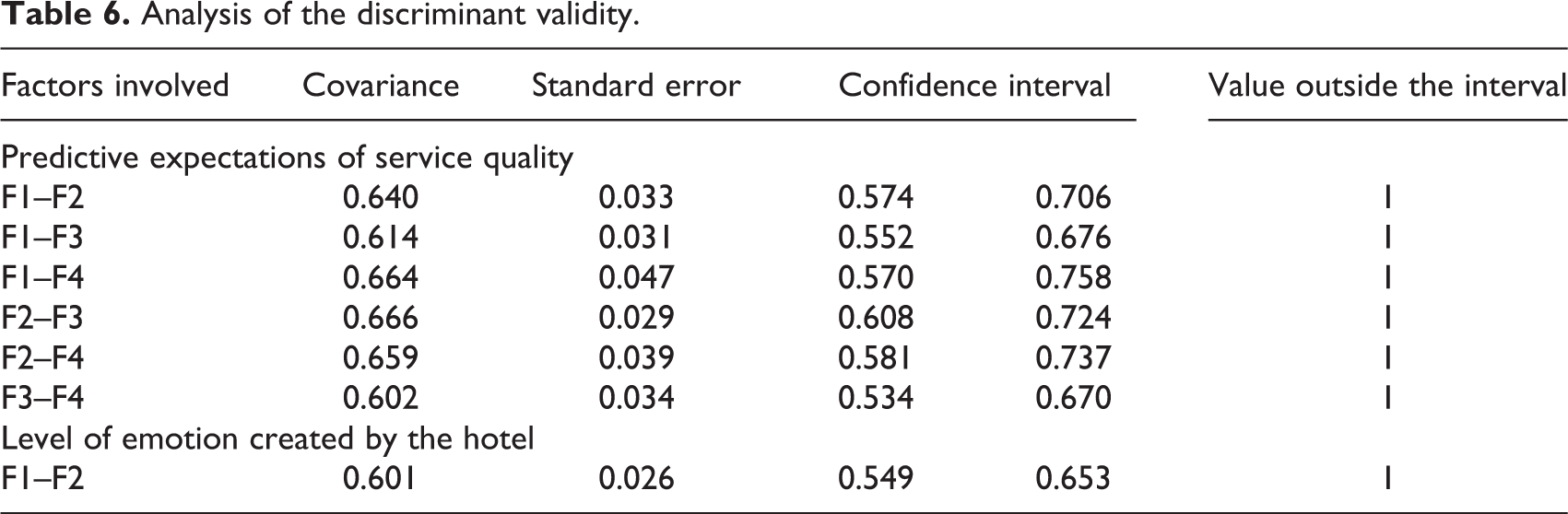
With regard to the convergent validity of the two scales (Table 5), the indicators converged in the assigned factors, as all the standardized lambda parameters were greater than 0.5 and significant. Furthermore, the average variance extracted was greater than 0.5 for all the factors and the compound reliability coefficient was always equal to or greater than 0.8. As for the discriminant validity (Table 6), the factors differed from each other in each scale. The confidence interval around the value of the covariance between factors did not include the value 1; therefore, there were no issues of covariance between the factors involved.
Analysis of convergent validity and compound reliability.
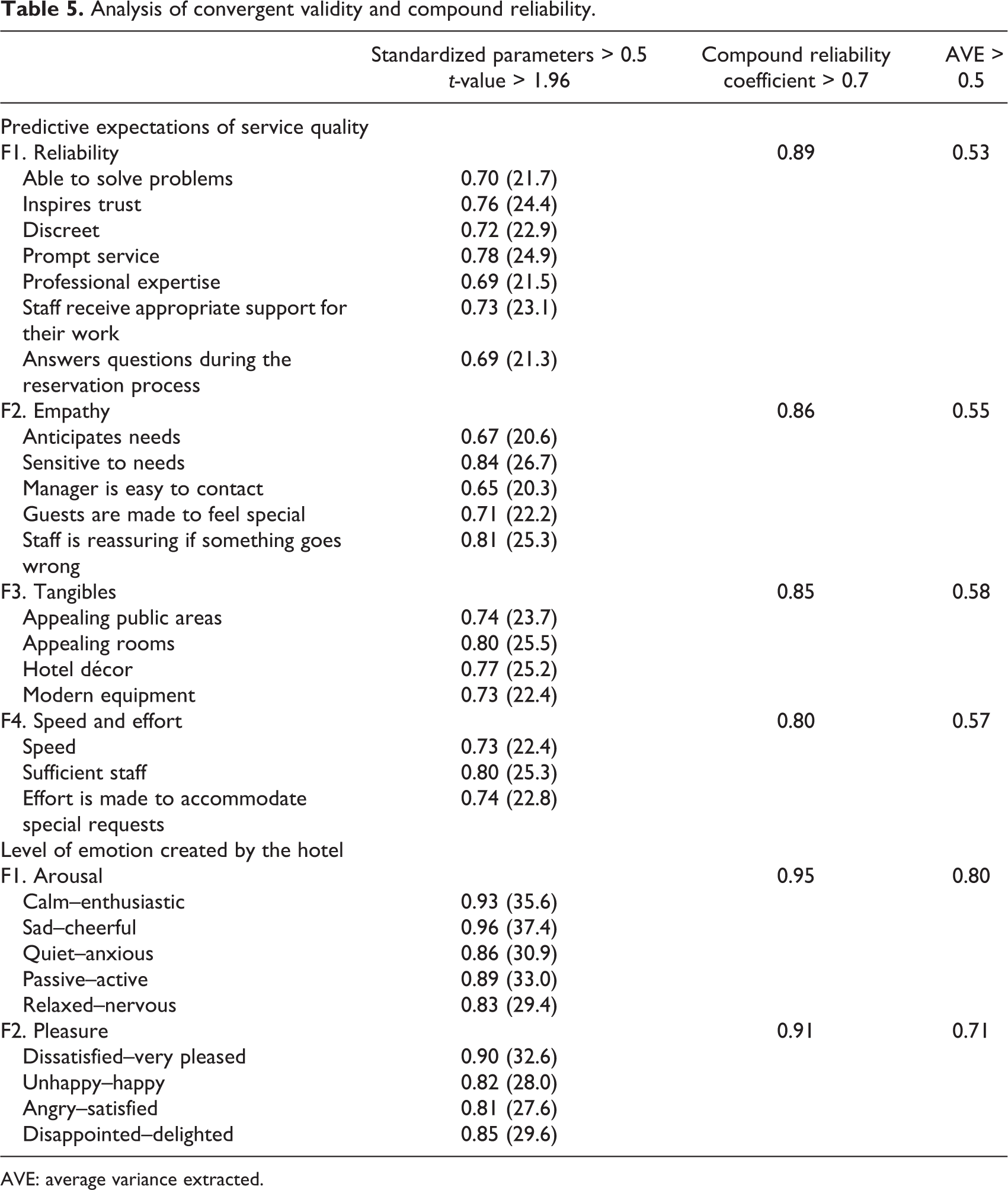
AVE: average variance extracted.
Analysis of the discriminant validity.
Hypothesis testing
The general model had a positive goodness of fit: BBNFI = 0.98; BBNNFI = 0.98; CFI = 0.99; Robust CFI = 0.98; GFI = 0.95; AGFI = 0.92; RMSEA = 0.06. Table 7 shows the results of the significance level, the standardized coefficients, the significance level with direct effects only and the standardized coefficients with direct effects only for the relationships between observed price, perceived price loss, perceived price gain, service-quality expectations and the level of emotion produced by the hotel.
Significance level and value of the standardized coefficients of the relationships between the model’s key variables.
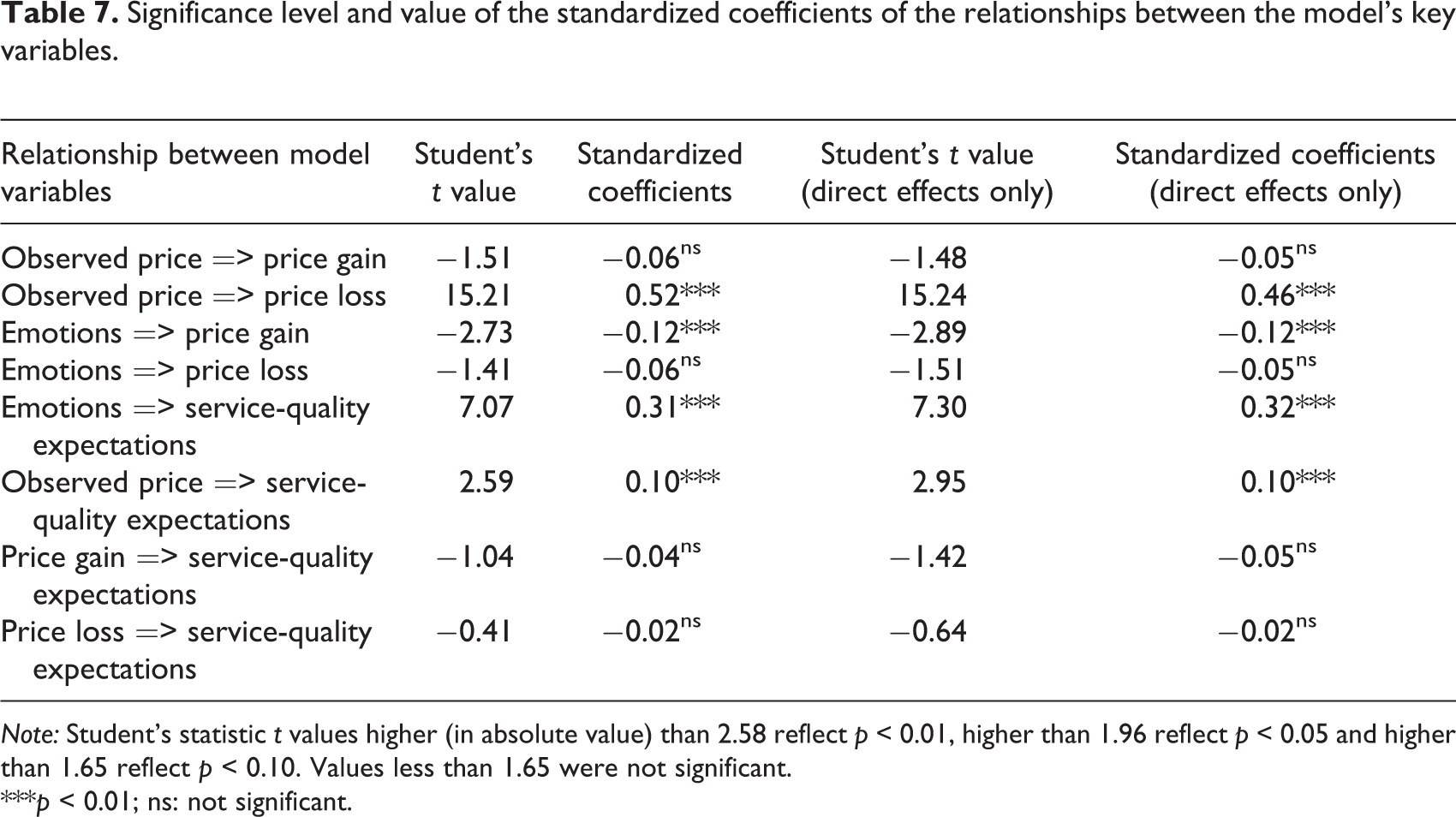
Note: Student’s statistic t values higher (in absolute value) than 2.58 reflect p < 0.01, higher than 1.96 reflect p < 0.05 and higher than 1.65 reflect p < 0.10. Values less than 1.65 were not significant.
***p < 0.01; ns: not significant.
Figure 2 shows the value of the standardized coefficients, their significance level and the support for the acceptance of the hypotheses. H2, H4a and H5 were accepted, while the results did not support H1a, H1b, H3a, H3b or H4b.
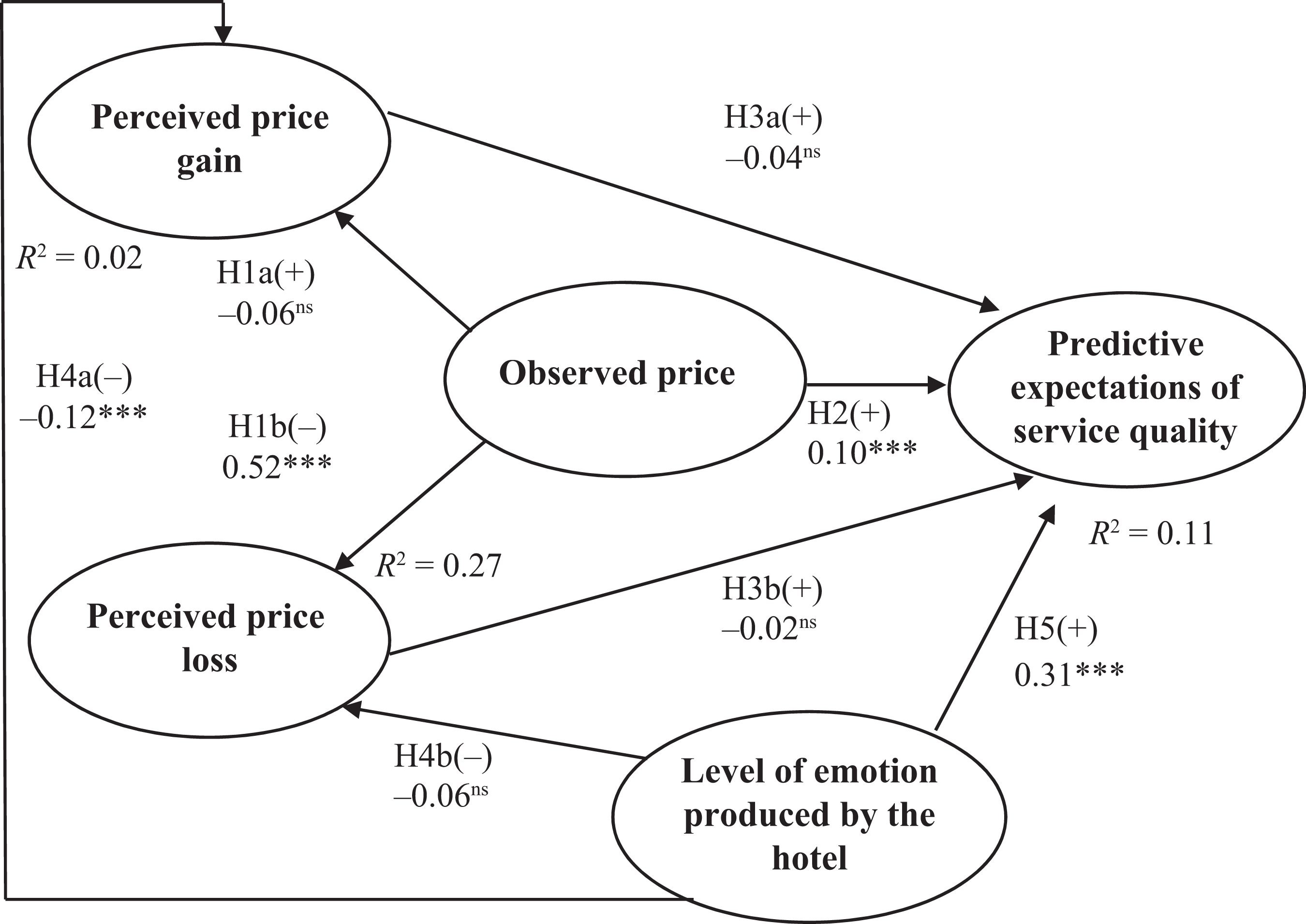
Results of the conceptual model.
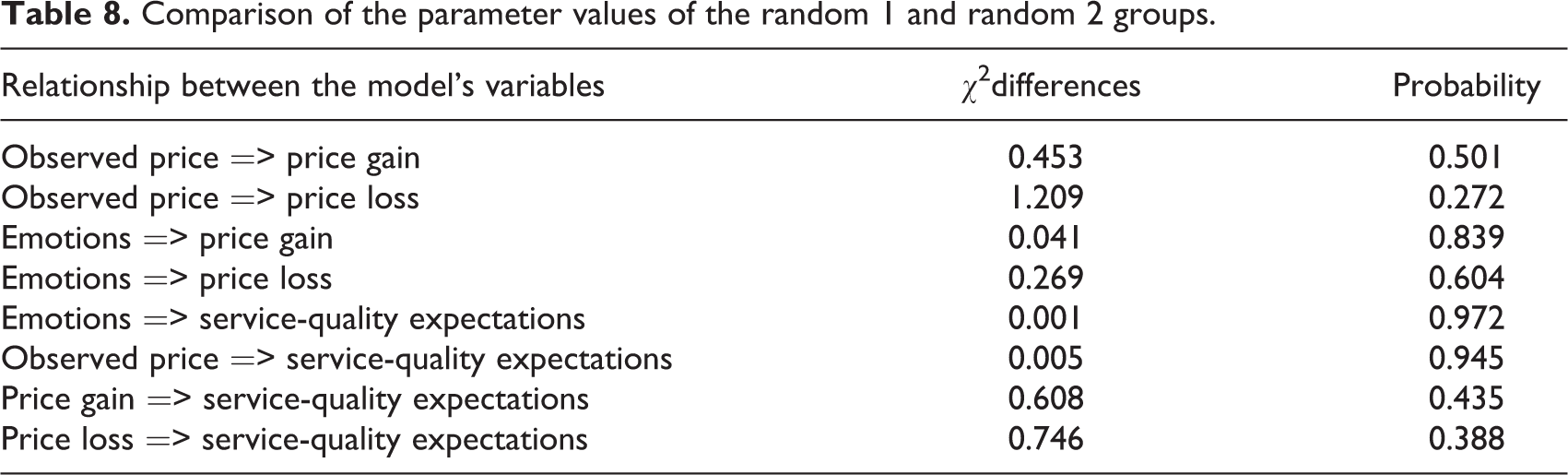
To check the model’s stability, the database was randomly divided into two subgroups, random 1 and random 2. Next, a multi-sample analysis was carried out to ensure that there were no differences between the samples in terms of the estimated parameters (Bentler, 2006). To this end, restrictions to ensure the equality of the parameters of these relationships in both models were included. Table 8 shows that the model did not improve when any of these restrictions was eliminated; therefore, the model was stable.
Comparison of the parameter values of the random 1 and random 2 groups.
Discussion and implications
Discussion and theoretical implications
Price, service-quality expectations and emotions have been recognized as playing a key role in customers’ assessments of an offer. However, limited attention has been given to the interaction of these three factors in the tourism literature. This article presented an original conceptual model for studying the interrelationships between price, service-quality expectations and emotions in the selection of a hotel.
The results of the model show that the observed price has a positive influence on the perceived price loss: the higher the level of the observed price and the stronger the customer’s perception of the product as expensive. This is an interesting finding, as previous articles (Han et al., 2001; O’Neil and Lambert, 2001; Terui and Dahana, 2006) concluded the opposite, that is, that the higher the price, the lower the perceived price loss. In light of these findings, H1b was rejected.
One explanation of this finding could be that for products with very different observed price levels, such as a car and a pint of milk, the perceived price loss might be lower for the product with the higher observed price levels (Kalyanaram and Little, 1994; Terui and Dahana, 2006). In other words, the same price loss, for instance, a €0.50 increase in the price of the product, will be perceived earlier with regard to milk than with regard to cars. However, with similar products, such as different types of hotels, higher price levels cause customers to pay more attention to whether or not the product is expensive. Thus, when comparing a room that costs €60 to one that costs €70, if there is a price loss of €5 in each case, customers will begin to perceive the €70 room (now €75) as expensive before the €60 room (now €65).
On the other hand, the findings did not show that the level of the observed price influenced the perceived price gain (H1a was rejected). This finding contradicts previous articles on the assessment of goods (Pauwels et al., 2007; Saini and Thota, 2010). However, the fact that the observed price was found to influence the perceived price loss but not the perceived price gain was consistent with the idea, widely defended in the previous literature, that customers are more sensitive to price losses than to price gains (Abe, 1998; Han et al., 2001; Kalyanaram and Little, 1994; Mazumdar and Jun, 1992; Pauwels et al. 2007; Terui and Dahana, 2006).
One interesting contribution of the empirical work is the way in which price was found to influence predictive expectations of service quality. In this regard, the study highlighted the impact of the level of both the observed price and the perceived price (i.e. the perceived gain and loss). The results show that the level of the observed price influenced customers’ predictive expectations of service quality (H2 was accepted), a finding in keeping with the literature on the hotel industry (Chen and Schwartz, 2006; Fernández Barcala et al., 2009; Huertas-García et al., 2016; Knutson et al., 1992). In contrast, the perception of the product as expensive (perceived price loss) or cheap (perceived price gain) did not affect these expectations in any statistically significant way (rejection of H3a and H3b). This finding is contrary to the negative relationship that has been reported between perceived price (from expensive to cheap) and expected hotel quality by Chiang and Jang (2006). It is likewise inconsistent with the findings of Eid and El-Gohary (2016a) of a positive correlation between perceived price and perceived quality among tourists, although these authors measured perceived quality as opposed to quality expectations. When analysing the influence of price on other variables, researchers should thus include both the observed price and the perception of that price, as these variables have been shown to affect predictive expectations of service quality in different ways.
With regard to the relationship between emotions and the perceived price, the model showed that emotions only had a direct, negative influence on the perceived price gains. There was no statistical evidence that emotions influenced the perceived price losses. Thus, the stronger the emotions generated in tourists by the hotel, in terms of the levels of pleasure and arousal, the more likely they were to perceive it as cheap. Consequently, H4a was accepted and H4b was rejected. In this regard, a higher level of pleasurable emotion along with a high level of emotional arousal reinforced the perception of the product as cheap, which is in keeping with the findings of Forgas and Ciarrochi (2001), Chuang (2007) and Gupta and Kim (2010). However, it did not dampen the effect of the product being expensive, which is contrary to the findings of Barsky and Nash (2002), Bigné Alcañiz and Andreu Simó (2004) and Ladhari (2009).
With regard to the influence of the emotions produced by the hotel on predictive expectations of service quality, the study showed that the higher tourists’ levels of pleasure and emotional arousal were, the higher their expectations. These findings led to the acceptance of H5, in keeping with the findings of Cohen et al. (2006), Chen and Chen (2010), De Rojas and Camarero (2008), Schwartz (2000), Sparks (2007) and Mattila (1999), and contrary to those of Miller (1977) and Zeithaml et al. (1993), who regarded them as exclusively cognitive variables that were not influenced by emotional aspects. Specifically regarding tourism, these findings were in keeping with those of Eid and El-Gohary (2016a) insofar as they prove the existence of a positive correlation between emotions and the perceived quality of package tours. They were also consistent with the positive relationship between tourists’ emotions and satisfaction reported by Abubakar and Mavondo (2014), Lo (2016) and Michalkó et al. (2015).
Management implications
A hotel’s price level (target price) is a variable that positively affects perceived price loss. Hotel managers should thus consider that the higher the price of a room, the more expensive customers will perceive it as being. These findings differ from those of previous studies on the purchase of goods, which have found that the higher the price level, the lower the perceived loss. In this regard, hotel managers should not believe that an increase in price will be perceived less at higher price levels. To avoid creating the perception of an expensive hotel among customers and, thus, reducing the likelihood of purchase, they should be especially careful when raising prices, particularly when it means exceeding the differential psychological price-loss threshold.
It is the price level, rather than the perception of a product as expensive, which creates higher predictive expectations of service quality. Previous articles have shown that the probability of purchase declines when a product is expensive but increases when service-quality expectations are high. Managers who believe that maintaining expensive rates will increase service-quality expectations for their hotel, thereby offsetting the negative influence of the price, could thus be making a mistake.
Another interesting aspect is the influence of the combination of pleasurable emotions and a high level of arousal on predictive expectations of service quality. The design of the tourist product and marketing communications should thus aim to generate these types of emotions, as they encourage the development of higher predictive expectations in customers and have a more positive influence on the choice of hotel.
With regard to the influence of emotions on perceived price gain, the findings show that intense and positive emotions reinforce customers’ perception of the product as cheap. Therefore, offers based on price should be accompanied by actions intended to generate pleasurable emotions and stimulate emotional activity, such as advertising campaigns designed to evoke such emotions in relation to the hotel, as they will enhance the offer in terms of the perceived price.
Limitations and suggestions for future research
In this study, customers were asked to think about what they really expected from the hotel when they booked the service. The survey was conducted in the hotel lobby when the customers first arrived so as to ensure that it concerned an actual purchase. However, because the question was not asked at the time the choice was made, customers’ responses may have been biased by the fact that they had already seen the hotel. Ideally, the entire process should be observed.
With regard to future lines of research, the conclusions discuss the possibility that perceived price losses might be lower for products with higher prices in the context of products with very different observed price levels, such as a car and a pint of milk. However, in the context of very similar products, such as different types of hotels, where the differences in observed price levels are not as dramatic, higher price levels would cause customers to pay more attention to whether or not the product is expensive. It would be useful to determine whether that is true by analysing two different product assessment situations among the same group of customers, one for products with very different observed price levels and another for products with very similar ones. In this regard, it would be interesting to study package tours, which make it difficult for tourists to compare the prices of the various services included in the package. A comparison of tourists and business travellers would also be an interesting line of research to pursue.
Finally, another future line of research would be to examine the influence of social media on emotions and service-quality expectations during the assessment process. Specifically, it would be interesting to look at how the sharing of experiences, opinions and images affects emotions and buying behaviour with regard to the booking of hotel rooms.
Footnotes
Appendix 1
The following formula is proposed:
This φ 1 is explained by a deterministic part (α 0 + αZik ) and a stochastic part δik . The component α 0 is the constant, α is the parameter vector of the explanatory variables of this threshold and Zik is the vector of the explanatory variables of the threshold, all in reference to tourist k and hotel i.
Replacing the variable φ 1 in equation (1) with equation (2) gives:
In accordance with Han et al. (2001), a monotonic transformation is then performed by multiplying the function by μ
loss and adjusting the probability to a binomial logit function, such that:
Once the binomial logit has been calculated and the parameter
Declaration of conflicting interests
The author(s) declared no potential conflicts of interest with respect to the research, authorship, and/or publication of this article.
Funding
The author(s) received no financial support for the research, authorship, and/or publication of this article.