



Abstract
This study aims to identify and categorize service failures from luxury hotels in Taiwan. A theoretical framework is proposed by adapting marketing mix elements. A total of 411 negative comments were found and extracted from four popular online review websites from 20 luxury hotels in Taipei. The content analysis method was employed for data analysis. The study results show that majority of luxury hotels in Taiwan encounter critical product issues, especially concerning the condition of facilities and equipment offered in the guest rooms. Furthermore, cleanliness of the hotel rooms requires greater attention, especially the cleanliness of room carpets, which could affect the hotel guests’ comfort during their stay. The findings and recommendations can provide luxury hotel practitioners in Taiwan a clearer picture about the service problems faced and enable them to conduct further investigations for further improvements. So far, existing studies are lacking of a systematic framework in demonstrating the service failures from online reviews. This research attempts to fill this gap.
Introduction
A 2013 report has highlighted that the most beautiful scenery in Taiwan is the people (All-China Women’s Federation, 2013). In fact, this commentary is supported by the Taiwan Tourism Bureau 2014 Statistics Analysis Report, where the friendliness of the people of Taiwan is the top competitive advantage compared to other Asian countries such as Korea, Japan, Hong Kong and Singapore. By optimizing on this as a competitive advantage, it could assist Taiwan in seeing greater arrivals of inbound tourists. According to the most recent 2014 Taiwan tourism statistics, inbound tourist arrival for sightseeing purpose increased from 60% in 2011 to about 72%. Furthermore, the income contributed from sightseeing tourism has increased year by year since 2005. The total annual income of visitor expenditure has increased to US$14,615 million in 2014. Hotel expenditure records were the second highest visitor expenditure which is 32.74% after expenditure from shopping activities at 33.90%. These statistics reflect the significance of hotel businesses’ contribution to Taiwan’s tourism income. Moreover, the average length of stay for all inbound visitors is about 6.65 nights in 2014. Hence, hotels in Taiwan play a critical role in enhancing visitors’ stay and travelling experience. Internet bookings for hotels in Taiwan are growing; online sales are growing faster than offline sales, and it is forecasted that online sales will continue to grow aggressively. One of the reasons for this is that hotel guests nowadays usually compare options, hotel prices and consider review comments – all online – before booking a hotel room (Euromonitor International Passport, 2015). In other words, online review comments are critical for hotel guests in choosing the right hotel for their trips.
Due to the advancement of information technology, customers nowadays employ different online channels to share or express their service experiences, including using online review websites that are particularly popular among hotel guests who book hotel rooms on their own. Thus, word of mouth (WOM) and interpersonal influence are the most critical sources of information in the purchase decision made by a customer (Litvin et al., 2008). According to Litvin et al. (2008: 461), the term electronic WOM (eWOM) has to do with ‘all informal communications directed at [the] consumer through Internet-based technology related to the usage or characteristics of particular goods and services, or their sellers’. Online review websites are considered as part of eWOM channels, which have substantial influences on the services industry, in particular the hotel sector, where services are intangible and difficult to evaluate prior to consumption. For example, potential hotel guests cannot trial hotel stays before making room reservations. Therefore, their consideration of the choices of accommodation relies heavily on online review websites (Vásquez, 2011).
Previous studies on hospitality and tourism have examined online review websites on the types of e-complaints (Ekiz et al., 2012; Sparks and Browning, 2010; Zheng et al., 2009), motives of e-complaints (Lee and Park, 2010; Loo et al., 2013; Sparks and Browning, 2010) and customer satisfaction factors (Li et al., 2013; Nusair and Kandampully, 2008). These studies have been conducted using online review data. Nevertheless, majority of the data was analysed and categorized according to (a) most frequently used words (Levy et al., 2013; Stringam and Gerdes, 2010; Xiang et al., 2015), (b) most common departmental complaints (Huang et al., 2016), (c) service quality dimension (Duan et al., 2015) and (d) service processes (Zheng et al., 2009). The results from these studies have shown that these categorizations lack detailed information, which may help academicians and industry practitioners understand the actual service failures in hotels. Majority of the studies merely capture the text from user reviews as part of the categorization via software analysis. Hence, a consistent and systematic categorization of service failure data is warranted as this would fill the research gap as well as help industry practitioners have a better picture and understanding on service failure issues occurring in hotels. Furthermore, hotel owners and hotel management teams can identify the areas to improve in order to enhance their existing customer satisfaction while promoting customer loyalty. In fact, studies on categorization of service failures based on e-complaint data are still scarce in the hotel industry. This study helps hotel top management and department managers to have a better picture of the effectiveness of marketing communication and service delivery performance in fulfilling their company’s goals and customer satisfaction. The planning, communicating and delivering of marketing products and services for hotels are generally based on 7Ps (products, price, place, promotion, people, process and physical evidence) of marketing mix elements. Therefore, adaptation of marketing mix elements for service failure categorization would be relevant and useful for top management and marketers in the hotel industry to use as one of the company’s performance evaluation tools.
According to Taiwan Tourism Bureau (2016), hotels in Taiwan adopt the star rating system. In this study, luxury hotels refer to four- and five-star hotels (Five Star Alliance, 2016). Although different countries have different standards in the star rating system, the scale measurement could provide a relative comparison for customers. Four- and five-star ratings are already the top ratings in the scale, so this could represent a luxury hotel. A comprehensive picture of service failures can be derived from luxury hotels as compared to lower-grade hotels from online reviews. Service delivery in luxury hotels nowadays is still heavily reliant on service employees. Service failures caused by employees’ negligence or mistakes are inevitable due to the nature of human being’s mood and attitude which varies from individual to individual. The higher the frequency of interaction between employees and hotel guests, the greater the chances of failure incidents to occur. Therefore, luxury hotels could provide diversified failure data as they offer both extensive services and facilities.
On top of that, hotel guests pay a higher price for luxury hotel rooms. Naturally, they would have greater expectations towards the standard of hotel services and products offered for the paid price. Service failure happens when there is unfulfilled expectation towards service and product delivery during the service consumption process. Therefore, luxury hotels can be recognized as one of the useful resources for collecting service failure data in hotels. In addition to that, stiff competition exists among these luxury hotels, especially in Taipei which is the financial and capital city of Taiwan. Hotel players compete to perform the best in delivering their services in all seven realms of services marketing mix, comprising the 7Ps – product, price, place, promotion, people, process and physical evidence (Zeithaml et al., 2012). This reflects the importance of 7Ps marketing mix elements to help the hotel players to gain a greater competitive advantage in the market. Therefore, the aim of this article is to identify and categorize services failures in online review websites belonging to luxury hotels in Taiwan.
Literature review
Online customer review (eWOM) and service failure
As products of hospitality and tourism are viewed as high-risk purchases, reference group evaluation is, therefore, an important element in consumers’ decision-making process (Lewis and Chambers, 2000). With the emergence of technology advancement by having numerous online review websites, eWOM is recognized as a major source of pre-purchase information (Sparks and Browning, 2011). eWOM, also known as online customer review, refers to ‘peer-generated product evaluations posted on company or third party websites’ (Mudambi and Schuff, 2010: 186). eWOM is more impactful compared to traditional WOM because of the speed, convenience, one-to-many reach, its absence of face-to-face human pressure (Sun et al., 2006) and it remains accessible over time (Melian-Gonzalez et al., 2013). Consumers, ironically, pay greater attention to negative reviews than positive reviews (Lee et al., 2008), specifically in the tourism sector (Sparks and Browning, 2011).
Service providers which fail to provide or deliver expected services may lead to negative eWOM which can damage a company’s image or reputation and further result in losing some business (Blodgett et al., 1995). Hotel guests seem to engage in eWOM when a guest has an extremely good or extremely bad experience (Melian-Gonzalez et al., 2013). Potential hotel guests tend to be influenced more by negative comments, and in particular when the overall set of reviews is negative (Sparks and Browning, 2011). Negative reviews have more influence than positive ones because the readers judge them to be more credible (Papthanassis and Knolle, 2011). Negative reviews can be considered not only as indicators of service failures (Bateson and Hoffman, 1999) but also opportunities for companies to improve if they are managed well (Pantelidis, 2010).
Service failures are inevitable in the hotel sector. Service failure can be defined as a service breakdown that occurs in the service delivery chain which fails to meet customers’ expectations (Mueller et al., 2003; Sparks and Fredline, 2007). Service failures could happen in both the process and outcome of service delivery (Lewis and McCann, 2004) which may include actual or perceived service-related problems (Maxham, 2001). The failure of meeting expectations is the gap that exists between the expected service standards and the actual service delivered termed as perceived loss (Bitner et al., 1990). This loss can be referred to as an economic loss (such as money and time) and social loss (such as self-esteem and social status) (Bagozzi, 1975). Hence, it is important to know the types of service failure or loss which fail to meet customer expectations in order to take appropriate service recovery or preventive actions to minimize or to avoid repeat failures. Analysis of service failures is valuable to services companies as it allows the hotel management to identify common failure situations; this information can be utilized to minimize the occurrence of future service failures (Hoffman et al., 1995).
A review of online customer review categorization
In the hotel sector, researchers’ studies on online customer reviews are mainly based on several different perspectives including customer satisfaction (Hasegawa, 2014; Li et al., 2013), customer complaining behaviour (Ekiz et al., 2012; Vásquez, 2011; Zheng et al., 2009), service failure (Lee and Hu, 2004; Sparks and Browning, 2010), guests’ comments (Stringam and Gerdes, 2010) and product features (Pekar and Ou, 2008) as demonstrated in Table 1. Within these perspectives, one commonality found across the majority of studies is that the findings are based on the frequency of keywords appearing (Au et al., 2014; Lee and Hu, 2004; Sparks and Browning, 2010; Zheng et al., 2009). Furthermore, some of the categories were confusing due to the lack of consistency and systematic approach of categorization. For instance, in the study by Levy et al. (2013), the categories vary from departmental (e.g. housekeeping) to issues (e.g. cleanliness) and facilities (e.g. bathroom) to items (e.g. towels). Elements of the categorization could be overlapping such as cleanliness and towels could be under the housekeeping department. An earlier study on lodging service failure categories is based on services conditions (e.g. customer service contact confusing/inefficiency) and process (payment was not credited) without product issues.
A summary of existing online review research studies.
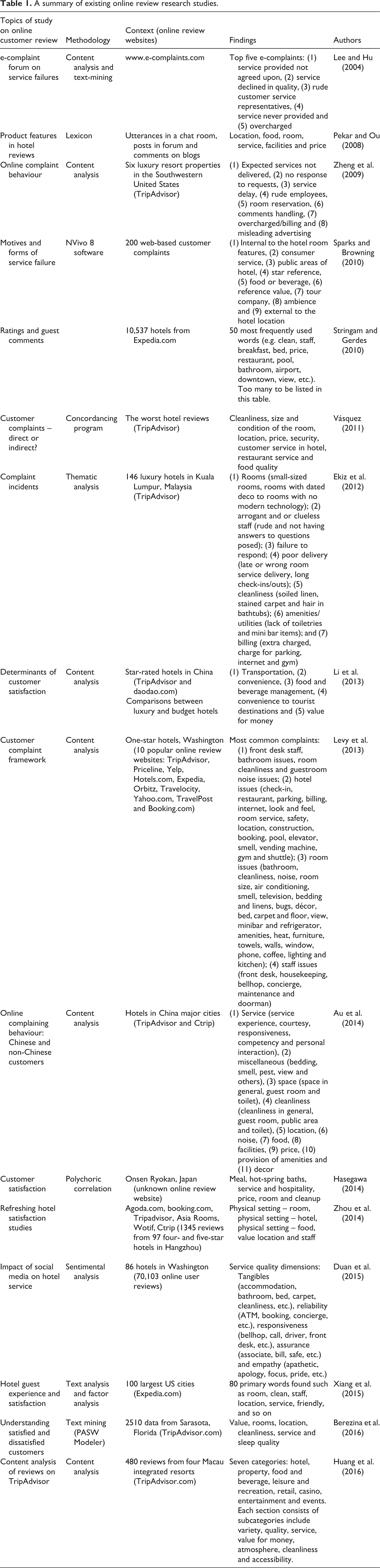
In fact, the categories could be overlapping such as a category named ‘service declined in quality’ – this can cover a variety of service problems that encompass ‘service inefficiency’ which is another category as proposed by Lee and Hu (2004). Overall, categorization for most of the existing research studies has been identified to be lacking of a desirable and necessary theoretical framework to support its categorization. This study attempts to close the gap by incorporating a theoretical framework using the 7Ps of services marketing mix elements in categorizing service failures.
7Ps of marketing mix elements
Marketing mix is defined as ‘the mixture of elements useful in pursuing a certain market response’ (Van Waterschoot and Van Den Bulte, 1992). The concept of marketing mix was introduced by Neil Borden in 1953 (Waterschoot and Bulte, 1992), which includes the 4Ps (product, price, place and promotion). Later, Booms and Bitner (1981) proposed to incorporate three more Ps into services marketing mix – participants/people, physical evidence and process. According to Wirtz et al. (2013), they elaborated the 7Ps in services marketing context. Furthermore, Rafiq and Ahmed (1995) critically analysed and found that there are greater strengths and lesser weaknesses of using 7Ps than 4Ps; the main strengths of 7Ps include, but is not limited to, that it is more comprehensive and detailed.
Service products cover a core product that fulfills the customer’s primary need and supplementary service elements including offering information and handling exceptions. In this article, ‘product’ is defined as the facilities and amenities available in a hotel room as well as the breakfast included in the paid room fee. ‘Price’ includes monetary costs and time spent. ‘Place’ in service industry normally refers to the distribution channels used in product delivery, but in this study, it would refer to the location and accessibility of the hotels. ‘Promotion’ refers to the communication and education for customers about the benefits of products and services. ‘People’ reflect the attitude and skills of employees. Also, in this study, people include both internal customers – the employees (attitude and skills) – and external customers – actual customers (attitude) in the hotel service delivery. ‘Process’ relates to the implementation of service production and delivery, and ‘physical evidence’, also referred to as ‘Servicescape’, describes the appearance of the building, landscaping, vehicles, employees’ uniform, furnishing, equipment, space and layout of the interior building.
7Ps of marketing mix elements and service failure
Yelkur (2000) has proposed a model of possible effects of marketing mix elements towards a customer’s perception of service. He highlights that price and promotion are two important elements which form customer expectations of service. Meanwhile, the other marketing mix elements including people, process, place and physical evidence influence customers’ perception of service during service consumption. Generally, the marketing mix elements are used as a reference for marketing strategies and plans as well as marketing activities which form customer expectations and responses towards the products and services. When service failure occurs, it means that hotel companies have failed to meet customer expectations as communicated via marketing activities. Service failures would also influence customer responses towards service and product quality offered by companies, including trust, satisfaction, commitment and WOM (Weun et al., 2004). In this study, service failure covers the inadequacy or failure of products or services offered in fulfilling the hotel guests’ expectations of Ps throughout their hotel staying experience. When service failure happens, the formed expectations of customers towards products and services have failed to be fulfilled, which affect their perception towards products, services, brand and company. Therefore, service failures can be the failures of meeting customer expectations which are formed with marketing mix elements before and during service consumption. A proposed framework of service failure adapting marketing mix elements is warranted to enhance the existing literature of service failure as well as to help industry practitioners to have a clearer and more precise picture of understanding service failures in hotels.
Methodology
Sampling
The data in this study were collected in August 2015 from four most popular online travel websites (Ali and Skift, 2014). Table 2 illustrates the statistical information on these top online travel-related sites in 2014. Expedia mainly focuses on North America with 79% of its reviewers being American. Agoda and Priceline are under the same group company, where Priceline is American focused and Agoda is Asia focused; for this reason, this study excluded Priceline and Expedia. Hotel reviewer reviews were extracted from four top hotel bookings and review websites including Booking.com (www.booking.com), TripAdvisor (www.tripadvisor.com), Hotels.com (www.hotels.com) and Agoda (www.agoda.com).
Top online travel-related websites in 2014.
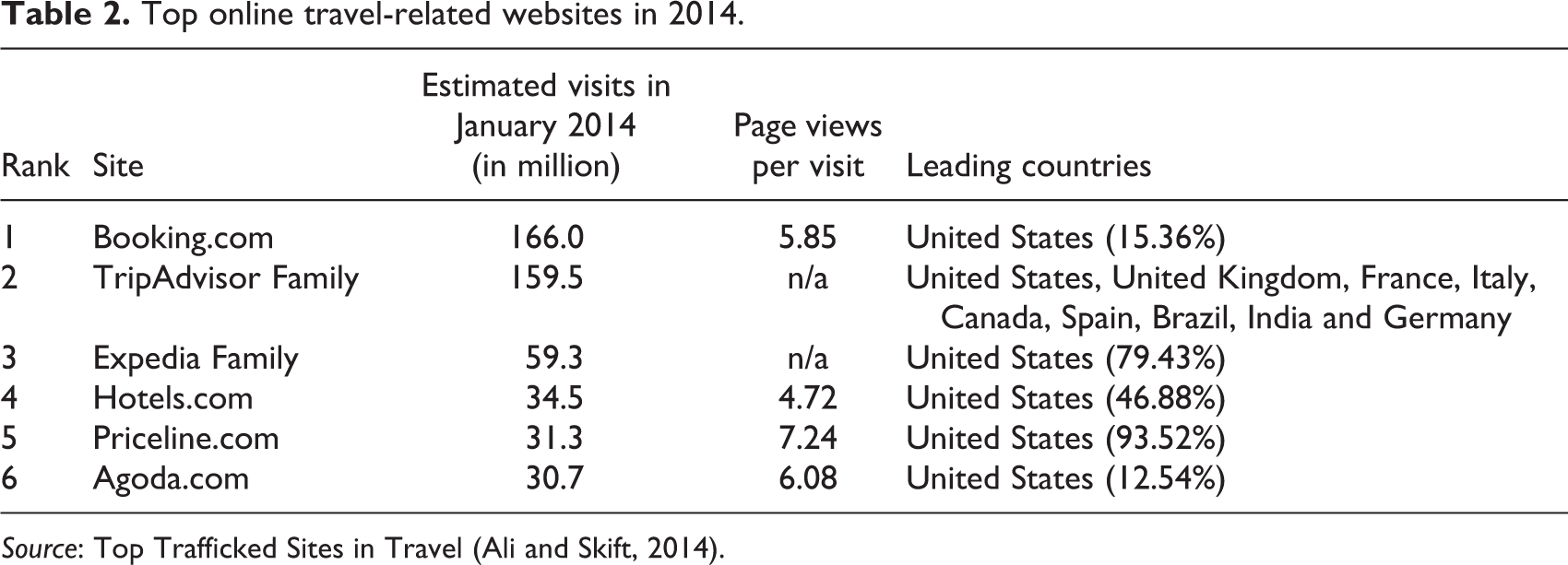
Source: Top Trafficked Sites in Travel (Ali and Skift, 2014).
Data collection
According to the Taiwan Tourism Bureau (2015a, 2015b), the total number of hotels in Taiwan is 3083 with 174,664 guest rooms. Among those, 485 hotels (9%) are located in Taipei City with 32,289 guest rooms (34%). Of those, 128 of them are four- and five-star hotels. Taipei is the political, economic, educational and cultural centre of Taiwan, so this study focuses on the hotels in Taipei City. For every 100 inbound tourists to Taiwan, 85 of them would visit Taipei (Taiwan Tourism Bureau, 2015c) so the hotel performance in Taipei would strongly affect the overall tourist’s impression of Taiwan. This study selected 20 luxury hotels in Taipei and examined their general service failure via reviewer reviews. As not all hotels appear in all four websites, the authors have extracted the hotel list from each website and selected hotels that review comments were available in all four review sites. Initially, Booking.com was chosen as one of the main resources for data collection due to the fact that it ranks first among the online review websites. However, later, authors found that the amount of negative comments data from Booking.com was insufficient. So, the decision was made to include other top ranking websites too. Booking.com was chosen as a benchmark for the other three online websites to continue the data collection and selection. According to Travel Trends (2013), Booking.com and Agoda were the most competitive online travel agencies in the Asia Pacific market but booking.com ranked the first (Ali and Skift, 2014) with five times more visits than Agoda. Therefore, this study is based on the review scores from Booking.com as the guideline for selecting sample hotels. As this study focuses on examining the service failure in hotels, 20 hotels with the lowest reviewer ratings in Booking.com were selected. Two years’ worth of reviewers’ negative review comments in both English and Chinese (traditional and simplified Chinese) posted from July 2013 to June 2015 from all four online websites were extracted to a Microsoft Excel worksheet. The definition of negative reviews was based on the reviewer rating score of each review comments.
According to Booking.com, there were around 120 four- and five-star hotels in Taipei city. The study did not employ any auto data extraction. Due to manpower and time limitation, the authors could only handle a maximum of 20 hotels (15%) with more than 400 reviews extracted and more than 6800 reviews scanned. Admittedly, this is one of the major limitations of this study, and the authors have expressed it in their limitation.
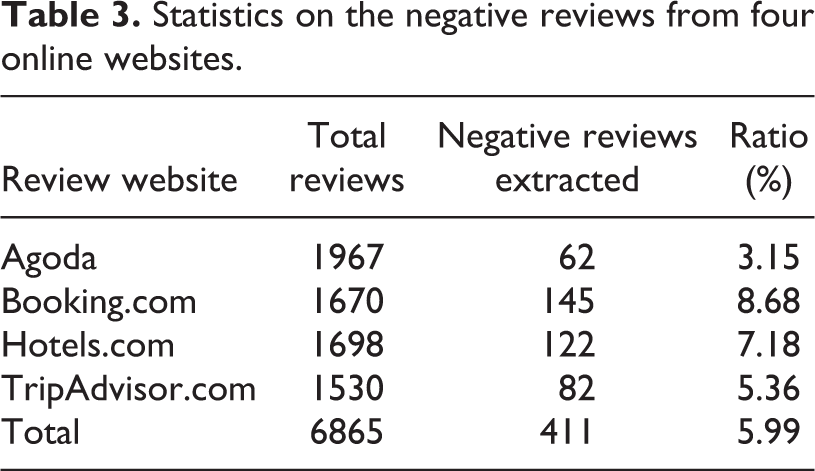
One challenge faced was that there was no clear guideline or literature related to the definition of ‘negative reviews’. Under normal consumer behaviour, when gaps exist between the expected service compared to actual perceived service leading to customer dissatisfaction, the hotel would normally be rated around the midpoint (3 points for a 5-point scale and 5.5 points for a 10-point scale). As customers might be, overall, happy with the hotel, but dissatisfied with one of two minor issues, then they may still rate the hotel as good. This study attempts to obtain the higher number of negative reviews for analysis; therefore, rather than using the mid-point, this study sets the cut-off point at 75%, meaning reviews with ratings below 3.75 (for a 5-point scale) and 7.5 (for a 10-points scale). In other words, if the score was rated below 75% of the overall score, the review was labelled as a negative review. Hotels.com and TripAdvisor use a 5-point scale, so reviewer ratings below 3.75 were treated as negative; Booking.com and Agoda adopt a 10-point scale so the reviews would count as negative if the score was below 7.5. The researchers carefully read all the negative reviews and 17 reviews were found posted more than once, and 15 reviews with low scores did not mention any service failure incidents; therefore, all these reviews were removed from the database. Table 3 illustrates that from a total of 6820 review comments, 411 of these (6.03%) were labelled as negative reviews after removing duplicates and irrelevances. All extracted reviews were recorded with reviewer profile onto a Microsoft Excel worksheet for further analysis.
Statistics on the negative reviews from four online websites.
Content analysis
This study employs the content analysis method and follows the guidelines provided by Kolbe and Burnett (1991). Two independent judges obtained and carefully read a copy of the worksheet which contains all extracted reviews. Both judges intensively reviewed and agreed to categorize service failures into seven marketing mix elements (product, price, place, promotion, people, process and physical evidence). Both judges know well about the 7Ps definition and also other terms of subcategories. They both have rigorous reviews and discussions about the selection of subcategories. They used the same categorization system for all data. With any discrepancies of the service failure categories or data categorization, both judges discussed and compromised towards a final consensus.
The data coding was done manually instead of using a computer software such as Nvivo or Atlas. The main reason for this is that software systems do not take context into account, and also the abstraction of constructs is rigid which means that the system merely identifies themes based on exact words appearing in texts. Each review might contain more than one service failure item; therefore, the database were further expanded so that each record contained one service failure incident. Based on the nature of each incident, it was grouped into one of the marketing mix elements (7Ps). To provide a more comprehensive analysis on the themes of service failure, each marketing mix was further categorized into second level or even third level of subthemes. The second and third level categorizations were based on the nature of the failure and were not categorized based on departmental responsibilities. The inter-judge reliability value of service failure categorization was 0.91, which fell within the desirable range (greater than 0.85) as suggested by Park (2005).
Results
Reviewer demographics and service failure incidents
Among 411 negative reviews about Taipei hotels, 99 reviews (24%) were from local residents, while 204 reviews (50%) were from hotel customers from 12 countries in Asia Pacific. Hong Kong (67 reviews, 16%), China (53 reviews, 13%) and Singapore (37 reviews, 9%) were the top three countries that posted negative reviews. Reviews from North America counted for 53 reviews (13%) in total where majority (45 reviews) were from the United States and the remaining were from Canada. Seventeen reviews (4%) were from Europe with 11 of them from the United Kingdom. Lastly, eight reviews (2%) were from five countries in the Middle East. As ‘country of residence’ was not a compulsory field in the review site, 30 (7%) reviewer profiles of reviewers did not indicate their country of residence.
After carefully reading all 411 reviewer reviews, it is noted that some contained more than one service failure items. Therefore, the total number of service failure incidents was 1043 (Figure 1). Around three-quarter of the reviews contained less than three failure incidents while a quarter of the negative reviews indicated four to eight failure incidents.
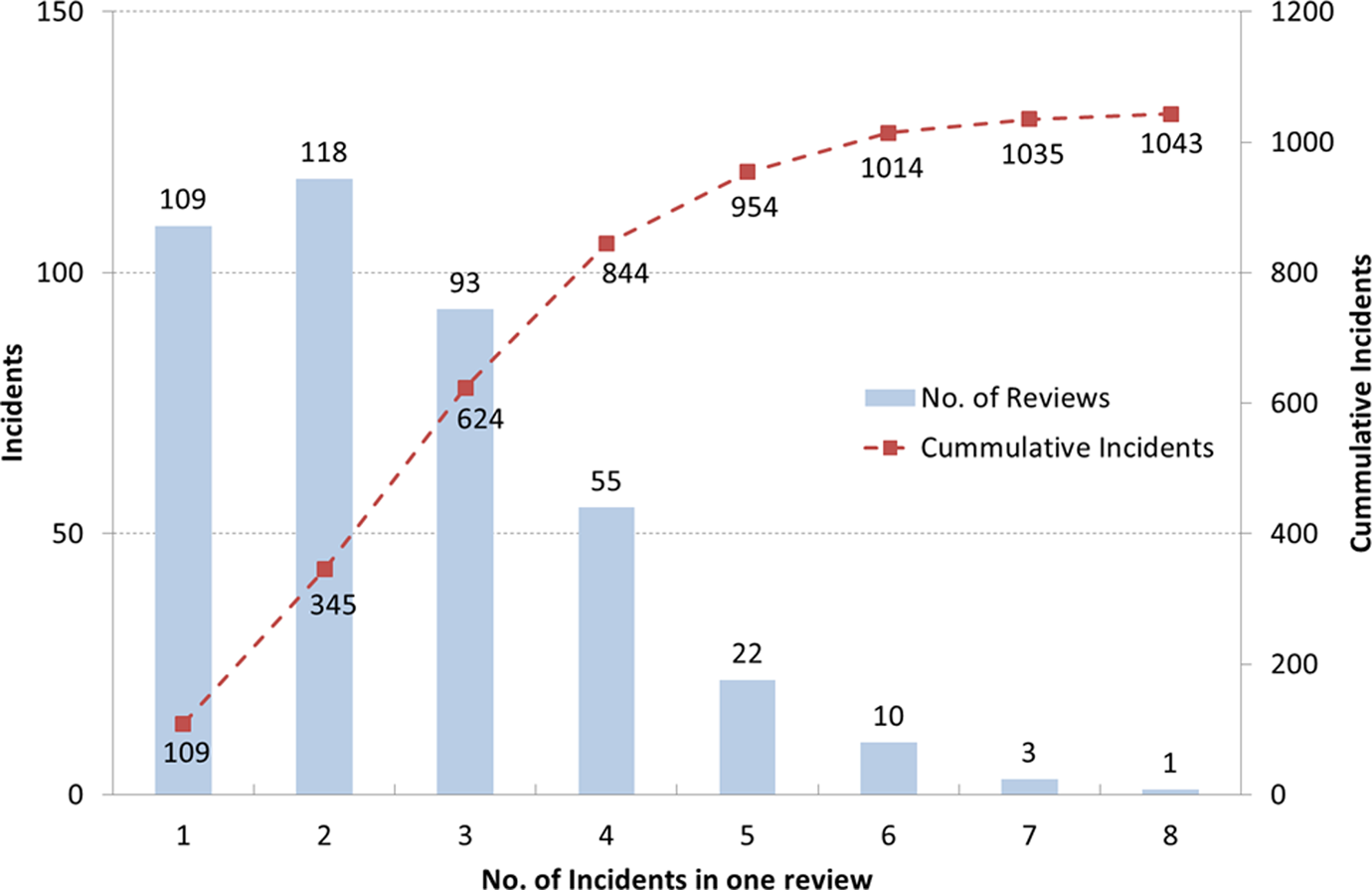
Distribution of number of service failure incidents in negative reviews.
Categorization of service failure by marketing mix elements
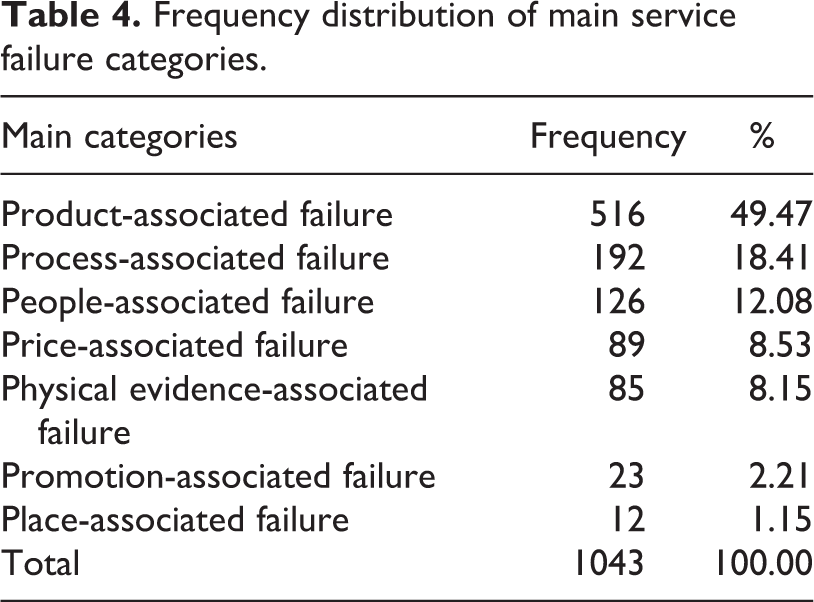
After reviewing the review comments, all 1043 incidents were categorized into seven main categories. The result indicates that product-associated failures were the most problematic issues for Taipei’s luxury hotel industry. Almost half (516 incidents) of the service failure originated from product-associated failures. This reflects that the core product of Taipei hotels – such as room, breakfast and/or facilities – was unable to satisfy or meet the customer’s needs. Process-associated failures and people-associated failure ranked second and third with 192 incidents (18%) and 126 incidents (12%), respectively, which imply the service delivery execution was not satisfactory. Price-associated failure and physical evidence-associated failure ranked fourth and fifth with 89 and 85 incidents, respectively (9% and 8%), and promotion-associated failure and place-associated failure received the least complaints with 23 and 12 failure incidents (2% and 1%), respectively (Table 4).
Frequency distribution of main service failure categories.
Service failure categorization for place-associated failure, promotion-associated failure, price-associated failure and physical evidence-associated failure
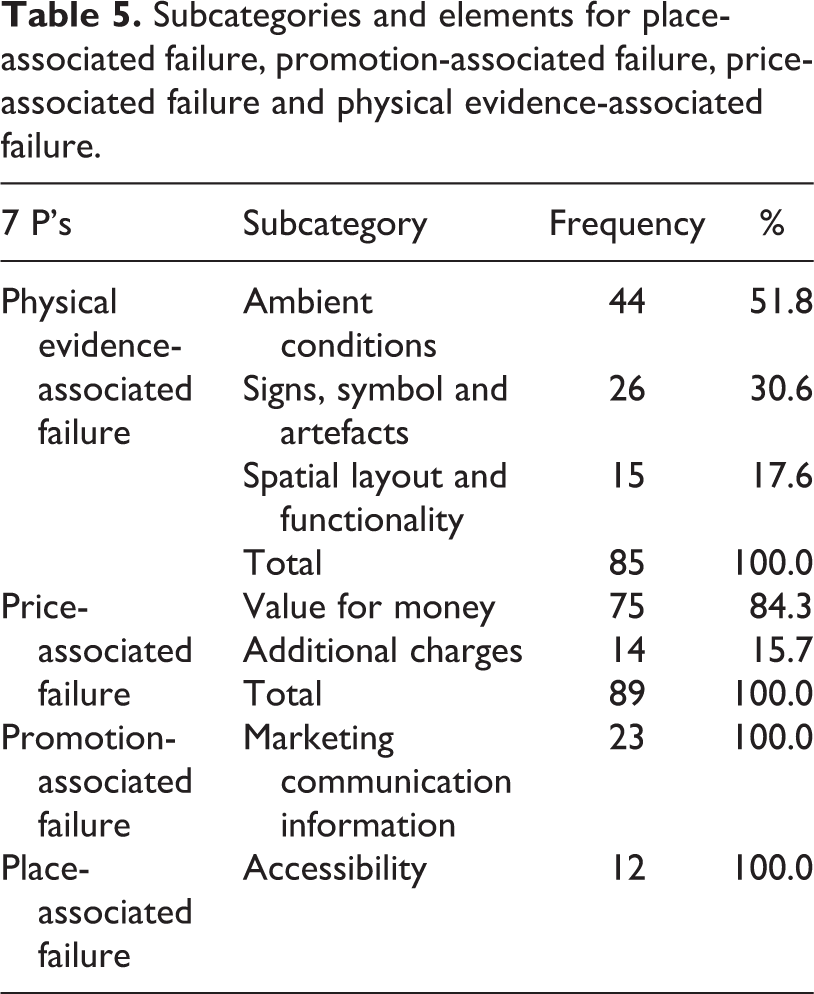
Table 5 summarizes the subcategorization of service failure incidents for place-associated failure, promotion-associated failure, price-associated failure and physical evidence-associated failure. Each of these four marketing mix elements has less than 100 incidents (10%), and the failure incidents were quite alike, so they were not further classified into elements.
Subcategories and elements for place-associated failure, promotion-associated failure, price-associated failure and physical evidence-associated failure.
Physical evidence-associated failure
Physical evidence is the environment where a service is performed and delivered with any tangible cues that facilitate the delivery of service performance (Zeithaml et al., 2012). Physical evidence-associated failure encompasses the tangible cues and environment available in a hotel, excluding the guest rooms which are categorized under product-associated failure instead. Under physical evidence-associated failure, there are three subcategories including the ambient conditions (44 incidents); spatial layout and functionality (15 incidents); and signs, symbol and artefacts (26 incidents). These incidents were found in 18 hotels. Nearly half of the total incidents under this category were related to the ambience of the hotel. Although ambience is not directly related to the core product (guest room or breakfast), it can still affect the customer’s overall satisfaction. Some hotel guests complained about the unpleasant smell inside the hotel and poor lighting at the corridor of guest rooms: …when we walk around we smell a lot of pork cooked with garlic and bad smells all around this property. (Reviewer 22) Would have preferred better lighting along the corridors and waiting areas. (Reviewer 116) Cafeteria seating are arranged too close between adjacent tables…(Reviewer 20) …the elevators are kind of small, where you feel like you have been squeezed out from other customers. (Reviewer 70)
Price-associated failure
Customers complaining about price-associated failure about Taipei hotels mainly related to two elements which are value for money and additional charge. Over 80% (75 incidents) were related to no value for money from 19 different hotels. Customers had paid the luxury hotel room rate but the quality of the room did not match with the hotel guests’ expectation: Certainly don’t expect this for the price I’m paying. (Reviewer 55) Room rate was way too high for a single studio with no windows, just like living in a cell. (Reviewer 201)
Other than value for money, customers also complained about being asked to pay additional charges for services that they expected to have been included in their room rate. In particular, internet connection is one of the ‘must have’ services, just like lighting inside the room; thus, customers were not expecting to pay for Wi-Fi. I did not like at all the paid Wi-Fi for guests paying more than a night at Times Square, NYC? (Reviewer 43)
Promotion-associated failure
All 23 incidents were related to misleading marketing communication, and this issue was identified in 12 hotels. This is not a good sign as more than 50% of the studied luxury hotels in Taipei received complaints about the relevance of their photos and information posted on their websites with the actual products. The use of website is currently the most important channel for disseminating information; therefore, information accuracy is very important. However, majority of the incidents were related to the fact that the information obtained from the website did not match with the real scenario. My friend and I were extremely disappointed with the size, layout and decor of the room as it was far from the one shown in the photo in the hotel website. (Reviewer 34)
Place-associated failure
Service failures incidents falling under place-associated failure category were alike. Place-associated failure is the location or proximity of access points of the hotel for public transportation in particular (Chaves et al., 2012). All 12 incidents were related to the poor accessibility of the eight hotels. Some customers just indicated the disappointment about the hotel’s location. Having stayed at a number of [brand name] hotels worldwide, our expectations were high…We are not sure whether it was the location (being inconvenient). (Reviewer 48) The hotel is situated at such almost ‘dead end’ location very close to the entrance of freeway. It is impossible for you to get a taxi by yourself since no taxi will come by. (Reviewer 349)
Product-associated failure
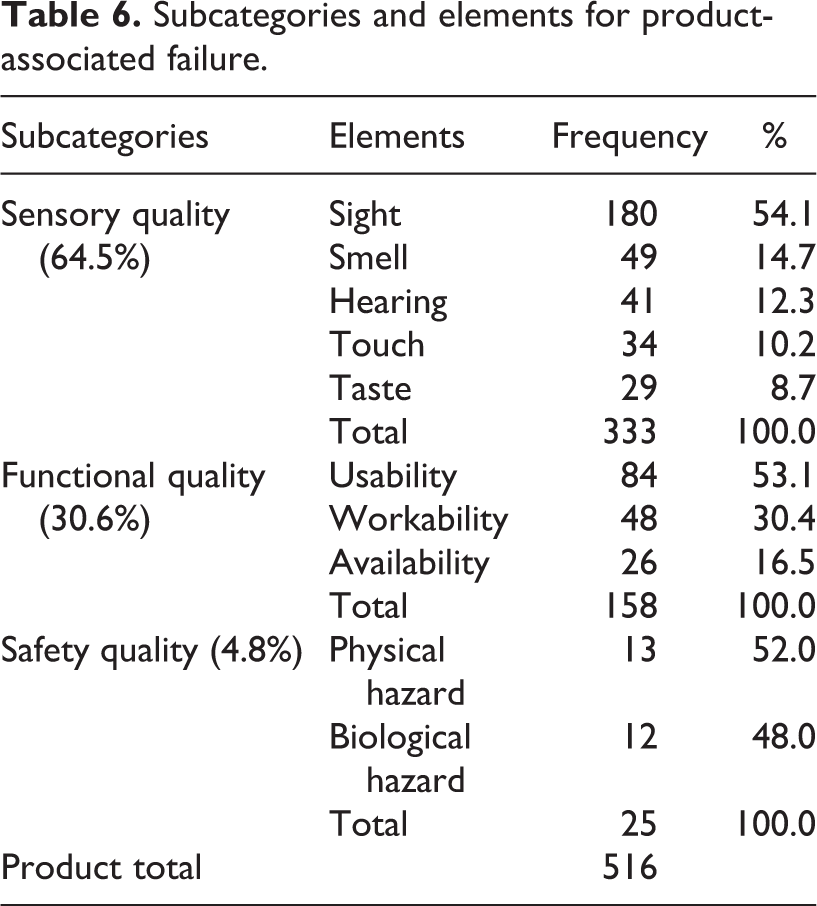
About 50% (516 incidents) of 1043 total service failure incidents were related to product-associated issues. This finding is consistent with two studies reported by Sparks and Browning (2010) and Berezina et al. (2016) that the physical attributes of the hotel room as well as the quality of amenities provided in the room recorded the highest frequency of negative reviews. After analysing the review comments, failure incidents were categorized into three main subcategories – sensory quality (333 incidents, 65%), functional quality (158 incidents, 30%) and safety quality (25 incidents, 5%). Table 6 demonstrates the breakdown of all three categories and 13 subcategories.
Subcategories and elements for product-associated failure.
Sensory quality
Sensory evaluation can be used to measure, analyse and interpret responses on characteristics of materials which are perceived by the senses of taste, touch, smell, sight and hearing (Stone and Sidel, 2004). Further extended from the definition of sensory evaluation, sensory quality in this study refers to the perceived characteristics (taste, touch, smell, sight and hearing) of guest room products available inside the room as well as the breakfast offered, which are the core products and part of the room payment. Therefore, under this subcategory of sensory quality, there are five elements derived according to the five senses. Sensory quality was revealed as the key problematic failure for Taipei luxury hotels. All 20 hotels have sensory quality-related problems with 333 incidents identified. Sight (54.1%) has recorded the highest failure under sensory quality compared to the other four senses. The least count was food taste of hotel breakfast provided (8.7%).
Sight
Nineteen of 20 hotels have dated furniture problems in both design and condition of the facilities inside the guest rooms. Hotel is very old,…Toilet is in old fashion (Reviewer 387) Need a serious refresh for decoration and new TV. (Reviewer 361)
Smell
Under normal circumstances, no hotel room should have any odd smells. However, this is not the case in many Taipei luxury hotels with 49 incidents reported from 13 hotels. The hotel blanket and pillow case are extremely smelly and smell like [they have] not [been] washed for long time. (Reviewer 322) A room that smelled like an ashtray; change room; another ashtray; change again; finally something that didn’t stink. (Reviewer 9)
Hearing
Many customers are sensitive to noise; therefore, hotel guests do expect a quiet room with good soundproofing. However, 15 of 20 luxury hotels in Taipei have soundproofing problem. Soundproofing in hotel rooms is one of the critical failures reported by hotel guests under the room issues (Zhou et al., 2014). NO soundproofing - so you can listen to the endless chatter of your neighbors walking past and when housekeeping or a neighbor 10 rooms away slams the door, you can hear it. (Reviewer 65)
Touch
A comfortable bed and beddings could critically affect the hotel guests’ sleeping quality and overall stay experience. One of the negative comments expressed by the hotel guest is: The bed was so hard. And the blanket [was] not thick enough. (Reviewer 239)
Taste
Other than guest room, food and beverage quality, especially the taste of the food served is another essential core product for hotel guests. Hotel breakfast could be a good start and can brighten up the day of the hotel guests. Some reviewers made comments about Taipei’s luxury hotels’ breakfast (29 incidents) being unsatisfactory as exemplified below: In the evening, I was dining in the famous French restaurant and to be honest the service is great but the food needs improvement…tasteless…(Reviewer 102) The rooms, food, service and amenities are the worst one can imagine…The breakfast was cold, tasteless…(Reviewer 181)
Functional quality
Functional quality is defined as how a customer receives services or products (Grönroos, 1984). In this study, functional quality refers to how a hotel guest receives or utilizes the offered products or services in a guest room. Functional quality can be further extended into three different elements. The first element is the availability of the facility; the second element is the workability of the facility – whether it is workable or not. Some hotels provide the facility; however, hotel guests were unable to utilize it (e.g. out of order). The third element is usability of the facility – whether the facility is easy to be utilized or user-friendly, and in good quality or condition to be used. There were 158 failure incidents about functional quality found in all 20 hotels. The top ranking under functional quality subcategory is the usability of the facility (53.1%), followed by the workability of facility (30.4%) and facility availability (16.5%).
Usability
Usability is defined as the ‘capability to be used by humans easily and effectively’ (Shackel, 2009: 340). In this study, usability refers to the quality of being able to use the facilities or equipment efficiently and effectively. Luxury hotel providers should be aware of the performance level of facilities and equipment. With a total of 84 incidents found in all 20 hotels, the quality of the facilities provided in Taipei’s luxury hotels failed to meet the expected standard as expected by hotel guests, for example, about the Wi-Fi available speed: Wifi is super, super weak and slow. (Reviewer 385) Wifi only works in the lobby. (Reviewer 342)
Workability
Disappointment intensifies when facilities offered fail to function appropriately. Failure in workability, in this study, means the facilities failed to be utilized and did not successfully function at the normal and ordinarily expected condition. Seventeen hotels were found to have failed in providing workable facilities to some of their hotel guests (48 incidents). …it was hard to regulate the room temperature (Reviewer 110) …leaking toilet and broken air conditioning (freezing no matter what temperature is set) made the stay extremely unpleasant. (Reviewer 295)
Availability
Any missing facilities would disappoint the hotel guests as many of them have certain expectations before they arrive. The discovery of any missing items or services could lead to customer dissatisfaction. This study identified 26 cases related to item or service availability. Wardrobe did not have hangers, cannot hang my suit. (Reviewer 263) No heat in the rooms temperature was below 10 degrees celsius, asked and they just smile and said no heat available. (Reviewer 339)
Safety quality
There are two types of safety quality issues of product-associated failure: physical hazard (bad condition of the facility which may cause injury or damage) and biological hazard (e.g. bugs or pests found inside the guest room). A total of 25 incidents related to safety quality were found in nine hotels.
Physical hazard
Interior designers cannot understate the importance of health and safety. There were 13 incidents related to physical hazard and some of the hotel guests described these as below: We were trying to take a shower [when] water leaked all over and I slipped in the bathroom which was very dangerous. (Reviewer 1) …the depth of the bathtub was too high, it was not [convenient] for [elderly people]. (Reviewer 129) Possibly the only 5-star hotel in the world where you still use a key to open the door instead of a card. (Reviewer 65)
Biological hazard
No hotel guests can tolerate bugs or pests found inside the room. Twelve incidents were found related to this issue. Two of the reviewers complained that: I began getting all itchy over and red (mosquito-like) bites started swelling on my arm and legs…so I suspect there were microscopic bugs on the sofa. (Reviewer 1) Child got multiple bug bites. (Reviewer 2)
People-associated failure
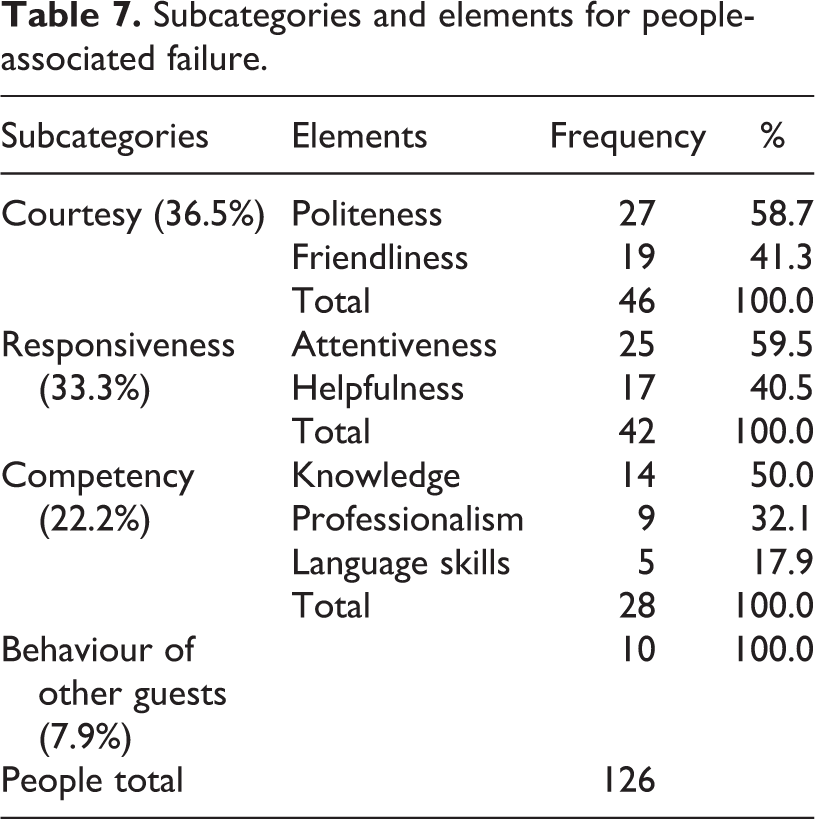
One of the main assets in hospitality is people – the employees. The human interaction either between employee and hotel guests or among the hotel guests themselves could co-create and affect the overall stay experience of luxury hotel guests (Walls et al., 2011). The service encounter between customer and employee has a significant impact on hotel guests’ perception towards service quality level as well as their overall satisfaction with hotels (Choi and Chu, 2001). Past studies reported employee issues are also among the most frequently reported ones (Berezina et al., 2016; Ekiz et al., 2012; Zheng et al., 2009) which require attention for improvement. Table 7 demonstrates the descriptive statistics of the four categories and seven different elements of people-associated failure incidents. Courtesy and responsiveness have an almost similar count of problems at 36% and 33%, respectively.
Subcategories and elements for people-associated failure.
Courtesy
Courtesy covers politeness, friendliness, respect and consideration (Parasuraman et al., 1985). Under this subcategory, about 60% of incidents were related to politeness and the remaining 40% were related to friendliness of staff from 17 hotels. In the hospitality industry, both politeness and friendliness are critical elements, as a lack of these elements could affect the comfort of the customers (Kuo, 2007).
Politeness
Thirteen hotels had 27 incidents related to impoliteness of hotel employees. The findings on the issue of impoliteness in this study are similar to previous studies where it has been highlighted that a majority of service failures with regard to employees are generally about the rudeness of service employees (Ekiz et al., 2012; Sparks and Browning, 2010). An example is as follows: We went out for a walk and asked for a map that would show the vicinity of the hotel. The staff whom I asked put on a very annoyed face and asked, ‘What map?’ (Reviewer 87)
Friendliness
Nineteen incidents were found in 13 hotels. Hotel guests always expect smiling faces from hotel employees throughout their stay experience such as: …during our 5 days stay at [name of the hotel], we have never seen a smiley face. (Reviewer 66)
Responsiveness
Responsiveness involves the readiness and willingness of service employees in providing services (Parasuraman et al., 1985). In other words, hotel employees should always be attentive, ready and willing in responding to and helping with hotel guests’ requests and needs. There were two elements under responsiveness, which are attentiveness and helpfulness. The results in Table 6 indicate that of a total of 42 incidents from 16 hotels, around 60% were related to inattentive employees and the remaining were related to unhelpful employees. Two examples about attentiveness and helpfulness problems are extracted and described as follows: …staff ignore the 5 suitcases that we were carrying from the room to the taxi, with none of the staff offering to help. They just stood there and watched. (Reviewer 52) Hotel staff not very helpful and whenever you ask for directions they only answer you, ‘Oh, not very sure and sorry can’t help! (Reviewer 385)
Competency
Hotel guests expect that hotel employees should be well trained and possess good skills and knowledge in performing and delivering services – this is called competency (Parasuraman et al., 1985). Au et al. (2014) highlight that the lack of competency among employees included having little common knowledge, product knowledge as well as poor English. In this study, 28 incidents were related to competency issues with half of the incidents related to a lack or poor grasp of knowledge. Besides that, nine incidents complained about the professionalism of the staff and five incidents about the language skills. For instance, some reviewers expected the hotel employees to be able to explain about the nearby attractions such as shopping malls or tourist spots as exemplified: The staff did not know anything about the surrounding areas, shopping or local attractions. (Reviewer 181) …you will face some problems in delivering your need or request in the English language. (Reviewer 277) Concierge clerk were chatting and laughing…When I was at the lobby the next evening, I realized that the same guy was chatting and laughing and talking to his staff…I guess [he] could be [the] Supervisor since he wears [a] long suit. (Reviewer 38)
Behaviour of other hotel guests
A recent study conducted by Levy et al. (2013) reports that other hotel guests’ behaviour indeed has an impact on hotel guests’ staying satisfaction. The behaviour of other hotel guests is beyond the hotel’s control; however, this type of incident has substantial impact on the overall guest satisfaction level, for instance: There were also many loud tour groups from Mainland China who made the mornings very unpleasant when they yelled down the hallway at 6 a.m. in preparation for their daily departure. (Reviewer 280) The other guests staying in the lobby were mostly rude, noisy and impolite (they can’t even queue up for the elevators). (Reviewer 64)
Process-associated failure
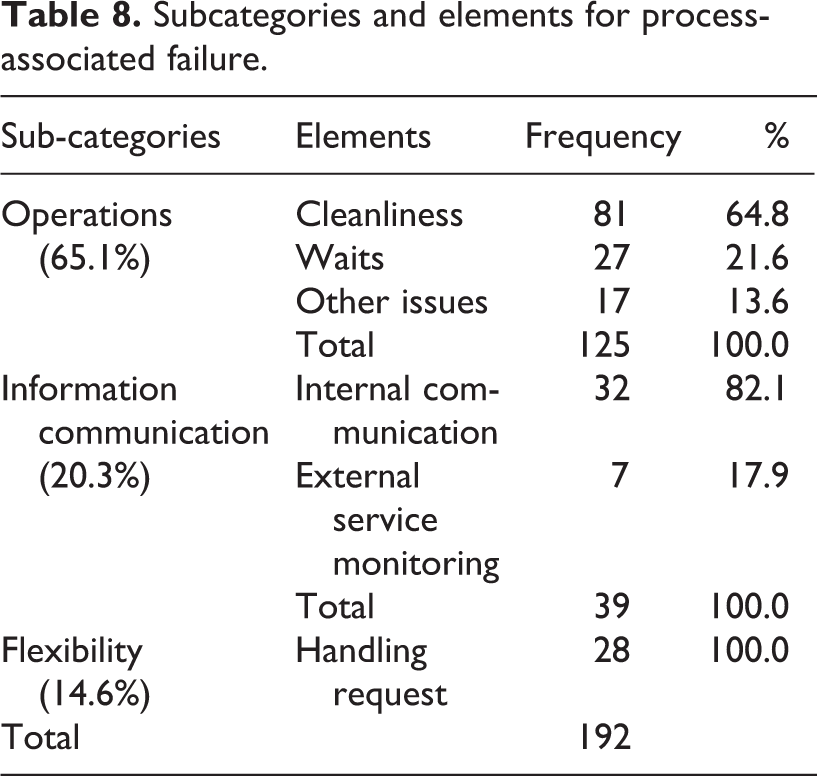
Process-associated failure refers to the service systems and procedures carried out (Wirtz et al., 2012) within the hotel, which affects the service quality of the hotel. This study identified 200 service failure incidents related to this type of failure from all 20 hotels. These incidents were further categorized into three subcategories (operations, information communication and flexibility) and six elements. Table 8 summarizes the number of incidents in each subcategory and element.
Subcategories and elements for process-associated failure.
Operations
Hotels should ensure their employees run the operations according to hotel standards. Operations issues in this study are categorized into three elements: cleanliness, waits and other issues (such as breakfast operating hours). Nineteen of 20 hotels had operations-related failure incidents.
Cleanliness
Over 64% of the operations issues were related to cleanliness with 81 incidents in 17 hotels. Apparently, the cleaning procedure in Taipei hotels has not been earnestly fulfilled. Cleanliness is highlighted as an important part of the hardware (space and design) of the hotel facilities to ensure customer satisfaction (Au et al., 2009). The outside surface of the window are really dirty…[and] covered by dust…(Reviewer 380) The carpets were spotted, the walls looked dingy, and the caulking in the bathroom had mildew stains. (Reviewer 104)
Waits
The efficiency of the operation procedure could reflect the professionalism of hotel employees. Ordinarily, queueing issues are the waiting problem for special requests or check-in services as described below by two different reviewers: Request to open the room window and also place an Ionizer takes forever. (Reviewer 252) Room service ordered; 45 minutes later they call to say they are out of my main dish. 2nd order arrives 35 minutes after that with cold soup and a warm drink. (Reviewer 9)
Information communication
Poor communication of information among different parties could lead to dissatisfaction and complaints. The communication process can be divided into internal communication and external service monitoring. Over 80% of the incidents were related to internal communication (32 incidents) including the miscommunication of check-in and error in food order served.
Internal communication
Hotel employees should ensure the customer’s request is communicated to relevant departments accurately as failure to do so could lead to customer complaints as described below: When I checked in, the lady confirmed with me several times what [newspaper] I wanted. I said I didn’t care as long as it was in English and we finally went with Taipei Times, but the next morning I got something completely different in Chinese. (Reviewer 1) The pizza arrived lukewarm and the carbonara became spaghetti bolognese! (Reviewer 87)
External service monitoring
Hotels have to offer extra services to customers, including services by external organizations such as car parking and transportation services (bus and taxi). Even though hotels do not have much control on the quality of services offered by other services organizations, they should monitor customer satisfaction and offer other better possible alternatives, if necessary. All seven incidents were found from one hotel, so the hotel manager should seriously look into these issues: Taxi driver service ordered by the hotel was rude and was trying to get us to take two taxis because of luggage issues stating that we had too much baggage (2 passengers and 4 check-in luggage was too much!) .clearly a scam. (Reviewer 348)
Flexibility
Customer requirements change and vary according to the individual; therefore, hotel employees should maintain flexibility when dealing with different requests and situations. This study recorded 28 incidents from 12 hotels related to flexibility, and all of them related to handling requests.
Handling requests
Hotels might have clear instructions on operations procedures; however, employees should remain flexible while handling requests from hotel guests. They should try to understand the situation and take proper action to fulfill their requests if it is still manageable. …the cafe/lounge opens at 9:00 a.m. If you need a cup of coffee you can only go to the buffet and pay full fare. (Reviewer 212) …there was a very strong bad smell from the bath.…I felt they were reluctant to change room. (Reviewer 13)
Discussions
This study looks into several key issues in service failure. First, product-associated failure is the top failure category compared to the other six marketing mix elements. This finding is similar to one of the recent studies conducted among luxury hotels (Li et al., 2013), which reported high counts on customer dissatisfaction for rooms. In Li et al.’s (2013) study, categories of negative reviews about customer dissatisfaction focused on the facilities and amenities in rooms, including room, bed, bathroom, air conditioning and television. Another study found that hotel room features which were reported as the highest frequent complaints encompass size of the room, the condition of the furniture and equipment in the room as well as the cleanliness of the room (Sparks and Browning, 2010). On the contrary, earlier studies conducted revealed different findings in which the highest failure was related to service processes such as slow restaurant service, slow check-in/out (Lewis and McCann, 2004) and declining quality of service (Lee and Hu, 2004). It is surprising to note that product-associated failure recorded the highest as facilities and amenities in luxury hotels should be up to standard as required, especially for luxury hotels. Furthermore, the variations of quality level for physical facilities and amenities should be low as compared to service process and behaviour of employees. The investment for purchasing new furniture and maintaining good furniture condition could be costly; however, majority of the hotel guests emphasize greatly on this aspect. More importantly, this type of failure is imperative to be solved as indeed the product in this study refers to the guest room, which is the core product of a hotel’s business that has substantial impact on the hotel sales.
Second, place-associated failure and promotion-associated failure are, not surprisingly, the lowest frequency of failures because hotel guests should have known clearly about the location before booking the rooms. Furthermore, with regard to the hotel promotions, these should be clear and easy to understand prior to room booking. Most of the hotel guests who complained about the location-associated failure were about the accessibility to the hotel location. They found it inconvenient or difficult to locate the hotel which creates a bad first impression towards the hotel even before arriving at the hotel. Regarding the promotion-associated failure, most of the hotel guests expressed their dissatisfaction and disappointment on the photos of the hotel, guest rooms and facilities in the hotel company’s websites as they are mismatched with the actual condition of the guest rooms and facilities during their stay. Misleading hotel website photos would lower the brand trust of hotel guests towards the hotel company (Kuo et al., 2015). Furthermore, Kuo et al. (2015) found that hotel guests in luxury upscale hotels experience greater anger and regret with this kind of misleading website photos and the eWOM intention is higher as well. The website and photos indeed have an influence on the booking decision of the potential hotel guests (Phelan et al., 2011). Thus, corrective and preventive actions need to be taken in order to avoid further misperception by hotel guests, their dissatisfaction and deterrence of their re-patronage intention.
A third essential finding revealed from this study is hotel cleanliness issues which fall under operations of process-associated failure. Cleanliness is the top operations issue as well as a process-associated failure. The cleanliness failures found cover dirty carpet, dirty cup, stained window, bedding replacement and other unclean facilities such as walls and bathroom. In fact, cleanliness plays a huge part in the hotel guests’ comfort during their stay in the rooms, and it is a current prerequisite for a hotel (Zhang et al., 2011). Zhang et al. (2011) have highlighted cleanliness as a significant factor that affects the selection of accommodation and hygiene standards among hotels. Therefore, the cleaning processes and procedures are questionable, and the monitoring of the cleaning outcomes in a move to meet the expected clean standards needs to be reinforced. Hotel mid-level managers need to lead and strictly enforce the implementation of service standard policy and procedure.
The fourth essential finding is, under people-associated failure, politeness is an element that hotel guests are most concerned about compared to competencies elements (such as knowledge and language skills). Majority of the reviewers of this study are Asian hotel guests, especially Taiwanese hotel guests, where they emphasize on employees’ politeness regardless of their appearance and attire compared to the American hotel guests who stress on the capability of the hotel employees in helping to solve problems and also having an adequate command of English (Kuo, 2007). Another important element is attentiveness. Hotel guests require service employees to be alert towards their needs and requests; for example, service employees should be alert and proactive in approaching and assisting hotel guests to handle their luggage upon arriving at the lobby or entrance of the hotels. The increase in responsiveness to hotel guests’ needs would increase their satisfaction value (Chand, 2010).
Even though the price-associated failure percentage was not high (8.5%), the reviews indicated the majority were related to ‘value for money’. This reflects the product quality did not match with the customers’ expectation; therefore, hoteliers in Taiwan should spend more effort to improve their product quality to overcome this perception gap. Value for money is one of the essential importance-performance analysis of luxury hotel attributes (Berezina et al., 2016; Mohsin and Lockyer, 2010). In other words, value for money requires hotel management’s attention to enhance hotel guests’ overall stay experience.
Last but not least, physical evidence-associated failure indicated that the ambient environments of Taiwan luxury hotels were not up to standard as 18 of 20 hotels received negative comments. Generally, customers should not have any awareness about hotel’s physical evidence as there are some ‘invisible’ elements to customers, such as temperature and odour. However, when customers are aware there is something wrong with this category, which means something has triggered the senses (e.g. smell, unpleasant visual effect or room size). Hoteliers should always maintain a pleasant and comfortable environment for their customers. Hotel companies should not ignore the importance of maintaining a good quality of ambience as it is part of the hotel guests’ staying experience.
Conclusions and implications
Most of the hotels in this study are more than 20 years old. An old hotel does not mean an awful hotel. Hotels under good maintenance and regular renovations could retain an excellent condition; however, most Taiwan hotels’ furniture and fixtures are dilapidated due to poor maintenance levels. Customers have higher expectations on luxury hotels but Taiwan hotels apparently are greatly disappointing. Several hotels have excellent location and their occupancy percentages are high. Their room rates are also relatively higher than others because of the good location. However, the customers’ comments indicate that the stays were not value for money because of the poor product quality (e.g. dated design and shabby furniture), physical environment (such as humid smell from carpet) and service level (e.g. unfriendly employees). In addition, hoteliers should maintain a realistic image on their websites so that the customers would not have a wrong perception and expectation when faced with the actual ‘dated’ products. Taiwan National Statistics (2016) indicate that the average rank and file employee salary in the hospitality industry is 22% less than other service industries. This might lead to the low morale and job satisfaction in the hotel industry and cause the high process- and people-associated service failure.
The results of this study provide both theoretical and practical contributions on service failure and online review literature. A main theoretical contribution is service failures are examined by 7Ps marketing mix concept. The advantage of adapting 7Ps provides clearer definition and cut-off point of each category of service failures in hotels compared to previous studies. The categorization of each service failure could be unique with minimal overlapping. Most of the studies lack the details required for further feasible improvement as the reported findings only demonstrate the most frequent or repeated words or incidents. For example, previous studies reported findings categories as ‘room’, ‘cleanliness’ and ‘food’, which are insufficient and vague for hotel practitioners to understand the actual problems or failures. In this study, each categorization consists of at least another two levels of subcategories to provide details of the failure occurrence, such as, first-level main category is product, second-level subcategory is safety quality and followed by third-level element is biological hazard (e.g. bugs). This would offer better understanding to hoteliers and academicians on service failure problems in hotels.
In addition to this, majority of the existing categorization of data is lacking a holistic system. Some categorization only focuses on processes but without tangible facilities or products (such as Zheng et al., 2009) or with products and services but without processes (Ekiz et al., 2012; Li et al., 2013). This study could provide a holistic picture by adapting marketing mix 7Ps elements. The 7Ps are also the evaluating indicators of a hotel company’s performance in delivering and communicating its products and services to its customers. This is due to its customers’ experience of services and products via marketing mix (Yelkur, 2000). Yelkur has proposed a model on adaption of 7Ps marketing elements into the process of forming customers’ expectations and perceptions. Therefore, 7Ps categorization is warranted and necessary for hotel managements to carry out constructive preventive actions. Furthermore, this study sheds light on adopting 7Ps not only in marketing’s perspective but also offers systematic categorization of service failures.
In terms of practical contributions, the proposed framework can help hotels to communicate with employees more effectively in areas for improvement and investing in the right resources to solve hotel guests’ problems. The revealed findings would also help the hotel management to identify some of the internal weaknesses across departments and enable the departments to take necessary actions for improvements. Moreover, luxury hotel managers should have clearer directions in modifying marketing plans and activities, too, in order to match with the image formation and service delivery. Another contribution of this research is the findings also provide insights to Taiwan luxury hotel practitioners that they should pay substantial attention on their product quality and service quality, by reinforcing the implementation of service standard policies and procedures, especially in furniture maintenance standards and cleanliness standards.
This study has several limitations. First, there were only 20 hotels included in this study, which only count as 15% of the total number of four- and five-star hotels – thus, this cannot generalize the overall findings. Moreover, these 20 hotels received the lowest scores, so it cannot represent the service performance of the high-scoring hotels. Second, some reviewer comments were very general, such as ‘poor service’ and ‘terrible hotel’, that the authors were unable to categorize the failure area(s), so these items were dropped from the database. Third, due to the language ability of the authors, only reviews in English and Chinese were extracted; therefore, the comments written in other languages were unable to be analysed. Future studies should increase the sample size so as to produce a generalized overview of the hotel performance in Taipei and Taiwan. With the increasing number of Mainland tourists (Taiwan Tourism Bureau, 2016), the review comments from this market segment should be considered. Ctrip was the most popular website in China, so future studies should include Ctrip so as to understand the service requirements from this group of customers.
Footnotes
Declaration of conflicting interests
The author(s) declared no potential conflicts of interest with respect to the research, authorship, and/or publication of this article.
Funding
The author(s) disclosed receipt of the following financial support for the research, authorship, and/or publication of this article: The first author has received financial support for the research from I-Shou University Research Grant (ISU-104-08-01A).