




Abstract
We conducted a feasibility study of a mobile phone messaging service for children and adolescents with type 1 diabetes. Two hundred children with type 1 diabetes took part in a six-month trial. The children were provided – through their parents – with daily information messages, with weekly interactive messages, and on request, with multimedia video messages about procedures related to diabetes care. During the study, approximately 30,000 information messages and 2800 interactive messages were sent. One month before the trial, the mean fasting blood glucose level of the children was 150 mg/dl. After the trial, the mean fasting blood glucose level was 133 mg/dl (P < 0.001). There were also significant reductions in post prandial blood glucose level, HbA1c, frequency of simple hypoglycaemic attacks and frequency of blood glucose monitoring. A before and after questionnaire showed that the parents' knowledge of diabetes had improved significantly during the trial. Mobile phone text messaging offers a useful means of contact between clinic visits. The results of the trial suggest that it increases adherence to diabetes therapy and improves clinical outcomes in children and adolescents with type 1 diabetes.
Introduction
In diabetes, optimum care and management involves considerable behavioural modification, and non-adherence to therapy contributes significantly to poor glycaemic control. 1 Research on psychological interventions to improve glycaemia suggests that current strategies are costly and time-consuming, especially in young children and adolescents with type 1 diabetes.2,3 Mobile phone text messaging has rapidly become a popular form of communication. It is widely used, particularly in the Western countries.4–7 However, text messaging coupled with specific behavioural health strategies has yet to be utilized effectively in developing countries for diabetes work. Several papers have shown that the mobile phone can offer a means of contact and support for patients between clinic visits, and may increase adherence with insulin therapy and improve clinical outcomes.8–10 The aim of the present study was to test the feasibility of a telemedical educational support programme using the mobile phone short message service (SMS) and to evaluate its effect on glycaemic control in children with type 1 diabetes.
Methods
The study was a prospective experimental trial lasting for six months. Children with type 1 diabetes were invited to participate. The selection criteria were: children above the age of four years and a diabetes duration of more than one year to avoid the possibility of a “honeymoon period” and endogenous insulin secretion. Before the trial began, the children were followed at the Pediatric Diabetes Clinic of the Security Forces Hospital in Riyadh for at least six months. The study was approved by the appropriate ethics committee.
Measurements
Before the trial, the following variables were recorded: haemoglobin A1c (HbA1c), frequency of simple hypoglycaemic attacks (defined as a blood glucose level lower than 40 mg/dl), frequency of severe hypoglycaemic attacks (hypoglycaemia associated with seizure or coma), frequency of hyperglycaemic attacks (defined as a blood glucose level higher than 180 mg/dl), mean fasting blood glucose level, mean post prandial blood glucose level, frequency of hospital admissions, frequency of missing insulin injection and frequency of blood glucose monitoring. These variables were also measured after the trial.
Questionnaires
A questionnaire with 20 multiple choice questions to assess parents’ knowledge was given to parents both before and after the trial. A second questionnaire was also given to parents after the trial to assess the quality of the SMS messages.
Mobile phone messages
Mobile phone text messages were prepared in simple, understandable Arabic language. Three types of mobile phone messages were sent to the parents of the children:
Informational messages. Approximately 5–7 information messages were sent each week. The messages covered general diabetes care knowledge, including diabetes symptoms, signs, pathophysiology, aetiology, diagnosis, management including insulin therapy, diet therapy, psychotherapy and diabetes press news. The messages reminded patients about checking blood glucose and insulin intake. Interactive messages. Weekly interactive messages were sent to obtain patient information. For example, insulin doses could be adjusted if blood glucose readings were sent to the management team, HbA1c level could be calculated if the diabetes care team were provided with the blood glucose readings, body mass index could be measured if the patients provided their bodyweights and heights. Multimedia messages. Multimedia messages (MMS) were sent at the parents’ request. These included video-clips about procedures related to diabetes care, such as glucometer usage, insulin injection technique or insulin pump insertion.
Telephone calls were made to the parents to ensure that the SMS messages had been received.
Statistical analyses were performed using the paired t-test to evaluate the differences in HbA1c, fasting/postprandial blood glucose levels, hypoglycaemic/hyperglycaemic episodes, and other variables between conventional support group and telemedical support group.
Results
A total of 200 children were invited to participate in the study and all agreed. The mean age of the children was 11.0 years (SD 5.5). During the study, approximately 30,000 information messages were sent. The average number was 6 information messages per patient per week (range 5–7). In addition, a total of 2800 interactive messages were sent. At the parents' request, 43 MMS messages were sent. Two hundred phone calls were made to ensure that the parents had received the messages during the trial. Insulin doses adjustment was discussed in 82 of these 200 calls.
Outcome variables before and after the trial (n = 200).
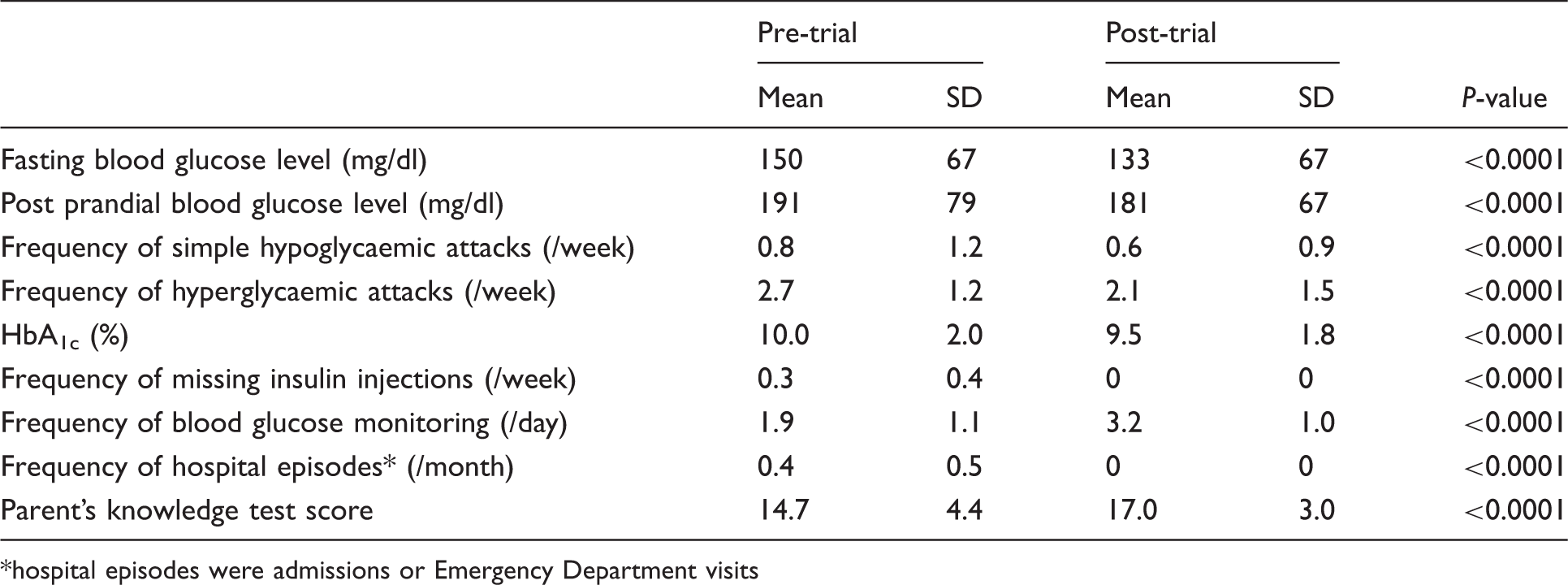
hospital episodes were admissions or Emergency Department visits
Discussion
Diabetes management can be difficult for children and adolescents. Several diabetes guidelines recommend offering young children intensive insulin therapy, in conjunction with emotional and behavioural support. 11 However, increasing the frequency of clinic visits is costly and impractical, especially in countries with a high prevalence of diabetes.
Information and communication technologies (ICT) have considerable potential to help patients with chronic and long-term diseases. Young people with diabetes have reported using ICT to improve their knowledge and support their needs. 12 Text messaging via mobile phones is widely used among teenagers and children in many parts of the world for non-health purposes.2,3
A meta-analysis conducted by Liu and Ogwu 13 examined the effectiveness of mobile phone technology in diabetes care. Fifteen English-language articles were reviewed. Studies that used mobile phone interventions and reported changes in diet, physical activity and blood glucose and /or HbA1c levels were retrieved. Sample sizes ranged from 12 to 130 participants, and the subjects were aged 8 to 70 years old. Overall, significant improvements were observed in blood glucose and/or HbA1c concentration, adherence to medication, healthy lifestyle and self-efficacy. Five studies examined patients with type 1 diabetes and two included patients with both type 1 diabetes and type 2 diabetes. Only one study 2 included children (92 in total). Twelve of 15 trials, which had serum HbA1c measures, showed an average 0.39% HbA1c reduction. In our trial which included 200 children and adolescents, HbA1c improved significantly by 0.5% and fasting and post prandial blood glucose levels improved by 12% and 5% respectively. The studies reviewed took place in several countries including the US and Europe. Our study is probably the first to be conducted in the Arab Gulf region where diabetes prevalence is very high.
Holtz et al. 14 conducted a systematic review and identified 21 articles. Subjects with type 1 diabetes were enrolled exclusively in over half of the studies. Seventy-one percent of the studies used a study-specific application, which had supplementary features in addition to text messaging. The outcomes varied considerably across studies, but some positive trends were noted, such as improved self-efficacy, HbA1c and self management behaviours. In our cohort, the SMS service was associated with positive changes in child and adolescent behaviour. The frequency of missing insulin injections reduced to zero, with a substantial decrease in the number of severe and simple hypoglycaemic attacks. Franklin et al. 3 designed a text-messaging support system (called Sweet Talk) to enhance self-efficacy, facilitate uptake of intensive insulin therapy and improve glycaemic control in paediatric patients with type 1 diabetes. Although HbA1c did not improve, 82% of the children felt that Sweet Talk had improved their diabetes self management and 90% wanted to continue receiving messages. In addition, a trial on mobile phone text messaging was conducted for 8 months and included 23 patients with diabetes. The results suggest that SMS may provide a simple, fast and efficient adjunct to the management of diabetes especially in elderly people and teenagers, who have difficulty in controlling their diabetes. 15
Hanauer et al. tested the effect of electronic reminding messages on 40 adolescents with type 1 diabetes, reminding them to check their blood glucose levels via mobile phone text messaging or email. They showed that mobile phone text messaging is a viable and acceptable method of promoting blood glucose monitoring. 16 In our study, the frequency of blood glucose monitoring improved by more than 10%. Wangberg and colleagues tested the feasibility of using the mobile phone short message service for reaching people with diabetes information. Eleven Norwegian children with type 1 diabetes received SMS messages for 11 weeks. Parents were positive about the system and reported that the messages were helpful to facilitate communication with their adolescent children. 17 Frøisland et al. tested the effect of mobile phone applications which enabled children to communicate with the treating team by sending SMS messages, and a picture-based diabetes diary including photographs of eaten food and blood glucose readings. Although HbA1c and participants' theoretical knowledge were not significantly different before and after the intervention, visualization of these data in diabetes self-care was found to be an important educational tool. 18 Educational achievement and knowledge were also tested in our patients and the scoring on the written questionnaire showed an increase of more than 15%.
Conclusion
Mobile phone messaging, both educational and interactive, may be useful in supporting the self-management of diabetes in young children and adolescents. The results of the present study may help to design future text message interventions for other chronic illnesses.
Footnotes
Acknowledgments
We thank Dr Hamad Al-Omar, the mobile health company and all employees for their assistance.