



Abstract
People with serious mental illness suffer from substantially higher rates of cardiometabolic morbidity and mortality than the general population. We have evaluated the efficacy of telemedicine for providing cardiometabolic risk management services compared to in-person care. A retrospective chart review was conducted in order to compare changes in body mass index (BMI), systolic blood pressure and serum triglycerides before and after telemedicine (n = 38). The comparator group (n = 38) was selected from a list of all clients who had a conventional appointment at the metabolic clinic. Analysis of Variance showed an overall effect of treatment on BMI (P < 0.001), but no significant differences between the groups on BMI (P = 0.89), systolic blood pressure (P = 0.62) or fasting serum triglycerides (P = 0.81). This suggests that telemedicine may be as effective as in-person care and that telemedicine has the potential to improve access to cardiometabolic risk management services for people with serious mental illness.
Introduction
In general, people with serious mental illness, such as schizophrenia and bipolar disorder, suffer from significantly higher rates of chronic disease than the general population.1–3 People with serious mental illness are estimated to lose 25 years or more in life expectancy compared to the general population, with most years lost because of cardiovascular disease.2,3 Cardiometabolic risk factors, such as central obesity, dysglycaemia, dyslipidaemia, hypertension, metabolic syndrome and smoking, are more common in people with serious mental illness than in the general population.3–6 Contributing factors include genetic predisposition, socioeconomic determinants of health, and the increased use of second-generation antipsychotic medications.1,3–7 As a result, there has been a significant expansion in cardiometabolic services for people with serious mental illness. These services include screening and monitoring services, healthy lifestyle programming, psychotherapy and clinical management programmes.
There is little published information about the provision of clinical services via telemedicine to mitigate the excessive cardiometabolic morbidity and mortality occurring in people with serious mental illness. The present study evaluated a clinical programme delivered via telemedicine at a large tertiary psychiatric hospital. All clients of this facility had been diagnosed with a serious mental illness, such as schizophrenia, schizoaffective disorder, bipolar disorder and/or other affective disorders, or significant personality disorders. The treatment programme assisted in the self-management of cardiometabolic co-morbidities such as obesity, pre-diabetes, diabetes, hypertension and dyslipidaemia. It also provided secondary metabolic screening, interdisciplinary clinical management and healthy lifestyle programming.
Methods
The study was approved by the appropriate ethics committee. A retrospective chart review was undertaken. Clients were chosen based on the following criteria. All clients who received service in the metabolic clinic via telemedicine from January 2011 to July 2013 were reviewed (n = 63). Clients who had attended fewer than three telemedicine visits were excluded (n = 25), as it was felt that less than three visits would be insufficient to show any type of treatment effect. The remaining clients comprised the Telemedicine Group (n = 38).
The comparison In-person Group (n = 38) was selected from a list of all clients who had a conventional appointment at the metabolic clinic since October 2010 (n = 872). Similarly, clients with less than three clinic visits were excluded. A total of 38 In-person Group participants were individually matched to the Telemedicine Group subjects based on: age, gender, primary psychiatric diagnosis, Body Mass Index, systolic blood pressure, fasting triglyceride levels, and use of antihypertensive and lipid-lowering medication.
The same clinical team provided cardiometabolic services to both the Telemedicine and In-person Groups.
A mixed Analysis of Variance (ANOVA) was used to compare groups pre- and post-treatment on the following outcome measures: Body Mass Index, systolic blood pressure and fasting serum triglyceride levels. The ANOVA was conducted with Group (Telemedicine vs. In-person) as a between-groups factor and Time (Pre vs. Post Treatment) as a within-subjects factor. Log transformed fasting serum triglycerides were used in the analysis due to lack of normality in the data. A standard package (SPSS) was used for the analysis.
Results
Characteristics of clients in the two groups.
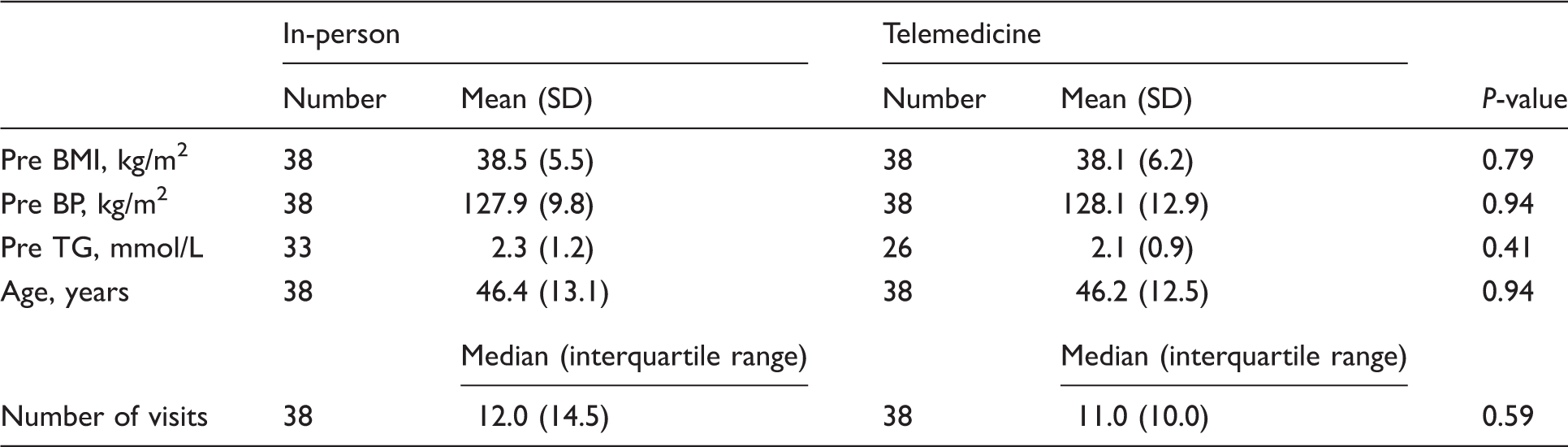
Differences between the two groups.

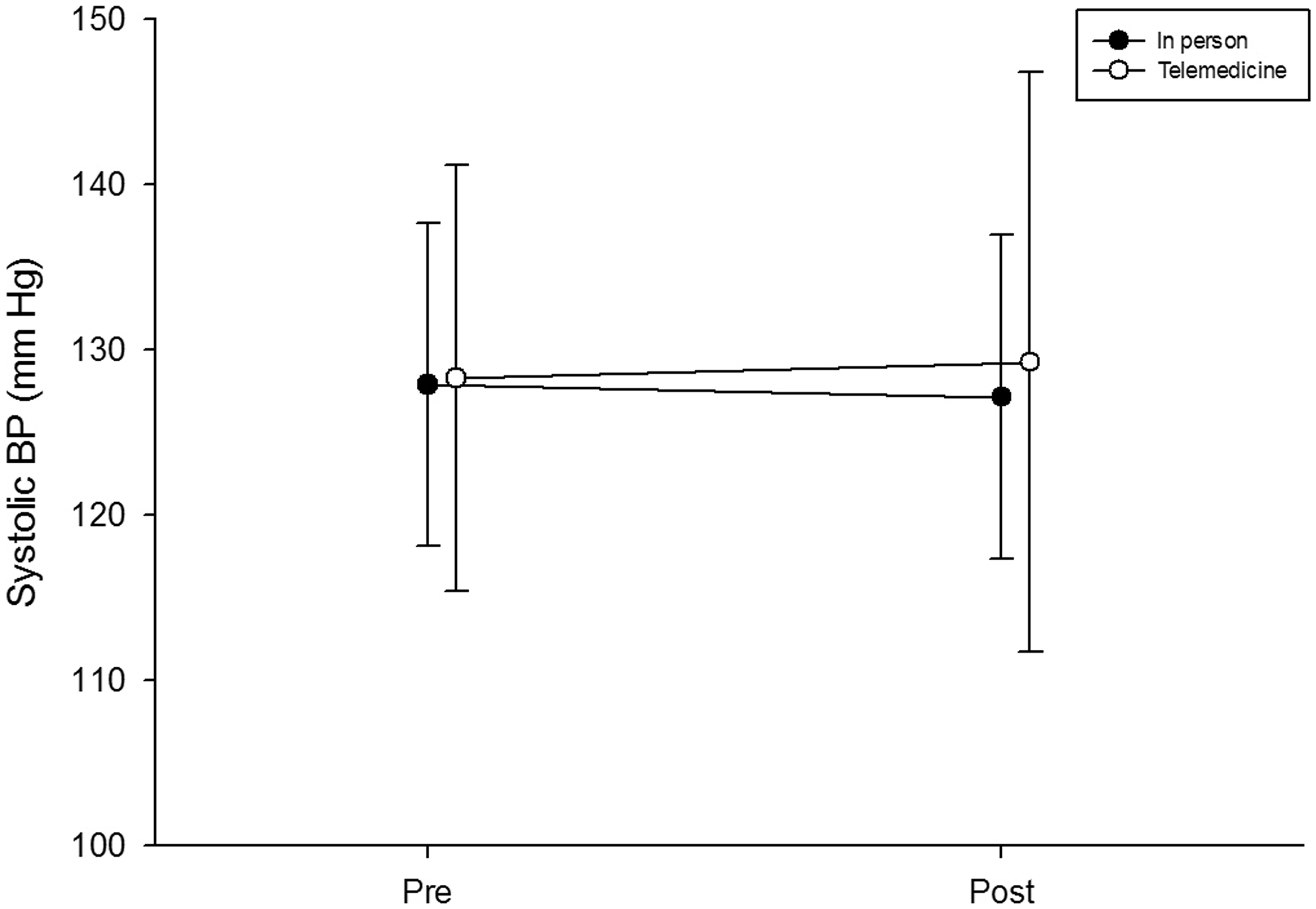
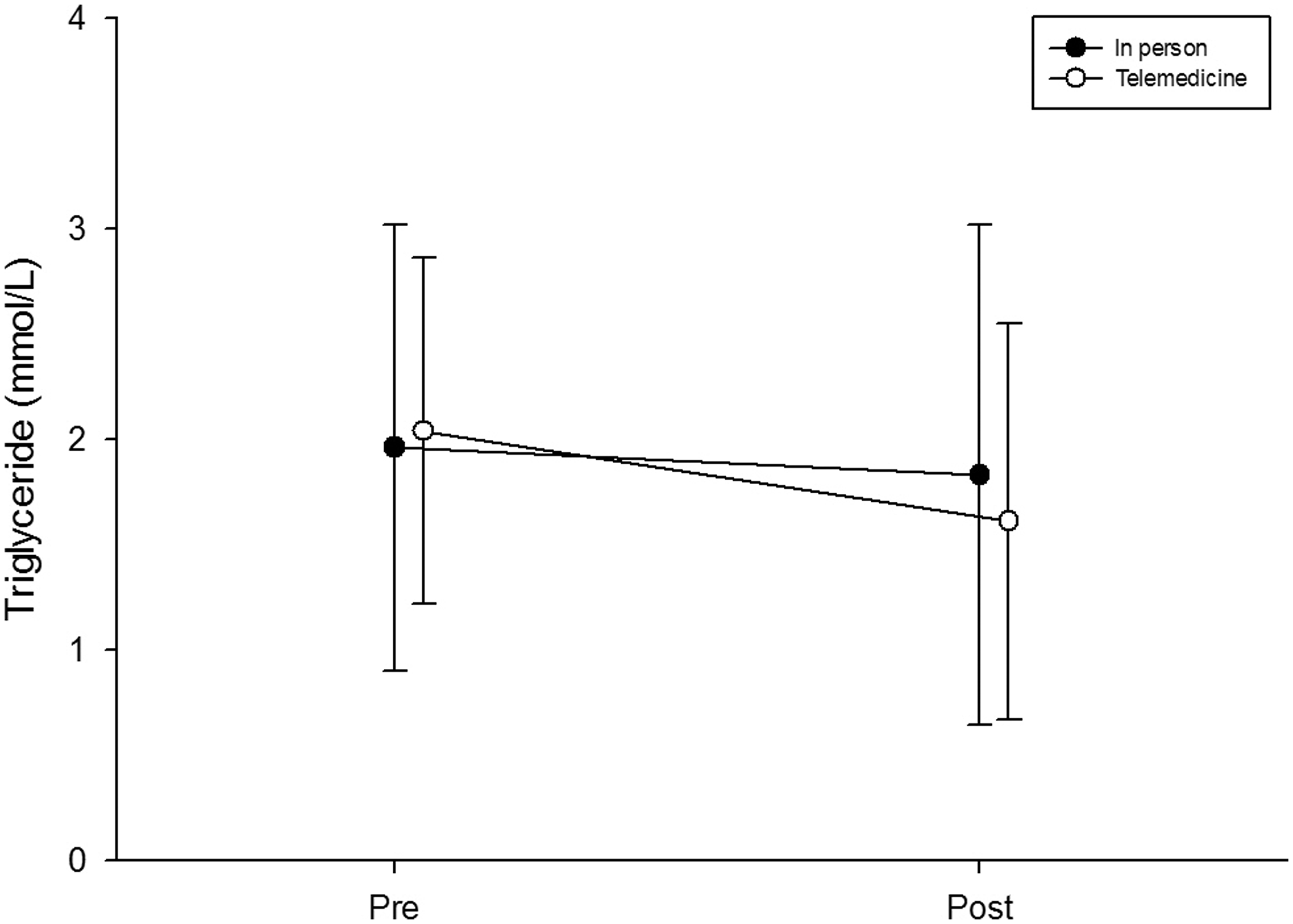
There was a significant main effect for Time (Pre vs. Post) and there were significant reductions in Body Mass Index in both groups (P < 0.001) (Figure 1). There was no significant main effect of time for systolic blood pressure (P = 0.96) or fasting serum triglycerides (P = 0.065) (Figures 2 and 3). There were no significant main effects for Group (Telemedicine vs. In-person) and the groups did not differ in Body Mass Index (P = 0.89), systolic blood pressure (P = 0.62) or fasting serum triglycerides (P = 0.81). There were no significant interaction effects and there were no differences between the groups in change in Body Mass Index (P = 0.16), systolic blood pressure (P = 0.59) or fasting serum triglycerides (P = 0.30) (Figure 3).
Body Mass Index pre- and post-study. The error bars represent the SD. Systolic blood pressure pre- and post-study. The error bars represent the SD. Fasting triglycerides pre- and post-study. The error bars represent the 95% confidence interval.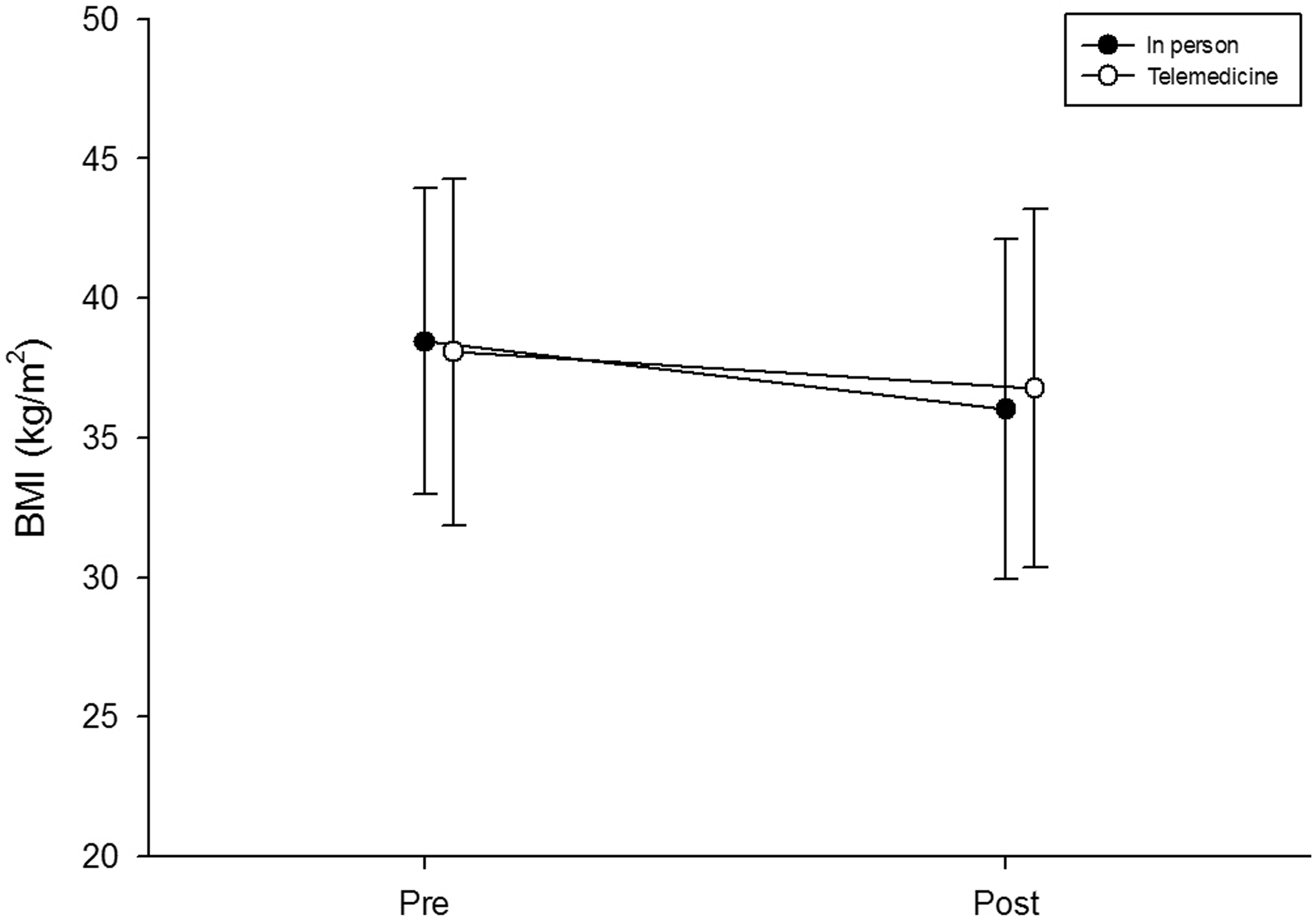
Discussion
In the present study, no differences were found on cardiometabolic outcome measures between Telemedicine and In-person services provided in a metabolic clinic at a psychiatric facility. Both forms of service were associated with reduced Body Mass Index, suggesting that telemedicine was as effective as in-person care. In contrast, improvements in systolic blood pressure and fasting serum triglycerides were not found in either group. This was probably due to a floor effect, in which participants in both groups had normotensive mean systolic blood pressure and only slightly elevated mean triglycerides at baseline. Accordingly, there was little room for improvement in these variables.
The study had certain important limitations. First, it was a small retrospective chart review. This limitation was partially addressed by individually matching the Telemedicine clients to the In-Person clients. Future studies could randomize a large cohort of clients to receive either Telemedicine or In-person care, and then follow them prospectively. Second, although antihypertensive and lipid-lowering medication use at baseline were controlled for, information on the use of and type of medication (including psychotropic medication) was not collected. However, previously collected clinic data shows that 84% of clients take atypical/second generation antipsychotic medication (unpublished data). Similarly, data on medication and psychosocial intervention adherence was not collected.
Third, changes in waist circumference were not reviewed. In the general population, waist circumference is considered a more sensitive predictor of diabetes and all-cause mortality than BMI, 8 and to a lesser extent cardiovascular disease.8,9 Furthermore, significant changes in waist circumference can occur irrespective of change in weight or BMI. 10 Although the same clinicians were providing services to the two groups, anthropometric and blood pressure measurements were made by community mental health workers during the telemedicine visits. There is some evidence that community-based mental health workers find making waist measurements difficult 11 which may reduce inter-rater reliability. 12 Accordingly, waist circumference was not evaluated in this study.
Fourth, clients in the Telemedicine Group did not carry out serial monitoring of their triglycerides as consistently as those in the In-person Group. This may be because the In-person clients could have their blood tests performed on-site during their visit, whereas Telemedicine clients needed to visit another site. This difficulty in obtaining laboratory data may have implications when planning future cardiometabolic risk management programmes using telemedicine.
Finally, numerous clients with type 2 diabetes were excluded from the present study because they had not made the requisite number of Telemedicine clinic visits. Most of these clients either dropped out of the clinic’s Telemedicine programme or converted to In-person visits. This probably led to under-representation of people with serious mental illness and concurrent type 2 diabetes in the study. A review of the clinical documentation associated with these clients indicated that for most, telemedicine was not viewed as an effective modality for diabetes care by the client and/or clinic staff. This perception is counter to numerous studies demonstrating the effectiveness of telemedicine in the provision of specific aspects of diabetes care.13–20 However none of these studies evaluated the effectiveness of diabetes care in people with serious mental illness.
Future studies should include waist circumference 10 as an outcome measure and consider processes to enhance serial monitoring of laboratory investigations in people receiving telemedicine services. In addition, the effectiveness of telemedicine to mitigate cardiometabolic risk in individuals with serious mental illness and concurrent diabetes warrants further investigation.
In conclusion, our study demonstrates that telemedicine has the potential to improve access to cardiometabolic risk management services for people with serious mental illness without affecting clinical outcomes. Additional research using a randomized design should now be undertaken. Evaluating the use of telemedicine for diabetes care in people with concurrent mental illness would also be of value.
Footnotes
Acknowledgements
We thank the clinical staff at the Ontario Shores Metabolic and Weight Management Clinic, Dr Barbara Mildon, Cathy Ward, Michael Saxton and Dinat Khan.