



Abstract
Introduction
This study was a randomized controlled trial that examined the effects of a web-based expert support self-management program (WEST) on metabolic syndrome risk factors and self-efficacy among Korean women with breast cancer.
Methods
Participants were 60 women with breast cancer (30 participants each in both the experimental and control groups) who also had metabolic risk factors. WEST is based on the self-efficacy theory and is a self-health management program consisting of a web-based program, DIETEX (which entails keeping a health diary, identifying a lifestyle type, inputting personal health information), and expert support. WEST was provided to the experimental group once a week for 24 weeks. Metabolic syndrome risk factors and self-efficacy of the experimental and control groups were examined pre-intervention and at 12 and 24 weeks after intervention.
Results
The decreases in body fat, body fat percentage, and waist circumference were greater in the experimental group than in the control group at 24 weeks (p = 0.019, p = 0.025, and p = 0.038, respectively).
Discussion
The present study can provide basic data for the development and application of interventions for women with breast cancer in the future. Additionally, we propose that WEST be included in the treatment process to complement the intervention of medical personnel for improving metabolic risk factors in women with breast cancer.
Introduction
Worldwide, approximately 2.1 million women were diagnosed with breast cancer in 2018: one-quarter of all female cancer patients. 1 Additionally, breast cancer is the second most common cancer in Korean women 2 ; its incidence is gradually increasing due to a westernized lifestyle and obesity. 3
Although the five-year survival rate of female breast cancer patients is 89.7% in the US and 92.5% in Korea,2,4 the incidence of heart failure is 1.95 times higher, and the incidence of coronary artery disease is 1.27 times higher in breast cancer patients than in the general population. 5 Hence, chronic diseases that occur during the treatment process of breast cancer have emerged as a serious issue. 6
Anti-oestrogen treatment for breast cancer leads to weight gain and the onset of metabolic syndrome. 7 Collectively referred to as metabolic disease, these risk factors include abdominal obesity, dyslipidaemia, hyperglycaemia, and hypertension. 8 The factors that comprise the criteria for metabolic syndrome are intercorrelated, as opposed to being independent. Having one risk factor for metabolic syndrome increases one’s chance to meet the criteria for other factors as well, thereby increasing the likelihood of being diagnosed with metabolic syndrome. Hence, it is important for individuals with one or more factors of metabolic syndrome to be aware of such risks and engage in health-promoting behaviours. 9 Managing these risk factors is essential for a better prognosis in breast cancer patients. Regular exercise and health-promoting behaviours help prevent weight gain and metabolic syndrome and decrease the recurrence and mortality rates associated with breast cancer.10,11 Therefore, diet and exercise management, based on the request of the patient, are important. 6
Internet-based improvement programs focusing on daily diet and exercise habits of breast cancer patients are an efficient educational approach that can be provided to several individuals and do not have the restrictions of time and place. 12 Additionally, providing two-way interaction with health experts through the Internet has the advantage of increasing patient participation. 13
Bandura defines self-efficacy as belief in one’s ability to succeed in specific situations or accomplish a task. Success depends on how well an individual controls his/her behaviour under unpredictable circumstances. 14 Self-efficacy is composed of four tools: performance outcomes, vicarious experiences, verbal persuasion, and emotional states. 15 This is a very powerful behavioural tool that enables breast cancer patients to cope with the disease 16 while positively affecting overall health and treatment outcomes. 17 Hence, in this study, an expert support self-management program using the strength of Internet-based programs based on the self-efficacy theory was applied to women with breast cancer. Following this, we examined the results of a web-based expert support self-management program (WEST) on metabolic syndrome risk factors and self-efficacy in women with breast cancer.
Methods
Study design
This was a randomized study to determine the effects of WEST on metabolic risk factors and self-efficacy in women with breast cancer.
Participants
The study was approved by the institutional review board of the Catholic University of Korea (MC15FASI0113). Eighty participants were recruited between February and April 2016, after being provided with information about the study’s purpose and process, and written consent was obtained from all participants.
Two researchers recruited participants on- and off-line between February and July 2016.
With permission, researchers posted a research announcement on a support group website for women with breast cancer and recruited from the breast cancer outpatient centre of Seoul St. Mary's Hospital; The Catholic University of Korea.
The inclusion criteria for this study were as follows: 1) women between 18 and 69 years old diagnosed with breast cancer; 2) knowledge of using a computer, the Internet, and a cell phone; and 3) fulfilment of one or more diagnostic criteria for metabolic syndrome defined by the National Cholesterol Education Program-Adult Treatment Panel III 18 : waist circumference ≥80 cm, 19 systolic blood pressure ≥130 mmHg and/or diastolic blood pressure ≥85 mmHg, fasting blood glucose level ≥100 mg/dL, 20 high-density lipoprotein cholesterol (HDL-C) level <50 mg/dL, triglyceride level ≥150 mg/dL, or low-density lipoprotein cholesterol (LDL-C) level ≥130 mg/dL.
The exclusion criteria were: 1) clinical stage IV breast cancer patients; 2) inpatients for breast cancer treatment; 3) patients undergoing other interventions or clinical trials; 4) patients taking drugs, including antidepressants, that can affect body weight; and 5) patients with alcohol or drug addiction.
The sample size was calculated using the G*Power program (version 3.1.9.2, Heinrich-Heine-University at Düsseldorf, Germany). Using repeated measures analysis of variance (ANOVA) with an integrated effect size of 0.25, the significance level at 0.05, test power at 0.95, and the number of measurements as three, the optimal sample size was 60 breast cancer patients. However, 90 participants were recruited in the beginning, of whom 80 participated in the study, excluding five patients who did not meet the selection criteria and five patients who did not participate in the pretest. Using block randomization in the Excel program, the 80 participants were randomly assigned to experimental and control groups, 40 participants per group. Ten participants dropped out of each group for the following reasons: (a) did not log on to the website for >4 weeks, (b) missed the post-test due to personal reasons or disease, and (c) had changes in their drug administration during the study period. Finally, there were 30 participants in each of the groups (Figure 1).
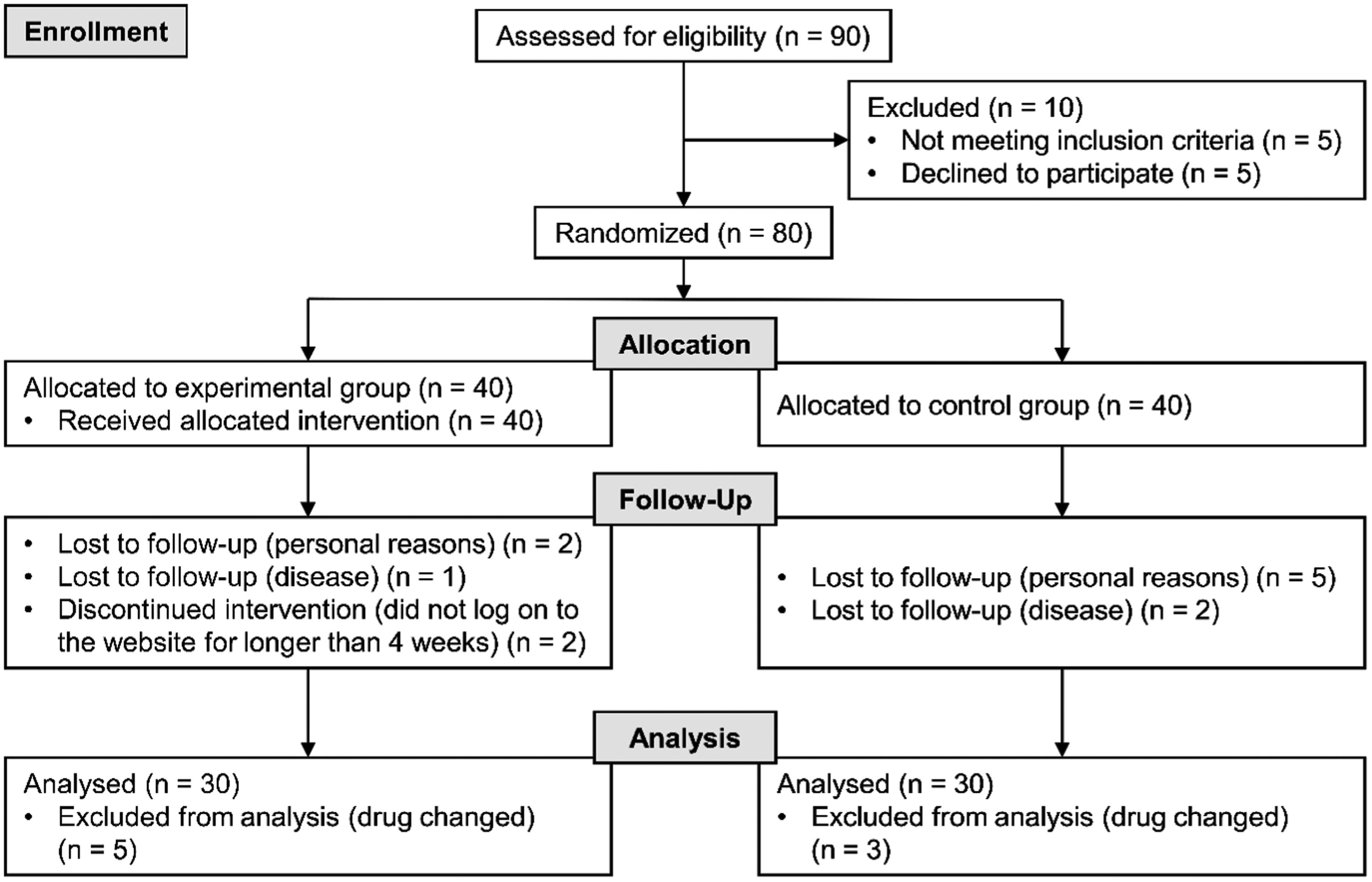
Flowchart of patients in this study.
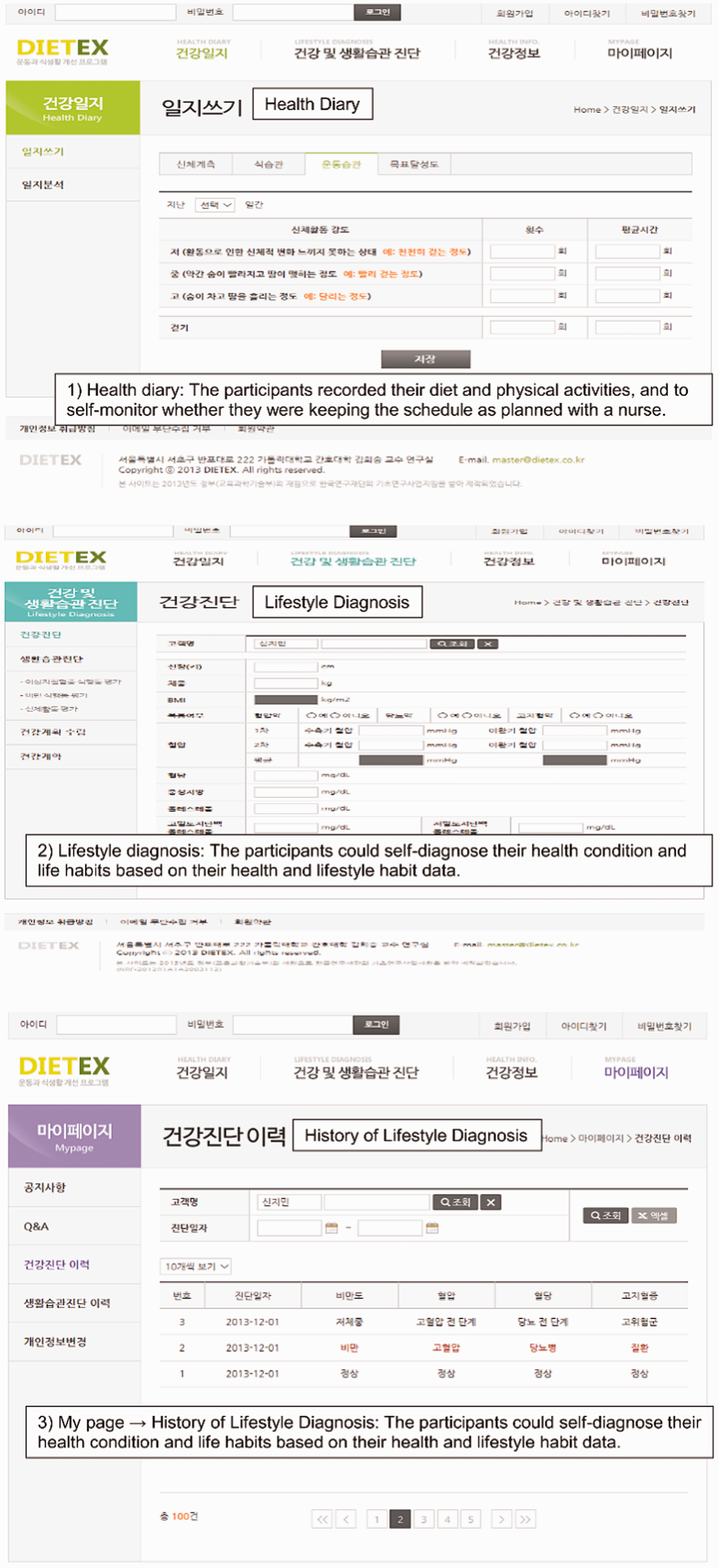
Screenshot of the DIETEX program: Health diary, Lifestyle diagnosis, and Mypage.
Intervention, WEST
The present study used WEST, which focused on achievement experience, verbal persuasion, and emotional arousal of the self-efficacy theory of Bandura, excluding vicarious experience. WEST is composed of a web-based program called DIETEX and phone counselling with experts (see Table 1).
Web-based Expert Support Self-management Program (WEST) based on the self-efficacy theory.
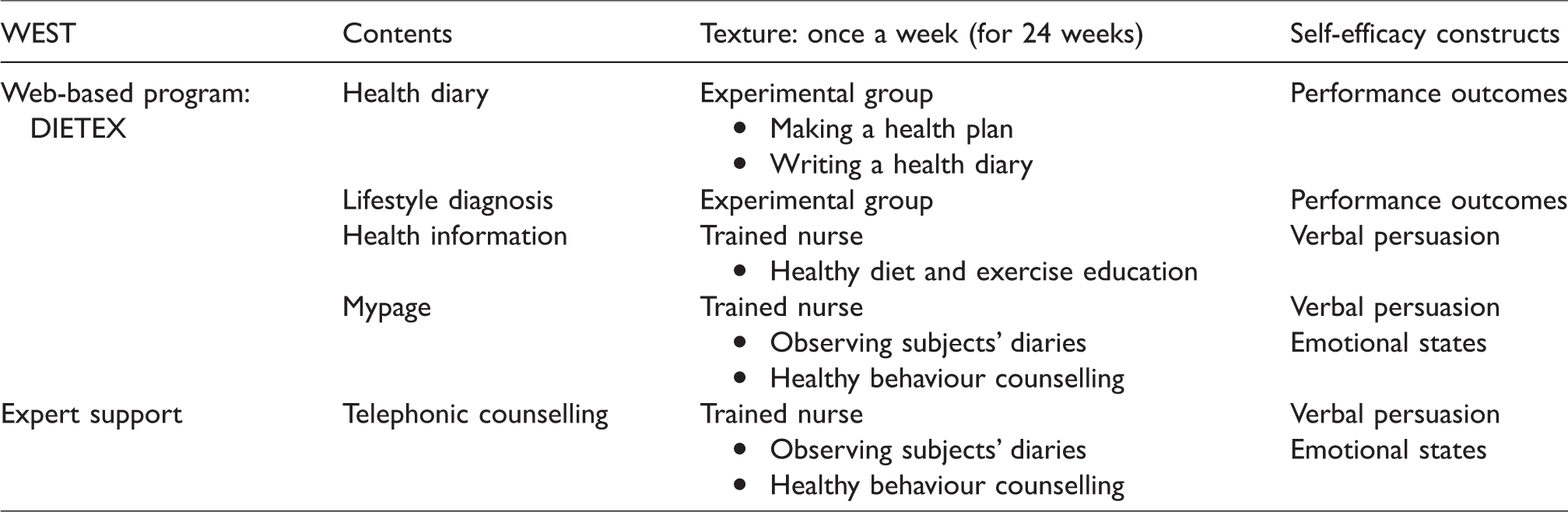
Web-based program: DIETEX
A web-based program founded on the self-efficacy theory was developed using DIETEX and funded by the basic research support from the 2013 National Research Foundation. DIETEX was developed by two nursing professors, one endocrinologist, and two computer programmers, and its content validity was tested (Figure 2). Previous studies21,22 that used DIETEX for intervention in postmenopausal women and women with gestational diabetes have proved the improvement in cardiovascular metabolism among these women.
Since the completion of the study, a DIETEX smartphone application has been developed and the DIETEX website is no longer in operation.
The DIETEX required participants to create their own health plan and record and evaluate their diet and exercise behaviours more than once a week in a health diary, allowing them to monitor their own performance. Prior to the intervention, the nurse explained to participants how to set up health plans, including specific examples (e.g. level of health plan goals, duration, etc.). After receiving this initial training, participants were encouraged to create their own health plans. The plans were then reviewed by the investigators, and we spoke with participants over the phone, discussing the scope and feasibility of the plan and suggesting revisions as necessary.
Health diary: the participants kept a diary at least once a week to record their diet and physical activities, and to self-monitor whether they were keeping the schedule as planned with a nurse. Lifestyle diagnosis: participants entered their health and lifestyle habits before and 12 weeks after the intervention so that they could self-diagnose their health condition and lifestyle habits. For each option, participants were given a checklist and were directed to choose the responses that applied to them. The system then scored the responses and determined whether they had healthy or poor habits. Health information: the nurse, who was trained in nutrition with a specific focus on metabolic syndrome, posted text with information on proper dietary habits and effective exercise methods for breast cancer patients once a week. Mypage: this is an individual message tool. The nurse reviewed the health diary and sent individualized feedback to each participant once a week.
Expert support
Verbal persuasion was employed by a nurse who emphasized the need for healthy behaviour through education and consultation by individual messages and telephone calls. This helped reinforce the information and provide feedback to the participants. The participants discussed the challenges they faced participating in the program, with a nurse during the telephone consultations, held for at least 30 minutes once a week. Receiving encouragement and emotional support from the nurse was also important for the patients (Table 1; Supplemental Table S1).
The customized health information individually provided to the participants for 24 weeks by the nurse was based on the guidelines developed by Korean and international hospitals and institutions18,23,24 and was approved by one breast clinic specialist, one endocrinology specialist, and three nursing professors. Information on dietary habits included tips on how to cut down excessive dining-out and how to control overeating. Protein-rich meals were recommended to prevent muscle loss from over exercising. Diabetic participants were educated on dietary habits to help them reduce their blood glucose index and maintain a standard weight. Patients with hyperlipidaemia were instructed to reduce the intake of cholesterol, saturated fat, and caffeine. Foods that reduce lipids were recommended. The positive effects of exercise and walking for >150 minutes a week were explained, according to the World Health Organization recommendations. Exercise regimens were customized for patients based on their schedules.
Procedure
Two nurses conducted a pretest, a 12-week test, and a post-test of the experimental and control groups. To maintain the objectivity of the pretests and post-tests, one nurse was in charge of helping participants with answering questionnaires, measuring blood pressure, and taking the anthropometric measurements (height, weight, waist circumference, hip circumference) of all participants (both experimental and control groups), while the other nurse collected blood.
In the case of the experimental group, a trained nurse explained the program in a meeting room in which a computer was installed. Only the experimental group was given access to the DIETEX website. Participants were instructed to create a user profile, log in to the website, and submit a membership application. The nurse then approved their membership and granted them access to the program. There were no fees. The participants then completed a self-administered questionnaire regarding lifestyle habits, so that issues such as hyperlipidaemia or obesity could be identified immediately (Lifestyle diagnosis).
There were differences depending on the computer proficiency of the participants, but it usually took about one hour to one and a half hours from the explanation of the program to the diagnosis of healthy habits. The blood pressure and InBody test results, which were immediately available, were given to the participant and explained, and approximately 30 minutes were spent on counselling the participants about proper diet and exercise habits. The result of the blood test was available the next day; the participants were informed of these by phone. The final test results were entered into DIETEX for diagnosis by a trained nurse, and the results were sent to participants through DIETEX personal messages. Additionally, to measure physical activities, the participants were provided with a pedometer so that they could easily record their step count in the health diary. Afterward, the health professional sent the results of the anthropometric measurements and blood test through a personal message using Mypage in the first week and helped participants establish future health plans through telephone counselling, taking into account current health conditions and issues. The participants kept a health diary every week, and based on the diary, the nurse identified the condition of the participants’ health and sent a personal message and conducted telephone counselling once a week. Messages were usually sent every Wednesday. Phone calls were made every Saturday. Thus, participants were monitored and managed by an expert through a phone call and text message twice a week during the 24 weeks.
At the 12th week, intermediate tests were performed to evaluate the current heath condition of the participants and expert health counselling was provided regarding the results. Participants who did not connect to DIETEX at least once a week were encouraged to use it through a text message or phone call. Subsequently, plans were adjusted and implemented based on the results of the intermediate tests, and the final tests were conducted at the 24th week.
On average, patients did not enter their records a total of 10 times over the 24 weeks (mean = 10.3 times per 24 weeks; standard deviation = 4.8). Therefore, the average number of times nurses had to encourage patients to use the system was also approximately 10 times over 24 weeks. Phone calls were made once a week. On average, we could not reach the participants via phone, due to travel or personal affairs, approximately six times during the 24 weeks of the intervention. When we could not reach participants over the phone, we kept in touch with them through text messages.
In the case of the control group, explanations of the blood pressure, InBody test, and blood test results were provided after the pretest, at the 12-week test, and post-test – the same as the experimental group – and approximately 30 minutes were spent on counselling about proper diet and exercise habits. They were not, however, provided with WEST intervention during the 24 weeks.
Instruments
During the preliminary examination, height, weight, and blood pressure were measured in both groups. Body fat was analysed before drawing blood. Subsequently, the participants completed a questionnaire on self-efficacy. A similar examination was conducted 12 and 24 weeks after the preliminary examination.
Metabolic syndrome risk factors
To assess metabolic risk factors, height and weight were measured using a height–weight scale DS-102 (Jenix, Seoul, Korea). Body fat and body fat percentage were measured using InBody 720 (Biospace, Seoul, Korea). Body mass index was calculated as body weight (kg)/height (m) 2 . A body mass index of below 18.5 kg/m2 was considered underweight; 18.55 kg/m2, normal weight; 23 kg/m2, overweight; and >25 kg/m2, obese. 23
Waist circumference was measured using a tape measure (Hoechstmass Balzer GmbH, Hessen, Germany). The midpoint between the lower edge of the last rib and top of the iliac crest was measured horizontally. A waist circumference ≥80 cm was considered abdominal obesity. 19
Blood pressure was measured three times at five-minute intervals, in the sitting position, using an automatic blood pressure monitor TM 2655P (A&D, Tokyo, Japan). The mean value of the second and third measurements was calculated. Systolic blood pressure ≥130 mmHg or diastolic blood pressure ≥85 mmHg was considered as indicating hypertension. 18
Fasting blood glucose, blood triglyceride, HDL-C, and LDL-C were measured after fasting for >8 hours. Fasting blood glucose levels ≥100 mg/dL were considered as hyperglycaemia. 18 Levels of triglycerides >150 mg/dL, HDL-C <50 mg/dL, and LDL-C ≥130 mg/dL were considered as indicating dyslipidaemia. 18
Self-efficacy
Self-efficacy regarding nutrition and physical exercise was measured using a Korean translation of the scales developed by Schwarzer and Renner. 25 This tool had 10 questions, five questions each for dietary habit and physical activity, each with a four-point scale. Higher scores indicated higher self-efficacy on health behaviour. The reliability of the tool calculated by Cronbach’s alpha was 0.84 for dietary habits and 0.89 for physical activity.
Data analysis
Data were analysed using the Statistical Package for Social Sciences (SPSS, version 18.0, SPSS Inc., Chicago, IL, USA) for Windows. General characteristics were presented as frequencies and percentages, and homogeneity of the two groups was tested using t-tests and Chi-squared tests. The results of the individual intervention were analysed using repeated measures ANOVA.
Results
The baseline demographics and the health status of participants at enrolment are shown in Table 2. The mean age was 52.2 and 53.4 years in the experimental and control groups, respectively. There was no difference in the general characteristics, breast-cancer-related characteristics (Table 2), and the preliminary assessment of metabolic risk factors between the two groups (Supplemental Table S2). At 24 weeks, in the experimental and control groups, body fat decreased by 2.4 kg and 0.6 kg (p = 0.019), respectively, and body fat percentage decreased by 2.7% and 0.5% (p = 0.025), respectively. Measurements taken at enrolment, 12 weeks, and 24 weeks showed significant differences (p < 0.05) in both groups.
Characteristics of participants at enrolment.

†Fisher’s exact test.
SD: standard deviation.
Waist circumference at 24 weeks decreased by 3.1 cm and 1.3 cm (p = 0.038) in the experimental and control groups, respectively. Measurements taken at enrolment, 12 weeks, and 24 weeks showed significant differences (p < 0.05) in both groups.
At 12 weeks, fasting blood glucose decreased by 6.2 mg/dL in the experimental group and increased by 4.4 mg/dL in the control group. At 24 weeks, however, it had decreased by 3.2 mg/dL in the experimental group and 1.5 mg/dL in the control group. However, these differences were not statistically significant. There was also no difference in the blood lipid levels, pre- and post-intervention, between the two groups (Table 3).
Effects of the WEST on metabolic risk factors.
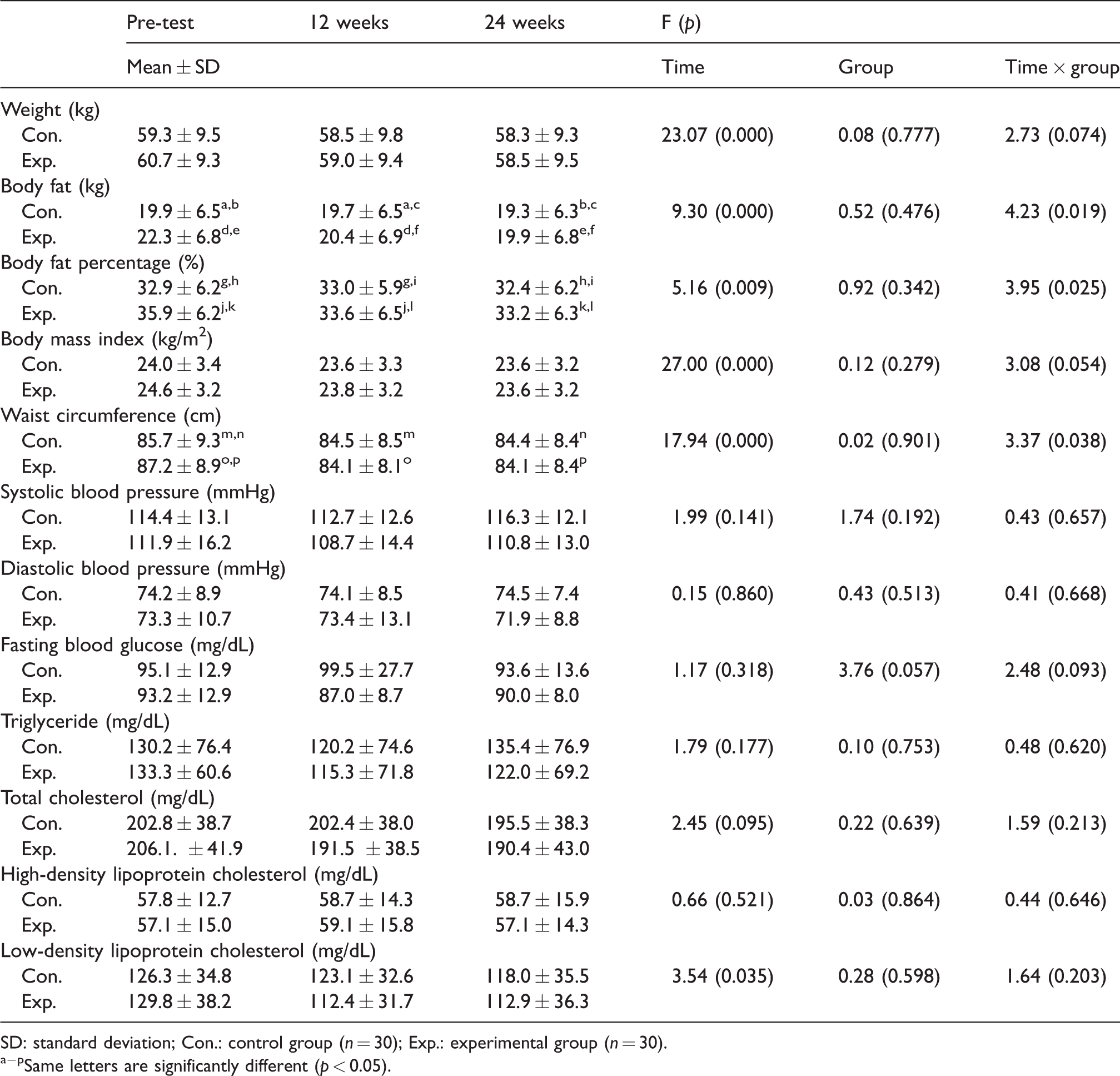
SD: standard deviation; Con.: control group (n = 30); Exp.: experimental group (n = 30).
a−pSame letters are significantly different (p < 0.05).
Self-efficacy with regard to nutrition and physical exercise showed no significant differences between the two groups before and after intervention (Table 4).
Effects of the WEST on self-efficacy.
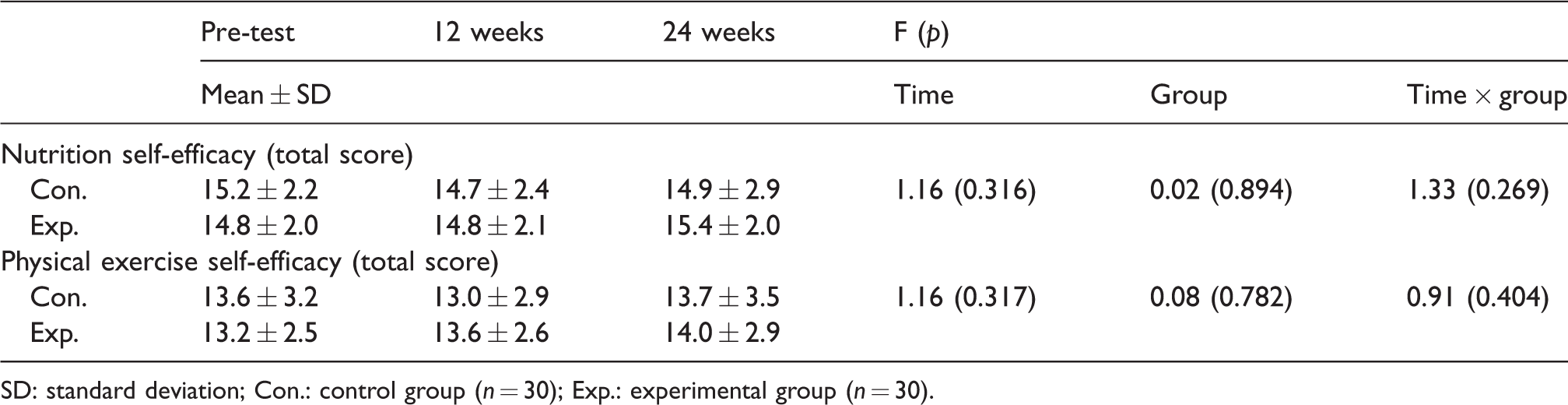
SD: standard deviation; Con.: control group (n = 30); Exp.: experimental group (n = 30).
Discussion
Our results indicate that waist circumference, body fat, and body fat percentage significantly decreased in the experimental group after 24 weeks, which is in line with a previous study showing a decrease in the same parameters after an intervention combining diet and exercise therapy. 26 Compared to the delivery of information through automatic and uniform messages, individual intervention by experts through customized messages, telephone consultations, and encouragement was found to be more effective in enforcing a healthy lifestyle in the participants. 27 Rather than focusing on short-term weight loss, implementing a future program based on the most effective intervention approach, while considering variables such as fatigue and sleep management, 28 is necessary to prevent weight gain in the normal weight group and enable weight loss in the overweight and obese groups.
Fasting blood glucose showed no difference between the experimental and control groups in this study. However, 12-week measurements of fasting blood glucose showed a 6.2 mg/dL decrease in the experimental group and 4.4 mg/dL increase in the control group. This is consistent with an earlier study showing similar trends in breast cancer survivors, who followed a 24-week exercise regimen. 29 In the present study, participants with high fasting blood glucose recorded their blood sugar level and dietary habits in the health diary section of the DIETEX and monitored self-performance through the records. Additionally, verbal persuasion through in-depth customized diet education was performed once a week, which collectively helped reduce the blood glucose. During their weekly phone consultations, the participants asked questions and shared their challenges. They were alerted to any rise in their blood glucose levels caused by poor dietary habits and were encouraged to follow healthy eating habits. However, 24-week fasting blood glucose measurements showed an increase in the experimental group and a decrease in the control group. This could be because the experimental group, which had positive results at the 12-week measurement, did not adhere to good dietary habits and physical activities, whereas the control group was alerted by the negative results, which led them to correct their daily habits. These results indicate that active intervention by experts in the experimental group, and interaction of the control group with the medical team during the 12-week evaluation, could be factors influencing the reduction of blood glucose. If not every week, expert intervention is recommended once every three months. Several participants mentioned that visiting the hospital once every three months and receiving their healthcare report as in this study, motivated them to maintain a healthy lifestyle. They also wished that their hospitals adopted this Internet-based health management system so that they could use it throughout their lifetime.
There was no significant difference in the blood lipid levels of the two groups. This is in line with a study that implemented a six-month exercise regimen for breast cancer survivors. 29 Results on dyslipidaemia in the previous studies indicated that oestrogen deficiency caused by menopause or anti-hormone therapy affects the blood lipid concentration and the incidence of cardiovascular disease. 30 The use of anti-hormone drugs in menopausal breast cancer patients led to a decrease in HDL-C levels while increasing the levels of LDL-C. 31 Hence, an intervention combining drugs, diet, and exercise regimens can be effective in controlling blood lipid levels.
The two groups did not show any significant difference in the nutrition- and physical-exercise-related self-efficacy scores. As these scores evaluated before the intervention in our study were higher than the average scores in the general population, 23 it might have been difficult to attain higher scores after the intervention. Higher scores during the preliminary self-efficacy evaluation could be a result of the patients adopting a healthy lifestyle after being diagnosed with cancer, out of fear of recurrence. 32
These results show that WEST is effective in improving waist circumference, body fat, and body fat percentage in breast cancer patients. In addition to individual efforts, persuasion and support from the experts helps the patients in maintaining a healthy lifestyle, as seen in a previous study. 28 Therefore, we propose that an intervention by expert medical personnel and WEST be included in the treatment guidelines for breast cancer patients to help improve their metabolic risk factors.
This study has limitations. First, the participants were not prohibited from accessing other sources of information such as Internet and TV, which could potentially have created a bias. Second, the exchange of information could not be completely curbed within the experimental group. Finally, there are limitations in understanding the exact effects of the intervention, as the participants did not have clinically severe enough disease for some outcomes to become apparent during the study period. Hence, a study with a longer period of intervention with breast cancer patients is necessary for the future.
Conclusion
This study was a randomized controlled trial that examined the effects of WEST on metabolic syndrome risk factors and self-efficacy among women with breast cancer.
The results indicate that WEST, based on the self-efficacy theory, is more effective in controlling metabolic syndrome risk factors, compared to basic consultation. A web-based program has a broader reach and is easier to follow. We propose WEST to be included in the treatment process, to complement the intervention by medical personnel, for improving metabolic syndrome risk factors in women with breast cancer.
Supplemental Material
Supplemental material for Effects of a web-based expert support self-management program (WEST) for women with breast cancer: A randomized controlled trial
Supplemental Material for Effects of a web-based expert support self-management program (WEST) for women with breast cancer: A randomized controlled trial by Hye-Jin Kim and Hee-Seung Kim in Journal of Telemedicine and Telecare
Footnotes
Acknowledgements
We would like to thank all women who participated in this study. This article is a part of Hye-Jin Kim’s doctoral dissertation at The Catholic University of Korea.
Declaration of conflicting Interests
The author(s) declared no potential conflicts of interest with respect to the research, authorship, and/or publication of this article.
Ethical approval
All procedures performed in studies involving human participants were in accordance with the ethical standards of the institutional and/or national research committee and with the 1964 Helsinki declaration and its later amendments or comparable ethical standards. The study was approved by the institutional review board of the Catholic University of Korea (MC15FASI0113). Clinical research information service No. KCT0001835.
Funding
The autho(s) disclosed receipt of the following financial support for the research, authorship, and/or publication of this article: this work was supported by the National Research Foundation of Korea grant funded by the Korea government (Ministry of Science and ICT) (grant number NRF-2015R1A2A2A01002514).
Supplemental material
Supplemental material is available for this article online.
References
Supplementary Material
Please find the following supplemental material available below.
For Open Access articles published under a Creative Commons License, all supplemental material carries the same license as the article it is associated with.
For non-Open Access articles published, all supplemental material carries a non-exclusive license, and permission requests for re-use of supplemental material or any part of supplemental material shall be sent directly to the copyright owner as specified in the copyright notice associated with the article.
