



Abstract
Abstract
Aims
We report a novel pilot project that allows access to healthcare for children and staff at school via a mobile clinic or telemedicine portal connected to the mobile clinic. The objectives of this pilot project were (a) to perform physicals for children not attached to a primary care physician; (b) to provide medical consultations and treatment for acute illnesses of students and staff, and (c) to lower absenteeism rates among students and staff.
Methods
In 2013, Ronald McDonald House Charities, a non-profit organization, partnered with Children’s Hospital of Erlanger to provide a mobile clinic trademarked Ronald McDonald Care Mobile utilising a large, box-style truck equipped with examination rooms and a telemedicine portal. Initially, starting with three elementary schools in Bradley County, Tennessee, USA, the programme rapidly expanded to include schools in five other participating Tennessee counties. Only three schools in Bradley County have the option of in-person visits. All other schools access care via telemedicine portals. Funding is provided through multiple grants and community partners. If a student does have insurance, the insurance carrier is billed for the visit, but students without insurance are treated free of charge. Prior to the 2018–2019 school year, only limited data were collected.
Results
Our first goal was to perform physicals for children not attached to a primary care physician. During the 2018–2019 school year, 28 patients presented for a well-child check. However, 16 of these (57%) did not have a primary care physician. Of note, 19% of students presenting for any complaint did not have a primary care physician on file (172 students). All well-child checks were performed in-person on the Care Mobile. Our second goal was to provide medical consultations and treatment for acute illnesses. A total of 1446 persons were seen for sick visits. Of these, 424 were telemedicine visits (352 students and 72 staff), while 1022 were in-person visits. The five most common diagnoses that the nurse practitioner managed during the 2018–2019 school year included acute pharyngitis, acute upper respiratory infection, streptococcal pharyngitis, fever and acute maxillary sinusitis. Finally, our third goal was to lower absenteeism rates. There were 1446 sick person visits (1253 students and 193 staff). Twenty-two per cent of the students (276 persons) returned to class while 74% (142 persons) of staff returned to work.
Conclusion
The mobile/telemedicine health clinic is a novel innovation to increase access to acute care and reduce school absenteeism among both students and staff, potentially saving schools hundreds to thousands of dollars.
Introduction
Healthcare access for children affects not only their current wellbeing but affects their academic performance long-term and impacts their parents ability to work. Well-child care is important for several reasons. It is an opportunity for immunizations; it provides vision, hearing, and social-economic risk factor screening; and it can identify children with obesity, hypertension, behavioural problems and other issues that impact development.1,2 The American Academy of Pediatrics Bright Future recommends 27 well-child checks (WCCs) between the ages of 0–18 years. 3 Fourteen of those WCCs should occur between the ages of 5–18 years (school-aged children). Overall, physician office visit rates for well-child care are low for school-aged children (31 per 100 population). 1 Even for children with insurance, the rates of regular well-child visits is low (35–46%). 4 Children without a primary care physician are even more unlikely to get regular, well-child care.
In the state of Tennessee, the rate of uninsured children is approximately 2%. 5 This rate is even higher among children of undocumented immigrants. 6 Uninsured children are rarely attached to a primary care physician and, thus, usually only present to a medical professional in an emergency room setting. 7 Well-child care, vaccinations and other vital screenings are thus not obtained. If these children could be found in the school system and provided with WCCs at school, they could be screened appropriately and immunised.
In addition to well-child care, access to acute care is important. For working families, childhood respiratory illness results in a sizeable proportion of employee and school absences. 8 This causes a significant economic burden among households as well as poor school performance. 9 Urgent care and other clinics with extended hours attempt to bridge the gap for working parents to get adequate care for their children outside of normal business hours. However, if a child could be diagnosed at school and started on treatment, the burden of leaving work to pick up an ill child is mitigated.
In Tennessee, students miss an average of eight days in the school year, with the highest numbers of days missed in pre-kindergarten and 12th grade. Approximately 13% of Tennessee students miss 18 or more days of school (defined as chronic absence). Students missing two or more days in August are five times as likely as their peers to be chronically absent. 10
Non-truancy absenteeism is a problem in the USA with 13% of all children missing greater than 15 days of school. 11 This chronic absenteeism can be a better predictor of school failure than test scores. It is associated with risk of eventually dropping out of school and can reduce the probability of obtaining a four-year high school graduation diploma by age 21 years by 11%.12,13 Rarely do children return to school when they leave during school hours to visit an off-site medical provider. If children can avoid missing class for a minor illness, there can be a ripple effect which benefits not only the child, but parents and even older siblings who might miss school to take care of an ill child. In addition, schools in the state are paid per child in attendance per day. 14 Therefore, there is an even greater cost saving when most children are not sent home and, therefore, not counted as absent.
Staff wellness is also a critical component to student academic achievement. Nationally, teachers are absent from traditional public schools more than 10 times per year. 15 Just 10 days of teacher absences can reduce students’ mathematics achievement by 3.3% of a standard deviation. 16
Here we discuss a novel pilot project combining telemedicine with a mobile clinic that allows real-time access to healthcare for children in school. The objectives of this pilot project were: (a) to perform physicals for children not attached to a primary care physician; (b) to provide medical consultations and treatment for acute illnesses of students and staff; and (c) to lower absenteeism rates among students and staff.
Methods
In 2013, Ronald McDonald House Charities, a non-profit organization, partnered with Children’s Hospital of Erlanger to provide a mobile clinic trademarked Ronald McDonald Care Mobile (henceforth referred to as ‘Care Mobile’) utilising a large, box-style truck. Initially, the Care Mobile provided care for three elementary schools in Bradley County, Tennessee. The initial three schools were chosen for (a) proximity to Chattanooga (where Children’s Hospital of Erlanger is located), (b) proximity to each other, and (c) willingness of administration to participate in this pilot project. Over the next year, aggressive fundraising among altruistic community donors and private grants allowed the Care Mobile to (a) increase the number of counties and schools serviced and (b) provide a telemedicine portal for sick visits at off-site schools. The Care Mobile itself remains within Bradley County, Tennessee and is driven to specific school locations in this county on a set schedule. Schools in the five other participating Tennessee counties (Polk, Grundy, Bledsoe, Meigs and Sequatchie) only utilise the telemedicine portal. All participating schools are considered ‘rural’.
Funding for all offered Care Mobile services continues to be provided through multiple grants and community partners and not the schools. Students without insurance are treated without charge. If a student does have insurance, the insurance carrier is billed for the visit.
Currently, the Care Mobile is run by family nurse practitioners with paediatric experience. It is equipped with two full examination rooms as well as a telemedicine portal. This portal connects video stethoscopes, otoscopes and ophthalmoscopes of school nurses to the nurse practitioner on the truck.
At the beginning of each school year, a Care Mobile registration packet is given to parents, teachers and staff at participating schools. Parents are encouraged to pre-register if they want children to be evaluated by the Care Mobile staff without their presence. The pre-registration packet includes consent for treatment for the academic school year. It also asks for preferred pharmacy, primary care physician and other routine health information. If pre-registration does not occur, parents can register their child at any time. The consent for treatment lasts for the academic school year, but it can be voluntarily withdrawn at anytime.
To utilise services, students or staff present themselves to a participating facility’s school nurse for a physical (students only) or illness (students and staff) visit. Well-examinations are scheduled only at schools where the Care Mobile is physically present. Sick visits can occur at participating schools as long as a school nurse is present for triage. For sick visits, if the school nurse deems the illness appropriate, she refers the student either to the Care Mobile (if it is present at the facility) or to a virtual waiting room through a video portal. When the nurse initiates a telemedicine visit, she provides vital signs and chief complaint to the nurse practitioner via video chat. The nurse practitioner then obtains an appropriate history from the patient. Once a history is obtained, the nurse practitioner directs the physical examination. The school nurse performs it utilising the video stethoscopes, otoscopes and ophthalmoscopes. If needed, the nurse practitioner can also order appropriate point-of-care lab tests, which the school nurse performs. After the examination, the provider will review the treatment plan and any additional recommendations with the school nurse. The provider then calls the parents or guardians to give a verbal after-visit summary which includes any prescriptions, recommendation for return to school, follow-up with primary care physician and sub-specialist referral (if indicated).
The Care Mobile clinic is considered an extension of Erlanger Hospital and utilises its electronic medical record (EMR) system. Thus it is a completely separate entity from the school system. If a child has a primary care provider, charts are forwarded to their office. If a child needs a sub-specialist, referrals are made through the EMR. In addition, the EMR connects with e-prescribe to send prescriptions to preferred pharmacies (indicated on the registration sheet).
All charts are reviewed by an offsite paediatrician within 72 h. Any pertinent management feedback is provided to the nurse practitioner directly, who communicates it to the patient. The physician is also always available by telephone for any questions or concerns the nurse practitioner may have. If there are patients the nurse practitioner feels need closer follow-up, those charts can be flagged for review sooner. Unless flagged, charts are reviewed in the order that the patients were seen.
Results
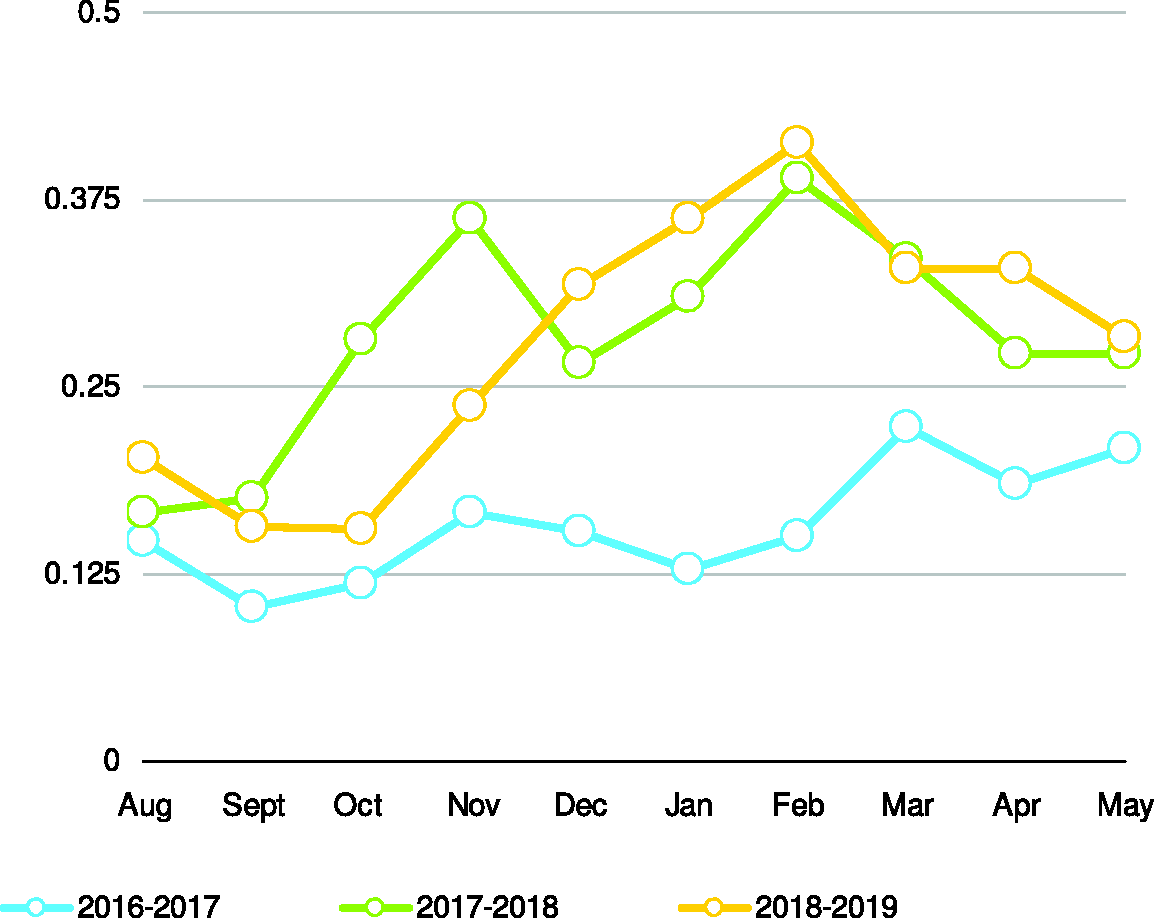
Data was not collected prior to 2015. From 2015–2018, rudimentary data was collected: student ages, number of monthly visits and percentage of telemedicine versus in-person visits as well as payer mix (Figures 1–4). For all years data has been collected, the percentage of telemedicine visits does seem to be trending up but remains under 50% (Figure 3).
Absenteeism and student migrant percentages 2019. 18

Top 10 diagnosis with CPT codes.

CPT: current procedural terminology code.
In 2018, a project coordinator was hired to specifically collect data on the project. Further data discussed here is specific for the 2018–2019 school year.
There were 28 schools from five different counties that were equipped with telemedicine units (Polk, Grundy, Bledsoe, Meigs and Sequatchie). Again, the Care Mobile rotated between three schools in Bradley County. Other schools participated via the telemedicine portal (Figure 5). The student population served had an age range from 5–18 years in grades K-12. Of these, approximately 41% were in elementary school, 26% in middle school and 17% high school. See Table 1 for a summary of the baseline school absenteeism, student migrant percentages and economically disadvantaged students for the specific counties.
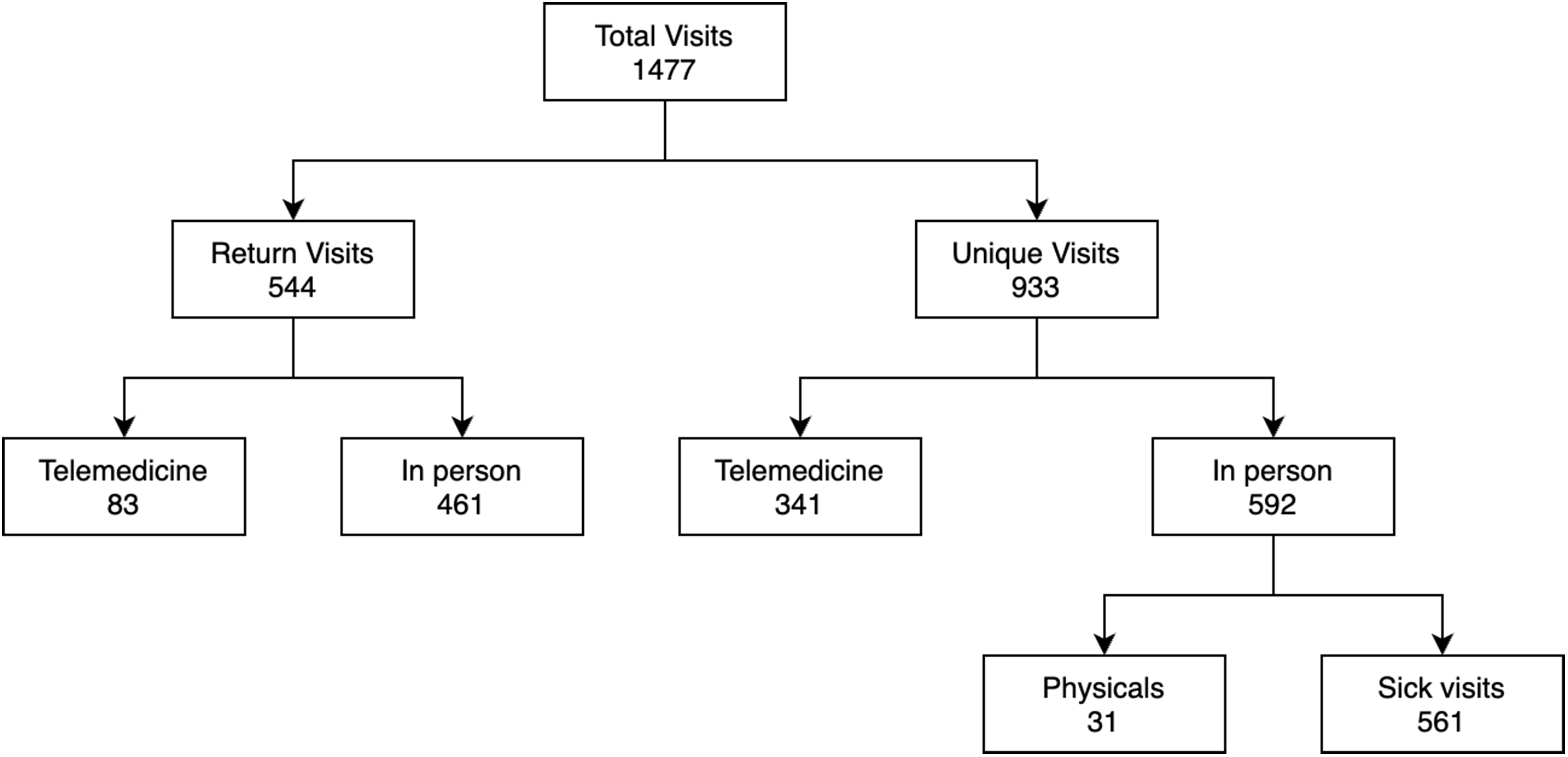
Both staff and students utilised the onsite truck and telemedicine portal. There were a total of 1477 outpatient visits (Figure 6). Seventy-one per cent of these were in-person visits (1053) and 29% were telemedicine visits (424). Breaking them down further, 933 of the visits were unique patient visits while 544 were return visits. Students accounted for 83% of the visits (771). Staff made up the remaining 17% (162). Note that both well-child checks and work physicals were included in the unique visits (Figures 7 and 8).
Student age for unique visits over 4 school years. Total monthly care mobile visits per year. Proportion of telemedicine visits to total visits by month across three years. Programme payer mix over four school terms. 2018–2019: Telemedicine visits per school district.Note: Meigs County joined in April. Diagram of ‘in-person’ and ‘telemedicine’ visits for staff and students. Diagram of staff and students for unique visits. Unique and return visits. Insurance payer mix for 2018–2019 school year.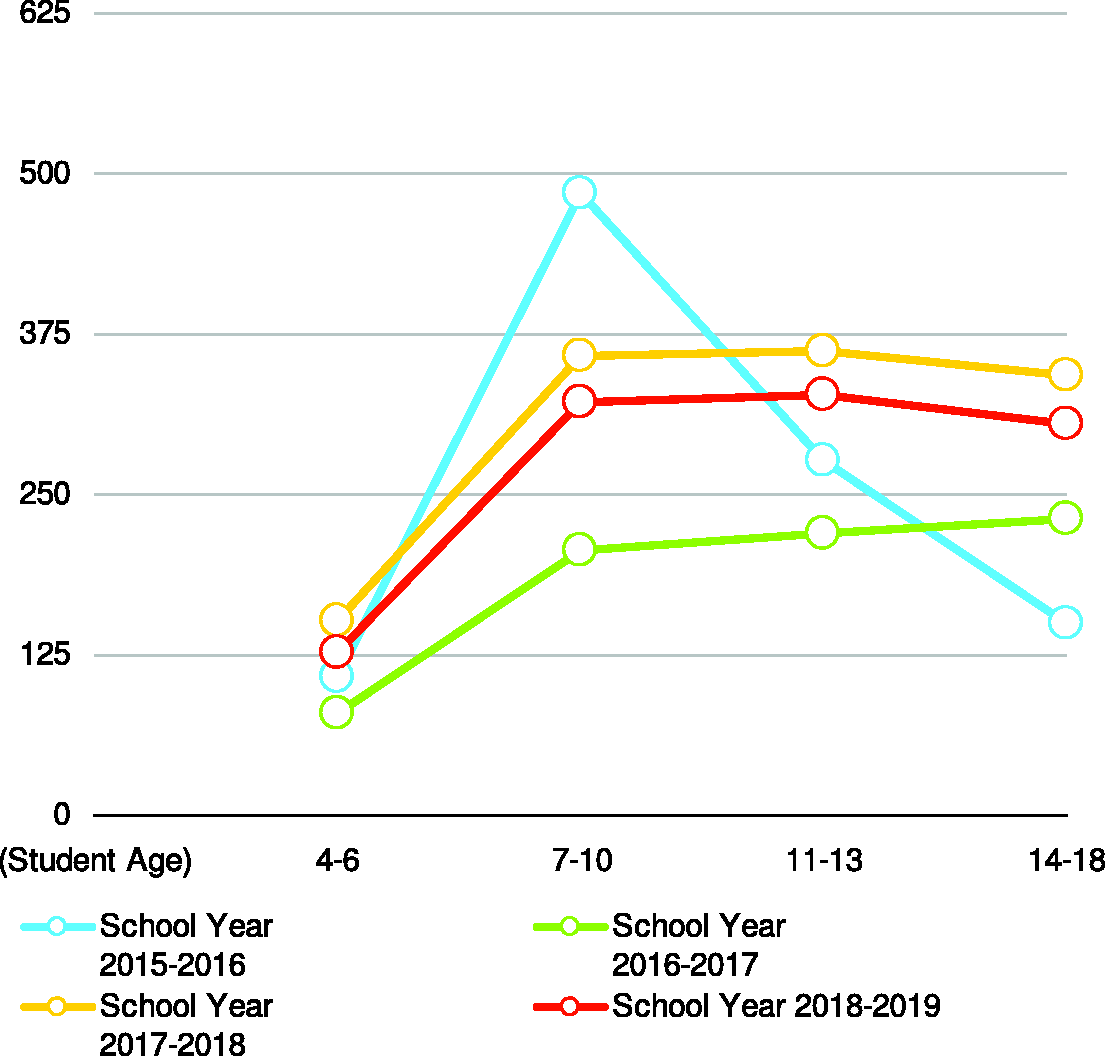

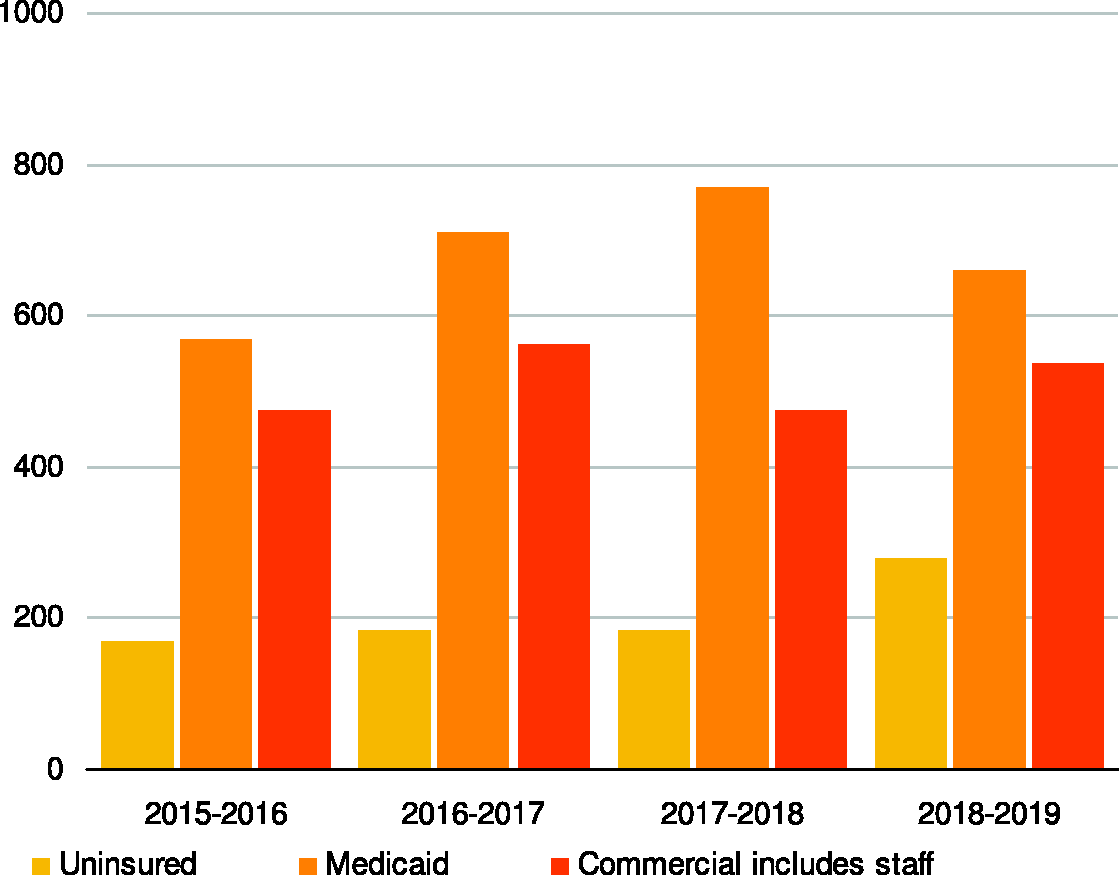


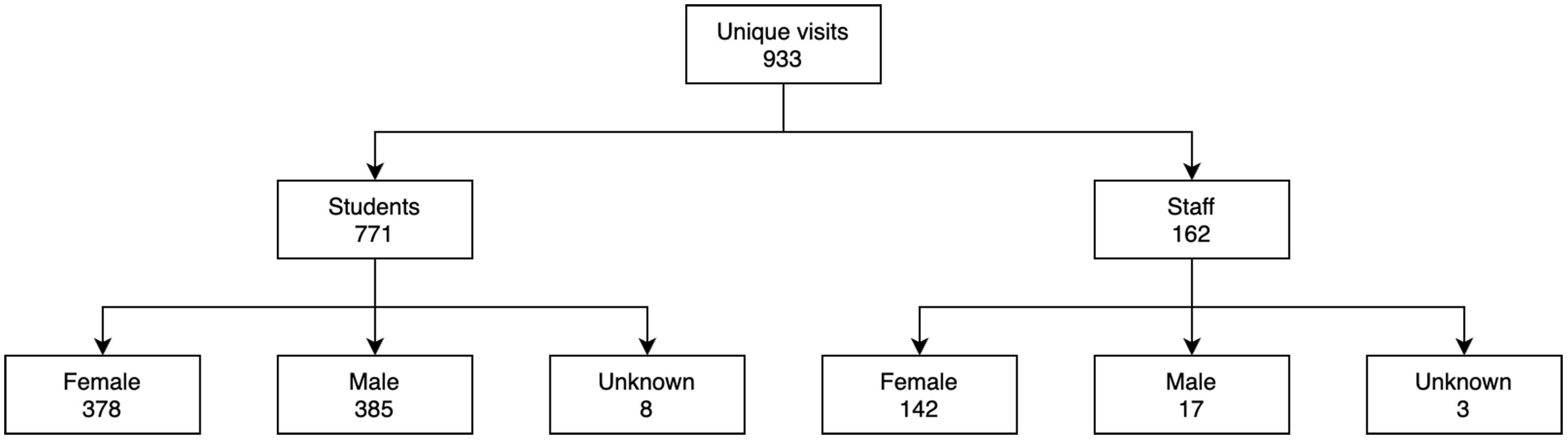
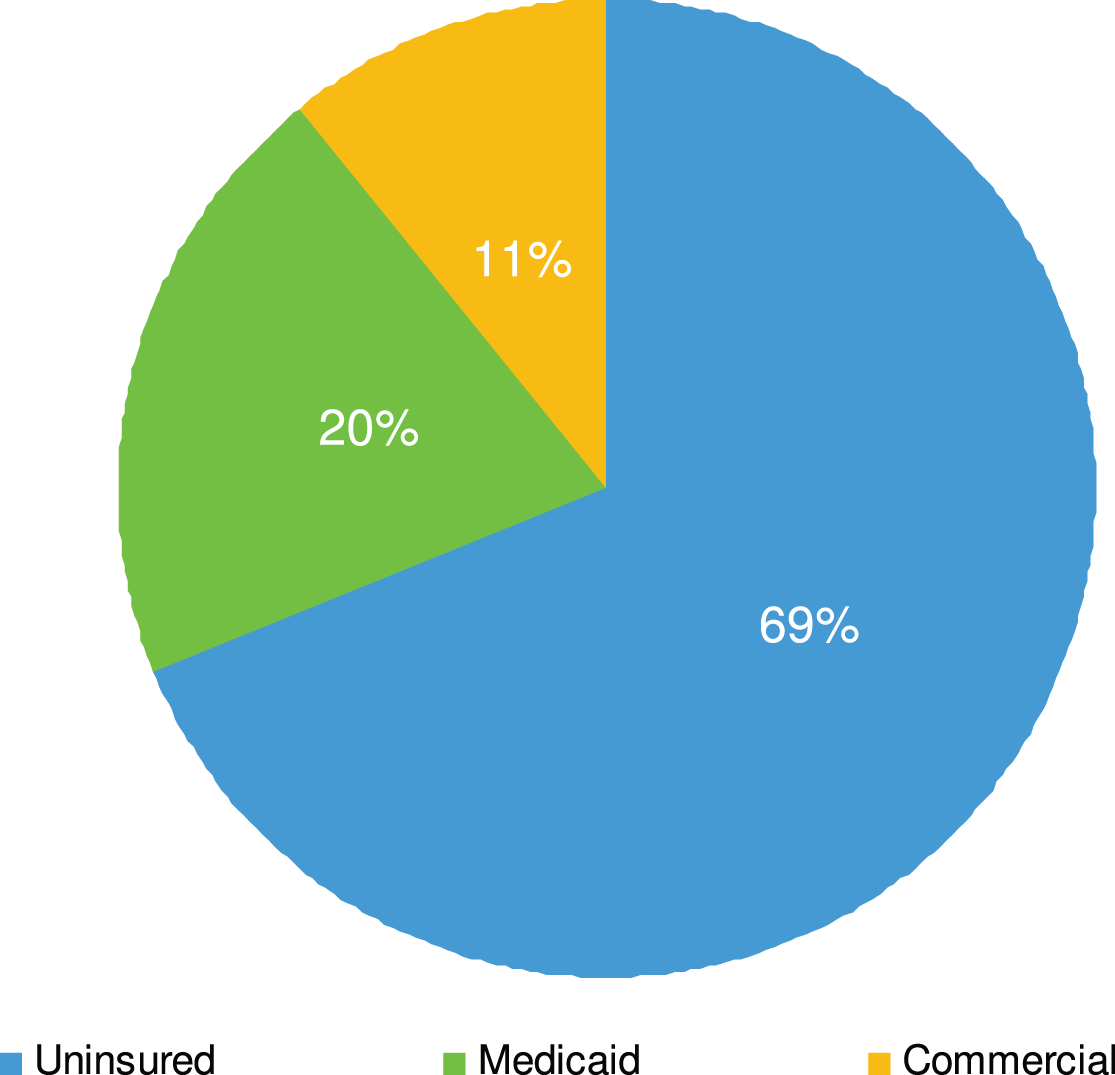
Demographics of the student patient population on unique visits (771) were as follows. The majority of the students were Caucasian (637) with the remaining students identifying as African American (32), Chinese (1), Other Asian (2), Filipino (1) or Other or Unknown (98). There were 378 females and 385 male students (eight with gender unknown). Of the staff unique visits (162), 142 were from female staff while only 17 were male staff (three with gender unknown). Ethnicity was not collected for staff (Figure 7). The insurance payer mix for the total unique visits (922 visits) was uninsured 69%, Medicaid 20% and commercial 11% (see Figure 9).
Our first goal was to provide well-child checks for children not attached to a primary care physician. Interestingly, only 28 children presented for a well-child check. However, 16 of these (57%) did not have a primary care physician. Of note, 19% of students presenting for any complaint did not have a primary care physician on file (172 students). All well-child checks were performed in-person on the Care Mobile.
Our second goal was to provide medical consultations and treatment for acute illnesses. A total of 1446 persons were seen for sick visits. Of these 424 were telemedicine visits (352 students and 72 staff), while 1022 were in-person visits (901 students and 121 staff) (Figure 6). All telemedicine visits were sick visits. The five most common diagnoses that the nurse practitioner managed during the 2018–2019 school year included acute pharyngitis, acute upper respiratory infection, streptococcal pharyngitis, fever and acute maxillary sinusitis (Table 2). The top diagnosis causing staff or children to be sent home was pharyngitis (both streptococcus and non-streptococcus pharyngitis). The most common diagnosis treated and child sent back into classroom was acute maxillary sinusitis. Urinary tract infection symptoms could be evaluated with a simple dipstick. However, cultures were not possible in the mobile clinic. Therefore, anyone with symptoms and a dipstick suspicious for a urinary tract infection was referred to their primary care physician or nearest urgent care or emergency department for further evaluation.
Finally, our third goal was to lower absenteeism rates. There were 1446 sick person visits (1253 students and 193 staff). Twenty-two per cent of the students (276 persons) returned to class while 74% (142 persons) of staff returned to work.
Discussion
Our first goal for this project was to perform physicals for children not attached to a primary care physician. Overall, the number of physical examinations performed for the 2018–2019 school year was low. In our area, same-day walk-in clinics will perform required school physical examinations for children. These clinics can give immunizations. In addition, the public health department provides immunizations required for school.
For both well and sick visits, the percentage of uninsured participants for 2018–2019 school year was 69%, by far the majority of visits (Figure 9). This is significant. Children that lack insurance are less likely to have a regular source of primary care as parents are more hesitant to seek out such care and physicians are more reluctant to accept these children into their practice. This has a negative impact on the health status of these children. These children are less likely to be completely immunised and have higher rates of visits for illness care resulting in more frequent emergency department visits (emergency rooms will see and triage children regardless of insurance status). 17 During the school year (August–May), the mobile clinic provides a medical home to uninsured children enrolled in participating public schools. This improves access to general care as well as potentially relieving emergency departments from the burden of seeing uninsured patients for relatively minor issues.
Our second goal was to lower absenteeism rates. During the 2018–2019 school year, approximately 22% of students and 74% of staff were able to return to the classroom after an urgent care visit. In the state of Tennessee, schools receive US$25 per child in attendance per day. 14 The day is divided into increments so if a child is sent home before noon, the state receives no money for that day. Two hundred and seventy-six students returned to the classroom represents a saving of US$6900 in one academic school year. Although specific staff role details were not collected, schools in our area spend US$65/day for replacement teachers or staff. Thus, the staff returned to work represents a potential savings of US$9230. 18
Finally, the mobile clinic was able to provide medical consultations and treatment for acute illnesses. The majority of our visits were for acute illnesses rather than well-child care, with acute pharyngitis and acute upper respiratory infections being the two most common during the 2018–2019 school year. Both of these diseases can be highly communicable, thus necessitating prompt treatment. The only minor acute illness that our mobile clinic was unable to effectively treat was urinary tract infection. This was due to the inability to reliably get urine specimens to a laboratory for culture. At this time we cannot ameliorate this problem due to the mobile nature of the clinic.
There have been challenges during the initial six years. Foremost, in order to participate schools had to have a school nurse on staff. It is not in the scope of a school nurse to diagnose and treat acute illnesses in the school setting. The telemedicine portal effectively expands what the school nurse is able to offer students as well as faculty. Unfortunately, schools that do not have a school nurse on staff are not able to participate in the telemedicine portal.
Funding has also been a challenge. Initially, the project was entirely funded by external grant money and schools had only a theoretical monetary incentive to buy-in (money saved from fewer absenteeism). Thus, schools without a local champion did not initially participate. This has been mitigated with aggressive fundraising and community support in rural school districts. In addition, if available, commercial and government insurances are billed for services.
Another impediment is that there is currently only one Care Mobile truck. This truck rotates through three different schools over the five-day school week. It spends 3 days at its ‘primary’ school and one day each at the other two schools. The ‘primary school’ has significantly more students, which is why the truck devotes more 'face' time to this facility. Due to prolonged driving time, the truck is unable to go to schools further away. This mitigates the ability to do well-child checks at these schools.
Logistics of using video-based telemedicine equipment has proven to be another obstacle. It is notable that the majority of visits were in-person rather than via telemedicine. This seemed to be a function of the technology itself. School nurses that were not technically experienced had steeper learning curves and required more technical support (which was often not on site at the participating schools). In addition, there was an unexpected delay built into a telemedicine visit due to information needing to be uploaded to the telemedicine provider.
Finally, there was limited data collection until 2018. This was due to limited staff and funding. As the programme grew, however, data collection became a priority and staff were hired to assist with this process.
A number of lessons were learned from this experience. Schools that purchased equipment and supplied technical support were much more likely to utilise the telemedicine portion of the mobile clinic. Focusing on preventing staff or children from needing to leave school has also promoted the programme and incentivised participation at an administrative level. Finally, finding local community champions has been the key in introducing the program to school districts and counties.
Conclusion
The mobile/telemedicine health clinic is a novel innovation to increase access to acute care and reduce school absenteeism among both students and staff, potentially saving schools hundreds to thousands of dollars. The ultimate success of the telemedicine program largely depends on financial backing and school nurse support.
Footnotes
Declaration of conflicting interests
The author(s) declared no potential conflicts of interest with respect to the research, authorship and/or publication of this article.
Funding
The author(s) received no financial support for the research, authorship and/or publication of this article.
