



Abstract
Introduction
Communication skills training for people with traumatic brain injury (TBI) and their carers is recommended best practice. Delivery via telehealth could improve access to this training. This paper focuses on the acceptability of telehealth delivery of communication skills training.
Methods
A mixed-methods investigation of acceptability of telehealth to people with TBI and their carers was incorporated into a clinical trial. Thirty-six people with TBI (23 metropolitan and 13 regional) and their carers were recruited. Metropolitan participants were randomly allocated to telehealth or in-person intervention at a 1:3 ratio. Regional participants were allocated to telehealth. Telehealth and in-person participants were compared on retention, time to complete the programme, home practice completion and therapeutic alliance ratings. Participants completed semi-structured interviews regarding their views on telehealth, which were analysed using thematic analysis.
Results
There were no significant differences between telehealth and in-person participants in retention rate, time to complete the programme, degree of home practice completion or therapeutic alliance ratings. Three themes were identified: ‘telehealth delivery opens a window for access to rehabilitation in the context of my daily life’, ‘in-person delivery offers rehabilitation based on natural human interaction’ and ‘weighing telehealth against in-person delivery’.
Discussion
Participants found telehealth delivery acceptable, as indicated by the similarity between groups in the quantitative process measures, and as reported in interviews. Some reported a preference for in-person delivery if there had been a choice of delivery mode. Participants described characteristics of the two delivery modes which were relevant to their attitudes towards telehealth.
Introduction
Traumatic brain injury (TBI) is a common cause of disability globally and has devastating long-term consequences for injured individuals. 1 One frequent consequence of TBI is cognitive-communication impairment, 2 which can be compounded by communication partners of people with TBI struggling to provide appropriate support in conversations. 3 Training of communication partners is therefore recommended as best practice for managing cognitive-communication disorders after TBI, 4 based on evidence from multiple clinical trials.5,6 However, access to specialist intervention may be limited by distance from brain injury services. 1
Telehealth may offer increased access to rehabilitation and communication partner training for people with brain injury. Systematic reviews have noted positive outcomes for telehealth-delivered TBI rehabilitation, both for cognitive rehabilitation 7 and for interventions incorporating carer involvement. 8 With regard to communication skills training after TBI, a single-case experimental design study with two participants with severe TBI using a modified videoconferencing-based version of an existing training programme 9 found positive communication outcomes. 10 Both participants with TBI and their communication partners reported positive experiences with videoconferencing, including ease of use and approachability. 10 This suggests existing TBI programmes may feasibly be modified for telehealth. However, a key consideration in scaling telehealth-based intervention into practice is acceptability of this format to people with TBI and their families.
A recent systematic review 11 focussing on studies of satisfaction, acceptance and usability of telehealth TBI interventions addressed 13 studies which generally reported positive findings. With regard to videoconferencing-based interventions, two studies in the review incorporated qualitative analysis of perspectives of people with TBI on this delivery mode.12,13 A group intervention study found carers of people with TBI reported comfort and satisfaction with videoconferencing. 12 In a single-case study, 13 the carer reported focussed conversation, flexible scheduling and reduced need to prepare the house for a home visit to be positive aspects of videoconferencing. However, the participant with TBI noted the stationary videoconferencing set-up prevented him from showing the case coordinator other areas of his home, and reported feeling self-conscious about having the videoconferencing equipment in his living space, even when the camera was not in use. In a review of telehealth interventions involving family members of people with TBI, 8 it was noted across five studies that 29–38% of family respondents preferred in-person services. Overall, the literature suggests telehealth may be acceptable to some, although not all, people with TBI and their carers. The factors influencing the acceptability of telehealth for TBI rehabilitation have not been explored in detail.
Acceptability is defined as ‘a multi-faceted construct that reflects the extent to which people delivering or receiving a healthcare intervention perceive it to be appropriate, based on anticipated or experiential cognitive and emotional responses to the intervention’ (p.8).
14
Measuring acceptability can involve semi-structured interviews regarding participants’ experiences or data on participant behaviour, such as drop-out rates or attendance. The present study investigated acceptability of telehealth-based delivery of a social communication skills programme for people with TBI and their communication partners in the context of a clinical trial. A separate report on this clinical trial
15
describes the efficacy of this programme, with findings that trained communication partners improved their skill in supporting conversation, as evaluated using the Adapted Measure of Support in Conversation Reveal Competence scale.
16
The research questions relating to acceptability, which are the focus of the present paper, were:
Are there differences between telehealth participants and in-person participants in quantitative measures of acceptability of the social communication skills intervention TBIconneCT? What are the perspectives of people with TBI and their carers regarding acceptability of TBIconneCT telehealth delivery?
Methods
This mixed-methods study was part of a clinical trial examining intervention efficacy. A concurrent triangulation design was used, 17 with quantitative and qualitative data providing complementary perspectives on telehealth acceptability. The trial protocol was registered at the Australian New Zealand Clinical Trials Registry (ACTRN12615001024538) and has been described in detail elsewhere. 18 The Strengthening the Reporting of Observational Studies in Epidemiology statement 19 guided reporting of quantitative measures, and the Standards for Reporting Qualitative Research checklist 20 guided reporting of qualitative components.
Participants
The participants were people with TBI and their carers. Each person with TBI and one nominated carer completed the study together as a dyad. People with TBI were recruited from three metropolitan and four regional brain injury units in New South Wales, Australia. The project was also advertised through social media and brain injury support groups. People with TBI nominated a carer (family member, friend or paid carer) who was invited to participate in the study. People with TBI and their carers provided written consent. Eligibility criteria were (a) moderate-severe TBI occurring at least six months prior, defined as a score on the Glasgow Coma Scale of 9–12 (moderate) or ≤8 (severe) and/or a period of post-traumatic amnesia of 1–24 hours (moderate) or >24 hours (severe) 21 ; (b) discharged from hospital; (c) significant social communication deficits as confirmed by a referring clinician reporting observation of social communication deficits of clinical concern, or for people with TBI self-referring to the study, as confirmed by a speech pathologist rating of at least one aspect of social communication as inappropriate using a pragmatic protocol 22 during a 15-minute conversation; (d) a carer who was willing to participate; (e) a home computer with an Internet connection; and (f) proficiency in spoken English. Exclusion criteria for people with TBI were: (a) severe expressive aphasia (i.e. unable to produce sentence-level responses in conversation); (b) severe amnesia preventing provision of informed consent; (c) severe dysarthria significantly affecting intelligibility to an unfamiliar listener; (d) current major substance abuse or dependence, or active psychosis; or (e) co-occurring degenerative neurological disorder or multiple TBIs. The only exclusion criterion for carers was a severe brain injury.
Procedure
The project received ethical approval from the Hunter New England Human Research Ethics Committee (12/06/20/4.04), and participating sites provided site-specific approvals. Figure 1 shows recruitment and allocation for this partially randomised trial. A total of 36 dyads were recruited to the study and allocated to either the telehealth intervention (delivered over Skype to participants using their own home computer) or the in-person intervention (delivered via a clinician visiting participants at their homes). Of the 36 dyads, 23 lived within a two-hour drive of Sydney, and 13 lived more than a two-hour drive away. Providing home visits to dyads living more than a two-hour drive from Sydney was beyond the scope of this study. The 13 dyads living outside Sydney were therefore allocated directly to the telehealth training. The 23 dyads living within Sydney were randomised to telehealth or in-person training at a ratio of 1:3 (6 telehealth and 17 in-person) using a blocked randomisation approach, with each block containing four dyads. Allocations were stored in sealed opaque envelopes and opened by researchers after completing initial assessments.
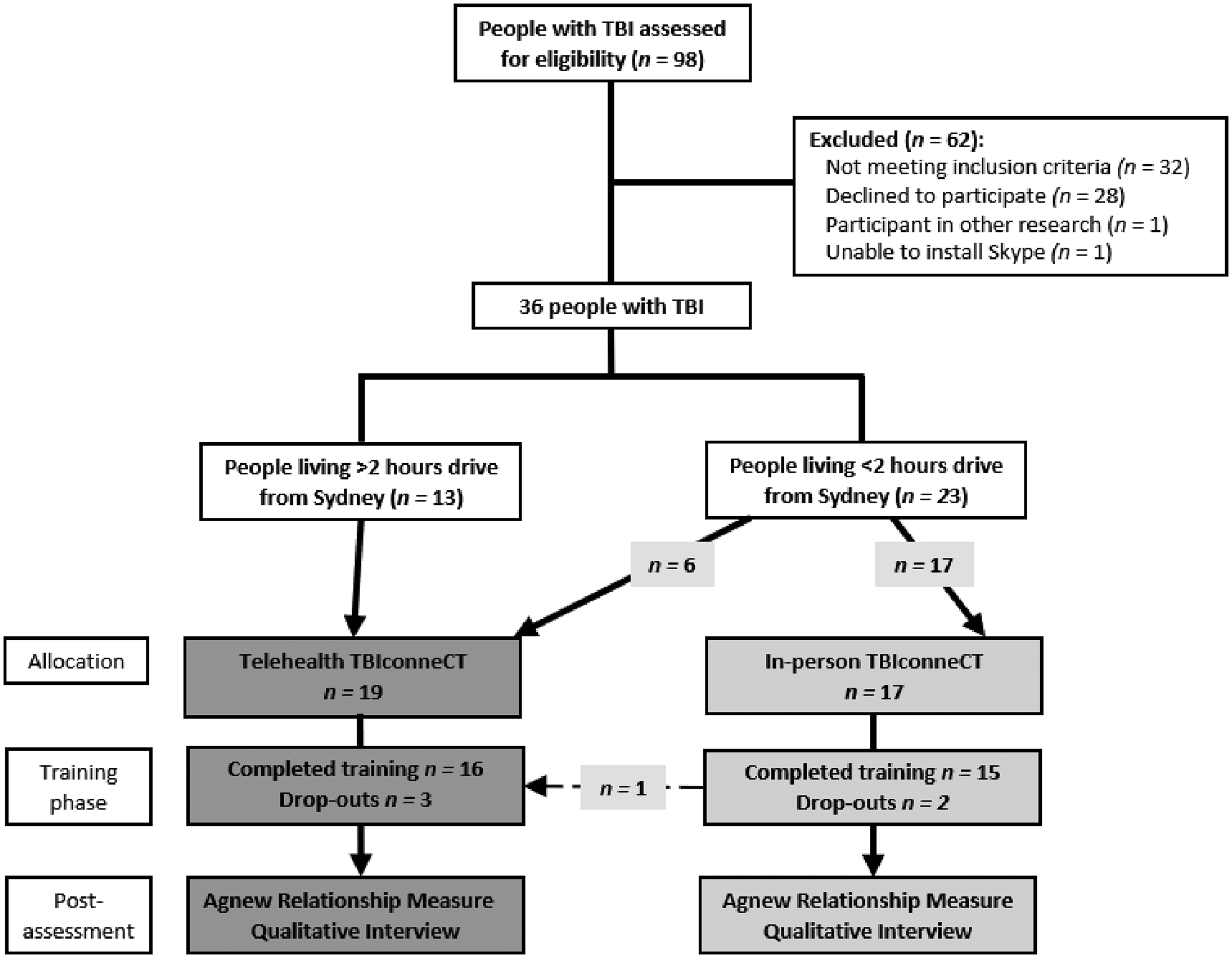
TBIconneCT study flow diagram.
Dyads in telehealth and in-person interventions received 10 training sessions, each of approximately 1.5 hours duration. The person with TBI and his/her carer attended all sessions together. Sessions were planned to occur weekly but could be rescheduled if required. The training programme was based on the TBIconneCT manual 23 developed for the pilot study, 10 with some tailoring to individuals as guided by the manual. The goals of the intervention were for carers to support conversations of people with TBI appropriately, and for people with TBI to participate in conversations appropriately.
All dyads received a hard copy of the manual which contained printouts of the slide content for each session. During telehealth sessions, slides were displayed to dyads alongside their view of the clinician’s webcam using the screen-sharing function. This supported the dyads to follow the session content. After each session, all dyads (whether in-person or telehealth) were emailed a session summary and instructions for practice tasks, including recording a practice conversation. Telehealth dyads were requested to transmit this recording to the clinician in advance of the next session. This was initially managed through a private video-sharing platform available at the time of study commencement (www.mindlogr.com), but this platform became unavailable. Dyads enrolling in the study after this platform became unavailable therefore transmitted their recordings to the clinician via email or using the Skype video messaging function.
Two qualified speech pathologists (R.R. and M.A.) were the training clinicians. R.R. had experience as a clinician in a previous intervention study focussed on a programme for people with TBI and their carers, and had been involved in developing the TBIconneCT manual. M.A. had prior experience working with adults with acquired neurogenic communication disorders. She completed training together with R.R. on delivery of the intervention before commencing sessions with dyads. Dyads received intervention sessions exclusively from one clinician (either R.R. or M.A.). R.R. worked with 17 telehealth and 14 in-person dyads, and MA worked with two telehealth and three in-person dyads.
Treatment fidelity was evaluated using a checklist of the essential process and content items for each training session. An independent clinician not involved in delivering the training in this study reviewed the recordings and documentation from a random sample of 10% of all training sessions conducted (n = 32), with samples selected so that there was no more than one sample per dyad. The independent clinician used the checklist to record whether process and content items were present or absent, and noted potential reasons for absent items.
Quantitative measures of programme acceptability
Attendance
Training clinicians recorded the number of sessions attended. The criterion for programme completion was attendance at a minimum of 80% (8/10) sessions. Dates of initial assessments and post-training assessments were noted in order to calculate the number of weeks for programme completion for each dyad. For dyads who discontinued, notes were made regarding reasons for withdrawal.
Completion of home practice
For each session (excluding session 1), clinicians recorded the degree to which dyads completed home practice using a three-point scale (0 = not completed, 1 = partially completed, 2 = completed). Scores were summed to rate degree of home practice completion by each dyad (0–6 = minimally complete, 7–12 = moderately complete, 13–18 = mostly complete).
Therapeutic alliance
During post-intervention assessment with independent clinicians, people with TBI and their carers completed the Agnew Relationship Measure (12 item) 24 to report on therapeutic alliance with their treating clinician. This was administered once at the end of the programme, rather than session-by-session, so that participants could provide these ratings to a clinician not involved in delivery of their training. The time interval between the final intervention session and the post-intervention assessment was a median of nine days (range 2–57 days).
Each item was scored on a seven-point Likert scale, with higher scores indicating higher levels of alliance. The measure has two subscales reflecting core alliance and openness in the working relationship. These subscales have acceptable internal consistency (α = 0.68–0.89). 24 A version of this instrument has been used with carers of children with TBI to evaluate a telehealth intervention, 25 but it has not previously been used by people with TBI. The intention was to blind assessing clinicians to the intervention mode. However, unblinding inadvertently occurred for 23% (7/31) dyads due to participants revealing information about location or training mode.
Post-training interview
After completing training, participants also completed a semi-structured interview. Interviewers were qualified speech pathologists with experience of working with people with TBI. Eight different interviewers conducted interviews over the course of the study. An interview pro forma was developed with the aim of understanding participants’ perspectives of the intervention mode they received (either telehealth or in-person) in comparison to the mode they did not receive. Although participants only received intervention in this study via one of the modes, all participants had at least one experience of a telehealth interaction, given that pre-training assessments for this study were conducted via Skype. 18 Furthermore, it was assumed that all participants had experience with participating in traditional in-person rehabilitation (either as a person with TBI or as a carer), given that all participants were at least six months post injury. This broad context formed the basis of participants’ ability to draw comparisons between the delivery modes.
Interviewers used a standard set of instructions and this pro forma to support a similar procedure across interviews (see Appendix 1). The interview instructions recommended use of follow-up questions to clarify or probe responses. The instructions also recommended summarising responses to create opportunities for participants to confirm and add further information. Participants were provided with the interview pro forma to support participation.
To minimise social desirability bias, participants were matched with an interviewer who was not their training clinician and were encouraged to share their opinions honestly. People with TBI and their carers were generally interviewed separately, but five dyads preferred to be interviewed together. Data collection was completed via Skype interview, telephone interview or written questionnaire. The data-collection method was chosen in consultation with individual participants based on which one would place the least burden upon them. All data-collection options were available to participants across both the intervention modes. Of 31 people with TBI who completed the training, 15 completed Skype interviews, 11 completed telephone interviews, one completed a written questionnaire and four did not provide any feedback. Of the 31 carers who completed the training, 11 completed Skype interviews, eight completed telephone interviews, eight completed a written questionnaire and four did not provide any feedback.
Interviews addressed participants’ overall experiences of the intervention, but this present analysis focuses on participants’ experiences of and preferences for training mode (telehealth vs. in-person). Interviews ranged from 6 to 35 minutes in length. Recording errors occurred for six people with TBI and three carers. In these cases, the interviewer’s written notes were used as data. For participants who responded via questionnaire, the length of written responses ranged from 8 to 223 words.
Analysis
Groups were compared on demographic characteristics using independent-samples t-tests for normally distributed data, Mann–Whitney U-tests for non-normally distributed data and chi-square tests for categorical data. Retention of dyads and home practice completion were compared between in-person and telehealth groups using Fisher’s exact tests. Time to complete the programme and therapeutic alliance ratings were compared between groups using Mann–Whitney U-tests.
The analysis of qualitative data was approached from the perspective of constructionism, in which reality is created as individuals engage with the world. 26 It was of interest to understand how these specific participants, given their context, viewed and/or experienced rehabilitation via telehealth. To investigate this specific issue, the qualitative data set was analysed using an inductive approach to thematic analysis. 27 First, interviews were transcribed verbatim by M.A., and written responses collated. R.R. then listened to the interviews while reading transcripts to check accuracy and reviewed the written responses. R.R. read and reread the transcripts and written responses to gain an overall sense of the data, while highlighting possible keywords and making notes. M.A. then reviewed these marked-up versions and added her own notes. R.R. and M.A. developed an initial set of codes based on a first review of the data. Next, R.R. applied this set of codes to transcripts and written responses using NVivo®, ensuring each meaningful unit of data was matched to at least one code. A record was kept of decisions relating to changes or additions to the set of codes. Codes were then collated into potential themes, and links and relationships between codes and themes were identified to develop a potential thematic map. R.R. then reviewed data extracts for each theme to ensure themes encapsulated the coded data. Throughout this process, data extracts remained linked to participant contextual information (the person with TBI or his/her carer and telehealth or in-person delivery) to facilitate interpretation, given each participant’s specific context. Finally, collated data were reviewed by the wider research team to ensure consensus regarding study themes and to develop narrative descriptions of each theme.
Results
Participants
Table 1 describes demographic characteristics of people with TBI and their carers. There were no significant differences in demographic characteristics or measures of functional status (Repeatable Battery for the Assessment of Neuropsychological Status or Glasgow Outcome Scale – Extended) between in-person and telehealth groups.
Baseline comparison between in-person and telehealth groups on demographic variables.

az-score reported.
bWelch’s t-test used due to unequal variances.
TPI: time post injury; PTA: post-traumatic amnesia; TBI: person with traumatic brain injury; RBANS: Repeatable Battery for the Assessment of Neuropsychological Status; GOS-E: Glasgow Outcome Scale – Extended.
Treatment fidelity
The intervention was delivered with high levels of fidelity. All process items were rated as present in 97% (31/32) sessions. In one telehealth session, two process items (relating to replaying and discussing a conversation recording) were absent. It was noted that these items may have been skipped due to conflict between the person with TBI and his carer. All content items were rated as present in 97% (31/32) sessions. In one telehealth session, one content item was absent, as the session was discontinued due to the person with TBI becoming fatigued.
Quantitative measures
Attendance
There was no significant difference (p = 0.99) in the proportion of dyads completing the training between in-person (88%; 15/17) and telehealth (84%; 16/19) groups. The two dyads who dropped out of in-person training discontinued due to (a) work commitments of the person with TBI and (b) childcare commitments of the carer. The three dyads who dropped out of telehealth training discontinued due to (a) family crisis, (b) programme schedule being too great a commitment and (c) the carer not being regularly available to attend sessions.
Of dyads who completed training, 94% (29/31) completed all 10 training sessions. Two in-person dyads completed the programme after the minimum eight sessions due to lack of availability. There was no significant difference in the median number of weeks to complete training (U = 125.5, z = 0.22, p = 0.83) between the in-person group (median = 16.7 weeks; range 13.0–31.3 weeks) and the telehealth group (median = 16.1 weeks; range 13.1–25.0 weeks).
Completion of home practice
Table 2 reports on homework completion for dyads in each group. There was no statistically significant difference between the groups.
Degree of home practice completion by dyads across the programme.

Therapeutic alliance
The adequacy of the internal consistency of the Agnew Relationship Measure (12 item) within the current sample was evaluated using a criteria of α > 0.65 for core alliance (nine-item scale) and α > 0.60 for openness (three-item scale) based on a published matrix. 28 The internal consistency was adequate for two variables: core alliance reported by people with TBI (α = 0.80) and openness reported by carers (α = 0.75). Internal consistency was unsatisfactory for two variables: openness reported by people with TBI (α = 0.52) and core alliance reported by carers (α = 0.57). Table 3 reports the median ratings reported by people with TBI and their carers. Ratings were high on both subscales for both participant types, with no significant differences between training groups.
Ratings of therapeutic alliance as assessed by the Agnew Relationship Measure.

Maximum possible score = 7. Higher scores indicate greater perceived therapeutic alliance.
Findings from qualitative data
The following section describes the themes with reference to participant quotes. Participants described weighing characteristics of telehealth delivery against characteristics of in-person delivery, depending on personal characteristics and experiences, to make conclusions about the acceptability of telehealth. Numbers indicate participant codes, with ‘C’ indicating a quote from a carer, ‘TBI’ indicating a quote from a person with TBI, ‘TH’ indicating a quote from a telehealth participant and ‘IP’ indicating a quote from an in-person participant. Figure 2 illustrates the themes in a thematic map representing a set of scales. Appendix 2 lists the codes used to form themes and subthemes.
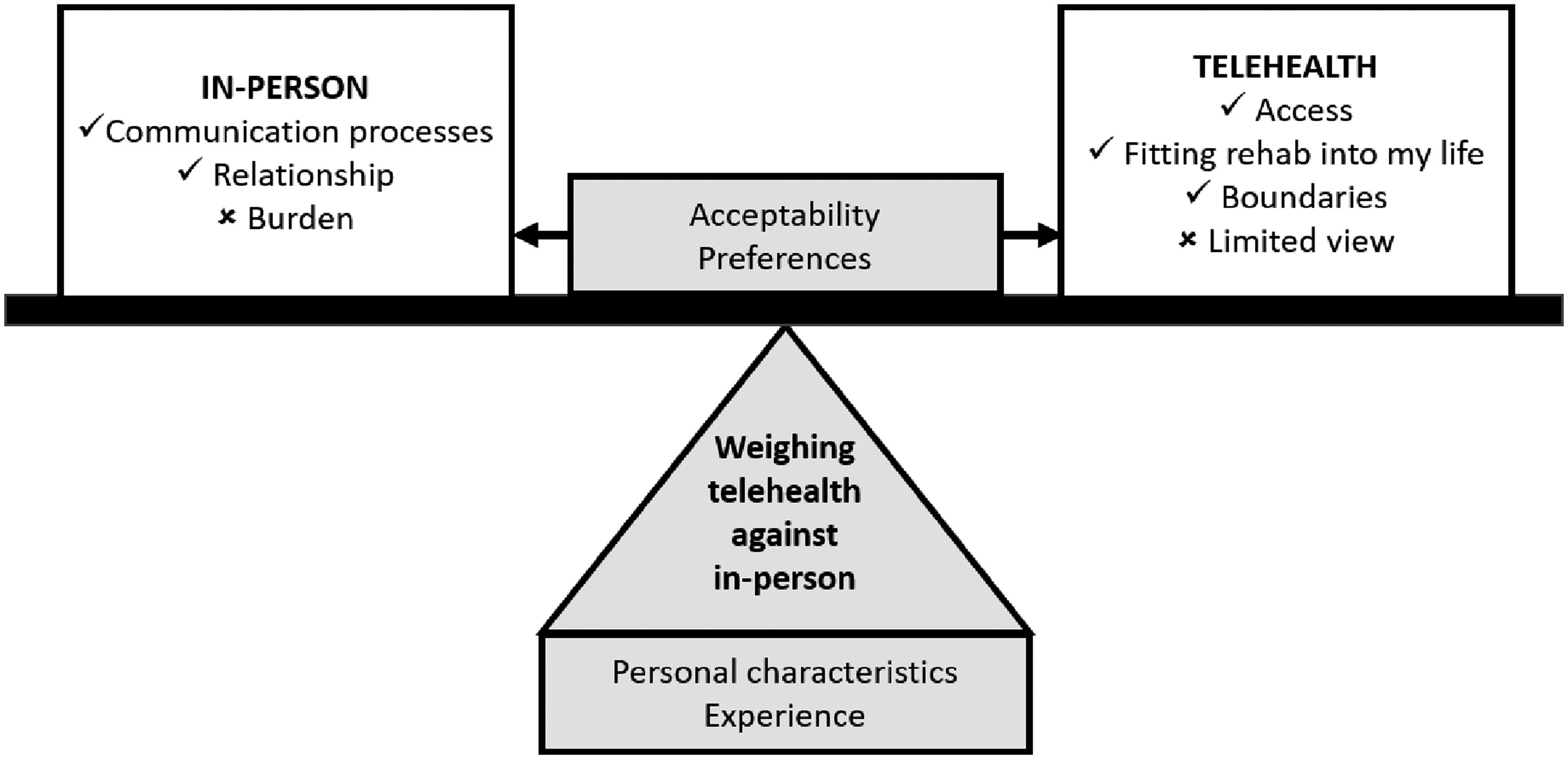
Thematic map representing qualitative data from people with traumatic brain injury and their carers.
Telehealth delivery opens a window for access to rehabilitation in the context of my daily life
Participants valued the capacity for telehealth to remove barriers of distance or logistics to accessing rehabilitation: ‘One of the big things for me, via the use of Skype was how it overcame the barrier of distance. And gave [pwTBI] and I complete access to a professional via the use of technology’ (02 C – TH). Participants described the experience of telehealth as essentially equivalent to in-person intervention: ‘We probably would have liked to have met [the clinician] face to face, but it wasn’t critical to what we did’ (32 C – TH). Some participants reported the telehealth format was an engaging way to participate in sessions: ‘Good to be able to have written content right there when completing sessions, while being able to see [the clinician] at the same time’ (02 TBI – TH).
Participants also valued that telehealth allowed rehabilitation to fit into their lives flexibly: ‘The pure convenience was great. We were only starting to get ready 10 minutes before the session start and there was a specific session we did in a different location (not at our home) which again is truly one of the benefits’ (27 C – TH). It was also highlighted that using telehealth could develop side benefit skills in using the computer: ‘We thought that Skype would be good for [pwTBI]’s progress, for him to use the computer’ (11 C – IP). These skills could lead to opportunities for social connection: ‘A good side effect of that was, we started talking with my granddaughter on Skype’ (19 TBI – TH). People with TBI reported telehealth allowed a sense of preserving personal boundaries: ‘I didn’t feel that I was being imposed upon ’cause I felt that I was in control. Because all I have to do is push that button, all right [laughs]’ (23 TBI – TH). It was mentioned that telehealth sessions were more focussed on relevant content: ‘It was like an innings, you know, bang, bang, and you didn’t have to—there was no sideways talking’ (32 TBI – TH).
However, telehealth provided a limited window of view. Telehealth sessions were subject to technical problems: ‘At times there were some technical issues, um in a couple of the sessions—not a big deal, but you’ve just gotta then take a little bit of time to fix them, um, and then that sort of disrupts the flow of conversation and information’ (17 C – TH). Types of technical issues reported were connection problems, video and audio quality and difficulties using the screen-sharing or link-sharing functions. There was also a risk of clinicians missing information. For example, clinicians may not notice fidgeting movements as participants’ attention faded: ‘There were times when I noted he was ah [laughs] twiddling thumbs, and [laughs] tapping pens. He was finished but no one else was, if you know what I mean. He wasn’t rude about it – see, [the clinician] probably wouldn’t’ve seen that [laughs] because she probably couldn’t see his hands’ (02 C – TH). In other cases, it was reported that behaviour during the telehealth session was not an accurate reflection of usual life: ‘’Cause I think people can put on a bit of a show when – um, you know, over Skype, it can be a little bit deceptive’ (15 C – TH). Telehealth participants described successfully persevering through these issues to complete the programme: ‘We only had one session where we had issues and we had to wrap it up … I think our Internet wasn’t as wonderful as it could be, but having said that, we managed to do the whole thing through Skype, so that was good’ (32 C – TH).
2. In-person delivery offers rehabilitation based on natural human interaction
In-person sessions involved communication processes which participants described as more personal than telehealth sessions: ‘It provides a more personal approach and interaction’ (25 C – IP). The availability of non-verbal cues supported the interaction during in-person sessions: ‘She was probably able to read my emotion of my language better’ (33 TBI – IP). Participants also highlighted the learning that occurred within natural conversation: ‘Being able to see how [the clinician] responded to [pwTBI] and learn from that’ (24 C – IP).
Participants also described the relationship with the in-person clinician as a key feature: ‘Just because um, I dunno, you get a bit of a connection with the teacher’ (08 TBI – IP). The genuine relationship between the clinician and the participants facilitated a sense of accountability: ‘You feel personally responsible, so you make sure you do your homework and everything’ (09 TBI – IP). Participants, particularly those who felt isolated, valued the direct social contact: ‘I don’t meet many people so it was nice having someone come here’ (10 TBI – IP). In contrast, some participants discussed the burden of in-person interaction, which required physical preparation: ‘The mad rush to clean the house and put on neat outfit before visit’ (05 TBI – IP).
3. Weighing telehealth against in-person delivery
In the post-training interviews, nine people with TBI and 12 carers reported their preference would have been for in-person delivery if they had been allowed to choose their delivery mode in this study. Notably, very few of these participants had received telehealth delivery (one person with TBI and two carers). This suggests increased acceptance of telehealth with experience. Furthermore, five people with TBI and two carers (all from the telehealth group) reported their preference was for telehealth delivery. Overall, most participants across telehealth and in-person groups perceived telehealth to be acceptable. Only two people with TBI and two carers (all from the in-person group) reported they would have found telehealth unacceptable if they had been allocated to that mode. Further, two people with TBI (both in the telehealth group) reported they would have found in-person delivery to be unacceptable. Some participants proposed a combination of telehealth and in-person sessions as being ideal.
Participants frequently linked their views on acceptability of telehealth and their preferences for delivery mode to personal characteristics. Older age and lack of technical skill were linked to a preference for in-person delivery: ‘Probably ’cause we don’t do a lot of Skype. Like, we only do it if the kids are away, or something like that, so it sort of a bit of uh … we’re just showing our age’ (11 C – IP). Privacy concerns were linked to a preference for telehealth: ‘I preferred it done this way [telehealth] – because I’m not a computer buff, but as I said, it actually was less personally intrusive’ (23 TBI – TH). All participants who reported initial apprehension about their allocated delivery mode described increasing comfort with that mode with experience: ‘At first, I thought Skype would be a little daunting because it’s a mode that I hadn’t explored, but having participated in Skype, it’s excellent’ (19 C – TH).
Discussion
The findings of this concurrent triangulation study provide some support for the acceptability of telehealth delivery of TBIconneCT. Previous TBI research has demonstrated generally high participant satisfaction with telehealth intervention, albeit noting some individuals prefer in-person delivery. 11 This study endorses these findings and extends upon earlier research through comparing the acceptability of a telehealth intervention with an equivalent in-person intervention, and utilising both quantitative and qualitative measures of acceptability. As such, this study provides a more detailed account of factors relevant to people with TBI and their carers in considering their own perspectives towards telehealth as a delivery mode. The findings within this sample align with previous research in other populations trialling use of telehealth for rehabilitation.29–31 These previous studies have similarly noted high acceptability, albeit with some reservations amongst participants towards telehealth services, with suggestions that telehealth may complement rather than replace in-person services, 29 and reports that in-person services are perceived as being more personal. 31
In this study, the quantitative data indicated similar levels of retention, programme completion time, degree of homework completion and ratings of therapeutic alliance across telehealth and in-person interventions. Perceptions that in-person sessions promote better relationship building could be challenged based on the finding of no differences in ratings of therapeutic alliance between the two modes. This finding is in line with other studies demonstrating that positive therapeutic relationships can be developed during telehealth sessions, 32 with some studies suggesting specific advantages of telehealth for the therapeutic relationship. 33 Although not compared statistically, it was observed that people with TBI tended to rate therapeutic alliance lower than carers did, which could be related to the challenges of engaging people with a cognitive impairment in an intervention. As therapeutic alliance was rated only at the end of the intervention, rather than during each session, it was not possible to trace patterns in the development of therapeutic alliance over time. It was also noted that internal consistency was low for some therapeutic alliance subscales in the study sample. Identifying appropriate methods for investigating therapeutic alliance in TBI rehabilitation could be a potential direction for future research. A further limitation of the therapeutic alliance rating data is the potential for a ceiling effect, with most median scores at close to the maximum rating. Analysis of qualitative data added further value by providing a more nuanced understanding of participants’ perspectives.
The qualitative analysis highlighted that participants value different aspects from each delivery mode. Individuals reported weighing up these aspects based on personal characteristics and experiences in determining their attitude towards the delivery modes. Given that participants’ perspectives are influenced by factors such as technical skill and experience with telehealth, there is potential to increase acceptance of telehealth delivery. This might involve people with TBI and their carers participating in trial sessions, with training in technical skills as necessary. The potential for experience to increase acceptance of telehealth delivery is supported by the observation that participants who had received the telehealth intervention expressed more openness to telehealth compared to those who had received the in-person intervention. However, it should be noted that most telehealth participants in this study were from regional areas, whereas the in-person participants were from a metropolitan area. Given this contextual difference between the groups, an alternative interpretation of this observation is that regional participants were more receptive to telehealth due to their difficulties accessing local services.
One limitation of the study design was the fact that the same clinician worked with 86% (31/36) of the dyads, limiting the generalisability of the findings regarding therapeutic alliance. Furthermore, unblinding of the assessor for some therapeutic alliance assessments may have had an influence on the data. For the qualitative data, loss of interview recordings from some participants meant that interviewer notes were used instead. It is possible these notes missed some information or contained errors. Qualitative data collection would also have been strengthened through use of respondent validation using a member-checking process in which participants review their own transcripts. This may have given participants, particularly those with TBI, time to reflect on and modify their responses. A further issue with the qualitative data collection in this study was the diversity of interview methods. For example, allowing responses in written form may have yielded less detailed information from participants who elected to use this format compared to those who completed interviews. However, providing this option made participation more comfortable in some cases, for example for a person with TBI who wanted time to reflect on his answers, and for a carer who was aware that talking about the person with TBI in front of him would cause agitation. Another limitation is this study only involved participants who were open to trialling telehealth. Future research may consider prospective acceptability through exploring reasons why people with TBI and their carers choose not to participate in telehealth interventions.
While telehealth is not suitable for everyone, this study indicates many people with TBI and their carers value telehealth delivery for reasons beyond issues of access due to distance. This suggests telehealth is a useful clinical tool to support delivery of TBI rehabilitation. It will be relevant for future research on the implementation of telehealth in the field of TBI to evaluate the acceptability of telehealth-based models of service to families and professionals, alongside evaluating the capacity of these models to produce improved outcomes and cost savings.
Footnotes
Acknowledgements
We wish to thank our research participants for their time and involvement with this study. We also thank the following brain injury services and private speech pathologists in New South Wales which assisted with participant recruitment: Hunter Brain Injury Service, Liverpool Brain Injury Rehabilitation Unit, Mid North Coast Brain Injury Rehabilitation Service, Mid Western Brain Injury Rehabilitation Program, New England Brain Injury Rehabilitation Service, Royal Rehabilitation Centre NSW, Westmead Brain Injury Unit and Beth Causa. We thank speech pathologists Petra Avramovic, Melissa Brunner, Dr Elise Elbourn and Dr Belinda Kenny for their assistance with data collection.
Declaration of conflicting interests
The authors declared the following potential conflicts of interest with respect to the research, authorship, and/or publication of this article: R.R., E.P., M.A. and L.T. are authors of the published training manual for the intervention reported in this paper. The authors do not receive royalties from purchases of this manual.
Funding
The authors disclosed receipt of the following financial support for the research, authorship and/or publication of this article: This work was supported by a grant from icare NSW and an Australian Postgraduate Award.
