



Abstract
Background
Although teledermatology has been proven internationally to be an effective and safe addition to the care of patients in primary care, there are few pilot projects implementing teledermatology in routine outpatient care in Germany. The aim of this cluster randomized controlled trial was to evaluate whether referrals to dermatologists are reduced by implementing a store-and-forward teleconsultation system in general practitioner practices.
Methods
Eight counties were cluster randomized to the intervention and control conditions. During the 1-year intervention period between July 2018 and June 2019, 46 general practitioner practices in the 4 intervention counties implemented a store-and-forward teledermatology system with Patient Data Management System interoperability. It allowed practice teams to initiate teleconsultations for patients with dermatologic complaints. In the four control counties, treatment as usual was performed. As primary outcome, number of referrals was calculated from routine health care data. Poisson regression was used to compare referral rates between the intervention practices and 342 control practices.
Results
The primary analysis revealed no significant difference in referral rates (relative risk = 1.02; 95% confidence interval = 0.911–1.141; p = .74). Secondary analyses accounting for sociodemographic and practice characteristics but omitting county pairing resulted in significant differences of referral rates between intervention practices and control practices. Matched county pair, general practitioner age, patient age, and patient sex distribution in the practices were significantly related to referral rates.
Conclusions
While a store-and-forward teleconsultation system was successfully implemented in the German primary health care setting, the intervention's effect was superimposed by regional factors. Such regional factors should be considered in future teledermatology research.
Keywords
Background
Dermatological complaints account for approximately 10% of all general practitioner (GP) consultations in Germany. The workload of GPs and dermatologists is expected to increase in conjunction with a growing demand for dermatologic treatment due to climate change, environmental factors, and demographic trends in the future.1–4 Even though patients in Germany can directly consult a dermatologist, access to specialized dermatological care depends on its supply, especially in rural areas.5,6 Integrative care models and new technologies such as telemedicine6–8 are regarded as possible resources to counteract these emerging problems in primary health care.
Internationally, telemedicine is known to contribute to the promotion of interdisciplinary cooperation as well as to an effective and efficient patient care.9–11 Especially in rural regions where dermatology resources are scarce, telemedicine enables close-to-home care and better access to specialist health care. A widespread application of telemedicine in dermatology is store-and-forward teledermatology, in which photographs of a lesion are taken at the point of care, then stored digitally and forwarded together with a comprehensive patient history to a dermatologist. The dermatologist then assesses the pictures and responds with a diagnosis and treatment recommendations. According to preceding studies, teledermatology reduces travel distances and waiting times.11–13 By saving face-to-face and hospital visits up to 50%, teledermatology contributes to cost reduction.12,14–17
In the German health care system, teledermatology only exists in pilot projects.10,18 Liability, occupational and data protection law, heterogeneous organization of regional health care, framework conditions and, at least prior to the COVID-19 pandemic, low acceptance by providers have delayed a widespread implementation of teleservices in Germany.18,19 Most of the Patient Data Management Systems (PDMS) in Germanys GP practices lack the support of modern health data exchange standards. 20
In 2017, the professional code of conduct for physicians (MBO-Ä) and the professional legislation were changed to open a way for the implementation of telemedical care services in Germany, roughly 20 years later than other European countries.21,22
The primary objective of this cluster randomized controlled trial was to evaluate whether referrals to dermatologists could be reduced by implementing a store-and-forward teleconsultation (TC) system in GP practices. We hypothesized a 15% reduction of GP referrals to dermatologists in the intervention arm. The secondary aim of this study was to explore the clinical value of store-and-forward telemedicine consultations in the context of the German primary care sector. 23
Methods
Study design and setting
TELEDerm is a two-armed, cluster randomized confirmatory trial (clusters: eight counties, matched to four pairs of intervention and control clusters) evaluating the effect of a store-and-forward TC system in GP practices on the number of referrals to dermatologists. The TC service was provided by KSYOS (Amsterdam, the Netherlands), a teledermatology service provider that has been operating in the Netherlands primary care sector for over 20 years. 11 The study was conducted from May 2017 to October 2020 in the setting of GP-centered health care (Hausarztzentrierte Versorgung, HZV) in cooperation with the General Local Health Insurance Fund (Allgemeine Ortskrankenkasse Baden-Württemberg, AOK-BW) in Germany's federal state of Baden-Württemberg. The HZV is a widespread and widely accepted GP-coordinated health care program with numerous positive effects, e.g. decreased mortality and disease severity in chronic diseases.24,25
The study design considered the following cluster levels: Randomization and allocation to intervention and control groups performed at county level; implementation of the intervention on GP practice level in the intervention counties (IC); and collection of GP practice and patient information using AOK-HZV-insurance databases at patient level. Patient referrals were evaluated on a quarterly basis. For details, refer to the peer-reviewed study protocol. 23 For an overview, please refer to Figure 1 (consort flowchart).
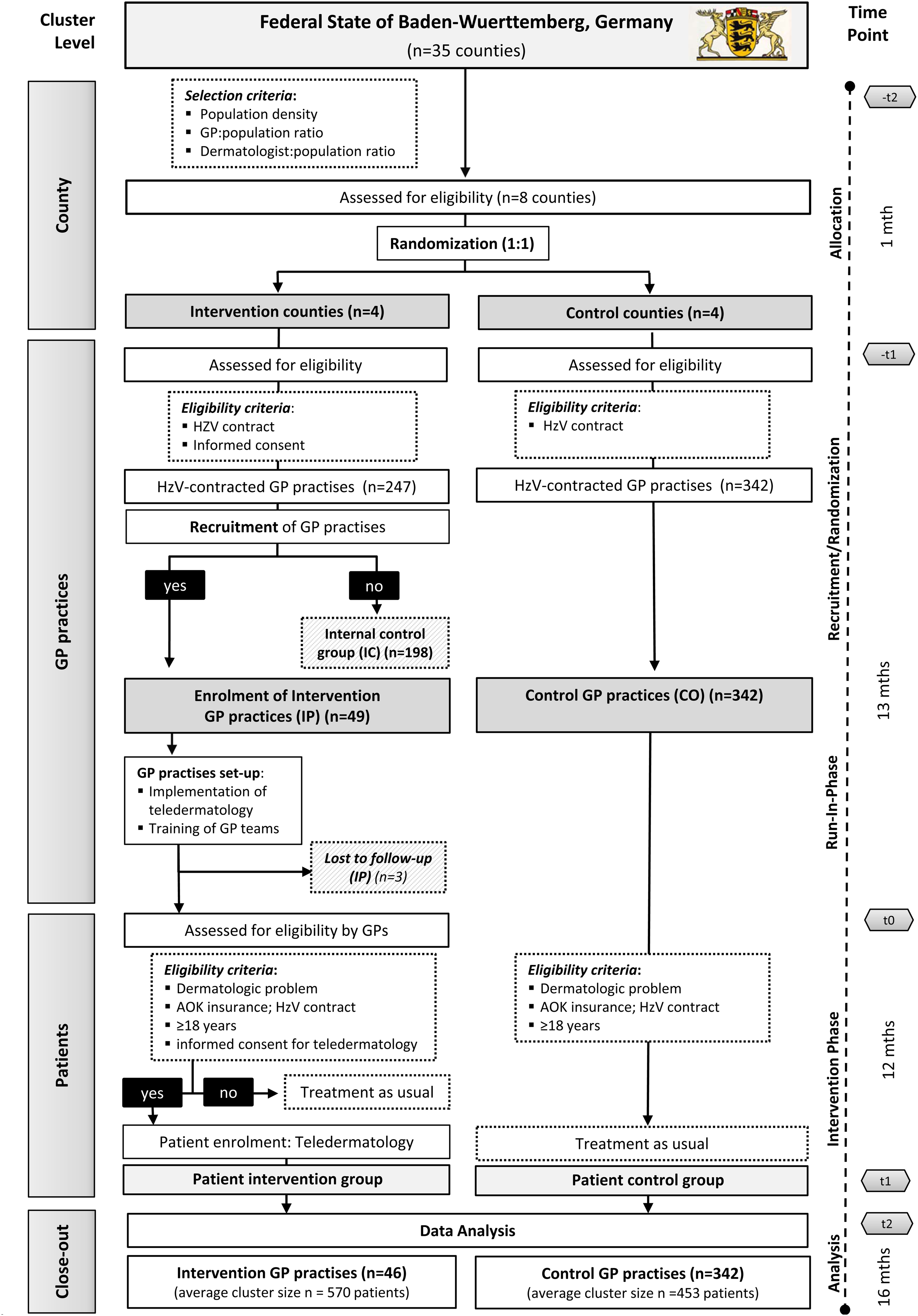
Consort flow chart.
Cluster randomization and procedure
Randomization on county level
As the federal state of Baden-Württemberg is organized in several counties with very heterogeneous characteristics, propensity score matching was performed based on regional parameters such as population density, ratio of GP to population, and ratio of dermatologists to population to provide similar control and intervention regions and avoid confounding by geographic features. Eight counties were finally selected and randomized as matched pairs in a 1:1 allocation ratio into control (C) and intervention (I) counties (Pair 1: Böblingen (I)—Reutlingen (C), Pair 2: Calw (I)—Freudenstadt (C), Pair 3: Rottweil (I)—Tuttlingen (C), Pair 4: Zollernalbkreis (I)—Esslingen (C)).
Recruitment on GP practice level
The inclusion criterion for all GP practices was participation in the AOK-HZV. GP practices in IC were recruited by the study center in cooperation with the AOK-BW. The subgroup of practices from the IC (I) partaking in the intervention was labeled as intervention practices (IP). All practices in the control counties (C) were labeled as control practices (CP). The remaining practices from the IC not participating in the intervention were considered as internal control practices (IC) for explorative subgroup and sensitivity analyses. No blinding was applied.
Patients and eligibility
All AOK-HZV-enrolled patients of IP aged 18 and above presenting with skin complaints were eligible for the study and to receive teledermatology. Patients gave written consent to participate in the study prior to TC. No written consent was required from patients in the control group, as by signing the AOK-HZV contract they consented to anonymized analyses of their data for scientific purposes. IC and CP patients were treated as usual. IP patients who declined teledermatology were treated as usual.
Intervention
The 12-month intervention period lasted from July 2018 to June 2019. After receiving training in store-and-forward teledermatology, GP teams implemented the system at their own discretion. If a patient was eligible for teledermatology, images of the skin condition were taken with a digital camera. If indicated, close-up dermatoscopy images were produced. GPs then created a new case in the teledermatology system, uploaded the images, and added clinical information. The case was randomly sent to one of seven participating German teledermatologists for assessment within 48 h.
An interoperability interface was developed for this study that connected the different PDMS in GP practices to the TC system. It handled patient data export from the PDMS and authentication. Data storage and transfer were encrypted. Training, equipment, and interoperability support for the TC were provided by the study center.
Outcome measures
Primary outcome
The number of referrals by GP practice was calculated from routine healthcare data collected for administrative purposes by the statutory health insurance AOK-BW. We analyzed the data on a quarterly basis due to the quarterly billing period in the German healthcare system. These quarters will be referred to as Quarter (Q) 1 (first quarter) to 4 (last quarter). The intervention data covered four billing quarters from Q3 2018 to Q2 2019. If a dermatologist billed for a service or dermatologic diagnosis based on a "consultation" and the patient had a primary care visit in the same billing quarter, this was defined as a referral. Except for additional referrals to university outpatient departments that require separate referral notes, a maximum of one referral per quarter per patient was considered.
To further characterize referrals in the context of primary health care, ICD codes of the primary diagnoses associated with the corresponding referrals (if available) were rated ex post from a GP perspective and attributed a diagnosis weight (−1 = condition should primarily be treated by GP or referred to other specialists than dermatologist, 0 = can be treated either by GP or dermatologist, 1 = must be referred to dermatologist). The attribution (see Supplemental material) was made by two experienced GPs of the author team (RK, SJ) in consensus and then reviewed by a dermatologist and co-author (TE). In the stratified explorative analysis, the mean diagnosis weight was calculated per region (Pairs 1–4), study group (CP and IP), and subgroup (IC).
Secondary outcomes (TC time, diagnoses, and evaluation)
Secondary outcomes focused on the characteristics of TC (e.g. time, diagnoses, and clinical recommendations by teledermatologists), feasibility, and evaluation of the new healthcare approach by participating providers. Providers evaluated TC directly in the teledermatology system. Further secondary outcomes such as patient assessment and a health economics evaluation will be published separately.
Sample size calculation
Our main hypothesis was that the availability of a TC system in participating general practices would reduce the number of referrals to a dermatologist by 15% in the intervention group (IP).
Sample size calculation assumed a Poisson distribution of the referrals for each GP team and was based on a Student's t-test based on communication with the AOK-BW, 48 dermatological referrals per year and GP practice were to be expected in the control population during the 1-year intervention phase of the study. With alpha = 0.05 (two-sided) and a power of 0.8, these assumptions led to a calculation of 36 analyzable GP teams per study arm. On patient level, this amounted to 1728 patients with the indication for a referral to a dermatologist A 15% reduction equaled 260 referrals. A 30% drop-out buffer was considered. This resulted in a final sample size of 2400 patients. For more details, please refer to the study protocol. 23
Statistical analysis
Descriptive statistics were generated to describe GP practices and patient characteristics. Categorical data were presented as absolute numbers and percentages (n; %); continuous data with mean and SD or median and interquartile range (IQR), as appropriate. Differences between the study arms were tested applying appropriate statistical tests as indicated in the corresponding tables.
To compare referral rates between the study arms IP and CP, multivariate generalized estimating equations (GEE, independence working correlation structure) Poisson regression models were used to account for the correlated count data of quarterly referrals and patients clustered within GP practices. Different models were calculated with the study arm as primary independent variable. GP and patient characteristics, as well as county matches, were successively included as covariates in the regression models. The dependent variable was specified as the number of patient referrals per quarter to the dermatologist over the 12-month intervention period with GP practices as unit of observation. To consider practice size and patient load, the number of AOK-HZV-insured patient visits in GP practices during the intervention phase was applied as offset. The dependence structure among repeated measurements of the same individual was considered by specifying an autoregressive (AR(1)) working correlation matrix. To assess goodness-of-fit, the criterion of corrected quasi-likelihood under independence was used (QICC). 26 To account for overdispersion we used the Pearson chi-square estimate as scale parameter to obtain more conservative variance estimates and significance levels. As a sensitivity analysis, we refitted the models with a negative binomial distribution. 27
As our results for the primary endpoint suggested to be highly dependent on spatial county-to-county heterogeneity, we performed a sensitivity analysis including group IC into our models. In supplementary analyses, the interaction term of county pairs x study arm was introduced into the model and subgroup analyses of county pairs were performed. Significance levels for all tests were two-sided (alpha = 0.05). Post hoc tests used corrected p-values to adjust for multiple comparisons.
To account for pre-intervention referral rates in the study arms/regions, we exploratively performed another sensitivity analysis adjusting for baseline referral rates/1000 patient visits. Baseline data was only available for the first and second quarter of 2018 (Q1 + Q2 2018). Due to marked seasonal differences in referral rates between the first half of the year and the second, which were present across all study arms during the 12-month intervention period (data are not shown here), we first reran the original primary model (e.g. study arm, county pairing, patient, and GP characteristics) on the reduced dataset of the first two quarters in 2019 without baseline adjustment to finally compare these results with the findings from an analogous baseline-adjusted (Q1 + Q2 2018) model. All analyses were conducted using SPSS version 26 and R 3.6.1 with R Studio version 1.2.1335.
Results
Study population
In the IC, 49 AOK-HZV-contracted GP practises were recruited to take part in the intervention. Three IP dropped out of the intervention. One practice dropped out for private reasons and two due to a change in ownership. The remaining n = 46 practices were included in the analysis. The subgroup of nonparticipating practices in the IC consisted of 198 GP practices (IC). A total of 342 practices from the control counties were included in the study (CP). Recruitment and study flow are shown in Figure 1.
Characteristics relating to the practice level are shown in Table 1. GP and patient characteristics were evenly distributed among CP and IP with no significant differences.
Study population characteristics within the 12-month intervention period (Q3 2018–Q2 2019).
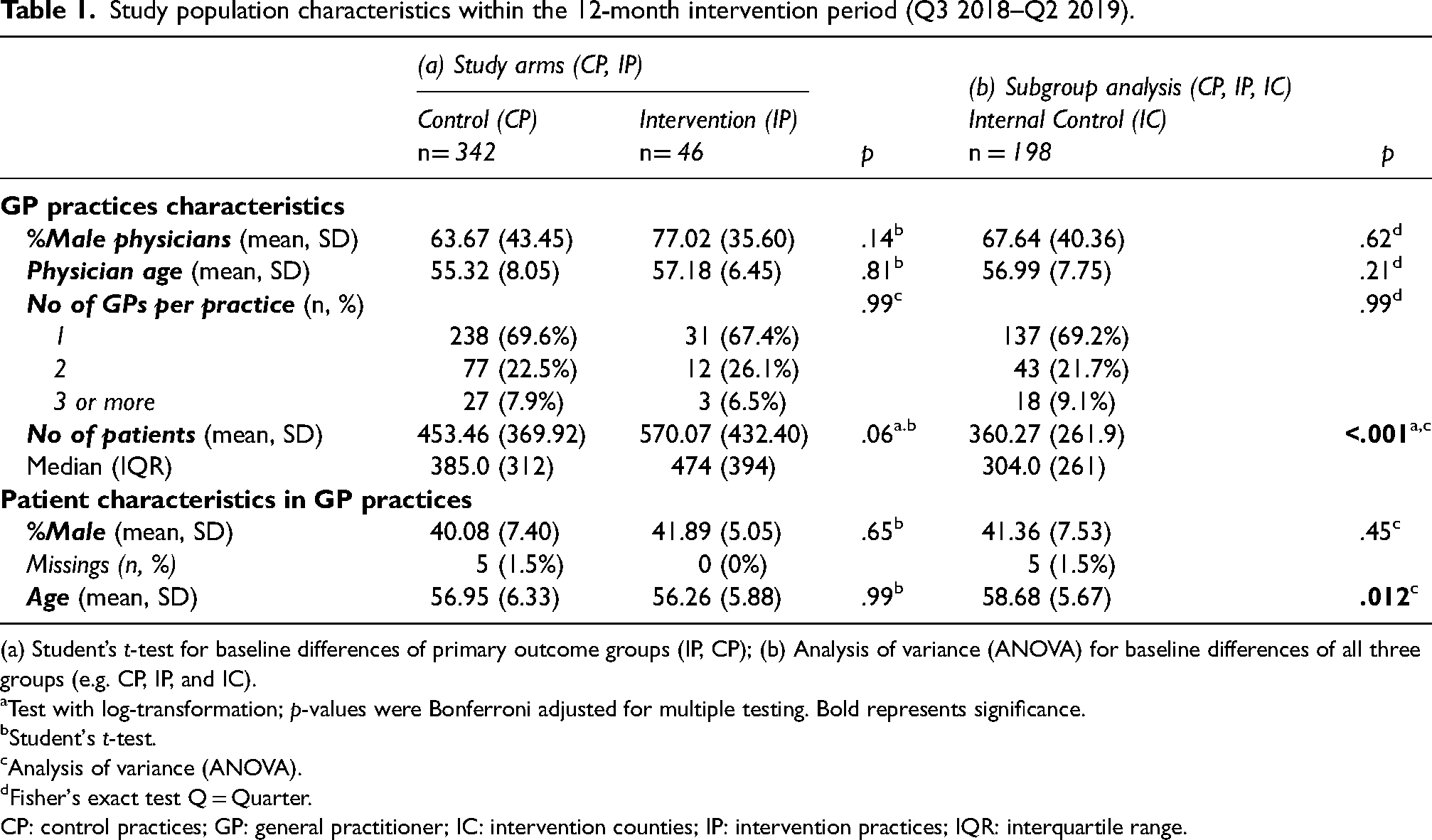
(a) Student’s t-test for baseline differences of primary outcome groups (IP, CP); (b) Analysis of variance (ANOVA) for baseline differences of all three groups (e.g. CP, IP, and IC).
Test with log-transformation; p-values were Bonferroni adjusted for multiple testing. Bold represents significance.
Student's t-test.
Analysis of variance (ANOVA).
Fisher's exact test Q = Quarter.
CP: control practices; GP: general practitioner; IC: intervention counties; IP: intervention practices; IQR: interquartile range.
Primary outcome: Dermatological referrals
Descriptives
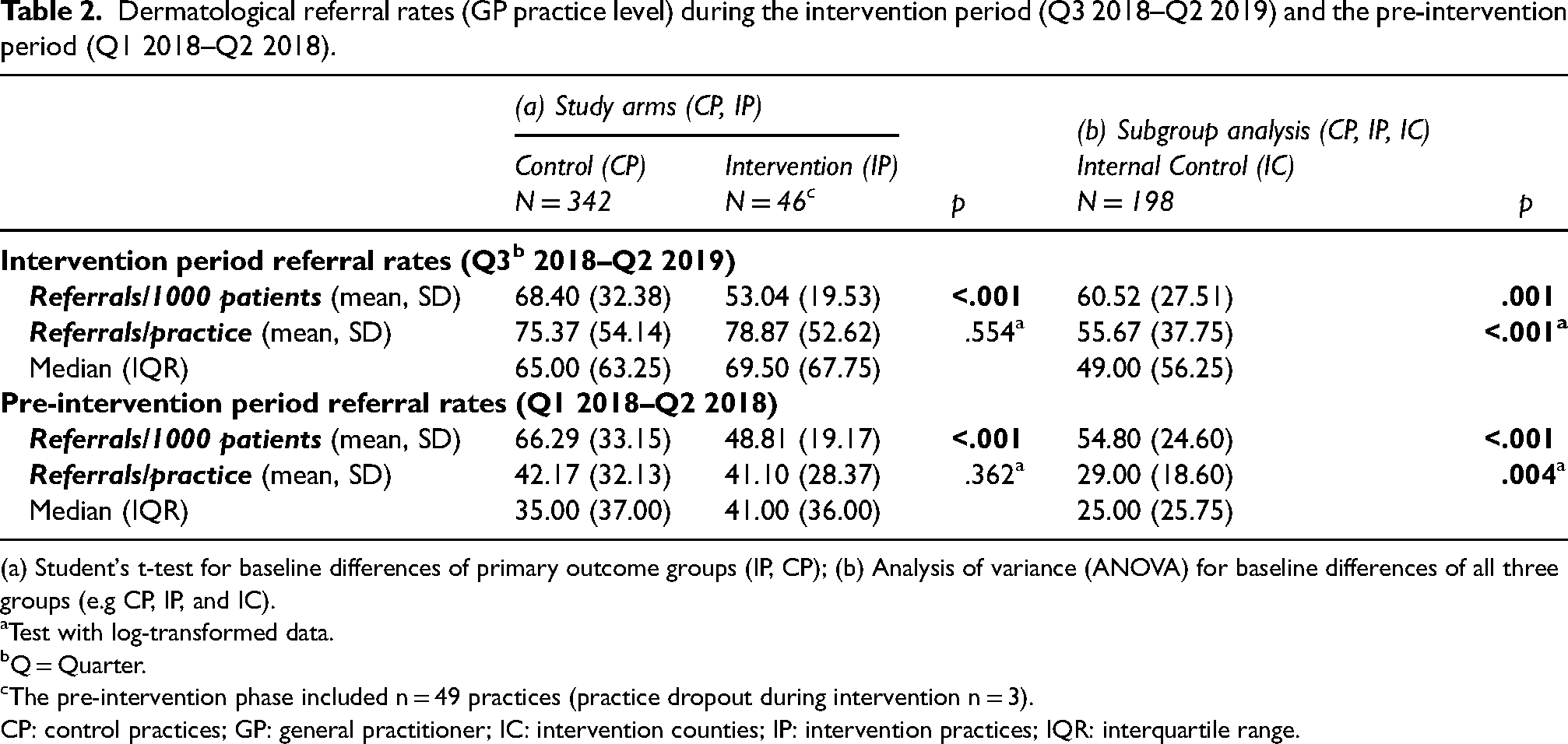
Table 2 summarizes the descriptives of the dermatological referral rates per practice and per 1000 patient visits in the control (CP) and intervention groups (IP) for the intervention phase and for a 6-month pre-intervention phase (routine care for both groups).
Dermatological referral rates (GP practice level) during the intervention period (Q3 2018–Q2 2019) and the pre-intervention period (Q1 2018–Q2 2018).
(a) Student's t-test for baseline differences of primary outcome groups (IP, CP); (b) Analysis of variance (ANOVA) for baseline differences of all three groups (e.g CP, IP, and IC).
Test with log-transformed data.
Q = Quarter.
The pre-intervention phase included n = 49 practices (practice dropout during intervention n = 3).
CP: control practices; GP: general practitioner; IC: intervention counties; IP: intervention practices; IQR: interquartile range.
Extrapolating the average of 42.17 (SD = 32.13) referrals/practice of the control group in the pre-intervention phase to a period of 1 year, and considering the number of dermatological referrals in the control group within the 1-year intervention period, the expected number of 48 dermatological referrals per year and GP practice in routine care, as communicated by the AOK-BW, was exceeded.
Regional distribution of referral numbers per 1000 patient visits within the different counties is shown in Figure 2. A regional heterogeneity in referral rates per county could be observed.
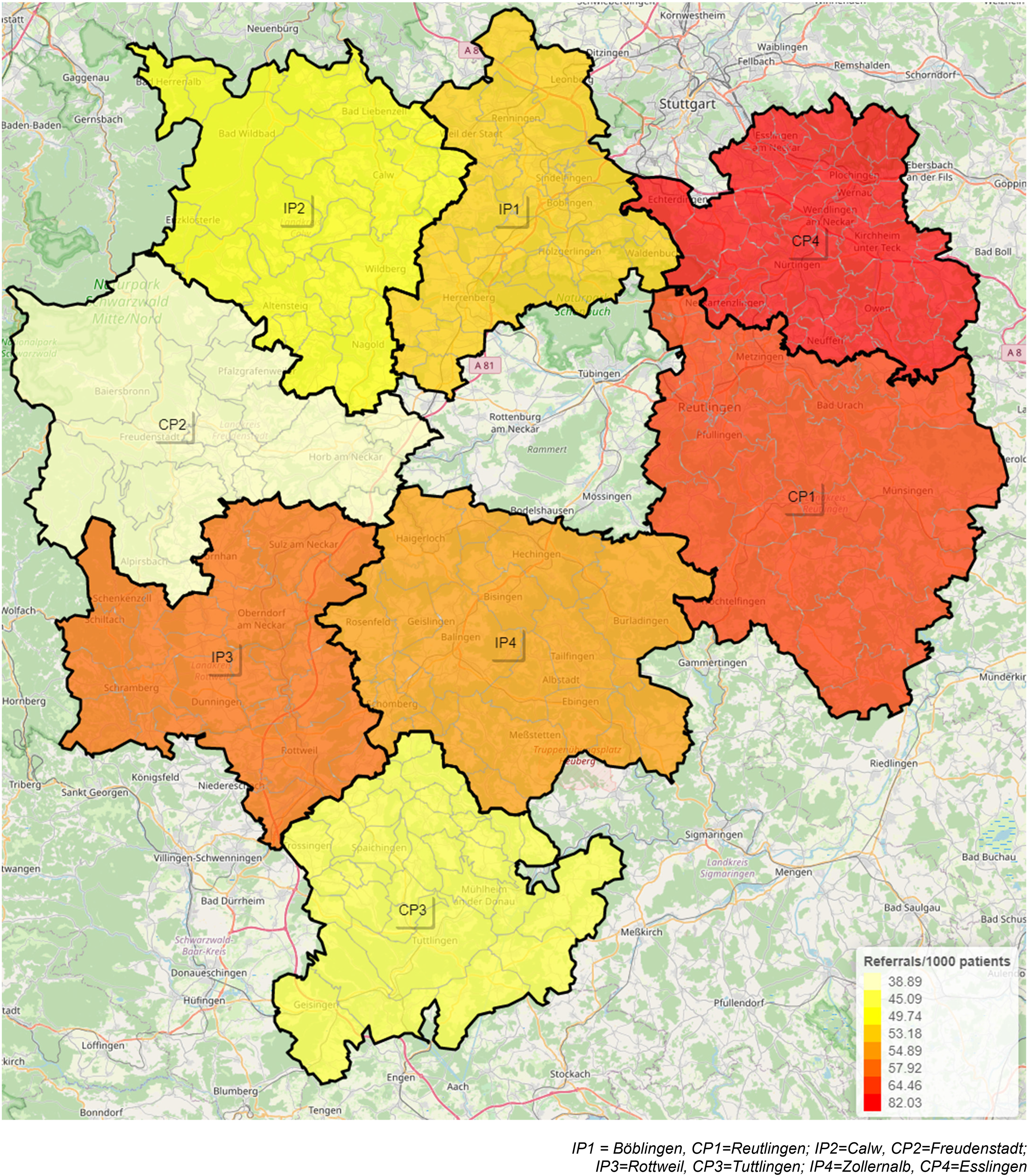
Heat map of referral rates per county.
Neither in the pre-intervention period nor in the intervention phase a difference in the number of referrals per practice could be found between CP and IP. Taking into account the patient load in the GP practices by investigating the average referral numbers per 1000 patient visits, a difference between IP (mean = 53.04, SD = 19.53) and CP (mean = 68.4, SD = 32.38) could be observed both during the intervention phase and in the pre-intervention period (IP: mean = 48.81, SD = 19.17; CP: mean = 66.29, SD = 33.15). There was an increase in referral rates from the pre-intervention period to the intervention period in all groups (CP 2.11, IP 4.23, and IC 5.72 referrals/1000 patients).
During the intervention period, IP issued 9% referrals to university outpatient departments (UOD), IC 7%, and CP 4.5% referrals to UOD.
Poisson regression model results (primary analysis)
The primary analysis model is shown in Table 3. As defined in the study protocol, it compared referral rates between IP (IP in IC, reference group) and CP (practices in control counties) during the intervention period. It was adjusted for practice characteristics (age, number, and percentage of male GPs), patient attributes (age and percentage of male patients), and regional matching (county pairing).
Primary analysis - relative risks (RR) estimates from the GEE Poisson model.

CI: confidence interval; CP: control practices; GP: general practitioner; GEE: generalized estimating equations; IP: intervention practices; RR: relative risk; Corrected Quasi Likelihood under Independence Model Criterion QICC = 4261.8.
Post hoc tests for county pairings (Bonferroni corrected): Pair 1 versus Pair 2: p = <.001; Pair 1 versus Pair 3: p = <.001;.
Pair 2 versus Pair 3: p = .243.
No significant difference in referrals rates between CP and IP could be observed (relative risk (rr) = 1.02; 95% CI = 0.911–1.141; p = .74). Matched county pair, age of the GPs and age of the patients as well as the sex distribution of patients in the surgeries were significantly related to referral rates: A higher patient age was significantly associated with higher risk rates of referrals, whereas a higher GP age and a higher percentage of male patients in surgeries were associated with a lower risk of referrals. Introducing the interaction study arm x county pairing into the model, we found this interaction term to be significant (p < .01).
Sensitivity analyses
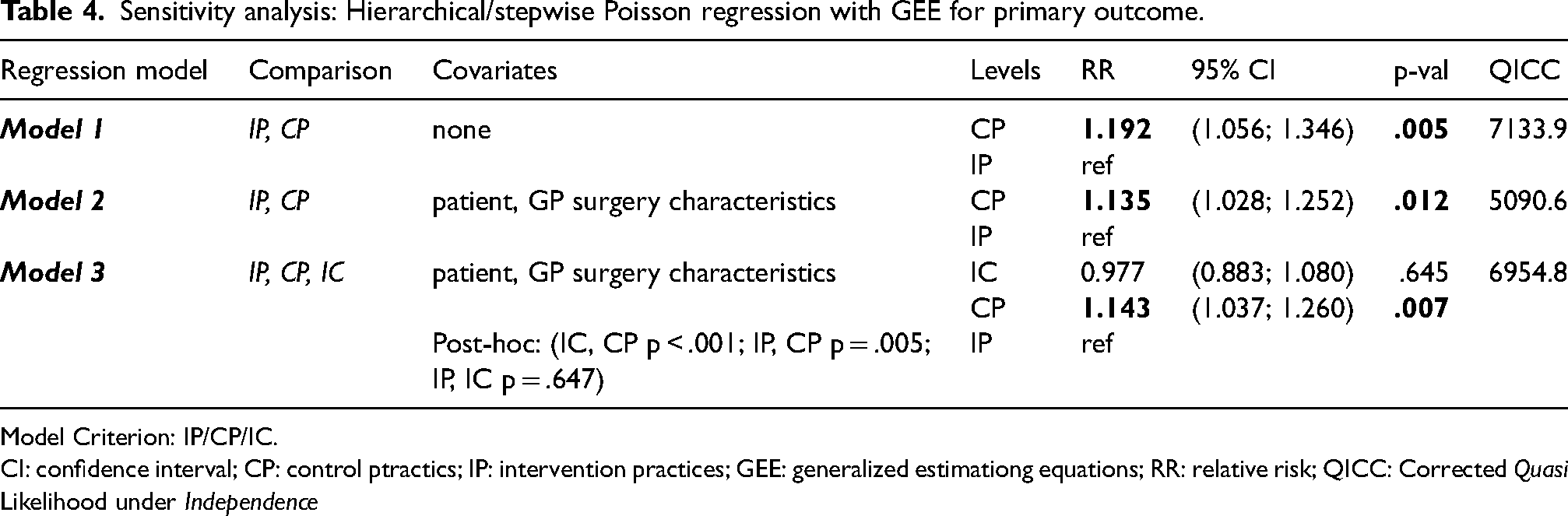
To further elaborate our main study result, we applied a hierarchical approach: We first ran an unadjusted regression model including only study arm as an independent factor (Table 4, Model 1). In this model, referrals in CP were 19.2% more likely than in IP (RR = 1.192; 95% confidence interval (CI) = 1.056–1.346; p < .01). Additionally accounting for GP practice characteristics and patient attributes (Model 2), we found a similar result of referrals being 13.5% more likely in CP than in IP (RR = 1.135; 95% CI = 1.028–1.252; p = .01). This effect was opposed to the nonsignificant results of our primary model including county pairing.
Sensitivity analysis: Hierarchical/stepwise Poisson regression with GEE for primary outcome.
Model Criterion: IP/CP/IC.
CI: confidence interval; CP: control ptractics; IP: intervention practices; GEE: generalized estimationg equations; RR: relative risk; QICC: Corrected Quasi Likelihood under Independence
Regional heterogeneity
As our analyses suggested a regional effect on the outcome, we assumed that spatial characteristics of IC and IP are similar as they originate from the same counties. Thus, we furthermore introduced the IC practices (practices in IC are not participating in the intervention) into model 2.
In this third model (Table 4, Model 3), a referral was significantly more likely in group CP than IP (RR = 1.143; 95% CI = 1.037–1.260; p = .007) analogous to model 2. No significant difference in the RR for referral rates in IC compared to IP could be found (RR = 0.977; 95% CI = 0.883–1.080; p = .65). Post hoc testing revealed that referrals were 17.0% more likely in CP than in IC (p < .001).
Spatial distribution of referrals was further explored with separate subgroup analyses for county pairs. Regional Pair 1 (Böblingen (I) and Reutlingen (C)) and Pair 3 (Rottweil (I), Tuttlingen (C)) showed no differences in referrals between CP and IP (reference). In Pair 2 (Calw (I) and Freudenstadt (C)), the risk ratio for referrals was significantly lower in CP than IP (RR = 0.724; 95% CI = 0.566–0.926; p = .01) as opposed to Pair 4 (Zollernalbkreis (I), Esslingen (C)), in which the RR for CP issuing a referral was significantly higher than IP (RR = 1.324; 95% CI = 1.049–1.671; p = .02). No regional pair showed significant differences between IP and IC (see Supplementary Tables S1 and S2). Rerunning all models with a negative binomial distribution did not change effect estimates and widths of the CIs significantly (see Supplemental material).
Exclusion of an outlier GP practice
We performed an additional sensitivity analysis that excluded one outlier practice (for further explanations, see Section 3.3) from our primary analysis model. Exclusion of this practice had no relevant effect on the results of the model (CP vs. IP: RR = 1.027; 95% CI 0.918–1.149; p = .642).
Adjusting for pre-intervention referral rates
Rerunning the model in analogy to our primary model with the reduced dataset of Q1 + Q2 2019 without baseline adjustment resulted in no significant differences in referral rates between CP and IP (RR = 1.029; 95% CI = 0.911–1.161; p = .649) (see Supplemental material). In accordance with the primary model on the full 12-month dataset, matched county pair, age of the GPs and age of the patients as well as the sex distribution of patients in the surgeries were significantly related to referral rates. Adjusting the model on the reduced dataset for baseline referral rates during the respective pre-intervention quarters (Q1 + Q2 2018) did consistently result in nonsignificant differences between CP and IP risk rates (RR = 0.098; 95% CI = 0.895–1.1073; p = .656). Associations between patient age and referrals remained significant. Also, the overall significant regional county pairing effect was still present. whereas patient sex distribution (p = .053) and age of GPs failed to reach significance (p = .052). Baseline referral rates were significant with GP practices having a higher pre-intervention referral rate being prone to also have higher referrals rates within the intervention period (RR = 1.006; 95% CI = 1.004–1.008; p < .001).
Diagnoses weights
With the exception of county pair 3, the average diagnosis weight was generally higher in intervention counties (IP and IC). Compared with the pre-intervention period, IP practices leaned toward more referrals with diagnoses that require a dermatologist (1.5%–4.1%) and less referrals in referrals with diagnoses that can primarily be treated by GPs (−0.7% to −3.1%, except for Rottweil with a 1.2% increase). Except for Pair 3, the shift toward more severe diagnoses was larger in IP practices than in IC or CP. Freudenstadt (C) showed an increase in the referral rate of 11.32 referrals/1000 patient visits, which was the highest gain of all counties and the most prominent shift in diagnosis weight toward less relevant referrals (see Supplementary Tables S2 and S3).
Secondary outcomes: TC time, diagnoses, and evaluation (process and questionnaire data)
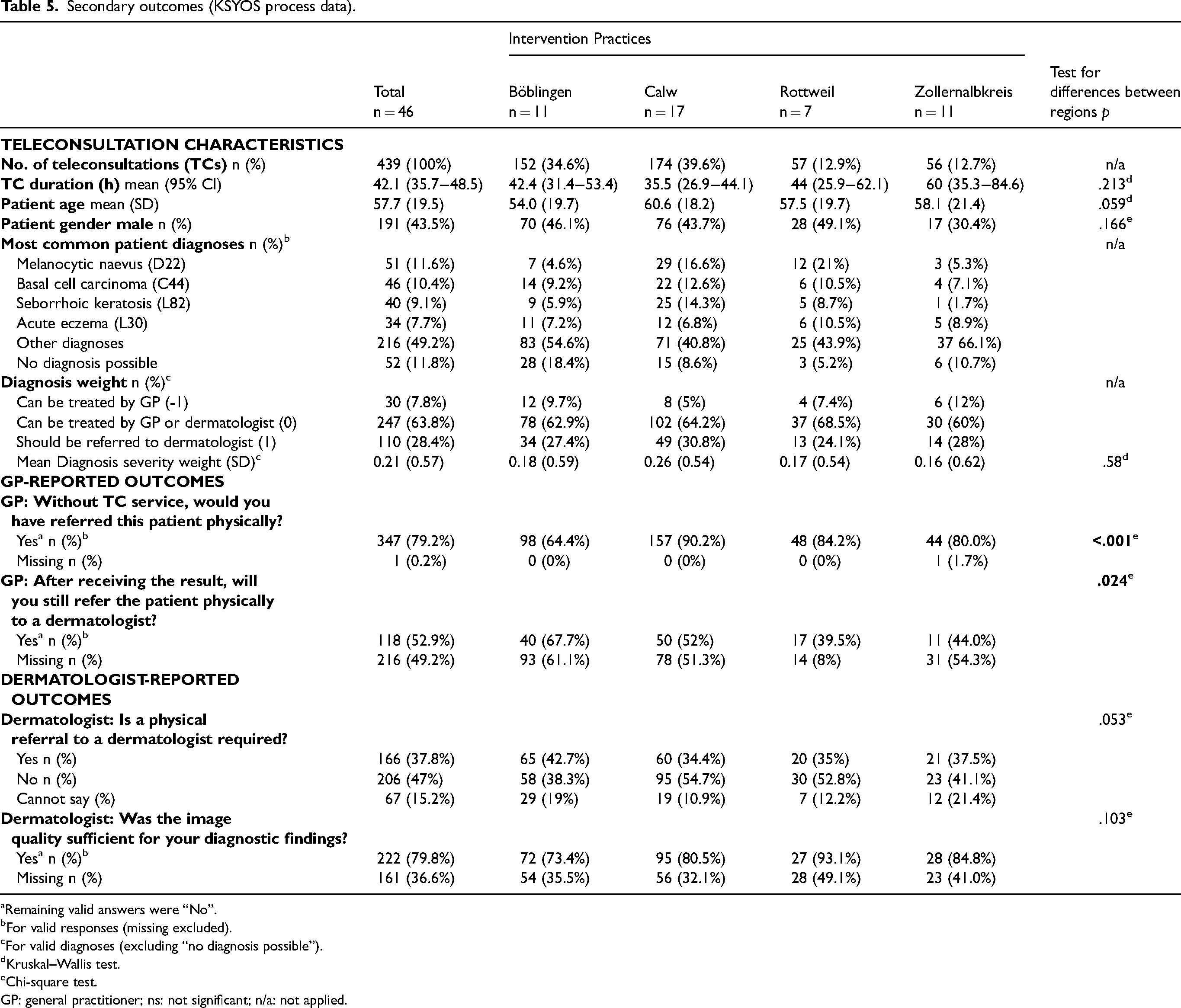
Most practices (n = 34, 73.9%) issued 10 or fewer TCs during the intervention phase. The remaining 26.1% issued 11 or more TCs. TC duration (GP request to dermatologist response), patient age, and gender showed no significant differences across the four IC. GPs initiated 439 TCs during the intervention phase. In 52 (11.8%) cases, dermatologists were unable to provide a diagnosis, mostly because of insufficient image quality (n = 56, 20% of valid cases). See Table 5 for reference.
Secondary outcomes (KSYOS process data).
Remaining valid answers were “No”.
For valid responses (missing excluded).
For valid diagnoses (excluding “no diagnosis possible”).
Kruskal–Wallis test.
Chi-square test.
GP: general practitioner; ns: not significant; n/a: not applied.
TC diagnoses weight showed that n = 30 (7.8%) TCs could have been treated by the GP. 110 TCs (28.4%) should primarily have been followed up by a dermatologist The remaining n = 247 (63.8%) could both have been treated by GP or dermatologist No significant regional differences were found in TC diagnosis weight. The mean regional TC diagnosis weight was the same as the mean diagnosis weight calculated based on routine data.
Self-reported GP referrer behavior both before and after TC (Table 5, GP-reported outcomes) showed statistically significant regional differences. GPs in Böblingen indicated in 67% of TCs that they would refer the patient in question to a dermatologist regardless of the TC result.
Dermatologists reported that 166 (37.8%) TC referrals required a face-to-face dermatologist follow-up. This was either due to therapy indication (e.g. surgery), insufficient image quality, or second opinion. Dermatologists’ referral recommendations showed no regional differences (Table 5, Dermatologist-reported outcomes).
One outlier GP practice issued 74 TCs (16.9% of total, 48% of TC in Böblingen), had an overall mediocre image quality, and had a self-reported high tendency to refer patients after TC independent from the dermatologists’ recommendation.
Discussion
For the first time, a federated teledermatology referral system with PDMS interoperability was successfully implemented in GP practices in German primary health care.
Following the analysis of the study protocol, the expected significant decrease in referrals through the implementation of teledermatology in the intervention group compared with the control group could not be confirmed.
Referral rates and referral behavior as reported by providers exhibited a spatial heterogeneity, indicating regional effects. Adjusting for these regional factors, no significant intervention effect could be found.
The significant influence of regional matching in our primary analysis model could not be explained by sociodemographic or practice characteristics. This influence of regional pairings on the model remained consistent even when adjusted for the mean referral rate at baseline in a sensitivity analysis. Such regional effects had hitherto not been identified in teledermatology research.
In the regional sensitivity analysis, Pair 2 (Calw (I) and Freudenstadt (C)) showed an unexpected significant negative effect of the intervention. To find possible explanations for this, we consulted data on medical care supply coverage (for an explanation of this term, see Supplemental material) by dermatologists as provided by the association of statutory health care physicians. In contrast to most other counties of the study, Freudenstadt had had the lowest health care supply coverage of all study counties since 2015.28,29 It also had the lowest referral rate of all counties, both during the pre-intervention and the intervention period. In lieu of direct access to dermatologists, patients had likely visited their GP with skin complaints instead of a dermatologist As suggested by the literature, GPs had adapted to that demand over time and reduced their referrals of such patients.5,6,30 When health care supply by dermatologists improved in 2018, there was the highest increase in referrals from Q1 + Q2 2018 and the most prominent shift toward “unnecessary” referrals in all study counties—mirroring the sudden availability of secondary dermatologist health care. Freudenstadt is a good example of the complex, heterogeneous regional effects underlying our study data that also reflect developments over longer periods of time.
Omitting regional matching in the model showed a significant 19.2% reduction in physical referrals in the intervention group—an approach that must be regarded as exploratory. In previous studies on teledermatology, regional patterns were not considered.12,14–16 Keeping this in mind, the 19% reduction in referrals of the present study ranks in the mid-range of previous studies with a control and intervention design. As explored above, previous research was conducted in other health care systems where regional differences might play out differently due to the availability of dermatologists and specifics of the health care system.12,14–16,31
The process data from the TC system showed similar types of common diagnoses as previous studies with at least 10% malignant lesions, mainly basal cell carcinoma.15,31 This broad spectrum of diagnoses warranted different post-referral therapeutic strategies, including operations as indicated by the process data and the higher referral rate to UOD in IP. Compared to the pre-interventions phase, routine data of IP practices showed a shift toward relevant (should be treated by dermatologists) referral diagnoses that were not observed in IC or CP practices. This might indicate an improvement in the quality of health care.
The degree to which TCs warranted physical referrals can be estimated by referencing the diagnosis weight in the TC (28.4% of the TC diagnoses were such that they required a dermatologist) and the dermatologist-reported outcome, who recommended a physical referral in 37.8% of the cases. GPs even indicated in 50% of the TC that they would issue a physical referral, but this number is limited by a high rate of missing values (n = 216, 46.2%). Previous studies reported a rate of between 47% and 67% physical referrals after TC.12,15,16,31–33 To what extent individual GP strategies and prerequisites such as insecurities in handling dermatologic diagnoses affected their behavior will be explored in a separate publication. It can conservatively be assumed that between 28% and 50% of the TC referrals in our study were followed up by a physical referral. Together with regional changes in the availability of dermatologic health care, this might partly explain why there was a slight increase in referrals in the IP group from the pre-intervention to the intervention period. However, as reported above, a general regional referral pattern cannot be ruled out, since a higher increase in referral rates was found in IC.
Secondary outcomes showed good accessibility: GPs received an answer within 48 h and generally had high confidence in the TC system. The time frame for TC is smaller than in preceding studies14–16,34 which is partly explained by a fee-for-service payment for participating dermatologists and a clear process description to provide the TC answer within two working days.
GPs heterogeneously used teledermatology as an additional tool in their work, but—according to the process and routine data—adhered to regional referral behavior. In one regional pairing, this behavior was probably influenced by the lack of dermatologic specialists over time and then a sudden pronounced improved access at the same time as the start of the intervention. Our observations indicate that first-line teledermatology is feasible in the German health care context, suitable for triage and thus ready to be rolled out on a larger scale. Considering said differences in study design, data collection, and the omission of regional effects, preceding studies might have overestimated the effect of TC on physical referrals.12,14,16,31 The observed regional effects should be considered in future studies and in the implementation of TC in German primary health care. We, therefore, propose that regional referral patterns are mapped out and made available for future research.
Limitations
Despite best efforts by the study center and the AOK-BW, only 49 of 247 available practices (19.84%) could be recruited for the study on a first-come, first-served basis. While the number of required practices according to the power calculation 23 was achieved, the participating practices could have been early adopters and/or have a high demand for dermatologists, potentially resulting in a bias. A heterogeneous uptake of the intervention is a probable effect of this. To better understand this uptake, providers’ perspectives, experiences, and assessment of the intervention will be further explored in a separate publication.
A major methodological difference of TELEDerm compared to prior studies on the implementation of teledermatology in primary care is that the primary result of this study is based on health insurance routine data. On the one hand, the data allowed us to conduct cross-regional comparisons and analyses. On the other hand, the datasets are primarily designed for billing calculations. Variables important for healthcare research are oftentimes optional database entries and are not reliable due to large amounts of missings or must be implicitly estimated from other variables, which leads to limited useability of routine data for such research due to measurement imperfections. Patients who declined the TC could not be presented as planned in the study protocol due to such restrictions. Instead, nonparticipating practices in IC were analyzed as a subgroup.
There were two opposing tendencies that affected the power: First, as discussed, approximately between 28% and 50% of TC resulted in a physical referral. Second, the intervention period generated a twice as high referral rate per 1000 patient visits than assumed in the power calculation. The latter might partly be explained by the abovementioned measurement imperfections. A conservative estimate based on the above conversion from TC to physical referral indicates that the 439 TCs prevented between 220 and 316 physical referrals. This corresponds to the 260 required referrals according to the power calculation. 23
The intervention time of 12 months might have been too short: Teledermatology is known to increase referrals short-term, leading to a delayed reduction of referrals later. 35 We partially adjusted for this effect by establishing a run-in phase prior to the intervention phase. Nevertheless, an extended observation time might have resulted in a higher reduction of physical referrals due to long-term effects such as sustainable GP learning effects that lead to more patients being treated by GPs instead of referring them.
It remains a limitation that a change from baseline analysis was not planned in the study proposal. 23 This is because data management and data protection regulation only allowed for insurance data from Q1 + Q2 2018 prior to the intervention phase to be delivered and analyzed. This period was part of the projects’ run-in phase in which some practices already issued TCs, so valid baseline referral rates under standard care conditions cannot be assured. Therefore, baseline adjustment was exclusively performed as a sensitivity analysis. While this analysis showed no effect on the primary outcome, it consistently showed a significant effect of regional pairings on the model, which corroborates our results from the main analysis.
A validation of the TCs that suspect malignancy had not been conducted because the sensitivity of teledermatology had already been demonstrated. 9
Conclusions
To our best knowledge, this is the first teledermatology study evaluating the implementation of a teledermatology service with PDMS interoperability in German primary health care. While the federated TC system with PDMS interoperability was successfully implemented in this setting, the intervention's effect was not significant when adjusted for regional factors. Future research on teledermatology in the primary care setting should consider regional referral patterns and incorporate longer pre-intervention periods to estimate change from baseline models.
Supplemental Material
sj-csv-1-jtt-10.1177_1357633X221089133 - Supplemental material for TELEDerm: Implementing store-and-forward teledermatology consultations in general practice: Results of a cluster randomized trial
Supplemental material, sj-csv-1-jtt-10.1177_1357633X221089133 for TELEDerm: Implementing store-and-forward teledermatology consultations in general practice: Results of a cluster randomized trial by Roland Koch, Inka Rösel, Andreas Polanc, Christian Thies, Leonie Sundmacher, Thomas Eigentler, Peter Martus, and Stefanie Joos in Journal of Telemedicine and Telecare
Footnotes
Acknowledgements
This study was funded by Innovationsausschuss beim Gemeinsamen Bundesausschuss, Gutenbergstraße 13, 10587 Berlin, Postfach 12 06 06, 10596 Berlin, under the grant Reference Number 01NVF16012. The funders had no role in study design, data collection and analysis, decision to publish, or preparation of the manuscript. We thank all GP practice teams and dermatologists involved in the study for their effort and cooperation.
Declaration of conflicting interests
The author(s) declared no potential conflicts of interest with respect to the research, authorship, and/or publication of this article.
Funding
The author(s) disclosed receipt of the following financial support for the research, authorship, and/or publication of this article: This work was supported by the Innovationsausschuss beim Gemeinsamen Bundesausschuss (grant number 01NVF16012).
Ethics,consent and permissions
The study protocol was approved by the Ethics review board of Tübingen University (Ref. No. 395/2017BO1). Participants in the intervention practices gave written consent to participate in the study. No written consent was required from patients in the control group. When patients sign an HzV contract with their insurance company, they consent to the anonymized analysis of their insurance data for scientific and quality management purposes.
Consent to publish
Not applicable.
Data availability
The data that support the findings of this study are available from AOK Baden-Württemberg but restrictions apply to the availability of these data, which were used under license for the current study, and so are not publicly available. Data are however available from the authors upon reasonable request and with permission of AOK Baden-Württemberg.
Author’s contribution
Manuscript draft: AP (Background), RK (Methods, Results, and Discussion), and IR (Methods, Results). Manuscript drafting process coordinated by RK. Statistical Analysis and visualization: IR, RK, and AP. Process Data analysis: RK and AP. Interoperability and PDMS integration: CT. Health economics evaluation and statistics coordination: LS. Diagnosis Weight: RK and SJ. Project coordination: AP. Statistics planning and supervision: PM. Project planning, Study design, Funding, Project Supervision: SJ. Final document revision: All authors under supervision of SJ. Final document compiled by RK.
Trial registration
The study was registered at the German clinical trial register (DRKS) prior to patient recruitment on 31 August 2017 (DRKS00012944) after receiving a positive vote from the Ethics review board of Tübingen University (Ref. No. 395/2017BO1).

Supplemental material
Supplemental material for this article is available online.
References
Supplementary Material
Please find the following supplemental material available below.
For Open Access articles published under a Creative Commons License, all supplemental material carries the same license as the article it is associated with.
For non-Open Access articles published, all supplemental material carries a non-exclusive license, and permission requests for re-use of supplemental material or any part of supplemental material shall be sent directly to the copyright owner as specified in the copyright notice associated with the article.
