



Abstract
Introduction
We aimed to evaluate the implementation of the Good Life with osteoArthritis in Denmark (GLA:D®) program via telehealth in Australia using Reach, Effectiveness, Adoption, Implementation, and Maintenance Qualitative Evaluation for Systematic Translation framework.
Methods
Using a convergent mixed-methods design, semi-structured one-on-one interviews with physiotherapist adopters and nonadopters of GLA:D® via telehealth were analyzed thematically alongside the examination of registry data (1 March 2020–10 February 2022) from patients with hip or knee osteoarthritis completing GLA:D® via telehealth (telehealth-only) or combined with in-person care (hybrid). Effectiveness was determined as changes from baseline to 3-month follow-up (mean differences, 95% confidence intervals, effect size) for Knee injury and Osteoarthritis Outcome Score (KOOS-12)/Hip disability and Osteoarthritis Outcome Score-12 (HOOS-12), and chair stand test. Group- and individual-level changes were compared to published minimally clinically important change scores.
Results
Twenty-three interviews (12 adopters, 11 nonadopters) found key barriers/facilitators to reach and adoption, high perceived effectiveness, and strategies to support sustainability. Of 2612 registered patients, 85 (3%) and 115 (4%) completed GLA:D® via telehealth-only or hybrid model, respectively. Most effectiveness outcomes were associated with moderate-large improvements. Group-level changes exceeded minimally clinically important change values for KOOS/HOOS-quality of life and chair stand test. Nearly two out of three patients reached a minimally clinically important change for KOOS/HOOS-quality of life. With telehealth-only and hybrid delivery, 99% (n = 82) and 85% (n = 97) were satisfied/very satisfied. Physiotherapist adoption was limited (n = 128, 6%).
Discussion
GLA:D® delivered via telehealth is effective, had high patient satisfaction, and was perceived positively by physiotherapist adopters. Addressing low reach and adoption requires further implementation strategies to facilitate greater telehealth opportunities for patients and physiotherapists.
Introduction
Osteoarthritis (OA) is a rapidly increasing global health concern, affecting over 500 million people worldwide. 1 The knee and hip account for 66% of OA cases, with prevalence increasing by 122% and 127%, respectively, over the last three decades. 1 Symptoms create a lifelong personal burden in adults, including poor health-related quality of life (QoL), 2 reduced physical activity, 3 and greater likelihood of multimorbidity (e.g. heart diseases, diabetes). 4 Exercise therapy, 5 patient education, 6 and weight loss 7 (if indicated) are recommended first-line care in all contemporary guidelines. 8 Exercise-therapy, supported by more than 50 randomized trials, 5 is cost-effective 9 and reduces knee replacement surgery rates in people with moderate-severe disease.10,11
Good Life with osteoArthritis in Denmark (GLA:D®) is an evidence-based, individualized, supervised, group education, and exercise-therapy program for people with knee and hip OA, now offered in eight countries. 12 Evaluation of GLA:D® in Denmark, Canada, and Australia indicates clinically important improvements in patient outcomes, including reduced pain and improved joint- and health-related QoL at 3 and 12 months.11–14 The reach of OA management programs like GLA:D® to all people with OA is limited by barriers including patient beliefs and understanding of OA management, patient's personal costs, and the inability to access or commit to the program, particularly for individuals living in rural areas or with high occupational or family caring responsibilities.11,15 Additionally, the need to attend 14 in-person group-based sessions (two education, 12 exercise therapy) over 8 weeks may represent a participation barrier for GLA:D®. Telehealth, remotely delivered phone or video-based patient–clinician interaction 16 could improve access to OA management programs like GLA:D® for people with knee and hip OA. While recent meta-analyses suggest telehealth-delivered one-to-one physiotherapy is effective in reducing pain and improving function for knee OA in clinical trials, 17 evidence for group-based care and real-world implementation is limited.
The COVID-19 pandemic provided an impetus to deliver GLA:D® via videoconference-based telehealth. Supporting physiotherapists to rapidly adopt telehealth to deliver GLA:D® was possible in Australia due to prepandemic work establishing its feasibility and acceptability, 18 and processes and resources were developed as a part of a clinical trial which commenced in 2019. 19 This work identified that GLA:D® via telehealth was perceived as highly acceptable by patients, emphasized the benefits of reduced fear of exercise, improved function, and reduced pain. 18
This mixed-methods project aimed to comprehensively evaluate the implementation of GLA:D® via telehealth in Australia using physiotherapist and patient data and applying the Reach, Effectiveness, Adoption, Implementation, and Maintenance Qualitative Evaluation for Systematic Translation (RE-AIM QuEST) framework. 20 Findings will inform future strategies to support GLA:D® via telehealth in Australia and internationally, as well as the development, implementation, and scale-up of other education and exercise-therapy telehealth initiatives to support chronic disease management.
Methods
This study was guided by the RE-AIM QuEST framework to generate a deeper understanding of the implementation outcomes of GLA:D® via telehealth in Australia. RE-AIM QuEST is a comprehensive framework that integrates qualitative and quantitative methods to evaluate the implementation of interventions (e.g., GLA:D® via telehealth) beyond effectiveness alone for a more robust evaluation across five key dimensions: reach, effectiveness, adoption, implementation, and maintenance. 21 It facilitates an understanding of implementation barriers and facilitators, examines the influence of multilevel contextual factors (e.g., patient, clinician, systems levels) on implementation and increases the likelihood of successful implementation or scale-up of the intervention in other “real-world” settings. 20
This study used data from two sources: (a) semistructured interviews with Australian GLA:D® trained physiotherapists and (b) GLA:D® Australia patient data registry. Merging these two sources would allow the generation of in-depth knowledge to identify targetable barriers to implementation, facilitate program improvements and adaptions, and assist with better implementation of GLA:D via telehealth. Reporting of this study was guided by the COnsolidated criteria for REporting Qualitative research (COREQ) checklist 22 and Good reporting of a mixed methods (GRAMM) study checklist. 23 Ethical approval was obtained from La Trobe University's Human Ethics Research Committee (HEC21303) and (HEC21130).
The GLA:D program
In 2016, GLA:D® was implemented in Australia to facilitate access to guideline-based patient education and exercise therapy for people with knee and hip OA. Trained physiotherapists deliver group-based education (2–3 sessions, 60 min) and exercise therapy (12 sessions, 60 min) over a 6- to 8-week period.
The exercise-therapy sessions focus on neuromuscular control and encompass core stability, joint alignment, leg strength, and functional exercises.24,25 Exercises are individually tailored and progressed based on the physiotherapists clinical judgement and patients’ exercise capacity and pain acceptability over the duration of the program.
Intervention implementation process and support
At the onset of the COVID-19 pandemic in Australia (March 2020), the GLA:D® Australia leadership team began supporting GLA:D® trained physiotherapists to provide the program via telehealth for patients with hip and knee OA. On 23 March 2020, an email with guidance and instructions for how to offer GLA:D® via telehealth was sent to all trained physiotherapists, and online resources to assist physiotherapists were posted on the GLA:D® Australia website. This included suggestions on how to adapt education and exercise-therapy components for telehealth, safety considerations, and information on various online video conference platforms. A series of interactive webinars discussing how to manage potential telehealth challenges and live question and answer were held on 27 March, 1 May, and 14 August 2020. In April 2020, a list of sites (clinics and hospitals) across Australia where GLA:D® was being provided by telehealth was added to the patient-facing section of the GLA:D® Australia website. In May 2020, the GLA:D® physiotherapist training course transitioned to fully online delivery and integrated content on delivering GLA:D® via telehealth. Additionally, the GLA:D® leadership team began hosting online participant education sessions in May 2020 to alleviate pressure on clinicians. Throughout the pandemic, each Australian state has had variable and changing levels of restrictions on providing in-person physiotherapy. GLA:D® physiotherapists were never limited to solely provide GLA:D® via telehealth, yet they were encouraged to follow local public health recommendations and consider implementing GLA:D® via telehealth when appropriate.
Data sources and collection
Part 1: Qualitative data
Underpinned by an interpretive description paradigm, 26 in-depth one-on-one semistructured interviews were conducted via videoconference between 28 June 2021 and 14 October 2021 with a purposive sample of GLA:D® Australia trained physiotherapists. All GLA:D® Australia-trained physiotherapists (n = 2141) were eligible to participate. To obtain diverse perspectives on the decision to implement GLA:D® via telehealth along with positive and negative perceptions or experiences with telehealth, recruited participants included both adopters and nonadopters. Adopters were physiotherapists who implemented GLA:D® via telehealth (minimum of five patients with hip or knee OA registered in the data registry who attended GLA:D® via telehealth-only or hybrid delivery model). Nonadopters included physiotherapists who did not implement GLA:D® via telehealth.
An invitation to participate and study information were included in routine monthly GLA:D® Australia email newsletters, as well as posted in the GLA:D® Australia Facebook group. Additional snowball sampling and word of mouth were used during recruitment while seeking variability in physiotherapists’ location (urban or rural) and setting (public or private).
All interviews were conducted at a mutually convenient time for the participant and the interviewer (AE) using open-ended questions from topic guides that were reviewed by all authors (Supplemental Appendix A). The topic guides were informed by the normalization process theory 25 and structured to address each aspect of the RE-AIM QuEST framework. 20 The interviewer was a physiotherapist with 16 years’ clinical experience and a PhD in knee injury rehabilitation, who had extensive qualitative research experience. The interviewer had not been involved with GLA:D® training in Australia, but was highly familiar with the program due to experience in Canada. The interviewer did not have preestablished relationships with any of the participants. Interviews were recorded, deidentified, and transcribed verbatim. Field notes were used to document initial impressions after each interview and later guide reflection and analysis. Analysis began concurrently during interviews and guided ongoing participant recruitment. Interviews ceased when the research team believed that the newly generated data was repeating what was expressed in previous data, and there was no further development of thematic categories, indicating saturation. 28
Part 2: Quantitative data
Patient-level data—GLA:D® Australia Registry
Patients with pain and symptoms of hip and/or knee joint problems who present to trained physiotherapists are offered the three core program elements: patient education, neuromuscular exercise therapy, and registration in the online data registry, with an “opt-out” consent process approved by La Trobe University Human Ethics Research Committee (S17-193, HEC21303). Patients with joint pain resulting from something other than OA, including recent trauma, tumor, or inflammatory joint disease, or if they could not communicate in English, are excluded. 11 Patients who complete the baseline intake questionnaire are automatically emailed the 3- and 12-month follow-up questionnaires facilitated by Research Electronic Data Capture system. Patient-level data collection for the current project included all participants who registered in the data registry between 1 March 2020 and 10 February 2022. At the 3-month follow-up, eligible participants answered that they completed GLA:D® entirely via telehealth (telehealth-only) or with a combination of telehealth and in-person including at least three telehealth sessions (hybrid).
Participant baseline demographics extracted from the registry included age (years), sex (male, female, intersex, prefer not to say), education (completed primary school; completed high school; completed apprenticeship, certificate, or diploma; university degree), employment (unemployed, home duties, studying, employed full or part time, retired), location (urban, rural, mixed), 29 and body mass index (BMI), calculated based on self-reported height and weight. In addition, data on the presence of comorbidities, most affected joint (hip or knee), and details on previous surgery to affected joint were obtained. Participant data on their treating physiotherapists, intended delivery method, and actual program delivery method, along with the number of GLA:D® sessions they attended (education session: out of possible two; exercise therapy: out of possible 12), was also extracted. For those who attended via hybrid delivery model, number and proportion of telehealth sessions were summarized.
Patient-reported outcome measures examined at 3-month follow-up included: pain intensity (100 mm visual analogue scale [VAS] 30 ); Knee injury and Osteoarthritis Outcome Score (KOOS-12), or Hip disabillity and Osteoarthritis Outcome Score-12 (HOOS-12) summary measure and subscales of pain, function, and knee-related QoL 31 ; surgery desire (“do you have so much pain and trouble from your knee/hip that you want to have surgery?” yes or no); perceived recovery on a global rating of change (scale −3 to 3; −3 = worse than ever; −2 = strongly worse; −1 = slightly worse; 0 = unchanged; 1 = slightly recovered; 2 = strongly recovered; 3 = completely recovered); and satisfaction with the GLA:D® program (scale 1–5; 1 = not at all satisfied; 2 = not satisfied; 3 = neutral; 4 = satisfied; 5 = satisfied). Functional performance was evaluated using the 30-s chair stand test. 32
Health services-level data
Data pertaining to number, health service type (public, private), and location (state and urban, regional, rural) of sites, and number of physiotherapists providing GLA:D® via telehealth were also extracted from the GLA:D® Australia data registry.
Data analysis
Part 1: Qualitative
Qualitative interview data were first analyzed inductively using reflexive thematic analysis. 28 Concurrent data collection and analysis allowed topic guide questions to be revised, prompting further exploration of initial themes identified. The interviewer (AE, 17 years clinical experience, 7 years qualitative research experience) read and reread each transcript to gain familiarity and developed initial units of meaning and a coding structure, incorporating insight from field notes. A second researcher, new to qualitative research (JH, 14 years clinical experience), read and independently coded 50% of the transcripts. The researchers met numerous times for reflective discussion, along with a third experienced qualitative researcher (CB, 16 years clinical experience, 10 years qualitative research experience), to discuss and refine the data coding process, themes, and to ultimately agree on a thematic framework that aligned with the RE-AIM QuEST dimensions (Table 1). Further triangulation occurred with participant validation, performed by sharing the final themes with each interviewee for free comment. NVivo software (QSR International Pty Ltd, Melbourne) was used to organize data and support analysis.
Operationalized RE-AIM dimensions with qualitative and quantitative data framework.

#: number; ADL: activities of daily living; BMI body mass index; GROC: global rating of change; HOOS-12: Hip Disability and Osteoarthritis Outcome Score-Short Form; KOOS-12: Knee Injury and Osteoarthritis Outcomes Score; QoL: quality of life; VAS: visual analogue scale.
Part 2: Quantitative
Table 1 outlines the quantitative operationalization of the RE-AIM QuEST dimensions. Each element of the framework was examined and summarized descriptively using frequency (percentage) or means (standard deviation), as appropriate. For the effectiveness domain, the mean differences (MD, 95% confidence intervals, effect size [ES]) from baseline to 3-month follow-up were calculated for pain (VAS, 0–100) 30 ; KOOS-12 or HOOS-12 summary measure scores and three subscales of pain, function, and QoL 31 ; and physical function (chair stand test). 32 Differences were calculated separately for telehealth-only and hybrid model participants. Thresholds for small, moderate, and large ES were ≥0.2–0.49, ≥ 0.50–0.79, and ≥0.80. 33 A responder analysis was conducted by examining the proportion of patients in each group who achieved a minimally clinically important change (MIC) for each primary patient-reported outcome measure—pain (VAS, 15 points) 34 ; KOOS/HOOS-12 summary score (14.9 points), and pain (11.5 points), function (13.7 points), and QoL (5.5 points) subscales 35 ; and chair stand test (two stands). 36 Chi-square statistics determined the significance of change in desire for joint replacement surgery from baseline to 3 months in each group. Perceived recovery on a global rating of change and satisfaction with the GLA:D® program were reported descriptively.
After qualitative and quantitative data were analyzed independently, they were integrated and synthesized into a joint display based on our conceptualization of the RE-AIM QuEST dimensions in Table 1.
Results
Twenty-three physiotherapists (14 [61%] female, 19 [83%] private practice, 20 [87%] urban clinic location) from 5 Australian states (Victoria, Western Australia, Tasmania, South Australia, and New South Wales) engaged in semistructured interviews. Twelve were adopters, and 11 were nonadopters. Median duration of interviews was 27 min (range = 14–48 min). Two physiotherapist participants provided additional comments supporting the themes identified from the analysis via email follow-up. The qualitative themes and subthemes with supportive data quotations from physiotherapists related to GLA:D® via telehealth are organized by RE-AIM dimensions in Table 2. Additional qualitative data is available in Supplemental Appendix B.
Qualitative themes from physiotherapist GLA:D® telehealth adopters and nonadopters.
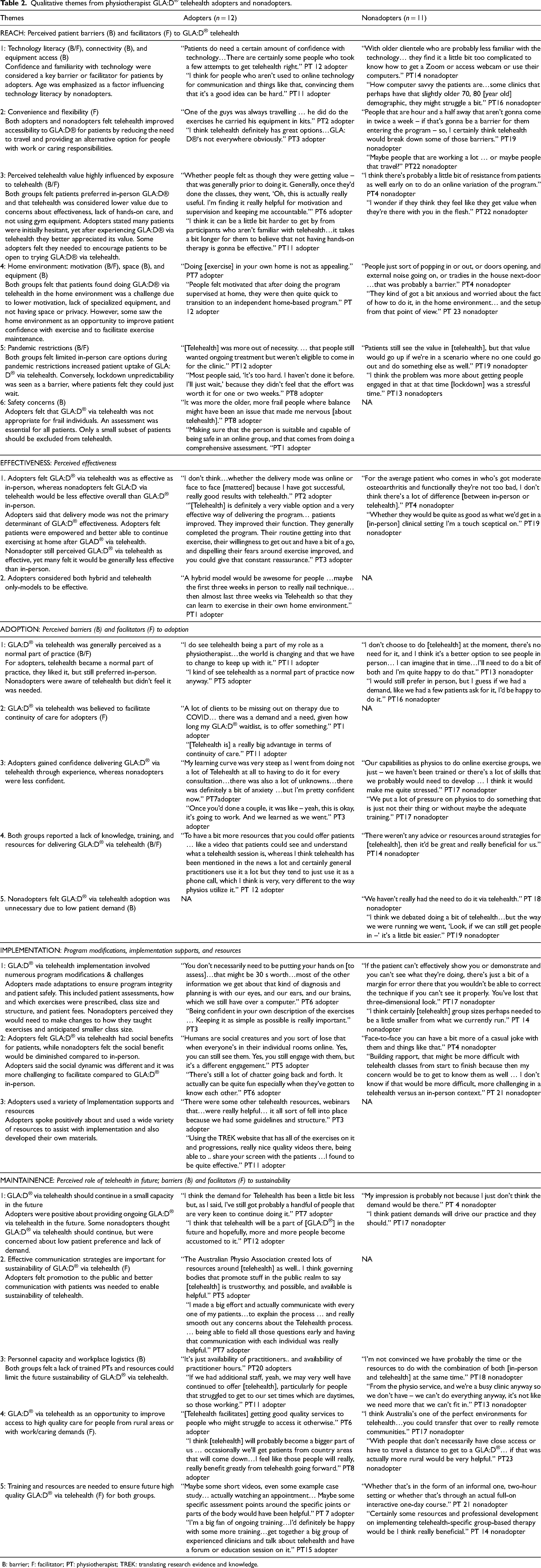
B: barrier; F: facilitator; PT: physiotherapist; TREK: translating research evidence and knowledge.
During the 2-year study period, 5465 participants registered in the GLA:D® Australia patient data registry. Of these, 3712 (68%) participants completed baseline questionnaires and 2612 (48%) participants completed 3-month follow-up questionnaires. Of the 2612 participants, the reach of GLA:D® by telehealth-only delivery and hybrid delivery was 85 (3%) and 115 (4%), respectively. From 2141 GLA:D®-trained physiotherapists in Australia, 128 (6%) adopted the delivery of GLA:D® by telehealth-only delivery or hybrid model for at least one patient.
Figure 1 illustrates the timing of when patients completed 3-month data registry questionnaires across the study period by telehealth-only or hybrid groups. Quantitative effectiveness outcomes from the GLA:D® patient registry at baseline and 3-months for telehealth-only and hybrid GLA:D® delivery are provided in Table 3. GLA:D® by telehealth-only had larger ESs on all outcomes compared with hybrid delivery. Group-level mean changes exceeded MIC values for KOOS/HOOS-QOL and chair stand test for both delivery models, but not for pain (VAS) or KOOS/HOOS-pain, function, or summary score. At an individual level, 62% (n = 122) patients reached MIC for KOOS-QOL and 74% (n = 58) for chair stand test. Overall, 82% (n = 70) and 78% (n = 90) of patients achieved a MIC for at least one primary outcome at 3-month follow up in telehealth-only and hybrid groups, respectively (Table 3). In telehealth-only and hybrid models, 88% (n = 73) and 73% (n = 84)) reported recovery (slightly, strongly, or completely recovered), and 99% (n = 82) and 85% (n = 97) were satisfied or very satisfied (Figure 2). At baseline, 28% (n = 24) and 30% (n = 35) of participants desired joint replacement surgery, which decreased to 21% (n = 18) and 23% (n = 26) at 3-month follow-up in telehealth-only and hybrid groups, respectively (chi-square, p < .001; both groups).

Hybrid and telehealth-only GLA:D® patients completing 3-month registry outcomes.
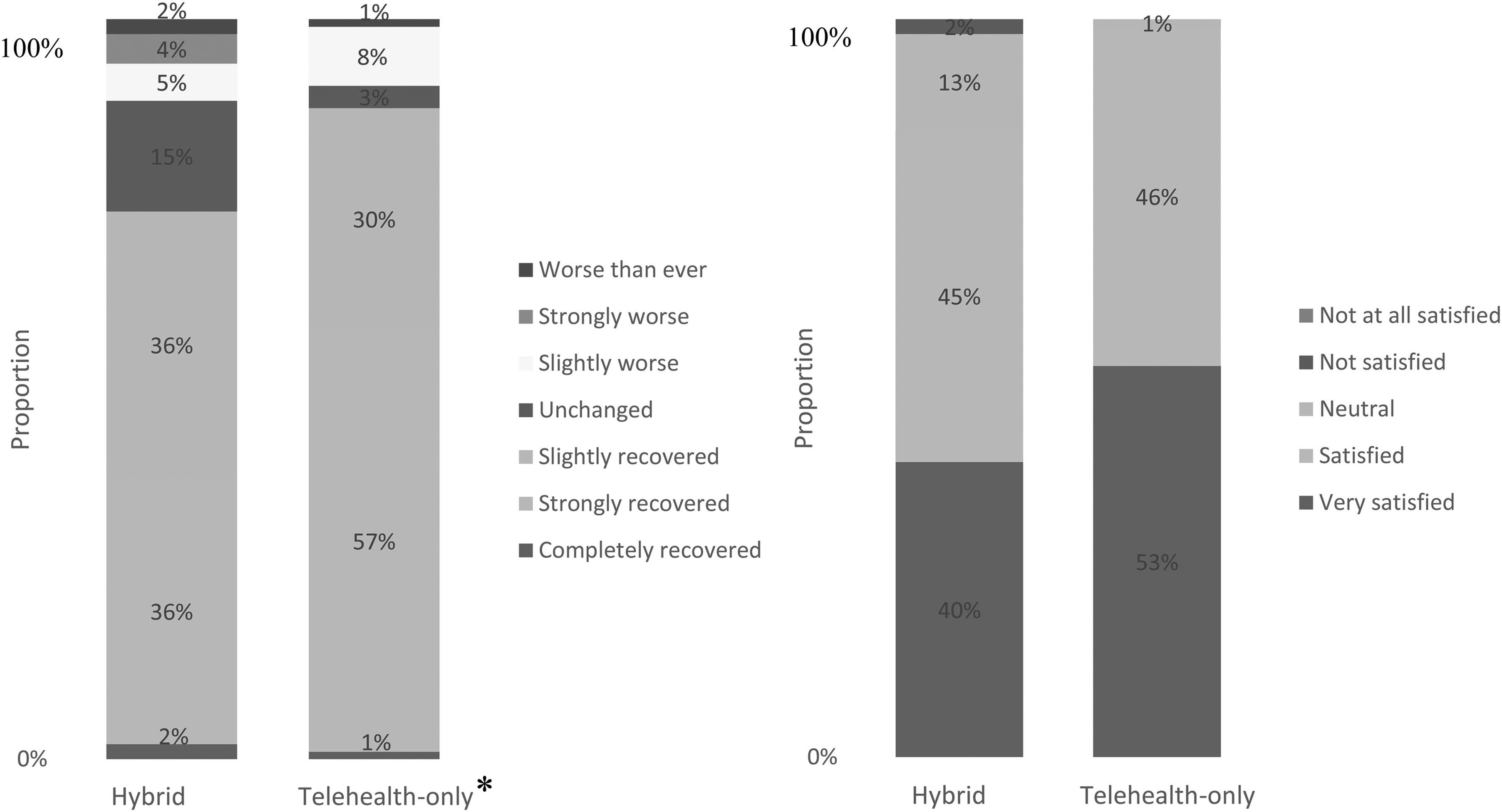
Global rating of change scores (2a) and GLA:D program satisfaction (2b) self-reported by patients with knee and hip osteoarthritis. *: missing n = 2.
Quantitative effectiveness outcomes from GLA:D® patient registry for hybrid and telehealth-only GLA:D® delivery.
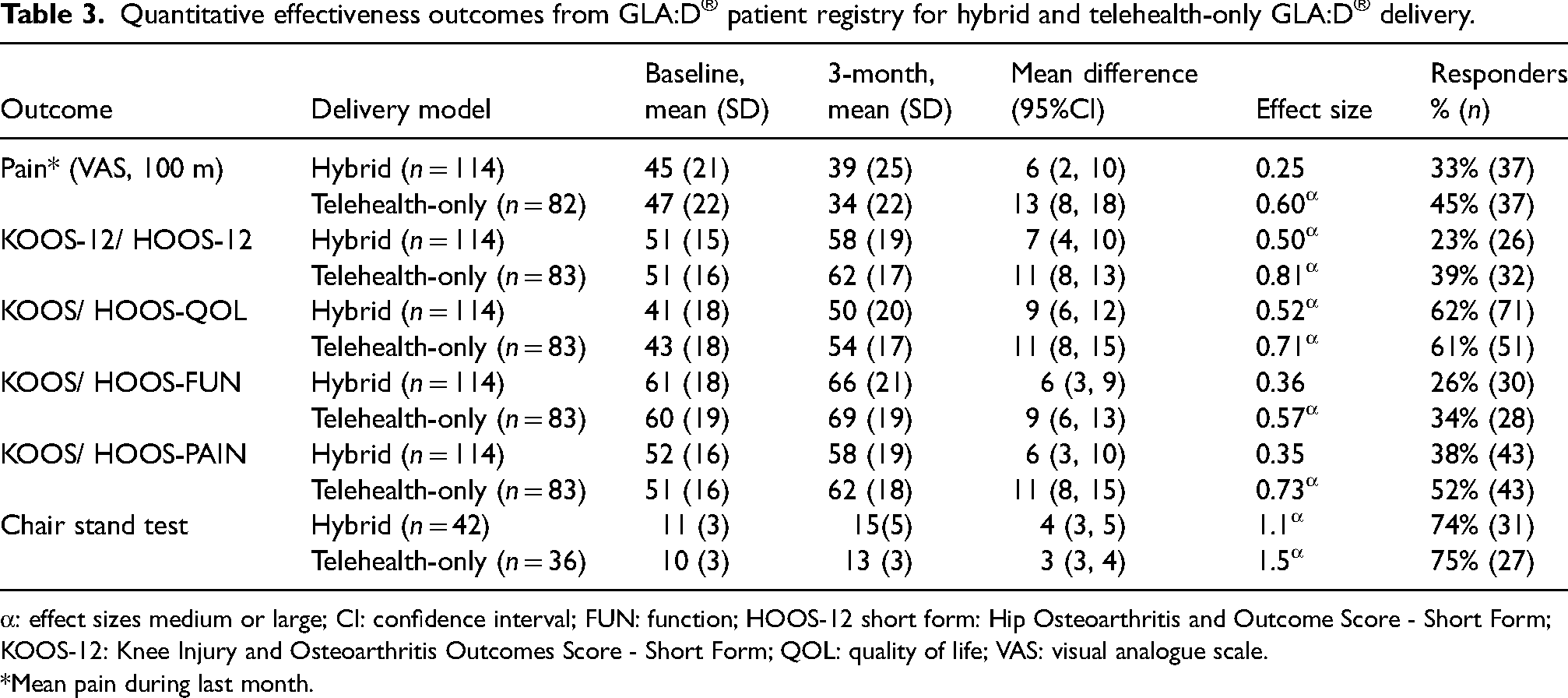
α: effect sizes medium or large; CI: confidence interval; FUN: function; HOOS-12 short form: Hip Osteoarthritis and Outcome Score - Short Form; KOOS-12: Knee Injury and Osteoarthritis Outcomes Score - Short Form; QOL: quality of life; VAS: visual analogue scale.
*Mean pain during last month.
A summary of qualitative findings from Table 2 and quantitative effectiveness outcomes from Table 3, along with quantitative results related to reach, adoption, implementation, and maintenance, are provided in a RE-AIM QuEST joint display (Table 4).
Joint display summarizing results of RE-AIM QUEST evaluation of GLA:D® via telehealth.

ACT: Australian Capital Territory; B: barrier; BMI: body mass index; F: facilitator; HOOS-12: Hip Disability and Osteoarthritis Outcome Score-Short Form; IQR: interquartile range; KOOS-12: Knee Injury and Osteoarthritis Outcome Score-Short Form; MIC: minimally clinically important change; NSW: New South Wales; SD: standard deviation.
Discussion
Our comprehensive mixed-methods evaluation indicates high rates of patient satisfaction and self-reported recovery following access to GLA:D® via telehealth-only and hybrid models in Australia during the COVID-19 pandemic. While the overall reach to patients with knee and hip OA was low, demographics (age, BMI, education, comorbidities) of those accessing telehealth delivery models are comparable to people accessing in-person delivery of GLA:D®. 11 Adoption among trained physiotherapists was widespread geographically, occurring in seven of eight states and territories. However, overall adoption was limited, with only 6% (128/2141) 37 of trained physiotherapists providing GLA:D® via telehealth during our two-year evaluation period. Our qualitative findings found that low adoption likely reflects a variety of factors including physiotherapists lack of confidence and training in telehealth, their preference for in-person care, beliefs about patient preferences, as well as therapist and clinic-level capacity limitations to deliver telehealth. Our in-depth interviews with physiotherapist adopters and nonadopters identified key barriers and facilitators at patient, clinician, and systems levels, which will inform implementation strategies to maintain or potentially scale up group education and exercise therapy programs like GLA:D® via telehealth in Australia and internationally in the future.
This evaluation is one of the first to examine the effectiveness of telehealth care in a real-world setting and uniquely focuses on group-based exercise therapy. 38 Our quantitative findings, especially in the telehealth-only cohort, are highly comparable to previously published data on in-person GLA:D® provided in Australia 11 and internationally.12–14 This includes similar clinically important improvements in KOOS/HOOS-QOL scores (MD = 9–11) and physical function measured by the chair rise test (MD = 3–4),11,37 and reflects perceptions of effectiveness among adopter and nonadopter physiotherapists in this study. Notably, more than three in four patients accessing GLA:D® via telehealth achieved a MIC in at least one primary effectiveness outcome including pain, joint-related QoL, and function. Additionally, one in four patients who desired surgery at baseline no longer desired surgery at 3-month follow-up across both groups. Importantly, real-world findings from this study provide further evidence beyond clinical trials 17 that telehealth is associated with similar outcomes to in-person when providing care to people with OA, 17 including our recent noninferiority randomized controlled trial comparing GLA:D® via telehealth. 19
Telehealth-only delivery of GLA:D® appeared to produce superior outcomes compared with hybrid delivery. A possible explanation for this may be the circumstances surrounding the timing of delivery. Hybrid delivery of GLA:D® peaked very early in the pandemic (Figure 1), when it is likely that many patients who had begun in-person GLA:D® were forced to transition to telehealth delivery due to government-imposed restrictions on in-person care. Notably, only 7% of those who received GLA:D® via hybrid delivery, intended to receive hybrid delivery at baseline. Conversely, in the telehealth-only group, where registration was highest following initial lockdown periods, 51% of these patients intended to complete GLA:D® via telehealth-only at baseline. Thus, these individuals may have been more prepared for, and accepting of, a telehealth delivery model. 40 Our qualitative findings support this, where physiotherapist adopters discussed the importance of adequately preparing patients for telehealth, including answering questions, providing reassurance, setting expectations, and providing technology troubleshooting. Early in the pandemic, with the abrupt transition to telehealth, 41 it is unlikely that hybrid delivery patients received adequate support.
Physiotherapist adopters in this study perceived GLA:D® via telehealth to be acceptable as part of normal practice. They enjoyed providing telehealth and believed it facilitated the continuity of care for some patients. Conversely, nonadopters were aware that GLA:D® could be delivered via telehealth, but they did not perceive it to have advantages that would make it viable to implement. This finding is consistent to previous work exploring patient acceptability of GLA:D® via telehealth, which indicates that acceptability of telehealth delivery is highly influenced by exposure. 18 This highlights that for both physiotherapists and patients, the value of telehealth is often not realized until it is experienced. There may be a role for greater awareness and education to the public as well as communications and training for physiotherapists on the potential advantages and opportunities for telehealth.
Telehealth delivery of GLA:D® was implemented with high patient adherence to exercise therapy and education, with 87% attending 10 or more exercise-therapy sessions and 71% attending both education sessions across groups. This adherence to telehealth GLA:D® is higher than the attendance reported to in-person GLA:D® in Australia, where a program evaluation reported 78% attended 10 or more exercise-therapy sessions and 58% attended both education sessions. Greater adherence in this study may reflect a key advantage of telehealth to patients, the convenience and flexibility it offers. Physiotherapists in this study highlighted this benefit of telehealth, and it also echoes previous interviews with patients who had received care via telehealth.18,40
Physiotherapist adopters discussed making many modifications to facilitate implementation, including conducting patient assessments, how exercises were taught, smaller class size, different class structure, and reduced program costs to patients. Similarly, a retrospective evaluation of telehealth-delivered physical therapy implemented in an academic medical center summarized numerous implementation strategies, including promoting adaptability and changing physical structure and equipment for programs. 38 Charging lower fees when providing physiotherapy via telehealth has previously been discussed41,42 and may reflect limited funding support for telehealth and the perceived inferior value of telehealth by patients.
Physiotherapist adopters spoke positively about the potential advantages of GLA:D® delivered in a hybrid model as it facilitates exercises to be initially taught in-person, but later transitioning patients to be able to perform supervised exercise in their home environment. Previous qualitative interviews with Australian patients 40 and surveys of Canadian physiotherapists 42 suggest a hybrid delivery model may be a viable and acceptable option for patient care in the future. Considering apparent inferior outcomes with hybrid delivery of GLA:D® compared to telehealth-only identified in this study, further research is needed to examine the effectiveness of hybrid delivery of GLA:D® and other musculoskeletal pain care beyond the early stressful phases of the COVID-19 pandemic.
Telehealth GLA:D® reach to OA patients and adoption by physiotherapists was especially low in publicly funded health services. Low adoption in public health settings has also been reported for in-person delivery of GLA:D® 11 and may reflect challenges in public health settings including obtaining ethics to facilitate data collection, alongside managing more complex or non-English speaking patients compared to private settings.11,41 Conversely, our qualitative findings from adopter physiotherapists suggested that only a very small number of patients should be excluded from GLA:D® via telehealth, which would be due to safety concerns. Other patient-level barriers reported by physiotherapists in this study are modifiable, including technology literacy and access, perceived value, and home environment. Our findings suggest the need for implementation strategies to better support patients, including technology training to build confidence and familiarity with computers, clear communication and education about what telehealth involves and its effectiveness to improve perceived value, and instruction on how to modify exercises in the home environment. 42
Delivery of GLA:D® via telehealth was considered to have become a normal part of practice among adopters, with this group valuing telehealth's ability to facilitate continuity of care both during and beyond the pandemic. Consistent with previous survey research, 39 both adopters and nonadopters reported limited previous training in telehealth, and a lack of knowledge and confidence in managing patients in this manner. This lack of knowledge and confidence in delivering telehealth may have been a key factor influencing the overall low adoption of GLA:D® via telehealth. Similar to other qualitative research, 43 adopters in this study gained confidence through experience and had a “steep learning curve” where they embraced an attitude of “diving in the deep end.” Comparatively, many nonadopters felt it was “a lot of pressure on physios” to adopt telehealth, and they would be “quite stressed” and therefore did not feel confident to attempt delivery of GLA:D® via telehealth. Nonetheless, physiotherapists from both groups suggested delivery of GLA:D® via telehealth should continue beyond the pandemic, to provide care for people unable to access in-person care (e.g., live in rural or remote region), or who can benefit from the convenience and flexibility of telehealth (e.g., carer or occupational responsibilities, immunocompromised). Adopters suggested a multipronged communication strategy was key to increasing community awareness of the advantages of telehealth—with messaging targeting the general public and physiotherapists considered important. Consistent with other reports,38,42,43 both groups suggested there was a need for future supports, training, and resources for physiotherapists to facilitate greater adoption of telehealth, along with maintenance and scale up of telehealth services.
Several limitations should be considered when interpreting this study's findings. A relatively low number of OA patients were registered in our database as completing GLA:D® via telehealth. It is possible that many additional patients completed telehealth during this challenging time, yet were not registered by their treating physiotherapist. The constantly changing restrictions to in-person patient care in Australia over the 2-year evaluation period make it challenging to directly compare our findings to any concurrent in-person GLA:D® delivery. Therefore, we choose to compare our cohort with previously published in-person GLA:D® data in Australia and internationally. We did not incorporate qualitative data on patient perspectives in this evaluation, as we recently published a qualitative study showing high patient acceptability of GLA:D® via telehealth. 18 Instead we choose a novel approach for the current evaluation of combining patient reported quantitative data and physiotherapists qualitative perspectives. The COVID-19 pandemic was a very stressful time for physiotherapists and their perspectives on telehealth may change moving forward. Our findings from the RE-AIM QuEST represent GLA:D® via telehealth delivered in Australia and other countries may have different telehealth experiences. Nonetheless, our results can help to inform the development and implementation of group-based telehealth programs worldwide for OA and other chronic diseases.
In conclusion, our comprehensive mixed-methods evaluation of GLA:D® delivered via telehealth-only and hybrid models had positive convergent findings supporting an association with high patient satisfaction and effective self-reported and objective health outcomes for people with hip and knee OA. However, reach was limited, possibly due to the limited adoption by trained physiotherapists, and key patient-level barriers including technology literacy and access, and low perceived value of telehealth. Further support is needed to facilitate sustainability and any scale up of telehealth delivery for GLA:D®, including training and resources for physiotherapists and improved communication about the opportunities for telehealth with the public and patients.
Supplemental Material
sj-docx-1-jtt-10.1177_1357633X231167620 - Supplemental material for Implementation of the Good Life with osteoArthritis in Denmark (GLA:D®) program via telehealth in Australia: A mixed-methods program evaluation
Supplemental material, sj-docx-1-jtt-10.1177_1357633X231167620 for Implementation of the Good Life with osteoArthritis in Denmark (GLA:D®) program via telehealth in Australia: A mixed-methods program evaluation by Allison M Ezzat, Joanne L Kemp, Joshua J Heerey, Marcella F Pazzinatto, Danilo De Oliveira Silva, Karen Dundules, Matthew Francis, and Christian J Barton in Journal of Telemedicine and Telecare
Footnotes
Acknowledgements
Thank you to the GLA:D® Australia-trained physiotherapists who participated in our qualitative interviews and provided input on our data analysis. As well, thank you to the patients with osteoarthritis who provided their data to the GLA:D® Australia Data Registry, which allowed the evaluation of the program.
Author contributions
Conceptualization and design: all
Collection and assembly of data: AE, JLK, MP, CJB, JH
Interpretation of data: all
First draft of manuscript: AE
Critical revision of manuscript and approval of final version: all
Declaration of conflicting interests
The author(s) declared the following potential conflicts of interest with respect to the research, authorship, and/or publication of this article: CJB and JLK are program leads for GLA:D® Australia, a nonprofit implementation project. Their institution has received payment for training GLA:D practitioners. All authors affirm that they have no financial affiliation (including research funding) or involvement with any commercial organization that has a direct financial interest in any matter included in this manuscript, except as disclosed in an attachment and cited in the manuscript.
Funding
The author(s) disclosed receipt of the following financial support for the research, authorship and/or publication of this article: AE is supported by a Canadian Institute for Health Research (CIHR) fellowship. CJB is supported by an MRFF TRIP Early Career Fellowship (APP1150439), and JKL is supported by an NHMRC Early Career Fellowship (APP1119971). This project received in-kind support from GLA:D® Australia, a nonprofit implementation project. Funders had no involvement in the study other than to provide funding.

Supplemental material
Supplementary material for this article is available online.
References
Supplementary Material
Please find the following supplemental material available below.
For Open Access articles published under a Creative Commons License, all supplemental material carries the same license as the article it is associated with.
For non-Open Access articles published, all supplemental material carries a non-exclusive license, and permission requests for re-use of supplemental material or any part of supplemental material shall be sent directly to the copyright owner as specified in the copyright notice associated with the article.
