



Abstract
Background/Objectives
The COVID-19 pandemic motivated telemedicine care to decrease potential exposures for both patients and staff. We hypothesized that select breast surgical patients can be successfully evaluated pre-operatively with telemedicine.
Methods
With institutional review board approval, patients with telemedicine surgical consults between 1 March 2020 and 31 August 2020 were identified retrospectively from our prospective breast surgical registry. The frequency of successful pre-operative evaluation using telemedicine alone was assessed, defined as cases in which surgery was completed on the planned day without changes to the surgical plan after physical examination in the pre-operative area. Differences in disease presentation, patient characteristics, and complications were evaluated by whether the first in-person visit occurred on the day of surgery versus the prior.
Results
A total of 374 patients underwent breast surgery between 1 March 2020 and 31 August 2020, of which 96 (25.7%) had a telemedicine consultation. After the telemedicine visit, 38 patients (39.6%) had additional in-person visits with the breast surgeon prior to their operative date, and 58 patients (60.4%) did not. Forty-five patients underwent breast-conserving therapies, 41 mastectomies (25 with reconstruction), two axillary dissections, and eight excisional biopsies. All surgeries were completed on the planned operative day, with no changes in surgical plans. Patients with telemedicine only prior to surgery were more likely to speak English (100% vs. 92.1%, p = 0.02) and have lower body mass index (median 24.9 vs. 29.2, p = 0.01). The frequency of in-person pre-operative visits varied significantly by surgeon (p < 0.001). Age, American Society of Anaesthesiologists score, distance from facility, clinical T/N category, surgery type, and complications did not differ between groups.
Conclusions
Telemedicine can be utilized successfully for select breast surgical patients, with the ability to proceed to surgery in the majority of patients without additional in-person visits.
Introduction
Prior to the COVID-19 pandemic, telemedicine was being utilized in a variety of ways, including remote consultations to increase specialty access for underserved rural or remote populations, virtual-based mental health therapy, and pre-surgical anesthesia evaluation.1–6 However, overall utilization was low significant barriers to broad implementation of telemedicine existed, including limitations on reimbursement, significant start-up costs, poor quality equipment, and confidence in technology.7,8 Clinician reluctance to adopt telehealth also attributed to low utilization of telehealth prior to the pandemic, as many clinicians were not familiar with delivering healthcare in a virtual format. 9
During the pandemic, institutions around the world enhanced their use of telemedicine to decrease potential exposure to the virus for both patients and staff. Policy changes within the United States expanded the definition of telehealth to include virtual check-ins and e-visits, increased reimbursement for telemedicine visits and allowed for patients to be seen in their place of residence. 8 In the United States, the Center for Medicare & Medicaid Services also waived requirements that out-of-state practitioners be licensed in the state where they are providing services, allowing practitioners to deliver telehealth services across state lines. 10
At our institution, digital connections with patients rose from fewer than 500 per day pre-pandemic to more than 8000 a day in April 2020. 11 Many types of traditional in-person encounters switched to virtual, including consultations, multidisciplinary clinic consultations, post-operative visits, and follow-up appointments. While many elective surgical procedures were completely canceled due to limited operating room availability, priority was given to patients with cancer, as delays in their care could lead to the progression of the disease and worse outcomes. For some patients undergoing breast surgery, surgical consultation, including operative planning, occurred via telemedicine, with physical examination deferred to the day of surgery in the pre-operative area. This meant that the surgical plan was created based on a review of imaging and pathology in the absence of a physical examination. We hypothesize that select breast surgical patients can be successfully evaluated pre-operatively with a telemedicine consultation.
Methods
Study population
With institutional review board approval, patients who underwent breast surgery between 1 March 2020 and 31 August 2020 were identified from our prospective breast surgical registry, as these dates coincided with restricted hospital visitation and the implementation of virtual platforms to decrease in-person interactions. Patients seen in a virtual format for their initial surgical consult were included, as well as patients who were seen in a virtual format by the surgical team for definitive surgical planning after completion of neoadjuvant chemotherapy (NAC, i.e. chemotherapy administered prior to surgical excision of cancer), even if they were initially seen in person prior to initiation of chemotherapy. Patients seen for in-person consultation only were excluded. Prior to surgical consultations, all patients at our institution are seen in the Breast Clinic which is staffed by internal medicine physicians who specialize in evaluating and treating breast disease. As part of the Breast Clinic evaluation, patients have imaging and appropriate biopsies performed, or for those with outside workup, imaging and pathology is reviewed.
Data collection and analysis
Via chart review, we evaluated the dates of any subsequent in-person pre-operative visits and the date of physical exam (day of surgery or prior). The frequency of successful pre-operative evaluation using telemedicine alone was assessed, defined as cases in which surgery was completed on the planned day without changes to the surgical plan after physical examination in the pre-operative area. Additional information including a surgeon, planned operation, planned reconstruction, deviation from the operative plan, and post-operative events were captured. We used the Breast Imaging Reporting and Data System (BI-RADS) categories to classify patients as having non-dense breasts (almost entirely fatty or scattered fibroglandular densities) or dense breasts (heterogeneously dense or extremely dense). Complications evaluated included bleeding, infection, seroma, urinary tract infection, dehiscence, flap ischemia, breast lymphedema, and return to the operating room. We evaluated the differences in disease presentation and patient characteristics between patients who were seen in person for an additional visit with the breast surgical oncologist prior to the day of their operation and patients who were first seen in person on the date of their operation. Analysis was performed using chi-square tests to assess nominal variables and Wilcoxon rank-sum tests were used for ordinal and continuous variables. Analysis was performed using SAS (Version 9.4, SAS Institute Inc., Cary, NC). P-values < 0.05 were considered statistically significant.
Results
Study population
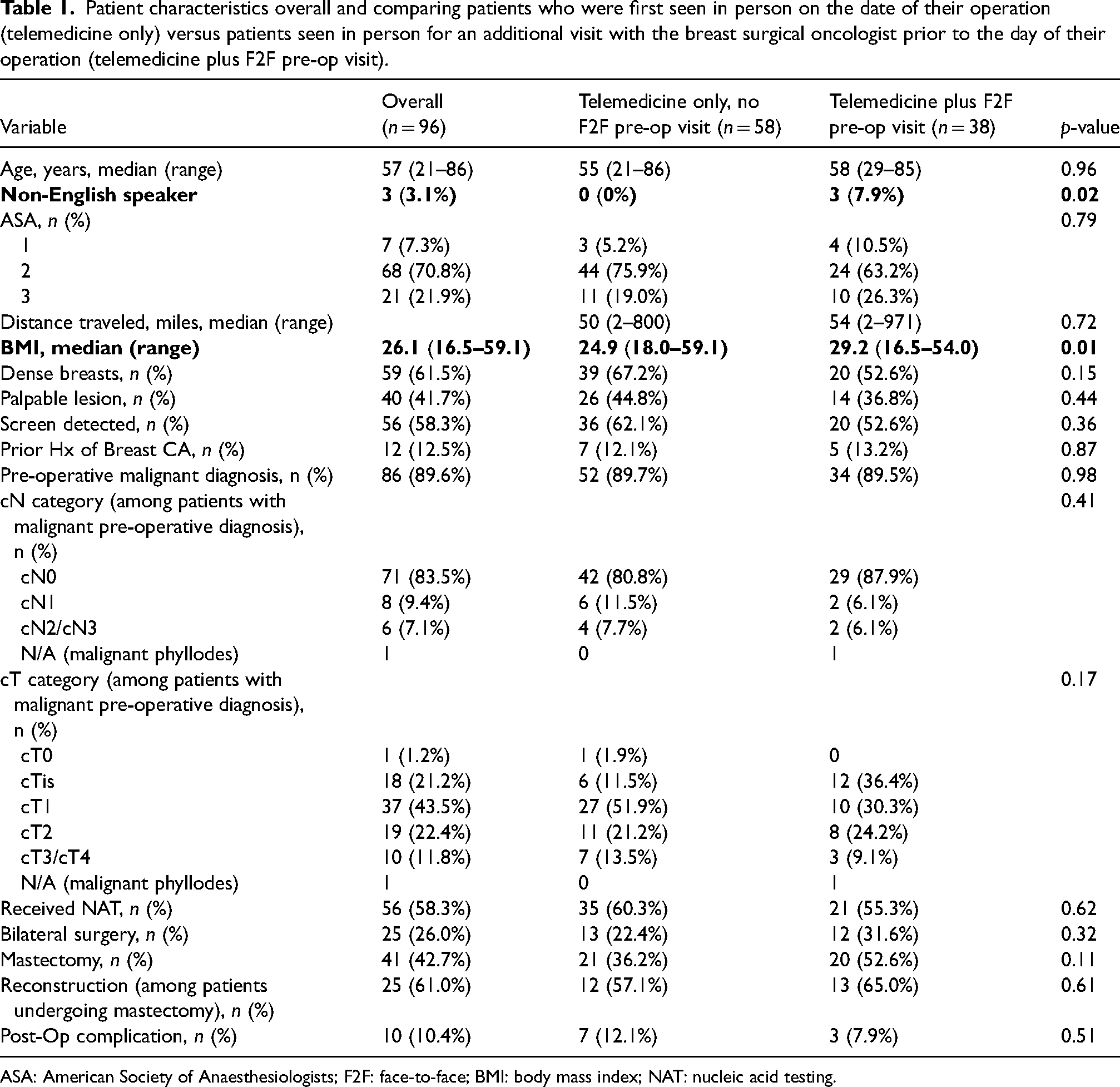
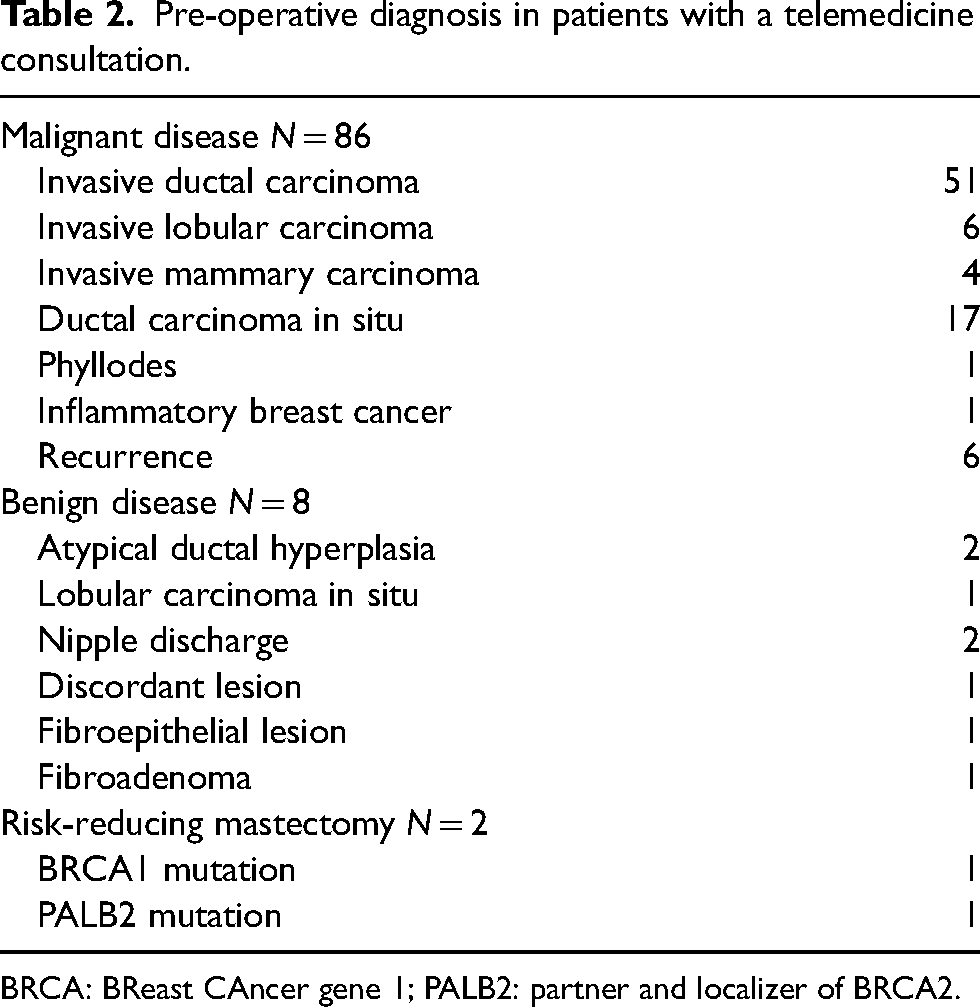
A total of 374 patients underwent breast surgery between 1 March 2020 and 31 August 2020. Within this timeframe, 96 (25.7%) patients had telemedicine visits and make up the cohort for this study, see Table 1. This included 73 (76.0%) new surgical consults at time of initial diagnosis (including 40 who subsequently underwent primary surgery, 32 who subsequently underwent neoadjuvant endocrine (NAE) therapy prior to surgery, and one patient who subsequently underwent NAC prior to surgery), 19 (19.8%) established patients seen for definitive surgical planning after NAC for patients previously seen in-person at the time of initial diagnosis, and four (4.2%) patients seen after NAC initiated elsewhere. All of the patients who initiated NAE therapy were evaluated only by telemedicine consultation prior to NAE therapy. In total, 56 patients (58.3%) received neoadjuvant systemic therapy (24 chemotherapies and 32 endocrine therapies). The majority of patients (89.6%) were seen for malignant disease, with eight (8.3%) seen for focal high-risk lesions, and two (2.1%) with elevated germline risk for risk-reducing surgery (two mutation carriers, one BReast CAncer gene 1 (BRCA1), and one partner and localizer of BRCA2 (PALB2)), see Table 2.
Patient characteristics overall and comparing patients who were first seen in person on the date of their operation (telemedicine only) versus patients seen in person for an additional visit with the breast surgical oncologist prior to the day of their operation (telemedicine plus F2F pre-op visit).
ASA: American Society of Anaesthesiologists; F2F: face-to-face; BMI: body mass index; NAT: nucleic acid testing.
Pre-operative diagnosis in patients with a telemedicine consultation.
BRCA: BReast CAncer gene 1; PALB2: partner and localizer of BRCA2.
Regarding surgical procedures, 45 (46.9%) patients underwent breast-conserving surgery, 41 (42.7%) patients underwent mastectomy (25 with reconstruction), eight (8.3%) patients underwent excisional biopsy, and two (2.1%) patients underwent axillary dissection. All surgeries were completed on the planned operative day, with no changes in surgical plans for any patients, including those patients whose initial physical exam occurred on the day of surgery.
Additional in-person visits prior to surgery
After the initial telemedicine visit, 38 patients (39.6%) had an additional in-person visit with the breast Surgeon prior to their operative date. Fifty-eight patients (60.4%) proceeded to surgery without an additional in-person visit, with a first in-person meeting with the surgeon and physical examination performed on the day of surgery in the pre-operative area. Among 25 patients with mastectomy and reconstruction, 13 (52%) had an additional in-person visit with the breast oncologic surgeon prior to surgery (two with the breast surgical oncologist only and 11 with both the breast surgical oncologist and plastics surgeon), and five additional patients (20%) had an in-person follow-up visit prior to surgery with the plastic surgeon only. Compared to patients with in-person visits after telemedicine, patients with telemedicine only prior to surgery were more likely to speak English (100% vs. 92.1%, p = 0.02) and had lower body mass index (BMI) (median 24.9 vs. 29.2, p = 0.01), see Table 2. The frequency of in-person pre-operative visits also varied significantly by surgeon (p < 0.001) with a wide range from 11.8% to 72.4% of patients having in-person visits after telemedicine visits depending on the surgeon, see Figure 1. Age, American Society of Anaesthesiologists (ASA) score, distance from facility, clinical T or N category, surgery type, unilateral versus bilateral, and breast density did not differ between groups.
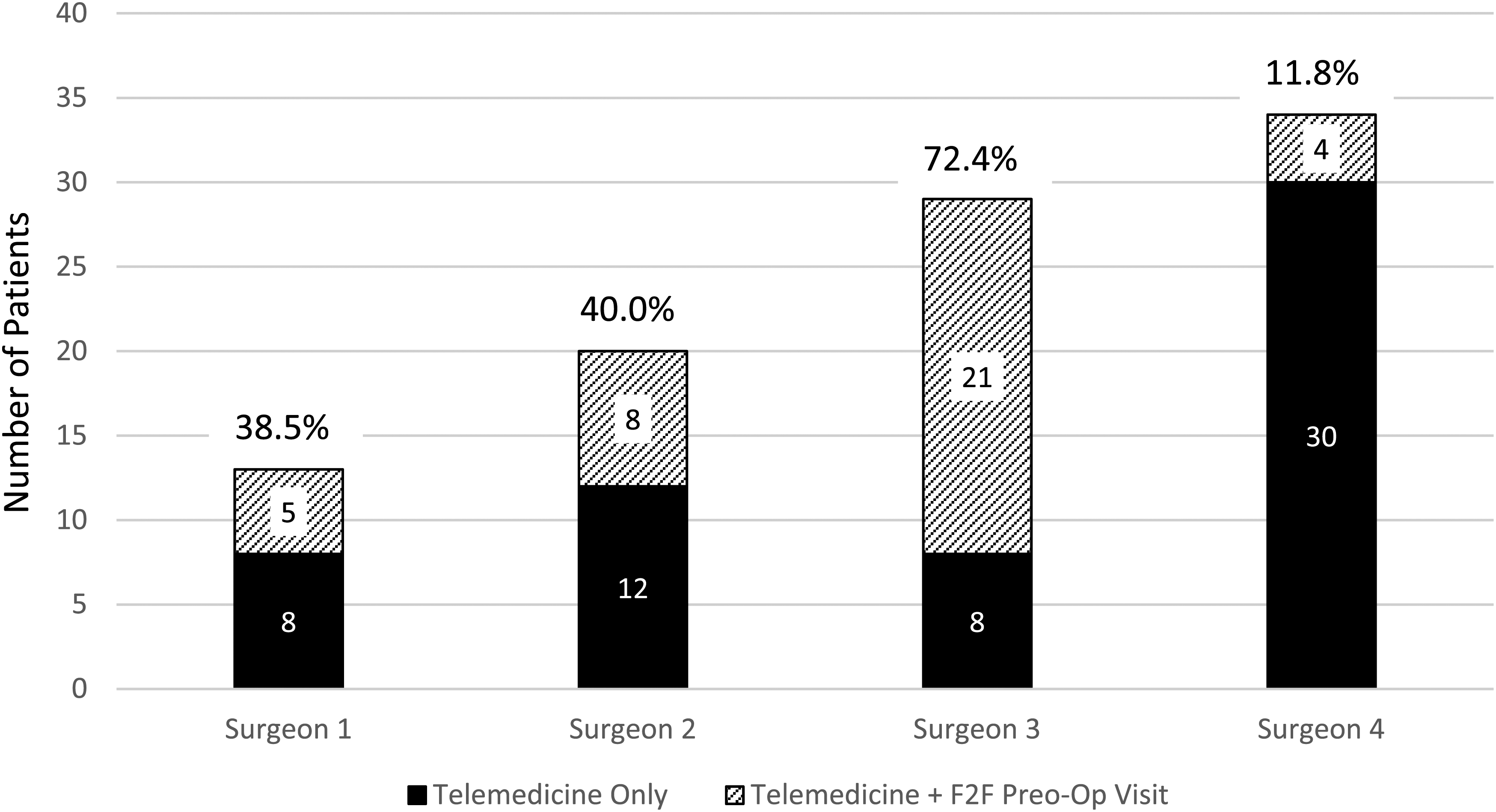
Variation in practice by a surgeon. The percentage of patients who had a second in-person visit prior to their surgical date is displayed above the column.
Post-operative complications
Overall, 10 patients had post-operative complications, including three patients with seromas, two patients with superficial soft tissue infections requiring antibiotics, one patient with superficial dehiscence, one patient with breast lymphedema requiring compression treatment, one patient with a UTI, one patient with flap ischemia requiring hyperbaric oxygen therapy, and one patient who returned to the operating room for margin re-excision. There was no significant difference in post-operative complications between patients who had an initial physical exam on the day of surgery and those who had one prior (12.1% (n = 7) vs. 7.9% (n = 3), p = 0.51).
Discussion
Previous studies that focused on the telemedicine experience in breast cancer patients found high levels of satisfaction and usability in both patients and providers.7,12–14 A meta-analysis by Zhang et al. 15 also found that virtual preanesthesia evaluation can be implemented successfully, with similar surgery cancellation rates, high patient satisfaction, and reduced costs compared to in-person evaluation. However, a commonly cited concern is the inability to perform a physical examination during a virtual encounter. Our study assessed the feasibility of using telemedicine for pre-operative evaluation, specifically focusing on whether the post-ponement of the physical exam until the day of surgery resulted in the need to change the surgical plan and/or reschedule the operation following physical examination in the pre-operative area. We also evaluated factors associated with the need for a separate in-person visit prior to their surgical date for patients participating in telemedicine consults.
Not surprisingly, the majority of patients in our study population underwent breast surgery for malignant disease, as operating room availability was limited during the study period time and many surgeries for benign breast disease were postponed. Sixty percent of patients seen via telemedicine consultation were able to proceed to surgery without an additional in-person visit. For these patients, the surgical plan was created in the absence of a physical examination, with a physical examination performed in the pre-operative area on the day of surgery. Regardless of when the physical exam was performed, all surgeries were completed on the planned operative day, without changes in the surgical plan for any patient.
When comparing patients who were seen via telemedicine only to those who were scheduled for an additional in-person visit prior to their surgical date, patients who did not speak English and those who had higher BMIs were more likely to be scheduled for an additional visit. Interestingly, distance from the facility, tumor size, and detection method were not significant factors. The most significant variable associated with a separate in-person consultation prior to the operation was the operating surgeon. The frequency of having the patient come back for an additional in-person pre-operative visit after their telemedicine visit varied widely by the surgeon, from 11.8% to 72.4% (p < 0.001). The surgeon with the highest frequency of in-person evaluations was concerned that telemedicine might reduce the quality of care and was slower to adopt the telemedicine approach but ultimately became confident with the approach in selected patients. This suggests that the surgeon’s mindset was a major factor in the decision of whether or not to create a surgical plan prior to performing a physical exam.
Our study has several limitations. Due to the retrospective nature of the study, we are unable to determine why certain patients were scheduled for telemedicine versus in-person surgical consults, while others were scheduled for traditional in-person consults. However, multiple factors contributed, including patient and provider preference, the need for plastic surgery evaluation, and provider quarantine/remote work requirements after COVID exposure. As our analysis focused only on patients who had a telemedicine consult, we cannot compare patient characteristics or outcomes between patients who had a standard in-person consult and those who had a telemedicine consult. As previously stated, all patients at our institution are seen by breast internal medicine physicians for pre-operative counseling and education and have their imaging and pathology reviewed prior to their surgical consultation, which may limit the applicability of our findings to other patient populations. With regard to lymph node assessment, our standard workup of breast cancer patients includes an axillary ultrasound with a percutaneous biopsy of any abnormal lymph nodes.
Within our patient population, we decided to include patients who were seen in person with a physical exam performed prior to initiation of neoadjuvant chemotherapy and had their post-NAC surgical planning visit during the pandemic via telemedicine. This is because the physical exam frequently changes after chemotherapy, and thus surgeons had to rely on imaging findings and the patient's reported exam, similar to those patients who were newly diagnosed and had not been evaluated prior to the initial telemedicine consults. However, having previously performed a physical examination, even if it was prior to neoadjuvant treatment, may have led to surgeons feeling more comfortable with proceeding to surgery without an additional visit. Lastly, the wide variation in surgeon practice makes it more difficult to make definite conclusions on which patients, if any, require an in-person visit prior to their surgical date for surgical planning purposes.
Conclusions
Telemedicine was utilized successfully in selected patients treated at our institution during the COVID-19 pandemic. For patients with language barriers or higher BMIs, additional subsequent in-person pre-operative visits prior to the day of operation were preferred. Our findings suggest that for selected patients who can complete pre-operative imaging and then have subsequent surgical telemedicine evaluation, it is feasible to schedule breast surgery in the absence of a physical examination. However, we want to be clear that all patients should still be examined prior to their operation, whether that is on the day of surgery or prior. When deciding how to utilize telemedicine in the pre-operative evaluation of breast surgery patients, surgeon confidence in creating a surgical plan based on imaging findings and the patient’s reported exam must be considered. If the surgeon prefers to have all patients scheduled for an in-person visit prior to their surgical date, the addition of a telemedicine visit may potentially increase the burden for patients as well as providers.
The COVID-19 pandemic forced the rapid adoption of telemedicine, as well as patient and provider proficiency with enhancement in technology and confidence in the delivery of telehealthcare. As we move forward, knowledge gained from telemedicine may be used to continue to improve the delivery of safe, timely, and equitable healthcare. Telemedicine has the potential to address disparities by maximizing access to specialty surgical care while minimizing travel and work-life disturbances for patients from both rural and other underserved communities.
Footnotes
Declaration of conflicting interests
The authors declared no potential conflicts of interest with respect to the research, authorship, and/or publication of this article.
Funding
The authors received no financial support for the research, authorship, and/or publication of this article.

Data availability statement
Data sharing not applicable to this article as no datasets were generated or analyzed during the current study.