



Abstract
Objective
Telemedicine can facilitate social distancing during an infectious disease pandemic and reduce the burden on health-care resources. Moreover, telemedicine can be utilized for medical care in remote island regions, in home health care, and during isolated major disasters such as regional earthquakes. However, the effectiveness of telemedicine for emergency consultation remains unclear. This study introduced and analyzed the national emergency medical teleconsultation (NEMTC) established in Taiwan in 2022 during the COVID-19 pandemic.
Methods
In response to the COVID-19 pandemic, Taiwan's Centers for Disease Control established a temporary 24-h NEMTC contingency system. Patient information was collected from consultations through the NEMTC from April 28 to June 28, 2022. After successful consultation, physicians made recommendations for home observation, emergency department (ED) visit, or outpatient follow-up. ED visits were divided into two categories, namely self-transport and transport, by the emergency medical service system (EMSS).
Results
During the aforementioned period, 20,902 consultation requests were made through the NEMTC, and 11,804 consultations (56.5% of 20,902) were successful. Consultation success rates were significantly higher for those who had a consultation between 08:00 and 16:00, had a waiting time of less than 10 min, and were not aged between 18 and 45 years. Moreover, 8.2% of the analyzed patients were advised to visit the ED, and only 0.4% required ambulance transportation. Children and older individuals and patients with cardiovascular symptoms, shortness of breath, or neurological or abdominal symptoms had a significantly higher chance of being referred to the ED than did other individuals.
Conclusions
The NEMTC response system can enhance the efficiency of the EMSS and can reduce the burden of patients with mild conditions overloading the EMSS and EDs. The NEMTC could serve as an effective rapid response system during future pandemics.
Introduction
Since December 2019, COVID-19 has spread globally at a rapid rate. 1 In March 2020, the World Health Organization declared COVID-19 a global pandemic. 2 To prevent a recurrence of the harm caused by the Severe Acute Respiratory Syndrome epidemic, 3 the Taiwan Centers for Disease Control established the Central Epidemic Command Center on January 20, 2020, to combat COVID-19 by integrating resources from both the public and private sectors. 4 Given Taiwan's close proximity to China, COVID-19 cases reached Taiwan soon after the initial outbreak. 5 Taiwan's entire health-care system, especially emergency care, was expected to be affected, and thus deploying efficient contingency plans to minimize the disruption to the health-care system became a crucial component of Taiwan's pandemic prevention efforts.
The concept of telemedicine was first introduced in the 1970s6,7 and has been increasingly adopted in medical care ever since thanks to advances in telecommunications technology.8–10 In early 2020, the COVID-19 pandemic led to the widespread use of telemedicine in many countries.11–17
In Taiwan, because of high population density and easily accessible health-care services, the demand for telemedicine has historically been relatively low and has experienced only slow growth. 18 Under Taiwan's National Health Insurance (NHI) system, patients can easily visit a hospital's emergency department (ED). In addition, Taiwan's emergency medical service (EMS) system (EMSS) permits free requests for EMS dispatch. Following the onset of the pandemic, the NHI authorities anticipated an increase in ED visits that would place a burden on a health-care system already overwhelmed by an influx of patients with COVID-19. To reduce the burden on EDs and provide emergency medical care to isolated patients, the Taiwan Society of Emergency Medicine (TSEM) proposed the national emergency medical teleconsultation (NEMTC) program in June 2020. This program taps into a large pool of emergency medicine specialists who provide round-the-clock emergency teleconsultation services through a specially designed web-based application.
From January 2020 to March 2022, Taiwan experienced an average monthly count of 881 confirmed COVID-19 cases. However, in April 2022, the situation escalated markedly, with the number of infections for that month surging to 12,059. Subsequently, the numbers for May and June further skyrocketed to 1,984,519 and 1,677,446, respectively. 19 From the end of April 2022 to the end of June 2022, multiple hospitals were forced to build tents outside their EDs to accommodate the sudden influx of patients. This situation led to a disproportionately high number of fatalities. From January 2020 to March 2022, the monthly average for deaths due to COVID-19 stood at 31. In April 2022, fatalities increased to 38, and in May, they surged to 2424. June witnessed an even more substantial rise, with the fatality count reaching 4167.
Several studies have examined the adoption of video consultations by emergency physicians as a means of reducing the risk of contact infection and addressing shortages of medical staff.20–23 However, few studies have explored the use of such consultations within a national emergency response system, which involves collaboration between emergency medicine specialists, nurse practitioners (NPs), and EMS personnel. The present study investigated Taiwan's NEMTC response system and analyzed consultation data from the most severe phase of the COVID-19 pandemic in 2022 to explore the outcomes and advantages of this response system. This system constitutes a valuable asset in the context of pandemic prevention efforts.
Methods
Study design and participants
This study was designed as a retrospective cohort study. The government regulations mandated that medical personnel conduct consultations through video calls instead of relying solely on phone calls to more effectively assess the health status of consultees. In addition, in accordance with government guidelines, video recordings of the consultation process were securely stored on servers and then deleted after a period of 3 months.
The NEMTC system was proposed by the TSEM in July 2020 in response to the severe COVID-19 situation overseas. The Taiwan Ministry of Health and Welfare (TMOHW) provided the necessary funding, and the system was established before a major outbreak occurred in Taiwan.
Recruitment for this initiative was led by the former president of the TSEM, who initially assembled a group of emergency physicians and NPs to strategize the project's development. Subsequently, through the TSEM's dedicated outreach efforts, approximately 250 emergency physicians and 50 NPs from multiple regions of Taiwan were recruited. Following comprehensive educational training that was conducted both in-person and online, the program was put into effect. To ensure sufficient quality of the service, all professionals were required to pass simulated tests for accreditation before being authorized to conduct consultations online.
In early 2022, as the number of COVID-19 cases in Taiwan was slowly increasing, an increasing demand for EMSs was observed. During this period, as part of the NEMTC program, progressive partnerships were established with EMS dispatch centers across Taiwan, and related educational training was conducted. By March 2022, most EMS dispatch centers in Taiwan had joined the system and were fully operational online. These centers also underwent simulated tests for accreditation to ensure the sufficient quality of service.
The NEMTC framework comprises the following components: First, it features on-duty emergency medicine specialists who are available during nonclinical working hours; their compensation is provided by the TMOHW. Because of legal restrictions at that time, the NEMTC could operate only under emergency authorization granted by the government. The primary responsibilities of NEMTC specialists include assessing patients, diagnosing diseases, providing health education, and determining whether to dispatch an ambulance. Second, the framework features on-duty NPs recruited from EDs across the country. When a physician deems that a patient can be monitored at home but believes that nursing follow-up would be beneficial for the patient's safety, the patient may be advised to schedule an appointment with an NP (within 2, 4, or 8 h). NPs are primarily responsible for monitoring the patient's condition and deciding whether to dispatch an ambulance. The third component is EMS dispatch centers. If a physician or NP believes that a patient requires immediate medical attention, they can connect to a dispatch center through the app and directly describe the patient's condition to the dispatcher. The fourth component is the dedicated app, which provides telemedicine functionality and is free to register on and use. The employed medical personnel interact with patients by using this specifically designed web-based teleconsultation application. During consultations, the medical professional has access to the individual consultation history of the patient through the system. Figure 1 presents a flowchart of NEMTC operation. In this study, we analyzed all patients in Taiwan who were quarantined at home or had a COVID-19 diagnosis and sought emergency consultation through the NEMTC program between April 28, 2022, and June 28, 2022.

Algorithm of NEMTC system during the COVID-19 pandemic in Taiwan.
Relevant variables
In the NEMTC system, patients provide information regarding their basic demographic characteristics when they register on the app. The age options are “<18 years,” “18–45 years,” “46–65 years,” and “>65 years.” The options for place of residence are “urban” and “nonurban” (“nonurban” covers suburban and rural areas). The main symptoms are “fever,” “cough,” “throat and nasal symptoms,” “shortness of breath,” “cardiovascular symptoms” (including chest tightness and chest pain), “gastrointestinal symptoms” (including abdominal symptoms, nausea or vomiting, diarrhea, and others), “neurological symptoms” (including headache, dizziness, vertigo, and others), and “skin rash.” Consultation periods are divided into “day shift” (08:00–16:00), “evening shift” (16:00–00:00), and “night shift” (00:00–08:00). Finally, waiting time is divided into “<10 min,” “10–30 min,” and “>30 min.”
Consultation results are divided into “successful consultation” (SC) and “unsuccessful consultation” (USC). SC indicates that a patient has successfully connected with a physician through the app for consultation. By contrast, USC indicates an unsuccessful connection to a physician for consultation. USC can further be categorized into “physician-related” (when a patient waits on the line for more than 1 h because of online congestion or inadequate doctor availability, resulting in automatic system disconnection) and “patient-related” (when the patient voluntarily disconnects within the first 1 h of the call). For SCs, the suggestions of physicians are divided into the following categories:
“Observation at home,” which is divided into “self-observation,” “observation at home first,” and “paramedical follow-up” (where physicians instruct patients to receive nursing follow-up after consultation). If the patient agrees to a follow-up, the NP conducts a remote follow-up at the patient's chosen time. “ED visit,” which is divided into “self-transport” (when the patient seeks medical attention at the ED on their own) and “by EMS.” In the “by EMS” subcategory, the physician or NP responsible for follow-up assesses that the patient's condition is critical or has worsened and thus conducts a three-party video consultation with the dispatcher. Subsequently, an ambulance is dispatched to transport the patient to a hospital. “Outpatient department visit,” which refers to patients in a stable condition who can make an appointment for remote outpatient follow-up or follow-up at a clinic after being released from quarantine.
Study outcomes
The primary outcome of this study was SC, defined as the completion of video consultation and the receipt of health recommendations. The secondary outcome was ED visit after consultation, including physician-recommended ED visits and EMSS-assisted ED visits.
Statistical analysis
In this paper, categorical demographic variables are expressed as frequencies and percentages; a chi-squared test was conducted to analyze differences among categorical variables. Continuous variables are expressed as mean ± standard deviation; differences between groups were analyzed through an analysis of variances. Multivariate logistic regression was conducted to identify the predictors of SC and ED visit referral. All statistical analyses were performed using SAS (Version 9.4; SAS Institute, Cary, NC, USA). P < 0.05 was considered statistically significant.
Results
During the study period (April 28, 2022, to June 28, 2022), more than 100 emergency medicine specialists, 60 NPs, and EMSs from 11 counties and cities in Taiwan participated in this study. Each consultation shift featured three to five on-duty physicians. During this period, 686,426 individuals (either diagnosed with COVID-19 or quarantined because of government isolation policies) registered on and were authorized to use the NEMTC platform. The figure of 686,426 constituted the overall number of individuals who registered and were authorized to use this platform from April 28, 2022, to June 28, 2022. The aforementioned 20,902 instances constituted the actual utilization of the NEMTC platform during this specific period; that is, these individuals (3.0% of 686,426) actually utilized the NEMTC platform and thus were included in the present analysis (Figure 2) after their consent was obtained; Of these 20,902 individuals, 11,804 (56.5%) were categorized as SCs, and 9098 (43.5%) were categorized as USCs.
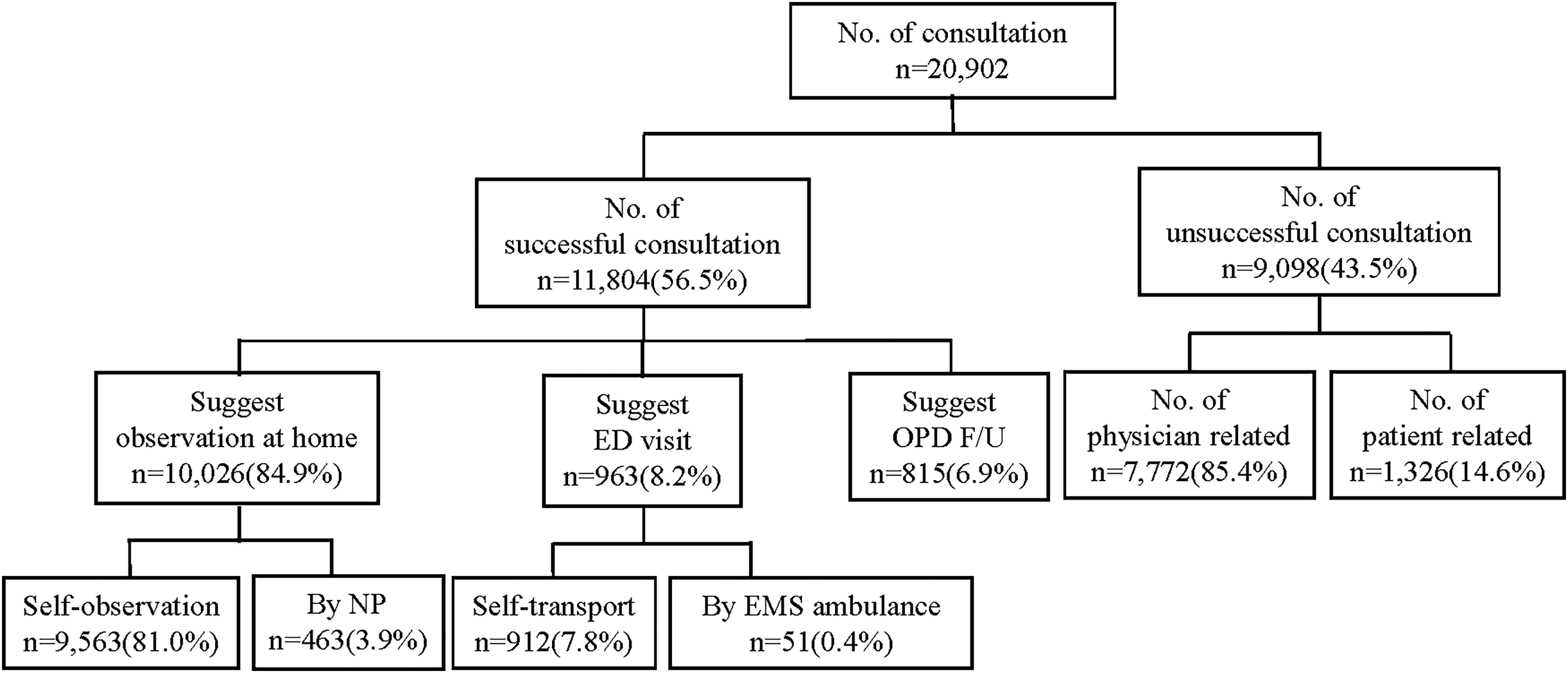
Cases with consultation requests and suggestions after consultation.
The course of action recommended by emergency physicians during SCs is depicted in Figure 2. Among the recommendations provided during SCs, 84.9% were for observation at home, of which 3.9% (463 of 11,804) were for NP follow-up and 81.0% (9563 of 11,804) were for self-observation; 8.2% (963 of 11,804) were for ED visits, of which 0.4% (51 of 11,804) were initiated by EMSs and 7.8% (912 of 11,804) were self-transport visits to an ED. Follow-up at the end of the quarantine period or through telemedicine was recommended for 6.9% of the consultations (815 of 11,804). Among the patients seeking consultations, 18,685 (89.4%) had indicated a chief complaint before the consultation. The three most prevalent reasons for seeking consultation were throat and nasal symptoms (26.7%), fever (22.1%), and request for a prescription (20.7%) (Figure 3).

Reasons for seeking consultation.
Consultation request time, waiting time, age, and place of residence were all significantly associated with consultation success (Table 1). The results of a multivariate logistic regression analysis (Table 2) indicated that SCs were more likely to occur during the evening shift than during the day shift (odds ratio [OR] = 1.5; 95% confidence interval [CI]: 1.4–1.6) and were least likely to occur during the night shift (OR = 0.8; 95% CI: 0.7–0.8). Regarding waiting time, a physician consultation was least likely to be successful when the waiting time were “10–30 min” (P < 0.001) and “>30 min.” (P < 0.001). Regarding age, the age group of 18–45 years was the least likely to have SCs. Finally, regarding place of residence, urban areas were associated with a lower likelihood of SC than were nonurban areas (OR = 0.8; 95% CI: 0.8–0.9).
Descriptive statistics of SCs and USCs.
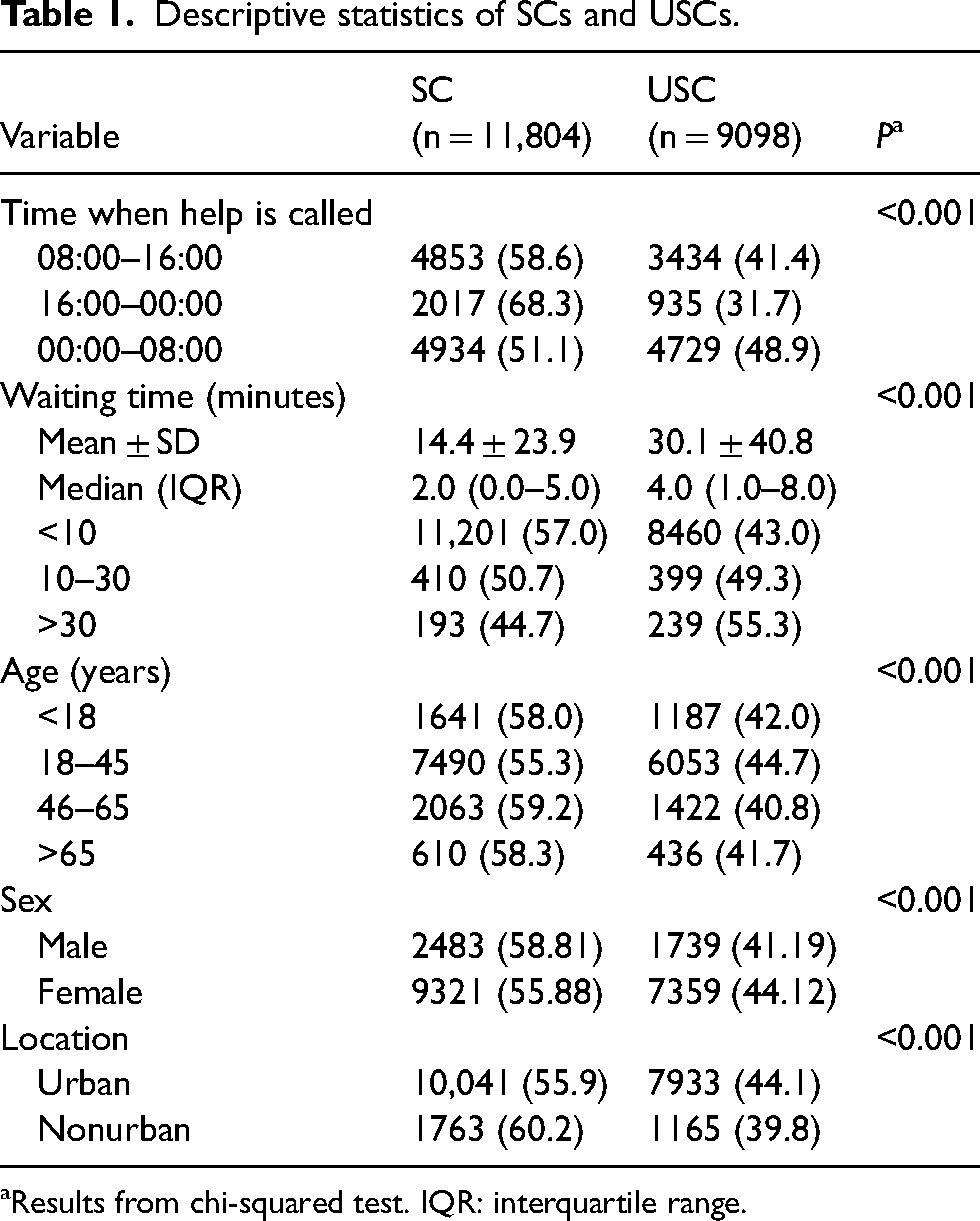
Results from chi-squared test. IQR: interquartile range.
Logistic regression analysis of consultation success.

In the analysis of recommendations for direct ED visits, consultation request time and age were significantly associated with “suggest ED visit” (Table 3). Waiting time, place of residence, skin rash, and ≥3 complaints were not significantly associated with “suggest ED visit.” A multivariate logistic regression (Table 4) revealed that the night shift had a lower proportion of patients with recommended direct ED visits than did the day shift (OR = 0.8; 95% CI: 0.7–0.9). The age group of 18–45 years had a higher rate of ED visits than did the other age groups. Patients with cardiovascular symptoms, shortness of breath, gastrointestinal symptoms, neurological symptoms, and fever had a higher chance of direct ED visits than did patients with other symptoms (P < 0.001). By contrast, patients with cough, requests for prescriptions, and throat and nasal symptoms were less likely to be recommended for direct ED visits than were patients with other symptoms (P < 0.001).
Descriptive statistics for ED and non-ED cases.
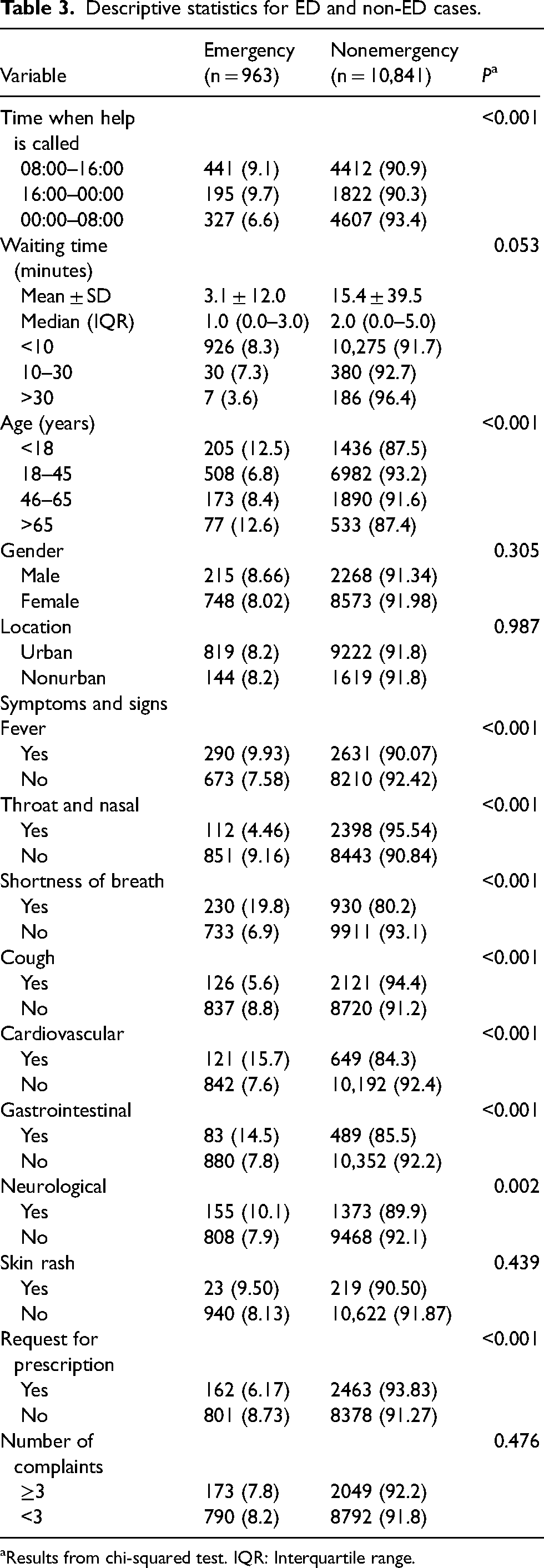
Results from chi-squared test. IQR: Interquartile range.
Logistic regression results for ED cases.

Discussion
The NEMTC system is a novel, adaptable system that was designed in response to COVID-19. It uses telemedicine to mitigate the burden of the pandemic on Taiwan's health-care system. This study determined that 43.5% of NEMTC cases were unable to complete online consultations because of scheduling constraints due to only 3–5 physicians being available to handle a surge in demand in any given shift. However, only 8.2% of the analyzed patients required emergency care after consultation, with only 0.4% requiring EMS assistance. These figures indicate the valuable role played by the NEMTC system in reducing panic-driven ED visits and providing substantial support to the struggling EMSS.
In Taiwan, EMS transport is provided free of charge, and the NHI system provides convenient emergency care, enabling patients to seek treatment at any hospital.24,25 Without a prehospital triage or diversion mechanism, a large-scale outbreak can overwhelm EMSs and EDs. Therefore, a 24/7 nationwide prehospital virtual emergency response system, such as NEMTC, is necessary to reduce the burden on EMSs and EDs. In addition to emergency physicians, the NEMTC system features a nursing tracking mechanism aimed at enhancing the continuity of care and patient safety during remote monitoring. Furthermore, this mechanism establishes links to dispatch centers to optimize the allocation of EMS resources.
Although some health-care systems have established hotlines for clinicians to address COVID-19-related questions and to alleviate ED burdens, 26 few have explored the integration of telemedicine into disaster response systems by using a team-based approach involving emergency medicine specialists, NPs, and EMSs. In the NEMTC system, only 8.2% of SC patients required emergency care, with only 0.4% requiring EMS transport. Patients seeking remote consultations primarily presented with mild respiratory symptoms, fever, and cough, which can severely hamper the operation of EDs. During the COVID-19 pandemic, even emergency medical personnel who had been diagnosed and were required to quarantine could still participate in the NEMTC; this factor played a vital role in alleviating the potential impact of a shortage of emergency staff during the pandemic. In summary, the NEMTC system effectively alleviates the burden on EMSs and EDs by redirecting mild cases, thereby preventing the overuse of EMS resources and enhancing the quality of care for patients.
This study demonstrated that almost half of the analyzed patients (43.5%) were unable to receive consultations during the pandemic. Although factors such as consultation request time, waiting time, age, and area of residence significantly affected the success of consultations, the main factor affecting this success was the insufficient number of physicians to handle the sudden surge in patient demand. During the peak of the pandemic in Taiwan, many patients registered on the NEMTC app, with more than 600 consultations per day on average (ranging from 360 to 2613) being recorded between May 5 and May 25, 2022. If the waiting time for a physician consultation was greater than 10 min, the consultation was relatively unlikely to be successful (P < 0.001), likely because if the waiting time exceeded 10 min, the consultee may terminate the call, abandon the consultation, or attempt to reconnect. The overall demand for consultations could not be met, resulting in a “virtual ED overcrowding” phenomenon, where many patients chose to cancel their consultation requests because of long wait times, resulting in a situation where many were not examined by medical personnel. To prevent such a scenario in future pandemics, this article recommends that health-care systems establish a larger pool of emergency physicians to meet any sudden increase in consultation demand.
In this study, certain factors affected the decisions of emergency physicians to recommend patients for ED visits. For example, a lower proportion of patients was recommended to visit EDs during the night shift than during the day shift, indicating that NEMTC physicians consider patient convenience when making recommendations. Regarding age, patients aged under 18 years and those aged over 46 years had the highest rates of ED visit recommendations, indicating that physicians may be more willing to recommend older and younger patients for ED visits. Additionally, if a patient had complained of a condition with a high risk of deterioration, such as cardiovascular symptoms or shortness of breath, physicians were more likely to recommend emergency care. Because of initial regulatory restrictions, we currently lack follow-up details regarding the analyzed patients. However, with the future liberalization of the government's policy, the NEMTC system could be linked to Taiwan's NHI database; such a linkage would enable us to understand the actual outcomes of patients after consultation and thus would facilitate more effective analyses.
In the NEMTC system, NPs can assist in patient tracking through the nursing tracking mechanism for the potential reduction of medical errors. One drawback of telemedicine is its relatively high risk of medical errors due to a lack of face-to-face contact, especially for children and older adults, whose conditions can change rapidly and for whom symptoms may be difficult to express.23,27 Emergency physicians are particularly concerned about high-risk complaints that could harm patients or result in disputes. 28 The nursing tracking mechanism in the NEMTC system addresses this problem by enhancing continuity of care and increasing the likelihood of physicians recommending home observation, which reduces the risk of harm to patients. The benefits of NP involvement in telemedicine have been documented. 29 In the present study, the role of NPs became even more significant in that NPs enable physicians to be more willing to participate in telemedicine without concern over the potential medical risks associated with it.
The NEMTC initiative emerged as a crucial measure implemented by the Taiwanese government in response to the COVID-19 pandemic. Although the number of infections in Taiwan in 2022 remained relatively high until the end of that year, congestion in EDs began to alleviate by July 2022. In summary, the NEMTC established in Taiwan is a novel and effective system that uses telemedicine to reduce the burden on EMSs and EDs during pandemics. This telemedicine system implemented during the COVID-19 crisis could be used as a model for future emergency telemedicine operations.30,31 Furthermore, the ongoing optimization of this model, including the establishment of a medical personnel database, holds potential for the model to become a standard contingency model for future outbreak scenarios. It could even be utilized to alleviate ED congestion caused by patients with mild symptoms and to reduce the incidence of unnecessary hospitalizations. Moreover, in July 2023, Taiwan's government, drawing from the experience of this outbreak, began to amend related laws in preparation to significantly expand the scope of telemedicine applications. The government has also started planning initiatives to combine telemedicine with home health care in order to enable suitable patients to receive telemedicine services either in long-term care facilities or at home.
Limitations
Because of personal data privacy and multi-institutional execution, this study could not track the final conditions of patients after consultation applications or patients with incomplete consultations. The emergency physicians, NPs, county and city EMSs, and public registration platforms that joined this program did so voluntarily; however, the users were limited to those who were able to operate mobile phones and video platforms, potentially leading to selection bias. Additionally, 9098 (43.5%) of the analyzed consultation cases were unsuccessful; however, the reasons for this lack of success could not be explored in depth because of platform and privacy restrictions. Finally, this consultation platform and study analyzed only information from Taiwan's population and health-care system during the COVID-19 pandemic; whether our findings are applicable to other countries requires further research and data from other countries.
Footnotes
Acknowledgements
We thank the TMOHW for providing funding for this program (MOHW-M1201272). We also thank the TSEM for providing assistance. This manuscript was edited by Wallace Academic Editing.
Authorship
On behalf of my co-authors, I attest that each of us has significantly contributed to this study, including its conception and design, data acquisition, analysis, and interpretation, as well as the drafting and revision of the present manuscript and all important intellectual content therein. Additionally, we all have provided final approval of the version of this manuscript that is being submitted. We confirm that we have met the specific authorship requirements set forth by the International Committee of Medical Journal Editors. The title page acknowledges the support of Wallace Academic Editing in providing professional editing assistance; however, no one apart from the named authors has had any control over the data, analysis, interpretation, or wording and conclusions presented in this manuscript.
Author contributions
All the authors contributed significantly to this study, and all are in agreement with the content of this manuscript. KWC contributed to methodology, software, manuscript composition (original draft), and investigation. HMS contributed to validation, resources, and supervision. CJN contributed to formal analysis, investigation, and data curation. CLS contributed to resources and project administration. WKC contributed to conception, methodology, manuscript composition (review and editing), and supervision.
Declaration of conflicting interests
The author(s) declared no potential conflicts of interest with respect to the research, authorship, and/or publication of this article.
Funding
The author(s) disclosed receipt of the following financial support for the research, authorship, and/or publication of this article: This study was supported in part by the TMOHW (MOHW-M1201272).
Ethical approval
The Institutional Review Board of China Medical University approved this study (CMUH112-REC2-162).

Data availability statement
The datasets generated and analyzed in this study are not publicly available because of the non-disclosure agreement of the Institutional Review Board. These datasets are available from the corresponding author upon request.