



Abstract
Objective
To evaluate the clinical outcomes of a remote mental health program for managing anxiety and depression, primarily using asynchronous digital communication.
Methods
This retrospective cohort study examined U.S. adults seeking remote care for anxiety and depression from January 2021 to May 2022. The program involves clinician-led assessment, patient education, medication management, and ongoing monitoring, primarily via text. Anxiety and depression were measured using Patient Health Questionnaire (PHQ-9) and Generalized Anxiety Disorder (GAD-7) scores. Outcomes examined were changes in scores, 50% score improvement rate, and remission rate (score <5) at 1, 3, and 6 months.
Results
During the period evaluated, 11,844 program participants met the inclusion criteria. Most were female (n = 8328, 70.3%); their age ranged from 18–82 years (median 31 years). At baseline, median PHQ-9 and GAD-7 scores were 13 (IQR 9–17); 67% and 69% met score criteria for depression and anxiety, respectively. Most participants (80%) were prescribed a selective serotonin reuptake inhibitor (SSRI). By one month, average PHQ-9 and GAD-7 scores decreased significantly by 9.2 and 9.1 points (both p < .01). At 1-month follow-up, the 50% score improvement rate was 66% for PHQ-9 and 69% GAD-7 (p < .01). Scores continued to decrease with follow-up. At 3 months, over half achieved remission (percent [95% CI]: 52% [51–54] for anxiety, 53% [52–55] for depression). Similar improvement was observed at 6 months and in sensitivity analyses accounting for loss to follow-up.
Conclusions
Use of a remote mental health program with digital tools was associated with significant clinical improvement in anxiety and depression. Challenges remain in maintaining patient engagement and ensuring appropriate care quality monitoring in digital mental health programs. Additional research comparing remote digital care to traditional in-person models is warranted. Studies should examine long-term outcomes, optimal care protocols, and the challenges to integrating these programs into existing healthcare systems and ensuring equitable access.
Background
Anxiety and depression are two of the most pervasive mental health disorders, with approximately 20% of individuals in the U.S. reporting symptoms.1,2 However, less than half of people with mental illness in the US receive appropriate care,3,4 due to barriers, like cost, stigma, and access.3,5
The evolution of digital health and telehealth presents a paradigm shift in mental health care. These technological advancements promise both better accessibility as well as increased affordability and personalization of treatments. A meta-analysis by Gan et al. (2022) found that digital health interventions for mental health were not only effective but also increased patient engagement and adherence to treatment. 6 Furthermore, the recent growth in smartphone ownership and internet accessibility globally has further emphasized the potential for digital health solutions. Accumulating research suggests that mobile health apps have the potential to revolutionize mental health care by offering on-demand support and real-time monitoring. 7
A wide range of telemedicine and digital tools have been developed and studied to overcome barriers in delivering supportive treatment of mental health conditions.8–15 These efforts have included video-conferencing therapy, web- and app-based self-management interventions, medication adherence programs, and virtual reality simulations. Overall, modalities showed promising results in terms of potential utility and improved outcomes compared to no treatment.9,11 However, most were small and examined single self-help tools rather than a full-stack digital platform approach.8,10 Furthermore, while the provision of telemedicine and digital health products by technology companies has seen a dramatic rise, several reports have highlighted the relative paucity of evidence and peer-reviewed research accompanying this trend.16,17
This study aims to address existing gaps, by analyzing the experience of a large cohort of patients treated in an integrated virtual clinic in which digital tools for initial intake, assessment, and patient monitoring augment care by certified clinicians. The study describes patient characteristics and interventions, and evaluates anxiety and depression outcomes in this real-world cohort.
Methods
Setting
This retrospective cohort study analyzed patients treated by the K Health mental health program from January 2021 to May 2022. The objective was to evaluate patient characteristics, interventions, and anxiety and depression outcomes. The mental health intervention was delivered fully remotely, with all care and communication between patients and providers occurring virtually using web, mobile app, messaging, and text. There were no in-person or face-to-face visits. Digital communication was primarily asynchronous (e.g. text messages); however, in a small minority of cases synchronous communication was utilized at the provider's discretion (e.g. phone or video calls).
The data for this study are sourced from K Health, a technology company that operates an integrated digital platform and virtual clinic providing primary and mental healthcare. Digital tools assist providers by collecting initial intake, providing the patient with general health information related to reported symptoms, and showing providers a list of potential conditions related to reported symptoms. These tools were developed through partnerships with Mayo Clinic and Maccabi Health Services (MHS), as reported in previous publications.18–20 The virtual clinic delivers services like acute care, chronic disease management, and mental healthcare that can be appropriately managed remotely.
Participants and procedures
This study focuses on the mental health program for anxiety and depression deemed appropriate for remote management. Enrollment in this program is offered to patients 18 and older with no disqualifying, after they are evaluated by a certified provider, diagnosed with depression or anxiety, and are judged by the provider to be at low risk of self-harm, based on structured questionnaires and the interview. The risk-based exclusion criteria include individuals with a history of substance abuse, hospitalization for mental health reasons, or other mental health conditions (such as bipolar disorder, and schizophrenia), as well as those with a history of suicide attempts or self-harm, and those experiencing suicidal thoughts or thoughts of hurting others. During the initial visit, patients are offered resources for cognitive behavioral therapy (CBT)-based education and begin medication in a shared decision-making process.
The main treatment is medications, with prescribing based on the patient's past and current treatment experiences, current symptoms, medical history and concomitant medications, and the patient's concerns and preferences in an initial telehealth visit. Medications prescribed within the framework of this program include selective serotonin reuptake inhibitors (SSRIs) (sertraline, fluoxetine, escitalopram, citalopram, and paroxetine), serotonin and norepinephrine reuptake inhibitors (venlafaxine and duloxetine), bupropion sustained release, mirtazapine, hydroxyzine, and buspirone. Patients can choose to have the prescriptions filled and mailed to them by the K Health pharmacy. Due to their associated risks, benzodiazepines and other scheduled substances are never prescribed.
Enrolled patients have scheduled monthly follow-up telehealth visits. These visits begin with an automated protocolized assessment of anxiety and depression using the Patient Health Questionnaire (PHQ-9) and the Generalized Anxiety Disorder (GAD-7) questionnaires, and continue with a conversation with a clinician for continued monitoring of depression and anxiety, evaluation of treatment efficacy and medication adverse effects, and treatment modification as needed. Patients communicate with clinicians primarily via text on the K-Health platform. Phone and video chats are conducted when legally required (such as to confirm the patient's identity) and when circumstances warrant it, according to the clinician's discretion. Between meetings, prompts via email and app notifications remind the patients of scheduled appointments and prescription refills and invite them to alert the clinician if they are experiencing distress or have concerns, questions, and adverse effects.
To ensure the clinical quality of care, a dedicated team of clinicians monitors the program for adherence to enrollment criteria, appropriate prescribing, and managing patients in distress. Patients at risk of self-harm were screened by a combination of structured questionnaires informed by widely studied tools (including the Columbia-Suicide Severity Rating Scale and the Mood Disorder Questionnaire),21–23 and clinician interview and evaluation. The clinicians, at their discretion, can investigate any patient response and can reach out to the patient via telephone or video. For patients who report thoughts of self-harm in PHQ-9, clinicians follow a modified version of the Columbia protocol to assess patient safety. Patients deemed unsuitable for remote care are referred to in-person care, and emergency cases are proactively managed using established safety protocols.
The study retrospectively analyzes a sample of all adult patients who enrolled in the mental health program and returned to the first follow-up visit, 1 month after initial intake. Analyses of attrition use this full sample. The main analysis further focuses on patients with data from at least one additional follow-up visit between 3 and 6 months after initial intake. The study was reviewed and approved by the Tel-Aviv University ethics committee (0005190-1). As the study involves a retrospective analysis of routinely collected deidentified data, the need to obtain informed consent was waived. K Health is a Health Insurance Portability and Accountability Act (HIPAA) and General Data Protection Regulation (GDPR) compliant health service. Encrypted transportation and storage are used at all stages of data management.
Variables and outcome measures
Deidentified data on the characteristics of patients were collected, including age, sex, medications prescribed, and depression and anxiety severity at baseline and over follow-up, measured in months from the initial intake. We deidentified data by removing the 18 data elements as described in the HIPAA Security Rule.
Depression severity was measured using the PHQ-9 score24–27 and anxiety severity was measured using the GAD-7 score.26,28,29 Patients filled out these questionnaires prior to enrollment in the program, and on a monthly basis, prior to each scheduled virtual visit. Participants reporting thoughts of self-harm are managed by clinicians with referral to emergency medical services as needed.
The efficacy of the program in terms of alleviating depression and anxiety was evaluated using the following continuous and discrete measures of individual severity, measured at 1-, 3-, and 6-month follow-up:
Average scores at follow-up versus baseline were compared using a paired t-test. The percentage of patients who had a decline greater than or equal to 50% in their total score, relative to their program baseline. The percentage of participants achieving “remission,” defined as a PHQ-9 score of <5 and a GAD-7 score of <5.
Analysis
Analyses included baseline descriptives of participant characteristics using univariate summary statistics, and efficacy measures of the program at 1-, 3-, and 6-month follow-up using continuous and discrete measures, with 3-month follow-up used as the main outcome.
Baseline descriptive statistics included the number and proportion of patients by age and sex, the medication prescribed to manage depression and anxiety, and baseline depression (PHQ-9) and anxiety (GAD-7) scores. Continuous measures, including age, PHQ-9, and GAD-7 scores, were presented as median with interquartile range or using discrete categories. Discrete categories for PHQ-9 and GAD-7 followed accepted cut points representing “mild,” “moderate,” and “severe” symptoms. Results were rounded to the second decimal place; 95% confidence intervals were calculated for all proportion measures.
Finally, group-level score dynamics were plotted. First, for each initial severity group, the average score was plotted over time, with 95% confidence intervals estimated using nonparametric bootstrapping. Second, the 3-month change in the distribution of severity categories by initial severity group was plotted using a Sankey diagram.
Analyses of response were performed separately for depression and anxiety, among participants with a severity score >9.
Drop-out from treatment of mental health conditions is common and can be related to treatment success, thereby potentially biasing estimated treatment effects. This possibility was evaluated by (a) exploring the relationship between sample attrition and baseline condition severity; (b) conducting sensitivity analyses which included users without measurement of depression or anxiety at 3- and 6-month follow-up. Sensitivity analyses utilized K-nearest neighbor (KNN) imputation based on age, sex, and baseline severity of depression and anxiety. Imputation was conducted using the “KNNImputer” method in the Scikit-learn library. Analyses and visualizations were conducted in python using packages “statsmodels” 0.12.2, “seaborn 0.11.2,” sklearn 1.0.2, and lifelines 0.27.3.
Results
During the period of the study, 3,710 of those who applied for enrollment in the program did not meet inclusion criteria and were referred out, and 11,844 were enrolled as program participants and managed remotely via the digital platform.
Over half of the participants (54%) had 3-month follow-up scores in the study period. Most participants were female (n = 8328, 70.3%). Participants’ age ranged from 18 to 82 years with a median age of 31 years. At baseline, median PHQ-9 and GAD-7 scores were 13 (IQR 9–17), such that 67% met score criteria for moderate or greater depression and 69% for anxiety (scores ≥ 10). During the follow-up period, most participants were prescribed an SSRI (N = 9397, 80%) (Table 1).
Cohort characteristics of mental health program participants (N = 11,844).
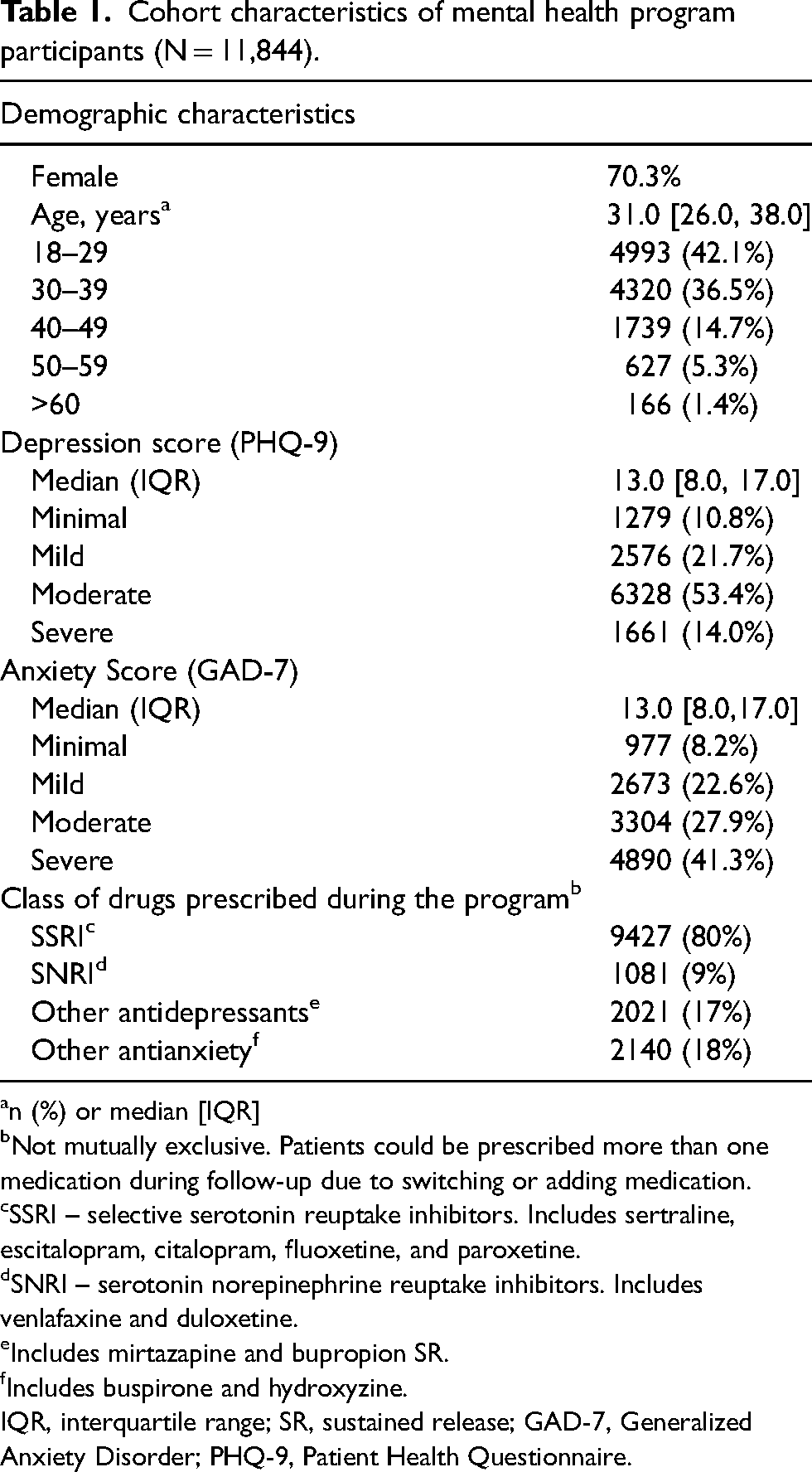
an (%) or median [IQR]
bNot mutually exclusive. Patients could be prescribed more than one medication during follow-up due to switching or adding medication.
cSSRI – selective serotonin reuptake inhibitors. Includes sertraline, escitalopram, citalopram, fluoxetine, and paroxetine.
dSNRI – serotonin norepinephrine reuptake inhibitors. Includes venlafaxine and duloxetine.
eIncludes mirtazapine and bupropion SR.
fIncludes buspirone and hydroxyzine.
IQR, interquartile range; SR, sustained release; GAD-7, Generalized Anxiety Disorder; PHQ-9, Patient Health Questionnaire.
Patient response measures
Of all participants, 7990 had a moderate or severe baseline depression score at baseline. At the 1-month follow-up, PHQ-9 score decreased by 9.15 points on average (p < .01), 66% had a 50% or greater reduction in their baseline score, and 42% reached scores indicating minimal depression (PHQ9 < 5). Among the participants who at baseline had moderate or severe depression, 4360 had a 3-month follow-up (54.5%). At 3-month follow-up, PHQ-9 score decreased from baseline by 10.59 points on average (p < .01), 77% had a 50% or greater reduction in their baseline PHQ-9 score, and 53% reached scores indicating minimal depression (PHQ9 < 5).
Among participants who at baseline had moderate or severe anxiety (N = 8197), the average GAD-7 score decreased by 9.10 (p < .01) and 10.38 points (p < .01) at 1-month and 3-month follow-up, respectively (Table 2); over the same periods, 69% and 79%, respectively, had a 50% or greater improvement in their score; and 42% and 52% and reached scores indicating minimal anxiety (GAD7 < 5).
Clinical improvement among patients with moderate-to-severe depression (PHQ-9 ≥ 10) and anxiety (GAD-7 ≥ 10) at baseline.
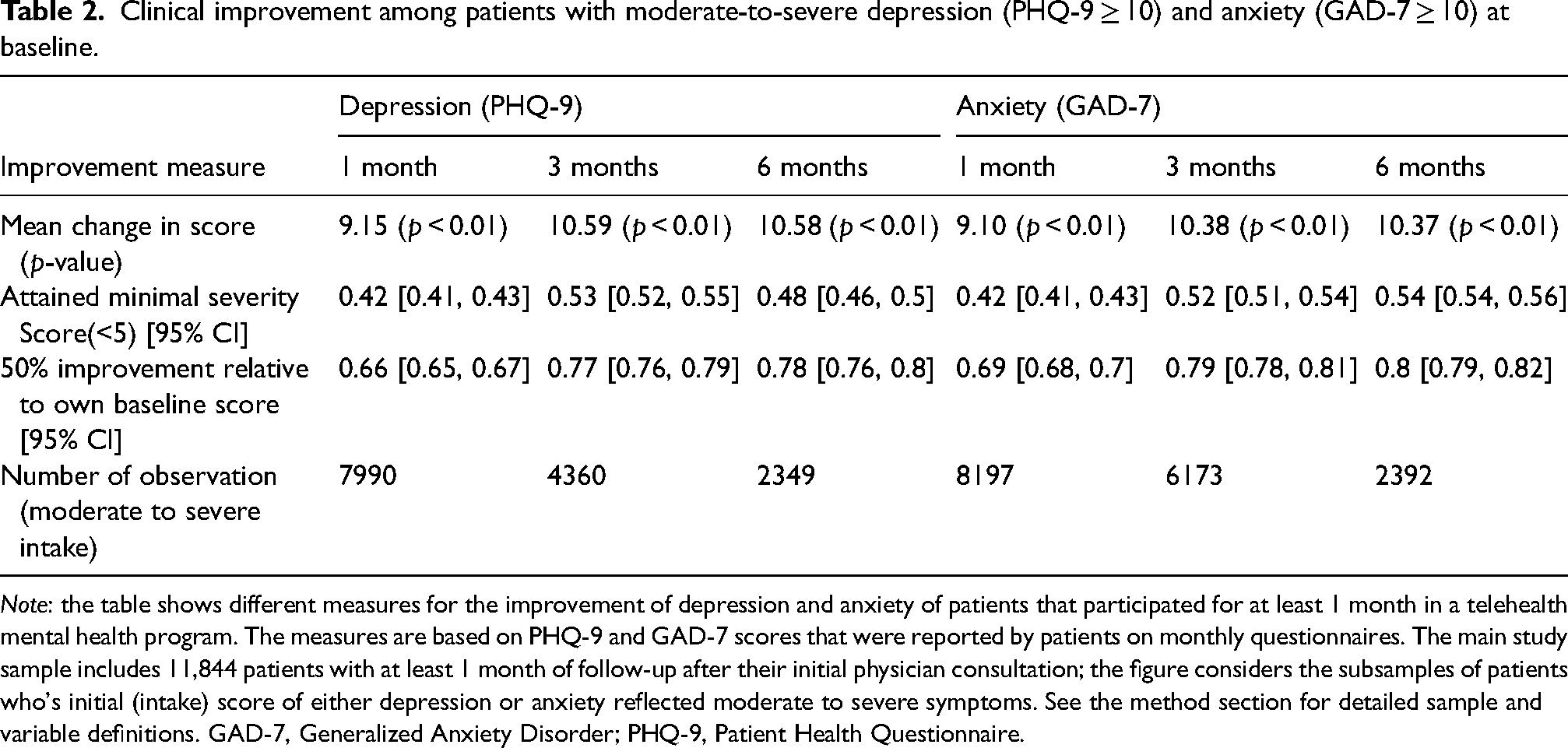
Note: the table shows different measures for the improvement of depression and anxiety of patients that participated for at least 1 month in a telehealth mental health program. The measures are based on PHQ-9 and GAD-7 scores that were reported by patients on monthly questionnaires. The main study sample includes 11,844 patients with at least 1 month of follow-up after their initial physician consultation; the figure considers the subsamples of patients who's initial (intake) score of either depression or anxiety reflected moderate to severe symptoms. See the method section for detailed sample and variable definitions. GAD-7, Generalized Anxiety Disorder; PHQ-9, Patient Health Questionnaire.
Analysis of loss to follow-up showed no relation between depression or anxiety severity and loss to follow-up (Supplemental Figure 1). Likewise, results of sensitivity analyses including all participants using KNN were entirely consistent with the main analysis (Supplemental Table 1).
Cohort population across time
Cohort-level depression and anxiety improved at 1 month and persisted throughout follow-up (Figure 1). The absolute decline in symptom scores was the largest for participants with higher scores at baseline. This decrease in depression and anxiety severity could be seen in the shift in the cohort distribution of depression and anxiety as well. While 41% of anxiety patients suffered from severe symptoms at baseline, and 13% suffered from severe depression, at 3 months, this was reduced to less than 1% and 3% for depression and anxiety, respectively (p < 0.01) (Figure 2 and Supplement Table 2).
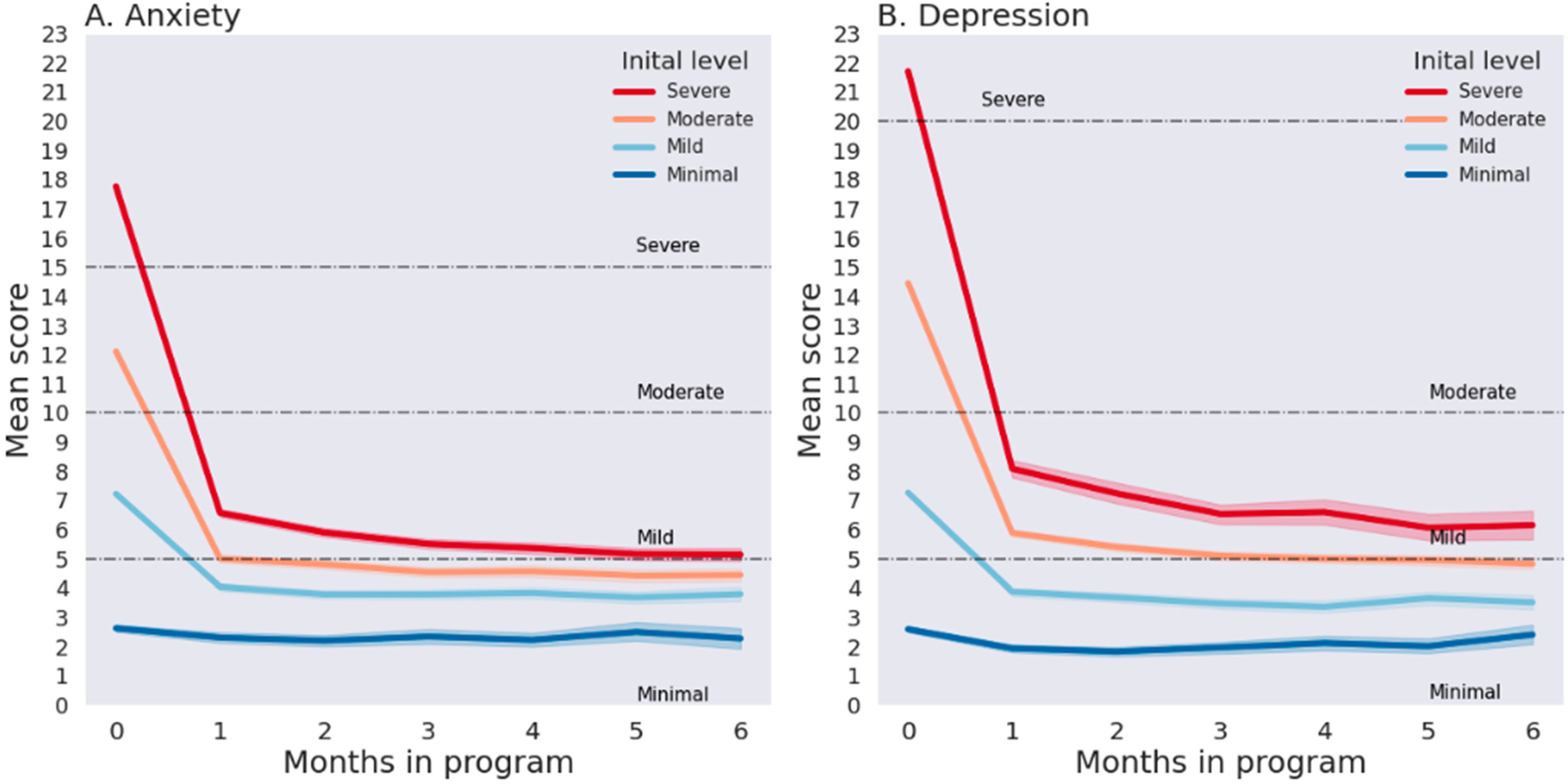
Average anxiety (GAD-7) and depression (PHQ-9) severity scores over time, by initial level at intake. Note: The figure shows the average anxiety (GAD-7) and depression (PHQ-9) scores as a function of time in the program. Score cutoffs used to define discrete severity categories are marked by dash-dotted lines. Each solid line represents the mean score of a subset of participants with a different initial severity category of anxiety or depression (marked by line color). Shaded bands show 95% confidence intervals for the mean. The sample includes 11,844 participants of the program that met the inclusion criteria. Each month's measurements include patients that were still observed in that month (See Supplemental Figure 1 for information of patient retention). GAD-7, Generalized Anxiety Disorder; PHQ-9, Patient Health Questionnaire.
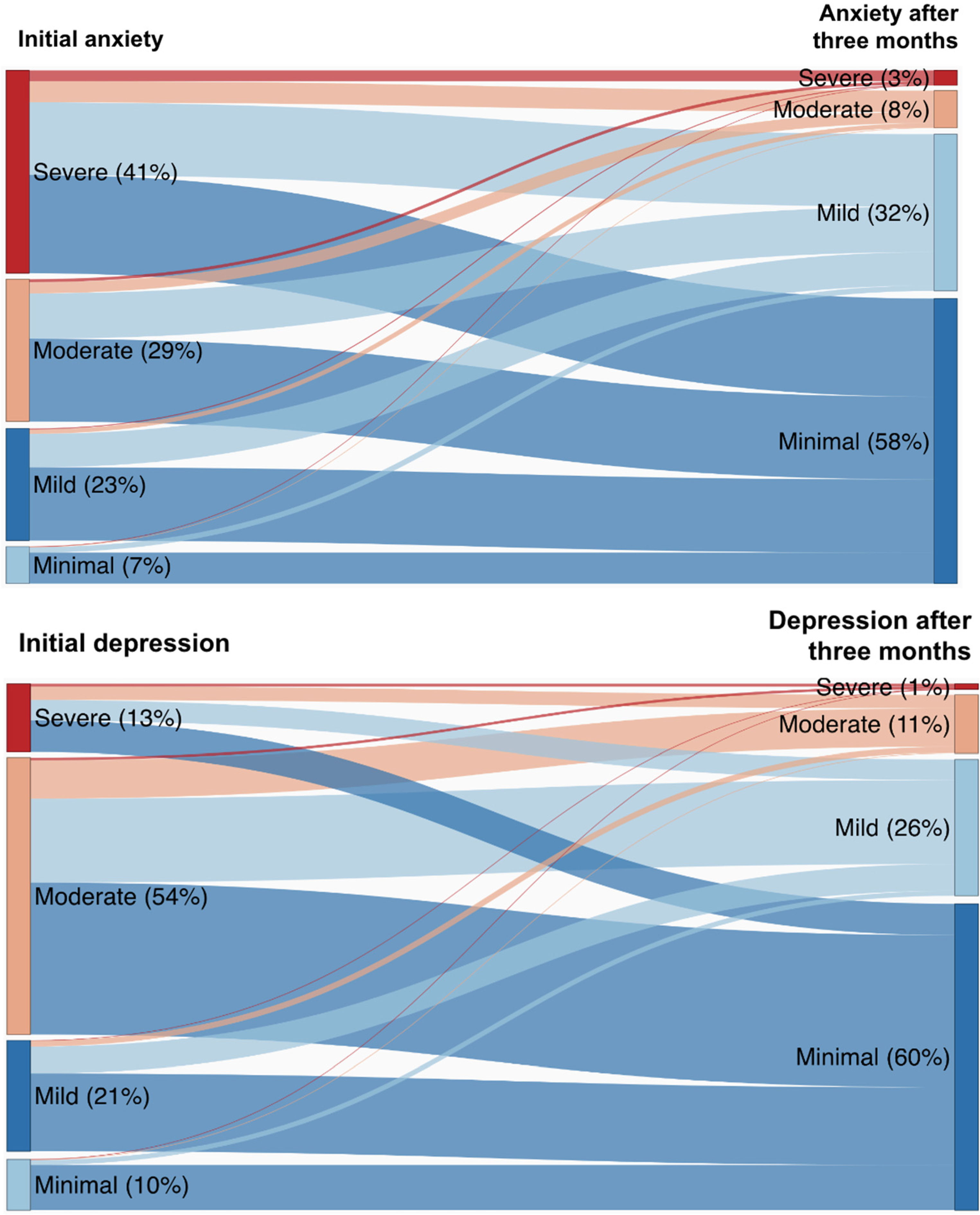
Severity of anxiety and depression at baseline and a 3-month follow-up. Note: The figure shows sanky flow diagrams that visualize the change in severity of anxiety and depression within 3 months, for patients under treatment for at least 3 months. The left colored bars show the initial shares of patients with minimal, mild, moderate, and severe scores, measured during intake. The right colored bars show the final share of patients in each category, measured after 3 months. The colored bands show the fractions of patients who transitioned between each initial and final severity level. These transition bands are colored based on the final severity level. Tabulated data underlying the diagram with corresponding confidence intervals are detailed in Supplementary Table 2.
Discussion
Key findings
Our study, involving a large cohort of over 11,000 patients, demonstrates significant clinical improvement in anxiety and depression symptoms when managed through a remote mental health program equipped with digital tools. Notably, over half of the participants achieved remission within 3 months, as measured by validated scale scores. These improvements were consistent across different levels of baseline severity, highlighting the program's broad applicability.
Comparison to literature
Both the initial prescription pattern and the improvement patterns observed are similar to those observed in general U.S. practice. The treatment modalities closely align with established U.S. prescribing patterns, with the exception of benzodiazepines, which are purposeful excluded due to associated risks and replaced by safer alternatives.30–32 This congruence underscores the applicability of remote care in adhering to established clinical guidelines. The reported treatment efficacy is also comparable with previous findings from other programs, in-person and remote. For example, collaborative care programs within the Mayo Clinic reported 50–60% of participants achieving remission at 3 months, while a recent telemental health study indicated a 44.7% remission rate in PHQ-9 or GAD-7 by 12 weeks.33–35 Results also resonate with other telepsychiatry modalities, such as internet-based cognitive behavioral therapy (iCBT) which were also found as effective as their face-to-face counterparts for treating anxiety and mood disorders. 36
Implications
Remote treatment has the potential to overcome barriers to access to mental health, such as geographical constraints and wait times.3,4,37 Indeed, a recent review on telepsychiatry in rural areas found benefits including high patient satisfaction, reduced costs, and enhanced healthcare access. 38 However, despite the recent rapid growth in the availability of remote and digital care solutions by technology companies, the evidence documenting the procedures and outcomes of such care is limited.16,17,39 Our study reduces this gap by providing substantial evidence for the efficacy of remote evaluation, monitoring, and management of depression and anxiety in a large cohort of U.S. adults within a virtual clinic setting.
Challenges and broader perspective
Despite the potential of remote and digital care solutions, they face challenges in terms of integration into existing healthcare systems and in potentially unequal accessibility across social groups. The future of digital health in treating depression and anxiety lies in addressing these challenges, ensuring equitable access, and continuously improving the quality and effectiveness of these interventions.15,40
From a more global perspective, the implementation of remote and digital care solutions varies. In high-income countries, such as Germany and the United Kingdom, such services have been integrated into public health insurance models, enhancing access to mental health care. In many countries, including the US, scalable remote and digital care solutions have the potential to significantly impact population mental health due to the scarcity of mental health professionals.15,40
While our findings are promising, the implementation of such remote care models at a larger scale involves several challenges. These include ensuring equitable access across diverse populations, maintaining patient privacy and data security, and integrating these digital tools with existing healthcare systems. Additionally, the broader impact of these models on the overall healthcare landscape, patient–provider relationships, and long-term patient outcomes needs further exploration.40,41
Limitations
This study has important limitations. First, it is a retrospective observational study, which only involves descriptive evidence, not causal inference. Second, while the treatment outcomes observed in this study are comparable to previously reported treatment outcomes of collaborative care and pharmacotherapy for depression and anxiety, additional prospective research with a comparison to traditional in-person care is required to accurately assess remote digital management and compare it with standard in-person care. Third, attrition led to incomplete follow-up data, although this did not correlate with symptom severity and sensitivity analyses confirmed robustness of findings. Lastly, the analysis was confined to a 6-month follow-up period, underscoring the need for long-term outcome measurement.
Conclusion
In conclusion, this study reports the characteristics, treatment, and outcomes of a large cohort of individuals receiving remote medical care for depression and anxiety using a digital platform. A significant improvement in depression and anxiety was observed among patients managed remotely using this platform, comparable to results reported in the literature with standard treatment. The study results support the feasibility of remote management of depression and anxiety using digital tools and suggest such platforms can contribute to improving care delivery and medical research.
While a digitally enabled virtual mental health clinic shows early promise in accessible and effective treatment, open questions persist regarding real-world implementation, patient targeting, and total health system impact. As digital health solutions continue evolving, studies must continue elucidating best practices, limitations, and the appropriate balance with traditional face-to-face psychiatric care. Additional research comparing remote digital care to traditional in-person models is warranted. Studies should examine long-term outcomes, optimal care protocols, and the challenges to integrating these programs into existing healthcare systems and ensuring equitable access.
Supplemental Material
sj-docx-1-jtt-10.1177_1357633X241233788 - Supplemental material for Digitally enabled asynchronous remote medical management of anxiety and depression: A cohort study
Supplemental material, sj-docx-1-jtt-10.1177_1357633X241233788 for Digitally enabled asynchronous remote medical management of anxiety and depression: A cohort study by Amichai Perlman, Yishai Pickman, Michael Dreyfuss, Itay Manes, Peter Bak, Daniel Souroujon, Edo Paz, Jon O Ebbert, and Dan Zeltzer in Journal of Telemedicine and Telecare
Supplemental Material
sj-docx-2-jtt-10.1177_1357633X241233788 - Supplemental material for Digitally enabled asynchronous remote medical management of anxiety and depression: A cohort study
Supplemental material, sj-docx-2-jtt-10.1177_1357633X241233788 for Digitally enabled asynchronous remote medical management of anxiety and depression: A cohort study by Amichai Perlman, Yishai Pickman, Michael Dreyfuss, Itay Manes, Peter Bak, Daniel Souroujon, Edo Paz, Jon O Ebbert, and Dan Zeltzer in Journal of Telemedicine and Telecare
Supplemental Material
sj-docx-3-jtt-10.1177_1357633X241233788 - Supplemental material for Digitally enabled asynchronous remote medical management of anxiety and depression: A cohort study
Supplemental material, sj-docx-3-jtt-10.1177_1357633X241233788 for Digitally enabled asynchronous remote medical management of anxiety and depression: A cohort study by Amichai Perlman, Yishai Pickman, Michael Dreyfuss, Itay Manes, Peter Bak, Daniel Souroujon, Edo Paz, Jon O Ebbert, and Dan Zeltzer in Journal of Telemedicine and Telecare
Footnotes
Author contributions
Drs Perlman & Pickman had full access to all of the data in the study and take responsibility for the integrity of the data and the accuracy of the data analysis. Study concept and design: Perlman, Pickman, Dreyfuss, Souroujon, and Zeltzer. Acquisition, analysis, or interpretation of data: Perlman, Pickman, Dreyfuss, Manes, Bak, Paz, Ebbert, Souroujon, and Zeltzer. Drafting of the manuscript: Perlman and Pickman. Critical revision of the manuscript for important intellectual content: Perlman, Pickman, Dreyfuss, Manes, Bak, Paz, Ebbert, Souroujon, and Zeltzer. Statistical analysis: Pickman, Dreyfuss, Manes, and Bak. Supervision: Zeltzer.
Declaration of conflicting interests
The author(s) declared the following potential conflicts of interest with respect to the research, authorship, and/or publication of this article: All authors were employees or paid consultants of K Health Inc. during the development and conduct of this study.
Funding
The author(s) disclosed receipt of the following financial support for the research, authorship, and/or publication of this article: This study was sponsored by K Health Inc.

Data availability statement
Data sharing not applicable to this article as no datasets were generated or analyzed during the current study.
Supplemental material
Supplemental material for this article is available online.
References
Supplementary Material
Please find the following supplemental material available below.
For Open Access articles published under a Creative Commons License, all supplemental material carries the same license as the article it is associated with.
For non-Open Access articles published, all supplemental material carries a non-exclusive license, and permission requests for re-use of supplemental material or any part of supplemental material shall be sent directly to the copyright owner as specified in the copyright notice associated with the article.
