



Abstract
Introduction
Heart failure (HF) is associated with high incidence and mortality rates, limited physical activity, decreased quality of life, and increased healthcare expenses. Implementing a Telehealth Care (TC) HF program might address these challenges while improving patient outcomes.
Method
We conducted a retrospective observational study using electronic medical record data. The study recruited 916 participants screened with ICD-10 code I50 from 2016 to 2020. After data screening, 210 participants were divided into a remote care group and a control group using propensity score matching. Patients in the remote care group received TC visits for HF management via Bluetooth-enabled equipment, while those in the control group received typical care.
Results
Among the 587 participants, those who received TC experienced reduced rates of all-cause mortality and readmission within one year, as well as lower rates of cardiovascular disease and HF-related readmission. However, there was no significant difference in cardiovascular disease mortality compared to the control group within one year. Kaplan–Meier time-event curves showed that there were significant differences in survival analysis.
Discussion
TC significantly reduced all-cause mortality and rehospitalization rates in HF patients, highlighting its role in enhancing patient outcomes through remote monitoring. Although cardiovascular-specific mortality within one year did not exhibit significant differences, the TC group had fewer HF-related readmissions. This suggests improved disease management and self-care in this group. The findings demonstrate the potential of TC as a valuable tool in standard HF care, particularly for patients with comorbidities, such as diabetes and coronary heart disease.
Introduction
Heart failure (HF) leads to issues of high incidence and mortality rates while significantly impacting affected individuals’ quality of life and imposing substantial healthcare costs. 1 Based on the Ministry of Health and Welfare's 2022 report, Taiwan saw an 8.3% increase in deaths in 2021, 2 with individuals aged 65 and older accounting for 90% of total deaths. Similarly, in the U.S., this age group represents 86.7% of overall mortality. 3 Targeted healthcare strategies for chronic conditions in aging populations are essential in Taiwan and the US.
The five-year mortality rate has reached an alarming 50% worldwide. 4 The current incidence rate of HF in Taiwan has decreased, but the prevalence rate has increased.. 5 This underscores the significant burden of congestive HF on Taiwan's healthcare system. It also highlights the significance of post-hospitalization care in preventing readmissions and managing costs effectively.6,7
Telemonitoring for HF patients reduces all-cause and cardiovascular mortality by enabling early intervention during clinical deterioration, improving outcomes even for those recently discharged.8,9 Moreover, a reduced percentage of days lost due to unplanned cardiovascular hospital admissions is evident. 10 The rapid expansion of telehealth care (TC) and telemedicine services during the coronavirus disease 2019 (COVID-19) pandemic optimized the management and care quality of HF patients through telemonitoring. 11 Pre-existing HF significantly escalated inpatient mortality, prolonged hospital stays, and increased hospital costs among COVID-19 patients. 12 Telehealth centers can provide essential care services to detect deteriorating conditions while arranging medical visits and reducing rehospitalizations. 13 Thus, telemedicine represents a significant milestone in heart disease care. 10 Over the past three decades, technology has evolved to encompass various forms of remote monitoring, ranging from telephonic assessments to wearable devices. 14 Gathering physiological data is relatively straightforward. However, integrating continuous data into medical record systems to derive actionable information for relevant medical decisions and improve disease prognosis remains challenging. 15 A meta-analysis found that telemonitoring reduced mortality at 180 but not 365 days, with no significant effect on hospitalization rates. However, there was an increase in 180-day emergency visits. These results highlight the need for additional research on its long-term impact. 16 The TIM-HF2 trial indicated that intervention significantly reduced short-term hospitalizations and mortality; this finding did not persist post-intervention, indicating further investigation is needed regarding long-term effects. 17 This study's primary objective was to analyze the one-year all-cause mortality and rehospitalization rates in patients with and without TC while examining cardiovascular mortality and rehospitalization rates simultaneously.
Materials and methods
Study design and population
This retrospective observational study was conducted at a hospital in northern Taiwan and involved 916 participants. Data were obtained from electronic medical records based on the ward visit list from 2016 to 2020. Inpatients diagnosed with HF were enrolled, with patients automatically selected daily by the electronic medical record system. We obtained a list of ward visits based on the first three digits of the International Classification of Diseases 10th edition diagnosis codes; the ICD-10 code I50 was applied for selection.
TC nurses visited the wards to introduce TC to 916 patients based on this list. Patients who were discharged before the ward visit (n = 138), non- HF inpatients (n = 137), and patients who died within seven days after discharge (n = 54) were excluded. The actual number of patients included in the final data analysis was 587, of which 110 patients opted to receive TC services and 477 did not. We conducted propensity score matching (PSM) with the patients (1:1, n = 105:105). Patients were matched based on 11 variables, including sex, age, left ventricular ejection volume, glomerular filtration rate, and comorbidities (e.g., diabetes mellitus, chronic obstructive pulmonary disease, hypertension, dialysis, stroke, and atrial fibrillation (AF)). Patients were divided into the TC service group and control group, with 105 participants per group (total number of patients matched = 210) (Figure 1).

Screening and propensity score matching flowchart.
Telemonitoring procedures
TC nurses guided and supported post-discharge HF management through self-care education and regular telephone consultations. Participants were trained to use apps and devices, including blood pressure monitors, glucometers, oximeters, weight scales, and portable electrocardiographs, to measure physiological data. Data were collected using Bluetooth-enabled smartphones and automatically uploaded to the hospital's online database. Measurement results were integrated into patients’ medical records, enabling attending physicians and medical staff to review them promptly. Based on abnormal physiological readings or reported symptoms, nurses proactively provided personalized care recommendations through follow-up calls. Patients were encouraged to initiate consultations and seek emergency medical assistance when needed, including arranging outpatient appointments or urgent care. Regular bi-weekly follow-ups enabled nurses to monitor patients’ progress and address emerging issues. To access telemonitoring services, patients were required to use their own smartphones. The iFORA MP Health Management App, offered on a subscription basis with a monthly fee, facilitated data tracking and transmission. Subscriptions could be renewed every three months, with discounts available for extended plans. For patients who chose not to renew, access to free data upload services and consultations during outpatient visits was maintained to ensure continuity of care. This study defined telemonitoring as using technology to remotely monitor vital signs, including heart rate, blood pressure, oxygen levels, and weight. Devices such as wireless blood pressure cuffs, weight scales, and pulse oximeters transmitted data to healthcare professionals, who provided timely interventions as necessary. Relevant physiological thresholds for interventions included the following. Blood pressure: target of 130/80 mmHg, with caution for readings below 120/70 mmHg; heart rate: Below 60 b/min or above 110 b/min; weight monitoring: an increase of >1 kg in a single day or >2 kg within three days; electrocardiogram: detection of AF.18–25
Ethical review
This retrospective observational study collected all data as part of routine nursing care (Figure 2). The study complied with the institution's institutional policy. The Ethical Review Board at MacKay Memorial Hospital waived informed consent (IRB No: 23MMHIS219e).

Telehealth care service.
Data collection
Data were extracted from electronic medical records. We collected data on demographic characteristics, medical history, laboratory findings, medication records, echocardiography and electrocardiography data, rehospitalization instances, and mortality. Primary outcomes encompassed all-cause rehospitalization or mortality within one year. Secondary outcomes comprised hospitalization or mortality due to cardiovascular disease, HF-related hospitalization, and hospital stay duration.
Statistical analysis
We used Cox regression to evaluate the hazard ratio (HR) of all-cause rehospitalizations, rehospitalizations due to cardiovascular disease, rehospitalizations due to HF, cardiovascular disease mortality rates, and all-cause mortality rates between patients who received TC services and those who did not. We performed a Kaplan–Meier analysis to estimate the cumulative rehospitalization and all-cause mortality rates. A two-tailed p < 0.05 was considered to be statistically significant. SPSS Statistics version 22 was used for all statistical analyses.
Results
Baseline characteristics
This study involved 587 patients, of whom 110 (18.7%) participated in telemonitoring care. A relatively low participation rate can be primarily attributed to the affordability of telemonitoring services not fully covered by Taiwan's National Health Insurance (NHI). While the NHI offers comprehensive healthcare coverage, several patients expressed a preference for traditional in-person care; they were hesitant to incur out-of-pocket expenses for telehealth services. Moreover, a significant number of chronic disease patients already owned basic blood pressure monitors and were reluctant to invest in Bluetooth-enabled devices required for telemonitoring care. The average age of participants was 73.0 years old. There were 48.2% women, 89.4% married, 53.5% with diabetes, 60.8% with coronary artery disease, and 39.5% with AF. The one year follow-up found that 12.9% all-causes death, 51.1% were hospitalized, and 52.1% were re-hospitalized, with events averaging between 103.6 and 134.8 days (Table 1 and Figure 3). Patients (n = 587) were matched with a 1:1 ratio using PSM into groups with 105 patients each. An independent samples t-test found no significant differences in electrocardiographic parameters (corrected QT interval [Qtc], QT interval, T wave, QRS complex duration, PR interval, P wave, and heart rate) between the groups. However, echocardiographic evaluation showed significant differences in the *right ventricle, interventricular septum, and left ventricular posterior wall (Table 2).
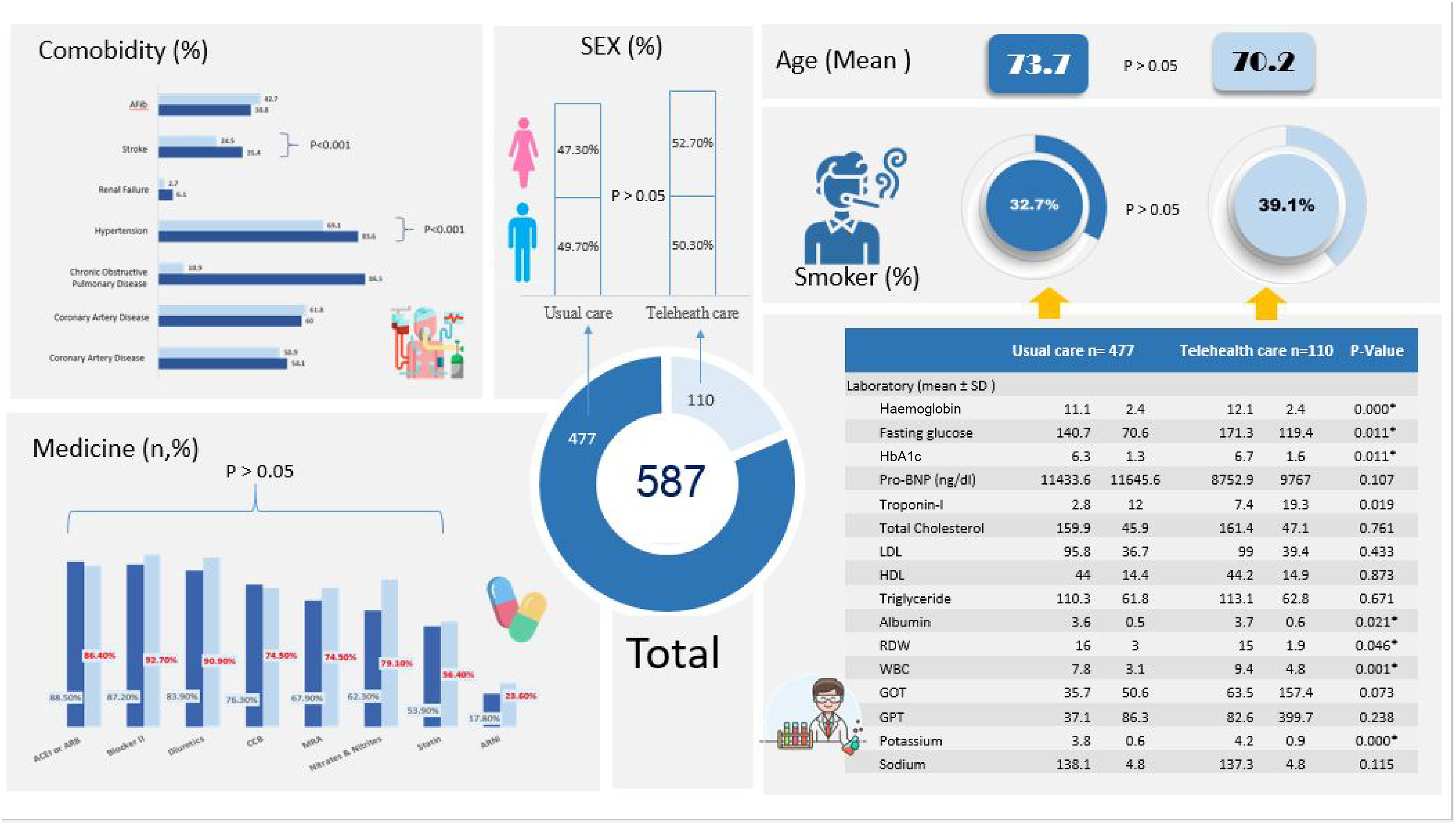
Before propensity score matching baseline data.
Before and after propensity score matching data.

DM: diabetes mellitus; CAD: coronary heart disease; COPD: chronic obstructive pulmonary disease; HTN: hypertension; HD: hemodialysis; CVA: cerebral vascular accident; AF: atrial fibrillation; EGFR: estimated glomerular filtration rate; BNP: brain natriuretic peptide; NT-Pro-BNP: N-terminal pro-brain natriuretic peptide, troponin-I; CKMB: creatine kinase-MB; BUN: blood urea nitrogen; AC: fasting blood glucose; HBA1c: glycated hemoglobin; RDW: red blood cell volume distribution width; White WBC: blood cell count; GOT: glutamic oxaloacetic transaminase; GPT: glutamic pyruvic transaminase; LDL: low-density lipoprotein-Cholesterol; HDL: high-density lipoprotein; ALK-phosphatase: alkaline phosphatase; ACEI: angiotensin converting enzyme inhibitors; ARB: angiotensin II receptor blockers; Blocker II: beta-adrenergic blocker(II); CCB: calcium channel blocking agents; MRA: mineralocorticoid receptor antagonist, ARNi.
ECG and ECHO parameters before and after propensity score matching.

ECG: electrocardiogram; Rv: right ventricle; Lvpw: left ventricular posterior wall.
Rehospitalization and mortality
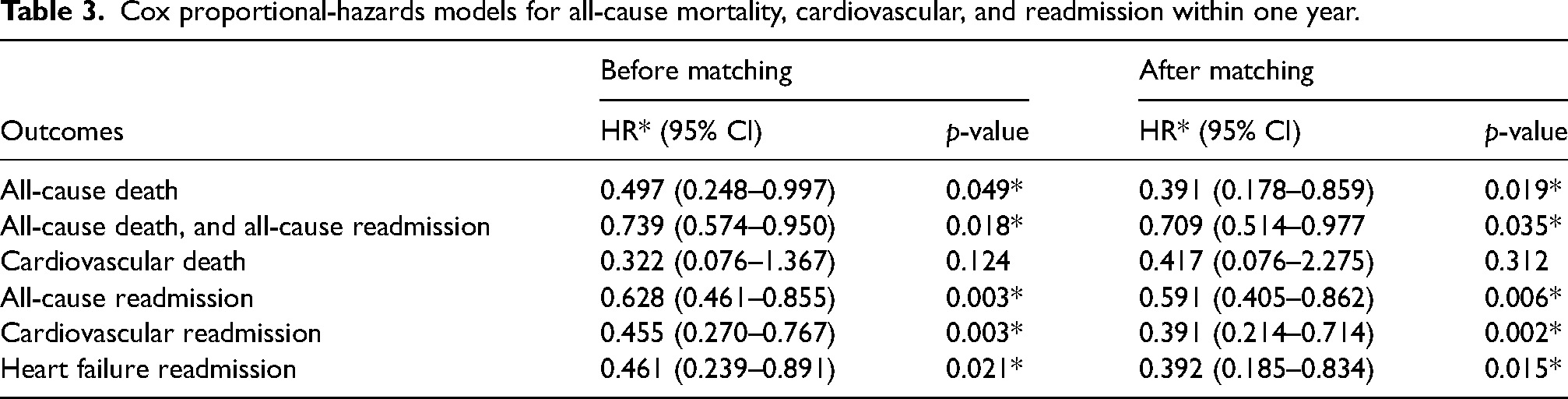
This study found significant differences in HRs for all-cause mortality within one year. The TC group exhibited an HR of 0.497, while the control group had an HR of 0.391. The telehealth group also showed lower rates of all-cause rehospitalization HR: 0.613 and mortality HR: 0.571. Regarding all-cause hospitalization, the telehealth group had an HR of 0.628 compared to the control group with an HR of 0.591. Regarding rehospitalization due to cardiovascular disease, the HRs were 0.455 for the telehealth group and 0.391 for the control group. For HF rehospitalization, the telehealth group had an HR of 0.461, while the control group had an HR of 0.392. We found no significant differences in cardiovascular mortality within one year (Table 3 and Figure 4).
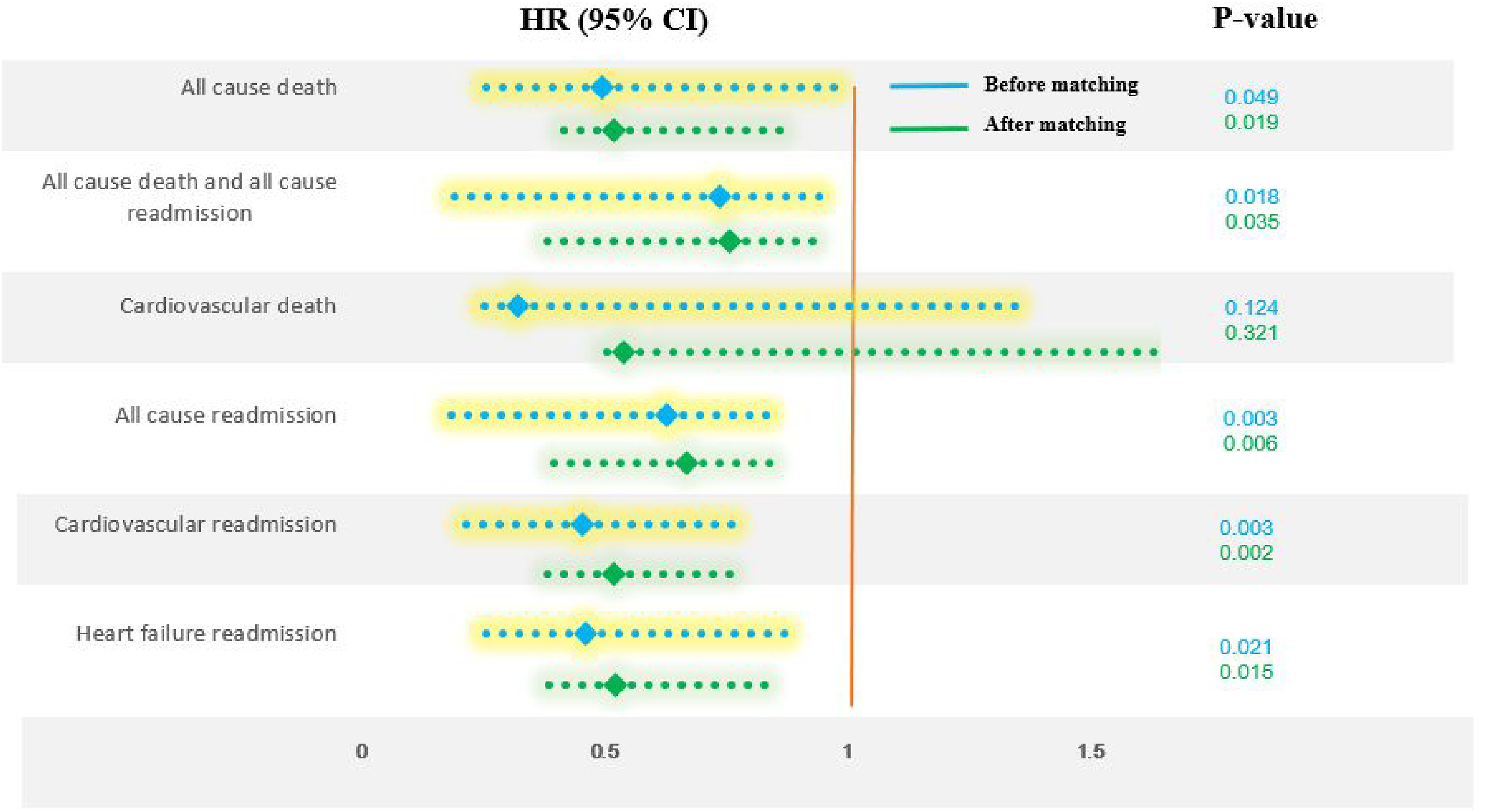
Cox proportional-hazards models for all-cause mortality, cardiovascular, and readmission within one year.
Cox proportional-hazards models for all-cause mortality, cardiovascular, and readmission within one year.
We applied PSM to the Kaplan–Meier survival analysis of 587 patients. Significant differences in all-cause mortality within one year were observed between the two groups, with log-rank p-values of 0.044 and 0.015 for the TC group. The analysis revealed significant differences in all-cause mortality and hospitalization, with log-rank p-values of 0.002 and 0.003, respectively (Figure 5).
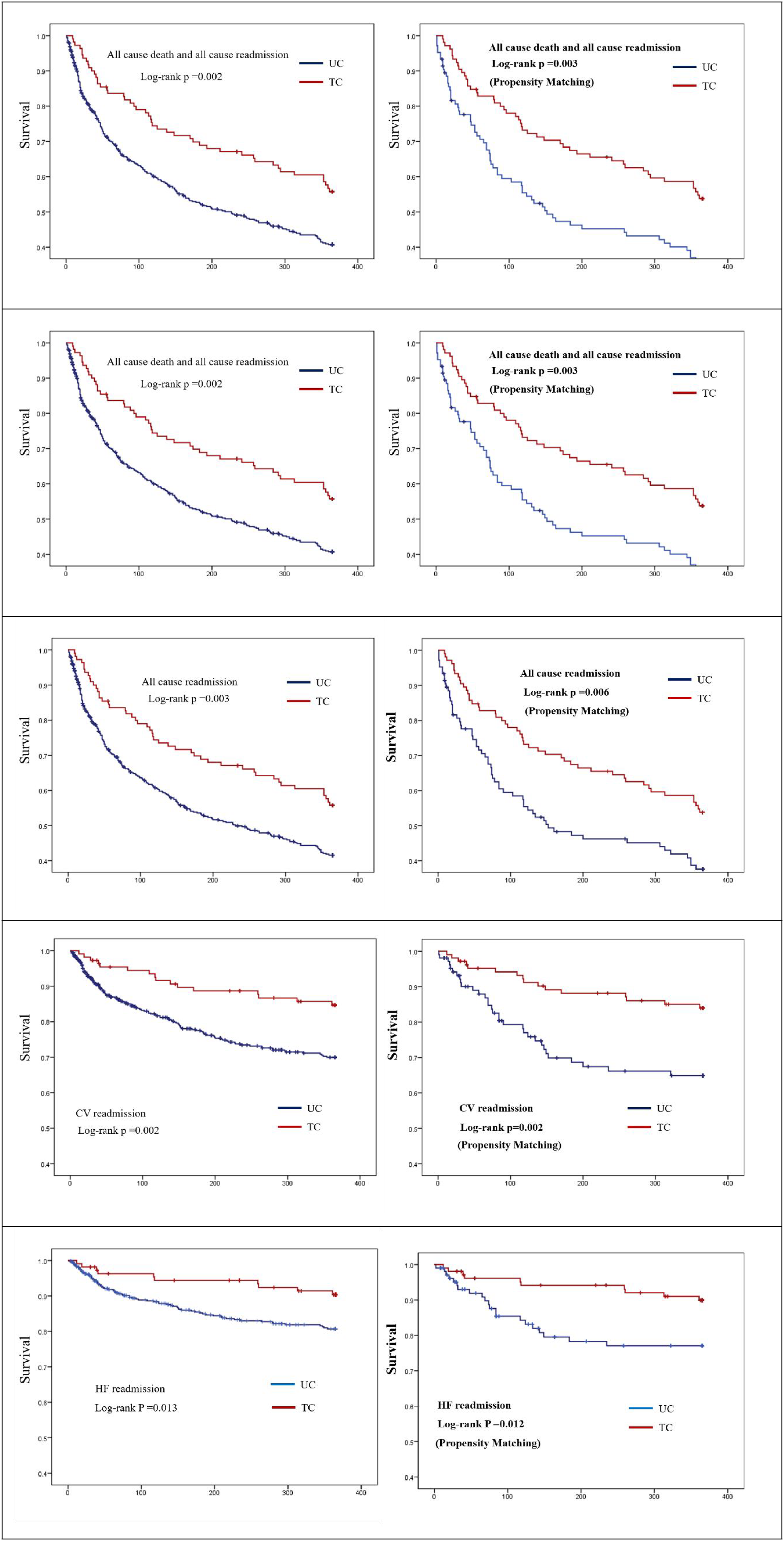
Kaplan–Meier time event curves for mortality and readmission.
Discussion
Telehealth's proven impact: Drastic reduction in rehospitalization for HF patients—insights from multiple studies
This study found significant differences in HRs for all-cause rehospitalization rates within one year. The findings align with several past studies demonstrating that telehealth monitoring can significantly reduce rehospitalization rates in patients with HF. Non-randomized studies showed an 80% reduction in all-cause hospitalizations and a 71% decrease in HF-related rehospitalizations within one year. 26 Trials from 2020 to 2021 indicate that HF patients with follow-up periods of less than one year had decreased hospitalizations due to HF and overall hospitalizations at 60 months 27 and efficacy in lowering cardiovascular disease-related hospitalizations. 28 Extended telemonitoring for 12 months or more exhibited a decrease in all-cause and HF-related hospitalizations. 29 While a meta-analysis supported the reduction in all-cause hospitalizations due to telemonitoring, 30 other studies found no significant differences in readmission rates.31–33 Strategies employing mobile-based telemonitoring in HF patients indicate reduced risks of hospitalization due to HF, illustrating the need for additional research based on the growing availability of smartphones and wireless connected devices. 34
Telemonitoring breakthrough: Dramatic reductions in mortality rates for HF patients over time
The present study found significant differences in HRs for all-cause mortality within one year; the TC group showed a lower HR compared to the control group. These findings align with other studies indicating that telehealth monitoring can significantly reduce all-cause mortality in patients with HF. Thus, research suggests that telehealth monitoring significantly reduces all-cause mortality in HF patients. Specifically, a randomized trial documented a 56% decrease in all-cause mortality rates over 120 months among those receiving TC. 28 Another study reported a 68% reduction in one-year all-cause mortality. 35 Even though some studies found no significant differences in mortality rates between telehealth and routine care groups,30,32,34 the TIM-HF2 trial demonstrated improved morbidity and mortality during the main trial, which was not sustained a year after cessation. 28 Home telemonitoring using digital, broadband, satellite, wireless, or Bluetooth transmission of physiological data has been shown to reduce all-cause and cardiovascular mortality among patients with HF. 31 Thus, telehealth can augment existing care options and enhance team-based care delivery by expanding communication, engagement, and monitoring beyond clinical settings. 32
Using the Internet of Things (IoT) for transmitting physiological data and remotely monitoring HF patients might reduce all-cause and HF-related hospitalizations and shorten hospital stays. While these findings suggest decreased mortality and fewer hospitalizations, they may also increase outpatient consultations and device costs.36–39
Maximizing telehealth benefits: Critical cost-benefit analysis and future research for long-term HF management
The present study found the benefits of remote monitoring for HF patients, particularly in reducing mortality and hospitalization rates.40–42 Telehealth interventions improve outcomes but may increase outpatient consultations and device costs. Additional research is required to assess the long-term benefits and cost-effectiveness of remote monitoring for sustainable HF management.42,43 Moreover, patient acceptance of telehealth services is essential for maximizing effectiveness. 42 Addressing these factors could enhance telehealth implementation and improve patient care. 43
Conclusion
This study has demonstrated that TC can significantly reduce all-cause mortality and rehospitalization rates in patients with HF. The findings align with past studies that exhibit the benefits of telemonitoring. Future studies should analyze the impact of factors such as age, disease duration, and comorbidities on the effectiveness of TC to identify which patient groups benefit most from remote care. We recommend longitudinal follow-up studies to evaluate the long-term effects of TC on patients with HF, particularly in terms of quality of life and healthcare costs.
Study contribution
This study evaluated the effectiveness of telehealth in Taiwan, illustrating its potential to reduce hospitalizations and mortality within a real-world healthcare system.
Gaps/limitations in past studies addressed:
Past research exhibits mixed findings regarding telehealth's effectiveness. Using PSM and controlling for confounders, this study has provided a more accurate comparison between telehealth and control groups, addressing previous research gaps.
Limitations of this study:
Key limitations include the high refusal rate due to concerns over the cost of self-paid services, introducing potential bias. The study's short follow-up period (one year) limits understanding of the long-term effects. Future research should explore longer follow-up durations while assessing the cost-effectiveness of telehealth.
TC significantly impacts rehospitalization and mortality rates in patients with HF. Considering HF as the culmination of diverse cardiac conditions, telehealth emerges as a tailored approach for cardiovascular patients. Technological advancements lead to improved data collection while enhancing medical care. However, the practical implementation of telehealth requires further exploration. This includes establishing comprehensive call centers with multidisciplinary teams and advanced measurement devices. Augmenting telehealth infrastructure is crucial for proactive monitoring and mitigating health crises due to HF. Integrating advanced telehealth systems can revolutionize cardiovascular care as technology continues to evolve.
Footnotes
Acknowledgments
The authors thank the staff of the Medical Quality and R&D Center, MacKay Memorial Hospital, for their assistance in the research process.
Declaration of conflicting interests
The authors declared no potential conflicts of interest with respect to the research, authorship, and/or publication of this article.
Ethical approval
This study was approved by MacKay Memorial Hospital IRB Committee (23MMHIS219e) and waived informed consent.
Funding
The authors received no financial support for the research, authorship, and/or publication of this article.
