



Abstract
Background
Evolving stroke care demands careful screening of stroke patients to ensure the right care is administered to the right patients in a timely manner. Telestroke has been increasingly utilized to improve access to stroke specialists to make these assessments. Here we explore the care processes at these telestroke site to determine if an optimal care process can be determined.
Methods
This is a post-hoc analysis of data collected as part a larger quality improvement program, the IMPROVE stroke care program. We rank ordered and normalized the DTN times from encounters that used telestroke services to range between 0 and 1. We used linear mixed models to assess the acute stroke care process steps most associated with improvement in thrombolytic administration times.
Results
The dataset consisted of 21,456 acute stroke code assessments, of which 8356 (80.6%) were conducted via telestroke (TS) services. Of these TS events, 7088 (84.8%) were conducted at sites that used TS for >85% of all events. Compared to private vehicle, EMS arrival is associated with 4% improvement in DTN ranks, though when paired with prehospital notification, DTN ranks significantly improve by 25%. Key process steps associated with shorter DTN times included calling a code stroke quickly upon arrival and notifying the telestroke consultant prior to obtaining the initial CT scan.
Discussion
Working with local EMS to provide prehospital notification along with rapid code stroke activation and consultant notification prior to CT were identified as best practices for providing timely acute stroke care using telestroke providers.
Introduction
Acute stroke remains an important time-sensitive emergency, with nearly 800,000 strokes occurring annually in the United States alone, and an estimated 6.6 million globally. 1 Evolving stroke care guidelines demand careful screening of stroke patients to ensure the right care is administered to the right patients in a timely manner.2,3 Telestroke has been increasingly utilized to improve timely access to stroke specialists. The use of telestroke services had already been on the rise even before the COVID-19 pandemic, which further accelerated the widespread adoption of telehealth across many medical disciplines. 4 While much has been done to improve stroke care via in person screening, less is known about the best approach to optimizing the use of telestroke services. 5 Given the expansion of use and the potential for telehealth to provide improved healthcare access to underserved areas, developing ways to standardize and optimize its use in clinical workflows will become paramount.
We recently completed a multiyear program (IMPROVE stroke care) focused on the improvement of ischemic stroke care in the Southeastern region of the US.6,7 We found that all centers in the participating networks, comprehensive centers and community referral hospitals, improved their arrival to thrombolytic administration times as part of this program, including sites that primarily used telestroke for access to stroke neurology expertise. 7 In the current analysis, we set out to explore the care processes that leveraged telestroke services to deliver shorter door-to-needle (DTN) times for thrombolytic administration. We analyzed key care process steps to determine which practices were most closely associated with lower DTN times at centers using telestroke services. We found that several important operational elements were key to higher performance. Notably, emergency medical services (EMS) prehospital notification remained critically important in facilitating stroke care, even in the setting of telestroke services. In addition, short times to activate a code stroke and early engagement of the remote consulting provider prior to obtaining the initial non-contrasted head computed tomography (CT) were associated with reduced DTN times. Our data support key recommendations for best practices around these key steps in the acute stroke care process for centers using telestroke consult services.
Methods
Ethical approvals
The IMPROVE stroke care program has been described in detail previously and was reviewed and approved as an exempt quality assurance program by the Duke IRB and site IRBs as appropriate.
Data source
The IMPROVE stroke care project and data collection process has been described in detail in the design overview 6 and in our reporting of the primary results of the program. 7 Briefly, the program was a “systems of care” quality improvement effort conducted in the Southeastern United States among nine comprehensive stroke centers (hubs) and 57 community-based medical centers (spokes). The program consisted of using a “Manual of Operations” as a practical guide for implementing guideline-based best practices at the participating sites. Through initial meetings with regional networks of sites we identified the key guideline-based care goals that each network wanted to implement. During subsequent weekly meetings we reviewed progress and shared methods for implementing the guidelines across all networks. Data collection consisted of voluntary submission of monthly acute stroke code logs via a secure, HIPAA-compliant, cloud-based file-sharing system. All stroke code activations from each participating site were included regardless of final diagnosis or whether a treatment was given. The current project uses data collected as part of this parent project, but specifically looks at the performance of the spoke facilities and how they used telemedicine services to provide acute stroke care consults to patients. The fraction of stroke events where telehealth services were engaged varied by site. Our analysis uses data from all such engagements, but we also examined the characteristics of primary telestroke sites, which we defined as those where 85% or more of the code stroke activations submitted were reported to be conducted by telestroke services.
Statistical analyses
We were faced with two primary obstacles in our effort to identify the site—specific stroke care processes that had the best overall DTN performance. The first was a lack of documentation of the specific care process applied at any given site, and the second was that too few thrombolytic administrations were observed per site to allow direct site-to-site performance comparisons. In order to address these limitations and still assess process steps that are associated with reduced DTN times we examined the degree to which variation in individual process steps correlated with faster DTN times among the telehealth-managed stroke events observed in our study. We structured this analysis using an idealized stroke code process for each mode of arrival, EMS or private vehicle (PV), (Figure 1) to identify steps in care that were available for analysis. These steps were largely divided into those prior to arrival (prehospital), steps between arrival and obtaining a non-contrasted head CT (pre-CT), and steps between the head CT and thrombolytic administration (Post-CT).
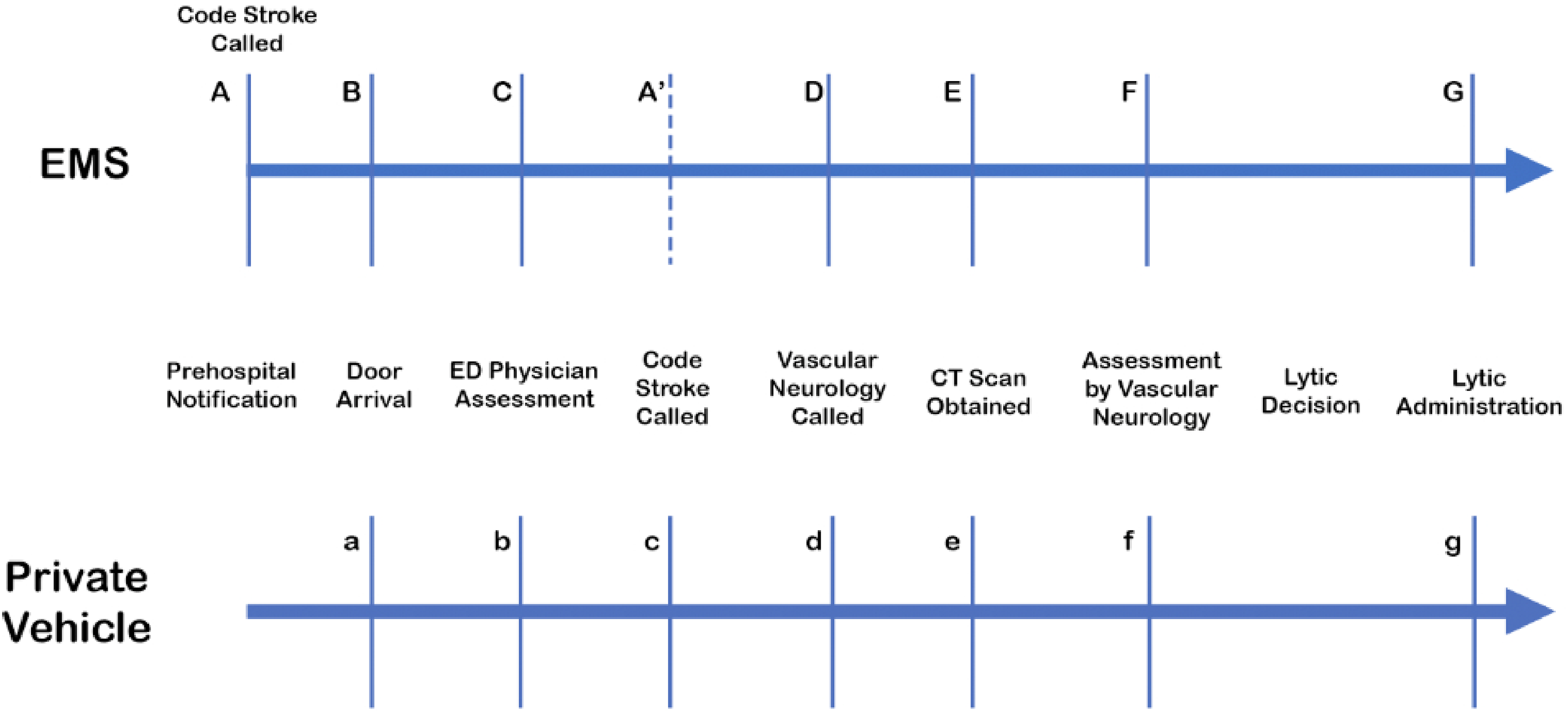
High-level overview of the steps in the acute care of a stroke patient upon arrival to a facility using a telehealth solution for rapid assessment and determination of appropriate use of thrombolytic therapy and need for transfer for consideration for thrombectomy. Arrival by emergency medical service (EMS) allows for prehospital notification (A) and the option to call a code stroke at that time. Alternatively, the emergency department physician may want to assess the patient (C, b) prior to calling a code stroke (A’, c), resulting in a flow similar to the private vehicle arrival pathway (lower case). Other variations in practice include consulting the remote provider after the initial non-contrasted head computed tomography (CT) is obtained (E, e) instead of before as depicted (D, d), and obtaining vascular imaging (CT angiogram of head and neck) at the same time as the initial head CT.
The analysis focuses on the telehealth thrombolytic administration events observed during the IMPROVE program (n = 921) to characterize the associations between DTN times and the various process steps. We rank ordered the DTN times and normalized the ranks to range between 0 and 1 such that lower ranks were associated with faster DTN times and used these values to summarize process improvement. This transformation allowed us to use linear mixed models to assess the process steps, eliminating problems associated with outliers and a skewed data distribution, while providing an interpretable scale of measurement for assessing process improvement. On this scale, model coefficients can be interpreted as expected changes in the percentile ranking of an event's D2N time in the distribution of observed D2N times. All statistical models were adjusted for the IMPROVE study site (random effect) and time period (fixed effects) of data collection. We also adjusted for the external (to process) factors mode of arrival (EMS versus PV) and whether early notification was given to the site (binary indicator) if the patient arrived via EMS since these significantly modify expected D2N times. Individual process factors were added to the baseline model just defined as main effects, then with the addition of an interaction term with early notification status. We summarize the effects of each process step using the better fitting of the two models that include the process factor.
All analyses were carried out using version 4.3.1 of the R statistical programming analysis 8 ; linear mixed effects models were fit using version 1.9.0 of the R library mgcv. 9
Results
Summary of telestroke encounter data
The IMPROVE stroke care program included 9 regional comprehensive centers (hubs) and 57 community partner sites (spokes). A general summary of the telestroke encounter data captured in the program is summarized in Table 1. A total of 21,456 acute stroke code assessments were captured over a 2-year period of which 10,368 (48.3%) were from spoke facilities and 8356 (80.6%) of these were conducted via telestroke (TS) services. Of these TS events, 7088 (84.8%) were conducted at sites that used TS for >85% of all events (Primary TS sites). An additional 1125 (13.5%) TS events were reported from sites that conducted between 30% and 85% of their events by TS services (Hybrid sites). Finally, 143 (1.7%) TS events were reported from spokes that used TS for <30% of the events at their site and instead used in-person consultants for acute stroke assessments. There were 4727 (56.6%) TS consults on women, and thrombolytic therapy was administered 921 (11.0% of all TS consults) times across all reported TS events. This was similar to the rate of thrombolytic administration within hub sites 1668 (15.0% of all reported HUB events) and to rates in non-TS spoke events, 193 (9.6%). The final diagnosis, when reported, was ischemic stroke in 29.6% of the TS consults, hemorrhagic stroke in 2.0%, and other or unreported in 60.4% (Table 1).
Summary characteristics of the IMPROVE data, telestroke sites and telestroke encounters.
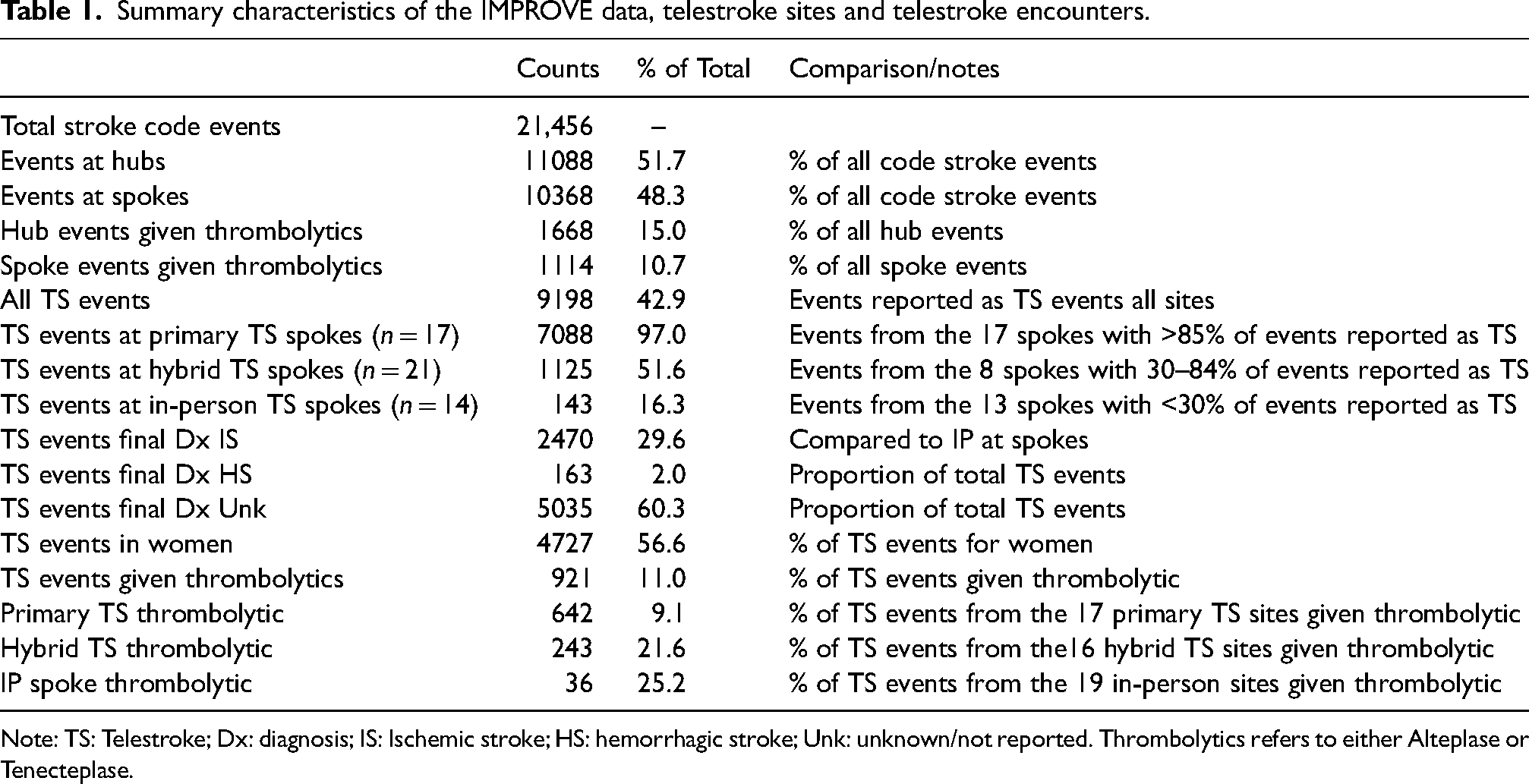
Note: TS: Telestroke; Dx: diagnosis; IS: Ischemic stroke; HS: hemorrhagic stroke; Unk: unknown/not reported. Thrombolytics refers to either Alteplase or Tenecteplase.
Effects of prehospital notification
We had shown in the primary analysis of the IMPROVE program that arrival by EMS played an important role in improving DTN times, 7 here we explore the effects of arrival mode on telestroke-based care processes. We found that arrival by EMS continues to have a very significant impact on the DTN times, mainly as a result of prehospital notification. In the absence of prehospital notification, EMS arrival is associated with about a 4% improvement in DTN ranks compared to PV (p > .05). However, when EMS arrival is paired with prehospital notification, DTN time ranking significantly improves by about 25% (p < .001, Figure 2).
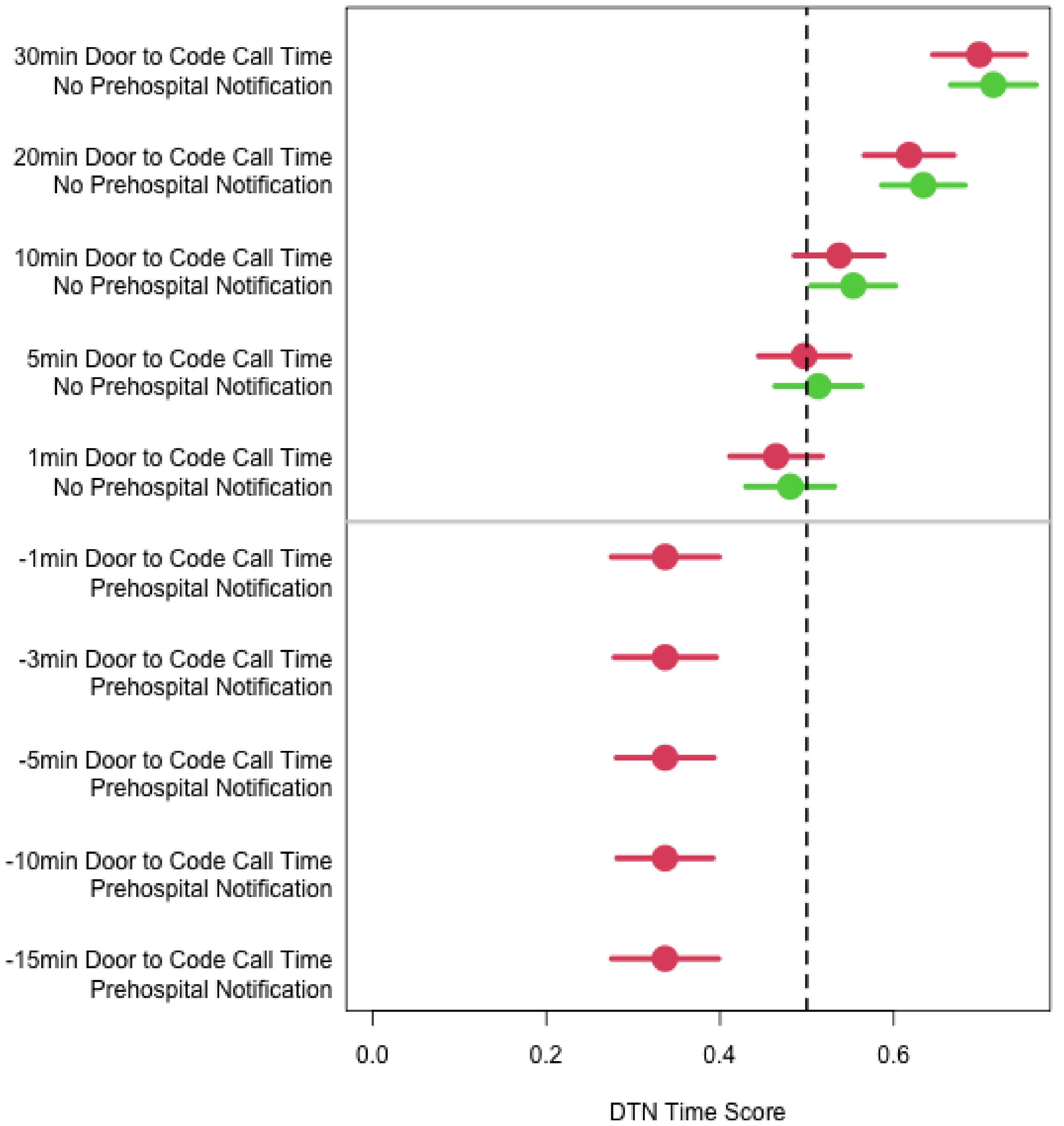
Arrival by emergency medical services (EMS) allows for prehospital notification and stroke code activation prior to arrival which is strongly associated with shorter door-to-needle (DTN) time ranks (red points bottom half). Avoiding delays in calling a code stroke, activating in under 10 min, is associated with shorter DTN ranks independent of arrival mode (red and green points top half). The time at which prehospital notification is given is less important than getting prehospital notification as shown by the left shift in rankings for all of the prehospital notification periods (bottom half) compared to the no prehospital notification rankings (top half). Red points represent EMS arrivals and green points represent private vehicle (PV). Dashed line represents the fiftieth percentile of the DTN times.
The impact of prehospital notification is expected to primarily facilitate the evaluation of the incoming patient from door to CT. We assessed the sensitivity of DTN rank to delays in CT-to-thrombolytic administration time and found that delays at this stage similarly negatively impacted D2N times regardless of mode of arrival. However, EMS arrivals with prehospital notification are more sensitive to delays post CT compared to patients that arrive by PV (p <.001, Figure 3). We also assessed the impact of the timing of prehospital notification and found that prehospital notification at any time from 1 to 15 min before arrival all equally improved the DTN times and were associated with similar rankings (p < .01, Figure 2).
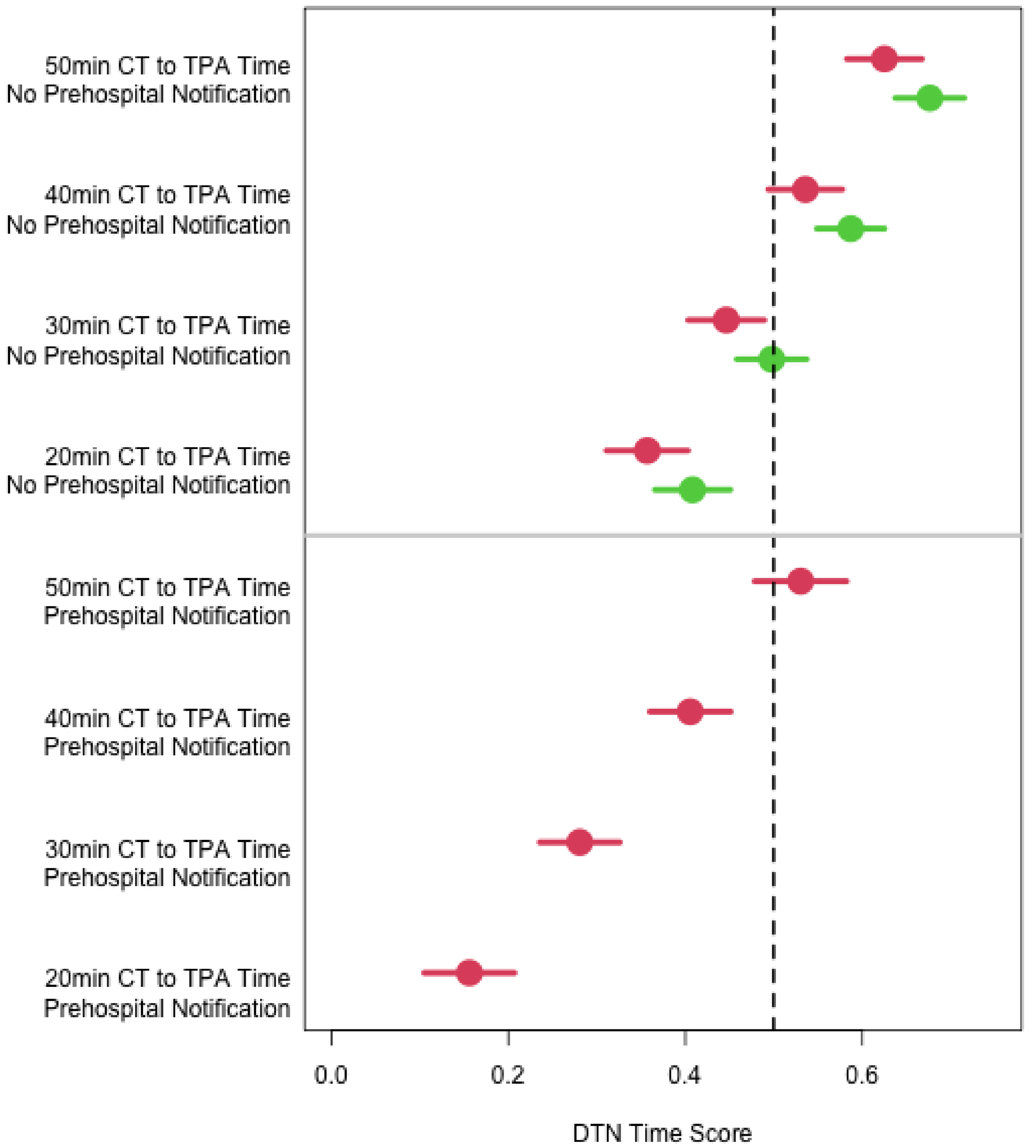
Prehospital notification by emergency medical services (EMS) facilitates the early steps in the stroke code care process making door-to-needle (DTN) times more sensitive to delays in the care process that occurs after CT has been obtained. Delays in the processes following CT have a greater negative impact on DTN times for EMS arrival patients with prehospital notification (note slope change in bottom half) compared to private vehicle (PV) or EMS without prehospital notification. EMS arrival did shift DTN times lower, but was similarly sensitive to post CT delays. Red points represent EMS arrivals and green points represent private vehicle (PV). Dashed line represents the 50th percentile of the DTN times.
Effects of delays to code stroke activation and engaging the remote vascular consultant
Since the consulting stroke experts are not on-site, there is a need to specifically notify these providers that a code stroke has been activated. This is different than at most centers with in-person consultants, where the code stroke activation automatically notifies the vascular neurology consulting team linking delays in code activation directly to delays in DTN times.10,11 We looked at how often the TS consultant was activated coincident with the local code stroke activation and found only 2.5% of TS activations were coincident. Only 36% of TS activations occurred within 5 min of the local code stroke activation. We explored the impact of delays in calling a code stroke on DTN time, and effects of activating the consulting telestroke provider early (before the CT is performed) or later (after the CT) in the care process. We found that delays of < 10 min between arrival and code stroke activation had minimal effects on subsequent DTN times and resulted in similar DTN rankings independent of arrival mode (Figure 2, p > .05). Calling the consultant prior to obtaining the initial CT scan was associated with a 3.4% improvement in ranks and shorter DTN times independent of arrival mode (p < .05), though the effect on ranks was larger, 13.4% improvement, for those that arrived by EMS and had prehospital notification (p < .01, Figure 4).

Activating the remote telestroke consultant (TS) prior to obtaining the initial CT scan was associated with shorter DTN time scores independent of arrival mode (top half, green and red points), through the effect was larger for those that arrived by emergency medical services (EMS) and had prehospital notification (bottom half). Red points represent EMS arrivals and green points represent private vehicle (PV). Dashed line represents the fiftieth percentile of the DTN times.
Timing of vascular imaging
It has been argued that obtaining vascular imaging at the same time as the initial head CT is more efficient than taking the patient in and out of the CT scanner twice. However, there is a risk that trying to obtain both sets of imaging together in all cases may delay thrombolytic administration. 11 Additionally, the remote consultants often can’t assess the patient during the CT scans making it difficult to make thrombolytic decisions during the CT scan process as has been done in many hub facilities. 12 We assumed that if vascular imaging was obtained within 15 min of a head CT then they were likely obtained together. We found that the timing of CTA imaging was not associated with significant delays in DTN times (Figure 5).
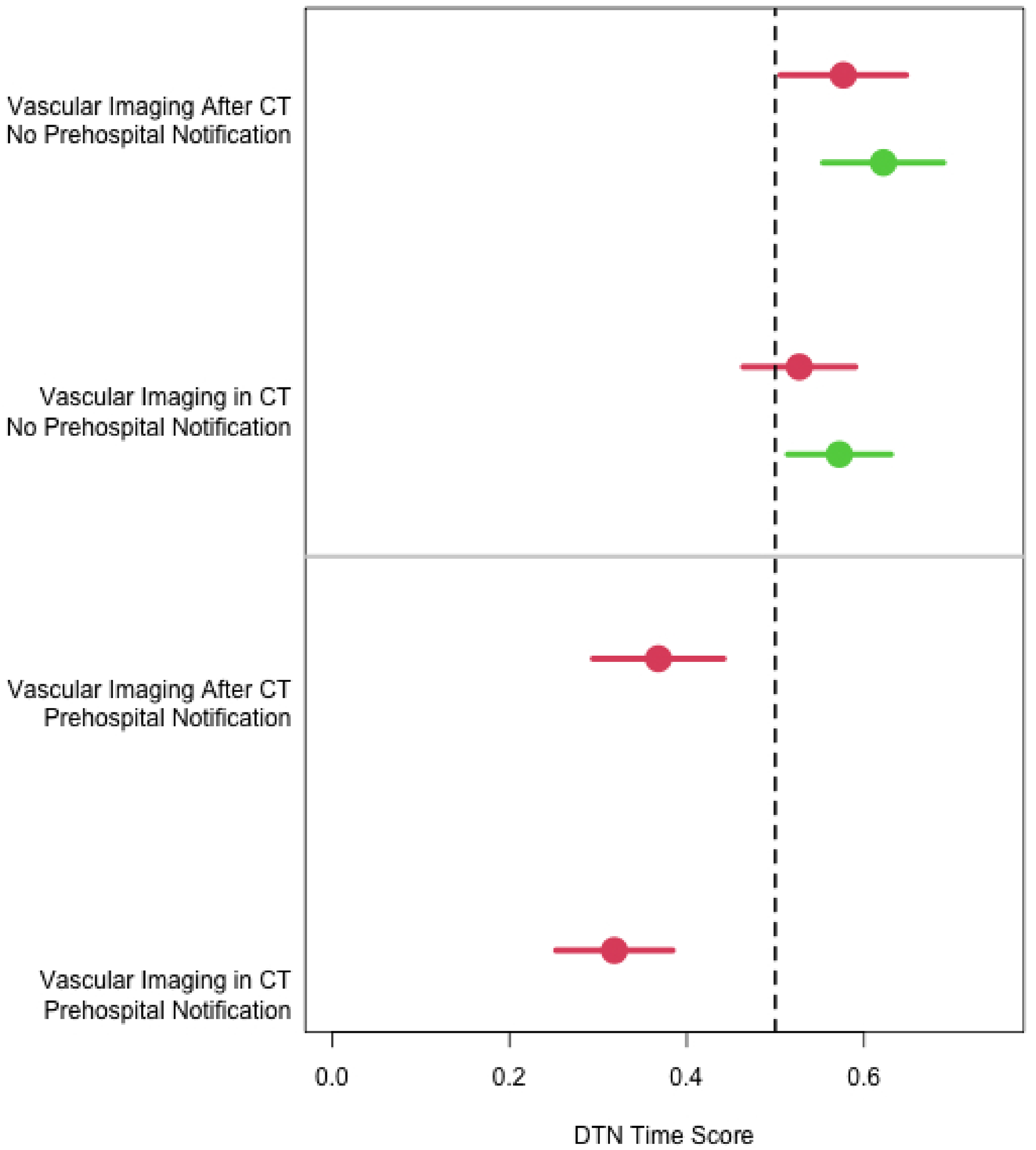
The timing of vascular imaging via computed tomography (CT) angiogram was not associated with significant delays in DTN times independent of arrival mode (p > .05), though prehospital notification continued to be associated with shorter DTN times. Red points represent emergency medical services (EMS) arrivals and green points represent private vehicle (PV), lower half are EMS arrivals with prehospital notification. Dashed line represents the fiftieth percentile of the DTN times.
Discussion
Telestroke has become a mainstay of acute stroke care management at smaller community hospitals, filling the need for more advanced stroke care triage and intervention.7,10 The IMPROVE stroke care program demonstrated that stroke care delivery metrics can be improved across all site types through regional network building and implementation of best practices via comprehensive center network HUBs, including centers that primarily used telestroke services. 7 Here we looked closely at the variations in care process that can be associated with using telestroke consult services to determine the effects of these varied practices on DTN times and identified best practices. We found that prehospital notification is a major factor in improving DTN times and should be a goal for all EMS arrivals. We also show that delays in thrombolytic administration after CT can rapidly reduce the advantages of EMS arrival with prehospital notification, and while our data did not clearly show that obtaining vascular imaging with the initial non-contrasted head CT worsens DTN times, our data does indicate that consulting the TS provider prior to CT and reducing delays in the period from CT to thrombolytic are critical to efficient DTN processes.
Prehospital notification remains a key factor in care system development and needs to be a goal for all centers. The IMPROVE stroke care program was focused on building regional care systems that included the EMS agencies that bring stroke patients to a given hospital network.6,7,10 The program focused on adoption of prehospital stroke screens and scoring tools to facilitate detection and standardize the communication of stroke severity to the receiving emergency department. 6 The current analysis shows that centers that use remote consultants also benefit, and while this was one of the more difficult aspects to implement, 7 our results highlight the critical importance of fostering highly collaborative relationships with EMS to improve stroke care. Our results also suggest that most centers do not include notification of the remote consultants in their local code stroke activation, with only 36% activating the telestroke consultant within 5 min of the local code stroke activation. This represents a large and important opportunity for improving DTN times by either including TS activation with the local code stroke or ensuring they are called as quickly as possible following the local code stroke activation.
We found several practice patterns that were associated with significant improvement in DTN ranks. These include, calling code stroke quickly (<10 min) after arrival, and calling the remote TS consultant prior to CT, particularly for PV arrivals, and avoiding delays in the period between CT and thrombolytic administration. These findings support several centers’ practices of allowing any provider to call the code stroke to reduce delays that can occur if an emergency physician has to assess the patient prior to calling a code stroke. Our findings are also consistent with prior studies showing delays in diagnosis lead to worse outcomes and longer DTN times.11,13 Engaging the remote TS provider prior to obtaining the initial CT is another best practice and reflects the prior recommendation for a single call activation for stroke codes.10,11 While many providers prefer to have all of the data for a given stroke code together prior to calling a consultant, this clearly delays the assessment and prolongs the CT to thrombolytic period reducing the benefits of prehospital notification and lengthening DTN times. It is important to note that our analysis did not look at delays specific to the TS consultant workflows and that some delays may be the result of the remote consultant and not local process patterns.
Finally, we looked at the timing for obtaining vascular imaging as this is also a point of high practice variation. Our data did not support a clear association of longer DTN times when vascular imaging was performed at the same time as the initial head CT. However, it may be important to consider if this could cause delays at a given site since this would introduce delay in the CT-to-thrombolytic period and could negatively impact DTN times even for EMS arrivals with prehospital notification. 11
Our study has some limitations. The data were provided by each hub site and was not validated through chart audits and adjudication. Data quality checks were in place to correct data that clearly contained errors such as arrival times after CT times, but some errors and missing data are present and required further cleaning and interpellation prior to analysis. We did not evaluate outcomes in this analysis as we had seen in the primary IMPROVE program analysis that no differences were noted, and due to the voluntary nature of the data collection, outcomes were only collected on patients treated with thrombolytic or endovascular interventions. 7 This resulted in too many missing outcomes in the current analysis to make a meaningful assessment.
Conclusion
The use of telestroke services to evaluate patients for acute stroke care has become standard practice for many community centers. Like many acute care pathways, consistency and standardization are keys to successful execution. While guidelines exist for setting goals for care delivery times,2,3,10 little is available to guide centers on best practice approaches to achieve these goals.5,14 We show here that working with local EMS to provide prehospital notification, consulting the remote provider early (prior to CT), and limiting any practices that could introduce delays between the CT and thrombolytic administration are the best approach to providing timely acute stroke care using telestroke providers (Figure 6).

Idealized acute stroke care process flow based on the results of our analysis. Ideally all patients would be transported by EMS and prehospital notification would be given which would activate the code stroke system (A). When not arriving by EMS, care would start upon arrival (B) with rapid assessment and triage and code stroke activation (A’) by any provider including front desk clerk, triage nurse or other triage provider. Following arrival, evaluation by the Emergency Department provider (C) and consultation to the remote stroke care consultant (D) should be completed in under 10 min to preserve the benefits of prehospital notification and optimize the care of those not arriving by EMS. Attention and effort to reduce delays in the steps following CT should be the focus to achieve a goal of <20 min for the remote consultant to assess the patient (F) administer thrombolytic (G) following completion of the CT.
Footnotes
Acknowledgments
The authors would like to thank Mr Jason Kolls for his graphic artwork on Figures 1 and  .
.
Checklist
This manuscript adheres to the SQUIRE 2.0 checklist for quality improvement reporting.
Declaration of conflicting interests
The authors declared no potential conflicts of interest with respect to the research, authorship, and/or publication of this article.
Ethical approval
The IMPROVE stroke care program (parent trial) has been described in detail previously and was reviewed and approved as an exempt quality assurance program by the Duke IRB and site IRBs as appropriate.
Funding
The authors disclosed receipt of the following financial support for the research, authorship, and/or publication of this article: This work was supported by the Daiichi Sankyo Europe, Medtronic Foundation, Chiesi USA, Corazon, Pulsara.
Data availability statement
The data used from this study is available upon written request.