



Abstract
Background
The prevalence of chronic diseases in children and adolescents has significantly increased. The COVID-19 pandemic accelerated telemedicine adoption, leading to improved healthcare access and outcomes. Despite its benefits, telemedicine is still not fully integrated into standard care. Previous reviews have been limited in scope. This systematic review aims to provide a comprehensive overview of recent trials on web or app-based telemedicine for chronically ill children and adolescents, identifying interventions and outcomes for future healthcare strategies.
Methods
A comprehensive search was conducted on PubMed on November 21, 2023, and updated on January 9, 2025. Results were filtered to include prospective intervention studies involving children and adolescents with chronic conditions and limited to publications from 2017 onwards. A total of 8699 results were retrieved, and 1506 titles were screened for eligibility, resulting in 116 studies included in the review.
Results
These studies covered 45 different conditions, with the highest numbers for diabetes, asthma, and obesity. Telemedicine interventions varied, including gamification, video meetings, integrated devices, psychological components, symptom tracking, and educational content. Most studies reported high feasibility and patient satisfaction. Clinical outcomes improved in some cases, and none were worse than standard care. The heterogeneity limited direct comparisons and meta-analysis, and small sample sizes in many studies affected the generalizability and statistical significance of the findings.
Conclusions
Our study highlights the potential of telemedicine in managing chronic illnesses among children, emphasizing the need for standardized methodologies, larger sample sizes, and continued investment in infrastructure and equitable policies to fully realize its benefits in improving accessibility, convenience, cost savings, and overall health outcomes.
Keywords
Introduction
In the US, prevalences of chronic disease in children rose from 12% to 26% between 1994 and 2006. 1 In Germany, 16% of children and adolescents (0–17 years) have a reported chronic disease. 2 The most common chronic conditions include obesity (prevalence 15–25% in Europe 3 ), attention deficit hyperactivity disorder (ADHD) (∼5% worldwide 4 ), asthma (2–32% 5 ).
Chronic conditions in children and adolescents also severely impact their caregivers. Not only do they have to invest time and money, but chronic illness also affects quality of life and perceived burden.6–8
The COVID-19 pandemic has pushed the development and acceptance of telemedicine, especially teleconsultations, to a new level. Remote and digital services played a vital role in ensuring health care accessibility.9,10
The World Health Organization (WHO) highlights various benefits of digital technologies in medicine, such as improved clinical outcomes and overall advantages for both patients and healthcare professionals. 11 These include enhanced access to information, education, and health care services; reduced healthcare costs and travel time; greater flexibility; and improved interdisciplinary collaboration for healthcare providers.10,12
Despite its growing popularity, several difficulties still hinder the full integration of telemedicine into routine healthcare.12–14 Barriers to telemedicine include poor internet access, lack of interest and resources to implement new technologies, and poor digital literacy, 11 as well as bureaucratic and organizational challenges. 12 Some individuals are concerned about a weakened relationship with their healthcare providers or the quality of information. 12
Previous reviews have shown that telemedicine for children and adolescents is comparable or better than regular in-person care. However, they also emphasize the need for more research 15 and broader application beyond clinical studies 16 Existing interventions are often limited to specific conditions, such as cardiology,17,18 obesity, 19 and asthma. 20 Medical complexity 21 targets various chronic conditions, but is limited to those with serious functional limitations.
Existing reviews are characterized by a narrow scope of included conditions or a low number of studies. The last systematic review about telemedicine in pediatrics from Shah (2021) only included eleven randomized controlled trials. 15 There are no reviews that provide a complete overview of the topic. The COVID-19 pandemic accelerated the development of telemedicine options, leading to a surge in recently published studies, which have yet to be included in a systematic review.
This systematic review aims to provide a comprehensive overview of the latest trials focused on the application of telemedicine for chronically ill children. Recently, the importance of telemedicine in managing the healthcare needs of this marginalized population has become increasingly evident. Identifying the diseases and interventions used in telemedicine for chronically ill children is crucial for understanding the healthcare landscape and developing future strategies. This analysis aims to provide insights into tailored telemedicine methodologies, highlight the diversity of approaches, and identify best practices to inform future healthcare strategies for this population.
Methods
Following the PRISMA guidelines, the research question for this review was formulated using the Population, Intervention, Comparison, Outcome (PICO) framework: What telemedicine interventions exist for chronically ill children, which conditions do they cover, and how effective are they? The objectives of this review were to assess the clinical outcomes of telemedicine and evaluate its feasibility.
Population: children and adolescents with a chronic or long-term condition Intervention: app- or web-based medical interventions Comparison: no specified comparison Outcome: clinical outcomes, feasibility
Inclusion and exclusion criteria
Studies were included if they met the following criteria: patients under 18 years of age, with conditions not expected to resolve within three months and/or requiring ongoing medical attention or care; telemedicine delivered via smartphone or web app, website, or video meeting; actively involving the patients; published in 2017 or later; and categorized as intervention studies.
Exclusion criteria were studies involving patients over 25 years, short-term conditions, studies on vaccinations, prevention, or screening/diagnosis; interventions primarily used by parents or caregivers rather than the children themselves. Remote monitoring was included if it was managed by patients themselves (e.g., diabetes). Additionally, studies were excluded if telemedicine was optional or consisted only of phone calls, text messages, social media interactions, or fitness trackers.
An exception was made for studies that conducted a separate analysis on a subgroup meeting the inclusion criteria. Patients aged 18 to 25 were included due to the variable transition from pediatric to adult care, particularly for adolescents with chronic conditions.
Search strategy
A comprehensive search was conducted using the PubMed database (November 21, 2023). An update was made on January 9, 2025. The following search terms were used: telemedicine, telehealth, mobile health, mhealth, ehealth, combined with pediatrics, children, adolescents, or teenagers. Results were filtered for ‘clinical trials’ and ‘randomized controlled trials’. The search was limited to publications from 2017 to the retrieval date, considering the noticeable increase in results for all search terms during this period.
Quality assessment
Study quality and risk of bias were assessed using the Joanna Briggs Institute (JBI) critical appraisal tools for randomized controlled trials 22 or quasi-experimental studies, 23 depending on study type.
All authors independently reviewed, rated, and selected the studies based on the above criteria. Initial disagreements among authors during study selection were resolved through discussion, after which no further disagreements remained. Information was extracted on condition, study design, age, number of participants, intervention, control, and results. R was used to automate various workflows and generate figures and tables.
Results
Study selection
A total of 8699 results were retrieved from the database. After removing duplicates, 1506 titles were screened for eligibility. The reasons for exclusion are detailed in the PRISMA diagram (Figure 1). Two secondary analyses were excluded from the total count but were incorporated into the primary publication. This review includes 116 studies. The flow diagram was generated using the PRISMA2020 online tool. 24
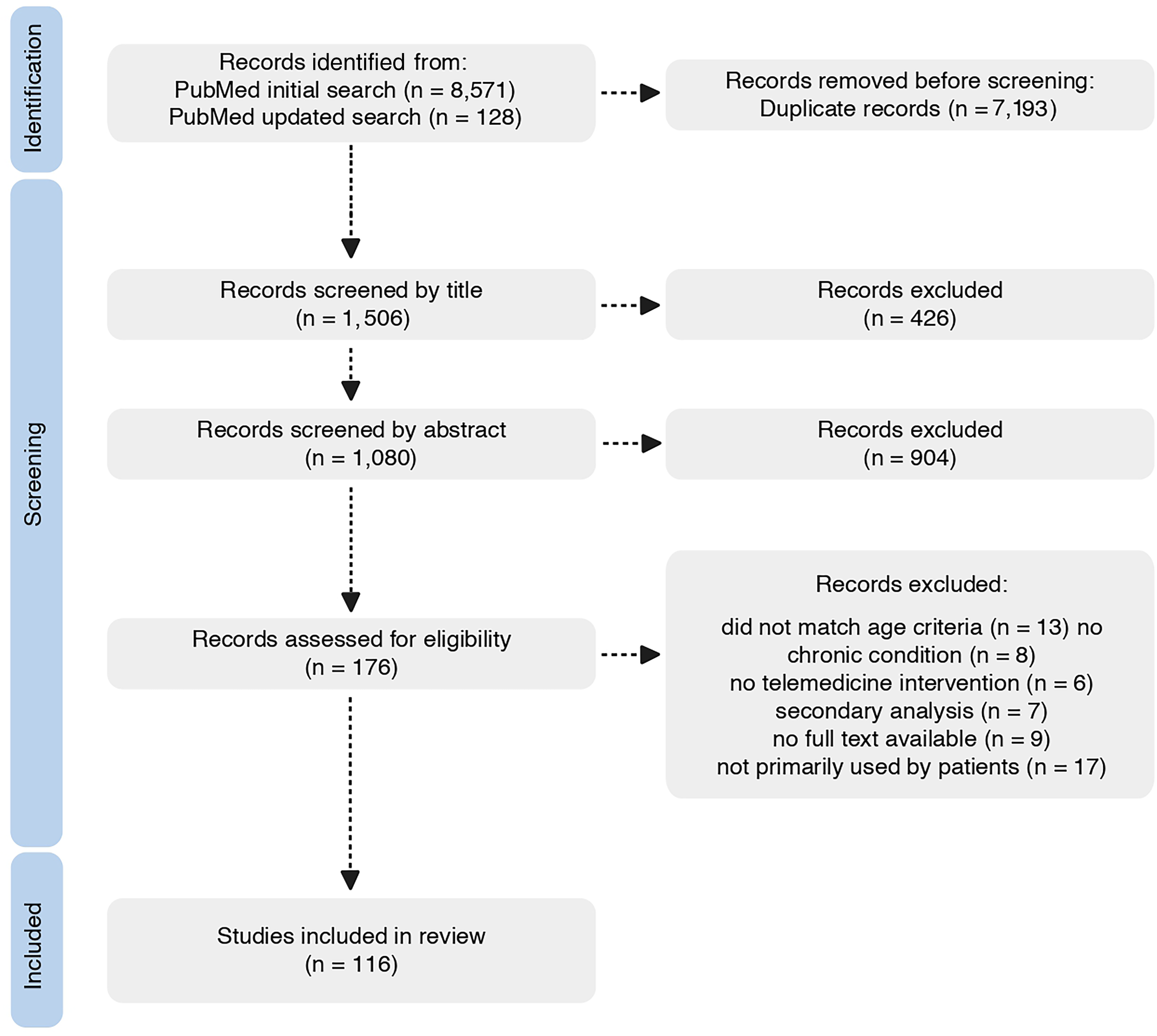
PRISMA flow diagram.
Study characteristics
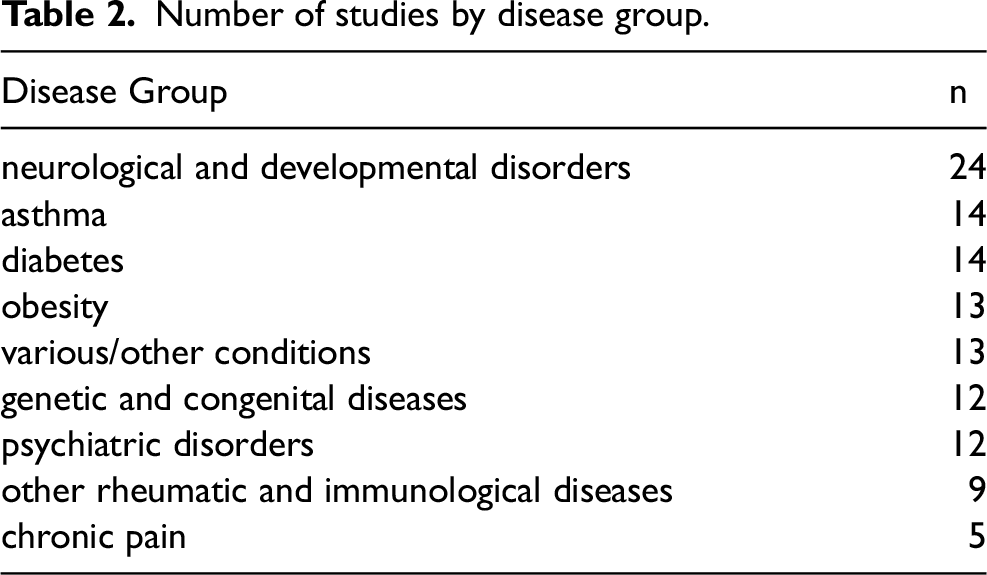
For readability, the remaining 116 studies were stratified by targeted condition (Table 1). Interventions for 45 different conditions were identified. The highest number of studies were focused on diabetes (n = 14), asthma (14), and obesity (13) (Table 2). Seventy-Nine studies were randomized controlled trials, 18 were clinical trials, two were quasi-experimental studies, and 13 assessed feasibility. The number of participants ranged from 7 to 428 (mean ± SD= 96.34 ± 95.11) with ages from 0 to 25 years. Most studies included between 40 and 101 participants, with ages primarily between 10 and 17 (Figures 2 and 3).

Number of studies that include n participants.

Number of studies that include patients at a certain age (years).
Conditions stratified by groups.
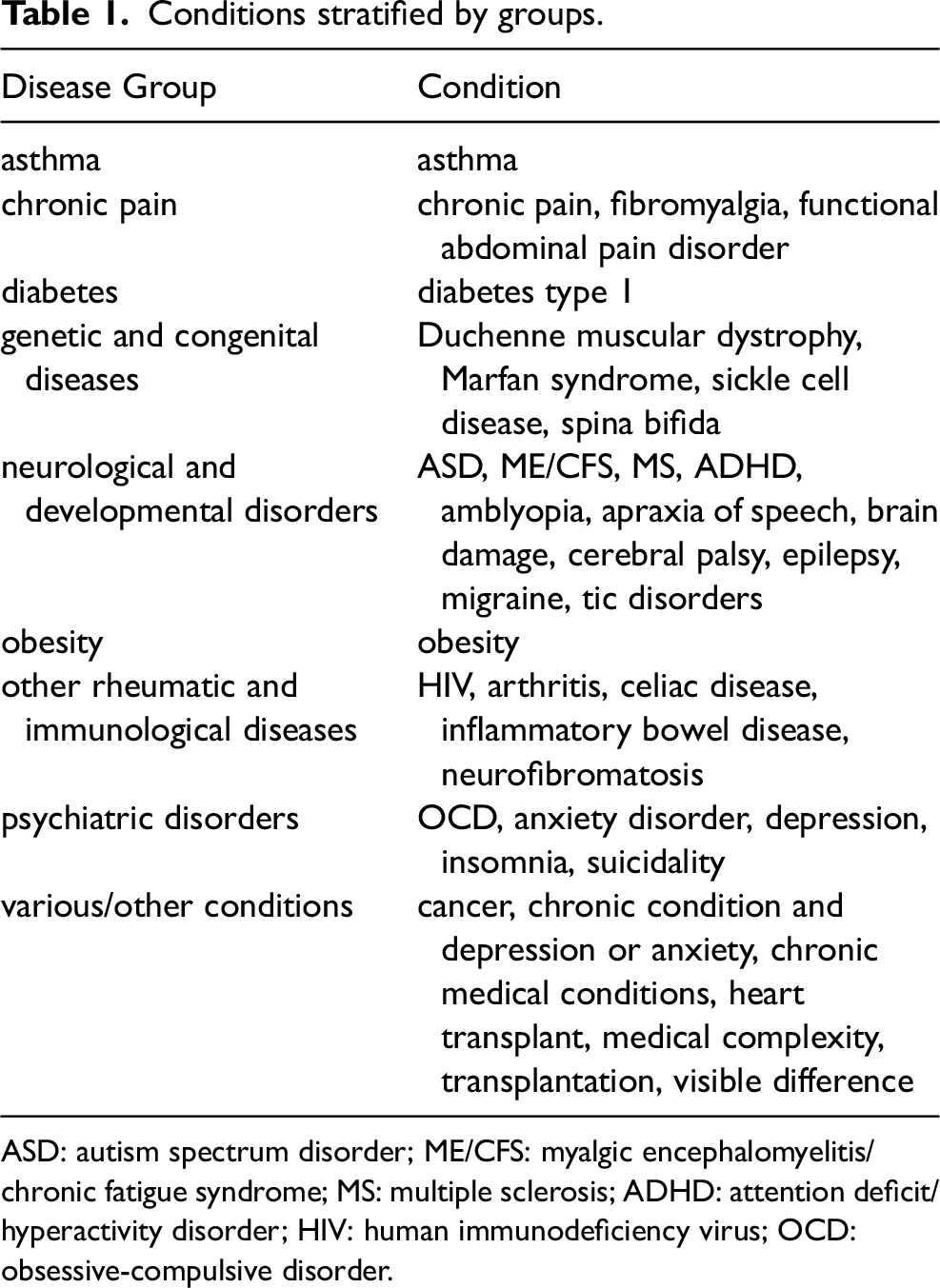
ASD: autism spectrum disorder; ME/CFS: myalgic encephalomyelitis/chronic fatigue syndrome; MS: multiple sclerosis; ADHD: attention deficit/hyperactivity disorder; HIV: human immunodeficiency virus; OCD: obsessive-compulsive disorder.
Number of studies by disease group.
Location
The distribution of studies across continents shows North and South America leading, with a combined total of 54 studies. Most were conducted in North America, while one was multi-centered across both continents. Europe follows with 34 studies, while Asia and Australia contributed 17 and 11 studies, respectively. This highlights the geographical distribution of research, with a higher concentration in North America and Europe compared to Asia and Australia.
Telemedicine approaches
Diabetes type 1
Diabetes was the most commonly studied condition with 14 studies. Four studies25–28 used video consultations as an add-on or substitute for regular inpatient visits. Satisfaction was high, but HbA1C decreased in only two cases.26,27 App-based interventions included educational content, bolus calculation, and communication facilitation between patients and caregivers; all rated highly acceptable. Remote sharing of blood glucose and insulin pump data was implemented in six studies. HbA1C improvements were greater in intervention groups, but statistically significant in only five cases. Quality of life was measured in four studies. It improved in one case28 and in another case for caregivers but not for patients. 29 Some technical issues were reported, such as difficulties using the video conferencing or data- sharing system.26,30 One study reported increased distress associated with inpatient visits. 25 (Table 3).
Diabetes.
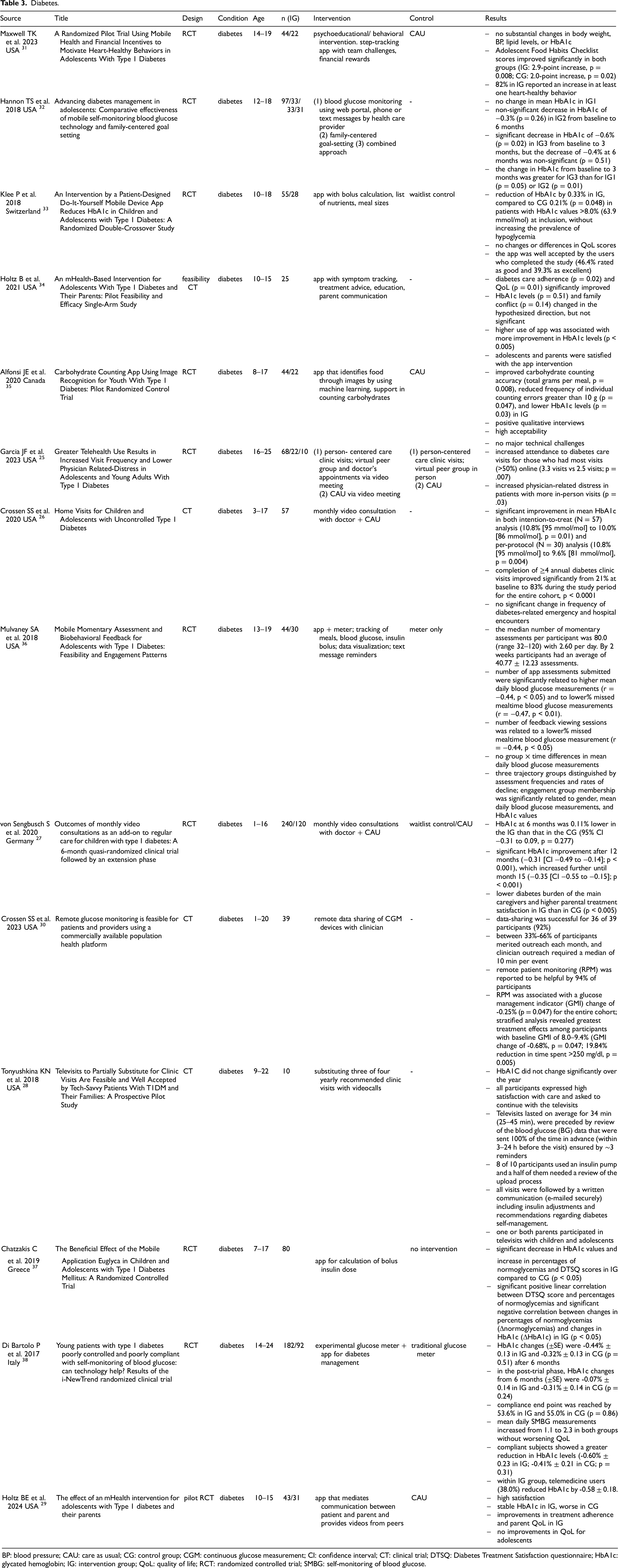
BP: blood pressure; CAU: care as usual; CG: control group; CGM: continuous glucose measurement; CI: confidence interval; CT: clinical trial; DTSQ: Diabetes Treatment Satisfaction questionnaire; HbA1c: glycated hemoglobin; IG: intervention group; QoL: quality of life; RCT: randomized controlled trial; SMBG: self-monitoring of blood glucose.
Asthma
Telemedicine options for asthma patients include asthma education, symptom tracking, lung function monitoring, and medication tracking. Most interventions (8/14) included educational content, three of which were delivered via video call. Two interventions evaluate online outpatient visits; one peer support; and one follow-ups after emergency visits. Results in measured categories were either better in the intervention group (IG) or not significantly different from the control group (CG). Significantly better results were achieved in asthma control,39–45 medication adherence, 39 symptom-free days,40,46,47 economic burden,39,41 disease knowledge, 48 and quality of life.41,45,48 No outcome in the IG was worse than in the CG. Patient satisfaction was high with video calls and apps. (Table 4).
Asthma.

CAU: care as usual; CG: control group; CI: confidence interval; IG: intervention group; LS: least square; MARS: Medication Adherence Report Scale; QE: quasi-experimental study; QoL: quality of life; RCT: randomized controlled trial; TAU: treatment as usual.
Other rheumatic and immunological diseases
The conditions in this subgroup were celiac disease (n = 1), HIV (2), neurofibromatosis (1), inflammatory bowel disease (2), and juvenile idiopathic arthritis (3). All but one study targeted children aged 10 years and older.
Two very different approaches (mobile game and video coaching) for HIV treatment led to improved medication adherence in both studies.
Health-related quality of life improved in two of three interventions for arthritis patients. Pain levels significantly improved in all of them. All interventions used self-management, two via web and one via mobile app. The mobile app also included peer support.
Although health problems were detected more frequently in the celiac disease study and more than half of the patients wanted to continue online treatment, patient satisfaction was slightly lower in the intervention group. 52
The two trials for inflammatory bowel disease were conducted by the same researchers, both reported non-inferiority to regular in-patient treatment.53,54 Issues with evaluation due to faulty app usage recording were reported in one case. 55 (Table 5).
Other rheumatic and immunological diseases.

ARR: adjusted risk ratio; CAU: care as usual; CG: control group; CI: confidence interval; CT: clinical trial; HRQoL: health-related quality of life; IBD: inflammatory bowel disease; IG: intervention group; QoL: quality of life; RCT: randomized controlled trial; SEM: standard error of the mean; TAU: treatment as usual.
Obesity
Of the 13 studies, four used a gaming intervention, five interventions employed a self-control or addiction-based approach, one used image recognition to calculate calories, 62 and another implemented a web-based education program. 63 A Bluetooth scale connected to an app was used in two studies: one for body weight 64 and one for weighing meals. 65
Six of nine studies examining weight loss reported a significant improvement in the intervention group. One study examining dietary intake showed worse results after the intervention and compared to the control group, but better intervention adherence. 62 Quality of life was assessed in only one study and improved significantly compared to the control group 63 (Table 6).
Obesity.

BMI: body mass index; CAU: care as usual; CBT: cognitive behavioral therapy; CG: control group; CT: clinical trial; IG: intervention group; QoL: quality of life; RCT: randomized controlled trial; TAU: treatment as usual.
Neurological and developmental disorders
The 24 studies in this subgroup targeted attention deficit hyperactivity disorder (ADHD, n = 3), autism spectrum disorder (ASD, 6), amblyopia (1), apraxia of speech (2), brain damage (1), cerebral palsy (1), epilepsy (3), myalgic encephalomyelitis/chronic fatigue syndrome (ME/CFS, 2), migraine (2), multiple sclerosis (MS, 1), and tic disorders (3). Four interventions targeting ADHD, MS, brain damage, and cerebral palsy used cognitive training. Most measured clinical outcomes improved during the intervention in the IG, often more so than in the CG. No outcomes in the IG were worse than in the CG. One study showed greater parental involvement in video meetings, but also some communication and technical issues. 75 Quality of life was assessed in only two studies and significantly improved during the intervention.76,77 Medication adherence improved in all measured cases.78–81 All measured acceptance was high. (Table 7).
Neurological and developmental disorders.

ADHD: attention deficit/hyperactivity disorder; ASD: autism spectrum disorder; CAU: care as usual; CBT: cognitive behavioral therapy; CCT: controlled clinical trial; CG: control group; CT: clinical trial; IG: intervention group; ME/CFS: myalgic encephalomyelitis/chronic fatigue syndrome; MS: multiple sclerosis; RCT: randomized controlled trial; TAU: treatment as usual.
Chronic pain
All 5 trials included a psychological intervention; four used an app. Feasibility and satisfaction were generally good. No study reported criticism. Clinical symptoms improved in all non-feasibility studies. Quality of life was only assessed in one study, 99 improvements after the intervention were significant and greater than in the control group. Cost savings were reported in one study. 99 (Table 8).
Chronic pain.
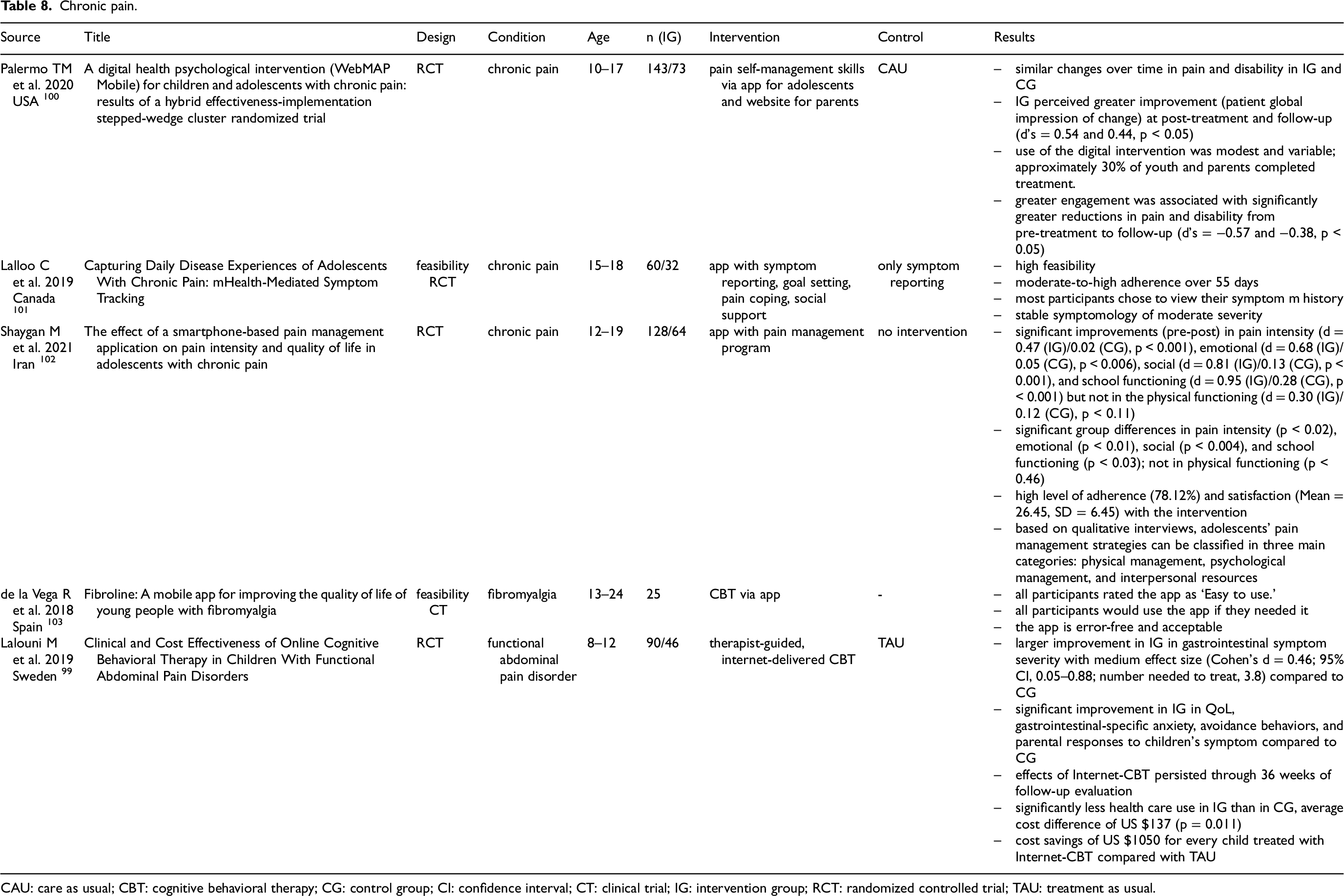
CAU: care as usual; CBT: cognitive behavioral therapy; CG: control group; CI: confidence interval; CT: clinical trial; IG: intervention group; RCT: randomized controlled trial; TAU: treatment as usual.
Genetic and congenital diseases
Several genetic and congenital conditions (arthrogryposis, congenital heart disease, cystic fibrosis, Duchenne muscular dystrophy, Marfan syndrome, sickle cell disease, spina bifida) were examined in 12 studies. Clinical outcomes improved in six studies; in four of these, improvements were greater than in the control group.104–107 Quality of life improved in one case. 108 No outcomes compared to baseline or the control group. Acceptance levels were high in all measured cases.109,110 (Table 9).
Genetic and congenital diseases.

CAU: care as usual; CF-PedsQL-GI: cystic fibrosis specific version of the Pediatric Quality of Life Inventory; gastrointestinal symptoms module; CG: control group; CI: confidence interval; CT: clinical trial; HEP: home exercise program; HRQoL: health-related quality of life; IG: intervention group; IQR: interquartile range; RCADS: Anxiety and Depression Scale in Children-Revised; RCT: randomized controlled trial; ROM: range of motion
Psychiatric disorders
Psychiatric disorders were examined in 12 studies. With one exception of partial improvement, 116 all measured clinical outcomes improved during the study. Patients and mothers rated the therapeutic alliance lower in video meetings, while therapists and fathers found it comparable. 117 In three studies, improvements at post-intervention were better than in the control group,116,118,119 one of them matched the control group at follow-up. 116 In four studies,120–123 the improvements were comparable to the control group. Quality of life was assessed in only one study, 121 but did not change in either group. Acceptance was high in all of the four measured cases.120,123–125 One study reported lower medication costs. 121 (Table 10).
Psychiatric disorders.

CG: control group; IG: intervention group; OCD: obsessive-compulsive disorder; RCT: randomized controlled trial; TAU: treatment as usual.
Various/other conditions
The 13 studies focused on cancer, transplantation, visible differences, or multiple conditions. Eight studies reported better clinical outcomes compared to pre-intervention, two of which showed only partial improvements.128,129 One study reported a medium-term benefit. 130 Four studies128,131–133 reported better clinical outcomes than the control group, while two others showed comparable outcomes.134,135 Quality of life was assessed in only two studies; it improved in one 136 and remained unchanged in the other. 132 (Table 11).
Various/other conditions.
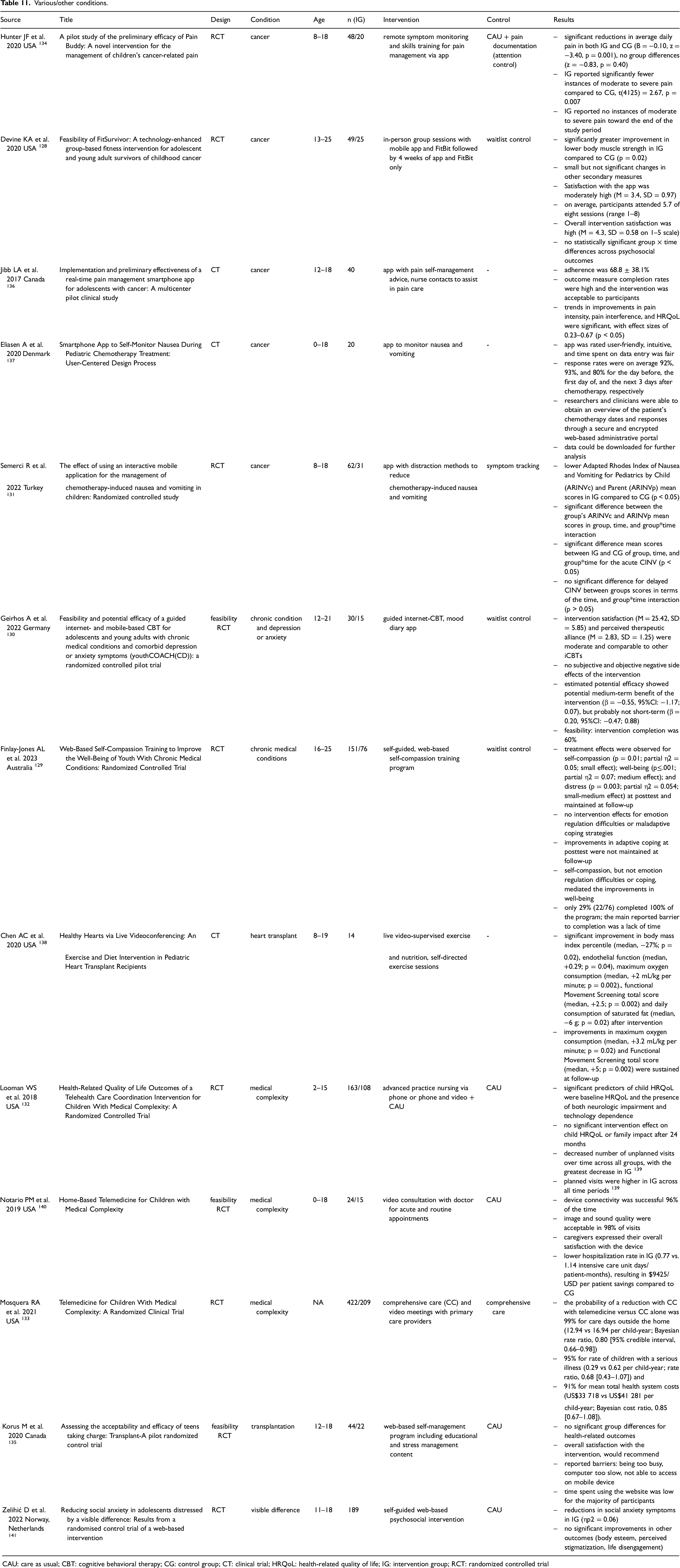
CAU: care as usual; CBT: cognitive behavioral therapy; CG: control group; CT: clinical trial; HRQoL: health-related quality of life; IG: intervention group; RCT: randomized controlled trial
Gamification
Gamification and serious games are effective tools for delivering health-related content to children and adolescents, as they enhance engagement, motivation, and learning outcomes. By integrating game mechanics such as challenges, rewards, and interactive storytelling, gamification can improve health knowledge and encourage positive behavior change. 142 Additionally, serious games can make complex medical information more accessible, helping young patients develop essential skills for managing their health in an engaging and age- appropriate way. 143 Twelve studies used a gaming or gamification approach, with the highest number (n = 4) targeting obesity. Six of the interventions delivered (psycho-)educational content, while five included a contact option with a therapist, coach, or nurse. One study incorporated reminders and medication monitoring, another offered financial rewards, and a third had an additional on-site intervention. Two studies integrated peer groups, one through chat and one via team challenges.
Seven studies showed significant improvements in clinical outcomes, one of which demonstrated improvements only in some measures. Two studies reported no improvement, but no outcomes worsened post-intervention. Quality of life improved in one study. All studies reported high feasibility and satisfaction.
Video meetings
Video meetings were used in 30 studies. Physician or nurse consultations were conducted in 12 studies, while therapeutic or coaching interventions (including psychotherapy and exercise) were applied in 15 studies. Three studies focused on educational content delivered via video, while two additional studies conducted video group sessions. Video meetings were used across a wide age range, with some interventions starting from birth. One study was stopped early due to lack of participation.
Additional devices
Twelve studies incorporated additional devices beyond smartphones and PCs. Among these, three studies used continuous glucose monitoring (CGM) devices. Another three studies integrated scales, with two focusing on obesity and one as part of a comprehensive home-based examination during digital doctor appointments for Marfan syndrome. Two studies employed smart glasses or virtual reality (VR), while two others used step-tracking devices. In nine studies, acquired measurements were directly transmitted to patients’ smartphones and/or physicians. Of the six studies that reported improvements in clinical outcomes, three demonstrated superior outcomes compared to the control group, while the remaining three showed comparable results. No outcomes worsened during interventions. One study reported no improvement in clinical outcomes but noted enhanced quality of life, while another study observed better quality of life improvements in the intervention group. Additionally, two studies reported better health-related habits. One study reported limited results due to baseline group differences and high dropout rates.
Psychological components
A total of 43 studies used psychotherapy or psychological components, ranging from cognitive behavioral therapy to self-management training, delivered through various methods including video sessions, self-help modules on websites or apps, and group treatments. Some of these interventions included feedback mechanisms. Of these studies, 27 reported improved clinical outcomes post-intervention, with 8 of them demonstrating superior outcomes compared to the control group. In one instance, BMI outcomes were worse than in the control group, but body fat measurements improved. In one study on anorexia, 117 therapeutic alliance was partially rated better for in-person treatment. However, no other outcomes were worse than the control group, and most were comparable. Quality of life was improved in 7 of 9 studies, of which 4 showing superior improvement to the control group.
Symptom tracking and treatment adherence
26 studies implemented symptom tracking, including triggers, medication, and other disease-related values. Adherence strategies were used in 32 studies and included reminders for medication or triggers, treatment planning, or medication calculation (e.g., insulin doses for diabetes patients). Following the intervention, all clinical outcomes improved in 19 studies, with 11 showing greater improvements than the control group. One study demonstrated improvements in one intervention condition, while another showed medium-term benefits. A third study reported improvements in some outcomes. One study using image recognition for calorie tracking reported worse outcomes in the intervention group, while acceptance and adherence were high. 62 Quality of life improved in four studies and remained unchanged in seven. Only one study reported worsened outcomes after the intervention, while all other improvements were comparable to the control condition.
Education
Disease-specific education is crucial for chronically ill children and adolescents, as it fosters health literacy, enabling them to understand their condition, adhere to treatment plans, and make informed health decisions. Higher health literacy is associated with better self- management, improved treatment outcomes, and reduced complications. 144 Particularly in conditions like type 1 diabetes, structured education enhances glycemic control and empowers young patients to take an active role in their care. 145 Educational content was incorporated into 30 interventions. Among these, clinical outcomes significantly improved in 14 studies, with 9 showing greater improvements than the control group. Two studies showed an improvement in some outcomes, which were also better than those of the control group. Nine of 13 interventions resulted in improved quality of life, with 6 showing significantly greater improvements than the control condition. The remaining interventions showed comparable outcomes, with no reports of worsened outcomes.
Quality assessment
Study quality was evaluated using the JBI appraisal tools for randomized controlled trials (RCTs) and quasi-experimental studies. Due to the nature of the interventions, blinding of participants and staff was often not feasible, affecting the assessment of this dimension. However, other quality dimensions were generally rated favorably across most studies, though some studies received lower ratings or lacked sufficient information for certain criteria. Blinding of treatment delivery personnel in the RCT appraisal was not applicable in several cases where the intervention was self-administered by participants, eliminating the need for additional personnel. The same applied to blinding of outcome assessors in cases where assessments were solely questionnaire-based. Intention-to-treat-analysis was not always conducted, and descriptions of randomization methods and blinding were missing in some cases. Furthermore, most quasi-experimental studies lacked a control group, which is a critical component for comparative analysis. A detailed quality assessment is provided in the supplement. (Figures 4 to 7, Tables 12 and 13)
Discussion
Summary of evidence
High feasibility and satisfaction rates across various telemedicine interventions were observed. A diverse range of approaches, including smartphone applications, video meetings with healthcare providers, and educational content delivery, was tailored to meet the needs of chronically ill children and their families. By offering multiple modalities of engagement, such as apps or websites, our study recognized the importance of catering to individual preferences and optimizing usability.
Importantly, clinical outcomes and quality of life either improved or remained stable, with no observed worsening of outcomes during the intervention period, nor were outcomes inferior to traditional in-person care. In two cases, worse outcomes in the telemedicine group were recorded, measuring therapeutic alliance and dietary intake.
Preferences for medical treatment vary among individuals, with some expressing a preference for face-to-face interactions, while others favor communication through video conferencing or text-based messaging. By offering flexibility in communication modalities, telemedicine accommodates diverse preferences and enhances patient engagement. In consideration of the target group's needs, smartphone applications were prioritized over websites to enhance usability. This approach resonated well with participants, who appreciated the convenience of accessing healthcare services and educational resources directly from their mobile devices. Moreover, the use of smartphone applications facilitated real-time tracking of symptoms, medication adherence, and disease management, empowering patients and caregivers to actively participate in their healthcare journey.
The advantages of telemedicine were consistently highlighted, encompassing reduced travel time, the convenience of appointments in the comfort of one's home environment, and high satisfaction with digital interventions. These benefits are particularly relevant to chronically ill children and their families, who often face significant logistical and financial challenges associated with frequent medical appointments. By eliminating the need for travel and offering appointments in the comfort of one's home environment, telemedicine alleviates the burden placed on families and enhances overall quality of life.
The cost-effectiveness of telemedicine for children and adolescents remains an underexplored aspect, with only three studies directly addressing financial implications. The findings are mixed: one study reported lower medication costs, due to improved adherence and optimized prescriptions, another found reduced overall treatment costs, while a third study observed increased costs attributed to more frequent patient-provider interactions. This variation suggests that cost outcomes may depend on the specific telemedicine model and its implementation. Beyond direct healthcare expenditures, telemedicine has the potential to reduce indirect costs for families, particularly travel-related expenses and time away from work. Moreover, automation and digital tools integrated into telemedicine platforms could further enhance cost-effectiveness by streamlining routine processes, such as patient monitoring, appointment scheduling, and data management. While initial investment in technology and training is required, these advancements could lead to long-term cost reductions by optimizing healthcare resource allocation. However, the scarcity of robust cost analyses in the literature underscores the need for further research to assess the economic sustainability of telemedicine interventions, particularly in comparison to traditional care models. Future studies should consider not only direct medical costs but also broader economic implications, including healthcare system efficiency and family-level financial impact.
Despite the overwhelmingly positive feedback, our study also identified some challenges associated with telemedicine, primarily related to technical issues and individual preferences. However, these disadvantages were relatively minor compared to the numerous advantages offered by telemedicine interventions. As technology continues to evolve and healthcare systems adapt to embrace telemedicine, addressing these challenges will be critical to ensuring widespread adoption and sustained success.
For patients, especially chronically ill children and adolescents, the findings underscore the significant benefits of telemedicine in terms of improved access to care, convenience, and overall quality of life. Telemedicine reduces the burden of frequent travel to medical appointments, allowing patients to receive timely interventions and support from the comfort of their homes. By offering various communication modalities and user-friendly smartphone applications, telemedicine caters to individual preferences and empowers patients to actively participate in their healthcare journey. Overall, telemedicine enhances patient-centered care and promotes better health outcomes for children with chronic illnesses.
Telemedicine offers parents of chronically ill children invaluable support by alleviating the logistical and financial burdens associated with managing their child's healthcare needs. The convenience of remote consultations and the availability of smartphone applications streamline communication with healthcare providers and facilitate real-time monitoring of their child's health status. By reducing travel time and providing access to specialized care from anywhere, telemedicine empowers parents to better manage their child's condition while minimizing disruptions to family life. Additionally, the cost savings associated with telemedicine interventions relieve financial strain on families, enhancing their overall wellbeing.
Telemedicine enables healthcare providers to deliver high-quality care more efficiently while addressing the diverse needs of their patients. Through video meetings, remote monitoring, and educational content delivery, doctors can engage with patients and their families in a more flexible and personalized manner. Telemedicine also facilitates better coordination of care among multidisciplinary teams, leading to improved patient outcomes and increased satisfaction. By leveraging technology to overcome geographical barriers and enhance communication, telemedicine empowers doctors to optimize resource utilization and deliver patient-centered care.
The findings of this study have significant implications for health insurance providers, highlighting the safety, effectiveness, high patient satisfaction, strong engagement, reduced burden on families, and improved healthcare coverage associated with telemedicine interventions. By reducing the need for in-person visits and hospitalizations, telemedicine lowers healthcare utilization costs and minimizes unnecessary expenditures. Moreover, telemedicine interventions promote preventive care and early intervention, leading to better health outcomes and reduced long-term healthcare costs. As such, health insurance providers stand to benefit from supporting the integration of telemedicine into healthcare delivery systems, thereby enhancing the value and efficiency of their coverage offerings. To translate these findings into practice, policymakers should prioritize the development of regulatory frameworks that ensure the continued integration and reimbursement of telemedicine, particularly for managing chronic conditions in children and adolescents. Health insurance providers can support this shift by expanding coverage for telemedicine services, recognizing their potential to reduce long-term healthcare costs through preventive care and early intervention. Additionally, healthcare providers should adopt telemedicine as a standard option for appropriate cases, leveraging its benefits to enhance patient engagement, improve adherence to treatment, and minimize logistical challenges for families. By aligning financial incentives, clinical guidelines, and digital infrastructure, stakeholders can optimize telemedicine's role in pediatric care, ultimately improving health outcomes and reducing strain on both families and the healthcare system.
Telemedicine represents a critical component of healthcare policy discussions, particularly in the context of improving access to care, reducing healthcare disparities, and optimizing healthcare resource allocation. The findings of this study underscore the importance of policies that support the widespread adoption and integration of telemedicine into healthcare delivery systems. By prioritizing investments in telemedicine infrastructure, expanding reimbursement policies, and addressing regulatory barriers, policymakers can facilitate the equitable provision of telemedicine services to all patients, regardless of geographical location or socioeconomic status. Moreover, by promoting telemedicine as a cost-effective solution for enhancing healthcare access and quality, policymakers can drive systemic changes that benefit both patients and healthcare systems as a whole.
Post-COVID-19 research indicates a growing acceptance of digital interventions among patients, caregivers, and physicians, reflecting increased familiarity and confidence in telemedicine. However, significant challenges remain in fully integrating telemedicine into routine care. Policy frameworks and reimbursement structures often lag behind technological advancements, limiting widespread adoption. Additionally, many healthcare systems face barriers to implementation, including infrastructure limitations, regulatory constraints, and inconsistent digital literacy among users. Overcoming these challenges requires targeted policy adaptations and structural investments to ensure telemedicine can transition from an emergency response to a sustainable component of regular healthcare delivery.
Study quality is a crucial factor that is sometimes overlooked in the studies presented in this paper. The frequent inability to blind participants and staff underscores a potential source of bias that may affect the reliability of the results. While most studies performed well on other quality dimensions, the inconsistencies and occasional lack of information highlight the need for more comprehensive reporting and adherence to methodological standards. The absence of control groups in many quasi-experimental studies further limits the ability to draw robust causal inferences. These factors collectively suggest that while the overall study quality is reasonable, there are significant areas for improvement that should be addressed in future research to enhance the validity and reliability of findings.
Limitations
The studies included in our analysis exhibited considerable heterogeneity in their methodologies and outcome measures, posing challenges to direct comparisons of results. Consequently, conducting a meta-analysis to synthesize the findings was not feasible. Additionally, due to the relatively small sample sizes in many of the studies, the statistical significance of the results may be limited. Only 34 (29.3%) studies had over 100 participants, which may restrict the generalizability of the findings.
Another limitation of this review is its focus on intervention studies with short evaluation periods, leaving the long-term impact of telemedicine unclear. Short-term studies may not fully capture sustained patient engagement, adherence, or cost-effectiveness. Future research should include retrospective analyses of established telemedicine programs to provide insights into long-term clinical benefits, cost trends, and implementation challenges, supporting more sustainable healthcare integration.
Furthermore, despite efforts to systematically evaluate the literature, the breadth of studies prevented an in-depth analysis of all factors and nuances. Additionally, the limitations of this study include the reliance on a single database.
Conclusions
Our study underscores the transformative potential of telemedicine interventions in managing chronic illnesses among children and adolescents. Through diverse modalities such as smartphone applications and video consultations, telemedicine offers enhanced accessibility, convenience, and time and cost savings for patients and families. Despite the clear benefits demonstrated, challenges such as methodological heterogeneity and small sample sizes across studies highlight the need for standardized outcome measures and larger-scale research endeavors. Standardization would facilitate comparability between studies and increase statistical significance, thereby strengthening the evidence base for telemedicine interventions in pediatric healthcare.
Moving forward, concerted efforts are required to address these challenges and fully capitalize on the potential of telemedicine. This includes continued investment in telemedicine infrastructure and technology, as well as the implementation of policies that support equitable access and reimbursement. Moreover, future research should prioritize standardized methodologies, larger sample sizes, and longitudinal studies to elucidate the long-term impact of telemedicine on health outcomes and healthcare delivery, as well as pay more attention to methodological robustness. By addressing these considerations, telemedicine can emerge as a cornerstone of pediatric healthcare delivery, improving outcomes and quality of life for chronically ill children and their families.
Supplemental Material
sj-docx-1-jtt-10.1177_1357633X251334423 - Supplemental material for Telemedicine and digital health for chronic conditions in pediatrics: A systematic review
Supplemental material, sj-docx-1-jtt-10.1177_1357633X251334423 for Telemedicine and digital health for chronic conditions in pediatrics: A systematic review by Britta Exner, Isabel V Frielitz-Wagner and Fabian-S Frielitz in Journal of Telemedicine and Telecare
Footnotes
Abbreviations
Contributors statement
All authors approved the final manuscript as submitted and agree to be accountable for all aspects of the work.
Declaration of conflicting interests
The authors declared no potential conflicts of interest with respect to the research, authorship, and/or publication of this article.
Declaration of generative AI and AI-assisted technologies in the writing process
During the preparation of this work, the authors used ChatGPT-4/4o in order to enhance the clarity and fluency of the manuscript's language, without altering the original content or scientific integrity. After using this tool, the authors reviewed and edited the content as needed and took full responsibility for the content of the publication.
Funding
The authors disclosed receipt of the following financial support for the research, authorship, and/or publication of this article: This work was supported by the Bundesministerium für Bildung und Forschung (grant number 01GY2111).
Registration,data availability,and protocol
The review was not registered. A protocol was not prepared; the documentation of the review process, data extracted from studies, and analytic code can be provided by the authors upon request.
Role of funder/sponsor
The funder had no influence on the data analysis, interpretation, or publication.

Data availability statement
Data sharing not applicable to this article as no datasets were generated or analyzed during the current study.
Supplemental material
Supplemental material for this article is available online.
References
Supplementary Material
Please find the following supplemental material available below.
For Open Access articles published under a Creative Commons License, all supplemental material carries the same license as the article it is associated with.
For non-Open Access articles published, all supplemental material carries a non-exclusive license, and permission requests for re-use of supplemental material or any part of supplemental material shall be sent directly to the copyright owner as specified in the copyright notice associated with the article.
