



Abstract
Objectives
Remote patient monitoring (RPM), combining home blood pressure measurements with telehealth services, effectively manages hypertension. Successful implementation of RPM programs at scale requires understanding program costs and financial sustainability. We evaluated the financial performance of an RPM program.
Methods
Conducted from March to June 2024 in the Cardiology Division at New York University Langone Health, the study used field observation, surveys, and micro-costing methods. A costing tool was developed to quantify program costs in 2024 US dollars, including personnel, equipment, and supplies. RPM-related services reimbursement rates were estimated using Medicare billing information. The return-on-investment (ROI) ratio was calculated by dividing net return (profit) by the RPM program costs. Sensitivity analyses assessed the impact of varying parameters on the ROI of RPM.
Results
The average RPM program cost was estimated at $330 per patient (range: $208−$452). Major expenses included data review by staff ($172 per patient), blood pressure devices ($48 per patient), and phone communications ($36 per patient). ROI varied based on patient compliance with home blood pressure monitoring (≥16 days per month), with an average estimate of 22.2% (range: −11.1%–93.3%) per patient at a 55% compliance rate. The ROI was most sensitive to changes in data-review costs, insurance reimbursement rates, patient compliance, device setup, and communication costs.
Conclusions
The RPM program achieved a positive ROI from the perspective of a clinical division in a large healthcare system. Successful implementation and financial sustainability of RPM require efforts to reduce human resource costs and enhance patient engagement.
Keywords
Introduction
Hypertension, defined as systolic blood pressure (BP) ≥ 130 mm Hg or diastolic BP ≥80 mm Hg before treatment, affects nearly half of the adults in the USA.1,2 As a major cause of cardiovascular disease and the leading cause of death in the USA, hypertension leads to immense health and economic burden.1,3 Typical management of hypertension occurs during office visits with primary care providers where BP is measured and antihypertensive medication changes may be made. Remote patient monitoring for hypertension (RPM-HTN) combines measurement of BP at home with electronic transmission of BP readings to providers and telehealth services.4–6 Several randomized controlled trials have demonstrated that RPM-HTN can be effective and cost-effective in managing hypertension, enhancing BP control, and mitigating cardiovascular disease events.7–12
Since the onset of the global COVID-19 pandemic and the shift toward more extensive use of telemedicine in clinical practices, RPM-HTN is becoming an increasingly integral part of routine healthcare. 13 New York University Langone Health (NYULH), a prominent healthcare system, has implemented an RPM-HTN program across various clinical settings since 2017. The expanding ambulatory RPM program has enrolled over 11,000 patients in home-based monitoring of at least one physiological parameter (e.g., BP, weight, heart rate, and blood glucose). 14 Unlike other health systems that focus on centralized RPM programs for specific high-need populations, NYULH emphasizes building tools and workflows for clinical practices interested in using RPM. This innovative approach helps various clinical divisions incorporate RPM into their patient care strategies.
Scaling up RPM-HTN requires estimating the costs to implement and operate the program, including the resources needed to integrate RPM-HTN into routine healthcare infrastructure and evolving workflows.15,16 In addition, regulatory considerations, particularly payment and reimbursement policies, significantly impact the adoption and potential short-term return on investment (ROI) needed to ensure financial sustainability of RPM-HTN. The traditional Medicare program reimburses RPM-HTN-related services using fee-for-service payments, but it remains uncertain whether the billable services can cover or surpass the existing RPM program costs. 17 Understanding the drivers of program costs and ROI is essential for healthcare providers and payers to develop value-based models, aligning financial incentives with value-based care initiatives.
To address these evidence gaps, we investigated the program costs and ROI of an RPM-HTN program from the perspective of a clinical division at NYULH.
Methods
To estimate the costs associated with implementing and operating RPM-HTN, we examined the workflow of the program at the Cardiology Division of NYULH and used an activity-based micro-costing approach, which identifies and values every resource utilized. We classified costs into several categories: personnel, program start-up, equipment, supplies, and other miscellaneous costs required for the operation of RPM-HTN, modified from a standardized costing tool. We collected data through an on-site visit, surveys, and a review of aggregated data from electronic health records (EHRs). In March 2024, we shadowed the Cardiology Division and observed the process of patient enrolment, consenting, and communication with the staff. In addition, we conducted a survey based on the costing tool and required the staff involved in managing the RPM program to complete it (see Appendix 1: Survey Instrument). We gathered de-identified and aggregated EHR data on patients in the RPM program retrospectively from January 1, 2023, to December 31, 2023. A total of 100 patients enrolled in the RPM-HTN program had a median age of 66 years (range: 28–87), with 30% being male and 52% covered by Medicare. All EHR data used for analysis were de-identified and aggregated in compliance with institutional policies. Patient consent was obtained electronically via the Epic MyChart portal as part of routine clinical care and to facilitate enrollment in remote monitoring, not specifically for research. The determination that formal IRB review was not required was made by the NYULH Institutional Review Board, based on the retrospective, de-identified, and aggregate nature of the data and the quality improvement focus of the project.
RPM-HTN workflow
To understand the program workflow and activities, we interviewed the staff in the division involved in RPM-related services and recorded initial data during an on-site visit. Any remaining questions were addressed through emails and virtual meetings. The RPM-HTN program workflow included five steps: (1) patient enrollment, (2) device setup, (3) data monitoring, (4) follow-up, and (5) discharge (Figure 1). The cardiologist was responsible for enrolling patients, after which the nurse practitioner (NP), together with the medical assistant (MA), who also serves as the care coordinator, assisted patients in signing the consent forms, setting up the devices, and providing educational materials on how to use the BP devices and sync data with the Epic-enabled smartphone application. Within the RPM program workflow, “consent” refers to patient agreement to participate in the RPM program as part of their care, not to participation in research activities. At enrollment, patients received standardized instructions for accurate self-measurement (seated with back supported and feet flat; rest quietly for several minutes; measure in the morning before caffeine/food; take two consecutive readings; avoid talking during measurement). After the patient began using the device to monitor their BP, the NP checked the data weekly to ensure it was being submitted regularly. The NP also communicated with the patient over the phone to adjust medications as needed, while the MA assisted with troubleshooting any issues the patient encountered with the device or app. In the rare event of an emergency where a patient had extremely high and dangerous BP levels, the NP would phone the patient to help schedule an appointment with the cardiologist. Patients would be discharged from the program if they indicated they were no longer interested in participating or if their BP stabilized for at least a month. If they expressed interest in continuing participation, even if their BP was stabilized, they would remain in the program. Allowing patients to continue RPM participation after BP stabilization may increase their willingness to enroll and remain engaged, potentially improving compliance rates and program retention.
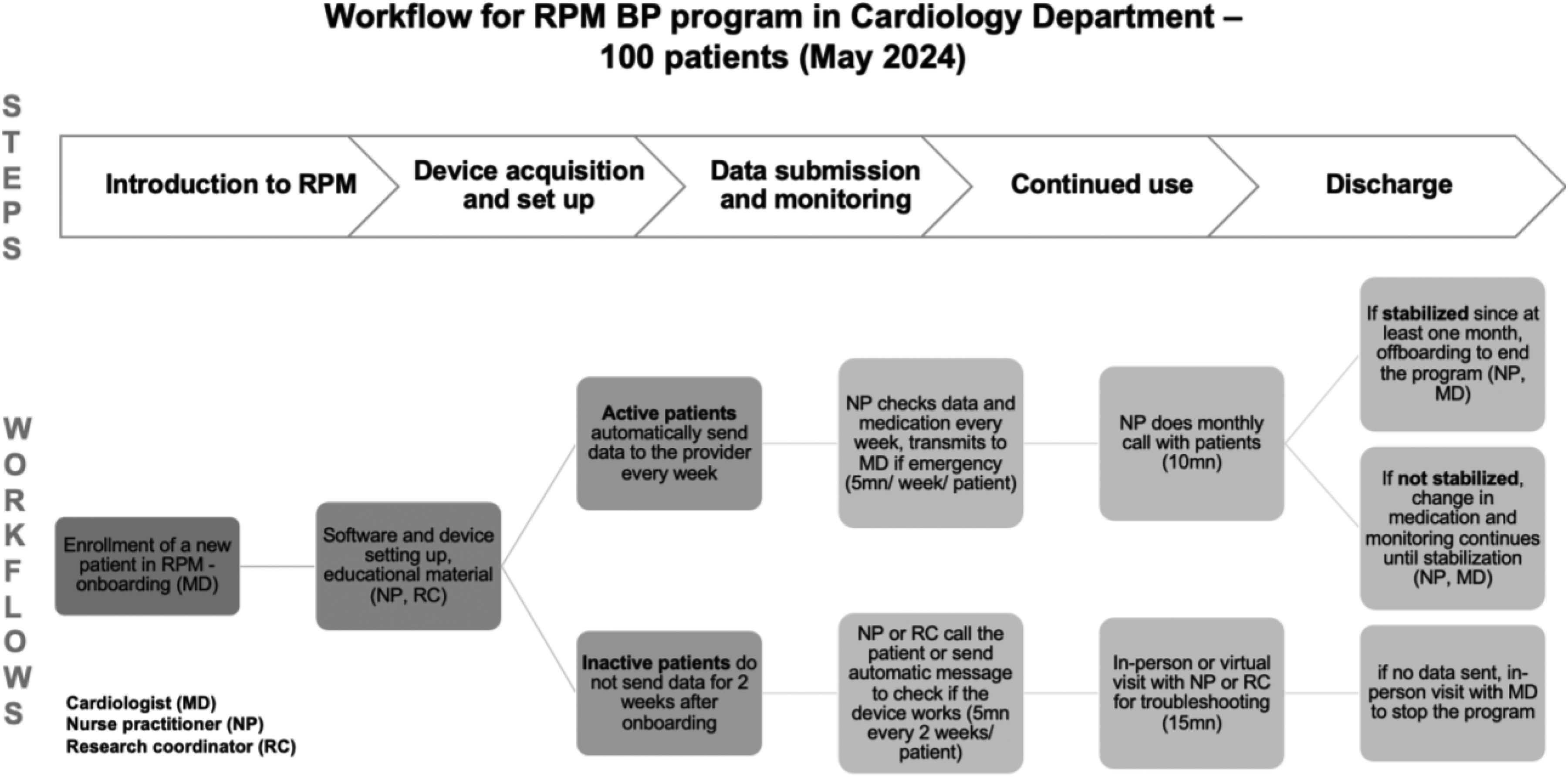
Clinical workflow of the remote patient monitoring program.
Valuation of personnel costs
We used a bottom-up approach to estimate staff time, primarily based on survey responses detailing time spent on each activity, number of patient encounters, and patients per month. We distinguished between initial setup/training (higher time investment) and follow-ups. These data were validated through staff meetings to resolve discrepancies and ensure consensus. The results were also presented at the hospital's monthly RPM strategy meeting for discussion. Personnel costs were calculated by multiplying reported staff time by hourly rates based on average salaries and fringe benefits for each provider type (e.g., cardiologists, NPs, MAs, administrative staff) in the New York metropolitan area. 18 All costs were adjusted to 2024 U.S. dollars using the Personal Health Care Expenditure component of the National Health Expenditure Accounts, per Agency for Healthcare Research and Quality guidelines. 19
Program startup costs
Since no new staff were hired to manage hypertension patients using RPM-HTN, the startup costs were mainly associated with training. We calculated the number and duration of training sessions (e.g., 30 min annually) for the care team and annualized these costs. All other costs, including equipment and information technology (IT) infrastructure, were classified under equipment costs below.
Equipment costs
The hospital purchased equipment, including BP devices, which were distributed to patients upon enrollment. The devices used were Omron HEM-RXL31-B (Omron Healthcare Inc., Hoffman Estates, IL, USA), purchased at wholesale price. These devices were recommended to be returned upon patient discharge and then reused for newly enrolled patients. Additionally, the hospital acquired the EHR-embedded application Validic, a middleware to connect home BP devices to the NYU Epic system, as part of the IT infrastructure. We obtained the retail prices for Validic and BP devices from the Finance Department's reports and validated these prices with receipts. Since the Validic application would be used for multiple years, we annuitized the costs. The useful life of the EHR-embedded application was determined to be 10 years, based on the internal revenue service (IRS) depreciation guidance, 20 and local operational experience (continuous use since 2017). We used the straight-line method to depreciate the application over its useful life. 21 The value of the application over its useful life was then divided by an annuity factor, using a 3% discount rate, and further divided by the estimated number of patients in the health system who used the Validic app.
Supply costs
Supplies and materials included educational resources for patients on how to set up the devices, sync data, and monitor their BP, as well as translation materials for patients who do not speak English or prefer Spanish as their primary language. Since these costs were incurred only once during patient enrollment, we estimated them on a per-patient basis. Accommodation for other languages or special needs (e.g., visual or hearing impairments) was not implemented during the study window.
ROI analysis
Revenue to offset program costs comes from insurance reimbursements. Among the patients enrolled, only two had insurance that did not cover the RPM services, making them responsible for self-paying. The division waived these patients’ self-payment. Payment rates set by private payers varied substantially, while Medicare established a physician fee schedule, allowing providers to use current procedural terminology (CPT) codes to bill for RPM services.
22
We used the 2024 Medicare physician fee schedule, the payment for the following CPT codes were:
99453: Patient Onboarding: Initial device setup and patient education on RPM equipment ($19 one-time). 99454: RPM Technology: Device usage with electronic capture, daily recordings, and programmed alerts transmission—each 30 days (minimum of 16 days of readings required per period), billable once per patient per month ($50 monthly). Under current CMS policy, recordings beyond the 16-reading threshold do not generate additional reimbursement in a given month. 99457: Clinical Monitoring 20 m: Care management services, clinical staff/physician/other qualified health care professional time requiring interactive communication with the patient/caregiver; initial 20 min ($49 monthly). 99458: Additional Clinical Monitoring +20 m: Same as 99457, additional periods of 20 min. Monthly max is two codes or 40 min ($40 monthly).
Moreover, the CMS physician fee schedule rates vary by state. In New York, adjustments for labor costs and practice expenses use a rate of 1.061. Therefore, we adjusted the payment rates in the ROI analysis using this rate. 22 We used the Medicare reimbursement rate to estimate the total revenue generated from the RPM program per patient and for the department per year. However, since patients may be covered by private insurance, Medicare Advantage, or Medicaid plans, which may have higher or lower reimbursement rates, we tested different reimbursement structures in the sensitivity analysis.
The annual ROI was estimated using the following formula
23
:

The numerator represents the difference between total revenue and total cost, or the expected value (EV) of the program, while the denominator is the program's total cost. The “EV” as used in our analysis refers to the difference between total revenue and total cost (i.e., net financial margin) and does not incorporate uncertainty/probability as in formal EV calculations under risk. This short-term ROI analysis did not account for longer-term health benefits (e.g., improved medication adherence, higher control rates, prevention of cardiovascular events), opportunity costs (e.g., investments in other potentially beneficial programs), or broader health and societal gains (e.g., savings from reduced travel time for care) associated with RPM-HTN.
Sensitivity analyses
We assessed the robustness of the ROI analysis for RPM-HTN through a series of sensitivity analyses by varying key parameters. Specifically, we accounted for uncertainties related to personnel costs, including the (1) estimated time spent on monitoring BP data, device setup, or communication with patients per encounter; (2) variations in the hourly rates for the NP or MA; (3) the proportion of patients complying with submitting BP readings at least 16 days in a month; (4) and insurance reimbursement rates. These rates included the lowest payment rate using CPT code G0511 for RPM services provided by Federally Qualified Health Centers, higher payment rates used by private payers compared to Medicare, and the waiver of patient self-payment. In addition, we analyzed how uncertainties in clinical factors, such as the percentage of patients experiencing emergency situations, affected the EV of the ROI estimate for RPM-HTN.
Results
ROI analysis inputs were sourced from on-site observations, staff self-reports, EHRs, and reliable local and national reports for salary and payment rates for RPM services (Table 1).
ROI analysis: data inputs and sources.

Note: adata collection was completed between March and June 2024.
The average cost per patient enrolled in the RPM-HTN program was estimated at $330 (range: $208–$452) per year. The projected total cost for the Cardiology Division to manage 100 patients was $32,977 (range: $20,785–$45,168) (Table 2). Based on staff reports and survey responses, the responsible NP spent an average of 10 min per week (range: 5–15 min) reviewing one patient's BP data and 15 min per month (range: 10–20 min) communicating with patients about hypertension management and lifestyle modifications over the phone. Additional personnel time was spent on device setup during the first visit, technology troubleshooting, contacting non-active patients, and billing services.
Cost of the remote patient monitoring programs for hypertension management in a cardiology division (number of enrollment = 100).
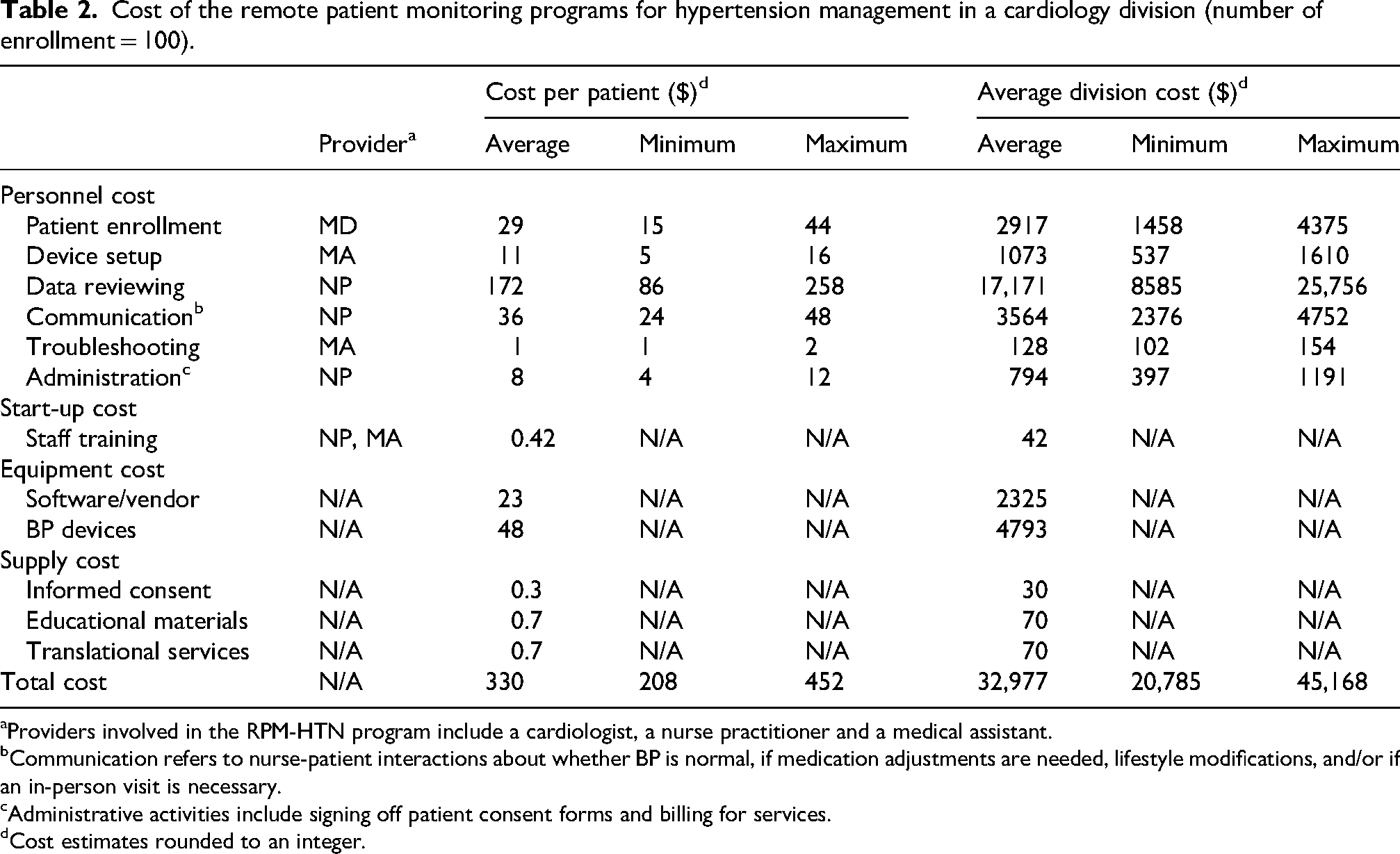
Providers involved in the RPM-HTN program include a cardiologist, a nurse practitioner and a medical assistant.
Communication refers to nurse-patient interactions about whether BP is normal, if medication adjustments are needed, lifestyle modifications, and/or if an in-person visit is necessary.
Administrative activities include signing off patient consent forms and billing for services.
Cost estimates rounded to an integer.
Overall, we found that NP review of patient home-measured BP data was the costliest component, with an average per-patient cost of $172 (range: $86–$258). The cost of Bluetooth-enabled BP devices ($48) and monthly phone communication with patients ($36; range: $24–$48) were the next highest program costs. The cost to enroll patients, obtain consent, and provide RPM education was estimated at $29 (range: $15–$44). The annual depreciation cost for the Validic application was estimated at $23 per patient per year. Other costs, such as staff training ($0.42 annually) and supplies ($1.70 per patient one time), were generally low. Since micro-costing was estimated as the average cost per patient, the total cost for 100 patients enrolled in RPM in the division was calculated by multiplying the cost per patient by 100, resulting in a total of approximately $32,977 (range: $20,785–$45,168).
The ROI results are shown in Table 3. Current patient compliance in submitting BP records for at least 16 days per month was estimated to be around 55% on average. In other words, about 55% of the enrolled patients submitted BP readings for at least 16 days in a month. The estimated Medicare reimbursement per patient for RPM services was $402. This includes CPT code 99453 for device setup, 99454 for data reviewing and 16 BP readings (billable only for 55% of patients per month), 99457 for monthly communication, and 99458 for additional communications such as troubleshooting, reminders for monitoring, and scheduling appointments (applicable to only about 34% of patients). The base-case EV corresponds to this 55% compliance rate, with sensitivity analysis varying from 40% to 80%.
Return-on-investment analysis of the remote patient monitoring for hypertension management.
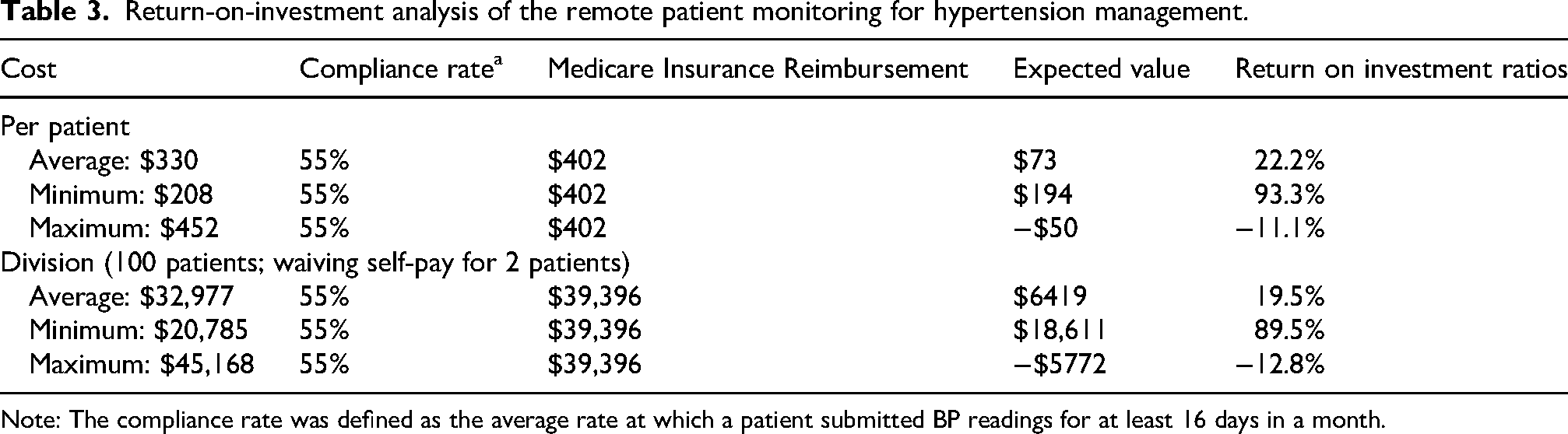
Note: The compliance rate was defined as the average rate at which a patient submitted BP readings for at least 16 days in a month.
Based on the estimated range of program costs, we calculated the average ROI to assess the financial performance of the RPM program. The ROI is defined as the net financial return per dollar invested. Using patient-level cost estimates, the average ROI was approximately 22.2%, meaning that for every dollar invested, the program generated a return of $1.22. This ROI varied depending on program costs—ranging from −11.1% (assuming higher costs of $452 per patient) to 93.3% (assuming lower costs of $208 per patient). At the division level, adjusting for the waiver of self-payment and incorporating average patient compliance rates, the estimated ROI in the base-case scenario was 19.5%, with a range from −12.8% to 89.5%. These findings highlight that lower program costs are associated with more favorable ROI, indicating stronger financial performance and greater value generation from the RPM program.
Sensitivity analyses of key parameters in the numerator of the ROI estimate (EV of RPM) are presented in Figure 2 as a tornado diagram. This diagram illustrates how EV changes when various factors are adjusted between their maximum and minimum values, indicating their relative importance in determining the ROI.
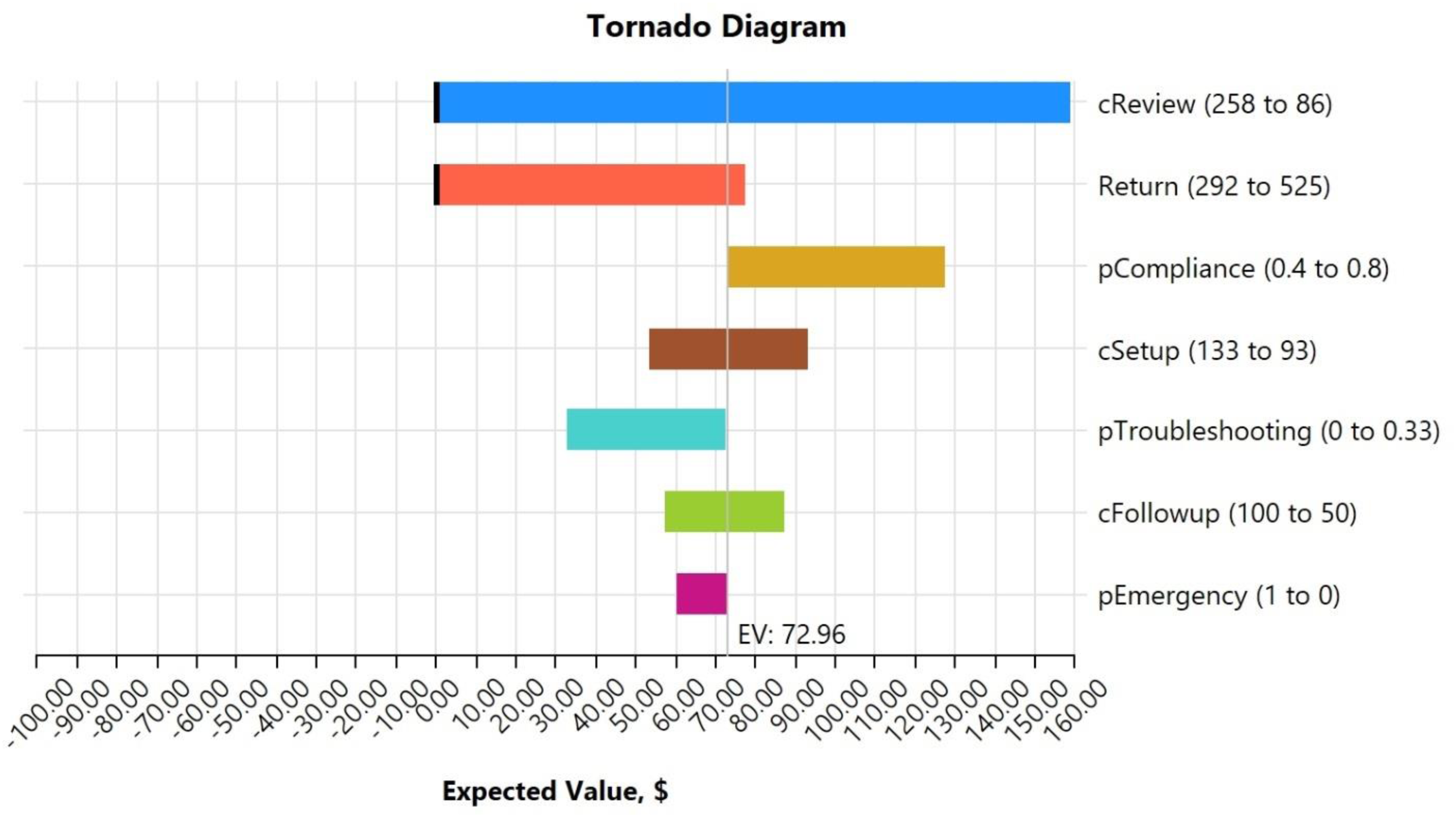
Sensitivity analysis of key parameters in the expected value of RPM.
The most influential factor was the cost for reviewing BP readings, which ranged from $86 to $258 depending on the NP's time spent reviewing BP data weekly and their hourly rate. This resulted in an EV range from −$13 to $159 (see estimates in Appendix Table 2). The second most influential factor was the insurance reimbursement for the RPM-HTN program, with payments ranging from $292 to $525, leading to an EV range of −$16 to $77 per patient. The third most influential factor was the patient compliance rate, which ranged from 0.4 to 0.8 and produced an EV range from $73 to $128. This is because if a patient does not comply with the program's requirements, additional costs are often incurred. While nurses continue to make phone calls and collect data, they are not compensated under code 99454, as there is no reimbursement for those activities when the patient does not comply, resulting in a one-time loss of revenue. To avoid inflating the ROI, we took a conservative approach when considering the impact of non-compliance on the financials.
The cost of device setup, varying between $93 and $133, influenced the EV range from $53 to $93. The proportion of patients who initially failed to submit data due to technical issues but became compliant after troubleshooting also affected the EV. Patient non-compliance primarily results in missed revenue opportunities due to ineligibility for certain billing codes, leading to a decreased net margin. Similarly, the cost of NP follow-ups, ranging from $50 to $100, resulted in an EV range of $54 to $87. While the probability of an emergency event also influenced the EV estimate, its impact was smaller compared to the other factors.
Discussion
In this economic evaluation, we estimated the program cost of RPM-HTN in the Cardiology Division at NYULH and found that the average cost per patient was $330. The estimated ROI was positive at 22.2%, suggesting that the program is generating a profit above the costs, making it financially sustainable, at least in the short term.
The Community Preventive Services Task Force recommends the use of RPM to reduce BP, citing its proven effectiveness and cost-effectiveness. 24 However, the lack of guidelines for organizational RPM workflows, particularly for RPM-HTN, limits the widespread adoption and expansion of these interventions, partly due to concerns about implementation costs and financial sustainability. Our findings, based on an RPM program implemented in the cardiology division of a large healthcare system, demonstrate that RPM-HTN can be a key component of routine healthcare delivery, leading to significant cost savings and enhanced overall healthcare efficiency. Organizational workflows significantly influence the ROI of RPM, as seamless integration within the broader clinical and organizational structure affects initial costs related to resources, software, and training. 7 The ROI of RPM depends on the specific clinical setting and available resources.7,24,25
Regarding the cost of the RPM program, we found that more than half of the RPM-HTN program's expenses ($172 per patient, 52.1%) were attributed to NP data-reviewing tasks. This high cost reflects the substantial time and effort required by NPs to continuously monitor and analyze patient data, which is crucial for effective hypertension management. Data review was the most time-consuming task, as it necessitated healthcare professionals to verify that BP records were submitted regularly and on time, ensure their accuracy, and monitor for BP control. 25 While meticulous, this process is essential in RPM-HTN programs to facilitate successful home-based monitoring, aid patients in managing hypertension, administer antihypertensive medications, detect masked hypertension, and help avoid emergencies that could escalate to higher-acuity care.24–27 Previous research has shown that intervention protocols triggering patient-provider interactions on an as-needed basis, rather than at a standardized frequency, were associated with lower costs and greater effectiveness. 24
In our program, NPs were primarily responsible for delivering most of the RPM services. However, it is important to note that clinical staff, including registered nurses, MAs, and other trained healthcare professionals, are fully capable of performing many of these services as well. Further research is needed to ensure equivalent clinical quality and patient acceptance compared to advanced practice providers. Therefore, there is significant potential to reduce the overall costs associated with RPM by relying more extensively on other clinical staff when expanding the program to more patients. Personnel costs represent a major component of the total expenses in RPM programs, and by delegating tasks to other clinical staff, who typically have lower hourly rates compared to NPs, substantial cost savings can be achieved without compromising the quality of care. This approach could make RPM more financially sustainable and accessible in the long term, allowing for broader implementation and greater scalability of the program.
Upfront expenses, such as purchasing EHR-embedded software, Bluetooth-enabled BP monitors, and staff training, can be significant but may be reduced when scaling up the RPM-HTN program to various clinical divisions, such as Maternal-Fetal Medicine and General Internal Medicine. 14 Scaling improves cost-efficiency by distributing fixed upfront costs over a larger patient base, reducing per-patient costs but not absolute equipment expenditure. Establishing a loaner program to recycle BP monitors from discharged patients and distribute them to newly enrolled patients can save on the purchase cost of new monitors. This is especially beneficial for patients who cannot afford their own BP cuffs or lack insurance coverage. 28 As the program expands, reusing devices and considering a loan program for BP monitors will be crucial. 28
Additionally, automation and delegation strategies can reduce patient follow-up costs. For example, using artificial intelligence (AI) to perform tasks currently handled by NPs, 29 such as sending personalized feedback, reminders to submit BP records, nudging patients to take medications, and scheduling appointments for elevated BP, can improve patient adherence and compliance in remote monitoring. 30
Patient compliance is one of the most critical factors influencing the ROI and sustainability of the RPM-HTN program. 24 This analysis attributes lost revenue for the clinical division to patients failing to submit BP readings. To increase patient engagement and self-management, further research should incorporate patient preferences and adherence to better understand real-world adoption and engagement behaviors, while also considering their long-term health and economic impacts. We propose enhancing patient experience and engagement by incorporating simplified user interfaces, improving patients’ onboarding experiences, and providing multilingual resources.31,32 Studies have shown that implementing personalized care strategies—such as tailored feedback, reminders, and incentives—can significantly boost patient engagement.30,33,34 Additionally, data analytics can track usage patterns and engagement levels, aiding ROI analysis and personalized interventions to improve patient engagement and compliance.
Moreover, economic evaluation results are crucial for payers in setting reimbursement policies. We calculated the ROI of RPM using CMS billing codes and Medicare reimbursement rates. While these codes provide stability and uniformity for providers, they can be restrictive and costly, particularly with quotas such as spending 20 min per month with each patient. Additionally, as of today, Remote Physiologic and Remote Therapeutic Monitoring codes cannot be billed simultaneously and are limited to once per patient per month. Providers must carefully coordinate services to ensure compliance with billing regulations, which can limit the comprehensive care they offer and lead to billing conflicts among specialists. This billing limitation was incorporated into our ROI calculations. However, allowing simultaneous billing would increase the ROI.
While current insurer reimbursement structures may not prioritize equitable compensation for RPM, regulatory changes could incentivize payers to adopt policies that better support provider sustainability and access. Rigid reimbursement requirements, such as high minimum numbers of data uploads per month, tying RPM data review intervals to calendar days and requirements around interactive encounters, continue to constrain the growth and implementation of RPM at scale. Additionally, promoting value-based payment models can incentivize providers to deliver high-quality, cost-effective care, prioritizing patients with multiple chronic conditions.35,36 Future health insurance policies should also revisit the restrictions that limit the RPM program to one provider per patient within a 30-day period, especially when multiple devices (e.g., BP and glucose monitors) are being used.
This study has several limitations. First, we used Medicare reimbursement rates to estimate the ROI, but many patients are covered by private insurance or Medicaid with varied reimbursement policies. But it is important to note that private insurances often adopt Medicare models, and our estimates may be conservative since private insurers typically reimburse more than Medicare. For example, one study showed that a $1.00 increase in Medicare's fees increases corresponding private prices by $1.16, 37 and another study found that in 2020, employers and private insurers paid 224 percent of what Medicare would have paid for the same services. 38 Additionally, hospital prices for privately insured patients were much higher than Medicare payment rates across 13 selected U.S. metropolitan areas. 39 In addition, Medicare reimbursement rates are state-specific; as a result, cost-revenue estimates may differ in other regions. We adjusted rates using the New York-specific factor and recommend adapting the model for local payment structures in other settings. While examining variations in insurance reimbursement is outside the scope of this study, future research should address these using claims databases.
Second, we only assessed short-term ROI, with an average patient enrollment duration of four months. This duration allows healthcare providers to closely monitor a patient's health status, assess progress, and make necessary adjustments to their care plan based on the data collected through RPM. The RPM program is still in the early stages of implementation and undergoing refinement, with healthcare providers and developers working to optimize technology, workflows, and patient engagement strategies.
Third, we did not conduct a prospective cohort study due to the nature of the program, which allowed for more flexibility in patient involvement and integration into routine care. As such, we did not gather process measures on how many individuals were initially approached by the cardiologist at the Cardiology Division and how many patients ultimately chose to participate or were successfully enrolled. Future studies should incorporate these implementation process measures and evaluate the program's long-term economic values and returns.
Fourth, our financial analysis is limited to direct program costs and revenues. Future studies should assess system-level impacts such as reduced emergency visits or hospitalizations, which may have both positive (societal cost savings) and negative (reduced institutional revenue) implications.40,41 Future studies should aim to better address this aspect.
Fifth, the cost and ROI estimates reflect only one clinical division and may not be generalizable to various patient populations. Although non-profit hospitals do not aim for profit, financial sustainability requires cost/revenue balance. Therefore, our cost estimates are from the healthcare system's perspective; future studies should integrate cost estimates from the patient's and payer's perspectives, as well as assess patient-centered outcomes.
In conclusion, our study examined the operational workflow, resource allocation, reimbursement policy, and both personal and division-level ROI of an RPM-HTN program in the cardiology division of a large healthcare system. We found that the RPM-HTN program generated a positive return on average and identified critical factors for improving its EV. Future research is warranted to understand the barriers to RPM-HTN implementation and drivers of ROI when scaling up the program to different clinical divisions and patient populations. In addition, it is important to explore the longer-term cost-effectiveness of the RPM-HTN program and how reimbursement policies can align incentives to deliver higher-quality patient care for hypertension management.
Supplemental Material
sj-docx-1-jtt-10.1177_1357633X251403059 - Supplemental material for Program cost and return on investment analysis of remote patient monitoring for hypertension management in the cardiology department of a large healthcare system
Supplemental material, sj-docx-1-jtt-10.1177_1357633X251403059 for Program cost and return on investment analysis of remote patient monitoring for hypertension management in the cardiology department of a large healthcare system by Donglan S Zhang, Laure Millet, Brandon K Bellows, Sarah Lee and Devin Mann in Journal of Telemedicine and Telecare
Footnotes
Acknowledgements
The authors would like to express our sincere gratitude to Trisha Aloquina, Ayanna Horsford, and the other staff at NYU Langone Health who assisted us in collecting data for the cost analysis of the remote patient monitoring program. We also acknowledge the following funding support: National Science Foundation grant number 2129076 (Devin Mann), National Institutes of Health grant number R01MD013886, and Clinical and Translational Science Institute pilot grant (Donglan S. Zhang).

Funding
The authors disclosed receipt of the following financial support for the research, authorship, and/or publication of this article: This work was supported by the National Institutes of Health, National Science Foundation (grant numbers: R01MD013886 and 2129076).
Declaration of conflicting interests
The authors declared no potential conflicts of interest with respect to the research, authorship, and/or publication of this article.
Data availability statement
The datasets generated during and/or analysed during the current study are available from the corresponding author on reasonable request.
Supplemental material
Supplemental material for this article is available online.
References
Supplementary Material
Please find the following supplemental material available below.
For Open Access articles published under a Creative Commons License, all supplemental material carries the same license as the article it is associated with.
For non-Open Access articles published, all supplemental material carries a non-exclusive license, and permission requests for re-use of supplemental material or any part of supplemental material shall be sent directly to the copyright owner as specified in the copyright notice associated with the article.
