



Abstract
Introduction
Telehealth in Residential Aged Care Homes (RACHs) is recommended to improve access to specialist health services. Successful telehealth adoption depends on reliable technical infrastructure, a skilled workforce, and revised models of care. This study aimed to evaluate the impact of a telehealth training program on RACH staff's knowledge and skills, telehealth uptake, related challenges and how to sustain its use.
Method
A quasi-experimental design study. After delivering an onsite training program, we conducted t-tests with pre- and post-surveys, analysed feedback from training consultants, and performed follow-up interviews with RACH's senior managers.
Results
From August 2023 to October 2024, 41 RACHs received onsite telehealth training, primarily attended by nurses (88%). Survey results showed significant improvements in perceived telehealth knowledge, skills and confidence. A key motivator for implementing telehealth was enabling family members to attend consultations, while the major barrier was transitioning external health providers from phone to video consultations. In followup data, senior staff reported increases in telehealth activity and staff's confidence in using it, but potential for more activity. They wanted ongoing support, particularly to improve external providers' capability and willingness to use telehealth, indicating sustained telehealth adoption requires more than just access to equipment and training in RACHs.
Discussion
Telehealth training can be effective in increasing knowledge, skills and confidence to use telehealth in RACHs. However, RACHs need ongoing training and support, especially given workforce challenges and staff retention issues. Engaging all stakeholders, particularly external service providers is crucial to ensure that telehealth-supported models of care are well integrated within the broader health system.
Introduction
Telehealth use in Australian residential aged care homes (RACHs) surged during the pandemic. 1 It played a crucial role in maintaining access to primary care providers, 1 allied health, 2 specialists 3 and emergency departments, 4 during lockdowns. The use of telehealth, especially via telephone, increased with the pandemic's severity. 1 Video consultations were considered favourable among RACH staff and recognised as a method to increase and enhance patient care. A systematic review confirmed telehealth's potential to reduce hospital admissions and improve patient outcomes in RACHs.5,6 However, staff have expressed concerns about their skills and knowledge to operate telehealth technology. 7 Post-pandemic access to primary and allied healthcare remains limited for residential aged care homes leading to missed care and unnecessary hospitalisations.8–10 This was highlighted in 2021 by the Australian Royal Commission into Aged Care Quality and Safety, which led to additional funding to establish or expand current telehealth capabilities and infrastructure becoming available for RACHs. 8
Previous telehealth research indicated videoconferencing was underused but had potential value. 6 Staff sought better understanding how and when to use telehealth effectively, integrating telehealth into clinical workflows, along with improved technology skills.6,11 Our team provided tailored onsite telehealth training to RACHs including software demonstrations and provided resources such as manuals and user guides to support ongoing staff training and its use. This study aimed to evaluate the impact of a telehealth training program on RACH staff's knowledge and skills, telehealth uptake and related challenges and requirements for sustainability.
Methods
This quasi-experimental study collected data pre and post intervention.
Setting
The Brisbane North Primary Health Network (BNPHN) is a federal initiative connecting healthcare providers and services to improve primary care for patients. 12 It services over one million residents covering 4100 km2 of mixed metropolitan, regional, and rural areas. 12
Preliminary work
BNPHN commissioned the Telehealth Readiness Assessment Tool and Business Process Training Toolkit 13 for the project (see assessment tools, training materials and evaluation measures). Funding was provided to RACHs to assist with purchasing equipment and telehealth business process training.
Pre-training online consultation
A list of 54 RACHs who had received funding and procured their telehealth equipment was shared with The University of Queensland's Centre of Online Health team, who are experts in the use and implementation of telehealth. An initial online meeting with each RACH used the business process checklist (see assessment tools) to assess their current telehealth activity, knowledge and processes. The information was also used to customise training materials. Virtual clinics for each RACH were set up on the Healthdirect (HD) Video Call platform, a secure, government-funded videoconferencing software designed for clinician-to-patient consultations available to all Australian RACHs at no cost. 14
On-site telehealth training
On-site training sessions included presentations and discussions on telehealth benefits, workflows, best practices and hands-on simulation video calls. Clinic administrators learned to customise their virtual clinic. Telehealth policies and procedures were discussed with Quality Improvement Leads. Each site received a toolkit for ongoing staff training containing sample policies and procedures. Ethical exemption was obtained from The University of Queensland's Human Research Ethics Committee (#2023/HE002435).
Assessment tools, training materials and evaluation measures
Various assessment tools, training materials, and evaluation measures were used pre and post the telehealth training.
Telehealth capability and readiness assessment tool
The Telehealth Capability and Readiness Assessment Tool evaluated each RACH's telehealth maturity, equipment (e.g., laptops, tablets, headphones) and connectivity. It also assessed their capacity to deliver high-quality telehealth consultations, use of My Health Record (a national electronic personal health record) and whether an electronic medication management system was in place.
The Business Process Toolkit
The Business Process Toolkit includes training materials (slides, information sheets on the Healthdirect video call) and guidelines and sample policies to support telehealth implementation.
Business process support checklist
Included in the toolkit, the business process support checklist identified a RACH's current telehealth activity, clinical workflows, scheduling processes, policies, telehealth champions, training preferences and engagement with My Health Record.
Pre/post training survey
Participants completed anonymous surveys before and after training, rating their telehealth knowledge, skills, and confidence on a 0 to 100 scale. They also responded to 5-point Likert statements from strongly disagree to strongly agree regarding their perceptions (e.g., I don’t think telehealth will be useful for our residents; I understand the benefits of telehealth for my residents) and answered open-ended questions (see Supplemental File 1).
Consultant diaries
Consultants recorded perceived challenges and facilitators and telehealth implementation observations during initial meetings and on-site training.
Follow up survey
RACHs were invited to complete a follow-up survey up to three months post training, exploring telehealth experiences, uptake, consultation types, further training provided to staff and additional support needs.
Healthdirect video call report
Reports from the HD platform included the date and the length of video calls for each RACHs’ clinic.
Analysis
Data sets were independently collected and analysed. Descriptive analyses were conducted for the business process checklists, pre- and post-training and follow-up surveys. A two-sample independent t-test was used for pre-post training data with statistical significance set at 0.005. Consultant diaries and qualitative follow-up data were analysed using inductive coding to identify themes and patterns, that were categorised into broader themes. Data sets were compared for deeper insights. 15
Results
From August 2023 to October 2024, 54 were invited to participate in the training program (Table 1). Eight RACHs did not engage despite several contact attempts, and one had a well-developed telehealth model and did not require any additional training.
Residential aged care homes participation
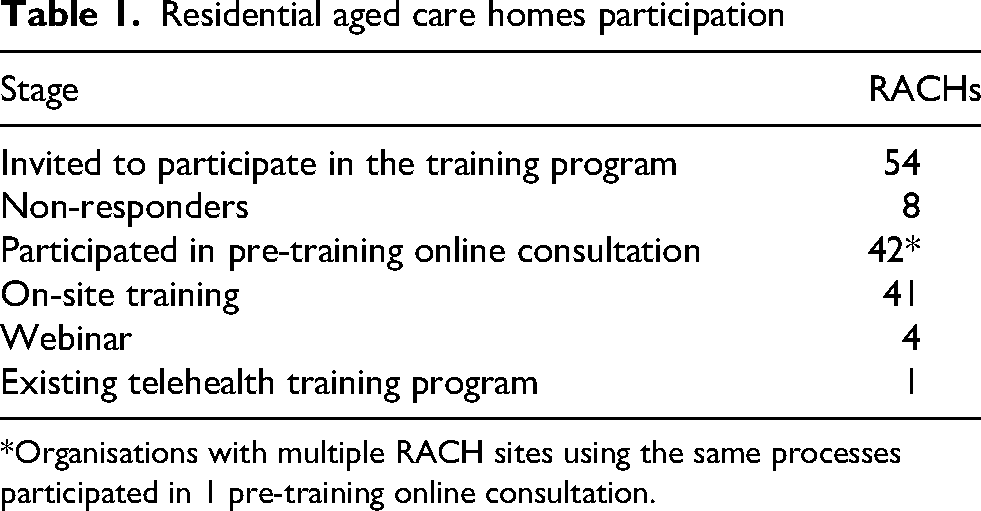
*Organisations with multiple RACH sites using the same processes participated in 1 pre-training online consultation.
Business process checklist
Forty-two RACHs participated in online meetings. Organisations with multiple RACHs using the same processes were combined into one meeting, resulting in 34 completed checklists. Telehealth (phone and video) was used in 50% of RACHs, mainly via phone. GPs and hospital/emergency department in-reach services were the most common telehealth users. In 19% (n = 6) of RACHs, GPs did not use telehealth, and 9% (n = 3) reported that GPs were unwilling to use video for consultations. One RACH had successfully deployed telehealth with consultations taking place with GPs, wound specialists and allied health practitioners.
Scheduling telehealth appointments
RACHs used various methods to schedule telehealth appointments, with 66% (n = 21) using a clinical management system and 41% (n = 13) using paper-based books or diaries. Registered nurses were (75%, n = 24) were primarily responsible for scheduling.
Delivery of telehealth appointments
Registered nurses (97%, n = 32) and enrolled nurses (48%, n = 16) assisted residents during appointments, with 97% (n = 23) conducted at the bedside.
Telehealth champions
RACHs selected champions for on-site training, mostly registered nurses (66%, n = 40) and senior managers/coordinators (33%, n = 20). Only 3% (n = 1) chose staff with education and training roles. Half had no video telehealth experience.
Telehealth-related policies, procedures and clinical pathways
Most RACHs (82%, n = 28) lacked telehealth in clinical pathways, and 79% (n = 27) had no telehealth policies and 85% (n = 29) had no telehealth procedures to support telehealth practice.
Training evaluation
Forty-one RACHs received onsite training with 37 (90%) completing pre and post evaluation forms. Four RACHs requested webinars to complement their organisation's telehealth training program. A total of 377 participants took part in training, the majority of which were nurses (88%, n = 331). Table 2 details the participant roles.
Participant role (n = 377)
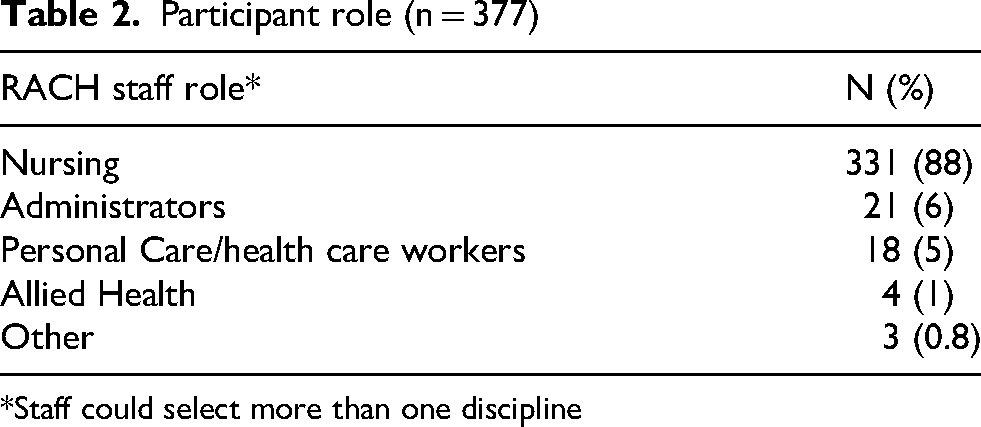
*Staff could select more than one discipline
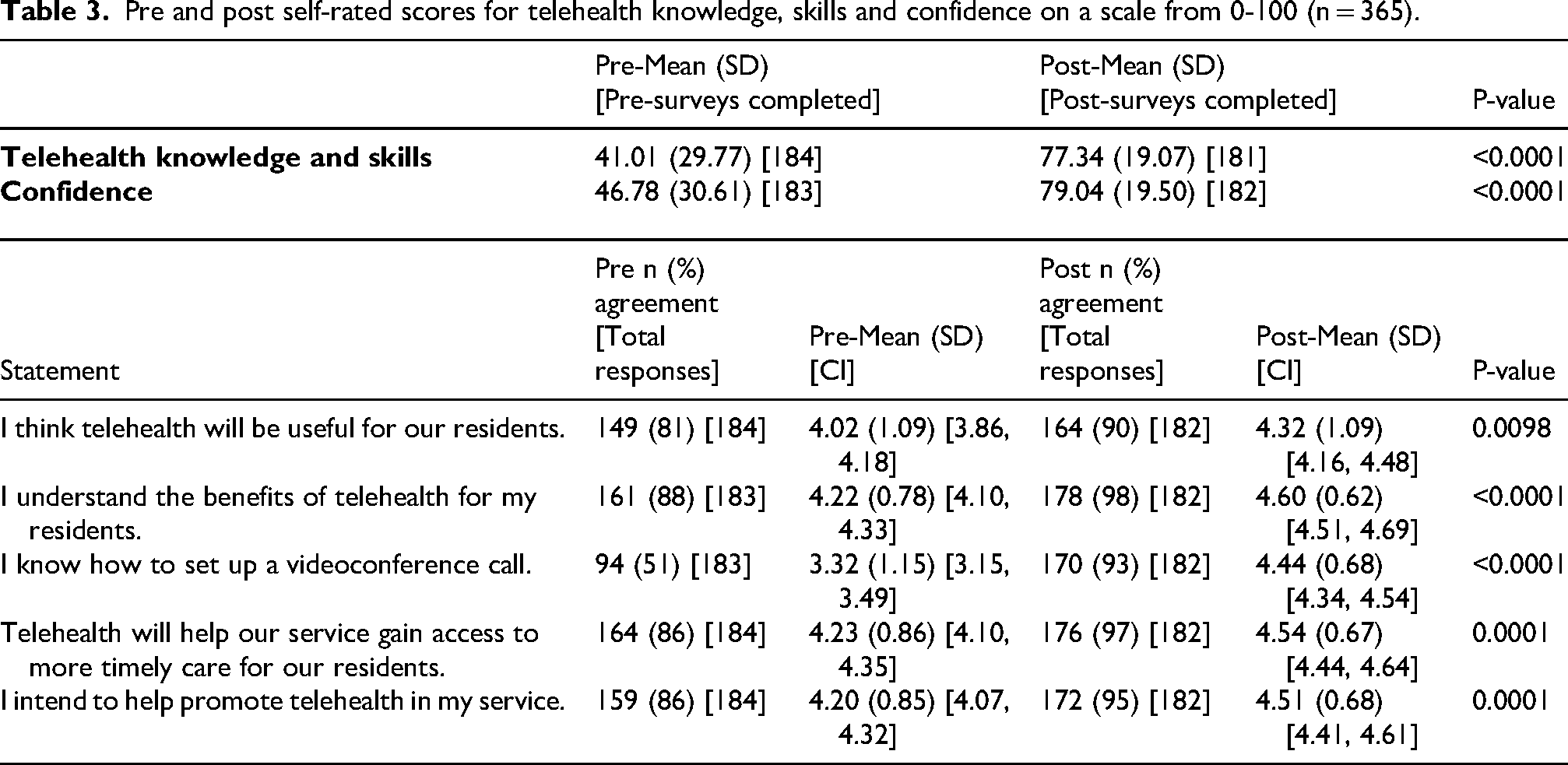
The independent t-test demonstrated that self-rated scores post training had resulted in statistically significant higher scores in telehealth knowledge and skills (M = 77.34, SD = 19.07) and confidence (M = 79.04, SD = 19.50) compared to pre-training telehealth knowledge and skills scores (M = 41.01, SD = 29.77, t(310)=–13.86, p < 0.001, Cohen's d = –1.485), and confidence scores (M = 46.78, SD = 30.61, t(305)=–11.96, p < 0.001, Cohen's d = –1.247) (Table 3).
Pre and post self-rated scores for telehealth knowledge, skills and confidence on a scale from 0-100 (n = 365).
Qualitative evaluation of the training
Before training, participants were asked what they wanted from the training. “How to use telehealth” and set up a video consultation was most frequently requested. They sought awareness of “the importance” of telehealth and how to make it “time-efficient and less frustrating.” They also wanted to know “the benefits to our residents” and how to encourage external health providers to use telehealth, set up and conduct video calls, improve practice, ensure timely intervention and preserve privacy.
Post training, when asked how the training could be improved, 70% of staff reported no changes. Simulated calls using RACH devices and the HD Videocall platform were deemed the most useful aspects of the training sessions. Some staff wanted more time to test the video platform and its functions.
Consultant diaries
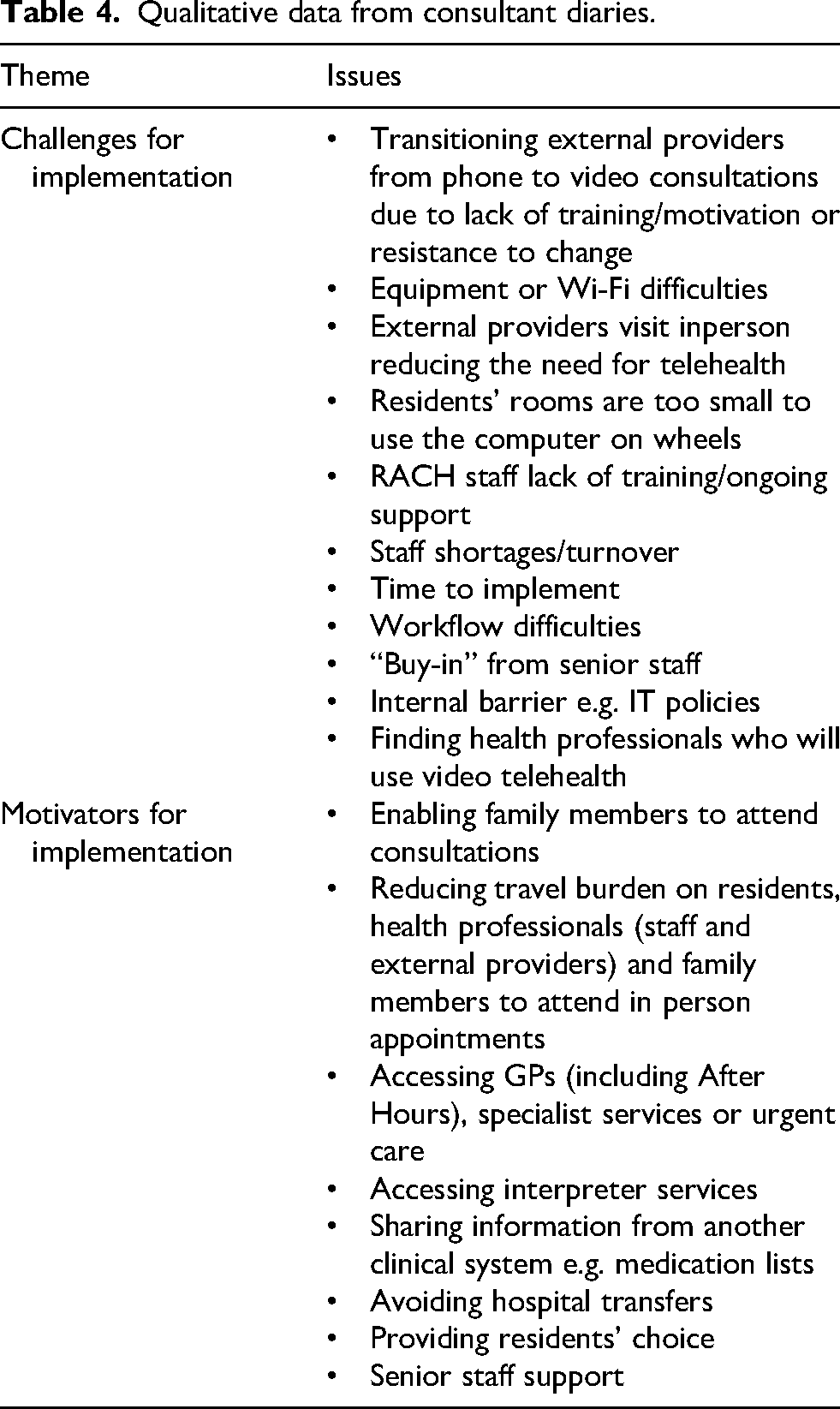
Major barriers reported for implementing telehealth included transitioning external health providers from phone to video consultations and poor internet connectivity in RACHs’ ‘black spots’ or the lack of equipment. Overwhelmingly, RACH staff were motivated to use telehealth to enable family members to attend consultations, reduce travel burden, avoid hospital transfers and access after-hours care. Further challenges and motivators identified by consultants are listed in Table 4.
Qualitative data from consultant diaries.
Follow up survey
Thirty-five sites (85%) could be reached for a follow-up survey on telehealth activity, averaging 109 days post training (range 15 days to 7 months). Respondents were mostly the facility or clinical services manager (49%, n = 17) with other roles including the nurse manager, director of care, residential care manager and care coordinator.
Training for other staff
Over half of the RACHs (51%, n = 21) had provided further training to staff, led by telehealth champions or centre managers. Training occurred one-on-one during consultations, handover meetings, clinical meetings, between shifts or with new staff.
Staff confidence
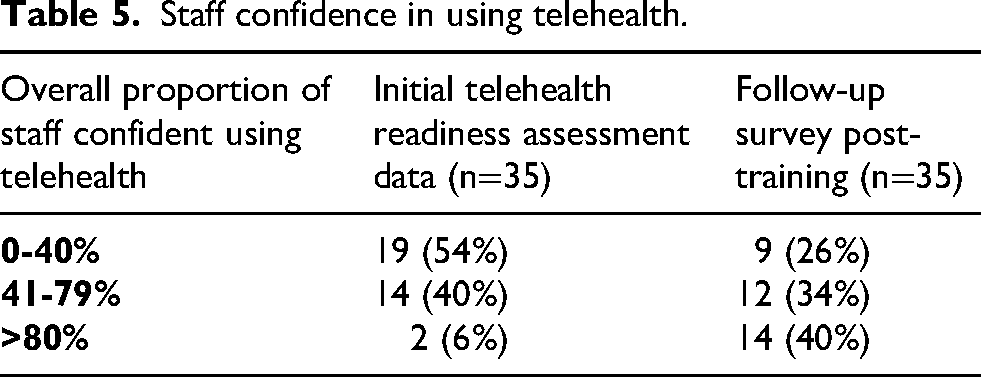
During the initial Telehealth Readiness Assessment, respondents were asked about staff confidence in using telehealth. Two RACHs (6%) reported that >80% of staff were confident, whereas post-training this had increased to fourteen RACHs (40%) (Table 5).
Staff confidence in using telehealth.
Video telehealth activity
Most RACHs (77%, n = 27) had conducted video consultations post training. They reported transitioning from phone to video consultations with GPs and after-hours doctors (43%, n = 15), specialists (37%, n = 13) such as geriatricians, cardiologists and wound services (n = 5, 14%). Other services included palliative care, speech pathology, nurse practitioner and the local aged care assessment service. One site trained their GP who upgraded to a smartphone and now regularly uses telehealth.
Post-training, HD Video Call reports indicated 14 RACHs had used the platform at least once. Most RACHs reported using telehealth with external health providers’ or their organisations’ business videoconference platforms.
Support needed to sustain telehealth activity
RACHs reported an increase in telehealth activity but saw potential for more. They requested support to improve external providers’ capability and/or willingness to use telehealth (29%, n = 10). Comments included GPs reluctance to change processes. Although RACHs had received training, “the drive is not coming from the people who should use it”. Respondents wanted to see “more promotion for the specialists/doctors to use telehealth as the [RACH] nurses do not have the credibility” to influence its use. Furthermore, it was suggested that “specialists should tell patients they do not need to attend in person” or “the option of telehealth should be included in the appointment letter”. One respondent requested that external provider training include information on consent for telehealth consultations.
Additionally, respondents wanted help connecting with external health providers who are will to provide video consultations. They suggested a website/page with contact details and quick links or QR codes for relevant services.
Tailored resident information was suggested to engage residents and families. Despite receiving funding, 11% (n = 4) needed more equipment or encountered Wi-Fi difficulties. Similarly, 11% (n = 4) wanted on-going training and support.
Two (n = 6%) RACHs identified needing more time for telehealth to be adopted into usual care because they were waiting for improved infrastructure and/or the delivery of more equipment. Overall, the ‘appetite’ or willingness to implement telehealth by RACHs increased over the lifetime of the project. We also found that contacting the RACHs to collect follow-up data stimulated further activity, including a site that wanted further information to implement HD Video Call. Factors such as staff leaving and replacements not knowing how to continue the implementation process highlighted the importance of ongoing support.
RACHs with low telehealth activity reported sufficient external providers visiting onsite (6%, n = 2). In addition, “resident's family often come take them to appointments [so they] haven't really needed to do telehealth’. Three RACHs (8%) reported being too time poor to embed it into usual care because of operational challenges. This led to feeling “frustrated that not more telehealth is being done. We have had a lot of new residents, and a lot of deaths and staff are very busy trying to focus on these challenges.”
Other aspects of the telehealth business process support
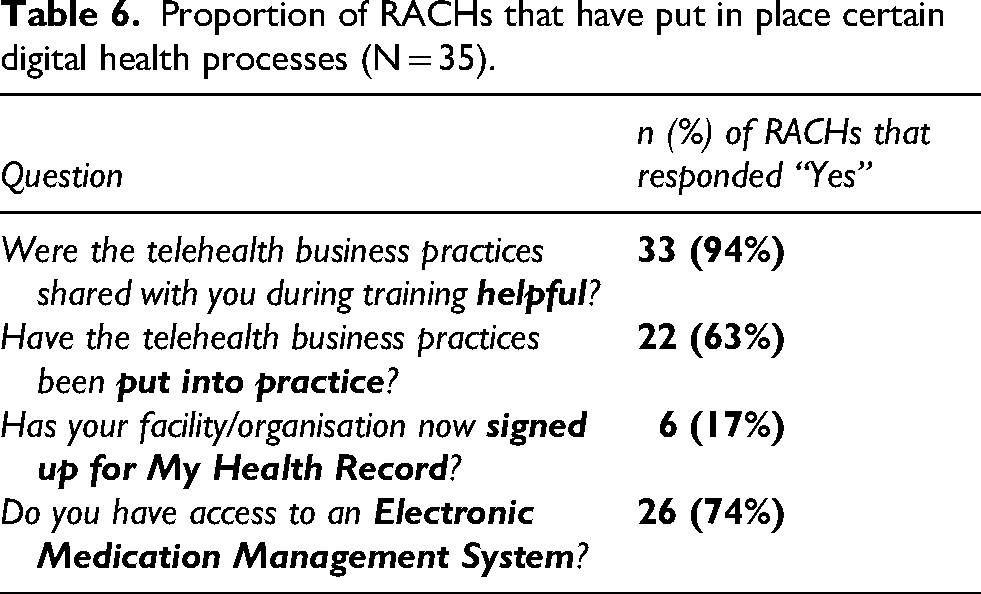
The final section of the survey was about digital health processes (Table 6). Many RACHs (68%, n = 24) had not initiated setting up their access to My Health Record. They reported that this was undertaken at an organisational level, rather than by individual RACHs. Two RACHs found the sign-up process challenging and were unable to connect but were very keen to have access.
Proportion of RACHs that have put in place certain digital health processes (N = 35).
Discussion
This study evaluates the impact of a telehealth training program on RACH staff 's knowledge, skills and confidence in using telehealth; its influence on telehealth activity; and whether and to what extent, further support is required. The findings indicate significant improvements in knowledge, skills and confidence, suggesting targeted training can effectively enhance telehealth capabilities. Although RACH managers reported an increase in video telehealth activity post-training, further activity could be stimulated by ongoing support to engage external health providers to use video telehealth and sustain its use.
Motivation for using telehealth
The training program was well-received, with participants appreciating the practical components, such as simulated video calls. This hands-on approach was crucial in building confidence and competence among staff. The motivation to use telehealth was driven by the need to access specialised services and reduce the travel burden for residents and health providers. 10 These findings align with previous research highlighting the benefits of telehealth, improving access to care and reducing logistical challenges.10,11,16 A novel finding from our study was staff wanting to use telehealth so family members could attend consultations with residents while external health providers were visiting the RACH as well as with health providers participating in a telehealth consultation.
Family members play an important role in overseeing the care of their loved one living in a RACH, including seeking information about care, acting as representatives, and sharing personal knowledge about residents to care providers. 17 The importance of telehealth in an RACH is underscored, as it can mitigate the many barriers to transporting residents to outside appointments and reduce stress on family members. Residents are often dependent on family members taking them to outside appointments. However, logistical issues such as work, family commitments, living far away or illness can prevent and limit their ability to accompany residents or be present when consultations take place. RACHs’ policies on staff accompanying residents to consultations vary with some requiring residents to pay for staff accompanying them to appointments, whilst others do not have sufficient staffing levels to offer this service.
RACH staff are responsible for providing information about the treatment and care of residents to their family members. Our study identified staff greatly valued telehealth as a mechanism that would improve information flow between health providers and family members by enabling family members to attend consultations and ask questions directly to the prescribing clinician. This would reduce staff time spent on mediating this information and potentially provide a more accurate direct transfer of information from the external health professional to the family member. In a setting where staff shortages and retention are a major problem that impacts on patient care, developing strategies to improve efficient use of staffing time is required.
Engaging with external health service by telehealth
Follow-up data indicated an increase in the use of video telehealth with a external clinician-led model, where the RACH uses the external health service providers’ link to access a call. Although most RACHs are not sending the call links, the training has enabled them to participate with services using video telehealth. A RACH-led model of telehealth, where the RACH sends the link, assumes that RACH staff have influence on external health providers’ decisions in using video telehealth. Clinical managers reported the opportunity to increase video telehealth activity, but a major barrier, is external providers’ resistance to transitioning to video telehealth. The hierarchical nature of health professionals, in which doctors and consultants were observed to be the decision-makers, means that RACH staff have limited ability to influence these health professionals’ decisions. Training targeted for these RACH health providers is required to improve their understanding and skills in delivering care by telehealth as well as identifying successful implementation strategies that will increase use.
The iterative nature of telehealth implementation
This study also highlights the iterative nature of telehealth implementation. Supplying equipment and training alone is not enough to increase telehealth adoption. Successful telehealth implementation requires leadership at an organisation and site level. 18 Working at an organisational level was out of scope for this project. However, each site did identify telehealth champions who will require ongoing support from the PHNs if telehealth use is to be scaled across their footprint. The study also highlights the unique context of RACHs and their diversity in readiness and capability for training and telehealth implementation. Tailored training to each RACHs’ needs is required if we are to change their traditional clinician-led model to a more proactive RACH led one. Future work needs to focus on change management and tailored support specific to the local RACH needs and challenges. RACHs also require further help to access residents’ My Health Record.
Strengths & limitations
A key strength of this project was the inclusion of a diverse range of RACHs in the training and evaluation process. RACHs varied in size and geographical location, representing metropolitan, regional and rural areas. However, several limitations should be acknowledged. First, participation was voluntary meaning that RACHs self-selected into the study, which may introduce selection bias. Second, because the pre- and post-training evaluations were completed on the same day, we were unable to determine if the observed improvements in competency were sustained over time. Similarly, while initial evaluations showed good adoption of telehealth, a longer-term assessment is needed to understand its sustained use. The RACHs involved in the training may have had a more positive attitude towards telehealth, as a commitment was required to purchase equipment and engage in the training to receive funding from the BNPHN.
Conclusion
Telehealth is a valuable way of supporting access to a range of health services for residents living in RACHs. Whilst the establishment of telehealth in RACHs requires access to reliable telecommunications and devices, the knowledge, skills and capacity of RACH staff to deliver telehealth are equally essential for sustainable use. Our study demonstrates that a customised and practical telehealth training program can lead to substantial improvements in RACH staff's perceived confidence and competence in delivering telehealth services. However, our study also shows that sustained telehealth adoption requires more than just access to equipment and training. RACHs require ongoing training and support, especially considering the aged care workforce challenges and difficulties with staff retention. In addition, engagement with all stakeholders (including RACH and external service providers) will help ensure that telehealth-supported models of care are appropriately planned and integrated within the broader health system.
Supplemental Material
sj-docx-1-jtt-10.1177_1357633X261443035 - Supplemental material for Increasing the use of video telehealth in residential aged care homes: A mixed-methods evaluation of a practical telehealth training program to support telehealth implementation
Supplemental material, sj-docx-1-jtt-10.1177_1357633X261443035 for Increasing the use of video telehealth in residential aged care homes: A mixed-methods evaluation of a practical telehealth training program to support telehealth implementation by Annie Banbury, Roshni Mendis, Monica Taylor, Jaimon T Kelly, Emma E Thomas, Liam J Caffery, Helen M Haydon, Centaine Snoswell and Anthony C Smith in Journal of Telemedicine and Telecare
Footnotes
Acknowledgements:
The authors wish to thank staff from each residential aged care home that participated in the training and contributed to the evaluation.
ORCID iDs

Ethical committee
This work was deemed exempt from Human Research Ethics Review by The University of Queensland's Research Ethics and Integrity department (2023/HE002435).
Author contributions
Funding
The authors disclosed receipt of the following financial support for the research, authorship and/or publication of this article: This work was commissioned and funded by the Brisbane North Primary Health Network.
Declaration of conflicting interests
The author(s) declared the following potential conflicts of interest with respect to the research, authorship, and/or publication of this article: Author Anthony Smith is a member of the Editorial Board of the Journal of Telemedicine and Telecare. They did not take part in the peer-review or decision-making process for this submission and has no further conflicts to declare.
Data availability statement
The data that support the findings of this study are available from the corresponding author upon reasonable request.
Supplemental material
Supplemental material for this article is available online.
References
Supplementary Material
Please find the following supplemental material available below.
For Open Access articles published under a Creative Commons License, all supplemental material carries the same license as the article it is associated with.
For non-Open Access articles published, all supplemental material carries a non-exclusive license, and permission requests for re-use of supplemental material or any part of supplemental material shall be sent directly to the copyright owner as specified in the copyright notice associated with the article.
