



Abstract

What is an ulcer?
An ulcer is a breakdown in the skin that may extend to the underlying fat, muscle, or even bone. There are many causes of foot and leg ulcers. The most common are venous insufficiency (called venous ulcers), peripheral artery disease (called arterial ulcers), and nerve damage (called neurotrophic ulcers).
Venous ulcers
Veins are the blood vessels that return blood to the heart from the legs and the rest of the body. When the veins do not function properly, blood may flow backward, causing increased pressure in the veins. This condition is called venous insufficiency (or venous stasis). Ultimately, the veins may leak blood and fluid under the skin. When enough fluid and pressure build in the tissues of the leg from the backward flow, the skin can break down and result in a venous ulcer. Patients with venous insufficiency may have bulging veins in the legs called varicose veins.
Arterial ulcers
Arteries are the blood vessels that carry blood from the heart to the legs and the rest of the body. PAD is narrowing or blockage in the arteries that supply the legs. When PAD is severe enough, the body cannot properly heal damage to the skin. Even minor skin damage from poorly fitting shoes or accidental cuts from nail or callus trimming can result in an arterial ulcer.
Neurotrophic ulcers
Peripheral neuropathy, or nerve damage, causes poor sensation in the feet. The most common cause of peripheral neuropathy is diabetes. In the absence of normal sensation, damage to the skin from increased pressure or injury may go unnoticed. Skin damage commonly occurs on areas that are difficult to see, such as the bottom of the foot and heel. Ultimately, with continued walking on the injured surface, a neurotrophic ulcer may develop.
Who is at risk for ulcers?
There are many risk factors that can contribute to foot and leg ulcers. It has been estimated that at least 15% of people with diabetes will develop a foot ulcer during their lifetime. Other patients at risk include those with other causes of neuropathy, PAD, chronic venous insufficiency, and lymphedema. Increased age, obesity, smoking, and drinking alcohol can also play a role in the development of ulcers.
What are the signs and symptoms of ulcers?
Venous ulcers
Patients with venous ulcers may complain of tired, swollen, or achy legs. Over time, reddish brown discoloration or darkening of the skin may be seen. Ulcers usually develop on the inside portion of the lower leg just above the ankle. The edges of the ulcer are irregular and there may be a large amount of clear, yellow, or bloody drainage, and a red color in the base of the wound (Figure 1).
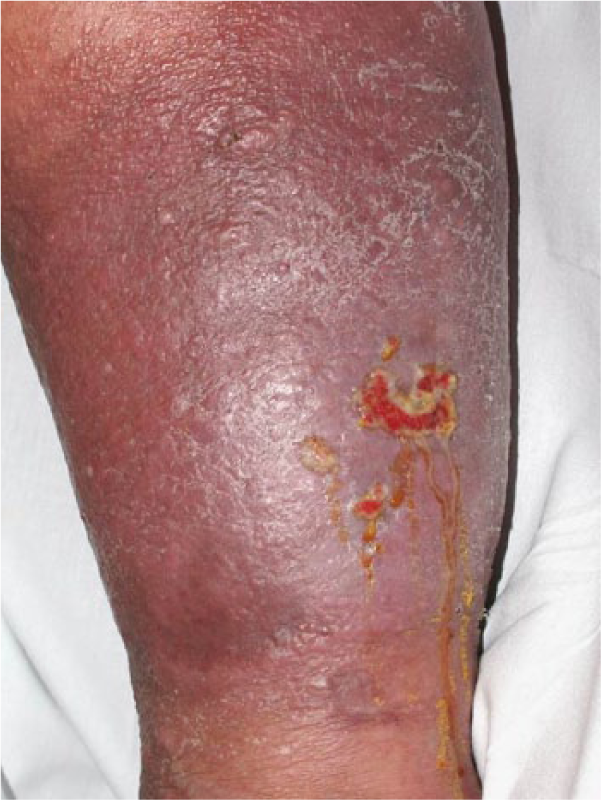
Venous leg ulcer.
Arterial ulcers
Patients with arterial ulcers typically complain of pain in the feet or legs. Depending on how severe the blockages in the legs are, the pain may occur with walking or even at rest. The skin may be cool and shiny, with decreased hair growth on the feet and legs. Ulcers usually occur at the tips of the toes, on the back of the heel, or over prominent bony areas such as the outside middle of the foot. The ulcers look punched out and have a yellow-brown or even black color with little drainage (Figure 2).
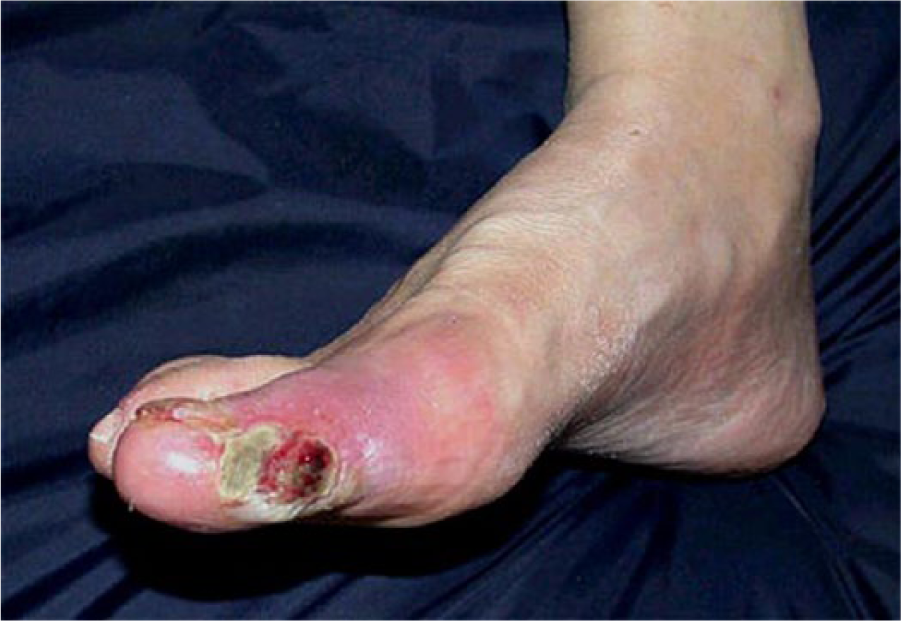
Arterial ulcer on the great toe with surrounding redness and infection.
Neurotrophic ulcers
Patients with neurotrophic ulcers typically complain of numbness, tingling, burning, or loss of sensation in the feet. Ulcers develop at areas of increased pressure, which may include the toes, ball of the foot, or heel. A callus typically borders the ulcer or may even cover the ulcer, giving the illusion that the wound has healed (Figure 3). Once the callus is removed, the depth of the ulcer can vary from shallow to deep.

Neurotrophic foot ulcer that developed in an area of callous formation.
What are the risks of having ulcers?
Foot and leg ulcers can affect walking and reduce overall quality of life. Ulcers that are not treated correctly or in a timely manner can lead to infection of the bone (called osteomyelitis) or infection that spreads through the bloodstream (called bacteremia). Severe cases may result in gangrene and amputation of the foot or leg.
How are ulcers diagnosed?
Accurate diagnosis is the foundation of good ulcer care. The diagnosis is typically made based on the description of how the ulcer began and physical exam findings such as those mentioned above. Misdiagnosis may result in delayed healing.
People with diabetes should be tested for peripheral neuropathy. Simple tests for neuropathy can be performed in a health care provider’s office. One of the most important involves the ability to feel light touch on the bottoms of the feet. Other tests include vibration and reflexes.
Blood flow assessment is critical in the evaluation of all ulcers. Even if blocked leg arteries (PAD) did not initially cause the ulcer, they could be preventing the ulcer from healing. Patients with poor blood flow may have decreased or absent pulses in the feet. An excellent tool for measuring blood flow is the ankle–brachial index (ABI). In this test, blood pressure cuffs are placed on the arms and ankles. A handheld ultrasound device or ‘Doppler’ is used to listen to the blood flow and measure the blood pressure. The blood pressure at the ankle should be higher than the pressure at the arm; the ratio should be higher than 1.0. Values less than 1.0 indicate decreased blood flow to the feet (PAD). Additional tests can be done for patients with abnormal ABIs.
All ulcers should be assessed for infection. Signs of infection include: redness of the surrounding skin, swelling, increased warmth, pus drainage, and foul odor. A culture of the wound may be obtained to help determine if antibiotics are needed. X-rays, magnetic resonance imaging (MRI), or bone scans help identify bone infection and decide whether surgery is needed to remove all of the infection.
How are ulcers treated?
Once an accurate diagnosis is made, all factors contributing to an ulcer must be addressed. Proper diet and weight control may be part of the long-term treatment. Additionally, good blood sugar control is extremely important for patients with diabetes. Sometimes, temporary lifestyle changes are needed to allow patients to stay off the affected foot or leg to allow healing to occur.
Infection control is critical for treating any type of ulcer. Depending on the severity of infection, special wound dressings or oral or intravenous (IV) antibiotics may be necessary. When a deep infection is present, surgery may be needed to drain a collection of pus (called an abscess) or to remove infected tissue or bone.
Wound debridement is an important part of treating all ulcers. This procedure removes dead tissue and bacteria and promotes healing by stimulating blood flow in the wound.
Venous ulcers
Swelling control is essential for patients with venous ulcers. Leg elevation, with the feet at or above the level of the heart, several times throughout the day and while sleeping can help reduce swelling. Compression wraps or bandages are often applied to the legs. These can be changed as often as multiple times a day or as infrequently as once a week depending on the amount of fluid draining from the ulcer. Once the ulcer is smaller or nearly healed, elastic compression stockings may be recommended. Compression stockings are sized to fit the legs and are typically put on in the morning and worn throughout the day. A venous pump may be prescribed for patients with severe swelling.
Arterial ulcers
Aggressive medical management is needed for patients with poor blood flow and arterial ulcers. Medications that target blood pressure, cholesterol, and diabetes may be prescribed along with aspirin or other blood thinning medications. Quitting smoking is absolutely critical. Restoring blood flow to the feet is necessary to relieve pain at rest or to heal an ulcer. In some cases, an angiogram, a test in which contrast dye is injected into the blood vessels and special X-rays are taken, may be performed to identify blockages. Balloon angioplasty and stents may be used to open the blockages and prop the blood vessels open. In some cases, bypass surgery may be needed to restore blood flow.
Neurotrophic ulcers
Neurotrophic ulcers are treated with a focus on pressure relief. A total contact cast may be ordered for diabetic foot ulcers. This specialized cast reduces pressure on the area of the ulcer, and is typically changed once a week. Other options for reducing pressure on the foot include removable cast walkers and specialized shoes, which are prescribed based on the mechanics of the foot and leg and the characteristics of the ulcer. Custom orthotics or inserts for the shoes are often used after an ulcer has healed to prevent recurrence.
After debridement, a wound dressing is applied to keep the wound moist and allow healing to occur. Some of these dressings are quite simple to apply and can be done by the patient. When needed, nurses or wound care specialists can apply advanced dressings.
How can ulcers be prevented?
Daily inspection of the foot and leg is the best starting point to prevent an ulcer. Patients should look for discoloration or redness, cuts in the skin, bruising, or areas of increased tenderness, and report these to their doctor. Patients with diabetes should see a podiatrist on a regular basis. Podiatrists can assess a patient’s risk for developing an ulcer and implement strategies for prevention.
Reducing risk factors such as smoking, drinking alcohol, and controlling blood sugar are important in the prevention and treatment of ulcers. Patients with poor sensation and neuropathy should wear shoes that fit properly and avoid barefoot walking to reduce the risk of ulcers. Patients with chronic venous insufficiency should wear compression stockings daily.
Conclusion
There are many causes of foot and leg ulcers, and establishing an accurate diagnosis is essential to prevent delayed healing. For patients with a venous ulcer, leg elevation and compression are the hallmarks of therapy. Improving blood flow to the feet is critical for patients with arterial ulcers to reduce the risk of amputation. For those with neurotrophic ulcers, reducing pressure with specialized casts, boots, or shoes will aid wound healing. Regardless of ulcer cause, infection control and moist healing are important for all wound types. Once an ulcer is healed, daily skin inspection and long-term medical follow-up will help reduce the risk of recurrence.
Footnotes
Declaration of conflicting interests
The author(s) declared no potential conflicts of interest with respect to the research, authorship, and/or publication of this article.
Funding
The author(s) received no financial support for the research, authorship, and/or publication of this article.