




Abstract
Background
Although it is true that adolescence is a stage of evolutionary development in which there are innumerable windows of opportunity, it is also the peak age at which some psychiatric disorders may appear. On the other hand, music is an auditory stimulus that interests and motivates youngsters, as it is used for identity, social connection, and emotional regulation.
Methods
We conducted a strategic search by consulting scientific databases. The following search terms were employed: Music Therapy AND Psychology AND Psychiatry AND Adolescents. The following international electronic databases were searched: Medline, Ovid, and Cochrane Library.
Results
A total of 142 sources were identified from which 9 papers on music therapy published exclusively in scientific journals specialized in psychology or child psychiatry were selected. The total number of participants was 651. The studies reported that music therapy interventions have the potential to improve self-esteem, social engagement, decrease social isolation, and depressive and anxiety symptoms in psychiatric adolescents (both in inpatient and outpatient settings).
Conclusion
Given the heterogeneity and methodological quality of the few studies included, it is complex to extrapolate and generalize results. More quality research is needed to expand music therapy interventions on youth mental health.
Introduction
Adolescence is a normal transitional period of accelerated growth, learning, adaptation, and neurobiological development (Dahl et al., 2018) in which remarkable physical and behavioral changes take place (Paus et al., 2008). Moreover, due to the high brain plasticity, human beings can develop significant adaptability to numerous social, physical, sexual, and intellectual challenges typical of this developmental phase (Lee et al., 2014). From this perspective, although it is true that adolescence is a stage of evolutionary development in which there are innumerable windows of opportunity that can have a positive impact both on their development and on the improvement of skills to develop their potential, it is also the maximum age at which some psychiatric disorders can appear (Paus et al., 2008). During this developmental period, adolescents overcome numerous challenges, including establishing strong interpersonal relationships with peers, differentiating themselves from family members, and developing their new adult identity (Richaud de Minzi, 2003).
In addition, according to the World Health Organization, mental health conditions affect 16% of people aged 10–19 years (World Health Organization, 2019). In fact, a recent study estimated a worldwide prevalence of 13.4% of mental disorders in children and adolescents (Polanczyk et al., 2015). In this regard, the wide range of mental health disorders in this population group includes a broad spectrum of social, emotional, cognitive, and behavioral problems (Gold et al., 2004) with many presenting comorbid disorders. Amongst these psychopathologies, emotional disorders, which include anxiety and depression (sometimes classified as internalizing disorders), are the psychiatric disorders with the highest incidence among children and adolescents (Merikangas et al., 2009).
Conduct disorders, also known as externalizing disorders, are characterized by maladjusted behavior, often including rule breaking, aggressiveness, inattention, or oppositional behaviors, related to poor impulse control (Samek & Hicks, 2014).
At this time, the most frequent treatment approaches for mental disorders are medication/pharmacotherapy and psychotherapy, or a combination of both, this last option especially recommended for depression (Cheung et al., 2018). However, in addition to traditional intervention models such as psychotherapy or pharmacotherapy, there is now a wide range of useful complementary treatments that can be employed with children and adolescents (Black et al., 2015). From this point of view, creative arts therapies, including music therapy, have developed substantially over the last decade, documenting their positive impact on a wide range of positive outcomes both psychologically and physiologically, as through creative and expressive processes through music creation it is possible to improve and consolidate the psychological and social well-being of people of different ages and needs (de Witte et al., 2021; Megranahan & Lynskey, 2018). Music therapy (MT), increasingly recognized and applied, has a high potential to be a complementary non-pharmacological therapy in clinical intervention processes with children and adolescents (National Institute for Health and Clinical Excelence, 2013).
In the field of juvenile mental health, MT can be useful with patients who show resistance to verbalize emotional events since musical interaction is used as a means of nonverbal communication. In this sense, different investigations show the efficacy of MT intervention in the treatment of children and adolescents with different psychopathologies (Gold et al., 2004). As such, in many countries, music therapy is routinely used with adolescents with psychiatric disorders (Aldrigde et al., 2001).
Moreover, music is an auditory stimulus that interests and motivates adolescents (Bostic et al., 2019; Fernández-Company et al., 2020), because music facilitates their feeling of belonging to a particular social group (McFerran, 2010). Music preferences act as a “badge of identity” in youth (North & Hargreaves, 1999) and music may help emotion regulation (García-Rodríguez et al., 2021; Saarikallio & Erkkilä, 2007). For this reason, music therapy in this population is a valuable tool to promote physical, mental, and social well-being.
In this sense, music has a high potential to be a medium through which to intervene in an engaging and effective way in mental health settings (Tervo, 2001). Thus, the non-threatening nature that music therapy can offer in therapeutic processes with adolescents makes it easier for these to occur without patient resistance (Brooks, 1989). On this some research suggests that the use of music therapy in union with cognitive-behavioral therapy techniques is an effective combination in therapeutic processes with adolescents (Bong et al., 2021).
There are several models of music therapy that include psychodynamic, behavioral, and humanistic approaches. Techniques can be classified as receptive or active. Receptive music therapy may include techniques in which patients listen to pre-recorded or created music on the spot (Chen et al., 2015; Gold et al., 2011). Active music therapy includes improvisation, therapeutic song writing, and clients’ music making through vocal and instrumental interpretation.
The present study aims to systematically summarize findings on the efficacy of music therapy in adolescents with psychiatric disorders and to report techniques, objectives, evaluation instruments, and results achieved in this population. Likewise, although it was not among the objectives of this work, to our knowledge, this is the only review in which the selected articles belong exclusively to impact journals specialized in psychology and child psychiatry.
Methods
Literature selection
We conducted a search strategy through consultation by the authors. The following search terms were employed: Music Therapy AND Psychology AND Psychiatry AND Adolescents. The following international electronic databases were searched on 20th July 2021: Medline, Ovid, and Cochrane Library. For each of the investigations included in this review, additional articles were hand searched for additional articles that were discovered through the reference lists.
Inclusion criteria
The articles chosen for inclusion in this systematic review had to meet the following criteria: (a) published in the last two decades, until the year 2021 (b) published in English, Portuguese, and Spanish languages; (c) published in peer-reviewed journals; (d) participants had to include clinical population of psychiatric adolescents diagnosed with a mental health disorder; and (e) studies describing music therapy as the main component of treatment. In addition, articles had to provide further information about the effectiveness of music therapy interventions used. Exclusion criteria: although neurodevelopmental disorders (i.e., Autism Spectrum Disorder, Rett’s syndrome and others) are included in the DSM-5 (APA, 2013) and these patients are observed in psychiatry services, we did not include them, to focus into “pure” psychiatric disorders.
The search strategy was conducted in three phases. The gray literature was not included in this review because it had not been sent for peer review. A preliminary search was performed in databases such as PubMed, Google Scholar, SciELO, or Web of Science. Next, an analysis was made of both the keywords used and the relevant terms in psychology and child psychiatry that were present in each article. A second exhaustive search was carried out using this selection of key words and terms. Finally, the third phase of the search extracted those studies that met the inclusion criteria. The studies were preselected by two of the authors (CF and JFFC) and the full texts of potentially relevant articles were obtained with the help of a librarian. The methodological quality of the included articles was not evaluated. This research was carried out in accordance with the guidelines set forth in the PRISMA Declaration (Preferred Reporting Items for Systematic Reviews and Meta-analyses) Statement (Liberati et al., 2009; Moher, 2009). Figure 1 shows the different search strategies and mechanisms for article selection. Article selection procedure according to PRISMA. Based on Moher (2009).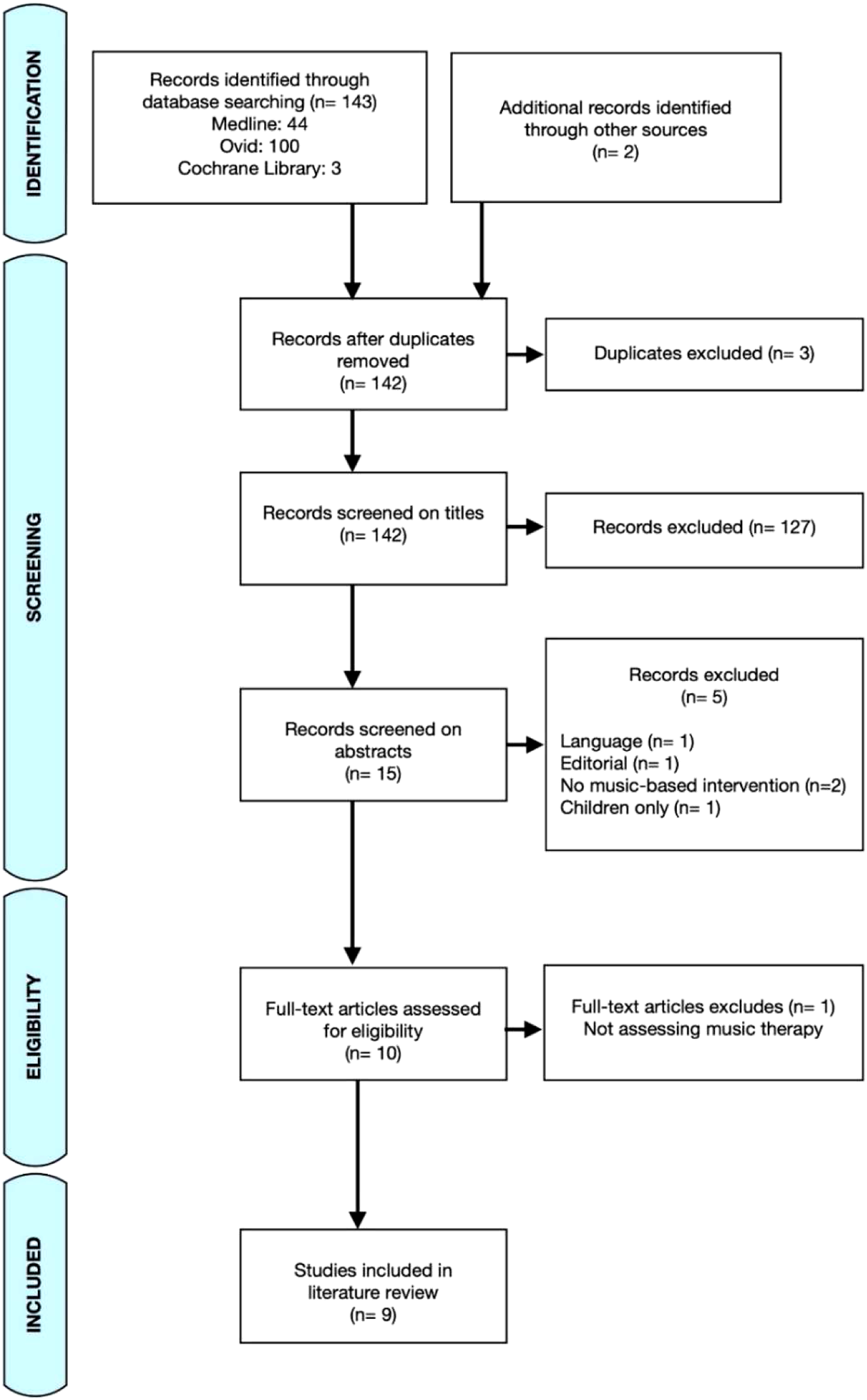
Data extraction and management
Relevant data were extracted from the articles using a standardized form. The fields included: author(s), year, country, participant details (diagnosis, sample size, and clinical context) areas and type of music intervention, techniques, number of sessions, study design, results or outcome measures, instruments, and type of professional conducting the intervention. We exported the search results to Mendeley Desktop version 1.19, in which all reference records were managed and used the APA 7th edition citation style.
Results
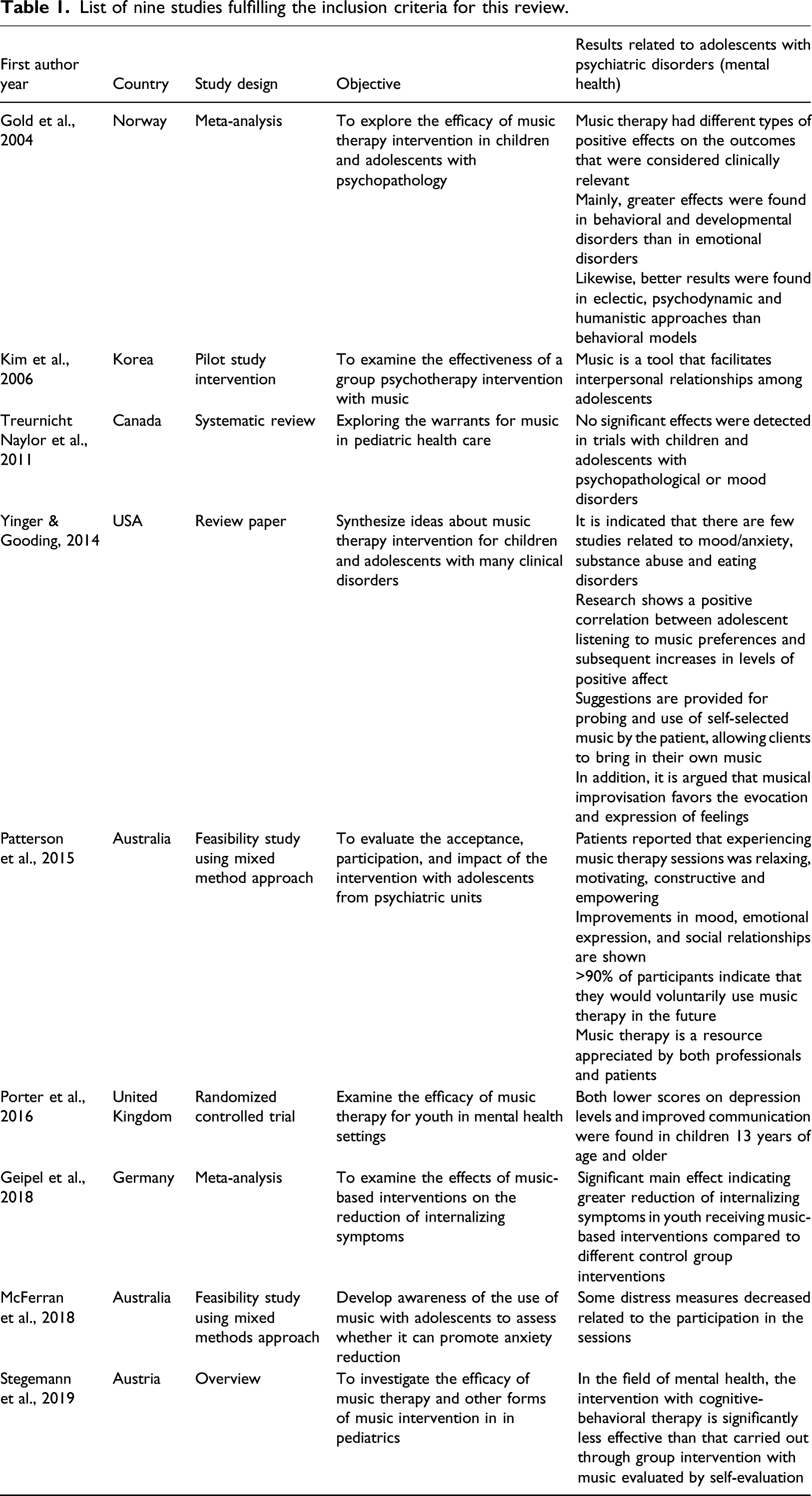
List of nine studies fulfilling the inclusion criteria for this review.
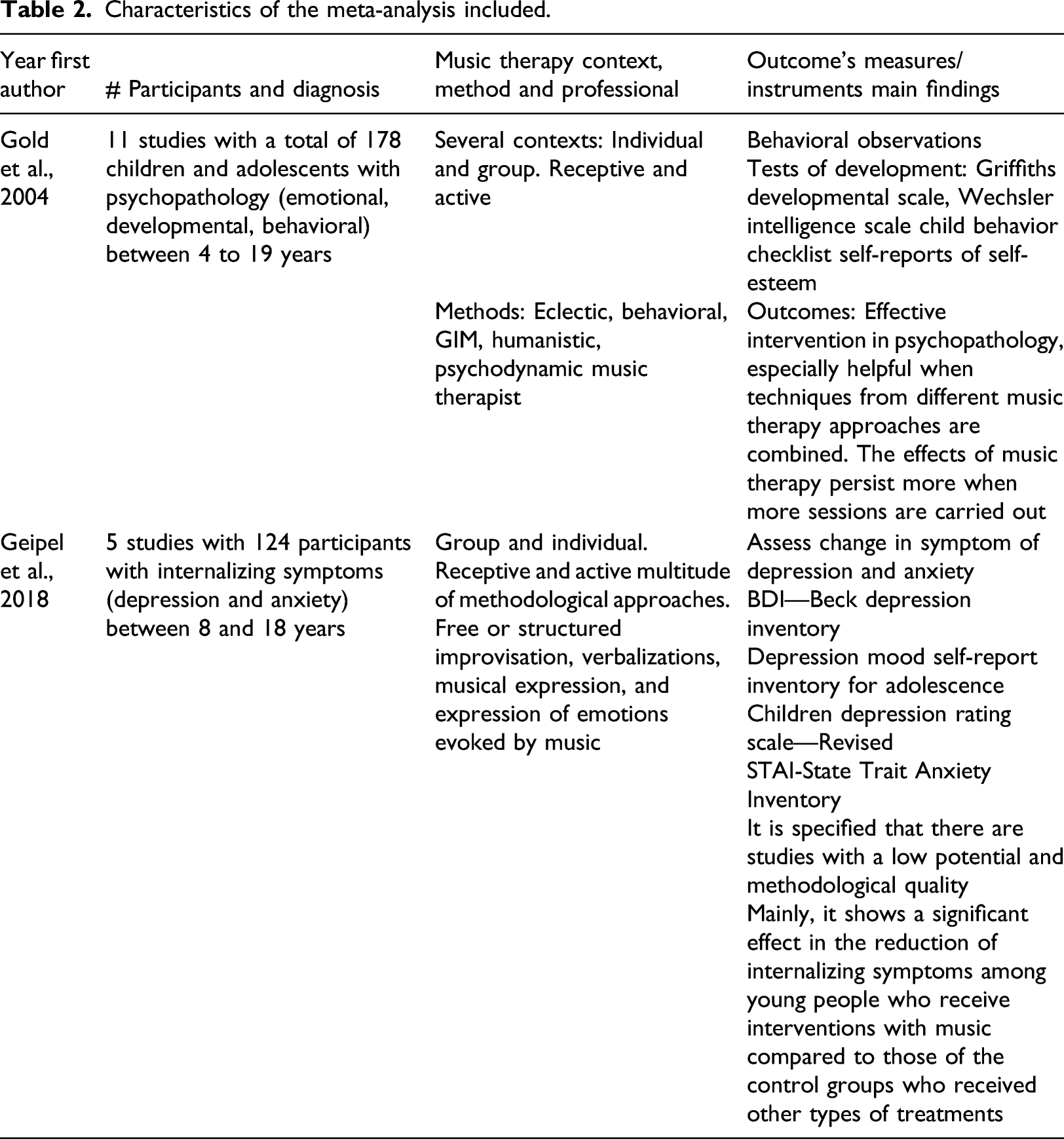
Characteristics of the meta-analysis included.
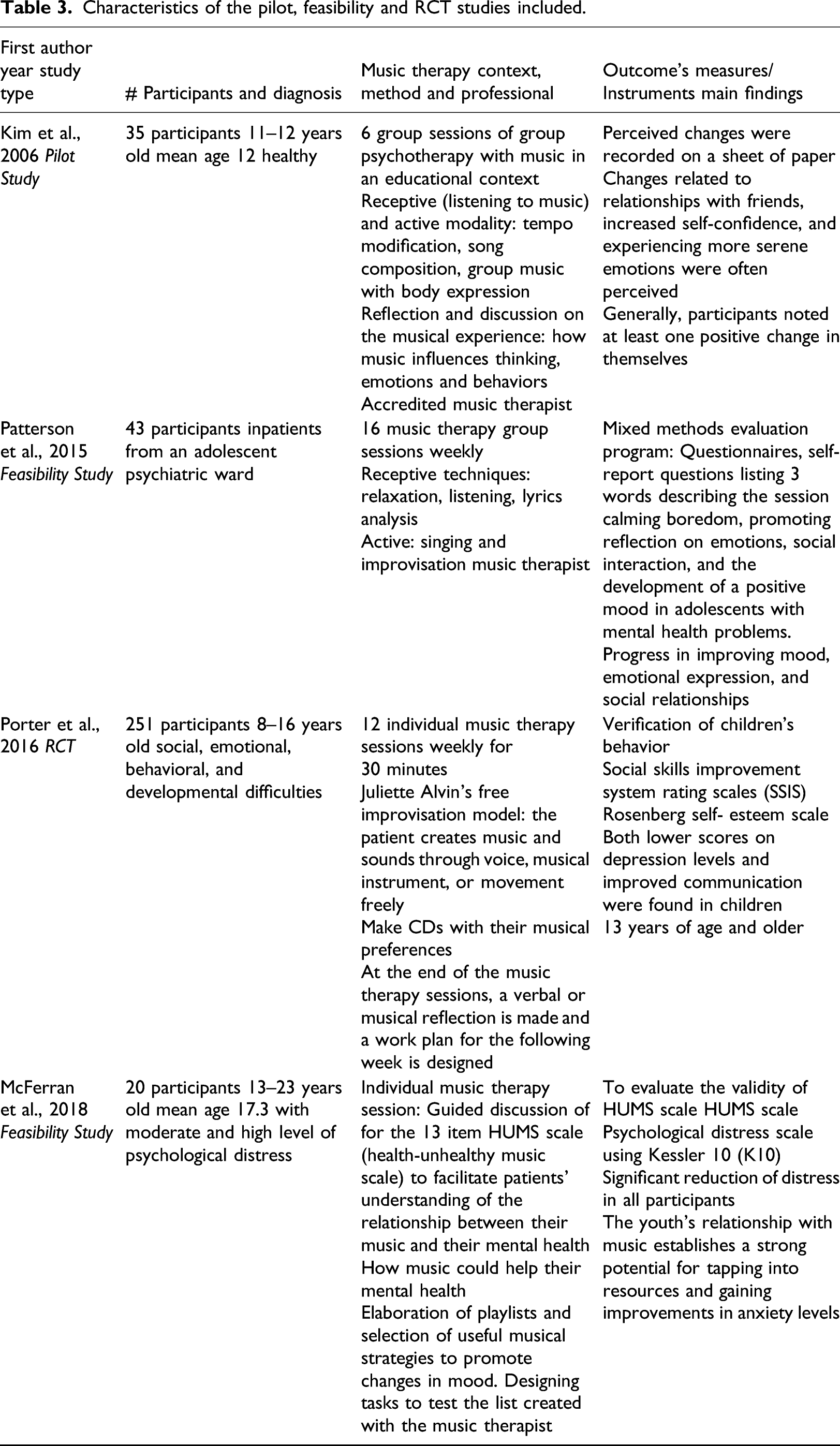
Characteristics of the pilot, feasibility and RCT studies included.
Participants
The total number of participants across the included studies was 651 (excluding the reviews). From the data reported in six of the studies, participants’ age ranged from 4 to 23 years old and they were healthy in some studies and with mental health problems (inpatients and outpatients) in others.
Interventions
Music therapy interventions included individual and group sessions and used both receptive (listening to music and relaxation) and active (tempo modification, song composition, group music with body expression, musical expression, free or structured improvisation, singing, songwriting, playlist creation, music making, creation of music and sounds through voice, musical instruments, or movement freely making personalized CDs) techniques. Most of the interventions included in the end of the session a reflection and discussion on how music impacted the participants and how music influences thinking, emotions and behaviors, and expression of emotions evoked by music and analysis.
Methodological aspects of the interventions
All studies had different research and clinical objectives. Consequently, they used different methodologies, instruments, and outcomes to achieve their aims. All studies mentioned that a music therapist was leading the intervention. It should be noted that almost every study author mentioned that the methodological rigor of existing studies was low, which also affected their own research (especially in the meta-analyses and in the systematic review). The methodological limitations stated by the different authors was synthetized and included in the future directions and limitations section of the review.
Instruments used for assessment
Regarding the instruments used for assessments, it varied according to the dimension or symptom severity that was being measured. For example, to assess depression and anxiety in adolescents Geipel et al. (2018) used the Beck Depression Inventory (BDI) and the State Trait Anxiety Inventory (STAI), respectively. On the other hand, Porter et al. (2016) assessed difficulties with interpersonal interactions, as well as emotional and behavioral disturbances assessed in children and adolescents between 8 and 16 using the Child Behavioral Checklist, Social Skills Improving System rating scales, and the Rosenberg Self-Esteem Scale. More detailed information on other measurements tools used in included studies are shown in Table 3.
Effectiveness of interventions
Music therapy interventions described in the included studies used different techniques from different models and theories. Gold et al. (2004) calls it an “eclectic approach.” The most important is its effectiveness and therefore the music therapist should have a flexible attitude to match the client´s needs. For example, Kim et al. (2006) used group psychotherapy to deliver music therapy as music psychotherapy. The authors combined music with psychotherapy, an enjoyable way of developing adolescents’ social and communication skills. However, it remained unclear if therapeutic effects were due to music therapy or due to being in a group. Other techniques, such as receptive (listening to relaxation music) was useful for adolescents to regulate their stress level (Patterson et al., 2015). Porter et al. (2016) used Alvin’s (1975) model of free musical improvisation (Bruscia, 1987). Adolescents created music and sounds through voice, a musical instrument, or movement freely. In some studies, adolescents were asked to perform a verbal reflection on the internal processes that emerged with music, and this technique is associated with analytical music therapy of psychodynamic orientation. Regardless the music therapy method used, it would be salient to assess the persistence of treatment response some weeks or months after the end of the intervention.
Regarding the other three review papers included in this literature review, the most relevant contributions are as follows: Stegemann et al. (2019) evaluated the efficacy of music therapy intervention as well as other forms of music intervention in pediatric and concluded that the highest quality of evidence for the positive effects of music therapy is in the field of autism spectrum disorder and neonatal care. In the field of mental health, music therapy intervention in groups seems to be significantly more effective than cognitive-behavioral therapy (measured by self-rating). Treurnicht Naylor et al. (2011) conducted a systematic review of randomized controlled trials of music therapy and other music-based interventions in pediatric care units, in various clinical conditions and settings (educational, outpatient, hospital, and research) finding no significant effects for the two trials (Field et al., 1998; Wooten, 1992) involving children and adolescents with different psychopathologies and emotional disturbances. Finally, Yinger and Gooding (2014) synthesized part of the knowledge on the use of music therapy in children and adolescents with different clinical disorders. The authors concluded that there is less research in mood, substance abuse and eating disorders compared to other psychopathologies. They also highlighted one study by Wooten (1992) who found a correlation between listening to preferred music in adolescents and increases in positive affect after (by activating reward brain circuits). This fact led authors to recommend clients to self-select their own music and used it more often. In addition, we believe that the areas of trauma and identity may also be relevant to music therapy with adolescents (McFerran, 2020). Finally, another conclusion is that musical improvisation is an effective tool for emotional evocation and expression
Discussion
This review examined published research studies on music therapy for adolescents with psychiatric disorders. Although it seems there are many music therapists working in this field, there is still a lack of literature sharing relevant information and supporting the use of music-based interventions in this population. It would be a great asset to have alternatives to psychopharmacology and other psychotherapies to approach those adolescents, especially those one that are not able to communicate easily through spoken language. In fact, working with individuals who present with negative symptoms, poor social relationships, or low motivation can be challenging. Music is the most common leisure and free time activity among young people (Bostic et al., 2019) and music therapy offers possibilities for bringing people together and promoting group cohesion (Cross, 2008), a transcendental need for adolescents.
Thanks to academic, technical, and clinically specialized training, music therapists can choose various intervention techniques that best suit the individual needs of each patient. According to Møller et al. (2002), in Europe, music therapy models tend to be more improvisational, while in America, music therapists use more structured ones. In this regard, the use of improvisation as an intervention technique encourages creative expression and the self, allowing connection with thoughts, emotions or bodily sensations that cannot be expressed verbally. The therapeutic objectives in this psychiatric population are to improve mood, socialization, communication, evoking and expression of feelings, self-esteem, self-confidence, coping skills, and stress management.
It is not necessary for adolescents to have musical experience, such as formal music training (read music and ability to play an instrument) but is a key factor to enjoy and engage with the music experience. Similarly, recent neuroimaging research also recommends taking clients' musical preferences into consideration when designing music therapy interventions. Listening to a favorite song releases dopamine in neural reward circuits, that makes you feel good (Zatorre & Salimpoor, 2013). Moreover, active music participation engages more brain areas than passive music listening (Lin et al., 2011). More than ever, collaboration between music therapy and music neuroscience professionals will help to advance both fields with clinical benefits for patients.
Conclusion
This literature review identified few articles on music therapy for adolescents with psychiatric disorders. Given the heterogeneity of the studies included, it is complex to extrapolate and generalize results. However, based on the results of the studies analyzed, music therapy interventions have the potential to improve self-esteem, decrease depressive symptoms, and social isolation in psychiatric adolescents (both in inpatient and outpatient settings). The most frequent used technique is the music improvisation, but a mixture of receptive and active techniques, combined with self-selected musical preference should be considered to fit the adolescent’s needs (identity, feeling of belonging to a group, and autonomy). In conclusion, it should be noted that music therapy can be a valuable non-pharmacological support.
Limitations and future directions
Limitations
This literature review has some limitations, all related to the methodology. First, we should have used at least two more electronic databases such as PsychINFO and Embase, to search for more sources. Second, we could have used more keywords such as music, sound, youth, teen, mental, and psychosis. Third, as many studies included children and adolescents, we should also have included children as well. Fourth, we should have only included randomized controlled trials and pilot/feasibility studies. However, due to scarcity of literature (published papers) in music therapy for adolescents with psychiatric disorders, we found relevant to include other reviews into this one and have an overview of relevant research in this field. Finally, we believe that a specific search in reference journals specialized in music therapy might have offered more results.
All studies included in this review reported limitations which can be classified as:
Clinical
In some disorders, such as substance abuse, psychosis, and severe depression (with suicidal behavior) it was difficult to assess the effect of music therapy as patients are usually clinically instable and unable to complete self-administered questionnaires.
Methodological
These limitations were related to 1) Complex adolescent population with comorbid disorders, which added confounding factors. 2) Extra confounding factors: age, gender, symptom severity, and use of pharmacotherapy. 3) Lack of an examination by a diagnostic interview. 4) Small sample size. 5) Heterogeneity of study design, music interventions (duration and frequency), techniques, instruments of assessments, and primary and secondary outcomes. 6) Weak music therapy assessments tools, especially those which evaluated the therapeutic process (they are intersubjective, not objective, neither validate). 7) Lack of control groups (randomized controlled trials) and lack of blinding of assessors. It was difficult to blind participants and therapists, but assessors should always be blinded. 8) Lack of follow-up assessments to investigate long-term effects of music therapy interventions. 9) Difficulties in the interpretation of the results and on deriving clinical implication, due to the lack of unequivocal evidence.
Future directions
Since most research show that methodological limitations affect the efficacy of music therapy, one solution is reaching a consensus on music therapy research priorities in the field of adolescent psychiatry and take int account the following recommendations: 1) Use an adequate and standardized clinic protocol (intervention manuals). 2) Use standardized approaches and controlled randomized, larger samples, and proper blinding of assessors. 3) Use clinically validated instruments tools. 4) Use validated outcome measures that can be measured across time to establish durability of change (equals to long-term follow-up assessments). 5) Use transparent reporting and use of published guidelines PRISMA (Liberati et al., 2009) for systematic reviews and CONSORT Statement for clinical trials (Boutron et al., 2017).
The future of music therapy is to work collaboratively in multidisciplinary teams. Music therapists, music scientists, and other professionals studying music-related aspects of health and well-being should be working together to develop high quality research and effective clinical interventions.
Footnotes
Declaration of conflicting interests
The author(s) declared no potential conflicts of interest with respect to the research, authorship, and/or publication of this article.
Funding
The author(s) received no financial support for the research, authorship, and/or publication of this article.
