



Abstract
Introduction and Aims
Mindfulness has been shown to be an effective group intervention for adults and children living with a range of medical conditions. Recently, research has also explored the impact of mindfulness interventions offered to parents of children with health conditions. Few studies have examined whether the mode of delivery (face-to-face vs online) has an impact on outcomes.
Methods
Four mindfulness based wellbeing courses for parents (MBWP) of children with a chronic medical condition were run (two face to face and two online). All parents (N=37) completed the WHO Well-being Questionnaire and Neff Self-Compassion Scale Questionnaire-Short Form at the beginning and end of each course. Parents’ experience of the course was also explored using a semi-structured interview 6 weeks after completing the course, with their responses analysed using Thematic analysis.
Results
The groups had a statistically significant positive impact on both parent well-being and self-compassion and were equally effective face-to-face or online. All parents reported incorporating informal mindfulness practices into their day-to-day lives 6 weeks post-course The qualitative analysis highlighted improvements in present moment focus, kindness to self, and family relationships.
Discussion and Conclusion
Parents valued connecting with other parents of young people with both similar and different medical conditions, within both face-to-face and online groups, increasing the accessibility of MBWP.
Definitions
• Mindfulness is the awareness that arises from paying attention purposefully in the present moment without judgment (Kabat-Zinn, 2013). • Self-compassion is bringing to ourselves the kindness and care we offer others especially in the face of difficulty (Neff & Germer, 2013). • Mindfulness-based well-being courses for parents (MBWP) is a group programme adapted from Mindfulness-Based Stress Reduction Programme (MBSR; Kabat-Zinn, 2013). It is tailored specifically towards multiply stressed parents and was developed, integrated and delivered within a UK National Health Service (NHS) setting.
Scenario
Your child is diagnosed with a chronic health condition such as Type 1 Diabetes, Epilepsy, Sickle Cell or becomes unwell and gradually unable to function with Chronic Fatigue or a chronic pain syndrome. Unplanned and uninvited, the health condition becomes part of your daily life as a parent along with your work, running your home, and fostering the well-being of other aspects of your child/children’s life. You may find yourself plunged into a need for a demanding daily (and nightly) treatment regime and monitoring. Your parenting role and relationships with your children change. Young children, not understanding, may resist. Primary-age school children begin to develop understanding which may aid compliance but bring its own challenges; they are old enough to worry about the condition, or find being perceived as different from their peers difficult. Teenagers, as with other aspects of their life, are likely to want to be independent, whether that means they manage the condition as well as you - or more likely not initially - as they learn about risk, balancing individuality with fitting in, and prioritising what matters to them. You still need to manage all other aspects of day to day life. You worry understandably about long term complications or short-term acute risks - which keeps you in a fairly constant state of anxiety, high alert and vigilance. You may ruminate over and regret the condition-free child who once was or the care-free future you envisaged, leading to dips in mood and fatigue. You’re not going to give up, despite having more on your plate than you can manage; you develop a habit of criticising yourself in order to keep going. Even though you are trying your best, your child may feel you’re relating to The Health Condition and Worry more than to them and a sense of disconnection emerges that puzzles you, given all the effort you’re putting into parenting. At the school gates, other parents’ concerns while shared don’t seem to include all the extra worries on your plate, so it’s hard to voice them. When you attend your child’s health appointments, you’re relieved to share the constant concern with doctors and nurses - who also take your child’s health seriously - but the sense of responsibility you feel in managing your child’s health can mean that the inevitable ups and downs of management, compliance, setbacks and complications seem like your performance rather than the condition is being evaluated. No one asks how you are. Perhaps not even you.
Introduction
Parenting a child with a chronic health condition is widely acknowledged as a source of chronic stress made up of both predictable (daily treatment regime) and unpredictable elements (e.g. diabetic highs/lows, sickle cell crises, chronic pain/fatigue flare ups). Parents are required to remain alert and responsive to their child’s health in order to prevent life-threatening or disabling effects; in turn, however, parents often find themselves in a permanent state of readiness which risks their own stress response being frequently triggered. As a result, it can become increasingly difficult to recuperate when moments of potential rest arise. Moreover, the additional demands and unique stresses may mean parents have less opportunity to access their own social support within day-to-day life. Given the effects described, parenting a child with a chronic health condition can have understandable negative consequences for personal well-being and family relationships.
Accordingly, research has shown that parents of children with chronic conditions are more likely to experience reduced quality of life (QoL), and increased insecurity, anxiety, stress-related disorders and emotional and cognitive burnout (Lindström et al., 2010; Cousino & Hazen, 2013). Children of parents who experience adverse psychological outcomes show poorer overall functioning and QoL (Litelman et al., 2011). In a paediatric setting, the healthcare focus is primarily on the child, and therefore parents are rarely offered any direct emotional support or psychological intervention, despite the benefit this might afford their children (Cousineau et al., 2019).
Research has additionally identified the need to find innovative models of service delivery in order to reach the large proportion of children who do not receive direct support for their mental health from services (Kazdin, 2018). Providing a group intervention for parents creates a way to offer an indirect service to a child or young person who does not wish to access psychological support themselves, as well as enabling direct support to be offered to parents.
A promising group intervention for parents is mindfulness. Mindfulness has been shown to improve health related quality of life and decrease stress and burnout amongst parents of children with chronic illness (Anclair et al. 2018). A recent systematic review of mindfulness and acceptance interventions for parents of children diagnosed with a chronic illness has similarly found that parents showed improved well-being and greater psychological flexibility following the intervention (Ruskin et al., 2021).
Eluned Gold’s nurturing parents course (described in Eames et al., 2015) was chosen. It is a mindfulness-based well-being course for parents (MBWP). Whilst not designed specifically for parents of children with chronic health conditions, it has been delivered to parents living within socially disadvantaged neighbourhoods (Eames et al., 2015) and to parents of children with developmental disabilities (Jones et al., 2018) and cystic fibrosis (Harris et al., 2021). Four key aspects from MBWP fitted with our population: (1) The practices taught are designed to fit around the busy life of parents: formal practices are short and parents are invited to incorporate informal practices (mindful eating, mindful activity with your child) into daily life. (2) The emphasis on self-compassion is important for overstretched parents to allow themselves to prioritise their own well-being in circumstances where their child’s well-being may always be considered a priority. (3) The group format is anticipated to reduce feelings of isolation by creating a community of parents who could use ideas from mindfulness to help negotiate the challenges of having a child with a chronic illness as well as learn from and support each other. (4) The course fits well with the strength-based, collaborative approach which is widely drawn on by the team’s child and adolescent psychology service at University College London Hospital (UCLH) (Casdagli, 2019). This is familiar to our medical and allied health colleagues referring parents to the course, meaning invitations are offered in an encouraging and supportive, rather than problem-focused, way.
Offering group mindfulness based well-being support directly to parents represented an innovation for our service. We decided to audit this new service using a mixed-methods approach to explore whether this was an effective use of resources. We chose to capture parents’ views, as experts by experience, about what this intervention added to their overall experience of healthcare offered to their family. Due to the move to online working in response to the COVID-19 pandemic, we were able to compare our results across face-to-face and online modalities.
Method
Recruitment processes, course content, materials, mindfulness practices and measures were consistent across each MBWP. Course content was adapted slightly from group-to-group based on feedback and lessons learnt. The delivery mechanism of the course was in person at UCLH for the first two groups and remotely via Zoom for the second two groups.
Recruitment
All referred parents had a child under the care of a paediatrician at UCLH for a physical health condition. The parents were referred by doctors, nurses and other members of multi-disciplinary teams. As this was an audit, the participants were allocated to the next available group based on when they were referred. Each referred parent was telephoned by a member of the psychology team to complete a semi-structured interview to determine whether the group would be a good fit for them based on their concerns and hopes for support, interest in mindfulness, and availability. The facilitators were clinical psychologists and qualified mindfulness or mindful self-compassion practitioners, using mindfulness in their daily lives. The first two groups were run face to face and due to the Covid-19 pandemic we were forced to run the second two groups online.
Intervention
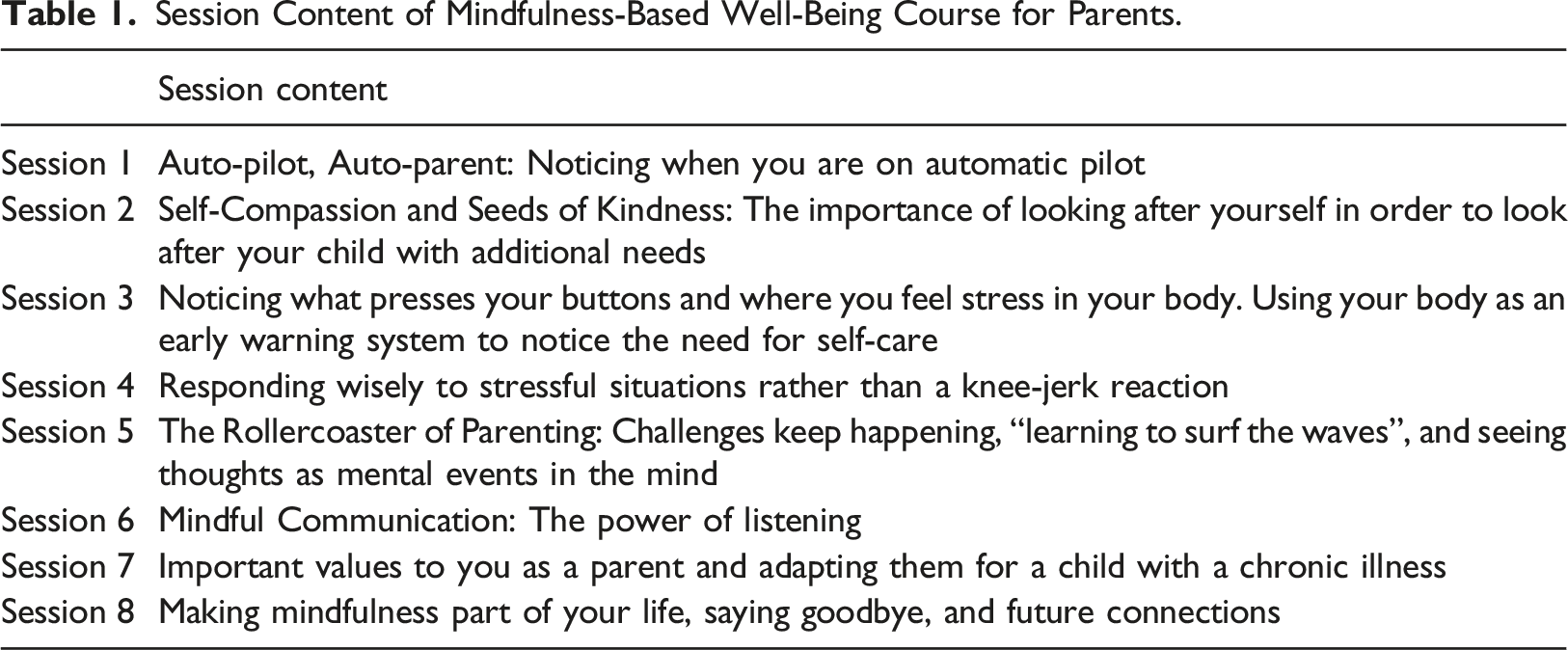
Session Content of Mindfulness-Based Well-Being Course for Parents.
Session Structure of Mindfulness-Based Well-Being Course for Parents.
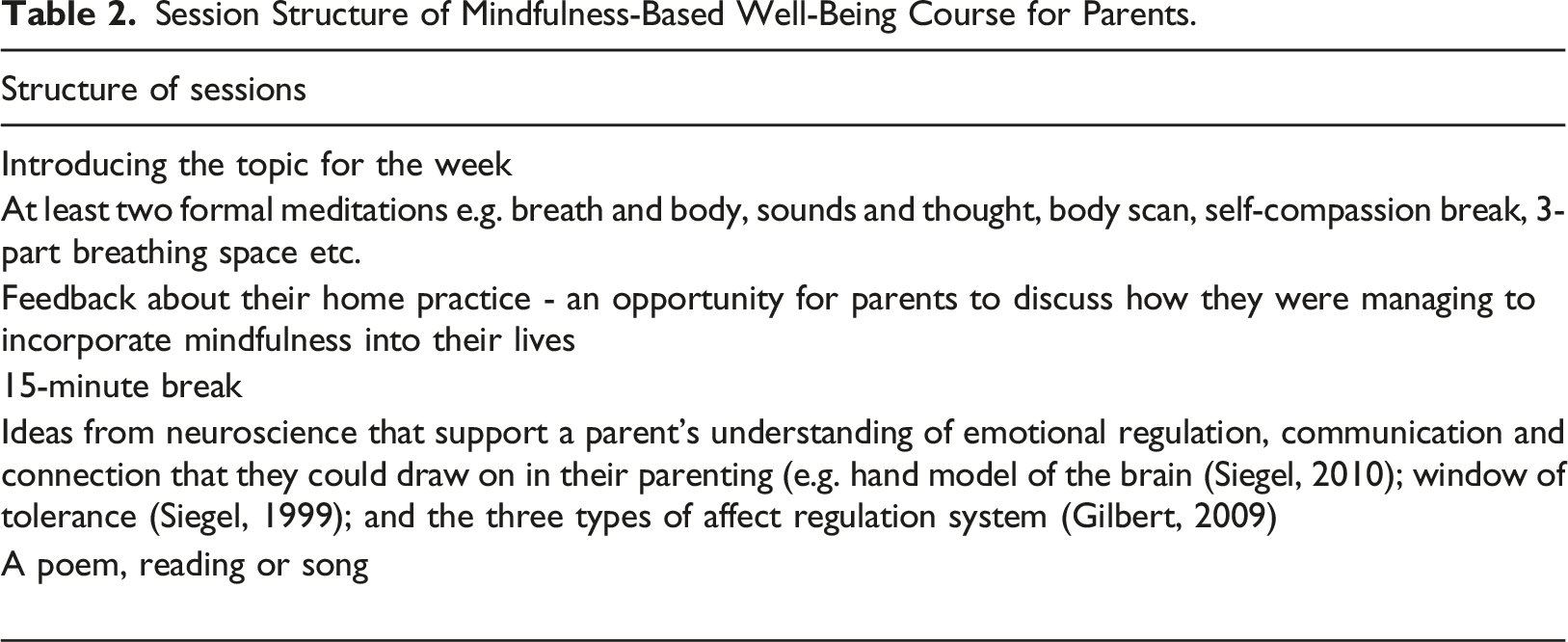
MBWP asks parents to practice meditating without looking for any immediate effect. It encourages them to notice early signs of their own stress and find ways to soothe it, rather than react to it automatically as it arises in their daily life as a parent.
Between sessions, all participants were sent handouts summarising that week’s session and were asked to do daily brief formal meditation practices and informal mindfulness activities which encouraged parents to bring mindful attention to daily activities. Participants were also invited to create their own WhatsApp group to stay connected between sessions and we asked for feedback about how the participants were experiencing the group throughout the course.
In delivering the course, we stayed close to the original MBWP materials (Eames et al., 2015). However, there is always a gap between a manual and clinical delivery and we tried to be intentional in bringing ourselves authentically into the group. This meant some adaptations were made drawn from the facilitators’ own personal practice of mindfulness, such as introducing elements of Qi Gong. Adapting the course to online delivery involved creating a larger number of visual images to share on screen to support the psycho-educational aspects and engage the group online. The thorough preparation of materials allowed the facilitators to focus on group process and facilitating cohesion online. For online groups we used Zoom breakout rooms to recreate the informal atmosphere of face-to-face breaks. We also used ‘spot-lighting’ to create a feeling of being part of a smaller group whilst the rest of the participants listen. We encouraged parents to use the chat facility and the white board to add to discussions and we encouraged them to wave and use the gestures available on Zoom to communicate with facilitators and each other.
Outcome Measures
Participants completed two questionnaires within their first and last sessions. (1) WHO Well-being Questionnaire (World Health Organisation, 1998). This is a five item questionnaire using a five point Likert scale with higher scores representing better well-being (possible range of scores 1–25). (2) The Self-Compassion Scale Questionnaire - Short Form (SCS-SF) (Raes et al., 2011). This has 17 items and uses a five point Likert scale with higher scores representing greater Self-Compassion (possible range of scores 1–85).
Qualitative interviews were carried out with participants from one face-to-face and one online group. Qualitative data was collected using a semi-structured telephone interview 6 weeks after each group finished. The follow-up qualitative feedback was gathered by members of the child and adolescent psychology team who had not been involved in facilitating the course.
Results
Participation Data for Face to Face and Online Groups by Recruitment Date.
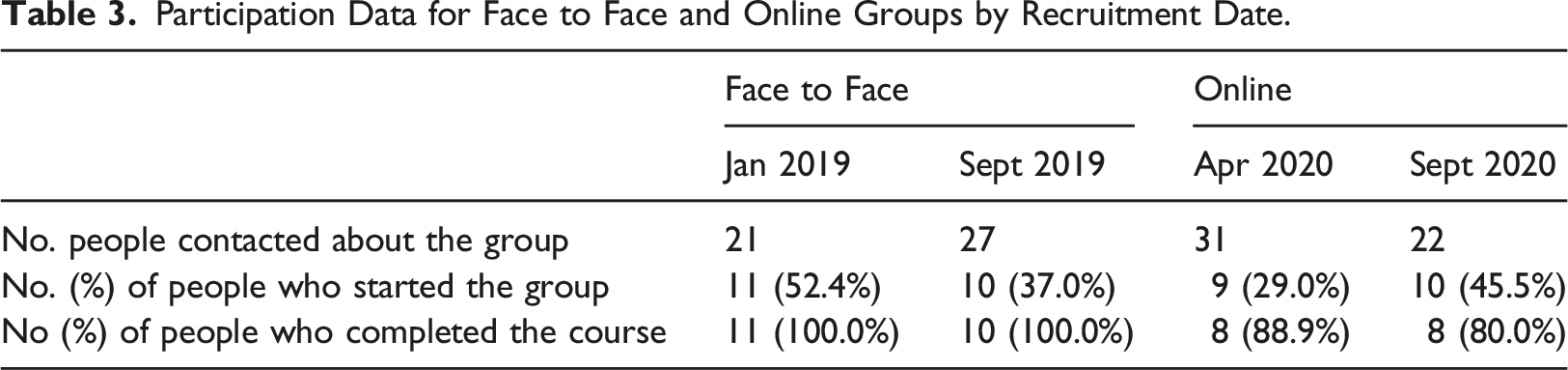
The mean age of parents attending was 49.6 years (SD =7.0; range = 30–61 years) and the mean age of their children was 14.0 years (SD= 4.3 range = 6–21 years). Of the parents who took part, 58.9% of their children were White British, 15.8% were other white background, 7.9% Asian Indian, 5.3% Mixed White and Black Caribbean, 2.6% were Black African, 2.6% were White Mixed and Asian, 2.6% were other mixed background and 2.6% were other.
The health conditions of children whose parents attended the courses fell into six categories. 41.7% had Diabetes, 30.6% had Chronic Fatigue/Chronic Pain, 8.3% had Cancer, 8.3% had a gastrointestinal diagnosis, 5.6% had sickle cell and 5.6% had medically unexplained symptoms.
Quantitative Results
Face-to-Face (F2F) versus Online Outcomes
Mean (SD) Pre- and Post-intervention Total SCS-SF and WHO-5 Scores for Face-to-Face and Online Groups.
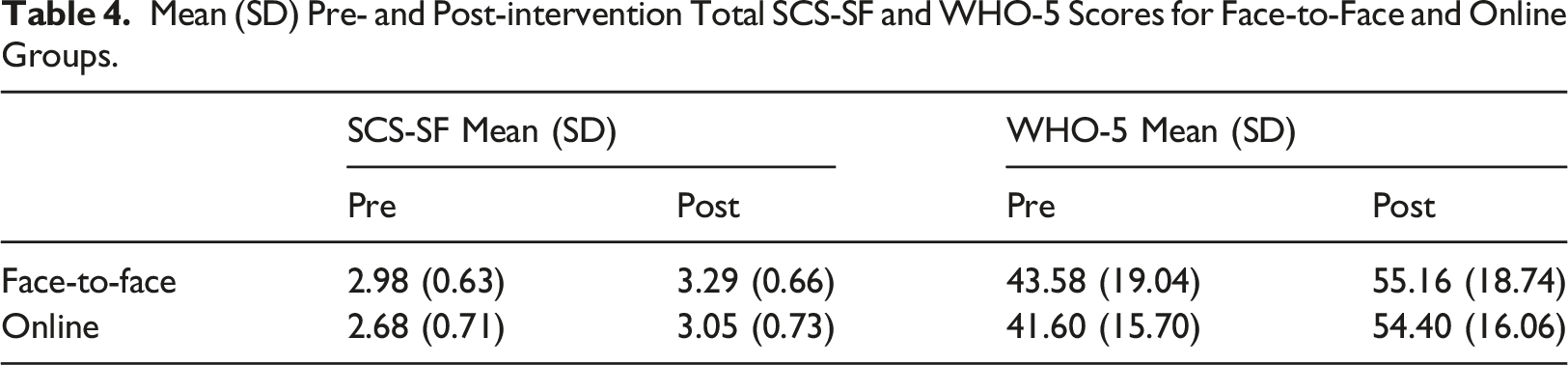
Mixed ANOVAs 2 (group type: face-to-face, online) x 2 (time: pre, post) were carried out with total SCS-SF and WHO-5 scores as dependent variables. Effect sizes were estimated using partial eta-squared; η2 = .01 small effect, .06 medium effect, .14 large effect. The homogeneity of variance assumption was tested using Levene’s test, and the assumption was satisfied as the test statistics were non-significant for both SCS-SF and WHO-5 scores. There was a significant main effect of time within both ANOVAs, with participants' SCS-SF (F (1, 32) = 8.03, p < .01, η2 = 0.20) and WHO-5 (F (1, 32) = 17.60, p = < .001, η2 = .36) scores significantly higher following completing the group. There were no main effects of group type for SCS-SF (F (1, 32) = 1.78, p = .191, η2 = .05) or WHO-5 scores (F (1, 32) = 0.065, p = .800, η2 = .002), showing that there were no overall significant differences in scores between those who completed the group face-to-face and those who completed the group online. Most notably, the group type x time interactions for SCS-SF (F (1, 32) = 0.054, p = .817, η2 = .002) and WHO-5 scores (F (1, 32) = 0.044, p = .835, η2 = .001) were both non-significant, showing that those who completed the group online did not differ in their outcomes following the intervention from those who completed the group face-to-face. A post-hoc power analysis indicated that the ANOVAs were powered to tested effect sizes of .26 and higher.
Ongoing practice
Six weeks after the course parents from January 2019 face-to-face group and September 2020 online group were asked if they had continued informal and formal mindfulness practices. All the Face-to-face continued informal mindfulness practices, and 44.4% continued formal mindfulness practices. All the online group continued informal mindfulness practices and 87.5% continued formal mindfulness practices.
Qualitative Results
Thematic analysis (Braun & Clarke, 2006) was undertaken on semi-structured interview data from Group 1 (January 2019 face-to-face group) and Group 4 (September 2020 online group).
Nine of the 11 attendees were interviewed from Group 1 and all eight attendees from Group 4 were interviewed. All interviews took place via telephone.
An assistant psychologist who had not been part of delivering the intervention interviewed the attendees. She was trained in the use of the semi-structured interview schedule. Following the interviews, a different member of the department coded the samples and these codes were re-read by two further psychologists to ensure the themes were grounded in the data and supported by exemplary quotes. Two of the three psychologists had been involved with the intervention and one psychologist was independent.
Key themes and subordinate themes on the benefits of a MBWP intervention for parents of children with chronic illness.
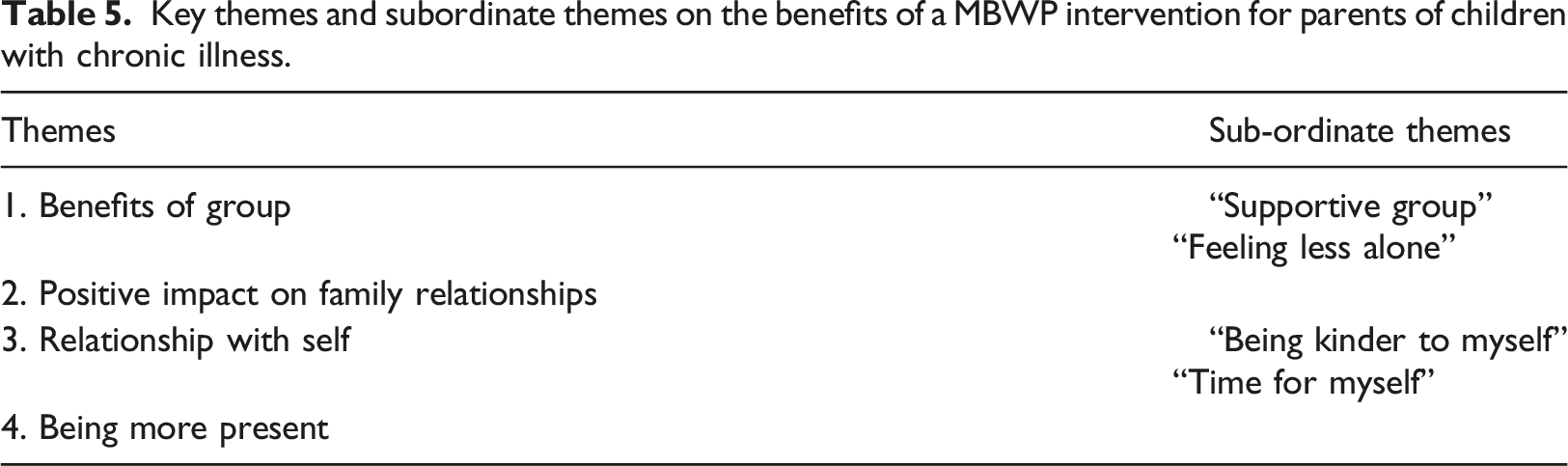
Theme 1: Benefits of group experience
Participants discussed the benefits of being part of a non-judgmental group experience. Parents commented on how the facilitators created an environment that “allowed us to gel as a group”, and how the group was, “comfortable, compassionate, empathetic, and non-judgemental”, allowing “free expression”. The group was experienced as “supportive, encouraging, friendly and educational”. This atmosphere allowed two key benefits of the group experience to emerge in the following sub-ordinate themes.
Sub-ordinate Theme 1.1: “Being part of a supportive group”
Participants described benefiting from mutual support in a “community” where they were able to “look after each other”. For example, one participant shared, “I felt as though I was receiving something from others whether it be kindness or experience.” Parents valued each other and in return felt valued; “listening to the other mothers was quite beautiful and very moving.”
Sub-ordinate Theme 1.2: “Feeling less alone”
Parents gained a sense that they were “not alone”, noticing that “we all have similar worries even though the conditions differ”. One participant described broader benefits of feeling part of a community; “doing it in a group is very powerful with women who are going through the same kinds of challenges (kids with chronic illness). We understand one another. I found it amazing”.
Theme 2: Positive impact on family relationships
Parents noticed a positive impact on family relationships and communication arising from their own changes in mindful presence and self-compassion; “I am kinder to myself and as a result I am kinder to my family.” Another parent shared, “I don’t get so cross now and I don’t lose my temper as much; I can think slightly more rationally”. Improvements in parent-child relationships around health were also described, such as, “my relationship with my daughter is less confrontational, letting her take control and be more independent, generally and with diabetes.” Differences in approaching challenges were also described; “it has had a positive effect on conversations with my daughter when things are tough”. In addition, participants described taking the time to enjoy the present moment more with their children; “I now enjoy those moments with my daughter…we go out for walks and look at flowers and watch shapes in the sky.”
Theme 3: Relationship with self
Parents reported being so busy looking after everyone else that they hadn’t recognised their own needs, “generally I do lots of things for others, but I have realised I have got to look after myself.” As a result, parents were more able to “recognise it’s tough sometimes” and felt enabled to “go easy on myself”. This sense of realisation amongst the group created a space for “being kinder to myself” that emerged as a sub-ordinate theme.
Sub-ordinate Theme 3.1: “Being kinder to myself”
Parents discussed being “more of a friend” to themselves, and made links to shifts in family relationships and communication, such as, “I did tell everyone at home on Sunday that it’s not all about them…It’s also about me.” Others described an awareness that wasn’t there before, such as “catching myself when I’m being too demanding on myself.” Many parents also described making more time for themselves.
Sub-ordinate theme 3.2: “Time for myself.”
Parents described creating time and space for an activity which felt nourishing for them, such as, “having a bath in the evenings and trying to enjoy it more and relax instead of thinking I am on the clock constantly.” Some parents shared that they used mindful activities to focus on themselves, for example, going “for a purposeful walk or [having] a cup of tea outside” and doing “mindful breathing, walking, and being in the present.” Other participants shared that they were more careful to choose activities that didn’t induce more stress or tiredness; “instead of pushing myself too hard, I am prioritising being kind to myself… I will see a friend or walk the dog with my daughter.”
Theme 4: “Being more present”
Parents described “being more present, taking more moments to be mindful rather than jumping in,” and knowing “it’s ok to stop and be with her (my daughter) and not worry about that work call right now.” Other parents connected with “being more present” with their conversations and communication, for example, “I am slower to anger with everything and other people”, and “I try and take pauses…gap between action and reaction.” There was a general recognition that had developed among the parents of being more aware, such as, “at times I catch myself not being mindful and I can sense things are getting tense,” and “when I am walking, I notice the birds and the water so I’m introducing mindfulness into my normal daily life more.” This awareness had helped many parents feel calmer and impacted other elements of their well-being; “I have found I get a better and more restful sleep.”
Discussion
Parents who attended the course showed significant improvements in their well-being and self-compassion. This fits with the evidence base that mindfulness groups are effective with non-clinical populations (Khoury et al., 2015). It further extends the evidence to show effectiveness within a group of parents of children with a variety of chronic health conditions. The group was equally effective delivered online and face-to-face. This was also found when offering MBCT to adults with a diagnosis of cancer (Compen et al., 2018) and within a recent systematic review of group video-conferencing for MBSR/MBCT, which demonstrated positive effects and little difference compared with in-person delivery (Moulton-Perkins et al., 2020). While the efficacy of the intervention might be expected based on studies cited above, achieving effectiveness in delivering this intervention to a group of busy parents, across a range of complex health conditions, and in a setting where they are not the identified patient were all important to establish to inform effective use of resources within our service. Furthermore, there was no significant difference in the improvements to well-being and self-compassion whether the groups were run face to face or online. This may be of value to other services, where barriers such as time, travel and small numbers of parents of children from the same health condition might otherwise limit the offering of a mindfulness group intervention.
Parents’ reflections on the impact of attending the group identified four important positive aspects: group support, relationship and kindness to self, present moment awareness, and relationship to family. Firstly, parents benefitted from being in a supportive group with other parents who had a child with a chronic illness; by feeling less isolated and not judged, they were more able to look at emotional aspects of the challenges in their daily life and give themselves permission for self-care. This fits with the facilitators’ experience of running the groups. However, despite extensive evaluation of mindfulness interventions over the last 30 years, very few studies have foregrounded the role of the group process (Griffith et al., 2019). There have been a few meta-syntheses of qualitative research into participants’ experience of mindfulness-based programmes where group processes have emerged as a core theme and being in a group was experienced as a normalising experience for participants (Cairns & Murray, 2015; Malpass et al. 2012). Indeed, the Buddhist roots from which mindfulness-based programs were adapted (Kabat-Zinn, 2011) have always emphasised the importance of community to support and sustain practice acknowledging that it is difficult to make change alone and that everyone in the group can contribute something to others while living with their own challenges (Thich Nhat Hahn, 2012). This fits also with narrative therapy practices that emphasise the value of collective practices in reducing shame and isolation (Denborough, 2014). In this way, a strength of the hospital setting is that a population of parents may be found who are a resource to each other. Identifying shared challenges helps to make ‘stress reactions’ seem less personal, and participants come to have an appreciation of their own strengths and values as they bear witness to each other’s commitment, hard work and creative responses to the challenges of parenting a child with a significant health condition.
Parents reported a changed relationship with themselves, both making more time for themselves and being kinder to themselves. A study of parents of children with autism, who might also be considered to experience increased parenting burden of both predictable and unpredictable challenges, found self-compassion played a significant role in parent well-being and was more influential than child symptoms (Neff & Faso, 2015). Although the group teaches tools for nurturing self-compassion through formal and informal mindfulness practices, the group element was also identified as important; hearing each other’s experiences was cited as instrumental in creating space to acknowledge their own challenges, which then opens space to offer themselves kindness. In addition, as the course progressed, parents shared examples of both new self-care practices or moments of presence, alongside experiences of significant challenge, creating, a rhythm whereby both challenges and self-compassion can be woven together.
Some parents reported finding time for regular formal practices; a small significant relationship has been found with amount of practice and outcome within a meta-analysis (Parsons et al., 2017). While the MBSR course invites participants to undertake practices of 45-minute duration, 6 days a week, this MBWP course more modestly invites 10-minute daily practices supplemented with informal practices. Even with the reduced time of formal practices, the impact of the mindfulness elements of the group came through most strongly in parents’ accounts of how they were informally incorporating mindfulness into their days. One parent described getting fed up waiting for her daughter to come out of school, then noticing the beautiful sunset and different colours in the sky. She described, “my irritation faded with the light”. Other parents talked about how walking their dog changed from a chore to a time when they were able to appreciate nature and the sights and sounds around them. There is evidence that informal practice can be more effective in some groups such as medical students who might also be considered to have limited time (Kakoschke et al., 2021) and can be effective when taught as the sole method of developing mindfulness (Shankland, 2020).
It is not surprising that finding a group that encourages taking time and kindness for self, alongside dropping from sympathetic arousal to para-sympathetic calming, was connected to parents’ noticing a positive impact within family relationships. While we did not directly measure the impact on children, the finding fits with the original hypothesis that parent well-being affects that of their children (Cousineau et al., 2019).
Practices within the group encouraged self-regulation and a number of exercises explored communication. Psychoeducation drawing on Kabat-Zinn (2013), Siegel (1999, 2010) and Gilbert (2009) created a recurring thread within the course which emphasised how stress is an ‘off switch’ to connection and helpful communication. Where Gilbert’s three affect system gives parents a theoretical framework for assessing their own emotional state, and Kabat Zinn’s MBSR practices give them ways to down regulate their arousal, Seigel’s developmental/relational models help them apply this thinking to their interaction with their children and family interactions.
Limitations
The mindfulness groups were run as part of the clinical provision to parents of children with a chronic illness. The data was collected as part of an audit of our clinical practice. Given this context, although we stayed close to the MBWP framework (Eames et al., 2015) we have not run a manualised course, and therefore we would encourage others to similarly consider their own context in making use of our findings.
There was no control group, so we cannot be sure that benefits parents experienced are due to the Mindfulness groups.
Out of 37 parents who completed the course, only two were fathers. Further understanding of whether fathers identify a need for attending to their own well-being, and what barriers to accessing support they experience if they do, is required, alongside exploration of the kind of interventions that would be acceptable to this population. These courses were all run during the working day which excluded some working parents from attending. However, a few parents were able to attend the online group whilst working.
In each group there were one or two early dropouts despite every participant having received an extensive telephone appointment prior to the group. As interviews were only carried out with parents who completed the course, the experience of parents who dropped out was not explored in detail. Informal feedback from parents who dropped out included life getting too busy, preferring a less structured support group, and not liking meditation.
Ongoing developments
Informed by ideas from mindfulness and collective narrative practice (Denborough, 2014) and in response to parent feedback,, we have created a Mindful Gathering to complement the MWBP groups. This is a group offered to any parent who has attended a MBWP at UCLH. The Mindful Gathering meets six times per year (twice each school term) for an hour and involves inquiry into fitting mindfulness in everyday life (both formal and informal), formal practices and inspirational readings/poems.
Conclusions
While this study is a small relational design, there are a number of results that suggest this intervention may be feasible in other services. Firstly, the finding that this intervention was equally effective online and face-to-face means that more parents could access this type of group. Also, this intervention was successful with a group of parents whose children had different medical conditions. The qualitative feedback in particular highlights that they were able to connect and be a resource to each other despite differences in experience, which allows for wider recruitment. Importantly, 6 weeks post-course, 100% of parents remained engaged with informal mindfulness practices.
Last words
We would like to give the last words to the parents who have attended our MBWP groups. During our last session, we ask parents to bring an object, or a song or poem that represents what they will take away from the course:
One parent wrote a poem called THE LONG GRASS and here is an extract.
For the long grass restores my soul;
So the long grass can be a strength for all.
The rich diversity in such a simple place reminds me of a state of grace; that so much can be withheld from a normal sight; but then we look closer & see a microscopic delight!
That may in turn slowly shift the darkest night!
So enter the long grass with glory & delight!
Another parent brought an old envelope and shared, “This envelope is full of marigold seeds. Every year I grow marigolds in my garden and take off the dead heads and put the seeds in this envelope and replant them the next year. In life, I expect myself to be a fully grown plant all year round and this course has helped me see how sometimes I am just going to be the seeds in the envelope, and I know that at another time I will be the adult plant.”
Footnotes
Declaration of conflicting interests
The author(s) declared no potential conflicts of interest with respect to the research, authorship, and/or publication of this article.
Funding
The author(s) received no financial support for the research, authorship, and/or publication of this article.
Ethics and Patient Consent
It was not necessary to go through the formal NHS ethics process because the MBWP groups were part of routine clinical practice. The participants all gave their permission for their words to be quoted.
