



Abstract
The timing of trauma exposure is a risk factor for the development of psychopathology in adulthood. We aim to assess the presence of adverse life events (ALEs) before age 13 in patients with eating disorders (ED). Specifically, we examined the relationship between exposure to interpersonal trauma before the age of 13 and body image distortion (BID), impulsivity, and perfectionism. We conducted a cross-sectional, retrospective study in which 79 outpatients with ED were consecutively enrolled. Assessment was performed using the Traumatic Life Event Questionnaire, Contour Drawing Rating Scale, and Eating Disorder Inventory. Linear regression models were used to analyze the predictive role of interpersonal trauma before age 13 on BID perfectionism and impulsivity. Seventy-two patients (91.1%) reported ALEs throughout their lives. Patients with trauma before age 13 (55.6%) overestimated their shape. Patients with ED and bulimic symptoms had significantly higher BID levels. Interpersonal trauma predicted higher levels of impulsivity and perfectionism. Experiencing interpersonal ALEs before age 13 may be a risk factor for the development of BID, impulsivity, and perfectionism in adulthood. Body image can be modified during childhood through interventions focused on identifying stressful relationships.
Plain language summary
Childhood is important for the construction of self-image. When people feel threatened in relationships they trust, they feel ashamed and guilty. These emotions could lead to ED and BID. To explore this, we conducted a study on how ALEs during childhood influence the way we perceive our bodies. We asked participants with ED to close their eyes and sense their bodies. We then invited them to choose a shape from a list of nine figures with different shapes. Participants who experienced childhood trauma chose a shape that was distorted with respect to their actual figure. We believe that closing the eyes connects people to their inner emotions and influences their body appreciation. This will help patients identify and treat negative emotions so that they feel more comfortable with their bodies.
Introduction
The World Health Organization defines child maltreatment (CM) as “all acts that result in probable or actual harm to a child’s physical and mental health” (WHO, 2020). It can occur in the context of a relationship of trust, and has been described in all social strata and economic classes (WHO, 2020). Childhood physical abuse, physical neglect, emotional abuse, emotional neglect, and sexual abuse have been described as different types of CM (WHO, 2020).
Low self-esteem, substance abuse, eating disorders, impulsivity, psychosis, and suicide attempts have been reported in adults who reported being abused during childhood (McLaughlin et al., 2020; Ordóñez-Camblor et al., 2015). Changes in body function and increased body sensitivity have also been reported in survivors of sexual abuse (Dyer et al., 2013). It has been reported that childhood exploration of the environment, pain, hunger, and relationships with parents contribute to the construction of body image (Troisi et al., 2006).
Body image is a complex construct that includes attitudinal, perceptual, emotional, and cognitive aspects (Quick & Byrd-Bredbenner, 2014; Tylka & Wood-Barcalow, 2015). The emotional and cognitive components of body image are associated with body dissatisfaction. The perceptual dimension leads to body misperceptions, while behavioral dimensions determine eating attitudes (Quick & Byrd-Bredbenner, 2014; Tylka & Wood-Barcalow, 2015). Disordered eating and body image distortion (BID) can occur when individuals feel physically threatened (Dyer et al., 2013). Shame, body dissatisfaction, and eating disorders (ED) in adulthood have been linked to lack of warm experiences in childhood (Gois et al., 2018).
ED is a serious condition associated with high psychiatric comorbidity (Treasure et al., 2020). BID and body dissatisfaction are associated with the worst outcomes of illness (Keel & Brown, 2010). Adverse life events (ALEs), such as emotional and sexual abuse, have been associated with concerns about body shape in patients with bulimia nervosa, while physical abuse has been found in patients with bulimia and binge eating disorders amid concerns of weight gain (Guillaume et al., 2016). All types of abuse have been associated with high body mass index (BMI), but emotional abuse appears to be more prevalent in individuals with low BMI (Dunkley et al., 2010; Mason et al., 2015). Moreover, trauma exposure in ED has been associated with cognitive schema such as emotional deprivation and social isolation, with the latter being a possible mediating factor between ALEs and eating psychopathology (Meneguzzo et al., 2021)
Features such as impulsivity, perfectionism, low self-esteem, anxiety, and depression have been described in adolescents who develop ED (Ordóñez-Camblor et al., 2015). Impulsivity has been associated with self-injurious behavior in both patients with ED and those with affective disorders who experience interpersonal ALEs (Armour et al., 2016). Generally, perfectionism, relationship problems, and introversion have been described in individuals with anorexia nervosa, whereas those with bulimia nervosa and purging anorexia present more impulsivity (Fernández-Aranda et al., 2008). Impulsivity and perfectionism are also associated with worst evolution in ED (Fernández-Aranda et al., 2008). Usually, impulsiveness is associated with purging symptoms and suicidality (Fernández-Aranda et al., 2008). Moreover, ED patients with purging behaviors tend to present with more BID (Grunwald et al., 2002; Madowitz et al., 2015).
Trauma exposure has been considered a non-specific risk factor for patients with ED, and studies have reported prevalence rates of different ALEs between 5% and 66% (Backholm et al., 2013; Kjaersdam Telléus et al., 2021). Specific ALEs, mostly within relationships of trust (interpersonal ALEs) have also been assessed (Backholm et al., 2013; Kjaersdam Telléus et al., 2021; Lejonclou et al., 2014; Molendijk et al., 2017). However, it is not known whether the development of psychopathology can be solely attributed to the occurrence of ALEs or some of its conceptualized dimensions, such as timing, number of traumatic experiences, or chronic trauma (Russotti et al., 2021). Difficulties in cognitive functioning and emotional dysregulation have been reported in children with chronic maltreatment (Cowell et al., 2015; Warmingham et al., 2019). Poor functioning, depression, and concerns of shape and weight have been described in ED patients who experience multiple traumas throughout their lives (Keel & Brown, 2010; Villarroel et al., 2012).
Depending on the timing of trauma exposure, different psychopathological presentations have been described according to the period in which the maltreatment occurred (Dunn et al., 2018). Exposure to physical or sexual abuse in early childhood has been associated with the onset of depression, post-traumatic symptoms, and anxiety in adulthood (Jaye Capretto, 2020; Warmingham et al., 2019). In addition, trauma exposure before age six could influence the proper development of secure attachment or good emotion regulation (Kaplow & Widom, 2007). Early development is crucial for both neurobiological maturation and relational skills, and poor functioning has been reported in adults with early childhood maltreatment (Jaye Capretto, 2020; Warmingham et al., 2019).
Currently, limited studies have assessed the age of onset of ALEs and its relationship with BID in patients with ED. Most studies (Guillaume et al., 2016; Dunkley et al., 2010) have examined different subtypes of childhood maltreatment and their relationship with bulimic symptoms or BMI, but limited studies considered a specific age for analysis. Mason et al. (2015) describes how interpersonal ALEs before age 11 were correlated with high BMI and body dissatisfaction through the onset of binge eating.
As exposure to different types of maltreatment is a common pattern, analyzing other factors beyond the categories of absence and presence of trauma may improve our recognition of psychopathology and may help in the development of new interventions (Jackson et al., 2019).
Our hypothesis is that patients with ED who have experienced ALEs before age 13 have a more distorted BID.
The general aim of this study is to assess the presence of ALEs before age 13 in patients with ED and to evaluate differences within groups.
Specific aims are (a) To describe the relationship between interpersonal ALEs before age 13 and BID. (b) To investigate the relationship of interpersonal ALEs before age 13 with perfectionism and impulsivity.
Method
Study design and participants
This cross-sectional, retrospective study was approved by the hospital’s ethics committee. Participants were adult outpatients consecutively admitted to the ED unit. The inclusion criteria were ages between 18 and 65; diagnosis of restrictive and purging anorexia nervosa, bulimia nervosa, and binging disorder according to the diagnostic criteria of the Diagnostic and Statistical Manual of Mental Disorders, fifth edition-DSM5 (APA, 2013); good knowledge of Spanish; and provision of written informed consent. Individuals with a BMI <15, high risk of suicide, psychotic symptoms, or intellectual disability were excluded. It has been suggested that the association between ALEs and eating symptoms decreases with weight restoration (Sjögren et al., 2023); therefore, we wanted to ensure that the associations were not due to low weight. The final sample comprised 79 ED patients, of which 68.2% had a university degree and 59.5% were employed. All the participants provided informed consent.
Measures and procedures
All participants were assessed through a clinical interview to obtain the following variables: age, sex, ED diagnosis, illness duration, years of treatment, and number of hospitalizations. Their height and weight were measured. To assess clinical features of ED, presence of ALEs and BID, the following tests were performed:
Traumatic life events questionnaire (TLEQ)
This is a self-report questionnaire (Kubany et al., 2000) with 23 items (dichotomous answer YES/NO) used to assess different ALEs. Subjects selected the most traumatic experiences, marking the age of the trauma and the associated level of distress. It allows the analysis of common ALEs throughout life beyond the patient’s choice. It has been tested on different populations and exhibits good psychometric properties (internal consistency between 0.74 and 0.91).
Contour drawing rating scale (CDS)
Developed and validated by Thompson and Gray (1995), it consists of nine masculine and feminine drawings each, graded from 1 to 9 according to the progression of BMI from low weight to obesity. Generally, the three central figures represent normal weight (BMI: 18.5–24). People choose their ideal body, and the drawings they think could represent their actual weight. It measures body dissatisfaction and the presence of a distorted BID and has good internal consistency (Cronbach’s alpha coefficient: 0.92).
Eating disorders inventory (EDI-2)
This self-administered 91-item questionnaire (Garner, 1993) uses a 6-point Likert scale (1 = never; 6 = always) to explore various clinical characteristics of patients with ED. The scores were divided into 11 subscales: Drive for Thinness, Bulimia, Body Dissatisfaction, Ineffectiveness, Perfectionism, Interpersonal Distrust, Interoceptive Awareness, Maturity Fears, Ascetism, Impulse Regulation and Social Insecurity. This allows for the differentiation between patients with ED and a non-clinical population. Its internal consistency range is 0.83–0.93.
Recruitment took place between January 2021 and May 2022. Eligible patients were invited to participate in the study. Those who agreed were asked to participate in a personal interview at the hospital during which they signed an informed consent form and completed the questionnaires.
The primary outcome measure was the presence of ALEs. Based on previous research (Thomas et al., 2021), we categorized reported ALEs into two groups: 1) interpersonal and 2) non-interpersonal. Interpersonal ALEs were divided based on whether they occurred within a trusting relationship (intrafamilial) or not (non-intrafamilial), except for the presence of sexual abuse (which included both intrafamilial and non-intrafamilial). Additionally, we conducted an analysis that considered the presence of ALEs before the age of 13, and sexual abuse, with the latter being the most studied in ED (Madowitz et al., 2015).
The secondary outcomes measured included BMI, levels of perfectionism, impulse control, and presence of BID, as measured by CDS. To investigate the latter, we segmented the body that patients “see” (visual BID) from the one they “sense” (non-visual BID). When the researcher presented the participants the nine drawing shapes on CDS, the first instruction was “choose the figure that you think represents your body when you are looking at the mirror” and, the second, “shut your eyes and try to sense your body before selecting the figure you think reflects your actual shape.” Actual BMI was obtained from the researchers. The difference between the figure they chose and the actual shape according to BMI defined BID. We categorized them into three types: 1) overestimation of silhouette, 2) underestimation of silhouette, and 3) absence of BID when the chosen figure was superior, inferior, or the same as actual BMI, respectively.
Similarly, categories were identified for ED. The sample population was divided into 1) Impulsive ED, encompassing bulimia nervosa, binging disorder, and purging anorexia nervosa (74.68%); 2) Perfectionist ED, consisting of atypical and restrictive anorexia nervosa (20.26%); and 3). Unspecified ED (5.06%).
Statistical analysis
All statistical analyses were performed using SPSS (version 24.0; Statistics, I. S., n.d.). Continuous measures were evaluated for significant differences in psychopathological characteristics among patients with ED using Student’s t-test and Mann-Whitney tests, while Fisher’s exact test was employed for ordinal measures. A chi-squared test was conducted to explore potential disparities between categorical variables, followed by linear regression models to investigate the predictive value of factors, including experiencing an ALE before age 13, BMI, number of hospital admissions on BID (assessed using CDS), and psychological factors of perfectionism and impulsiveness (assessed by EDI-2). All statistical tests utilized a two-tailed approach, with statistical significance set at .05.
Results
The global sample (79 participants) comprised 96.2% women with a mean age of 37.6 (range: 18–59, SD: 12.03). The mean disease duration was 17.1 years (range: 1–47; SD, 2.9), and 44.3% of patients reported at least one hospital admission (mean, 0.81; range: 0–5; SD, 1.1). Furthermore, 72 participants (91%) reported the occurrence of ALEs, of whom 76.5% reported experiencing severe or extreme distress. The mean duration of continuous trauma was 1.7 years (range = 0–13; SD = 3.2).
We describe the sample regarding ALEs characteristics and BID.
Characteristics of ALEs
Categories and Characteristics of ALEs Reported by participants (N: 72).
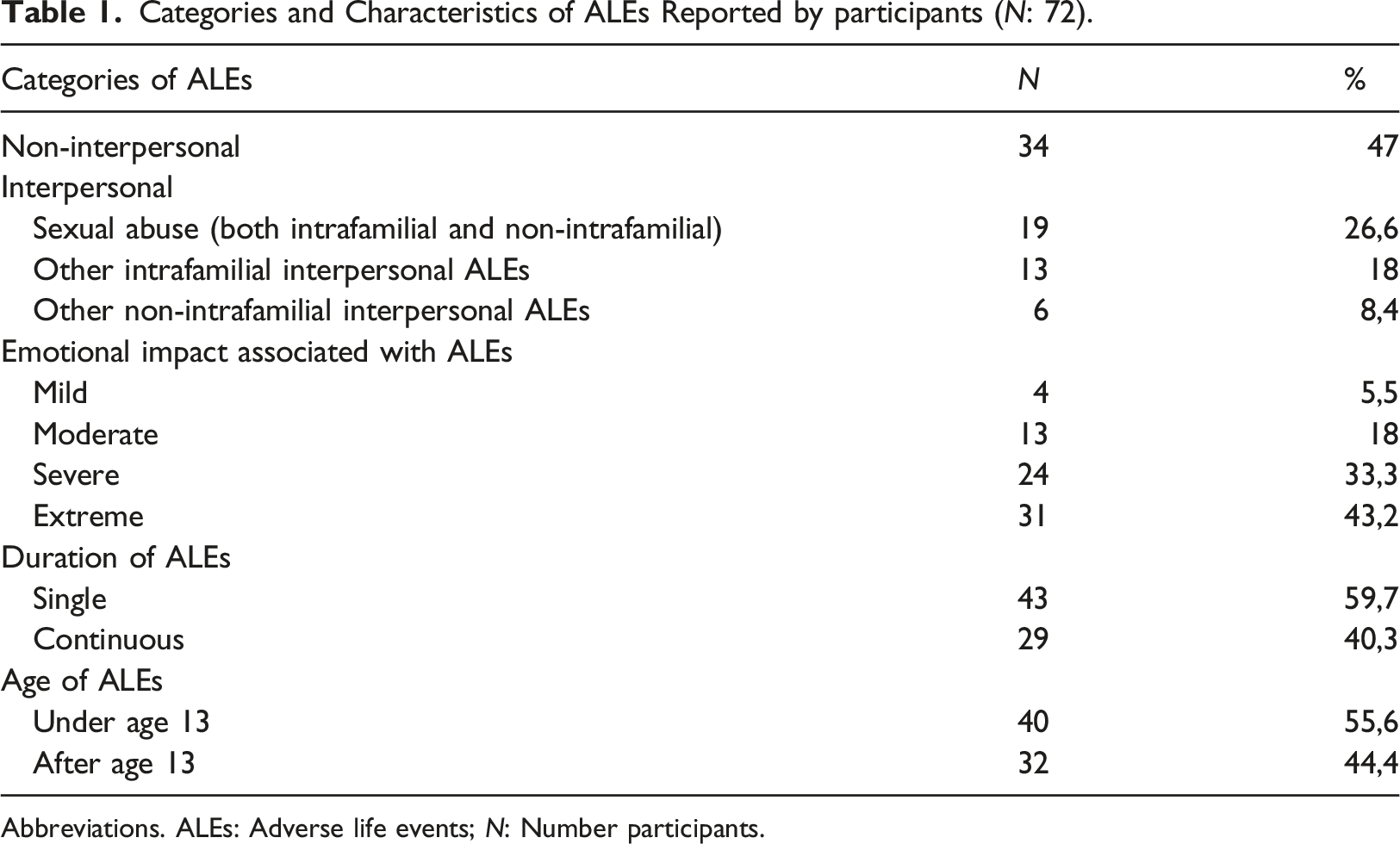
Abbreviations. ALEs: Adverse life events; N: Number participants.
Description of BID in the sample
Figure 1 presents the BID of participants who reported ALEs. They tended to overestimate their shape, both visually and non-visually. Although the differences were not significant, a higher percentage of patients exhibited non-visual BID (69.6%) than visual BID (64.5%). Type of body image distortion of ED participants with trauma when looking in the mirror (visual under or overestimation) and after closing the eyes (non-visual under or overestimation).
Relationship between ALE, impulsiveness, perfectionism and BID
The findings revealed that patients who reported interpersonal ALEs (p = .029) and ALEs before age 13 (p = .038) experienced more BID.
Sexual abuse was significantly more prevalent in patients with bulimic symptoms (p = .018), although we found no association with BID.
Impulsive patients with ED presented with more visual BID than their restrictive counterparts (Chi-square p = .045). Furthermore, interpersonal ALEs were associated with impulsivity (p = .049) and perfectionism (p = .041).
Psychopathological Differences Between ED patients With ALEs Before and After age 13 (N: ALE* 72).

Abbreviations. ALEs: Adverse life events; N: Number of participants; M: Media; SD: Standard deviation; BD: Body dissatisfaction; CDS: Contour drawing Scale; BID: Body image distortion; EDI–DT: Eating Disorder Inventory, subscale drive for thinness; EDI–B: Eating Disorder Inventory, subscale bulimia; EDI–BD = Eating Disorder Inventory, subscale body dissatisfaction; EDI–In= Eating Disorder Inventory, subscale ineffectiveness; EDI–P: Eating Disorder Inventory subscale perfectionism; EDI-ID: Eating Disorder Inventory subscale interpersonal distrust; EDI–IA: Eating Disorder Inventory subscale interoceptive awareness; EDI–MF: Eating Disorder Inventory subscale maturity dears; EDI-A: Eating Disorder Inventory subscale ascetism; EDI–I: Eating Disorder Inventory subscale impulse regulation; EDI–SI: Eating Disorder Inventory subscale social insecurity; BMI: Body Mass Index. *p-value significant <.05.
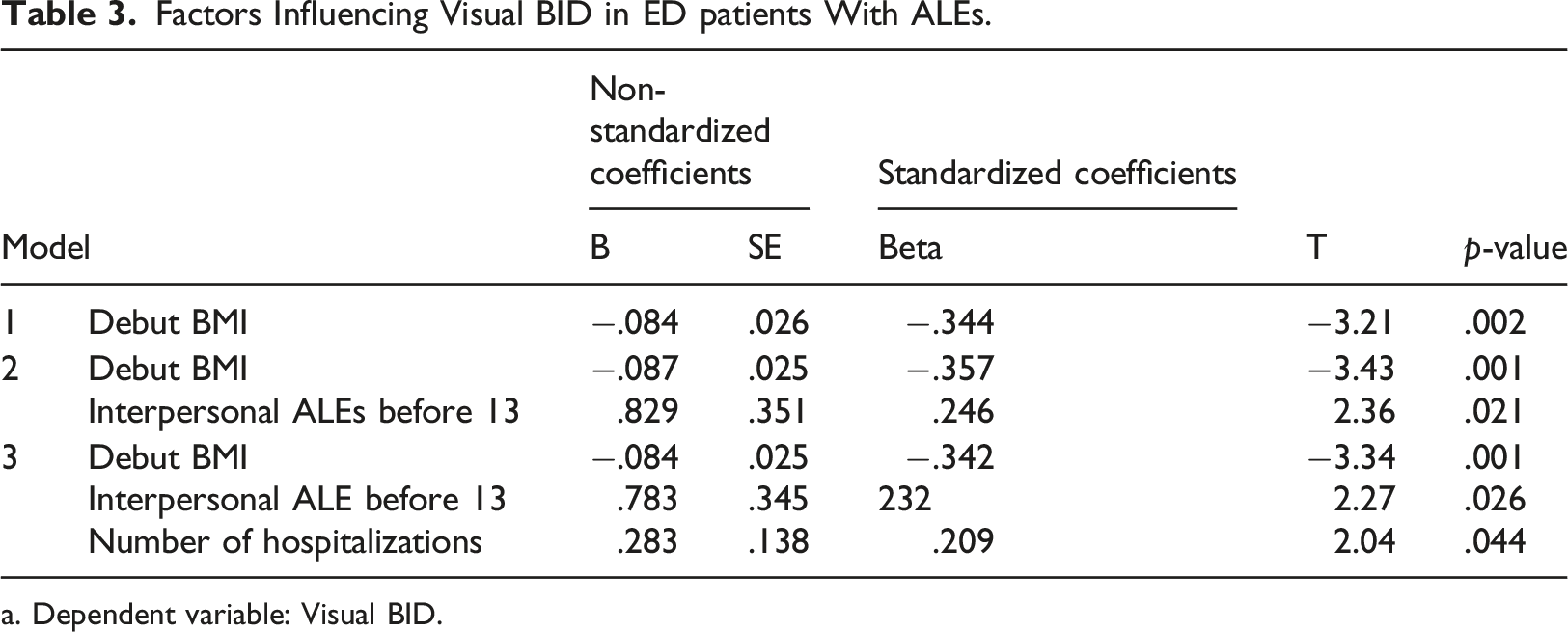
We conducted a linear regression analysis to examine the correlation between interpersonal ALEs before age 13 and BID. We tested various models with other variables included as possible predictors of BID beyond ALEs before age 13. The first model featured only BMI at the onset of illness, the second incorporated ALE before 13, and the third comprised interpersonal ALEs before 13, BMI, and the number of hospitalizations.
Factors Influencing Visual BID in ED patients With ALEs.
a. Dependent variable: Visual BID.
Furthermore, a higher number of hospitalizations and BMI at the onset of illness were associated with a higher BID.
This model also effectively predicted non-visual BID (p = .021), impulsiveness (p = .001), and perfectionism (p = .021), with ALE before age 13 the independent variable.
Discussion
To the best of our knowledge, this is the first study to evaluate the influence of trauma on BID in patients with ED. Generally, studies have focused on the affective or attitudinal aspects of BID and evaluate specific ALEs, such as emotional or sexual abuse, without reference to perceptual BID (Guillaume et al., 2016; Molendijk et al., 2017). Mason et al. (2015) examined a sample of children under age 11, but their findings only indicated CM as a risk factor for high BMI in adulthood, without any reference to BID. Generally, patients with ED reporting ALEs during childhood present with greater body dissatisfaction, with binge eating or post-traumatic symptoms being the mediating factors between trauma and body dissatisfaction (Backholm et al., 2013; Mitchison et al., 2019).
The general aim was to assess the presence of ALEs in patients with ED before age 13. Additionally, we examined group differences in BID and evaluated their relationship with impulsivity and perfectionism. As hypothesized, our findings showed that patients with ED who reported ALEs before age 13 had a greater BID than those with ALEs after this age; they tended to overestimate their body shape both visually and non-visually. However, the difference between the groups was significant only for non-visual BID.
ALEs have been linked to body dissatisfaction and emotional dysregulation (Backholm et al., 2013; Dyer et al., 2013; Molendijk et al., 2017). Positive familial relationships are crucial for constructing self-image during middle childhood (Castañeda-García et al., 2021; Gois et al., 2018). Dunn et al. (2018) highlighted the negative effects of interpersonal ALEs during early childhood (ages 6–12) on emotion regulation. By interacting with their children, touching them, calming their emotions, and helping them recognize when they are unwell, parents promote the construction of their body image (Troisi et al., 2006).
To investigate this, we segmented the body that patients “see” in the mirror from the one they “perceive” when they close their eyes. It is possible that negative emotions associated with childhood ALEs influence body image perception when patients close their eyes. Maybe BID is unacknowledged emotion to which we should address our interventions. For example, although not yet supported because of inconsistent data, new approaches could come from movement therapy, through which we can try to achieve emotions that patients cannot express verbally (Kleinman & Hall, 2006).
When examining other categories of ALEs beyond the timing, the presence of interpersonal ALE, particularly those occurring before age 13, was found to be associated with both visual and non-visual BID. To our knowledge, no comparable examples have been reported in the literature. One of the hypotheses suggests a relationship between BID in patients with ED and brain functional changes in the parietal cortex when they engage in visual self-assessment (Grunwald et al., 2002). These regions have also been linked to emotional expression and demonstrate neurobiological changes in adults who suffered abuse during childhood (Nishitani et al., 2021). Previous studies have reported interpersonal ALEs among patients with ED having post-traumatic stress disorder, bulimic symptoms, and body dissatisfaction (Mason et al., 2015; Monell et al., 2018). Chemisquy and Helguera (2018) proposed that individuals with high perfectionism are more sensitive to stressful relationships. Perhaps children who have experienced interpersonal familial ALE develop coping strategies to manage negative emotions, such as exerting control over their bodies. This may have impacted the accuracy of their self-evaluation when looking in the mirror because of the influence of their perfectionist traits. This idea is supported by our results, which show that interpersonal ALEs are associated with perfectionism.
We found no association between sexual abuse and body dissatisfaction or BID. However, we found a correlation with bulimic symptoms. This differs from the findings of other studies, in which sexual abuse was reported in patients with ED displaying more body dissatisfaction and BID (Madowitz et al., 2015). Typically, greater concerns about body shape are linked to bulimia and greater perceptual distortion is associated with anorexia (Grunwald et al., 2002; Madowitz et al., 2015). Nevertheless, our study found that patients with impulsive ED (bulimia, binge eating disorder, and purging anorexia) had higher levels of visual BID. Central coherence is the ability to process global information despite minor details, and is supported by visual perception (Happé & Frith, 2006). Individuals with impulsive ED usually report deficits in central coherence (Darcy et al., 2015). This deficit may hinder their ability to accurately evaluate shapes.
Linear regression demonstrated how interpersonal ALEs experienced before age 13 predicted both visual and non-visual BID. BID was previously considered an independent factor for predicting low weight in anorexia or fasting in bulimia (Stice et al., 2017). Our findings suggest that BID is a dependent variable that can be modulated by interpersonal ALE during middle childhood and high BMI at the onset of illness. Furthermore, no discrepancies were observed in the remaining psychopathological characteristics of the disorder with respect to timing of trauma exposure.
Finally, our findings suggest that the presence of interpersonal ALE before age 13 is linked to higher levels of perfectionism and impulsivity. Studies have reported instances of dissociation and emotional dysregulation in patients with ED who have experienced bullying or sexual abuse (Madowitz et al., 2015). Impulsivity and perfectionism are two key psychopathological dimensions in patients with ED that can influence disease progression (Fernández-Aranda et al., 2008). In our study, increased hospitalizations were associated with greater BID, consistent with previous research indicating that patients with severe illness tend to report more hospitalizations (Keel & Brown, 2010). Experiencing interpersonal ALE in childhood may prompt individuals to manage negative emotions through bodily control because of unrecognized feelings such as shame (Gois et al., 2018; Madowitz et al., 2015). The need to exert control over these emotions after experiencing ALEs could lead to the adoption of coping strategies, such as fasting, to prevent feelings of insecurity. When these strategies fail due to impulsivity, binge eating may occur, which also aids patients in managing negative emotions.
In conclusion, exposure to trauma before age 13 can be a risk factor for developing BID, impulsivity, and perfectionism in adulthood. (a) These traits are important for the development of ED; (b) Binge eating and fasting could be features of emotion dysregulation; (c) Bulimic symptoms may present as a phenotype of the impulsivity associated with ALEs; (d) People with perfectionist traits after trauma could use starvation to control emotions associated with ALEs. (e) Childhood interventions aimed at identifying stressful relationships or preventing CM may prove to be effective in modifying BID.
Therapeutic efforts should then be redirected to identify patients with ALEs in childhood to apply more appropriate interventions based on the reconstruction of a secure attachment through a therapeutic relationship so that patients can develop a positive body image (Tylka & Wood-Barcalow, 2015).
Strengths and limitations
To the best of our knowledge, this is the first study to separate the perceptual component of BID into visual and non-visual silhouettes for an improved understanding of it. Specific interventions focused on the “body approach” could help improve the perceptual component of a distorted BID, and could also aid in the course of the illness. Our study addressed this issue using the DSM5 (APA, 2013) criteria in current patients. Furthermore, this method can be replicated easily. Additionally, we were unable to identify any other studies in the literature that reported the effects of trauma timing exposure on BID.
The limitations arise from the use of a retrospective assessment approach and a cross-sectional design. Furthermore, when investigating trauma exposure through self-reported questionnaires, participants may not have disclosed all relevant information. Nevertheless, studies have suggested that there are only a few false positive cases (Pinto & Maia, 2013), Our participants provided anonymous responses, enabling honest reporting. Additionally, our study had a relatively small sample size and no control group. However, ED investigations often use insufficient samples unless data collection is employed.
Footnotes
Acknowledgements

Declaration of conflicting interests
The author(s) declared no potential conflicts of interest with respect to the research, authorship, and/or publication of this article.
Funding
The author(s) received no financial support for the research, authorship, and/or publication of this article.