




Abstract
The aim of this study is to investigate the effects of traditional media, social media, and media trust on people’s compliance with health behaviors during the COVID-19 pandemic in China. A total of 3000 Chinese adults filled online questionnaire using quota sampling method. Results show that use of central government media and use of WeChat are positively related to compliance with health behaviors, while use of local media and use of Weibo are negatively related to the levels of compliance. In addition, trust in the media amplified the effects of media use on levels of compliance.
Introduction
In December 2019, a local outbreak of acute respiratory syndrome with unknown etiology, later identified as COVID-19, was detected in Wuhan, Hubei Province, China. The virus quickly spread to other regions in China, with more than 14,000 confirmed cases and 304 deaths as of 1 February 2020. The ongoing outbreak of COVID-19 caused a global public health crisis (Wu et al., 2020a).
The Chinese government took various measures to contain the virus, including case isolation, contact tracing, environmental disinfection, etc. (Wei and Ren, 2020). Among all the measures to combat the virus, personal prevention is of particular importance. According to the prevention guidelines published by the Chinese Center for Disease Control and Prevention (China CDC), the recommended behaviors included wearing face masks, washing hands frequently with soap and water, covering coughs and sneezes with tissues, avoiding touching eyes/nose/mouth with unwashed hands, avoiding contacting with affected person, and maintaining social distance (China CDC, 2020).
The media are the primary means for health intervention (Flora et al., 1979). There is a considerable amount of research concerning media’s influence on people’s health behavior change (e.g. Cinelli et al., 2020; Kim et al., 2019). Mass media use is found to be effective for changing human health behaviors (e.g. Valente and Saba, 1998; Yanovitzky and Bennett, 1999). More recent studies reveal that social media use is associated with improvements of health behavior outcomes (e.g. Maher et al., 2014; Oh et al., 2020).
During a crisis, there is a high need for information. Both traditional media and social media are important channels from which the public acquire information (Liu et al., 2016; Spence et al., 2007). However, these two types of media outlets are functionally different. Traditional media emphasize connection to “expert” sources of information (Lowrey, 2004). When people sense the presence of social crises threat, they tend to have a higher dependence on mass media for authoritative information (Loges, 1994; Lowrey, 2004). However, traditional media are typically more passive in nature (Thackeray et al., 2008). Ordinary citizens can hardly be actively involved in the information transmission process. In China, central government media focus more on news related to national level policies and the image of the state and leadership than their local counterparts (Kuang, 2018). Local media, in contrast, set and define news agendas based on local interests (Tong, 2010).
Meanwhile, people also like to turn to social media for acquiring information and exchanging opinions during crisis (Vieweg et al., 2010). Users of social media can be actively content producers, rather than passive recipients of information (Maher et al., 2014; Thackeray et al., 2008). Because of the function of real-time information exchanging, the public can obtain disease-related information and exchange opinions with family, friends, even strangers on social media (Jang and Baek, 2019). In China, compared to traditional media, social media are an important venue where people can express their dissatisfactions (Denemark and Chubb, 2016; Gries, 2004). However, social media suffer from the problems of information overload and prevalence of misinformation (Gao et al., 2020).
Another media related factor which may influence health behavior is media trust. Trust is a demonstrated, positive correlate of information acceptance, liking, and other processing effects (Kiousis, 2001). Those with higher trust in media are more likely to accept health messages and to adopt health behaviors. The effects of trust in media on compliance of preventive measures is realized through increased acceptance of health-related messages (Tokuda et al., 2009). Media trust was found to associate with compliance with all the recommended behaviors in pandemic influenza H1N1 2009 (Prati et al., 2011). Trust in online drug information was found to associated with ad-promoted health behavior (Huh et al., 2005). And trust in new media was associated with protective behavioral intention (Lin and Bautista, 2016). Although previous studies show that trust in media in general is important in health communication process, they do not differentiate between trust in traditional and new media (Lin and Bautista, 2016).
Media trust is often assumed to be associated with media use. In the “rational audience” model, audience are assumed to follow the media they trust (Tsfati and Cappella, 2003). However, in many cases, people are not following a rational process to choose media. Trust in the media can be considered as one of the “motivational characteristics” of the audience and may impact the outcome of media use (Ardèvol-Abreu et al., 2018). In this sense, it might be expected that trusted media have greater mobilizing power. Following this logic, we can also expect media trust to interact with media use influencing health behavioral outcomes.
Crisis communication, which refers to accurate and effective communication to diverse audiences during emergency situations, plays an important role in coping with public health crisis (Glik, 2007). When facing with crises, people tend to seek more information to reduce uncertainty (Xu, 2018). The spread of COVID-19 has created specific crisis communication demands (Coombs, 2020). Several recent studies attempted to address these problems. For instance, Charoensukmongkol and Phungsoonthorn (2020) found that informal communication could play a compensatory role to reduce uncertainty during the pandemic. Similarly, Wu et al., (2020b) suggested to utilize structure crisis communications to provide most up-to-date information to the health care workers. Crisis communication strategies were examined and proposed to help clinicians (Malecki et al., 2020), public sectors (Coombs, 2020), or government agencies (Wang et al., 2021) to improve responses to COVID-19. The Chinese government has also been practicing crisis communication since the early outbreak of COVID-19. The authorities in China provided daily updates of COVID-19 information through news releases and news media reports to improve the public’s awareness of prevention and intervention strategies (Bao et al., 2020). In addition, heated discussions of the topic can be found on social media (Gao et al., 2020). The heated discussions on social media may amplify rumors and misinformation, creating an infodemic, which could in turn speed up the epidemic process (Kim et al., 2019; Zarocostas, 2020). The overload of information, as well as misinformation, may also reduce the credibility of social media platform (Bontcheva et al., 2013), weakening the compliance of individual preventive behaviors and countermeasures suggested by government (Cinelli et al., 2020; Kim et al., 2019).
In light of this, the present study aims to investigate the impacts of different media outlets, and the contingent effects of media trust on compliance of individual health behaviors during the COVID-19 pandemic in China. Findings of the study bear implications for policy interventions during the pandemic, customizing communication strategies for different media platforms.
Methods
Study setting and data
This study was fielded in China between March 2 and March 23, 2020, 2 months after the lockdown of Wuhan. Cross-sectional data was collected through online survey. Participants were recruited through a commercial survey research company with a pre-recruited panel of approximately 1.8 million potential participants. To achieve a representative pool of respondents, quota-sampling method was employed. The quotas for subcategories of gender, age, and education groups are set according to the most recent CNNIC (China Internet Network Information Center) report (CNNIC, 2019). The sample is drawn to reflect the features of the Chinese internet user population in terms of age, gender, and education. A total of 3000 respondents aged 18 years or above in China complete the survey. The response rate is 24.56%. This study was approved by the Institutional Review Board of Fudan University.
Measurement items
Demographic variables
Demographic items such as age, gender, education level, and monthly family income were collected to understand the characteristics of the sample, and put into the models as control variables. Demographic variables such as gender, age, education, and income were all found to be associated with a number of health behaviors (Berrigan et al., 2003; Campbell et al., 2014; Felton et al., 1997; Ulla Díez and Pérez-Fortis, 2010). Therefore, we included these demographic variables as controls in our models.
Media use
Respondents were asked to report their frequencies of using specific media outlets (1 = never, 5 = always). For traditional media, frequencies of using central government media and local media were measured. Central government media use was measured by a single question asking respondents to estimate their frequencies of exposure to People’s Daily, CCTV (China Central Television), and Xinhua News Agency, which are three major official media outlets of Chinese central government. People’s Daily is an official newspaper of Chinese central government. CCTV is the largest national television of China. Xinhua News Agency is the official Chinese state-run press. People’s Daily, CCTV, and Xinhua News are three biggest and most influential national media organizations. Local media use was measured by a single item asking respondents to report their frequency of using of local media, including newspapers, radio, and TV stations. For social media, frequencies of using Weibo and WeChat were measured. Weibo and WeChat are two broadly used social media platforms in China but with different affordances. Weibo is a Twitter-like platform, while WeChat is more similar to Facebook. WeChat provides many services other than private instant messaging, such as interest or private groups, browsing and posting information sharing on “moments,” public account news feeds, etc. WeChat is treated as a typical social media platform in China in previous studies (e.g. Gan and Wang, 2015; Zhang et al., 2017).
Media trust
Trust in media was measured using a five-point Likert scale (1 = completely distrust, 5 = completely trust). Corresponding to the media use measures, we asked the respondents to rate their level of trust in the information from central government media, local media, Weibo, and WeChat respectively, each by a single question, creating four media trust measures.
Health behaviors
We created four behavioral indicators for measuring compliance with health behaviors during the COVID-19 pandemic. First, we created an overall indicator of going out for different activities. The government highly recommended citizens stay home all the time during the pandemic. We asked respondents to choose their frequency of going out for work, for entertainment, for daily needs, and for gathering (1 = never, 4 = always). The four items were averaged to create an indicator of going out for activities. To further distinguish different types of going out, we created an indicator for going out for entertainment and gathering (unnecessary going out) by averaging the two items. Similarly, an indicator of going out for work and daily needs (necessary going out) was created. The fourth health behavioral indicator was frequency of performing preventive measures, including wearing a mask, washing hands with soap and water, avoiding hugging or shaking hands with others, and not eating foods in public space (1 = never, 4 = always). The four items were averaged to create an indicator of preventive measure adoption.
Data analysis
STATA 15.1 (StataCorp LP, College Station, TX) was used to analyze the data. Multivariate regression models were constructed to test the hypotheses. In particular, we estimated six models for the four dependent variables respectively. For each dependent variable, we first entered control variables and media use variables to examine the relationship between different types of media use and health behaviors (Model 1A, 2A, 3A, 4A). Then we entered media trust variables to assess the effects of trust on different types of media on health behaviors (Model 1B, 2B, 3B, 4B). Finally, we examined media use and media trust in the same models (Model 1C-1F, 2C-2F, 3C-3F, 4C-4F).
Data sharing statement
A raw Stata data set with all relevant variables in the current article, as well as Stata do-file containing the syntax, log file, and an explanatory memo will be uploaded to Figshare as supplementary material.
Results
Table 1 shows the demographic information of the survey respondents. There were 52.4% of males in the sample. About one third of the respondents aged between 18 and 29. Nearly 40% of them had secondary school education. There were 60.8% of the respondents living in urban area. About half the them had household income about 10,001 to 30,000 yuan per month.
Demographic characteristics of the respondents (N = 3000).

Table 2 reports people’s use of different media outlets. We reported the percentage of respondents who rated “always” to using specific media platform. Generally speaking, WeChat was the most frequently used media among the respondents. About 20.40% of respondents reported “always using WeChat”, (M = 3.53, SD = 1.10), followed by central government media (M = 3.23, SD = 1.19). Local media were the least frequently used among the four media platforms (M = 2.99, SD = 1.07).
Frequency of traditional media and social media use (N = 3000).

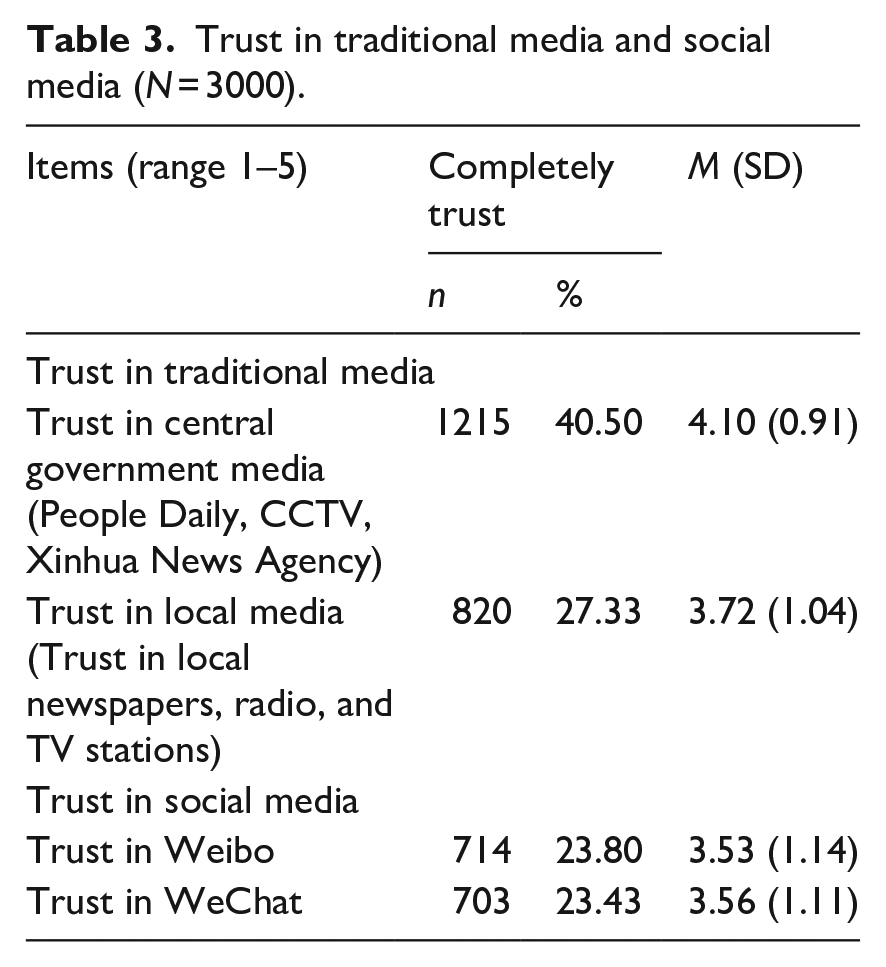
Table 3 reveals the level of people’s trust in media. Central government media gained the highest level of trust among the four media outlets. There were 40.50% of the respondents rated “completely trust” in central government media (M = 4.10, SD = 0.91). Weibo was the least trustworthy media platform (M = 3.53, SD = 1.14).
Trust in traditional media and social media (N = 3000).
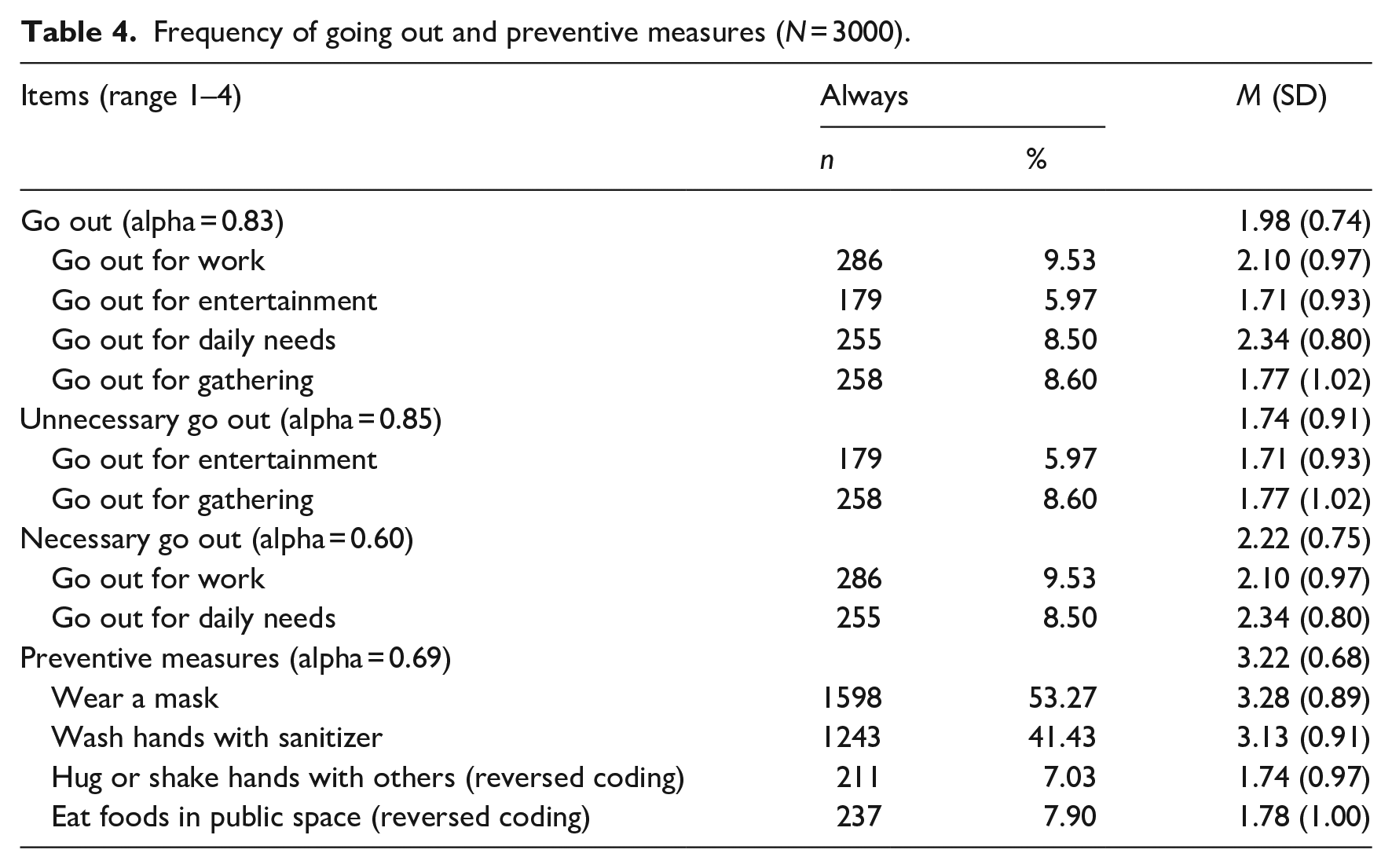
Frequency of performing health behaviors was shown in Table 4. For frequency of going out during the pandemic, people generally maintained low frequency (M = 1.98, SD = 0.74, Cronbach’s Alpha = 0.83). Among different purposes of going out, going out for entertainment and gathering was maintained at a low level (M = 1.71, SD = 0.91, Cronbach’s Alpha = 0.85) while going out for work and daily needs was higher (M = 2.22, SD = 0.75, Cronbach’s Alpha = 0.60). For recommended preventive measures, respondents generally adhered to the behaviors (M = 3.22, SD = 0.68, Cronbach’s Alpha = 0.69). In sum, most people followed the recommended instruction to stay at home and to perform preventive measures.
Frequency of going out and preventive measures (N = 3000).
Models estimating effects on behavior of going out were displayed in Table 5. Model 1A included demographic variables and media use variables. As shown, gender (b = 0.139, p < 0.001), age (b = −0.076, p < 0.001) and income (b = −0.035, p < 0.05) were three demographic variables which significantly predict going out activities. Male, younger people and lower income individuals were more likely to go out during the pandemic. Use of local media (b = 0.151, p < 0.001), central government media (b = −0.093, p < 0.001), Weibo (b = 0.132, p < 0.001) and WeChat (b = −0.037, p < 0.01) all significantly predicted going out. However, the effects were different. Use of local media and Weibo were positively related to frequency of going out, while use of central government media and WeChat were negatively related to the frequency. Model 1B added the block of media trust variables. As shown, after entering the block of media trust to the model, media use variables still significantly predicted behavior of going out. Trust in local media (b = 0.053, p < 0.01), central government media (b = −0.072, p < 0.001), Weibo (b = 0.083, p < 0.001), and WeChat (b = 0.102, p < 0.001) all significantly predicted going out. Except for trust in central government media, trust in local media, Weibo and WeChat were all positively associated with frequency of going out. For those who trust more in central government media, lower frequency of going out was found. Model 1C to 1F displayed the interaction effects of media use and media trust for each media outlet. Trust in central government media (b = −0.026, p < 0.01) and Weibo (b = 0.037, p < 0.001) moderated the effect of media use on behavior of going out. But trust in local media and WeChat did not have such moderation effects on the relationship between use of WeChat and going out. A leverage effect of the moderators was found. Trust in local media, central government media and Weibo amplified the effects of media use. The relationships were illustrated in Figure 1. The plotting of interaction effects follows the procedures suggested by Aiken and West (1991). The high and low values of the independent variables were defined as one standard deviation above and below the means of the independent variables.
Predicting going out during the COVID-19 pandemic (N = 3000).
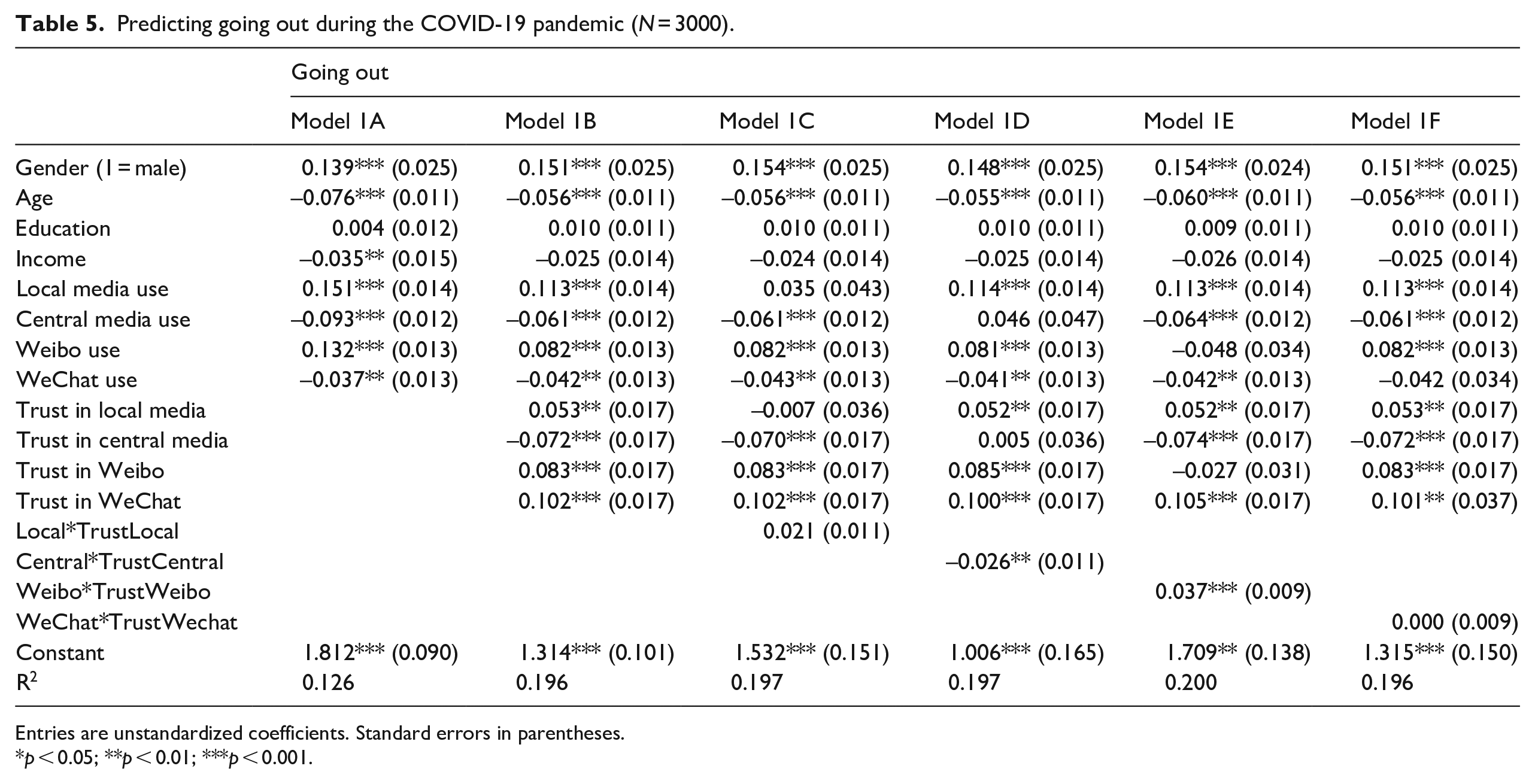
Entries are unstandardized coefficients. Standard errors in parentheses.
p < 0.05; **p < 0.01; ***p < 0.001.
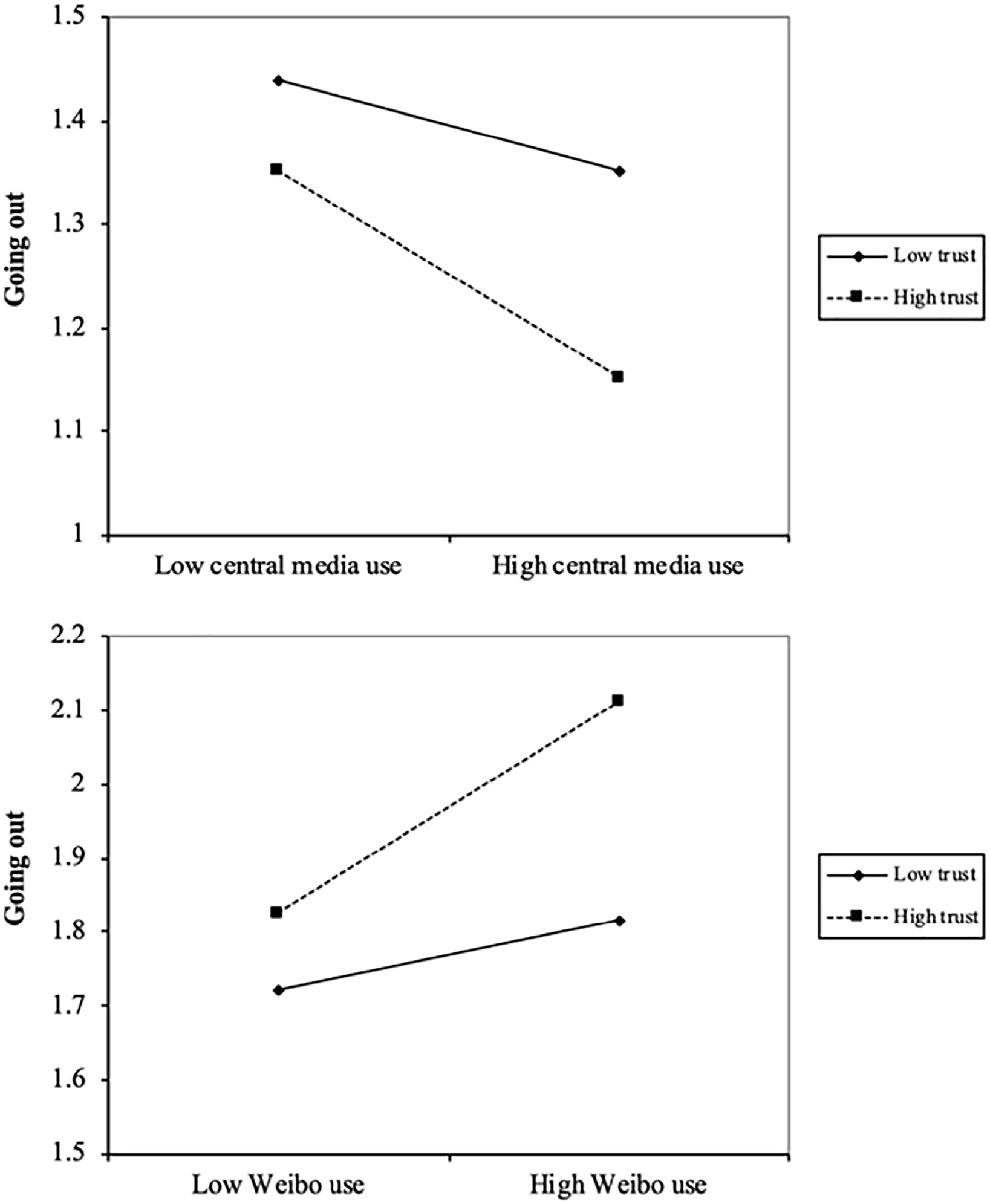
Interaction between media use and media trust on frequency of going out.
To differentiate going out for different purposes, we further analyzed going out for entertainment and gathering (unnecessary) and going out for work and daily needs (necessary), with the same set of analysis procedures. Results were shown in Tables 6 and 7. For going out for work and daily needs, the general pattern was similar to the combined measure of going out, with the exception that WeChat use was a positive predictor (Model 2A, b = 0.031, p < 0.05), and trust in local media did not show significant effects (Model 2B, b = 0.008, n.s.). Trust in local media significantly moderated the relationship between local media use and going out for work and daily needs, with an amplifying effect (Model 2C, b = 0.031, p < 0.01). For going out for entertainment and gathering, the pattern was exactly the same as that of the overall model.
Predicting necessary going out during the COVID-19 pandemic (N = 3000).

Entries are unstandardized coefficients. Standard errors in parentheses.
p < 0.05; **p < 0.01; ***p < 0.001.
Predicting unnecessary going out during the COVID-19 pandemic (N = 3000).
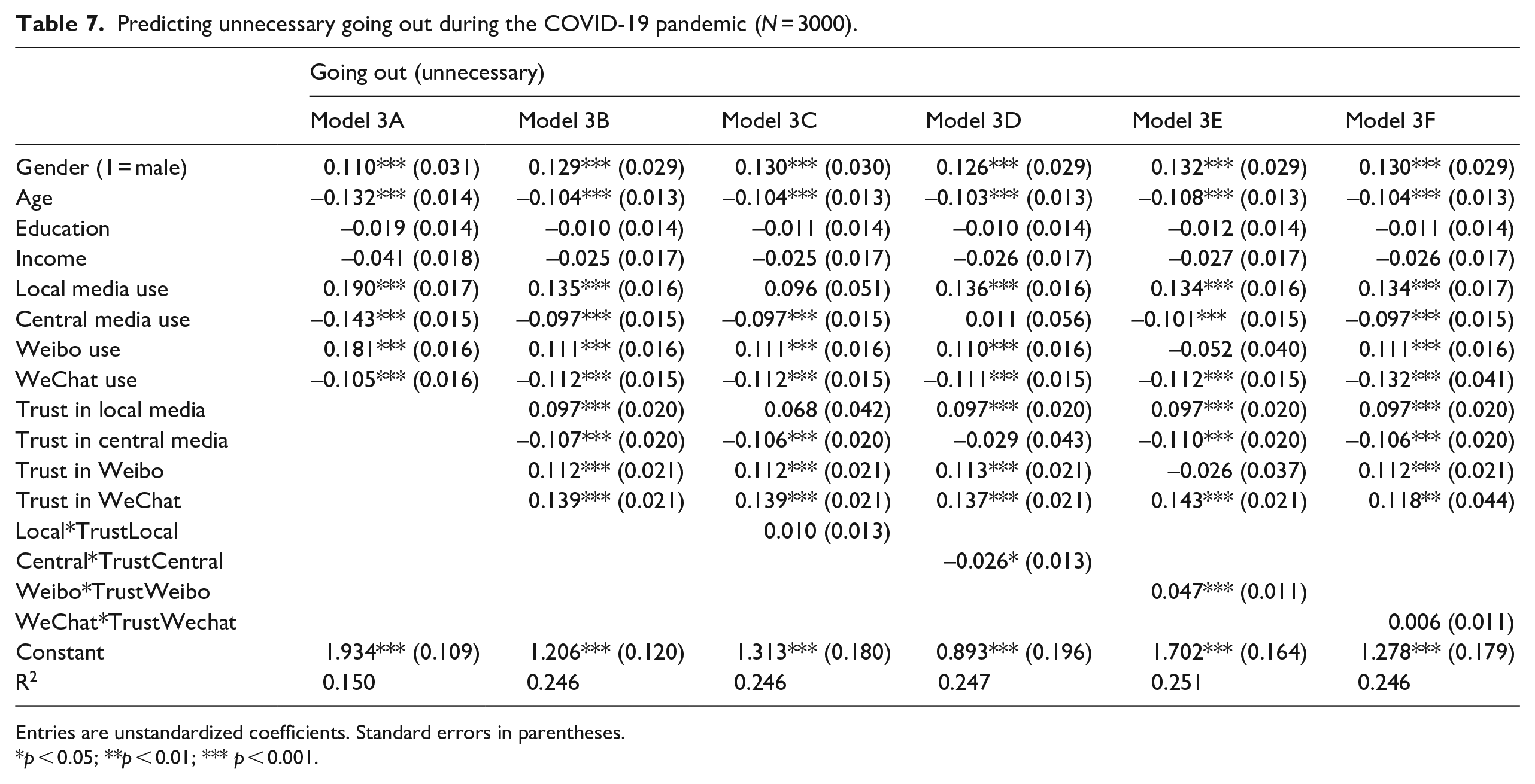
Entries are unstandardized coefficients. Standard errors in parentheses.
p < 0.05; **p < 0.01; *** p < 0.001.
Models estimating effects on preventive behaviors were displayed in Table 8. Model 4A showed a model with demographic variables and media use to predict frequency of performing recommended preventive behaviors. Gender (b = −0.110, p < 0.001), age (b = 0.073, p < 0.001), education level (b = 0.022, p < 0.05), and income (b = 0.035, p < 0.01) all significantly predicted preventive behaviors. Female, older people, people with higher education level and people with higher income performed preventive behaviors more during the pandemic. Regarding media use, more frequent use of local media (b = −0.066, p < 0.001) and Weibo (b = 0.093, p < 0.001) were associated with lower levels of adherence to preventive behaviors. Higher use of central government media (b = 0.144, p < 0.001) and WeChat (b = 0.168, p < 0.001) were associated with higher level of adherence to preventive behaviors. Model 4B entered media trust variables. The results show higher trust in central government media was associated with higher level of adherence to preventive behaviors (b = 0.112, p < 0.001). But higher trust in local media (b = −0.080, p < 0.001), Weibo (b = −0.084, p < 0.001) and WeChat (b = −0.083, p < 0.001) all associated with lower level of adherence to preventive measures. Interaction terms of media use and media trust were then added to the model (Model 4C to 4F). Trust in central government media (b = 0.021, p < 0.05) and Weibo (b = −0.022, p < 0.01) moderated the effects of media use on preventive behaviors. The relationships were illustrated in Figure 2.
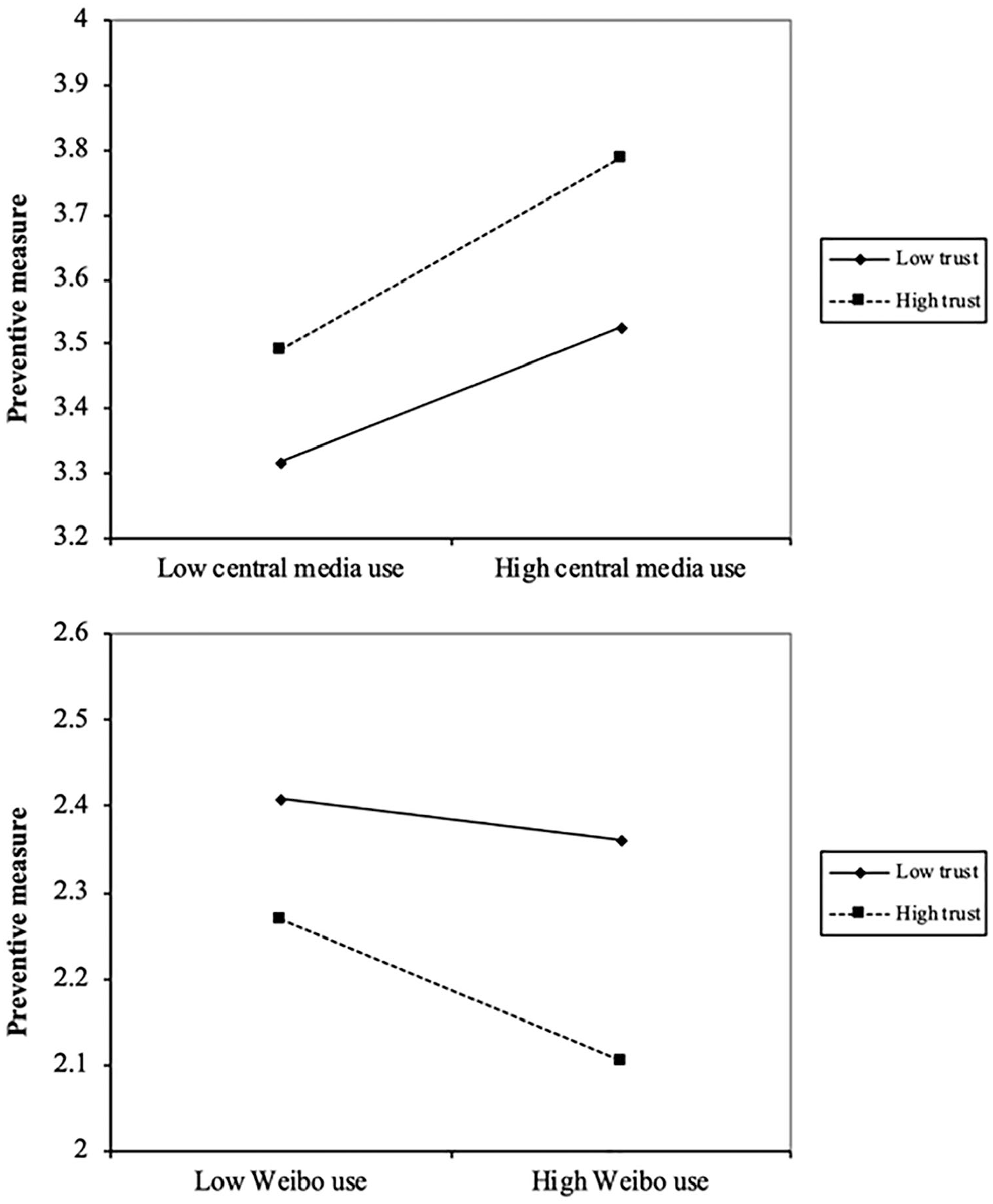
Interaction between media use and media trust on preventive measures.
Predicting preventive behaviors during the COVID-19 pandemic (N = 3,000).
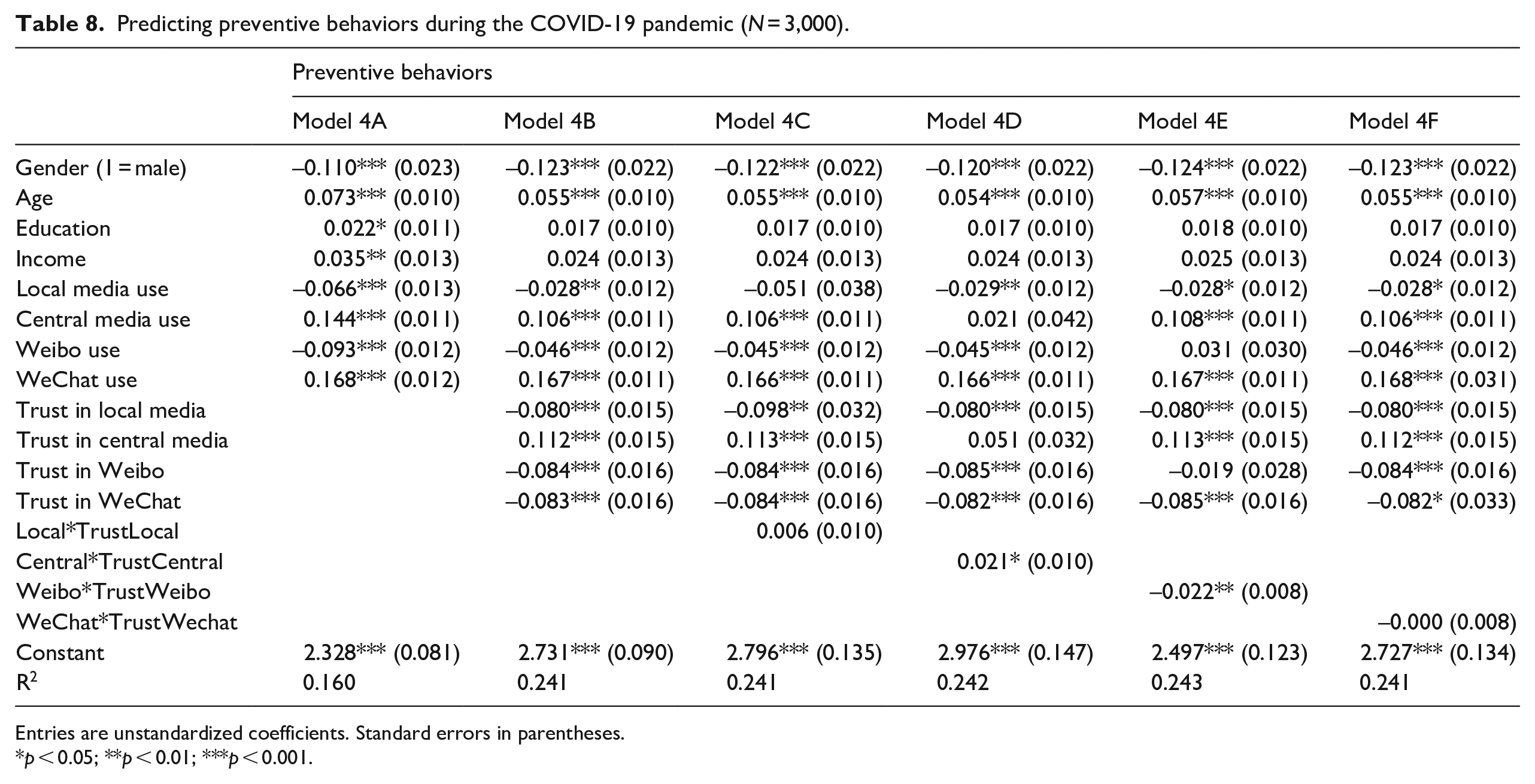
Entries are unstandardized coefficients. Standard errors in parentheses.
p < 0.05; **p < 0.01; ***p < 0.001.
Discussion
The study aims to investigate the relationship between media use, media trust and individuals’ compliance with health measures during the COVID-19 pandemic in China. Findings reveal different effects of media use on health behaviors. In addition, we found media trust would magnify the effect of media use on health behaviors.
First, we found that people used WeChat the most while trusted in central government media the most. During the pandemic, people relied heavily on the media for health related information. According to our study, WeChat was the most frequently used media during the pandemic. Although people used WeChat the most, they did not trust WeChat the most. Central government media were the outlet people trust the most. It indicates that traditional media, especially central government media, were still the most trustworthy and authoritative media platform during a public health crisis in China. Central government media include CCTV, People’s Daily, and Xinhua News Agency. CCTV is the only national TV network in China. It is the most powerful media organization and is monopolistic in many program production and importation. People’s Daily has been the largest national daily newspaper since the country was founded (Zhang et al., 2014). Xinhua News Agency is the primary information system that have the authority and resources to access important information (Sun et al., 2001). Evidence shows that CCTV and People’s Daily were both perceived to be highly credible among Chinese people (Zhang et al., 2014). Therefore, people trusted central government media the most not only because they are the official mouth pieces of the Chinese government and they represent the voices of the authority, but also because of their accessibility to important information sources. People’s trust in central government media might root in their political fear in the government in authoritarian regimes, as previous studies suggested (e.g. Shi, 2001). But recent evidence showed that the fear factor might be over interpreted (Stockmann et al., 2018). Therefore, while we would not fully dismiss the possibility of the fear factor, we believe Chinese people trust in central government media mainly because of their psychological reliance on such information provided by central government media.
Second, findings of our study showed that use of different media outlets had different effects on individuals’ level of compliance with health measures. In general, central government media and WeChat had positive effects on people’s compliance with health measures. On the contrary, local media and Weibo had negative effects on health behaviors. Central government media are the most authoritative media. They provoke nationalism and political trust (Shen and Guo, 2013; Wang and Kobayashi, 2020). Therefore, those who used central government media more were more likely to reinforce the feeling of nationalism and be persuaded by them, adhered more to the governmental recommended measures. Besides, central government media in China delivered the message national wide. When COVID-19 broke out, the central government media focused on Wuhan, where the number of infections was highest in China. They reported the sharply increasing cases, and how the medical workers from everywhere of China went to Wuhan to join the battle of fighting against COVID-19. When exposing to this information, people might increase the sense of nationalism and be motivated to join the battle to fight the virus. Dr. Zhang Wenhong, a widely acknowledged expert in China, has pointed out, “what people need to do is staying at home, they are not in quarantine but in battle” (ThePaper, 6 Feb, 2020). This quote was widely disseminated during the days of lockdown. Therefore, people would adhere to the measures such as not going out and performing preventive behaviors. On the other hand, local media mostly focused on the local cases. Although the virus spread quick in China, after the lockdown of Wuhan, and a series of countermeasure taken by the governments, most of the places other than Wuhan did not have high number of infections. For example, in Shenzhen, a metropolis in Guangdong province, the highest number of newly infections in 1 day was 80. In most of other places, the number was even smaller. Therefore, people exposing to local media news may not have the same virus severity perception compared to people exposing to the central government media.
Third, as for social media, Weibo provides information more diverse than on traditional state-led mass media (Rauchfleisch and Schäfer, 2015). Grievances and critical opinions can still be found on Weibo. And Weibo is used to challenge the official discourse in response to crisis events (Wu, 2018). Its affordance of facilitating user-generated content facilitates alternative discourse (Epstein and Reich, 2010). In the COVID-19 pandemic, posts of criticism could be frequently seen. It is found that exposure to Weibo reduces nationalism and political support for the country, while WeChat users had higher level of nationalism and support for the sovereignty (Wang and Kobayashi, 2020). Therefore, users of Weibo might not be motivated to adhere to recommended measures by the government. In our study, it turned out that use of WeChat would promote adherence to health behaviors recommended by the government during the pandemic.
Fourth, in regard to media trust, central government media received the highest trust score. It is not surprising given that Chinese people highly trust in central government (Li, 2008; Liu and Raine, 2016). According to our analysis, trust in central government media had positive effect on compliance with health behaviors, while trust in local media, Weibo and WeChat had negative effects. Trust in central government media was likely to increase acceptance of information (Chen et al., 2018). Acceptance of information would increase the tendency to adhere to these behaviors.
Fifth, we found an amplified effect of media trust on the relationship between media use and compliance with health measures for central government media and Weibo. Specifically, trust in central government media amplified the positive effect of media use on adherence to health behaviors, while trust in Weibo amplified the negative effect. It indicated that the effects of media use on health behaviors were more prominent among those with higher level of media trust. Trust is related to credibility of the media platform. If people trust the media platform more, then they are likely to accept the message on that media. There is limited research addressing the relationship between media trust and media use (see Strömbäck et al., 2020 for a review), as well as the consequences of media trust and media use (Ardèvol-Abreu and Gil De Zúñiga, 2017; Tsfati and Cappella, 2005). Our study contributes to the literature on health behavioral consequences of media use and media trust.
Finally, we found the predictive patterns for going out for work and daily needs, and for going out for entertainment and gathering were different. A smaller R-square for the model predicting going out for work and daily needs suggests that the predictors included in the models only accounted for a small portion of variance in the dependent variable. Going out for work and for daily needs was more or less inevitable for all and therefore, such variable was less predictable with the personal characteristics we included in our analysis.
The study has several limitations. First, although we found association among media use, media trust and health behaviors, the feature of cross-sectional data limits the inference of causal relationship. Second, we were not able to include all the traditional media and social media platforms in the questionnaire because of limitation of time and resources. Future studies may consider including other media outlets in the model. Third, the study was based on an internet panel sample. Although the sample reflected demographic characteristics of Chinese internet users, those who did not use internet were not included. Last, this study was fielded in China, an authoritarian country. Generalization of the findings to other parts of the world needs to be made with extreme caution.
Research Data
sj-do-2-hpq-10.1177_1359105321995964 – Supplemental material for Exploring the impacts of media use and media trust on health behaviors during the COVID-19 pandemic in China
Supplemental material, sj-do-2-hpq-10.1177_1359105321995964 for Exploring the impacts of media use and media trust on health behaviors during the COVID-19 pandemic in China by Yi Wu and Fei Shen1,2 in Journal of Health Psychology
Supplemental Material
sj-docx-1-hpq-10.1177_1359105321995964 – Supplemental material for Exploring the impacts of media use and media trust on health behaviors during the COVID-19 pandemic in China
Supplemental material, sj-docx-1-hpq-10.1177_1359105321995964 for Exploring the impacts of media use and media trust on health behaviors during the COVID-19 pandemic in China by Yi Wu and Fei Shen1,2 in Journal of Health Psychology
Research Data
sj-dta-4-hpq-10.1177_1359105321995964 – Supplemental material for Exploring the impacts of media use and media trust on health behaviors during the COVID-19 pandemic in China
Supplemental material, sj-dta-4-hpq-10.1177_1359105321995964 for Exploring the impacts of media use and media trust on health behaviors during the COVID-19 pandemic in China by Yi Wu and Fei Shen1,2 in Journal of Health Psychology
Research Data
sj-smcl-3-hpq-10.1177_1359105321995964 – Supplemental material for Exploring the impacts of media use and media trust on health behaviors during the COVID-19 pandemic in China
Supplemental material, sj-smcl-3-hpq-10.1177_1359105321995964 for Exploring the impacts of media use and media trust on health behaviors during the COVID-19 pandemic in China by Yi Wu and Fei Shen1,2 in Journal of Health Psychology
Footnotes
Declaration of conflicting interests
The author(s) declared no potential conflicts of interest with respect to the research, authorship, and/or publication of this article.
Funding
The author(s) disclosed receipt of the following financial support for the research, authorship, and/or publication of this article: This study was supported by the Science Popularization and Risk Communication of Transgenic Biotechnologies project (Grant ID: 2016ZX08015002-005), the National Science and Technology Major Project of the Ministry of Science and Technology of China.

Supplemental material
Supplemental material for this article is available online.
References
Supplementary Material
Please find the following supplemental material available below.
For Open Access articles published under a Creative Commons License, all supplemental material carries the same license as the article it is associated with.
For non-Open Access articles published, all supplemental material carries a non-exclusive license, and permission requests for re-use of supplemental material or any part of supplemental material shall be sent directly to the copyright owner as specified in the copyright notice associated with the article.
