



Abstract
The ethnographic study of architecture shows that building and restoring practices play an active part in the construction of the social groups that carry them out. ‘Proper’ practices and concepts of heritage distinguish ‘authentic’ from ‘inauthentic’ inhabitants of Damascus Old Town. Heritage development is therefore an act of culturally meaningful engagement through which an arena for confrontation and argument about the ‘production of the space’ is constituted. Focusing on the dynamic interrelationship of material, social and symbolic aspects of architecture, the author examines the agency and materiality of Arab houses as objects in a mutual relationship with people who build, restore, buy, sell and dwell in them. Getting involved in the material activities and engaging in relationships between the different social actors in this arena allows the intrusive ethnographic glance to grasp the cultural meaning of architecture, not simply as a symbolic representation of people who own, build and restore houses, but as a constitutive element of their sense of identity, belonging and distinction.
This article 1 is about Arab houses not just as physical structures, nor as symbols that stand for social relations, but as objects that incorporate the relationships between people, materials and ideas, and produce cultural meanings. The circulation of Arab houses in the socio-cultural arena of Syrian heritage patrimonialization i (i.e. the various means by which cultural features – either material or immaterial – are turned into a people’s heritage) illustrates the mutually constitutive relationship between people and objects’ (Vellinga, 2007: 757). This article is based on fieldwork conducted chiefly in Damascus’ Old Town from 2003 to 2007. Once the site of Orientalist imagination linked to Islamic immobility and Oriental backwardness, reified in the spatial object called the Islamic city (Abu-Lughod, 1987; Eickelman, 1974), during the French mandate the Syrian capital city became the site of colonial urban design experiments, aimed at imprinting modernity onto its space (Ecochard, 1936; Rabinow, 1989). Stigmatized by local elites as the place of marginality and overpopulation, the Old Town made room for immigrants from rural areas and from regions in turmoil beyond Syrian borders; for this very reason, it was recognized as a site worthy of preservation, was listed as part of Unesco’s World Heritage List (WHL) (2009) and became the site of converging interests for different groups.
Unesco and local elites propose an image of Damascus’ Old Town as a place that carries the weight of a multi-millennia past, a place of memory linked firstly to the political powers that dominated Syria through history (Copertino, 2013b). The protection of heritage is among the current government’s instruments of power, since the Syrian state legitimates itself as a modern civilized nation by acknowledging the worth of its material history. For this reason, the current fight countering the legitimacy of President Assad sometimes involves the destruction of monuments listed in the WHL, as in the case of the minaret of the Umayyad mosque of Aleppo, torn down on 24 April 2013, and, more recently, the mosaic in the courtyard of the Umayyad mosque of Damascus, damaged by mortar fire on 20 November 2013.
Here, I focus instead on the activities of the groups involved in the complex arena of patrimonialization, leaving open the crucial aspect of the marginalization and dislocation of low-income groups, caused by the gentrification of ancient districts of Damascus, a topic discussed elsewhere. ii These groups are likely to be among the first victims of the Syrian civil war since their mobility is limited by their socio-economic status; unlike other social groups that are fleeing from Syria to neighbouring countries, they cannot reach safer places easily. When the ancient districts of cities become battlefields, they pay the heaviest price, having their houses and properties destroyed and their lives put in grave danger.
I also address the question of authenticity, conceived by Syrian preservationists as the main quality of the patrimonialized built environment, according both to Unesco discourse on heritage protection and the theoretical and practical framework of ‘vernacular architecture’. In contrast, I will describe authenticity as the product of a quest, a dynamic process that involves objects (houses, plans, building materials), knowledge (technical skills, higher education) and people (new residents, master masons, architects).
Preserving the authenticity of Arab houses
The idea of preserving the Syrian architectural heritage, dating back to the second half of the 19th century (Shaw, 2011), was implemented during the decades of the French Mandate (1920–1946). The first Unesco survey, fostered by the Syrian State, took place in 1953 (Collart et al., 1954). Whereas in the 1950s the investigation of the historical character of the Old Town would typically involve the demolition of pre-existing neighbourhoods and the restoration of state-owned mansions once owned by notable families,
iii
the entirety of the Old Town quickly became the object of official concern: Unesco reports from the late 1970s to the 1990s became increasingly concerned with the preservation of neighbourhoods in which historical monuments were located. The authors of these reports
iv
expressed concern that the authenticity of local architectures was jeopardized by the building practices of low-income groups living in the Old Town – such as building rooms on rooftops, parcelling out houses, setting up shacks in the courtyards and condominium conversions – all detrimental to the upkeep and preservation of the authentic shape of buildings. Indeed, Unesco WHL (2009) listed the Old Town of Damascus on the basis of five criteria:
To represent a masterpiece of human creative genius; to exhibit an important interchange of human values, over a span of time … or within a cultural area of the world, on developments in architecture …, monumental arts, town-planning …; to bear a unique … testimony to a cultural tradition or to a civilization which is living …; to be an outstanding example of a type of building, architectural … ensemble … which illustrates … significant stages in human history; to be directly or tangibly associated with events or living traditions, with ideas, or with beliefs, with artistic … works of outstanding universal significance. (http://whc.unesco.org/en/criteria, accessed 10 June 2014)
For Unesco, preserving authenticity means to develop heritage through abiding by a framework in which such criteria are respected. Against this, local institutions and social actors hold different conceptions of ‘authenticity’, whose definition emerges from negotiations among the different actors involved in patrimonialization (Copertino, 2013a).
In the 2000s, against the backdrop of the booming real estate market in the Middle East, on the one hand, and liberalizations of investment in tourism, amenities and the restoration of ancient buildings in Syria on the other, v both local authorities and Unesco welcomed private investors in heritage development. As real estate investors, they were chiefly interested in purchasing and restoring objects in which history is embedded and visible. These objects are the so-called ‘Arab homes’ (bouiout ‘arabeen), as the courtyard houses are commonly called, that make up the bulk of the ancient district’s built environment – objectifications of the past once they have undergone a process of restoration, building and production (Copertino, 2007). The organization of the production/restoration of Arab homes involves intellectual work (architects, art historians, artists), craftsmanship (carpenters, plumbers, electricians, restorers) and manual labour (master masons, masons) in addition to the capital investment of the owners.
According to Maurice Halbwachs (1968), what converts a space into a social reality is the social activity occurring in that space and the collective memory of such activity. The collective memory of activities of all the fields of the experience (economy, religion, law, leisure, etc.), supported by the memory of the spaces in which they take place, suggests to social actors the proper behaviours in these fields.
Halbwachs’ work leaves the question about the material production of space as a social activity unsolved. Yet this question is of crucial importance for an anthropological approach to architecture: vi indeed, the ethnographer’s engagement with the material and intellectual activities of heritage workers and professionals is essential for grasping the cultural meaning of patrimonialization. Following Lefebvre (1991), I stress that the activities which give spatial objects such as houses their cultural meaning are not just the spatial practices (e.g. dwelling, visiting) that take place after the space has been built: as Lefebvre suggests, complementing Halbwachs’ argument, the building itself constitutes a social activity. As recent studies in the anthropology of materiality have shown (Buchli, 2002, 2013; Marchand, 2006; Miller, 2005; Vellinga, 2007), rather than being merely a communicator of meaning, architecture is a meaningful process in itself. Ethnographic studies of houses in several contexts highlight their cultural importance as material buildings that play an active part in the constitution, perpetuation and transformation of the groups of people who build and inhabit them. Through proper restoration and rebuilding of their houses, the ‘new residents’ of Damascus Old Town prove themselves to be the authentic inhabitants of that desirable site, in contrast to the ‘old residents’ who do not look after their houses using techniques and materials accepted by preservationists and Unesco, and who are therefore labelled inauthentic inhabitants by local institutions and new residents.
The intellectuals working for the local authority of the Old Town (Moudiriya al-Medina al-Qadima), commonly known as Maktab ‘Anbar, from the name of the Ottoman palace housing it, are in charge of supervising the restoration of Arab houses. Most of them are art historians and architects specializing in the history of Arab and Ottoman architecture; some specialize in the restoration of ancient buildings, and have often studied abroad. Because of these transnational links, interests and mobility, their mastering of several languages and their educational capital, they can be considered to be part of an international class of preservationists. vii They interpret Unesco’s concern with authenticity as a claim to protect the built environment from any transformations as much as possible; therefore, they have banned construction work that impacts on building structures. Each restoration plan must be examined by Maktab ‘Anbar experts; furthermore, every two or three days, emissaries from Maktab ‘Anbar visit restoration sites to check that work being done is in accordance with the plans previously agreed.
One day in May 2005, I was at Maktab ‘Anbar, interviewing the then director, the architect Muwaffaq Dughman. Our long conversation in the director’s office was interrupted when three people, eager to meet the director, burst in, finding the wait too long. They were the owner of an Arab house undergoing restoration, the architect directing the work, and the Maktab ‘Anbar emissary checking the site. Probably considering the latter’s advice unauthoritative, the house owner requested the director’s clearance to tear down a wall. According to the plan, this wall was ancient and furnished with some ayak (shelved niches). ‘But these ayak are ‘asli (original)’, the director protested. After growing tired of the owner’s insistence on doing what he wanted, he burst out sarcastically: ‘Yes, let’s tear the Old Town down, let’s make it like Tabbaleh!’
In order to understand the director’s joke, one has to consider that the theme of ‘asala (originality, authenticity) is the central thread of intellectuals’ discourse about heritage preservation. The structure and material of Arab homes must be authentic for a building to be acknowledged as a cultural good; otherwise, it is likely to be dismissed as an offence or a threat to the integrity of architectural heritage. Preservationists face demands from new owners to renovate ancient houses for modern-day purposes, which may imply the demolition of ancient structures, uncontrolled building and parcelling out. Such building practices normally affect neighbourhoods around the Old Town (such as Tabbaleh, mentioned by the Maktab ‘Anbar director, hence his sarcastic remark) and the Old Town itself.
Such conversions seriously worry Maktab ‘Anbar, since houses that have become dilapidated or are rebuilt outside the legal framework are not considered authentic parts of the cultural heritage, and there are concerns that Unesco might remove the Old Town from the WHL. The architect al-Berry one day led me on a walk over the roofs of a souq, showing me what he called the sprawl of buildings: he chiefly deplored the new rooms that old residents had built on the rooftops. Such habits, according to al-Berry, showed the insensitivity of the local population to the protection of cultural heritage and contributed to the deterioration of the Old Town. The practice of building closets, potting sheds and other rooms on rooftops is widespread among old residents (see Figure 1). They also store tools there for maintaining the roof itself – paint rollers, sacks of lime and sometimes cement – since the roof has to be waterproofed periodically to avoid rain seepage damaging the frame of the house, which is made mostly of perishable materials. As many architects from Maktab ‘Anbar stress, ‘the Old Town is growing upwards’. While widespread, such practices are illegal and punishable, according to the rules mentioned above – a paradoxical outcome of heritage protection, since these rules contradict an important feature of the Old Town’s built environment – its malleability. The structures of many houses have indeed often been adapted to socio-economic changes: a household’s decline in economic fortunes could be countered by selling off parts of the property; growing or dwindling household numbers were accompanied by the addition or removal and sale of space; the vaults overlooking the courtyards were often cut off by bricking up the inner side and opening up the opposite side onto the alley, turning them into workshops or store-rooms. Such building practices, now forbidden, made material space not simply a representation of the group inhabiting it, but a constitutive element of it.
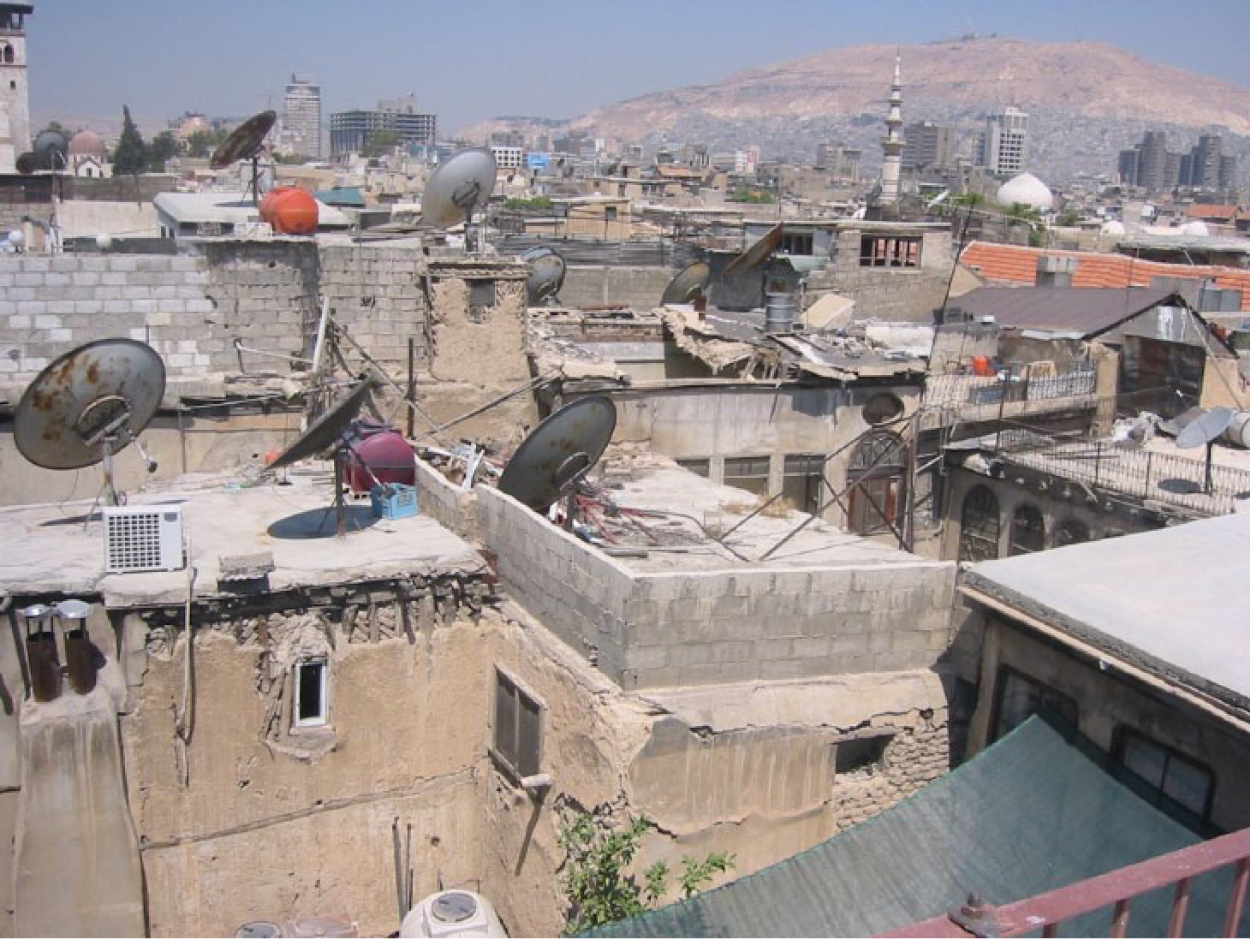
The Old Town’s growing roofs. © Photograph: Domenico Copertino.
Higher education as specific capital
In order to understand the interrelationships among the different groups playing a part in the patrimonialization of Arab houses, I would like to discuss briefly Bourdieu’s concepts of ‘field’ and ‘specific capitals’. Indeed, the activities of these groups constitute a complex field, made up, on the one hand, of the international class of preservationists, investors and new residents, whose representations of cultural heritage are evidently influenced by Unesco’s discourse. On the other hand, it encompasses the master builders, old residents influenced by heritage discourse and small-scale entrepreneurs in the tourist sector, who are hardly admitted to the ranks of heritage practitioners but nonetheless play an active role in the patrimonialization of Arab houses. The different practices, symbolic capitals and mutual relationships of these groups illustrate the complexity of patrimonialization, which emerges as a multi-faceted dynamic whose actors are far from an homogeneous group in terms of socio-economic level, cultural representations and habitus.
The social sciences, according to Bourdieu (1992), construct individuals as actors, meaning subjects acting in their context (or field) and transforming it through their activities and interests. Bourdieu describes the social actors’ interests as their motivation to ‘play the game’ of human interrelationships, investing their energy and acting as stakeholders. Each game is played in its proper field, conceived as a network of relationships among positions; the type of relationship (supremacy, subordination, homology, etc.) depends on the distribution of diverse forms of power and specific capitals (economic, cultural, social, symbolic) that allow their owners to affect the social fields in which they act through power and influence.
Each field has its specific capitals that are effective in that given field, since those who own them exert their influence and right to exist in that field. The very structure of the field is determined by the distribution of specific capitals among the different actors who in varying degrees gain access to the tools of production and reproduction of the web of social relationships and control the rules that make that given field work properly. Therefore, social actors may try individually or collectively to maintain and enhance their position in the field. Social action is conceivable as the unfolding of the strategies through which they pursue this aim.
Yet as Lila Abu-Lughod (1989) has pointed out, Bourdieu’s interpretation of social life as action, and of people as social actors engaged in regulated improvisations in the art of living, suffers from the same methodological shortcomings that Bourdieu himself criticized in Geertz’s interpretative approach, related to the enforcing of the distance between the ethnographer and the people he or she works with, thus confirming his or her exclusion from the real play of social activity. I will try to show that through the ethnographer’s involvement in the material experience of people, this distance can be bridged: the ethnographer becomes one of the subjects interacting in the field and the specific capital that he or she holds may be used and manipulated by others.
Over the last decade, a local middle-class of ‘new residents’ (yilly bidakhkhalou, literally ‘incomers’ in the terms of the Maktab ‘Anbar intellectuals) has started moving to the Old Town to live there. For them, ‘authenticity’ is a quality to be pursued by means of proper practices of restoration and the use of what preservationists call ‘traditional materials’ – such as wood, earth, mud, cob, sourced from local raw materials used for house building in earlier times – with the aim of linking their properties to the building traditions (a concept I will further explore in the next paragraph) and history of the city.
The high cost of traditional materials, in addition to architects, craftsmen, master masons and workers’ fees, and a government-imposed tax on restoration, serve to inhibit most residents from undertaking restoration work in keeping with the legal framework. Therefore, new residents are chosen by the institutions in charge of heritage protection as their stakeholders on the basis that they can afford proper restorations.
According to the preservationist discourse, living in the Old Town implies being part of the city’s history and carrying the memory of the civilizations that have shaped it. It means being part of the heritage. But living there is not enough. To be a part of Damascene heritage, one must share the discourse. This implies an individual contribution to the preservation and development of heritage through proper restoration, which makes an authentic Arab home of a building that simply happens to be located in a WHL site. The institutions in charge of supervising heritage development thus choose as their stakeholders those who can afford proper restoration, namely the new residents.
‘New residents’ constitute an affluent group in terms of socio-economic status (middle- and upper-middle class), employment and educational levels (intellectuals, artists, senior civil servants, small businessmen) as well as in their needs, wishes and habitus. They stress qualities of the Arab homes such as ‘authenticity’, ‘naturalness’ and ‘habitability’. Often lovers of Orientalist literature, these residents choose a lifestyle that provides them with status and self-esteem. They feel glad to be living away from other, more chaotic districts and are united in the cause of rehabilitating decayed areas of the city; they know each other, frequent the same ‘traditional’ venues, consider the Old Town as their neighbourhood and derive economic (the sharing of resources and labour, and, if they are in business, of customers) and political benefits (the making of common cause in petitioning for services and infrastructure) from it.
New residents own a specific capital of area studies, Orientalist readings and historical knowledge. According to an image of the Old Town circulating in academic papers and administrative documents, spread by tourist media and shared by new residents, it is divided into four areas: the Christian quarter, the Jewish quarter, the Shia neighbourhood and the large Sunni area. New residents have trust in such representations as they perpetuate the image of an ‘Islamic city’ – with its distinctions of residents divided along lines of religion and juridical status, what Janet Abu-Lughod (1987) terms an ‘optical illusion’ – and a transposition to the urban level of the well-known Orientalist representation of the Middle East as a mosaic of cultures (Eickelman, 2002; Fabietti, 2011).
The ‘Arab home’ is for them the seat of history, of building traditions, of the balance between man and nature. According to them, traditional materials are essential ways of improving relations between people and their living environment. Ghaned, a Syrian film director who in 2005 bought and restored a house in the Qashla Jouaniye neighbourhood of the Old Town, and whom I interviewed at about the same time, said:
I chose to live in the Old Town because it’s quieter, far from cars; I love this lifestyle. I love high ceilings; if you live in an Arab home you have a piece of earth and a piece of sky. The Arab home allows you to live in contact with nature and the weather. Since I’ve lived here I feel cold and heat 100 per cent. I feel nature and sometimes it’s hard, but I like it. Since I’ve lived here I haven’t been ill, because my body has got used to weather changes. I’ve got closer relations with walls, wood, earth.
As many new residents do, Ghaned stressed the benefit he gets from living in an authentic Arab home. It is tempting to conceptualize the new residents’ emphasis on the quality of authenticity within a framework of ‘vernacular architecture’, highlighting the influence of such discourse on contemporary architecture and post-modernism (Harvey, 1993), elevating the vernacular into a creed (Oliver, 2003). This framework – classically conceived as opposed to grand design traditions and modern architecture – may be described as an architectural idiom whose grammar emphasizes nature, authenticity and tradition (Asquith and Vellinga, 2006; Hough, 1984; Oliver, 2003; Rapoport, 1969; Vellinga et al., 2007). viii However, rather than dwelling on the idea of an attachment to an authentic building tradition as suggested by the classical vernacular architecture framework (although recently discussed and given new meaning as a global ‘ideascape’, see Appadurai, 1996), ix I would like to stress the power relations and processes embedded in the quest for authenticity pursued by the new residents. Purchasing a potentially ‘authentic’ house and letting its authenticity emerge is an expensive process, yet it may result in a symbolic and political investment. Indeed, newcomers cannot find authenticity easily: what they find are dilapidated buildings, or houses remodelled and renovated by former dwellers but not in compliance with preservation rules and procedures.
After purchasing a house, new residents employ an architect to restore it with the objective of bringing it back to its authentic state. I have followed the work of several architects who specialized in the restoration of ancient houses: their quest for authenticity implied looking for authentic elements, sometimes uncovering them – e.g. removing added surfaces – and, if necessary, rebuilding them. As my friend Arch Na’im Zabita – whose expertise in restoration is in great demand among new residents – put it, the house itself suggests to the restorer how to let authentic parts emerge. When removing the floor of the iwan (the north-facing vaulted space overlooking the courtyard, always in the shade, a popular architectural element among new residents) in the house of the Damascene artist Fadi Yaziji, which he restored in 2004, Na’im noticed a drainpipe below the floor: he said the house had suggested to him that there would have been a fountain in the iwan, so he decided to build one. But where exactly? He found the trace of a chandelier in the middle of the ceiling: the house, as he said, gave him the idea of placing the fountain under the chandelier. At one point, he found it quite overwhelming and said, ‘This house never stops talking!’, noticing some decorations on an 18th-century wooden wall that were emerging from beneath a 19th-century layer of paint: once again, the house had made a request: to remove that layer and to let the authentic surface emerge.
The Italian Unesco contract architect Simone Ricca specialized in the preservation of ancient buildings. In 2005, he directed the restoration of the Arab house of Jacques Montlucon – a retired Unesco architect himself – in the neighbourhood of Qemariah, in Damascus’ Old Town. He intended to ‘bring the house back’ to its previous condition, before the modernization carried out by the former owners in the 1950s. To give a sketch of what ‘bringing back’ implies, consider what he and his workers did to restore one internal wall: they removed enamel paint and cement from the wall surface; reinforced the internal structure made by vertical beams called ‘columns’ (‘amoud) resting on a horizontal ‘pillow’ (mkhadde) held by clay bricks and a compound of straw and corn called lebn (Figure 2); they plastered the wall with sun-dried earth and straw sheets (teben) and a layer of lime (kels); this was then covered with a mixture of water and sand (ramil) to absorb the humidity of the lime; once the wall had been smoothed, they placed over it a layer of hemp fibre (qeneb) as a thermal insulator; after that, they finally painted the wall with water-soluble distemper. Among the rare and authentic elements (rarity and authenticity are both features that Unesco officially ascribes to Damascus Old Town) that were unearthed during the restoration were two small windows of janseen, a mixture of chalk and coloured glass that lets light shine through its stitch-work. Although they were damaged, the architect decided not to remove them because of their age, rarity and value.
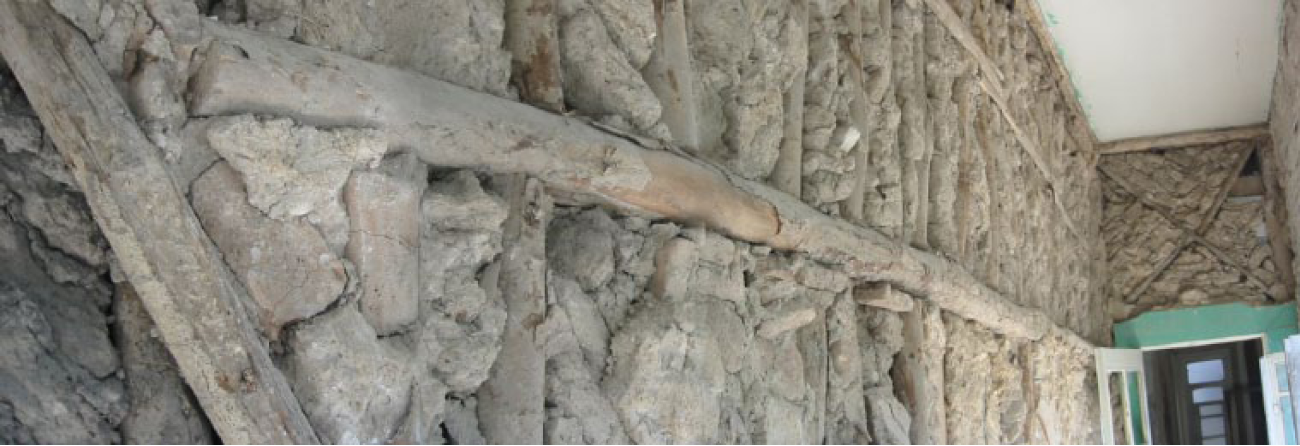
The internal structure of a wall. © Photograph: Domenico Copertino.
Scholars agree that the notion of heritage involves a set of possessions that have to be identified as transmittable (Poulot, 2013: 316) and that heritage is subject to reinterpretation and reuse: the past is meaningful for the present to the extent that it can be exploited and manipulated for future aims. Investigating heritage practitioners’ material work, one sees that this process of manipulation involves the very building materials of heritage objects. Indeed, new residents’ adhesion to the heritage discourse is by means of material engagement: their commitment implies dealing in ‘traditional’ building materials: the surrounding countryside around Damascus supplies wood, particularly poplar wood, in large amounts (Bianquis, 1981). This was frequently used as building material until the late Ottoman era. As I have shown, wood, earth and materials marketed as ‘natural’ in Arab homes provide new residents with a strong symbolic basis for their self-identification with the space. This theme was more deeply explored by Daniel (1984), who illustrated the continuous exchanges among earth, building materials and the human body in Tamil culture. On the basis of their material adhesion to practices and discourse of heritage, new residents get together; circles of heritage practitioners are formed with the common ground of the restorations they plan and pursue. I often sat in on conversations between new residents and preservationists whose topics were plans, materials, opinions about architects and master masons, Maktab ‘Anbar’s guidelines. What is most significant is that these circles gain prestige and political influence inasmuch as their practices adhere to heritage discourse: for instance, the sculptor Mustafa Ali started his career as the leading figure of a group of Syrian artists restoring his courtyard house and urged other artists to do the same; it was on the basis of the rehabilitation of buildings in the so-called ‘Jewish quarter’ that this group got together and the Mustafa Ali Art Foundation (henceforth MAAF) gained political stature. Several buildings in this area of the Old town had been uninhabited and in a state of neglect; most Damascene Jews had been living here until 1948, when they started to emigrate, chiefly to Israel and the USA.
The artists in Ali’s circle purchased these buildings from a representative committee of the former owners; they would spend hours talking about the restoration of their premises and the rehabilitation of the area, which they envisaged in their discussions as ‘the artists’ quarter’. MAAF’s ‘production of locality’ (Appadurai, 1996) consisted of: rehabilitating public gardens; circulating flyers and posters in Arabic and English to promote the artists’ activities to an international and educated public; placing commemorative plaques and instructions around the neighbourhood on how to reach the artists’ workshops; producing maps of the locality referencing artists’ workshops rather than civil and religious monuments, and omitting any place names that might characterize the quarter as Jewish; dressing in a distinctive way; paying frequent visits to other preservationists; and restoring the buildings in compliance with Maktab ‘Anbar norms. These artists’ feelings of being in a distinctive place were so powerful that, one day in 2005, during Ramadan, two artists of Ali’s circle with whom I was strolling stopped eating fruit before reaching the street marked out in these maps as the limit between the artists’ quarter and one of the ‘Muslim areas’. I interpreted their behavior as a projection of their circle’s secular character onto the whole neighbourhood: it was as if they had internalized MAAF’s representation of the space.
Ali’s workshop–house had already become a public place during its restoration but the work was not interrupted during public events taking place there: in April 2005, for example, ‘The Colours of Damascus’ competition was held there under the patronage of the Syrian Ministry of Education and the European Union. The house was occupied by young Syrian artists, working here for eight days, grouped in different rooms depending on their artistic practices (painting, sculpture, lithography). The young artists worked in the courtyard, the halls and on the roof, while masons and carpenters were still carrying on the improvements. Artists and workers occupied and moved in the same spaces; they interacted, exchanging jokes, remarks and tools; it was especially difficult to tell the restorers from the sculptors since both had dusty skin and clothes. The very fact that the workshop was still undergoing restoration gave the impression that the house itself was one work of art being created, rather than merely a container for the workshop. Ali himself, besides supervising the artists’ activities, instructed the workers on how to carry out minor restorations and reconstructions. The final exhibition was held in the halls and in the courtyard, where scaffoldings, ladders, tools and materials had been left around, giving the impression of an ‘open for repairs’ site. Leading district politicians attended the prize-giving ceremony. On another occasion – the preview of a Syrian photographer’s exhibition – the house, although under restoration, hosted the French ambassador in Syria. By doing so, Ali was linking his activity as an art promoter with his activism in heritage development.
The importance of materiality in preservationists’ heritage experience brings to the fore the relationships they create with craftsmen who specialize in restoring ancient houses and reworking and trading raw materials.
Reworking authenticity, exploiting memory objects
In 2004, mo’allem (master) Muhammad Nimr Mustafa, a craftsman specializing in the restoration of ancient houses (whose work I followed during my fieldwork), gave me his drawing of a new resident’s house, created expressly for my research (Figure 3). The resident happened to be the Syrian Treasury Minister at the time.
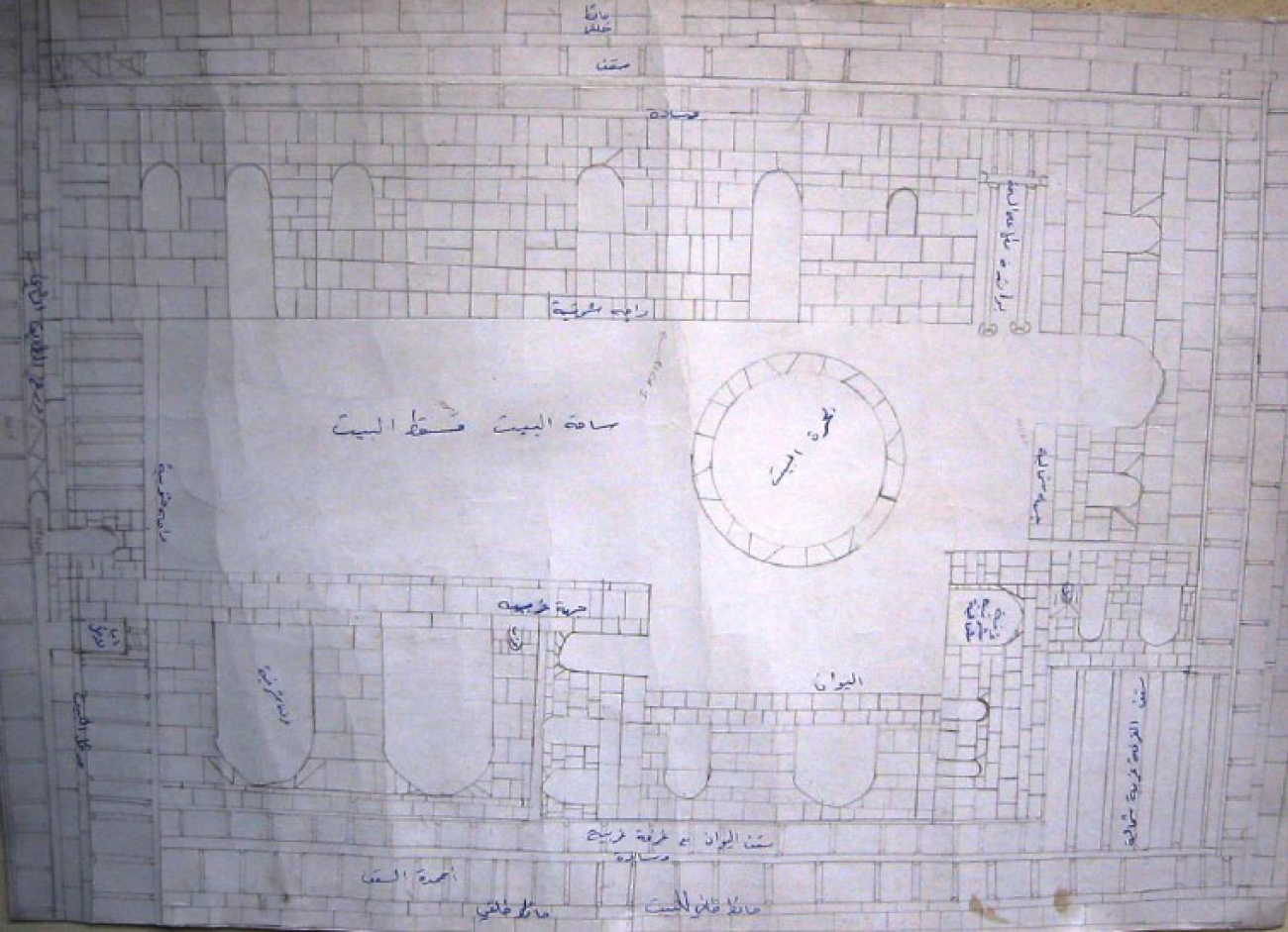
Mo’allem Muhammad’s drawing of an Arab house. © Photograph: Domenico Copertino.
The plan was a pencil drawing, 14 by 20 inches, on cardboard, with blue ink inscriptions. I noticed immediately it was drawn both as a plan and in perspective. Mo’allem Muhammad explained to me that it should be read as a flattened three-dimensional scale model, folding it along certain segments such as the line indicating the end of the courtyard and the beginning of the wall, or the end of the first floor and the beginning of the roof. He led me through the coded path of his plan: he lowered his head when we got in through the low front door to show respect to the landlord; he bowed to mirhab, the niche that shows the direction of Mecca; he went up the stairs to the first floor, where the family used to sleep; then he measured the thickness of the walls and showed me pillars and columns inside.
Muhammad’s drawing is comparable to the plans that Kevin Lynch (1968) asked lay drawers to sketch in order to alert urban design experts to the spatial needs of citizens and the representations produced by such needs. Lynch noticed that the plans participants made were simplifications of reality and led by particular aims. Plans were produced by means of reduction, elimination and the addition of elements, through blending and deformation, through arrangement and organization of the parts. Notwithstanding Lynch’s awareness of the different ways people conceive of space according to shared cultural values, he made clear that the best graphical representation of reality was a scale plan with a coherent degree of abstraction. Participants’ plans appeared to him strange, jumbled, distorted and illogical; they looked like plans drawn on infinitely flexible rubber sheets.
Looking at the plan and following mo’allem Muhammad’s explanation, I had a similar impression, finding dimensions and benchmarks absurd; on a smaller sheet, he had represented a wall (Figure 4): he showed me how to place it, vertical to the plan, so the drawing became three-dimensional. Turning down the upper side of the paper, he showed me how to make a slope to avoid seepage. Other sheets represented elements such as pillows, cobs, columns, doors, windows, internal walls, niches. By thickening the thin sheets and weighting them down, he showed how they represented the 20-inch walls that were needed for the house to be stable.
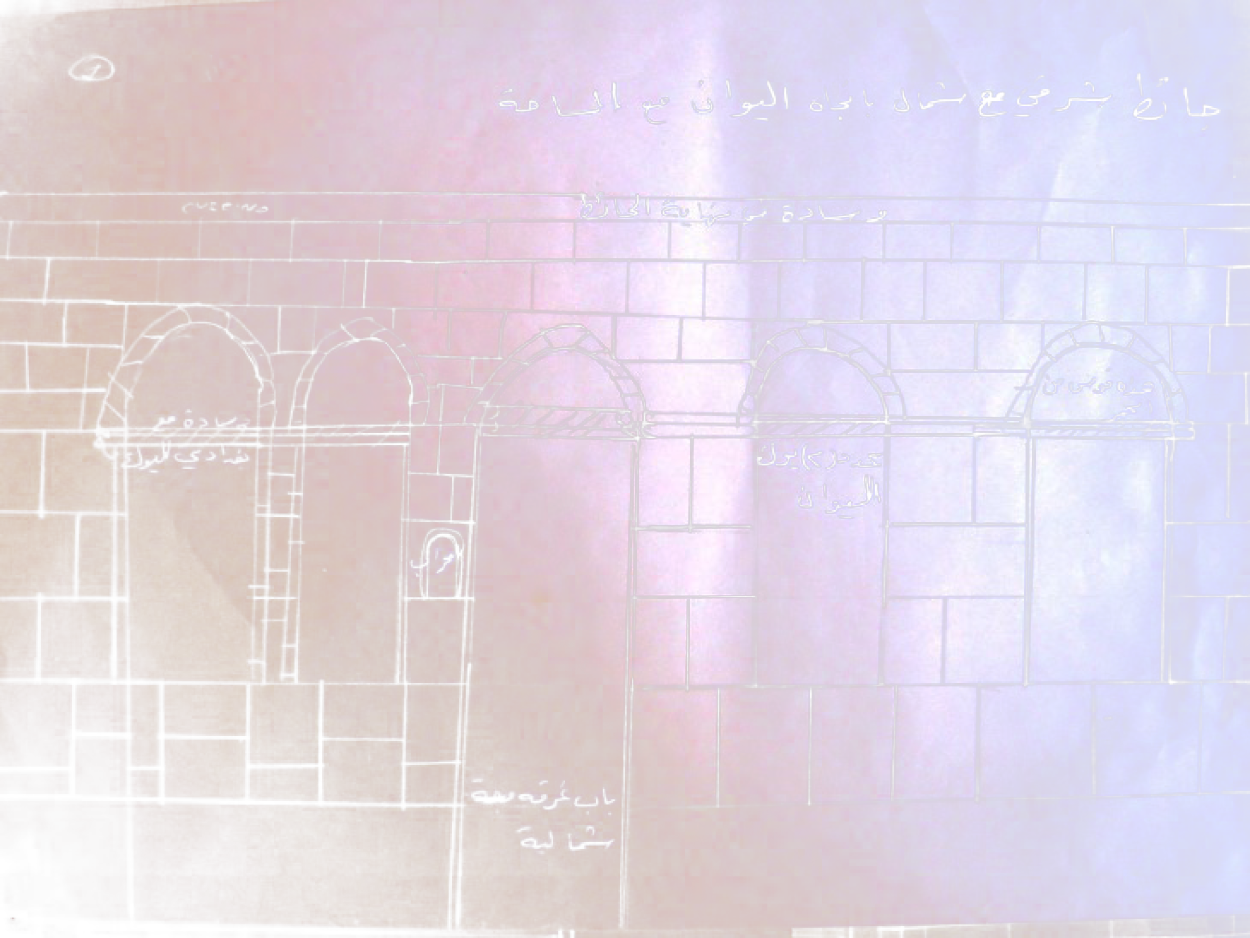
Mo’allem Muhammad’s drawing of a wall of the Arab house. © Photograph: Domenico Copertino.
Stefania Pandolfo (1997) described a similar sense of displacement watching the graphic representation of a Moroccan village, made by one of her interlocutors, a skilled draftsman. Her confusion was due both to the features of the drawing, made by mixing different dimensions and observation points – asking the reader to shift around its sides and its content – because a narrative is required to accompany a sequence of images. x Pandolfo overcame this initial feeling when she located the act of drawing in its historical and ethnographical context: the Maghrebi literary tradition of rihla, or journey as displacement, a movement through unfamiliar lands and people. She stressed that, as the readers of the drawing are forced to move, they perform a rihla around and through the plan. The readers are not so much observers as walkers.
Similarly, the key to understanding Muhammad’s act of drawing lay in the context in which he did it – the field of heritage development. Drawing his plan, mo’allem Muhammad was introducing into this field his specific capital of knowledge and savoir-faire as a restorer.
My own confusion, as I will try to show, was due to my ignorance, at that time, of the context in which the act of drawing this plan was performed, namely the patrimonialization of architectural heritage. In particular, at that time I did not understand a craftsman’s position in local working patterns (Copertino, 2010). Architects directing restoration, brought in by new residents to act as their referees, cannot help bringing experts of their own: the master masons. Indeed, architects do not deal directly with the carpenters; usually, the latter address the former as ‘asatedh (professor), a term widely used to address a graduate, acknowledging his or her authority in specific contexts, which in some cases creates a certain distance between them. Architects have their own individual way of dressing, speaking and behaving (Figure 5). They often stay away from the building site in order to negotiate with the owners and Maktab Anbar, and rely on master masons to deal with the suppliers of raw materials in terms of invoicing, payment and transportation.
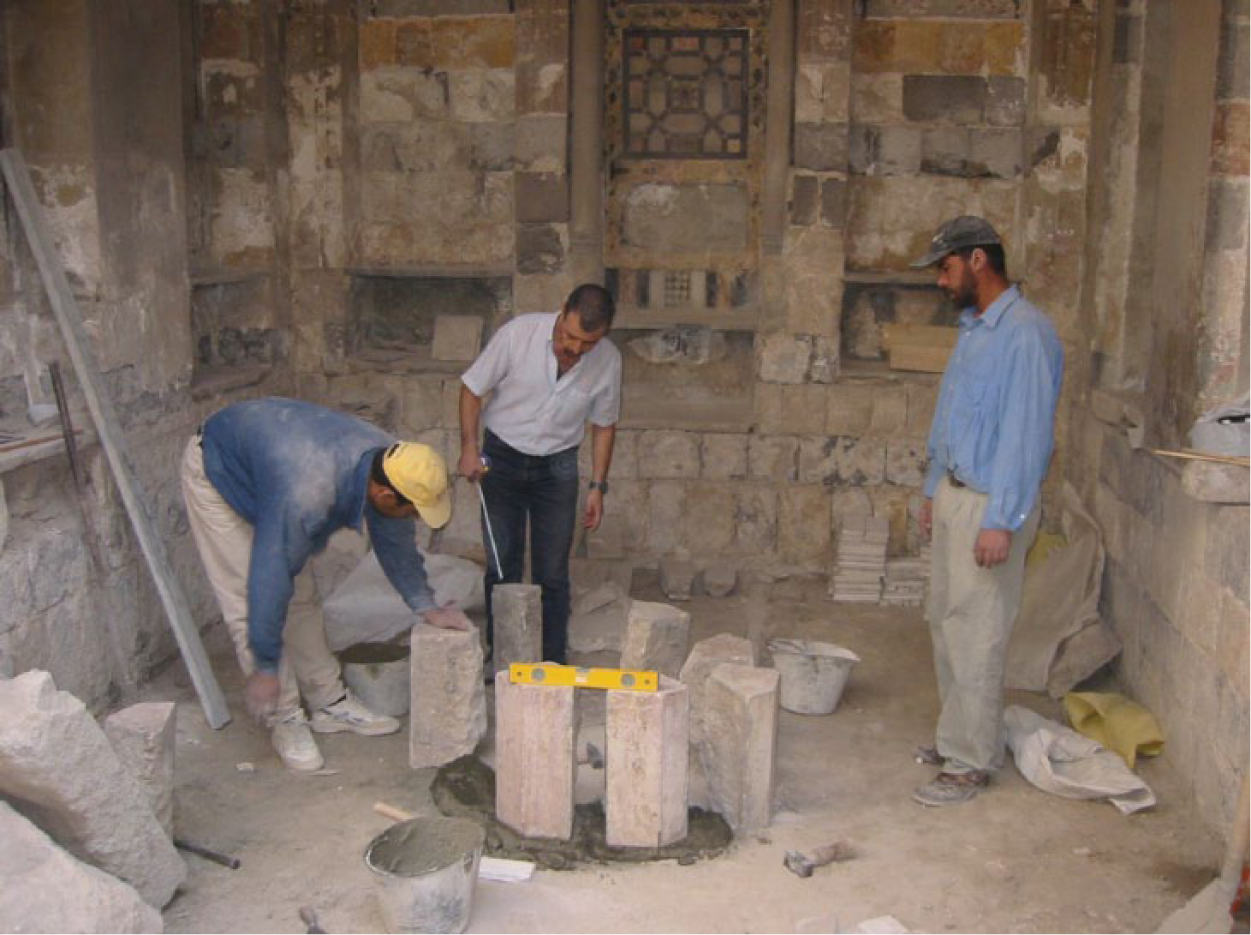
Architect Zabita at work with part of his team. © Photograph: Domenico Copertino.
Master masons, who are often craftsmen (mo’allimoon, sing. mo’allem) with expertise in the restoration of ancient houses, bring in their associates to form a team of carpenters. Mo’allimoon benefit from direct bargaining with employers over workers’ wages and from having a unique knowledge of how to find and rework raw materials. Architects task them with buying logs, straw and other building materials, and mo’allimoon often speculate on making a profit when selling on these materials.
The main resource of mo’allimoon is their knowledge; as such, it is closely guarded as a trade secret. Since there exist neither training courses in the restoration of ancient houses in Syria nor any relevant handbooks, mo’allimoon are taught their craft by trusted associates or it is handed down from father to son. This is the case of mo’allem Muhammad, who was taught the tricks of the trade by older craftsmen. His life story was full of anecdotes about his work, the techniques he learned through experience and his relations with other workers and craftsmen (Copertino, 2011). xi According to mo’allem Muhammad, he was taught the restoration of ancient houses by another craftsman who told him: ‘I’m not a master: somebody that knows more than me could come and teach me’; so whenever mo’allem Muhammad saw a site undergoing restoration, he always took the opportunity to take a look at it ‘because there is always something to learn’. Mo’allem Muhammad was particularly proud of his practical knowledge of the use of raw materials. He told me he had learned how to mix a perfect khabour – a mixture of water, sand, lime, dried tar and ash – by posing as a foreigner on a restoration site and spying on the craftsman’s movements. He said he was unique in knowing where to find the special sand (ramil), mined 1,500 feet underground, needed for khabour (Figure 6).
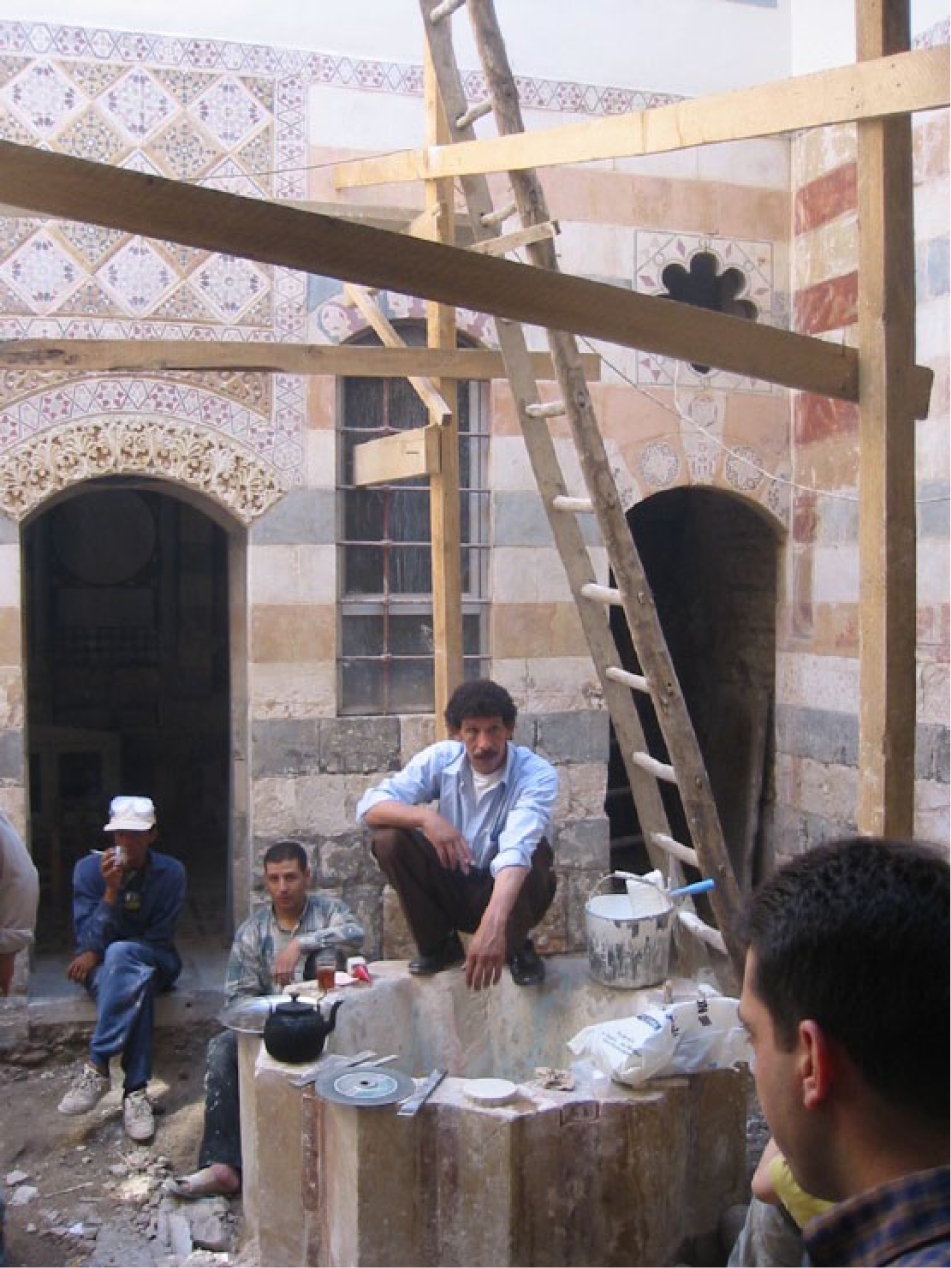
Mo’allem Muhammad (squatting on the fountain) with his team of workers. © Photograph: Domenico Copertino.
As cognitive anthropologists have shown, drawing on Whorf’s (1956) work, there is a significant difference of perception between skilled and unskilled eyes. What new residents and people influenced by preservationist discourse see in Arab houses undergoing restoration are trab (earth, ash), teen (earth, mud) and khashb (wood). Observing the work of mo’allimoon on restoration sites, and being introduced to the specific capital of techniques often ignored by the residents themselves, I have argued that the orientalist stereotype of the ancient Arab home as being made of ‘mud and wood’ (Keenan, 2000) fails to take account of the richness of such expertise. What Damascenes with a partial knowledge of the techniques of restoration refer to as earth or mud is actually an intricate handicraft whose elements are knowledge, expertise, relationships and reworked materials such as mkhadde, ‘amoud, lebn, teben, kels, ramil, khabour, qeneb, dimagh (cornerstones, literally ‘brain’) and baghdadi (laths). As mo’allem Muhammad put it:
My sons know how to read and write; I don’t: I prefer to write with my own material, lime (kels). Lime and lebn course through my veins. I talk with the walls, and they tell me how to proceed with my work.
I should stress that I never heard any mo’allimoon use the preservationist term ‘al-mawad al-taqalidiye’ (traditional materials).
The practical knowledge of mo’allimoon, acquired through experience and oral tradition rather than formal professional education – although no embarrassment to them – is underrated by Maktab ‘Anbar intellectuals and specialized architects. The point is that, for architects and mo’allimoon, different specific capitals are at stake in the field of heritage development: for the former, it is their superior education, for the latter their practical knowledge (even though savoir-faire may reflect well on some architects); the former place emphasis on their planning expertise, the latter on their relational skills (finding materials, forming teams of workers and supervising them).
Since both parties play key roles in the working relationship, the aim of claiming a stake is to enhance one’s own authority: on the one hand, both find it valuable to attract the attention of new residents. Architects try to make themselves indispensable to new residents and usually succeed if the latter are sensitive to the preservationist discourse and appreciate the true value of their educational capital. According to the architect Zabita:
Some owners think that restoration is a quick handicraft. But it requires much time; the expert is required to spend hours watching and becoming acquainted with the building materials, trying to understand why a wall is built in a certain manner, studying the reasons of a certain technique – nothing is accidental in ancient houses – and acting accordingly, after having gained an understanding.
xii
Bypassing an architect’s mediation is nonetheless possible to other new residents, who may deal directly with the mo’allimoon, whose skills are commonly acknowledged. Considering that the development of cultural heritage in Syria is a sector experiencing economic liberalization xiii and that knowledge of building techniques holds marketable value, it goes without saying that there is competition for the enhancement of one’s own position in the free market too.
On the other hand, both the architects and the mo’allimoon have to keep their kalima (literally ‘word’, but here meaning ‘authority’ or ‘influence’). xiv This seems an easy task for the mo’allimoon, who have usually known their workers for a long time, being related to them through kinship, neighbourhood relations, or common geographical origins, whereas architects do not take it for granted: as Zabita told me, he started directing restorations when he was 26 and he found it difficult to assert his kalima over workers often older than him, who were not used to carrying out tasks dictated to them by ‘a young director in blue-jeans’.
Rather than creating a social group ‘whose members are allied through their collective participation in the construction process’ (Vellinga, 2007: 760), the communal restoration/reconstruction of Arab houses with its division of labour, authority and expenses creates an arena of confrontation among different social groups. Both architects and mo’allimoon produce graphical representations of Arab houses, but the way a mo’allem will draw and explain his drawing differs from the way an architect would do it – in Lefebvre’s (1991) terms, this can be seen as the difference between ‘spaces of representation’ and ‘representations of space’. xv
As this context was partially unfamiliar to me at the time when mo’allem Muhammad drew his plan, I felt confused when following the craftsman’s rihla. Furthermore, I was used to scale plans ‘with a coherent degree of abstraction’ (Lynch, 1968) and I had consulted the plans of several Arab houses in the archive of the Institut Français du Proche Orient (Ifpo) and in Maktab ‘Anbar offices. Gradually comprehending the context and observing the process of drawing a good while later, I realized that it represented mo’allem Muhammad’s reappropriation of working tools and the way he adapted his working pattern. Indeed in the usual context of restoration projects, craftsmen are not authorized to produce graphical representations. Yet as I have shown, competition may arise between architects and mo’allimoon. Giving me his drawing and knowing I would show it to some architects and new residents (he was aware that I knew many of them, having seen me in their company and, in general, he associated me, a highly educated Westerner, with them), mo’allem Muhammad was making his move in the competition. xvi Further, he belittled the architects’ plans, saying that he was not able to interpret them. He used again the reading metaphor, stating that the only plans he could read were the actual building materials of a house. In their turn, architects were neither able nor willing to read the mo’allem’s drawing. Looking at it, architect al-Berry smiled and described the plan as pretty yet meaningless. Whilst acknowledging the skill behind Mohammed’s drawings, he could not understand them and they failed to convey anything to him: ‘It is plane and perspective mingled together!’ He noticed that buildings and even the relative orientation of rooms were reversed. ‘Perhaps he doesn’t know compass points!’, he joked. He found it absurd that Muhammad wrote the technical names of elements such as ‘pillar’ and ‘column’ and materials such as ‘lebn’.
The architect al-Berry described the plan as a ‘figment of his [Muhammad’s] imagination about the house … He “sees” a wall, an iwan, a window, and he draws them. It’s what he “sees” in general.’ When I objected that this was not necessarily the case as I had asked the mo’allem for a representation of that particular house and not of an Arab house bish-shakel ‘am, in general, al-Berry proved me wrong beyond doubt: certain details (e.g. non-existent elements such as doors and windows, a restored fountain, fully operational stairs) revealed that Muhammad’s illustrations were merely projections of his imagination.
Yet I believe that, in trying to asses this plan’s correspondence with reality, we were missing the point. I think it is more important to ask what mo’allem Muhammad meant to do while drawing his plan. This plan was a summary of his savoir-faire, the draft of a handbook containing the information needed for building and restoring an ancient house. He captioned the drawing with complete sentences (hadhihi qaws min al-hajar, ‘this is a stone arch’) that exhaustively explained how to pursue certain activities, with illustrations in miniature (tatrakkab al-lebna mukhtalifa ma’ al-akhra, ‘pile up a different cob’; wad’iya t’amir al-lebn, ‘position to fix cobs’; tanzil al-ha’et dakhl al-a’rd metr aw 125 sm hasb al-a’rd thum wad’ al-hajr wa b’ad wad’ al-’amoud, ‘driving the wall into the floor one meter or 125 cm, depending on the floor, then put in the stone and then put in the column’; ikun al-ha’et min al-hajr, ‘the wall is made of stone’).
Further, observing the plan and reconstructing his rihla through my field notes, I noticed that this was not only a journey through the space of the building, but also through time: there was the past (the ‘Arab home’ how it was ‘traditionally’), the present (a drawing of the cracks in the walls during restoration, showing the cobs) and the future (the desired state post-restoration, therefore showing the fountain, the doors, the youk, the niches, the balconies, and the windows with new laths. Thus the mo’allem’s plan was not only a projection of his fantasy, but also a project, framed by drawing on his imagined ancient Arab houses: the elements of his imaginary were his practical knowledge, information picked up while listening to enthusiastic site conversations among architects and new residents, images of ancient Syrian houses broadcast by extremely popular television serials set in the past (some restored houses in Damascus Old Town had been used as sets for serials and movies representing stories about the Arab past, set especially in the 19th century). According to Miller (2005: 19), power may be conceptualized ‘as the mode by which certain forms … become realized, often at the expense of others’. Although it is the architects’ responsibility to make decisions about the form Arab houses are going to take, the mo’allem was demonstrating to me – and probably to some new resident through me – his project, trying to enhance his position in the field of cultural heritage development and showing his skill at designing the finished product, not just playing his small part in the assembly line. Stressing his experience with building materials – the things that turn new residents into a coherent group in Miller’s (2005) sense – he was showing me that he had caught the material basis of their sense of belonging. At the same time, criticizing Muhammad’s dilettantism, the architect Al-Berry was confirming his authority in planning and designing, reasserting the right division of labour.
Conclusion
The ethnographic study of architecture reveals that the building, rebuilding and restoration of houses are activities contributing to the construction of social groups and to the development of their sense of distinction. New residents in the Old Town of Damascus distinguish themselves from other residents by commissioning proper restorations. This makes them, both from their own perspective and that of heritage institutions, the authentic inhabitants of Damascus Old Town. Some gain political influence by engaging in practical ways in Unesco’s discourse about heritage development. Their adhesion to such discourse is also by means of a bodily engagement with the building materials of their houses, which gives them a close bond with their land.
Arjun Appadurai (1986: 5) invited anthropologists ‘to follow the things themselves, for their meanings are inscribed in their forms, their uses, their trajectories. It is only through the analysis of these trajectories that we can interpret the human transactions and calculations that enliven things’. Treating drawings, working tools, building materials and other objects as things-in-motion, one can ‘illuminate their human and social context’. Plans, scaffolding, logs, cobs and raw materials are not merely tools with which to build and restore houses: people and groups use them to construct themselves as social actors in their specific contexts. Arab homes and their built forms and elements, such as iwan, courtyards and fountains, are reifications of the local past. Although produced with local materials and through local expertise, nonetheless such objects enter the global imaginary space of the WHL, in which, in order to be listed, local specificity is an essential feature.
New residents, cultural activists, skilled architects and preservationists form the exclusive club that controls the field of heritage development by means of their higher education, mastering the global Unesco discourse and considerable capitals, both cultural and economic. Yet other actors may try to break into this field, staking their own claims to specific capitals, as in the case of a craftsman demonstrating his expertise to his potential customers. Knowledge, tools and materials, listed as authentic expressions of Syrian history, circulate among the individuals, groups and institutions involved in cultural heritage development; they are traded, given and staked, and in this circulation their value may rise or drop (for instance, some traders sell pieces of decorated wood, removed from the ceilings of abandoned houses, at a low price to craftsmen to decorate the walls of new residents’ houses or ‘traditional’ venues).
The actual finished product, the Arab house itself, is acknowledged as an authentic part of the cultural heritage, provided that its elements, materials, techniques and tools of restoration comply with the Unesco framework and the authorities’ advice. Rising in the universal value of heritage objects, they also rise in exchange value and circulate in the free market of cultural amenities.
As Miller (2005) argues, objects do not just represent people nor simply stand for social relations: the things that people make, in their turn make people. Through restorations and building activities, new residents make their Arab houses, which helps to convert them into a cohesive group. Their quest for authenticity is part of their discourses and practices through which they distinguish themselves from former residents of Damascus Old Town. The proper plans, techniques and materials of restoration and rebuilding are what make them the authentic inhabitants of the Old Town, as acknowledged by Unesco and Syrian preservationists.
The agents of heritage preservation and development do not simply discover their objects (the home, the neighbourhood, authentic elements and knowledge) waiting for them in the social and physical reality: such objects need to be sought and reconstructed. The authenticity of an Arab house needs to be searched for and unearthed: what makes an authentic Arab house from a building situated in Damascus Old Town is proper restoration. As such, the quest for authenticity is a cultural practice, performed by social actors with their symbolic capitals and discourses. Discussing the reproduction of the work of art, Walter Benjamin (2008: 21–25) wrote that
the authenticity of an object is its presence in time and space, its unique existence at the place where it happens to be. This unique existence of the work of art determined the history to which it was subject throughout the time of its existence. This includes the changes it may have suffered in physical condition over the years as well as the various changes in its ownership. The authenticity of a thing is the quintessence of all that is transmissible in it from its origin on, ranging from its physical duration to the historical testimony relating to it.
Benjamin’s definition of authenticity comprises the dimensions of process and change through the life history of an authentic object. By contrast, preservationists’ quest for authenticity erases the houses’ life history, which ‘is linked to the developmental cycle of the social group associated with [them], the different stages in house construction and maintenance being made to coincide with important events such as birth, marriage, or death’ (Vellinga, 2007: 759). Indeed, at the same time that this quest selects the authentic forms of the past and lets them emerge as heritage elements, it excludes other competing practices, such as later refurbishments, minor restorations, the addition of rooms and other parts, the dividing and partitioning of houses, even if historically these readjustments would occur to meet the residents’ needs or to accommodate people’s movements and families’ economic shifts and genealogical changes.
Footnotes
Funding
This research received no specific grant from any funding agency in the public, commercial, or not-for-profit sectors.